


 Скачать презентацию Nuclear s Role in the Clean Energy Mix The
3ac040f2ecbdb9bc871c82172449e38d.ppt
- Количество слайдов: 36
 Nuclear’s Role in the Clean Energy Mix The Energy Bar Mid-Year Meeting on Energy Markets, Renewable Energy and Change Washington, DC December 3, 2009 David Heacock President and Chief Nuclear Officer, Dominion Nuclear
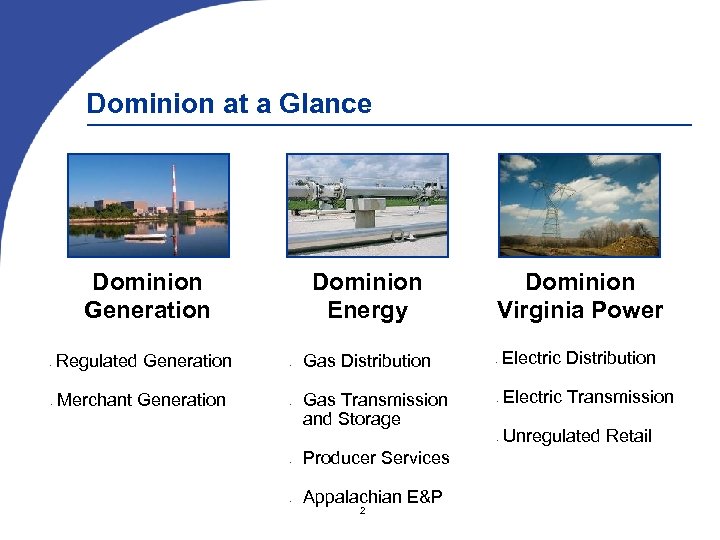 Dominion at a Glance Dominion Generation Regulated Generation Merchant Generation Dominion Energy Gas Distribution Gas Transmission and Storage Dominion Virginia Power Producer Services Appalachian E&P 2 Electric Distribution Electric Transmission Unregulated Retail
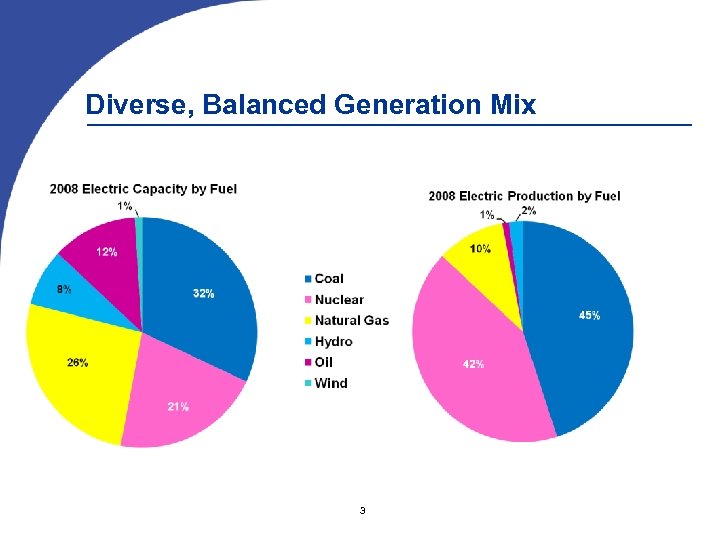 Diverse, Balanced Generation Mix 3
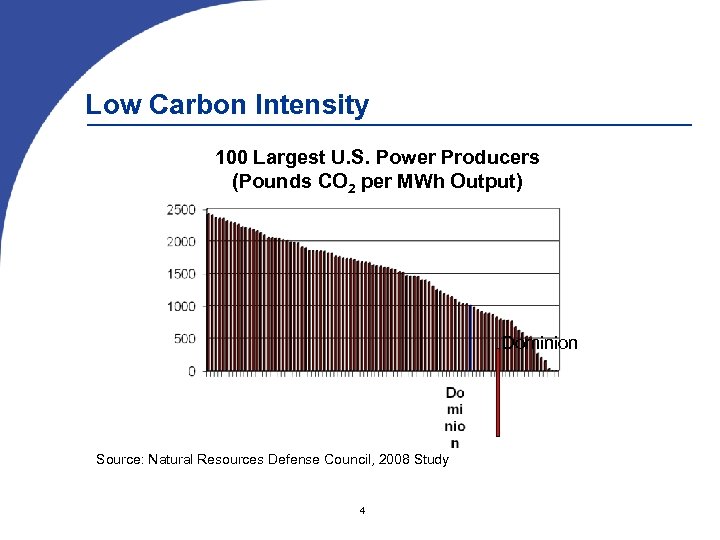 Low Carbon Intensity 100 Largest U. S. Power Producers (Pounds CO 2 per MWh Output) Dominion Source: Natural Resources Defense Council, 2008 Study 4
 Increasing Demand for Energy 5
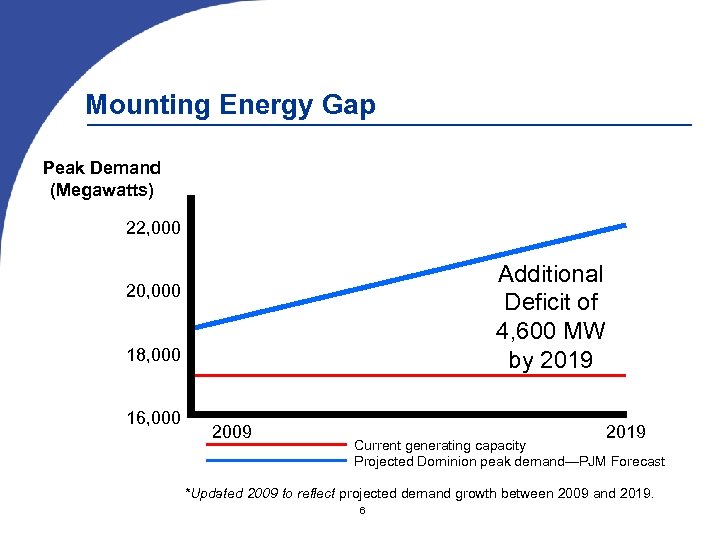 Mounting Energy Gap Peak Demand (Megawatts) 22, 000 Additional Deficit of 4, 600 MW by 2019 20, 000 18, 000 16, 000 2009 2019 Current generating capacity Projected Dominion peak demand—PJM Forecast *Updated 2009 to reflect projected demand growth between 2009 and 2019. 6
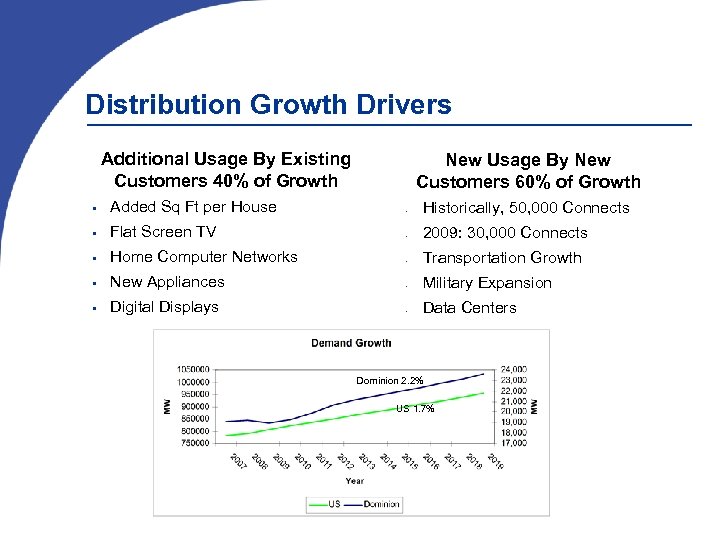 Distribution Growth Drivers Additional Usage By Existing Customers 40% of Growth New Usage By New Customers 60% of Growth Added Sq Ft per House Flat Screen TV Home Computer Networks New Appliances Digital Displays Historically, 50, 000 Connects 2009: 30, 000 Connects Transportation Growth Military Expansion Data Centers Dominion 2. 2% US 1. 7% 7
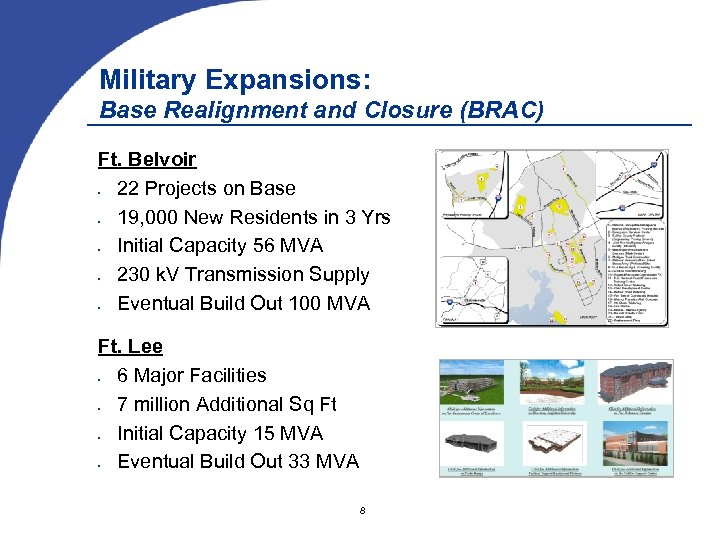 Military Expansions: Base Realignment and Closure (BRAC) Ft. Belvoir 22 Projects on Base 19, 000 New Residents in 3 Yrs Initial Capacity 56 MVA 230 k. V Transmission Supply Eventual Build Out 100 MVA Ft. Lee 6 Major Facilities 7 million Additional Sq Ft Initial Capacity 15 MVA Eventual Build Out 33 MVA 8
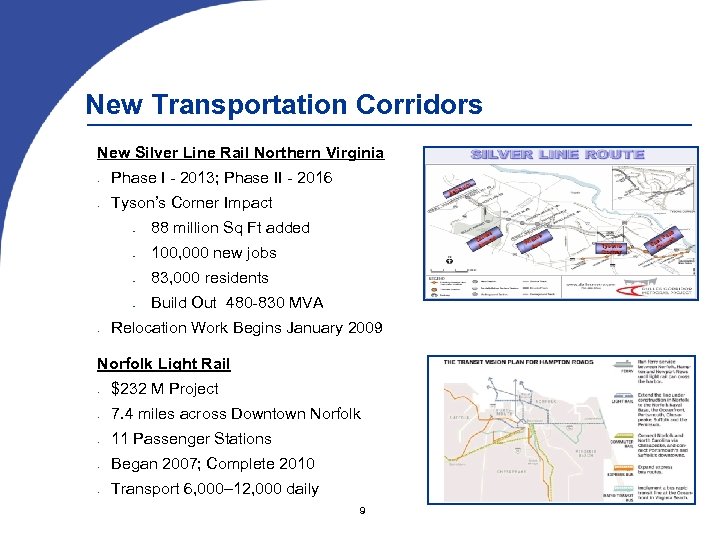 New Transportation Corridors New Silver Line Rail Northern Virginia Phase I 2013; Phase II 2016 Tyson’s Corner Impact – – 88 million Sq Ft added 100, 000 new jobs 83, 000 residents Build Out 480 830 MVA Relocation Work Begins January 2009 Norfolk Light Rail $232 M Project 7. 4 miles across Downtown Norfolk 11 Passenger Stations Began 2007; Complete 2010 Transport 6, 000– 12, 000 daily 9
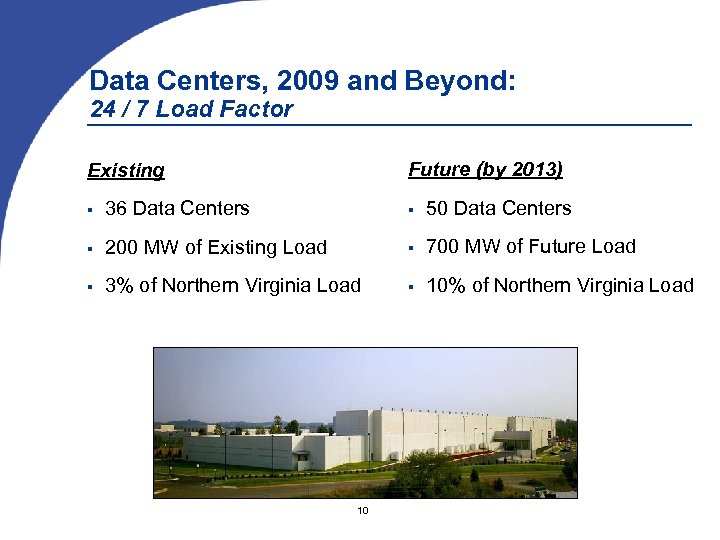 Data Centers, 2009 and Beyond: 24 / 7 Load Factor Future (by 2013) Existing 36 Data Centers 50 Data Centers 200 MW of Existing Load 700 MW of Future Load 3% of Northern Virginia Load 10
 Strategy for Meeting Growing Demand 11
 Conservation: Critical to Virginia’s Future Conservation will help meet Virginia’s growing energy needs while protecting the environment Dominion is fully committed to state’s goal of reducing energy consumption by 10 percent by 2022 Dominion is developing portfolio of demand side management programs and evaluating “smart” technologies 12
 Demand-Side Management: Two Key Elements Demand Response: Reduces peak electricity demand, often by shifting usage to off peak hours Improves reliability Easily measured and verified Conservation: Reduces consumption of electricity Produces environmental benefits Poses new set of challenges: Requires change in customer behavior Harder to measure and verify 13
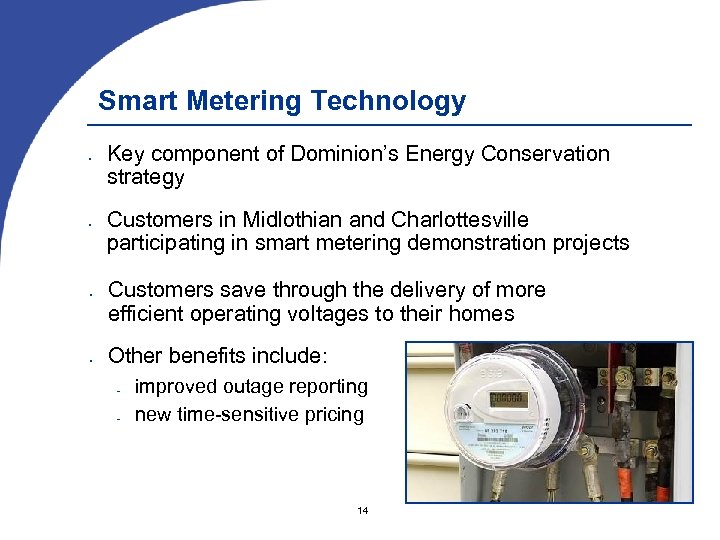 Smart Metering Technology Key component of Dominion’s Energy Conservation strategy Customers in Midlothian and Charlottesville participating in smart metering demonstration projects Customers save through the delivery of more efficient operating voltages to their homes Other benefits include: – – improved outage reporting new time sensitive pricing 14
 Voltage Conservation Trabue Demonstration: 6, 700 meters Charlottesville Demonstration: 45, 000 meters Initial loss reduction focus areas include – Conserving off peak voltage and monitoring through AMI technology Successful demonstration of project on Trabue Circuit (Midlothian) – – 5% voltage reduction using AMI technology has been demonstrated Average energy savings per 1% reduction exceeds 0. 8% Trabue test results confirm full deployment savings of 2. 34 million MWH per year or 2. 79% of the total system load Demonstrated energy savings from Voltage Conservation confirms previously announced customer savings (and have risen to $1. 7 billion over 15 years) 15
 Virginia RPS Federal RPS is under development Dominion’s existing utility owned renewable assets reach 2% level Dominion is growing its renewable project portfolio To comply with RPS requirements, Dominion needs: – – 4% by 2010 7% by 2016 12% by 2022 15% by 2025 (recently signed by Gov. Kaine) Evaluating all available options to meet targets: – – – Existing utility owned renewable generation Build new renewable facilities in Virginia Purchase RECs / renewable energy 16
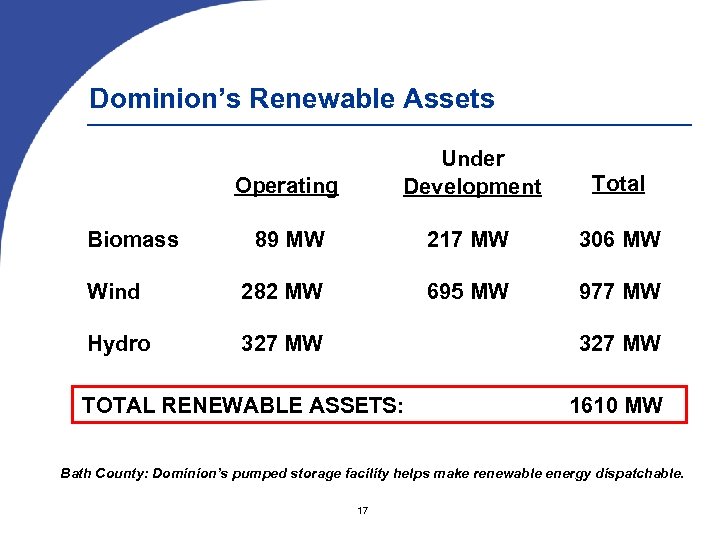 Dominion’s Renewable Assets Operating Under Development Total 89 MW 217 MW 306 MW Wind 282 MW 695 MW 977 MW Hydro 327 MW Biomass 327 MW TOTAL RENEWABLE ASSETS: 1610 MW Bath County: Dominion’s pumped storage facility helps make renewable energy dispatchable. 17
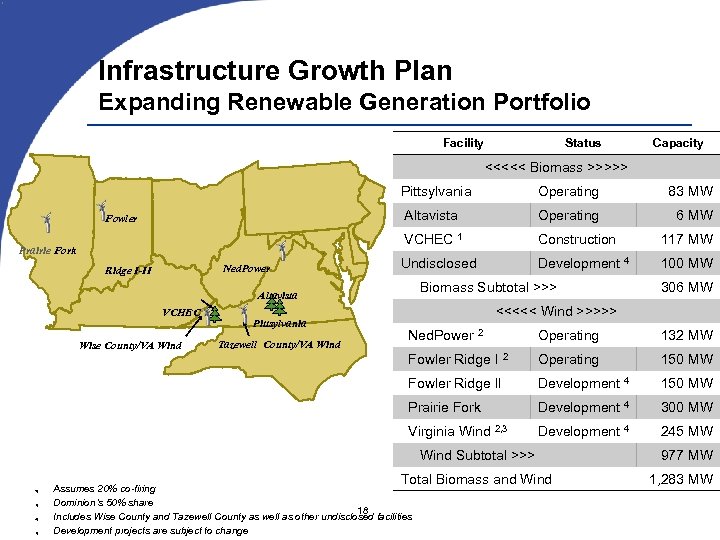 Infrastructure Growth Plan Expanding Renewable Generation Portfolio Facility Status Capacity <<<<< Biomass >>>>> Pittsylvania Ned. Power Ridge I-II Operating 6 MW VCHEC 1 Prairie Fork 83 MW Altavista Fowler Operating Construction 117 MW Undisclosed Development 4 100 MW Biomass Subtotal >>> Altavista VCHEC Pittsylvania 306 MW <<<<< Wind >>>>> 132 MW Operating 150 MW Fowler Ridge II Development 4 150 MW Prairie Fork Development 4 300 MW Virginia Wind 2, 3 Tazewell County/VA Wind Operating Fowler Ridge I 2 Wise County/VA Wind Ned. Power 2 Development 4 245 MW Wind Subtotal >>> Total Biomass and Wind 1) 2) 3) 4) Assumes 20% co-firing Dominion’s 50% share 18 Includes Wise County and Tazewell County as well as other undisclosed facilities Development projects are subject to change 977 MW 1, 283 MW
 Nuclear - Part of the Solution 19
 U. S. Electric Net Generation by Source, 2008 Source: NRC 2009 -2010 Information Digest – DOE/EIA Monthly Energy Review, March 2009 20
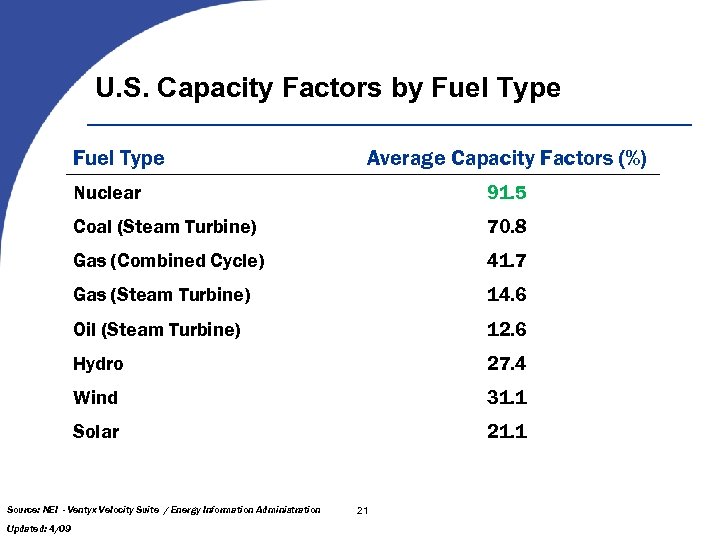 U. S. Capacity Factors by Fuel Type Average Capacity Factors (%) Nuclear 91. 5 Coal (Steam Turbine) 70. 8 Gas (Combined Cycle) 41. 7 Gas (Steam Turbine) 14. 6 Oil (Steam Turbine) 12. 6 Hydro 27. 4 Wind 31. 1 Solar 21. 1 Source: NEI - Ventyx Velocity Suite / Energy Information Administration Updated: 4/09 21
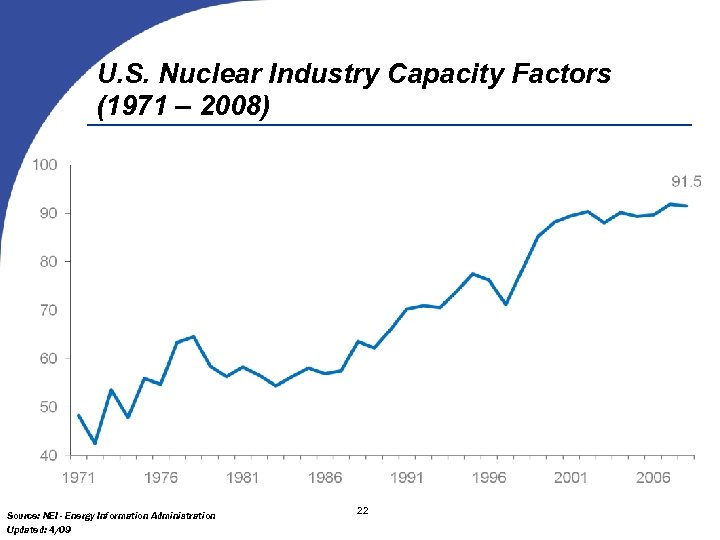 U. S. Nuclear Industry Capacity Factors (1971 – 2008) Source: NEI - Energy Information Administration Updated: 4/09 22
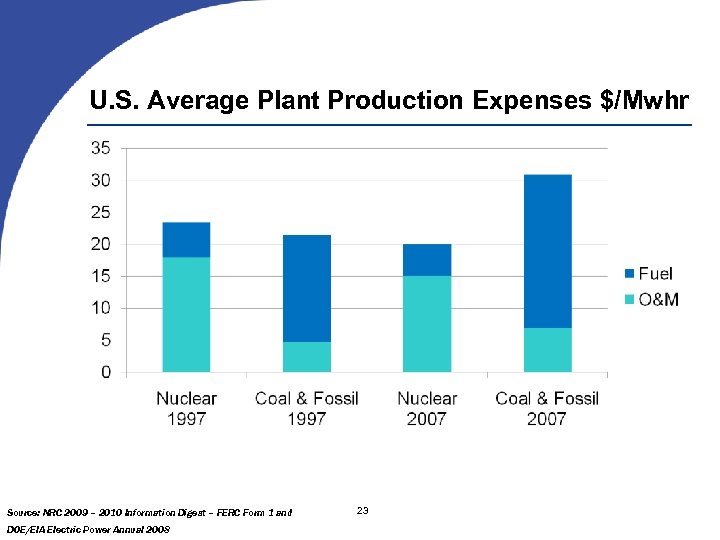 U. S. Average Plant Production Expenses $/Mwhr Source: NRC 2009 – 2010 Information Digest – FERC Form 1 and DOE/EIA Electric Power Annual 2008 23
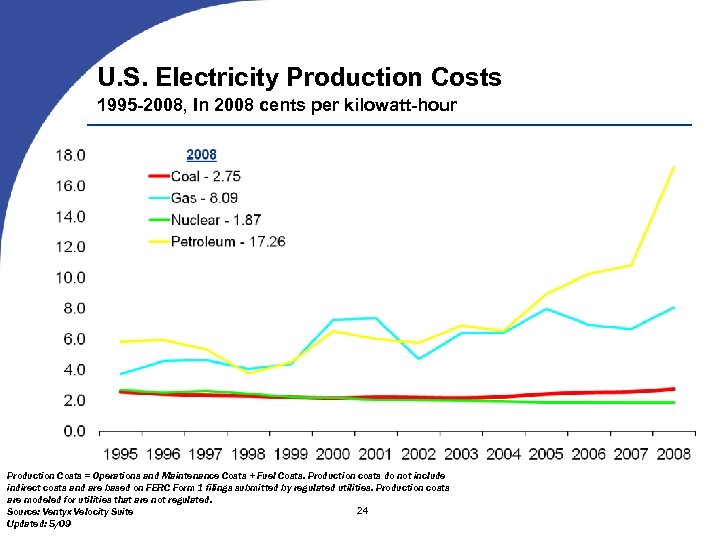 U. S. Electricity Production Costs 1995 -2008, In 2008 cents per kilowatt-hour Production Costs = Operations and Maintenance Costs + Fuel Costs. Production costs do not include indirect costs and are based on FERC Form 1 filings submitted by regulated utilities. Production costs are modeled for utilities that are not regulated. 24 Source: Ventyx Velocity Suite Updated: 5/09
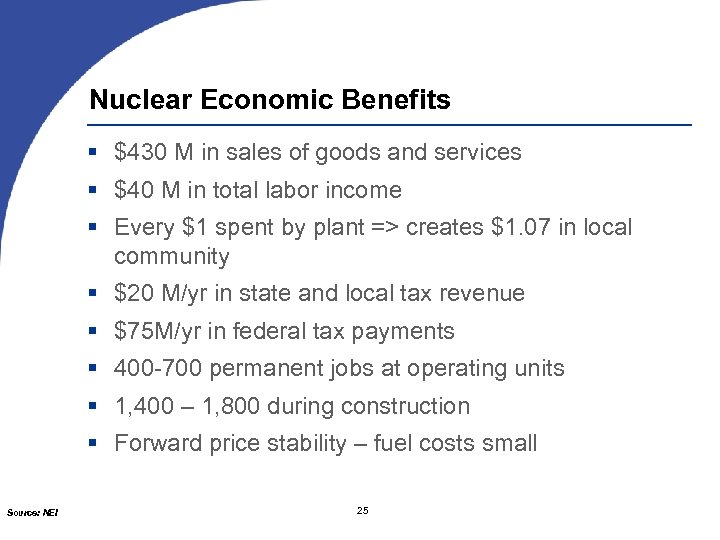 Nuclear Economic Benefits $430 M in sales of goods and services $40 M in total labor income Every $1 spent by plant => creates $1. 07 in local community $20 M/yr in state and local tax revenue $75 M/yr in federal tax payments 400 700 permanent jobs at operating units 1, 400 – 1, 800 during construction Forward price stability – fuel costs small Source: NEI 25
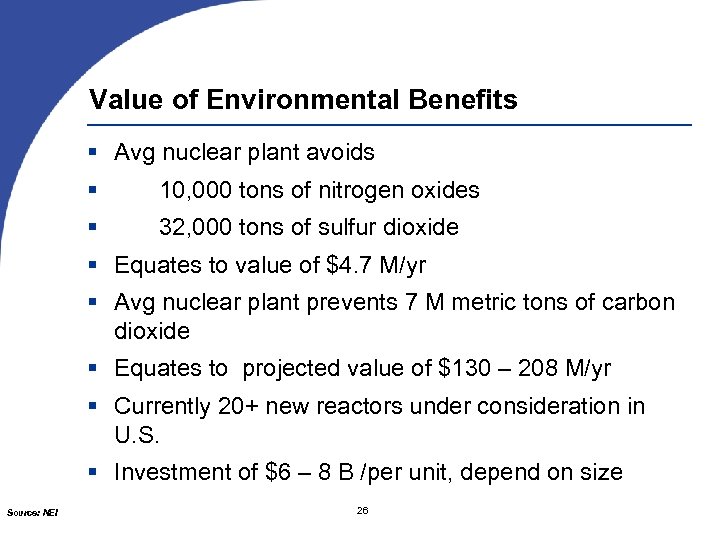 Value of Environmental Benefits Avg nuclear plant avoids 10, 000 tons of nitrogen oxides 32, 000 tons of sulfur dioxide Equates to value of $4. 7 M/yr Avg nuclear plant prevents 7 M metric tons of carbon dioxide Equates to projected value of $130 – 208 M/yr Currently 20+ new reactors under consideration in U. S. Investment of $6 – 8 B /per unit, depend on size Source: NEI 26
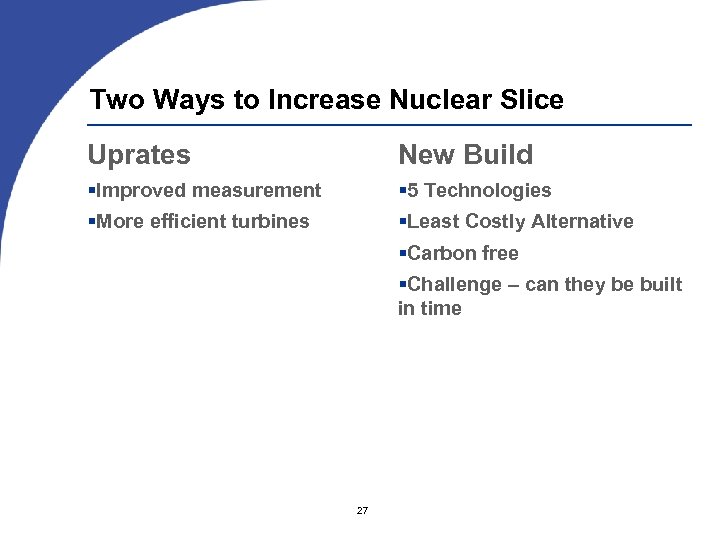 Two Ways to Increase Nuclear Slice Uprates New Build Improved measurement 5 Technologies More efficient turbines Least Costly Alternative Carbon free Challenge – can they be built in time 27
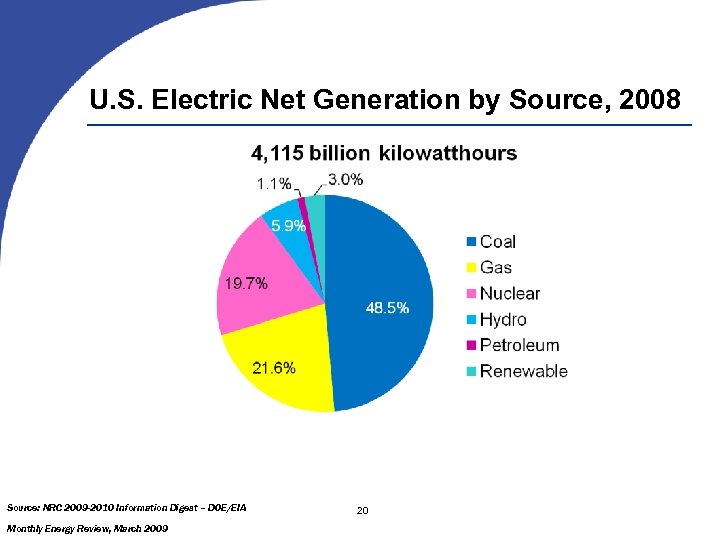
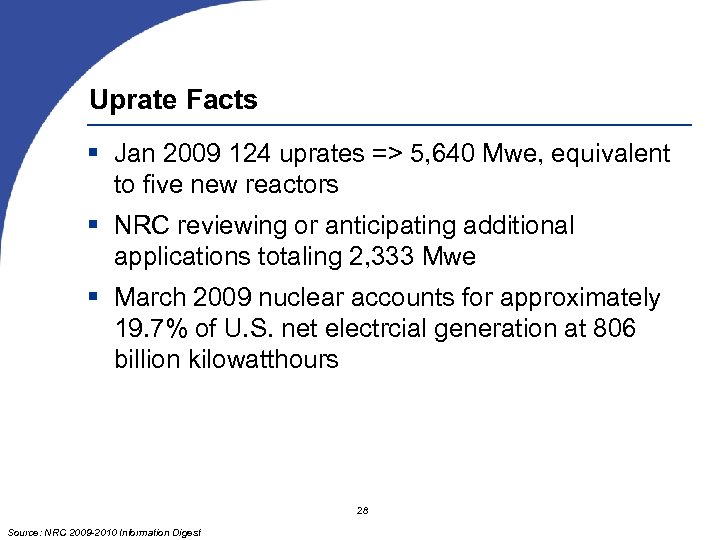 Uprate Facts Jan 2009 124 uprates => 5, 640 Mwe, equivalent to five new reactors NRC reviewing or anticipating additional applications totaling 2, 333 Mwe March 2009 nuclear accounts for approximately 19. 7% of U. S. net electrcial generation at 806 billion kilowatthours 28 Source: NRC 2009 -2010 Information Digest
 29
29
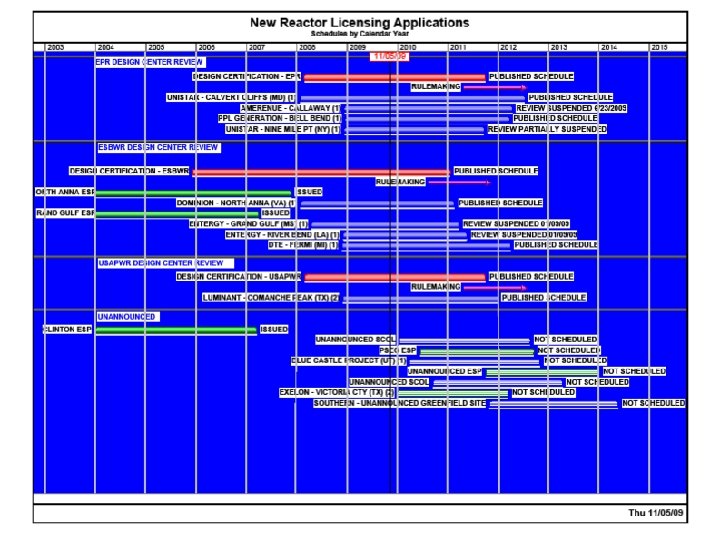
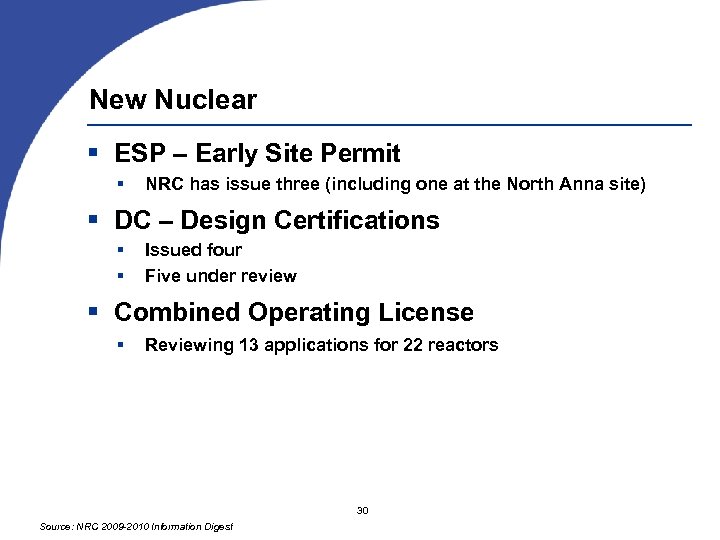 New Nuclear ESP – Early Site Permit NRC has issue three (including one at the North Anna site) DC – Design Certifications Issued four Five under review Combined Operating License Reviewing 13 applications for 22 reactors 30 Source: NRC 2009 -2010 Information Digest
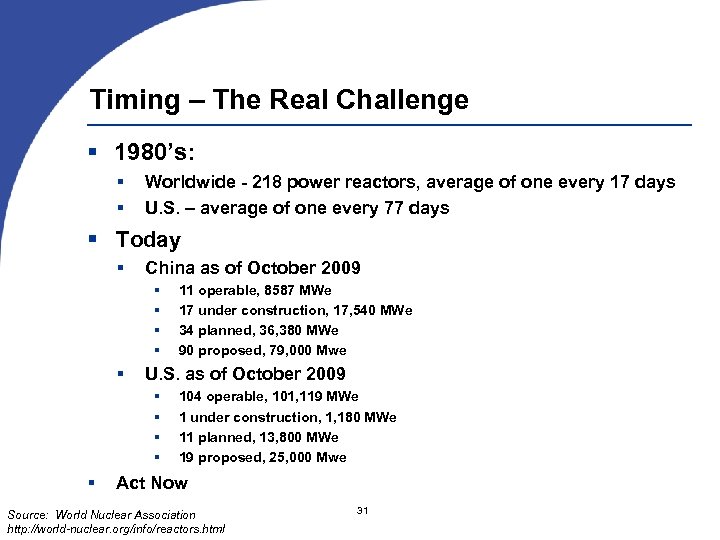 Timing – The Real Challenge 1980’s: Worldwide - 218 power reactors, average of one every 17 days U. S. – average of one every 77 days Today China as of October 2009 U. S. as of October 2009 11 operable, 8587 MWe 17 under construction, 17, 540 MWe 34 planned, 36, 380 MWe 90 proposed, 79, 000 Mwe 104 operable, 101, 119 MWe 1 under construction, 1, 180 MWe 11 planned, 13, 800 MWe 19 proposed, 25, 000 Mwe Act Now Source: World Nuclear Association http: //world-nuclear. org/info/reactors. html 31
 Nuclear – Is the Solution 32
 33
33
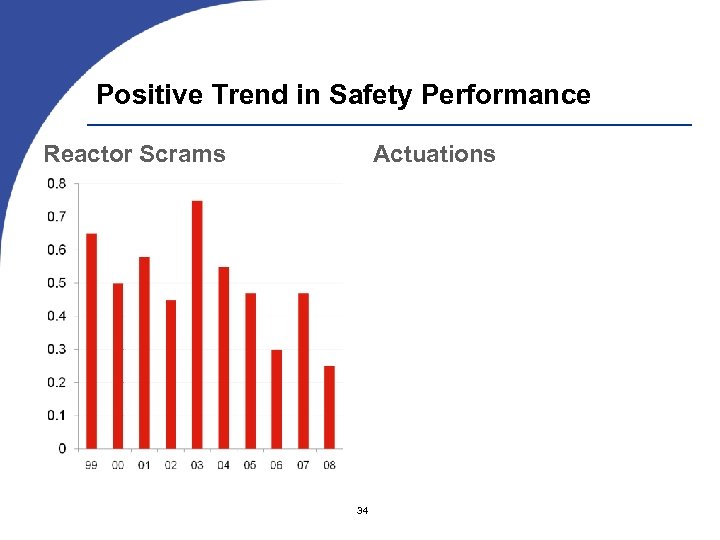 Positive Trend in Safety Performance Reactor Scrams Actuations 34
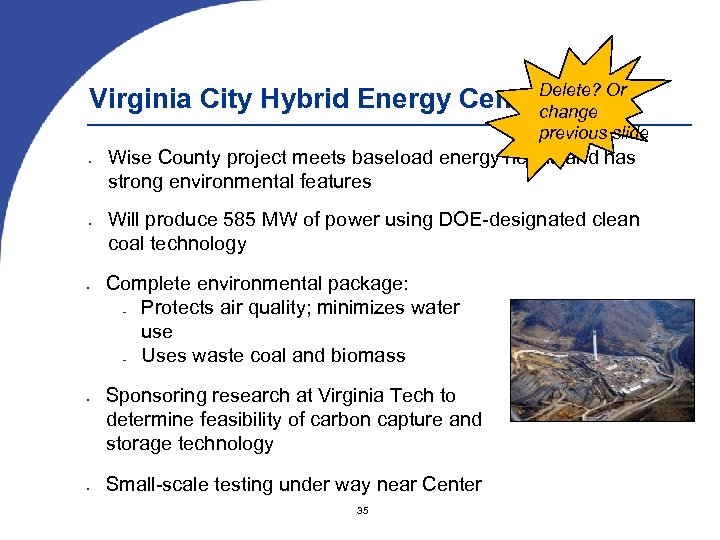 Delete? Or Virginia City Hybrid Energy Center change previous slide Wise County project meets baseload energy needs and has strong environmental features Will produce 585 MW of power using DOE designated clean coal technology Complete environmental package: Protects air quality; minimizes water use Uses waste coal and biomass – – Sponsoring research at Virginia Tech to determine feasibility of carbon capture and storage technology Small scale testing under way near Center 35
 Increasing Nuclear Capacity: Uprates and North Anna Unit 3 Uprates add approximately 300 MW of new nuclear generation across our nuclear fleet (except Kewaunee) North Anna Unit 3 will use advanced nuclear technology with no carbon emissions – – – Early Site Permit (ESP) received approval in November 2007; submitted Combined Operating License (COL) application to build and operate in November 2007 Commercial operation by 2016 / 2017 Third unit would boost Dominion’s percentage of power produced by nuclear almost 10 percent in about 10 years 36