


 Скачать презентацию NS 3040 Fall Term 2017 Exchange Rates
04b45934a50da5d24cff5d8549c7d6e7.ppt
- Количество слайдов: 54
 NS 3040 Fall Term 2017 Exchange Rates
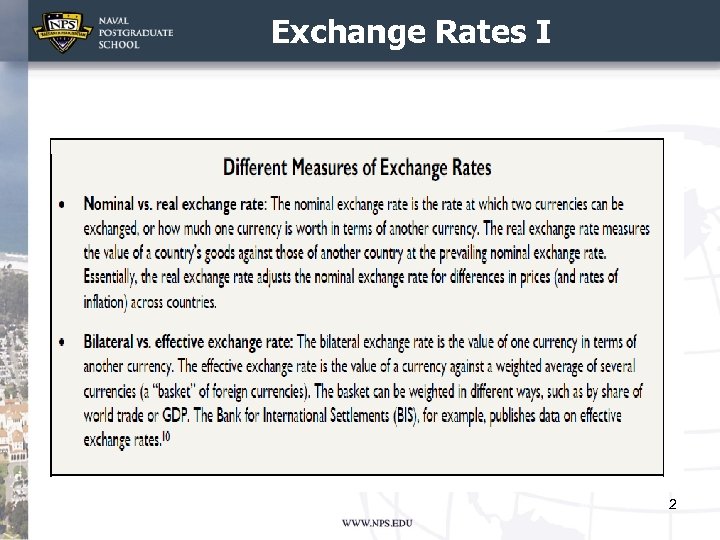 Exchange Rates I 2
 Exchange Rates II • Between the end of WWII and the early 1970’s most countries including the U. S. had fixed exchange rates • In the early 1970 s when international capital flows increased the U. S. abandoned its peg to gold and floated the dollar • Many countries continued to peg to the dollar while others adopted various conventions for their exchange rates • In 2012: • 35% of countries had floating rates • Includes several major currencies such as U. S. dollar, the euro, the Japanese yen and the British pound – account for about 50% of global Gross Domestic Product (GDP) 3
 Exchange Rates III • Many countries use policies to manage the value of their currencies • Some manage it more than others • Includes many small countries such as Hong Kong, as well as a few larger economies such as China, Russia and Saudi Arabia • In 2012 • 40% of countries used a “soft” peg, which let the currency float within a desired range • 13% of countries used a “hard” peg which anchors the currency’s value more strictly, including the formal adoption of a foreign currency to use as its national currency – Ecuador • No large country uses a hard peg. 4
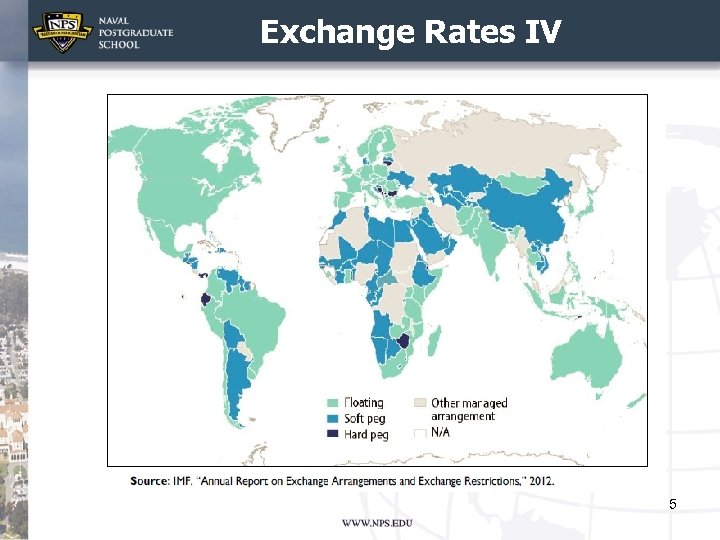 Exchange Rates IV 5
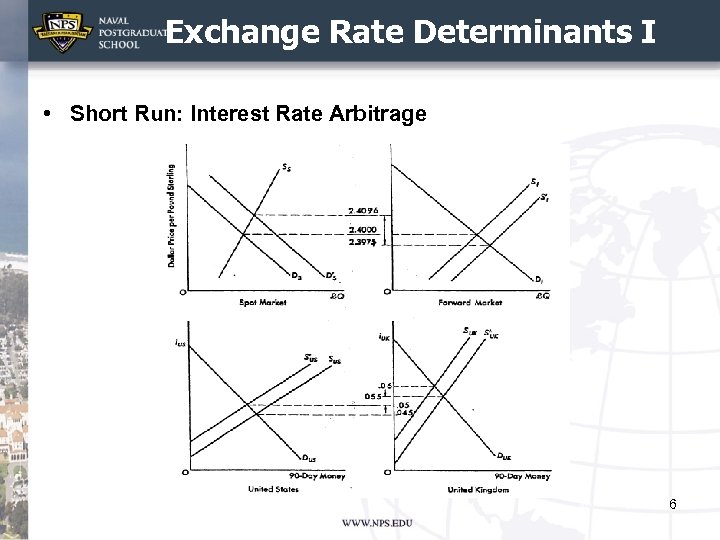 Exchange Rate Determinants I • Short Run: Interest Rate Arbitrage 6
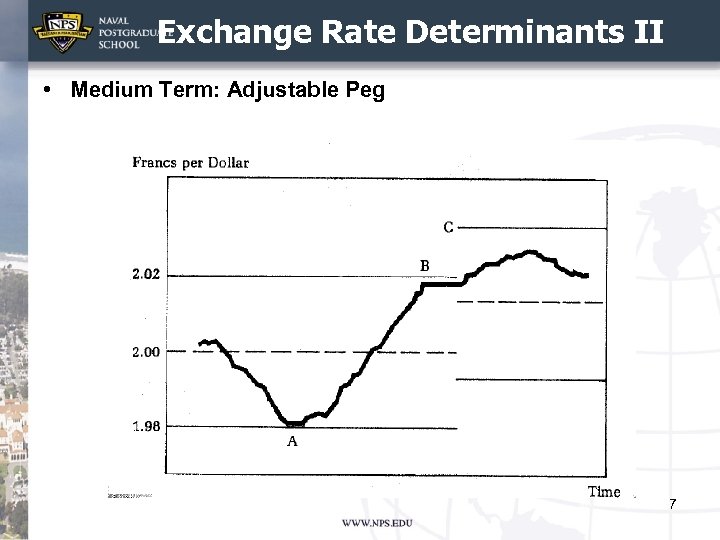 Exchange Rate Determinants II • Medium Term: Adjustable Peg 7
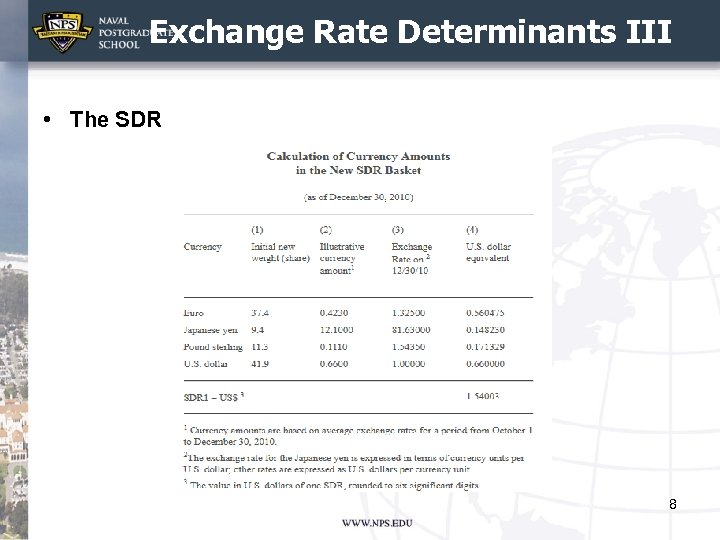 Exchange Rate Determinants III • The SDR 8
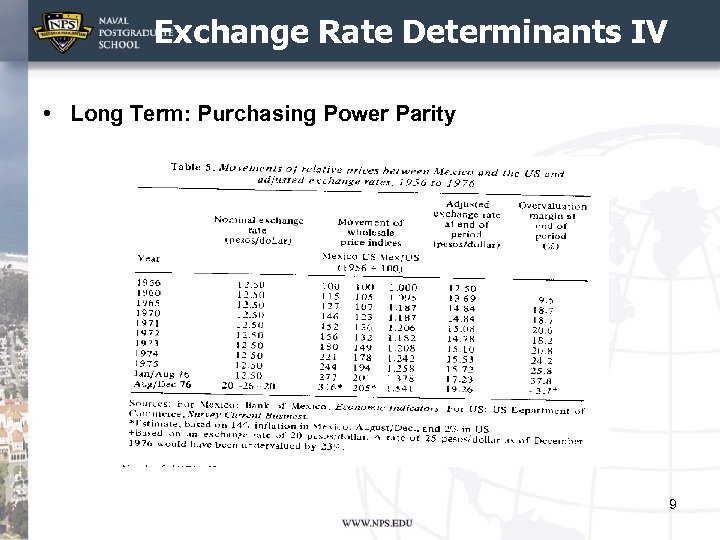 Exchange Rate Determinants IV • Long Term: Purchasing Power Parity 9
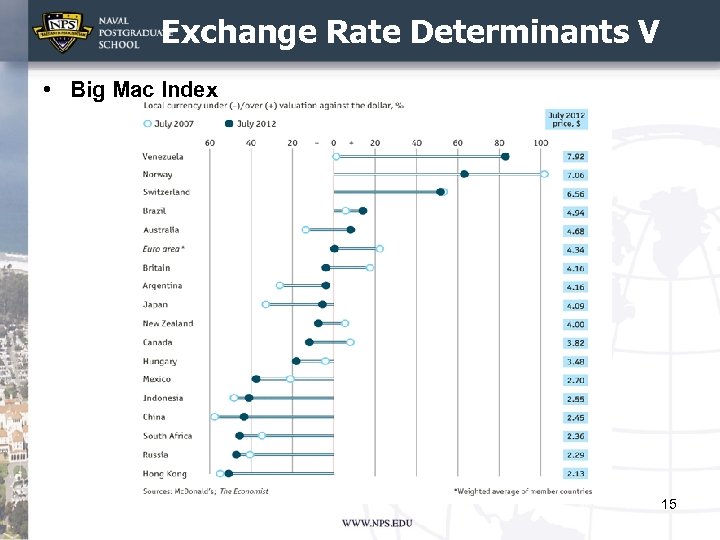
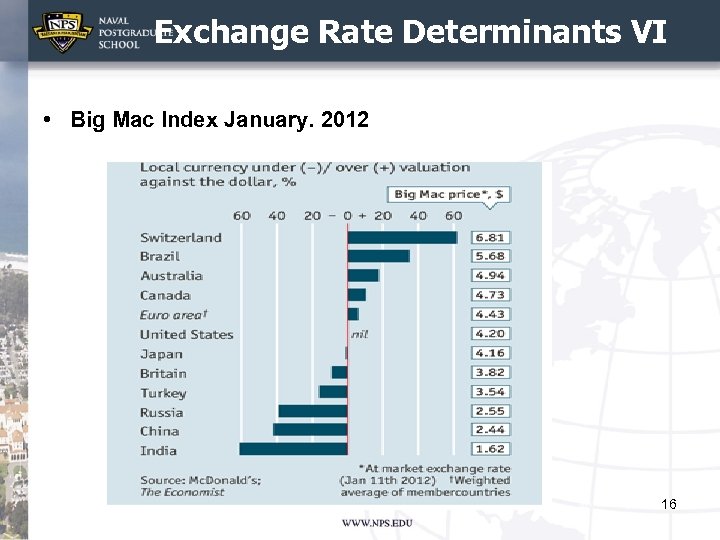
 Big Mac Index I • THE Big Mac index was invented by The Economist in 1986 as a lighthearted guide to whether currencies are at their “correct” level. • It is based on theory of purchasing-power parity (PPP), the notion that in the long run exchange rates should move towards the rate that would equalize the prices of an identical basket of goods and services (in this case, a burger) in any two countries. • For example, the average price of a Big Mac in America in January 2016 was $4. 93; in China it was only $2. 68 at market exchange rates. So the "raw" Big Mac index says that the yuan was undervalued by 46% at that time. 10
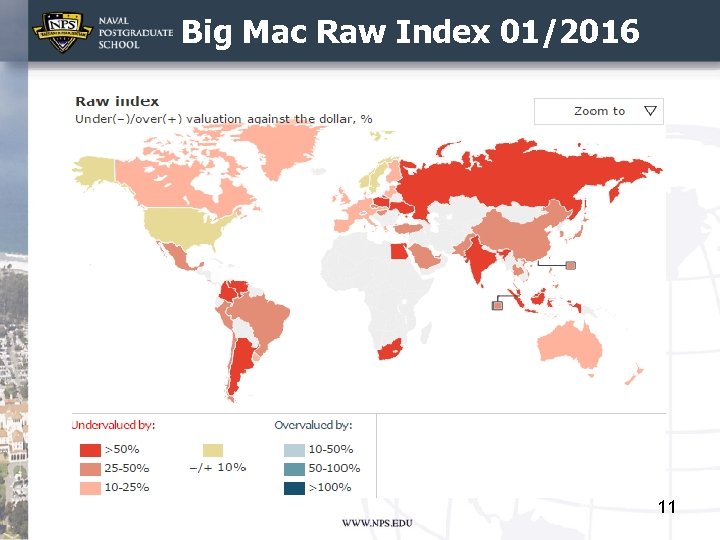 Big Mac Raw Index 01/2016 11
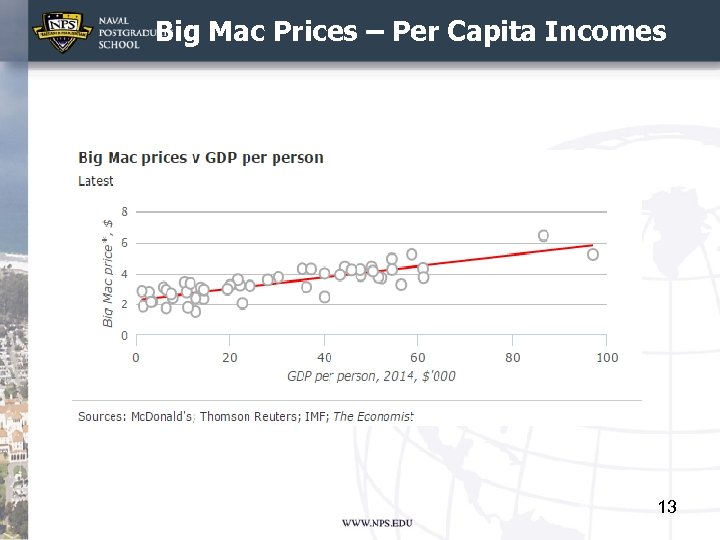
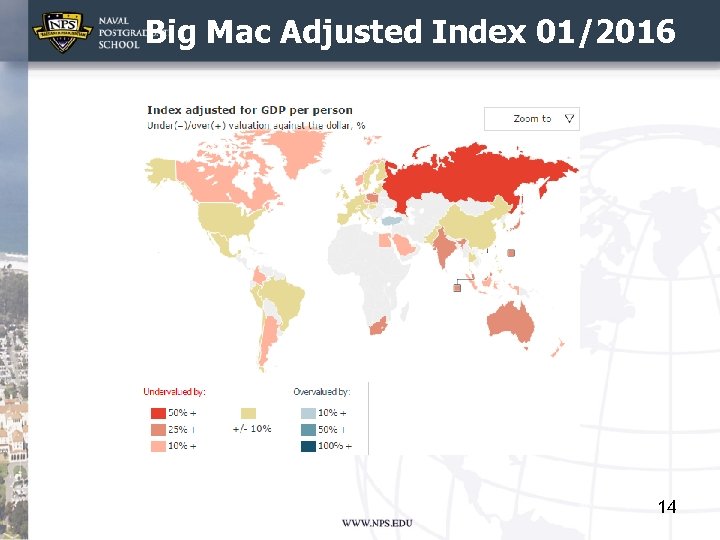
 Big Mac Index II • Problem: you would expect average burger prices to be cheaper in poor countries than in rich ones because labor costs are lower. • PPP signals where exchange rates should be heading in the long run, as a country like China gets richer, but it says little about today's equilibrium rate. • The relationship between prices and GDP person may be a better guide to the current fair value of a currency. The adjusted index uses the “line of best fit” between Big Mac prices and GDP person for 48 countries (plus the euro area). • The difference between the price predicted by the red line for each country, given its income person, and its actual price gives a supersized measure of currency under- and overvaluation. 12
 Big Mac Prices – Per Capita Incomes 13
 Big Mac Adjusted Index 01/2016 14
 Exchange Rate Determinants V • Big Mac Index 15
 Exchange Rate Determinants VI • Big Mac Index January. 2012 16
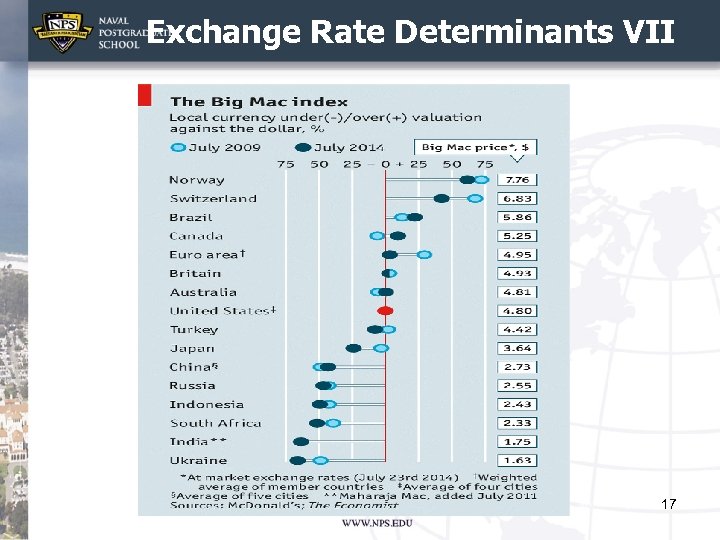 Exchange Rate Determinants VII 17
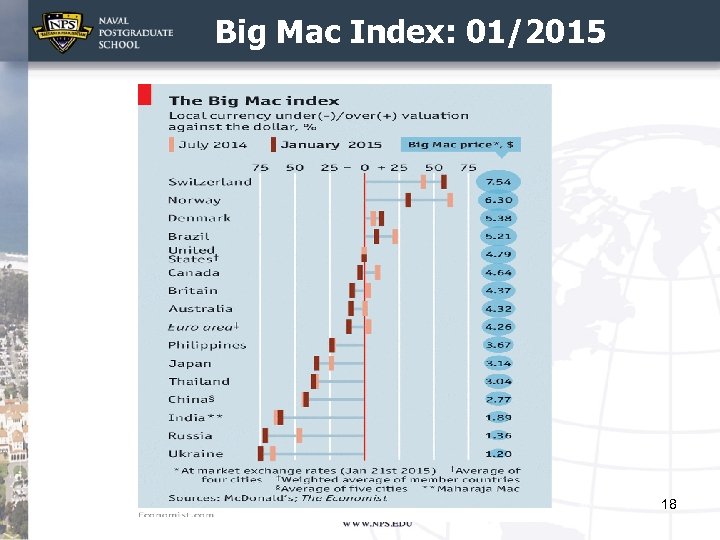 Big Mac Index: 01/2015 18
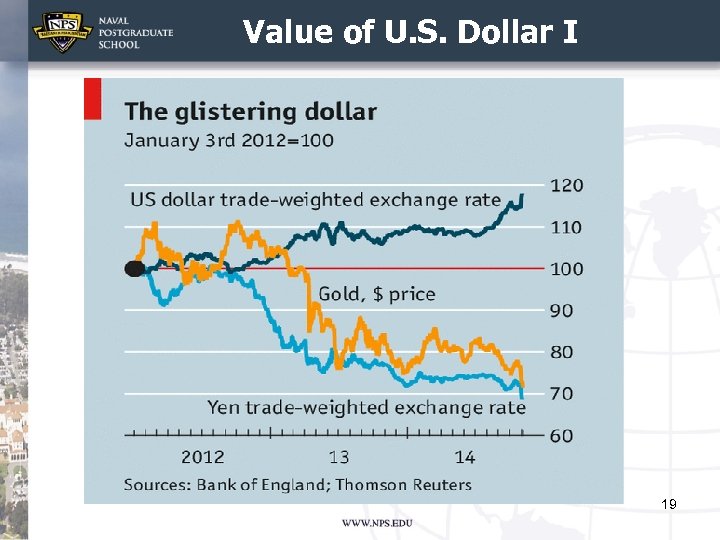 Value of U. S. Dollar I 19
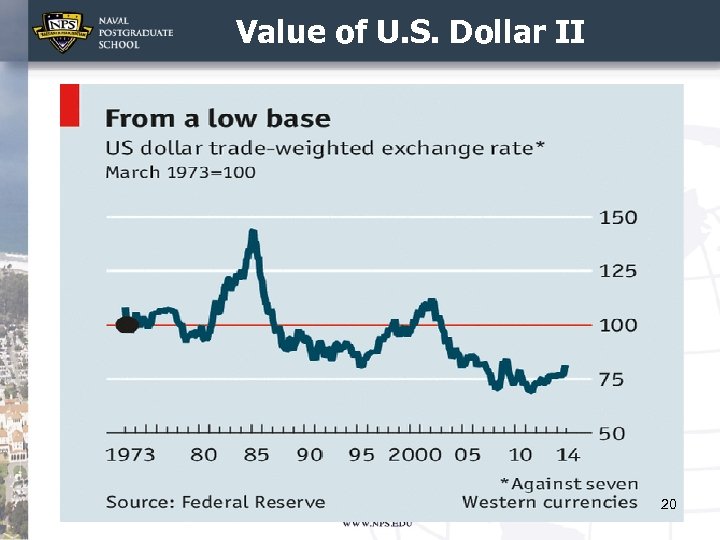 Value of U. S. Dollar II 20
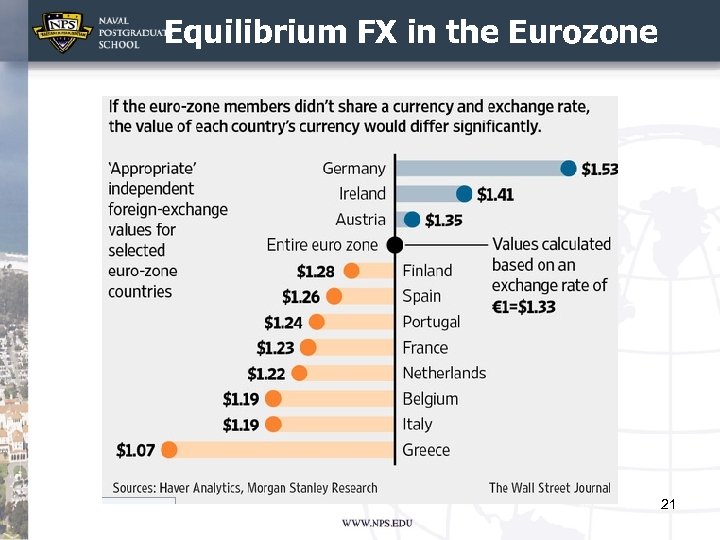 Equilibrium FX in the Eurozone 21
 Federal Reserve Tapering and Exchange Rates I • U. S. Federal Reserve policies and announcements are having a major impact on emerging market currencies. • In May 2013 the Federal Reserve hinted that it was considering easing its asset purchase program • Reaction was swift and brutal. • Pain not shared equally • Those countries hit the hardest by taper-talk were those with large current-account deficits – Turkey, India, Indonesia and Brazil • These countries had been doing well under QE 3, financing excesses of consumption over production with dollars, floating around globe looking for return • Hint of a QE 3 docking enough to panic foreign investors over fears of depreciation and default risk. 22
 Federal Reserve Tapering and Exchange Rates II • These same countries were the biggest beneficiaries of the Federal Reserve’s September announcement to back away from its pullback in asset buying • Message received in emerging markets: • In good times apply a firm hand to keep imports and currency down, and • Exports and reserves up • May get accused of manipulation, but a small price to pay for stability. 23
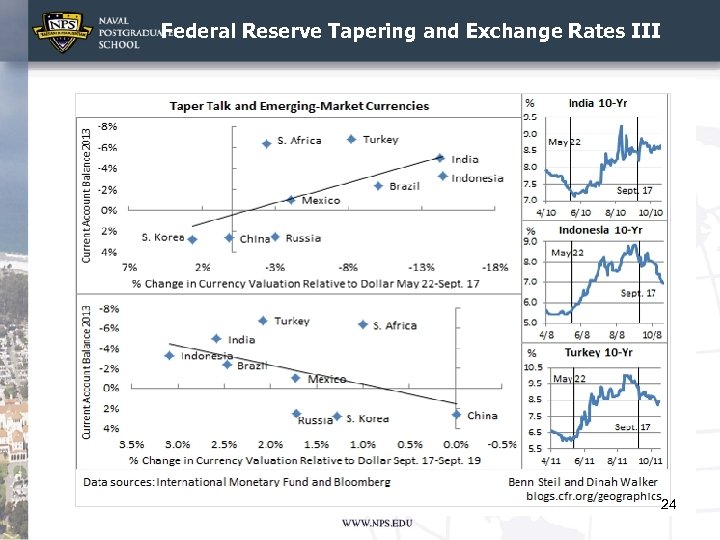 Federal Reserve Tapering and Exchange Rates III 24
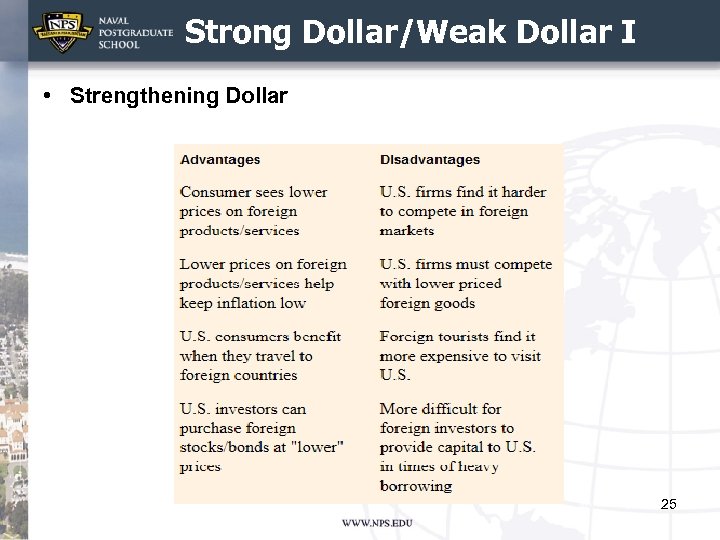 Strong Dollar/Weak Dollar I • Strengthening Dollar 25
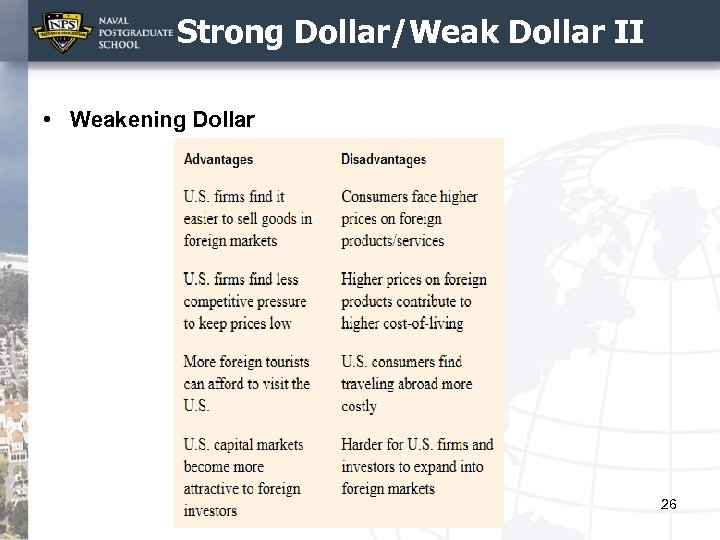 Strong Dollar/Weak Dollar II • Weakening Dollar 26
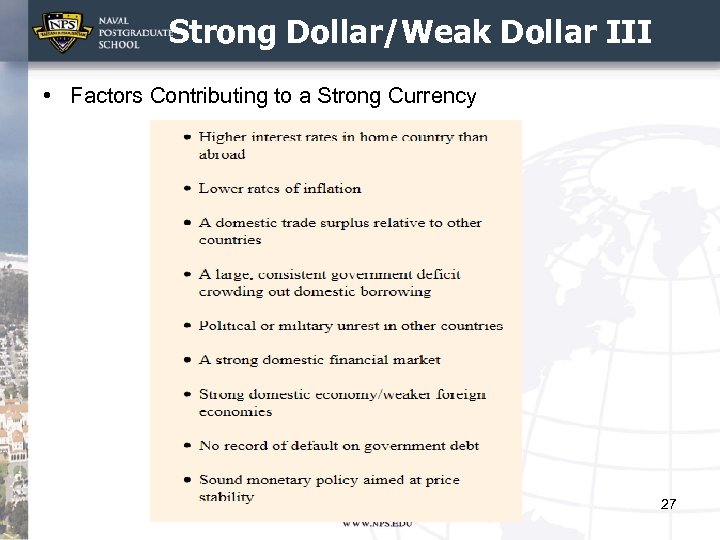 Strong Dollar/Weak Dollar III • Factors Contributing to a Strong Currency 27
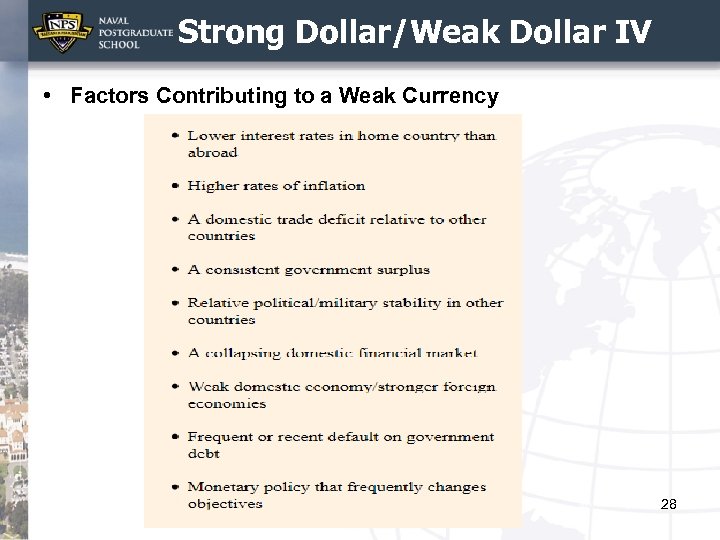 Strong Dollar/Weak Dollar IV • Factors Contributing to a Weak Currency 28
 Currency Manipulation I The Case of China • Many feel China has kept its currency week (undervalued) to give that country’s products an unfair advantage in the U. S. market • In 1994 China began to peg its currency to the U. S. dollar and kept it pegged at a constant rate through 2005 • In July 2005 it moved to a managed peg system in which the government allowed the currency to fluctuate within a range and the currency began to appreciate • In 2008 China halted appreciation of the RMB due to concerns about effects of global financial crisis on Chinese exports • In 2012 China again allowed more flexibility in the value of the RMB against the U. S. dollar. • Between 2005 and the end of 2012 the RMB appreciated by 29 almost 25% against the dollar.
 Currency Manipulation II • The Chinese government has used various policies including intervening in foreign currency markets and capital controls to manage its currency • Does so primarily by printing Yuan and selling it for U. S. currency and assets denominated in U. S. dollars – usually government bonds • It also manages the value of its currency through capital controls that limit buying and selling of RMB • As China engaged in currency interventions its holdings of foreign exchange reserves have increased from $715 billion in the first quarter 2005 to $3, 463 billion in first quarter of 2013 • This is equivalent to 38% of China’s GDP 30
 Currency Manipulation III • Some economists feel substantial increase in foreign exchange reserves as evidence of keeping the country’s currency weak • More recently some economists starting to question whether the yuan is still undervalued against the U. S. dollar • Especially when adjusting for differences in price levels – the real exchange rate • China has had a more rapid rate of inflation than the U. S. • They also point to fact that foreign exchange reserves have not grown as quickly since 2011 as some evidence of this position • In July 2012 the IMF changed its assessment of the RMB’s value from significantly undervalued to moderately undervalued. 31
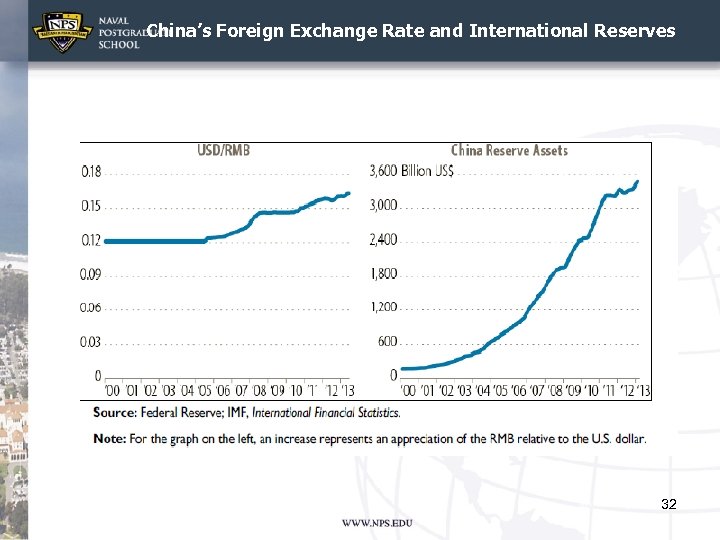 China’s Foreign Exchange Rate and International Reserves 32
 Currency Manipulation IV The Case of Switzerland • Before the global financial crisis of 2008 -09 Switzerland had a floating exchange rate • During crisis the Swiss franc was viewed as a “safe haven” currency – a currency investors trusted more than others in period of uncertainty • Increased investor demand for the franc put upward pressure on the currency raising concerns over export competitiveness • In 2009 and 2010 the Swiss central bank intervened in FX markets to prevent or limit appreciation against the euro by selling Swiss franks foreign currencies 33
 Currency Manipulation V • When a worsening of the Eurozone crisis put additional upward pressure on the Swiss franc, • The Swiss central bank announced in September 2011 it would buy “unlimited quantizes” of foreign currency • Action intended to keep the franc from appreciating above a specific value • As a result of the currency intervention, Switzerland’s foreign exchange reserves increased more than tenfold • From $46 billion in the fourth quarter of 2008 to $470 billion in the first quarter of 2013 • This represented about 73% of Swiss GDP • Before the financial crisis the Swiss central bank had last intervened in the foreign exchange market in 1995 • Most view the Swiss action as defensive and do not consider it a threat or an attempt to gain an unfair 34 advantage.
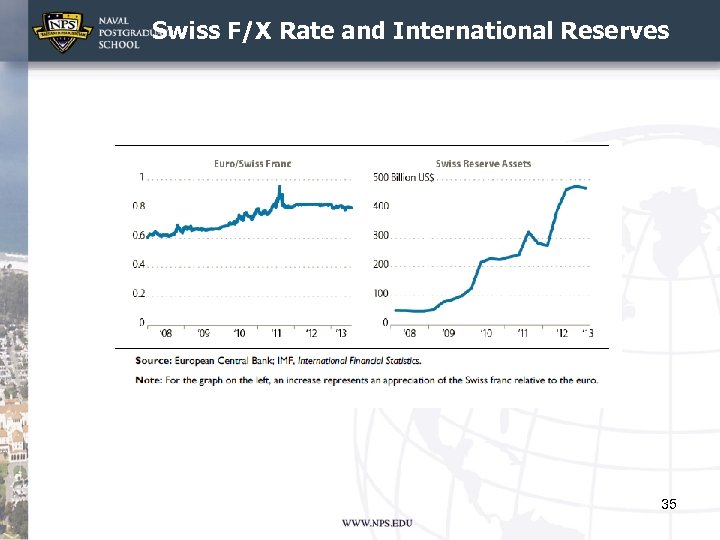 Swiss F/X Rate and International Reserves 35
 Gangon: Currency Manipulation I Joseph Gangon, “Combatting Widespread Currency Manipulation” Currency manipulators often identified on the based of excessive levels of foreign exchange reserves. • To be a currency manipulator a country must meet all of the following criteria: • Countries must have foreign exchange reserves that are greater than the value of six months of goods and service imports • Countries must have an average current account balance (as a percent of GDP) between 2001 and 2011 that is greater than zero • Countries must have increased their reserve stocks relative to GDP over the past 10 years • Low income countries as defined by the World Bank are excluded on the principle that they should have greater freedom than other countries to pursue economic development policies that may have negative externalities. 36
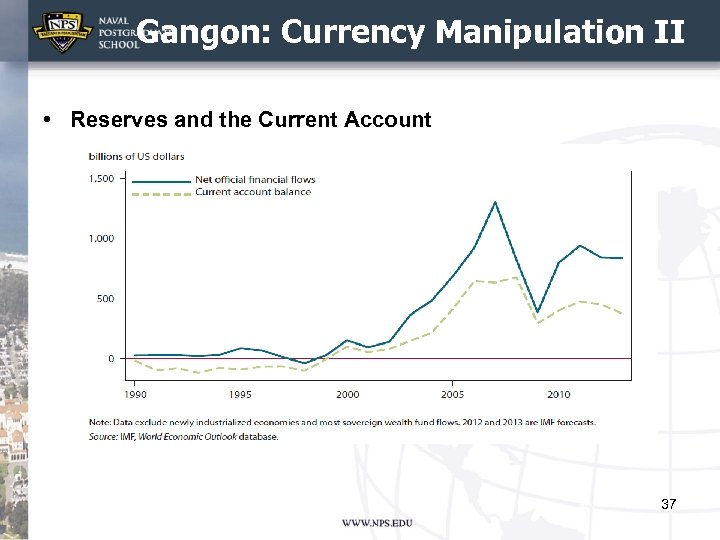 Gangon: Currency Manipulation II • Reserves and the Current Account 37
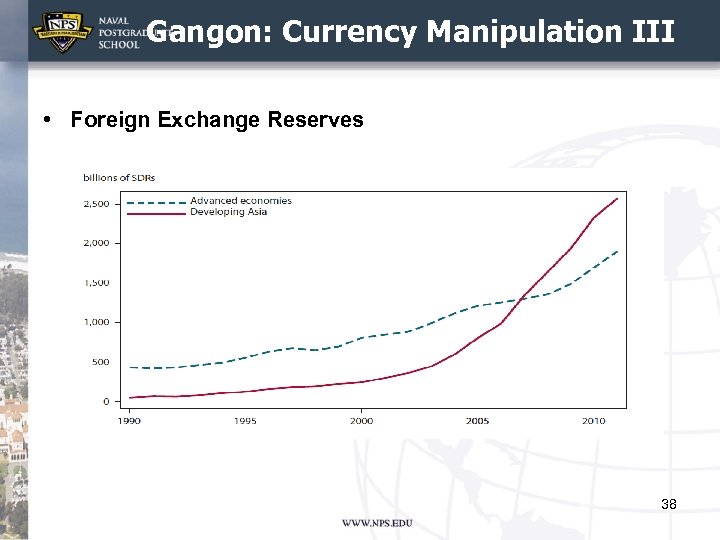 Gangon: Currency Manipulation III • Foreign Exchange Reserves 38
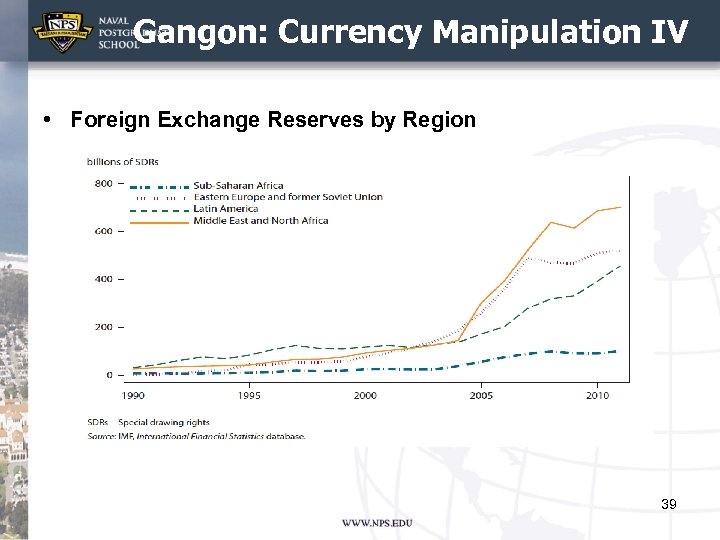 Gangon: Currency Manipulation IV • Foreign Exchange Reserves by Region 39
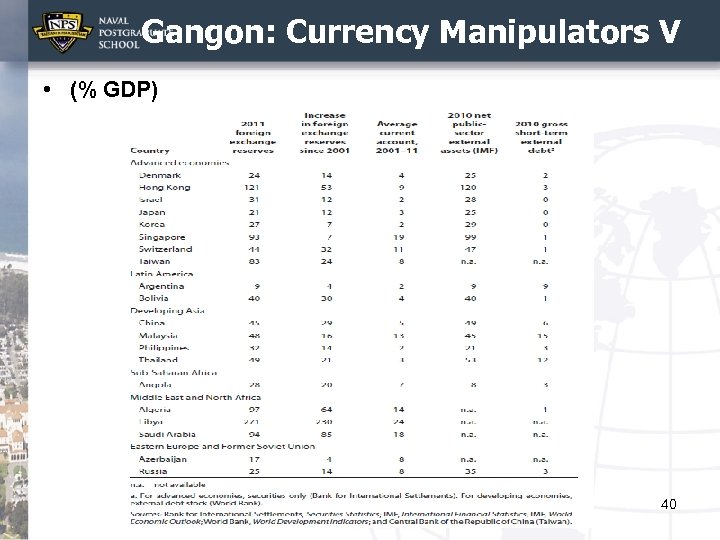 Gangon: Currency Manipulators V • (% GDP) 40
 41
41
 42
42
 43
43
 Recent Dollar Strengthening I • Mohamed El-Erain, The Return of the Dollar, Project Syndicate November 10, 2014 • As of early November 2014 the dollar has strengthened by more than 7% against a basket of a dozen global currencies – even more against the euro and the yen. • Has the potential to contribute to the rebalancing that has long eluded world economy – outcome far from certain • Two factors working in dollar’s favor – especially against the euro and yen • 1. The U. S. is consistently outperforming Europe and Japan in terms of economic growth and dynamism • Greater economic flexibility and entrepreneurial energy • More decisive policy action since the start of the global financial crisis 44
 Recent Dollar Strengthening II • 2. Monetary policies of U. S. , Europe and Japan are diverging • U. S. will be contracting QE policies • Europe and Japan will be expanding their monetary stimulus programs • Movements in currencies should promote stronger growth and mitigate deflation risk in Europe and Japan • Benefits of dollar’s rally far from guaranteed for both economic and financial reasons. • While U. S. economy is more resilient not robust enough to be able to adjust smoothly to a significant shift in external demand to other countries • U. S. politicians may interpret currency moves as a currency war prompting retaliatory response 45
 Recent Dollar Strengthening III • Also large currency moves tend to translate into financial market instability • By repeatedly repressing financial market volatility over last few years central bank policies have encouraged excessive risk taking • Has pushed many financial asset prices higher than economic fundamentals warrant • To the extent that continued currency market volatility spills over into other markets – and it will – the imperative for stronger economic fundamentals to validate asset prices will intensify 46
 Recent Dollar Strengthening IV • So while currency realignment has potential to boost the global economy by supporting recovery of some of its most challenged components this won’t occur automatically • For smooth sustained growth to occur countries will need to: • Introduce complementary growth enhancing policy adjustments: • Accelerating structural reforms • Balancing aggregate demand • Eliminating debt overhangs 47
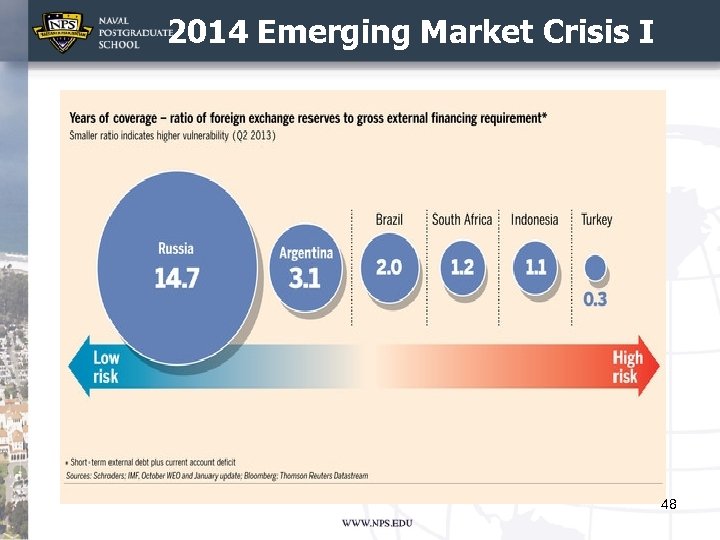 2014 Emerging Market Crisis I 48
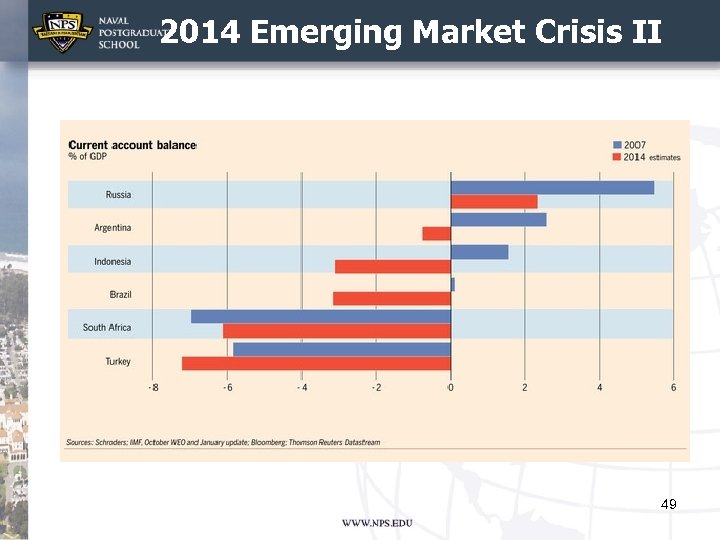 2014 Emerging Market Crisis II 49
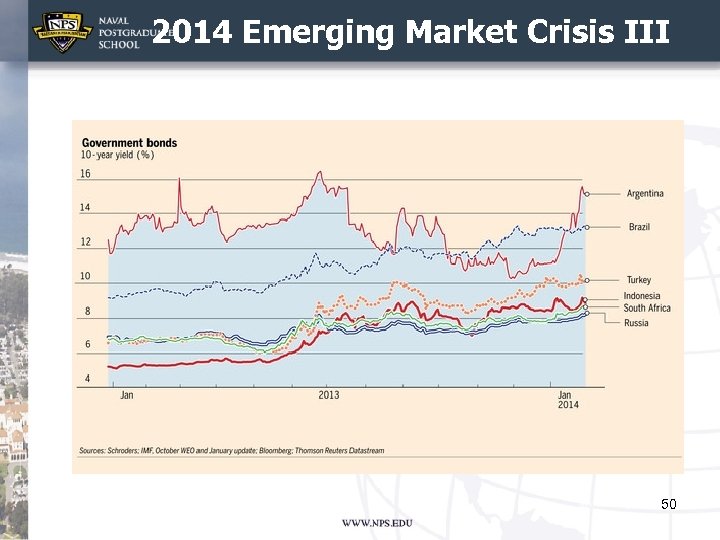 2014 Emerging Market Crisis III 50
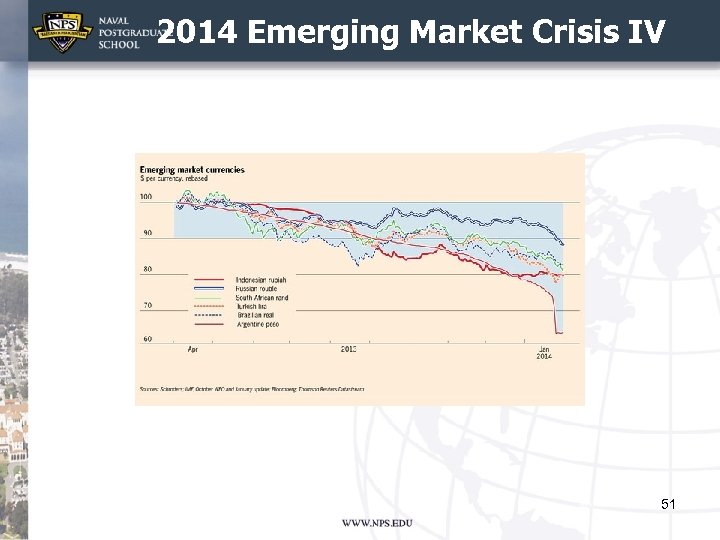 2014 Emerging Market Crisis IV 51
 2014 Emerging Market Crisis V 52
 2014 Emerging Market Crisis VI 53
 Impact on U. S. ? 54