


 Скачать презентацию Notes on Forensics Forensics What is forensic
5d2c70eb16513afbcad5504d36650fb5.ppt
- Количество слайдов: 23
 Notes on Forensics
 Forensics What is forensic medicine? • Latin word - forensics • Means public discussion or debate • Science used in justice system for legal purposes • Facts based on scientific investigation • Goal is to determine facts and truth • Uses multiple science specialties
 Forensic Anthropology Skeletal anatomy • 206 bones • Man = 12 pounds • Woman = 10 pounds What bones show • How person lived • Debilitation illnesses (rickets, polio, healed fractures) • Right handed or left handed • Clues to occupation
 Forensic Anthropology Questions about skeletal remains • Age of person at time of death • Sex of person (skull and pelvis) • Race • Height
 Odontology 1. Characteristics of teeth after death a. No other part lasts longer b. In fires, teeth usually only means to ID remains c. No two people have identical teeth 2. Requirements for identification a. Need dental records b. Dentists chart five surfaces of each tooth in a grid (odontogram) c. Can also provide “bite mark” evidence 3. Teeth useful in determining subject’s age
 Autopsies Definition and Purpose • To see for oneself • Surgical operation done on a dead body • To learn about person’s health and cause of death Legal Requirements • Coroner • Medical examiner • Pathologist
 Autopsies Reasons for autopsy • Determine which disease or injury caused death • Diagnosis - confirmation and understanding • Evaluate possible public health issue Preparation • If not required by law, permission needed from next of kin • Legal consent form
 Autopsies Procedure • Complete medical history and review of records • External physical exam • Body tag • Weight and height • Clothing and valuables identified • Scars, tattoos, injuries, wounds, bruises recorded • Foreign objects noted • Photos and x-rays taken, if needed
 Autopsies • Complete internal exam • Dissection of head and abdomen • Organs removed, weighed, measured, and examined • Tissue samples examined under microscope • Fluid samples tested for drugs, infection • After autopsy complete, legal death certificate Results • Natural death – disease or old age • Unnatural death – unnatural, unexpected, or unusual cases
 Autopsies Methods to determine time of death • Traditional indicators • Rigor mortis Begins three hours after death in face and eyelid muscles Takes twelve hours to affect entire body Process reverses after 36 hours • Lividity (hypostasis) Visible 30 -60 minutes after death Red cells settle and skin below turns red In 6 -10 hours, color becomes permanent
 Autopsies • Body temperature Falls at rate of one degree per hour Obesity and warm environment slows cooling • None of the above are totally reliable and can be manipulated
 Serology Blood type n Four types (A, B, O, and n Rh factor n Female cells have Barr Body AB)
 Serology Criminology n Kastle-Meyer test to determine if it is indeed blood n Precipitin test – determines animal or human blood n Can determine type and gender from blood n Provides reliable and informative evidence
 DNA What is DNA? n Nucleus of cells contain RNA/DNA n DNA = deoxyribonucleic acid n Nucleus has 23 pairs of chromosomes made up of DNA n Within each pair, one chromosome from sperm and one from egg
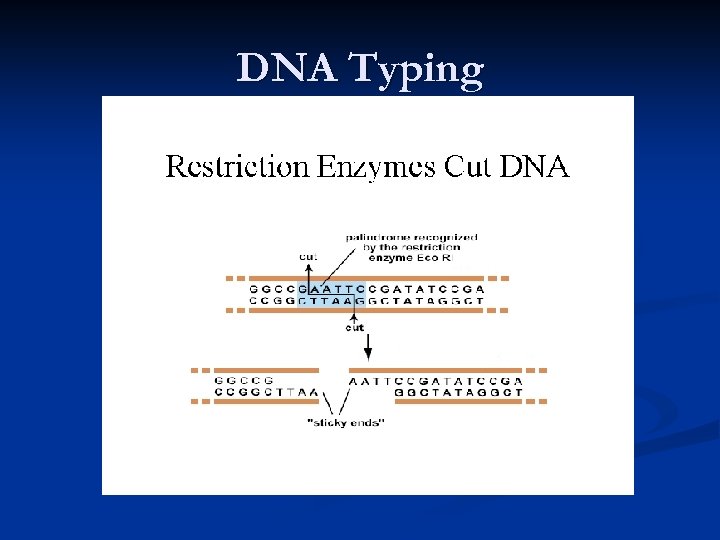
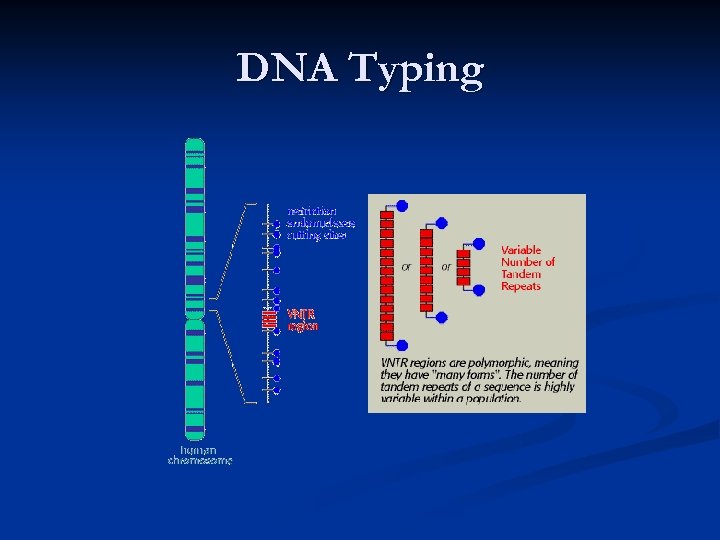
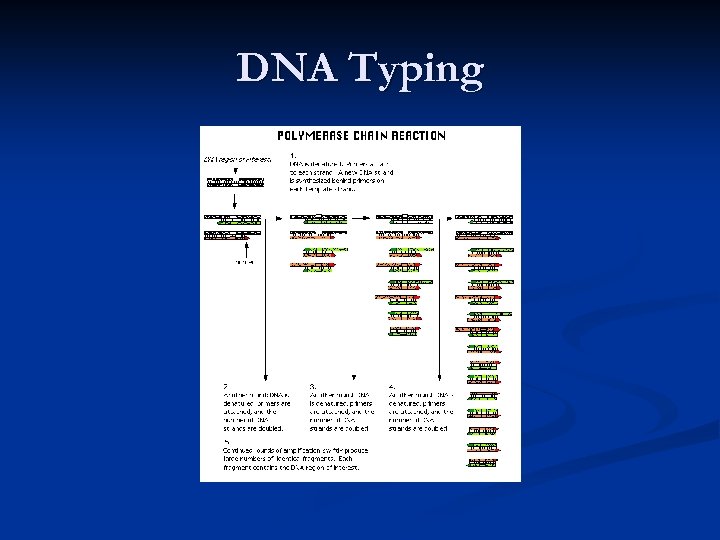
 DNA Typing What makes DNA individual? n Four chemicals: Adenine, Guanine, Cytosine, and Thymine n Chemical strung together=DNA code n Some sections of DNA vary from individual to individual n Scientists can link a strand of DNA to a given individual
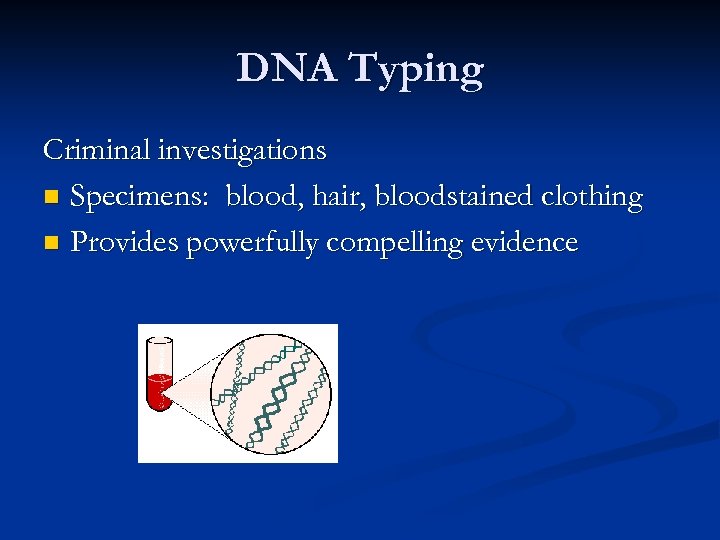 DNA Typing Criminal investigations n Specimens: blood, hair, bloodstained clothing n Provides powerfully compelling evidence
 DNA Typing
 DNA Typing
 DNA Typing
 DNA Typing
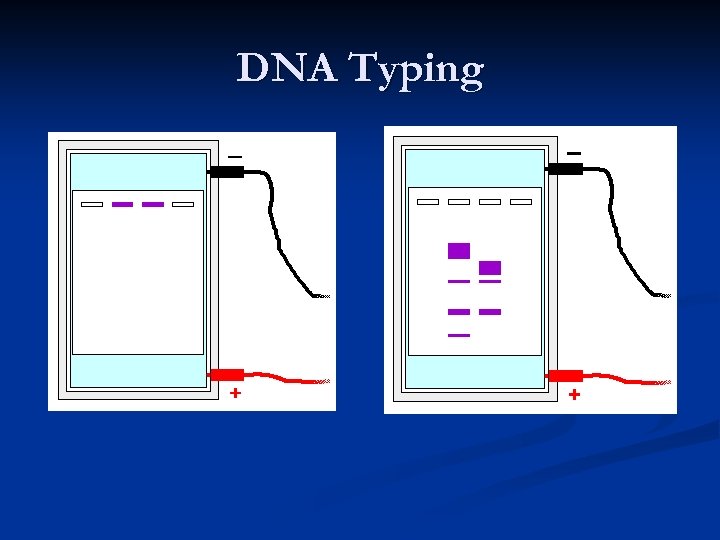
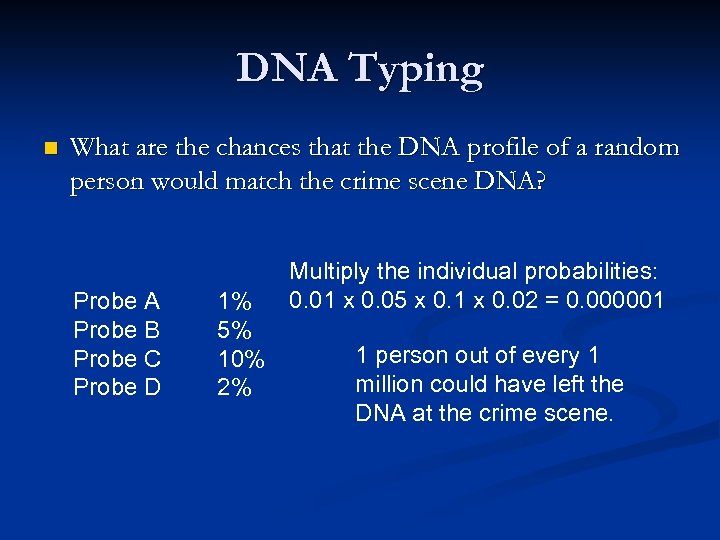 DNA Typing n What are the chances that the DNA profile of a random person would match the crime scene DNA? Probe A Probe B Probe C Probe D 1% 5% 10% 2% Multiply the individual probabilities: 0. 01 x 0. 05 x 0. 1 x 0. 02 = 0. 000001 1 person out of every 1 million could have left the DNA at the crime scene.
 Other Tools Firearms and Toolmarks • Typically, this includes matching bullets to the gun that fired them. • Toolmark identification involves the identifying characteristics between tools, such as a pry bar, and the object on which it is used, such as a door frame. • Also included in the category are explosives and imprint evidence.
 Other Tools Forensic Profiling • When a specially trained psychiatrist or investigator can examine certain crime scenes to come up with a personality profile of the offender. Document Examination • This discipline involves all special relationships that may exist between document and inscription and how it relates to a person or sequence of events. • This includes forgery, counterfeiting, and handwriting analysis.