 Скачать презентацию NOTE This presentation was not made for public
f4f622de263b05504f53c9c7e0ae339b.ppt
- Количество слайдов: 55



NOTE: This presentation was not made for public use. Please do not use this presentations without my permission and the permission of each of the authors of the photographs, quotes, and other materials that they contain. Thank you, Vicki Hughes
CHAPTER 5 A The Skeletal System
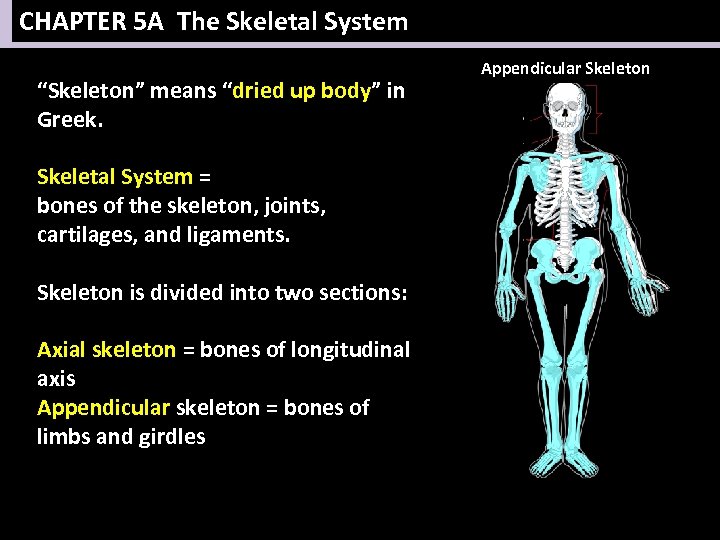
CHAPTER 5 A The Skeletal System “Skeleton” means “dried up body” in Greek. Skeletal System = bones of the skeleton, joints, cartilages, and ligaments. Skeleton is divided into two sections: Axial skeleton = bones of longitudinal axis Appendicular skeleton = bones of limbs and girdles Appendicular Skeleton Axial Skeleton
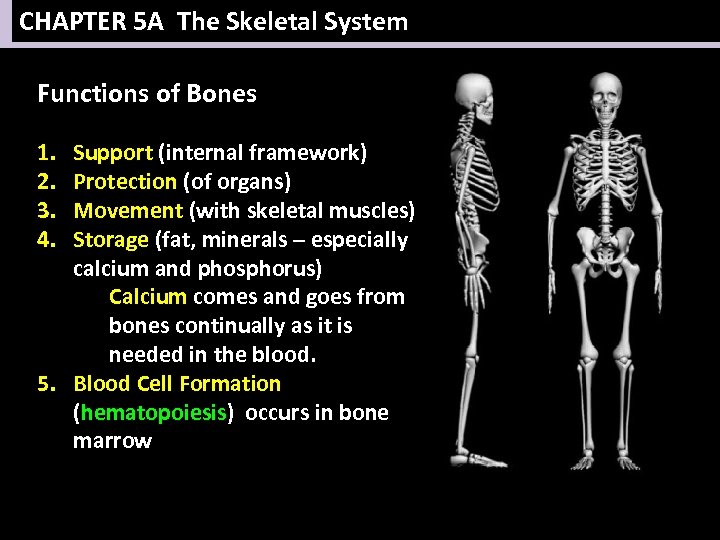
CHAPTER 5 A The Skeletal System Functions of Bones 1. 2. 3. 4. Support (internal framework) Protection (of organs) Movement (with skeletal muscles) Storage (fat, minerals – especially calcium and phosphorus) Calcium comes and goes from bones continually as it is needed in the blood. 5. Blood Cell Formation (hematopoiesis) occurs in bone marrow
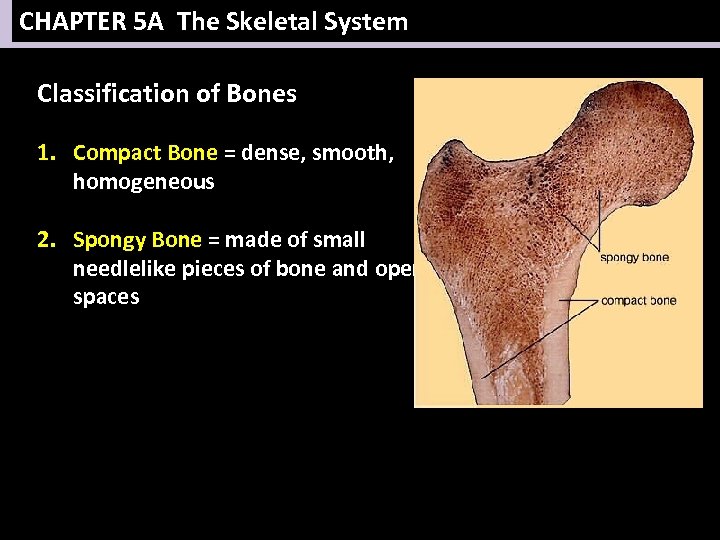
CHAPTER 5 A The Skeletal System Classification of Bones 1. Compact Bone = dense, smooth, homogeneous 2. Spongy Bone = made of small needlelike pieces of bone and open spaces
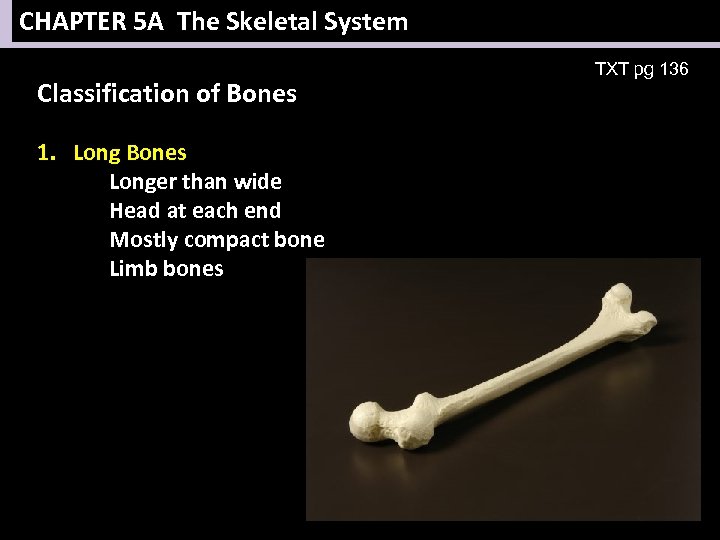
CHAPTER 5 A The Skeletal System Classification of Bones 1. Long Bones Longer than wide Head at each end Mostly compact bone Limb bones TXT pg 136
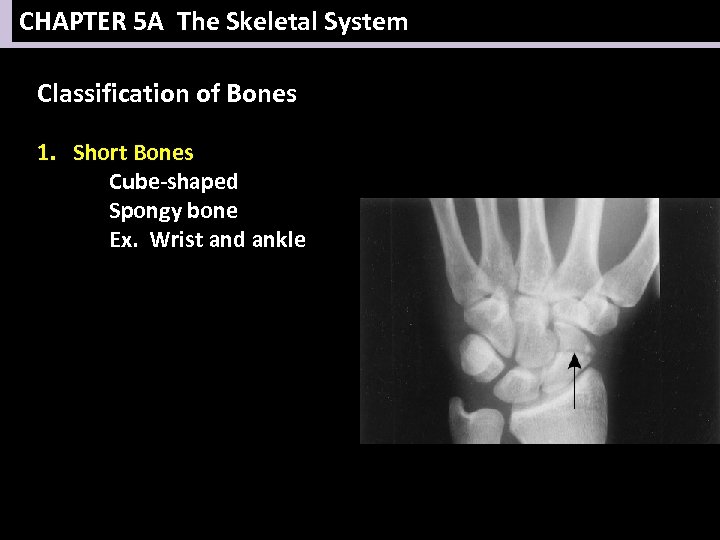
CHAPTER 5 A The Skeletal System Classification of Bones 1. Short Bones Cube-shaped Spongy bone Ex. Wrist and ankle
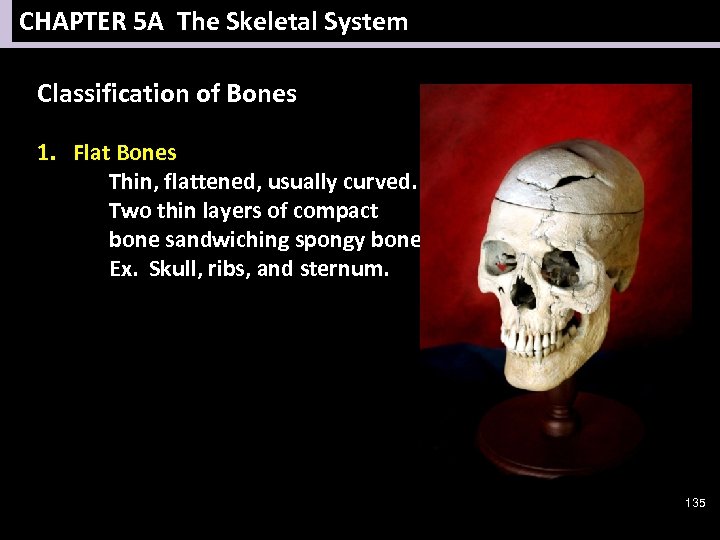
CHAPTER 5 A The Skeletal System Classification of Bones 1. Flat Bones Thin, flattened, usually curved. Two thin layers of compact bone sandwiching spongy bone. Ex. Skull, ribs, and sternum. 135
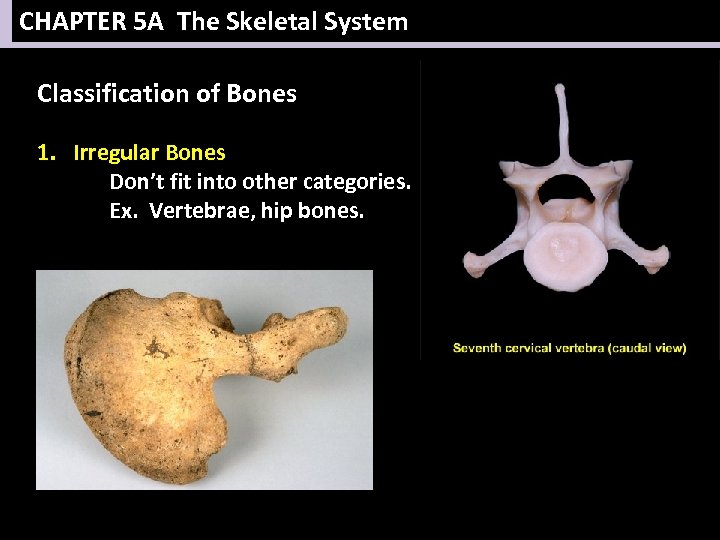
CHAPTER 5 A The Skeletal System Classification of Bones 1. Irregular Bones Don’t fit into other categories. Ex. Vertebrae, hip bones.
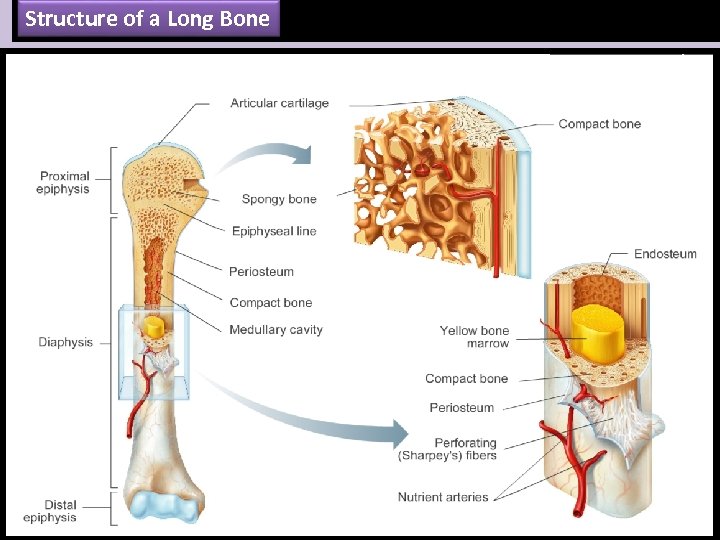
Structure of a Long Bone 137
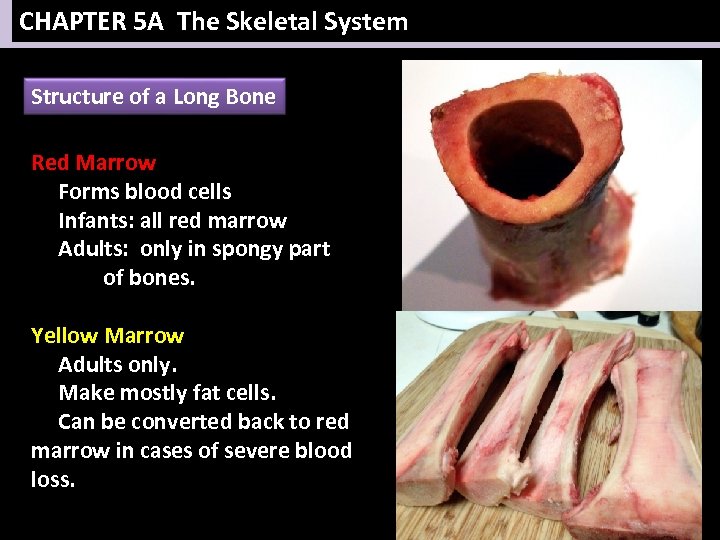
CHAPTER 5 A The Skeletal System Structure of a Long Bone Red Marrow Forms blood cells Infants: all red marrow Adults: only in spongy part of bones. Yellow Marrow Adults only. Make mostly fat cells. Can be converted back to red marrow in cases of severe blood loss.
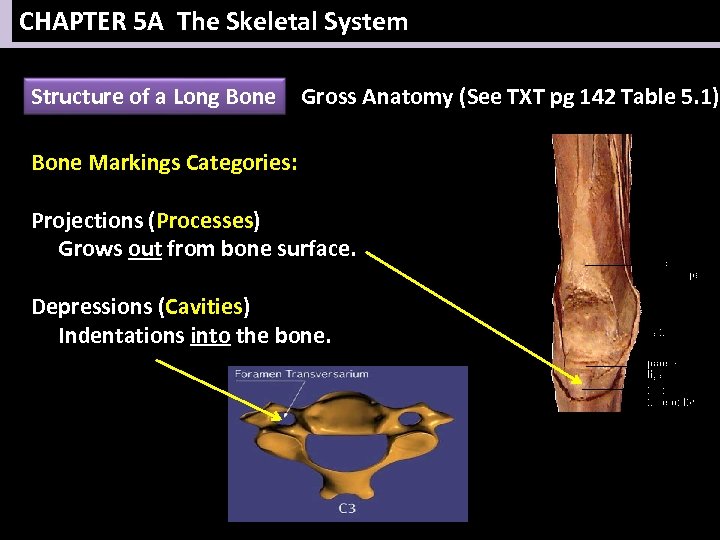
CHAPTER 5 A The Skeletal System Structure of a Long Bone Gross Anatomy (See TXT pg 142 Table 5. 1) Bone Markings Categories: Projections (Processes) Grows out from bone surface. Depressions (Cavities) Indentations into the bone.
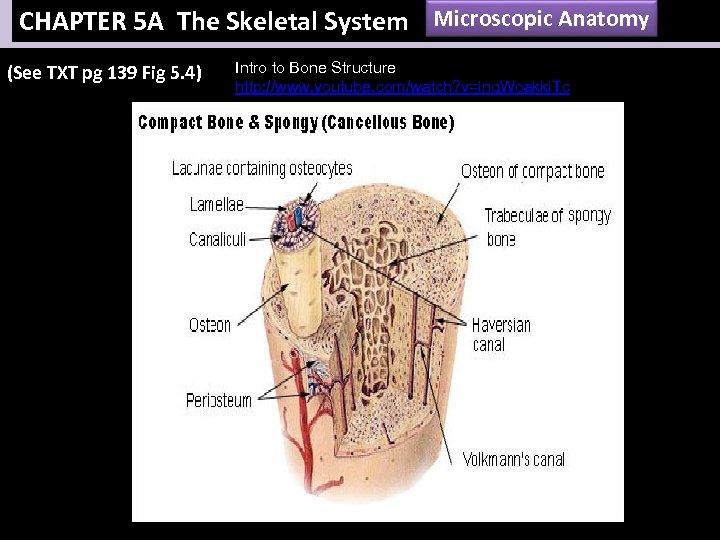
CHAPTER 5 A The Skeletal System Microscopic Anatomy (See TXT pg 139 Fig 5. 4) Intro to Bone Structure http: //www. youtube. com/watch? v=inq. Woakki. Tc
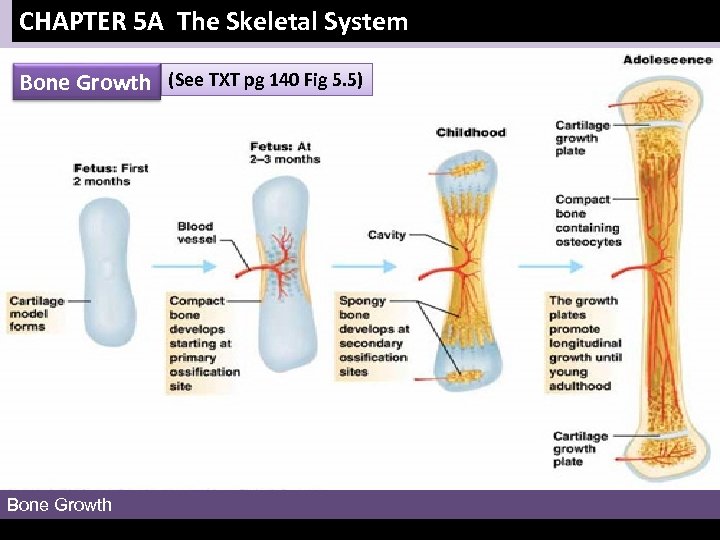
CHAPTER 5 A The Skeletal System Bone Growth (See TXT pg 140 Fig 5. 5) Bone Growth
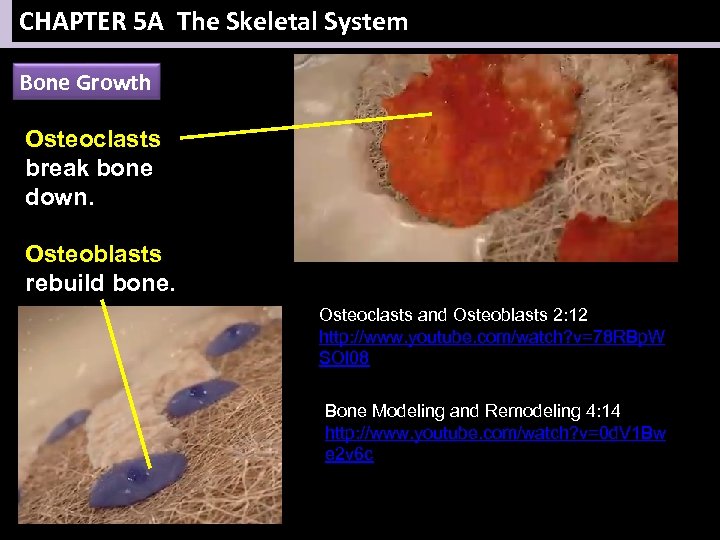
CHAPTER 5 A The Skeletal System Bone Growth Osteoclasts break bone down. Osteoblasts rebuild bone. Osteoclasts and Osteoblasts 2: 12 http: //www. youtube. com/watch? v=78 RBp. W SOl 08 Bone Modeling and Remodeling 4: 14 http: //www. youtube. com/watch? v=0 d. V 1 Bw e 2 v 6 c
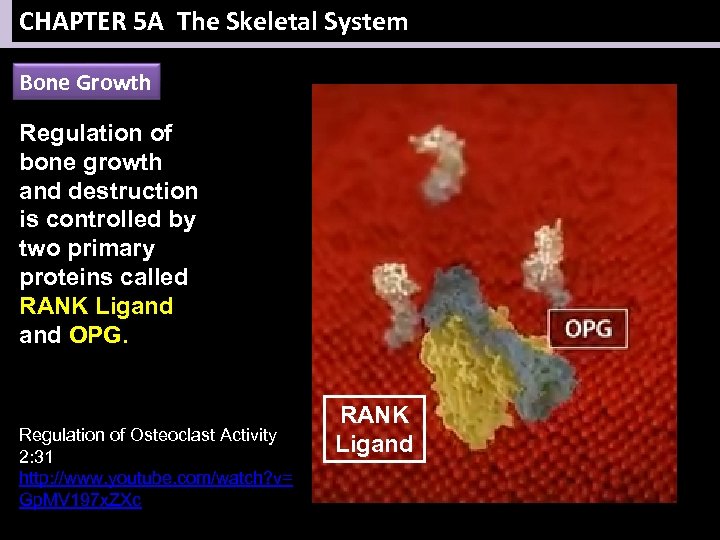
CHAPTER 5 A The Skeletal System Bone Growth Regulation of bone growth and destruction is controlled by two primary proteins called RANK Ligand OPG. Regulation of Osteoclast Activity 2: 31 http: //www. youtube. com/watch? v= Gp. MV 197 x. ZXc RANK Ligand
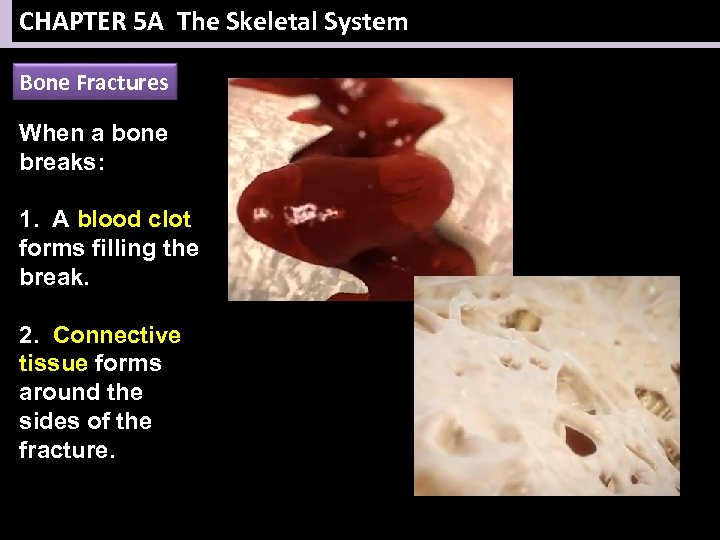
CHAPTER 5 A The Skeletal System Bone Fractures When a bone breaks: 1. A blood clot forms filling the break. 2. Connective tissue forms around the sides of the fracture.
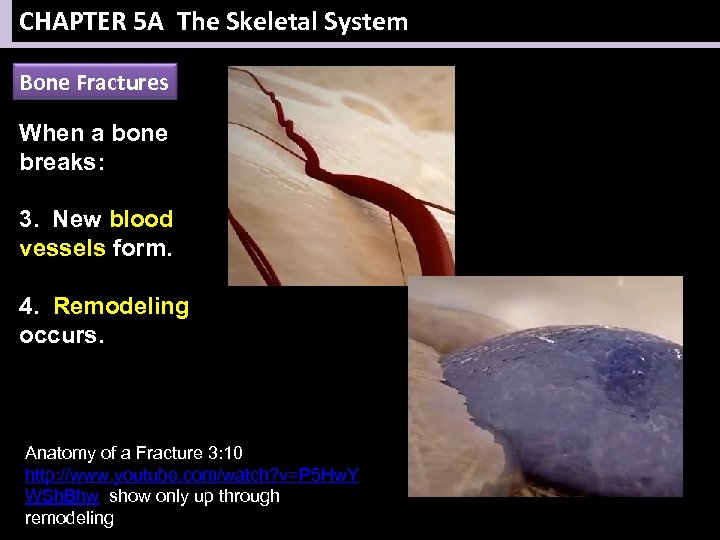
CHAPTER 5 A The Skeletal System Bone Fractures When a bone breaks: 3. New blood vessels form. 4. Remodeling occurs. Anatomy of a Fracture 3: 10 http: //www. youtube. com/watch? v=P 5 Hw. Y WSh. Bhw show only up through remodeling
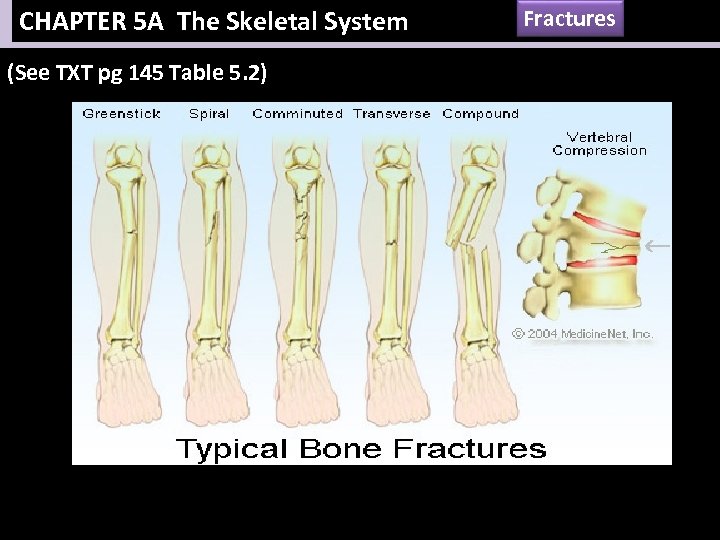
CHAPTER 5 A The Skeletal System (See TXT pg 145 Table 5. 2) Fractures
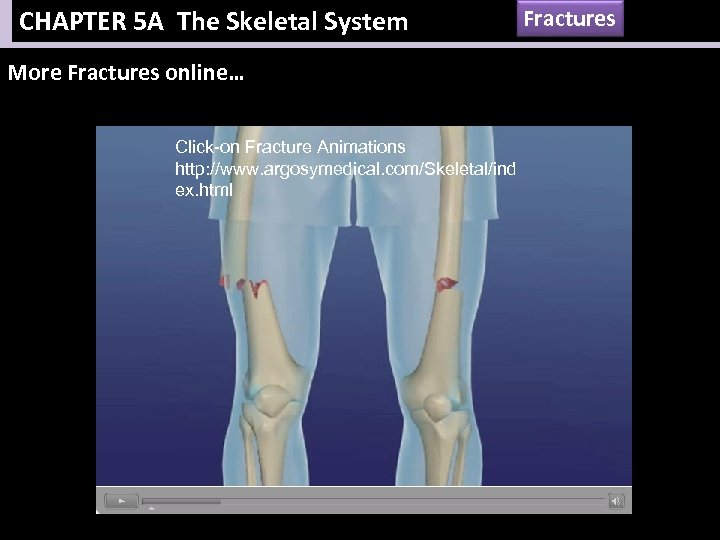
CHAPTER 5 A The Skeletal System More Fractures online… Click-on Fracture Animations http: //www. argosymedical. com/Skeletal/ind ex. html Fractures
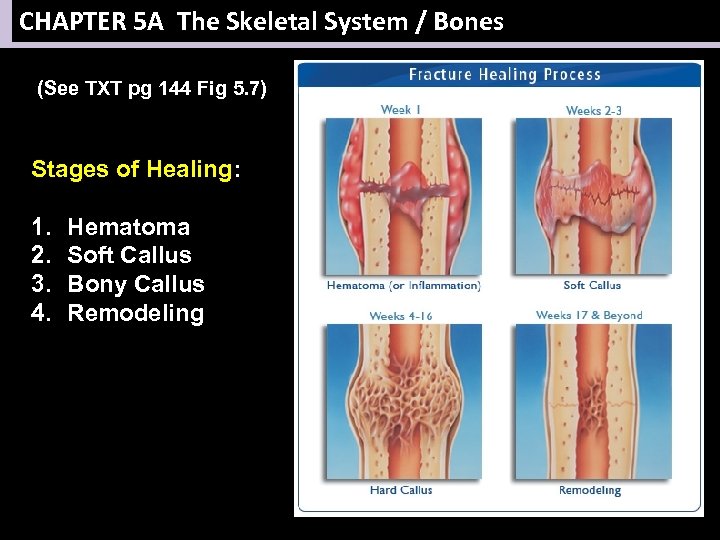
CHAPTER 5 A The Skeletal System / Bones (See TXT pg 144 Fig 5. 7) Stages of Healing: 1. 2. 3. 4. Hematoma Soft Callus Bony Callus Remodeling
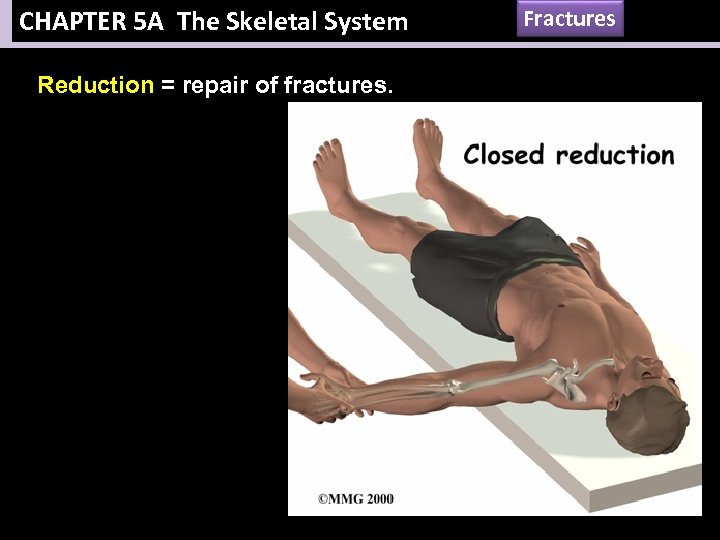
CHAPTER 5 A The Skeletal System Reduction = repair of fractures. Fractures
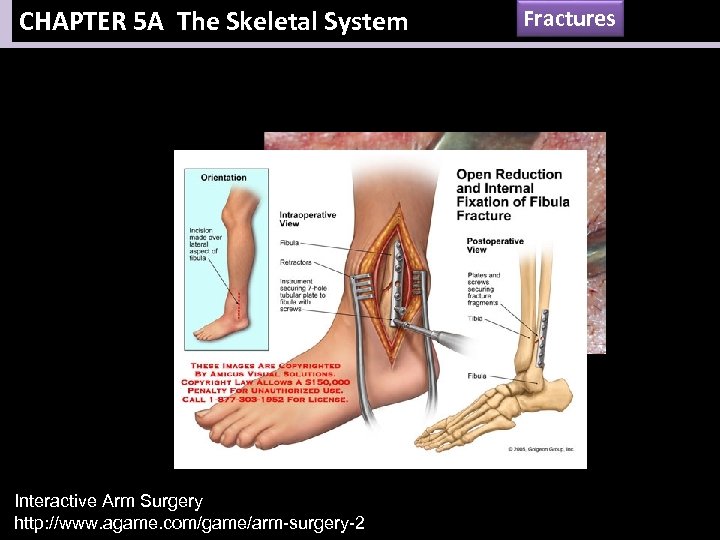
CHAPTER 5 A The Skeletal System Interactive Arm Surgery http: //www. agame. com/game/arm-surgery-2 Fractures
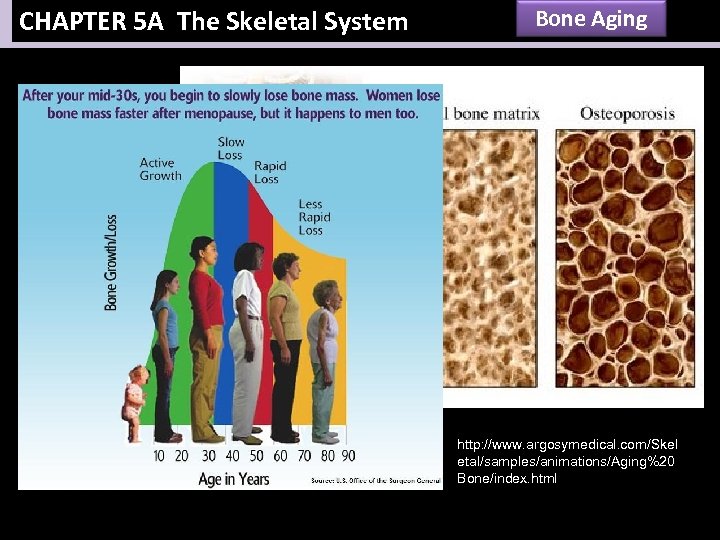
CHAPTER 5 A The Skeletal System Bone Aging http: //www. argosymedical. com/Skel etal/samples/animations/Aging%20 Bone/index. html
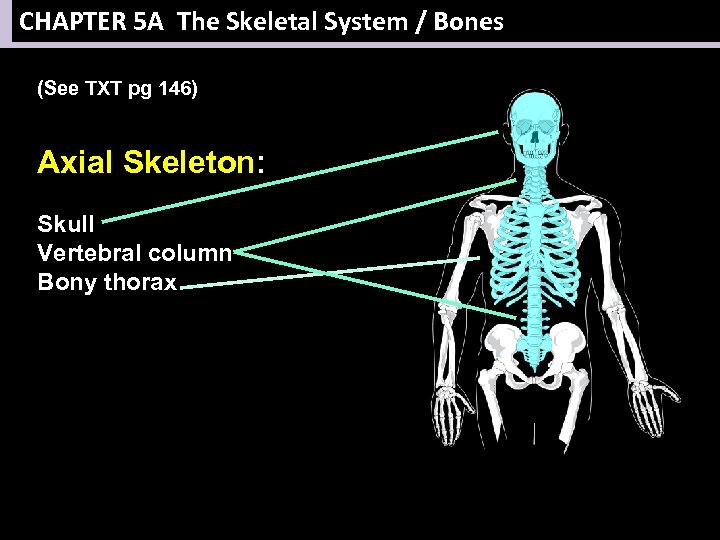
CHAPTER 5 A The Skeletal System / Bones (See TXT pg 146) Axial Skeleton: Skull Vertebral column Bony thorax
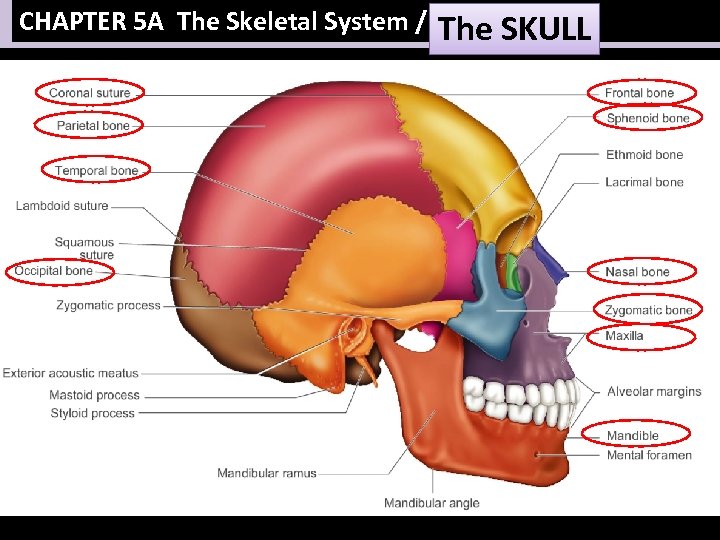
CHAPTER 5 A The Skeletal System / Bones. SKULL The (See TXT pg 147)
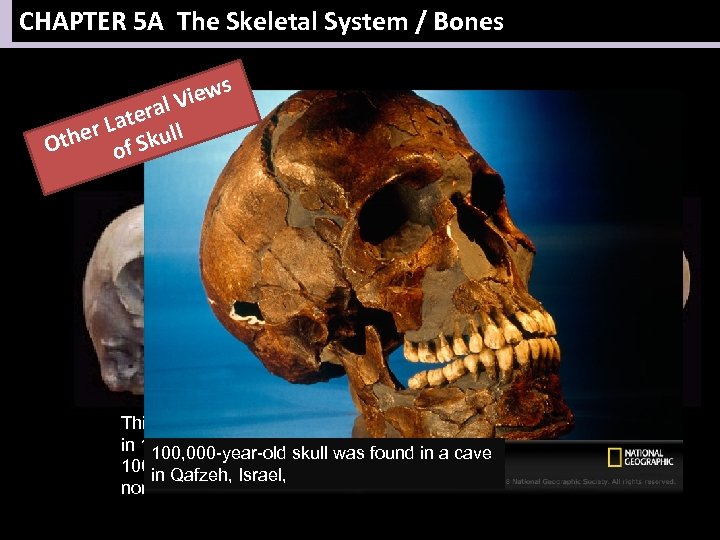
CHAPTER 5 A The Skeletal System / Bones iews V eral r Lat kull e Oth of S Ancient man following skull surgery. This weird looking skull is the famous Starchild Skull that was found in 1930. The Starchild Skull was discovered in a mine tunnel about 100, 000 -year-old skull was found in a cave 100 in Qafzeh, Israel, of Chihuahua, Mexico along with several other miles southwest normal skeletons.
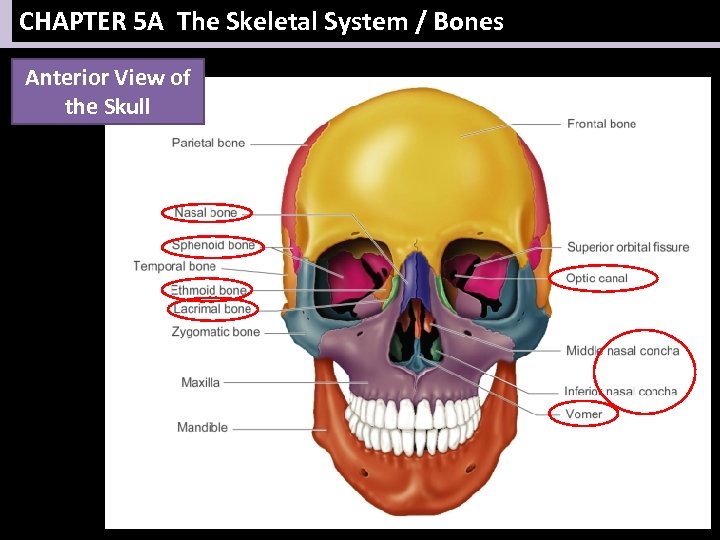
CHAPTER 5 A The Skeletal System / Bones Anterior View of the Skull 149
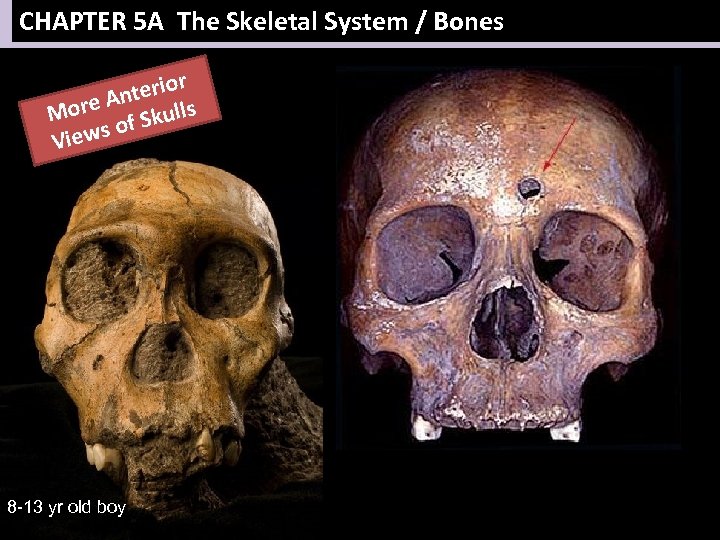
CHAPTER 5 A The Skeletal System / Bones r nterio ore A Skulls M ws of Vie 8 -13 yr old boy
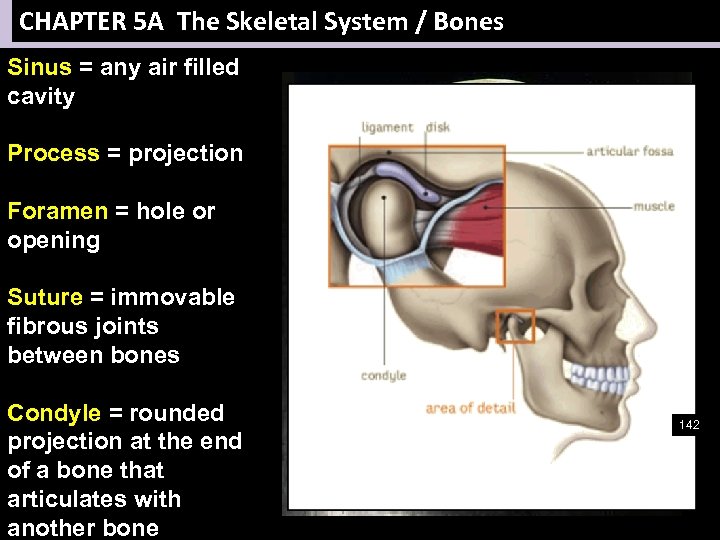
CHAPTER 5 A The Skeletal System / Bones Sinus = any air filled cavity Process = projection Foramen = hole or opening Suture = immovable fibrous joints between bones Condyle = rounded projection at the end of a bone that articulates with another bone 142
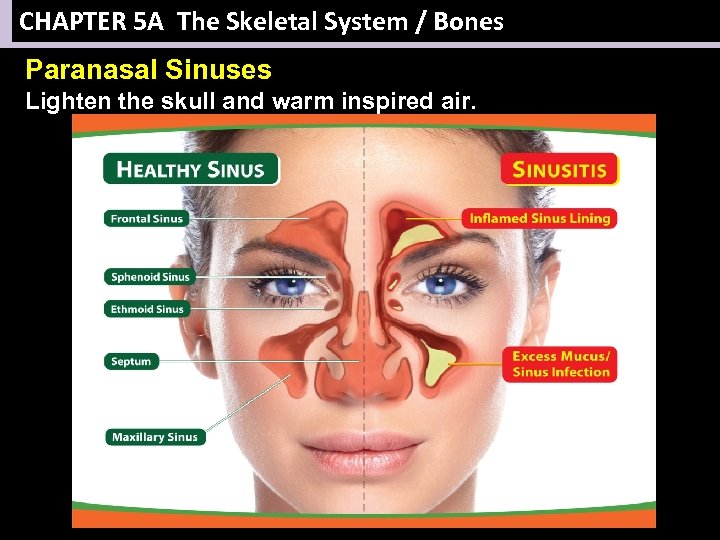
CHAPTER 5 A The Skeletal System / Bones Paranasal Sinuses Lighten the skull and warm inspired air.
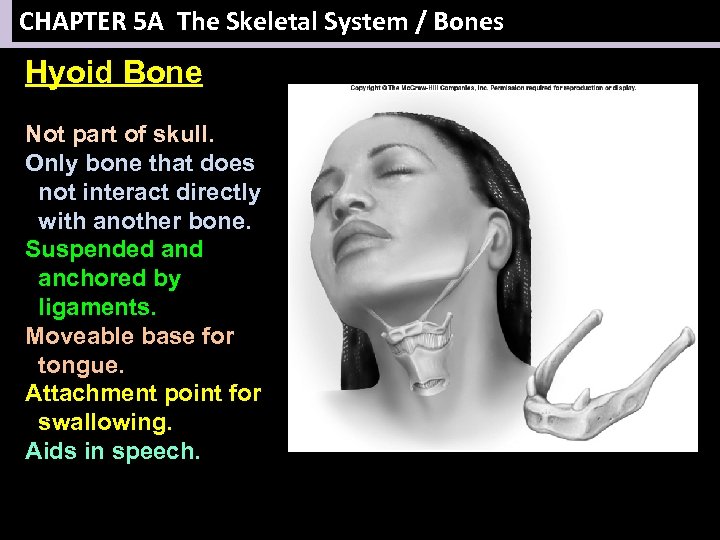
CHAPTER 5 A The Skeletal System / Bones Hyoid Bone Not part of skull. Only bone that does not interact directly with another bone. Suspended anchored by ligaments. Moveable base for tongue. Attachment point for swallowing. Aids in speech.
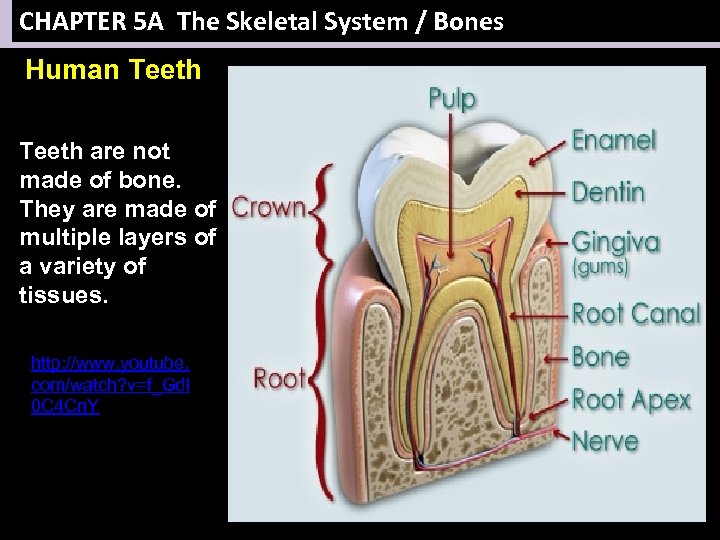
CHAPTER 5 A The Skeletal System / Bones Human Teeth are not made of bone. They are made of multiple layers of a variety of tissues. http: //www. youtube. com/watch? v=f_Gdl 0 C 4 Cn. Y
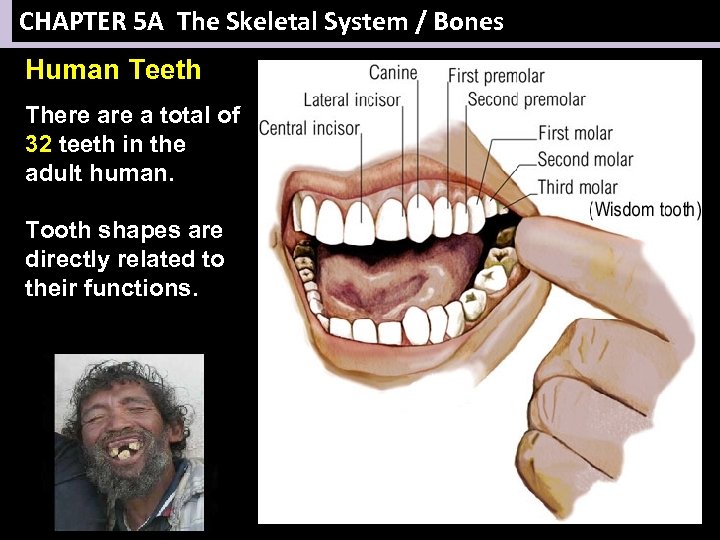
CHAPTER 5 A The Skeletal System / Bones Human Teeth There a total of 32 teeth in the adult human. Tooth shapes are directly related to their functions.
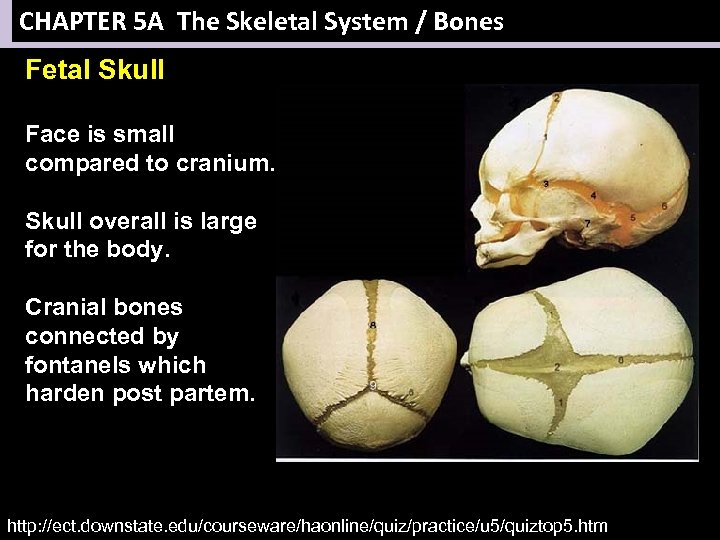
CHAPTER 5 A The Skeletal System / Bones Fetal Skull Face is small compared to cranium. Skull overall is large for the body. Cranial bones connected by fontanels which harden post partem. http: //ect. downstate. edu/courseware/haonline/quiz/practice/u 5/quiztop 5. htm
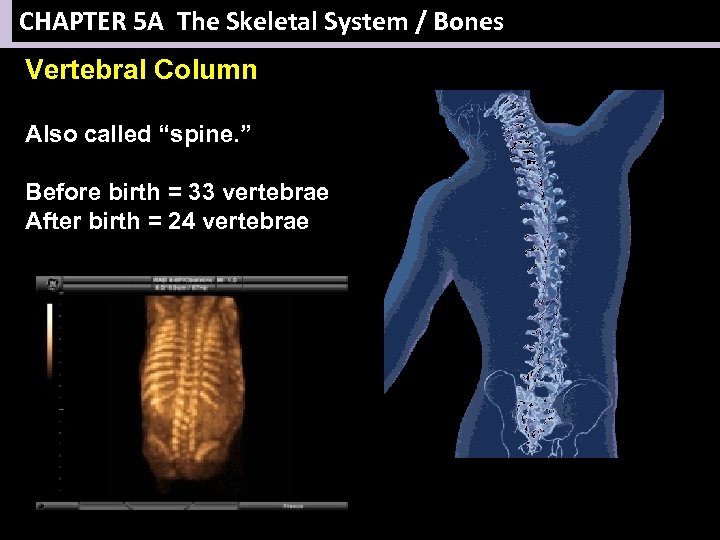
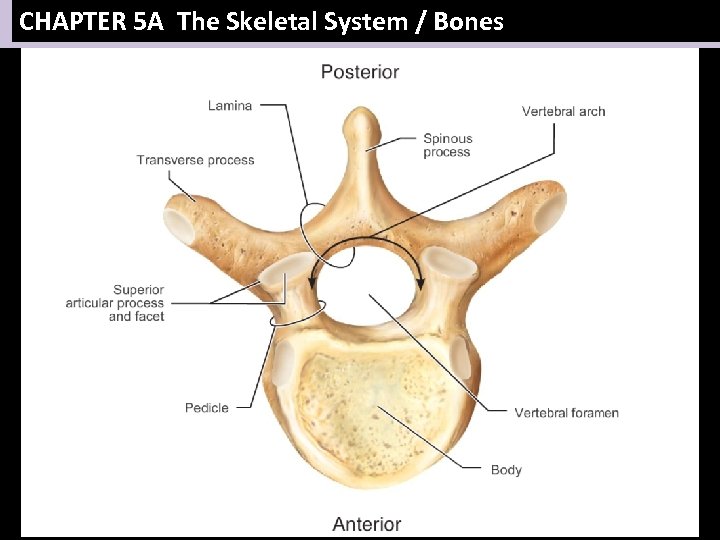
CHAPTER 5 A The Skeletal System / Bones Vertebral Column Also called “spine. ” Before birth = 33 vertebrae After birth = 24 vertebrae
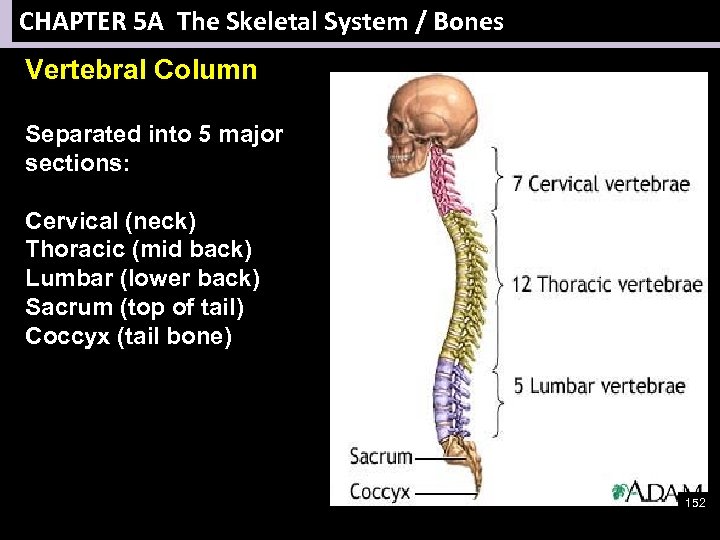
CHAPTER 5 A The Skeletal System / Bones Vertebral Column Separated into 5 major sections: Cervical (neck) Thoracic (mid back) Lumbar (lower back) Sacrum (top of tail) Coccyx (tail bone) 152
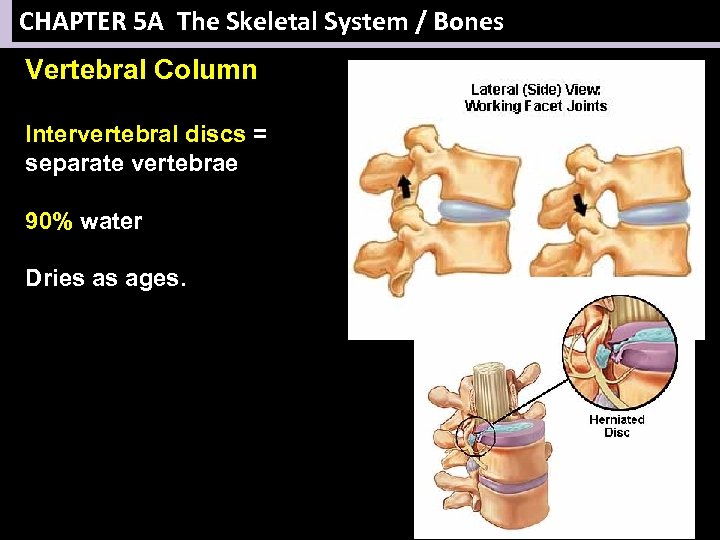
CHAPTER 5 A The Skeletal System / Bones Vertebral Column Intervertebral discs = separate vertebrae 90% water Dries as ages.
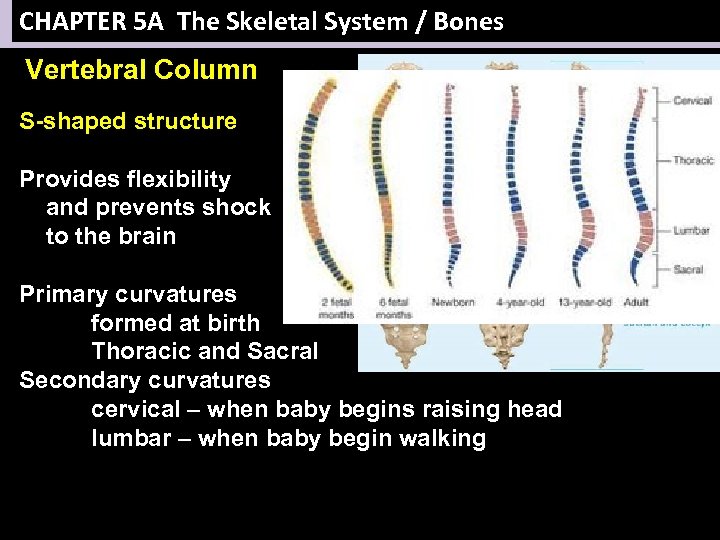
CHAPTER 5 A The Skeletal System / Bones Vertebral Column S-shaped structure Provides flexibility and prevents shock to the brain Primary curvatures formed at birth Thoracic and Sacral Secondary curvatures cervical – when baby begins raising head lumbar – when baby begin walking
CHAPTER 5 A The Skeletal System / Bones
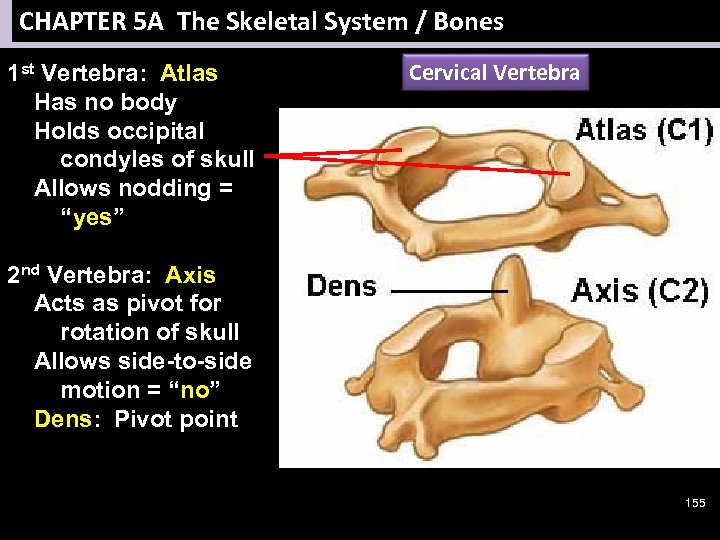
CHAPTER 5 A The Skeletal System / Bones 1 st Vertebra: Atlas Has no body Holds occipital condyles of skull Allows nodding = “yes” Cervical Vertebra 2 nd Vertebra: Axis Acts as pivot for rotation of skull Allows side-to-side motion = “no” Dens: Pivot point 155
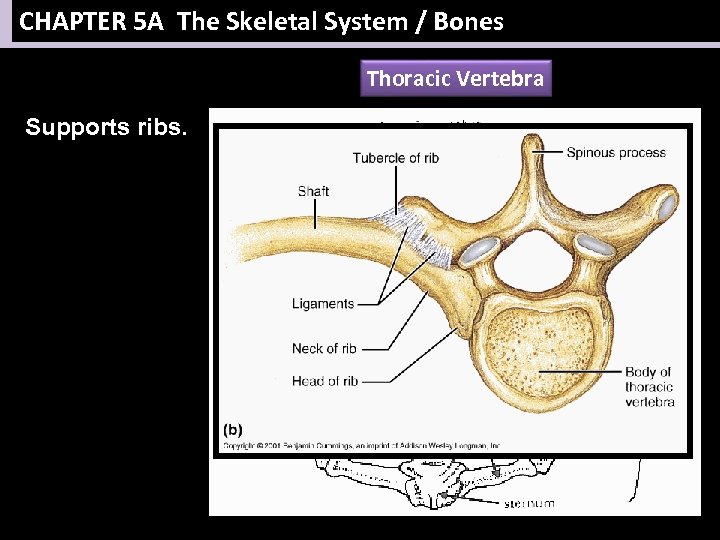
CHAPTER 5 A The Skeletal System / Bones Thoracic Vertebra Supports ribs.
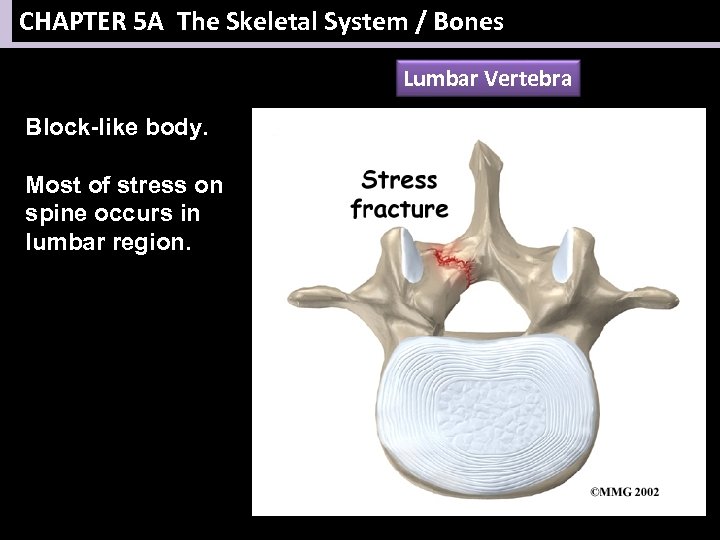
CHAPTER 5 A The Skeletal System / Bones Lumbar Vertebra Block-like body. Most of stress on spine occurs in lumbar region.
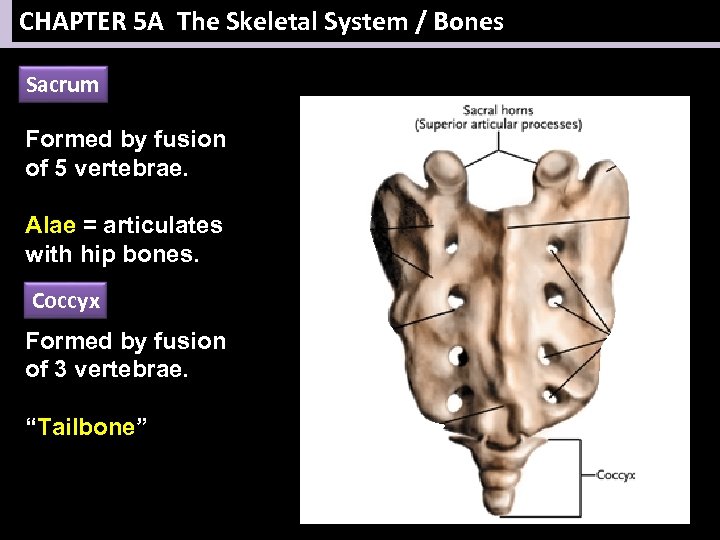
CHAPTER 5 A The Skeletal System / Bones Sacrum Formed by fusion of 5 vertebrae. Alae = articulates with hip bones. Coccyx Formed by fusion of 3 vertebrae. “Tailbone”
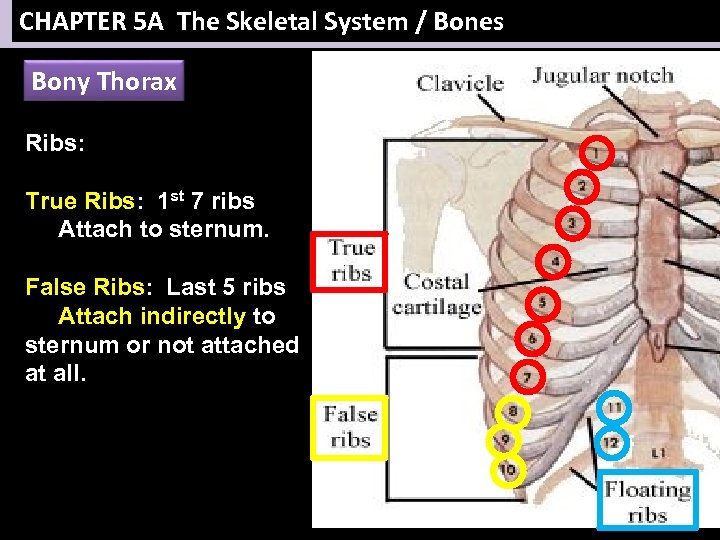
CHAPTER 5 A The Skeletal System / Bones Bony Thorax Ribs: True Ribs: 1 st 7 ribs Attach to sternum. False Ribs: Last 5 ribs Attach indirectly to sternum or not attached at all.
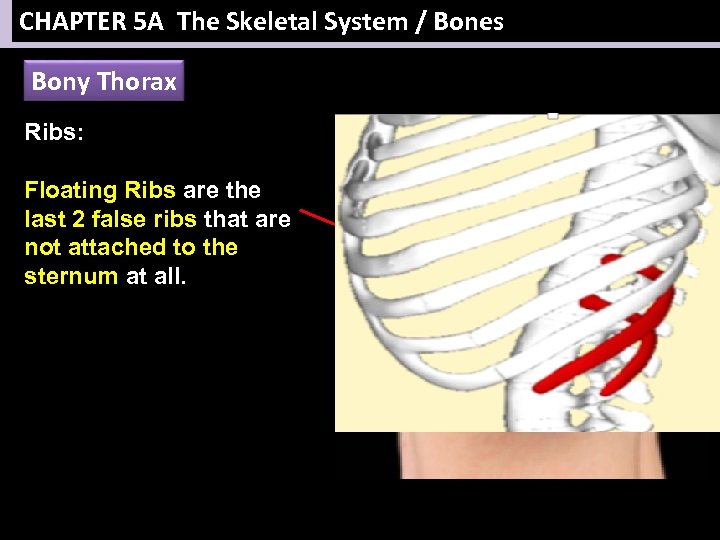
CHAPTER 5 A The Skeletal System / Bones Bony Thorax Ribs: Floating Ribs are the last 2 false ribs that are not attached to the sternum at all.
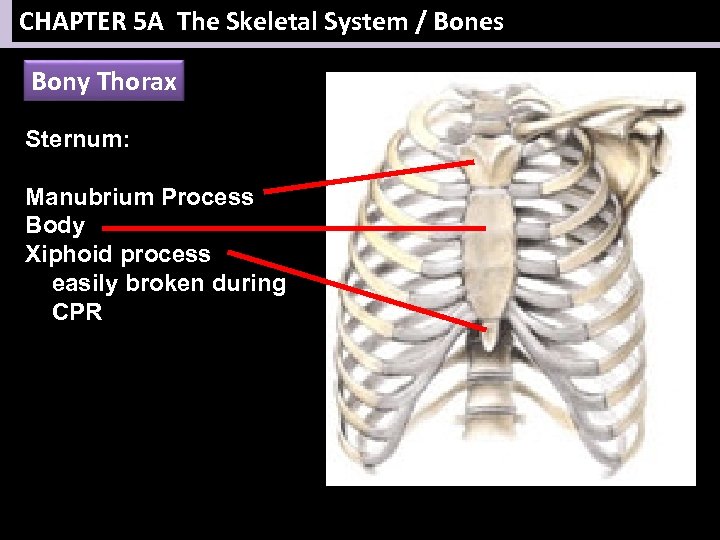
CHAPTER 5 A The Skeletal System / Bones Bony Thorax Sternum: Manubrium Process Body Xiphoid process easily broken during CPR
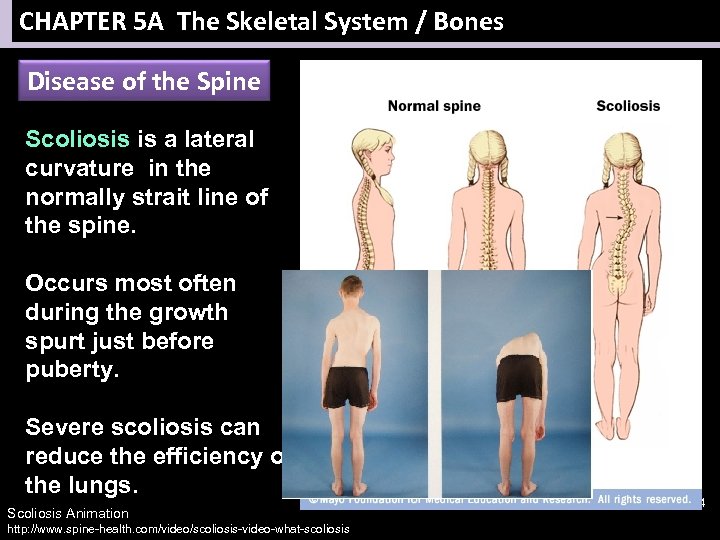
CHAPTER 5 A The Skeletal System / Bones Disease of the Spine Scoliosis is a lateral curvature in the normally strait line of the spine. Occurs most often during the growth spurt just before puberty. Severe scoliosis can reduce the efficiency of the lungs. Scoliosis Animation http: //www. spine-health. com/video/scoliosis-video-what-scoliosis 154
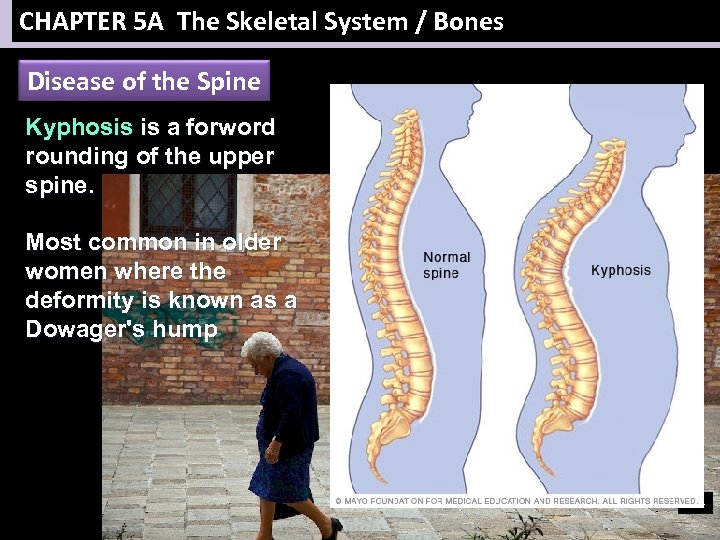
CHAPTER 5 A The Skeletal System / Bones Disease of the Spine Kyphosis is a forword rounding of the upper spine. Most common in older women where the deformity is known as a Dowager's hump 154
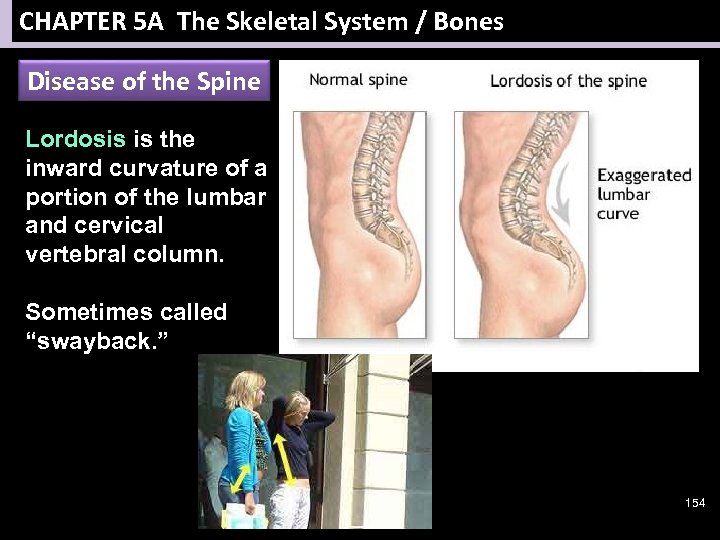
CHAPTER 5 A The Skeletal System / Bones Disease of the Spine Lordosis is the inward curvature of a portion of the lumbar and cervical vertebral column. Sometimes called “swayback. ” 154
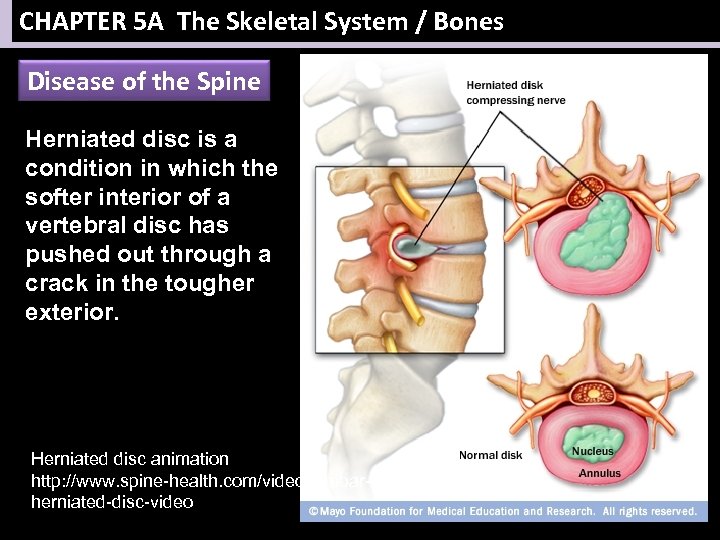
CHAPTER 5 A The Skeletal System / Bones Disease of the Spine Herniated disc is a condition in which the softer interior of a vertebral disc has pushed out through a crack in the tougher exterior. Herniated disc animation http: //www. spine-health. com/video/lumbarherniated-disc-video 154
Any Questions? SELF-STUDY LABELING 5. 3 – 5. 19 http: //wps. aw. com/bc_marieb_ehap_10/17 8/45726/11705870. cw/index. html
YOU SHOULD NOW BE ABLE TO: 1. List the parts of the skeleton, list the parts of the Axial Skeleton. 2. Distinguish between axial and appendicular skeletons. 3. List the functions of bones, distinguish between compact and spongy bones, classify bones as long bones, flat bones, short bones, or irregular bones. 4. Label and describe the structure of the long bone, including marrows, bone markings, and internal bone structure. 5. Describe bone growth and aging processes, including the work of osteoclasts and osteoblasts as well as RANK ligand OPG, and bone remodeling. 9. Describe what happens when a bone fractures, the types of fractures, and types of reduction of fractures. Be able to identify different fractures on sight. 10. Describe the stages of healing. 11. Be able to label the bones of the skull in lateral and frontal views. 12. Define sinus, process, foramen, suture, and condyle. 13. Be able to label the paranasal sinuses. 14. Label and describe the hyoid bone including its location and special circumstances and function.
15. Realize that teeth are not made of bone and that there are 32 teeth in the adult human. 16. Be able to identify difference between the adult skull and the fetal skull. 17. How many vertebrae are in the adult vs. prebirth spine. 18. Know the separation of the vertebral column including the number of vertebrae in each section. 19. Describe the intervertebral discs including structure, aging and disease. 20. Describe the changes in the spine from fetal through adult. 21. Be able to label a thoracic vertebra and identify the weightbearing area. 22. Discuss the difference between the Atlas and Axis vertebrae including their special shapes, how they interact with the spine, their functions for movement of the head and special processes. 23. Describe the structure of the Sacrum and Coccyx. 24. Describe the structure of the bony thorax including differentiation between true and false ribs, how the ribs are attached, and the structure of the sternum. 25. Describe the effects of scoliosis, kyphosis, and lordosis on the spine.
Скачать презентацию NOTE This presentation was not made for public
f4f622de263b05504f53c9c7e0ae339b.ppt