 Скачать презентацию Northern Michigan University Board of Trustees Focus Discussion
f2116575da9fad36b3f7c12cb600bfb5.ppt
- Количество слайдов: 39



Northern Michigan University Board of Trustees Focus Discussion December 11, 2009
Energy Efficiency and Sustainability Initiatives Mr. Gavin Leach – Vice President for Finance and Administration Mr. Art Gischia – Associate V. P. , Business/Auxiliary Services Ms. Kathy Richards – Associate V. P. , Engineering/Planning/Facilities Mr. Brandon Sager – Sustainability Coordinator, Engineering/Planning/Facilities Mr. Jim Thams – Associate Director, Engineering/Planning/Grounds
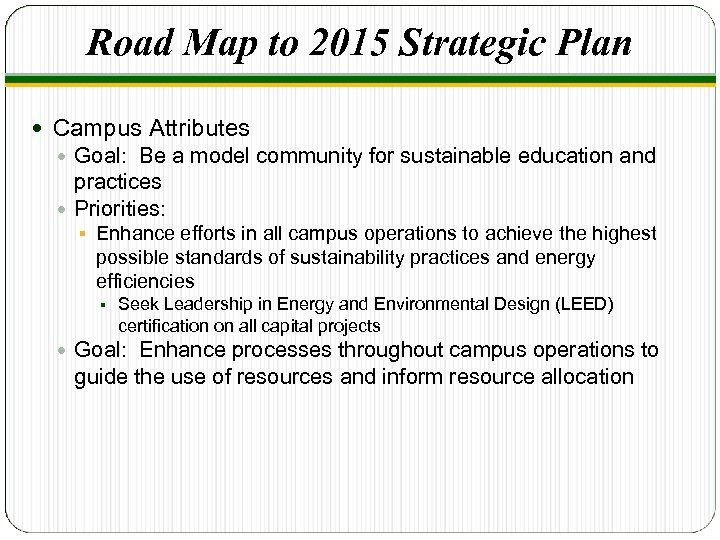
Road Map to 2015 Strategic Plan Campus Attributes Goal: Be a model community for sustainable education and practices Priorities: § Enhance efforts in all campus operations to achieve the highest possible standards of sustainability practices and energy efficiencies § Seek Leadership in Energy and Environmental Design (LEED) certification on all capital projects Goal: Enhance processes throughout campus operations to guide the use of resources and inform resource allocation
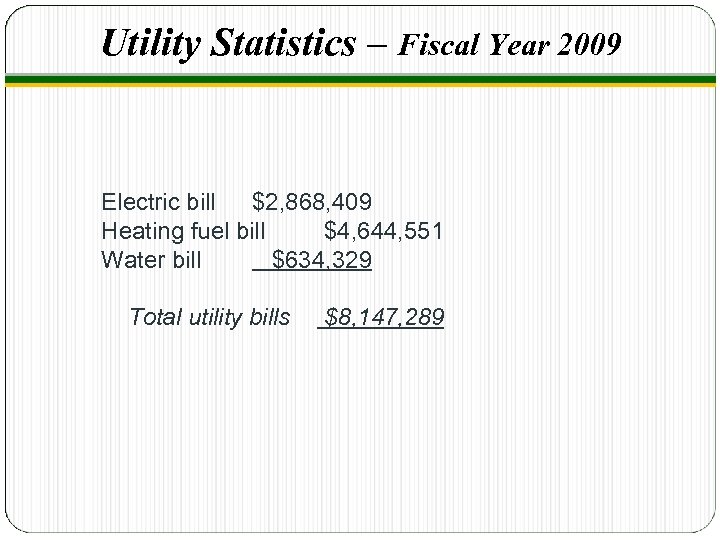
Utility Statistics – Fiscal Year 2009 Electric bill $2, 868, 409 Heating fuel bill $4, 644, 551 Water bill $634, 329 Total utility bills $8, 147, 289
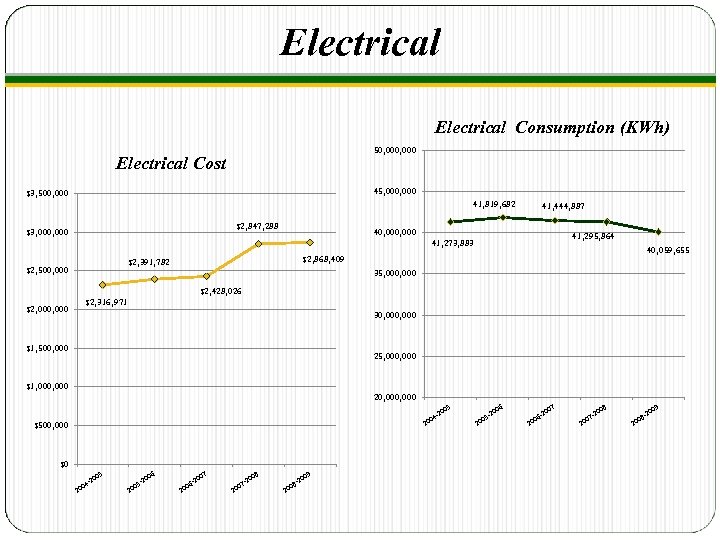
Electrical Consumption (KWh) 50, 000 Electrical Cost 45, 000 $3, 500, 000 41, 819, 682 $2, 847, 288 $3, 000 41, 295, 864 41, 273, 883 40, 059, 655 $2, 868, 409 $2, 391, 782 $2, 500, 000 $2, 000 40, 000 41, 444, 887 35, 000 $2, 428, 026 $2, 316, 971 30, 000 $1, 500, 000 25, 000 $1, 000 20, 000 5 0 -20 04 20 $500, 000 $0 05 -20 04 20 06 -20 05 20 7 00 -2 06 20 8 00 -2 07 20 09 -20 08 20 06 -20 05 20 2 07 -20 6 00 2 08 -20 7 00 2 09 -20 8 00
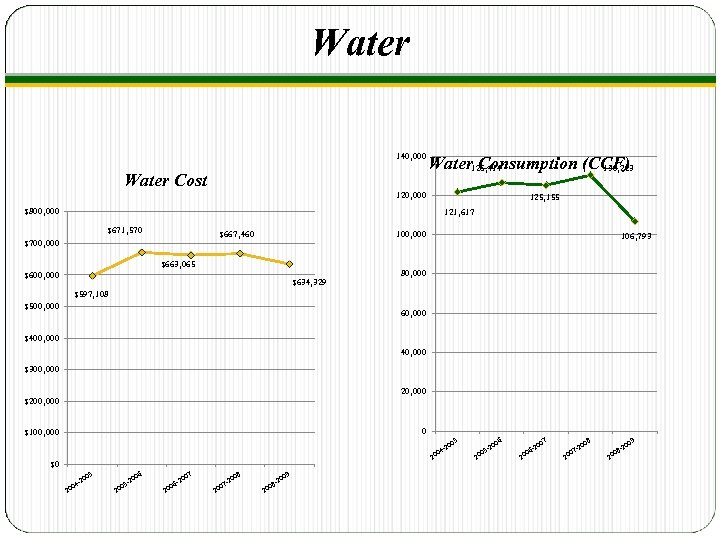
Water 140, 000 Water Cost Water 126, 414 Consumption (CCF) 130, 223 120, 000 125, 155 $800, 000 121, 617 $671, 570 $667, 460 $700, 000 100, 000 $663, 065 $600, 000 $634, 329 106, 793 80, 000 $597, 108 $500, 000 60, 000 $400, 000 40, 000 $300, 000 20, 000 $200, 000 0 $100, 000 05 -20 04 20 $0 5 00 4 -2 0 20 6 00 5 -2 0 20 7 00 -2 06 20 8 00 -2 07 20 09 -20 08 20 6 0 -20 05 20 2 07 -20 6 00 2 08 -20 7 00 2 09 -20 8 00
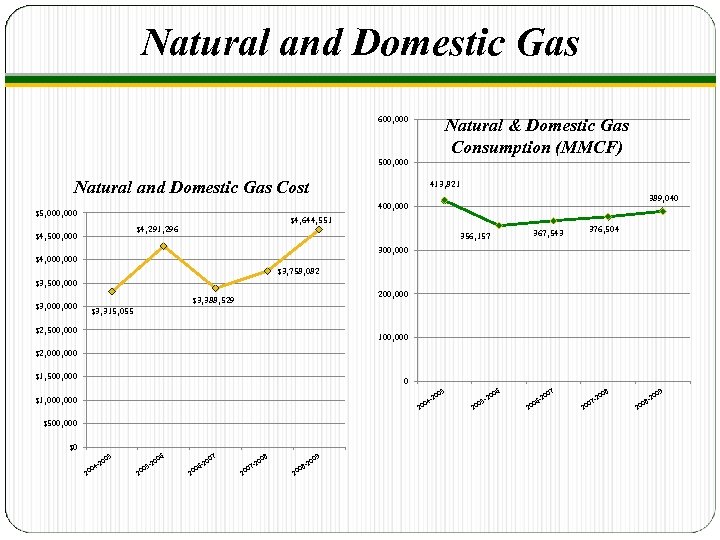
Natural and Domestic Gas 600, 000 Natural & Domestic Gas Consumption (MMCF) 500, 000 Natural and Domestic Gas Cost 413, 821 389, 040 400, 000 $5, 000 $4, 644, 551 $4, 291, 296 $4, 500, 000 367, 543 356, 157 376, 504 300, 000 $4, 000 $3, 758, 082 $3, 500, 000 $3, 000 200, 000 $3, 388, 529 $3, 315, 055 $2, 500, 000 100, 000 $2, 000 $1, 500, 000 0 5 0 -20 $1, 000 04 20 $500, 000 $0 2 05 -20 4 00 6 00 -2 05 20 7 00 -2 06 20 8 0 -20 07 20 09 -20 08 20 6 0 -20 05 20 7 00 6 -2 0 20 8 00 7 -2 0 20 9 00 8 -2 0 20
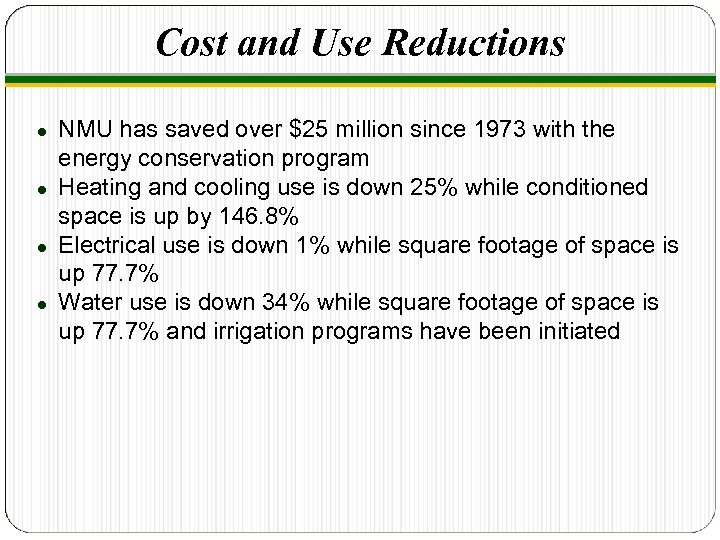
Cost and Use Reductions NMU has saved over $25 million since 1973 with the energy conservation program ● Heating and cooling use is down 25% while conditioned space is up by 146. 8% ● Electrical use is down 1% while square footage of space is up 77. 7% ● Water use is down 34% while square footage of space is up 77. 7% and irrigation programs have been initiated ●
Expanded Energy Conservation Focus Three focal points: Occupant awareness Capital improvements Operational savings
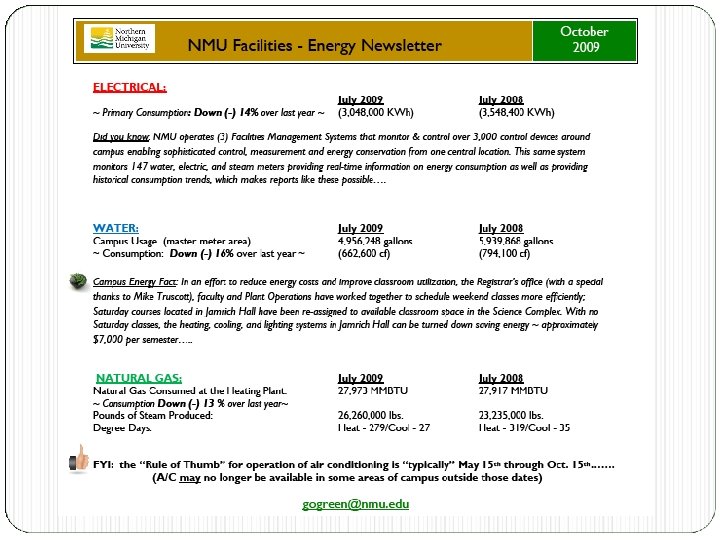
Occupant Awareness ● Facilities “Energy Newsletter” ● Provides utility usage and energy facts to campus community ● Sustainability webpage ● http: //webb. nmu. edu/Facilities/Site. Sections/Sustainability/ Sustainability ● Computer power shut-down ● Instructs how to modify your computer’s power schemes to operate more efficiently ● Office energy savings checklist ● Provides tips on how to save energy within each office ● Go. Green@nmu. edu ● Provides a place for questions and ideas to be presented regarding sustainability and energy savings
Capital Improvements ● ● ● ● ● Installing variable frequency drives on motors/pumps Steam trap repair/replacement Construction/renovation of LEED buildings Boiler replacement Light fixture replacement Insulation of steam piping and buildings Vending machine occupancy sensors Lighting controls - daylight and occupancy sensors Plumbing fixture modifications – low faucets, waterless urinals and dual flush toilets
Operational Savings ● ● Heating and cooling system scheduling Irrigation reduction (minus meters, rain sensors) Exterior lighting level reduction Space utilization
Space Utilization 2007 – NMU implemented College Net scheduling and utilization software: R 25 – Inventory of campus spaces (classroom, offices, conference rooms, etc. ) S 25 – Course scheduling (automated course scheduling) X 25 – Space utilization analysis “Web Viewer” – Online schedule view and request tool (used for informal event scheduling) Why State of Michigan reporting requirements Facilities are the largest campus asset Better manage/utilize existing space Defer need for new construction Reduce operational/energy costs
Space Utilization (continued) Goals noted at December 2007 Board of Trustees Presentation Model “what if” scenarios for classroom buildings Model space needs for enrollment growth Benchmark current space utilization Model changes to improve utilization ***NMU’s Opportunity for Operational Savings***
Space Utilization (continued) NMU established a Space Utilization Committee in 2008 with broad representation of campus community. Committee Charge: Provide space utilization information and recommendations that will help effectively manage facility space Establish benchmarks for current space utilization Develop utilization standards for academic, administrative, and athletic/recreational space Develop yearly space utilization reports for each campus facility Advise the administration on system access, data enhancements, and utilizing system features and functionality. Maintain and update system information and recommend system and data enhancements.
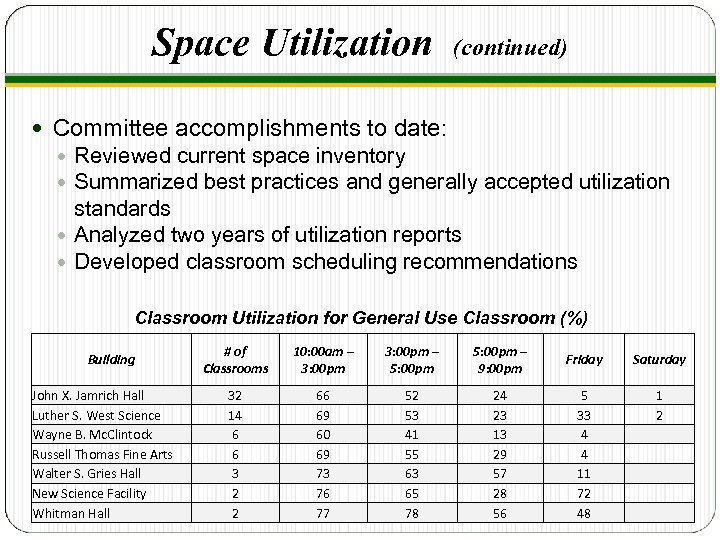
Space Utilization (continued) Committee accomplishments to date: Reviewed current space inventory Summarized best practices and generally accepted utilization standards Analyzed two years of utilization reports Developed classroom scheduling recommendations Classroom Utilization for General Use Classroom (%) Building John X. Jamrich Hall Luther S. West Science Wayne B. Mc. Clintock Russell Thomas Fine Arts Walter S. Gries Hall New Science Facility Whitman Hall # of Classrooms 10: 00 am – 3: 00 pm – 5: 00 pm – 9: 00 pm Friday Saturday 32 14 6 6 3 2 2 66 69 60 69 73 76 77 52 53 41 55 63 65 78 24 23 13 29 57 28 56 5 33 4 4 11 72 48 1 2
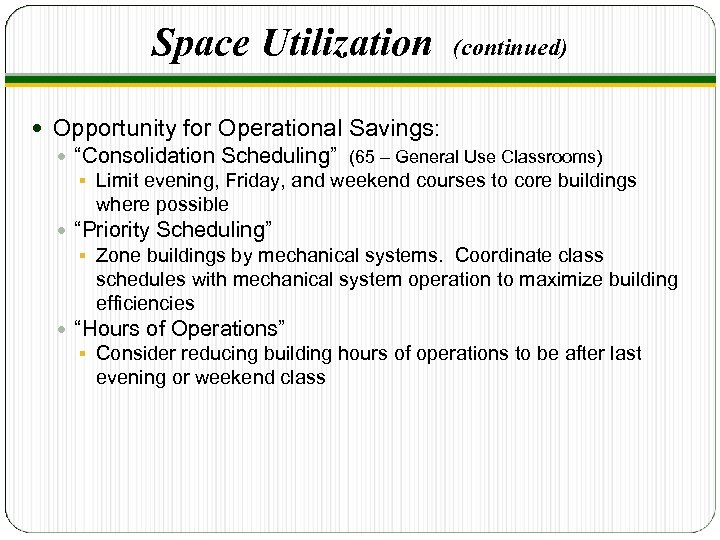
Space Utilization (continued) Opportunity for Operational Savings: “Consolidation Scheduling” (65 – General Use Classrooms) § Limit evening, Friday, and weekend courses to core buildings where possible “Priority Scheduling” § Zone buildings by mechanical systems. Coordinate class schedules with mechanical system operation to maximize building efficiencies “Hours of Operations” § Consider reducing building hours of operations to be after last evening or weekend class
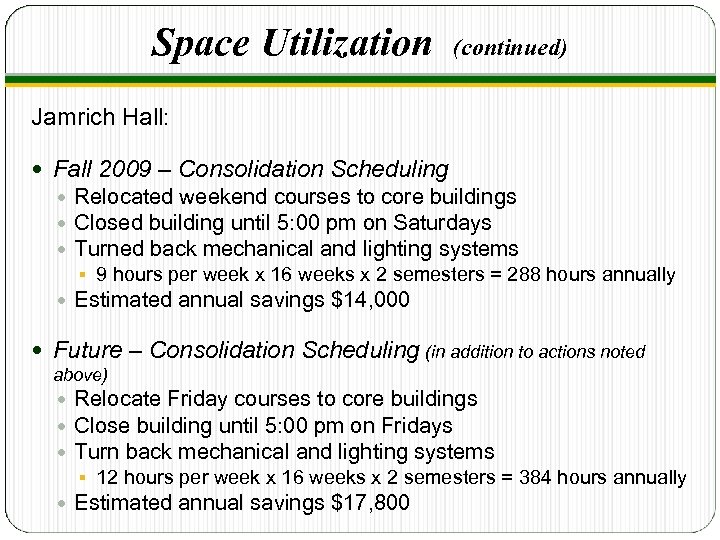
Space Utilization (continued) Jamrich Hall: Fall 2009 – Consolidation Scheduling Relocated weekend courses to core buildings Closed building until 5: 00 pm on Saturdays Turned back mechanical and lighting systems § 9 hours per week x 16 weeks x 2 semesters = 288 hours annually Estimated annual savings $14, 000 Future – Consolidation Scheduling (in addition to actions noted above) Relocate Friday courses to core buildings Close building until 5: 00 pm on Fridays Turn back mechanical and lighting systems § 12 hours per week x 16 weeks x 2 semesters = 384 hours annually Estimated annual savings $17, 800
Space Utilization
Space Utilization
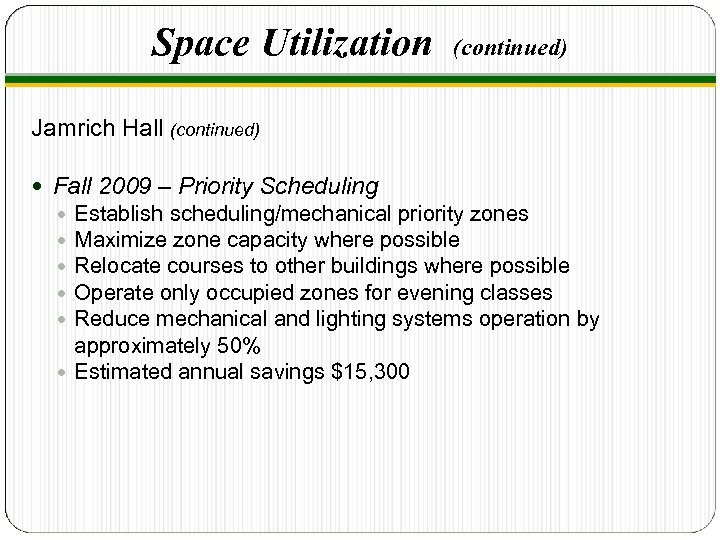
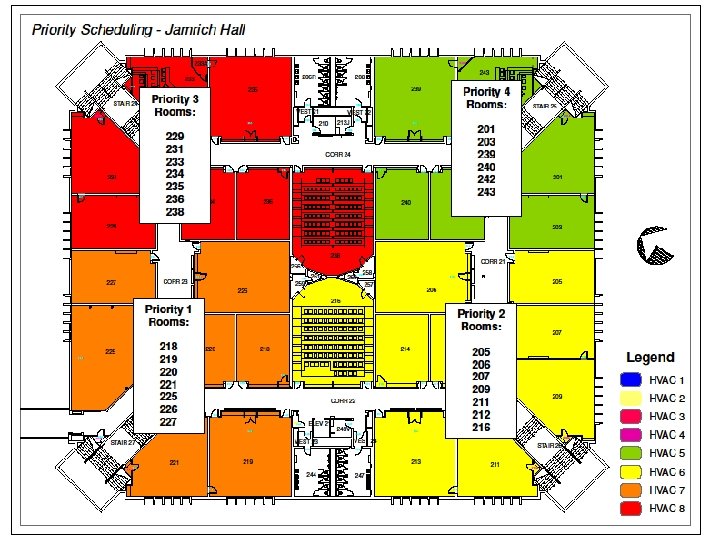
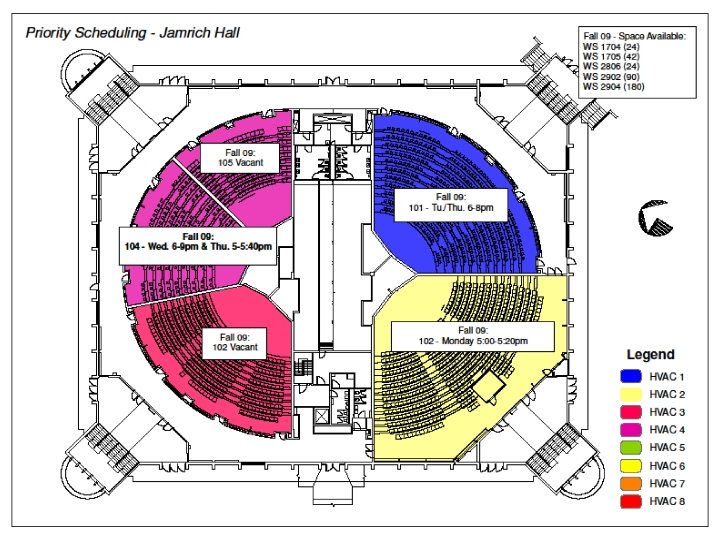
Space Utilization (continued) Jamrich Hall (continued) Fall 2009 – Priority Scheduling Establish scheduling/mechanical priority zones Maximize zone capacity where possible Relocate courses to other buildings where possible Operate only occupied zones for evening classes Reduce mechanical and lighting systems operation by approximately 50% Estimated annual savings $15, 300
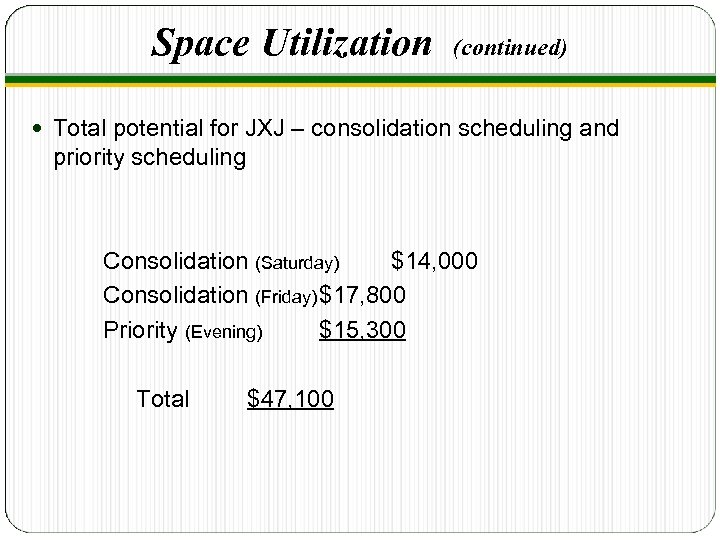
Space Utilization (continued) Total potential for JXJ – consolidation scheduling and priority scheduling Consolidation (Saturday) $14, 000 Consolidation (Friday) $17, 800 Priority (Evening) $15, 300 Total $47, 100
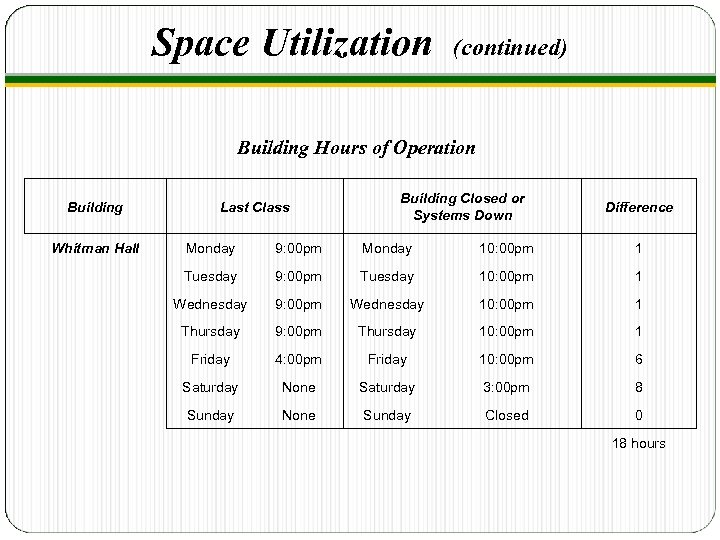
Space Utilization (continued) Building Hours of Operation Building Whitman Hall Last Class Building Closed or Systems Down Difference Monday 9: 00 pm Monday 10: 00 pm 1 Tuesday 9: 00 pm Tuesday 10: 00 pm 1 Wednesday 9: 00 pm Wednesday 10: 00 pm 1 Thursday 9: 00 pm Thursday 10: 00 pm 1 Friday 4: 00 pm Friday 10: 00 pm 6 Saturday None Saturday 3: 00 pm 8 Sunday None Sunday Closed 0 18 hours
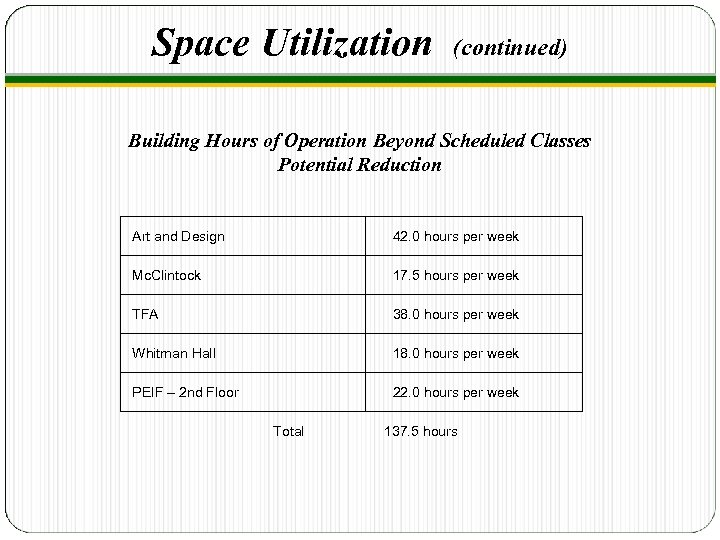
Space Utilization (continued) Building Hours of Operation Beyond Scheduled Classes Potential Reduction Art and Design 42. 0 hours per week Mc. Clintock 17. 5 hours per week TFA 38. 0 hours per week Whitman Hall 18. 0 hours per week PEIF – 2 nd Floor 22. 0 hours per week Total 137. 5 hours
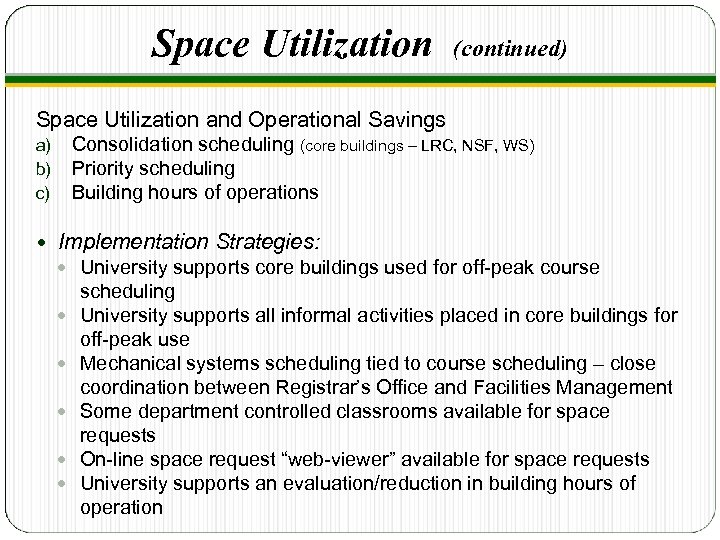
Space Utilization (continued) Space Utilization and Operational Savings a) b) c) Consolidation scheduling (core buildings – LRC, NSF, WS) Priority scheduling Building hours of operations Implementation Strategies: University supports core buildings used for off-peak course scheduling University supports all informal activities placed in core buildings for off-peak use Mechanical systems scheduling tied to course scheduling – close coordination between Registrar’s Office and Facilities Management Some department controlled classrooms available for space requests On-line space request “web-viewer” available for space requests University supports an evaluation/reduction in building hours of operation
Sustainability ● NMU has recycled approximately 6, 000 tons since 1992. Batteries – 2, 612 lbs since 2008 Fluorescent lamps – 64, 000 lamps since 1998 Computer components – 60, 000 lbs since 2002 Dining halls are reviewing tray-less options Starting test plots for natural landscaping Use of green cleaning products Residence halls using “Navy” shower shut-offs Communication taking place with Marquette County Landfill regarding composting of organic material from dining halls along with a revised battery recycling program ● LEED certified buildings ● ● ●
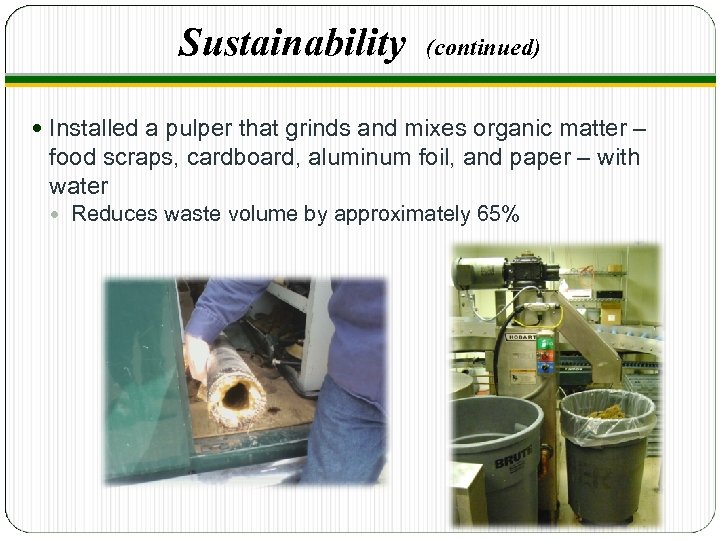
Sustainability (continued) Installed a pulper that grinds and mixes organic matter – food scraps, cardboard, aluminum foil, and paper – with water Reduces waste volume by approximately 65%
LEED What is LEED®? Leadership in Energy and Environmental Design The LEED Green Building Rating System is the nationally accepted benchmark for the design, construction and operation of high performance green buildings. LEED promotes a whole-building approach to sustainability by focusing in five areas of human and environmental health: Sustainable site development Water savings Energy efficiency Materials selection Indoor environmental quality
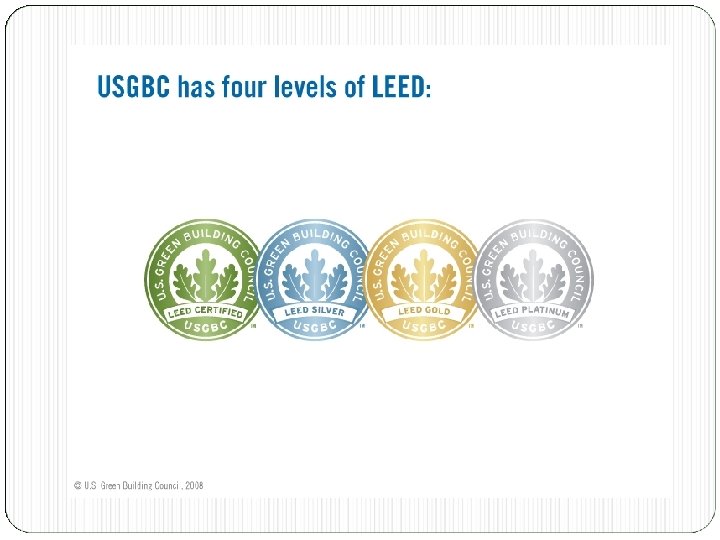
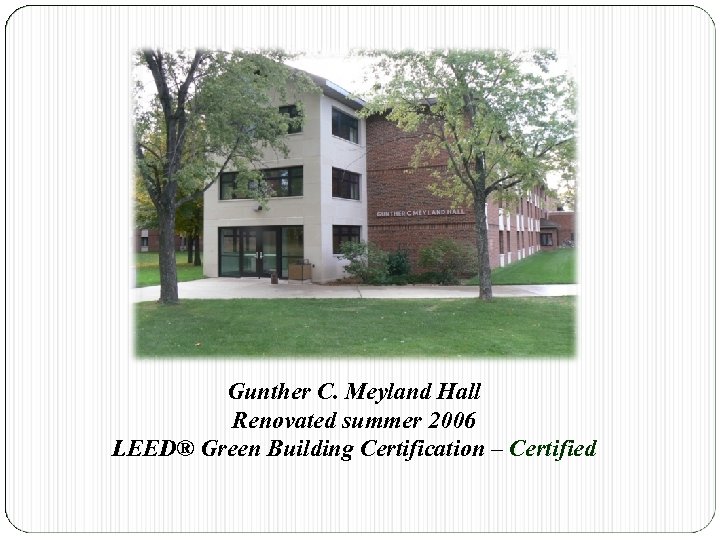
Gunther C. Meyland Hall Renovated summer 2006 LEED® Green Building Certification – Certified
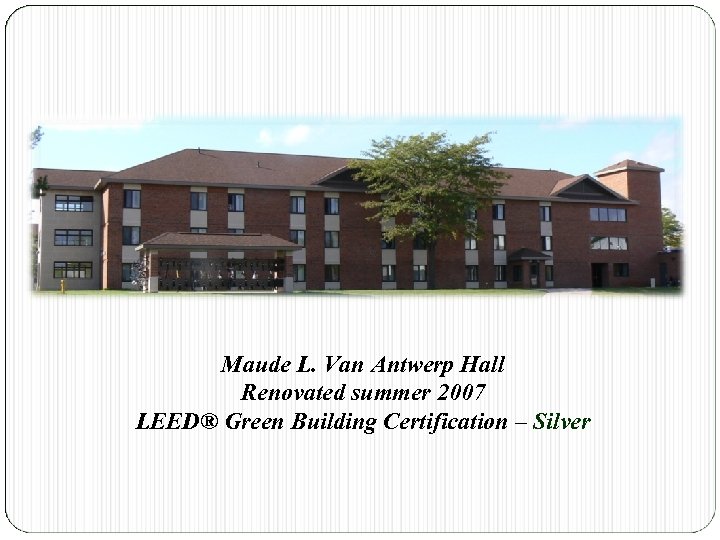
Maude L. Van Antwerp Hall Renovated summer 2007 LEED® Green Building Certification – Silver
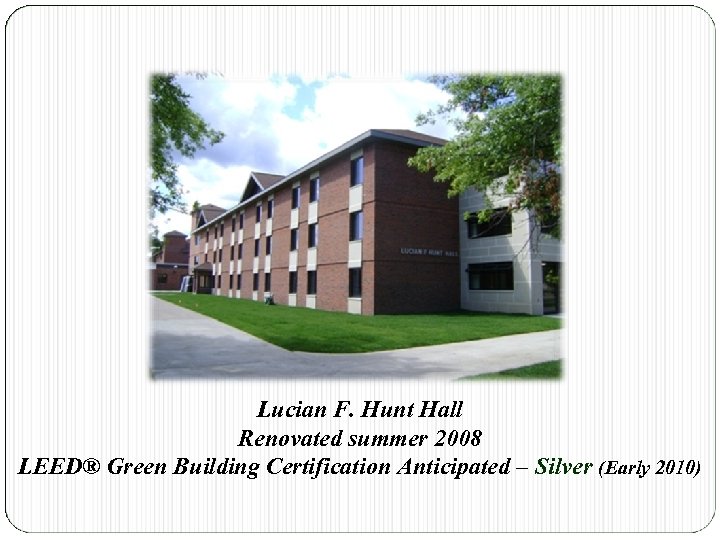
Lucian F. Hunt Hall Renovated summer 2008 LEED® Green Building Certification Anticipated – Silver (Early 2010)
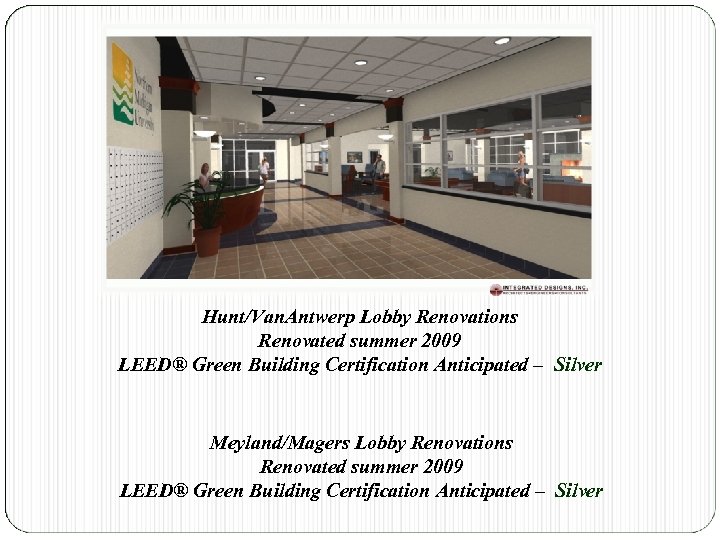
Hunt/Van. Antwerp Lobby Renovations Renovated summer 2009 LEED® Green Building Certification Anticipated – Silver Meyland/Magers Lobby Renovations Renovated summer 2009 LEED® Green Building Certification Anticipated – Silver
LEED Achievements Site opportunities ● ● ● Erosion and sedimentation control reducing negative impact on water/air quality Alternative transportation: Constructed covered bicycle racks No additional parking constructed Maintain 60% of vegetated open space of site area Storm water management: Prevent approximately 404, 200 gallons of storm water from entering the storm sewer system annually Light pollution reduction
LEED Achievements (continued) Water efficiency ● Reduced regulated water usage by 60% Energy and atmosphere Ozone Depletion: The building HVAC&R systems do not use CFC-based refrigerants ● Building systems commissioning ●
LEED Achievements (continued) Material and resources ● ● ● ● Campus recycling program Re-used 96% of existing building structure 15% of materials used in construction contained recycled content Diverted 100% of waste from landfill (Recycled 71 tons of metal) 35% of materials used for construction were regionally manufactured within 500 miles of NMU ASC Certified Wood used in 11% of construction materials (wood doors) 98% of occupied spaces have access to exterior views
LEED Achievements (continued) Indoor environmental quality Low-VOC materials chosen for construction materials and furnishings ● Indoor air quality management, even during construction ● No smoking policy ● Green housekeeping program ●
Ideas for Future Consideration Performance contracting Wind – discussions with MBLP Solar Interaction with NMU Environmental Institute
Скачать презентацию Northern Michigan University Board of Trustees Focus Discussion
f2116575da9fad36b3f7c12cb600bfb5.ppt