 Скачать презентацию Northern knowledge applied to Southern corruption problems
e7abc7f1442c66981436f48048cd3f05.ppt
- Количество слайдов: 16



Northern knowledge applied to Southern corruption problems – is there a better approach? Harald Mathisen, Senior Program Coordinator
http: //www. U 4. no • Projects Database – Selected literature – Tool kits • Links – Web-sites – Organisations • Services – Helpdesk – Training • Resources – Theme Pages/Focus Areas • Public Finance Management • Health and Education • African Anti-Corruption Commissions • Natural resource management • Donor Coordination • Knowledge management • Corruption in Emergencies • Political Corruption • Private sector • UNCAC • Ethics
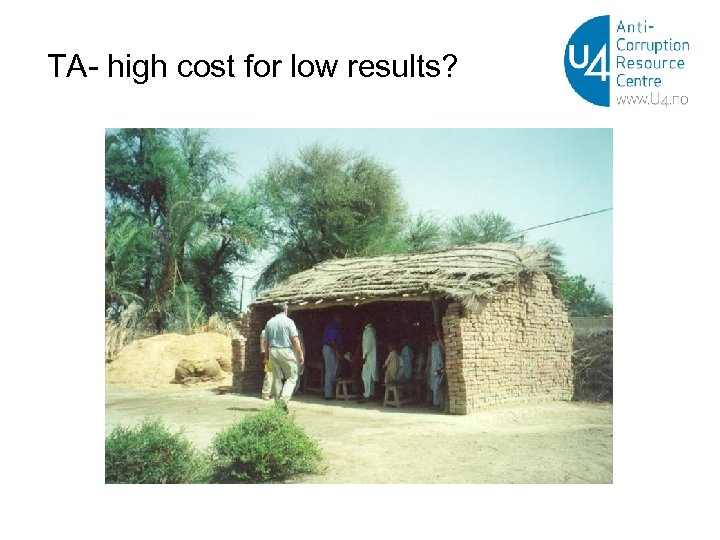
Technical assistance – aim: effective and sustainable transfers of knowledge and skills to recipient countries • Much is need, but increasingly contested: – Difficult to measure success – Tied to donor country, making it expensive! – “No exit in sight - consultants just keep coming” – TA supply driven, weakly coordinated and aligned – Difficult to quantify, up to 50% of all aid
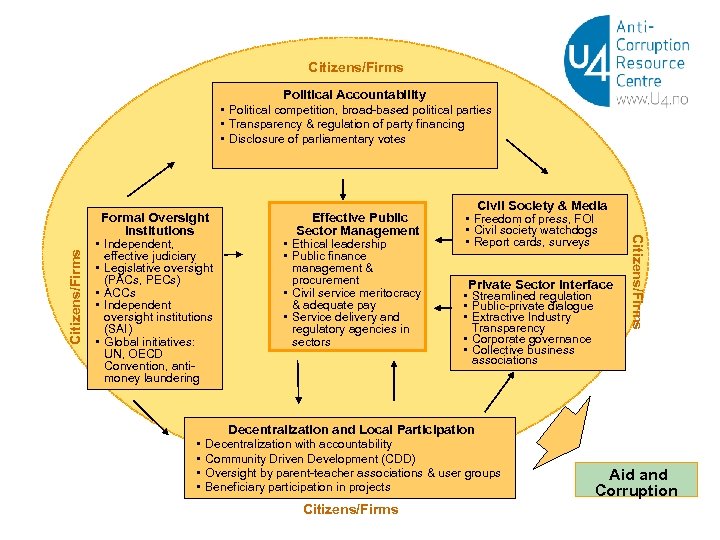
Citizens/Firms Political Accountability • Political competition, broad-based political parties • Transparency & regulation of party financing • Disclosure of parliamentary votes Citizens/Firms • Independent, effective judiciary • Legislative oversight (PACs, PECs) • ACCs • Independent oversight institutions (SAI) • Global initiatives: UN, OECD Convention, antimoney laundering Effective Public Sector Management • Ethical leadership • Public finance management & procurement • Civil service meritocracy & adequate pay • Service delivery and regulatory agencies in sectors Civil Society & Media • Freedom of press, FOI • Civil society watchdogs • Report cards, surveys Private Sector Interface • Streamlined regulation • Public-private dialogue • Extractive Industry Transparency • Corporate governance • Collective business associations Citizens/Firms Formal Oversight Institutions Decentralization and Local Participation • • Decentralization with accountability Community Driven Development (CDD) Oversight by parent-teacher associations & user groups Beneficiary participation in projects Citizens/Firms Aid and Corruption
Does all of this work?
TA- high cost for low results?
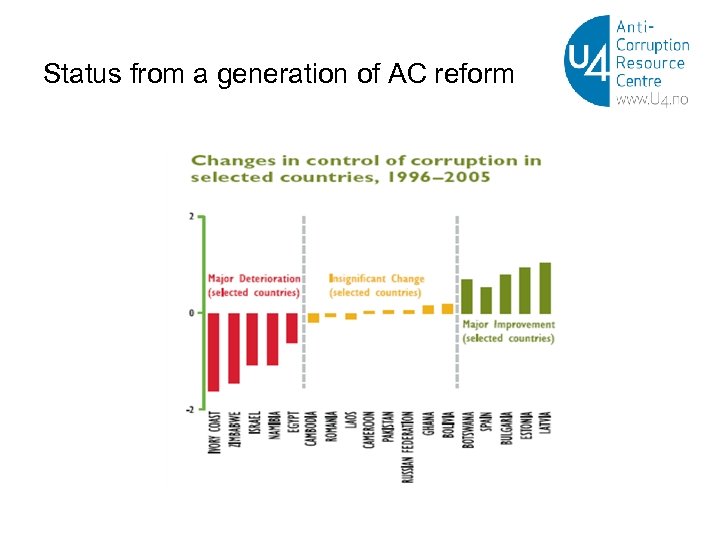
Status from a generation of AC reform
Why are we failing?
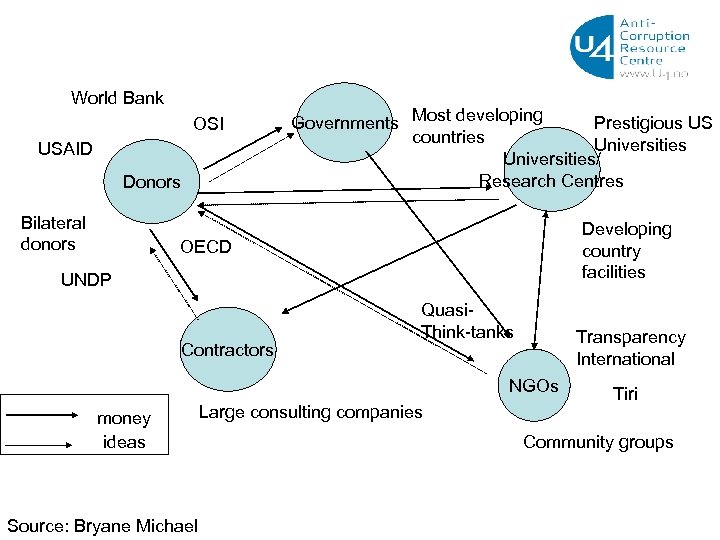
World Bank OSI USAID Donors Bilateral donors Prestigious US Governments Most developing countries Universities/ Research Centres Developing country facilities OECD UNDP Contractors Quasi. Think-tanks Transparency International NGOs money ideas Source: Bryane Michael Large consulting companies Tiri Community groups
Carrier of knowledge transfers 1: aid donors agencies Powerfull based on the funds they provide, number of professional staff and their access to reseach infrastructure and reseach centres • Not good learning institutions Weak needs assessment processes • Speed dating appraoch • Survey data/ Internet • Own reason approach • Long term partnership approach Anti-corruption disconected from social context and deployed as isolated artefacts of tools and techniques
Carrier of knowledge transfers 2: Northern consultants Anti-corruption is difficult – call the consultant • Working to compensate for weak local skills, but – Danger of crowding out national reseach and policy makers – Quality of work: Blueprints - introduce strategies and “best practice”; they are often laundry lists of things to be done with little regard for context – Interest in keeping rather then sharing information
Recipients of knowledge transfeers – Southern governmets and institutions Consumers of knowledge and implementers of advice • At the bottom of the knowledge hierarky • Local institutions have less influence over local policy making, why: • Much less resources; IFI vs the government of country X • Great incentives to accept studies and TA; loans, depth relief, trade Outcome: development knowledge dependency
Power imbalance in anticorruption reform Ideas and reforms concieved in one context – implemented in another – Reforms inscribed by values from designers’ background, and assumtions about the skills, values and resources of the user context (Heeks) In the world of anti-corruption: What are experiencing is a uni-directional contextual collision where western technocratic modernity meet traditional expression of power and authority
The assumption: If it works for us, it’ll work for you Countries can quickly be modernized and rationalized The experience: Reform failiure – or weak sustainability Not understanding that the root cauces of corruption is unique to every country, sector and institution – has a consequence”
Getting it right on the donor side “There are limits to how far outsiders can really understand how another country and society work. Therefore: The purpose is to make the Northern providers of TA more effective at supporting local pressures and incentives for pro-poor change” (Mathisen)
How to empower the recipient side Goal: • To build local capabilities for developmet research and policymaking – Independent and well resourced indigiounous knowledge centres of high calibre on anti-corruption – Promote South-South research and collaboration on anti-corruption Thank you for your attention
Скачать презентацию Northern knowledge applied to Southern corruption problems
e7abc7f1442c66981436f48048cd3f05.ppt