


 Скачать презентацию No C General concepts Andreas Ehliar — Per
bf88c8ac6acca789065ff9573abe4c88.ppt
- Количество слайдов: 51
 No. C General concepts Andreas Ehliar - Per Karlström
 Outline • Background • Some Implementations • Design Issues / Tools • Example Application • Conclusions
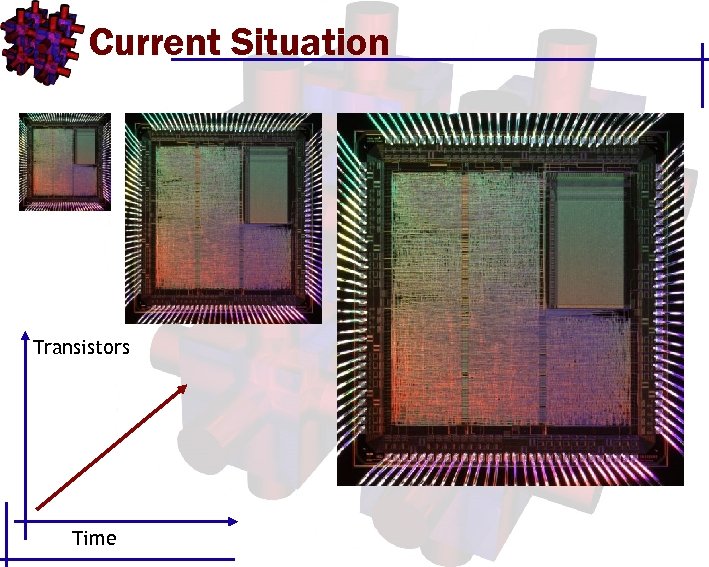 Current Situation Transistors Time
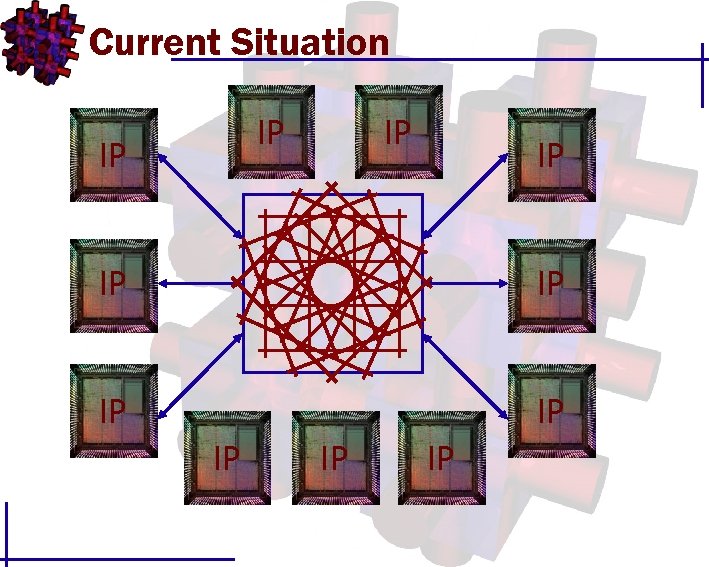 Current Situation IP IP IP
 NOC implementations • So. CBUS • x. Pipes • Pleiades • Eclipse • (FPGA)
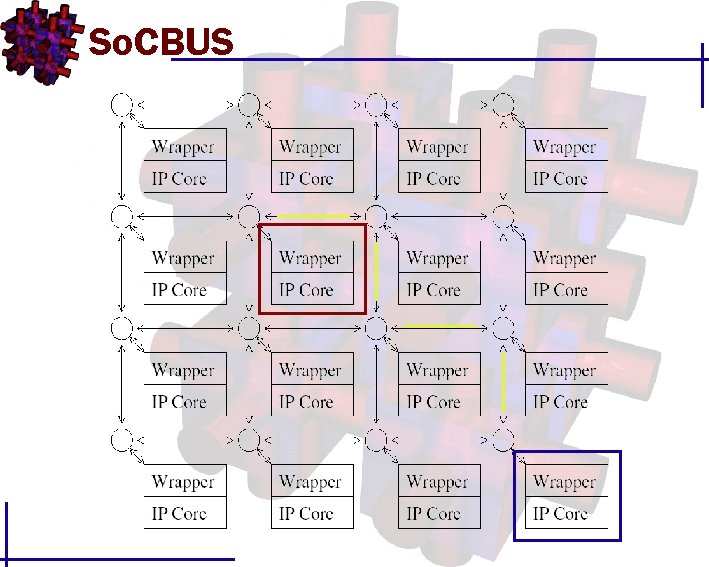 So. CBUS
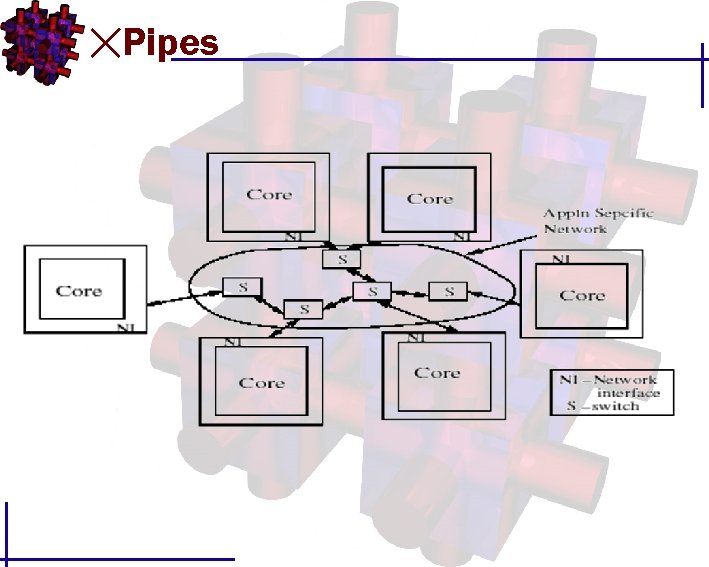 Pipes
Pipes
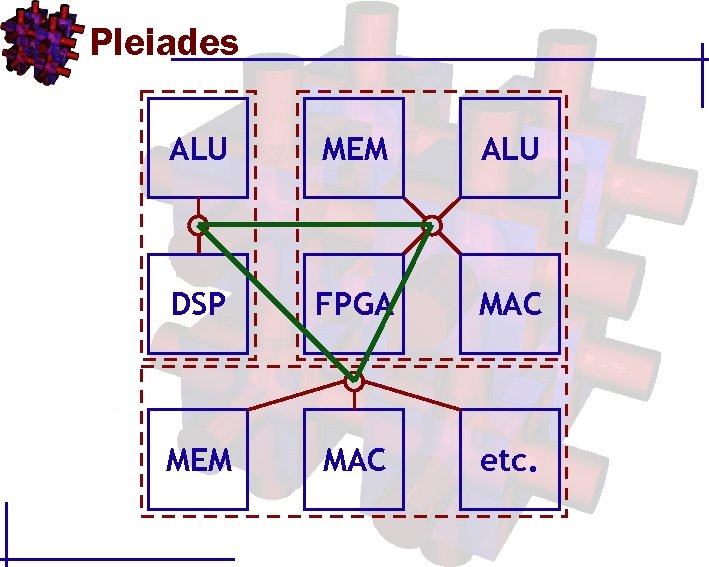 Pleiades ALU MEM ALU DSP FPGA MAC MEM MAC etc.
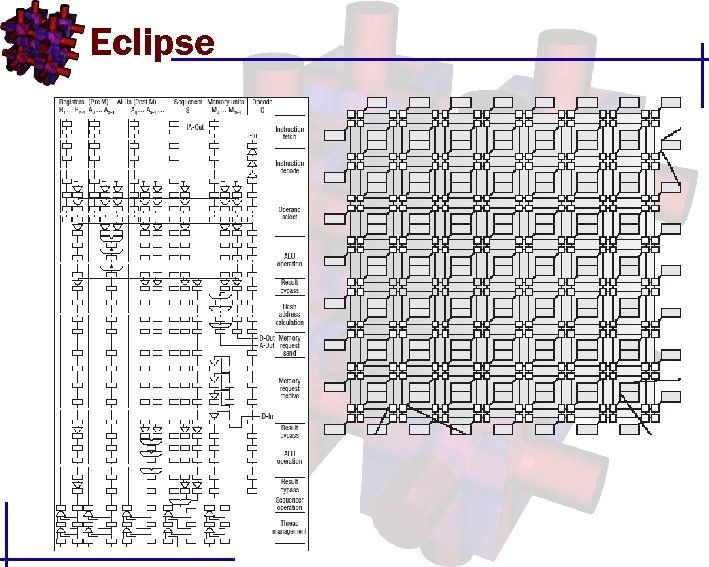 Eclipse
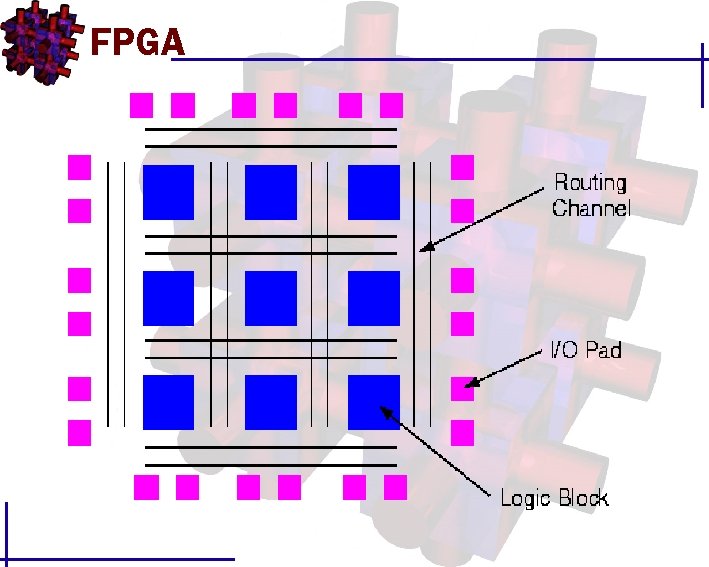 FPGA
FPGA
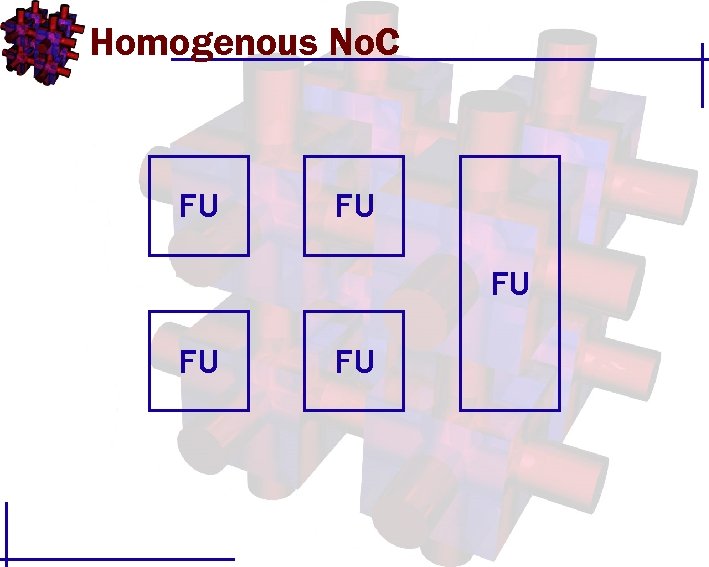 Homogenous No. C FU FU FU
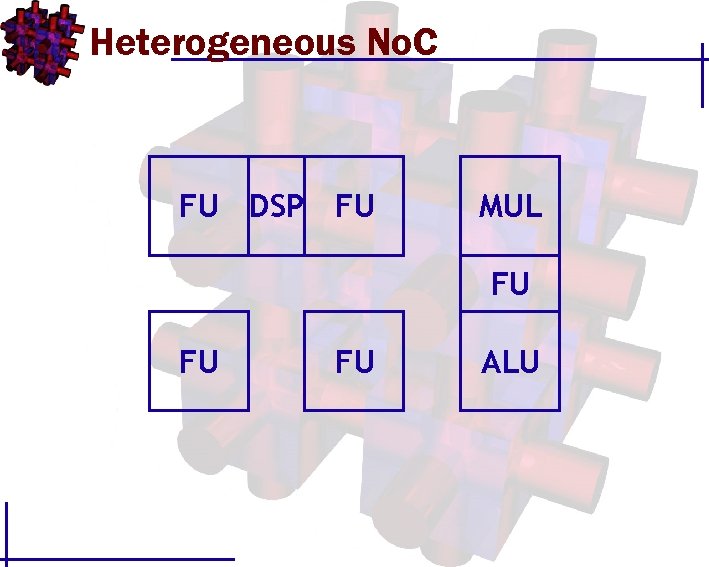 Heterogeneous No. C FU DSP FU MUL FU FU FU ALU
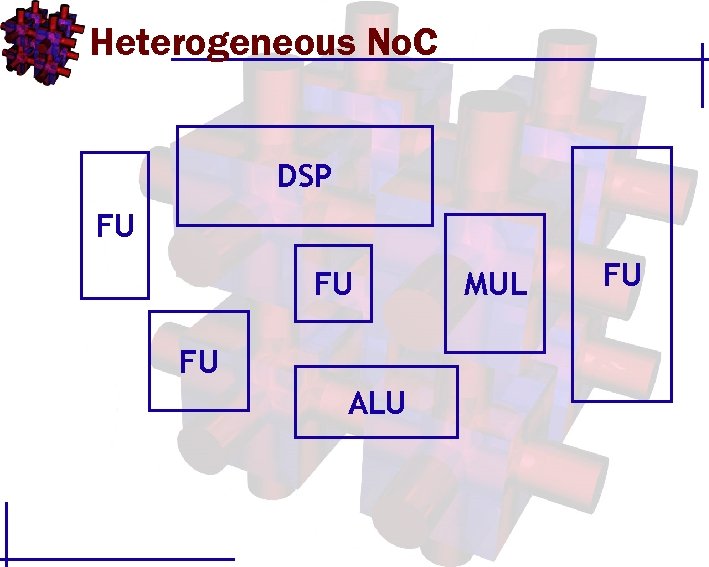 Heterogeneous No. C DSP FU FU FU ALU MUL FU
 Quality of Service • Guaranteed latency • Guaranteed bandwidth • Correctness
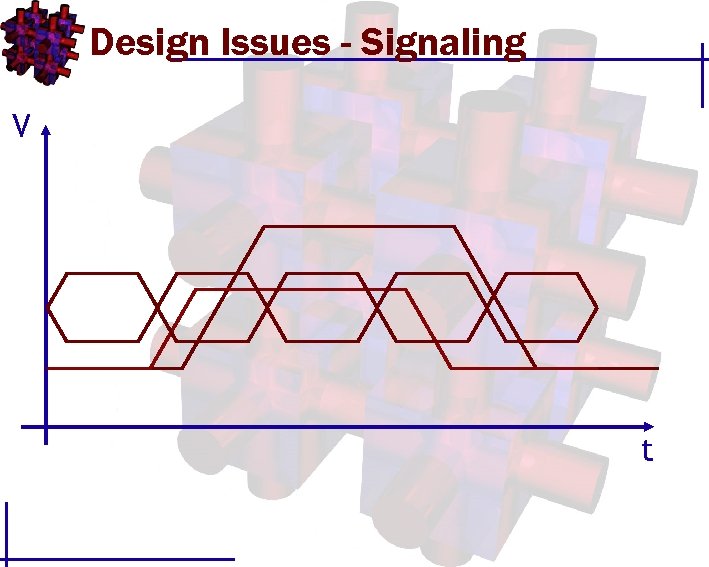 Design Issues - Signaling V t
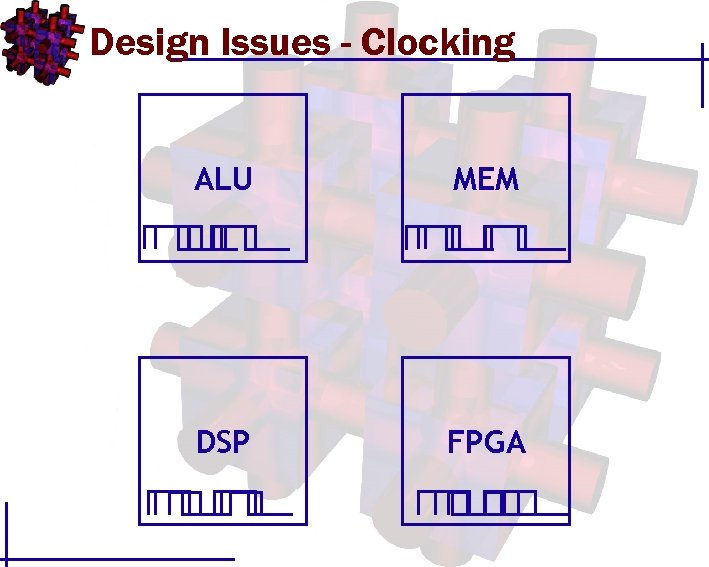 Design Issues - Clocking ALU MEM DSP FPGA
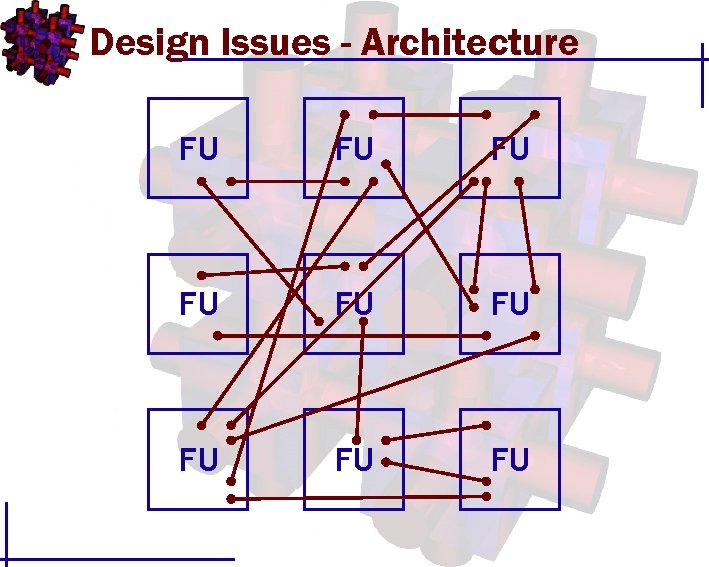 Design Issues - Architecture FU FU FU
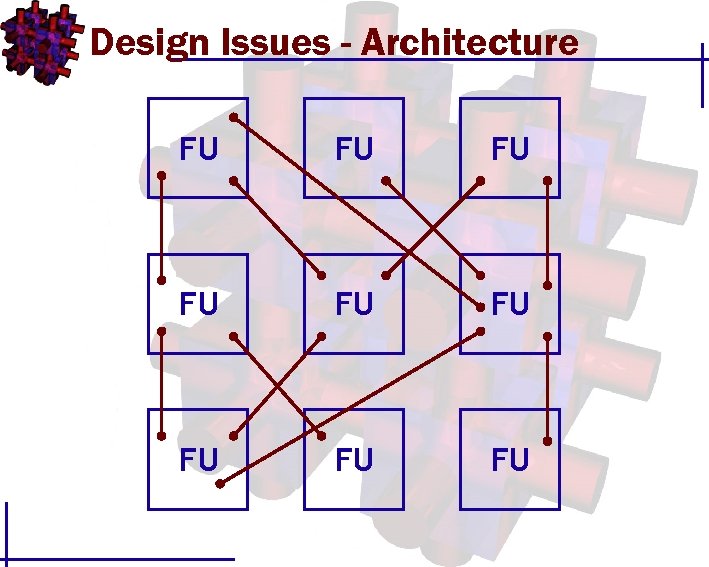 Design Issues - Architecture FU FU FU
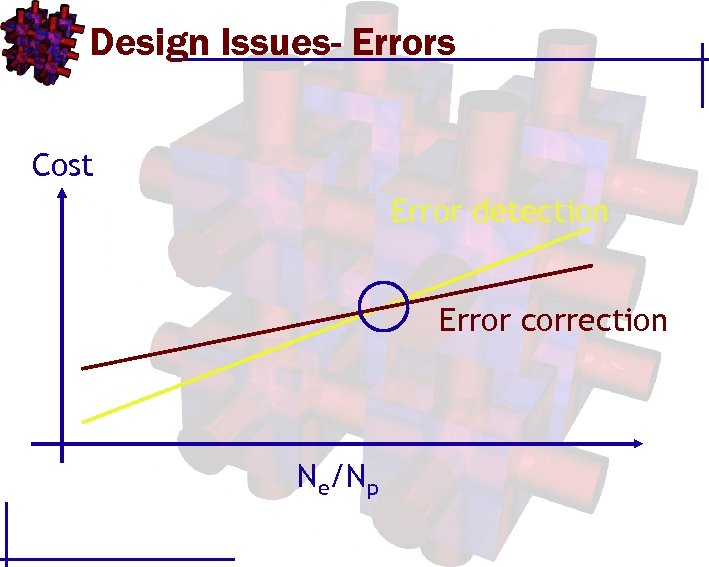 Design Issues- Errors Cost Error detection Error correction Ne/Np
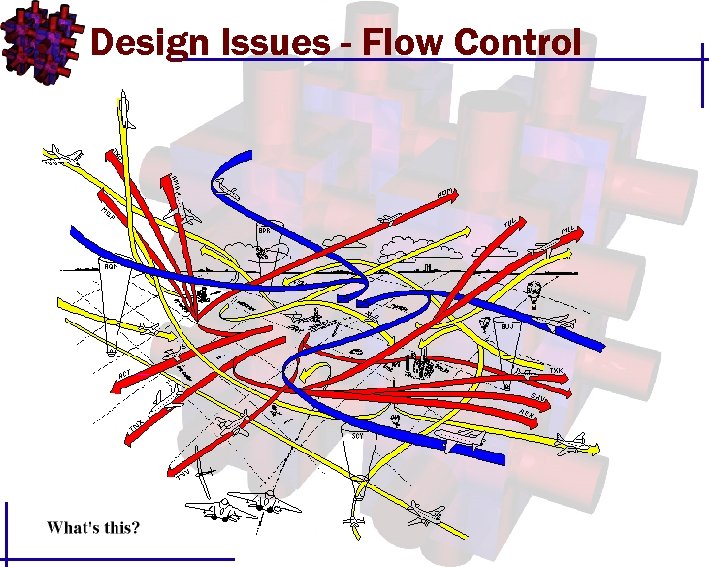 Design Issues - Flow Control
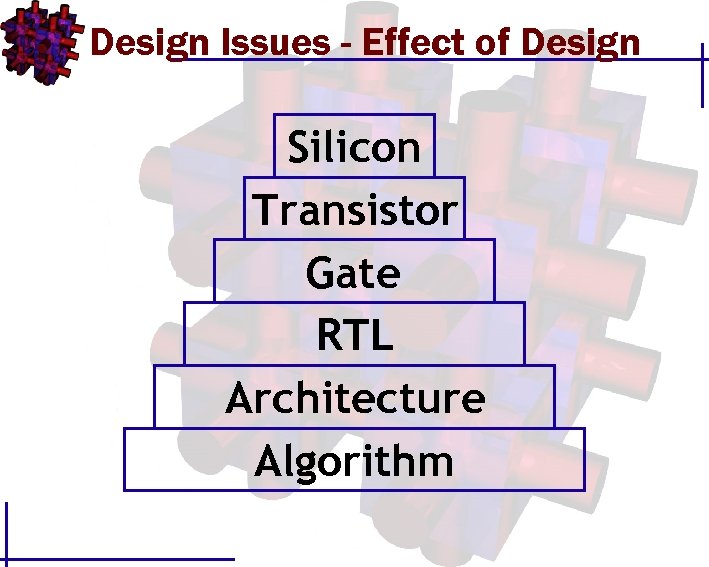 Design Issues - Effect of Design Silicon Transistor Gate RTL Architecture Algorithm
 Design Issues - Power Control
 Design Issues - Long Wires • Solving the global interconnect mess – – Delay Bit errors Repeaters Clock domains • Create one optimized solution that can be reused
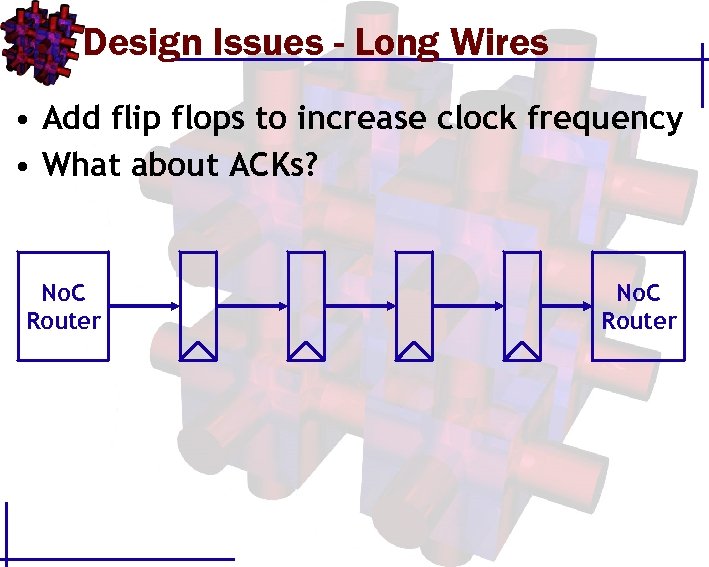 Design Issues - Long Wires • Add flip flops to increase clock frequency • What about ACKs? No. C Router
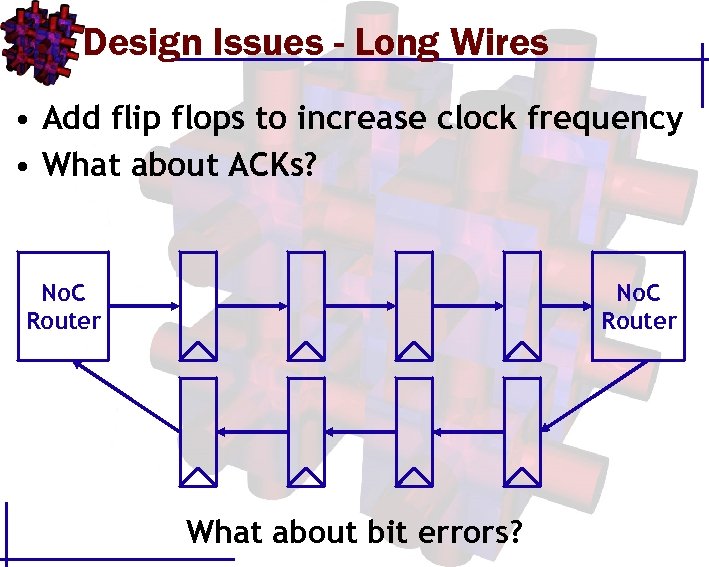 Design Issues - Long Wires • Add flip flops to increase clock frequency • What about ACKs? No. C Router What about bit errors?
 Design Issues - Long Wires • Bit errors on long wires will not be avoidable in the future • Use error correcting codes – Disadvantage: More wires • Use parity bits to discover errors – Resend damaged packets – No longer possible to guarantee real-time performance
 Design Issues - Long Wires • Possibility to create heavily optimized solution – Low voltage signaling – Advanced symbol encoding/decoding – Wave pipelining
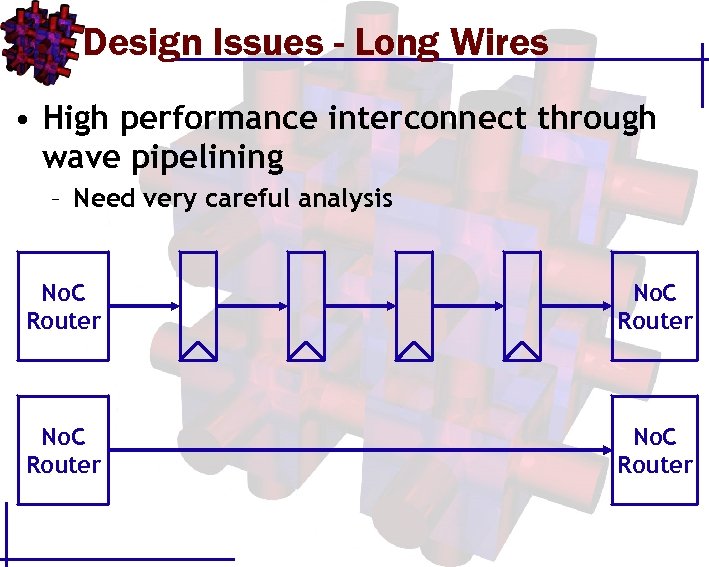 Design Issues - Long Wires • High performance interconnect through wave pipelining – Need very careful analysis No. C Router
 Design Issues - Long Wires • Wave pipelining performance – 3. 45 Ghz signaling on one bit line in 0. 25 um – More energy efficient than regular pipeline – Faster than regular pipeline • Disadvantage – Much harder to test/verify
 System design • Typical tools – Simulator – Network generator
 System design • What I would want – – – Graphical frontend to design No. C C and RTL models of the finished No. C C API to create C level models of the No. C Mix C and RTL models in RTL simulator And of course. . .
 System design IP cores
 Example: Core Router • So. CBUS Simulation • Study of 16 port core router on a chip • 16 x 10 Gigabit Ethernet Ports • Prove feasibility of using So. CBUS
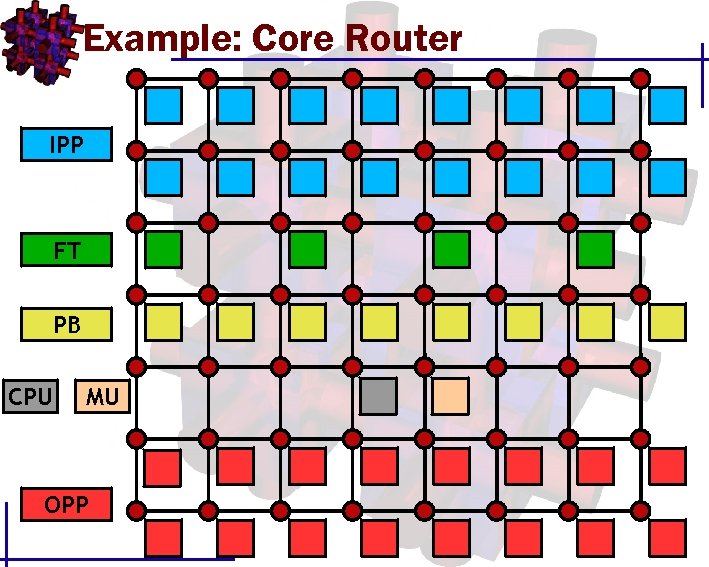 Example: Core Router IPP FT PB CPU MU OPP
 Example: Core Router • IPP (Input Packet Processor) – – Receive packet from network Validate Packet/Filter packet Send lookup request to forwarding table Send packet to Packet Buffer • FT (Forwarding Table) – Get IP address from IPP – Perform Lookup and send the output port to the packet buffer • OPP (Output Packet Processor) – Send packet to Network
 Example: Core Router • PB (Packet Buffer) – Responsible for packet buffering – Buffers packets until output port information is received from the forwarding table • MU (Multicast Unit) – Handle multicast packets • CPU
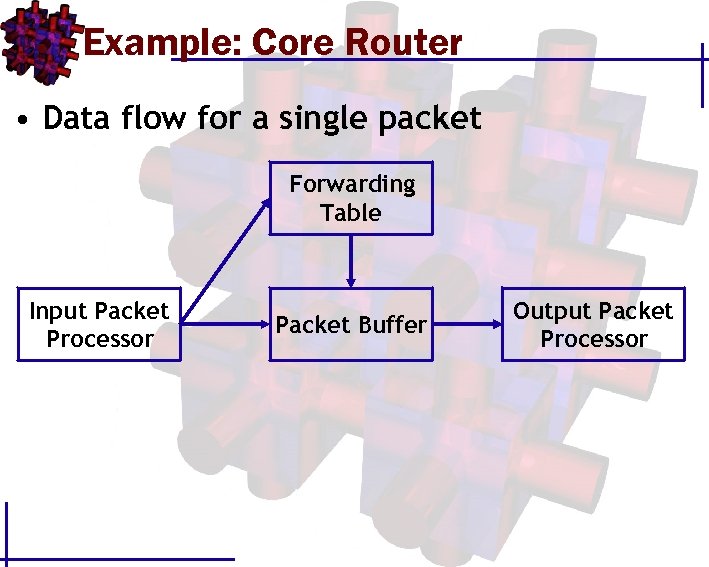 Example: Core Router • Data flow for a single packet Forwarding Table Input Packet Processor Packet Buffer Output Packet Processor
 Example: Core Router • Assumptions: – Each link can transfer 64 bits each clock cycle – So. CBUS can be clocked at 1. 2 Ghz – Packet buffers are “large enough”
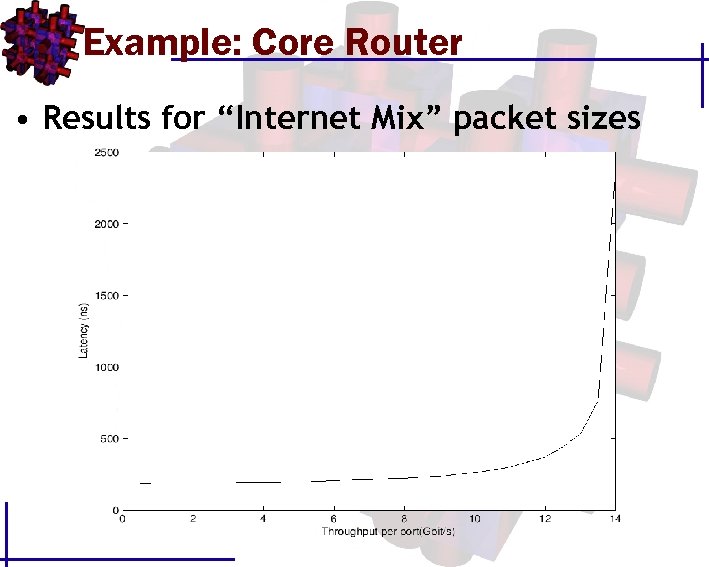 Example: Core Router • Results for “Internet Mix” packet sizes
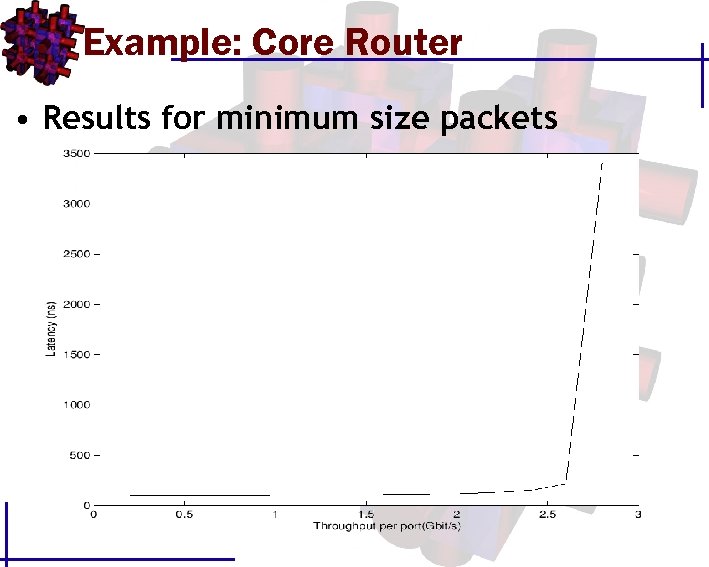 Example: Core Router • Results for minimum size packets
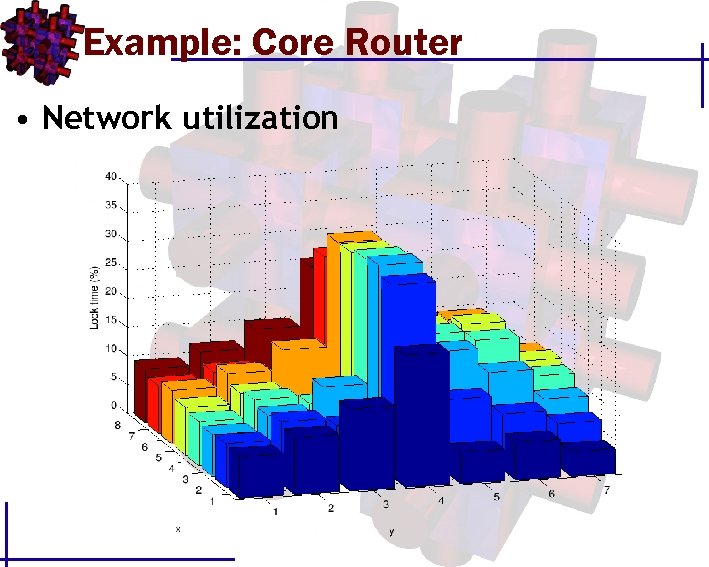 Example: Core Router • Network utilization
 Example: Core Router • Bottleneck in forwarding table access – Current version of So. CBUS creates a virtual circuit for each request • Proposal: Extend So. CBUS – Reliable delivery of small (64 bit or less) packets without setting up a virtual circuit
 Example: Core Router • Conclusion on this application example – Initial concept seems to work in simulation • Current work: – Master thesis to test concept in an FPGA
 Our Reflections • Many papers use routers for each connection core – Not every IP core has to have a No. C Uplink – Probably better to use local shared buses with a common No. C Uplink – On the Internet, terminals are not connected directly to routers • Hard to design a network if the traffic is unknown
 Our Reflections • Research on how to improve No. Cs can often be used to improve non-No. C based designs – Communication over long distances – Improved crossbars • It will be hard to guarantee real-time performance on No. Cs
 Conclusions • No. C seems to be a reasonable tradeoff – Similar to how standard cells make it easier to design chips • No industry usage (yet? ) • As yet, no killer application has been demonstrated • Next level of abstraction – IP centric design
 Questions/Discussion • Will future chips have communication patterns favoring No. Cs?
 References • Networks on chips: a new So. C paradigm Benini, L. ; De Micheli, G. ; Computer , Volume: 35 , Issue: 1 , Jan. 2002 Pages: 70 - 78 • Powering networks on chips Benini, L. ; De Micheli, G. ; System Synthesis, 2001. Proceedings. The 14 th International Symposium on, 30 Sept. -3 Oct. 2001 Pages: 33 – 38 • Addressing the system-on-a-chip interconnect woes through communication-based design Sgroi, M. ; Sheets, M. ; Mihal, A. ; Keutzer, K. ; Malik, S. ; Rabaey, J. ; Sangiovanni-Vincentelli, A. ; Design Automation Conference, 2001. Proceedings , 18 -22 June 2001 Pages: 667 - 672 • On-chip networks: a scalable, communication-centric embedded system design paradigm Henkel, J. ; Wolf, W. ; Chakradhar, S. ; VLSI Design, 2004. Proceedings. 17 th International Conference on , 2004 Pages: 845 - 851 • Design of a Core Router using the So. CBUS On-chip Network; Jimmy Svensson; Li. TH-ISY-EX-04/3562 -SE; Li. TH
 References • A scalable high-performance computing solution for networks on chips Forsell, M. ; Micro, IEEE , Volume: 22 , Issue: 5 , Sept. -Oct. 2002 Pages: 46 - 55 • Xpipes: a network-on-chip architecture for gigascale systems-on-chip Bertozzi, D. ; Benini, L. ; Circuits and Systems Magazine, IEEE , Volume: 4 , Issue: 2 , 2004 Pages: 18 - 31 • xpipes. Compiler: a tool for instantiating application specific networks on chip Jalabert, A. ; Murali, S. ; Benini, L. ; De Micheli, G. ; Design, Automation and Test in Europe Conference and Exhibition, 2004. Proceedings , Volume: 2 , 16 -20 Feb. 2004 Pages: 884 - 889 Vol. 2 • A wave-pipelined on-chip interconnect structure for networks-onchips Jiang Xu; Wayne, W. High Performance Interconnects, 2003. Proceedings. 11 th Symposium on, Vol. , Iss. , 20 -22 Aug. 2003 Pages: 10 - 14 • An on-chip network architecture for hard real time system; Daniel Wiklund; Li. U-TEK-LIC-2002: 69 LIU