


 Скачать презентацию Níhao China Part II China and Chinese Language
5447edac2e3117998364ae766dba1151.ppt
- Количество слайдов: 57
 Níhao, China! Part II: China and Chinese Language Dr. Tim Xie CSULB June 28, 2002 *Photos and pictures in this presentation are used for educational purposes and limited time only.
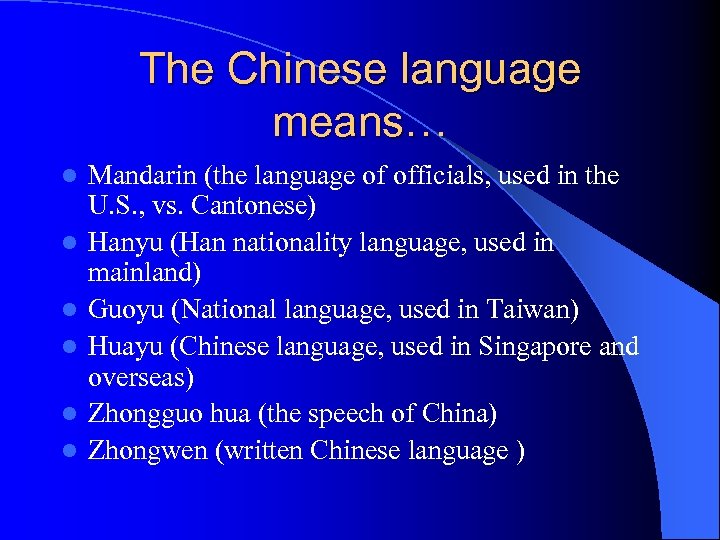 The Chinese language means… l l l Mandarin (the language of officials, used in the U. S. , vs. Cantonese) Hanyu (Han nationality language, used in mainland) Guoyu (National language, used in Taiwan) Huayu (Chinese language, used in Singapore and overseas) Zhongguo hua (the speech of China) Zhongwen (written Chinese language )
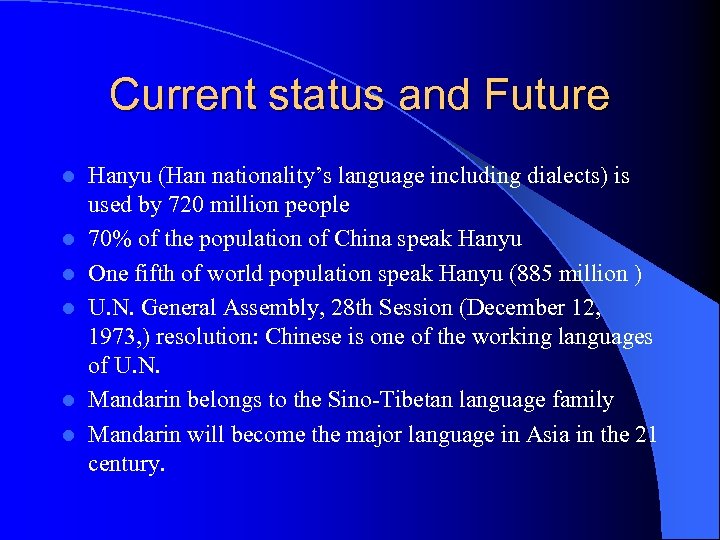 Current status and Future l l l Hanyu (Han nationality’s language including dialects) is used by 720 million people 70% of the population of China speak Hanyu One fifth of world population speak Hanyu (885 million ) U. N. General Assembly, 28 th Session (December 12, 1973, ) resolution: Chinese is one of the working languages of U. N. Mandarin belongs to the Sino-Tibetan language family Mandarin will become the major language in Asia in the 21 century.
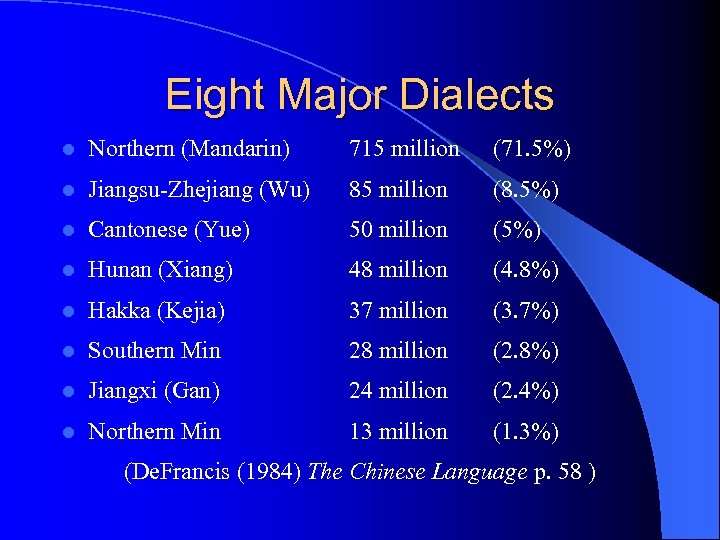 Eight Major Dialects l Northern (Mandarin) 715 million (71. 5%) l Jiangsu-Zhejiang (Wu) 85 million (8. 5%) l Cantonese (Yue) 50 million (5%) l Hunan (Xiang) 48 million (4. 8%) l Hakka (Kejia) 37 million (3. 7%) l Southern Min 28 million (2. 8%) l Jiangxi (Gan) 24 million (2. 4%) l Northern Min 13 million (1. 3%) (De. Francis (1984) The Chinese Language p. 58 )
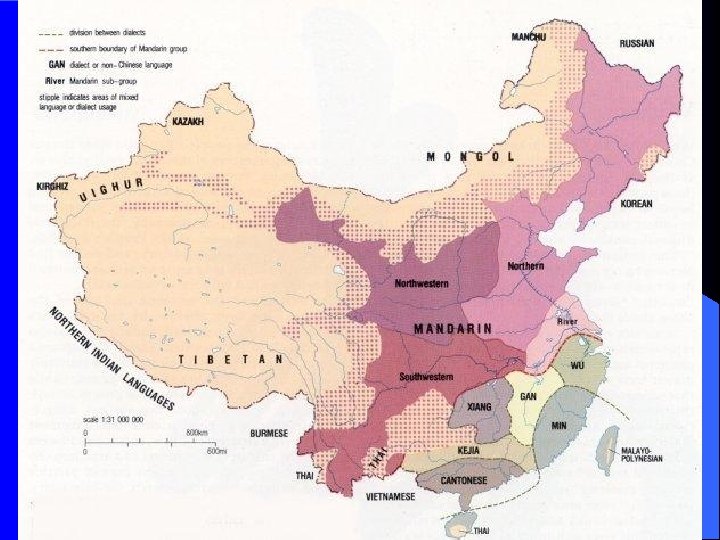
 Chinese Dialects l Mutually unintelligible. Dialect speakers do not understand each other. l The difference between the dialects is mostly phonological. l There are some variation in vocabulary and grammar. l Solution for communication – Common Speech (Putonghua or Guoyu)
 Characteristics of Mandarin Chinese l Pronunciation l Vocabulary l Grammar
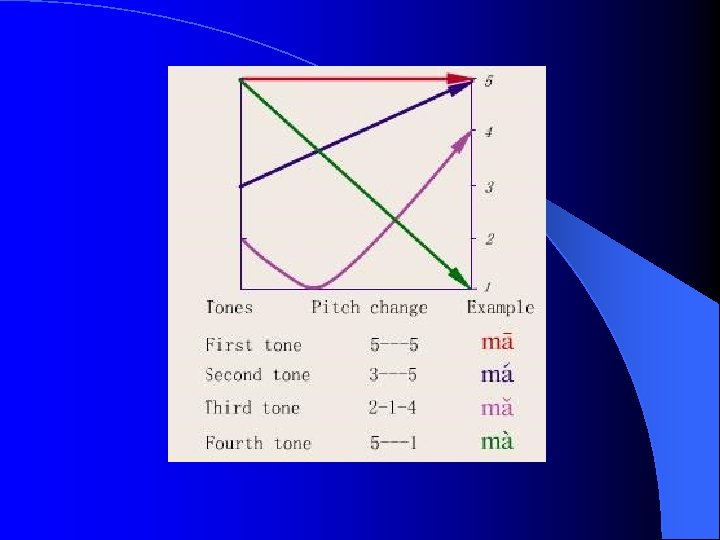
 Pronunciation l The number of syllables are limited: 432. There are 1376 syllables if all tonal variation is taken into account. (Liu, 1957) l Vowels are predominant. l There are four tones in Mandarin.
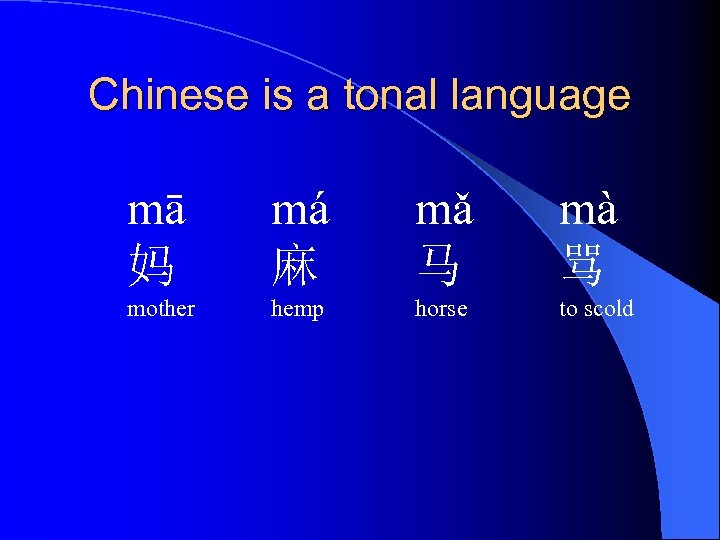 Chinese is a tonal language mā 妈 má 麻 mǎ 马 mà 骂 mother hemp horse to scold
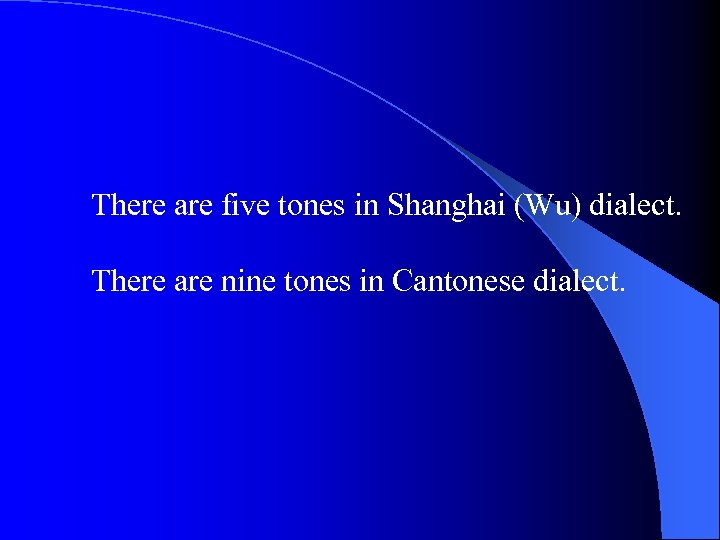 There are five tones in Shanghai (Wu) dialect. There are nine tones in Cantonese dialect.
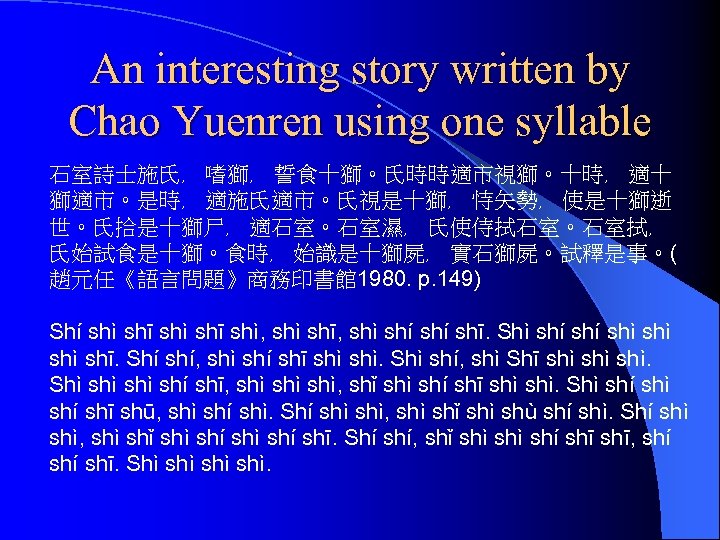 An interesting story written by Chao Yuenren using one syllable 石室詩士施氏﹐ 嗜獅﹐ 誓食十獅。氏時時適市視獅。十時﹐ 適十 獅適市。是時﹐ 適施氏適市。氏視是十獅﹐ 恃矢勢﹐ 使是十獅逝 世。氏拾是十獅尸﹐ 適石室。石室濕﹐ 氏使侍拭石室。石室拭﹐ 氏始試食是十獅。食時﹐ 始識是十獅屍﹐ 實石獅屍。試釋是事。( 趙元任《語言問題》商務印書館 1980. p. 149) Shí shì shī shì, shì shī, shì shí shī. Shì shí shì shì shī. Shí shí, shì shí shī shì. Shì shí, shì Shī shì shì. Shì shì shí shī, shì shì, shǐ shì shí shī shì. Shì shí shī shū, shì shí shì. Shí shì, shì shǐ shì shù shí shì. Shí shì, shì shǐ shì shí shī. Shí shí, shǐ shì shí shī, shí shī. Shì shì shì.
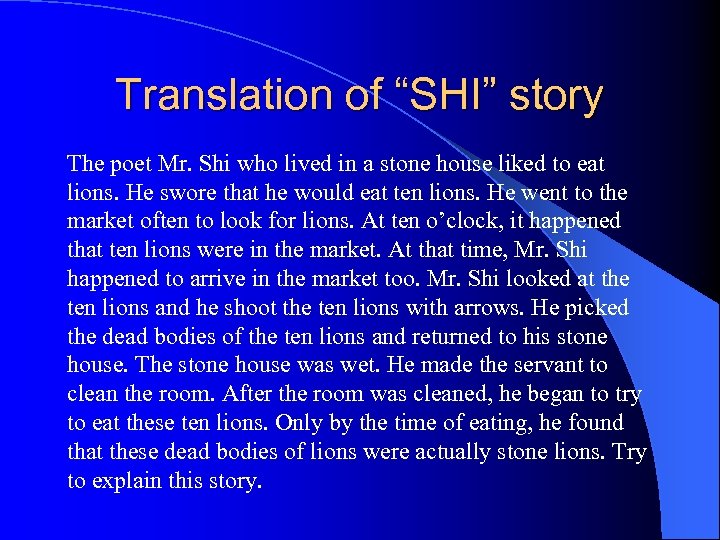 Translation of “SHI” story The poet Mr. Shi who lived in a stone house liked to eat lions. He swore that he would eat ten lions. He went to the market often to look for lions. At ten o’clock, it happened that ten lions were in the market. At that time, Mr. Shi happened to arrive in the market too. Mr. Shi looked at the ten lions and he shoot the ten lions with arrows. He picked the dead bodies of the ten lions and returned to his stone house. The stone house was wet. He made the servant to clean the room. After the room was cleaned, he began to try to eat these ten lions. Only by the time of eating, he found that these dead bodies of lions were actually stone lions. Try to explain this story.
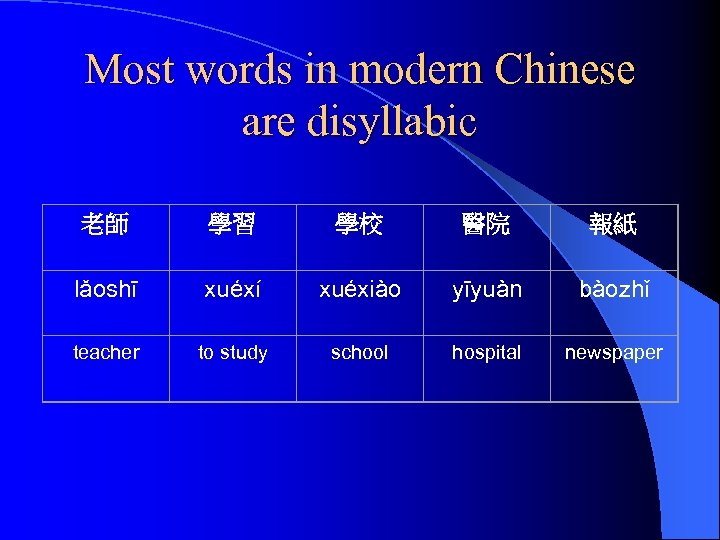 Most words in modern Chinese are disyllabic 老師 學習 學校 醫院 報紙 lǎoshī xuéxí xuéxiào yīyuàn bàozhǐ teacher to study school hospital newspaper
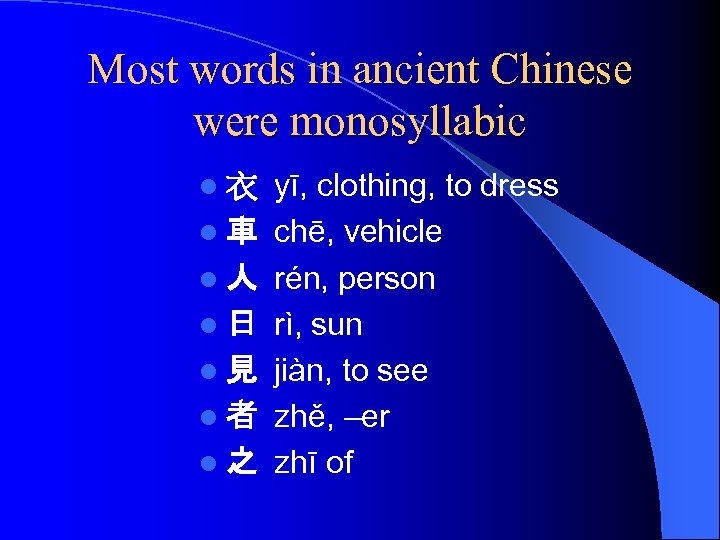 Most words in ancient Chinese were monosyllabic l衣 l車 l人 l日 l見 l者 l之 yī, clothing, to dress chē, vehicle rén, person rì, sun jiàn, to see zhě, –er zhī of
 Script l Non-phonetic: a character has no clue to its pronunciation l Ideographic or pictographic: characters are derived from the pictures l The writing unit is character. Characters can be written vertically or horizontally, from left to write, from right to left, or from top to bottom
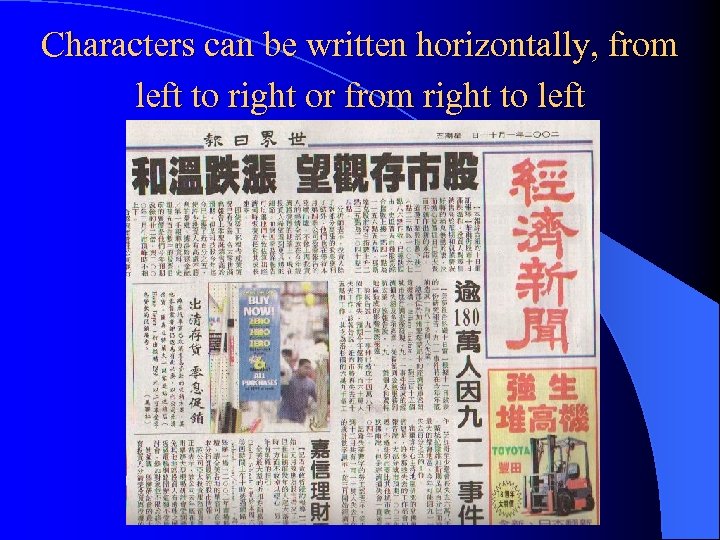 Characters can be written horizontally, from left to right or from right to left
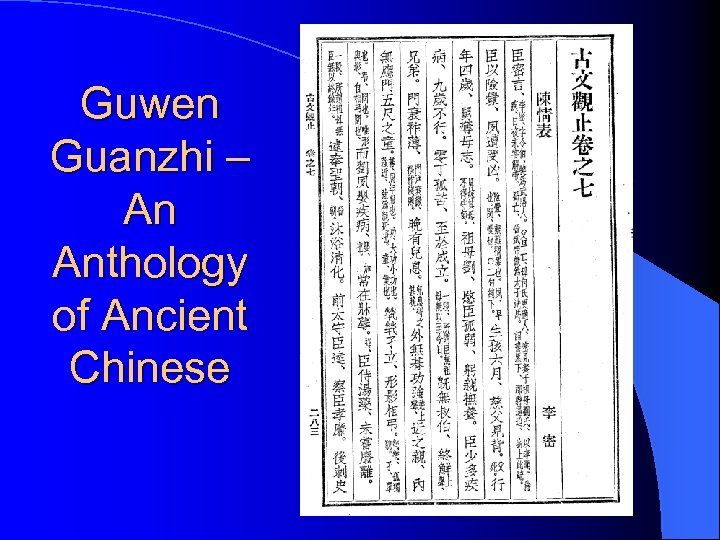 Guwen Guanzhi – An Anthology of Ancient Chinese
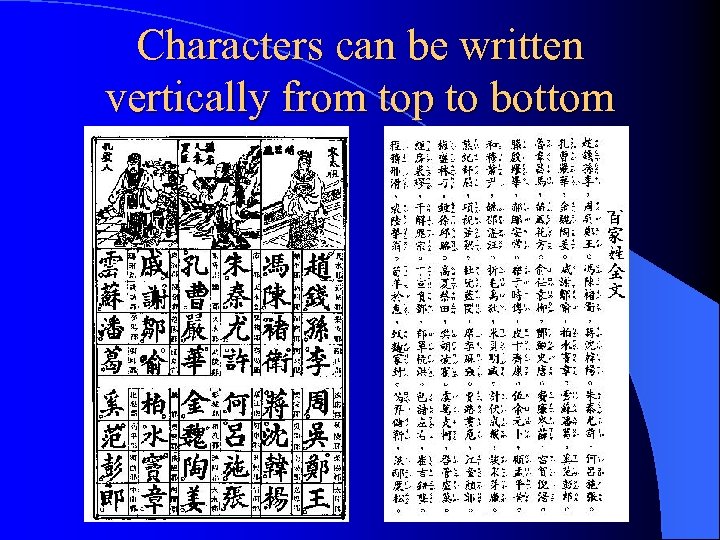 Characters can be written vertically from top to bottom
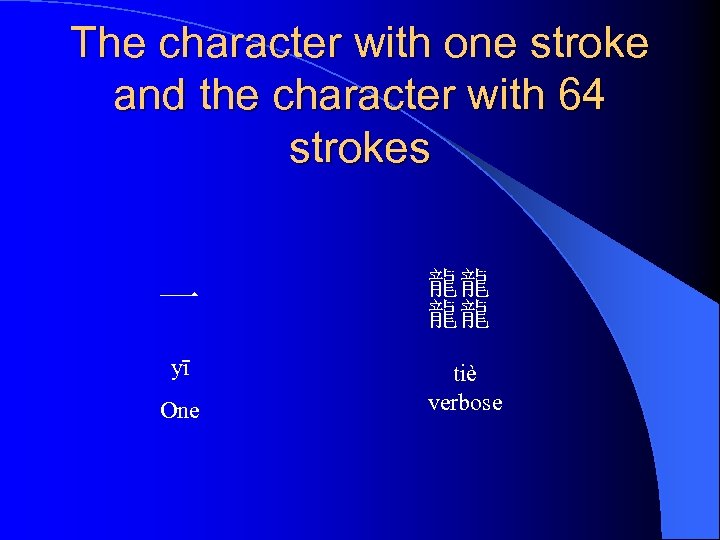 The character with one stroke and the character with 64 strokes 一 龍龍 龍龍 yī tiè verbose One
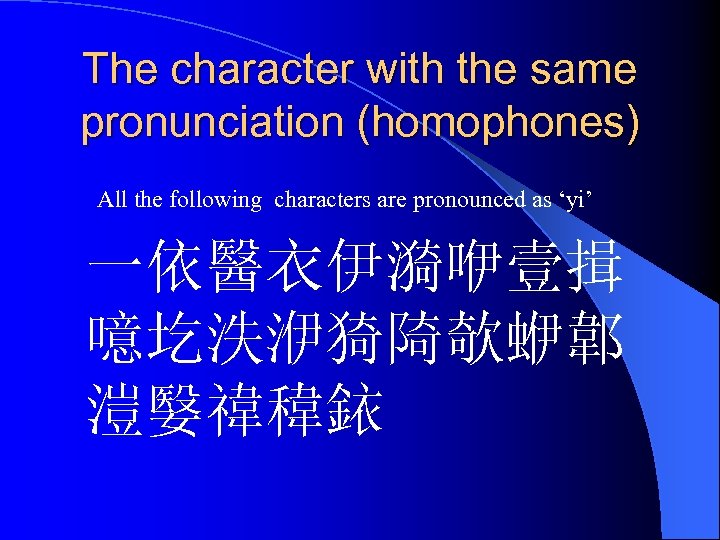 The character with the same pronunciation (homophones) All the following characters are pronounced as ‘yi’ 一依醫衣伊漪咿壹揖 噫圪泆洢猗陭欹蛜郼 溰嫛禕稦銥
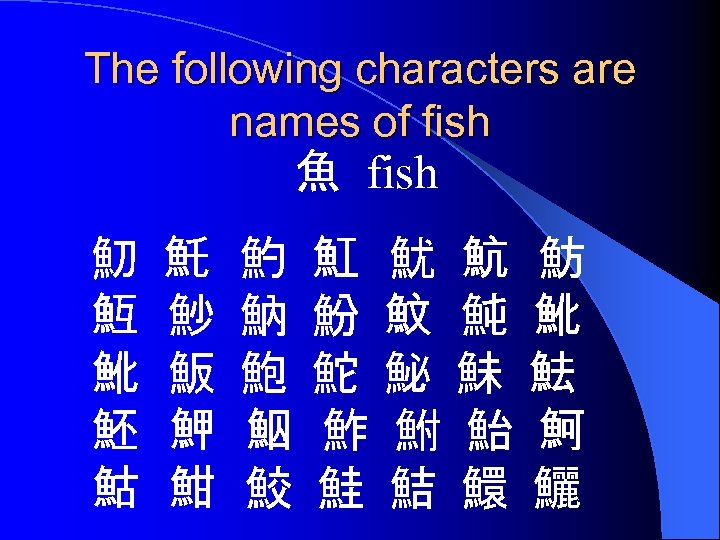 The following characters are names of fish 魚 fish 魛 魱 魤 魾 鮕 魠 魦 魬 魻 魽 魡 魶 鮑 鮂 鮫 魟 魷 魧 魴 魵 魰 魨 魤 鮀 鮅 鮇 魼 鮓 鮒 鮐 魺 鮭 鮚 鱞 鱺
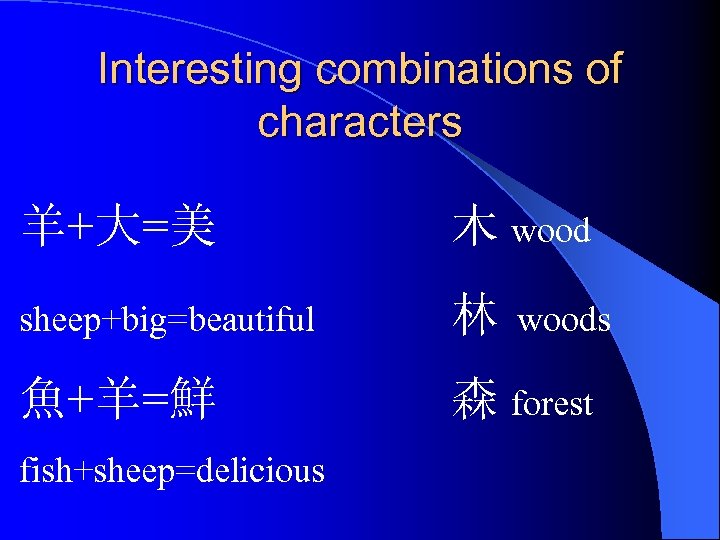 Interesting combinations of characters 羊+大=美 木 wood sheep+big=beautiful 林 魚+羊=鮮 森 forest fish+sheep=delicious woods
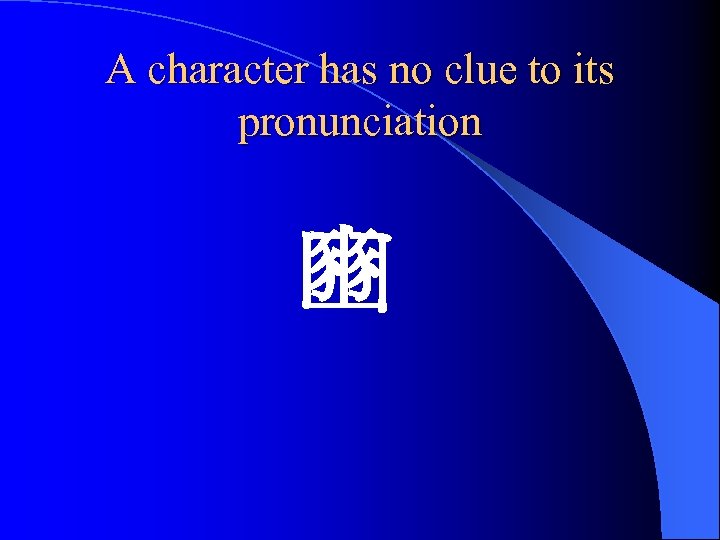 A character has no clue to its pronunciation 豳
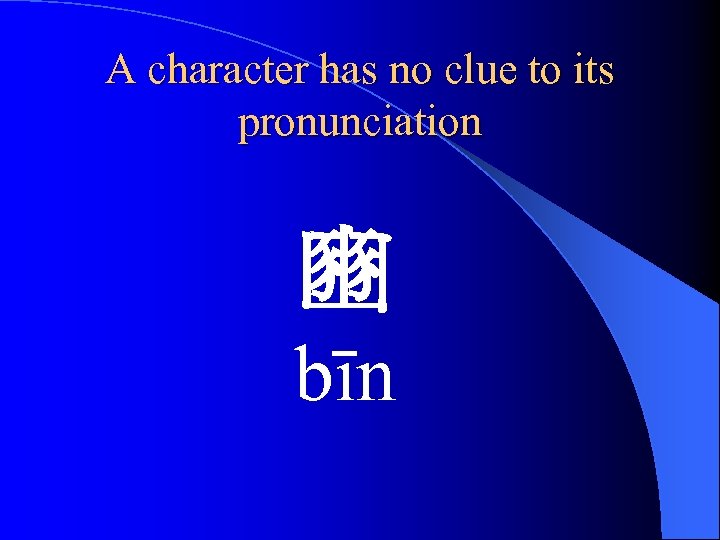 A character has no clue to its pronunciation 豳 bīn
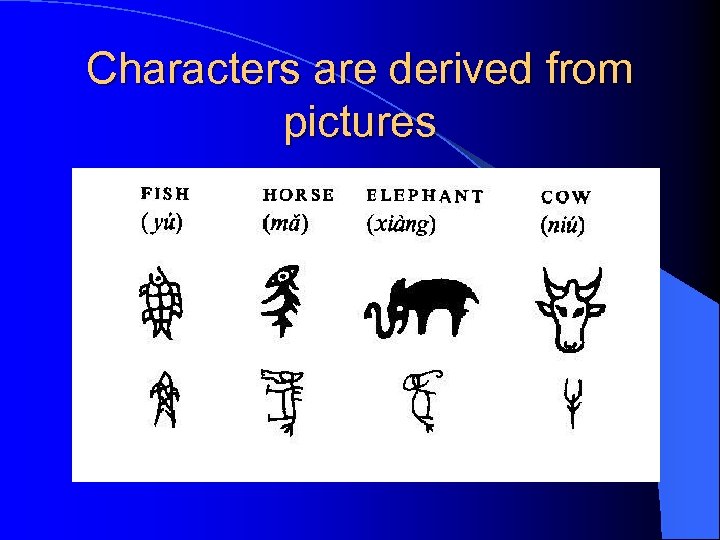 Characters are derived from pictures
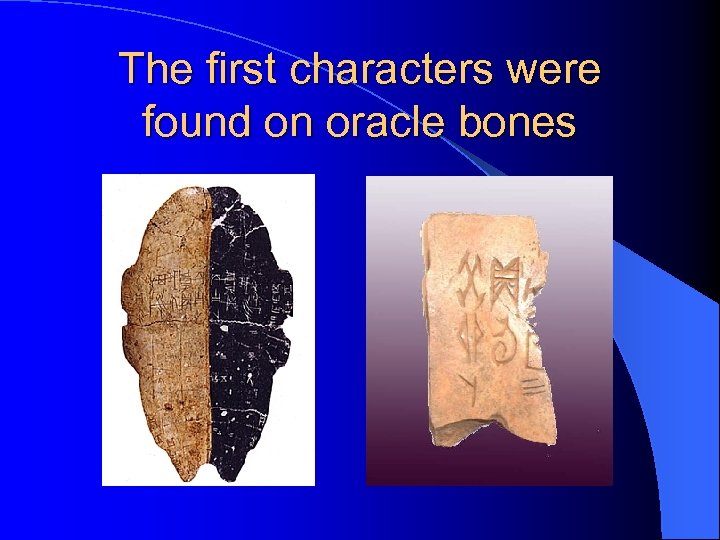 The first characters were found on oracle bones
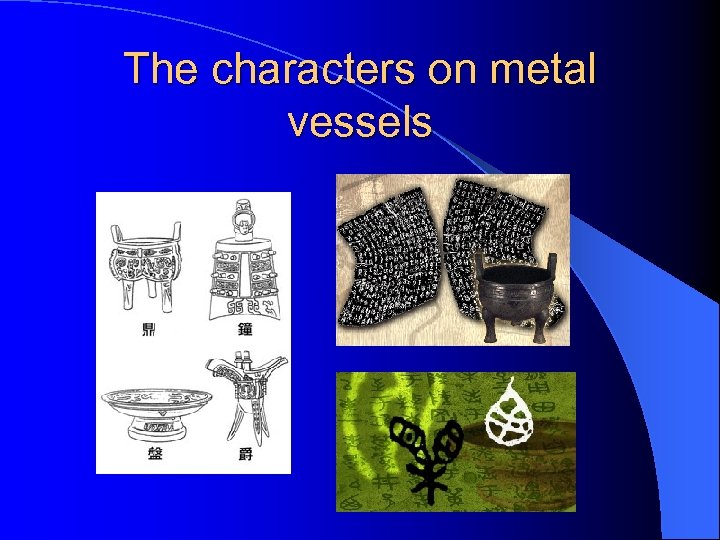 The characters on metal vessels
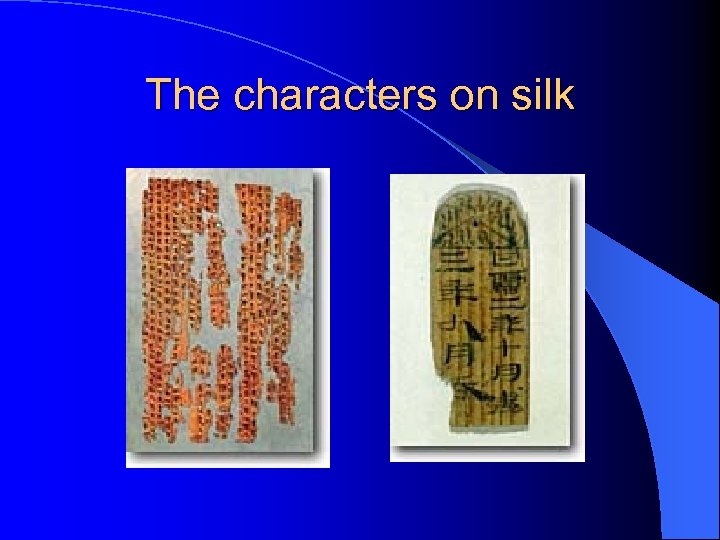 The characters on silk
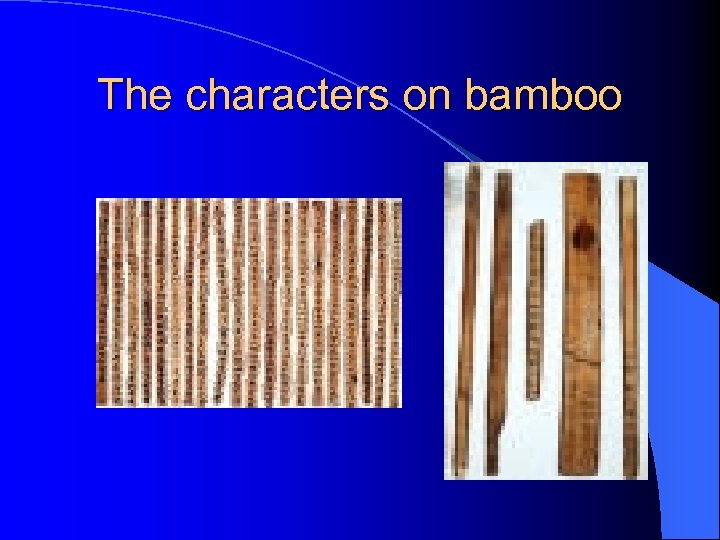 The characters on bamboo
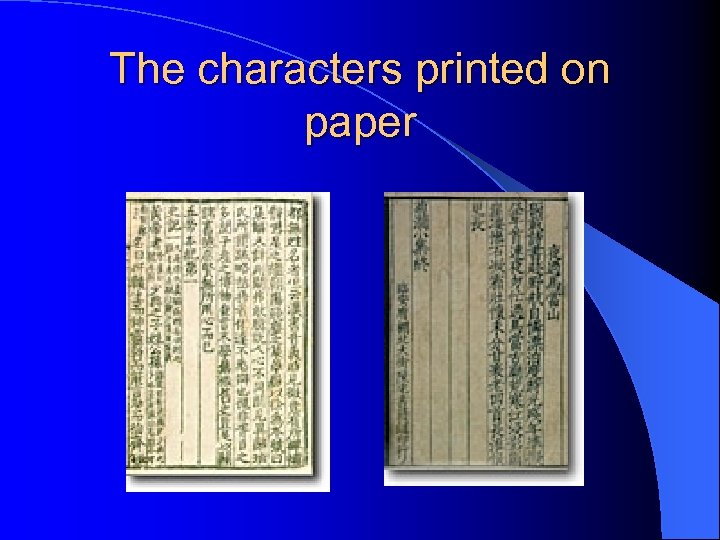 The characters printed on paper
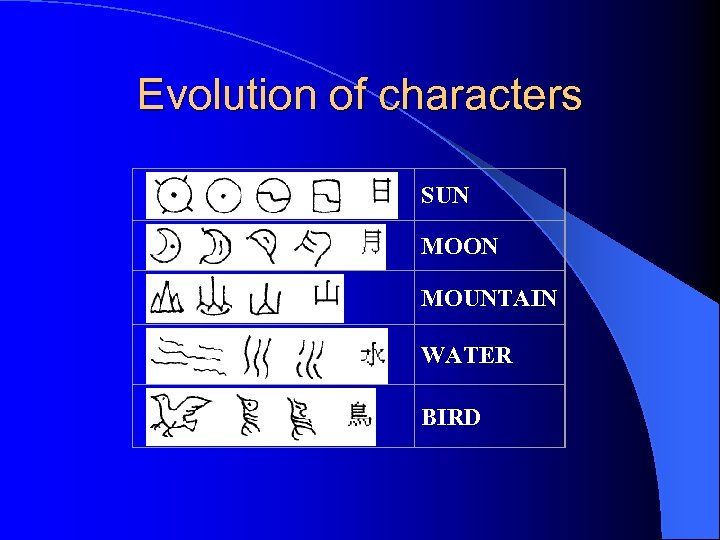 Evolution of characters SUN MOON MOUNTAIN WATER BIRD
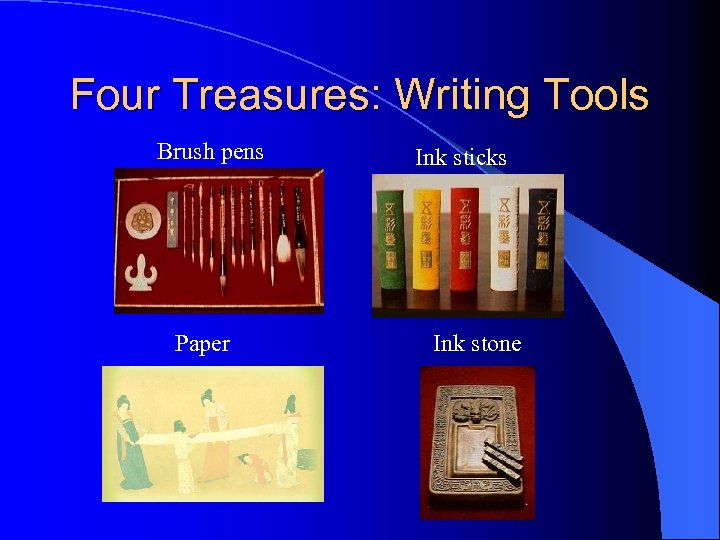 Four Treasures: Writing Tools Brush pens Paper Ink sticks Ink stone
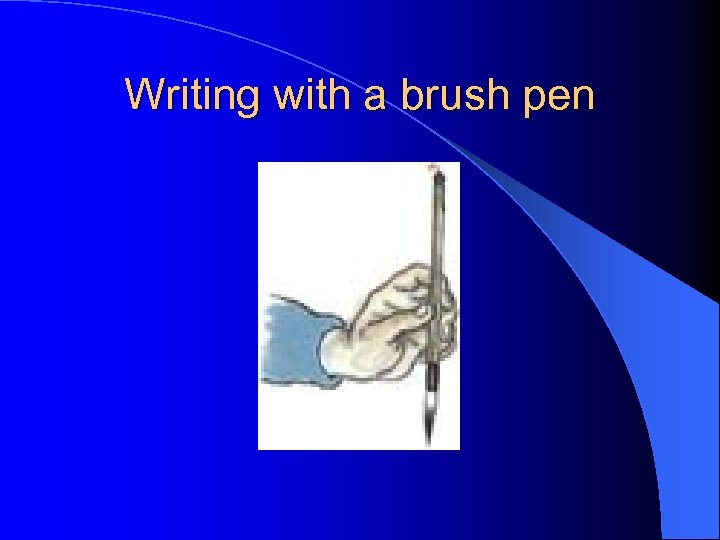 Writing with a brush pen
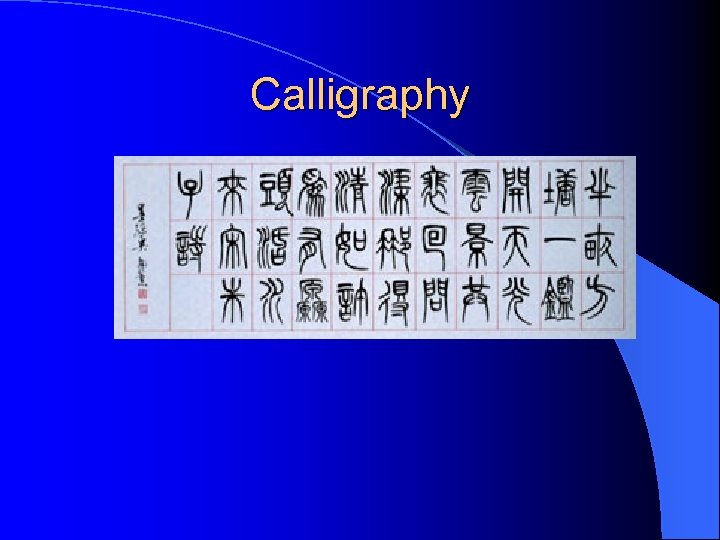 Calligraphy
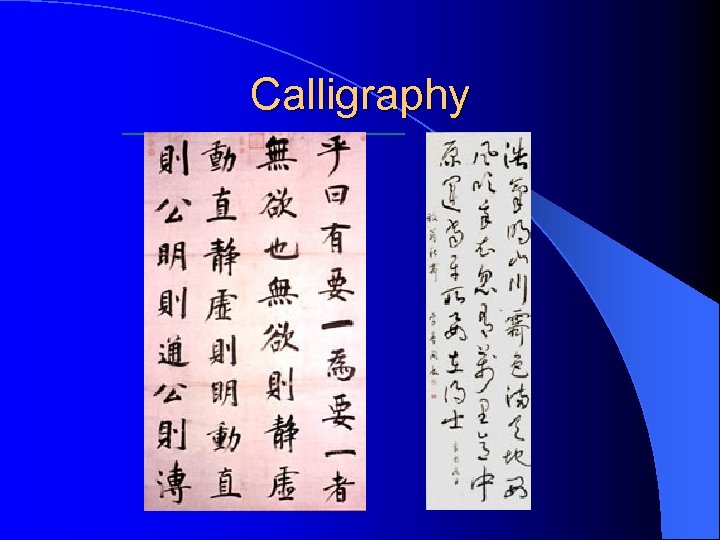 Calligraphy
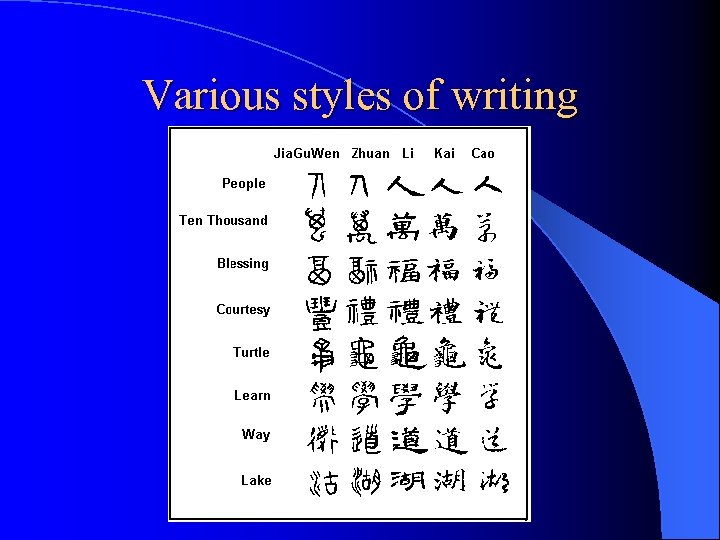 Various styles of writing
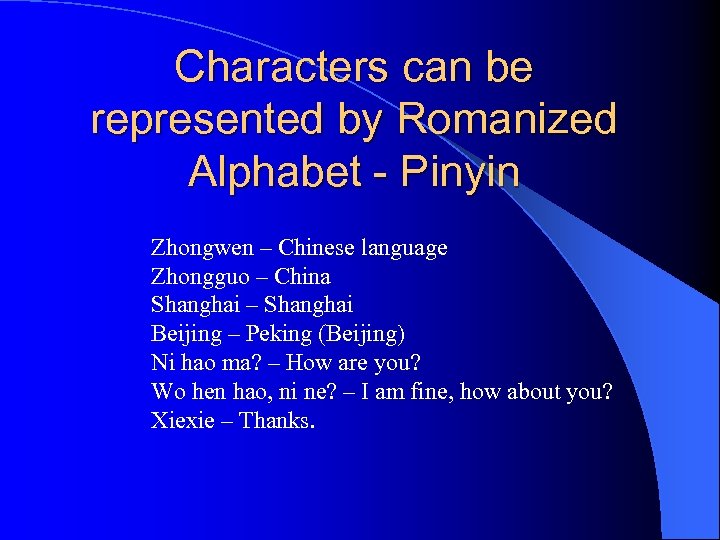 Characters can be represented by Romanized Alphabet - Pinyin Zhongwen – Chinese language Zhongguo – China Shanghai – Shanghai Beijing – Peking (Beijing) Ni hao ma? – How are you? Wo hen hao, ni ne? – I am fine, how about you? Xiexie – Thanks.
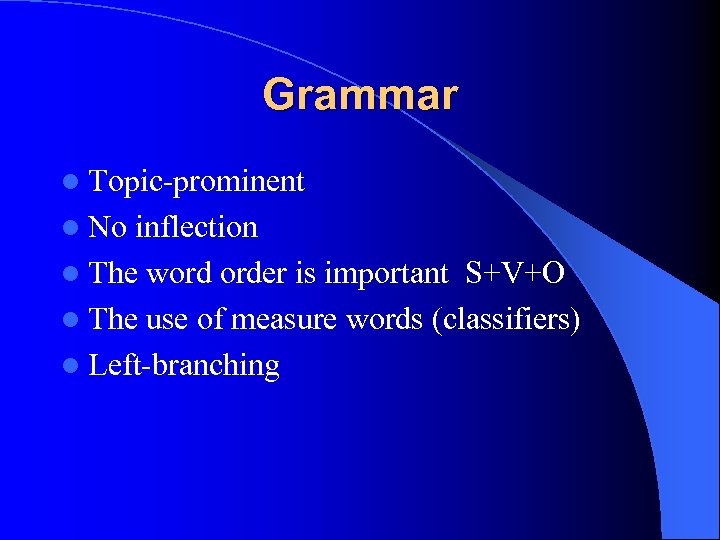 Grammar l Topic-prominent l No inflection l The word order is important S+V+O l The use of measure words (classifiers) l Left-branching
![Topic-prominent John, wǒ rènshi. [John, I know. ] Zhè běn shū, wǒ kàn le](https://present5.com/presentation/5447edac2e3117998364ae766dba1151/image-40.jpg "Topic-prominent John, wǒ rènshi. [John, I know. ] Zhè běn shū, wǒ kàn le") Topic-prominent John, wǒ rènshi. [John, I know. ] Zhè běn shū, wǒ kàn le sān biàn. [This book, I read three times. ]
Topic-prominent John, wǒ rènshi. [John, I know. ] Zhè běn shū, wǒ kàn le sān biàn. [This book, I read three times. ]
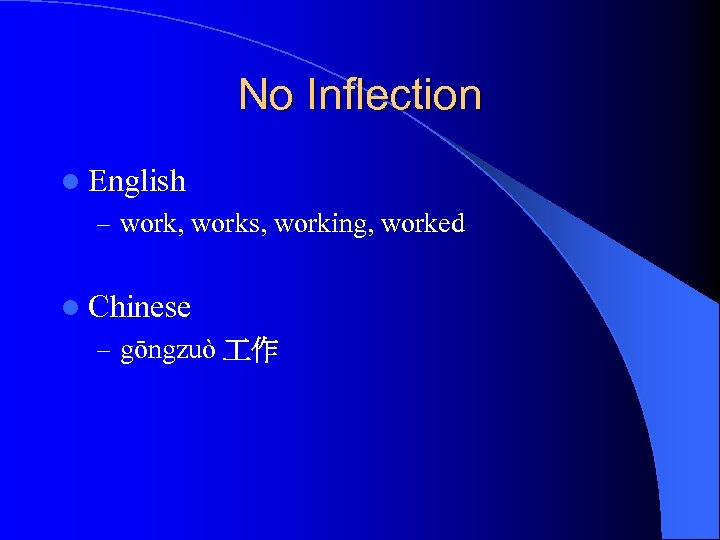 No Inflection l English – work, works, working, worked l Chinese – gōngzuò 作
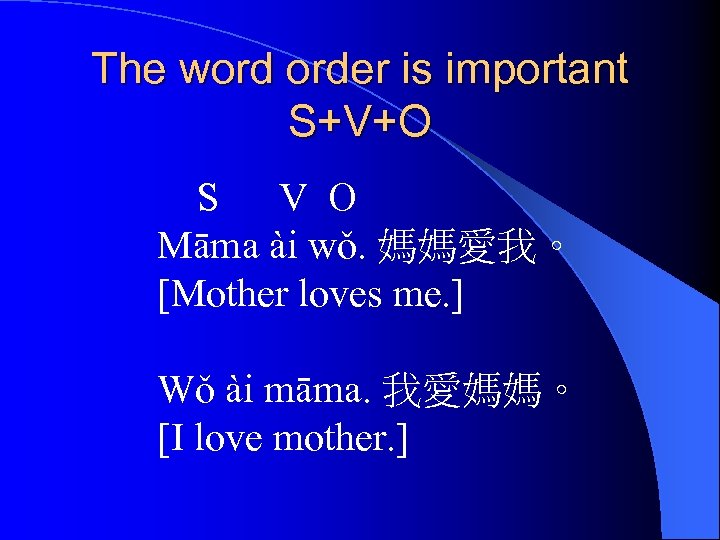 The word order is important S+V+O S V O Māma ài wǒ. 媽媽愛我。 [Mother loves me. ] Wǒ ài māma. 我愛媽媽。 [I love mother. ]
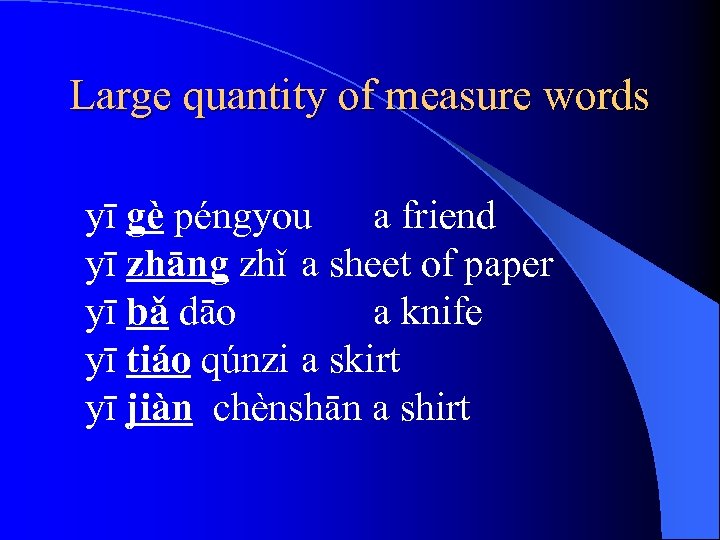 Large quantity of measure words yī gè péngyou a friend yī zhāng zhǐ a sheet of paper yī bǎ dāo a knife yī tiáo qúnzi a skirt yī jiàn chènshān a shirt
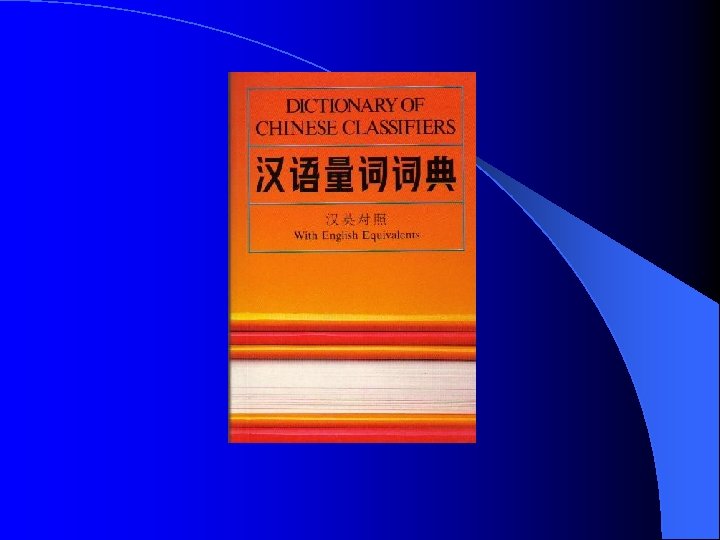
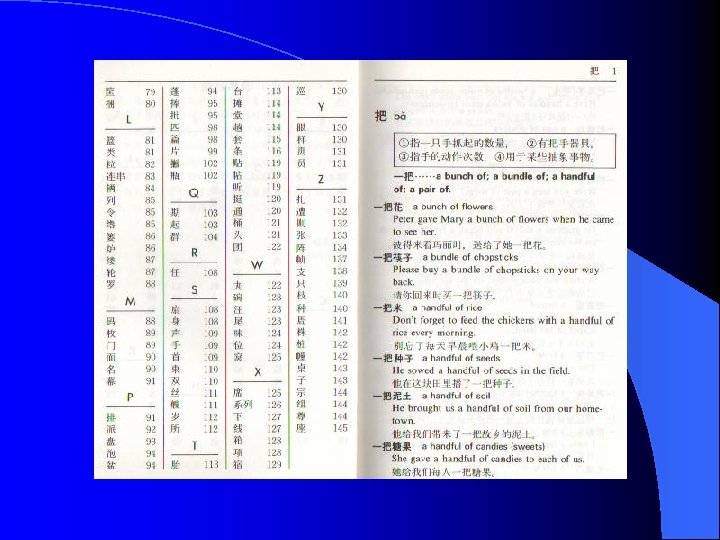
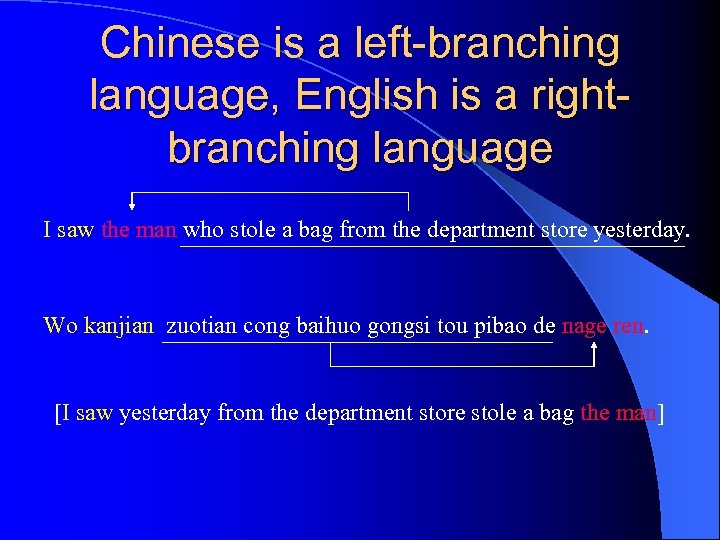 Chinese is a left-branching language, English is a right- branching language I saw the man who stole a bag from the department store yesterday. Wo kanjian zuotian cong baihuo gongsi tou pibao de nage ren. [I saw yesterday from the department store stole a bag the man]
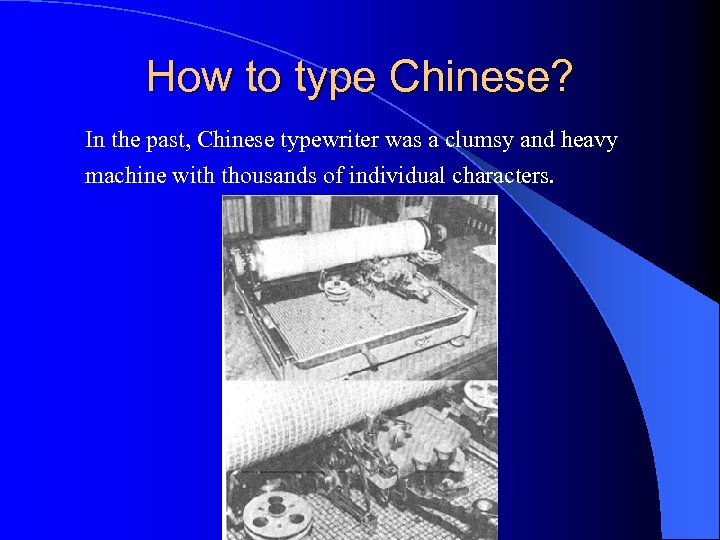 How to type Chinese? In the past, Chinese typewriter was a clumsy and heavy machine with thousands of individual characters.
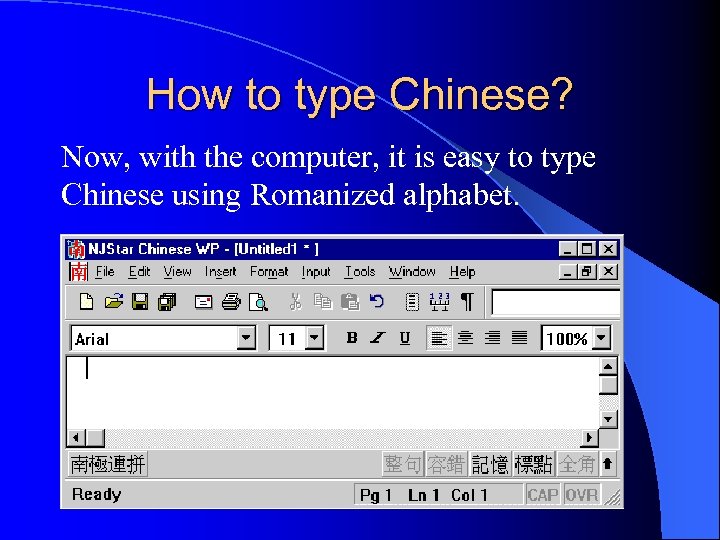 How to type Chinese? Now, with the computer, it is easy to type Chinese using Romanized alphabet.
 Learn Some Chinese Expressions l Níhao- How do you do? l Xièxie- Thank you. l Hén hao- Very good! l Qing- Please l Bú kèqi-You’re welcome l Duì bu qi- Sorry, Excuse me l Zaijiàn- Good-bye
 Greeting l Níhao! Hello!
 Thanks l Xièxie! l Bú kèqi. Thanks! You’re welcome
 I am sorry… l Duì bu qi. I am sorry. l Méi guānxi. That’s OK.
 Please… l Qing. l Xièxie. Please. Thanks.
 Good-bye l Zaijiàn. Good-bye. l Zaijiàn. Good-bye.
 Learning Chinese Online l Conversational Mandarin Online: An Online Course http: //www. csulb. edu/~txie/ccol/content. htm l Learning Chinese Online: A Resource Page: http: //www. csulb. edu/~txie/online. htm
 Recommending Pimsleur Tapes Pimsleur Mandarin Chinese 30 Units English explanations Repeated drills Available Amazon. com $206. 50, used from $169, Pimsleur Quick & Simple Chinese: Mandarin [ABRIDGED] $13. 97
 Thank you, Good-bye! Xièxie, zaijiàn! txie@csulb. edu