 Скачать презентацию Nicotine Dependence — Consequences Epidemiology 민 성
2cea73637485ee5531f587998534f273.ppt
- Количество слайдов: 69



Nicotine Dependence - Consequences & Epidemiology 민 성 호
Longevity
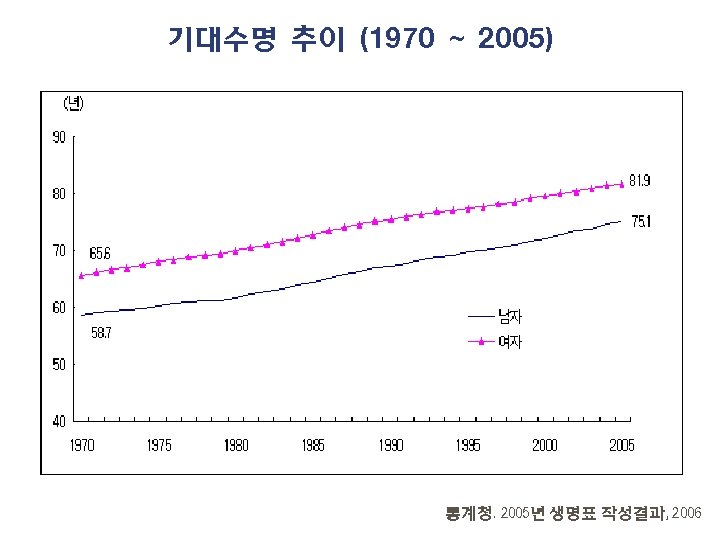
기대수명 추이 (1970 ~ 2005) 통계청. 2005년 생명표 작성결과, 2006
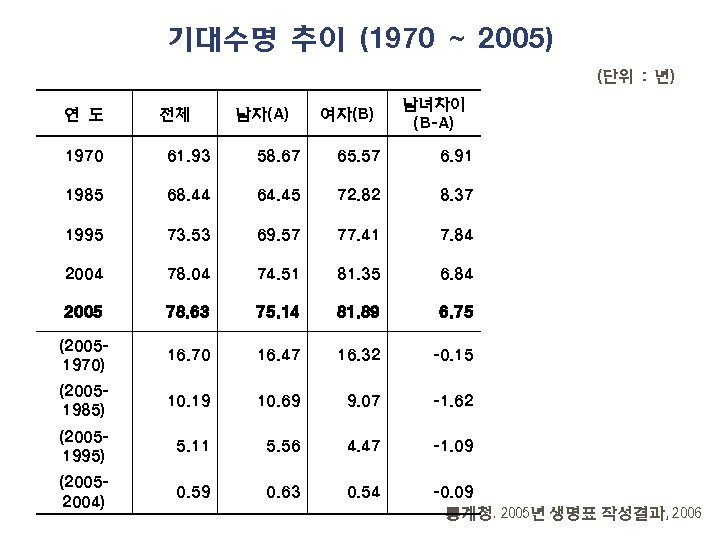
기대수명 추이 (1970 ~ 2005) (단위 : 년) 연 도 전체 남자(A) 여자(B) 남녀차이 (B-A) 1970 61. 93 58. 67 65. 57 6. 91 1985 68. 44 64. 45 72. 82 8. 37 1995 73. 53 69. 57 77. 41 7. 84 2004 78. 04 74. 51 81. 35 6. 84 2005 78. 63 75. 14 81. 89 6. 75 (20051970) 16. 70 16. 47 16. 32 -0. 15 (20051985) 10. 19 10. 69 9. 07 -1. 62 (20051995) 5. 11 5. 56 4. 47 -1. 09 (20052004) 0. 59 0. 63 0. 54 -0. 09 통계청. 2005년 생명표 작성결과, 2006
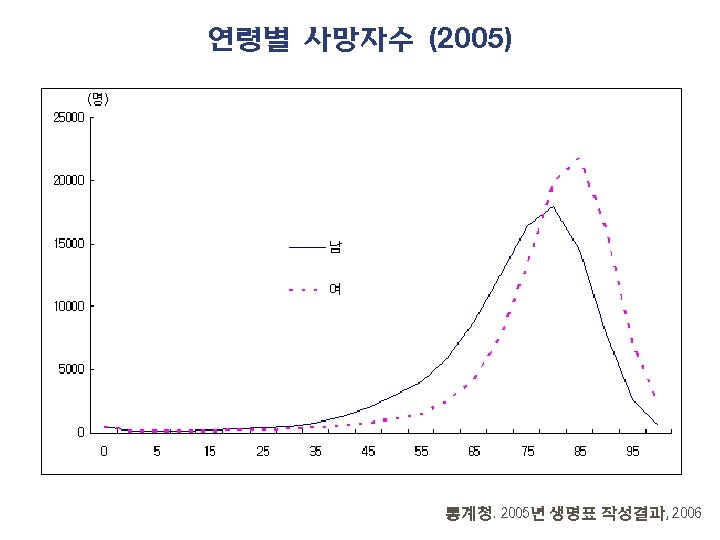
연령별 사망자수 (2005) 통계청. 2005년 생명표 작성결과, 2006
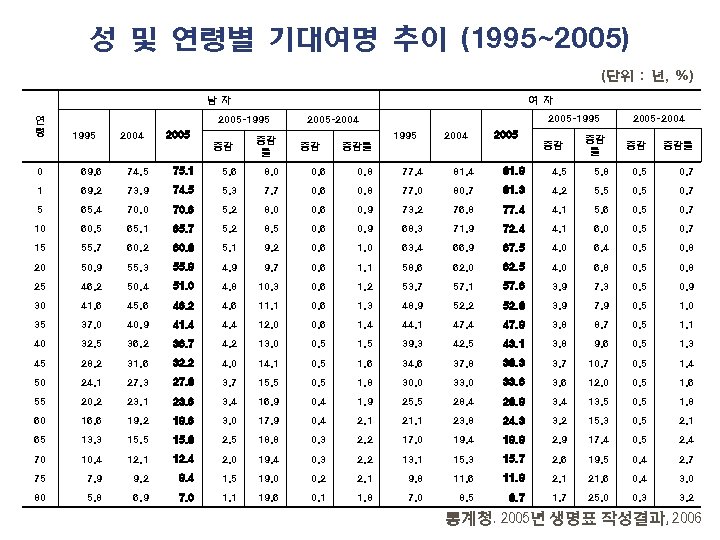
성 및 연령별 기대여명 추이 (1995~2005) (단위 : 년, %) 남 자 연 령 여 자 2005 -1995 2004 2005 증감 증감 률 2005 -1995 2005 -2004 1995 증감 2004 2005 증감률 증감 증감 률 2005 -2004 증감 증감률 0 69. 6 74. 5 75. 1 5. 6 8. 0 0. 6 0. 8 77. 4 81. 9 4. 5 5. 8 0. 5 0. 7 1 69. 2 73. 9 74. 5 5. 3 7. 7 0. 6 0. 8 77. 0 80. 7 81. 3 4. 2 5. 5 0. 7 5 65. 4 70. 0 70. 6 5. 2 8. 0 0. 6 0. 9 73. 2 76. 8 77. 4 4. 1 5. 6 0. 5 0. 7 10 60. 5 65. 1 65. 7 5. 2 8. 5 0. 6 0. 9 68. 3 71. 9 72. 4 4. 1 6. 0 0. 5 0. 7 15 55. 7 60. 2 60. 8 5. 1 9. 2 0. 6 1. 0 63. 4 66. 9 67. 5 4. 0 6. 4 0. 5 0. 8 20 50. 9 55. 3 55. 9 4. 9 9. 7 0. 6 1. 1 58. 6 62. 0 62. 5 4. 0 6. 8 0. 5 0. 8 25 46. 2 50. 4 51. 0 4. 8 10. 3 0. 6 1. 2 53. 7 57. 1 57. 6 3. 9 7. 3 0. 5 0. 9 30 41. 6 45. 6 46. 2 4. 6 11. 1 0. 6 1. 3 48. 9 52. 2 52. 8 3. 9 7. 9 0. 5 1. 0 35 37. 0 40. 9 41. 4 4. 4 12. 0 0. 6 1. 4 44. 1 47. 4 47. 9 3. 8 8. 7 0. 5 1. 1 40 32. 5 36. 2 36. 7 4. 2 13. 0 0. 5 1. 5 39. 3 42. 5 43. 1 3. 8 9. 6 0. 5 1. 3 45 28. 2 31. 6 32. 2 4. 0 14. 1 0. 5 1. 6 34. 6 37. 8 38. 3 3. 7 10. 7 0. 5 1. 4 50 24. 1 27. 3 27. 8 3. 7 15. 5 0. 5 1. 8 30. 0 33. 6 12. 0 0. 5 1. 6 55 20. 2 23. 1 23. 6 3. 4 16. 9 0. 4 1. 9 25. 5 28. 4 28. 9 3. 4 13. 5 0. 5 1. 8 60 16. 6 19. 2 19. 6 3. 0 17. 9 0. 4 2. 1 21. 1 23. 8 24. 3 3. 2 15. 3 0. 5 2. 1 65 13. 3 15. 5 15. 8 2. 5 18. 8 0. 3 2. 2 17. 0 19. 4 19. 9 2. 9 17. 4 0. 5 2. 4 70 10. 4 12. 1 12. 4 2. 0 19. 4 0. 3 2. 2 13. 1 15. 3 15. 7 2. 6 19. 5 0. 4 2. 7 75 7. 9 9. 2 9. 4 1. 5 19. 0 0. 2 2. 1 9. 8 11. 6 11. 9 2. 1 21. 6 0. 4 3. 0 80 5. 8 6. 9 7. 0 1. 1 19. 6 0. 1 1. 8 7. 0 8. 5 8. 7 1. 7 25. 0 0. 3 3. 2 통계청. 2005년 생명표 작성결과, 2006
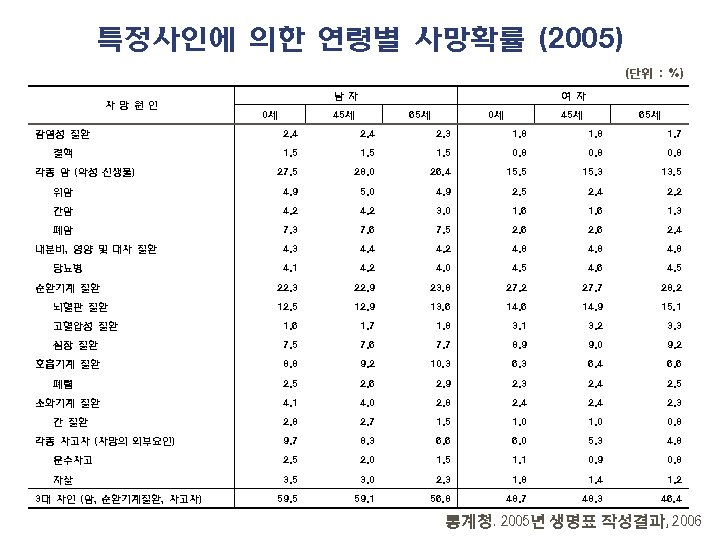
특정사인에 의한 연령별 사망확률 (2005) (단위 : %) 사 망 원 인 남 자 0세 여 자 45세 65세 0세 45세 65세 감염성 질환 2. 4 2. 3 1. 8 1. 7 결핵 1. 5 0. 8 27. 5 28. 0 26. 4 15. 5 15. 3 13. 5 위암 4. 9 5. 0 4. 9 2. 5 2. 4 2. 2 간암 4. 2 3. 0 1. 6 1. 3 폐암 7. 3 7. 6 7. 5 2. 6 2. 4 4. 3 4. 4 4. 2 4. 8 4. 1 4. 2 4. 0 4. 5 4. 6 4. 5 22. 3 22. 9 23. 8 27. 2 27. 7 28. 2 12. 5 12. 9 13. 6 14. 9 15. 1 고혈압성 질환 1. 6 1. 7 1. 8 3. 1 3. 2 3. 3 심장 질환 7. 5 7. 6 7. 7 8. 9 9. 0 9. 2 호흡기계 질환 8. 8 9. 2 10. 3 6. 4 6. 6 2. 5 2. 6 2. 9 2. 3 2. 4 2. 5 소화기계 질환 4. 1 4. 0 2. 8 2. 4 2. 3 간 질환 2. 8 2. 7 1. 5 1. 0 0. 8 9. 7 8. 3 6. 6 6. 0 5. 3 4. 8 운수사고 2. 5 2. 0 1. 5 1. 1 0. 9 0. 8 자살 3. 5 3. 0 2. 3 1. 8 1. 4 1. 2 59. 5 59. 1 56. 8 48. 7 48. 3 46. 4 각종 암 (악성 신생물) 내분비, 영양 및 대사 질환 당뇨병 순환기계 질환 뇌혈관 질환 폐렴 각종 사고사 (사망의 외부요인) 3대 사인 (암, 순환기계질환, 사고사) 통계청. 2005년 생명표 작성결과, 2006
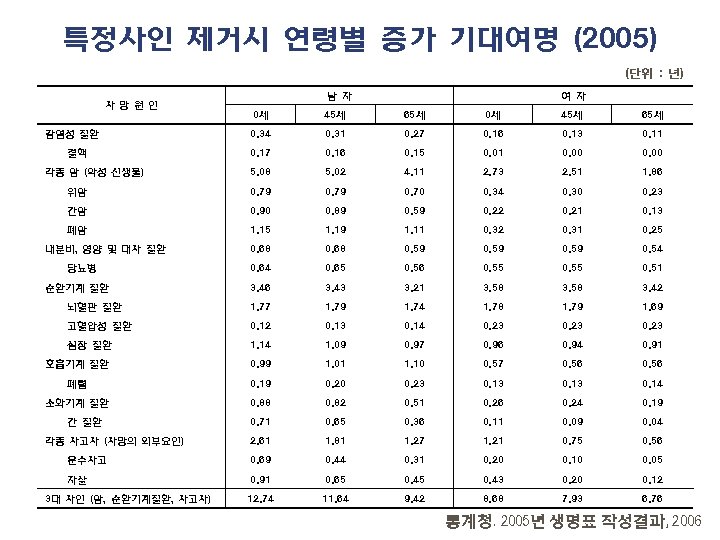
특정사인 제거시 연령별 증가 기대여명 (2005) (단위 : 년) 사 망 원 인 남 자 여 자 0세 45세 65세 0. 34 0. 31 0. 27 0. 16 0. 13 0. 11 0. 17 0. 16 0. 15 0. 01 0. 00 5. 08 5. 02 4. 11 2. 73 2. 51 1. 86 위암 0. 79 0. 70 0. 34 0. 30 0. 23 간암 0. 90 0. 89 0. 59 0. 22 0. 21 0. 13 폐암 1. 15 1. 19 1. 11 0. 32 0. 31 0. 25 0. 68 0. 59 0. 54 0. 65 0. 56 0. 55 0. 51 3. 46 3. 43 3. 21 3. 58 3. 42 뇌혈관 질환 1. 77 1. 79 1. 74 1. 78 1. 79 1. 69 고혈압성 질환 0. 12 0. 13 0. 14 0. 23 심장 질환 1. 14 1. 09 0. 97 0. 96 0. 94 0. 91 호흡기계 질환 0. 99 1. 01 1. 10 0. 57 0. 56 폐렴 0. 19 0. 20 0. 23 0. 13 0. 14 소화기계 질환 0. 88 0. 82 0. 51 0. 26 0. 24 0. 19 0. 71 0. 65 0. 36 0. 11 0. 09 0. 04 2. 61 1. 81 1. 27 1. 21 0. 75 0. 56 운수사고 0. 69 0. 44 0. 31 0. 20 0. 10 0. 05 자살 0. 91 0. 65 0. 43 0. 20 0. 12 12. 74 11. 64 9. 42 8. 68 7. 93 6. 76 감염성 질환 결핵 각종 암 (악성 신생물) 내분비, 영양 및 대사 질환 당뇨병 순환기계 질환 간 질환 각종 사고사 (사망의 외부요인) 3대 사인 (암, 순환기계질환, 사고사) 통계청. 2005년 생명표 작성결과, 2006
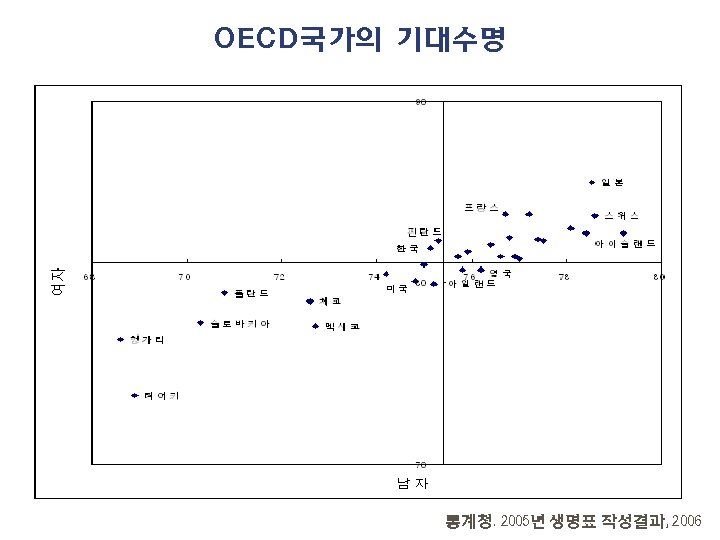
OECD국가의 기대수명 통계청. 2005년 생명표 작성결과, 2006
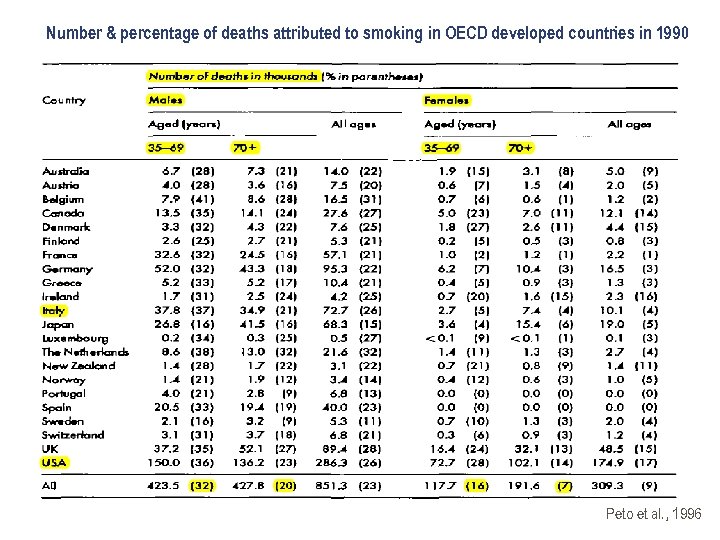
Number & percentage of deaths attributed to smoking in OECD developed countries in 1990 Peto et al. , 1996

사망 원인에 따른 분류 (미국)
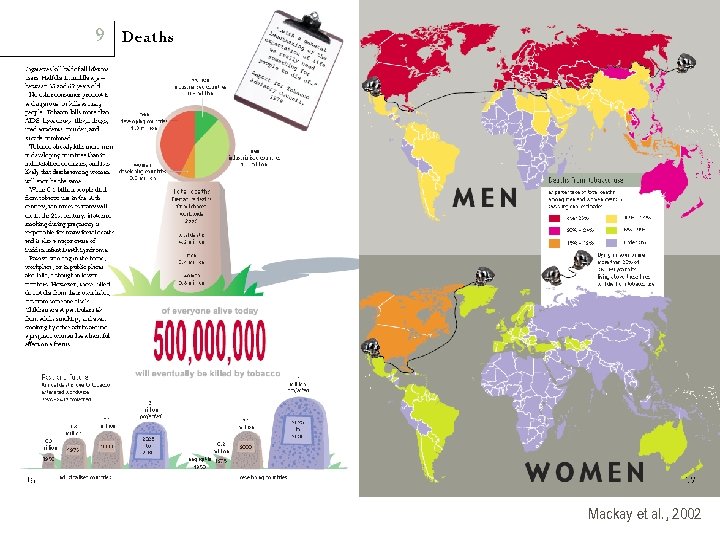
Mackay et al. , 2002
Consequences of Smoking
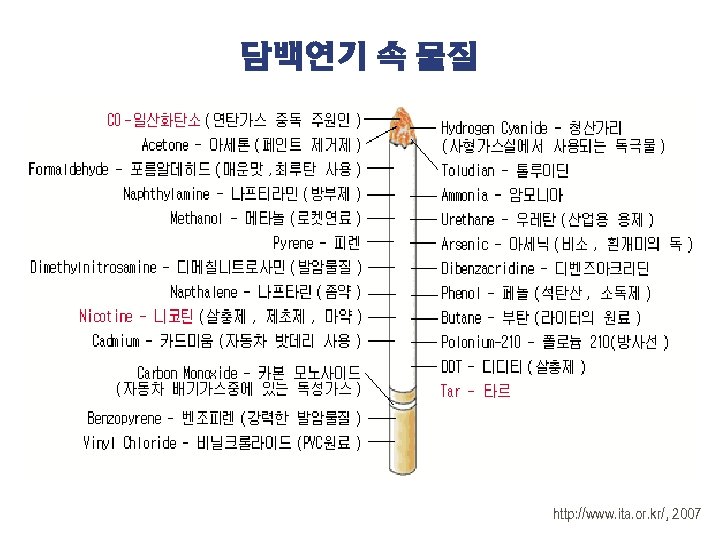
담백연기 속 물질 http: //www. ita. or. kr/, 2007
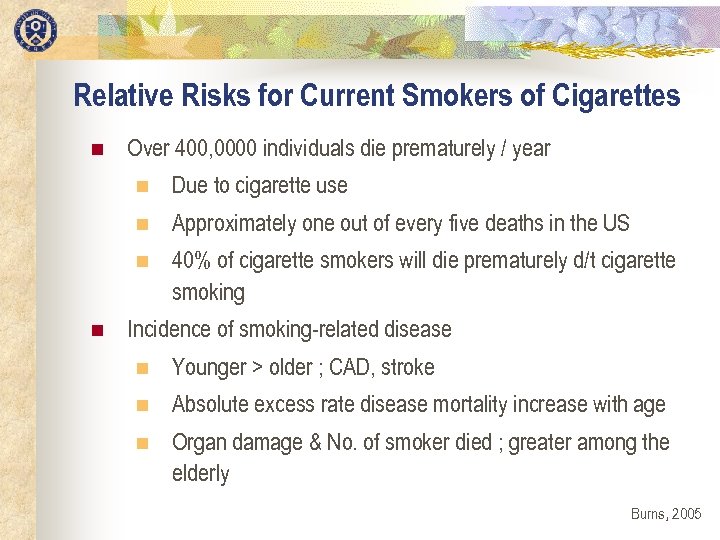
Relative Risks for Current Smokers of Cigarettes n Over 400, 0000 individuals die prematurely / year n n Approximately one out of every five deaths in the US n n Due to cigarette use 40% of cigarette smokers will die prematurely d/t cigarette smoking Incidence of smoking-related disease n Younger > older ; CAD, stroke n Absolute excess rate disease mortality increase with age n Organ damage & No. of smoker died ; greater among the elderly Burns, 2005
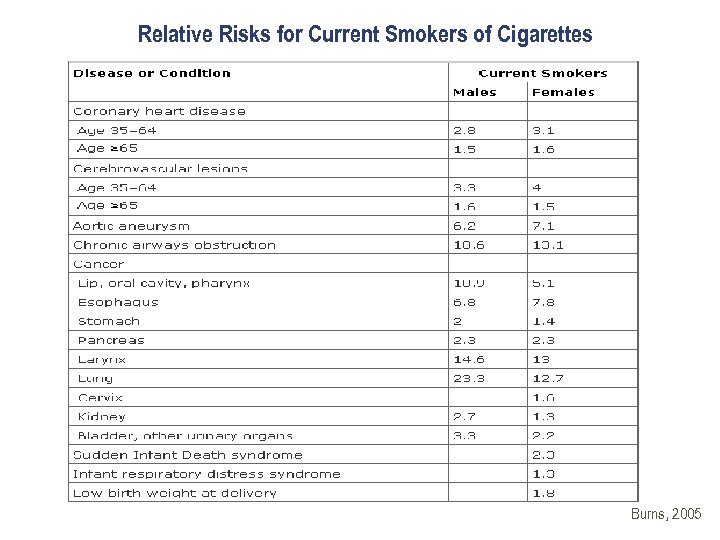
Relative Risks for Current Smokers of Cigarettes Burns, 2005
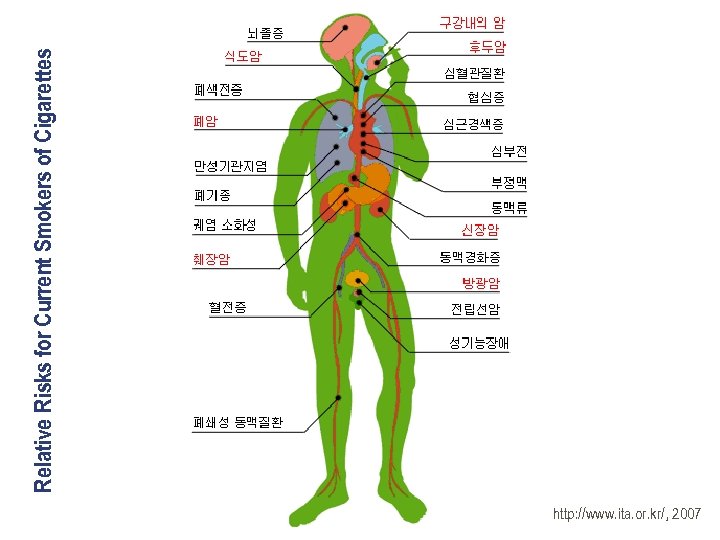
http: //www. ita. or. kr/, 2007 Relative Risks for Current Smokers of Cigarettes
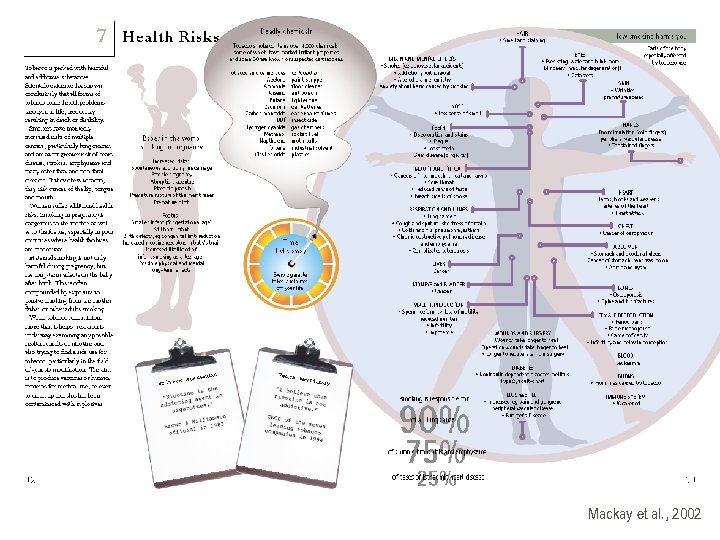
Mackay et al. , 2002
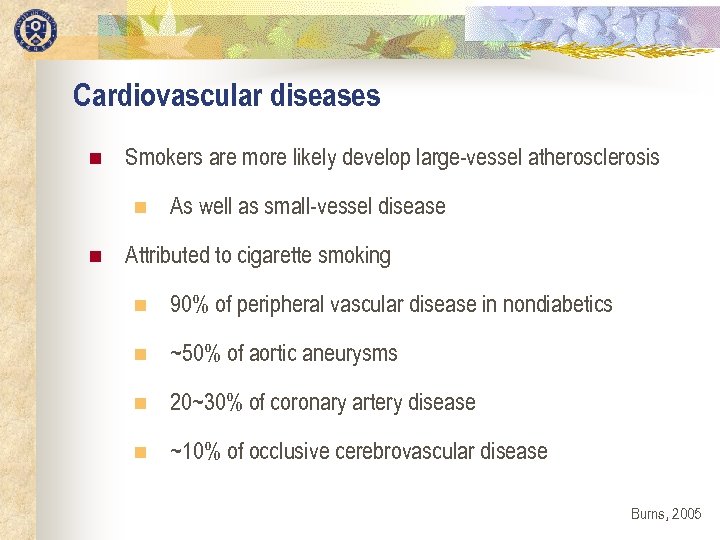
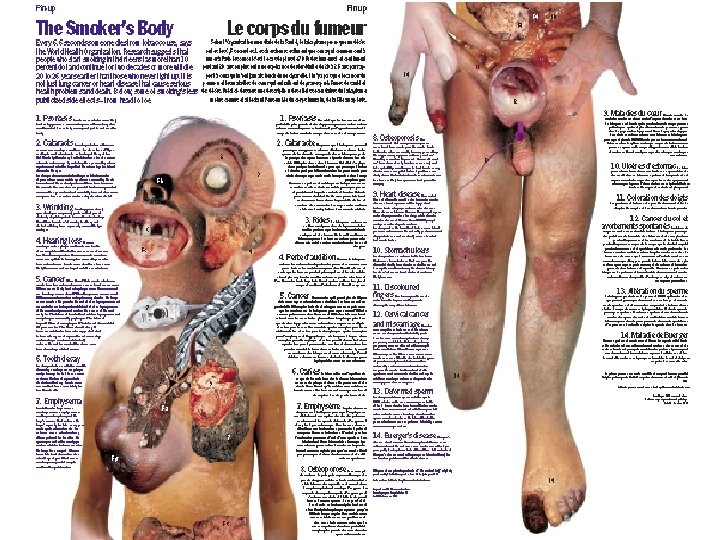
Cardiovascular diseases n Smokers are more likely develop large-vessel atherosclerosis n n As well as small-vessel disease Attributed to cigarette smoking n 90% of peripheral vascular disease in nondiabetics n ~50% of aortic aneurysms n 20~30% of coronary artery disease n ~10% of occlusive cerebrovascular disease Burns, 2005
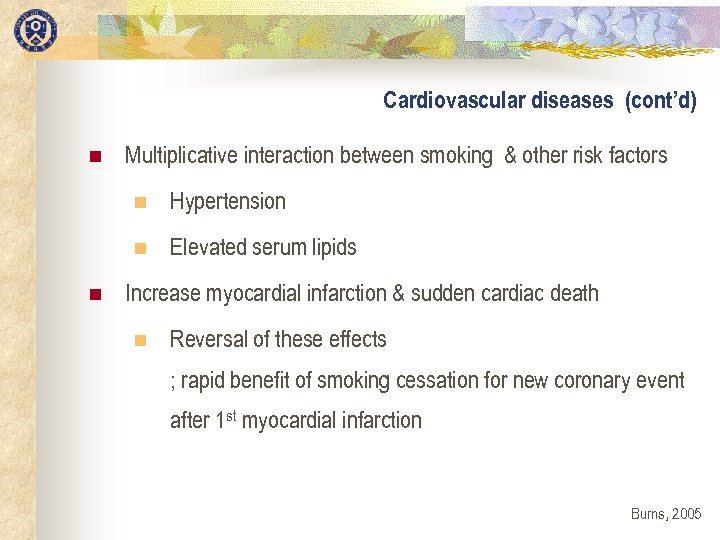
Cardiovascular diseases (cont’d) n Multiplicative interaction between smoking & other risk factors n n n Hypertension Elevated serum lipids Increase myocardial infarction & sudden cardiac death n Reversal of these effects ; rapid benefit of smoking cessation for new coronary event after 1 st myocardial infarction Burns, 2005
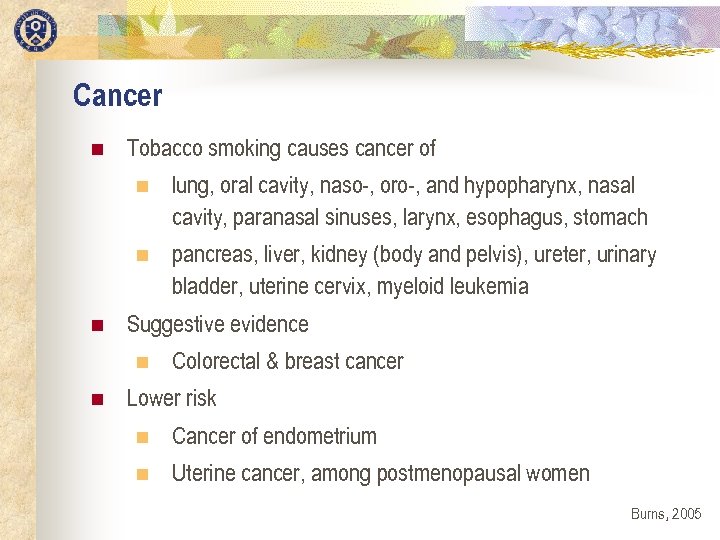
Cancer n Tobacco smoking causes cancer of n n n lung, oral cavity, naso-, oro-, and hypopharynx, nasal cavity, paranasal sinuses, larynx, esophagus, stomach pancreas, liver, kidney (body and pelvis), ureter, urinary bladder, uterine cervix, myeloid leukemia Suggestive evidence n n Colorectal & breast cancer Lower risk n Cancer of endometrium n Uterine cancer, among postmenopausal women Burns, 2005
Cancer (cont’d) n Risks of cancer increase with n n n Increasing No. of cigarettes smoked / day Increasing duration of smoking Synergistic interactions n n n Alcohol; oral cavity, esophagus, lung Occupational exposures; asbestos, radon Cessation of cigarette smoking n Reduces the risk of developing cancer n 20 yrs after cessation; a modest persistent increased risk Burns, 2005
Respiratory disease n Responsible for 90% of COPD n n Chronic mucous hyperplasia of larger airways n n Within 1~2 yrs of beginning to smoke, many young smokers → develop inflammatory changes in small airways 80% of smokers over age 60 Chronic inflammation, narrowing of small airways, enzymatic digestion of alveolar walls n → pulmonary emphysema n → respiratory limitation in ~ 15% of smokers Burns, 2005
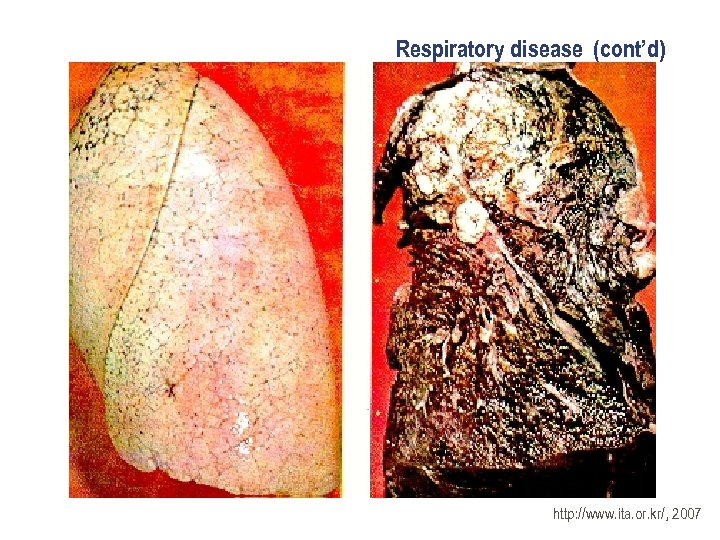
Respiratory disease (cont’d) http: //www. ita. or. kr/, 2007
Pregnancy n Premature rupture of membranes n Abruptio placentae, placenta previa n Spontaneous abortion n Preterm delivery n Higher perinatal mortality n Small for their gestational age n Infant respiratory distress syndrome n Sudden infant death syndrome n Developmental lag for at least the first several years of life Burns, 2005
Other Conditions n Delays healing of peptic ulcers n Increases the risk of osteoporosis n Senile cataracts n Macular degeneration n Premature menopause n Wrinkling of the skin n Gallstones and cholecystitis in women n Male impotence. Burns, 2005
Some benefits of quitting n After twelve hoursalmost all of the nicotine is out of your system. n After twenty-four hoursthe level of carbon monoxide in your blood has dropped dramatically. You now have more oxygen in your bloodstream. n After five days most nicotine by-products have gone. n Within days your sense of taste and smell improves. n Within a monthyour blood pressure returns to its normal level and your immune system begins to show signs of recovery. http: //www. quitnow. info. au
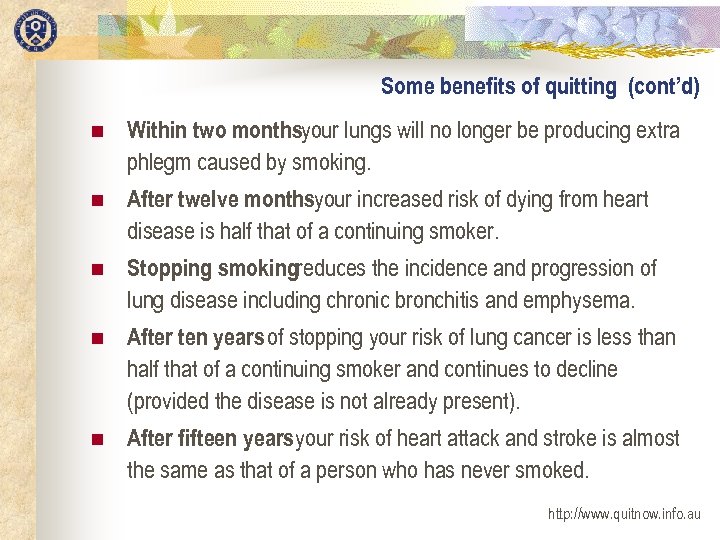
Some benefits of quitting (cont’d) n Within two monthsyour lungs will no longer be producing extra phlegm caused by smoking. n After twelve monthsyour increased risk of dying from heart disease is half that of a continuing smoker. n Stopping smokingreduces the incidence and progression of lung disease including chronic bronchitis and emphysema. n After ten years of stopping your risk of lung cancer is less than half that of a continuing smoker and continues to decline (provided the disease is not already present). n After fifteen years your risk of heart attack and stroke is almost the same as that of a person who has never smoked. http: //www. quitnow. info. au
Diagnosis & Measurements
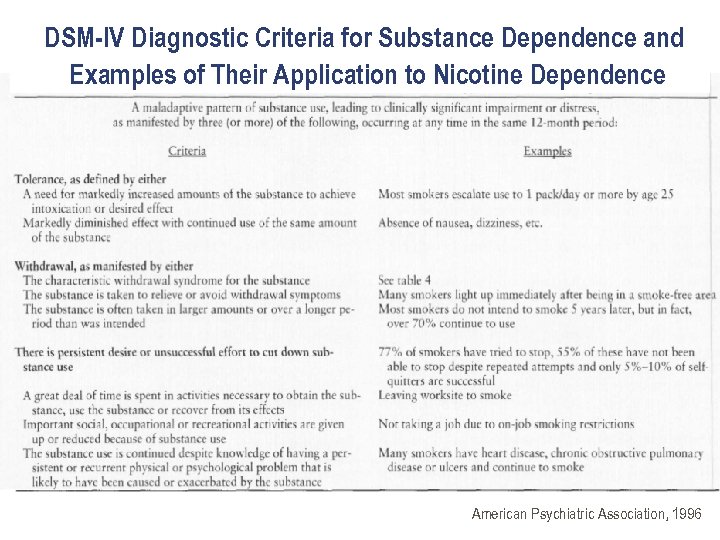
DSM-IV Diagnostic Criteria for Substance Dependence and Examples of Their Application to Nicotine Dependence American Psychiatric Association, 1996
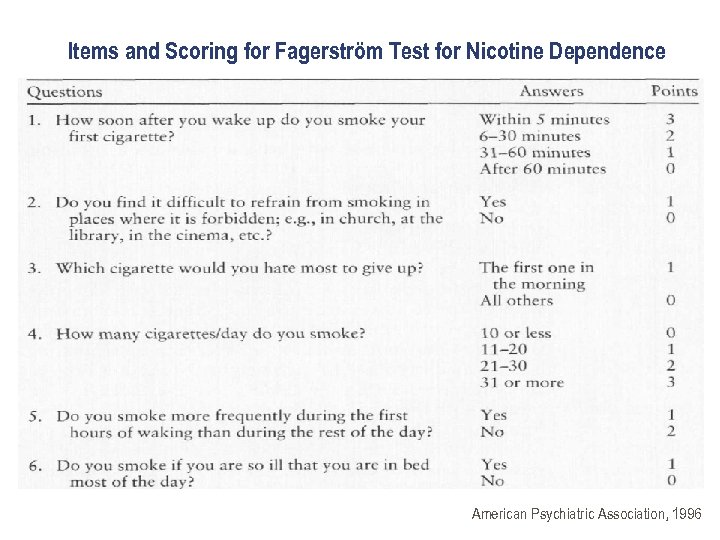
Items and Scoring for Fagerström Test for Nicotine Dependence American Psychiatric Association, 1996
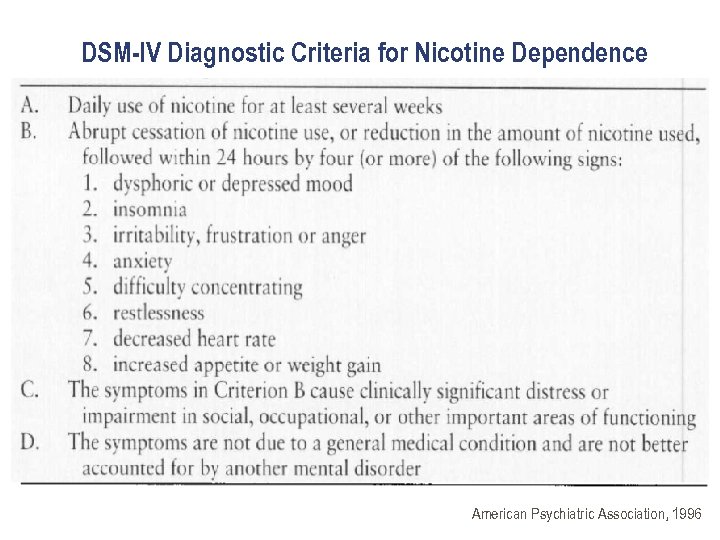
DSM-IV Diagnostic Criteria for Nicotine Dependence American Psychiatric Association, 1996
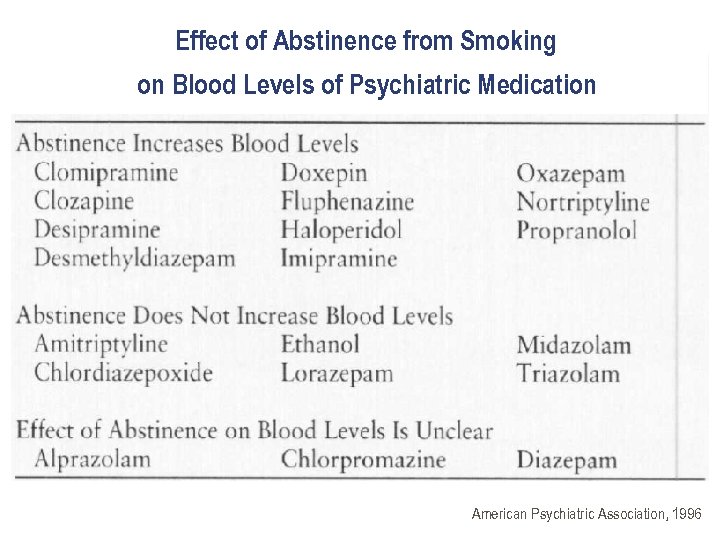
Effect of Abstinence from Smoking on Blood Levels of Psychiatric Medication American Psychiatric Association, 1996
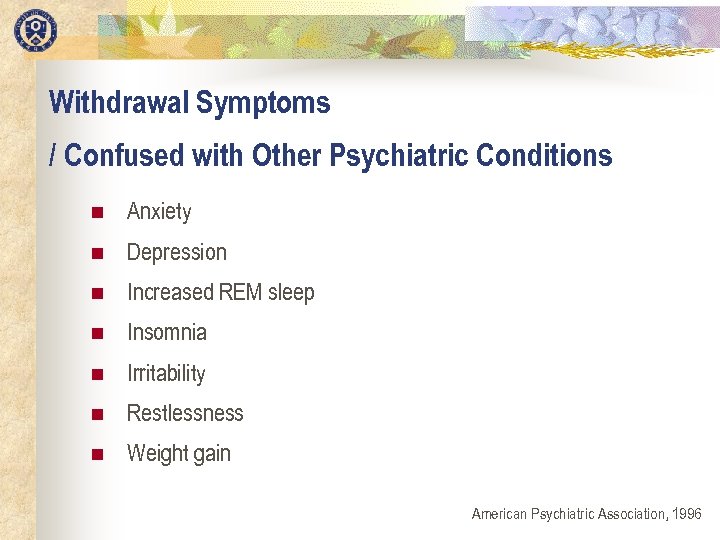
Withdrawal Symptoms / Confused with Other Psychiatric Conditions n Anxiety n Depression n Increased REM sleep n Insomnia n Irritability n Restlessness n Weight gain American Psychiatric Association, 1996
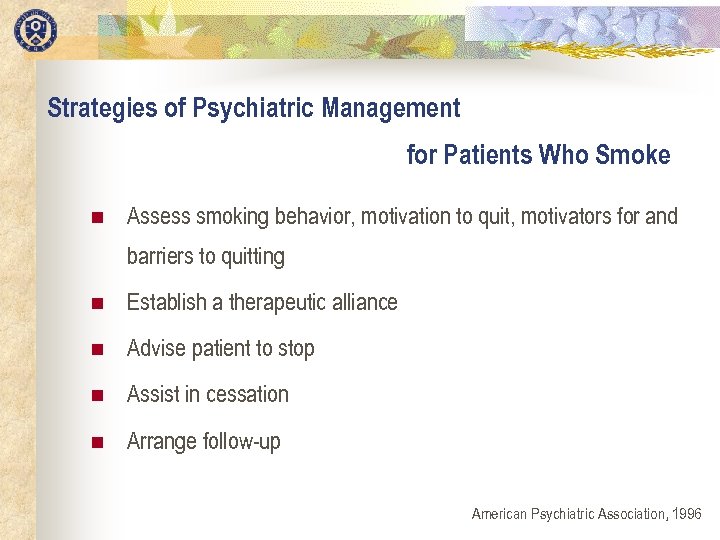
Strategies of Psychiatric Management for Patients Who Smoke n Assess smoking behavior, motivation to quit, motivators for and barriers to quitting n Establish a therapeutic alliance n Advise patient to stop n Assist in cessation n Arrange follow-up American Psychiatric Association, 1996
Epidemiology
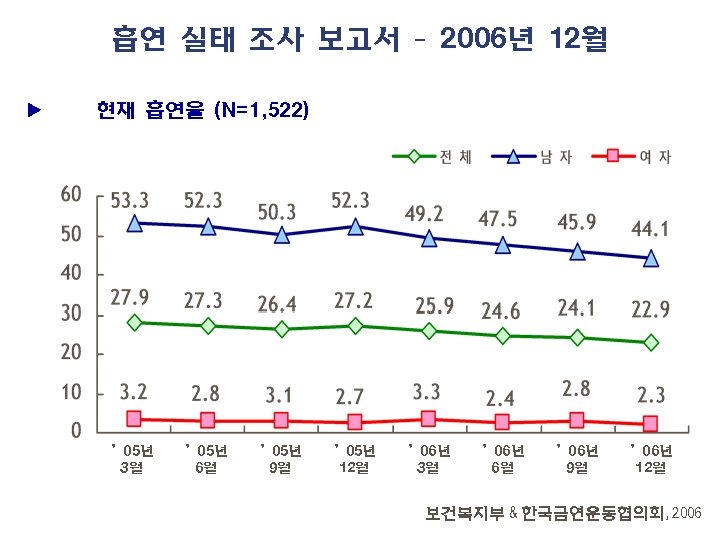
흡연 실태 조사 보고서 – 2006년 12월 ▶ 현재 흡연율 (N=1, 522) ’ 05년 3월 ’ 05년 6월 ’ 05년 9월 ’ 05년 12월 ’ 06년 3월 ’ 06년 6월 ’ 06년 9월 ’ 06년 12월 보건복지부 & 한국금연운동협의회, 2006
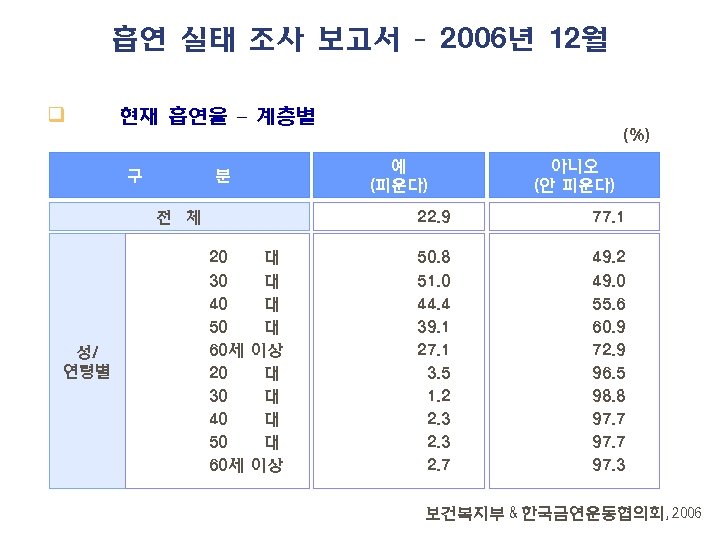
흡연 실태 조사 보고서 – 2006년 12월 q 현재 흡연율 – 계층별 (%) 구 분 전 체 성/ 연령별 예 (피운다) 아니오 (안 피운다) 22. 9 20 대 30 대 40 대 50 대 60세 이상 77. 1 50. 8 51. 0 44. 4 39. 1 27. 1 3. 5 1. 2 2. 3 2. 7 49. 2 49. 0 55. 6 60. 9 72. 9 96. 5 98. 8 97. 7 97. 3 보건복지부 & 한국금연운동협의회, 2006
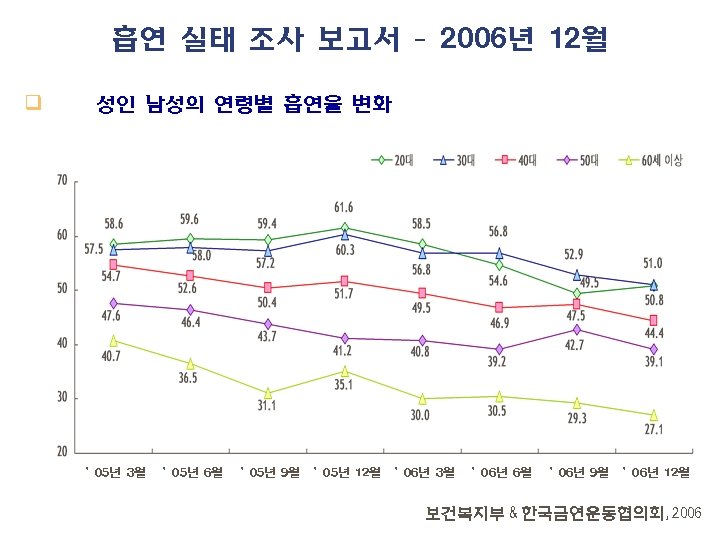
흡연 실태 조사 보고서 – 2006년 12월 q 성인 남성의 연령별 흡연율 변화 ’ 05년 3월 ’ 05년 6월 ’ 05년 9월 ’ 05년 12월 ’ 06년 3월 ’ 06년 6월 ’ 06년 9월 ’ 06년 12월 보건복지부 & 한국금연운동협의회, 2006
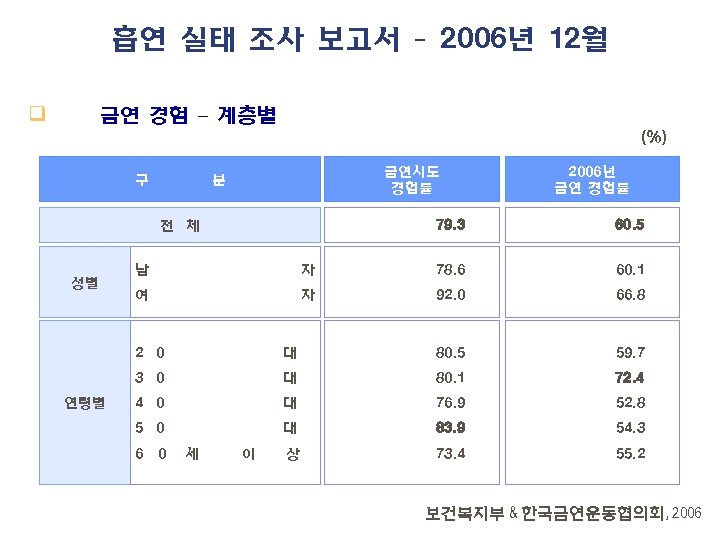
흡연 실태 조사 보고서 – 2006년 12월 q 금연 경험 – 계층별 (%) 구 금연시도 경험률 분 전 체 성별 2006년 금연 경험률 79. 3 60. 5 남 자 78. 6 60. 1 여 자 92. 0 66. 8 2 0 80. 5 59. 7 3 0 연령별 대 대 80. 1 72. 4 4 0 대 76. 9 52. 8 5 0 대 83. 9 54. 3 상 73. 4 55. 2 6 0 세 이 보건복지부 & 한국금연운동협의회, 2006
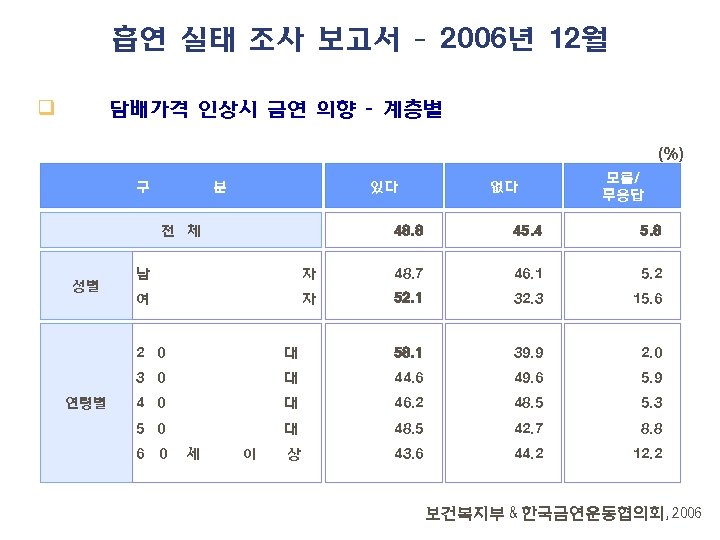
흡연 실태 조사 보고서 – 2006년 12월 q 담배가격 인상시 금연 의향 - 계층별 (%) 구 분 있다 전 체 성별 없다 모름/ 무응답 48. 8 45. 4 5. 8 남 자 48. 7 46. 1 5. 2 여 자 52. 1 32. 3 15. 6 2 0 58. 1 39. 9 2. 0 3 0 연령별 대 대 44. 6 49. 6 5. 9 4 0 대 46. 2 48. 5 5. 3 5 0 대 48. 5 42. 7 8. 8 상 43. 6 44. 2 12. 2 6 0 세 이 보건복지부 & 한국금연운동협의회, 2006
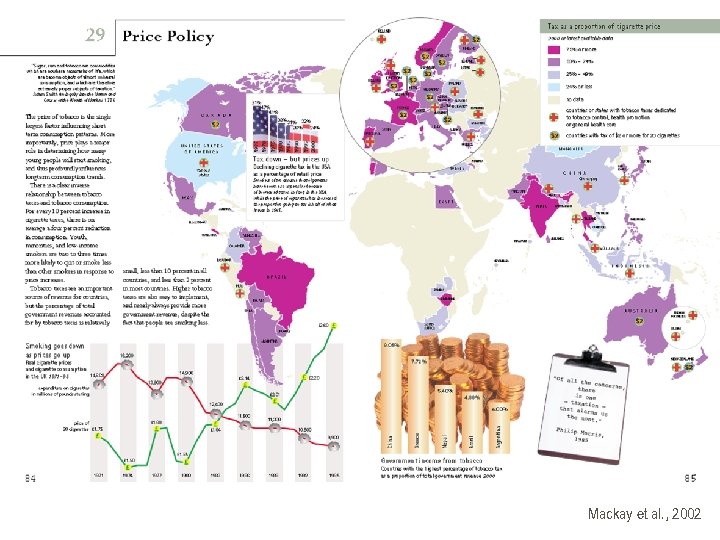
Mackay et al. , 2002
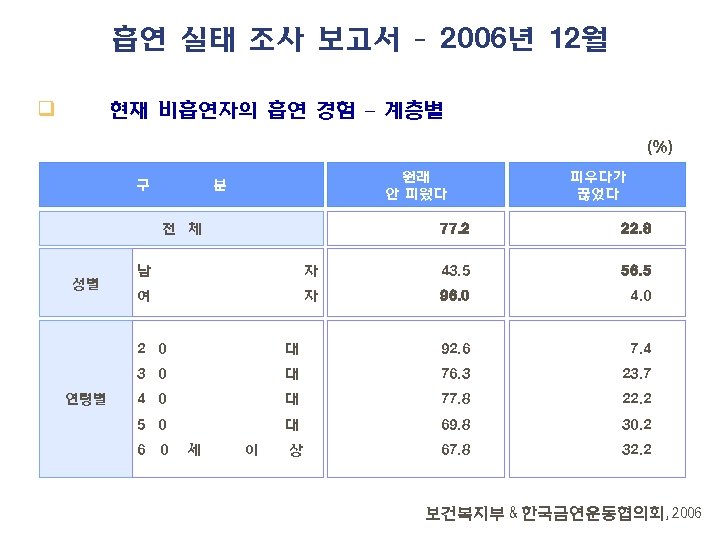
흡연 실태 조사 보고서 – 2006년 12월 q 현재 비흡연자의 흡연 경험 – 계층별 (%) 구 원래 안 피웠다 분 전 체 성별 피우다가 끊었다 77. 2 22. 8 남 자 43. 5 56. 5 여 자 96. 0 4. 0 2 0 92. 6 7. 4 3 0 연령별 대 대 76. 3 23. 7 4 0 대 77. 8 22. 2 5 0 대 69. 8 30. 2 상 67. 8 32. 2 6 0 세 이 보건복지부 & 한국금연운동협의회, 2006
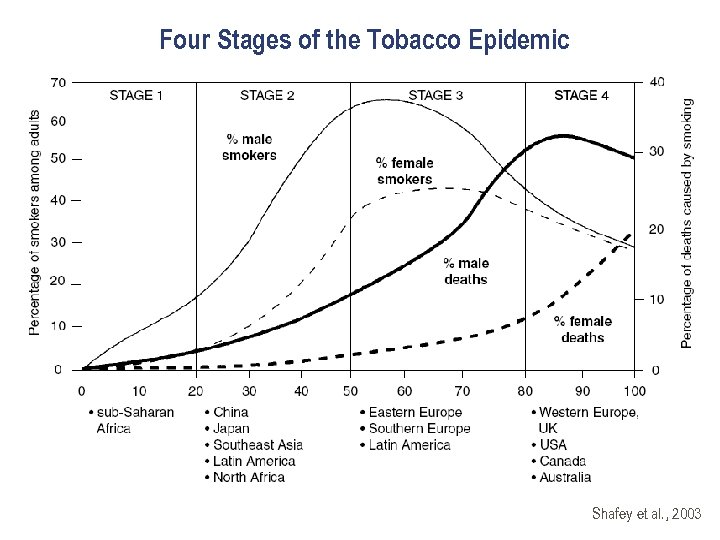
Four Stages of the Tobacco Epidemic Shafey et al. , 2003
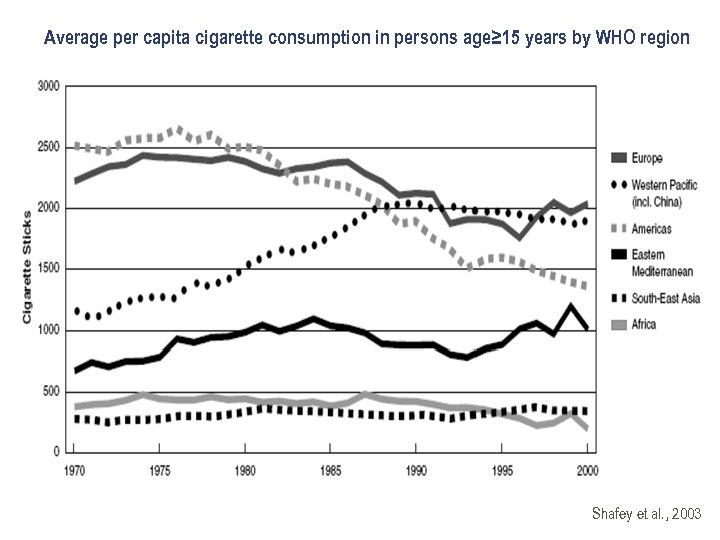
Average per capita cigarette consumption in persons age≥ 15 years by WHO region Shafey et al. , 2003
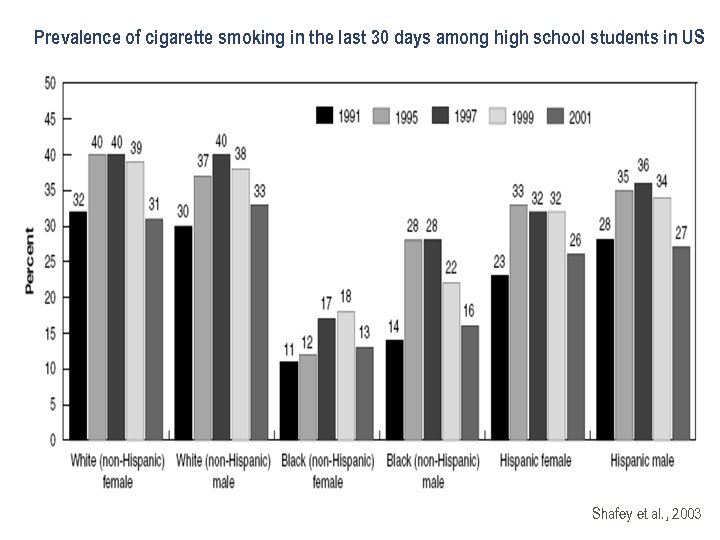
Prevalence of cigarette smoking in the last 30 days among high school students in US Shafey et al. , 2003
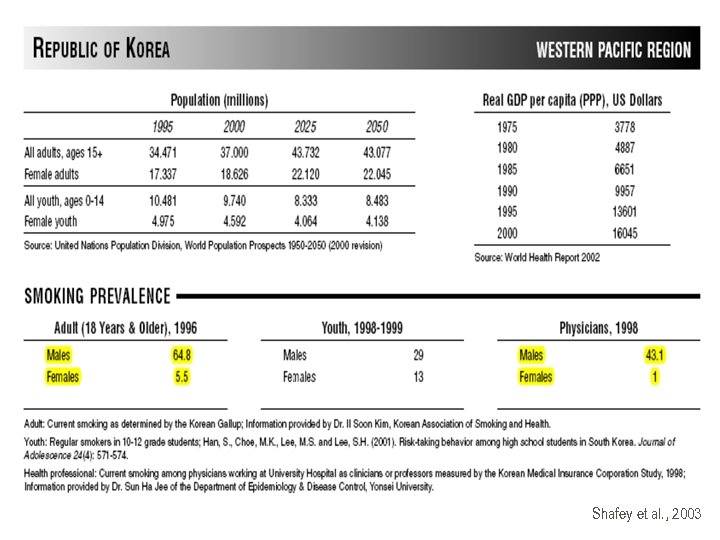
Shafey et al. , 2003
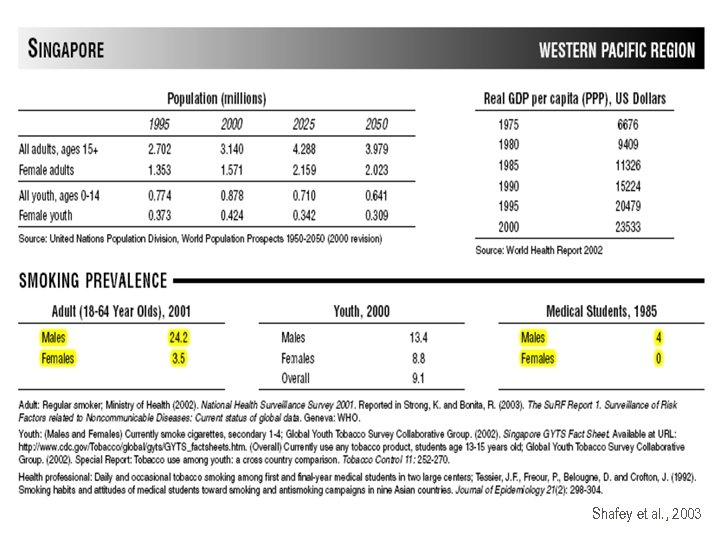
Shafey et al. , 2003
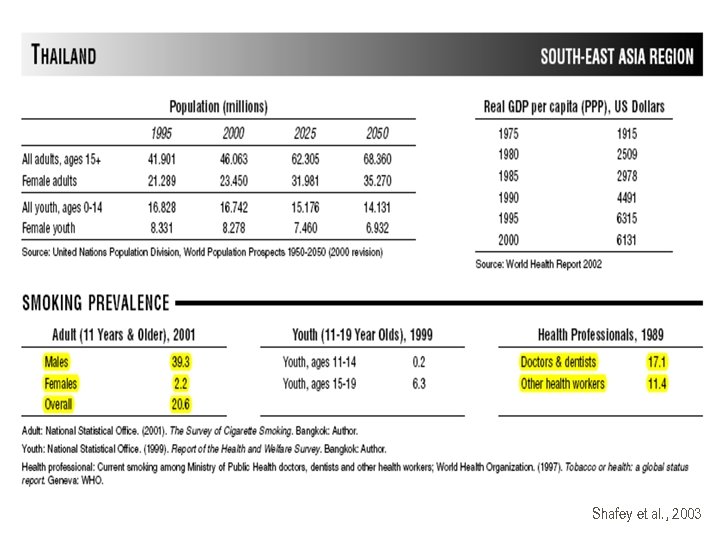
Shafey et al. , 2003
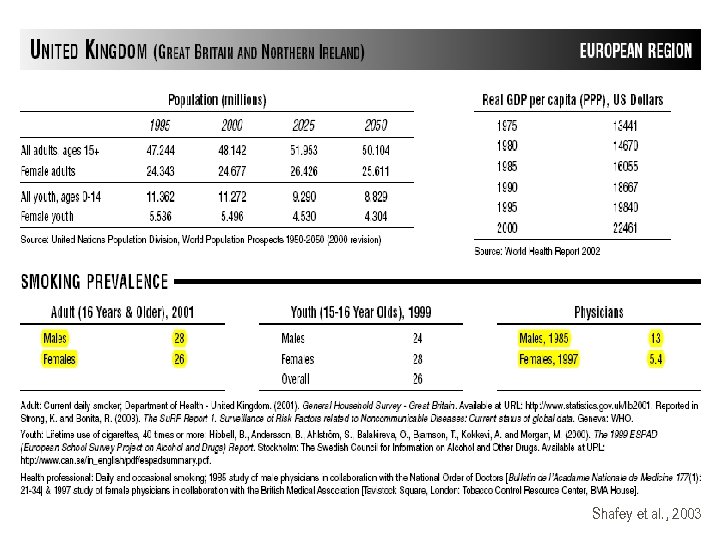
Shafey et al. , 2003
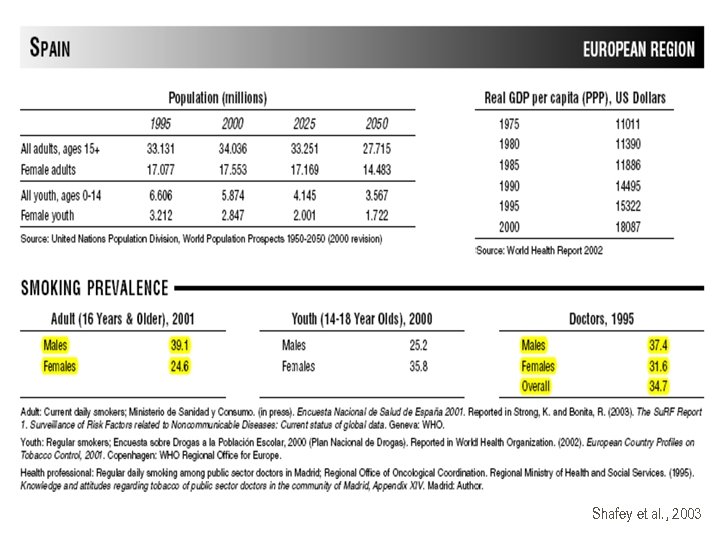
Shafey et al. , 2003
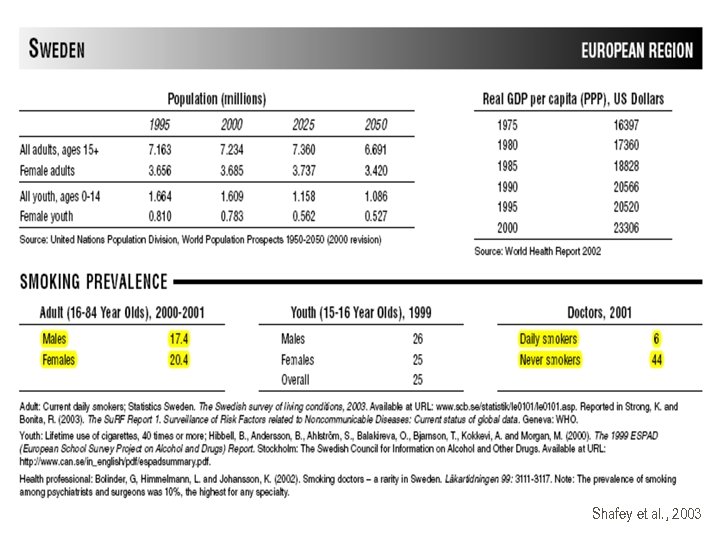
Shafey et al. , 2003
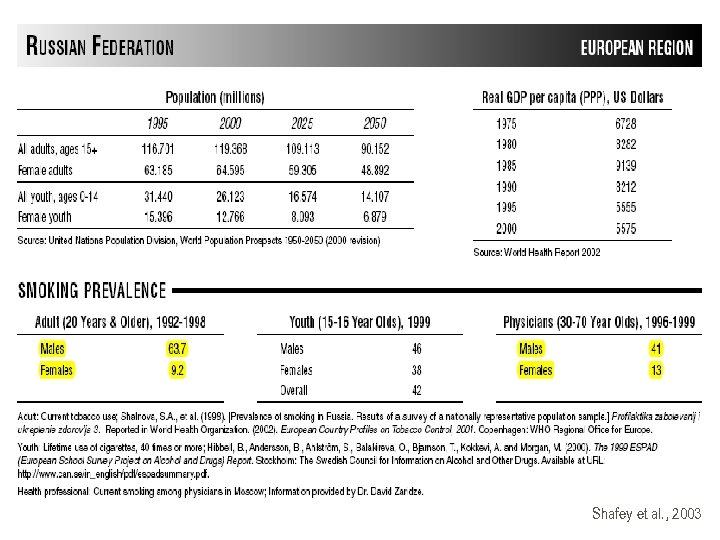
Shafey et al. , 2003
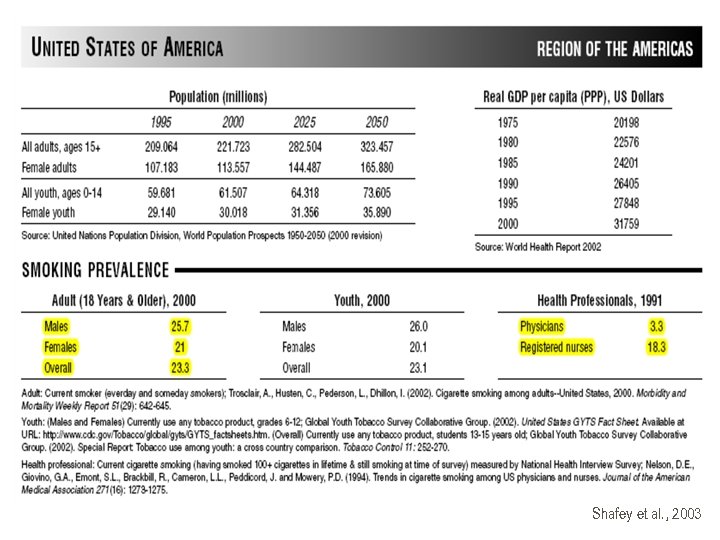
Shafey et al. , 2003
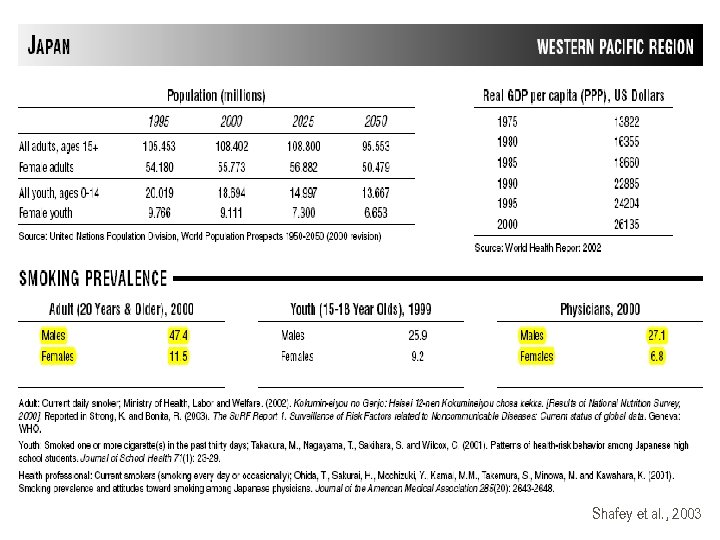
Shafey et al. , 2003
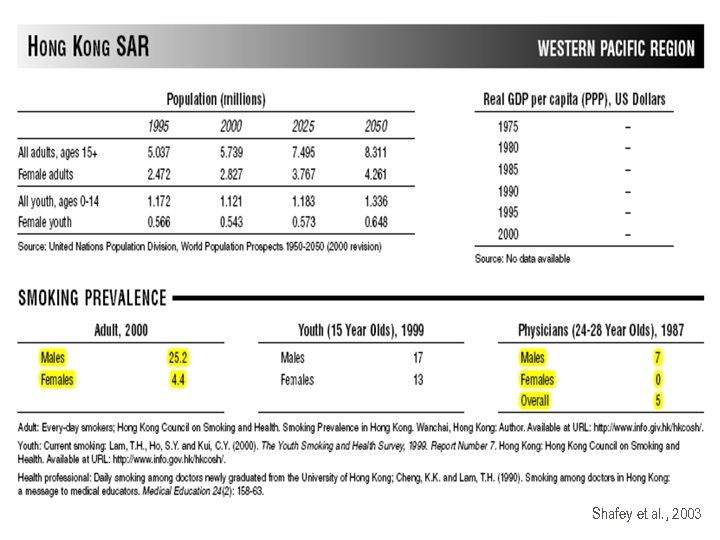
Shafey et al. , 2003
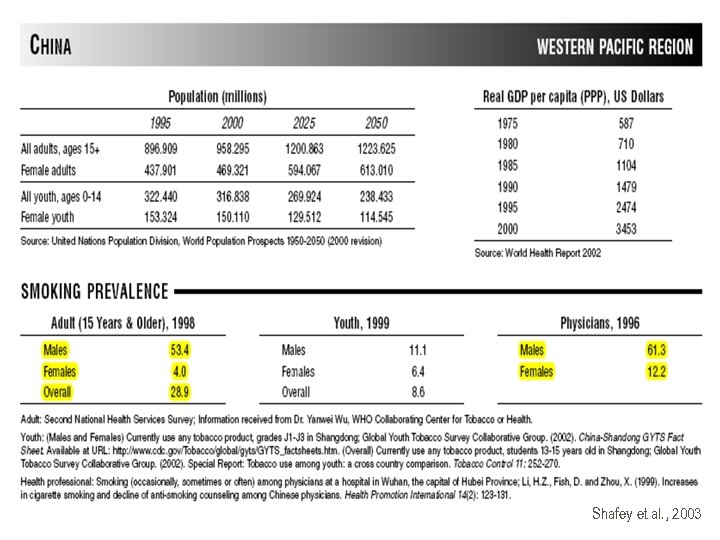
Shafey et al. , 2003
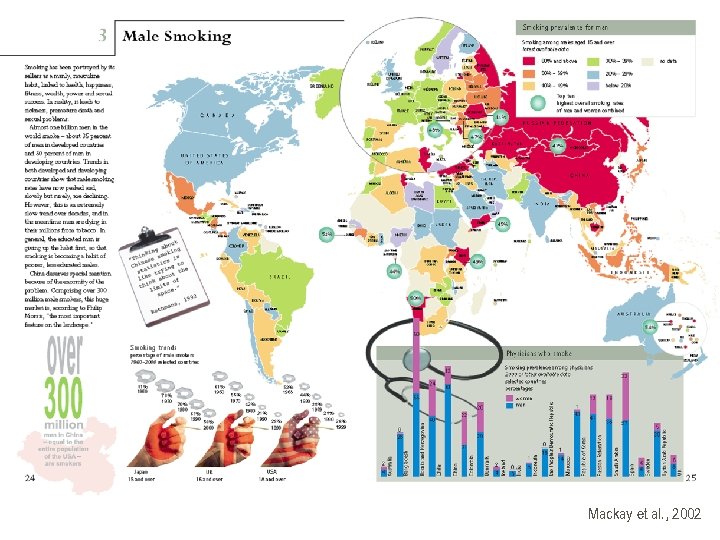
Mackay et al. , 2002
Comorbidity
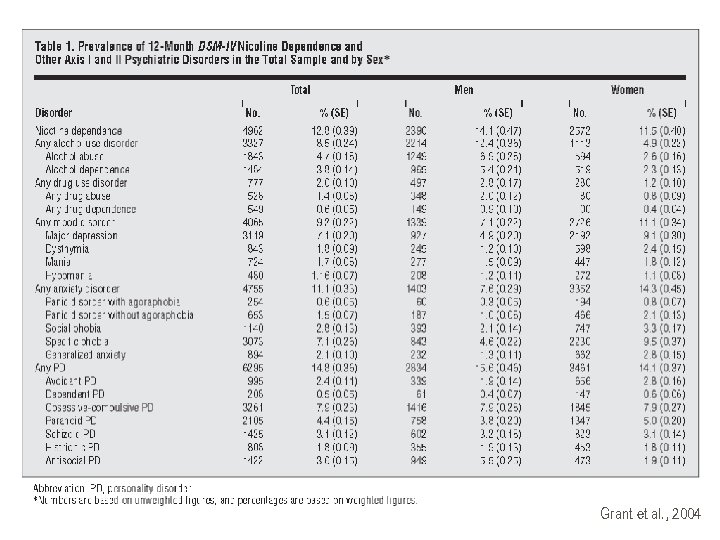
Grant et al. , 2004
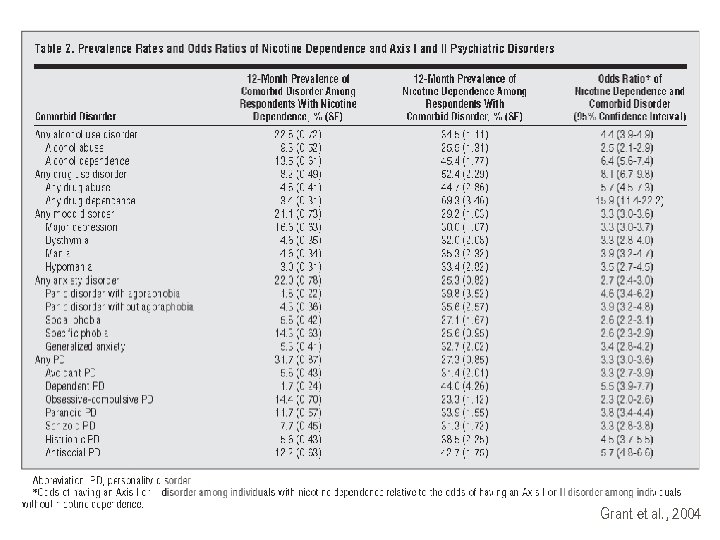
Grant et al. , 2004
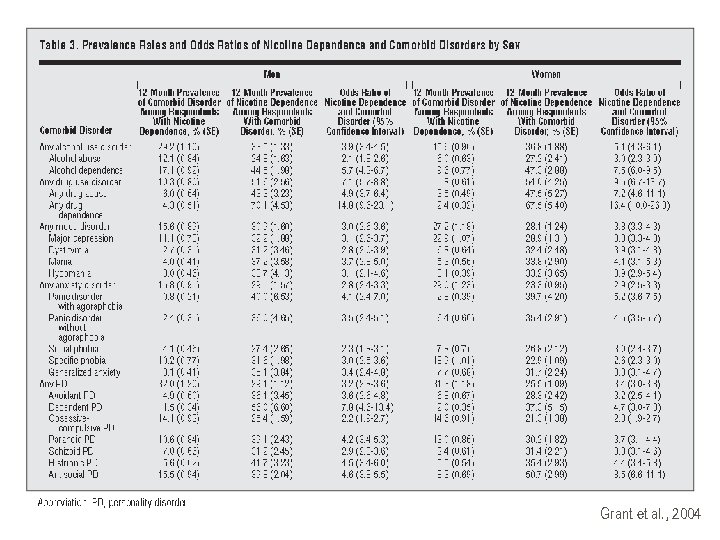
Grant et al. , 2004
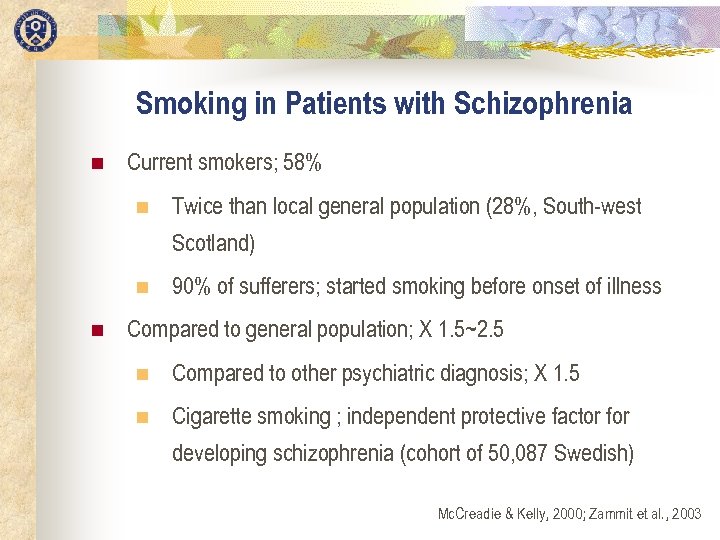
Smoking in Patients with Schizophrenia n Current smokers; 58% n Twice than local general population (28%, South-west Scotland) n n 90% of sufferers; started smoking before onset of illness Compared to general population; X 1. 5~2. 5 n Compared to other psychiatric diagnosis; X 1. 5 n Cigarette smoking ; independent protective factor for developing schizophrenia (cohort of 50, 087 Swedish) Mc. Creadie & Kelly, 2000; Zammit et al. , 2003
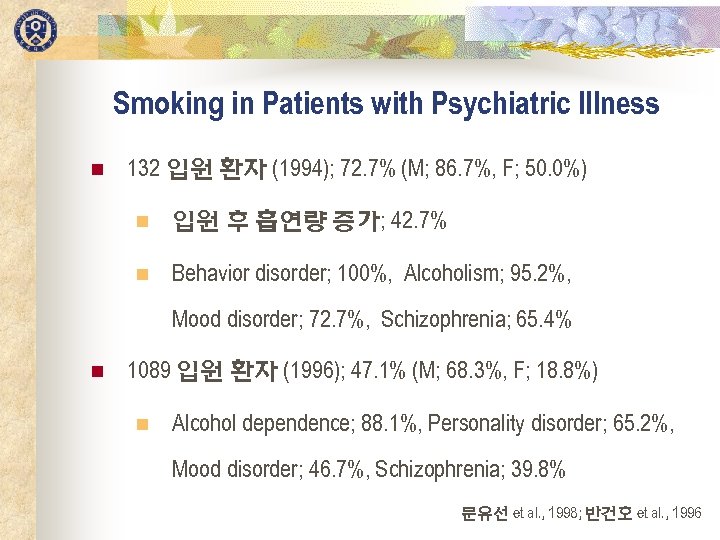
Smoking in Patients with Psychiatric Illness n 132 입원 환자 (1994); 72. 7% (M; 86. 7%, F; 50. 0%) n 입원 후 흡연량 증가; 42. 7% n Behavior disorder; 100%, Alcoholism; 95. 2%, Mood disorder; 72. 7%, Schizophrenia; 65. 4% n 1089 입원 환자 (1996); 47. 1% (M; 68. 3%, F; 18. 8%) n Alcohol dependence; 88. 1%, Personality disorder; 65. 2%, Mood disorder; 46. 7%, Schizophrenia; 39. 8% 문유선 et al. , 1998; 반건호 et al. , 1996
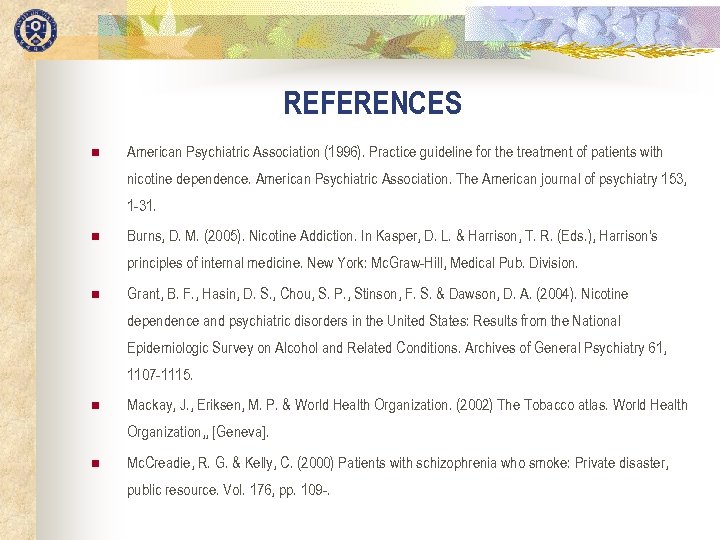
REFERENCES n American Psychiatric Association (1996). Practice guideline for the treatment of patients with nicotine dependence. American Psychiatric Association. The American journal of psychiatry 153, 1 -31. n Burns, D. M. (2005). Nicotine Addiction. In Kasper, D. L. & Harrison, T. R. (Eds. ), Harrison's principles of internal medicine. New York: Mc. Graw-Hill, Medical Pub. Division. n Grant, B. F. , Hasin, D. S. , Chou, S. P. , Stinson, F. S. & Dawson, D. A. (2004). Nicotine dependence and psychiatric disorders in the United States: Results from the National Epidemiologic Survey on Alcohol and Related Conditions. Archives of General Psychiatry 61, 1107 -1115. n Mackay, J. , Eriksen, M. P. & World Health Organization. (2002) The Tobacco atlas. World Health Organization, , [Geneva]. n Mc. Creadie, R. G. & Kelly, C. (2000) Patients with schizophrenia who smoke: Private disaster, public resource. Vol. 176, pp. 109 -.
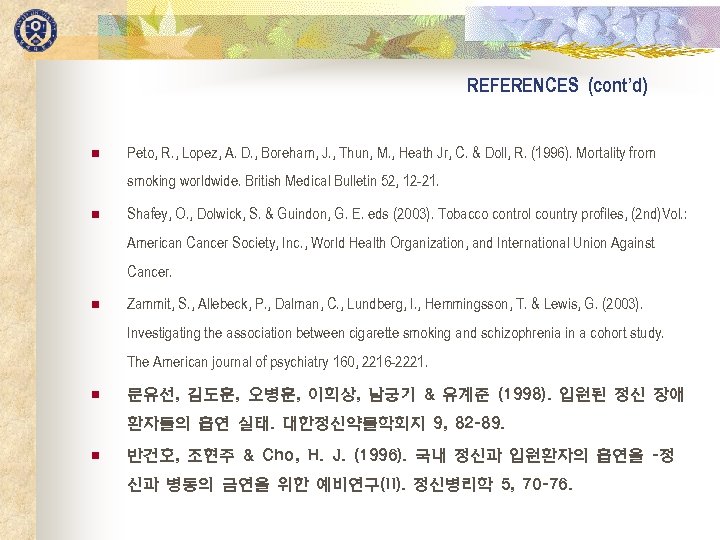
REFERENCES (cont’d) n Peto, R. , Lopez, A. D. , Boreham, J. , Thun, M. , Heath Jr, C. & Doll, R. (1996). Mortality from smoking worldwide. British Medical Bulletin 52, 12 -21. n Shafey, O. , Dolwick, S. & Guindon, G. E. eds (2003). Tobacco control country profiles, (2 nd)Vol. : American Cancer Society, Inc. , World Health Organization, and International Union Against Cancer. n Zammit, S. , Allebeck, P. , Dalman, C. , Lundberg, I. , Hemmingsson, T. & Lewis, G. (2003). Investigating the association between cigarette smoking and schizophrenia in a cohort study. The American journal of psychiatry 160, 2216 -2221. n 문유선, 김도훈, 오병훈, 이희상, 남궁기 & 유계준 (1998). 입원된 정신 장애 환자들의 흡연 실태. 대한정신약물학회지 9, 82 -89. n 반건호, 조현주 & Cho, H. J. (1996). 국내 정신과 입원환자의 흡연율 -정 신과 병동의 금연을 위한 예비연구(II). 정신병리학 5, 70 -76.
Скачать презентацию Nicotine Dependence — Consequences Epidemiology 민 성
2cea73637485ee5531f587998534f273.ppt