


 Скачать презентацию NGOs Microcredit Programmes Women Empowerment Rachel Jactan
3d9db13ecfa230d6b9f3df0698ba3cb0.ppt
- Количество слайдов: 32
 NGOs Microcredit Programmes & Women Empowerment Rachel Jactan Sigalla Danish Forum for Microfinance 30 th August 2011
 Presentation • • Introduction Theorizing microcredit Study objectives Study theoretical framework Field study and methodology Findings Recommendations & Concluding Remarks
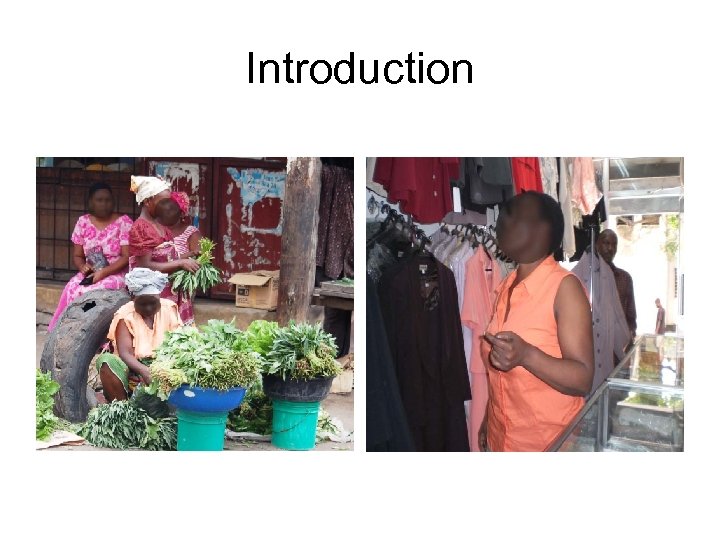 Introduction
 Theorizing Microcredit • Participation, empowerment, equality, economic growth (WB, 1995; Amin et. al. 1998) • As domination - leads to further consolidation of inequalities (Goetz & Sen Gupta, 1996; Hulme & Mosley, 1996) • Mixed results - limited evidence of improved economic or social relations (Mayoux 2000; Johnson & Rogaly, 1997; Fernando, 1996). • Focus on quantitative indicators. - Subjectivity (and learning) neglected in microcredit research.
 Study objective • To explore women’s experiences of institutionalized development through microcredit schemes aimed at creating independent women entrepreneurs and reflect on how learning associated with microcredit schemes shaped their identity and self representation.
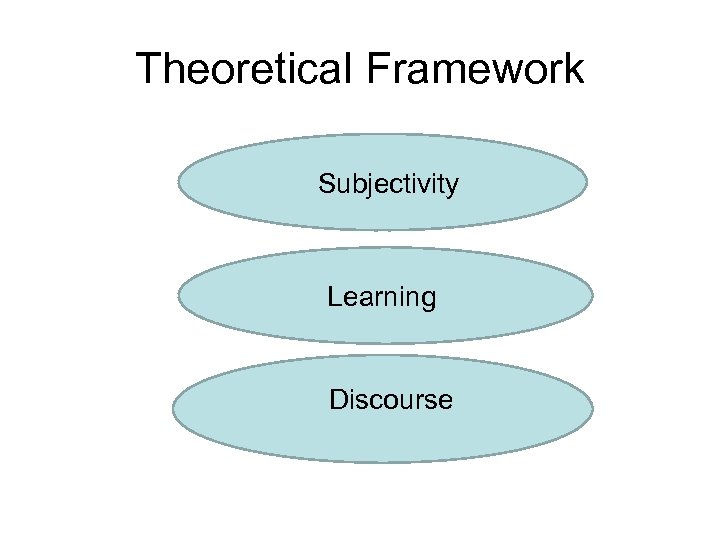 Theoretical Framework Subjectivity Learning Discourse
 Field Study & Methodology • Qualitative within everyday life perspective. • Three data sets: – Policy (Govt. & international financial institutions officials, donors & policy docs). – Implementation strategies (NGOs). – Subjects (women: observation & in-depth reflective discussions).
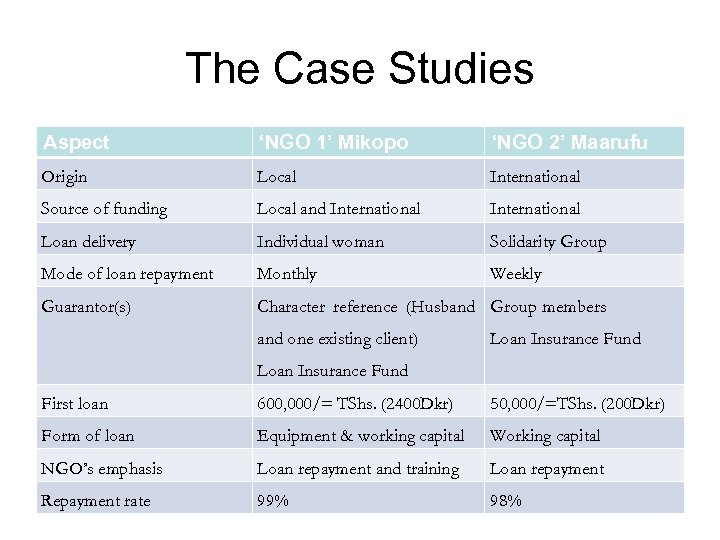 The Case Studies Aspect ‘NGO 1’ Mikopo ‘NGO 2’ Maarufu Origin Local International Source of funding Local and International Loan delivery Individual woman Solidarity Group Mode of loan repayment Monthly Weekly Guarantor(s) Character reference (Husband Group members and one existing client) Loan Insurance Fund First loan 600, 000/= TShs. (2400 Dkr) 50, 000/=TShs. (200 Dkr) Form of loan Equipment & working capital Working capital NGO’s emphasis Loan repayment and training Loan repayment Repayment rate 99% 98%
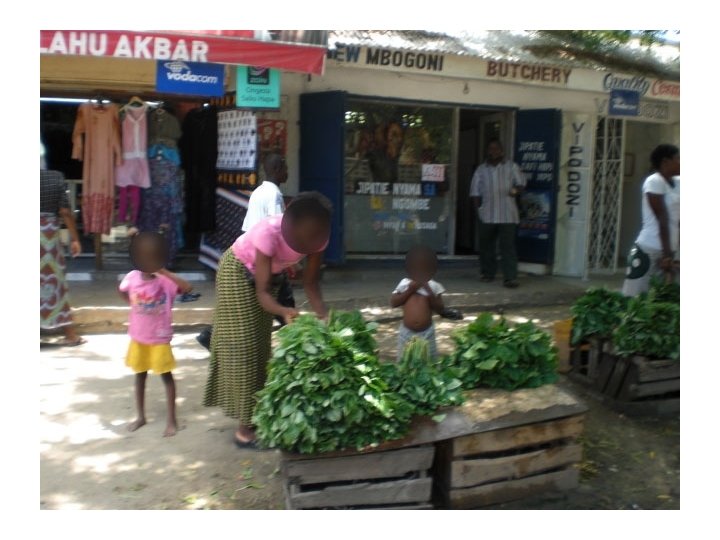
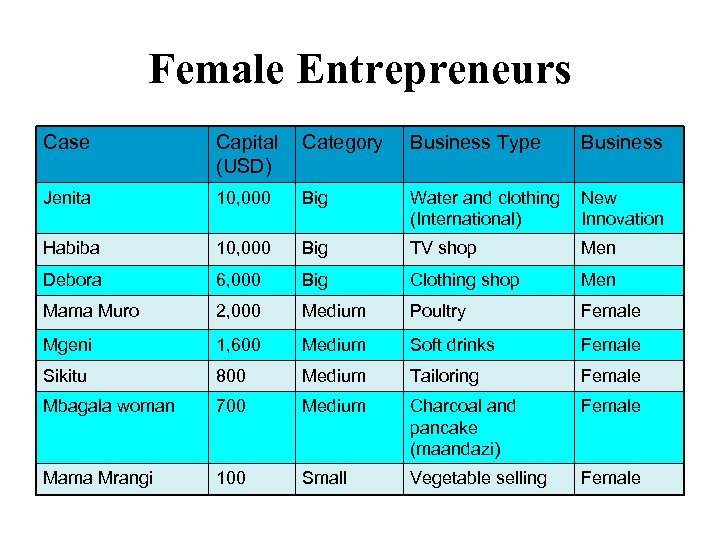 Female Entrepreneurs Case Capital (USD) Category Business Type Business Jenita 10, 000 Big Water and clothing (International) New Innovation Habiba 10, 000 Big TV shop Men Debora 6, 000 Big Clothing shop Men Mama Muro 2, 000 Medium Poultry Female Mgeni 1, 600 Medium Soft drinks Female Sikitu 800 Medium Tailoring Female Mbagala woman 700 Medium Charcoal and pancake (maandazi) Female Mama Mrangi 100 Small Vegetable selling Female
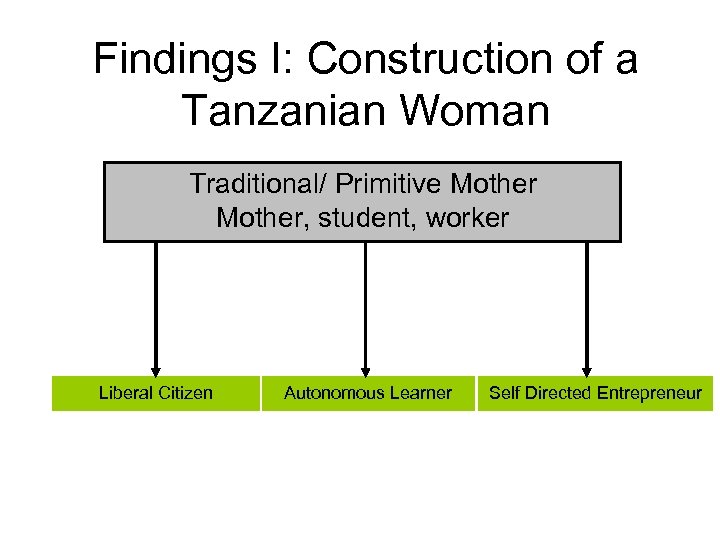 Findings I: Construction of a Tanzanian Woman Traditional/ Primitive Mother, student, worker Liberal Citizen Autonomous Learner Self Directed Entrepreneur
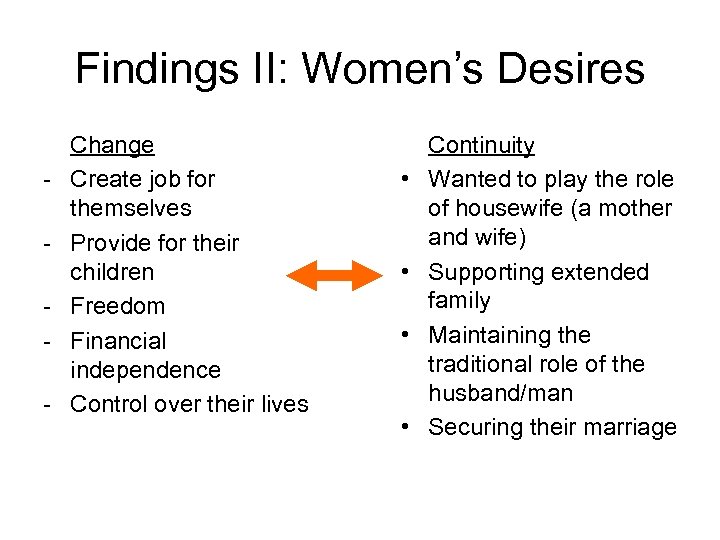 Findings II: Women’s Desires - Change Create job for themselves Provide for their children Freedom Financial independence Control over their lives • • Continuity Wanted to play the role of housewife (a mother and wife) Supporting extended family Maintaining the traditional role of the husband/man Securing their marriage
 Findings III: Institutionalizing Microcredit • NGOs presented as the honest broker of the women’s desires • Criticisms
 Issues of Relationality • Introduction of the scheme • Classroom experiences • Power relations vs. Victimization identity
 Procedures of loan application and loan repayment/recovery • The enrolment process (Mikopo - husbands) • Recovery (Maarufu - husbands) • Solidarity group (policing each other) • monitoring, supervising and managing the conduct of individual women in the group. • NGOs & Business lives of women
 Interest rates • Formal Banks 5% - 11% • NGOs 22% - 30% • Leasing facility – equipment sold at inflated price
 Finding IV: Categorization of women by Development agents • Criteria: Financial worth, size, rate of growth and ability to settle loan. ØSuccessful: Jenita, Habiba and Debra ØVuguvugu: Mama Muro, Sikitu and Mgeni ØFailure: Mama Mrangi, Debra, Mbagala woman
 Conditions that enabled & constrained women’s ‘empowerment’ Development agents • Size of capital • Ownership of more than one business • Young and energetic Jenita • Her husband involvement in the business • the ease of access to the business by virtue of having taped the water source illegally • Education level • Business networks in addition to NGOs
 Conditions that enabled & constrained women’s ‘empowerment’ Development agents • Small size of capital Mbagala woman • her position as a political cadre for the ruling party. CCM • the nature of her businesses • the nature of her solidarity group and Maarufu in general. • Female domain of business • Family size/dependence • Lack of networking other than provided by NGO
 Findings V: Women’s Perspectives Microcredit as Empowerment • I had this understanding that women can’t head her household alone comfortably. … I wish I had this opportunity much earlier. We would have been very rich. The scheme has changed me a lot. Now I know I can handle my own affairs without a husband. (Habiba)
 Microcredit as Stigma No one would consider marrying me now because I have complicated my life…men are scared of women…who own resources. . . Men are scared because I am not dependent. . . I will be another boss in the house. I will not wait for him to pay for family expenses. Our men do not like that. By doing so, you will be denying them, their role as husbands and fathers. (Habiba )
 …In our tradition is not good to have loans. It is just not a good habit to go around and borrow money or things. If you go around borrowing, people think your family is not taking care of you and they are mean to their relative. So if you do so you paint a bad image of your family name. So if the woman goes out and borrows, this implies that your husband is not undertaking his responsibilities. He will be despised by everyone. And if you are not married, then your parents did not brought you up well. Men don’t even consider marrying you. In short it is immoral’. (Mama Mrangi 20/01/2006)
 Microcredit as a form of social control Maarufu has taught women to be disciplined; you are always breathing down each other necks to ensure that your group member pays back the loan and failure to do it obliges the group to sell ones beds, as such you lose credibility to others. (Jenita, 10/07/2005) It is better to live with these worries (of social deprivation) rather than of having your group members in your house collecting your furniture/equipment. I know its implications I have been in other members’ houses. Some have been insulted by their husbands, some beaten and some divorced. People from the neighborhoods come over to the house and learn about the woman’s foolishness. It is embarrassing. I think this is what makes husbands furious. (Mama Mrangi, 09/08/2005)
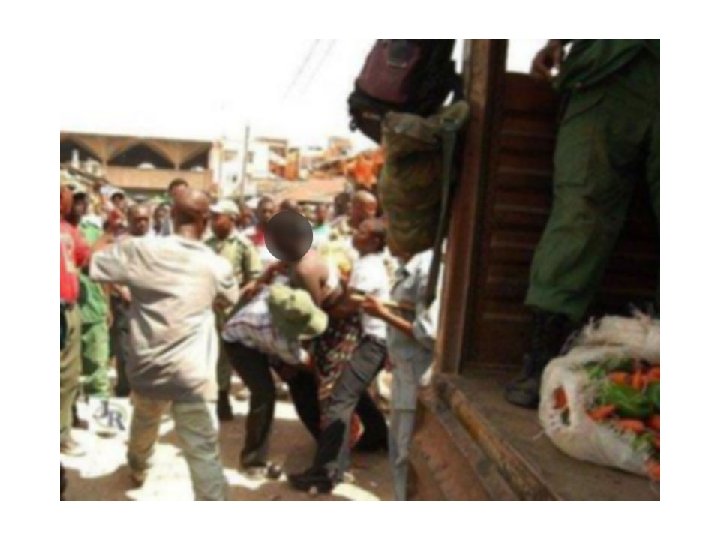
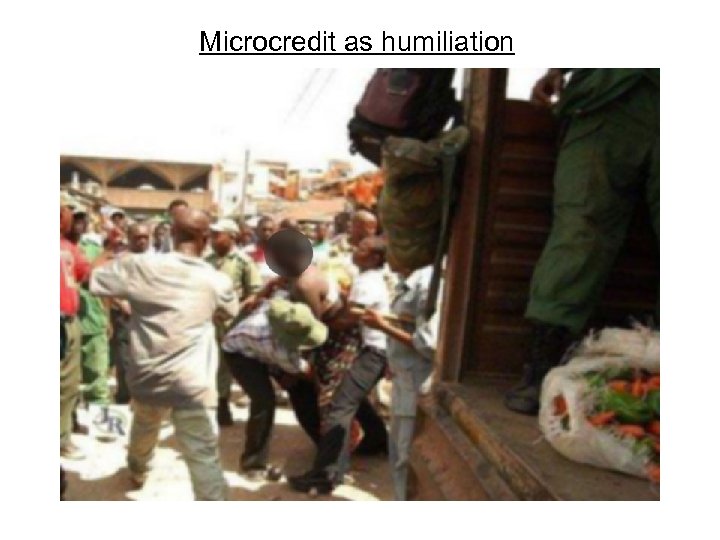 Microcredit as humiliation
 The Future of Microcredit • The forum provided by microcredit programmes remains important and should be improved to support social movements and critique inequality and injustice.
 Recommendations • Revisit the practice of solidarity group (What should be the role of solidarity group? ) • Review interest rates (How can we reduce the interest rates while at the same time maintaining NGOs sustainability? ) • Examine multiple motives for women’s entry into entrepreneurship (What are the women desires? )
 Recommendations • Explore further the formation GAD (How can we officially incorporate both a wife and a husband while at the same time protecting woman’s interests? ) • Microcredit approached with care & critical scrutiny (What is the aim of m/c? ) • NGOs need to revisit their own positions regularly (E. g. How women should be introduced to m/c? )
 Recommendations • Loan enrolment and recovery - Introduce grace period - Extend time for loan payment from weekly to monthly • Review or expand views of success /development (What is success? ) • Synchronize women businesses with country’s laws to avoid failures & humiliation (How can NGOs advocate & lobby for policies)
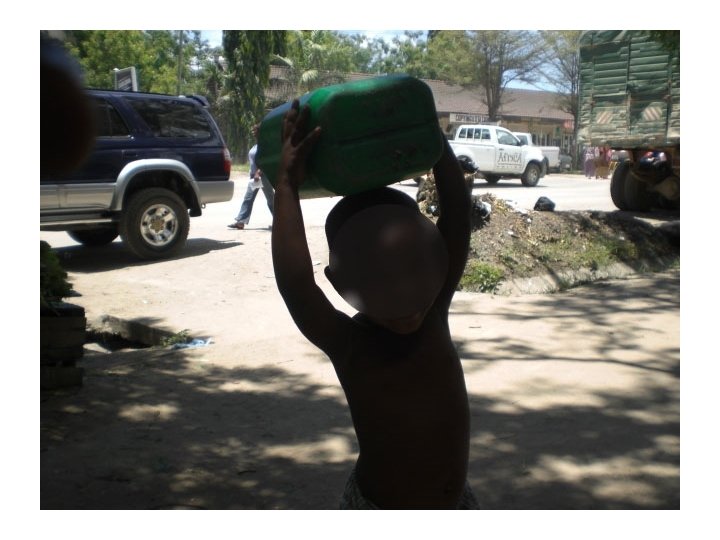
 Recommendations • Carry feasibility study of women’s businesses & advise them accordingly • Support/help women to deal/cope with ambivalences (How should NGOs support women? ) • Boarding school and day care facilities (How NGOs can work with women, government and other stakeholders to introduce such services? )
 Concluding Remark • There is no easy answer to the persistence of poverty and inequality amongst women. Microcredit is far from an unproblematic solution.