Скачать презентацию Next generation sequencing Platforms chemistries and applications
60f2a5bb05295e48c3350b8d0733cacc.ppt
- Количество слайдов: 42
 Next generation sequencing Platforms, chemistries, and applications
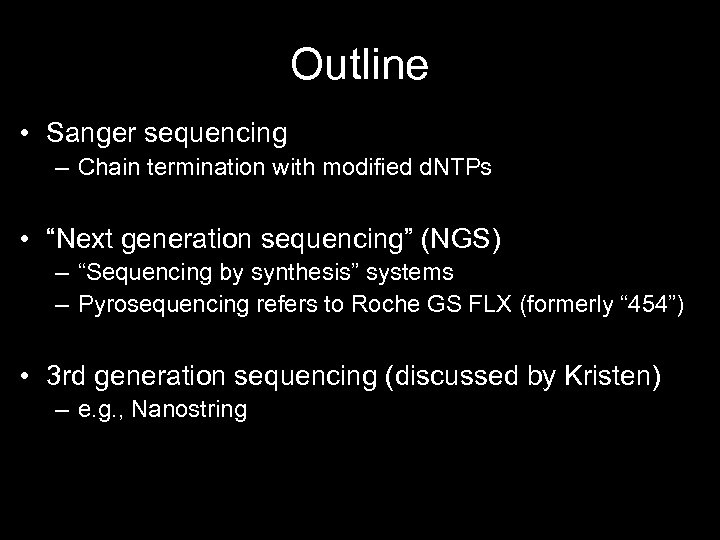 Outline • Sanger sequencing – Chain termination with modified d. NTPs • “Next generation sequencing” (NGS) – “Sequencing by synthesis” systems – Pyrosequencing refers to Roche GS FLX (formerly “ 454”) • 3 rd generation sequencing (discussed by Kristen) – e. g. , Nanostring
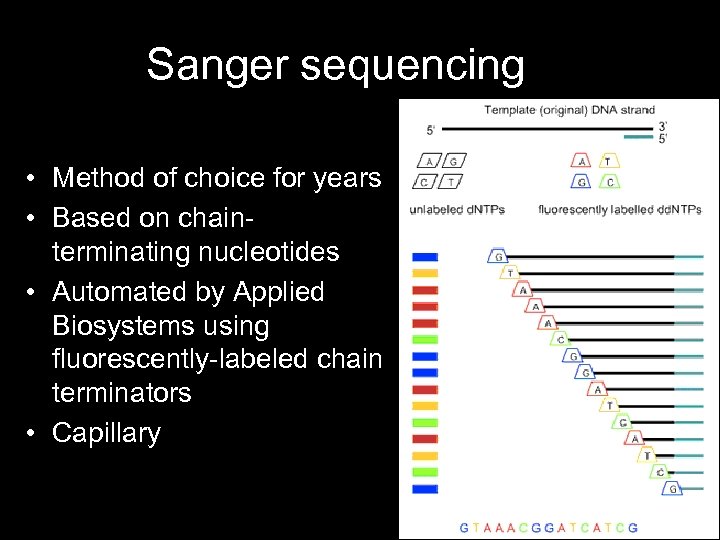 Sanger sequencing • Method of choice for years • Based on chainterminating nucleotides • Automated by Applied Biosystems using fluorescently-labeled chain terminators • Capillary
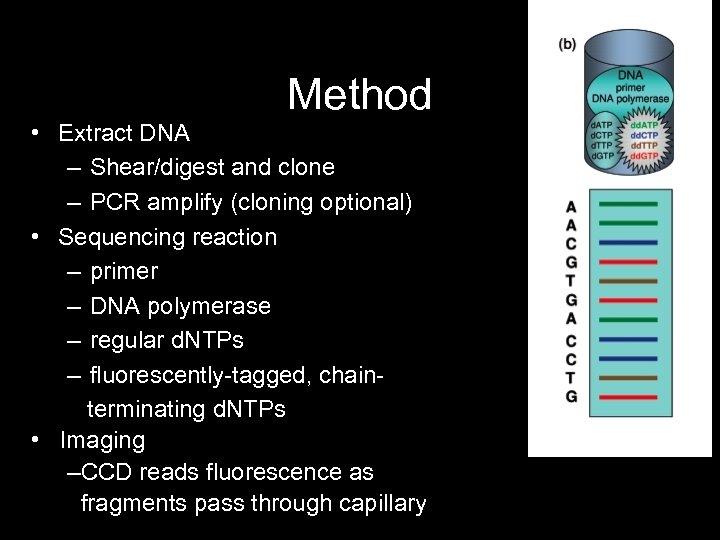 Method • Extract DNA – Shear/digest and clone – PCR amplify (cloning optional) • Sequencing reaction – primer – DNA polymerase – regular d. NTPs – fluorescently-tagged, chainterminating d. NTPs • Imaging –CCD reads fluorescence as fragments pass through capillary
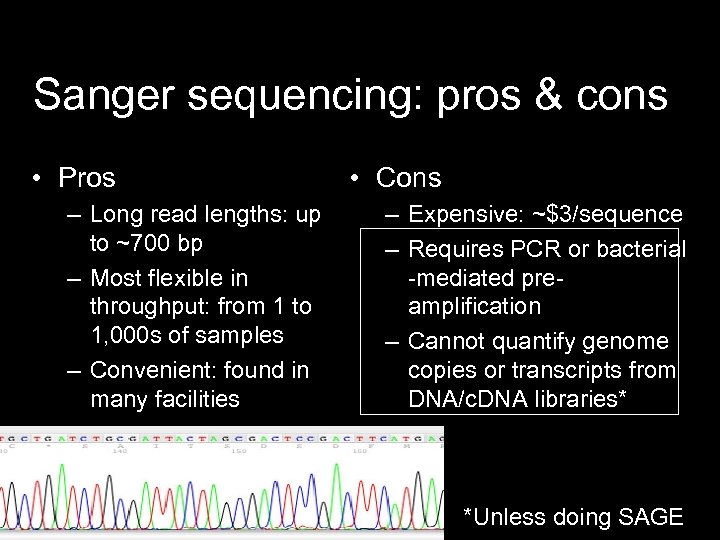 Sanger sequencing: pros & cons • Pros – Long read lengths: up to ~700 bp – Most flexible in throughput: from 1 to 1, 000 s of samples – Convenient: found in many facilities • Cons – Expensive: ~$3/sequence – Requires PCR or bacterial -mediated preamplification – Cannot quantify genome copies or transcripts from DNA/c. DNA libraries* *Unless doing SAGE
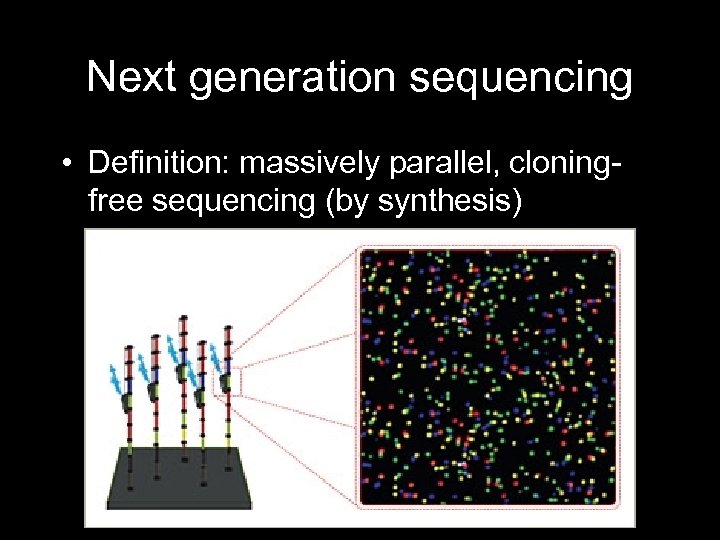 Next generation sequencing • Definition: massively parallel, cloningfree sequencing (by synthesis) – Roche GS FLX (pyrosequencing) – Illumina (Solexa sequencing) – Applied Biosystems (SOLi. D)
 Roche GS FLX (“ 454”) • The original “pyrosequencer” • Pyrosequencing is not new (Nyren 1996) • Was converted into high-throughput system in 2005 (Margulis et al. Nature)
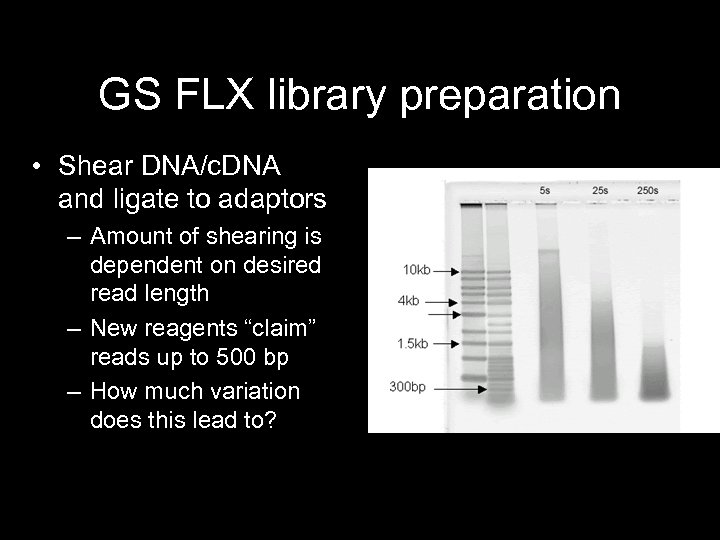 GS FLX library preparation • Shear DNA/c. DNA and ligate to adaptors – Amount of shearing is dependent on desired read length – New reagents “claim” reads up to 500 bp – How much variation does this lead to?
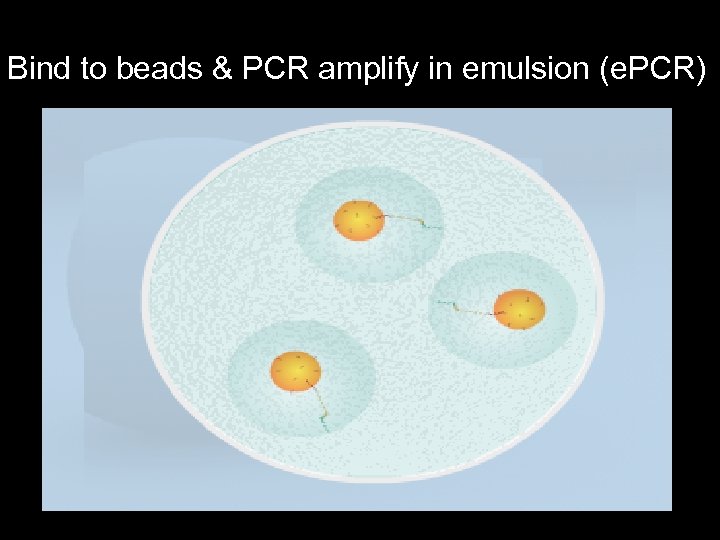 Bind to beads & PCR amplify in emulsion (e. PCR)
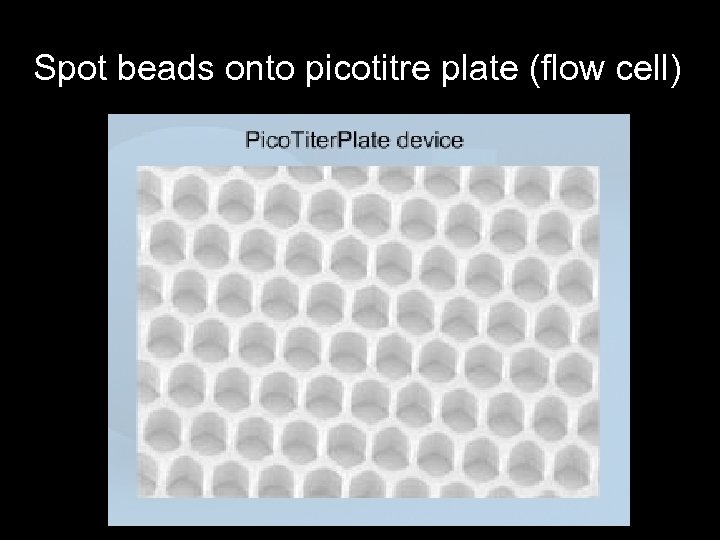 Spot beads onto picotitre plate (flow cell)
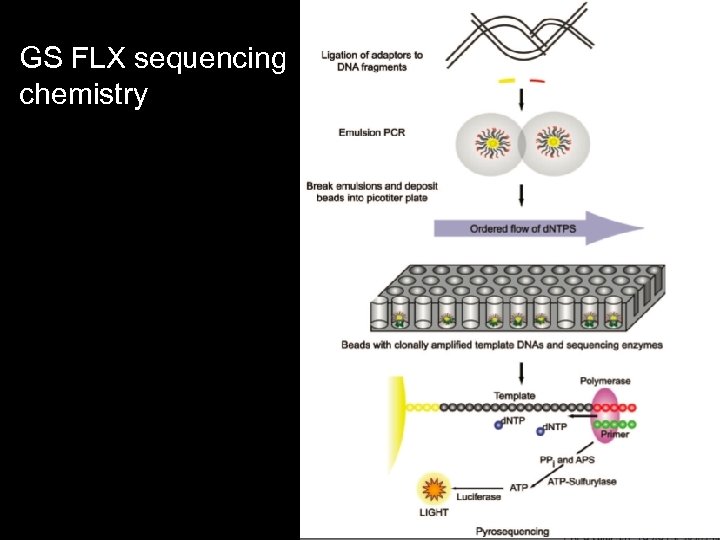 GS FLX sequencing chemistry
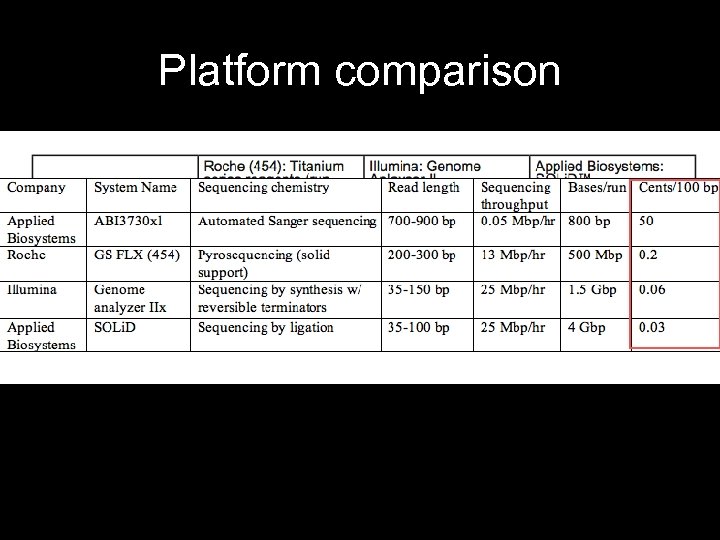
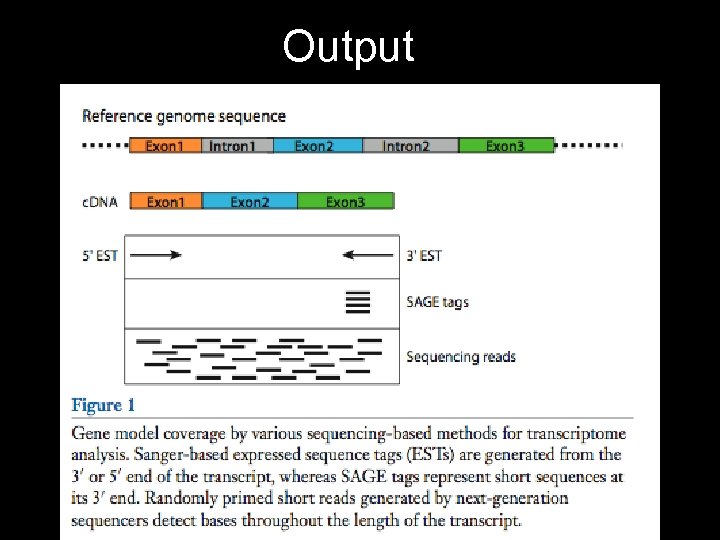 Output • Creates an image for every read • ~13 Mbp/hr, ~400 -500 bp/read • Best instrument for de novo work
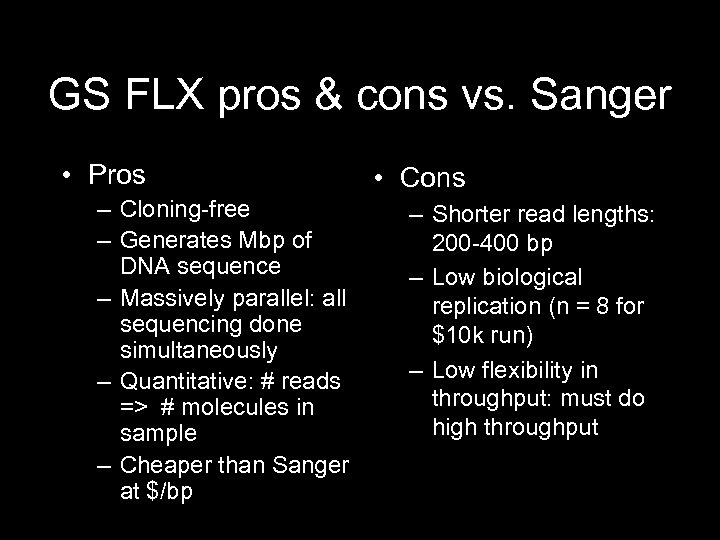 GS FLX pros & cons vs. Sanger • Pros – Cloning-free – Generates Mbp of DNA sequence – Massively parallel: all sequencing done simultaneously – Quantitative: # reads => # molecules in sample – Cheaper than Sanger at $/bp • Cons – Shorter read lengths: 200 -400 bp – Low biological replication (n = 8 for $10 k run) – Low flexibility in throughput: must do high throughput
 Illumina (formerly Solexa) • Polymerasebased sequencing by synthesis
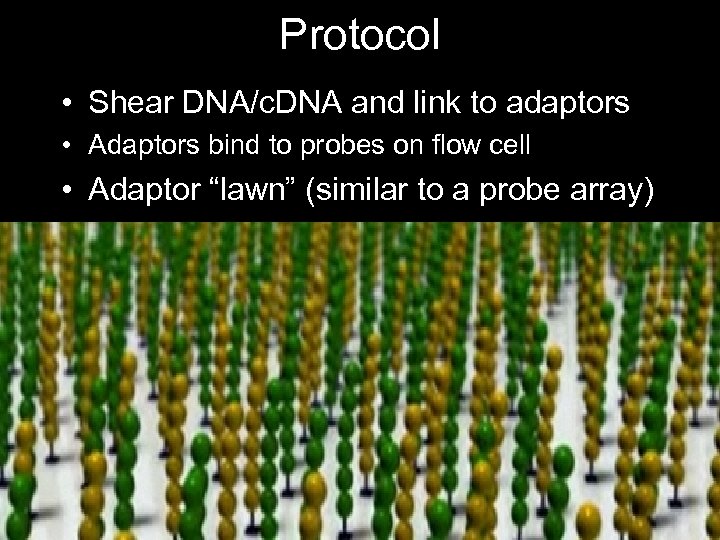 Protocol • Shear DNA/c. DNA and link to adaptors • Adaptors bind to probes on flow cell • Adaptor “lawn” (similar to a probe array)
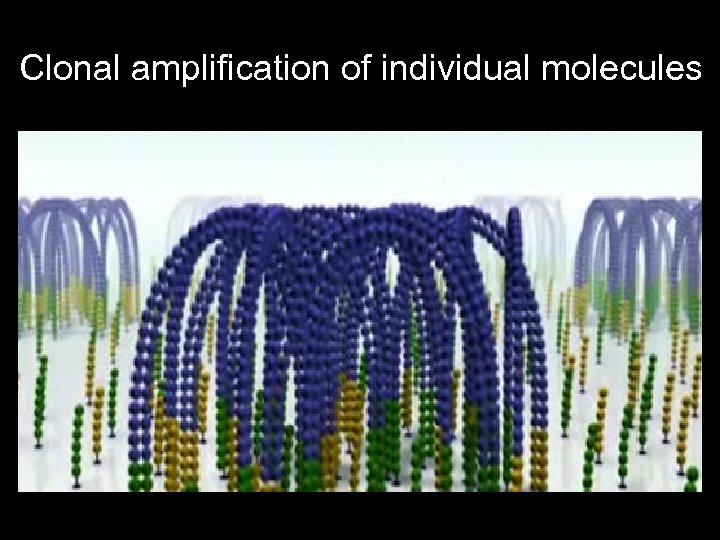 Clonal amplification of individual molecules
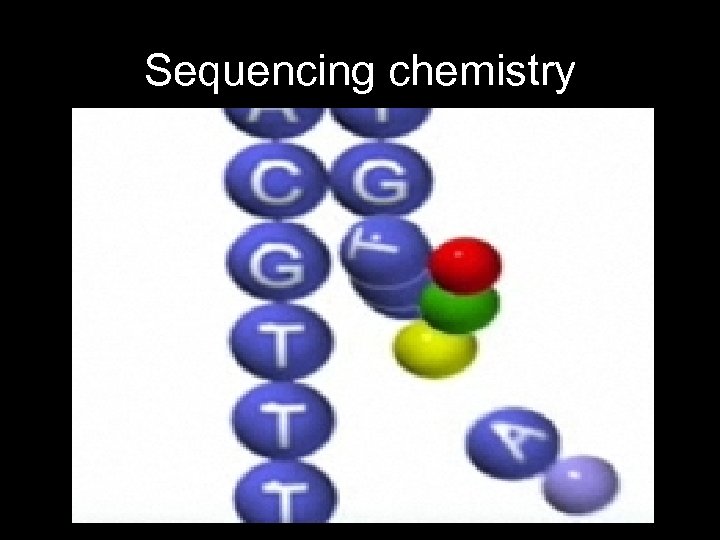 Sequencing chemistry – Fluorescently labeled bases • Initially blocked to prevent polymerization • Laser reads fluorescence • Unblocked so that next base can be added
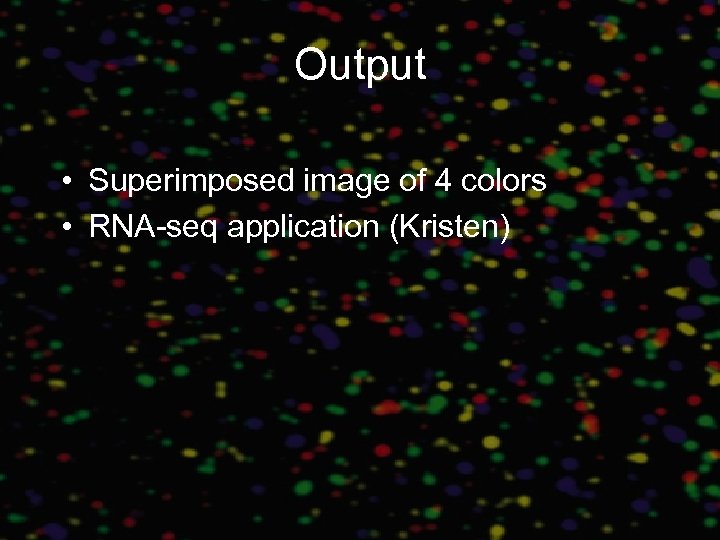 Output • Superimposed image of 4 colors • RNA-seq application (Kristen)
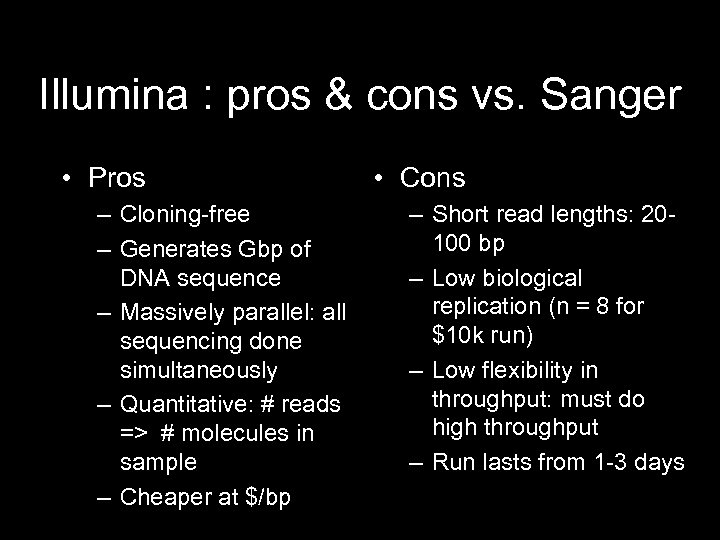 Illumina : pros & cons vs. Sanger • Pros – Cloning-free – Generates Gbp of DNA sequence – Massively parallel: all sequencing done simultaneously – Quantitative: # reads => # molecules in sample – Cheaper at $/bp • Cons – Short read lengths: 20100 bp – Low biological replication (n = 8 for $10 k run) – Low flexibility in throughput: must do high throughput – Run lasts from 1 -3 days
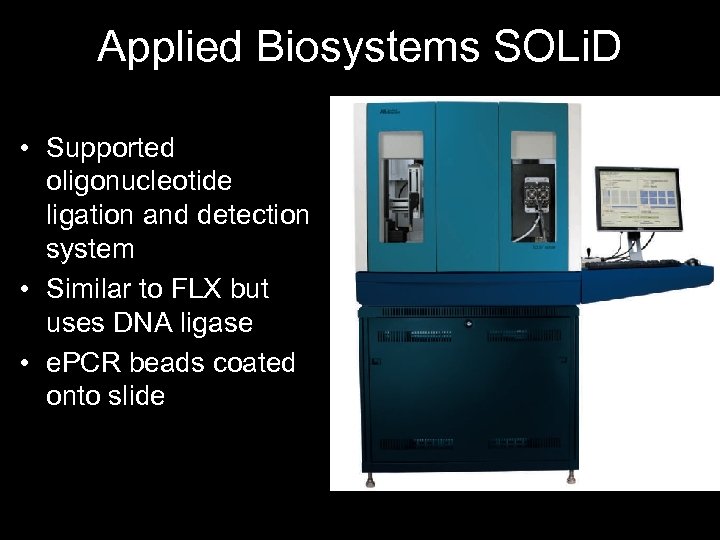 Applied Biosystems SOLi. D • Supported oligonucleotide ligation and detection system • Similar to FLX but uses DNA ligase • e. PCR beads coated onto slide
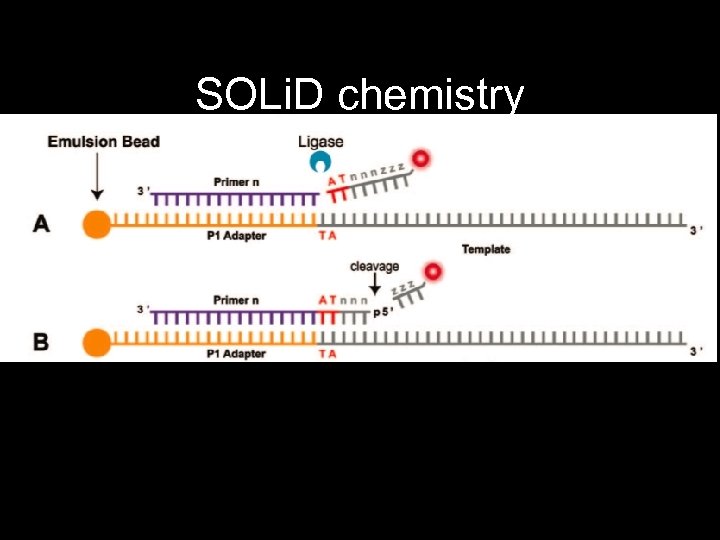 SOLi. D chemistry
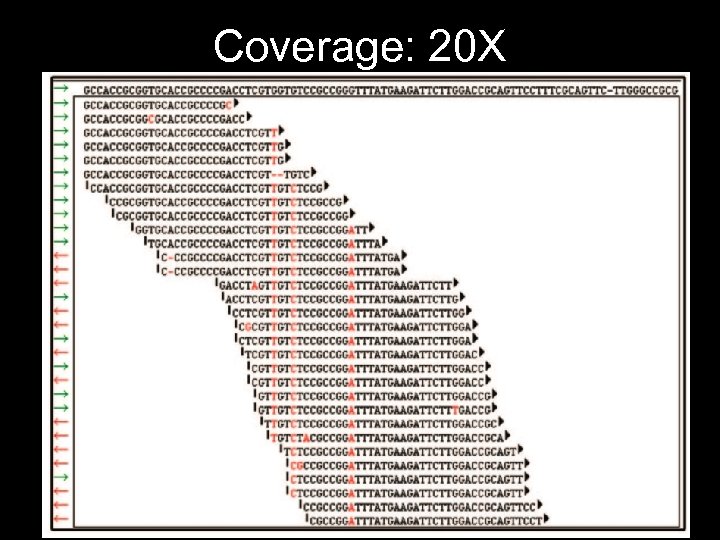 Coverage: 20 X
 SOLi. D : pros & cons vs. Sanger • Pros – Cloning-free – Generates Gbp of DNA sequence – Massively parallel: all sequencing done simultaneously – Quantitative: # reads => # molecules in sample – Cheaper at $/bp • Cons – Short read lengths: 2550 bp – Low biological replication (n = 8 for $12 k run) – Low flexibility in throughput: must do high throughput – Run lasts from 3 -6 days
 Platform comparison
 Applications • • Genome sequencing Resequencing Transcriptome characterization Comparative transcriptomics mi. RNA profiling Epigenetics CHi. P sequencing
 Hypothetical experimental
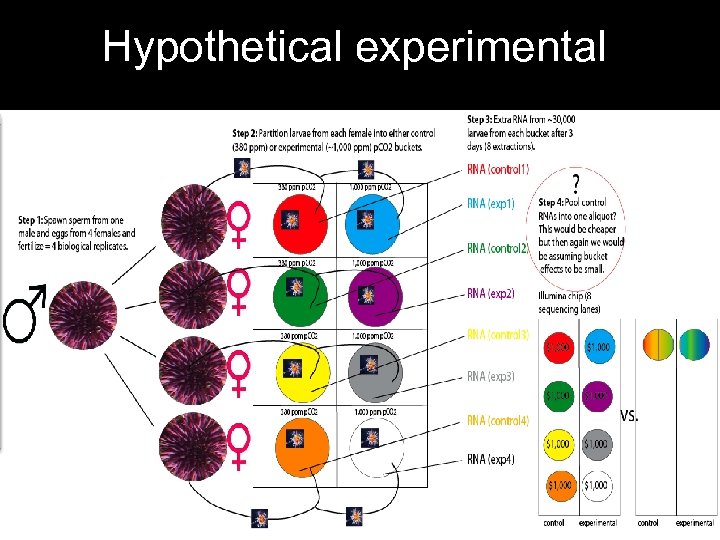
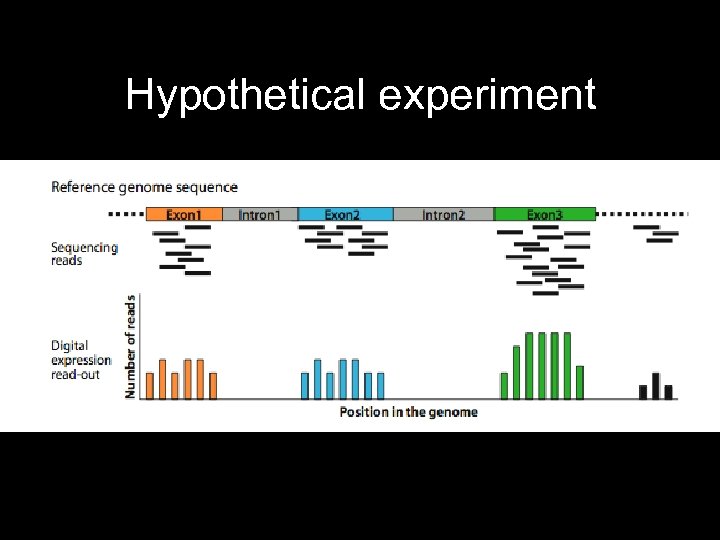 Hypothetical experiment • Sequence c. DNA libraries from each bucket and/or treatment • Count reads for each transcript • Compare transcript abundances between treatments • BLAST against reference genome
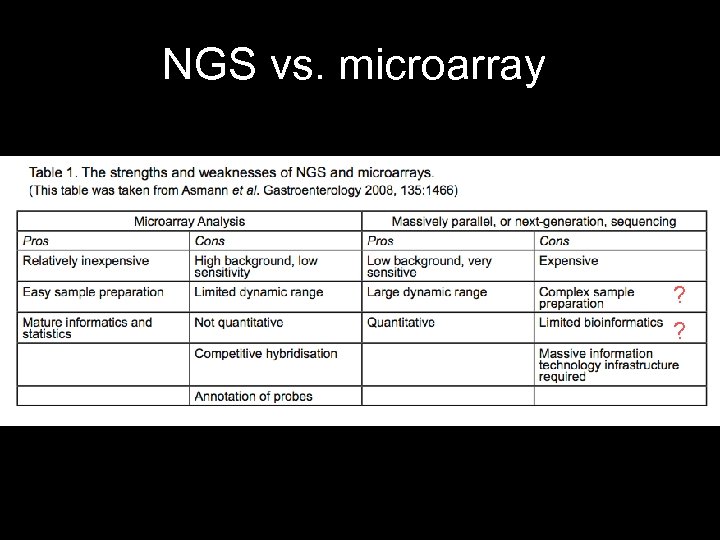 NGS vs. microarray • With microarray: must have sequences in hand to design probes. • With NGS: there is no such bias. – Sequence everything. – # of reads is proportional to # of transcripts. – Also no bias to particular gene region. ? ?
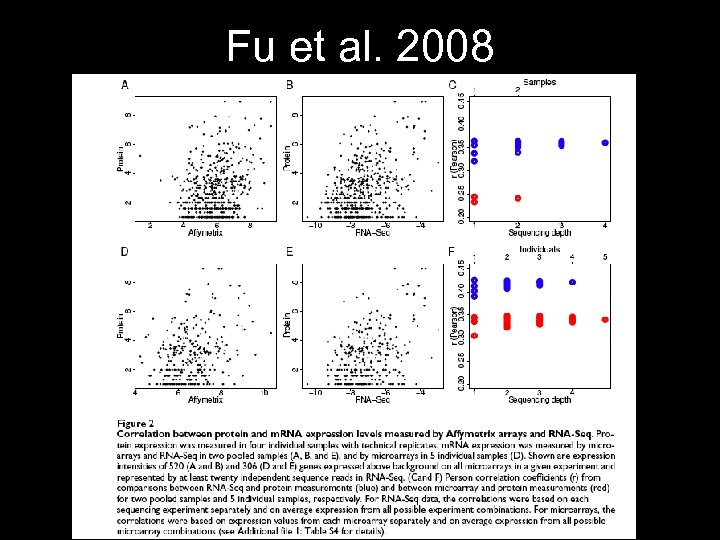 Fu et al. 2008
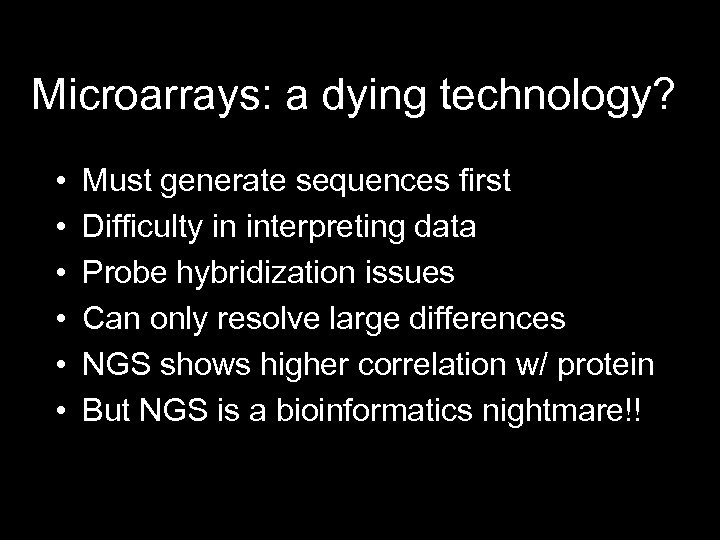 Microarrays: a dying technology? • • • Must generate sequences first Difficulty in interpreting data Probe hybridization issues Can only resolve large differences NGS shows higher correlation w/ protein But NGS is a bioinformatics nightmare!!
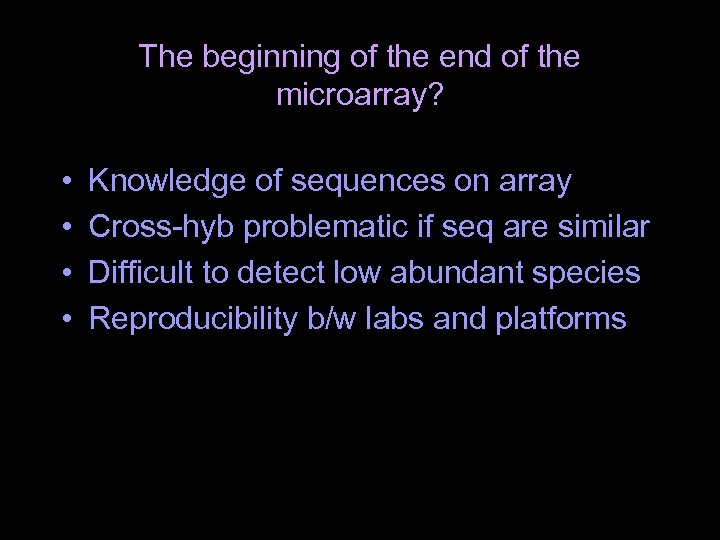 The beginning of the end of the microarray? • • Knowledge of sequences on array Cross-hyb problematic if seq are similar Difficult to detect low abundant species Reproducibility b/w labs and platforms
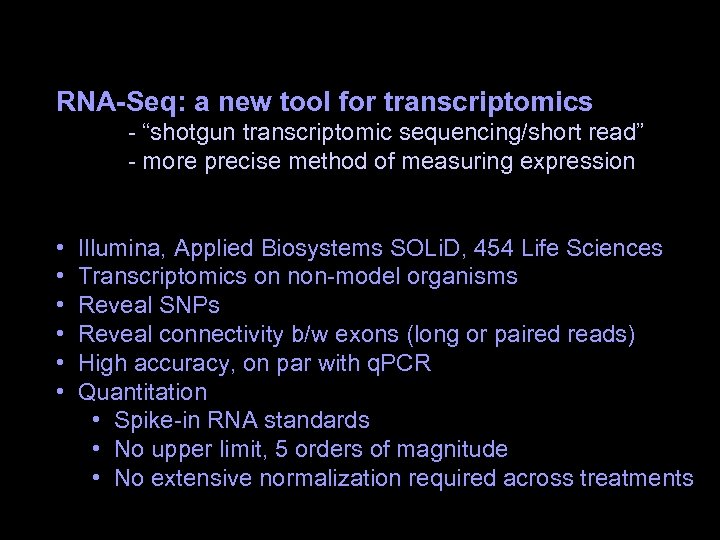 RNA-Seq: a new tool for transcriptomics - “shotgun transcriptomic sequencing/short read” - more precise method of measuring expression • • • Illumina, Applied Biosystems SOLi. D, 454 Life Sciences Transcriptomics on non-model organisms Reveal SNPs Reveal connectivity b/w exons (long or paired reads) High accuracy, on par with q. PCR Quantitation • Spike-in RNA standards • No upper limit, 5 orders of magnitude • No extensive normalization required across treatments
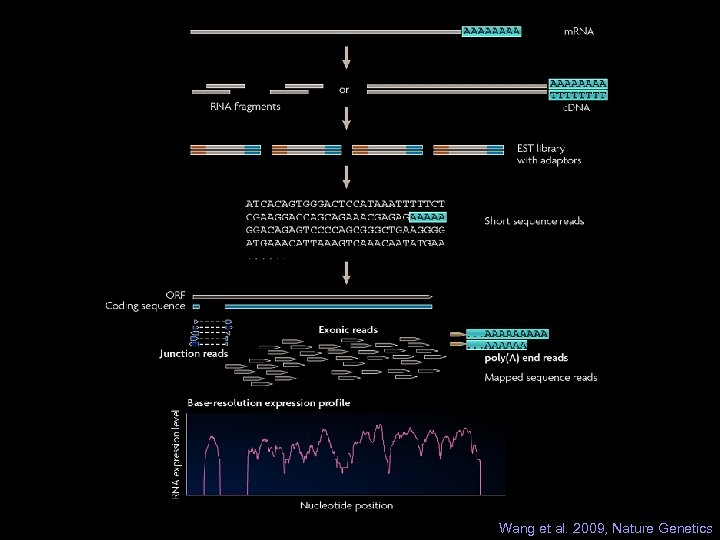 Wang et al. 2009, Nature Genetics
 -Illumina sequencing ~35 bp, single end reads, ~ 15 M reads Nagalakshmi et al. 2008, Science
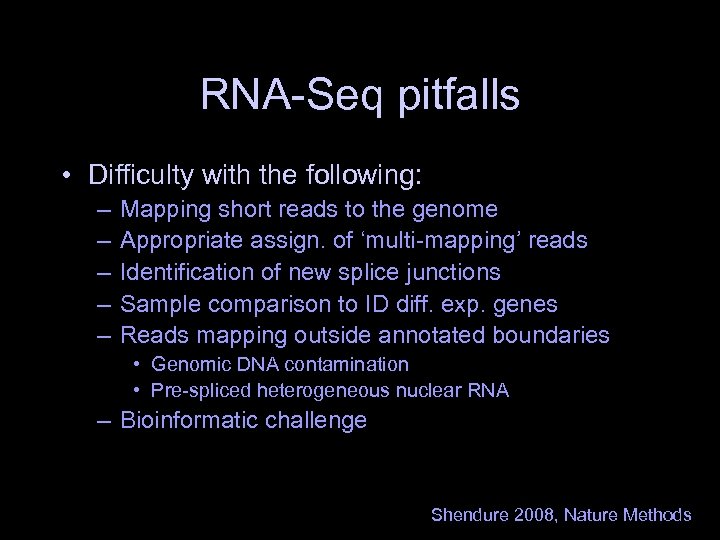 RNA-Seq pitfalls • Difficulty with the following: – – – Mapping short reads to the genome Appropriate assign. of ‘multi-mapping’ reads Identification of new splice junctions Sample comparison to ID diff. exp. genes Reads mapping outside annotated boundaries • Genomic DNA contamination • Pre-spliced heterogeneous nuclear RNA – Bioinformatic challenge Shendure 2008, Nature Methods
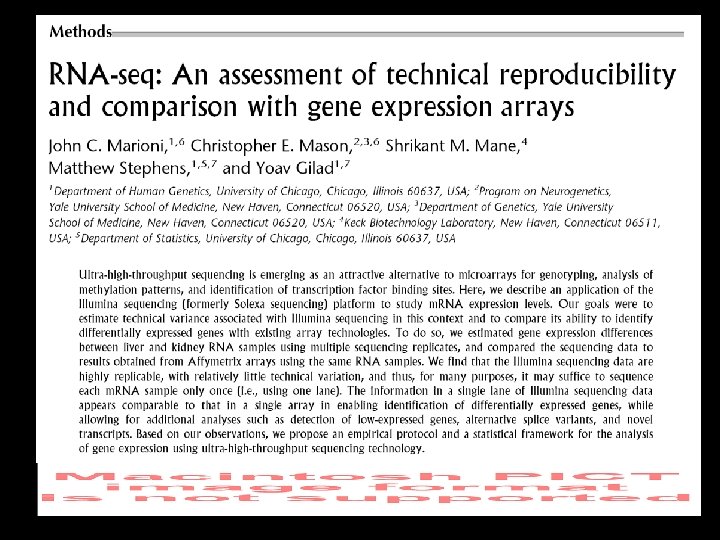
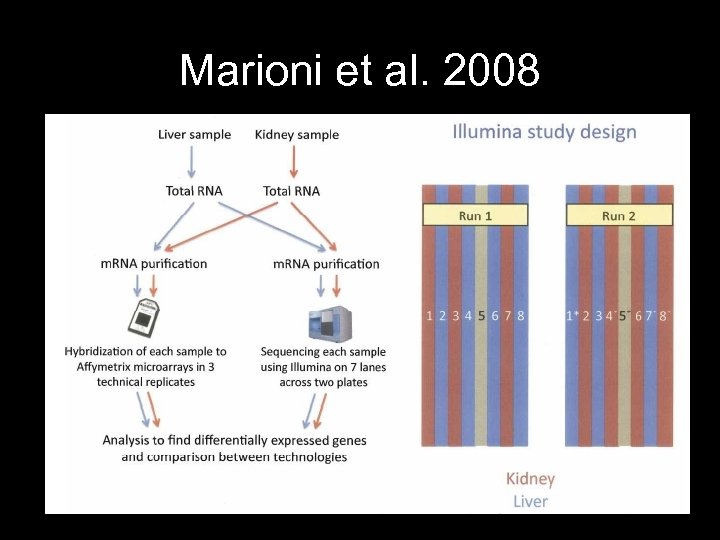 Marioni et al. 2008
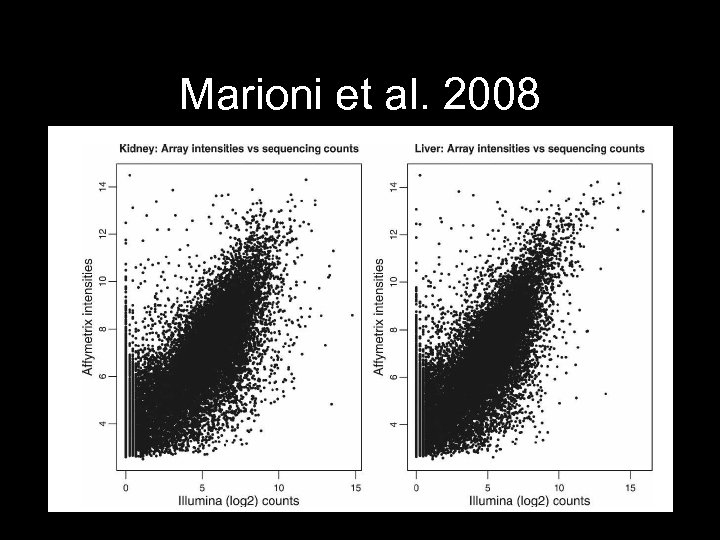 Marioni et al. 2008
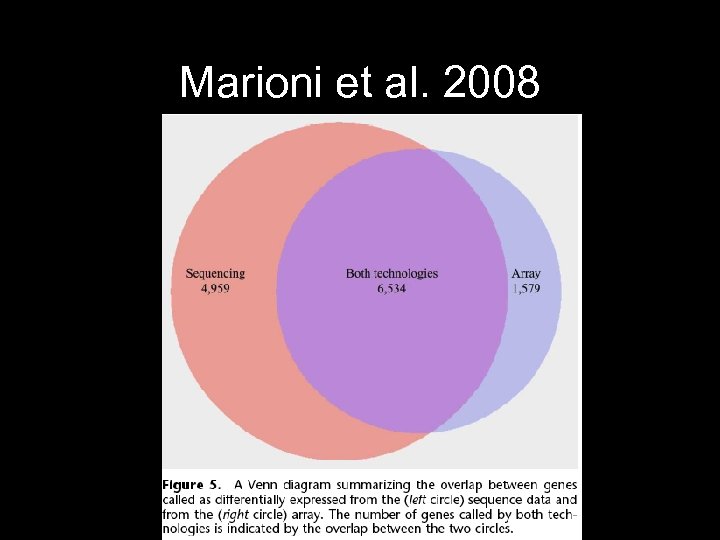 Marioni et al. 2008
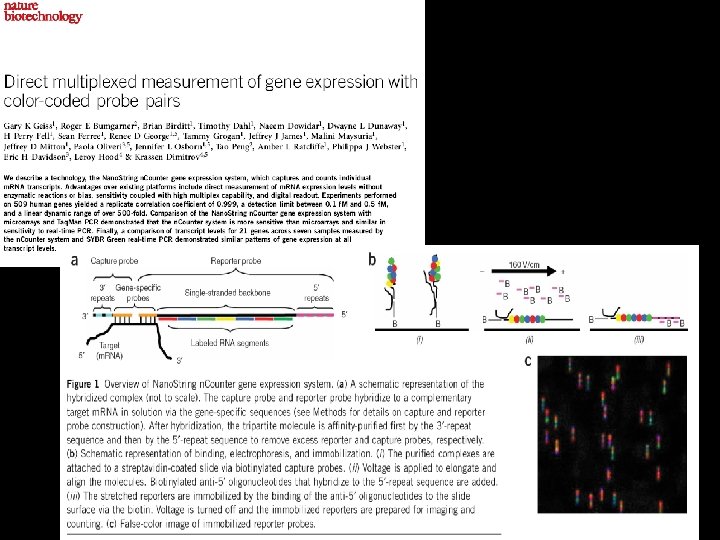
 Nano. String Technology -Minimal background signal -No amplification (induce bias) -Less sample needed -Improved detection of low exp. RNAs - single copy per cell Fortina and Surrey 2008, Nature Biotechnoloy
 Probe Design • 2 ss. DNA probes/ m. RNA (35 -50 bp oligo) • Overnight hybridization to m. RNA (solution-based) • Slide adhesion via biotin labeled capture probe • Reporter probe, 4 spectrally distinct dyes, 7 spaces • ‘Barcode’, 47 or 16, 384 barcodes