


 Скачать презентацию New Zealand Helicopter Association Human Failures in Accidents
5f8b9b02a9aa3a4beabc0f5035a6c1a2.ppt
- Количество слайдов: 46
 New Zealand Helicopter Association Human Failures in Accidents
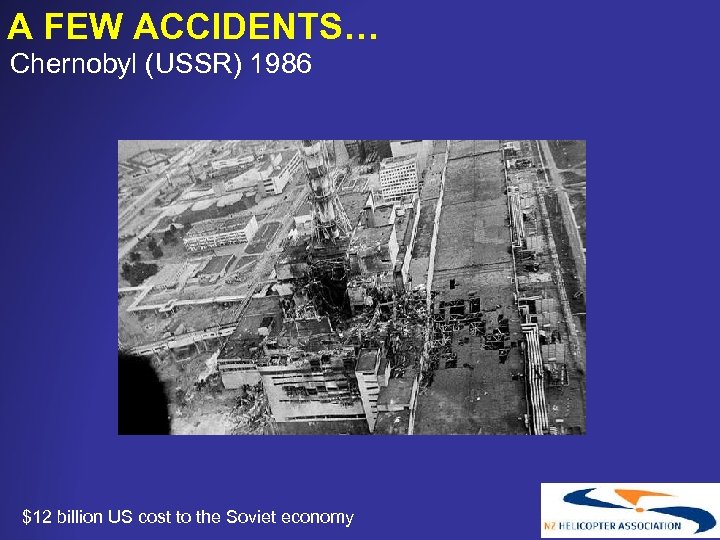 A FEW ACCIDENTS… Chernobyl (USSR) 1986 $12 billion US cost to the Soviet economy
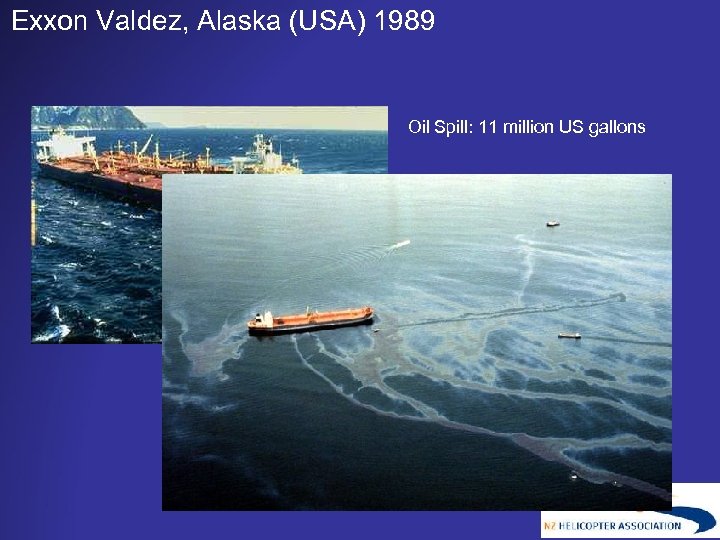 Exxon Valdez, Alaska (USA) 1989 Oil Spill: 11 million US gallons
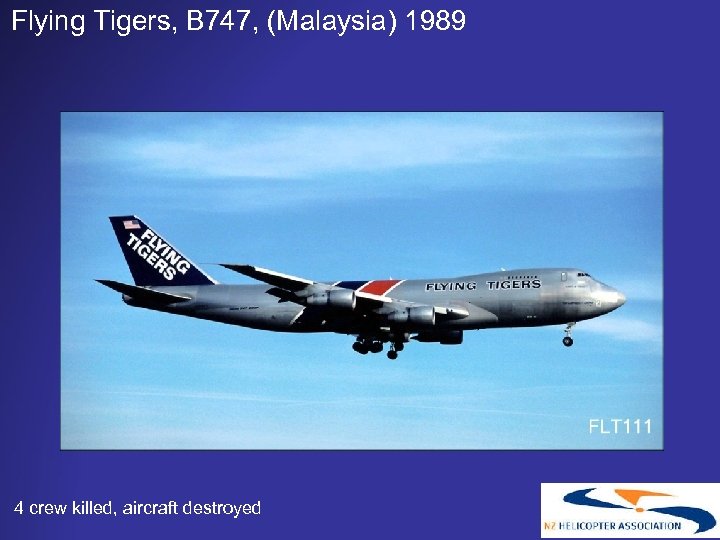 Flying Tigers, B 747, (Malaysia) 1989 4 crew killed, aircraft destroyed
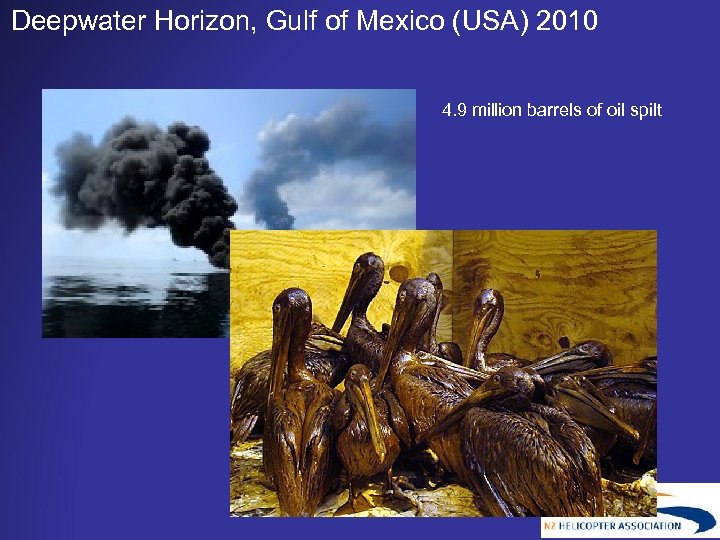 Deepwater Horizon, Gulf of Mexico (USA) 2010 4. 9 million barrels of oil spilt
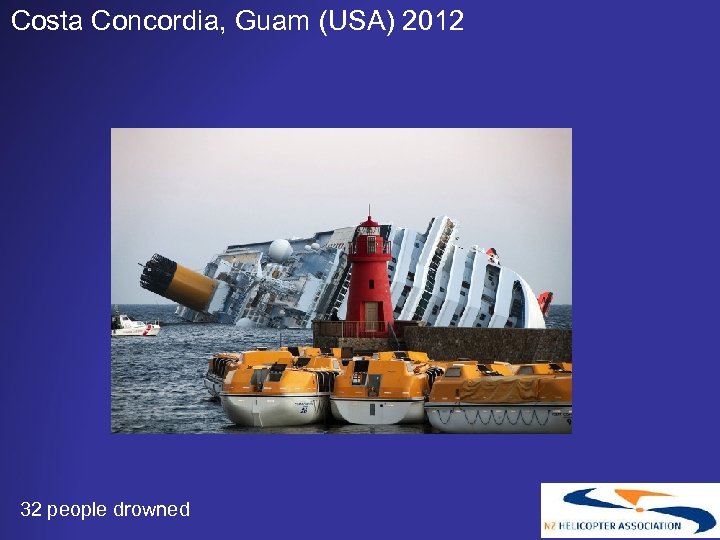 Costa Concordia, Guam (USA) 2012 32 people drowned
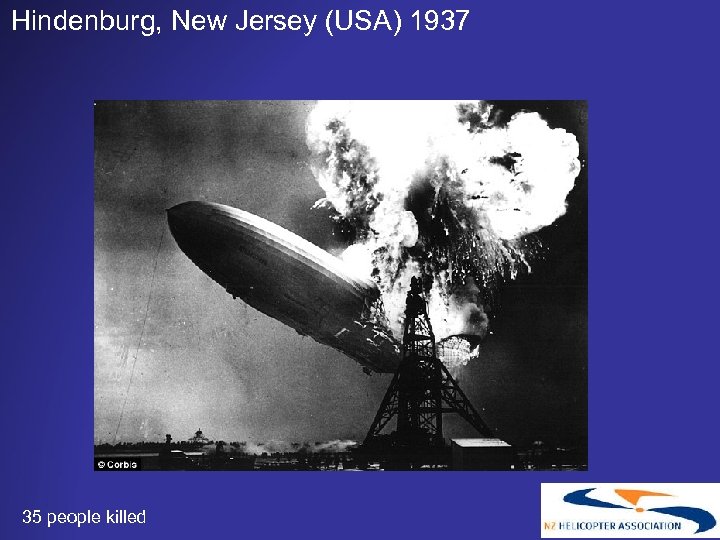 Hindenburg, New Jersey (USA) 1937 35 people killed
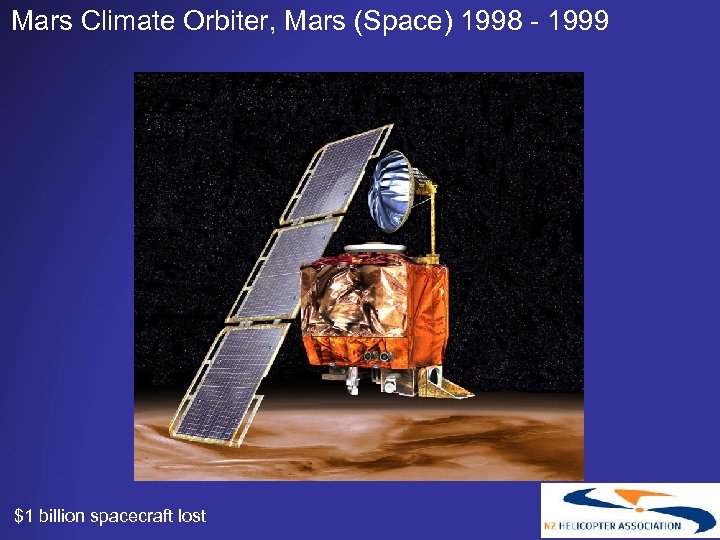 Mars Climate Orbiter, Mars (Space) 1998 - 1999 $1 billion spacecraft lost
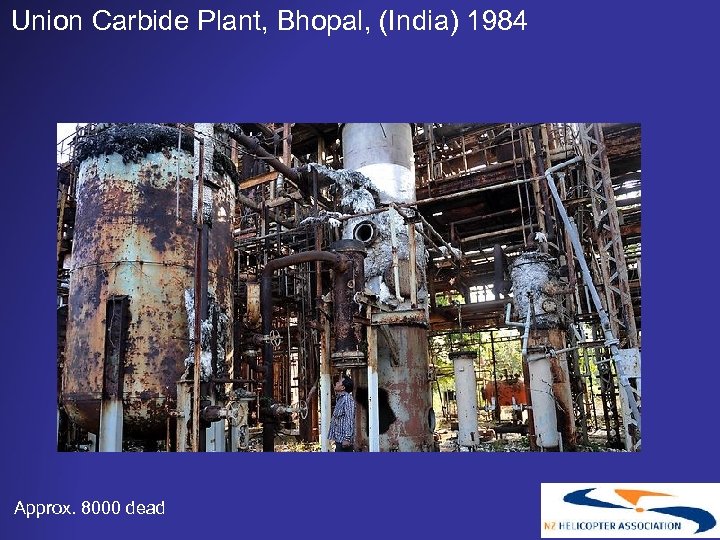 Union Carbide Plant, Bhopal, (India) 1984 Approx. 8000 dead
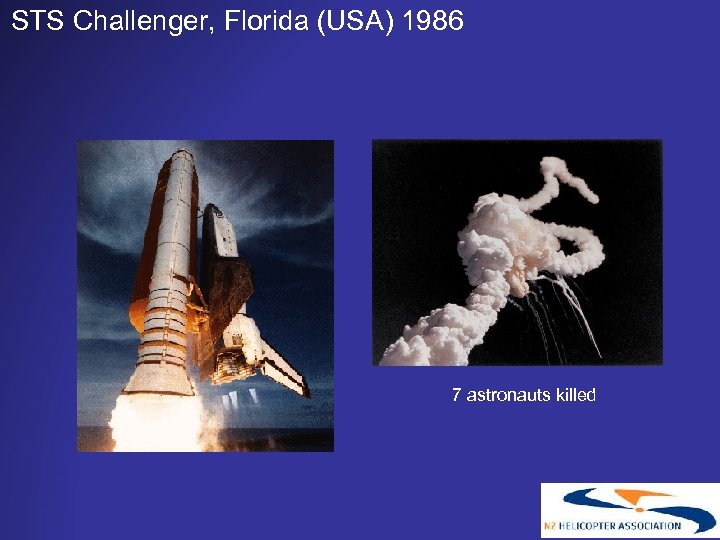 STS Challenger, Florida (USA) 1986 7 astronauts killed
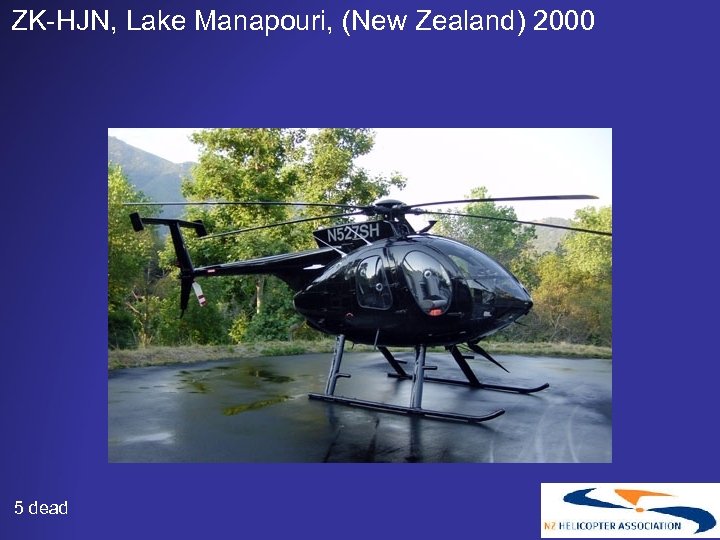 ZK-HJN, Lake Manapouri, (New Zealand) 2000 5 dead
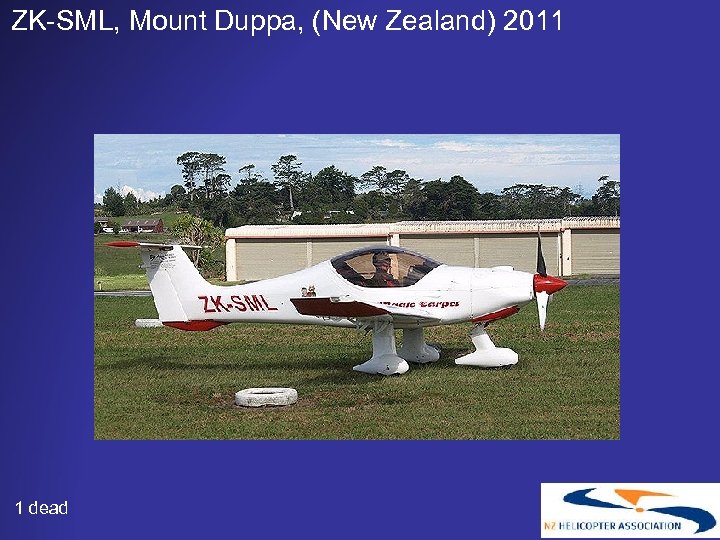 ZK-SML, Mount Duppa, (New Zealand) 2011 1 dead
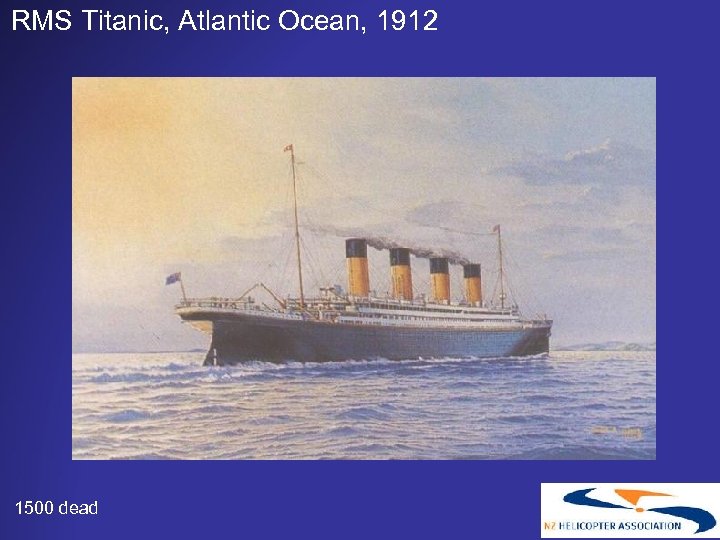 RMS Titanic, Atlantic Ocean, 1912 1500 dead
 What do these accidents/incidents/disasters have in common ? Human Failures Human Errors
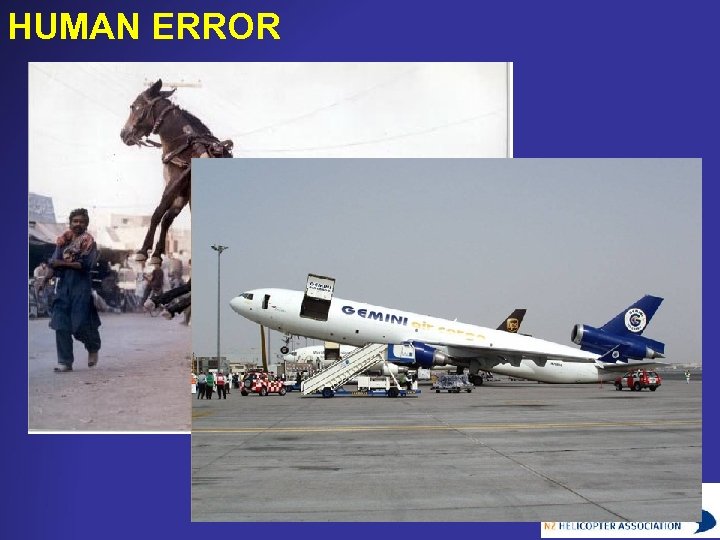 HUMAN ERROR
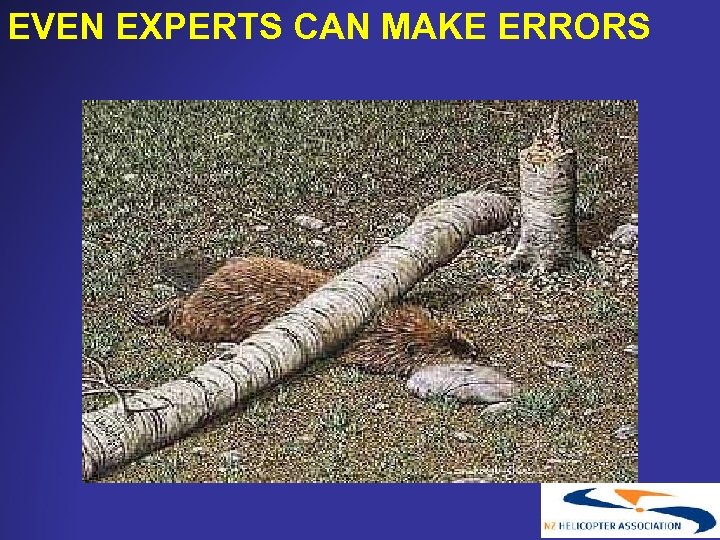 EVEN EXPERTS CAN MAKE ERRORS
 ERRORS AND VIOLATIONS An Error Unintentional deviation from organizational expectations or crew intentions (the best people can make the worst errors) A Violation (Intentional Non-compliance)? Intentional deviation from organizational expectations or crew intentions
 TYPES OF ERORS Slips – attention failure (omission, reversal, misordering, mistiming) Lapses – memory failure (omitting planned items, place-losing, forgetting intentions) Mistakes Rule based (misapplication of a good rule or application of a bad rule) Knowledge based – inaccurate or incomplete system mental model
 TYPES OF ERRORS Slips – attention failure (omission, reversal, misordering, mistiming) Lapses – memory failure (omitting planned items, place-losing, forgetting intentions) Mistakes Rule based (misapplication of a good rule or application of a bad rule) Knowledge based – inaccurate or incomplete system mental model
 WHAT ABOUT VIOLATIONS ? Routine – habitual departures from rules and regulations Situational – deviation from procedures or rules needed to get the job done due to a mismatch between a work situation and available procedures or rules Optimising - individual satisfying other motives (excitement, impressing others, cutting corners…)
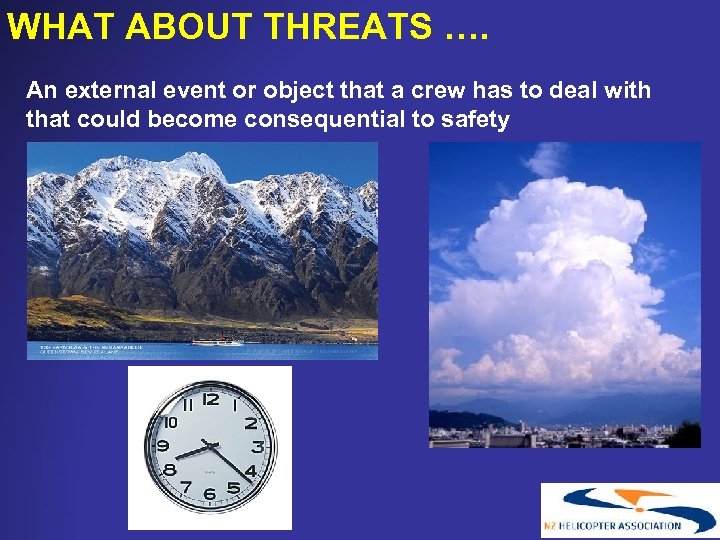 WHAT ABOUT THREATS …. An external event or object that a crew has to deal with that could become consequential to safety
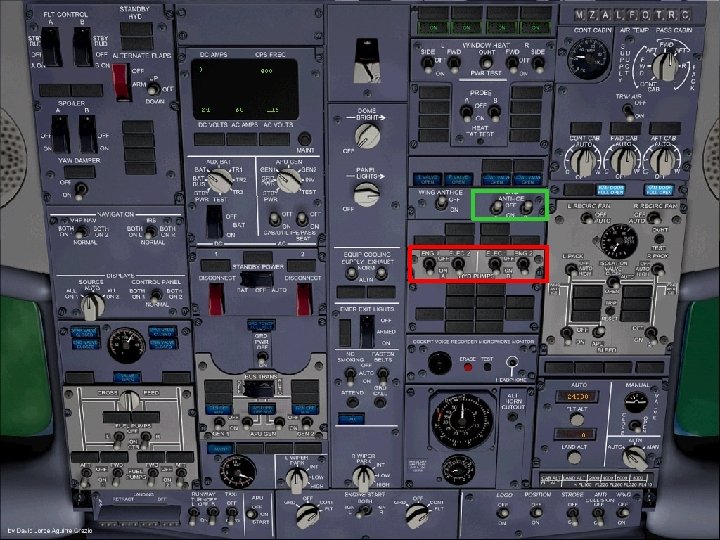 WHAT TO DO ? Design systems to be error tolerant (system still functions after an error has been made) Design systems to be error proof (design prevents an error being made at all or makes it difficult for an error to be made)
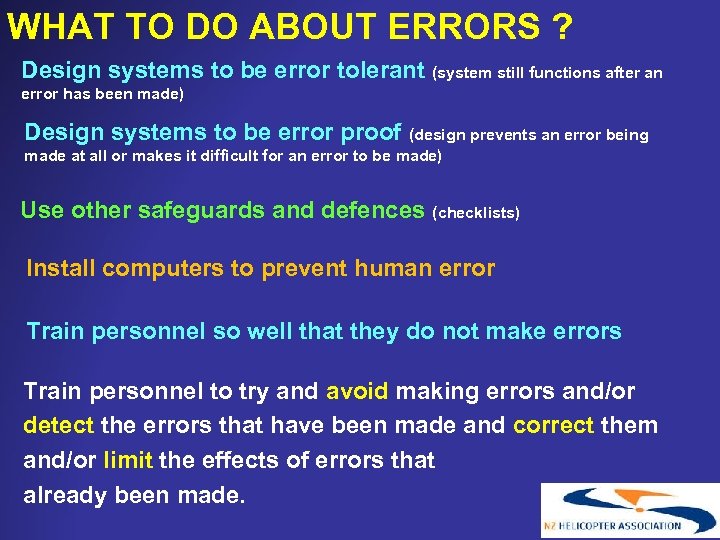 WHAT TO DO ABOUT ERRORS ? Design systems to be error tolerant (system still functions after an error has been made) Design systems to be error proof (design prevents an error being made at all or makes it difficult for an error to be made) Use other safeguards and defences (checklists) Install computers to prevent human error Train personnel so well that they do not make errors Train personnel to try and avoid making errors and/or detect the errors that have been made and correct them and/or limit the effects of errors that already been made.
 What do these accidents/incidents/disasters have in common ? Human Failures Human Errors Non-technical Skill Failures
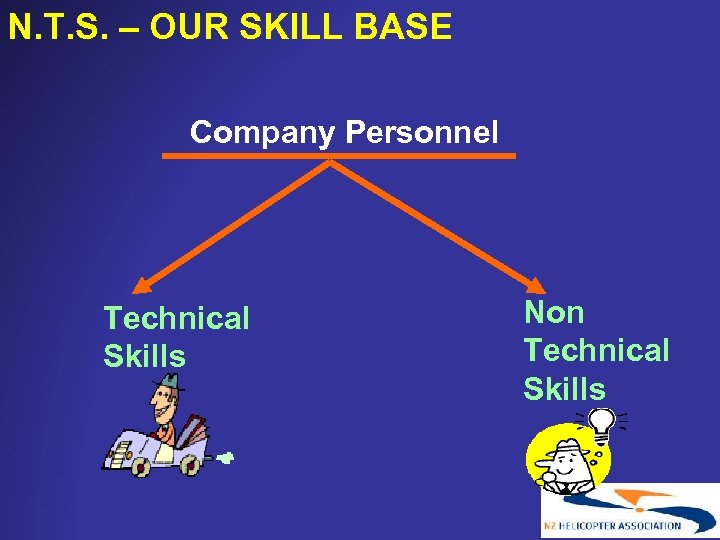 N. T. S. – OUR SKILL BASE Company Personnel Technical Skills Non Technical Skills
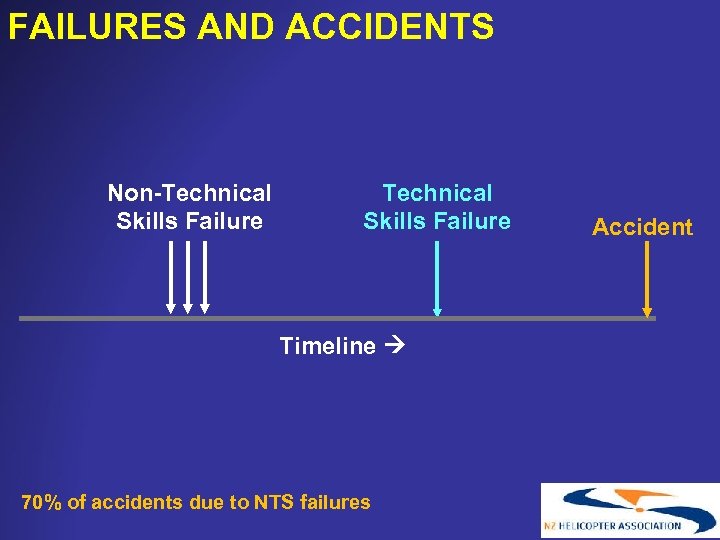 FAILURES AND ACCIDENTS Non-Technical Skills Failure Timeline 70% of accidents due to NTS failures Accident
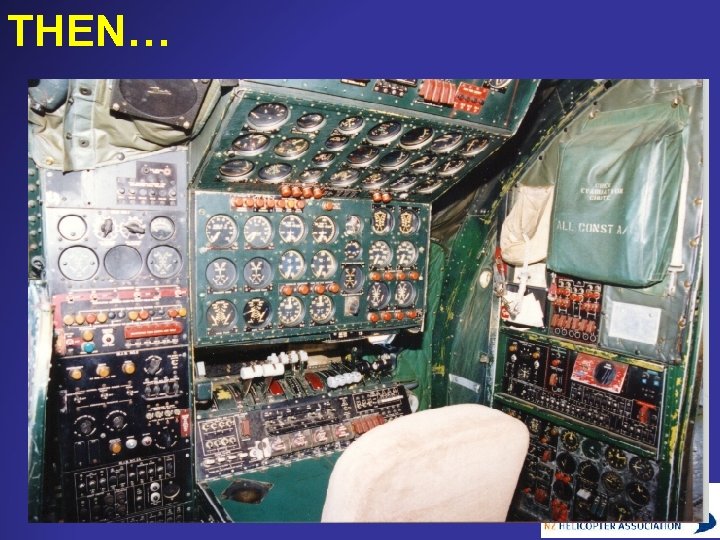
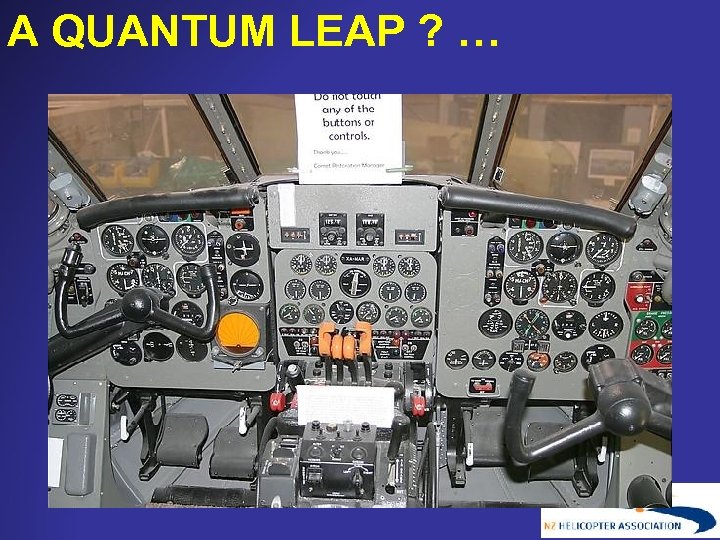
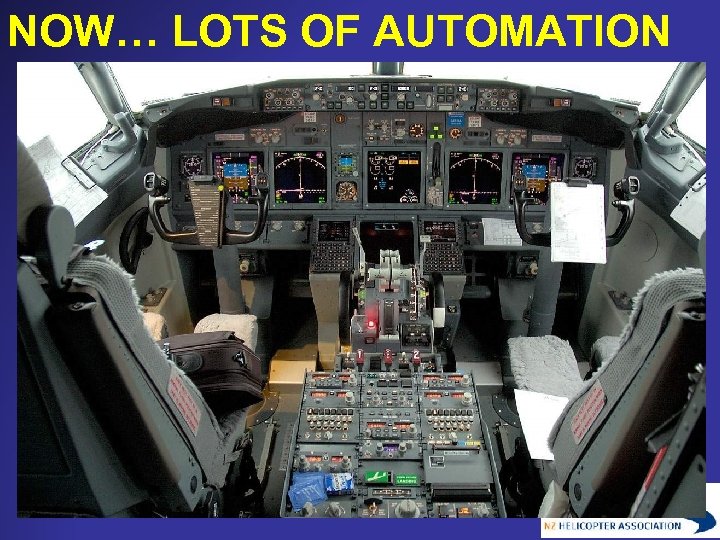
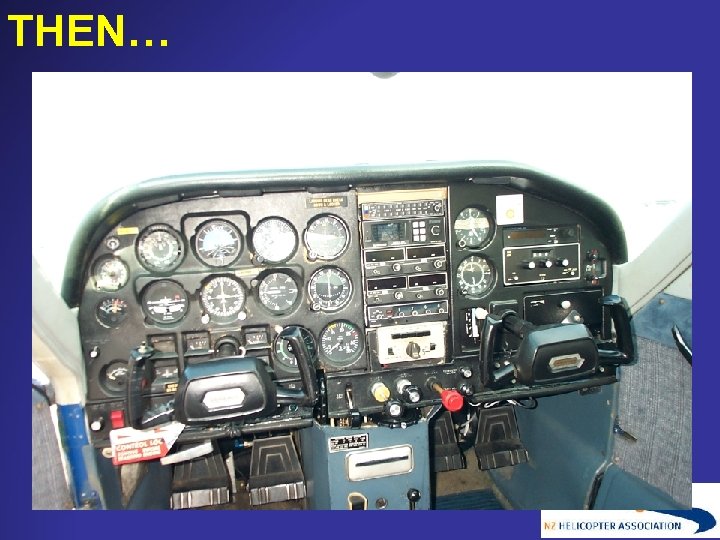
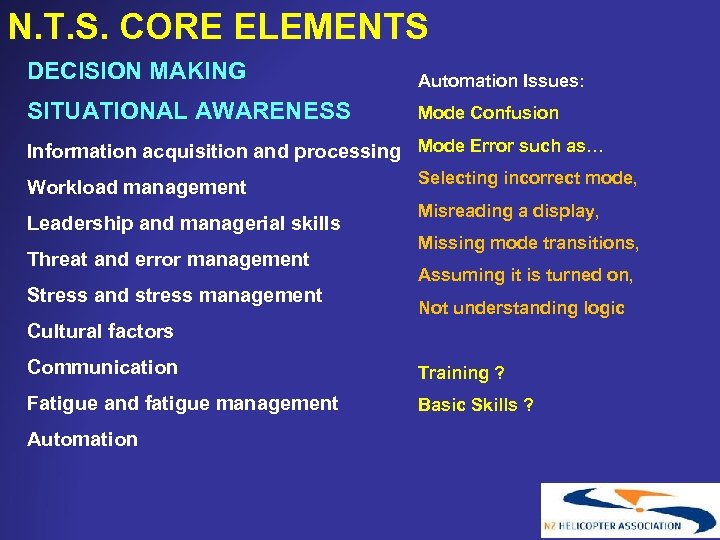 N. T. S. CORE ELEMENTS DECISION MAKING Automation Issues: SITUATIONAL AWARENESS Mode Confusion Information acquisition and processing Mode Error such as… Workload management Leadership and managerial skills Threat and error management Stress and stress management Selecting incorrect mode, Misreading a display, Missing mode transitions, Assuming it is turned on, Not understanding logic Cultural factors Communication Training ? Fatigue and fatigue management Basic Skills ? Automation
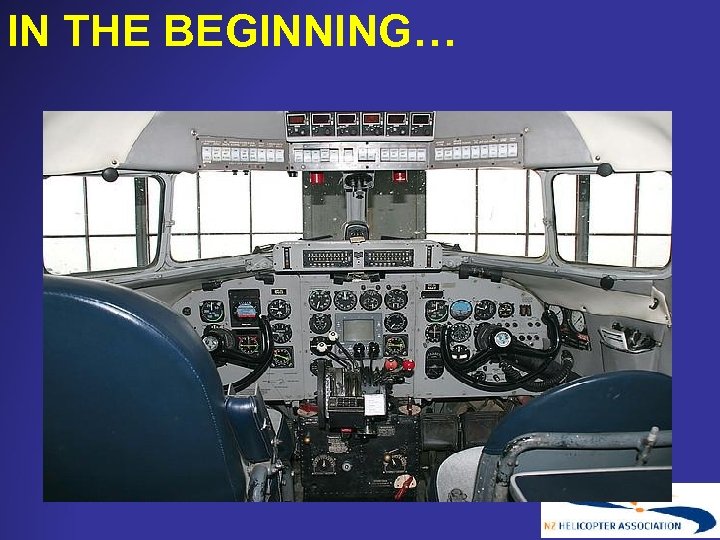 IN THE BEGINNING…
 THEN…
THEN…
 A QUANTUM LEAP ? …
 NOW… LOTS OF AUTOMATION
 THEN…
THEN…
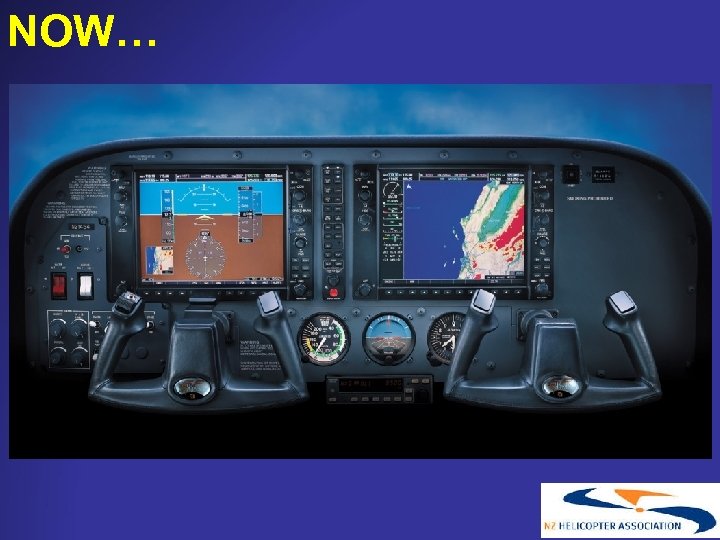 NOW…
NOW…
 N. T. S. CORE ELEMENTS DECISION MAKING SITUATIONAL AWARENESS Information acquisition and processing Workload management Leadership and managerial skills Threat and error management Stress and stress management Cultural factors Communication Fatigue and fatigue management Automation
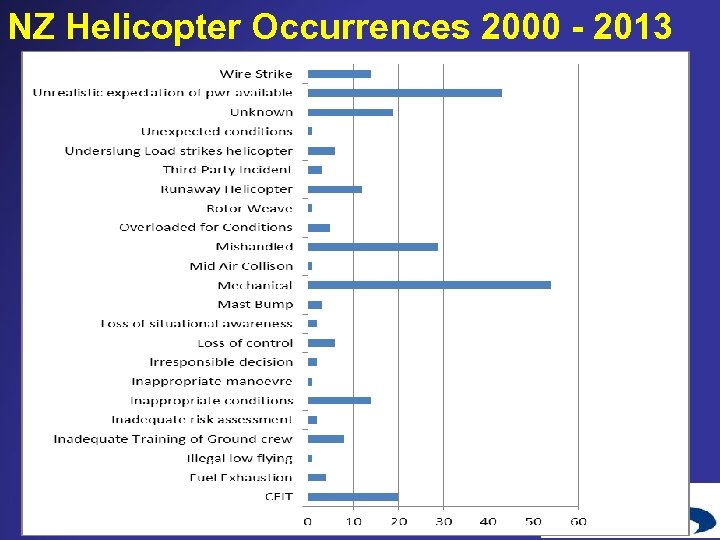 NZ Helicopter Occurrences 2000 - 2013
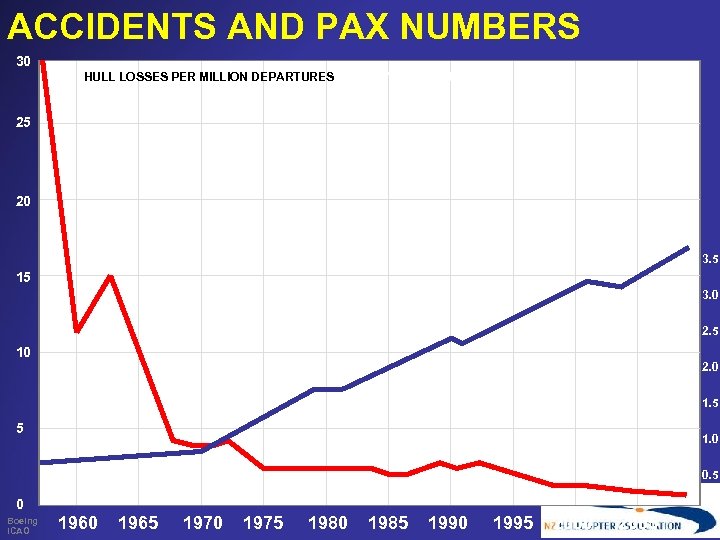 ACCIDENTS AND PAX NUMBERS 30 HULL LOSSES PER MILLION DEPARTURES GROWTH IN TRILLIONS OF RPK 25 20 3. 5 15 3. 0 2. 5 10 2. 0 1. 5 5 1. 0 0. 5 0 Boeing ICAO 1960 1965 1970 1975 1980 1985 1990 1995 2000 2005
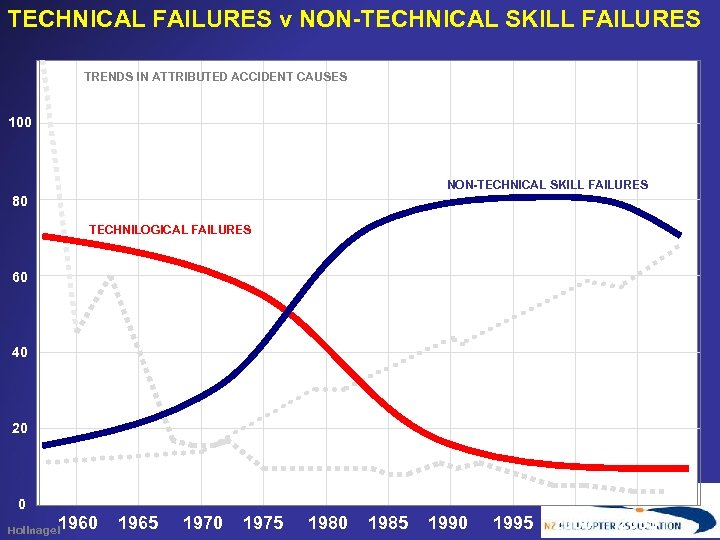 TECHNICAL FAILURES v NON-TECHNICAL SKILL FAILURES TRENDS IN ATTRIBUTED ACCIDENT CAUSES 100 NON-TECHNICAL SKILL FAILURES HUMAN PERFORMANCE 80 TECHNILOGICAL FAILURES 60 40 20 0 1960 Hollnagel 1965 1970 1975 1980 1985 1990 1995 2000 2005
 Landmark Accidents
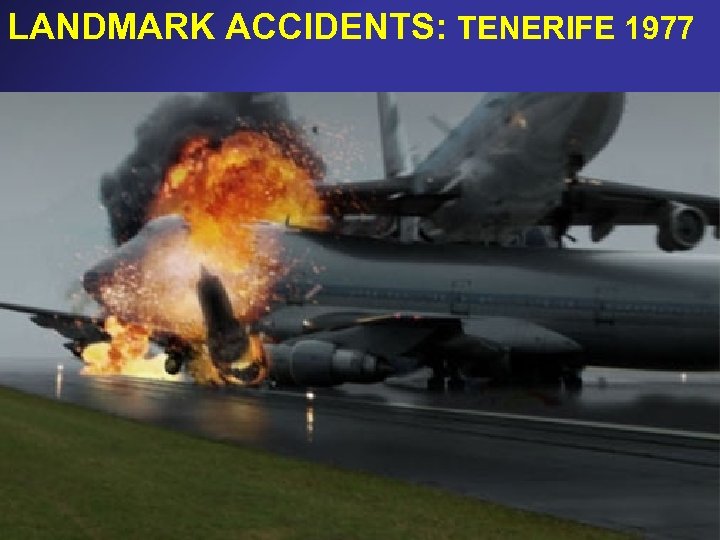 LANDMARK ACCIDENTS: TENERIFE 1977
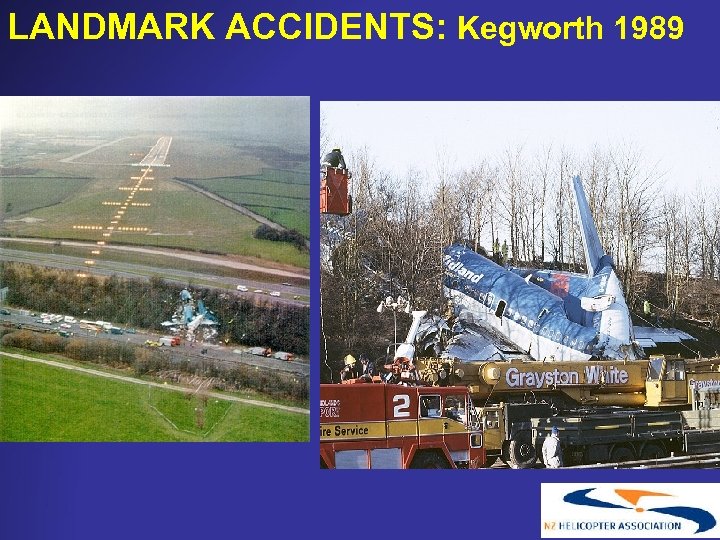 LANDMARK ACCIDENTS: Kegworth 1989
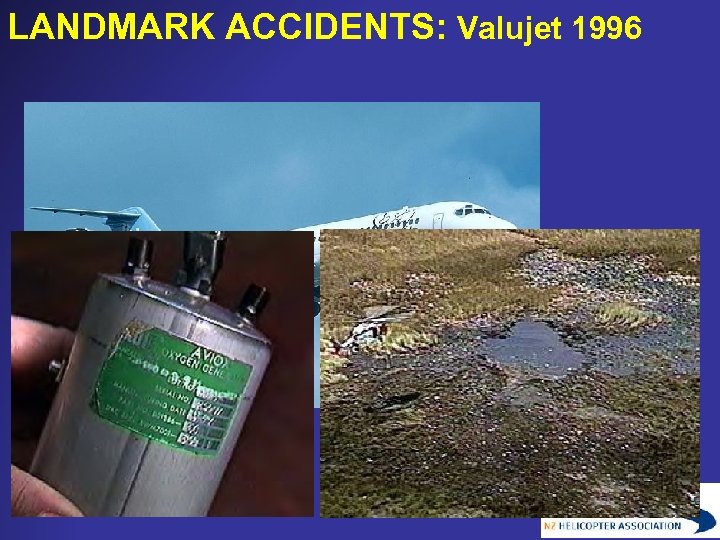 LANDMARK ACCIDENTS: Valujet 1996
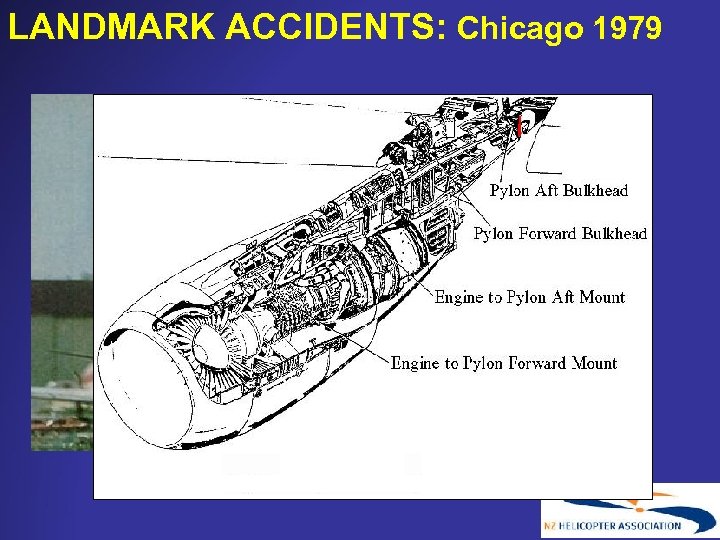 LANDMARK ACCIDENTS: Chicago 1979
 Who should undergo NTS training ? Flight Crew Cabin Crew Maintenance Engineers Other Operational Safety Critical Personnel Management Link your NTS training program to your SMS
 NTS TRAINING BENEFITS Understand personal limitations Improve awareness, knowledge and skills Change attitudes, modify behaviours Improve cross-functional collaboration Develop adaptive capacity (personally and organisationally) Improve SAFETY and efficiency
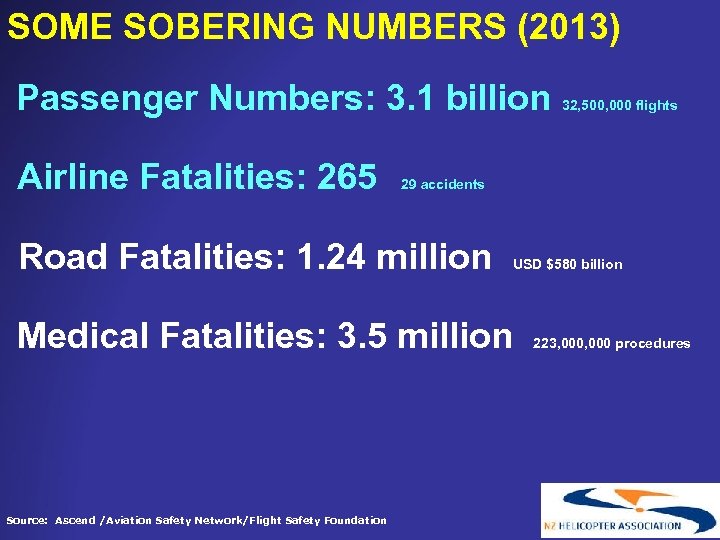 SOME SOBERING NUMBERS (2013) Passenger Numbers: 3. 1 billion Airline Fatalities: 265 29 accidents Road Fatalities: 1. 24 million USD $580 billion Medical Fatalities: 3. 5 million Source: Ascend /Aviation Safety Network/Flight Safety Foundation 32, 500, 000 flights 223, 000 procedures
 New Zealand Helicopter Association Thanks for your time Contact: Glen Eastlake, Queenstown, New Zealand 0274 963 141 glen. eastlake@safeware. com. au