 Скачать презентацию new zealand birds online www nzbirdsonline org nz
c1797afa29432d35c8e045de3afbd9ad.ppt
- Количество слайдов: 49




new zealand birds online www. nzbirdsonline. org. nz Creating the perfect website for and by OSNZ members Colin Miskelly
new zealand birds online www. nzbirdsonline. org. nz This presentation will cover: • Current status of the website • Mock-up of the final website to demonstrate intended search functions and content • Progress to date • How you can help
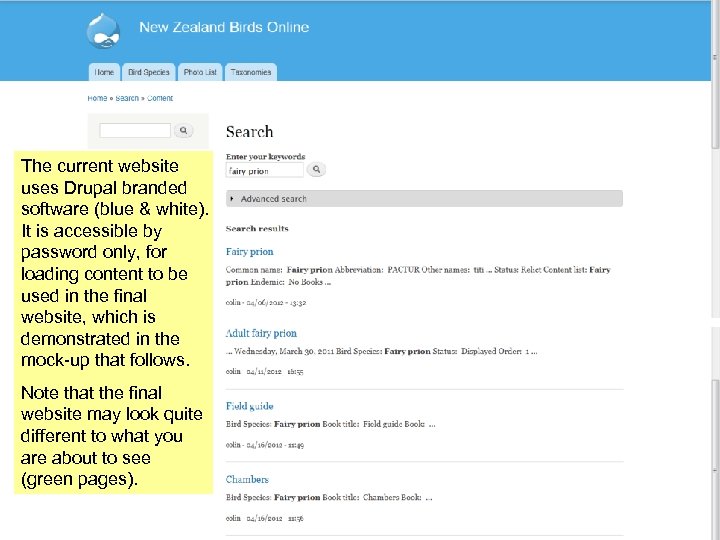
The current website uses Drupal branded software (blue & white). It is accessible by password only, for loading content to be used in the final website, which is demonstrated in the mock-up that follows. Note that the final website may look quite different to what you are about to see (green pages).
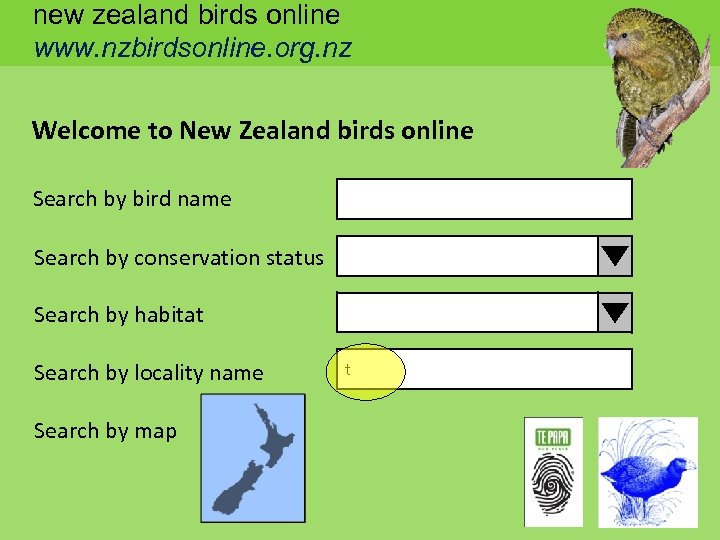
new zealand birds online www. nzbirdsonline. org. nz Welcome to New Zealand birds online Search by bird name Search by conservation status Search by habitat Search by locality name Search by map t
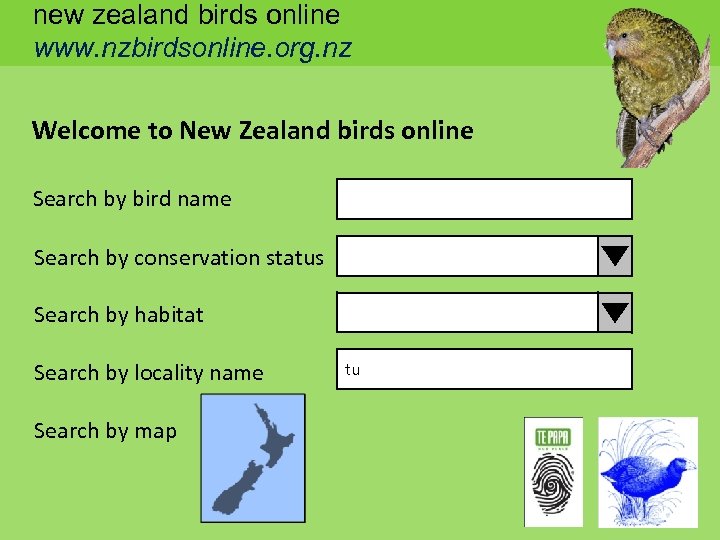
new zealand birds online www. nzbirdsonline. org. nz Welcome to New Zealand birds online Search by bird name Search by conservation status Search by habitat Search by locality name Search by map tu
new zealand birds online www. nzbirdsonline. org. nz Welcome to New Zealand birds online Search by bird name Search by conservation status Search by habitat Search by locality name Search by map tuh
new zealand birds online www. nzbirdsonline. org. nz Welcome to New Zealand birds online Search by bird name Search by conservation status Search by habitat Search by locality name Search by map tuhu
new zealand birds online www. nzbirdsonline. org. nz Welcome to New Zealand birds online Search by bird name Search by conservation status Search by habitat Search by locality name Search by map tuhua
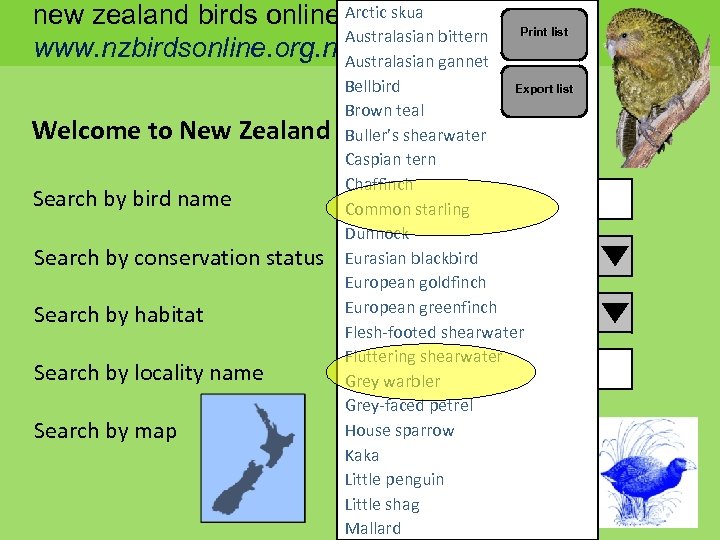
Arctic new zealand birds online skua Australasian bittern www. nzbirdsonline. org. nz Australasian gannet Welcome to New Zealand Search by bird name Search by conservation status Search by habitat Search by locality name Search by map Print list Bellbird Export list Brown teal birds online Buller’s shearwater Full list tern Caspian Breeding Chaffinch Regular (includes Breeding) Common starling Regular + Vagrant Dunnock Vagrant blackbird Eurasian Formerly present European goldfinch Extinct greenfinch European Extinct + Formerly present Flesh-footed shearwater Fluttering shearwater Tuhua / Mayor Island Grey warbler Grey-faced petrel House sparrow Kaka Little penguin Little shag Mallard
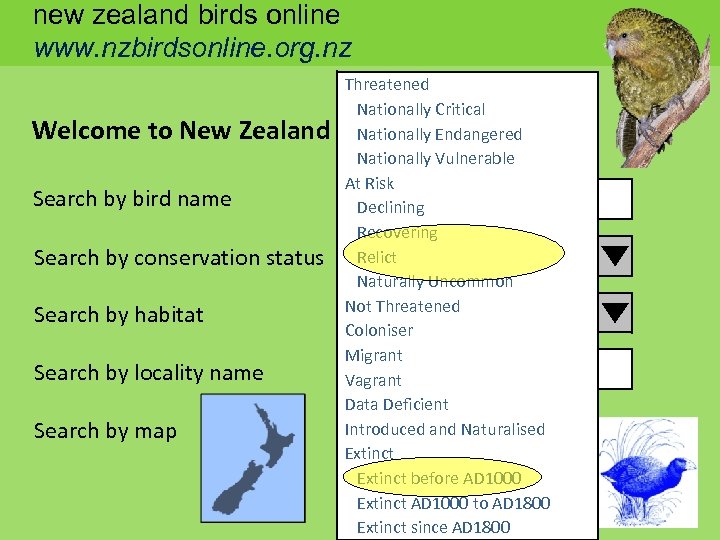
new zealand birds online www. nzbirdsonline. org. nz Welcome to New Zealand Search by bird name Search by conservation status Search by habitat Search by locality name Search by map Threatened Nationally Critical birds online Nationally Endangered Nationally Vulnerable At Risk Declining Recovering Relict Naturally Uncommon Not Threatened Coloniser Migrant Vagrant Data Deficient Introduced and Naturalised Extinct before AD 1000 Extinct AD 1000 to AD 1800 Extinct since AD 1800
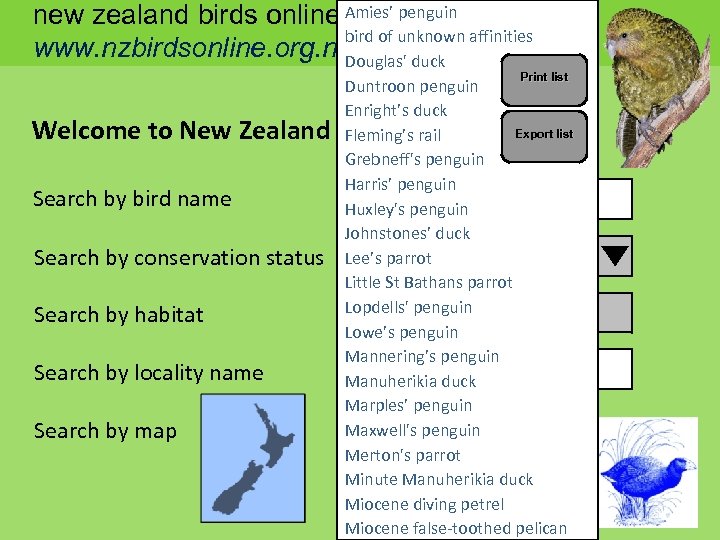
Amies’ new zealand birds online penguin bird of unknown affinities www. nzbirdsonline. org. nz Douglas' duck Print list Welcome to New Zealand Search by bird name Search by conservation status Search by habitat Search by locality name Search by map Duntroon penguin Enright’s duck birds online Export list Fleming’s rail Grebneff's penguin Harris’ penguin Huxley's penguin Johnstones’ duck Lee’s parrot Little St Bathans parrot Lopdells' penguin Lowe’s penguin Mannering’s penguin Manuherikia duck Marples’ penguin Maxwell's penguin Merton's parrot Minute Manuherikia duck Miocene diving petrel Miocene false-toothed pelican
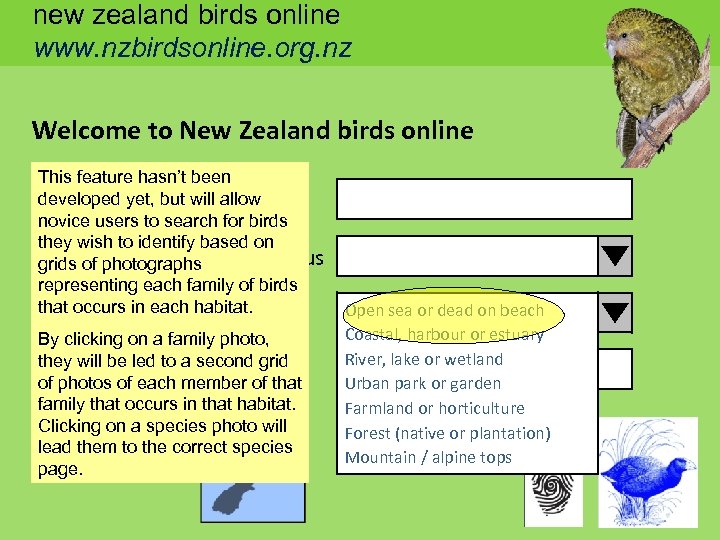
new zealand birds online www. nzbirdsonline. org. nz Welcome to New Zealand birds online This feature hasn’t been developed yet, but will allow Search by bird name novice users to search for birds they wish to identify based on Search by conservation status grids of photographs representing each family of birds that occurs in each habitat. Search by habitat By clicking on a family photo, they will be led to a second grid Search by locality name of photos of each member of that family that occurs in that habitat. Clicking on a species photo will Search by map lead them to the correct species page. Open sea or dead on beach Coastal, harbour or estuary River, lake or wetland Urban park or garden Farmland or horticulture Forest (native or plantation) Mountain / alpine tops
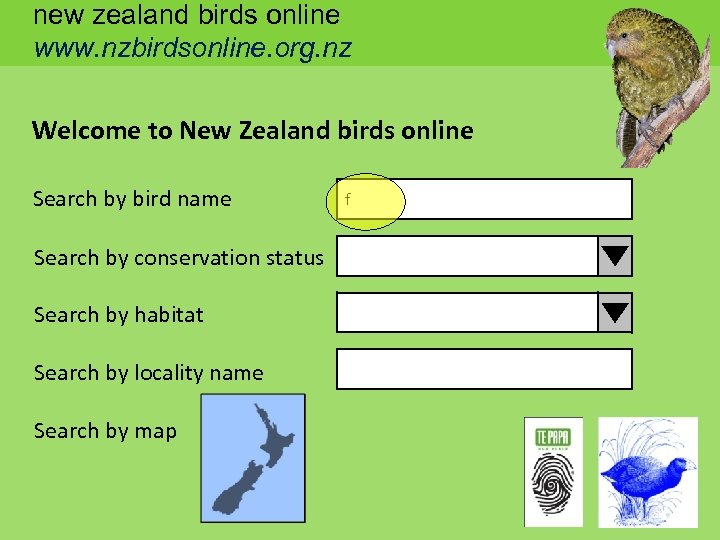
new zealand birds online www. nzbirdsonline. org. nz Welcome to New Zealand birds online Search by bird name Search by conservation status Search by habitat Search by locality name Search by map f
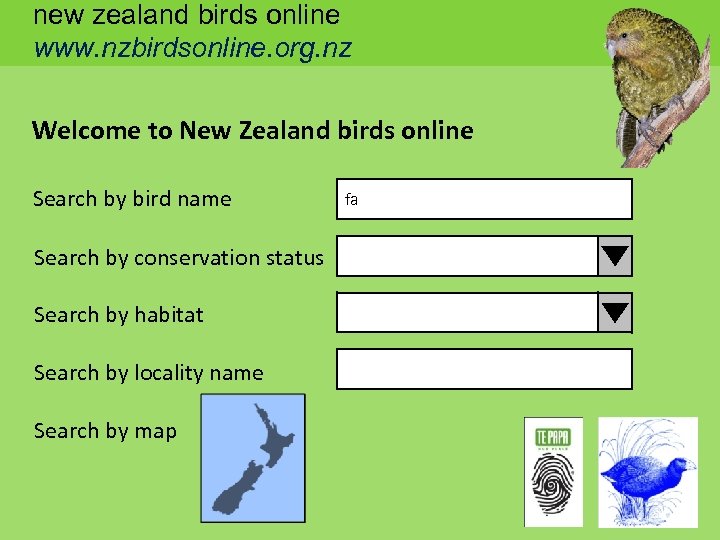
new zealand birds online www. nzbirdsonline. org. nz Welcome to New Zealand birds online Search by bird name Search by conservation status Search by habitat Search by locality name Search by map fa
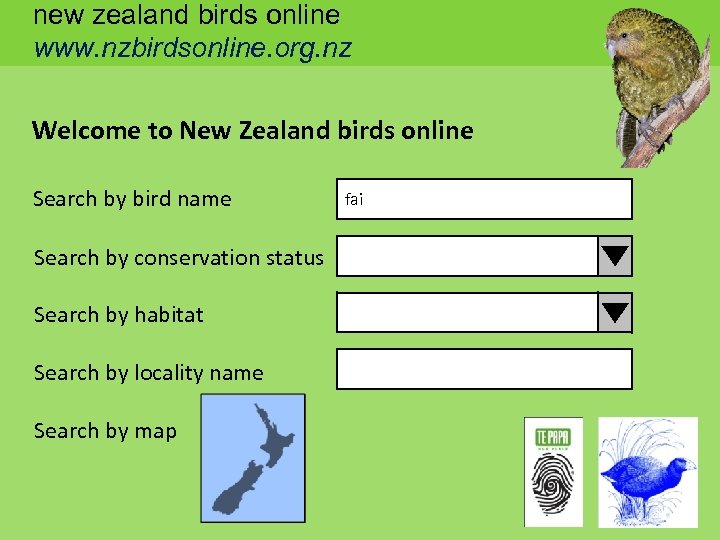
new zealand birds online www. nzbirdsonline. org. nz Welcome to New Zealand birds online Search by bird name Search by conservation status Search by habitat Search by locality name Search by map fai
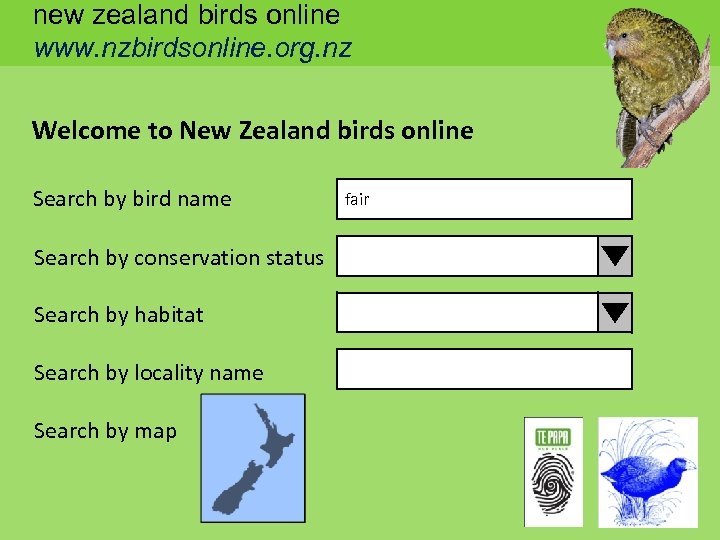
new zealand birds online www. nzbirdsonline. org. nz Welcome to New Zealand birds online Search by bird name Search by conservation status Search by habitat Search by locality name Search by map fair
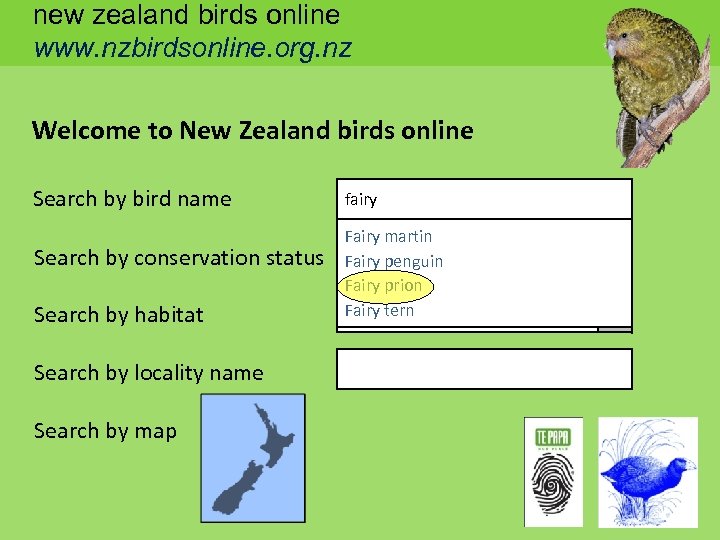
new zealand birds online www. nzbirdsonline. org. nz Welcome to New Zealand birds online Search by bird name Search by conservation status Search by habitat Search by locality name Search by map fairy Fairy martin Fairy penguin Fairy prion Fairy tern
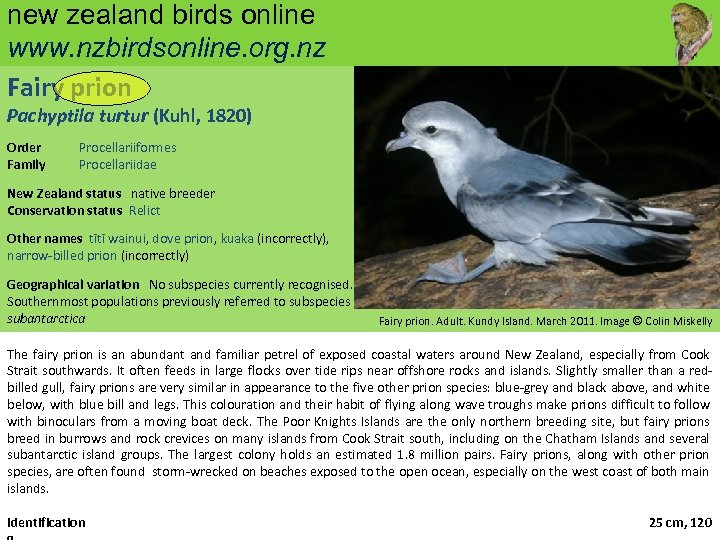
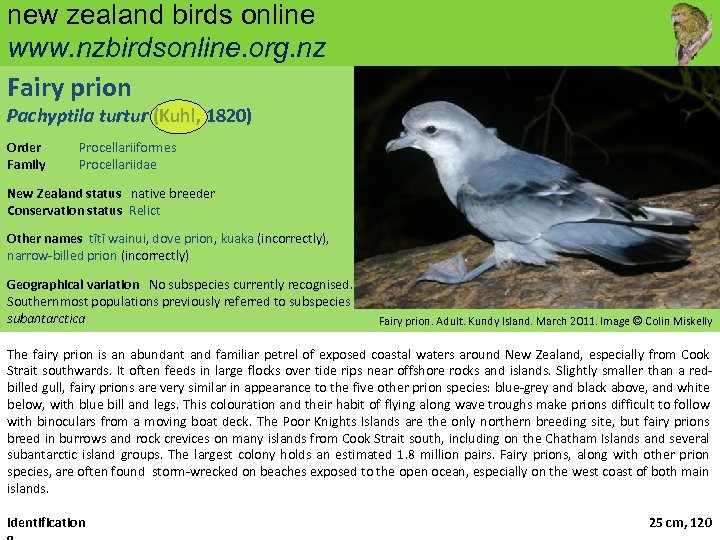
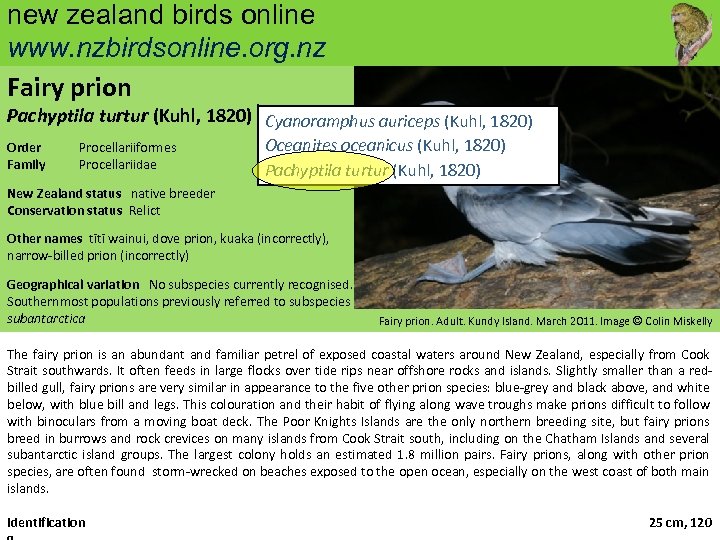
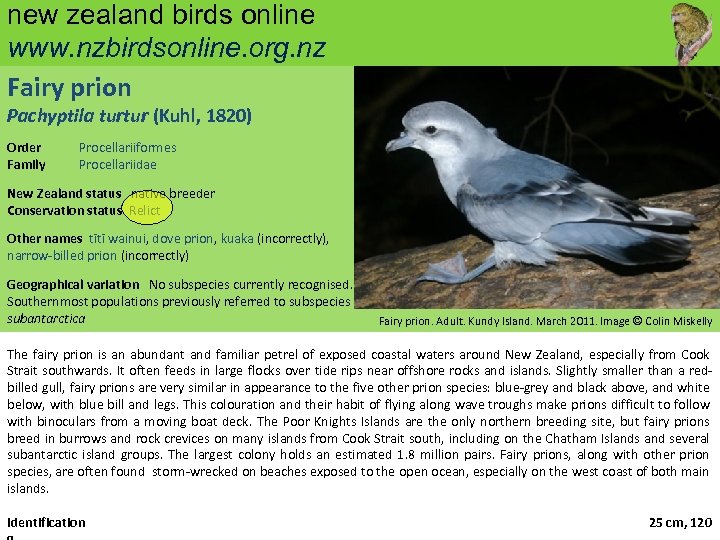
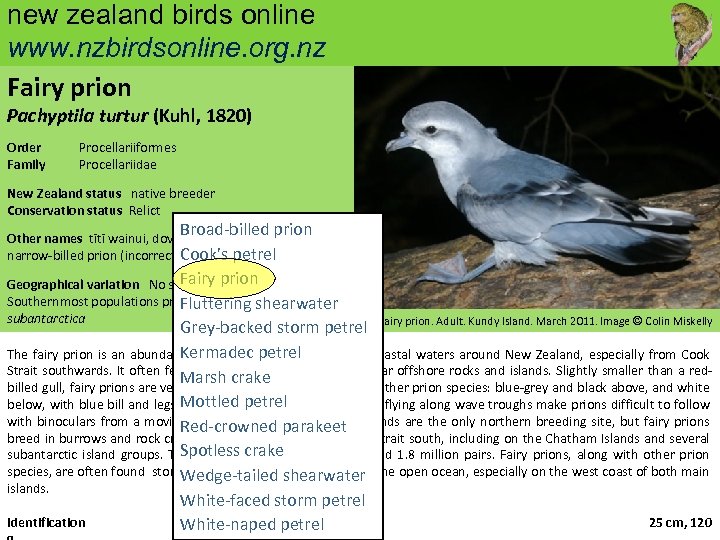
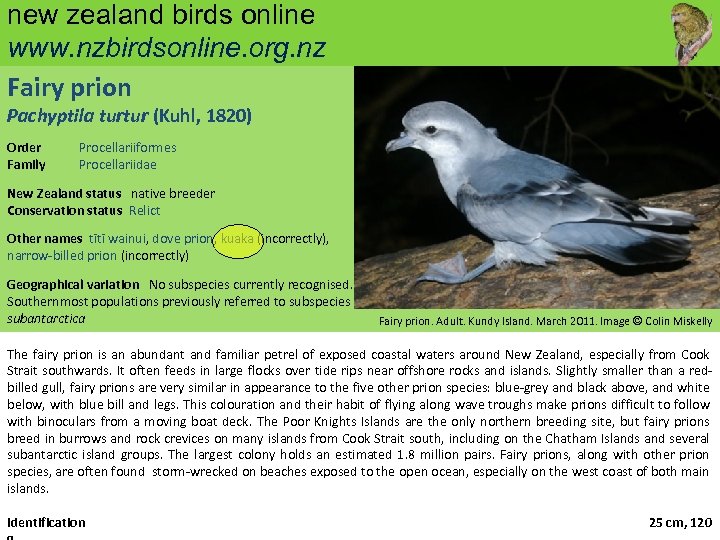
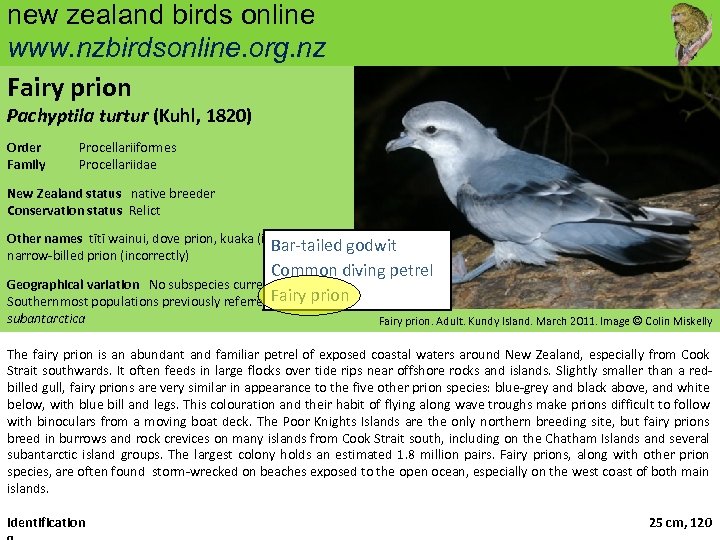
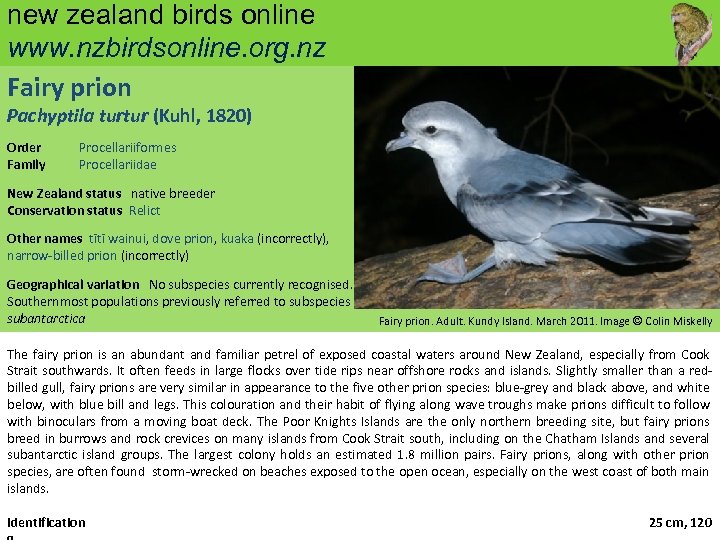
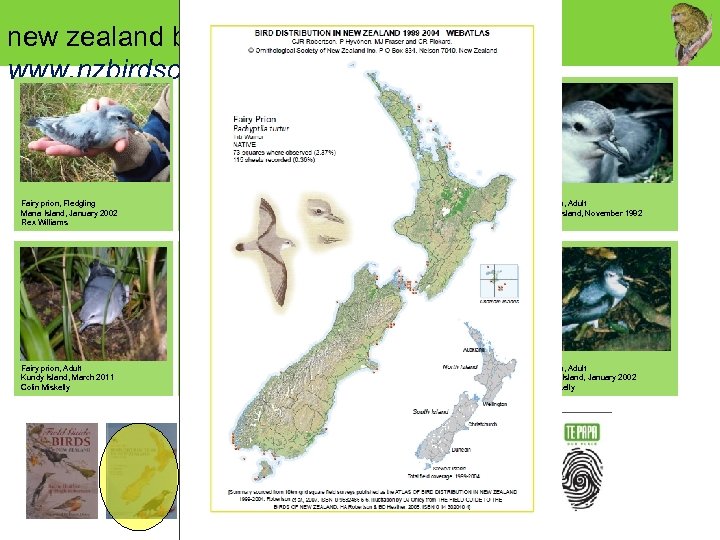
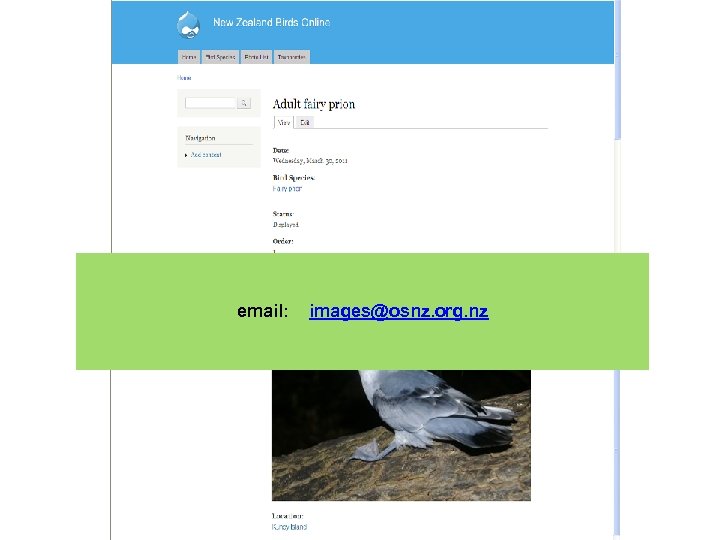
new zealand birds online www. nzbirdsonline. org. nz Fairy prion Pachyptila turtur (Kuhl, 1820) Order Family Procellariiformes Procellariidae New Zealand status native breeder Conservation status Relict Other names tītī wainui, dove prion, kuaka (incorrectly), narrow-billed prion (incorrectly) Geographical variation No subspecies currently recognised. Southernmost populations previously referred to subspecies subantarctica Fairy prion. Adult. Kundy Island. March 2011. Image © Colin Miskelly The fairy prion is an abundant and familiar petrel of exposed coastal waters around New Zealand, especially from Cook Strait southwards. It often feeds in large flocks over tide rips near offshore rocks and islands. Slightly smaller than a redbilled gull, fairy prions are very similar in appearance to the five other prion species: blue-grey and black above, and white below, with blue bill and legs. This colouration and their habit of flying along wave troughs make prions difficult to follow with binoculars from a moving boat deck. The Poor Knights Islands are the only northern breeding site, but fairy prions breed in burrows and rock crevices on many islands from Cook Strait south, including on the Chatham Islands and several subantarctic island groups. The largest colony holds an estimated 1. 8 million pairs. Fairy prions, along with other prion species, are often found storm-wrecked on beaches exposed to the open ocean, especially on the west coast of both main islands. Identification 25 cm, 120
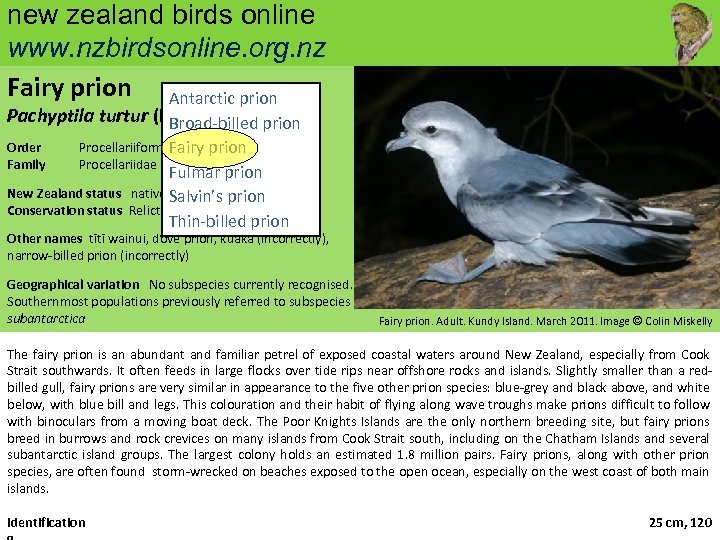
new zealand birds online www. nzbirdsonline. org. nz Fairy prion Antarctic prion Pachyptila turtur (Kuhl, 1820) prion Broad-billed Order Family Procellariiformes Fairy prion Procellariidae New Zealand status Conservation status Fulmar prion native Salvin’s prion breeder Relict Thin-billed prion Other names tītī wainui, dove prion, kuaka (incorrectly), narrow-billed prion (incorrectly) Geographical variation No subspecies currently recognised. Southernmost populations previously referred to subspecies subantarctica Fairy prion. Adult. Kundy Island. March 2011. Image © Colin Miskelly The fairy prion is an abundant and familiar petrel of exposed coastal waters around New Zealand, especially from Cook Strait southwards. It often feeds in large flocks over tide rips near offshore rocks and islands. Slightly smaller than a redbilled gull, fairy prions are very similar in appearance to the five other prion species: blue-grey and black above, and white below, with blue bill and legs. This colouration and their habit of flying along wave troughs make prions difficult to follow with binoculars from a moving boat deck. The Poor Knights Islands are the only northern breeding site, but fairy prions breed in burrows and rock crevices on many islands from Cook Strait south, including on the Chatham Islands and several subantarctic island groups. The largest colony holds an estimated 1. 8 million pairs. Fairy prions, along with other prion species, are often found storm-wrecked on beaches exposed to the open ocean, especially on the west coast of both main islands. Identification 25 cm, 120
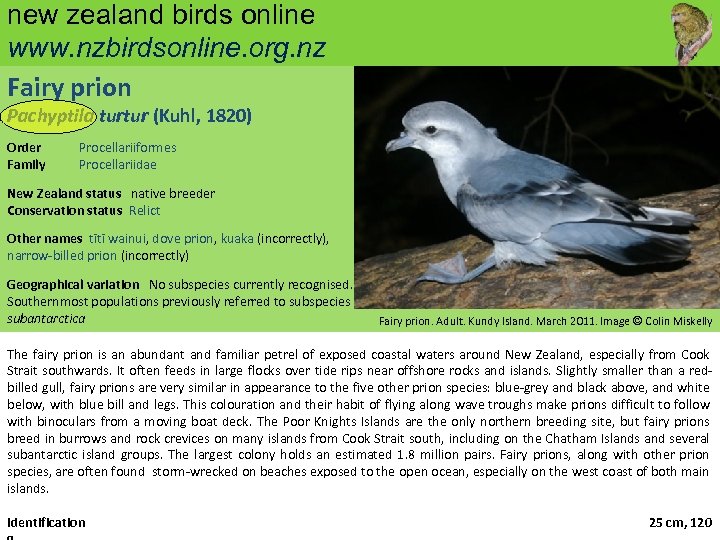
new zealand birds online www. nzbirdsonline. org. nz Fairy prion Pachyptila turtur (Kuhl, 1820) Order Family Procellariiformes Procellariidae New Zealand status native breeder Conservation status Relict Other names tītī wainui, dove prion, kuaka (incorrectly), narrow-billed prion (incorrectly) Geographical variation No subspecies currently recognised. Southernmost populations previously referred to subspecies subantarctica Fairy prion. Adult. Kundy Island. March 2011. Image © Colin Miskelly The fairy prion is an abundant and familiar petrel of exposed coastal waters around New Zealand, especially from Cook Strait southwards. It often feeds in large flocks over tide rips near offshore rocks and islands. Slightly smaller than a redbilled gull, fairy prions are very similar in appearance to the five other prion species: blue-grey and black above, and white below, with blue bill and legs. This colouration and their habit of flying along wave troughs make prions difficult to follow with binoculars from a moving boat deck. The Poor Knights Islands are the only northern breeding site, but fairy prions breed in burrows and rock crevices on many islands from Cook Strait south, including on the Chatham Islands and several subantarctic island groups. The largest colony holds an estimated 1. 8 million pairs. Fairy prions, along with other prion species, are often found storm-wrecked on beaches exposed to the open ocean, especially on the west coast of both main islands. Identification 25 cm, 120
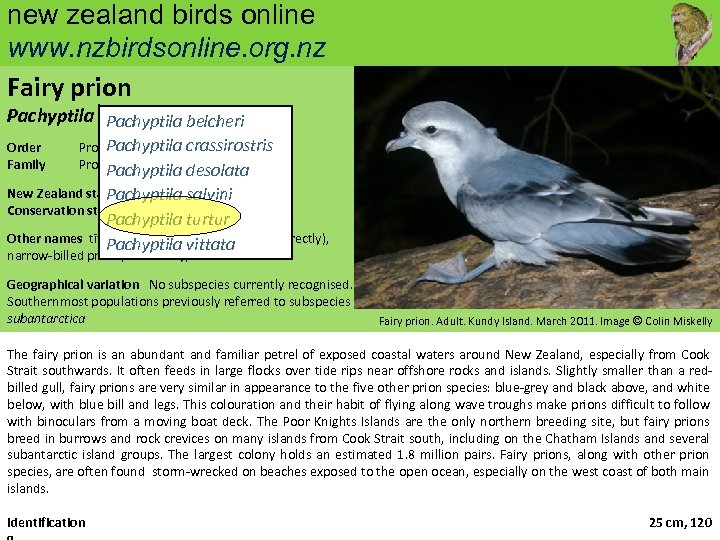
new zealand birds online www. nzbirdsonline. org. nz Fairy prion Pachyptila turtur (Kuhl, 1820) Pachyptila belcheri Order Family Pachyptila Procellariiformes crassirostris Procellariidae Pachyptila desolata New Zealand status native breeder Pachyptila salvini Conservation status Relict Pachyptila turtur tītī Pachyptila prion, kuaka (incorrectly), wainui, dove vittata Other names narrow-billed prion (incorrectly) Geographical variation No subspecies currently recognised. Southernmost populations previously referred to subspecies subantarctica Fairy prion. Adult. Kundy Island. March 2011. Image © Colin Miskelly The fairy prion is an abundant and familiar petrel of exposed coastal waters around New Zealand, especially from Cook Strait southwards. It often feeds in large flocks over tide rips near offshore rocks and islands. Slightly smaller than a redbilled gull, fairy prions are very similar in appearance to the five other prion species: blue-grey and black above, and white below, with blue bill and legs. This colouration and their habit of flying along wave troughs make prions difficult to follow with binoculars from a moving boat deck. The Poor Knights Islands are the only northern breeding site, but fairy prions breed in burrows and rock crevices on many islands from Cook Strait south, including on the Chatham Islands and several subantarctic island groups. The largest colony holds an estimated 1. 8 million pairs. Fairy prions, along with other prion species, are often found storm-wrecked on beaches exposed to the open ocean, especially on the west coast of both main islands. Identification 25 cm, 120
new zealand birds online www. nzbirdsonline. org. nz Fairy prion Pachyptila turtur (Kuhl, 1820) Order Family Procellariiformes Procellariidae New Zealand status native breeder Conservation status Relict Other names tītī wainui, dove prion, kuaka (incorrectly), narrow-billed prion (incorrectly) Geographical variation No subspecies currently recognised. Southernmost populations previously referred to subspecies subantarctica Fairy prion. Adult. Kundy Island. March 2011. Image © Colin Miskelly The fairy prion is an abundant and familiar petrel of exposed coastal waters around New Zealand, especially from Cook Strait southwards. It often feeds in large flocks over tide rips near offshore rocks and islands. Slightly smaller than a redbilled gull, fairy prions are very similar in appearance to the five other prion species: blue-grey and black above, and white below, with blue bill and legs. This colouration and their habit of flying along wave troughs make prions difficult to follow with binoculars from a moving boat deck. The Poor Knights Islands are the only northern breeding site, but fairy prions breed in burrows and rock crevices on many islands from Cook Strait south, including on the Chatham Islands and several subantarctic island groups. The largest colony holds an estimated 1. 8 million pairs. Fairy prions, along with other prion species, are often found storm-wrecked on beaches exposed to the open ocean, especially on the west coast of both main islands. Identification 25 cm, 120
new zealand birds online www. nzbirdsonline. org. nz Fairy prion Pachyptila turtur (Kuhl, 1820) Cyanoramphus auriceps (Kuhl, 1820) Order Family Procellariiformes Procellariidae Oceanites oceanicus (Kuhl, 1820) Pachyptila turtur (Kuhl, 1820) New Zealand status native breeder Conservation status Relict Other names tītī wainui, dove prion, kuaka (incorrectly), narrow-billed prion (incorrectly) Geographical variation No subspecies currently recognised. Southernmost populations previously referred to subspecies subantarctica Fairy prion. Adult. Kundy Island. March 2011. Image © Colin Miskelly The fairy prion is an abundant and familiar petrel of exposed coastal waters around New Zealand, especially from Cook Strait southwards. It often feeds in large flocks over tide rips near offshore rocks and islands. Slightly smaller than a redbilled gull, fairy prions are very similar in appearance to the five other prion species: blue-grey and black above, and white below, with blue bill and legs. This colouration and their habit of flying along wave troughs make prions difficult to follow with binoculars from a moving boat deck. The Poor Knights Islands are the only northern breeding site, but fairy prions breed in burrows and rock crevices on many islands from Cook Strait south, including on the Chatham Islands and several subantarctic island groups. The largest colony holds an estimated 1. 8 million pairs. Fairy prions, along with other prion species, are often found storm-wrecked on beaches exposed to the open ocean, especially on the west coast of both main islands. Identification 25 cm, 120
new zealand birds online www. nzbirdsonline. org. nz Fairy prion Pachyptila turtur (Kuhl, 1820) Order Family Procellariiformes Procellariidae New Zealand status native breeder Conservation status Relict Other names tītī wainui, dove prion, kuaka (incorrectly), narrow-billed prion (incorrectly) Geographical variation No subspecies currently recognised. Southernmost populations previously referred to subspecies subantarctica Fairy prion. Adult. Kundy Island. March 2011. Image © Colin Miskelly The fairy prion is an abundant and familiar petrel of exposed coastal waters around New Zealand, especially from Cook Strait southwards. It often feeds in large flocks over tide rips near offshore rocks and islands. Slightly smaller than a redbilled gull, fairy prions are very similar in appearance to the five other prion species: blue-grey and black above, and white below, with blue bill and legs. This colouration and their habit of flying along wave troughs make prions difficult to follow with binoculars from a moving boat deck. The Poor Knights Islands are the only northern breeding site, but fairy prions breed in burrows and rock crevices on many islands from Cook Strait south, including on the Chatham Islands and several subantarctic island groups. The largest colony holds an estimated 1. 8 million pairs. Fairy prions, along with other prion species, are often found storm-wrecked on beaches exposed to the open ocean, especially on the west coast of both main islands. Identification 25 cm, 120
new zealand birds online www. nzbirdsonline. org. nz Fairy prion Pachyptila turtur (Kuhl, 1820) Order Family Procellariiformes Procellariidae New Zealand status native breeder Conservation status Relict Broad-billed prion Other names tītī wainui, dove prion, kuaka (incorrectly), Cook’s petrel narrow-billed prion (incorrectly) Fairy prion Geographical variation No subspecies currently recognised. Southernmost populations previously referred to subspecies Fluttering shearwater subantarctica Grey-backed storm petrel Fairy prion. Adult. Kundy Island. March 2011. Image © Colin Miskelly Kermadec petrel The fairy prion is an abundant and familiarpetrel of exposed coastal waters around New Zealand, especially from Cook Strait southwards. It often feeds in large flocks over tide rips near offshore rocks and islands. Slightly smaller than a red. Marsh crake billed gull, fairy prions are very similar in appearance to the five other prion species: blue-grey and black above, and white below, with blue bill and legs. Mottled petrel their habit of flying along wave troughs make prions difficult to follow This colouration and with binoculars from a moving boat deck. The parakeet Islands are the only northern breeding site, but fairy prions Red-crowned Poor Knights breed in burrows and rock crevices on many islands from Cook Strait south, including on the Chatham Islands and several Spotless crake subantarctic island groups. The largest colony holds an estimated 1. 8 million pairs. Fairy prions, along with other prion species, are often found storm-wrecked on beaches exposed to the open ocean, especially on the west coast of both main Wedge-tailed shearwater islands. White-faced storm petrel Identification 25 cm, 120 White-naped petrel
new zealand birds online www. nzbirdsonline. org. nz Fairy prion Pachyptila turtur (Kuhl, 1820) Order Family Procellariiformes Procellariidae New Zealand status native breeder Conservation status Relict Other names tītī wainui, dove prion, kuaka (incorrectly), narrow-billed prion (incorrectly) Geographical variation No subspecies currently recognised. Southernmost populations previously referred to subspecies subantarctica Fairy prion. Adult. Kundy Island. March 2011. Image © Colin Miskelly The fairy prion is an abundant and familiar petrel of exposed coastal waters around New Zealand, especially from Cook Strait southwards. It often feeds in large flocks over tide rips near offshore rocks and islands. Slightly smaller than a redbilled gull, fairy prions are very similar in appearance to the five other prion species: blue-grey and black above, and white below, with blue bill and legs. This colouration and their habit of flying along wave troughs make prions difficult to follow with binoculars from a moving boat deck. The Poor Knights Islands are the only northern breeding site, but fairy prions breed in burrows and rock crevices on many islands from Cook Strait south, including on the Chatham Islands and several subantarctic island groups. The largest colony holds an estimated 1. 8 million pairs. Fairy prions, along with other prion species, are often found storm-wrecked on beaches exposed to the open ocean, especially on the west coast of both main islands. Identification 25 cm, 120
new zealand birds online www. nzbirdsonline. org. nz Fairy prion Pachyptila turtur (Kuhl, 1820) Order Family Procellariiformes Procellariidae New Zealand status native breeder Conservation status Relict Other names tītī wainui, dove prion, kuaka (incorrectly), Bar-tailed godwit narrow-billed prion (incorrectly) Common diving petrel Geographical variation No subspecies currently recognised. Southernmost populations previously referred. Fairy prion to subspecies subantarctica Fairy prion. Adult. Kundy Island. March 2011. Image © Colin Miskelly The fairy prion is an abundant and familiar petrel of exposed coastal waters around New Zealand, especially from Cook Strait southwards. It often feeds in large flocks over tide rips near offshore rocks and islands. Slightly smaller than a redbilled gull, fairy prions are very similar in appearance to the five other prion species: blue-grey and black above, and white below, with blue bill and legs. This colouration and their habit of flying along wave troughs make prions difficult to follow with binoculars from a moving boat deck. The Poor Knights Islands are the only northern breeding site, but fairy prions breed in burrows and rock crevices on many islands from Cook Strait south, including on the Chatham Islands and several subantarctic island groups. The largest colony holds an estimated 1. 8 million pairs. Fairy prions, along with other prion species, are often found storm-wrecked on beaches exposed to the open ocean, especially on the west coast of both main islands. Identification 25 cm, 120
new zealand birds online www. nzbirdsonline. org. nz Fairy prion Pachyptila turtur (Kuhl, 1820) Order Family Procellariiformes Procellariidae New Zealand status native breeder Conservation status Relict Other names tītī wainui, dove prion, kuaka (incorrectly), narrow-billed prion (incorrectly) Geographical variation No subspecies currently recognised. Southernmost populations previously referred to subspecies subantarctica Fairy prion. Adult. Kundy Island. March 2011. Image © Colin Miskelly The fairy prion is an abundant and familiar petrel of exposed coastal waters around New Zealand, especially from Cook Strait southwards. It often feeds in large flocks over tide rips near offshore rocks and islands. Slightly smaller than a redbilled gull, fairy prions are very similar in appearance to the five other prion species: blue-grey and black above, and white below, with blue bill and legs. This colouration and their habit of flying along wave troughs make prions difficult to follow with binoculars from a moving boat deck. The Poor Knights Islands are the only northern breeding site, but fairy prions breed in burrows and rock crevices on many islands from Cook Strait south, including on the Chatham Islands and several subantarctic island groups. The largest colony holds an estimated 1. 8 million pairs. Fairy prions, along with other prion species, are often found storm-wrecked on beaches exposed to the open ocean, especially on the west coast of both main islands. Identification 25 cm, 120
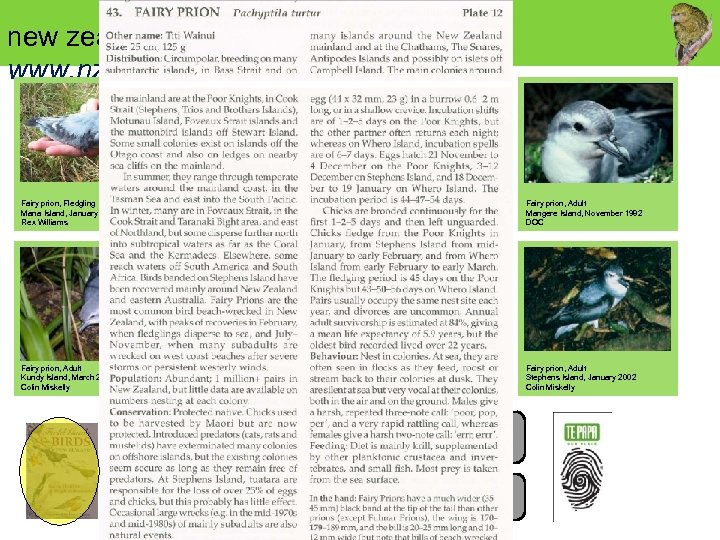
new zealand birds online www. nzbirdsonline. org. nz Population There may be as many as 5 million pairs of fairy prions in the New Zealand region. The largest population is on Stephens Island, with 1. 83 million pairs estimated. Other large colonies include Mangere Island (c. 40, 000 pairs), and 1. 5 million pairs were estimated on Green Island, Foveaux Strait in 1941. Fairy prions are the most common bird found dead on New Zealand beaches, at an average rate of 0. 56 birds per km. Threats and conservation Fairy prions are likely to have bred on many coastal headlands before human arrival in New Zealand. Apart from on a few inaccessible cliff ledges on Otago Peninsula, fairy prions have since been extirpated from the mainland by introduced predators. Their main natural predators at their island breeding sites are subantarctic skuas and swamp harriers. Introductions of feral cats, weka or rats decimated or extirpated fairy prion populations on many muttonbird islands around Stewart Island. Few actions specifically targeted at conservation of fairy prions have been undertaken. These included translocation of 240 near fully-grown chicks from Stephens Island to Mana Island during 2002 -04 in an attempt to establish a new population, and installation of nest boxes at a cliff-ledge colony on Otago Peninsula. Other more generic island restoration projects (especially pest mammal and weka eradications) have and will benefit fairy prion populations, including on Stephens Island, Mangere Island on several muttonbird islands near Stewart Island. Breeding Fairy prions are colonial breeders, nesting in short burrows or rock crevices, mainly on small islands. The breeding season is earlier in the north, with peak laying of the single egg in mid-October at the Poor Knights, and early November on the Snares Islands. Incubation is shared and takes 44 -54 days. The chick is left unattended during daylight when only 1 -5 days old. One or both parents visit most nights and feed the chick by regurgitation right through to fledging at 43 -56 days old. Young birds return to colonies when 2 -3 years old, and first breed when 3 -4 years old. Behaviour and ecology
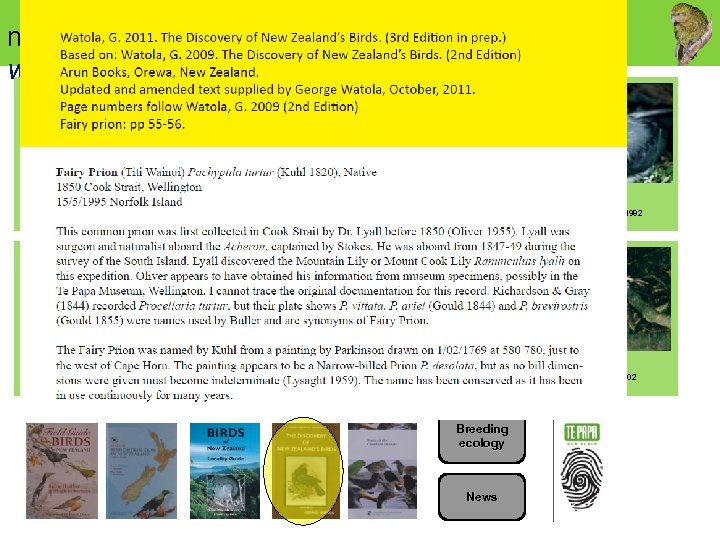
new zealand birds online www. nzbirdsonline. org. nz Fairy prions excavate their own burrows, or utilise caves and rock crevices. They breed as monogamous pairs, which typically remain together over many seasons. Fairy prions visit breeding sites after dark and depart before dawn, or stay in burrows or nest crevices during daylight. Food Fairy prions mainly eat small pelagic crustaceans, along with small fish and squid. The small krill species Nyctiphanes australis is by far the predominant species eaten in New Zealand, followed by pelagic amphipods and copepods. Websites http: //en. wikipedia. org/wiki/Fairy_Prion http: //www. birdlife. org/datazone/speciesfactsheet. php? id=3918 http: //www. nzbirds. com/birds/prionfairy. html References Craig, E. D. 2010. Takapourewa titiwainui (fairy prion; Pachyptila turtur): how nest site selection affects breeding success, with applications for translocation. MSc thesis, University of Otago. Harper, P. C. 1976. Breeding biology of the fairy prion (Pachyptila turtur) at the Poor Knights Islands, New Zealand Journal of Zoology 3: 351 -371. Loh, G. 2000. A mainland breeding population of fairy prions (Pachyptila turtur), South Island, New Zealand. Notornis 47: 119 -122. Marchant, S. ; Higgins, P. J. (eds. ), 1990. Handbook of Australian, New Zealand Antarctic birds. Ratites to Ducks, vol. 1. Melbourne, Oxford University Press. Miskelly, C. M; Gummer, H. Submitted. Attempts to anchor pelagic fairy prions (Pachyptila turtur) to their release site on Mana Island. Miskelly, C. M. ; Sagar, P. M. ; Tennyson, A. J. D. ; Scofield, R. P. 2001. Birds of the Snares Islands, New Zealand. Notornis 48: 1 -40. Miskelly, C. M. ; Taylor, G. A. ; Gummer, H. ; Williams, R. 2009. Translocations of eight species of burrow-nesting seabirds (genera Pterodroma, Pelecanoides, Pachyptila and Puffinus: family Procellariidae). Biological
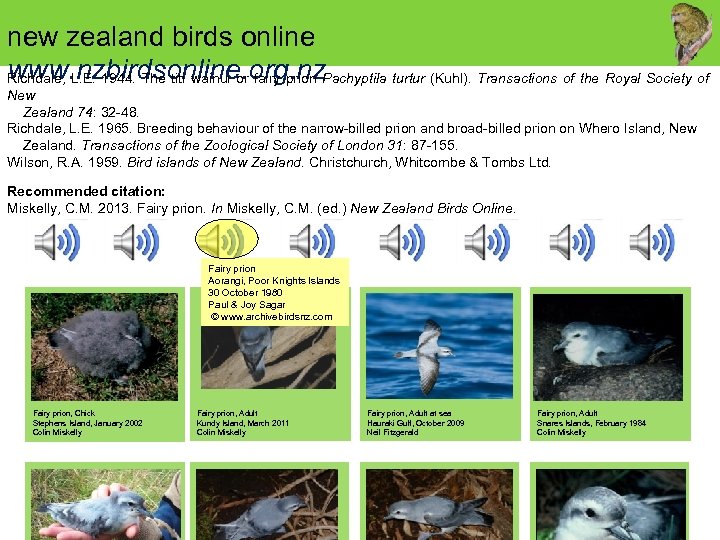
new zealand birds online www. nzbirdsonline. org. nz. Pachyptila turtur (Kuhl). Transactions of the Royal Society of Richdale, L. E. 1944. The titi wainui or fairy prion New Zealand 74: 32 -48. Richdale, L. E. 1965. Breeding behaviour of the narrow-billed prion and broad-billed prion on Whero Island, New Zealand. Transactions of the Zoological Society of London 31: 87 -155. Wilson, R. A. 1959. Bird islands of New Zealand. Christchurch, Whitcombe & Tombs Ltd. Recommended citation: Miskelly, C. M. 2013. Fairy prion. In Miskelly, C. M. (ed. ) New Zealand Birds Online. Fairy prion, Chick Stephens Island, January 2002 Colin Miskelly Fairy prion Aorangi, Poor Knights Islands 30 October 1980 Paul & Joy Sagar © www. archivebirdsnz. com Fairy prion, Adult Kundy Island, March 2011 Colin Miskelly Fairy prion, Adult at sea Hauraki Gulf, October 2009 Neil Fitzgerald Fairy prion, Adult Snares Islands, February 1984 Colin Miskelly
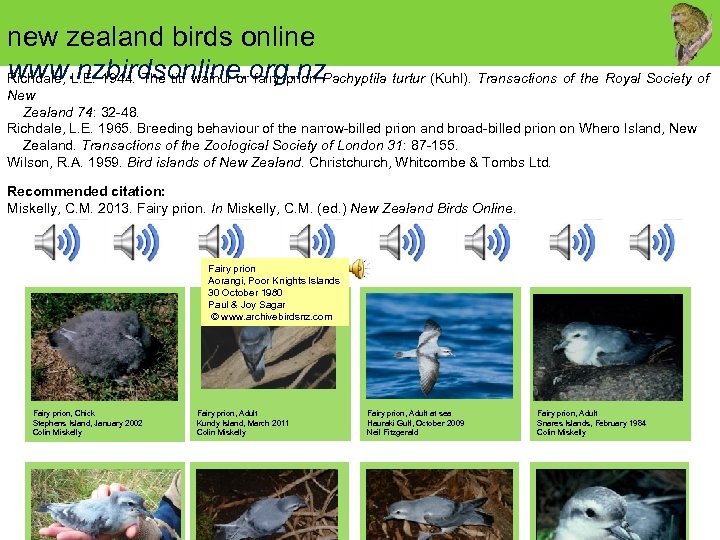
new zealand birds online www. nzbirdsonline. org. nz. Pachyptila turtur (Kuhl). Transactions of the Royal Society of Richdale, L. E. 1944. The titi wainui or fairy prion New Zealand 74: 32 -48. Richdale, L. E. 1965. Breeding behaviour of the narrow-billed prion and broad-billed prion on Whero Island, New Zealand. Transactions of the Zoological Society of London 31: 87 -155. Wilson, R. A. 1959. Bird islands of New Zealand. Christchurch, Whitcombe & Tombs Ltd. Recommended citation: Miskelly, C. M. 2013. Fairy prion. In Miskelly, C. M. (ed. ) New Zealand Birds Online. Fairy prion, Chick Stephens Island, January 2002 Colin Miskelly Fairy prion Aorangi, Poor Knights Islands 30 October 1980 Paul & Joy Sagar © www. archivebirdsnz. com Fairy prion, Adult Kundy Island, March 2011 Colin Miskelly Fairy prion, Adult at sea Hauraki Gulf, October 2009 Neil Fitzgerald Fairy prion, Adult Snares Islands, February 1984 Colin Miskelly
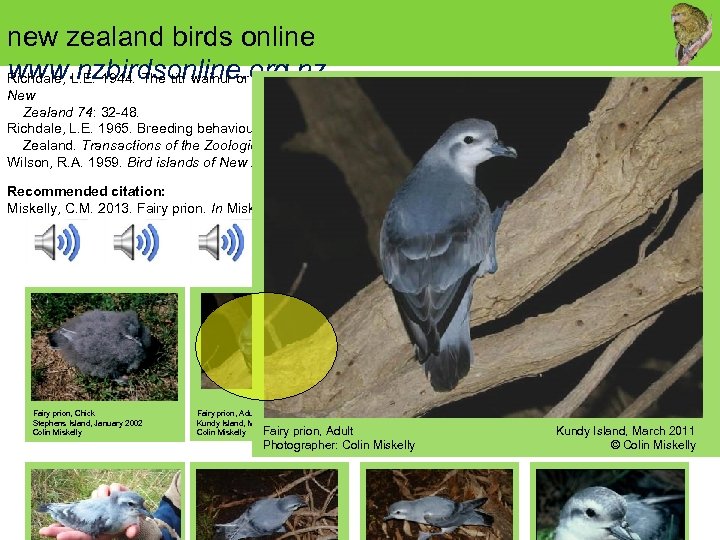
new zealand birds online www. nzbirdsonline. org. nz. Pachyptila turtur (Kuhl). Transactions of the Royal Society of Richdale, L. E. 1944. The titi wainui or fairy prion New Zealand 74: 32 -48. Richdale, L. E. 1965. Breeding behaviour of the narrow-billed prion and broad-billed prion on Whero Island, New Zealand. Transactions of the Zoological Society of London 31: 87 -155. Wilson, R. A. 1959. Bird islands of New Zealand. Christchurch, Whitcombe & Tombs Ltd. Recommended citation: Miskelly, C. M. 2013. Fairy prion. In Miskelly, C. M. (ed. ) New Zealand Birds Online. Fairy prion, Chick Stephens Island, January 2002 Colin Miskelly Fairy prion, Adult pair Fairy prion, Adult Kundy Island, March 2011 Mangere sland, 1981 Snares slands, February 1984 Fairy prion, Adult Kundy Island, March 2011 Colin Miskelly Dave Crouchley, DOC Colin Miskelly Photographer: Colin Miskelly © Colin Miskelly
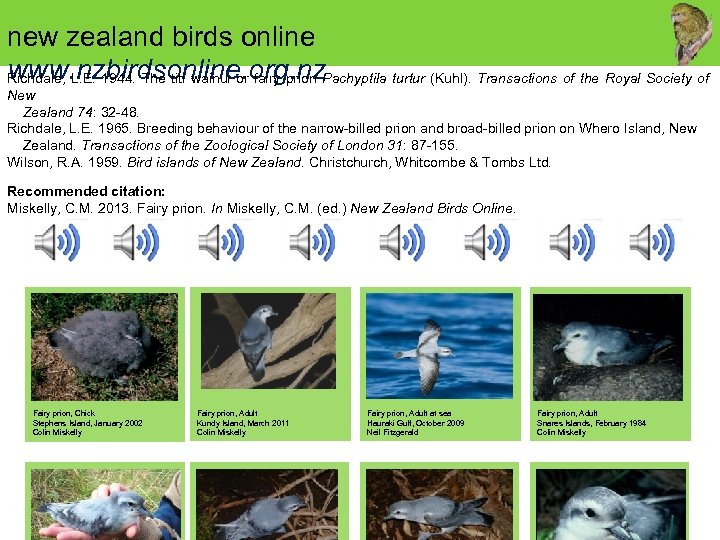
new zealand birds online www. nzbirdsonline. org. nz. Pachyptila turtur (Kuhl). Transactions of the Royal Society of Richdale, L. E. 1944. The titi wainui or fairy prion New Zealand 74: 32 -48. Richdale, L. E. 1965. Breeding behaviour of the narrow-billed prion and broad-billed prion on Whero Island, New Zealand. Transactions of the Zoological Society of London 31: 87 -155. Wilson, R. A. 1959. Bird islands of New Zealand. Christchurch, Whitcombe & Tombs Ltd. Recommended citation: Miskelly, C. M. 2013. Fairy prion. In Miskelly, C. M. (ed. ) New Zealand Birds Online. Fairy prion, Chick Stephens Island, January 2002 Colin Miskelly Fairy prion, Adult Kundy Island, March 2011 Colin Miskelly Fairy prion, Adult at sea Hauraki Gulf, October 2009 Neil Fitzgerald Fairy prion, Adult Snares Islands, February 1984 Colin Miskelly
new zealand birds online www. nzbirdsonline. org. nz Fairy prion, Fledgling Mana Island, January 2002 Rex Williams Fairy prion, Adult at sea Hauraki Gulf, October 2009 Neil Fitzgerald Fairy prion, Adult Kundy Island, March 2011 Colin Miskelly Fairy prion, Adult Mangere Island, November 1982 DOC Fairy prion, Adult Kundy Island, March 2011 Colin Miskelly Fairy prion, Adult Stephens Island, January 2002 Colin Miskelly Breeding ecology News
new zealand birds online www. nzbirdsonline. org. nz Fairy prion, Fledgling Mana Island, January 2002 Rex Williams Fairy prion, Adult at sea Hauraki Gulf, October 2009 Neil Fitzgerald Fairy prion, Adult Kundy Island, March 2011 Colin Miskelly Fairy prion, Adult Mangere Island, November 1982 DOC Fairy prion, Adult Kundy Island, March 2011 Colin Miskelly Fairy prion, Adult Stephens Island, January 2002 Colin Miskelly Breeding ecology News
new zealand birds online www. nzbirdsonline. org. nz Fairy prion, Fledgling Mana Island, January 2002 Rex Williams Fairy prion, Adult at sea Hauraki Gulf, October 2009 Neil Fitzgerald Fairy prion, Adult Kundy Island, March 2011 Colin Miskelly Fairy prion, Adult Mangere Island, November 1982 DOC Fairy prion, Adult Kundy Island, March 2011 Colin Miskelly Fairy prion, Adult Stephens Island, January 2002 Colin Miskelly Breeding ecology News
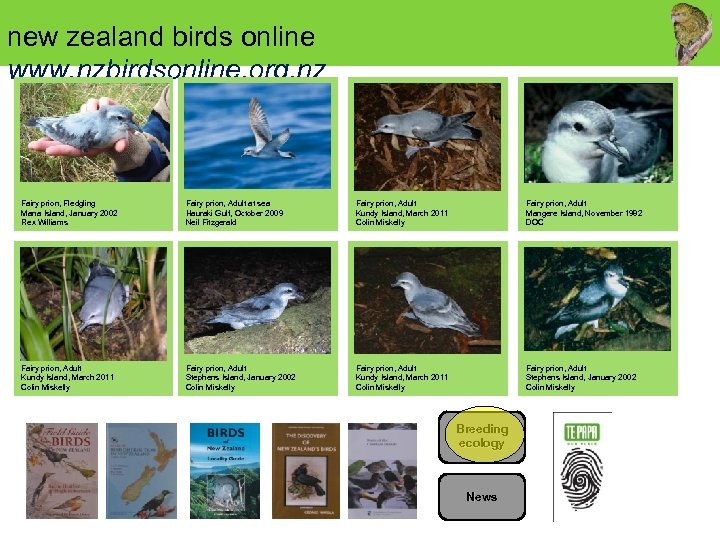
new zealand birds online www. nzbirdsonline. org. nz Fairy prion, Fledgling Mana Island, January 2002 Rex Williams Fairy prion, Adult at sea Hauraki Gulf, October 2009 Neil Fitzgerald Fairy prion, Adult Kundy Island, March 2011 Colin Miskelly Fairy prion, Adult Mangere Island, November 1982 DOC Fairy prion, Adult Kundy Island, March 2011 Colin Miskelly Fairy prion, Adult Stephens Island, January 2002 Colin Miskelly Breeding ecology News
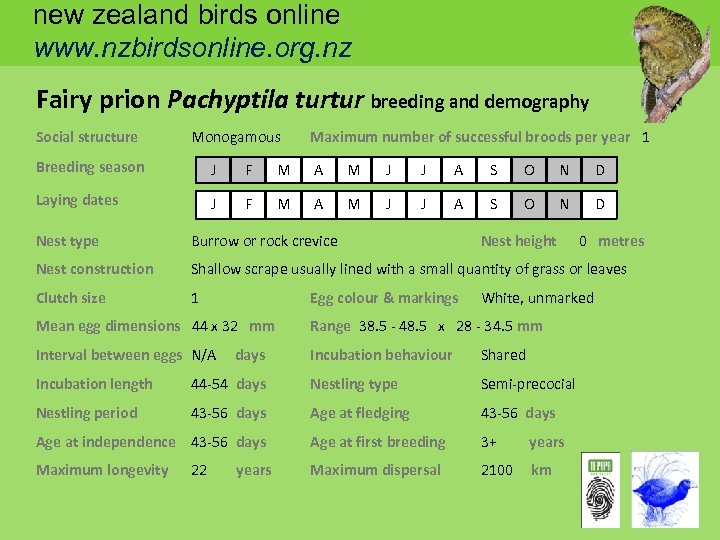
new zealand birds online www. nzbirdsonline. org. nz Fairy prion Pachyptila turtur breeding and demography Social structure Monogamous Maximum number of successful broods per year 1 Breeding season J F M A M J J A S O N D Laying dates J F M A M J J A S O N D Nest type Burrow or rock crevice Nest construction Shallow scrape usually lined with a small quantity of grass or leaves Clutch size 1 Egg colour & markings Nest height White, unmarked Mean egg dimensions 44 x 32 mm Range 38. 5 - 48. 5 x 28 - 34. 5 mm Interval between eggs N/A Incubation behaviour Shared days Incubation length 44 -54 days Nestling type Semi-precocial Nestling period 43 -56 days Age at fledging 43 -56 days Age at independence 43 -56 days Age at first breeding 3+ years Maximum longevity Maximum dispersal 2100 km 22 years 0 metres
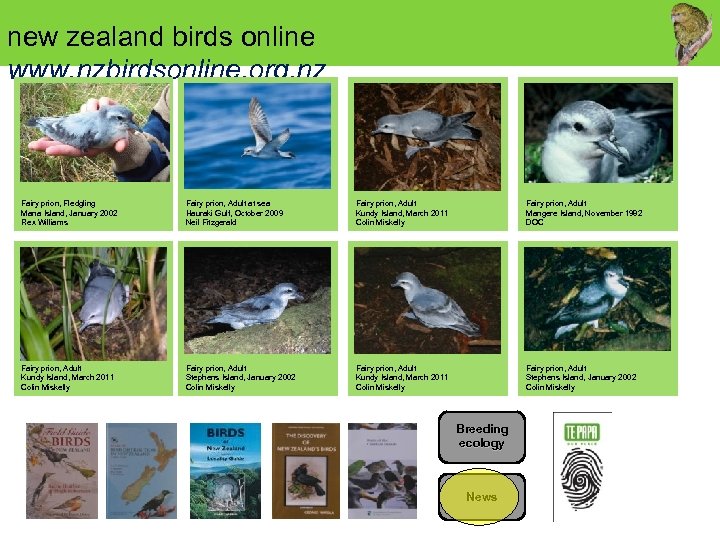
new zealand birds online www. nzbirdsonline. org. nz Fairy prion, Fledgling Mana Island, January 2002 Rex Williams Fairy prion, Adult at sea Hauraki Gulf, October 2009 Neil Fitzgerald Fairy prion, Adult Kundy Island, March 2011 Colin Miskelly Fairy prion, Adult Mangere Island, November 1982 DOC Fairy prion, Adult Kundy Island, March 2011 Colin Miskelly Fairy prion, Adult Stephens Island, January 2002 Colin Miskelly Breeding ecology News
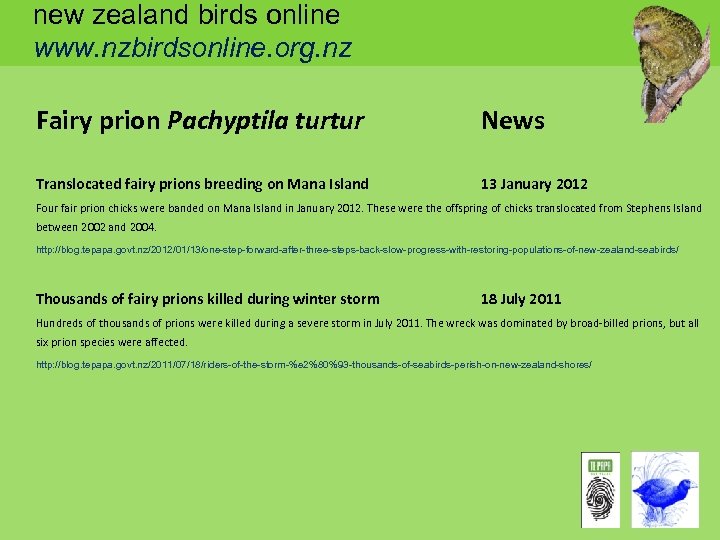
new zealand birds online www. nzbirdsonline. org. nz Fairy prion Pachyptila turtur News Translocated fairy prions breeding on Mana Island 13 January 2012 Four fair prion chicks were banded on Mana Island in January 2012. These were the offspring of chicks translocated from Stephens Island between 2002 and 2004. http: //blog. tepapa. govt. nz/2012/01/13/one-step-forward-after-three-steps-back-slow-progress-with-restoring-populations-of-new-zealand-seabirds/ Thousands of fairy prions killed during winter storm 18 July 2011 Hundreds of thousands of prions were killed during a severe storm in July 2011. The wreck was dominated by broad-billed prions, but all six prion species were affected. http: //blog. tepapa. govt. nz/2011/07/18/riders-of-the-storm-%e 2%80%93 -thousands-of-seabirds-perish-on-new-zealand-shores/

new zealand birds online www. nzbirdsonline. org. nz Creating the perfect website for and by OSNZ members How you can help!
new zealand birds online www. nzbirdsonline. org. nz OSNZ members and other members of the New Zealand birding community can contribute: • Photographs • Sound files • Bird lists from your favourite birding sites • Species texts
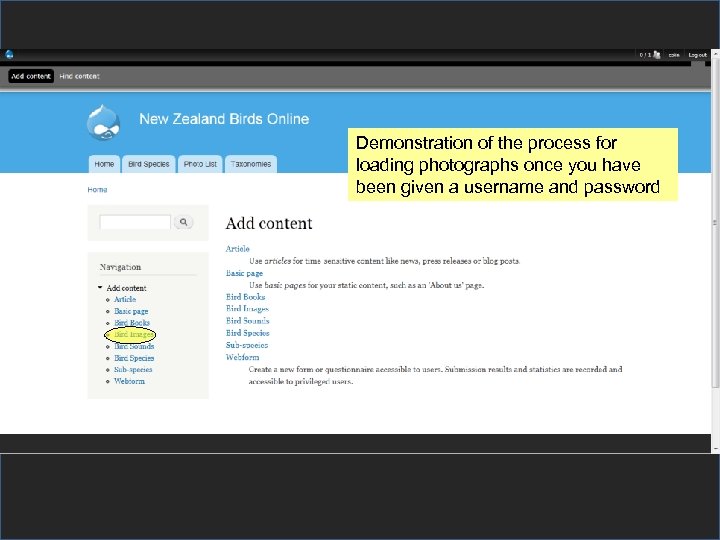
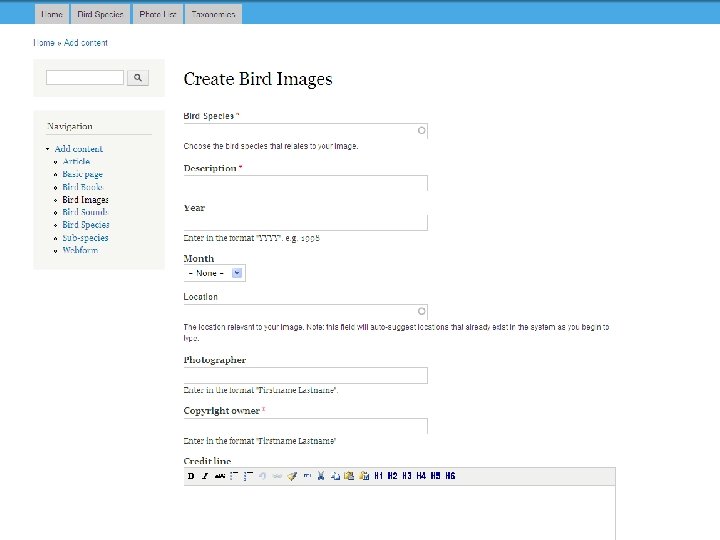
Demonstration of the process for loading photographs once you have been given a username and password
email: images@osnz. org. nz
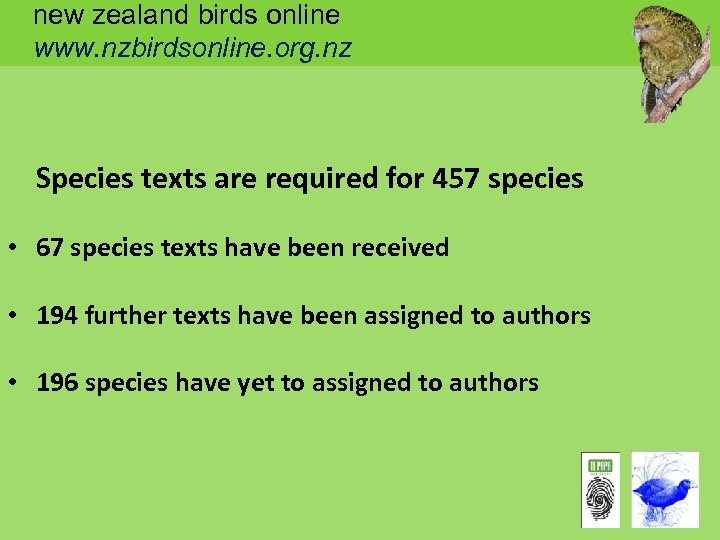
new zealand birds online www. nzbirdsonline. org. nz Species texts are required for 457 species • 67 species texts have been received • 194 further texts have been assigned to authors • 196 species have yet to assigned to authors
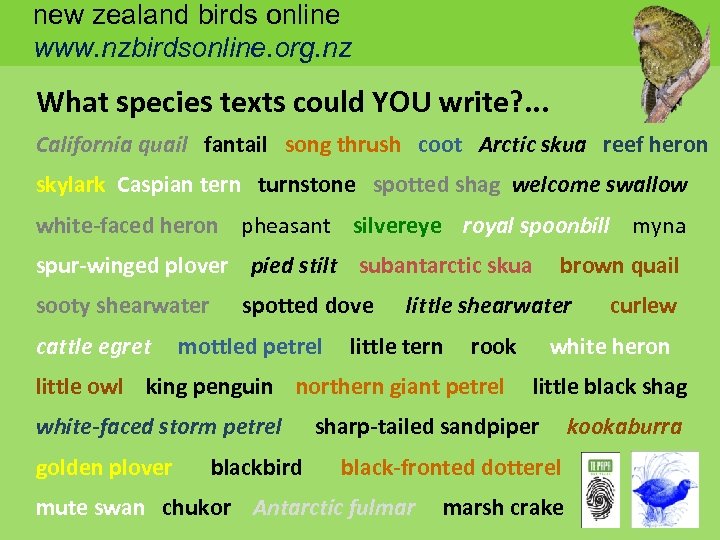
new zealand birds online www. nzbirdsonline. org. nz What species texts could YOU write? . . . California quail fantail song thrush coot Arctic skua reef heron skylark Caspian tern turnstone spotted shag welcome swallow white-faced heron pheasant silvereye royal spoonbill myna spur-winged plover pied stilt subantarctic skua sooty shearwater cattle egret spotted dove mottled petrel little shearwater little tern rook little owl king penguin northern giant petrel white-faced storm petrel golden plover blackbird brown quail white heron little black shag sharp-tailed sandpiper black-fronted dotterel mute swan chukor Antarctic fulmar curlew marsh crake kookaburra
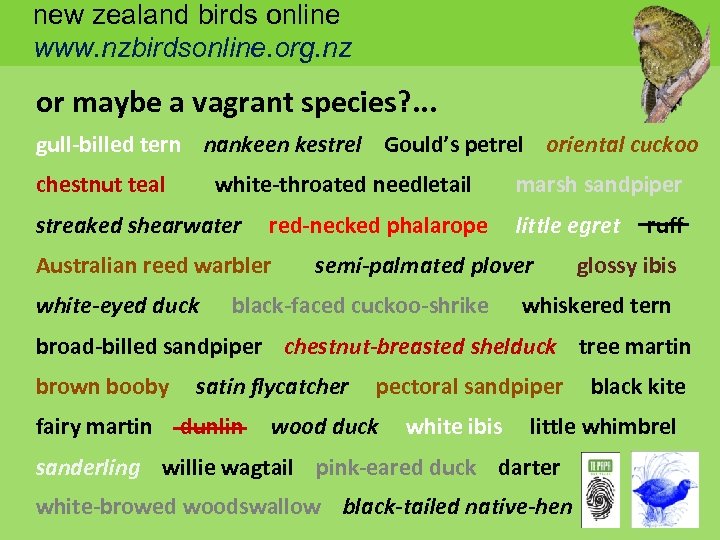
new zealand birds online www. nzbirdsonline. org. nz or maybe a vagrant species? . . . gull-billed tern nankeen kestrel Gould’s petrel oriental cuckoo chestnut teal white-throated needletail streaked shearwater red-necked phalarope Australian reed warbler white-eyed duck marsh sandpiper little egret semi-palmated plover black-faced cuckoo-shrike ruff glossy ibis whiskered tern broad-billed sandpiper chestnut-breasted shelduck tree martin brown booby fairy martin satin flycatcher dunlin pectoral sandpiper wood duck white ibis black kite little whimbrel sanderling willie wagtail pink-eared duck darter white-browed woodswallow black-tailed native-hen
Скачать презентацию new zealand birds online www nzbirdsonline org nz
c1797afa29432d35c8e045de3afbd9ad.ppt