


 Скачать презентацию New UK AWS System On-going Work Mike Molyneux
ee2d4b159e430c5d725af7036371f711.ppt
- Количество слайдов: 42
 New UK AWS System On-going Work Mike Molyneux and Matt Clark © Crown copyright Met Office
 Outline – what’s coming • Background • Challenges for a network • Overview • Sensor details • Performance snapshots • Quick look at MMS Windows © Crown copyright Met Office
 Who am I? Mike Molyneux United Kingdom - Met Office Team Leader for Development of • Loggers • Sensors For use in Automatic Weather Stations © Crown copyright Met Office
 Background • The UK Met Office is refreshing the infrastructure of its network of Automatic Weather Stations. • 200 AWS interfacing to a variety of sensors • This is titled • Meteorological Monitoring System - MMS project. § MMS is NOT… “Mike Molyneux’s System” © Crown copyright Met Office
 Scope of the Project At the start of the project some decisions were made on the scope of replacement. Broadly it was chosen to: • Retain existing sensors (but not possible at all stations) • Retain existing communication method at site • Retain existing signal wiring • Benefits – uniformity – response to customers needs – improved network management – cost saving – NOT ON DAY ONE! • Issues • Side-by-Side testing • Other infrastructure example surge protection © Crown copyright Met Office
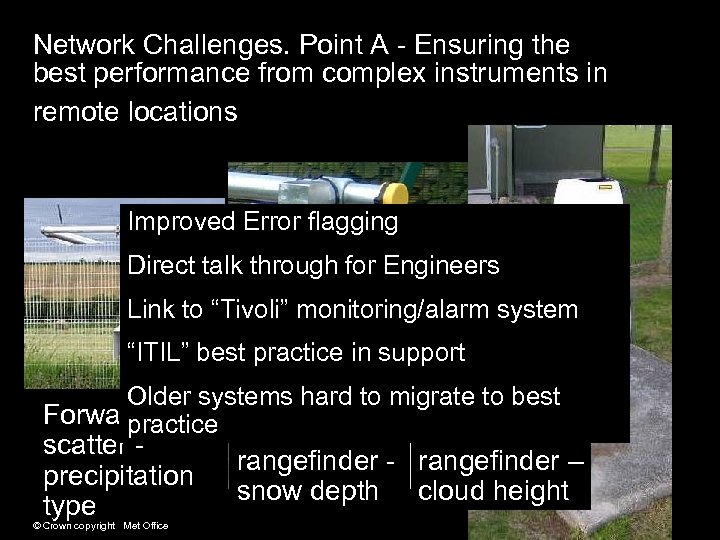 Network Challenges. Point A - Ensuring the best performance from complex instruments in remote locations Improved Error flagging Direct talk through for Engineers Link to “Tivoli” monitoring/alarm system “ITIL” best practice in support Older systems hard to migrate to best Forward practice Ultrasonic Laser scatter - precipitation type © Crown copyright Met Office rangefinder - rangefinder – snow depth cloud height
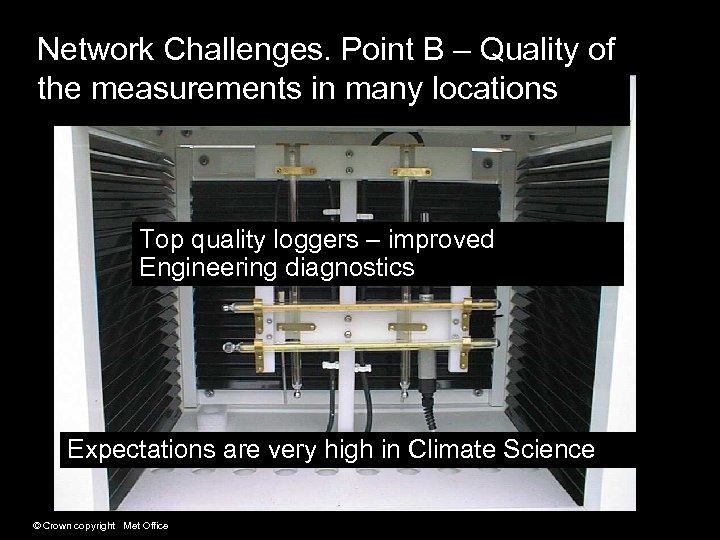 Network Challenges. Point B – Quality of the measurements in many locations Top quality loggers – improved Engineering diagnostics Expectations are very high in Climate Science © Crown copyright Met Office
 Existing systems • The UK has been using four major AWS systems. • SAMOS - Semi-Automatic Met Observing System for manned and unmanned stations • ESAWS - Extended Synoptic Automatic Weather Station an older unmanned system • CDL - Climate data logger. Based on Campbell Scientific Loggers largely for simple sites • SIESAWS – Severe Icing Environment Synoptic Automatic Weather Station for remote sites with a high icing environment © Crown copyright Met Office
 SAMOS • SAMOS – • ISU - Intelligent sensor units • Interfacing, processing, transmit onto the LAN • Configuration change from “ring” to “star” © Crown copyright Met Office
 Network Challenges. Point C Move forward BUT control change §Re-Use existing Sensors §Largely achieved §Copy Algorithms and quality processes §Copied from our most common system but with 4 systems this can only minimise change © Crown copyright Met Office
 Project Outline © Crown copyright Met Office
 Project Outline • System Specification • The important parts of our existing systems • Invitation to Tender • Lots of high quality replies of course! • Main Supplier CSE-Servelec • Foundation in UK Water industry • Campbell Scientific Limited Loggers • Well known in meteorological industry © Crown copyright Met Office
 Project Outline continued • Design specification – to optimise components and software to meet specific requirements • Test plan – Functional tests + data snapshots and longer side-by-side tests • Internal “Process change” (more later) • Sites installed by Campbell and Met Office teams © Crown copyright Met Office
 Status in November 2008 • Rollout program well underway for unmanned sites, • 2 Manned test sites in operation in “Continuous Operational Monitoring” – These sites have different routines – so testing is more comprehensive. Data snapshots later • Data Quality values and coding checks by our “QC team” at Edinburgh • Final detailed rules being applied to Observer interface © Crown copyright Met Office
 MMS overview diagram Issues • Manned and unmanned sites • Secure and open sites Components • Firewalls • DMZs © Crown copyright Met Office
 AWS - Sensors Parameter details Sensors interfaced to the AWS © Crown copyright Met Office
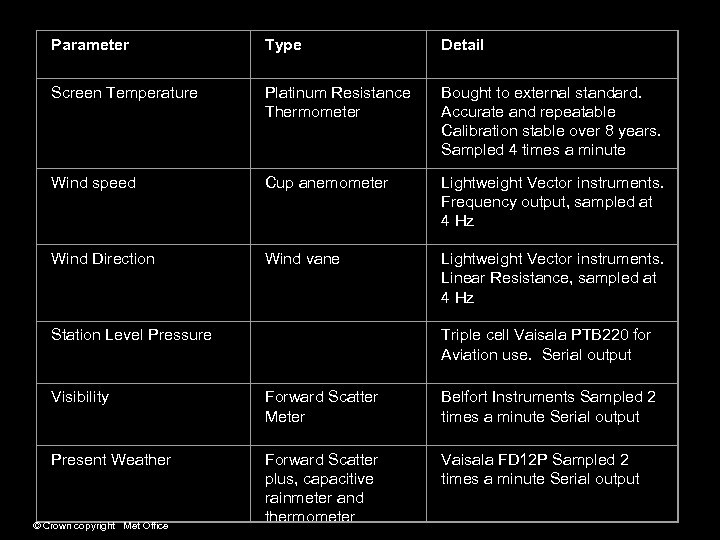 Parameter Type Detail Screen Temperature Platinum Resistance Thermometer Bought to external standard. Accurate and repeatable Calibration stable over 8 years. Sampled 4 times a minute Wind speed Cup anemometer Lightweight Vector instruments. Frequency output, sampled at 4 Hz Wind Direction Wind vane Lightweight Vector instruments. Linear Resistance, sampled at 4 Hz Station Level Pressure Triple cell Vaisala PTB 220 for Aviation use. Serial output Visibility Forward Scatter Meter Belfort Instruments Sampled 2 times a minute Serial output Present Weather Forward Scatter plus, capacitive rainmeter and thermometer Vaisala FD 12 P Sampled 2 times a minute Serial output © Crown copyright Met Office
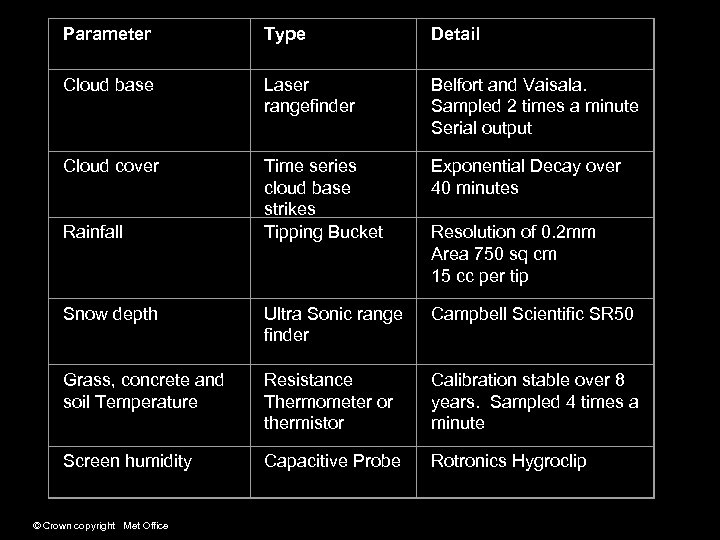 Parameter Type Detail Cloud base Laser rangefinder Belfort and Vaisala. Sampled 2 times a minute Serial output Cloud cover Time series cloud base strikes Tipping Bucket Exponential Decay over 40 minutes Snow depth Ultra Sonic range finder Campbell Scientific SR 50 Grass, concrete and soil Temperature Resistance Thermometer or thermistor Calibration stable over 8 years. Sampled 4 times a minute Screen humidity Capacitive Probe Rotronics Hygroclip Rainfall © Crown copyright Met Office Resolution of 0. 2 mm Area 750 sq cm 15 cc per tip
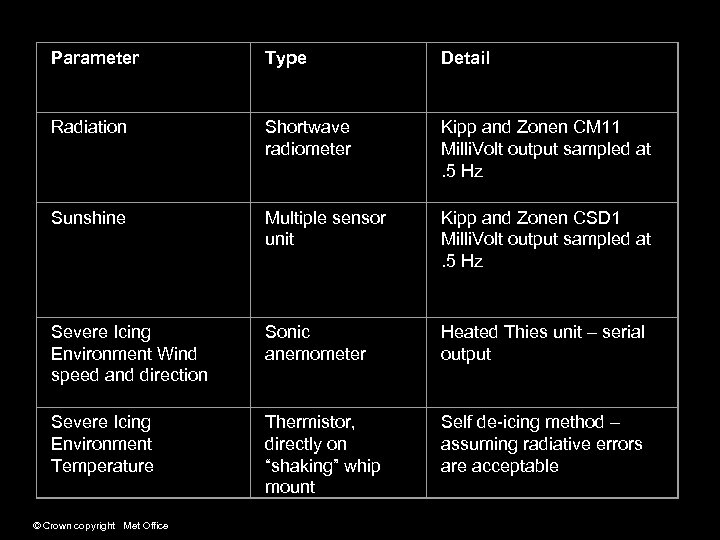 Parameter Type Detail Radiation Shortwave radiometer Kipp and Zonen CM 11 Milli. Volt output sampled at . 5 Hz Sunshine Multiple sensor unit Kipp and Zonen CSD 1 Milli. Volt output sampled at . 5 Hz Severe Icing Environment Wind speed and direction Sonic anemometer Heated Thies unit – serial output Severe Icing Environment Temperature Thermistor, directly on “shaking” whip mount Self de-icing method – assuming radiative errors are acceptable © Crown copyright Met Office
 AWS - Sensors Sensor Performance Snapshots Data snapshots © Crown copyright Met Office
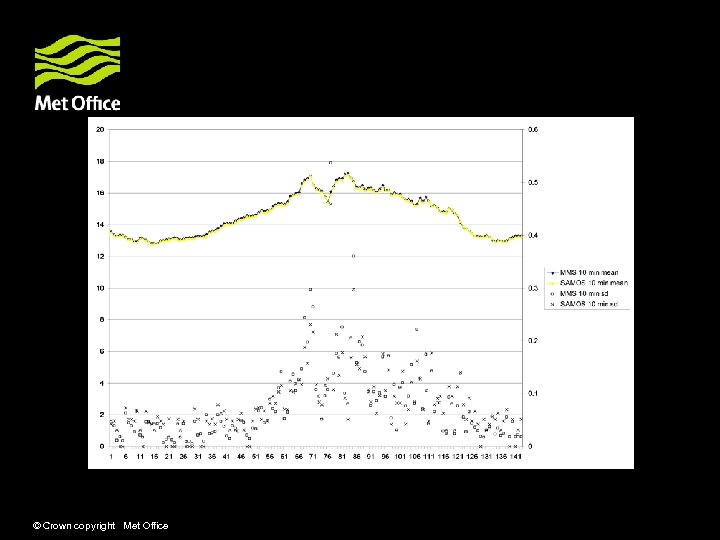
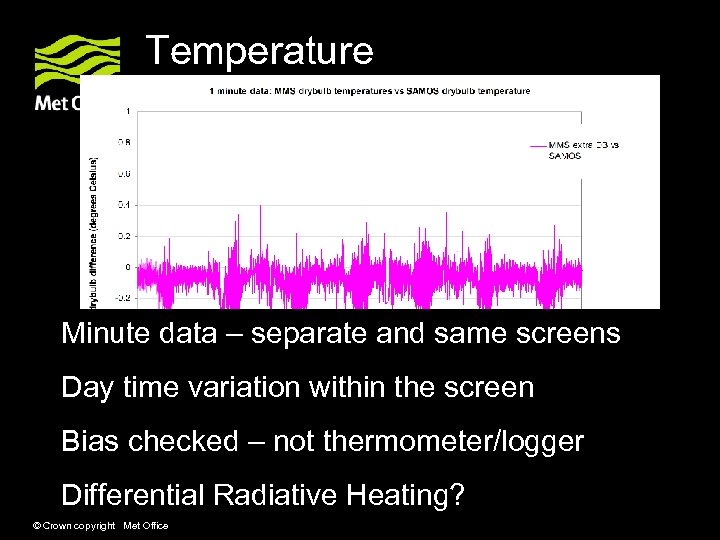 Temperature Minute data – separate and same screens Day time variation within the screen Bias checked – not thermometer/logger Differential Radiative Heating? © Crown copyright Met Office
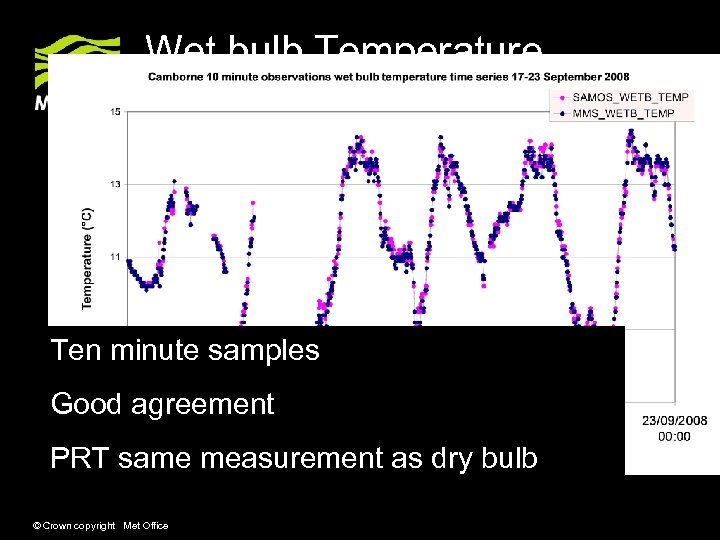 Wet bulb Temperature Ten minute samples Good agreement PRT same measurement as dry bulb © Crown copyright Met Office
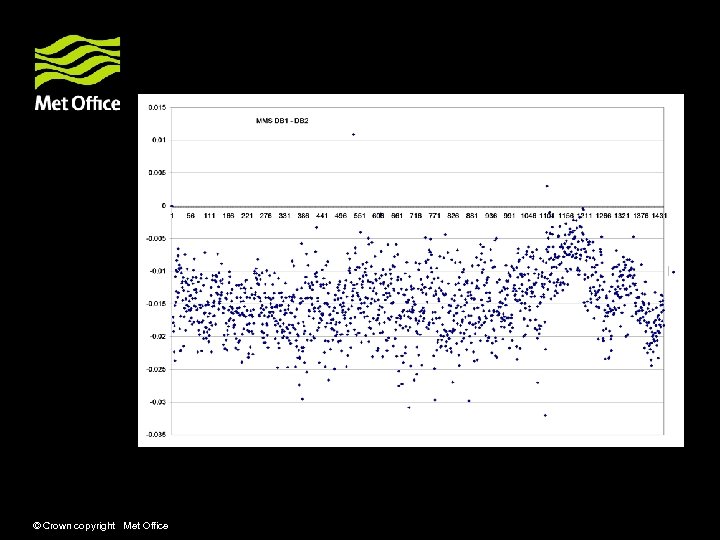
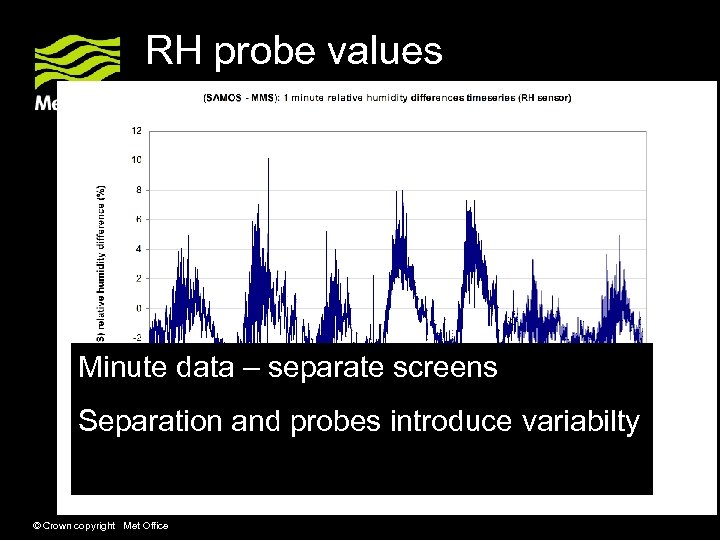 RH probe values Minute data – separate screens Separation and probes introduce variabilty © Crown copyright Met Office
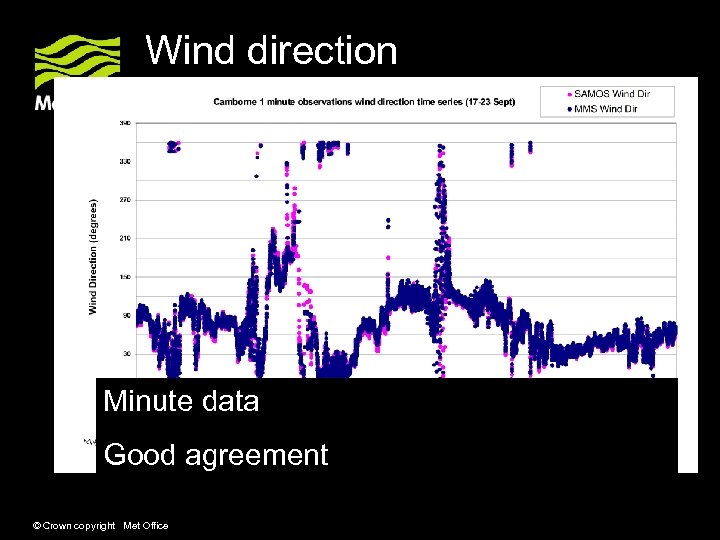 Wind direction Minute data Good agreement © Crown copyright Met Office
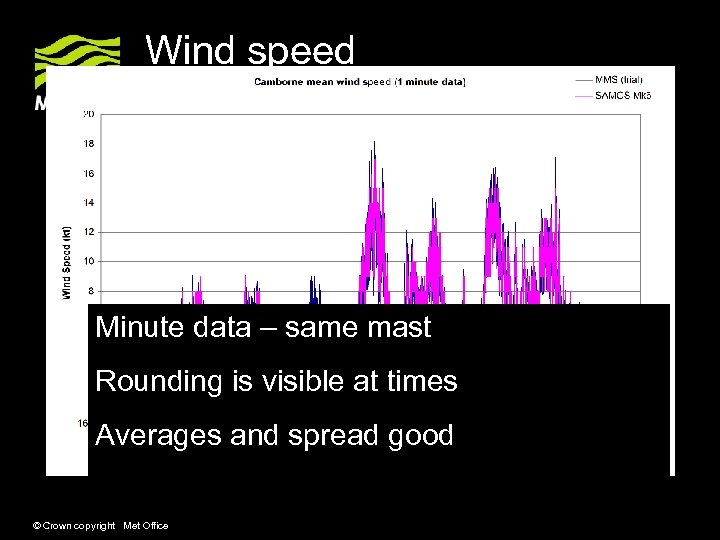 Wind speed Minute data – same mast Rounding is visible at times Averages and spread good © Crown copyright Met Office
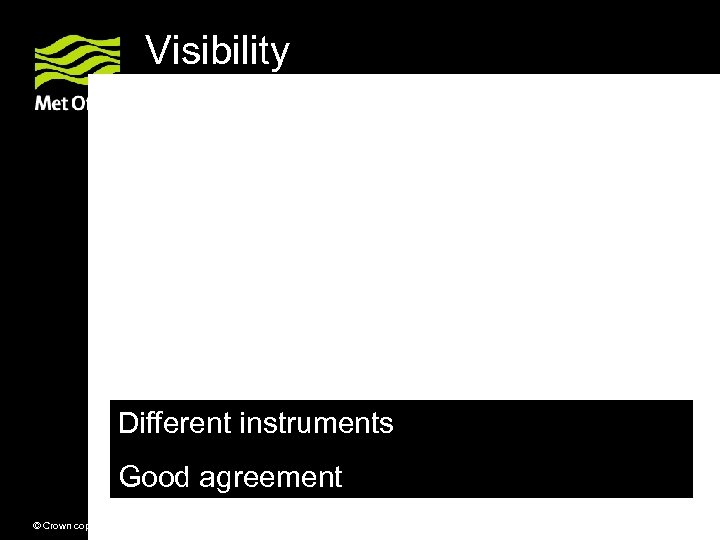 Visibility Different instruments Good agreement © Crown copyright Met Office
 AWS - Sensors Algorithms Cloud and Present Weather © Crown copyright Met Office
 The “EDA” • EDA - Exponential Decay Algorithm • The EDA is a “sky condition algorithm” • Cloud amount calculated from the LCBR • Developed in-house • Compared well with others © Crown copyright Met Office
 Present Weather Arbiter • Software to control Present Weather Instrument output and provide backup using input from • Sensitive precipitation detector • Screen Thermometer • Visiometer • Anemometer • LCBR • Results have been studied and a scoring system developed - outcome the arbiter improves results © Crown copyright Met Office
 Process change • Now we’ve got a new system we have to use it properly! System value will come from new ways of using it © Crown copyright Met Office
 Process change Training for Engineers and Network managers Training for Observers But also • Identification of key processes • Processes have to change and be documented - they will evolve • Remember to capture new requirements • Start using improved methods coded output to database © Crown copyright Met Office
 Examples of MMS windows Quick Selection of MMS User Screens All Web access (No easy interfaces to old systems) © Crown copyright Met Office
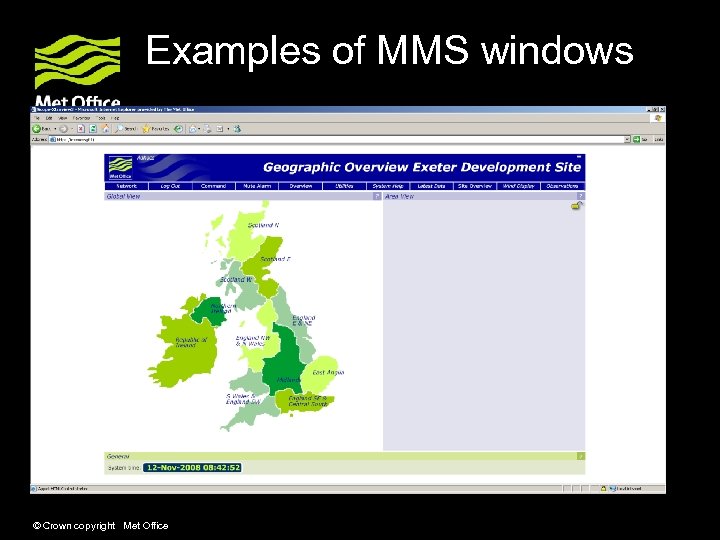 Examples of MMS windows © Crown copyright Met Office
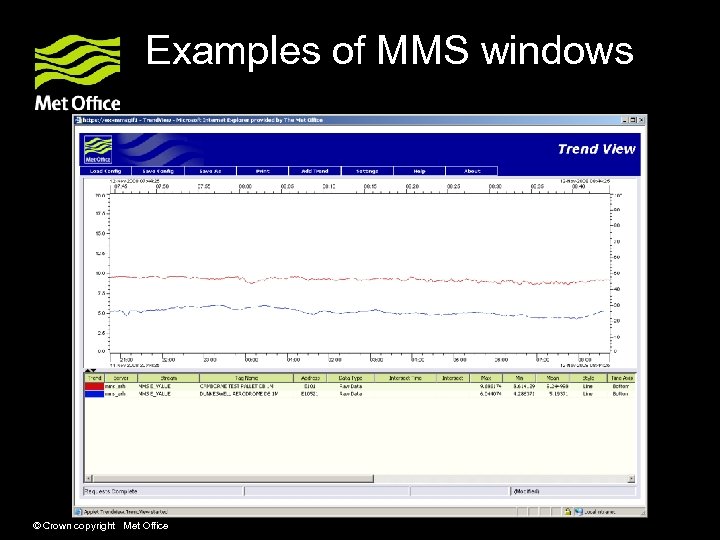 Examples of MMS windows © Crown copyright Met Office
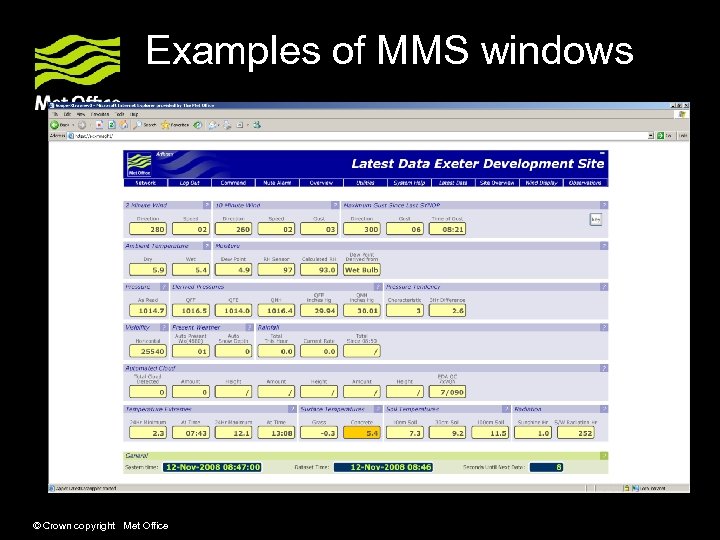 Examples of MMS windows © Crown copyright Met Office
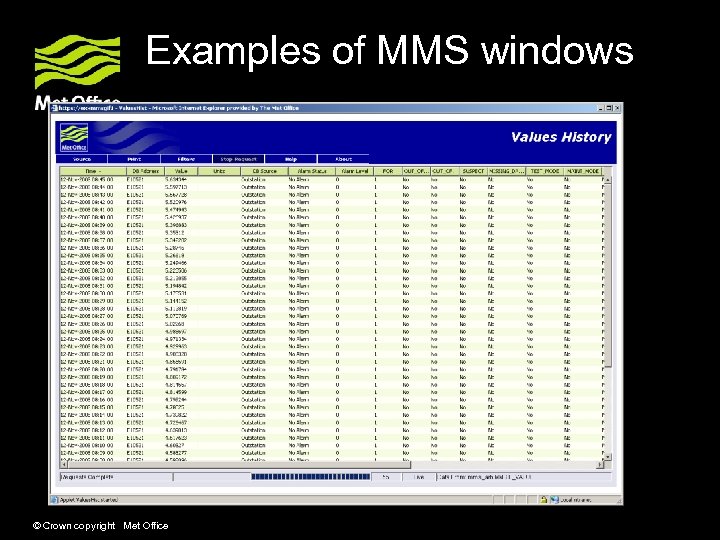 Examples of MMS windows © Crown copyright Met Office
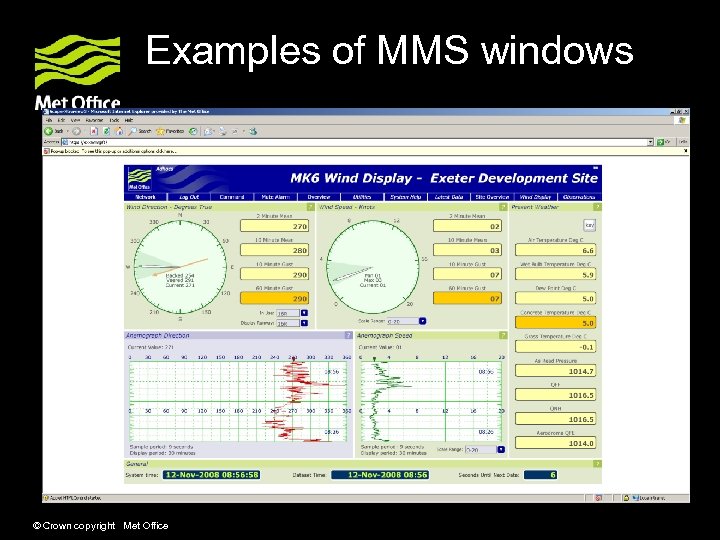 Examples of MMS windows © Crown copyright Met Office
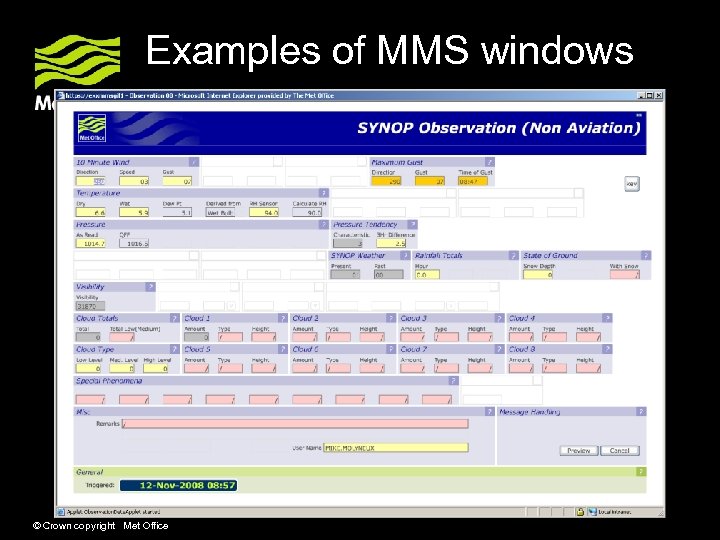 Examples of MMS windows © Crown copyright Met Office
 Hard work can be fun but… © Crown copyright Met Office
 That’s all • Any questions? © Crown copyright Met Office
 © Crown copyright Met Office
 © Crown copyright Met Office