


 Скачать презентацию NEW TESTAMENT FOUNDATIONS NT 102 PAUL THEOLOGIAN PAUL
37c581427c0a62a8654a9fa11a7d8011.ppt
- Количество слайдов: 94
 NEW TESTAMENT FOUNDATIONS NT 102 PAUL THEOLOGIAN PAUL THE PASTOR
 ROMANS Introduction Comparison with Galatians: 1. Romans is a defense or apology for Paul’s “law-free” gospel 2. A more carefully crafted & deliberate work than Galatians
 Background A. Authorship, Date, and Place B. Internal evidence for authenticity
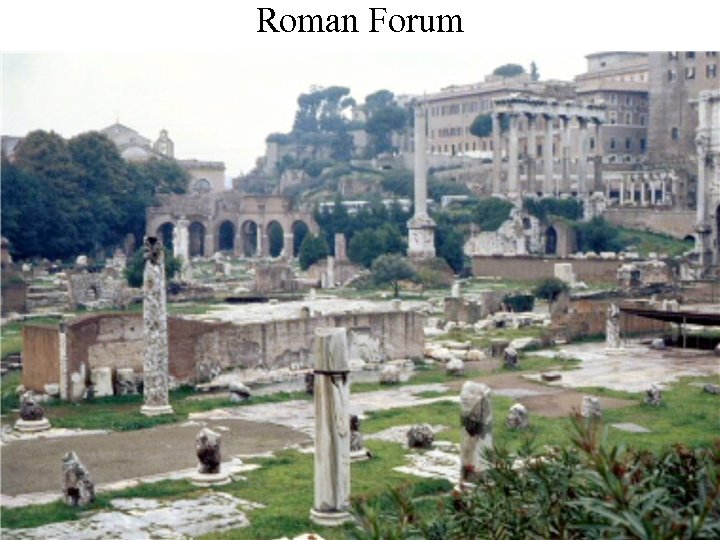 Roman Forum
 C. Roman Church 1. Evidence of the church’s being well established (faith of Romans “being reported over all the whole world, ” 1: 8) 2. Suggestions regarding church’s origins 3. Situation to which the letter comes
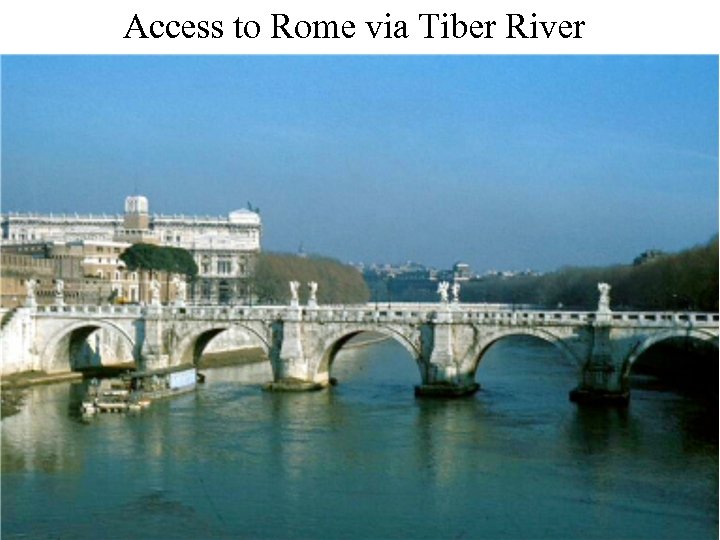 Access to Rome via Tiber River
 Occasion & Purpose A. Why is he writing to the Roman church? B. Basic Alternatives: 1. Situation in the Roman church 2. Paul’s circumstances C. Indications of difficulties in Rome
 D. Paul’s own situation in relation to Roman church 1. Long-standing desire to visit 2. His planned mission to Spain 3. Notoriety of his gospel 4. Jerusalem collection 5. Jew-Gentile tension in the church 6. More conservative about Jewish heritage & the Law
 Literary Form A. Traditional three-section division: a. Rom. 1 -8: justification by faith b. Rom. 9 -11: an appendix on Israel c. Rom. 12 -15: general ethical teaching
 B. Based on similarities to so-called “Diatribe” 1. Style 2. Outline: a. Thesis statement b. Demonstration of thesis by means of discourse on the antithesis c. Restatement of thesis d. Demonstration of thesis by example (of Abraham) e. Exposition of thesis f. Answering objections
 Content A. Thesis stated (1: 16 -17) 1. Key terms: a. “Righteousness of God” (1: 17; 3: 5, 21, 22, 25, 26 (2); 10: 3 (2)) (1) options: (a) God’s own righteousness & justice (b) God-given right-standing
 (2) OT background (3) not merely declared righteous but actually made righteous Can people be reconciled to God without being transformed?
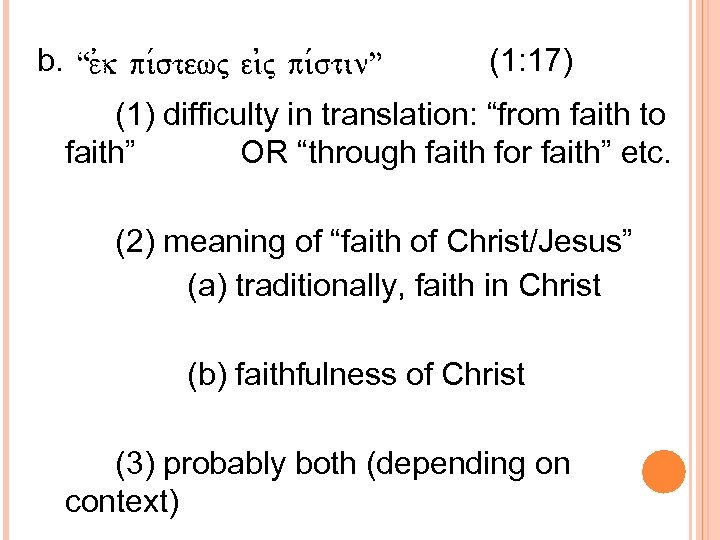 b. (1: 17) (1) difficulty in translation: “from faith to faith” OR “through faith for faith” etc. (2) meaning of “faith of Christ/Jesus” (a) traditionally, faith in Christ (b) faithfulness of Christ (3) probably both (depending on context)
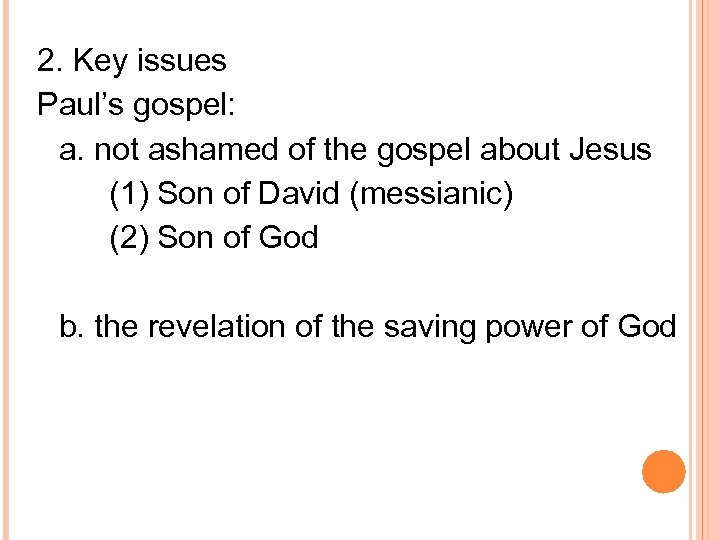 2. Key issues Paul’s gospel: a. not ashamed of the gospel about Jesus (1) Son of David (messianic) (2) Son of God b. the revelation of the saving power of God
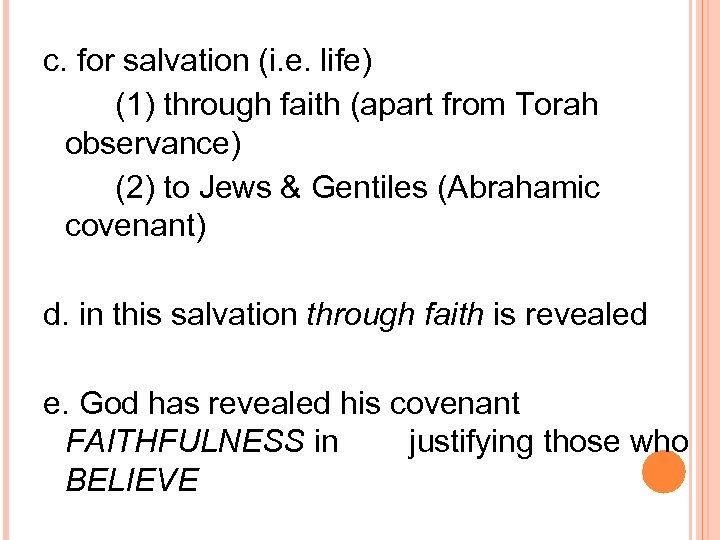 c. for salvation (i. e. life) (1) through faith (apart from Torah observance) (2) to Jews & Gentiles (Abrahamic covenant) d. in this salvation through faith is revealed e. God has revealed his covenant FAITHFULNESS in justifying those who BELIEVE
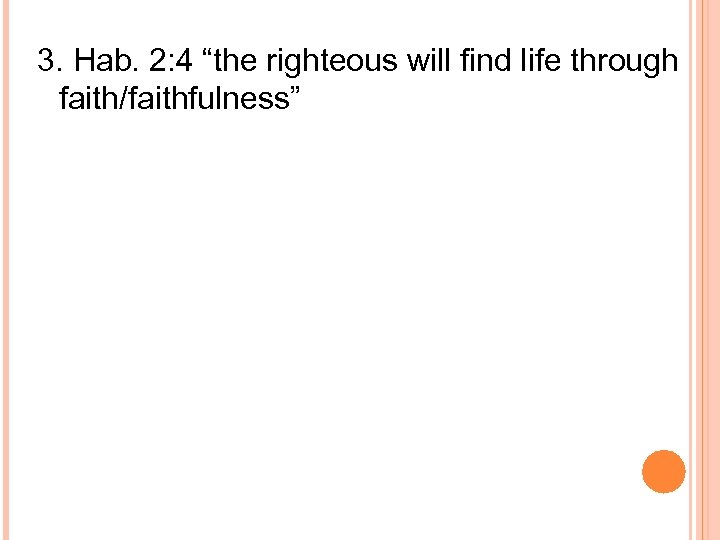 3. Hab. 2: 4 “the righteous will find life through faith/faithfulness”
 B. Antithesis presented (1: 18— 3: 20): Universal unrighteousness of humanity leads to death under God’s righteous wrath 1. All humanity—regardless of race or privilege; Jews & Gentiles alike — are under judgment & need God’s righteousness 2. Depravity of the Gentile nations (1: 1832) 3. Sinfulness of Jewish nation: here, there
 C. Thesis restated: life-giving relationship with God comes as gift, “Torahobservance free”, and through faith (Hab. 2: 4) in the faithful death of Christ (3: 2131) 1. Characteristics 2. Christ’s role a. both as gift (his death) & example (by faithful obedience)
 b. Christ as (1) propitiation (“appeasement of God’s wrath, ” KJV, NASB, ESV) or (2) expiation (“wiping away sins”, RSV) or (3) an OT reference to the cover on the ark of the covenant (“atonement cover”; LXX meaning)
 3. God’s action a. demonstrating his faithfulness b. justifying the one who trusts 4. Only proper human response: complete faith/trust
 5. Three emerging key questions a. 3: 27: What then of human “boasting”? b. 3: 29: Is God the God of Jews only? Isn’t he God of Gentiles too? c. 3: 31: Doesn’t this approach undermine Torah?
 D. Example given in support of thesis: what can we learn from Abraham, our father? (4: 1 -25) 1. Faith alone is the path to righteousness (Gen 15: 6) 2. 3 assertions: a. Neither David nor Abraham “boasted” in “works” b. Promise for both circumcised & uncircumcised
 E. Exposition on thesis: the surpassing greatness of this revelation of God’s righteousness (5: 1 -21). 1. Implications: having been reconciled to God we have peace and entrance into His presence 2. Effectiveness (no partiality): universal effectiveness of God’s power to make us righteous through faith (5: 12 -21)
 F. Objections dealt with (6: 1— 11: 36): 1. Issues arising: a. “Law free” relationship with God will inevitably lead to unrighteousness b. The gift of righteousness is real & effective c. If 3: 21— 5: 21 argues for the means of entering into life, then 6: 1— 8: 39 argues for
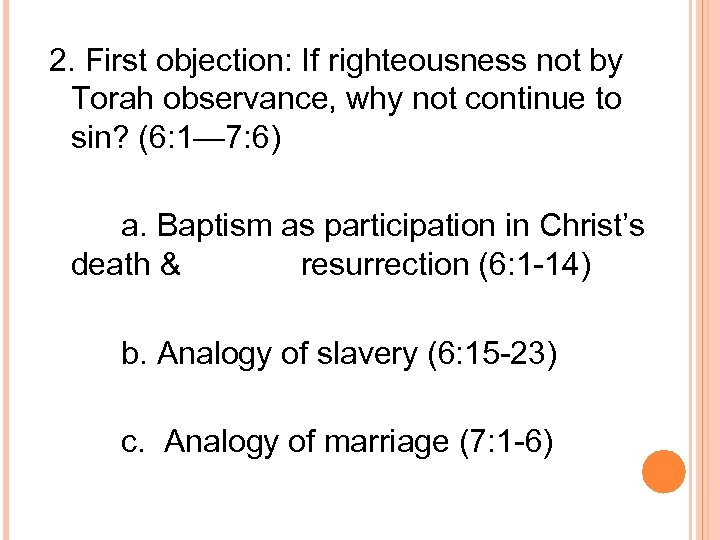 2. First objection: If righteousness not by Torah observance, why not continue to sin? (6: 1— 7: 6) a. Baptism as participation in Christ’s death & resurrection (6: 1 -14) b. Analogy of slavery (6: 15 -23) c. Analogy of marriage (7: 1 -6)
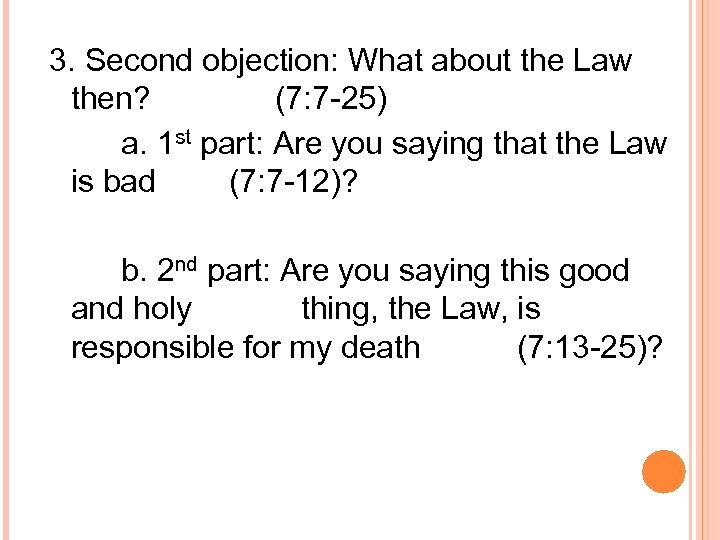 3. Second objection: What about the Law then? (7: 7 -25) a. 1 st part: Are you saying that the Law is bad (7: 7 -12)? b. 2 nd part: Are you saying this good and holy thing, the Law, is responsible for my death (7: 13 -25)?
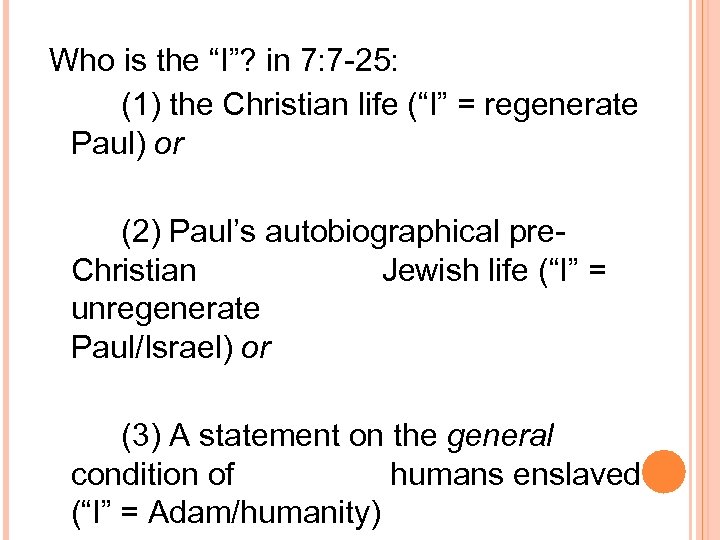 Who is the “I”? in 7: 7 -25: (1) the Christian life (“I” = regenerate Paul) or (2) Paul’s autobiographical pre. Christian Jewish life (“I” = unregenerate Paul/Israel) or (3) A statement on the general condition of humans enslaved (“I” = Adam/humanity)
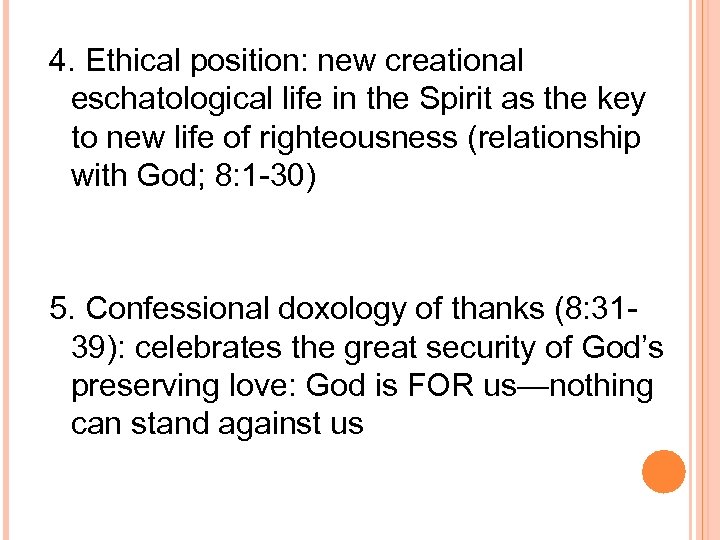 4. Ethical position: new creational eschatological life in the Spirit as the key to new life of righteousness (relationship with God; 8: 1 -30) 5. Confessional doxology of thanks (8: 3139): celebrates the great security of God’s preserving love: God is FOR us—nothing can stand against us
 6. Remaining question: What about God’s calling of and love for Israel? a. 2 questions: (1) Where do the Jews stand in all of this? (2) What about God’s faithfulness, given his promises & Jewish rejection of Paul’s gospel?
 b. 3 -part answer: (1) Basis of God’s election is unmerited mercy & the “people of God” not co-terminous with national Israel (9: 1 -29) (2) now in this New Exodus, Israel is culpable since the nation rejected life by trust (Jesus) choosing instead – righteousness by Torah observance (9: 30— 10: 21)
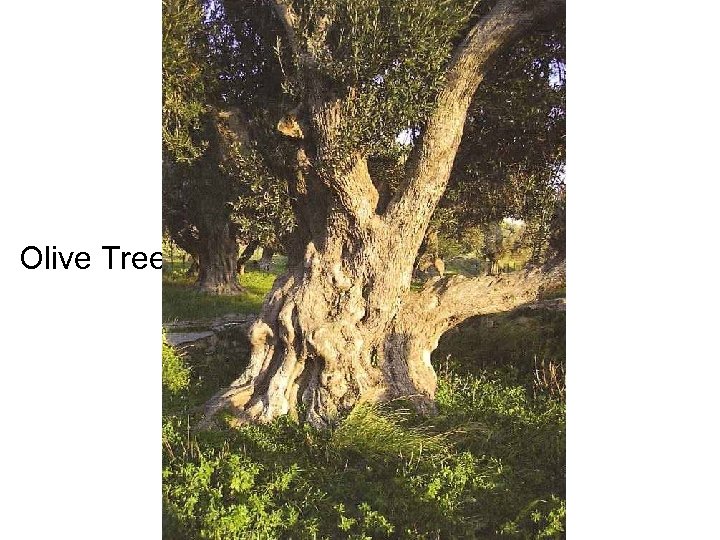 Olive Tree
 G. Final issues discussed: Spiritrighteousness in the life of the community, knowing the good, pleasing & perfect will of God 1. Interpersonal & corporate relationships (ch. 12) 2. Relationship to the State & others (ch. 13)
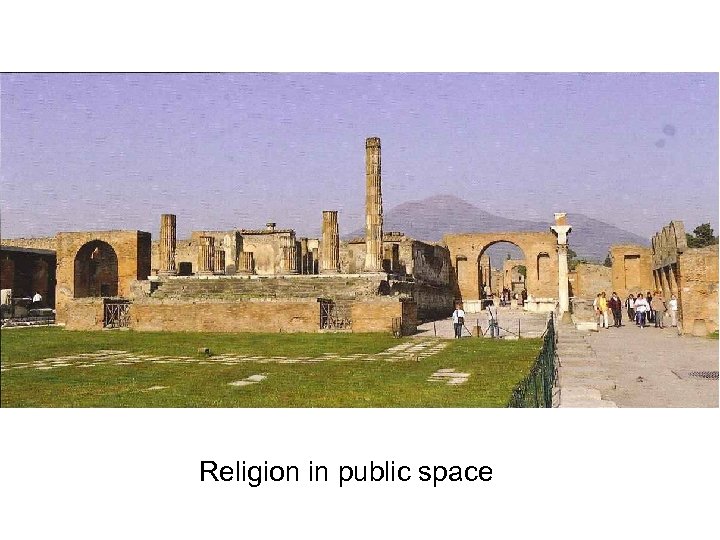 Religion in public space
 3. Response to source of tension (ch. 14) Thus, the righteousness of God has been revealed in his inclusion of Gentiles and Jews in the one body, through the one Spirit, in fulfillment of his promises.
 Current Issues A. Predestination B. Israel’s salvation
 1 CORINTHIANS Introduction Background and Occasion A. Corinth 1. Geography
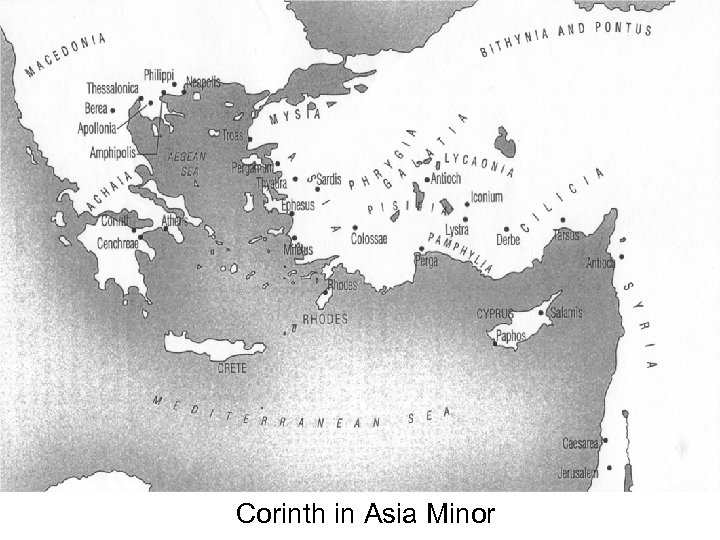 Corinth in Asia Minor
 2. History a. As a Greek city b. As a Roman city
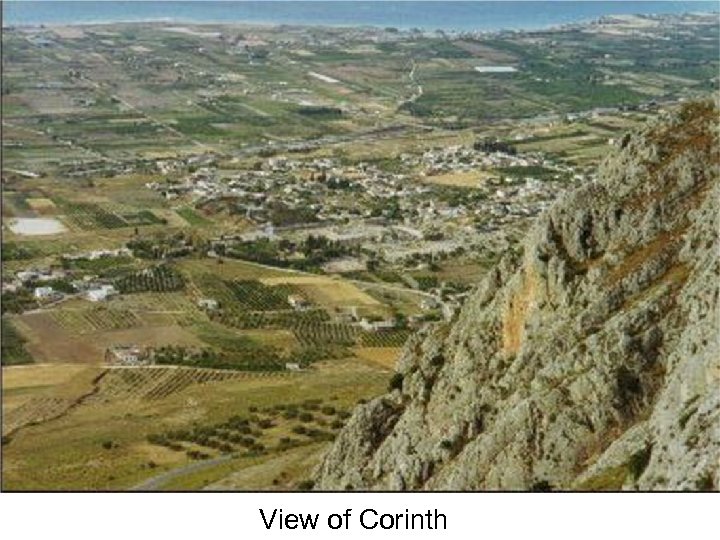 View of Corinth
 3. Character
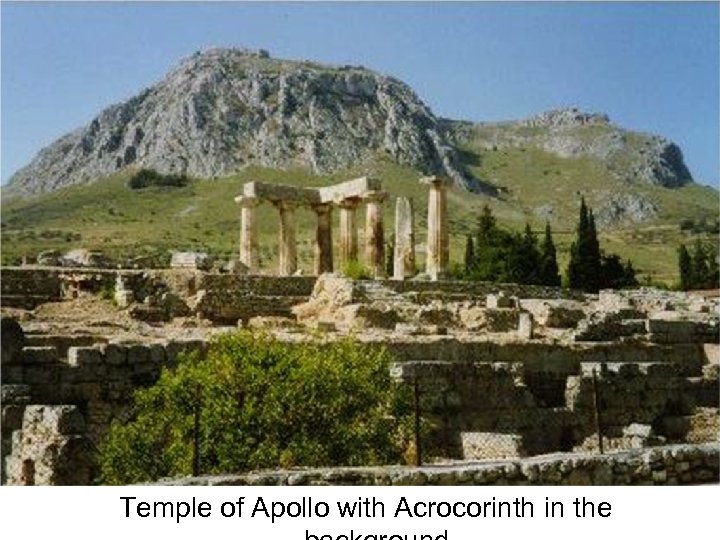 Temple of Apollo with Acrocorinth in the
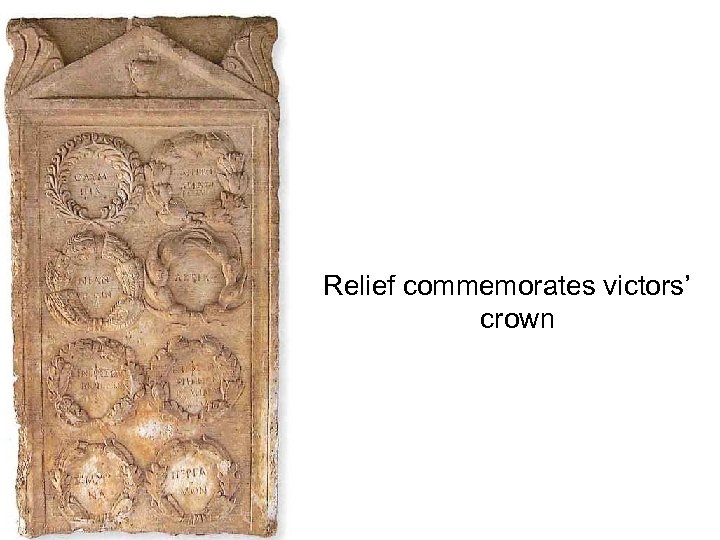 Relief commemorates victors’ crown
 B. Paul & the Corinthians 1. History of relationship a. Founding of the church b. Apollos arrives in Corinth c. Paul writes first or “previous” letter (5: 9). d. The church writes a letter to Paul (7: 1). e. Arrival of Chloe’s people. 2. Prompting of 1 Corinthians
 Purpose A. Primary Issue B. Nature of the challenge 1. questioning his apostolic authority 2. reject his view of the gospel
 C. Corinthian “Spirituality” 1. Two dimensions: a. Hellenistic dualism b. Social elitism
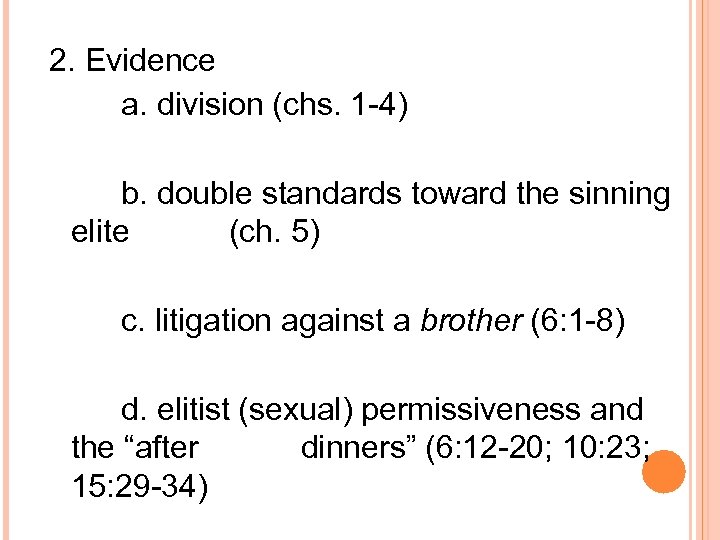 2. Evidence a. division (chs. 1 -4) b. double standards toward the sinning elite (ch. 5) c. litigation against a brother (6: 1 -8) d. elitist (sexual) permissiveness and the “after dinners” (6: 12 -20; 10: 23; 15: 29 -34)
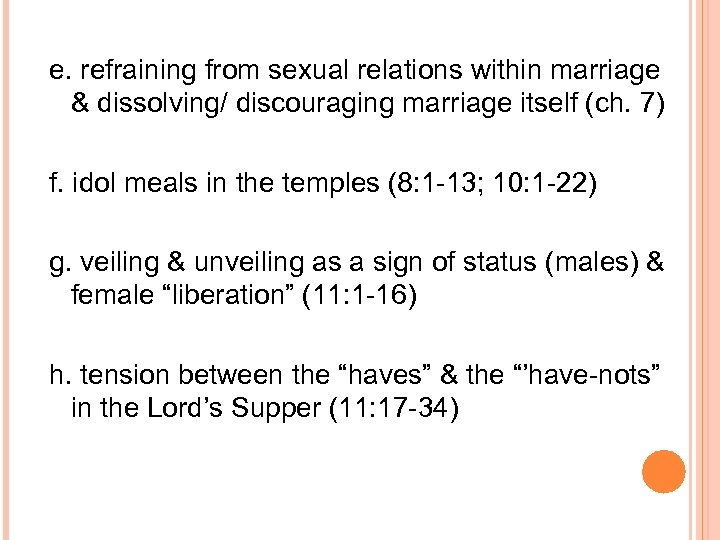 e. refraining from sexual relations within marriage & dissolving/ discouraging marriage itself (ch. 7) f. idol meals in the temples (8: 1 -13; 10: 1 -22) g. veiling & unveiling as a sign of status (males) & female “liberation” (11: 1 -16) h. tension between the “haves” & the “’have-nots” in the Lord’s Supper (11: 17 -34)
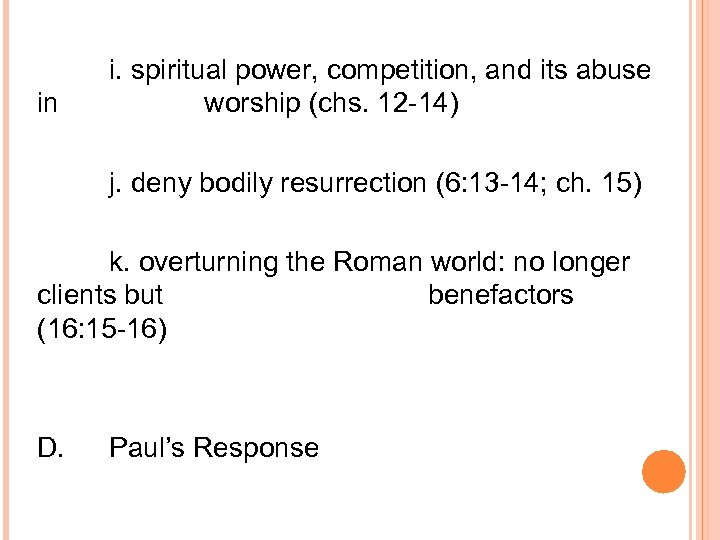 in i. spiritual power, competition, and its abuse worship (chs. 12 -14) j. deny bodily resurrection (6: 13 -14; ch. 15) k. overturning the Roman world: no longer clients but benefactors (16: 15 -16) D. Paul’s Response
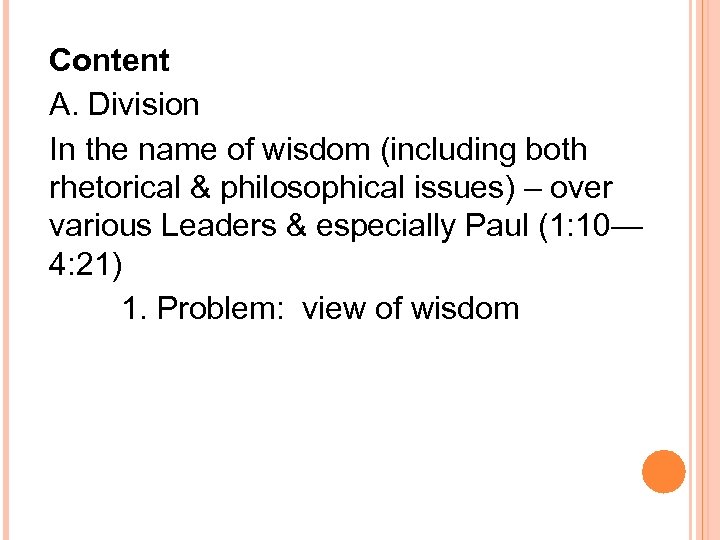 Content A. Division In the name of wisdom (including both rhetorical & philosophical issues) – over various Leaders & especially Paul (1: 10— 4: 21) 1. Problem: view of wisdom
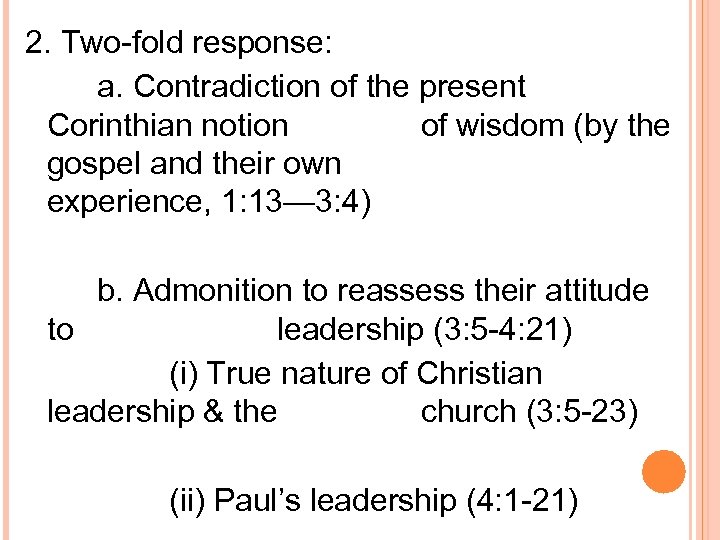 2. Two-fold response: a. Contradiction of the present Corinthian notion of wisdom (by the gospel and their own experience, 1: 13— 3: 4) b. Admonition to reassess their attitude to leadership (3: 5 -4: 21) (i) True nature of Christian leadership & the church (3: 5 -23) (ii) Paul’s leadership (4: 1 -21)
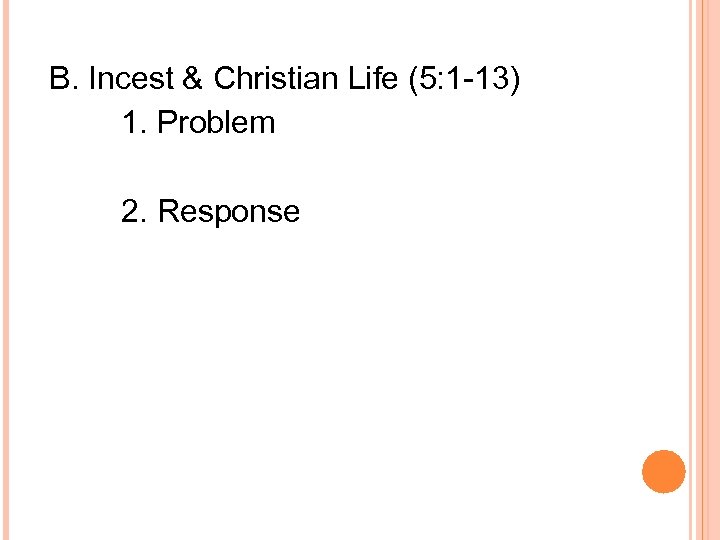 B. Incest & Christian Life (5: 1 -13) 1. Problem 2. Response
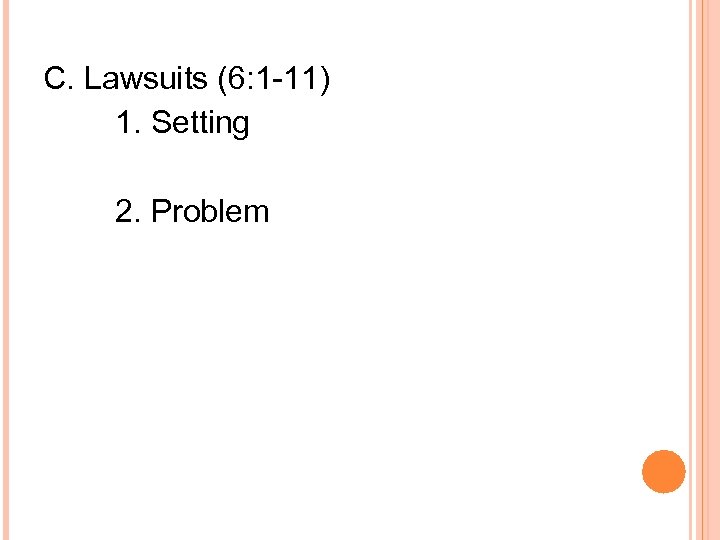 C. Lawsuits (6: 1 -11) 1. Setting 2. Problem
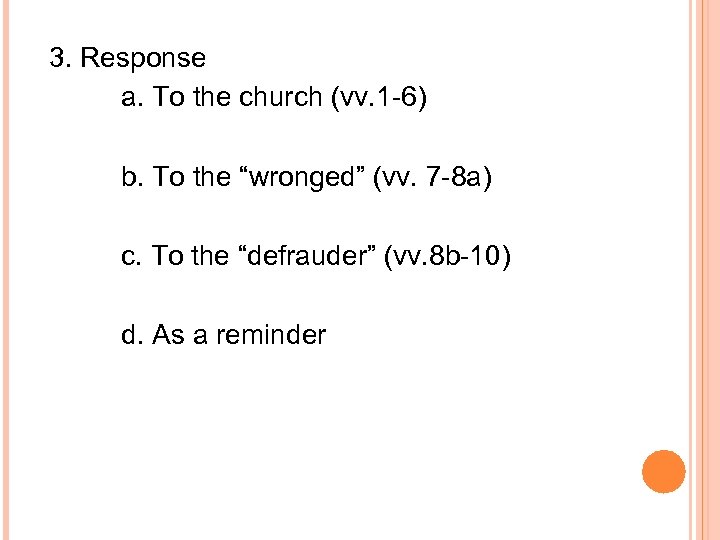 3. Response a. To the church (vv. 1 -6) b. To the “wronged” (vv. 7 -8 a) c. To the “defrauder” (vv. 8 b-10) d. As a reminder
 D. Elite Permissiveness, Sexual Immorality & Christian Freedom (6: 12 -20) 1. Problem (i) “everything is permissible” (6: 12; misquoting Paul? ) (ii) Dualistic outlook
 2. Response a. What is true Christian liberty b. Correct view of the body
 E. Those Married or Once Married (7: 1 -24) 1. Problem 2. Response a. On the nature of marriage (7: 1 -7) b. To the widows & “unmarried” (widowers? , vv. 8 -9)
 c. To the presently married (i) To believers: no divorce (ii) To those married to unbelievers: remain d. On the reason (vv. 17 -24) (i) God’s call (ii) “stay as you are”
 F. The Virgins (7: 25 -40) 1. Problem a. Should “virgins” change their status? (i) Who are the “virgins”? (cf. NASB, NIV, NEB) women married (ii) Probability: young engaged to be
 b. Paul’s problem … (i) has just argued: “remain as you are” (ii) has a preference for singleness … but his reasons are very different 2. Response
 Next 4 issues concern worship: 8 -10: Christians not to participate in idol food & pagan worship 11: 2 -16: Head coverings and conduct of newly liberated women in worship 11: 17 -24: Abuse of the Lord’s Table 12 -14: Abuse of tongues in communal worship
 G. Food Sacrificed to Idols (8: 1— 11: 1) 1. Problem a. Setting (i) Eating meat in temples (ii) Meat sold in the market place
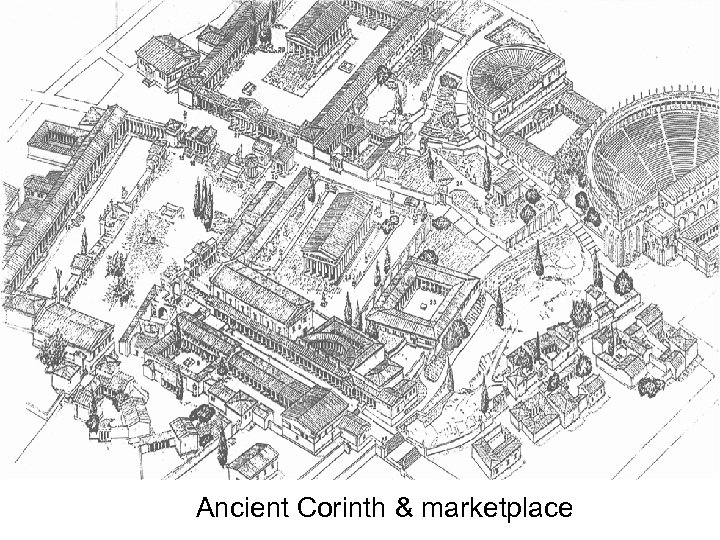 Ancient Corinth & marketplace
 b. Issue (i) 8: 1— 10: 22: eating food in the temples (ii) 10: 23— 11: 1: market place food c. Paul’s prohibition: “no idolatry” (5: 9) d. Community’s counter-argument
 2. Response: 4 parts a. Priority of love over knowledge (gnosis) (8: 1 -13) (i) not the one who “knows” but the one who “loves” (ii) the stumbling block principle
 Paul’s argument against taking idol food: Because to do so means a. not acting in love (8: 7 -13) b. involves idolatry & fellowship with demons (10: 19 -22) b. His authority & attitude to market-place food (9: 1 -27)
 c. His standard: no going to temples (10: 122) (i) Lesson from the Exodus (ii) Idolatry & the demonic (iii) Baptism & Eucharist (iv) Christian ethics: goodness, not knowledge
 d. His opinion on market place food (10: 23 — 11: 1) (i) a matter of indifference: everything belongs to God (ii) whatever you do, do all for God’s glory, and do not deliberately offend
 Basic structure: A All things are permissible but seek what benefits others (vv. 23 -24) B Freedom to eat whatever is sold in market or set before you because all things belong to God (vv. 25 -27) C Criterion: Abstain for the sake of another’s conscience (vv. 28 -29 a) B’ Freedom to eat (vv. 29 b-30) A’ To benefit others and do all for the glory of God (vv. 31 - 11: 1)
 (iii) On Christian freedom (in the private home of an unbeliever)
 H. Issue of Head Dress & Women Praying & Prophesying (11: 2 -16) 1. Problem — a very difficult text, probably a socio-cultural issue “You are what you wear”
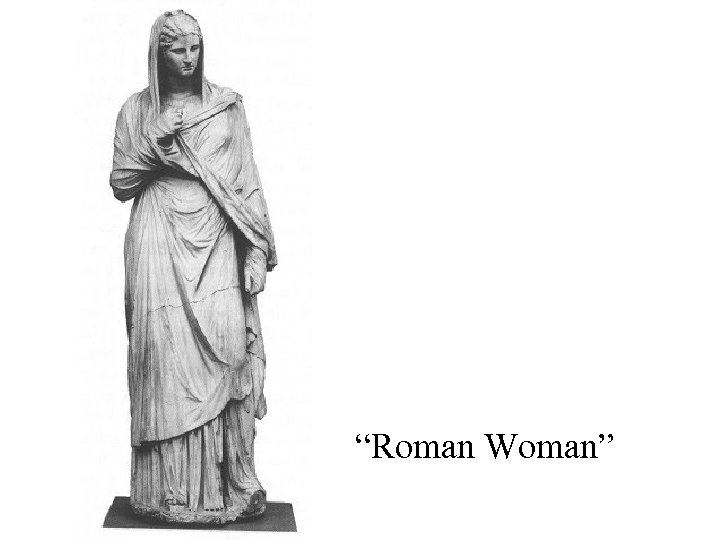 “Roman Woman”
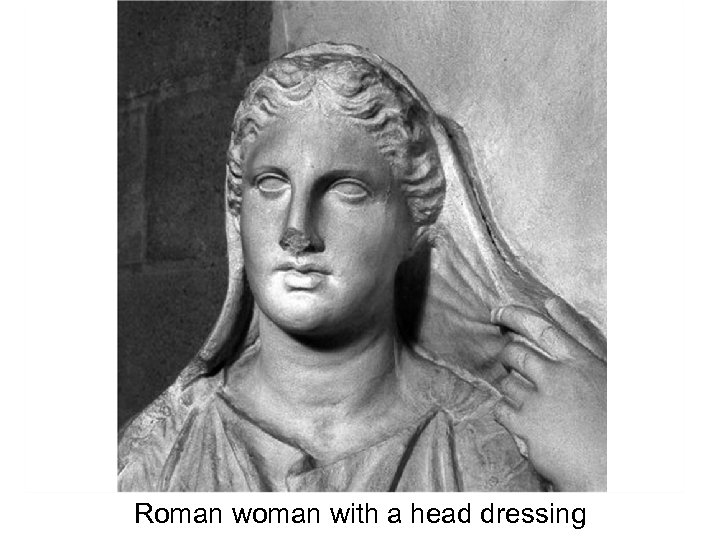 Roman with a head dressing
 2. Response a. An appeal to custom b. The underlying theology c. The creation order d. The natural order e. The custom of the churches
 3. NOTE: a. A complex issue b. Paul agrees that the woman does have authority, BUT Christian authority does not mean independence. c. Men were not to cover their heads (11: 7)
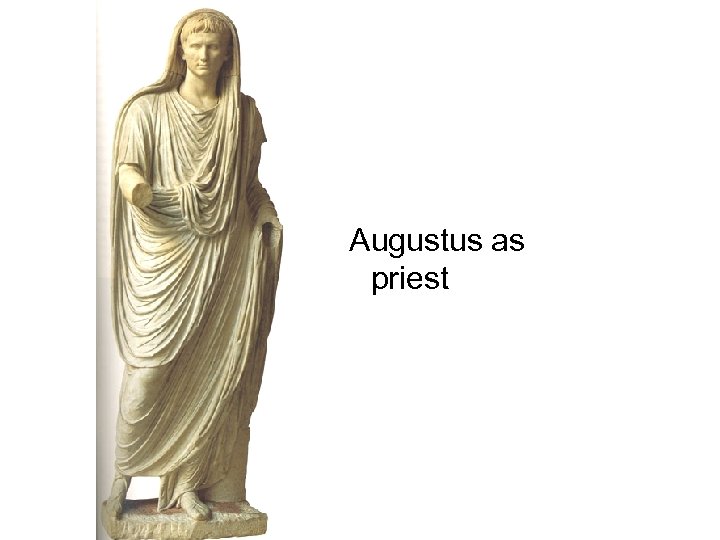 Augustus as priest
 Contemporary Application: Modesty/propriety in dressing in worship today
 I. Abuse of the Lord’s Table (11: 17 -34) 1. Problem a. Setting b. Lord’s Supper c. Practice d. Implication
 2. Response a. Words of institution b. Whole purpose of Lord’s Supper is c. Instruction to respect & care for one another
 J. Abuse of Tongues in Communal Worship (12: 1 -14: 40) 1. Problem 2. Response a. Not the experience but the content (12: 1 -3) b. Diversity in unity (12: 3 -41) c. Primacy of love (13: 1 -13)
 d. On tongues i. A kind of unknown utterances inspired by the Spirit (cf. 13: 1; 14: 21) ii. Directed to God, not to humans (14: 2, 14, 28) iii. Rational mind is not engaged (14: 14) iv. Tongues are to be interpreted (emphasis: intelligibility)
 e. In communal worship, intelligibility is the expression of love (14: 1 -25) (i) what is intelligible builds up others (14: 6) (ii) make sure “spirituality” does not drive away outsiders
 f. Prophecy is preferred (14: 20 -25) Structure of Paul’s argument: i. Exhortation (14: 20) ii. OT text: Other tongues are a sign of God’s judgment (14: 21)
 iii. Application (14: 22) a. Tongues are a (negative) sign (of unbelief), not for believers but unbelievers b. Prophecy is a (positive) sign not for unbelievers but believers vi. Illustrations (14: 23 -25) a. Negative effect of tongues on unbelievers (judgment) b. Positive effect of prophecy on unbelievers (conversion)
 g. Guidelines on order (14: 26 -40) (i) 2 or 3 prophets, others judge (ii) don’t dominate (iii) “women keep silence”
 K. Faulty ideas about the Resurrection 1. Problem a. Platonist rejection of the body b. Denial of a future bodily resurrection
 2. Response a. Christ’s resurrection is of first importance (vv. 1 -11) b. His resurrection is the basis for the future resurrection for believers (vv. 1234) (i) Without Christ’s resurrection – we have no hope (vv. 12 -19) Premise (false): If there is no resurrection of the dead (v. 13 a) Conclusion: then Christ is not raised (v. 13 b)
 Premise (false): If Christ is not raised (v. 14 a) Conclusions: our preaching is null & void (v. 14 b) your faith is null & void (v. 14 c) we are false witnesses (v. 15) Premise (false): If the dead are not raised (v. 16 a) Conclusion: then Christ is not raised (v. 16 b)
 Premise (false): If Christ is not raised (v. 17 a) Conclusions: your faith is futile (v. 17 b) you are still in your sins (v. 17 c) the Christian dead have perished (v. 18) we are the most pitiable of humans (v. 19)
 (ii) Christ’s resurrection necessarily makes our resurrection certain & inevitable (vv. 20 -28), which is future (15: 20 -34) & bodily (15: 35 -50)
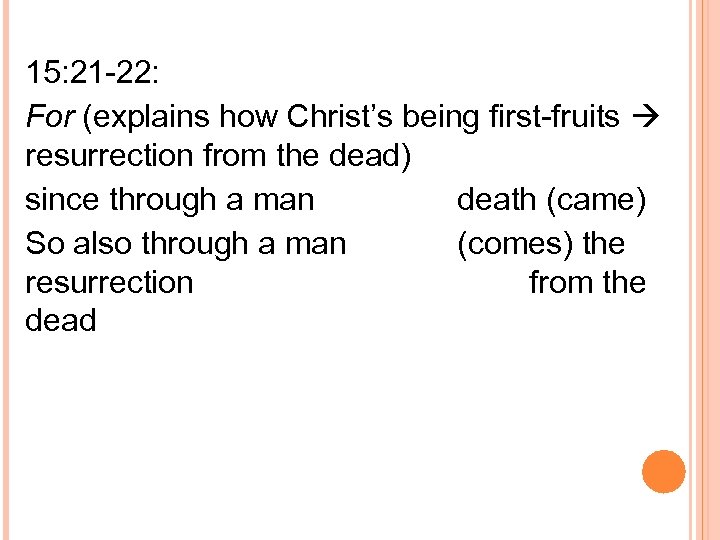 15: 21 -22: For (explains how Christ’s being first-fruits resurrection from the dead) since through a man death (came) So also through a man (comes) the resurrection from the dead
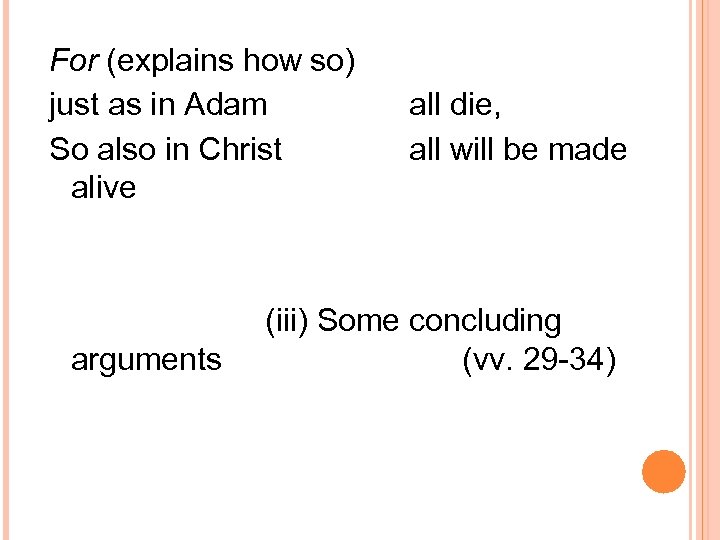 For (explains how so) just as in Adam all die, So also in Christ all will be made alive (iii) Some concluding arguments (vv. 29 -34)
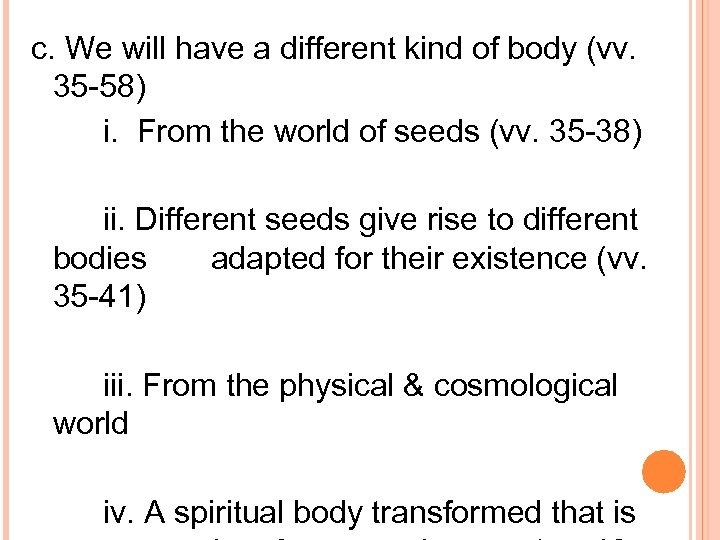 c. We will have a different kind of body (vv. 35 -58) i. From the world of seeds (vv. 35 -38) ii. Different seeds give rise to different bodies adapted for their existence (vv. 35 -41) iii. From the physical & cosmological world iv. A spiritual body transformed that is
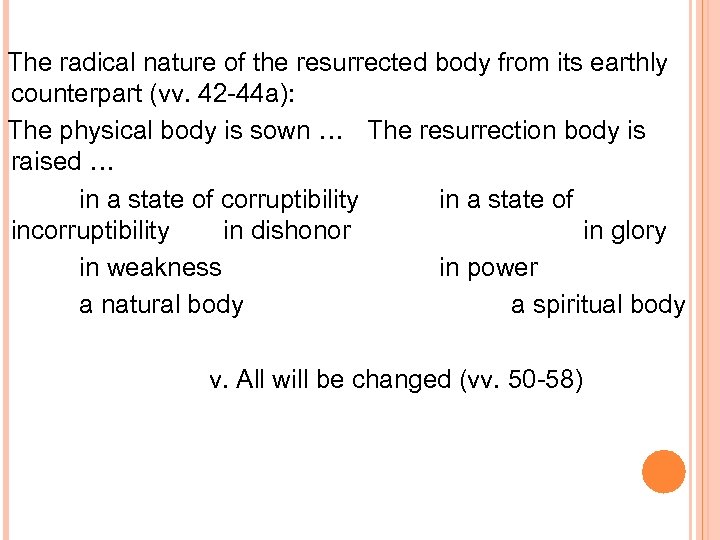 The radical nature of the resurrected body from its earthly counterpart (vv. 42 -44 a): The physical body is sown … The resurrection body is raised … in a state of corruptibility in a state of incorruptibility in dishonor in glory in weakness in power a natural body a spiritual body v. All will be changed (vv. 50 -58)
 L. The Collection & his Itinerary (16: 1 -11)