


 Скачать презентацию NEW TEA PRODUCTS FOR COMMERCIALIZATION IN KENYA L
c1ec76056b78be2dc40d8b9bf079089f.ppt
- Количество слайдов: 26
 NEW TEA PRODUCTS FOR COMMERCIALIZATION IN KENYA L. C. Kerio 1; F. Wachira 2; M. Obanda 3; G. Wanjala 4 1 KALRO- TEA RESEARCH INSTITUTE; 2 ASARECA; 3 JKUAT; 4 KIRDI
 INTRODUCTION • Tea is botanically called Camellia sinensis • Three main varieties are cultivated in Kenya: China (Camellia sinensis var sinensis) Assam (Camellia sinensis var assamica) Cambod (Camellia sinensis var cambodiensis) • Classification is based on areas of origin, leaf sizes and growth habits • Biochemical and molecular profiles differ among the tea varieties • Tea is widely consumed as an non-alcoholic beverage • Major types of processed tea products- Green, black, white and oolong • Kenya predominantly manufactures and exports black CTC tea • Purple tea varieties have recently been developed and released in Kenya- used for processing of purple tea (high value product fetching USD 30/Kg compared to USD 3 -5/Kg for other tea products; processed by cottage industry) TEA RESEARCH INSTITUTE IS ISO 9001: 2008 CERTIFIED
 ECONOMIC VALUE OF TEA IN KENYA v. Kenya is the third largest producer of tea in the world after China and India v. Tea is a major foreign exchange earner v 26% of all foreign exchange earnings in Kenya v 4% of GDP v 2013 earnings-KES 115 Billion; 2014 earnings- KES 106 billion v. Provides employment- 10% of Kenyans and their households v. Little product diversification- opportunities exist for production of high value products including green tea, orthodox tea, purple tea, specialty teas, tea extracts 3/16/2018 TEA RESEARCH INSTITUTE IS ISO 9001: 2008 CERTIFIED 3
 BACKGROUND • • Kenya produces Black CTC tea as its major export commodity. Tea enterprises have experienced decreased profitability due to low/stagnant export prices. Product diversification will enlarge market for Kenyan tea and stabilize prizes. The need for urgent product diversification has resulted in development of new products eg purple tea in Kenya which is rich in the antioxidants called anthocyanins. • Anthocyanins can serve as natural food colorants, functional foods and dietary supplements. • Synthetic colorants and pigments are increasingly being rejected in the market providing room for trade in natural products including tea anthocyanins, green tea extracts (GTE). • For example, GTE in China- Total Revenue US$10 -50 million; Domestic markets 74%, North America 15%, Western Europe 2% • A Spray-dried anthocyanin powder / concentrate (Enocolor) is now marketed in Italy- has Malvidin as the most predominant anthocyanin. • Purple corn anthocyanins have been used as food colour since 1977; red-rice is used as a functional food in China, food colorant in bread, ice-cream and liquor. • Kenyan purple tea may have similar potential and uses and contribute to product differentiation, value addition and increased returns from tea. 3/16/2018 TEA RESEARCH INSTITUTE IS ISO 9001: 2008 CERTIFIED 4
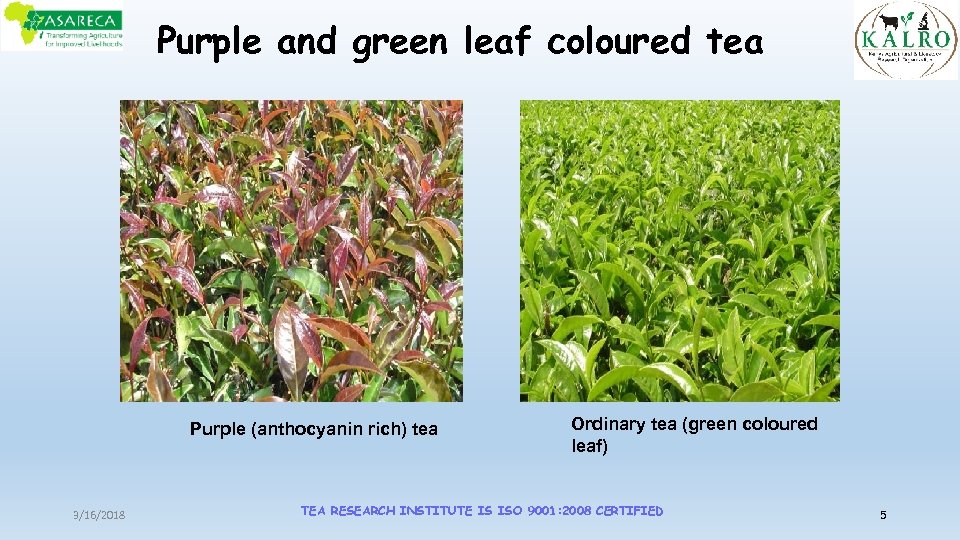 Purple and green leaf coloured tea Purple (anthocyanin rich) tea 3/16/2018 Ordinary tea (green coloured leaf) TEA RESEARCH INSTITUTE IS ISO 9001: 2008 CERTIFIED 5
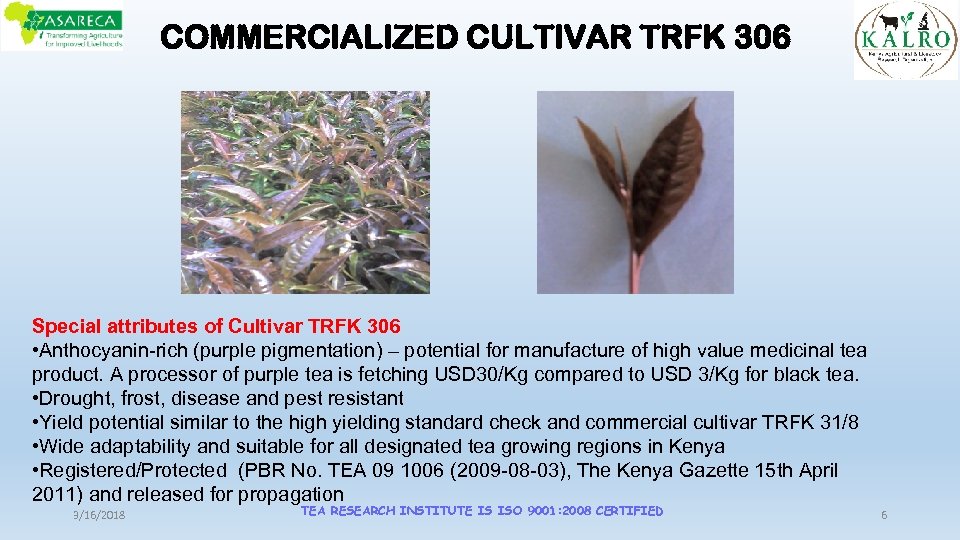 COMMERCIALIZED CULTIVAR TRFK 306 Special attributes of Cultivar TRFK 306 • Anthocyanin-rich (purple pigmentation) – potential for manufacture of high value medicinal tea product. A processor of purple tea is fetching USD 30/Kg compared to USD 3/Kg for black tea. • Drought, frost, disease and pest resistant • Yield potential similar to the high yielding standard check and commercial cultivar TRFK 31/8 • Wide adaptability and suitable for all designated tea growing regions in Kenya • Registered/Protected (PBR No. TEA 09 1006 (2009 -08 -03), The Kenya Gazette 15 th April 2011) and released for propagation 3/16/2018 TEA RESEARCH INSTITUTE IS ISO 9001: 2008 CERTIFIED 6
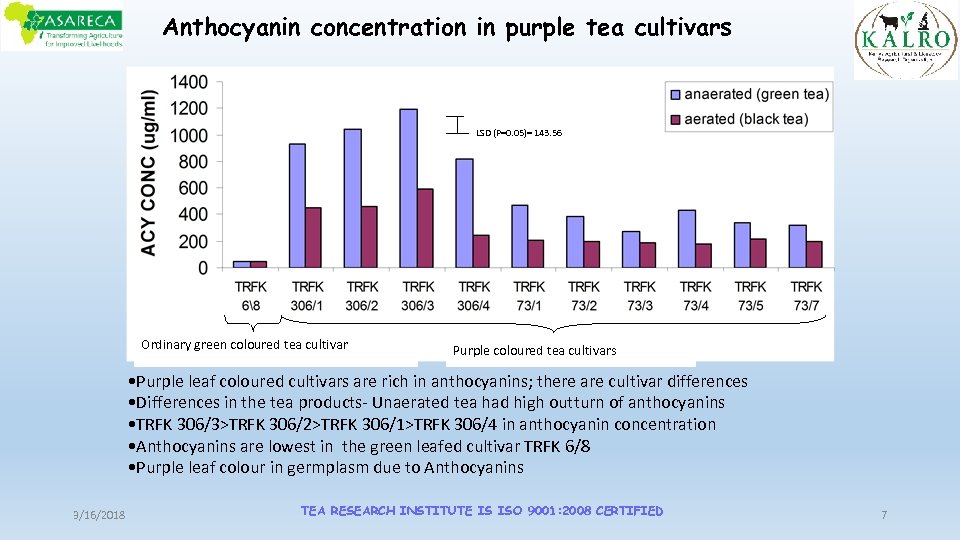 Anthocyanin concentration in purple tea cultivars LSD (P=0. 05)= 143. 56 Ordinary green coloured tea cultivar Purple coloured tea cultivars • Purple leaf coloured cultivars are rich in anthocyanins; there are cultivar differences • Differences in the tea products- Unaerated tea had high outturn of anthocyanins • TRFK 306/3>TRFK 306/2>TRFK 306/1>TRFK 306/4 in anthocyanin concentration • Anthocyanins are lowest in the green leafed cultivar TRFK 6/8 • Purple leaf colour in germplasm due to Anthocyanins 3/16/2018 TEA RESEARCH INSTITUTE IS ISO 9001: 2008 CERTIFIED 7
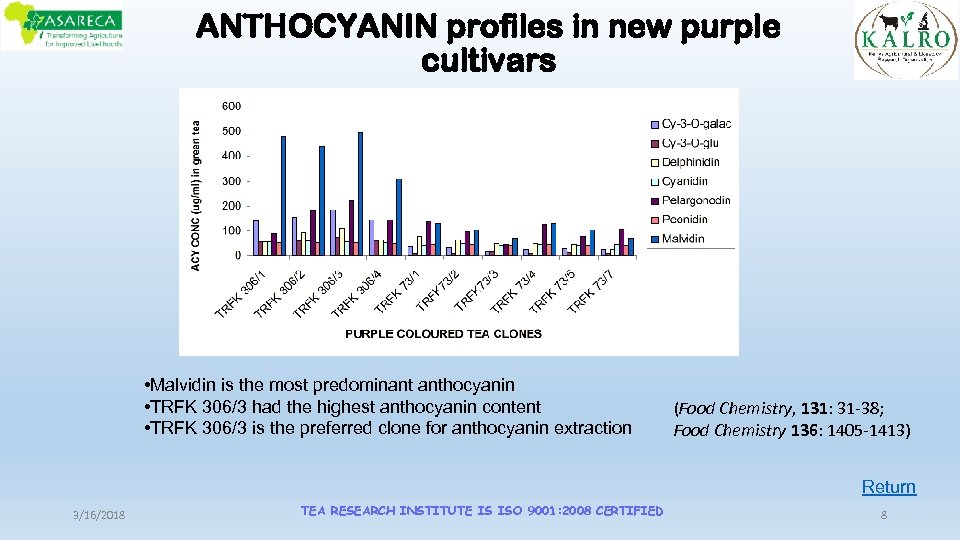 ANTHOCYANIN profiles in new purple cultivars • Malvidin is the most predominant anthocyanin • TRFK 306/3 had the highest anthocyanin content • TRFK 306/3 is the preferred clone for anthocyanin extraction (Food Chemistry, 131: 31 -38; Food Chemistry 136: 1405 -1413) Return 3/16/2018 TEA RESEARCH INSTITUTE IS ISO 9001: 2008 CERTIFIED 8
 TEA EXTRACTS- A new product line for tea Black tea extract (Tea tannins) – fabric dye, food colourant, antiseptic, hair and skin conditioner with potent antioxidant properties Green tea extract- fabric dye, food colourant, care products for dry skin conditions, use in confectionaries, baked products Purple tea extract (rich in anthocyanins)- fabric dye, food colourant, care products for skin, UV-B irradiation protection, assist in wound healing, protection of collagen Tea seed oil- culinary use since quality properties are similar to Olive oil, preservative with anticarcinogenic properties 3/16/2018 TEA RESEARCH INSTITUTE IS ISO 9001: 2008 CERTIFIED 9
 WHY KENYAN TEA FOR EXTRACTS? • Kenyan teas contain very high polyphenol contents and are rich in antioxidants- Catechins and anthocyanins • Kenyan tea is cultivated and harvested throughout the year-favourable equatorial climate and can be used to extract large quantities of extracts • Kenyan tea is grown pesticide free- hence no risk of residue contamination • Seeds produced from Kenyan purple tea cultivars and green tea have high antioxidant activity and have similar properties to olive oil (Afri. J. Biotech. , 12(8): 841 -846; Am. J. Plant Sci. , 6: 1080 -1089) Potential for product diversification & value addition TEA RESEARCH INSTITUTE IS ISO 9001: 2008 CERTIFIED
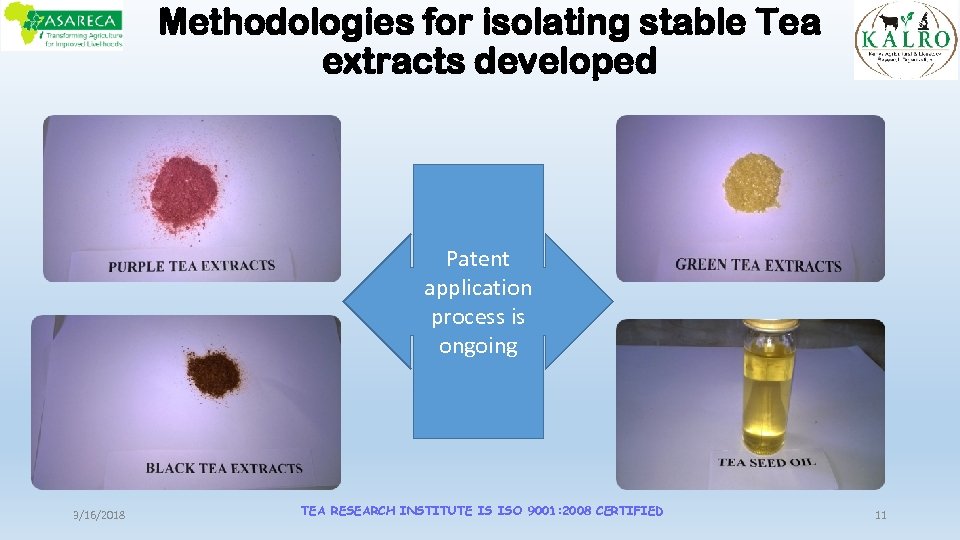 Methodologies for isolating stable Tea extracts developed Patent application process is ongoing 3/16/2018 TEA RESEARCH INSTITUTE IS ISO 9001: 2008 CERTIFIED 11
 HEALTH BENEFITS OF TEA CATECHINS AND ANTHOCYANINS Research evidence has shown that Tea polyphenols (Catechins and Anthocyanins) have a wide range of properties and health benefits including the following; • • Anti-oxidant Anti-fungal Anti-inflammatory Anti-bacterial Anti-cancerous Anti-diabetic Anti-microbial and Anti-parasitic Anti-septic Tea Catechin and Anthocyanin extracts can therefore be used in the manufacture of many types of pharmacologically active fast moving consumer goods. This is already being done in Japan and China and should be replicated in Kenya. 3/16/2018 TEA RESEARCH INSTITUTE IS ISO 9001: 2008 CERTIFIED 12
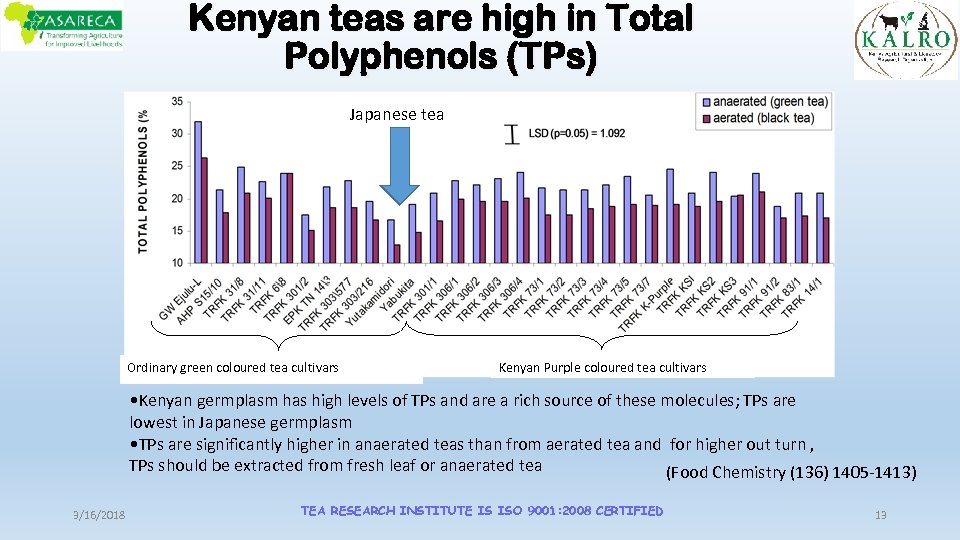 Kenyan teas are high in Total Polyphenols (TPs) Japanese tea Ordinary green coloured tea cultivars Kenyan Purple coloured tea cultivars • Kenyan germplasm has high levels of TPs and are a rich source of these molecules; TPs are lowest in Japanese germplasm • TPs are significantly higher in anaerated teas than from aerated tea and for higher out turn , TPs should be extracted from fresh leaf or anaerated tea (Food Chemistry (136) 1405 -1413) 3/16/2018 TEA RESEARCH INSTITUTE IS ISO 9001: 2008 CERTIFIED 13
 Antioxidant potency of Kenyan tea polyphenol extract confirmed : Effect of catechin EGCC on LDH leakage on HEK 293 WT cells • Kenyan tea catechins (C) attenuate LDK Leakage in Human Kidney cells exposed to oxidative stress in a Dose dependent manner indicating the antioxidant potency of these pigments. This shows the potential health benefits of purple tea anthocyanins (J. Toxicology and Environmental Health Sciences 3(14): 367 -375) 3/16/2018 TEA RESEARCH INSTITUTE IS ISO 9001: 2008 CERTIFIED 14
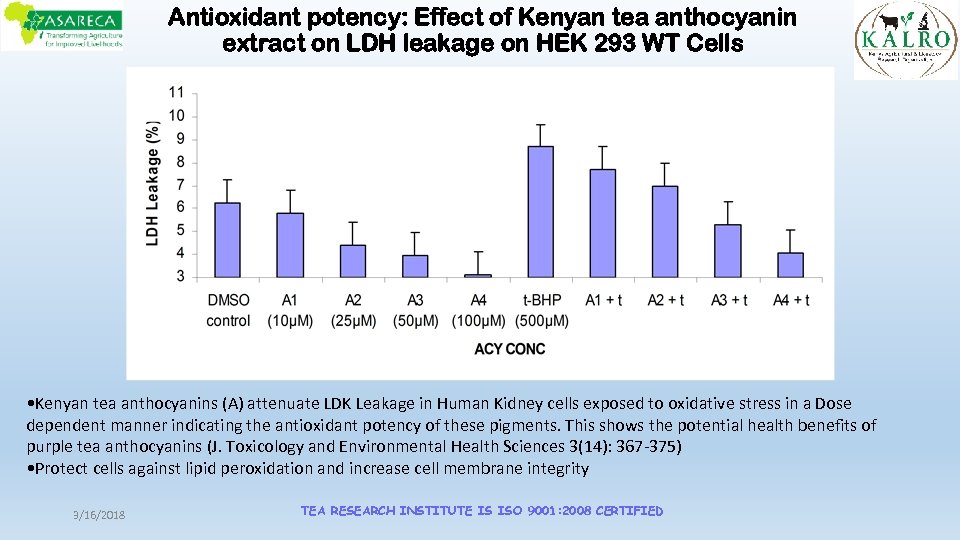 Antioxidant potency: Effect of Kenyan tea anthocyanin extract on LDH leakage on HEK 293 WT Cells • Kenyan tea anthocyanins (A) attenuate LDK Leakage in Human Kidney cells exposed to oxidative stress in a Dose dependent manner indicating the antioxidant potency of these pigments. This shows the potential health benefits of purple tea anthocyanins (J. Toxicology and Environmental Health Sciences 3(14): 367 -375) • Protect cells against lipid peroxidation and increase cell membrane integrity 3/16/2018 TEA RESEARCH INSTITUTE IS ISO 9001: 2008 CERTIFIED
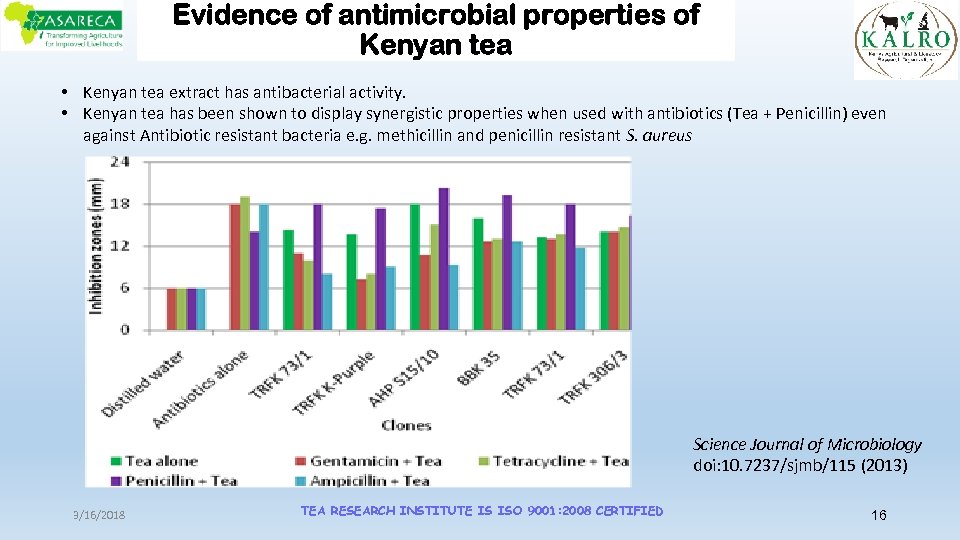 Evidence of antimicrobial properties of Kenyan tea • Kenyan tea extract has antibacterial activity. • Kenyan tea has been shown to display synergistic properties when used with antibiotics (Tea + Penicillin) even against Antibiotic resistant bacteria e. g. methicillin and penicillin resistant S. aureus Science Journal of Microbiology doi: 10. 7237/sjmb/115 (2013) 3/16/2018 TEA RESEARCH INSTITUTE IS ISO 9001: 2008 CERTIFIED 16
 Evidence of antifungal activity of Kenyan tea Candida albicans- fungus of oral cavity, gastrointestinal tract Mucosal and systemic infections Cryptococcus neoformans –causes meningitis in an immune compromised individual limited availability of antifungal drugs and the increasing incidence of opportunistic fungal infections, the emergence of drug resistance in fungal pathogens poses a serious public health concern 3/16/2018 TEA RESEARCH INSTITUTE IS ISO 9001: 2008 CERTIFIED 17
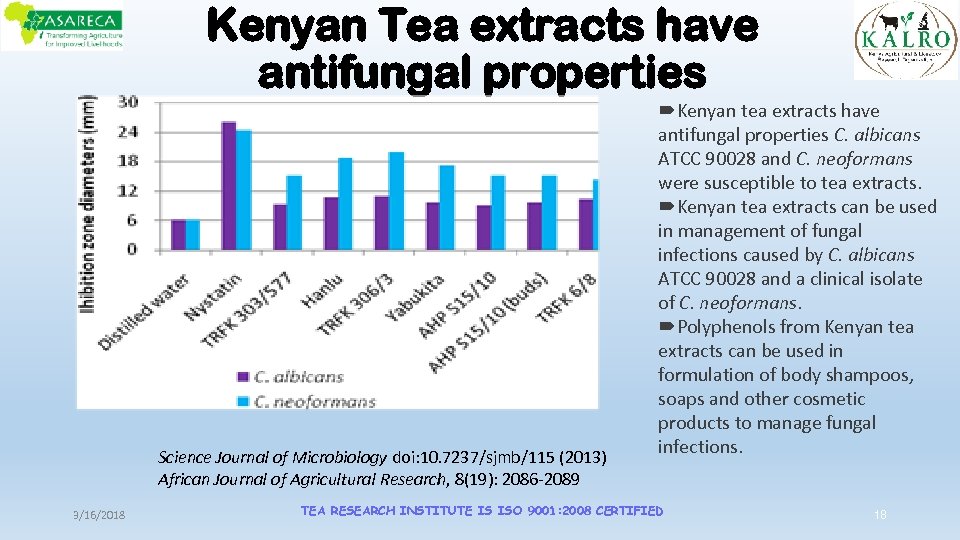 Kenyan Tea extracts have antifungal properties Science Journal of Microbiology doi: 10. 7237/sjmb/115 (2013) African Journal of Agricultural Research, 8(19): 2086 -2089 3/16/2018 Kenyan tea extracts have antifungal properties C. albicans ATCC 90028 and C. neoformans were susceptible to tea extracts. Kenyan tea extracts can be used in management of fungal infections caused by C. albicans ATCC 90028 and a clinical isolate of C. neoformans. Polyphenols from Kenyan tea extracts can be used in formulation of body shampoos, soaps and other cosmetic products to manage fungal infections. TEA RESEARCH INSTITUTE IS ISO 9001: 2008 CERTIFIED 18
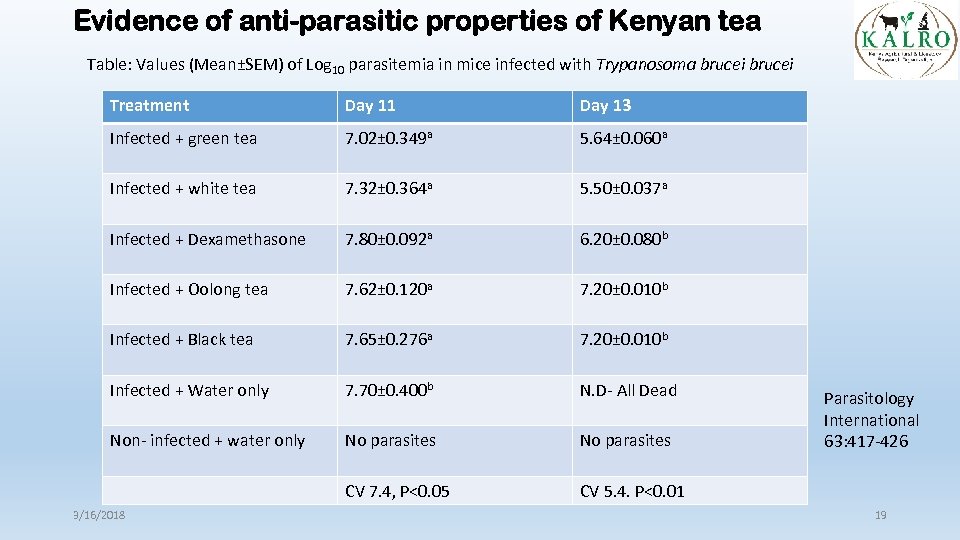 Evidence of anti-parasitic properties of Kenyan tea Table: Values (Mean±SEM) of Log 10 parasitemia in mice infected with Trypanosoma brucei Treatment Day 11 Day 13 Infected + green tea 7. 02± 0. 349 a 5. 64± 0. 060 a Infected + white tea 7. 32± 0. 364 a 5. 50± 0. 037 a Infected + Dexamethasone 7. 80± 0. 092 a 6. 20± 0. 080 b Infected + Oolong tea 7. 62± 0. 120 a 7. 20± 0. 010 b Infected + Black tea 7. 65± 0. 276 a 7. 20± 0. 010 b Infected + Water only 7. 70± 0. 400 b N. D- All Dead Non- infected + water only No parasites CV 7. 4, P<0. 05 CV 5. 4. P<0. 01 3/16/2018 Parasitology International 63: 417 -426 19
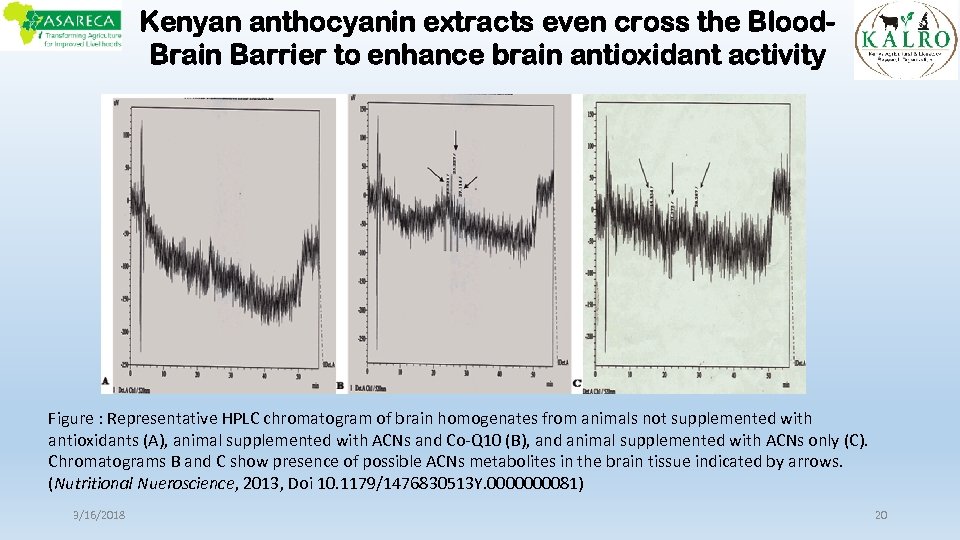 Kenyan anthocyanin extracts even cross the Blood. Brain Barrier to enhance brain antioxidant activity Figure : Representative HPLC chromatogram of brain homogenates from animals not supplemented with antioxidants (A), animal supplemented with ACNs and Co-Q 10 (B), and animal supplemented with ACNs only (C). Chromatograms B and C show presence of possible ACNs metabolites in the brain tissue indicated by arrows. (Nutritional Nueroscience, 2013, Doi 10. 1179/1476830513 Y. 000081) 3/16/2018 20
 Is there potential to use Kenyan Tea extracts in cosmetics and other FMCGs? YES • Tea contains polyphenols- anti-inflammatory, anti-oxidant, anti-allergic, antibacterial, anti-septic • Tea tannins- antiseptic and antioxidant effects • Tea- a natural product with low mammalian toxicity • Can be used in skin care for conditions such as eczema, free radical scavenging, anti-inflammatory, anti-ageing, skin protection from photodamage and antidandruff 3/16/2018 TEA RESEARCH INSTITUTE IS ISO 9001: 2008 CERTIFIED 21
 TEA BASED COSMECEUTICALS and NUTRACEUTICALS DEVELOPED • Shampoos • Conditioners • Detergents • Soap • Lotions • Anthocyanin tablets/capsules 3/16/2018 TEA RESEARCH INSTITUTE IS ISO 9001: 2008 CERTIFIED 22
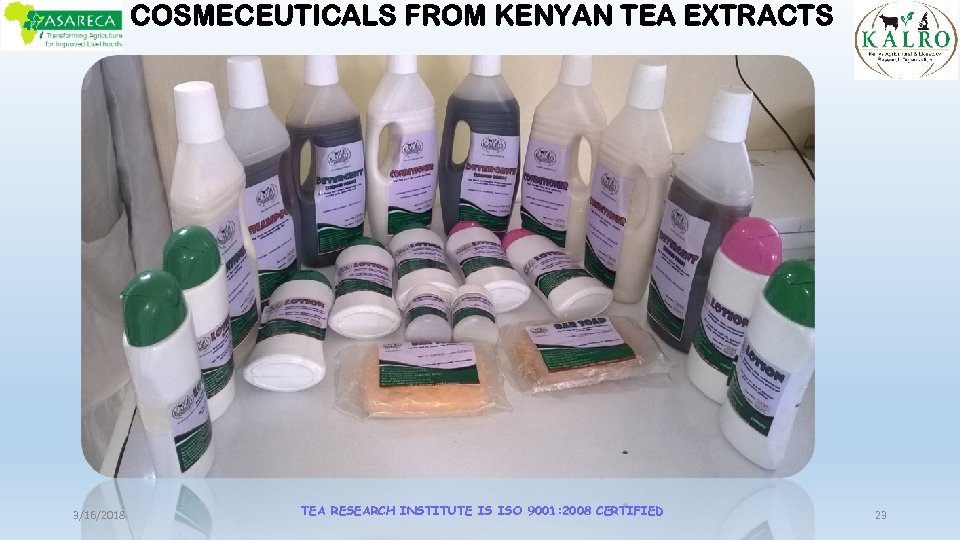 COSMECEUTICALS FROM KENYAN TEA EXTRACTS 3/16/2018 TEA RESEARCH INSTITUTE IS ISO 9001: 2008 CERTIFIED 23
 Linkages with industry • Njeru Industries -Cottage industry for processing purple tea (Loose leaf and tea bags) • Kenya Industrial Research and Development Institute (KIRDI) -Training of individuals and groups on SMEs- rolling out technology • Utafiti Destiny Self Help Group -Potential interested group to upscale the technology 3/16/2018 24
 Conclusions and Recommendations Kenyan tea extracts can be used to manufacture high value fast moving consumer goods hence enlarging the market for Kenyan tea and contributing to stabilizing producer prices, creating skilled jobs and wealth creation. These products can be manufactured by SMEs. Kenyan tea industry should diversify to production of extracts. One factory now exists in Kenya (Kericho) that exports tea extract to Japan. Further research should be carried out to develop new high value products. Efforts are continuing on development of tea fortified milk/yoghurt and alcohol products. 3/16/2018 TEA RESEARCH INSTITUTE IS ISO 9001: 2008 CERTIFIED 25
 WELCOME FOR A CUP OF TEA?