 Скачать презентацию Neurotoxic Effects of Solvents William Boyes Neurotoxicology Division
e4ee61531f201b1c66726bdedf910212.ppt
- Количество слайдов: 32



Neurotoxic Effects of Solvents William Boyes Neurotoxicology Division National Health and Environmental Effects Research Laboratory Office of Research and Development, EPA boyes. william@epa. gov
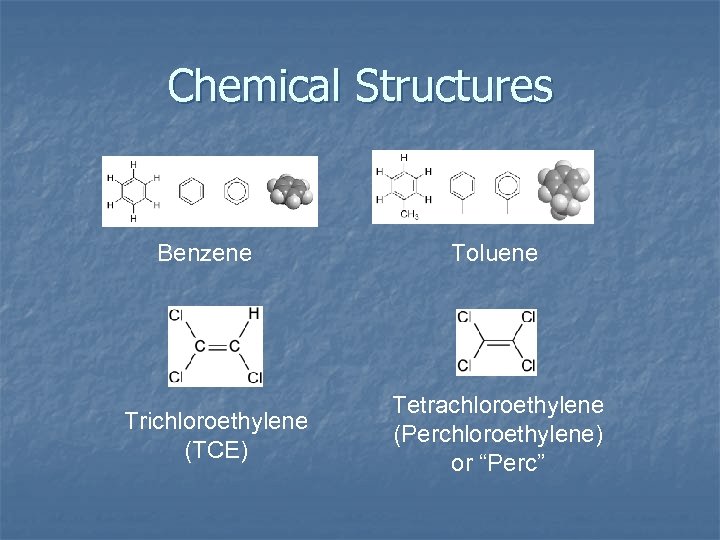
Chemical Structures Benzene Trichloroethylene (TCE) Toluene Tetrachloroethylene (Perchloroethylene) or “Perc”
Solvents n Lipophilic n n Organic chemical composition Distribute to body lipid-rich tissues Easily cross lipid membranes & barriers Volatility n n Inhalation is a significant route of exposure Delivery to tissues depends upon the blood: tissue partition coefficient
Solvent Neurotoxicity Acute n n n n CNS depression Euphoria Sensory, cognitive, motor deficits Reversible after exposure Causes accidents or injuries Good animal models Several mechanistic targets Chronic n n n Organic brain disorder Originally observed in Scandinavian painters Sensory, cognitive, motor deficits Years of high level exposure No good animal models Mechanisms unknown
Volatile Organic Compounds n n Widely used in industry and commerce Emission Sources n n n n Factories & chemical plants Smaller shops Mobile sources Indoor air sources Consumer products Pesticide “inerts” Drinking water Hazardous waste sites n Uses include: n n n n Organic solvents Cleaning & degreasing Gasoline Paints & glues Dry cleaning Printing Paint strippers, nail polish remover Microelectronic manufacture
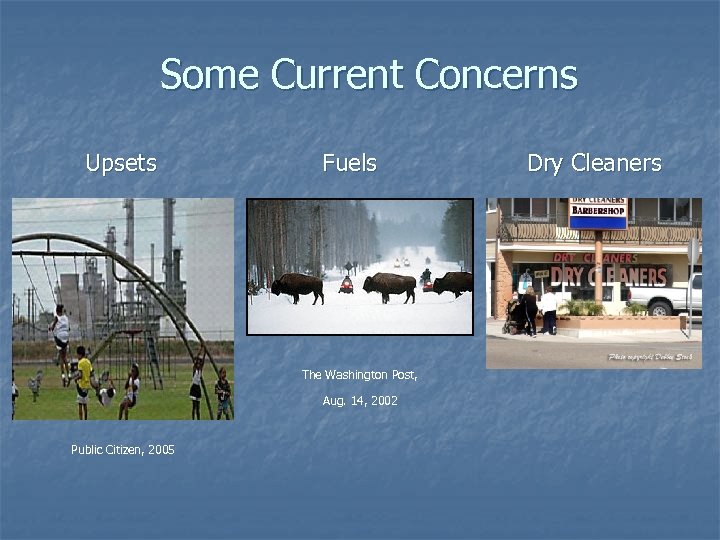
Some Current Concerns Upsets Fuels The Washington Post, Aug. 14, 2002 Public Citizen, 2005 Dry Cleaners
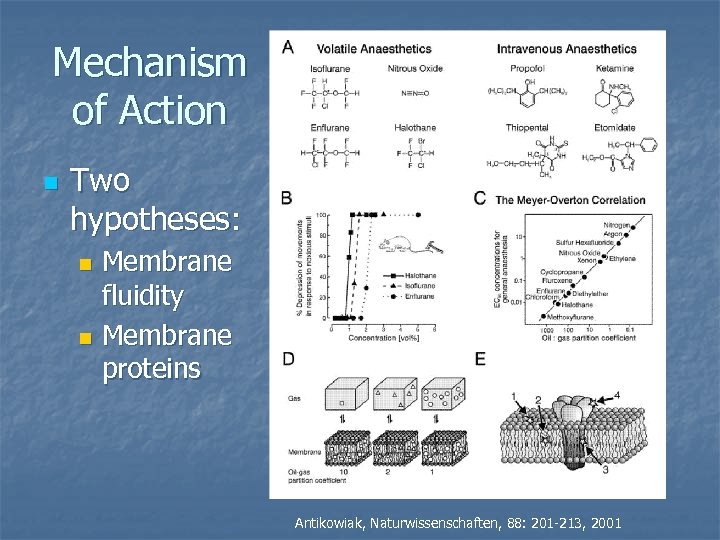
Mechanism of Action n Two hypotheses: Membrane fluidity n Membrane proteins n Antikowiak, Naturwissenschaften, 88: 201 -213, 2001
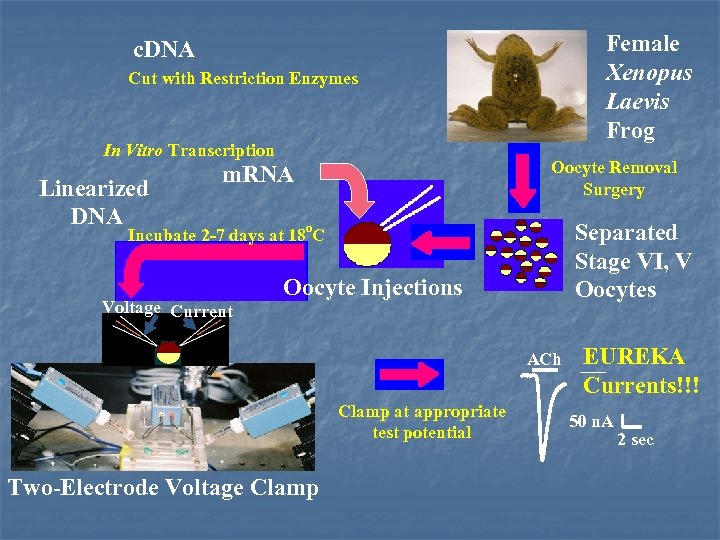
Female Xenopus Laevis Frog c. DNA Cut with Restriction Enzymes In Vitro Transcription Linearized DNA Oocyte Removal Surgery m. RNA Separated Stage VI, V Oocytes Incubate 2 -7 days at 18 o. C Voltage Current Oocyte Injections ACh Clamp at appropriate test potential Two-Electrode Voltage Clamp EUREKA Currents!!! 50 n. A 2 sec
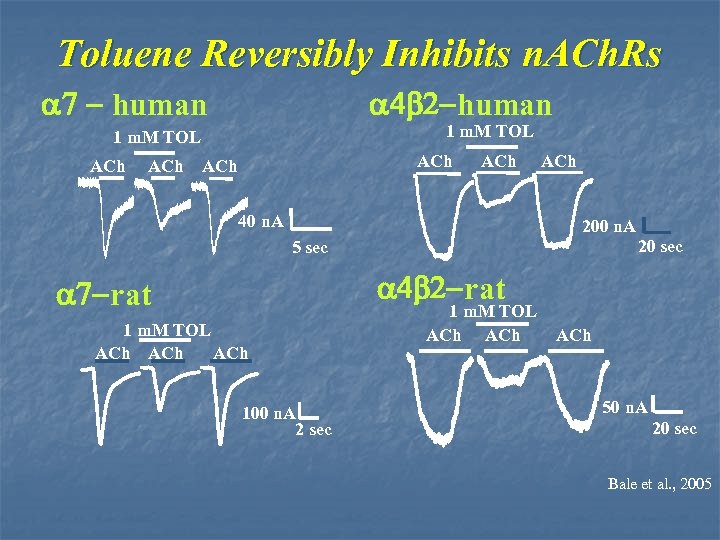
Toluene Reversibly Inhibits n. ACh. Rs a 7 - human a 4 b 2 -human 1 m. M TOL ACh ACh ACh 40 n. A ACh 200 n. A 20 sec 5 sec a 4 b 2 -rat a 7 -rat 1 m. M TOL ACh ACh 100 n. A 2 sec 1 m. M TOL ACh ACh 50 n. A 20 sec Bale et al. , 2005
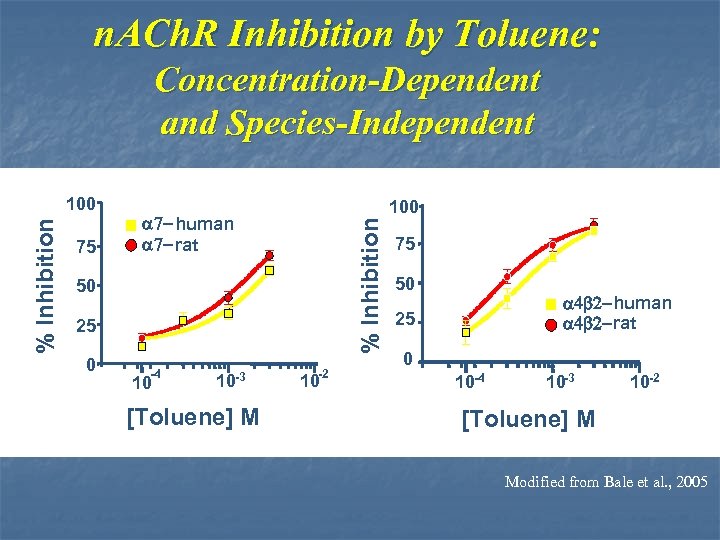
n. ACh. R Inhibition by Toluene: Concentration-Dependent and Species-Independent 75 100 a 7 - human a 7 - rat % Inhibition 100 50 25 0 -4 10 10 -3 [Toluene] M -2 10 75 50 a 4 b 2 -human a 4 b 2 -rat 25 0 10 -4 10 -3 10 -2 [Toluene] M Modified from Bale et al. , 2005
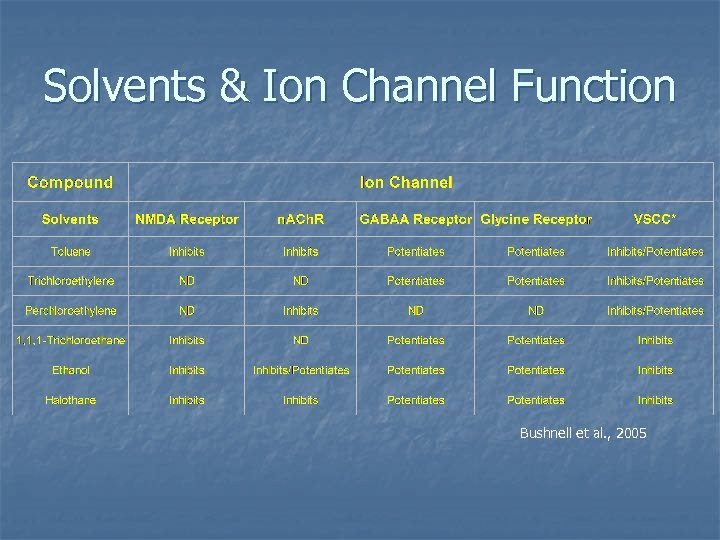
Solvents & Ion Channel Function Bushnell et al. , 2005
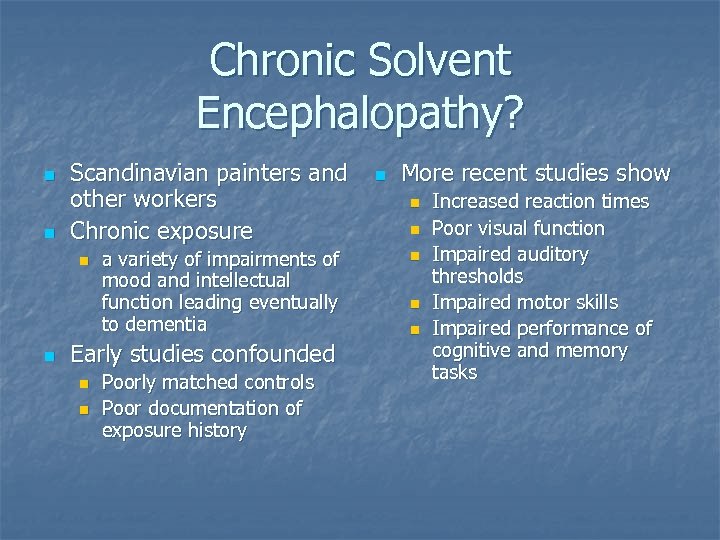
Chronic Solvent Encephalopathy? n n Scandinavian painters and other workers Chronic exposure n n a variety of impairments of mood and intellectual function leading eventually to dementia Early studies confounded n n Poorly matched controls Poor documentation of exposure history n More recent studies show n n n Increased reaction times Poor visual function Impaired auditory thresholds Impaired motor skills Impaired performance of cognitive and memory tasks
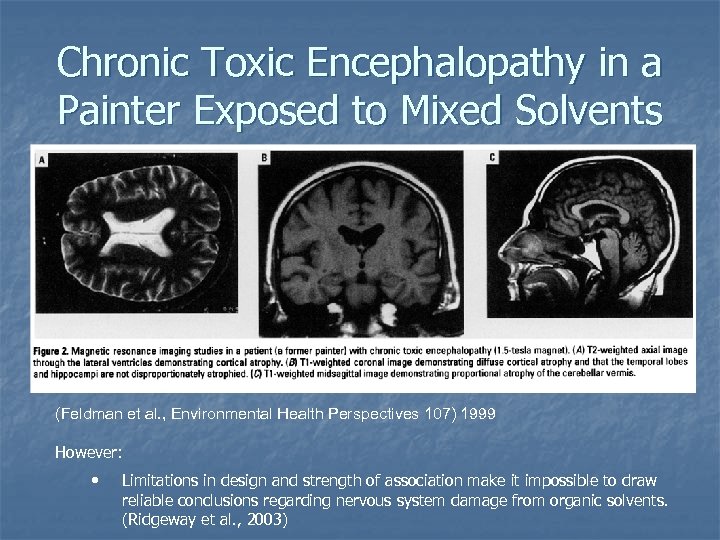
Chronic Toxic Encephalopathy in a Painter Exposed to Mixed Solvents (Feldman et al. , Environmental Health Perspectives 107) 1999 However: • Limitations in design and strength of association make it impossible to draw reliable conclusions regarding nervous system damage from organic solvents. (Ridgeway et al. , 2003)
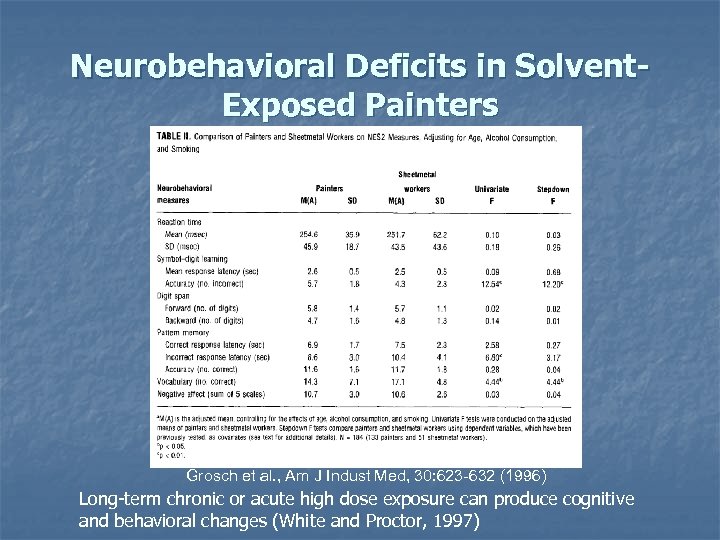
Neurobehavioral Deficits in Solvent. Exposed Painters Grosch et al. , Am J Indust Med, 30: 623 -632 (1996) Long-term chronic or acute high dose exposure can produce cognitive and behavioral changes (White and Proctor, 1997)
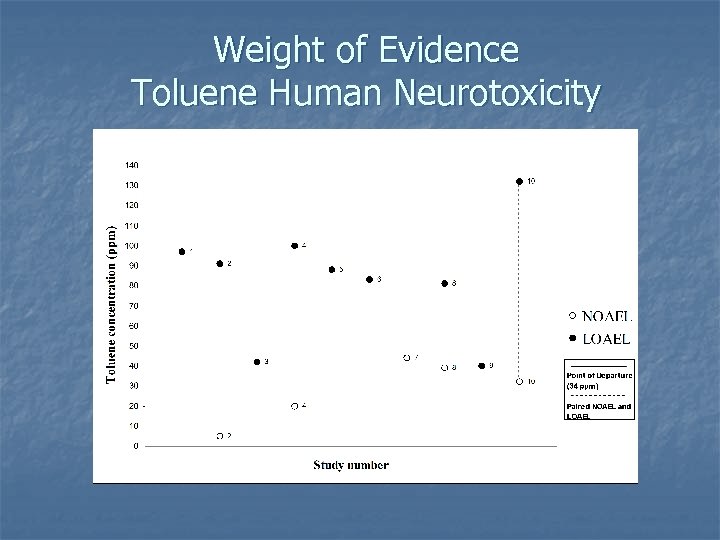
Weight of Evidence Toluene Human Neurotoxicity
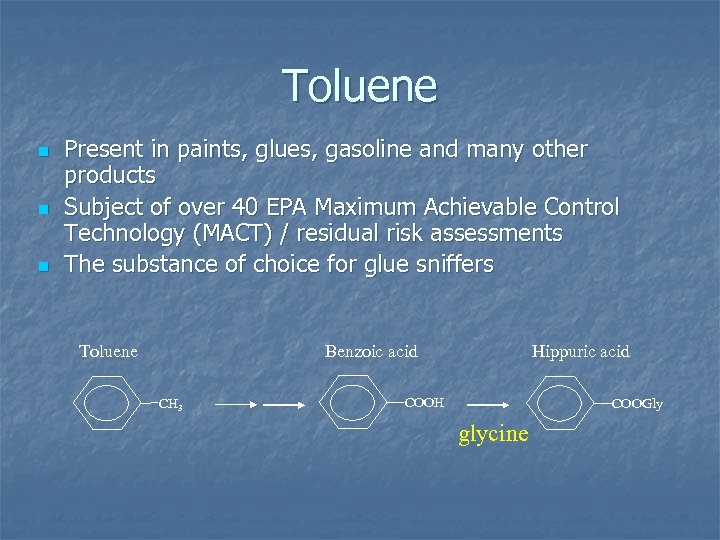
Toluene n n n Present in paints, glues, gasoline and many other products Subject of over 40 EPA Maximum Achievable Control Technology (MACT) / residual risk assessments The substance of choice for glue sniffers Benzoic acid Toluene CH 3 Hippuric acid COOH COOGly glycine
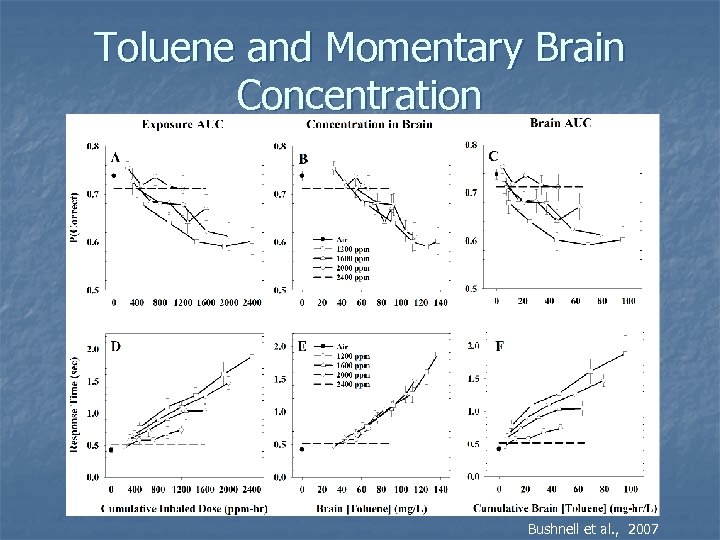
Toluene and Momentary Brain Concentration Bushnell et al. , 2007
Toluene Abuse n Neuropathic effects in humans n n n Following repeated solvent abuse Very high dose levels Cerebellar damage Cerebral atrophy Multiple symptoms of dementia Confounded by hypoxia and other exposures
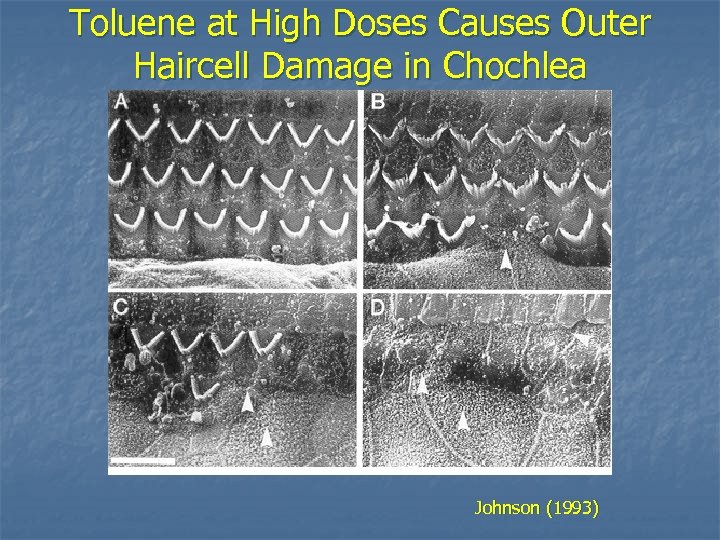
Toluene at High Doses Causes Outer Haircell Damage in Chochlea Johnson (1993)
Ethanol (Alcohol) CH 3—CH 2—OH n n CNS depressant Legal definition of inebriation based on BACs n n Often 0. 1% (100 mg/100 ml) (0. 08 % in NC) Acute exposure n n n Euphoria Loss of inhibitions / poor judgment Loss of balance & motor coordination Impaired vision & visual/motor function Ataxia, nausea, vomiting Unconsciousness
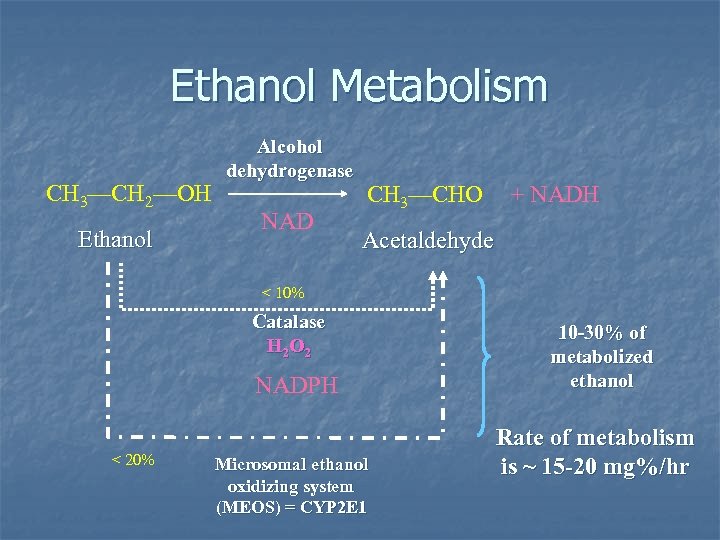
Ethanol Metabolism CH 3—CH 2—OH Ethanol Alcohol dehydrogenase NAD CH 3—CHO + NADH Acetaldehyde < 10% Catalase H 2 O 2 NADPH < 20% Microsomal ethanol oxidizing system (MEOS) = CYP 2 E 1 10 -30% of metabolized ethanol Rate of metabolism is ~ 15 -20 mg%/hr
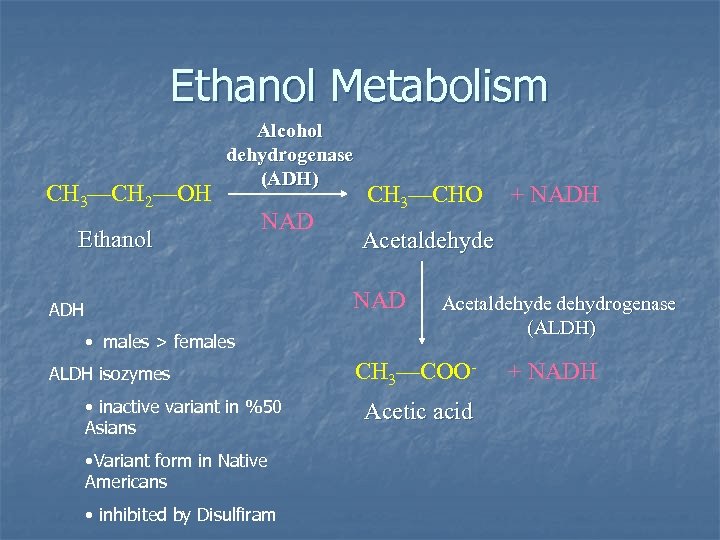
Ethanol Metabolism CH 3—CH 2—OH Alcohol dehydrogenase (ADH) Ethanol NAD CH 3—CHO Acetaldehyde NAD ADH • males > females ALDH isozymes • inactive variant in %50 Asians • Variant form in Native Americans • inhibited by Disulfiram + NADH Acetaldehyde dehydrogenase (ALDH) CH 3—COOAcetic acid + NADH
Chronic Ethanol Toxicity n Alcoholism n n n High % of calories from alcohol Thiamine deficient Wernicke's encephalopathy n n Damage to multiple brain areas Impaired cognition, motor function Korsakoff's psychosis Acute & Chronic n 100, 000 premature deaths / year in U. S.
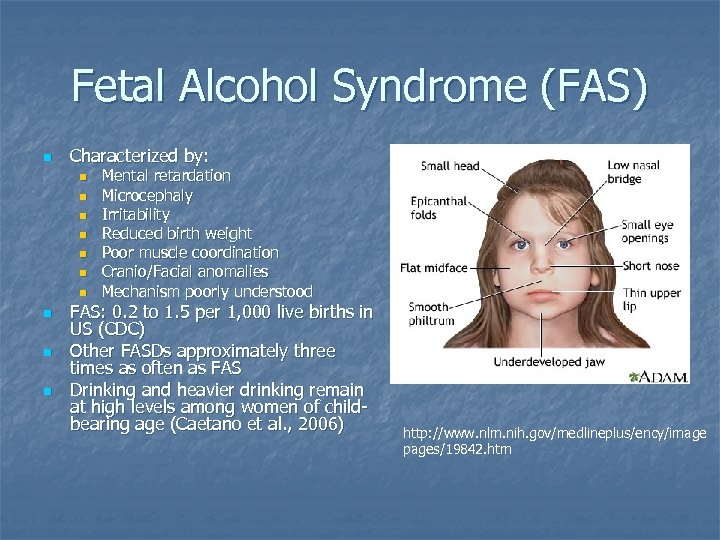
Fetal Alcohol Syndrome (FAS) n Characterized by: n n n n n Mental retardation Microcephaly Irritability Reduced birth weight Poor muscle coordination Cranio/Facial anomalies Mechanism poorly understood FAS: 0. 2 to 1. 5 per 1, 000 live births in US (CDC) Other FASDs approximately three times as often as FAS Drinking and heavier drinking remain at high levels among women of childbearing age (Caetano et al. , 2006) http: //www. nlm. nih. gov/medlineplus/ency/image pages/19842. htm
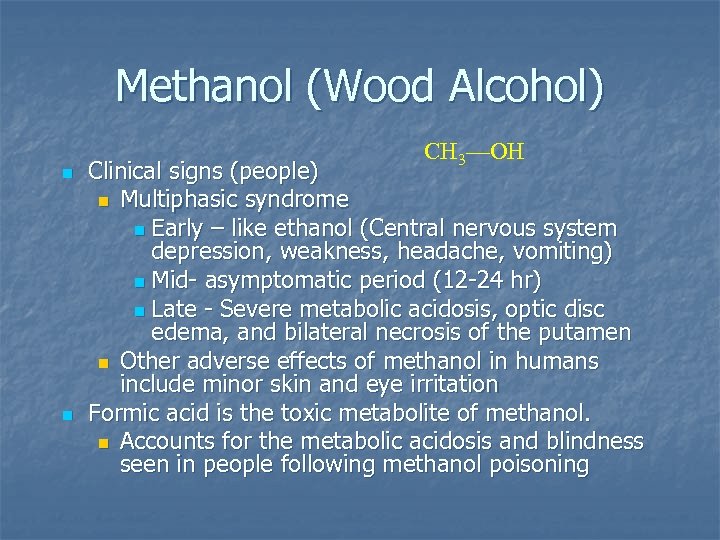
Methanol (Wood Alcohol) n n CH 3—OH Clinical signs (people) n Multiphasic syndrome n Early – like ethanol (Central nervous system depression, weakness, headache, vomiting) n Mid- asymptomatic period (12 -24 hr) n Late - Severe metabolic acidosis, optic disc edema, and bilateral necrosis of the putamen n Other adverse effects of methanol in humans include minor skin and eye irritation Formic acid is the toxic metabolite of methanol. n Accounts for the metabolic acidosis and blindness seen in people following methanol poisoning
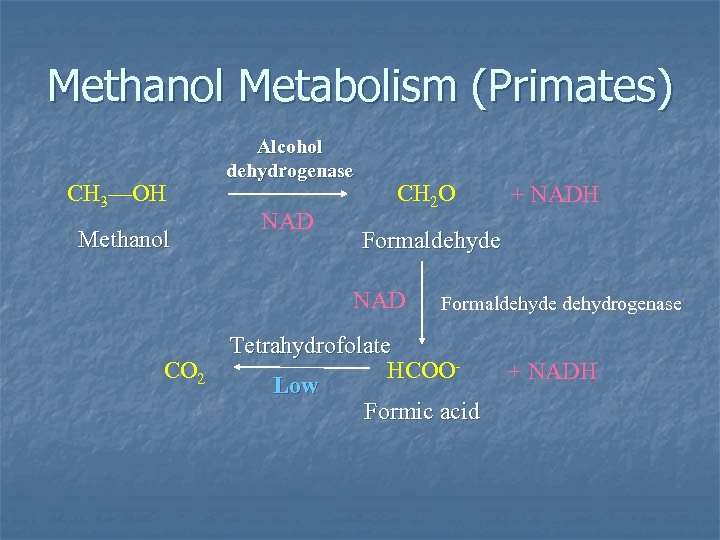
Methanol Metabolism (Primates) CH 3—OH Methanol Alcohol dehydrogenase NAD CH 2 O Formaldehyde NAD CO 2 + NADH Formaldehyde dehydrogenase Tetrahydrofolate HCOOLow Formic acid + NADH
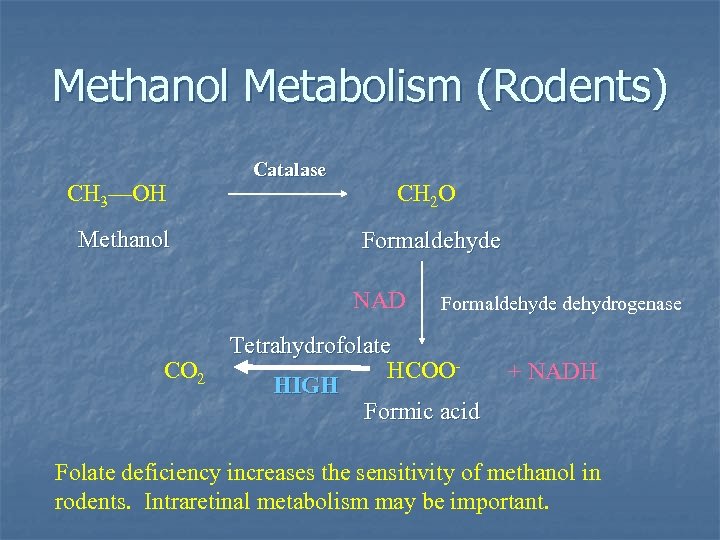
Methanol Metabolism (Rodents) CH 3—OH Methanol Catalase CH 2 O Formaldehyde NAD CO 2 Formaldehyde dehydrogenase Tetrahydrofolate HCOOHIGH Formic acid + NADH Folate deficiency increases the sensitivity of methanol in rodents. Intraretinal metabolism may be important.
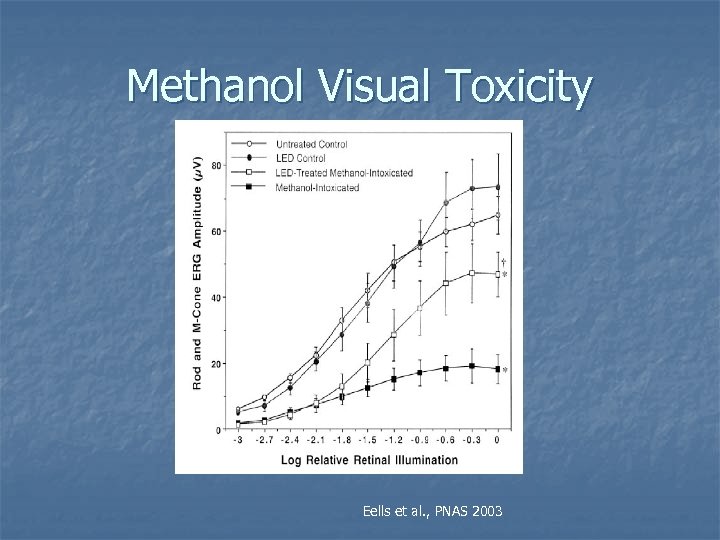
Methanol Visual Toxicity Eells et al. , PNAS 2003
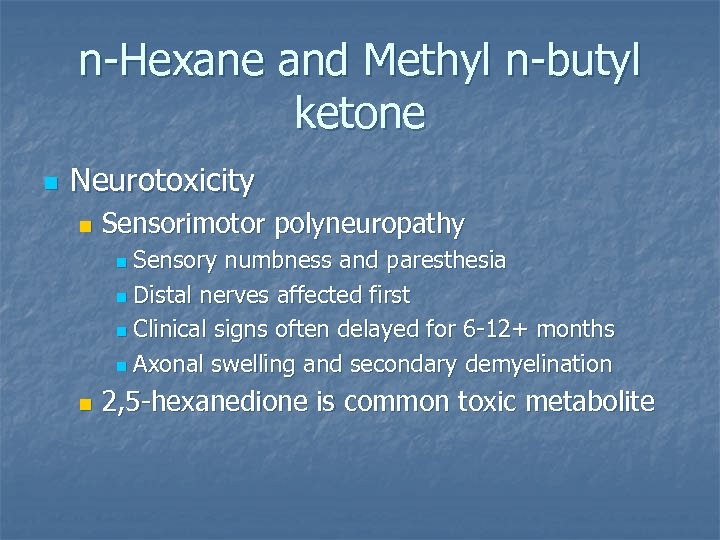
n-Hexane and Methyl n-butyl ketone n Neurotoxicity n Sensorimotor polyneuropathy Sensory numbness and paresthesia n Distal nerves affected first n Clinical signs often delayed for 6 -12+ months n Axonal swelling and secondary demyelination n n 2, 5 -hexanedione is common toxic metabolite
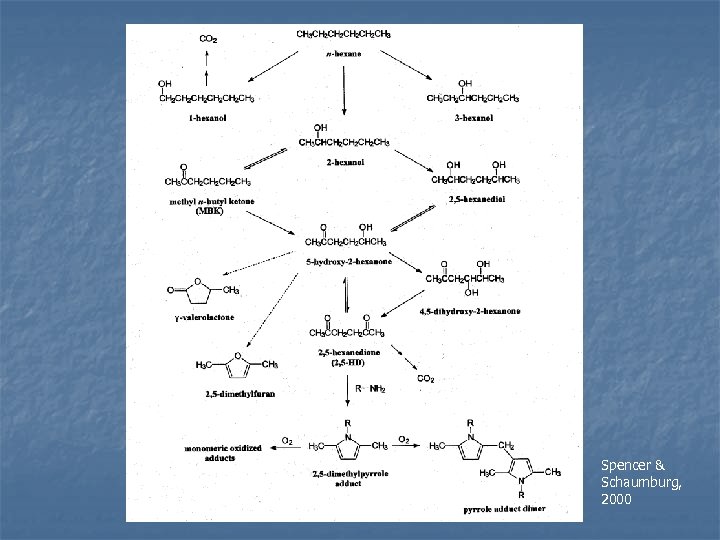
Spencer & Schaumburg, 2000
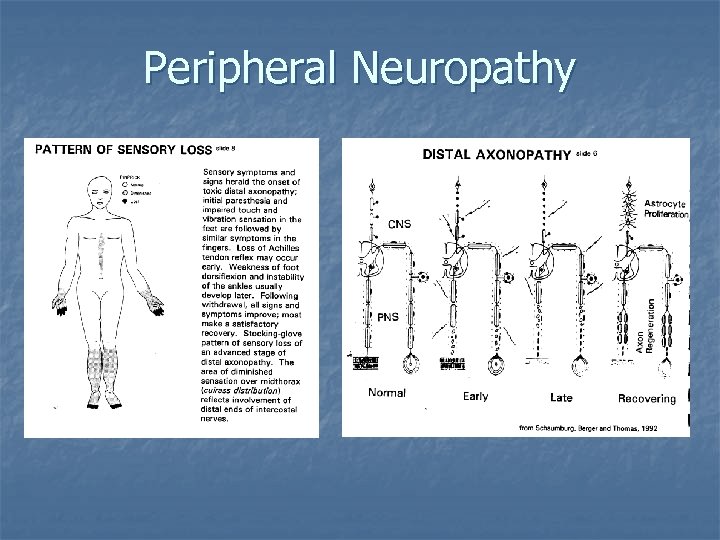
Peripheral Neuropathy

Sources & Readings n Anthony, DC. , Montine, T. J. , Valentine W. M. , and Graham, D. G. Toxic responses of the nervous system. In Casarett and Doull’s n and Doull’s Toxicology: the Basic Science of Poisons, Sixth Edition. Mc. Graw-Hill Medical Publishing n n Division, New York, pp 535 -563, 2001 Bushnell, P. J. , Shafer, T. J. , Bale, A. S. , Boyes, W. K. , Simmons, J. E. , Eklund, C. and Jackson, T. L. Developing an exposure-doseresponse model for organic solvents: overview and progress on in vitro models and dosimetry. Environmental Toxicology and Pharmacology, 19: 607– 614, 2005. Benignus, V. A. , Bushnell, P. J. and Boyes, W. K. Toward cost-benefit analysis of acute behavioral effects of toluene in humans. Risk Analysis, 25 (2), 447 -456, 2005. Bruckner, J. V. and Warren, D. A. , W. K. Toxic effects of solvents and vapors. In Casarett n n n Publishing Division, New York, pp 869 -916, 2001 Schreiber, J S; Hudnell, H K; Geller, A M; House, D E; Aldous, K M; Force, M E; Langguth, K W; Prohonic, E J; Parker, J C (2002) Apartment residents’ and day care workers’ exposures to tetrachloroethylene and deficits in visual contrast sensitivity. Environ Health Perspect 110: 655– 664. Arlien-Søborg, P. (1992). Solvent Neurotoxicity. CRC Press, Boca Raton FL. Spencer PS. , and Schaumburg H. H. Experimental and Clinical Neurotoxicology, 2 nd Edition, Oxford University Press, 2000.
Скачать презентацию Neurotoxic Effects of Solvents William Boyes Neurotoxicology Division
e4ee61531f201b1c66726bdedf910212.ppt