


 Скачать презентацию Neurologic Emergencies status epilepticus clusters seizures Todd
8af5bc13cbc707e69f8fba3431280488.ppt
- Количество слайдов: 44
 Neurologic Emergencies: status epilepticus & clusters seizures Todd M. Bishop, DVM, DACVIM (Neurology) Thursday February 6 th, 2014
 Neurologic emergencies • • Status epilepticus and cluster seizures Severe vestibular events Acute spinal cord injury (ASCI) Traumatic brain injury (TBI)
 Urgent but not emergent • • • Isolated seizures Head tilt Facial paralysis Ambulatory paresis and or ataxia Spinal pain* Tremors
 Goals of this lecture series • Recognize a true neurologic emergency • Perform initial point-of-care diagnostic testing • Provide initial critical therapeutic interventions • Prognosticate • Know which cases to refer and when
 These lectures will be … • Uplifting … No. • Inspiring … Maybe. • Empowering … I hope so. • Remember you are the first-responders! • What you do initially can be life-saving and significantly impact prognosis & outcome. • But don’t worry … no pressure ! http: //fbemoticonscodes. blogspot. com/2013/02/vomit-emoticon-code-for-facebook-chat. html
 Seizure topics to cover • • Definitions Classification Diagnostic testing Therapeutic intervention Complications Prognosis When to refer
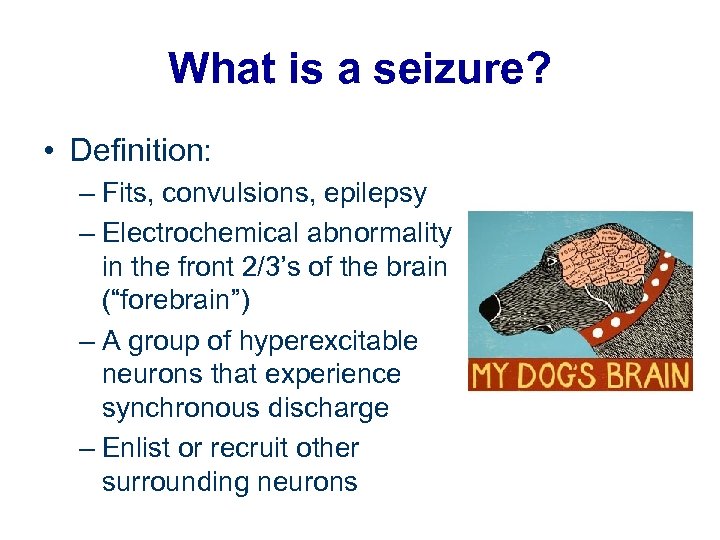 What is a seizure? • Definition: – Fits, convulsions, epilepsy – Electrochemical abnormality in the front 2/3’s of the brain (“forebrain”) – A group of hyperexcitable neurons that experience synchronous discharge – Enlist or recruit other surrounding neurons psych. umn. edu
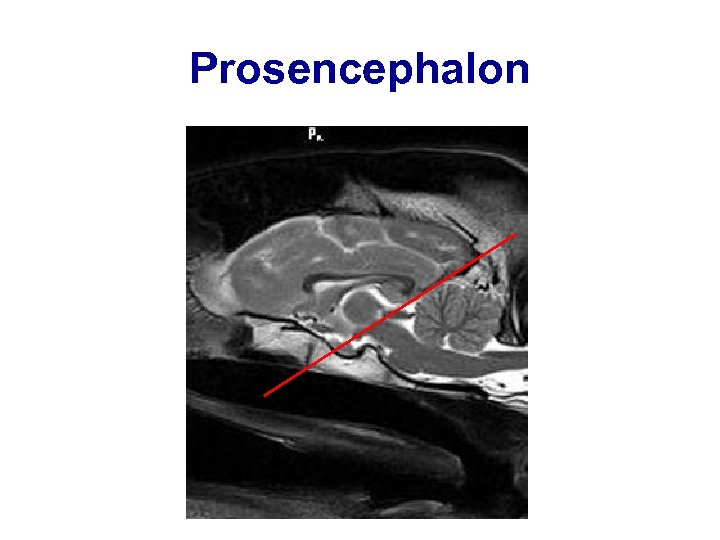 Prosencephalon
 Predictability • Paroxysmal in nature in that it tends to appear suddenly out of background of normality and disappears with equal abruptness (transient) • Can not be predicted, but owners learn to identify earlier signs (aura) • Typically … can not be elicited! • “predictably unpredictable”
 What clients think about seizure triggers • Phases of the moon • Barometric pressure • Mail carrier ringing doorbell • Vacuum • Baby crying • Home remodeling • In-laws visiting • Wrist watch clicking • Mold in the house http: //ocean 1025. files. wordpress. com/2011/01/wolf-moon. jpg
 What I think about predictability • Nights • Weekends • Holidays http: //kevenelliff. com/wp-content/uploads/Facebook-Thumbs-Down. jpg
 Seizure Classification • Generalized – Tonic-clonic – Myoclonic – Absence – Atonic www. geocities. com • Partial – Focal (EEG) – Simple – Complex cd. textfiles. com
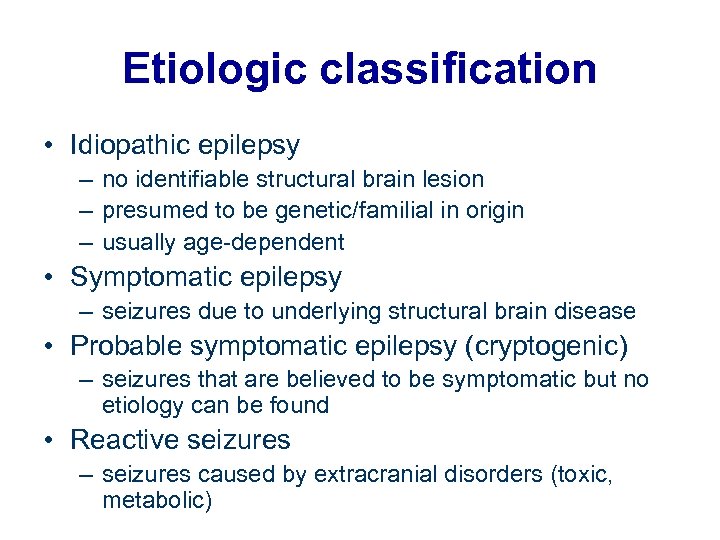 Etiologic classification • Idiopathic epilepsy – no identifiable structural brain lesion – presumed to be genetic/familial in origin – usually age-dependent • Symptomatic epilepsy – seizures due to underlying structural brain disease • Probable symptomatic epilepsy (cryptogenic) – seizures that are believed to be symptomatic but no etiology can be found • Reactive seizures – seizures caused by extracranial disorders (toxic, metabolic)
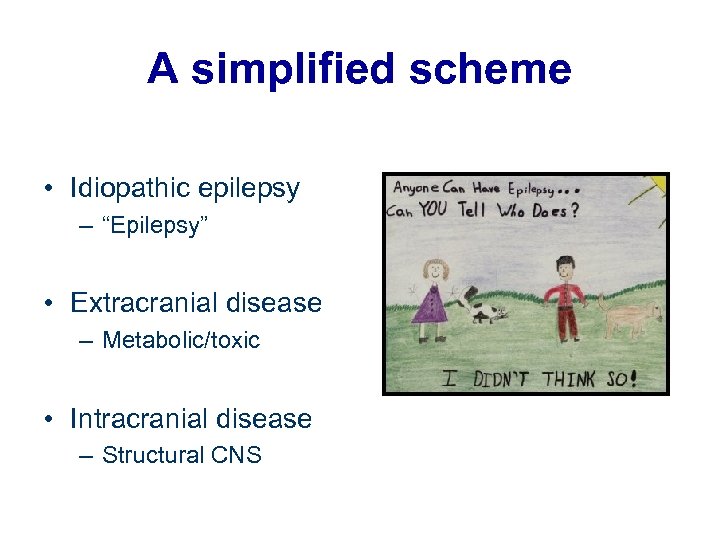 A simplified scheme • Idiopathic epilepsy – “Epilepsy” • Extracranial disease – Metabolic/toxic • Intracranial disease – Structural CNS www. epilepsynl. com
 The only classification we care about tonight Cluster seizures vs. Status epilepticus http: //www. whitegadget. com/pc-wallpapers/141188 -boxing-gloves. html
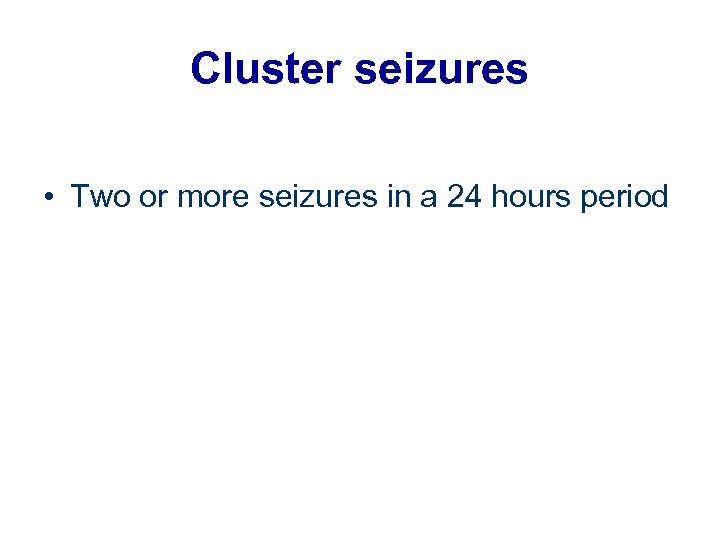 Cluster seizures • Two or more seizures in a 24 hours period
 Status Epilepticus • One continuous seizure (ictus) lasting longer than 5 -10 minutes • Frequent cluster seizures that do not allow for regaining of consciousness between the seizures.
 Diagnostic approach • Signalment (age, breed, etc. ) • Basic followed by a detailed medical history • General physical followed by a neurologic exam • Emergency minimum database • Basic medical work-up • Advanced medical work-up • Referral for intracranial work-up as needed
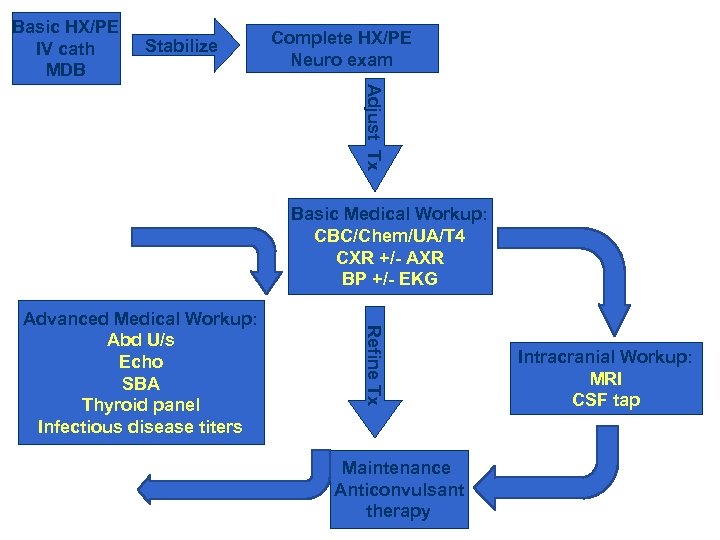 Basic HX/PE IV cath MDB Stabilize Complete HX/PE Neuro exam Adjust Tx Basic Medical Workup: CBC/Chem/UA/T 4 CXR +/- AXR BP +/- EKG Refine Tx Advanced Medical Workup: Abd U/s Echo SBA Thyroid panel Infectious disease titers Maintenance Anticonvulsant therapy Intracranial Workup: MRI CSF tap
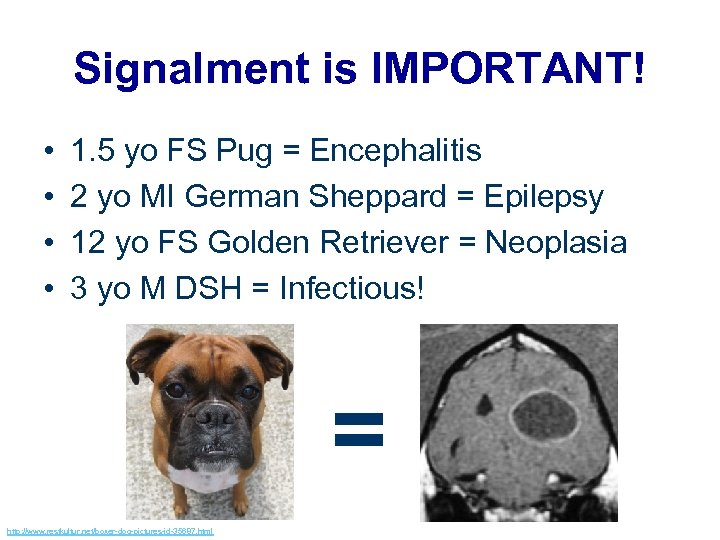 Signalment is IMPORTANT! • • 1. 5 yo FS Pug = Encephalitis 2 yo MI German Sheppard = Epilepsy 12 yo FS Golden Retriever = Neoplasia 3 yo M DSH = Infectious! = http: //www. restkultur. net/boxer-dog-pictures-id-35687. html
 A DETAILED seizure history • At what age did they start? • Ask the owner to describe what they see w/o using words like (grand mal, seizure, convulsion). • How often are they happening? • How long do they last? • Do they come in clusters? • What happens immediately afterward? • What anticonvulsants have been tried? • How long have they been on these meds? • Any recent dose changes? • Any side-effects of the medications? • Any recent lab tests or drug blood levels? • WHEN WAS THE LAST DOSE OF GIVEN? http: //www. hockeydino. com/2011/08/sports-blah-football-blah. html
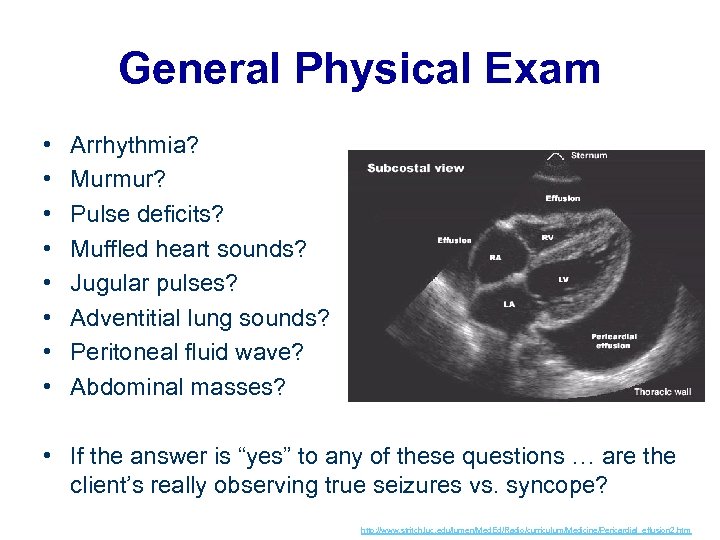 General Physical Exam • • Arrhythmia? Murmur? Pulse deficits? Muffled heart sounds? Jugular pulses? Adventitial lung sounds? Peritoneal fluid wave? Abdominal masses? • If the answer is “yes” to any of these questions … are the client’s really observing true seizures vs. syncope? http: //www. stritch. luc. edu/lumen/Med. Ed/Radio/curriculum/Medicine/Pericardial_effusion 2. htm
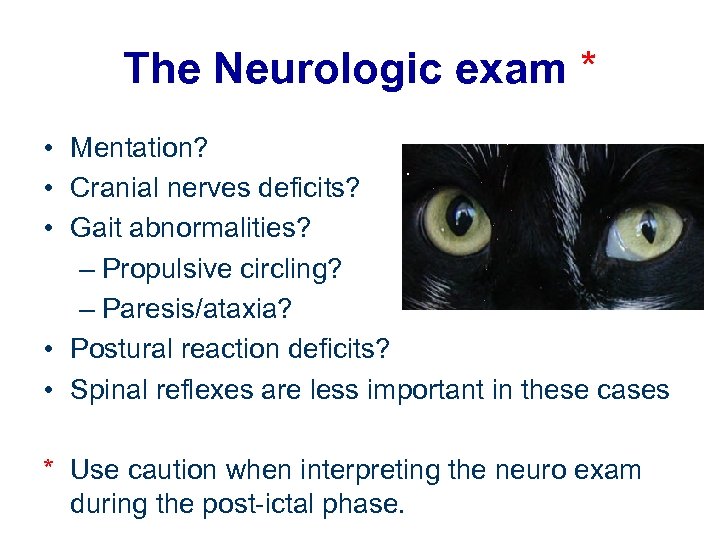 The Neurologic exam * • Mentation? • Cranial nerves deficits? • Gait abnormalities? – Propulsive circling? – Paresis/ataxia? • Postural reaction deficits? • Spinal reflexes are less important in these cases * Use caution when interpreting the neuro exam during the post-ictal phase.
 Emergency minimum database • • Packed cell volume (PCV) Total solids (TS) Blood glucose (BG) Electrolytes (Na+, K+, Cl-, Ca 2+) • If you have one … an I-stat is very helpful!
 Basic Medical Work-up • • Complete Blood Cell Count (CBC) A comprehensive biochemistry profile Urinalysis Total T 4 Chest +/- abdominal radiographs A BLOOD PRESSURE! +/- EKG depending on auscultation
 Advanced Medical Work-up • • • Abdominal ultrasound Echocardiogram A complete thyroid profile Serum bile acids Urine protein: creatinine ratio Infectious disease testing – Canine: 4 Dx (Idexx) – Feline: Feline serology 2 (Antech)
 Why these databases are so important! • Systemic/metabolic diseases can secondarily affect the brain (remember … reactive seizures) – Liver disease (hepatic encephalopathy) – Kidney failure (renal encephalopathy) – Hypertension (pheochromocytoma, hyperthyroidism, glomerular disease, Cushing's disease) – Hypoxemia (cardiovascular or pulmonary disease) – RBC diseases (anemia or polycythemia) – Hypothyroidism – Profound electrolyte disturbances (hyper/hypo. Na) – Hypoglycemia (insulinoma, insulin overdose) – Nutritional deficiencies (don’t forget about thiamine) – Toxins (lead, ethylene glycol, OP’s, strychnine, metaldehyde, mycotoxins)
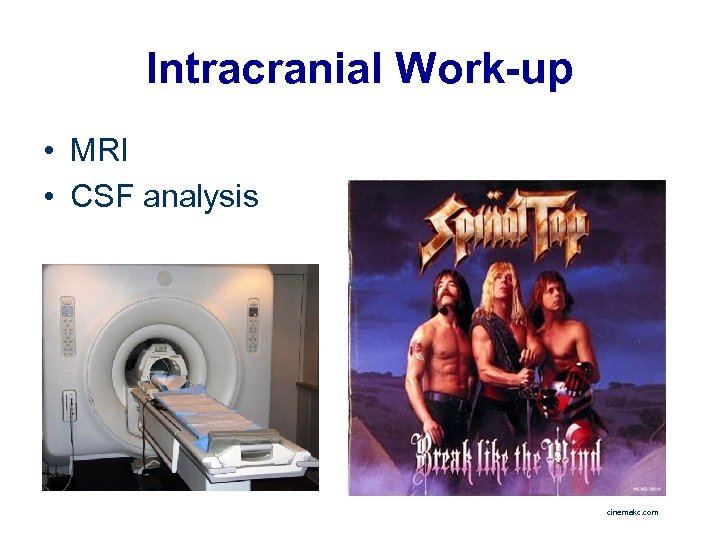 Intracranial Work-up • MRI • CSF analysis cinemakc. com
 Stabilizing the seizure patient • Step 1: get the current seizure stopped • Step 2: prescribe a loading dose of an anticonvulsant if necessary (ie. status epilepticus) • Step 3: start maintenance anticonvulsant therapy if necessary (ie. cluster seizures)
 The Benzodiazepines • Diazepam (Valium) • Midazolam (Versed) Mother's Little Helper • Start with a 0. 5 mg/kg IV bolus • Repeat up to 3 more times as quickly as needed. "Valium, Take Me Away!" • Can be given at 1 -2 mg/kg rectally or NASALLY if no IV access or at home karenwindness. com
 Forget the calculators! • • • Cats: 0. 5 m. L Small Dog: 1 m. L Medium Dog: 2 m. L Large Dog: 3 m. L XL Dog: 4 m. L * You are not going to kill anything with Valium … I promise! ricklondon. wordpress. com
 Constant Rate Infusion (CRI) • Q: When should you consider a CRI? • A: When a single bolus or two stops the current seizure but the seizures recur within minutes to hours (4 -6 hrs) of the initial bolus.
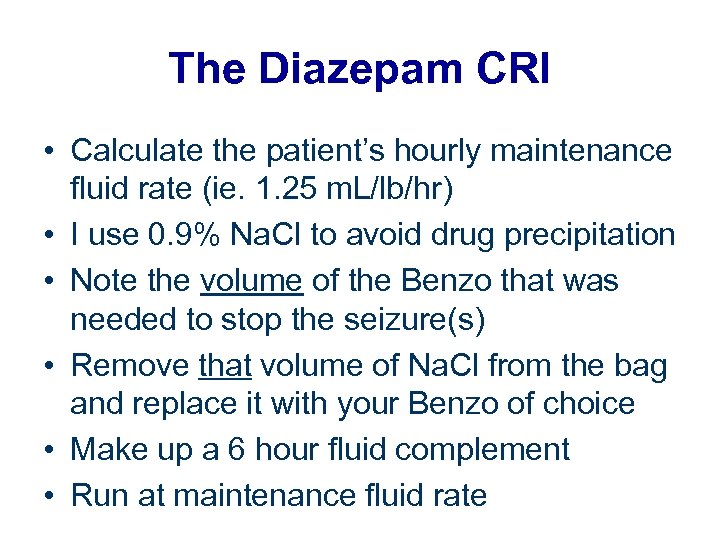 The Diazepam CRI • Calculate the patient’s hourly maintenance fluid rate (ie. 1. 25 m. L/lb/hr) • I use 0. 9% Na. Cl to avoid drug precipitation • Note the volume of the Benzo that was needed to stop the seizure(s) • Remove that volume of Na. Cl from the bag and replace it with your Benzo of choice • Make up a 6 hour fluid complement • Run at maintenance fluid rate
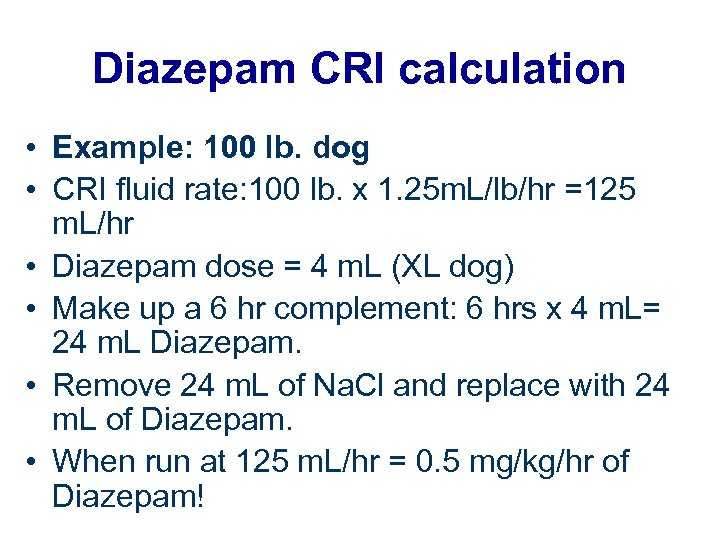 Diazepam CRI calculation • Example: 100 lb. dog • CRI fluid rate: 100 lb. x 1. 25 m. L/lb/hr =125 m. L/hr • Diazepam dose = 4 m. L (XL dog) • Make up a 6 hr complement: 6 hrs x 4 m. L= 24 m. L Diazepam. • Remove 24 m. L of Na. Cl and replace with 24 m. L of Diazepam. • When run at 125 m. L/hr = 0. 5 mg/kg/hr of Diazepam!
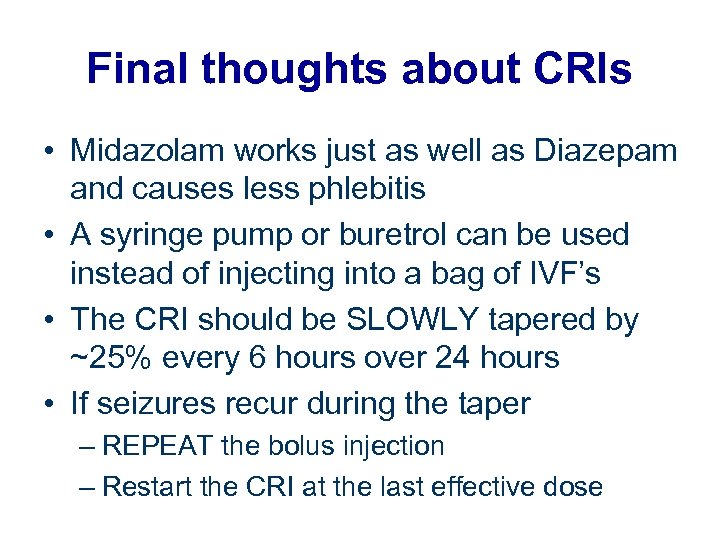 Final thoughts about CRIs • Midazolam works just as well as Diazepam and causes less phlebitis • A syringe pump or buretrol can be used instead of injecting into a bag of IVF’s • The CRI should be SLOWLY tapered by ~25% every 6 hours over 24 hours • If seizures recur during the taper – REPEAT the bolus injection – Restart the CRI at the last effective dose
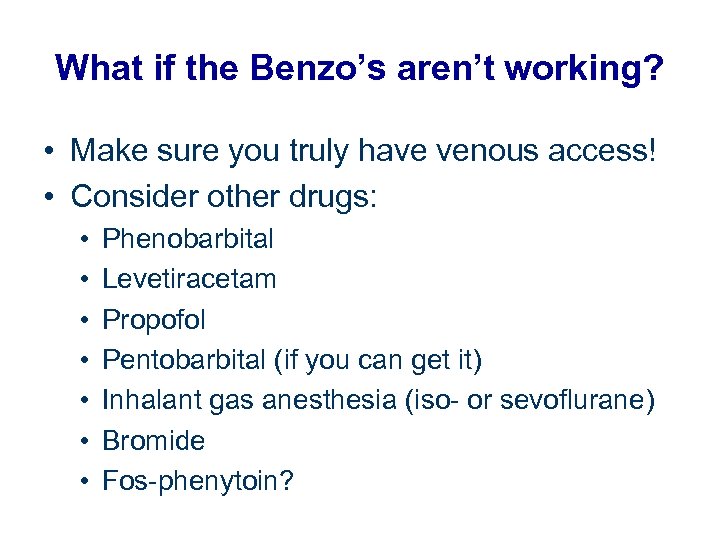 What if the Benzo’s aren’t working? • Make sure you truly have venous access! • Consider other drugs: • • Phenobarbital Levetiracetam Propofol Pentobarbital (if you can get it) Inhalant gas anesthesia (iso- or sevoflurane) Bromide Fos-phenytoin?
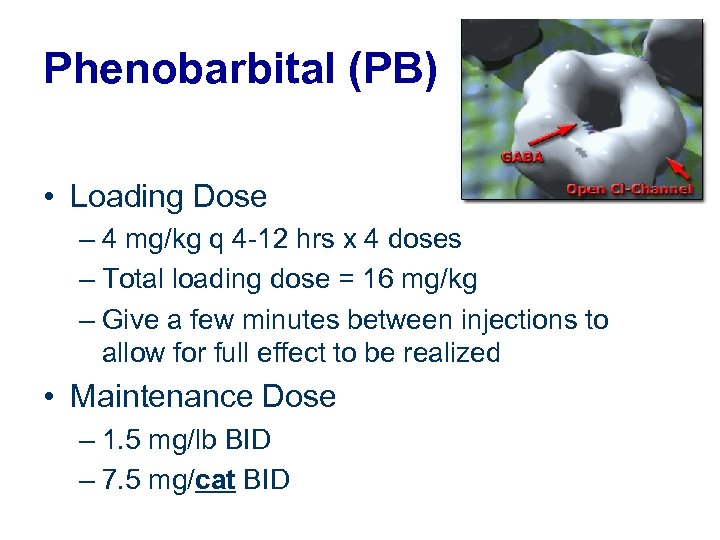 Phenobarbital (PB) • Loading Dose www. neurorelief. com/ images/articles/gabaci. gif – 4 mg/kg q 4 -12 hrs x 4 doses – Total loading dose = 16 mg/kg – Give a few minutes between injections to allow for full effect to be realized • Maintenance Dose – 1. 5 mg/lb BID – 7. 5 mg/cat BID
 Levetiracetam (Keppra ®) • MOA: binds to a synaptic vesicle protein (SV 2 A) believed to impede nerve conduction across synapses • • • Dose: 20 mg/kg IV q 8 hrs or faster PRN Human levels: 5 -21 mcg/m. L T 1/2 E: 4 hours Metabolism: partial hepatic Excretion: renal Side effects: behavior change, somnolence, GI effects pedemmorsels. com
 Other CRIs to consider • Propofol Bolus: 1 mg/kg IV slowly Dog CRI: 0. 1 -0. 7 mg/kg/min Cat CRI: 0. 1 -0. 5 mg/kg/min (can cause Heinz body anemia!) * Be prepared to intubate and ventilate!!! • Pentobarbital Bolus: 3 -15 mg/kg IV to effect (may take several minutes for full effect!) CRI: 2 -5 mg/kg/hr
 Potassium bromide (KBr) • Loading Dose (orally or rectally) – Total loading dose = 400 -600 mg/kg – 100 -150 mg/kg q 4 -24 hours x 4 doses – Rectal loading is … messy! – Side-effects are often intolerable. • Maintenance Dose – 30 -40 mg/kg/day http: //www. canine-epilepsy. net/basics_index. html
 Complications • • • Hyperthermia Coagulopathies (DIC) Hyperglycemia Electrolyte abnormalities Acid-base derangement Cerebral hypoxia Cerebral edema Aspiration pneumonia Kindling?
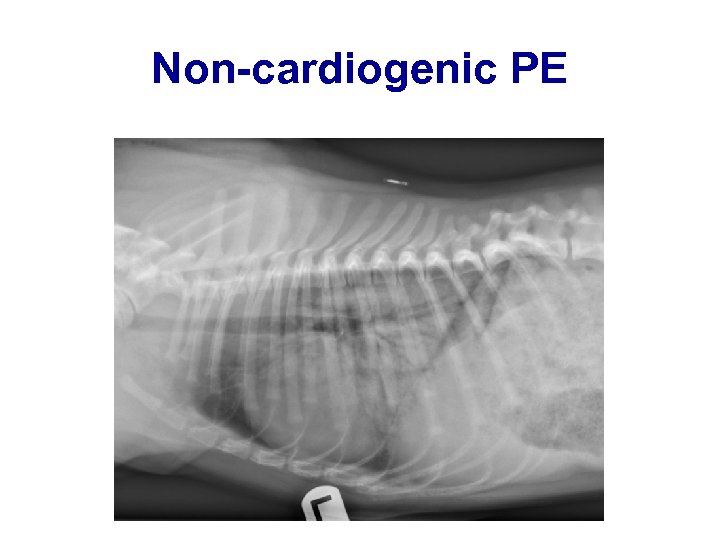 Non-cardiogenic PE
 When to refer the case? • AFTER status epilepticus or cluster seizures are treated/stabilized! • When typical medical therapy is failing. • When intracranial disease is suspected. • Before other neurologic signs develop.
 Excellent resource • http: //www. canine-epilepsy. net