Скачать презентацию Neuroendocrine tumors overview of treatment Passhak Maria MD
NET BASIC 2017.pptx
- Количество слайдов: 56
 Neuroendocrine tumors overview of treatment Passhak Maria, MD Rambam medical center
 NET • Neuroendocrine tumors (NETs), sometimes referred to as carcinoids, are abnormal growths that begin in the neuroendocrine cells, which are distributed widely throughout the body. • Neuroendocrine cells have roles both in the endo crine system and the nervous system. • They produce and secrete a variety of regulatory hormones (neuropeptides): neurotransmitters and growth factors.
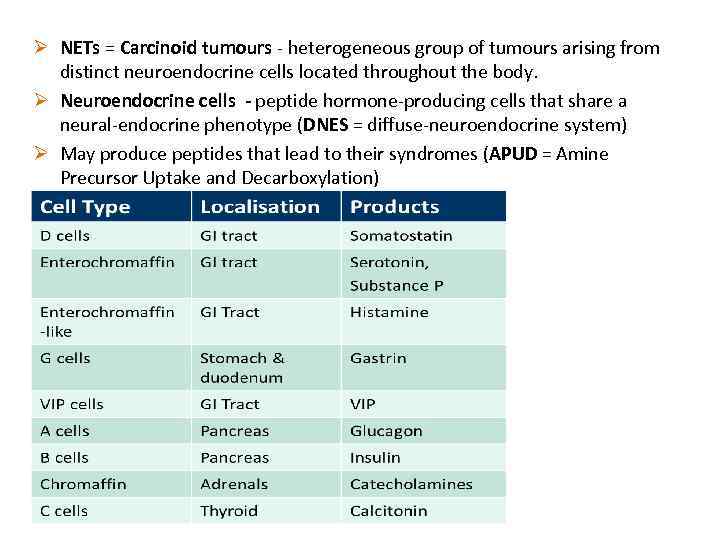 Ø NETs = Carcinoid tumours - heterogeneous group of tumours arising from distinct neuroendocrine cells located throughout the body. Ø Neuroendocrine cells - peptide hormone-producing cells that share a neural-endocrine phenotype (DNES = diffuse-neuroendocrine system) Ø May produce peptides that lead to their syndromes (APUD = Amine Precursor Uptake and Decarboxylation)
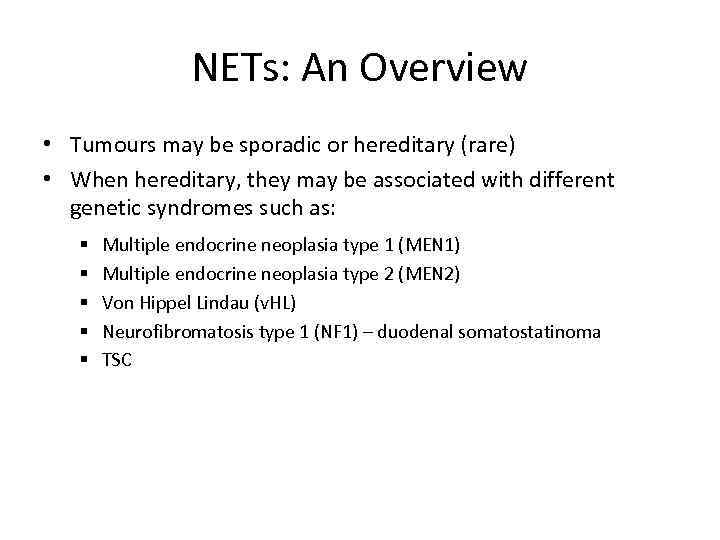 NETs: An Overview • Tumours may be sporadic or hereditary (rare) • When hereditary, they may be associated with different genetic syndromes such as: § § § Multiple endocrine neoplasia type 1 (MEN 1) Multiple endocrine neoplasia type 2 (MEN 2) Von Hippel Lindau (v. HL) Neurofibromatosis type 1 (NF 1) – duodenal somatostatinoma TSC
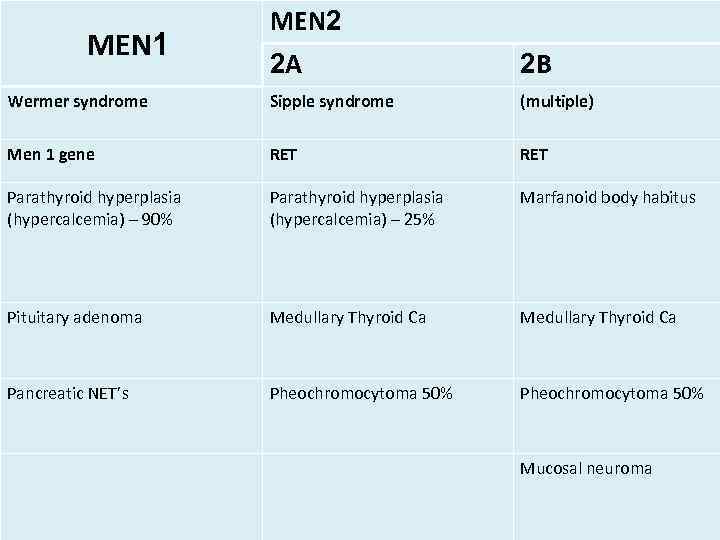 MEN 1 MEN 2 2 A 2 B Wermer syndrome Sipple syndrome (multiple) Men 1 gene RET Parathyroid hyperplasia (hypercalcemia) – 90% Parathyroid hyperplasia (hypercalcemia) – 25% Marfanoid body habitus Pituitary adenoma Medullary Thyroid Ca Pancreatic NET’s Pheochromocytoma 50% Mucosal neuroma
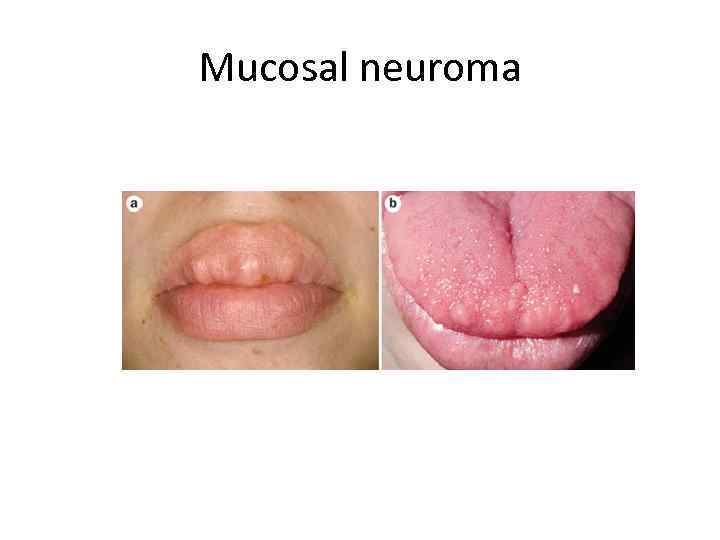 Mucosal neuroma
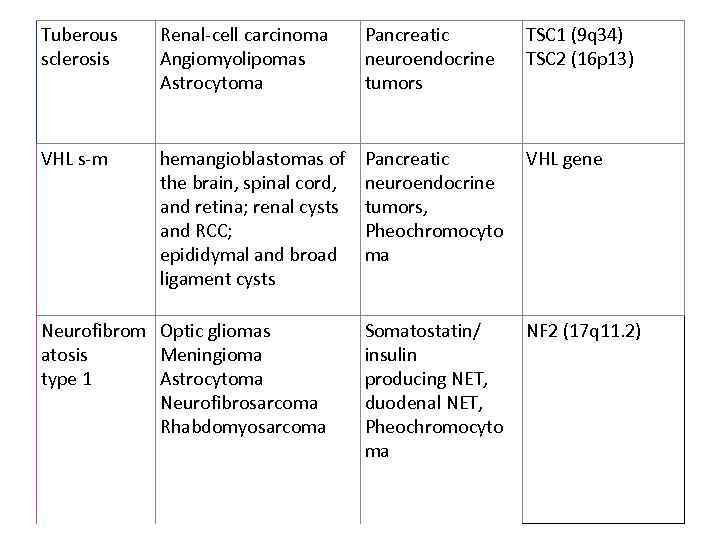 Tuberous sclerosis Renal-cell carcinoma Angiomyolipomas Astrocytoma Pancreatic neuroendocrine tumors TSC 1 (9 q 34) TSC 2 (16 p 13) VHL s-m hemangioblastomas of the brain, spinal cord, and retina; renal cysts and RCC; epididymal and broad ligament cysts Pancreatic neuroendocrine tumors, Pheochromocyto ma VHL gene Somatostatin/ insulin producing NET, duodenal NET, Pheochromocyto ma NF 2 (17 q 11. 2) Neurofibrom Optic gliomas atosis Meningioma type 1 Astrocytoma Neurofibrosarcoma Rhabdomyosarcoma
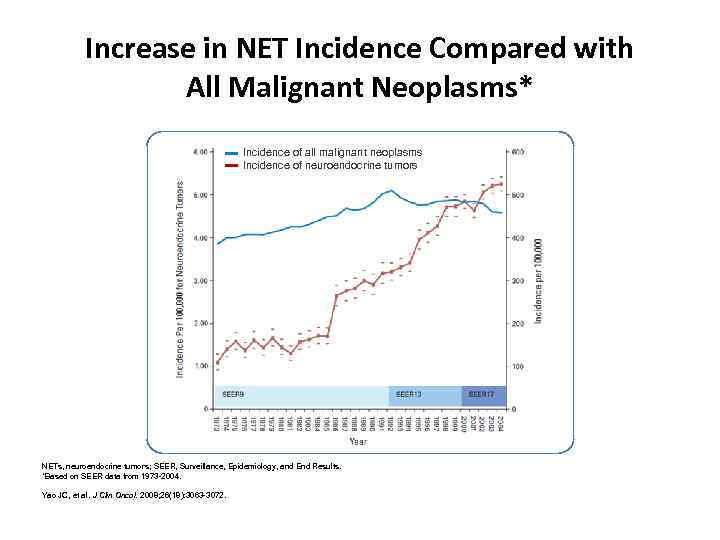 Increase in NET Incidence Compared with All Malignant Neoplasms* Incidence of all malignant neoplasms Incidence of neuroendocrine tumors NETs, neuroendocrine tumors; SEER, Surveillance, Epidemiology, and End Results. *Based on SEER data from 1973 -2004. Yao JC, et al. J Clin Oncol. 2008; 26(18): 3063 -3072.
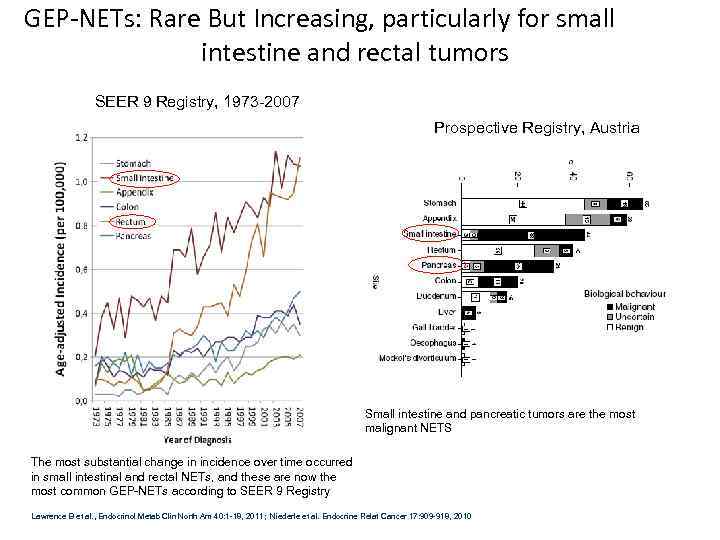 GEP-NETs: Rare But Increasing, particularly for small intestine and rectal tumors SEER 9 Registry, 1973 -2007 Prospective Registry, Austria Small intestine and pancreatic tumors are the most malignant NETS The most substantial change in incidence over time occurred in small intestinal and rectal NETs, and these are now the most common GEP-NETs according to SEER 9 Registry Lawrence B et al. , Endocrinol Metab Clin North Am 40: 1 -18, 2011; Niederle et al. Endocrine Relat Cancer 17: 909 -918, 2010
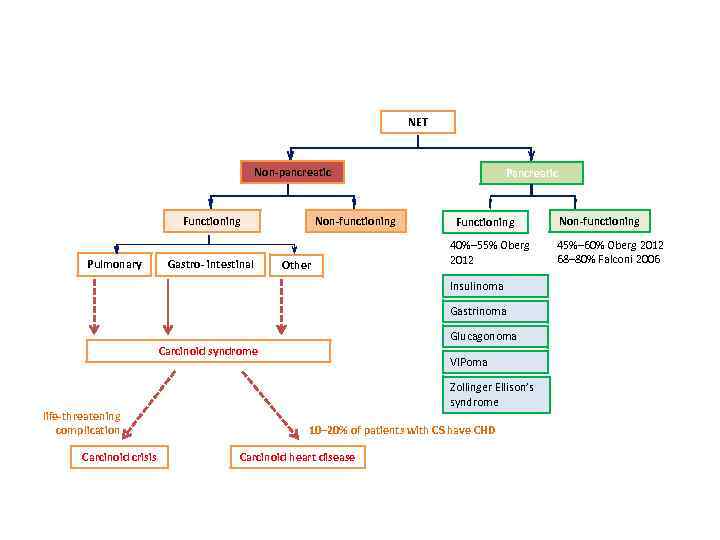 NET Non-pancreatic Non-functioning Functioning Pulmonary Gastro- intestinal Other Pancreatic Functioning 40%– 55% Oberg 2012 Insulinoma Gastrinoma Glucagonoma Carcinoid syndrome life-threatening complication Carcinoid crisis VIPoma Zollinger Ellison’s syndrome 10– 20% of patients with CS have CHD Carcinoid heart disease Non-functioning 45%– 60% Oberg 2012 68– 80% Falconi 2006
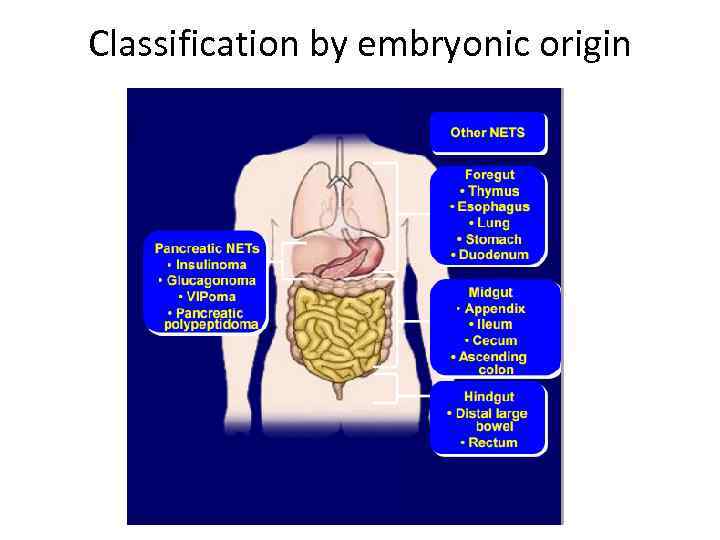 Classification by embryonic origin
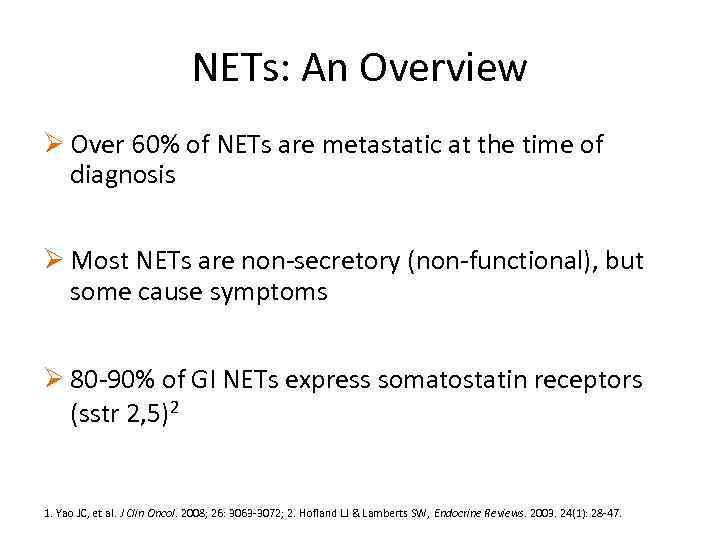 NETs: An Overview Ø Over 60% of NETs are metastatic at the time of diagnosis Ø Most NETs are non-secretory (non-functional), but some cause symptoms Ø 80 -90% of GI NETs express somatostatin receptors (sstr 2, 5)2 1. Yao JC, et al. J Clin Oncol. 2008; 26: 3063 -3072; 2. Hofland LJ & Lamberts SW, Endocrine Reviews. 2003. 24(1): 28 -47.
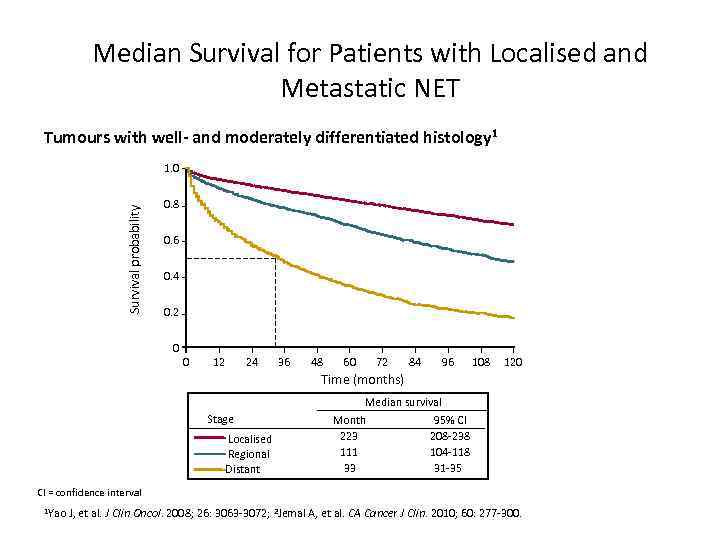 Median Survival for Patients with Localised and Metastatic NET Tumours with well- and moderately differentiated histology 1 Survival probability 1. 0 0. 8 0. 6 0. 4 0. 2 0 0 12 24 36 48 60 72 84 96 108 120 Time (months) Stage Localised Regional Distant Median survival Month 95% CI 223 208 -238 111 104 -118 33 31 -35 CI = confidence interval 1 Yao J, et al. J Clin Oncol. 2008; 26: 3063 -3072; 2 Jemal A, et al. CA Cancer J Clin. 2010; 60: 277 -300.
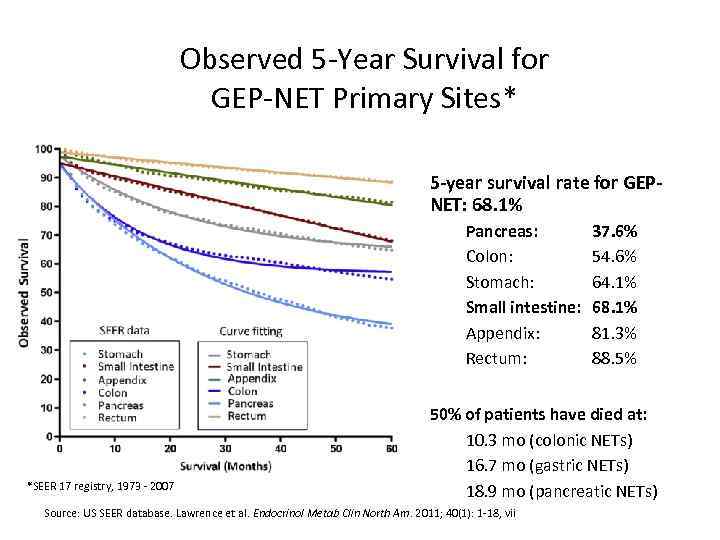 Observed 5 -Year Survival for GEP-NET Primary Sites* 5 -year survival rate for GEPNET: 68. 1% Pancreas: Colon: Stomach: Small intestine: Appendix: Rectum: *SEER 17 registry, 1973 - 2007 37. 6% 54. 6% 64. 1% 68. 1% 81. 3% 88. 5% 50% of patients have died at: 10. 3 mo (colonic NETs) 16. 7 mo (gastric NETs) 18. 9 mo (pancreatic NETs) Source: US SEER database. Lawrence et al. Endocrinol Metab Clin North Am. 2011; 40(1): 1 -18, vii
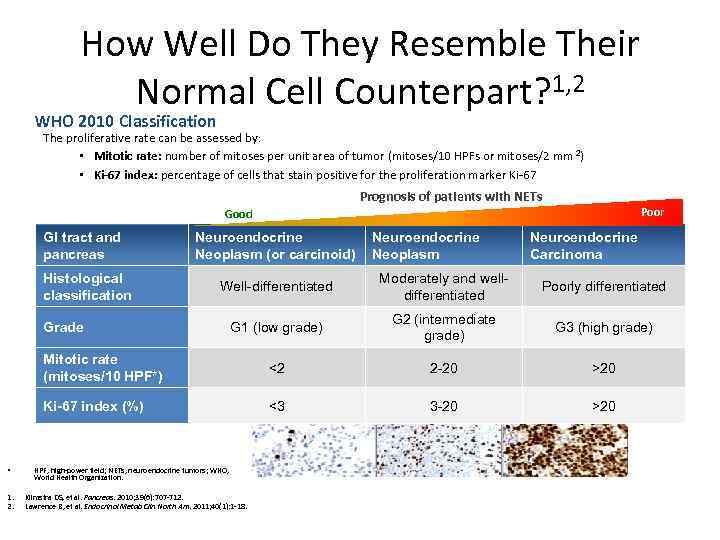 How Well Do They Resemble Their Normal Cell Counterpart? 1, 2 WHO 2010 Classification The proliferative rate can be assessed by: • Mitotic rate: number of mitoses per unit area of tumor (mitoses/10 HPFs or mitoses/2 mm 2) • Ki-67 index: percentage of cells that stain positive for the proliferation marker Ki-67 Prognosis of patients with NETs Poor Good GI tract and pancreas Neuroendocrine Neoplasm (or carcinoid) Histological classification Well-differentiated Moderately and well- differentiated Poorly differentiated G 1 (low grade) G 2 (intermediate grade) G 3 (high grade) Mitotic rate (mitoses/10 HPF*) <2 2 -20 >20 Ki-67 index (%) <3 3 -20 >20 Grade • 1. 2. HPF, high-power field; NETs, neuroendocrine tumors; WHO, World Health Organization. Klimstra DS, et al. Pancreas. 2010; 39(6): 707 -712. Lawrence B, et al. Endocrinol Metab Clin North Am. 2011; 40(1): 1 -18. Neuroendocrine Neoplasm Neuroendocrine Carcinoma
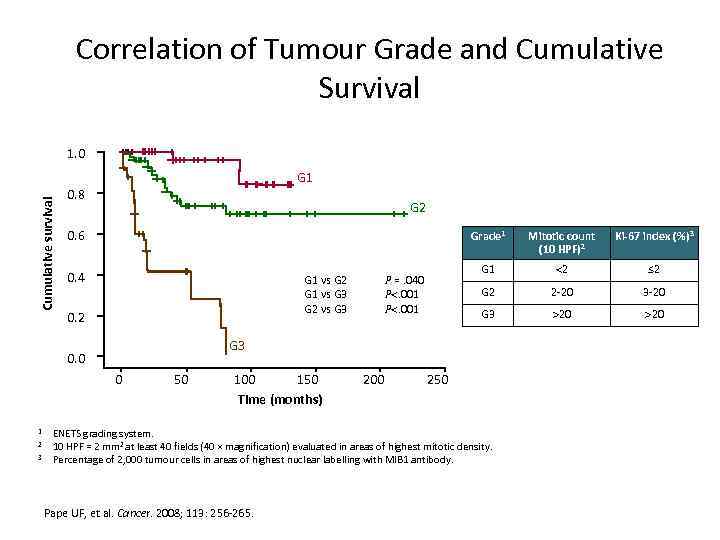 Correlation of Tumour Grade and Cumulative Survival 1. 0 Cumulative survival G 1 0. 8 G 2 0. 6 Grade 1 0. 4 G 1 vs G 2 G 1 vs G 3 G 2 vs G 3 0. 2 0 2 3 2 ≤ 2 G 2 2 -20 3 -20 G 3 20 G 3 0. 0 1 Ki-67 index (%)3 G 1 P =. 040 P. 001 Mitotic count (10 HPF)2 50 100 150 Time (months) 200 250 ENETS grading system. 10 HPF = 2 mm 2 at least 40 fields (40 × magnification) evaluated in areas of highest mitotic density. Percentage of 2, 000 tumour cells in areas of highest nuclear labelling with MIB 1 antibody. Pape UF, et al. Cancer. 2008; 113: 256 -265.
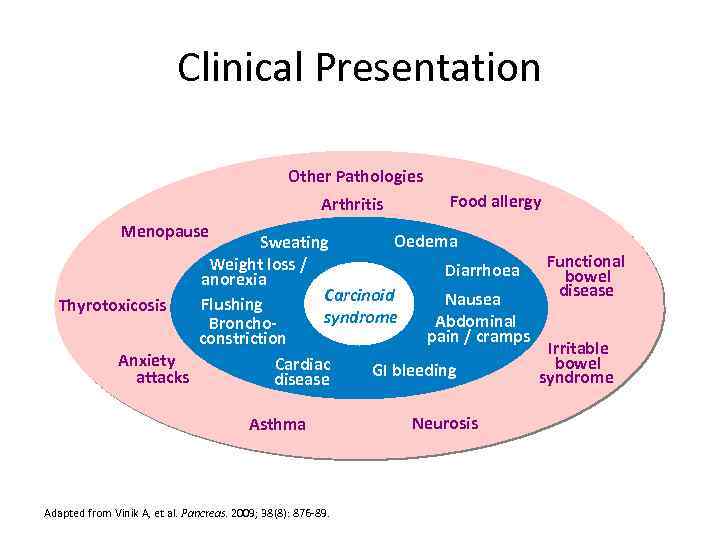 Clinical Presentation Other Pathologies Arthritis Food allergy Menopause Oedema Sweating Functional Weight loss / Diarrhoea bowel anorexia disease Carcinoid Nausea Flushing Thyrotoxicosis syndrome Abdominal Bronchopain / cramps constriction Irritable Anxiety bowel Cardiac GI bleeding attacks syndrome disease Asthma Adapted from Vinik A, et al. Pancreas. 2009; 38(8): 876 -89. Neurosis
 Kарциноидный синдром • • 10% случаев опухоли Midgut (около 70%). при метастазах в печени не характерен для легочный карциноидов
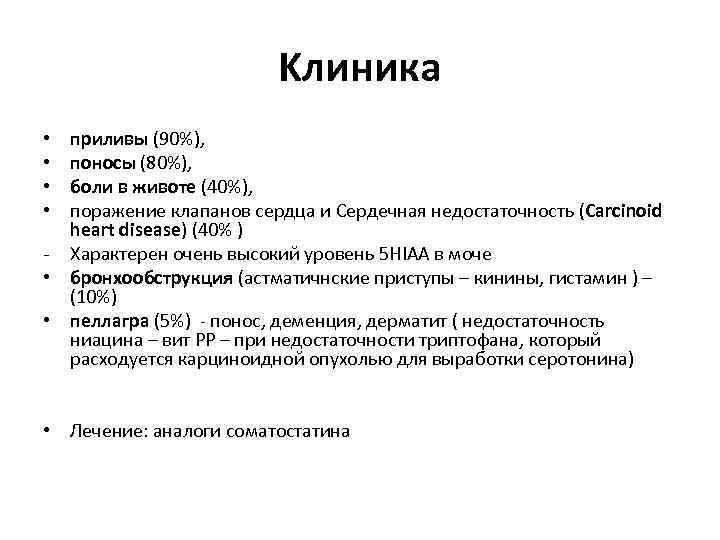 Kлиника приливы (90%), поносы (80%), боли в животе (40%), поражение клапанов сердца и Сердечная недостаточность (Carcinoid heart disease) (40% ) - Характерен очень высокий уровень 5 HIAA в моче • бронхообструкция (астматичнские приступы – кинины, гистамин ) – (10%) • пеллагра (5%) - понос, деменция, дерматит ( недостаточность ниацина – вит РР – при недостаточности триптофана, который расходуется карциноидной опухолью для выработки серотонина) • • • Лечение: аналоги соматостатина
 Карциноидный криз • Во время операции резкий выход серотонина в кровь • Бронхообструкция, гипотензия, аритмии • Профилактика: аналоги соматостатина в предоперационный период
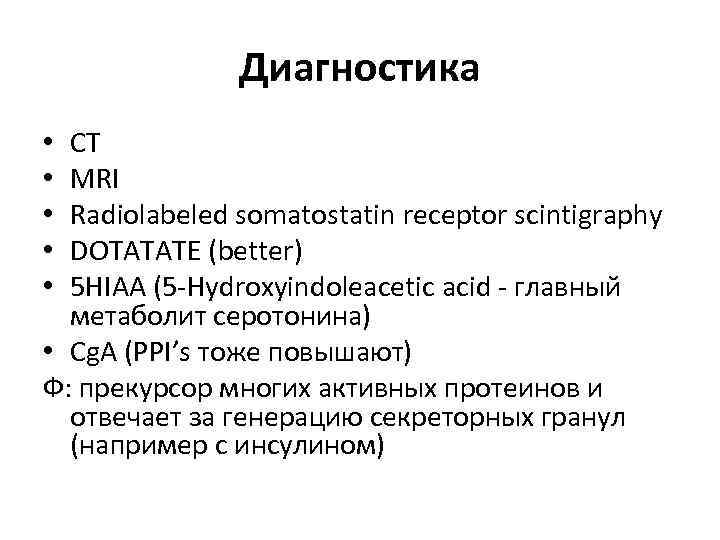 Диагностика CT MRI Radiolabeled somatostatin receptor scintigraphy DOTATATE (better) 5 HIAA (5 -Hydroxyindoleacetic acid - главный метаболит серотонина) • Cg. A (PPI’s тоже повышают) Ф: прекурсор многих активных протеинов и отвечает за генерацию секреторных гранул (например с инсулином) • • •
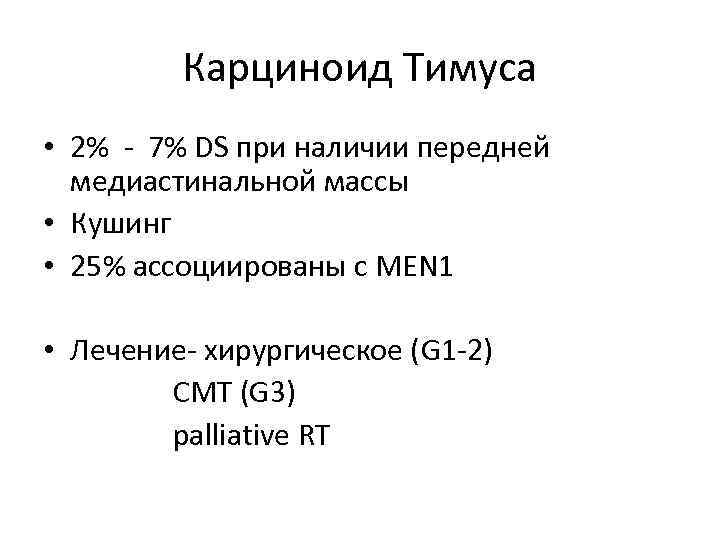 Карциноид Тимуса • 2% - 7% DS при наличии передней медиастинальной массы • Кушинг • 25% ассоциированы с MEN 1 • Лечение- хирургическое (G 1 -2) CMT (G 3) palliative RT
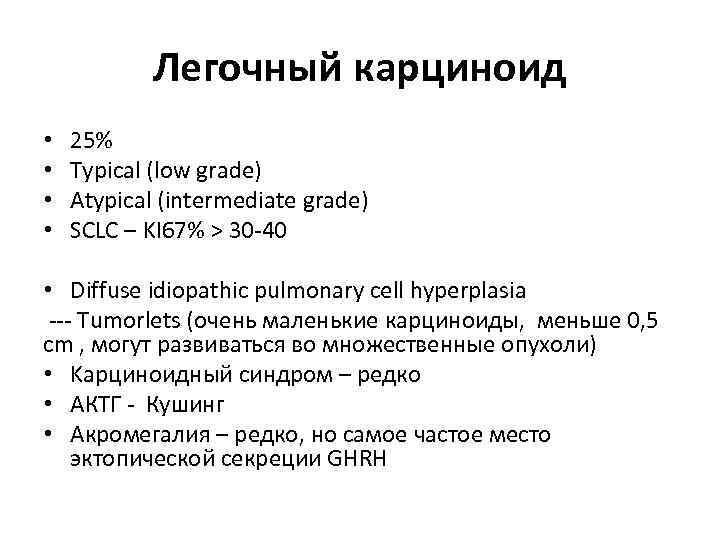 Легочный карциноид • • 25% Typical (low grade) Atypical (intermediate grade) SCLC – KI 67% > 30 -40 • Diffuse idiopathic pulmonary cell hyperplasia --- Tumorlets (очень маленькие карциноиды, меньше 0, 5 cm , могут развиваться во множественные опухоли) • Kарциноидный синдром – редко • АКТГ - Кушинг • Акромегалия – редко, но самое частое место эктопической секреции GHRH
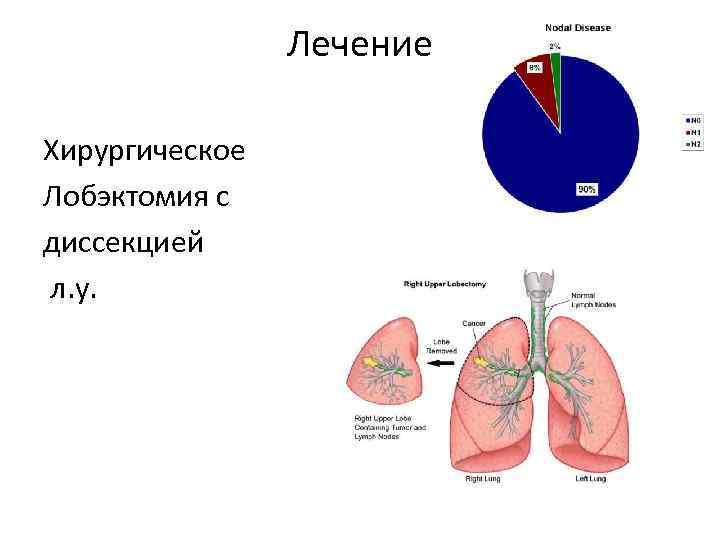 Лечение Хирургическое Лобэктомия с диссекцией л. у.
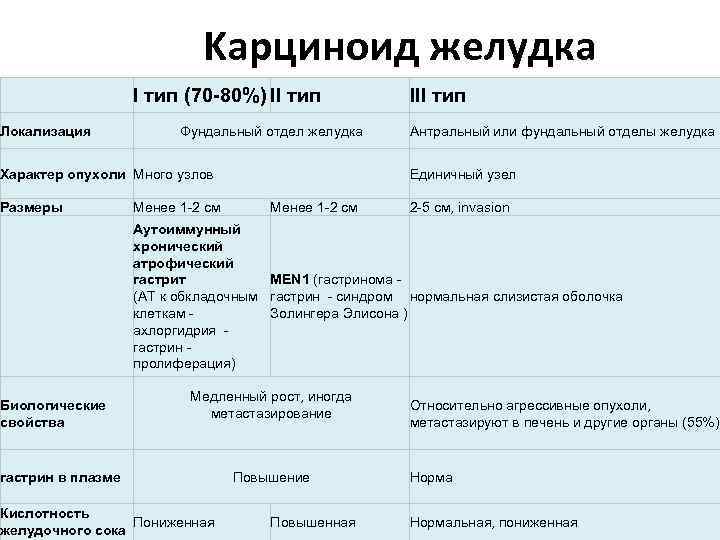 Kарциноид желудка I тип (70 -80%) II тип Локализация Фундальный отдел желудка Характер опухоли Много узлов Размеры Менее 1 -2 см III тип Антральный или фундальный отделы желудка Единичный узел Менее 1 -2 см 2 -5 см, invasion Аутоиммунный хронический атрофический MEN 1 (гастринома - гастрит (АТ к обкладочным гастрин - синдром нормальная слизистая оболочка Золингера Элисона ) клеткам - ахлоргидрия - гастрин - пролиферация) Биологические свойства Медленный рост, иногда метастазирование гастрин в плазме Кислотность Пониженная желудочного сока Повышение Повышенная Относительно агрессивные опухоли, метастазируют в печень и другие органы (55%) Нормальная, пониженная
 Лечение карциноидных опухолей желудка • I тип - эндоскопическое иссечение одиночных опухолей - частичная резекция желудка при множественных карциноидах - ? аналоги соматостатина • II и III типы - резекция желудка
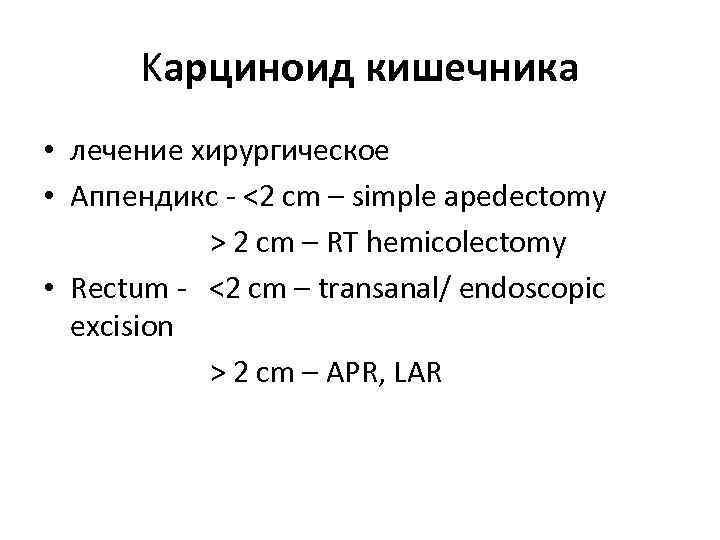 Kарциноид кишечника • лечение хирургическое • Аппендикс - <2 cm – simple apedectomy > 2 cm – RT hemicolectomy • Rectum - <2 cm – transanal/ endoscopic excision > 2 cm – APR, LAR
 Нейроэндокринные опухоли поджелудочной железы
 Инсулиномы Cамые частые растет из бета клеток Только 5 -10% злокачественные Основной симптом – гипогликемия, связан с гиперсекрецией инсулина. • 4 -5% имеют отношение к синдрому MEN 1 • •
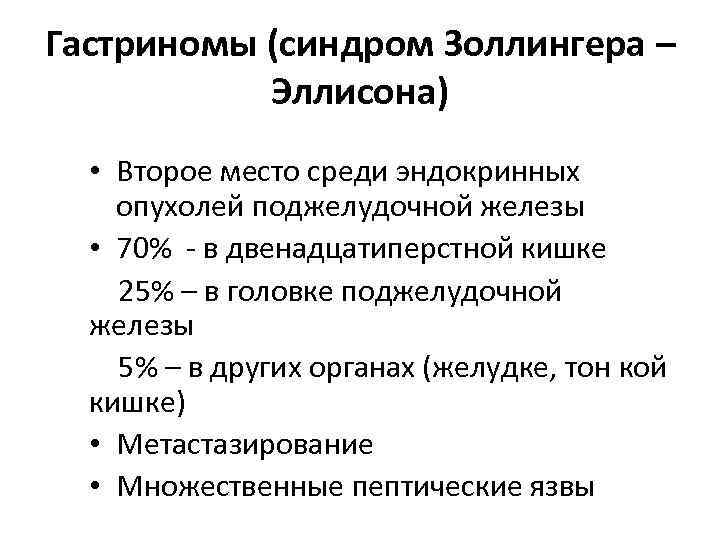 Гастриномы (синдром Золлингера – Эллисона) • Bторое место среди эндокринных опухолей поджелудочной железы • 70% - в двенадцатиперстной кишке 25% – в головке поджелудочной железы 5% – в других органах (желудке, тон кой кишке) • Метастазирование • Множественные пептические язвы
 Випомы (синдром Вернера – Моррисона) • Cекреция вазоактивного интестинального пептида (VIP) • MEN 1 - 6% • Метастазирование • Поносы
 Глюкагономы • B α - клетках поджелудочной железы • Глюкагон стимулирует распад гликогена, глюконеогенез, кетогенез, секрецию инсулина, липолиз, тормозит желудочную и поджелудочную секреции. • Метастазирование • MEN 1 - 15% • Клиническиe проявления : потеря массы тела (70– 80%), диабет (75%), дерматит (65– 80%) стоматит (30– 40%) диарея (15– 30%). • Necrolytic migratory erythema эритема, папулы и пустулы на лице, животе
 Pancreatic polypeptidoma • Относится к нефункционирующим опухолям ПЖЖ • Как правило Дз в поздних стадиях • Клиника обусловлена массой и метастазами (не гормональными симптомами)
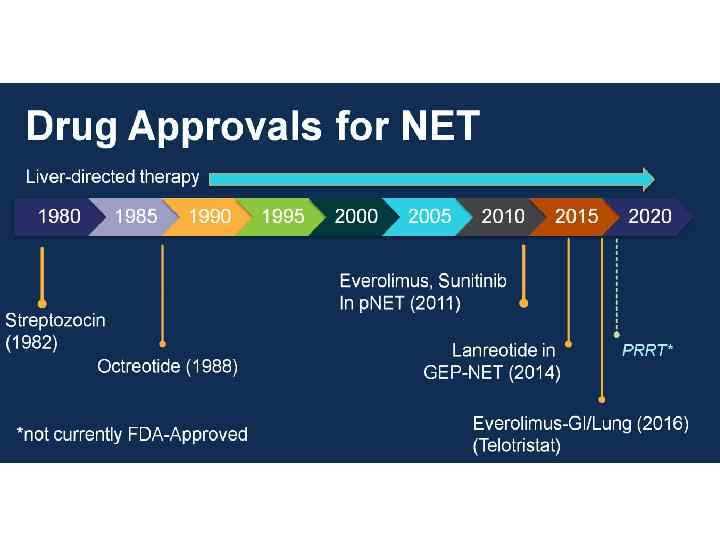
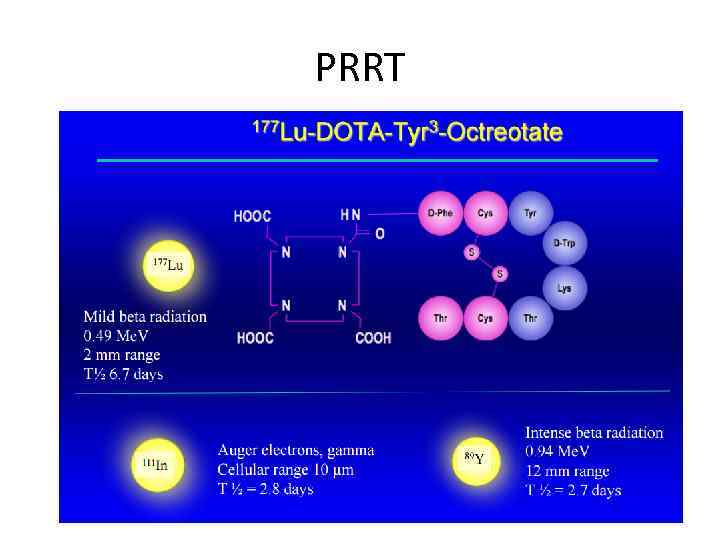
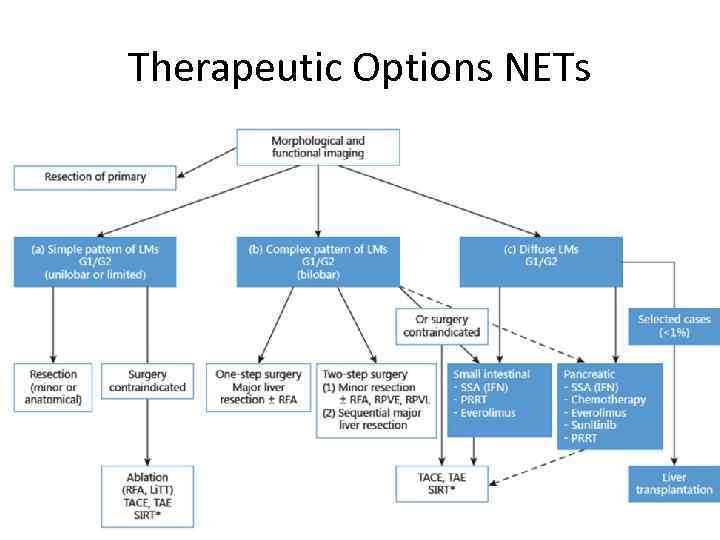 Therapeutic Options NETs Ø Surgery Ø Curative, Ablative Ø Debulking Ø Radiofrequency ablation (RFA) Ø Embolization/chemoembolization/radioembolization (SIRT) Ø Debulking surgery? Ø Irradiation Ø External (bone, brain-mets) Ø Tumor targeted, radioactive therapy: PRRT (Peptide Receptor Radionuclide Therapy) using e. g. MIBG, Y 90 -DOTATOC, Lu 177 -DOTATATE Ø Medical therapy Ø Chemotherapy Ø Biological or targeted treatment: Ø Somatostatin analogs Ø α-interferon Ø m-TOR inhibitors Ø VEGF R inhibitors Courtesy K. Oberg, Uppsala Ø Other TKI’s
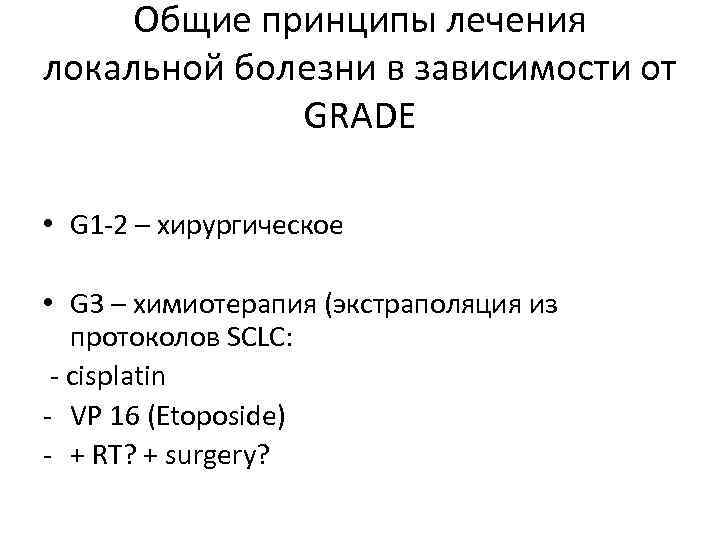 Общие принципы лечения локальной болезни в зависимости от GRADE • G 1 -2 – хирургическое • G 3 – химиотерапия (экстраполяция из протоколов SCLC: - cisplatin - VP 16 (Etoposide) - + RT? + surgery?
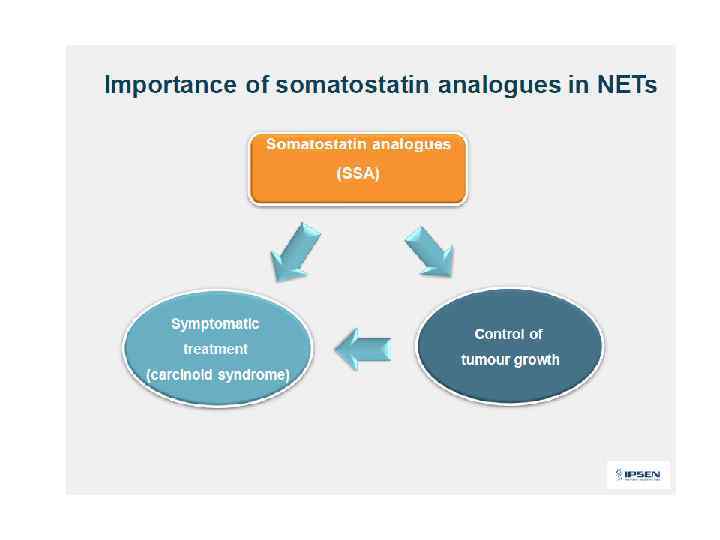
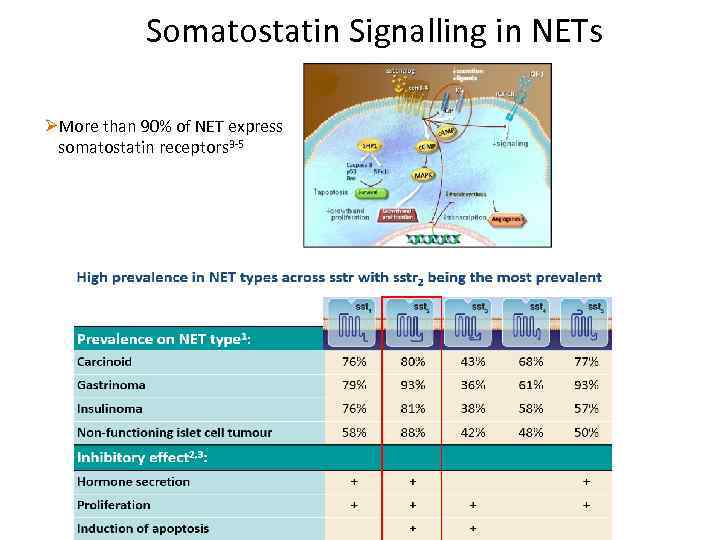 Somatostatin Signalling in NETs ØMore than 90% of NET express somatostatin receptors 3 -5
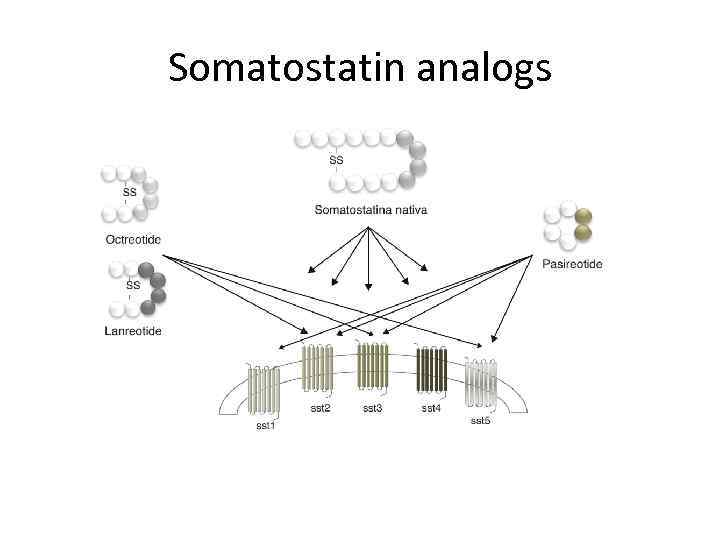 Somatostatin analogs
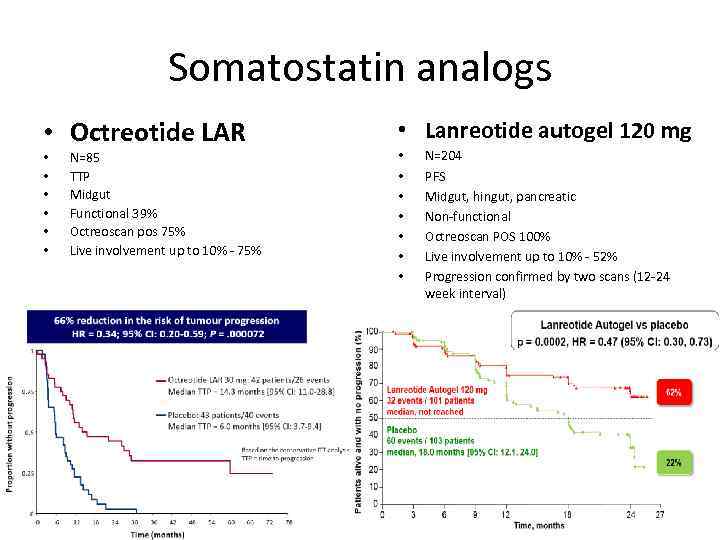 Somatostatin analogs • Octreotide LAR • • • N=85 TTP Midgut Functional 39% Octreoscan pos 75% Live involvement up to 10% - 75% • 30 mg • Lanreotide autogel 120 mg • • N=204 PFS Midgut, hingut, pancreatic Non-functional Octreoscan POS 100% Live involvement up to 10% - 52% Progression confirmed by two scans (12 -24 week interval)
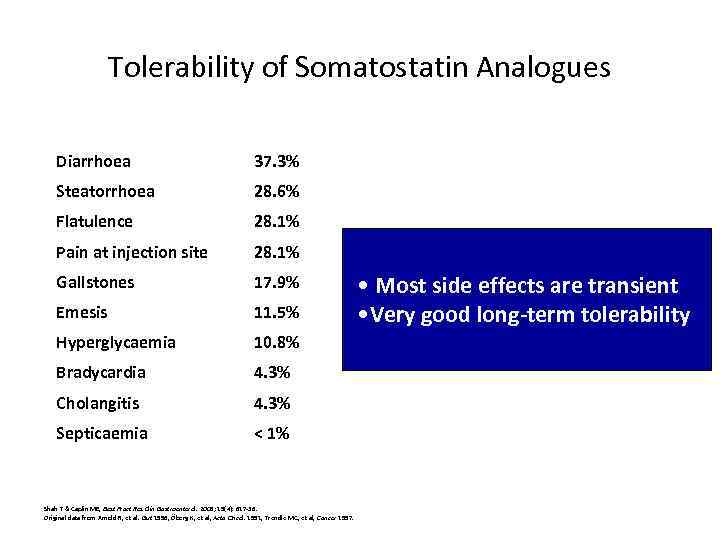 Tolerability of Somatostatin Analogues Diarrhoea 37. 3% Steatorrhoea 28. 6% Flatulence 28. 1% Pain at injection site 28. 1% Gallstones 17. 9% Emesis 11. 5% Hyperglycaemia 10. 8% Bradycardia 4. 3% Cholangitis 4. 3% Septicaemia < 1% Shah T & Caplin ME, Best Pract Res Clin Gastroenterol. 2005; 19(4): 617 -36. Original data from Arnold R, et al. Gut 1996, Öberg K, et al, Acta Oncol. 1991, Trendle MC, et al, Cancer 1997. • Most side effects are transient • Very good long-term tolerability
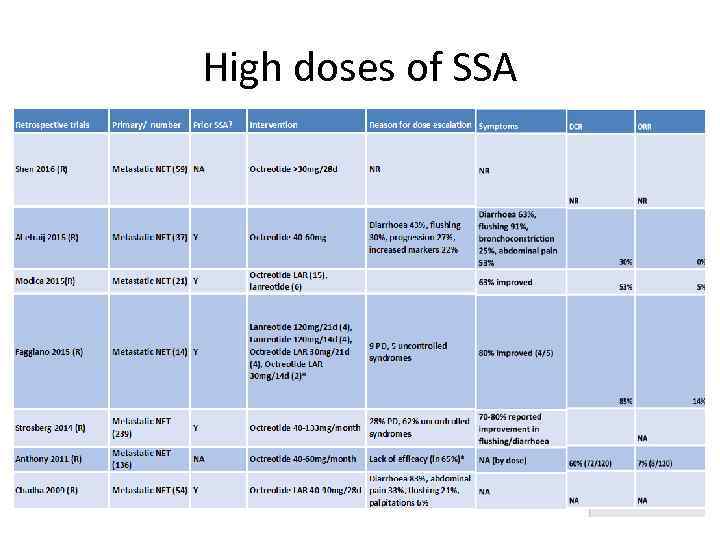 High doses of SSA
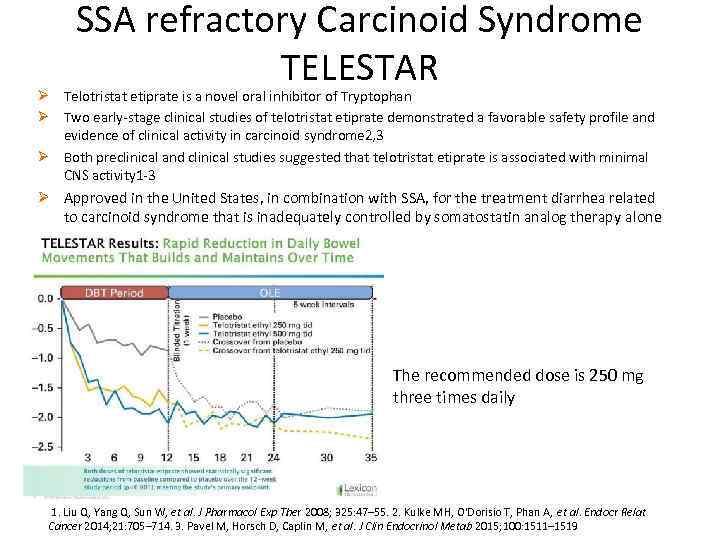 SSA refractory Carcinoid Syndrome TELESTAR Ø Telotristat etiprate is a novel oral inhibitor of Tryptophan Ø Two early-stage clinical studies of telotristat etiprate demonstrated a favorable safety profile and evidence of clinical activity in carcinoid syndrome 2, 3 Ø Both preclinical and clinical studies suggested that telotristat etiprate is associated with minimal CNS activity 1 -3 Ø Approved in the United States, in combination with SSA, for the treatment diarrhea related to carcinoid syndrome that is inadequately controlled by somatostatin analog therapy alone The recommended dose is 250 mg three times daily 1. Liu Q, Yang Q, Sun W, et al. J Pharmacol Exp Ther 2008; 325: 47– 55. 2. Kulke MH, O'Dorisio T, Phan A, et al. Endocr Relat Cancer 2014; 21: 705– 714. 3. Pavel M, Horsch D, Caplin M, et al. J Clin Endocrinol Metab 2015; 100: 1511– 1519
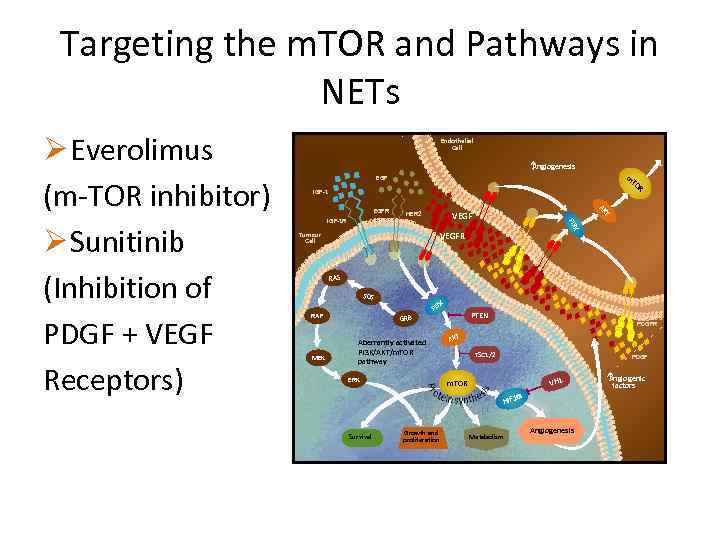 Targeting the m. TOR and Pathways in NETs A ngiogenesis m EGF IGF-1 HER 2 AK VEGF K Tumour Cell T EGFR IGF-1 R TO R PI 3 Ø Everolimus (m-TOR inhibitor) Ø Sunitinib (Inhibition of PDGF + VEGF Receptors) Endothelial Cell VEGFR RAS SOS RAF MEK K PI 3 PTEN GRB Aberrantly activated PI 3 K/AKT/m. TOR pathway ERK PDGFR AKT TSC 1/2 PDGF VHL m. TOR a HIF 1 Survival Growth and proliferation Metabolism Angiogenesis A ngiogenic factors
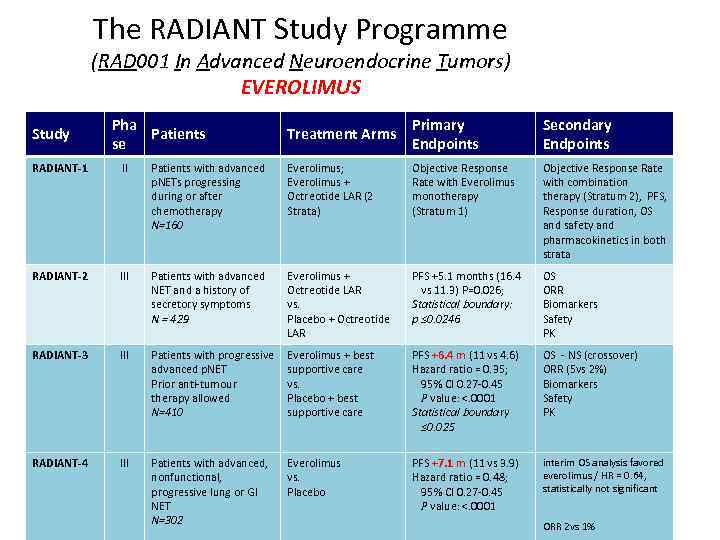 The RADIANT Study Programme (RAD 001 In Advanced Neuroendocrine Tumors) EVEROLIMUS Study Pha Patients se Treatment Arms Primary Endpoints Secondary Endpoints RADIANT-1 II Patients with advanced p. NETs progressing during or after chemotherapy N=160 Everolimus; Everolimus + Octreotide LAR (2 Strata) Objective Response Rate with Everolimus monotherapy (Stratum 1) Objective Response Rate with combination therapy (Stratum 2), PFS, Response duration, OS and safety and pharmacokinetics in both strata RADIANT-2 III Patients with advanced NET and a history of secretory symptoms N = 429 Everolimus + Octreotide LAR vs. Placebo + Octreotide LAR PFS +5. 1 months (16. 4 vs 11. 3) P=0. 026; Statistical boundary: p ≤ 0. 0246 OS ORR Biomarkers Safety PK RADIANT-3 III Patients with progressive advanced p. NET Prior anti-tumour therapy allowed N=410 Everolimus + best supportive care vs. Placebo + best supportive care PFS +6. 4 m (11 vs 4. 6) Hazard ratio = 0. 35; 95% CI 0. 27 -0. 45 P value: <. 0001 Statistical boundary ≤ 0. 025 OS - NS (crossover) ORR (5 vs 2%) Biomarkers Safety PK RADIANT-4 III Patients with advanced, nonfunctional, progressive lung or GI NET N=302 Everolimus vs. Placebo PFS +7. 1 m (11 vs 3. 9) Hazard ratio = 0. 48; 95% CI 0. 27 -0. 45 P value: <. 0001 interim OS analysis favored everolimus / HR = 0. 64, statistically not significant ORR 2 vs 1%
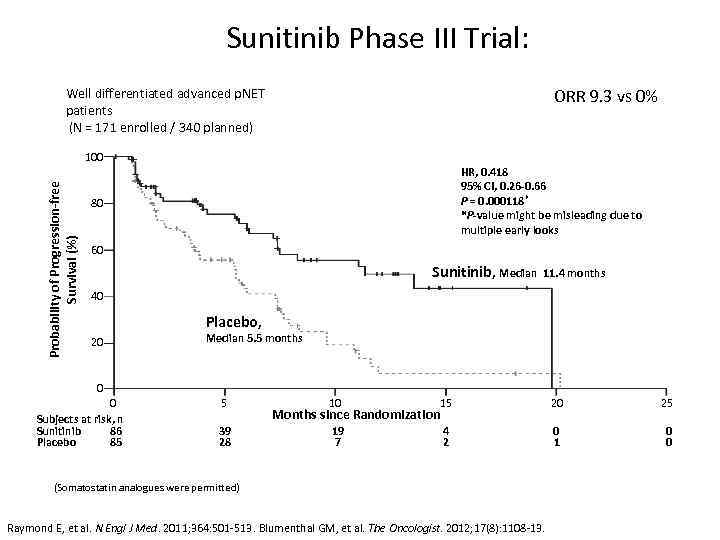 Sunitinib Phase III Trial: ORR 9. 3 vs 0% Well differentiated advanced p. NET patients (N = 171 enrolled / 340 planned) Probability of Progression-free Survival (%) 100 HR, 0. 418 95% CI, 0. 26 -0. 66 P = 0. 000118 * *P-value might be misleading due to multiple early looks 80 60 Sunitinib, Median 11. 4 months 40 Placebo, 20 0 0 Subjects at risk, n Sunitinib 86 Placebo 85 Median 5. 5 months 5 39 28 10 15 20 25 19 7 4 2 0 1 0 0 Months since Randomization (Somatostatin analogues were permitted) Raymond E, et al. N Engl J Med. 2011; 364: 501 -513. Blumenthal GM, et al. The Oncologist. 2012; 17(8): 1108 -13.
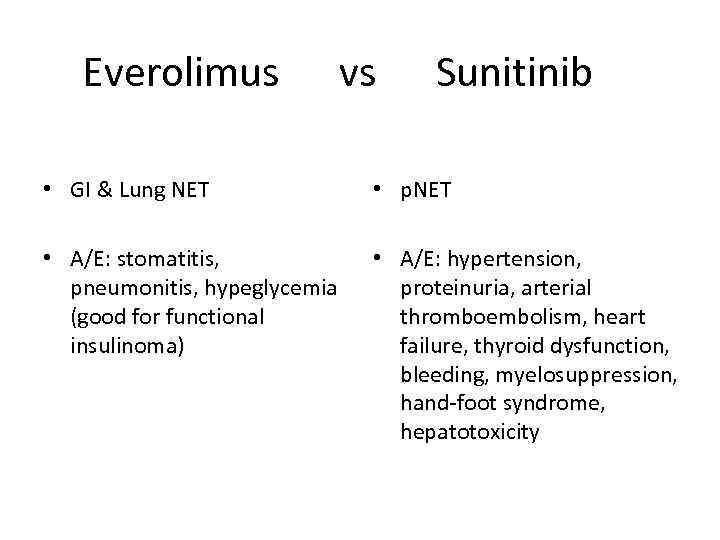 Everolimus vs Sunitinib • GI & Lung NET • p. NET • A/E: stomatitis, pneumonitis, hypeglycemia (good for functional insulinoma) • A/E: hypertension, proteinuria, arterial thromboembolism, heart failure, thyroid dysfunction, bleeding, myelosuppression, hand-foot syndrome, hepatotoxicity
 PRRT
PRRT
 PRRT
PRRT
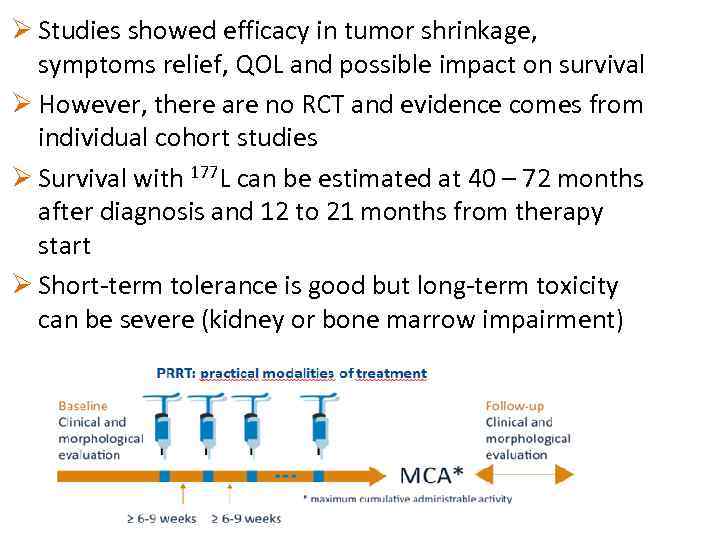 Ø Studies showed efficacy in tumor shrinkage, symptoms relief, QOL and possible impact on survival Ø However, there are no RCT and evidence comes from individual cohort studies Ø Survival with 177 L can be estimated at 40 – 72 months after diagnosis and 12 to 21 months from therapy start Ø Short-term tolerance is good but long-term toxicity can be severe (kidney or bone marrow impairment)
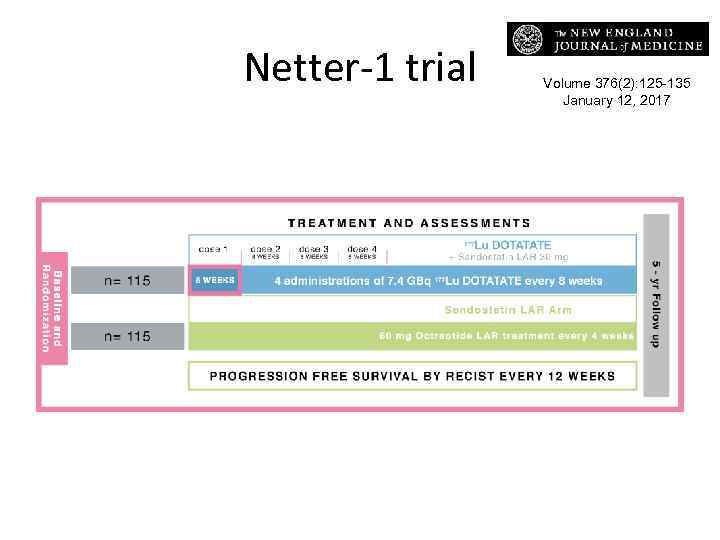 Netter-1 trial Volume 376(2): 125 -135 January 12, 2017
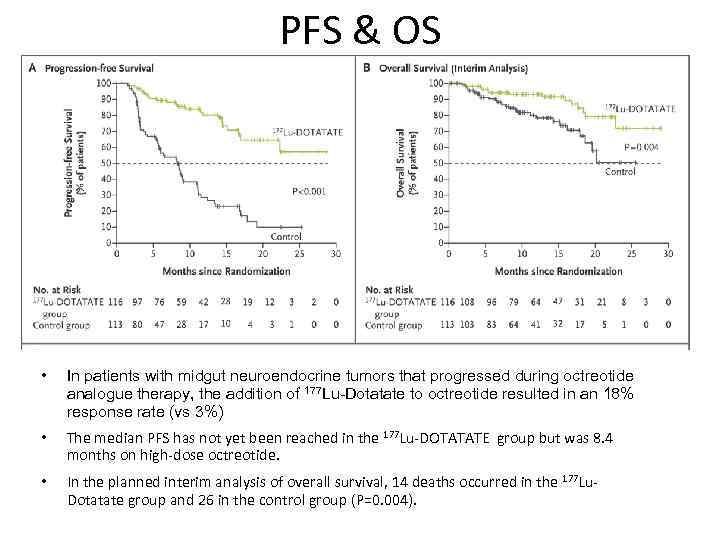 PFS & OS • In patients with midgut neuroendocrine tumors that progressed during octreotide analogue therapy, the addition of 177 Lu-Dotatate to octreotide resulted in an 18% response rate (vs 3%) • The median PFS has not yet been reached in the 177 Lu-DOTATATE group but was 8. 4 months on high-dose octreotide. • In the planned interim analysis of overall survival, 14 deaths occurred in the 177 Lu. Dotatate group and 26 in the control group (P=0. 004).
 Chemotherapy in NET Ø Well-differentiated NET do not exhibit high sensitivity to chemotherapy because: Ø of their low mitotic rates Ø of high levels of anti-apoptotic protein bcl-2 Ø of increased expression of the multi-drug resistant (MDR) gene Ø Well-differentiated midgut NETs show low response rates (10 -15%) to traditional chemotherapeutic agents Ø streptozotocin in combination with 5 -fluorouracil (FU) or doxorubicin Ø Low-to-moderately differentiated p. NET trials with streptozotocin plus 5 FU/doxorubicin or dacarbazine showed objective response rates (RR) of 39% and 33%, respectively, and an improved overall survival (OS) Reviewed ini Demirkan, B. & Eriksson, B. Turk J Gastroenterol 2012; 23 (5): 427 -437
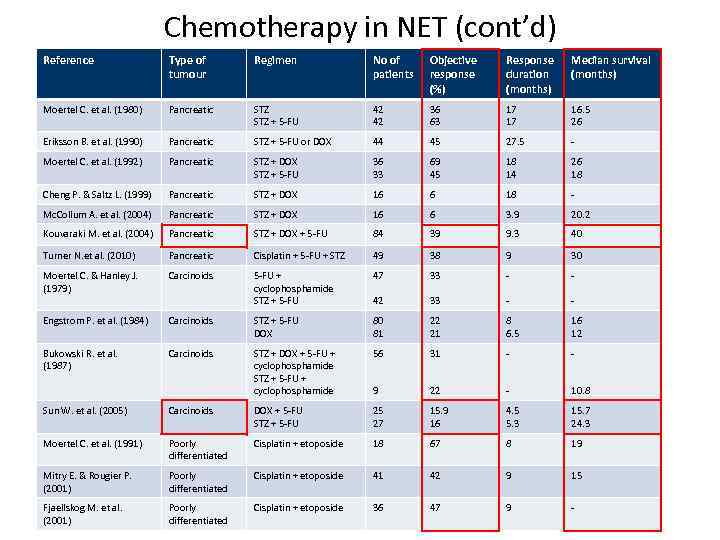 Chemotherapy in NET (cont’d) Reference Type of tumour Regimen No of patients Objective response (%) Response duration (months) Median survival (months) Moertel C. et al. (1980) Pancreatic STZ + 5 -FU 42 42 36 63 17 17 16. 5 26 Eriksson B. et al. (1990) Pancreatic STZ + 5 -FU or DOX 44 45 27. 5 - Moertel C. et al. (1992) Pancreatic STZ + DOX STZ + 5 -FU 36 33 69 45 18 14 26 18 Cheng P. & Saltz L. (1999) Pancreatic STZ + DOX 16 6 18 - Mc. Collum A. et al. (2004) Pancreatic STZ + DOX 16 6 3. 9 20. 2 Kouvaraki M. et al. (2004) Pancreatic STZ + DOX + 5 -FU 84 39 9. 3 40 Turner N. et al. (2010) Pancreatic Cisplatin + 5 -FU + STZ 49 38 9 30 Moertel C. & Hanley J. (1979) Carcinoids 5 -FU + cyclophosphamide STZ + 5 -FU 47 33 - - 42 33 - - Engstrom P. et al. (1984) Carcinoids STZ + 5 -FU DOX 80 81 22 21 8 6. 5 16 12 Bukowski R. et al. (1987) Carcinoids STZ + DOX + 5 -FU + cyclophosphamide STZ + 5 -FU + cyclophosphamide 56 31 - - 9 22 - 10. 8 Sun W. et al. (2005) Carcinoids DOX + 5 -FU STZ + 5 -FU 25 27 15. 9 16 4. 5 5. 3 15. 7 24. 3 Moertel C. et al. (1991) Poorly differentiated Cisplatin + etoposide 18 67 8 19 Mitry E. & Rougier P. (2001) Poorly differentiated Cisplatin + etoposide 41 42 9 15 Fjaellskog M. et al. (2001) Poorly differentiated Cisplatin + etoposide 36 47 9 -
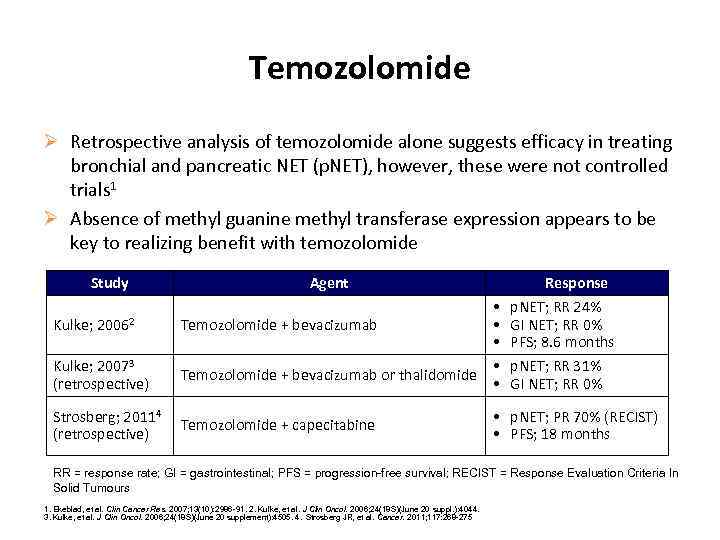 Temozolomide Ø Retrospective analysis of temozolomide alone suggests efficacy in treating bronchial and pancreatic NET (p. NET), however, these were not controlled trials 1 Ø Absence of methyl guanine methyl transferase expression appears to be key to realizing benefit with temozolomide Study Kulke; 20062 Kulke; 20073 (retrospective) Strosberg; 20114 (retrospective) Agent Response • • Temozolomide + bevacizumab or thalidomide • Temozolomide + capecitabine p. NET; RR 24% GI NET; RR 0% PFS; 8. 6 months p. NET; RR 31% GI NET; RR 0% • p. NET; PR 70% (RECIST) • PFS; 18 months RR = response rate; GI = gastrointestinal; PFS = progression-free survival; RECIST = Response Evaluation Criteria In Solid Tumours 1. Ekeblad, et al. Clin Cancer Res. 2007; 13(10): 2986 -91. 2. Kulke, et al. J Clin Oncol. 2006; 24(18 S)(June 20 suppl. ): 4044. 3. Kulke, et al. J Clin Oncol. 2006; 24(18 S)(June 20 supplement): 4505. 4. Strosberg JR, et al. Cancer. 2011; 117: 268 -275