


 Скачать презентацию Network dimensioning and cost structure analysis Introduction
187b1d2a2cb78f79182b17ee424f2378.ppt
- Количество слайдов: 88
 Network dimensioning and cost structure analysis + Introduction to HW 3 Jan Markendahl November 30, 2015 1
 Topics today • • • The network dimensioning part of the course How to estimate user demand Network dimensioning Cost structure analysis About HW 3 2
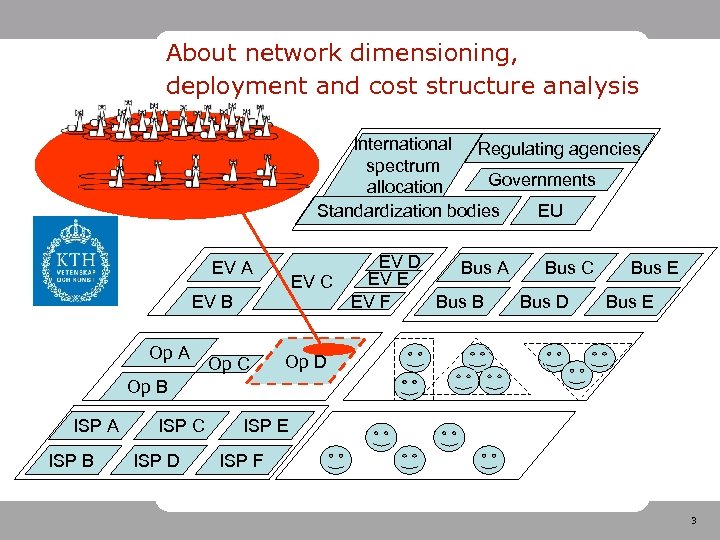 About network dimensioning, deployment and cost structure analysis International Regulating agencies spectrum Governments allocation EU Standardization bodies EV A EV C EV B Op A Op C EV D Bus A Bus C Bus E EV E Bus B Bus D Bus E EV F Op D Op B ISP A ISP B ISP C ISP D ISP E ISP F 3
 About network dimensioning, deployment and cost structure analysis • Economics of wireless infrastructure, scalability cost-capacity trade-offs, spectrum allocation • Network dimensioning, deployment and configuration strategies, impact of user demand • Cost structure modeling & analysis of network, to calculate CAPEX, OPEX, Net present value • Homework 3: Dimensioning and high level design of a wireless network incl. cost structure analysis 4
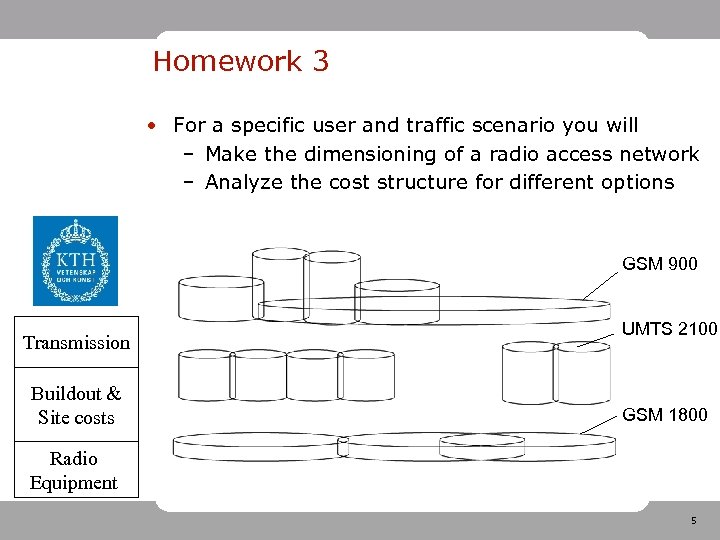 Homework 3 • For a specific user and traffic scenario you will – Make the dimensioning of a radio access network – Analyze the cost structure for different options GSM 900 Transmission Buildout & Site costs UMTS 2100 GSM 1800 Radio Equipment 5
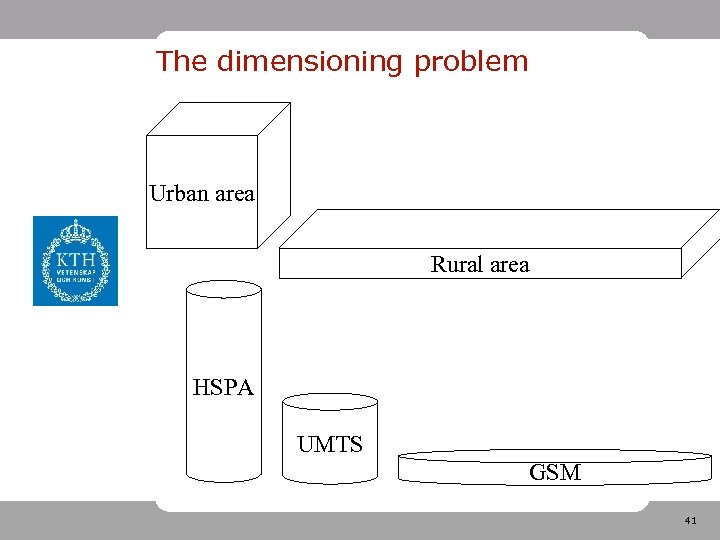
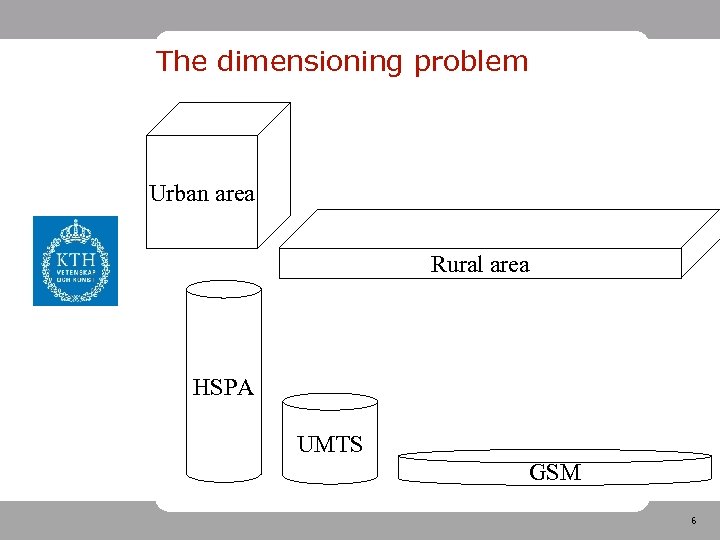 The dimensioning problem Urban area Rural area HSPA UMTS GSM 6
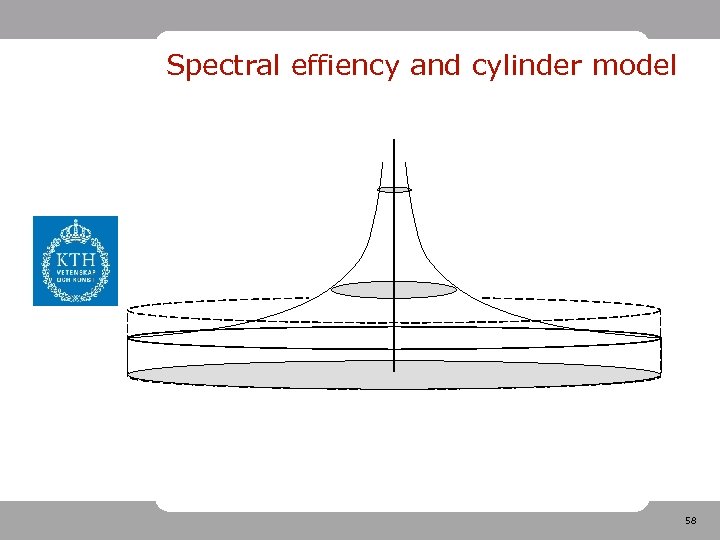
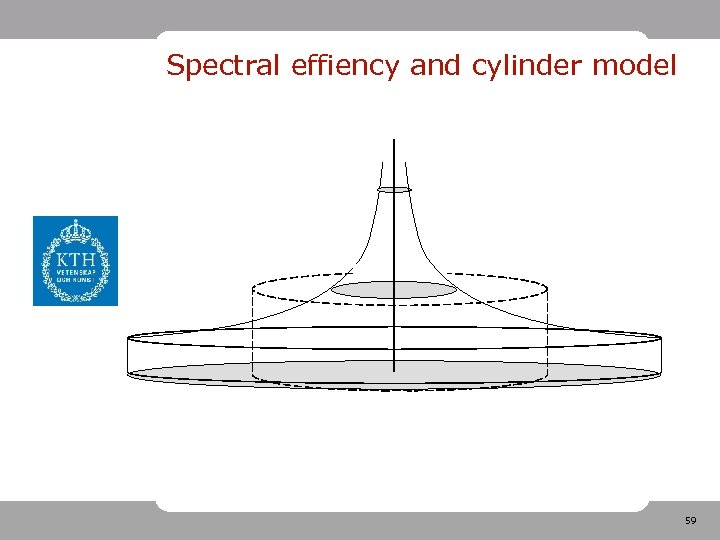
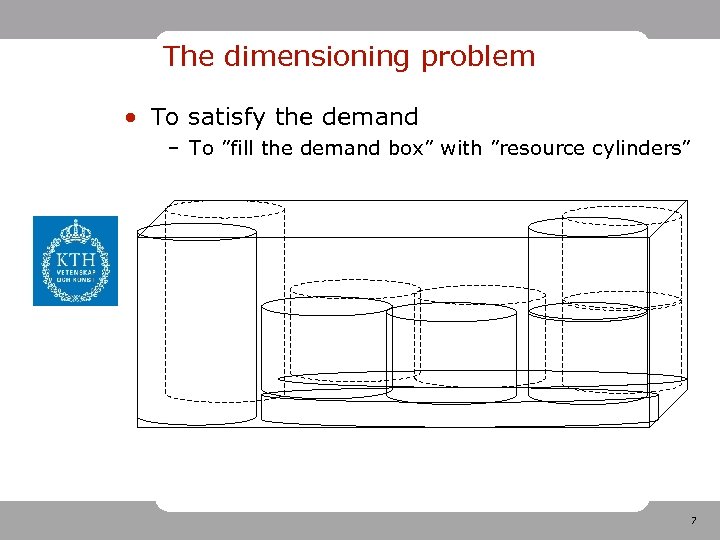 The dimensioning problem • To satisfy the demand – To ”fill the demand box” with ”resource cylinders” 7
 Agenda items • • • To estimate demand Dimensioning of radio access network Capacity, data rates and spectral efficiency of radio access technologies (RAT) Trade offs using – Number of base station sites – Spectrum – Cell structure What to do when the demand increases? Cost structure analysis 8
 Estimation of user demand • How to describe demand – – Location of users Number of users Service mix Traffic per user • How to estimate demand for dimensioning 9
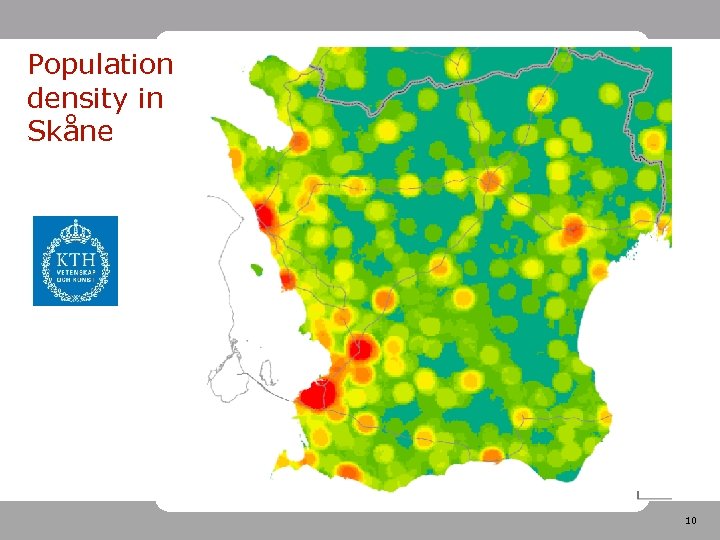 Population density in Skåne 10
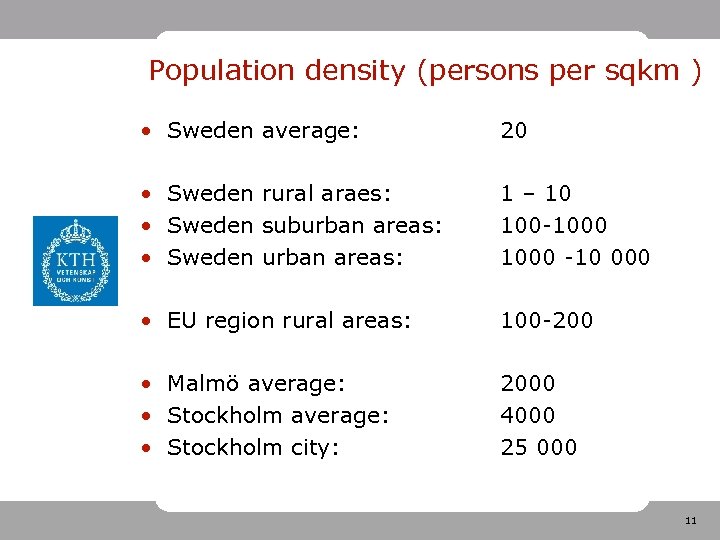 Population density (persons per sqkm ) • Sweden average: 20 • Sweden rural araes: • Sweden suburban areas: • Sweden urban areas: 1 – 10 100 -1000 -10 000 • EU region rural areas: 100 -200 • Malmö average: • Stockholm city: 2000 4000 25 000 11
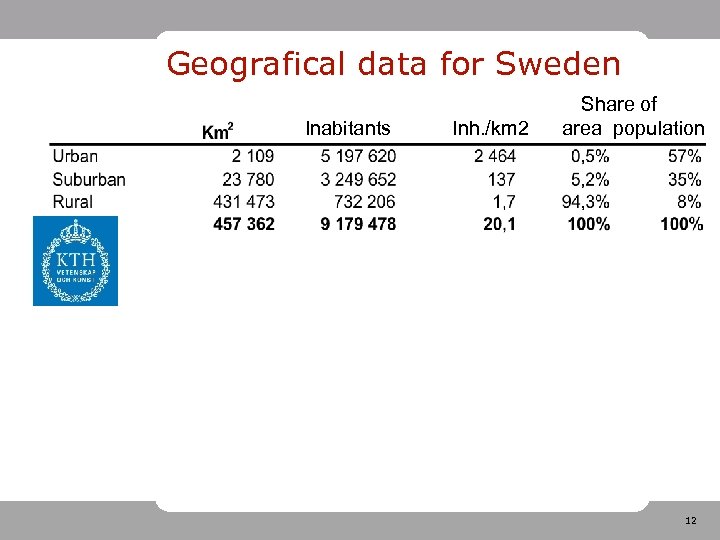 Geografical data for Sweden Inabitants Inh. /km 2 Share of area population 12
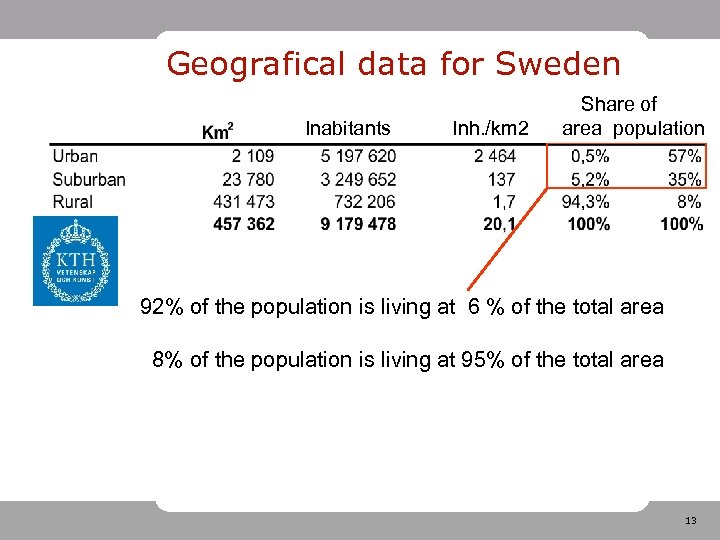 Geografical data for Sweden Inabitants Inh. /km 2 Share of area population 92% of the population is living at 6 % of the total area 8% of the population is living at 95% of the total area 13
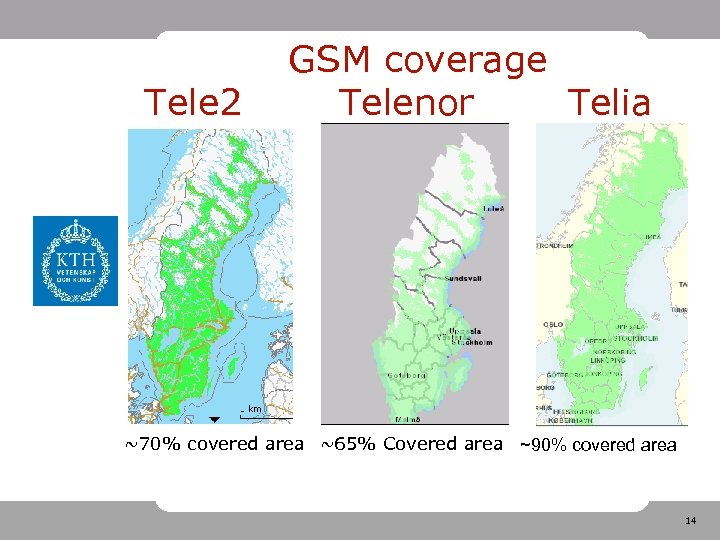 Tele 2 GSM coverage Telenor Telia ~70% covered area ~65% Covered area ~90% covered area 14
 Estimation of user demand • The network dimensioning part of the course • How to describe demand – – Location of users Number of users Service mix Traffic per user • How to estimate demand for dimensioning 15
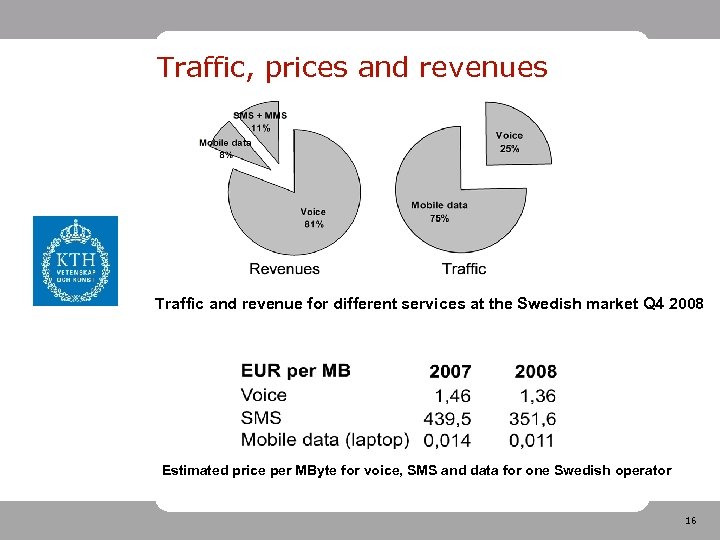 Traffic, prices and revenues Traffic and revenue for different services at the Swedish market Q 4 2008 Estimated price per MByte for voice, SMS and data for one Swedish operator 16
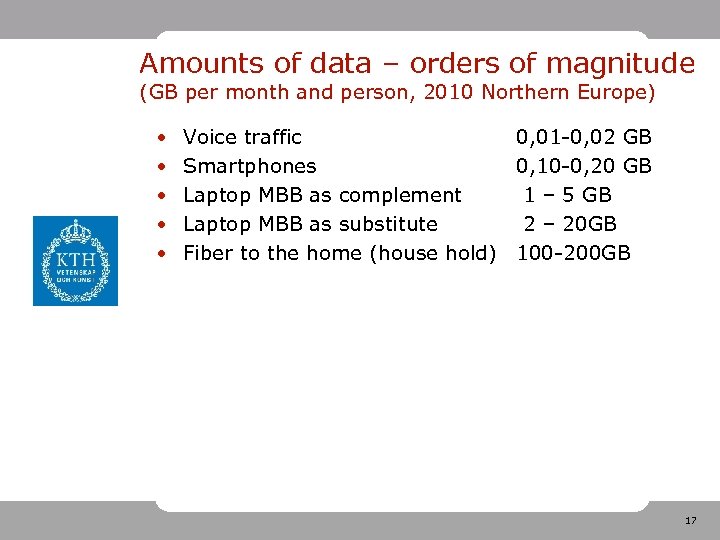 Amounts of data – orders of magnitude (GB per month and person, 2010 Northern Europe) • • • Voice traffic 0, 01 -0, 02 GB Smartphones 0, 10 -0, 20 GB Laptop MBB as complement 1 – 5 GB Laptop MBB as substitute 2 – 20 GB Fiber to the home (house hold) 100 -200 GB 17
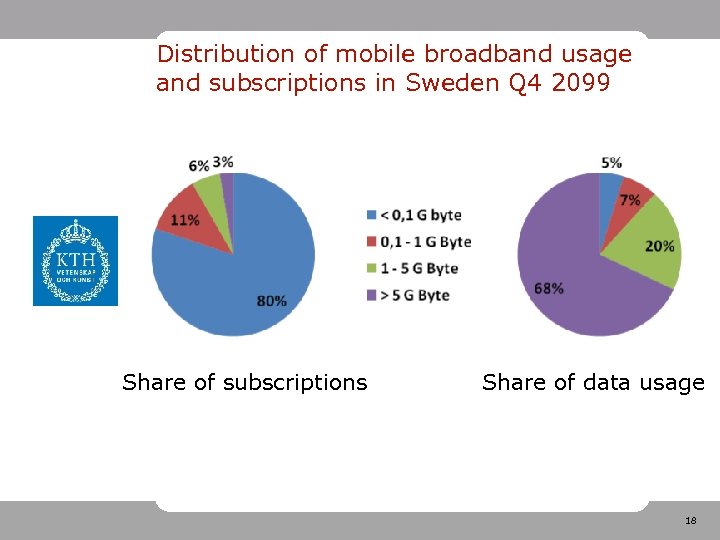 Distribution of mobile broadband usage and subscriptions in Sweden Q 4 2099 Share of subscriptions Share of data usage 18
 Estimation of user demand • The network dimensioning part of the course • How to describe demand – – Location of users Number of users Service mix Traffic per user • How to estimate demand for dimensioning 19
 Demand estimates as input for dimensioning of network capacity • Amount of data – per user, per time unit, per area unit • Usage: – Amount of data per user and time unit – Example 1: 100 MB per day – Example 2: 5 GB per month – needs to be expressed as kbps-Mbps per user 20
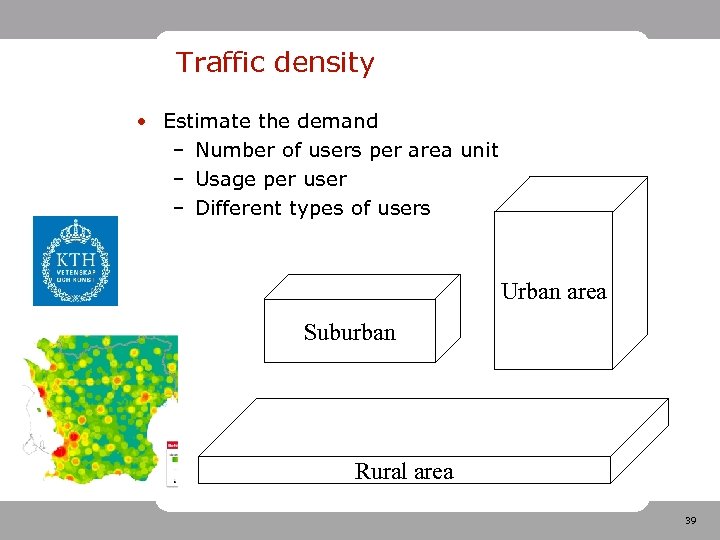
 Demand estimates as input for dimensioning of network capacity • Traffic – – Amount of data per time unit per area unit Depends on user density and usage per user Example 1: 10 Mbps per sqkm Example 2: 100 GB per day in a 2* 2 km area 21
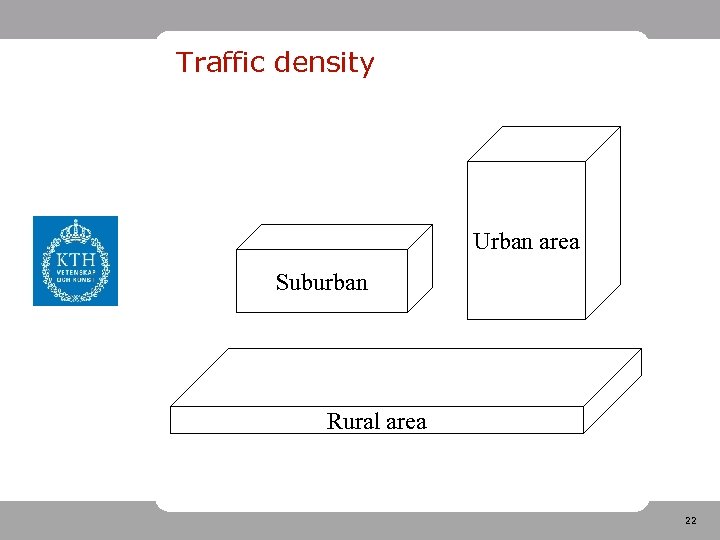 Traffic density Urban area Suburban Rural area 22
 Dimensioning Real time services • For voice and RT data you need to estimate the maximum number of ongoing calls or session – Is based on the traffic during the ”busiest hour” 23
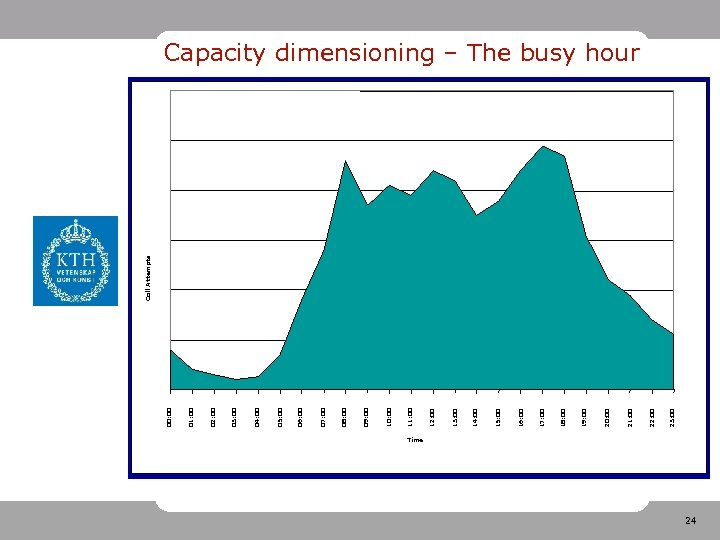 23: 00 22: 00 21: 00 20: 00 19: 00 18: 00 17: 00 16: 00 15: 00 14: 00 13: 00 12: 00 11: 00 10: 00 09: 00 08: 00 07: 00 06: 00 05: 00 04: 00 03: 00 02: 00 01: 00 00: 00 Call Attempts Capacity dimensioning – The busy hour Time 24
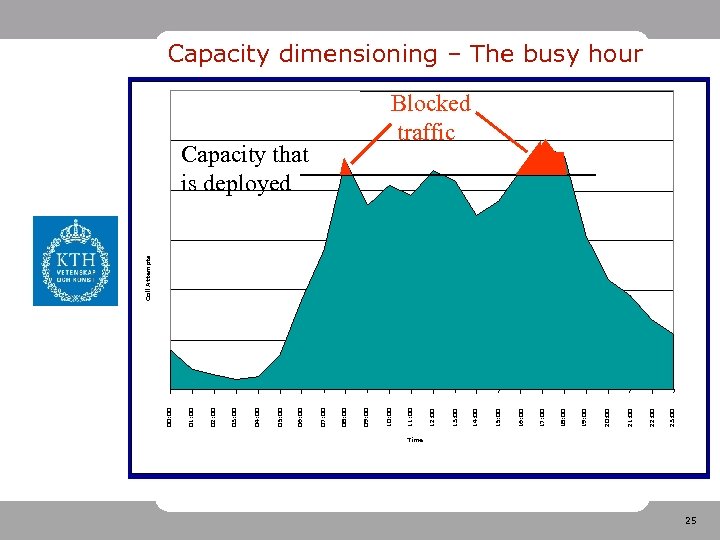 23: 00 22: 00 21: 00 20: 00 19: 00 18: 00 17: 00 16: 00 15: 00 14: 00 13: 00 12: 00 11: 00 Capacity that is deployed 10: 00 09: 00 08: 00 07: 00 06: 00 05: 00 04: 00 03: 00 02: 00 01: 00 00: 00 Call Attempts Capacity dimensioning – The busy hour Blocked traffic Time 25
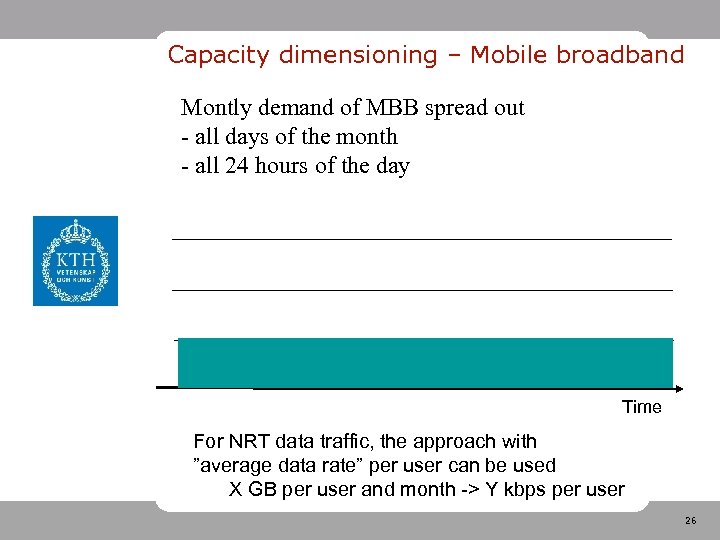 Capacity dimensioning – Mobile broadband Montly demand of MBB spread out - all days of the month - all 24 hours of the day Time For NRT data traffic, the approach with ”average data rate” per user can be used X GB per user and month -> Y kbps per user 26
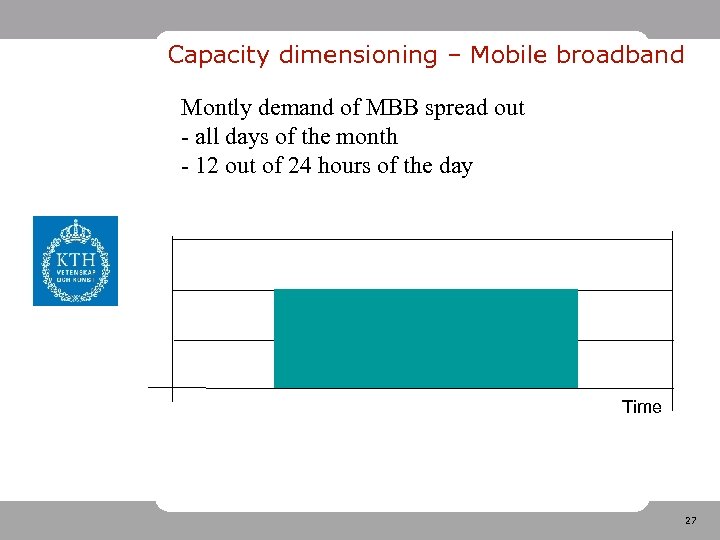 Capacity dimensioning – Mobile broadband Montly demand of MBB spread out - all days of the month - 12 out of 24 hours of the day Time 27
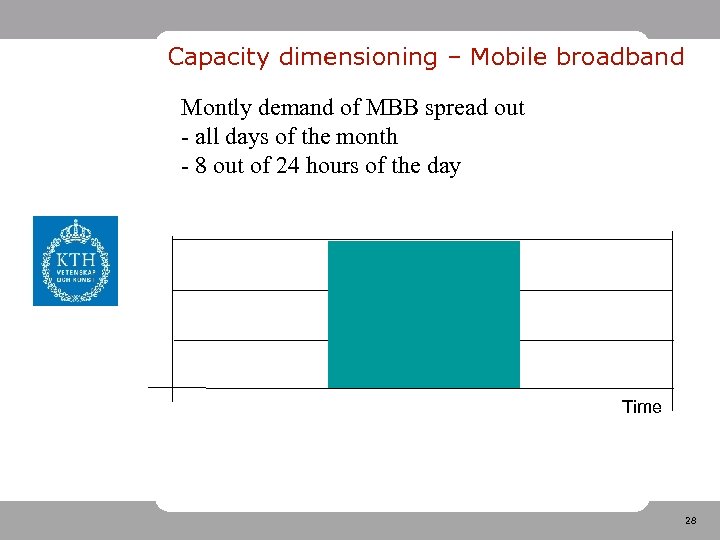 Capacity dimensioning – Mobile broadband Montly demand of MBB spread out - all days of the month - 8 out of 24 hours of the day Time 28
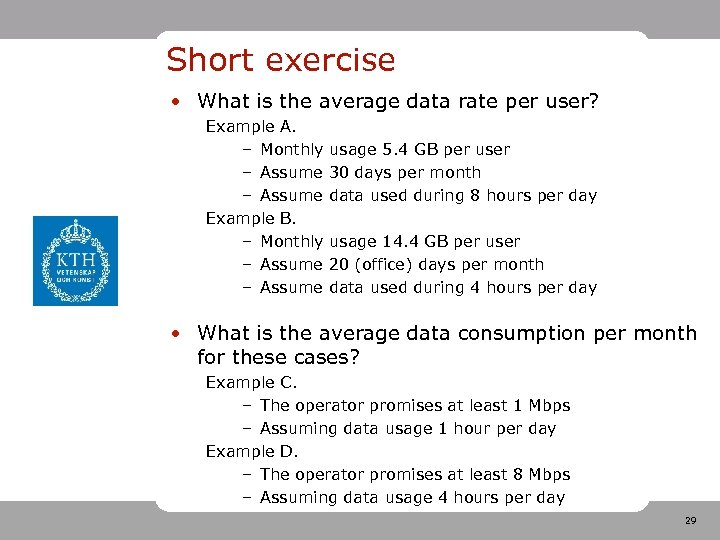 Short exercise • What is the average data rate per user? Example A. – Monthly – Assume Example B. – Monthly – Assume usage 5. 4 GB per user 30 days per month data used during 8 hours per day usage 14. 4 GB per user 20 (office) days per month data used during 4 hours per day • What is the average data consumption per month for these cases? Example C. – The operator promises at least 1 Mbps – Assuming data usage 1 hour per day Example D. – The operator promises at least 8 Mbps – Assuming data usage 4 hours per day 29
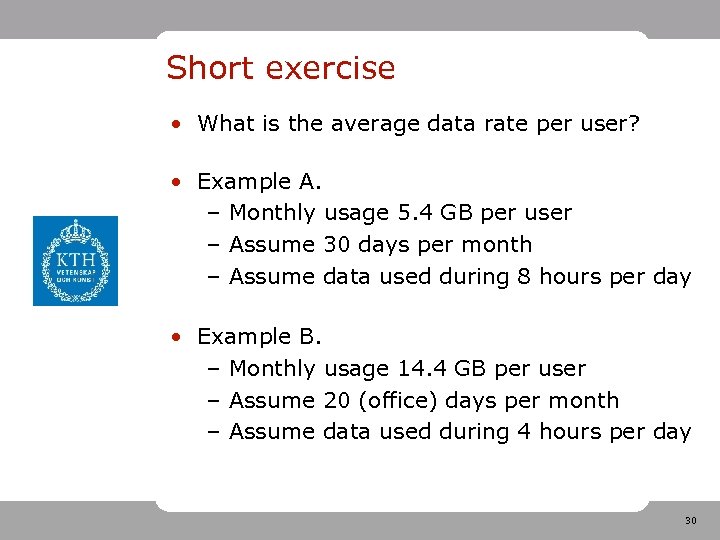 Short exercise • What is the average data rate per user? • Example A. – Monthly usage 5. 4 GB per user – Assume 30 days per month – Assume data used during 8 hours per day • Example B. – Monthly usage 14. 4 GB per user – Assume 20 (office) days per month – Assume data used during 4 hours per day 30
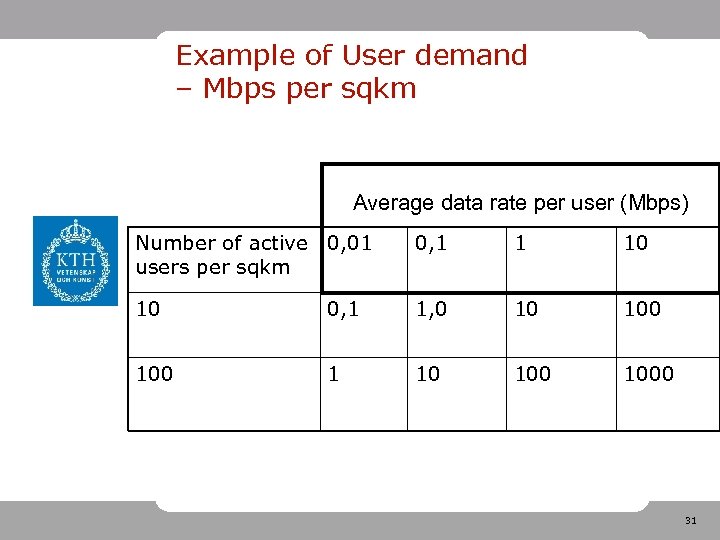 Example of User demand – Mbps per sqkm Average data rate per user (Mbps) Number of active 0, 01 users per sqkm 0, 1 1 10 10 0, 1 1, 0 10 100 1 10 1000 31
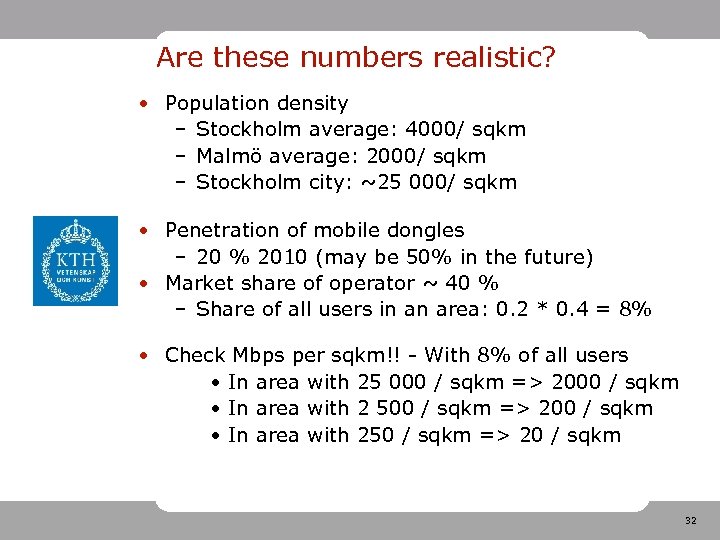 Are these numbers realistic? • Population density – Stockholm average: 4000/ sqkm – Malmö average: 2000/ sqkm – Stockholm city: ~25 000/ sqkm • Penetration of mobile dongles – 20 % 2010 (may be 50% in the future) • Market share of operator ~ 40 % – Share of all users in an area: 0. 2 * 0. 4 = 8% • Check Mbps per sqkm!! - With 8% of all users • In area with 25 000 / sqkm => 2000 / sqkm • In area with 2 500 / sqkm => 200 / sqkm • In area with 250 / sqkm => 20 / sqkm 32
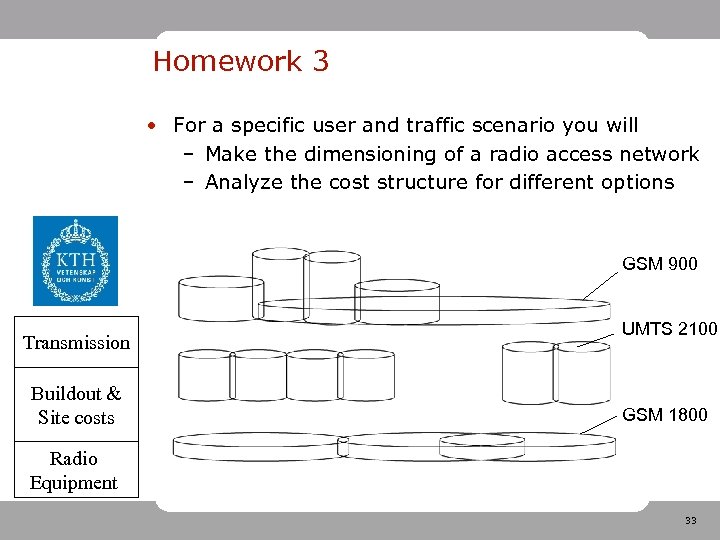 Homework 3 • For a specific user and traffic scenario you will – Make the dimensioning of a radio access network – Analyze the cost structure for different options GSM 900 Transmission Buildout & Site costs UMTS 2100 GSM 1800 Radio Equipment 33
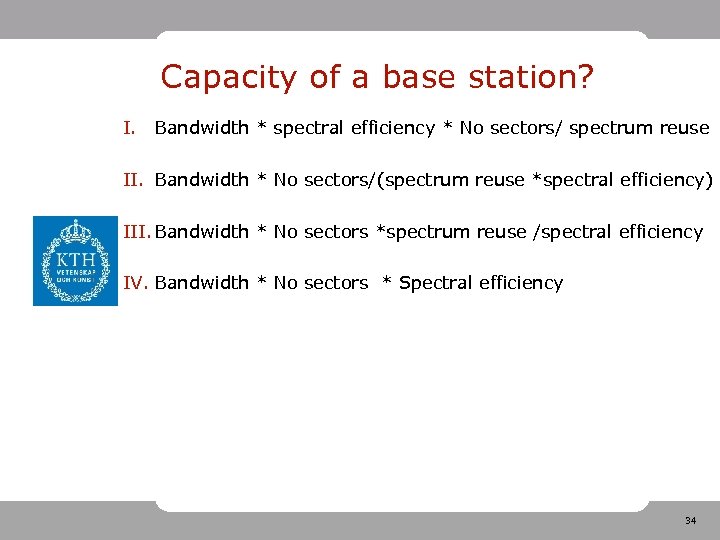 Capacity of a base station? I. Bandwidth * spectral efficiency * No sectors/ spectrum reuse II. Bandwidth * No sectors/(spectrum reuse *spectral efficiency) III. Bandwidth * No sectors *spectrum reuse /spectral efficiency IV. Bandwidth * No sectors * Spectral efficiency 34
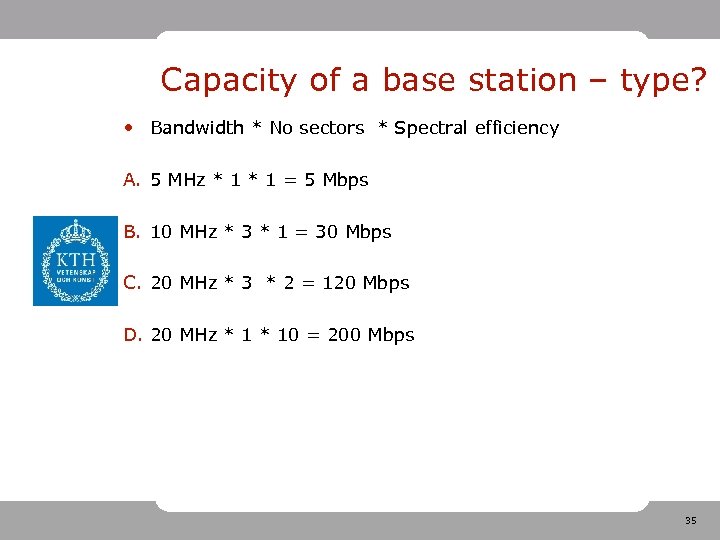 Capacity of a base station – type? • Bandwidth * No sectors * Spectral efficiency A. 5 MHz * 1 = 5 Mbps B. 10 MHz * 3 * 1 = 30 Mbps C. 20 MHz * 3 * 2 = 120 Mbps D. 20 MHz * 10 = 200 Mbps 35
 36
36
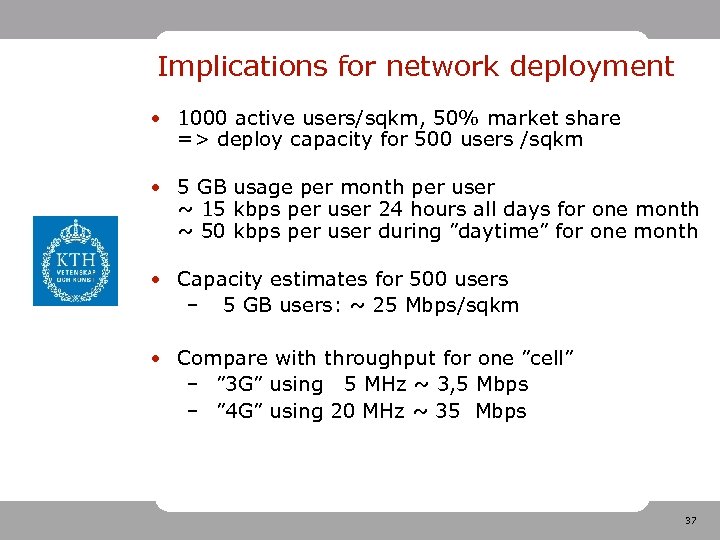 Implications for network deployment • 1000 active users/sqkm, 50% market share => deploy capacity for 500 users /sqkm • 5 GB usage per month per user ~ 15 kbps per user 24 hours all days for one month ~ 50 kbps per user during ”daytime” for one month • Capacity estimates for 500 users – 5 GB users: ~ 25 Mbps/sqkm • Compare with throughput for one ”cell” – ” 3 G” using 5 MHz ~ 3, 5 Mbps – ” 4 G” using 20 MHz ~ 35 Mbps 37
 Agenda items • • • To estimate demand Dimensioning of radio access network Capacity, data rates and spectral efficiency of radio access technologies (RAT) Trade offs using – Number of base station sites – Spectrum – Cell structure What to do when the demand increases? Cost structure analysis 38
 Traffic density • Estimate the demand – Number of users per area unit – Usage per user – Different types of users Urban area Suburban Rural area 39
 Agenda items • • • To estimate demand Dimensioning of radio access network Capacity, data rates and spectral efficiency of radio access technologies (RAT) Trade offs using – Number of base station sites – Spectrum – Cell structure What to do when the demand increases? Cost structure analysis 40
 The dimensioning problem Urban area Rural area HSPA UMTS GSM 41
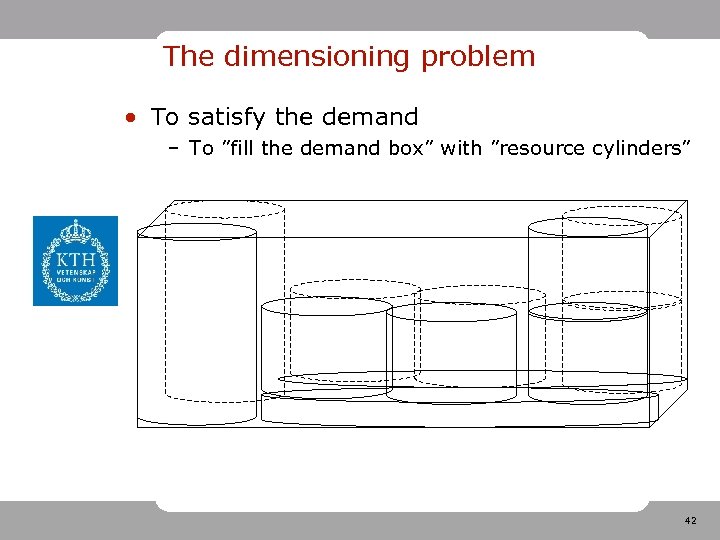 The dimensioning problem • To satisfy the demand – To ”fill the demand box” with ”resource cylinders” 42
 Agenda items • • • To estimate demand Dimensioning of radio access network Capacity, data rates and spectral efficiency of radio access technologies (RAT) Trade offs using – Number of base station sites – Spectrum – Cell structure What to do when the demand increases? Cost structure analysis 43
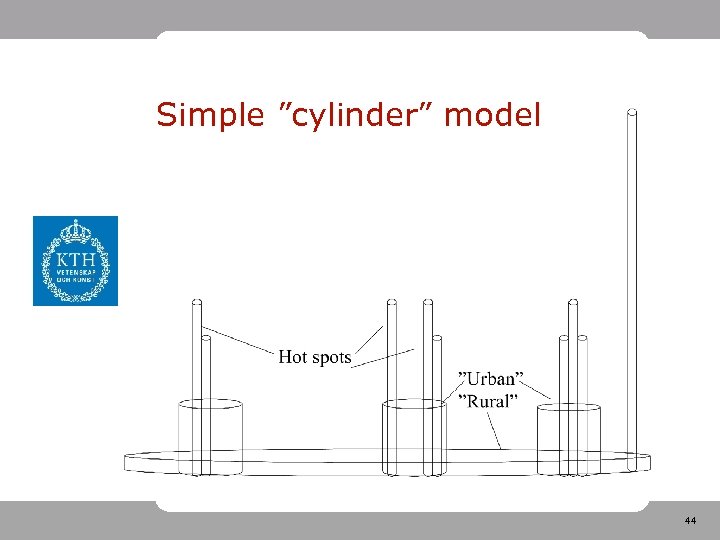 Simple ”cylinder” model 44
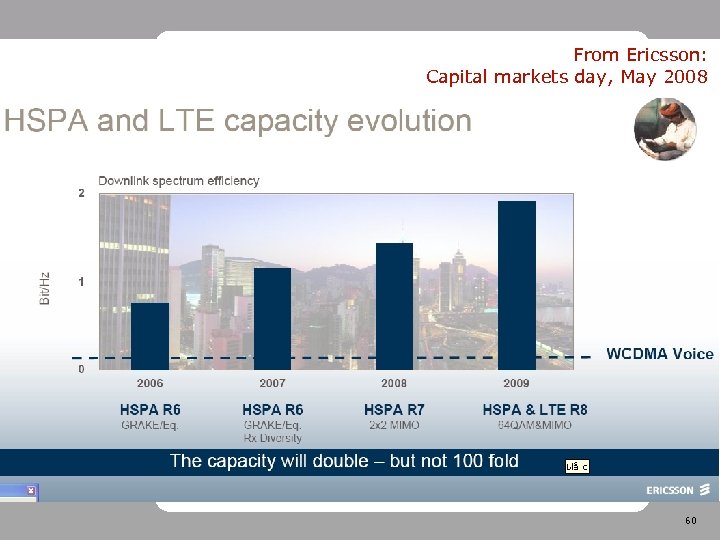
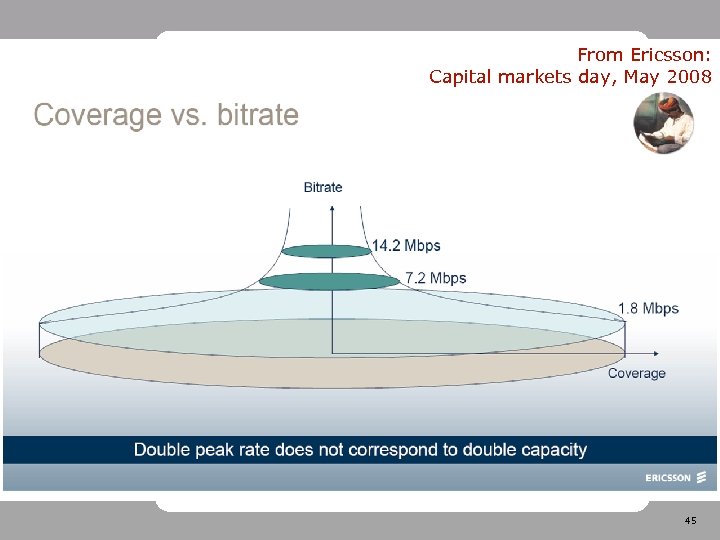 From Ericsson: Capital markets day, May 2008 45
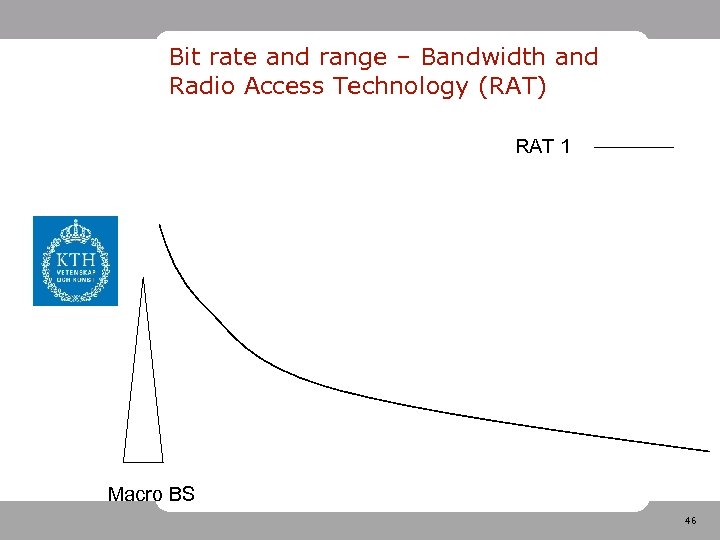 Bit rate and range – Bandwidth and Radio Access Technology (RAT) RAT 1 Macro BS 46
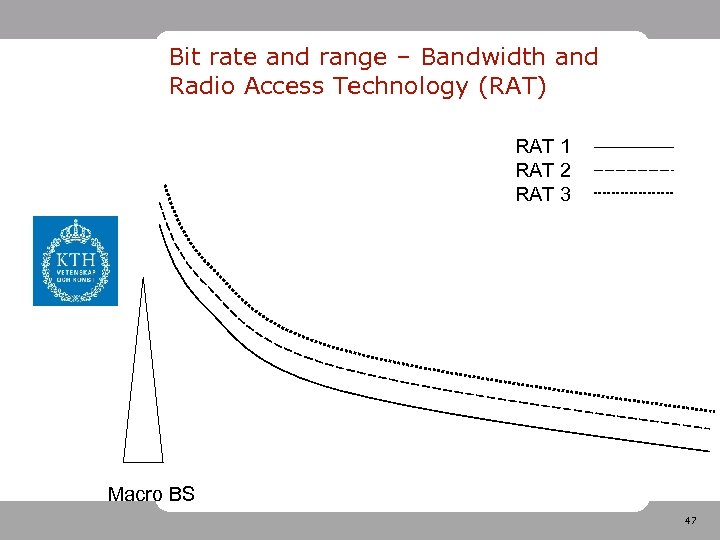 Bit rate and range – Bandwidth and Radio Access Technology (RAT) RAT 1 RAT 2 RAT 3 Macro BS 47
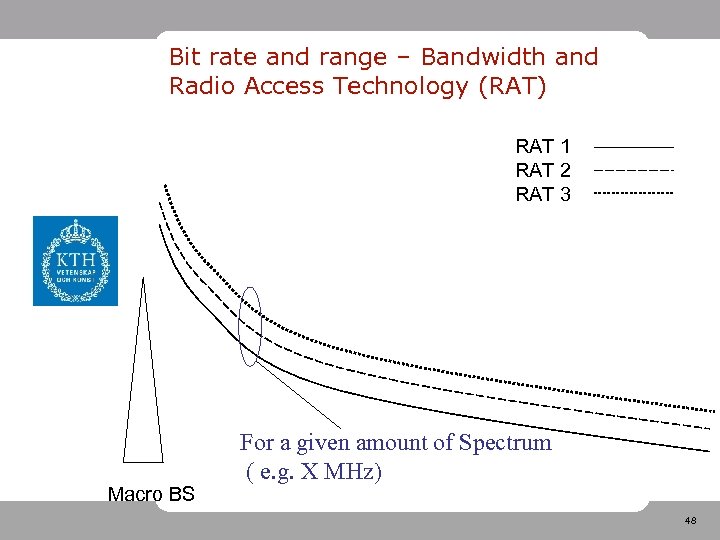 Bit rate and range – Bandwidth and Radio Access Technology (RAT) RAT 1 RAT 2 RAT 3 Macro BS For a given amount of Spectrum ( e. g. X MHz) 48
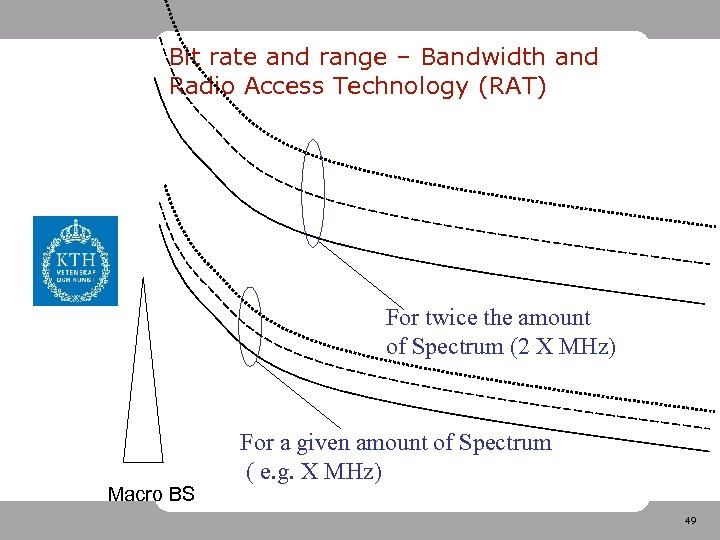 Bit rate and range – Bandwidth and Radio Access Technology (RAT) For twice the amount of Spectrum (2 X MHz) Macro BS For a given amount of Spectrum ( e. g. X MHz) 49
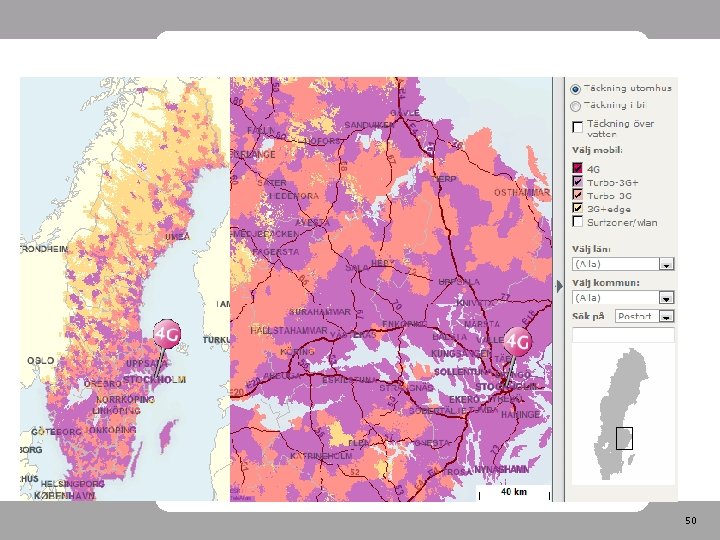 Coverage Sweden, Mälardalen 50
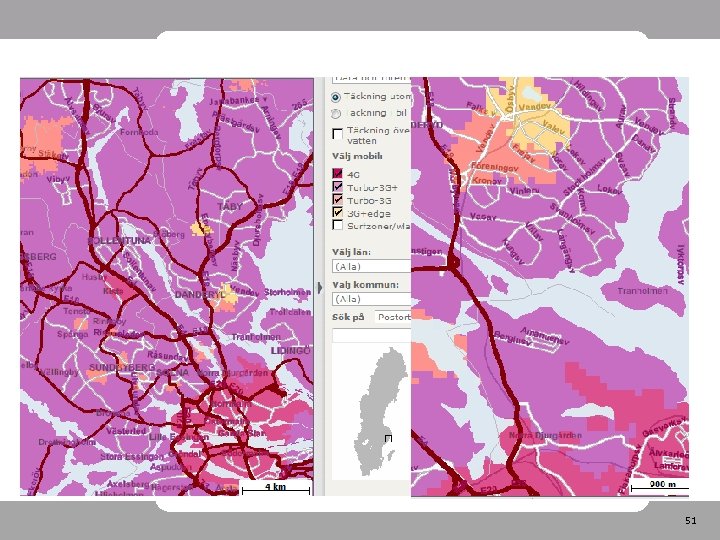 Coverage Stockholm area 51
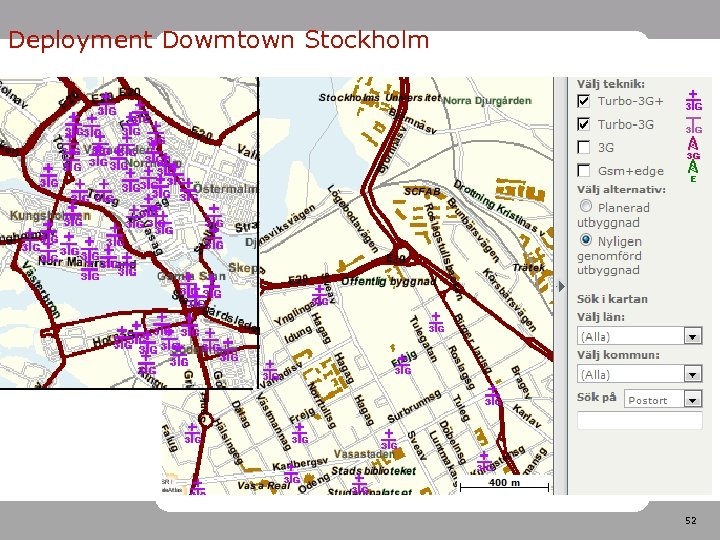 Deployment Dowmtown Stockholm 52
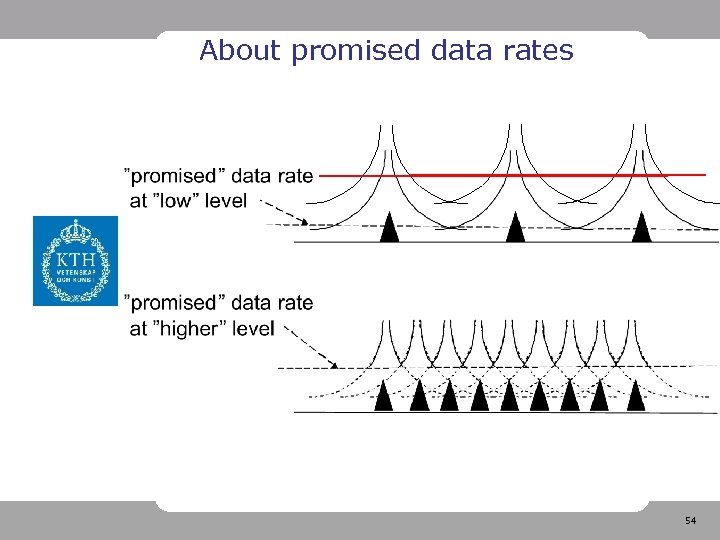
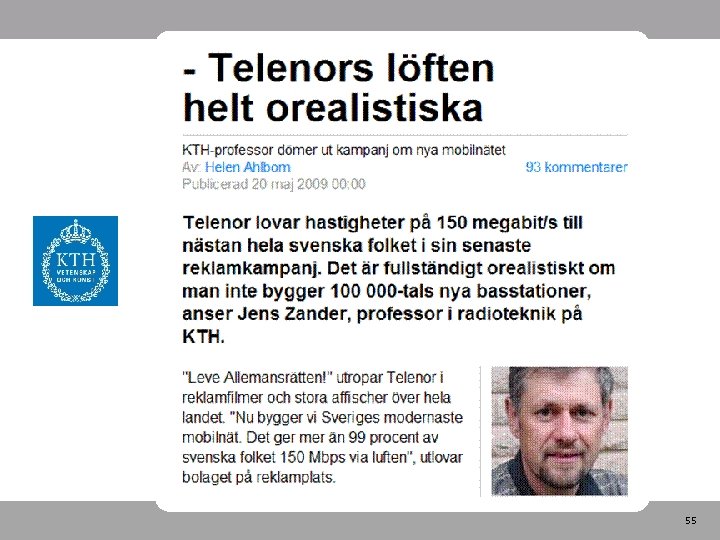
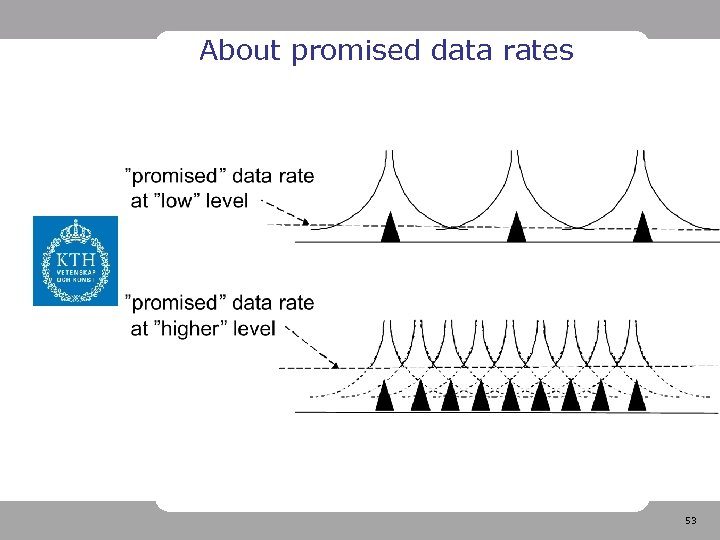 About promised data rates 53
 About promised data rates 54
 55
55
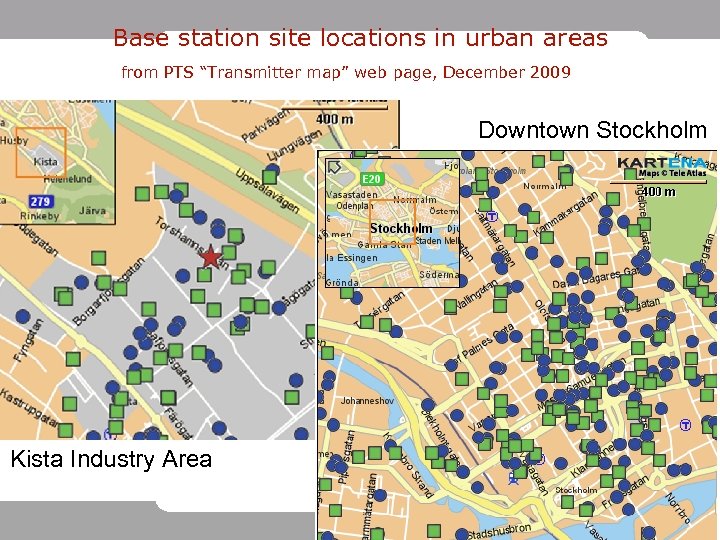 Base station site locations in urban areas from PTS “Transmitter map” web page, December 2009 Downtown Stockholm Kista Industry Area 56
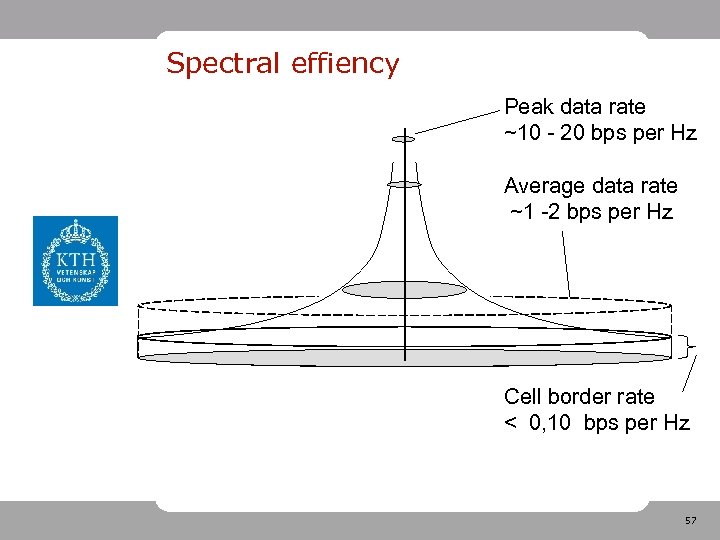 Spectral effiency Peak data rate ~10 - 20 bps per Hz Average data rate ~1 -2 bps per Hz Cell border rate < 0, 10 bps per Hz 57
 Spectral effiency and cylinder model 58
 Spectral effiency and cylinder model 59
 From Ericsson: Capital markets day, May 2008 60
 Agenda items • • • To estimate demand Dimensioning of radio access network Capacity, data rates and spectral efficiency of radio access technologies (RAT) Trade offs using – Number of base station sites – Spectrum – Cell structure What to do when the demand increases? Cost structure analysis 61
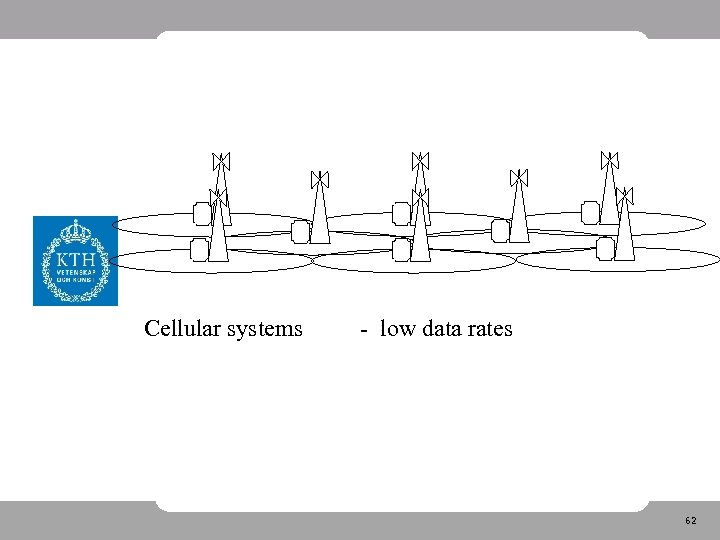 Cellular systems - low data rates 62
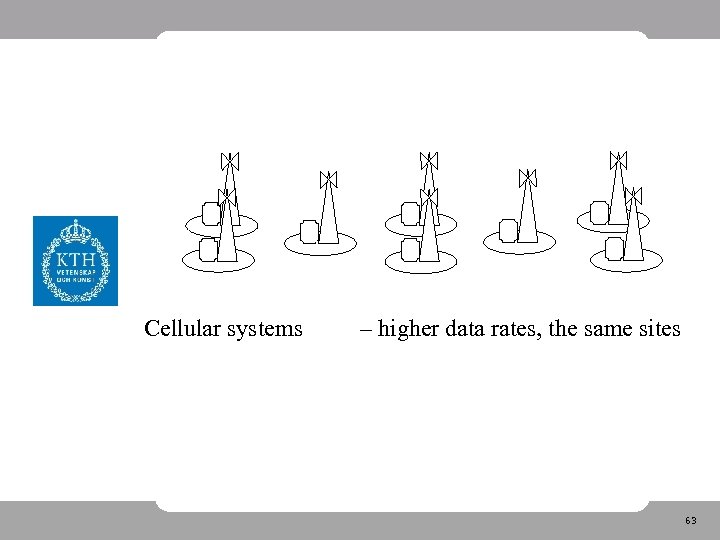 Cellular systems – higher data rates, the same sites 63
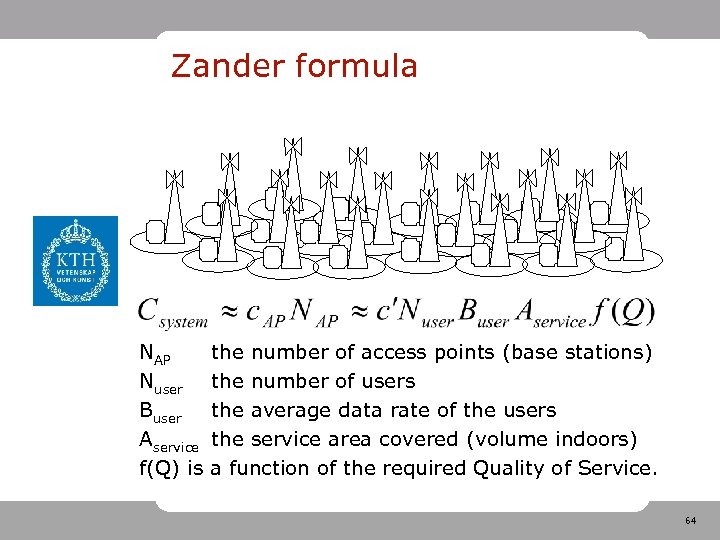 Zander formula NAP Nuser Buser Aservice f(Q) is the number of access points (base stations) the number of users the average data rate of the users the service area covered (volume indoors) a function of the required Quality of Service. 64
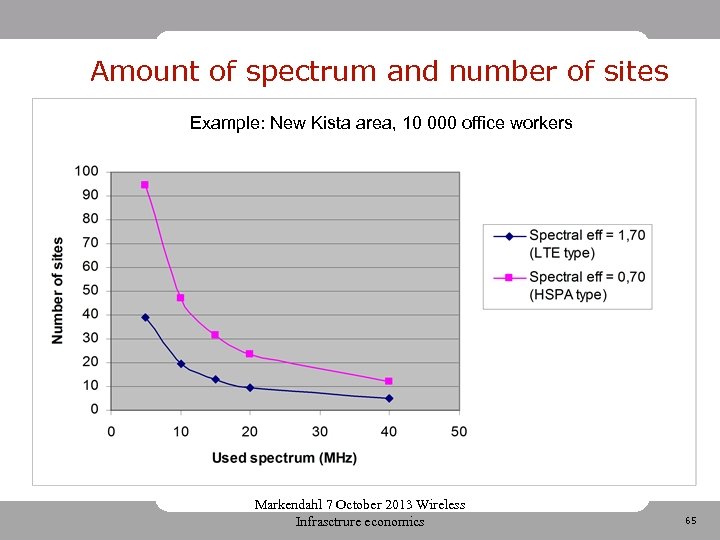 Amount of spectrum and number of sites Example: New Kista area, 10 000 office workers Markendahl 7 October 2013 Wireless Infrasctrure economics 65
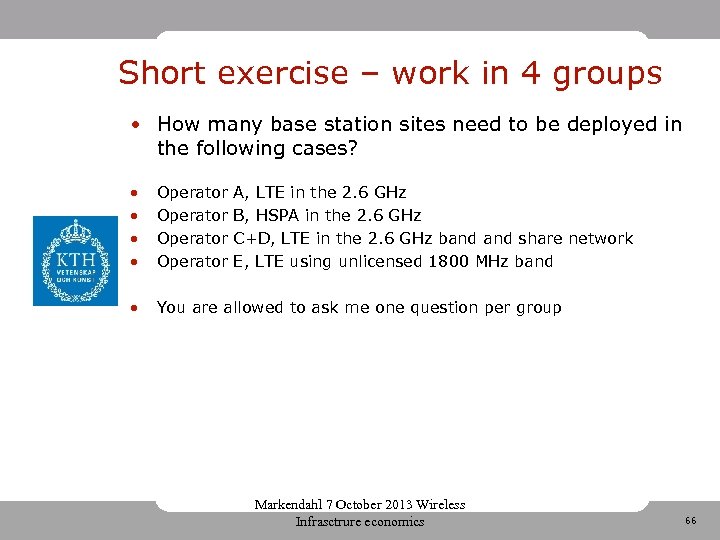 Short exercise – work in 4 groups • How many base station sites need to be deployed in the following cases? • • Operator • You are allowed to ask me one question per group A, LTE in the 2. 6 GHz B, HSPA in the 2. 6 GHz C+D, LTE in the 2. 6 GHz band share network E, LTE using unlicensed 1800 MHz band Markendahl 7 October 2013 Wireless Infrasctrure economics 66
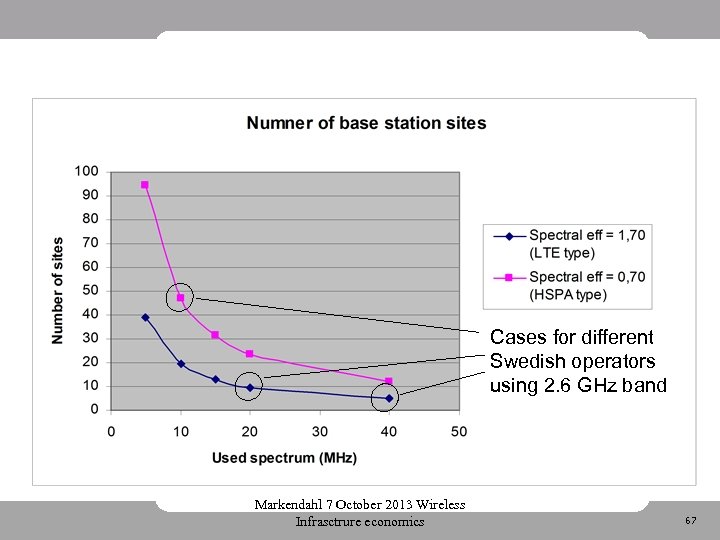 Cases for different Swedish operators using 2. 6 GHz band Markendahl 7 October 2013 Wireless Infrasctrure economics 67
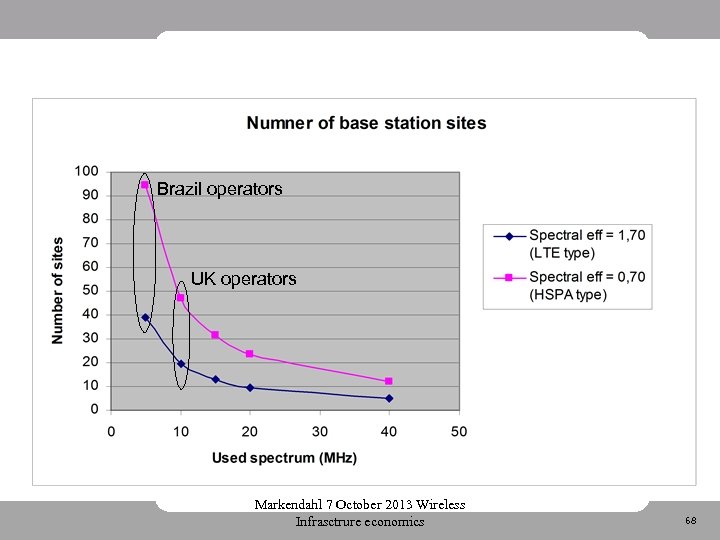 Brazil operators UK operators Markendahl 7 October 2013 Wireless Infrasctrure economics 68
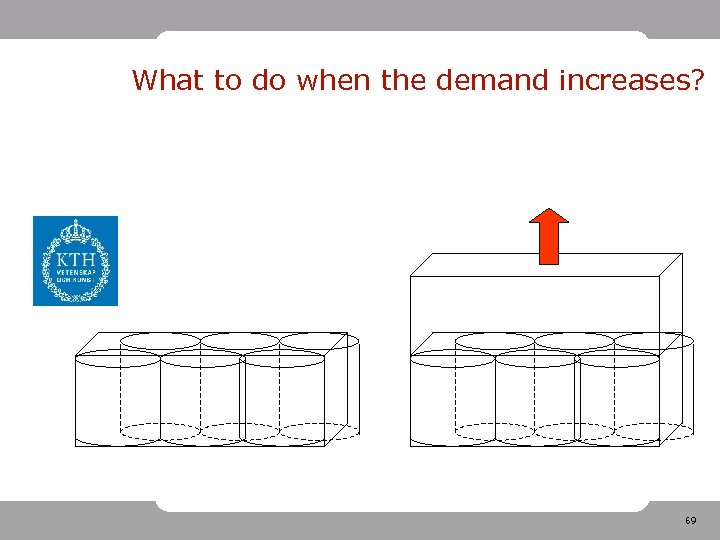 What to do when the demand increases? 69
 What to do when the demand increases? • Deploy a denser network – Add more sites (number of AP´s) • Increase the bandwidth – Add more carriers • Add sectors at existing sites – Add antennas and radio equipment 70
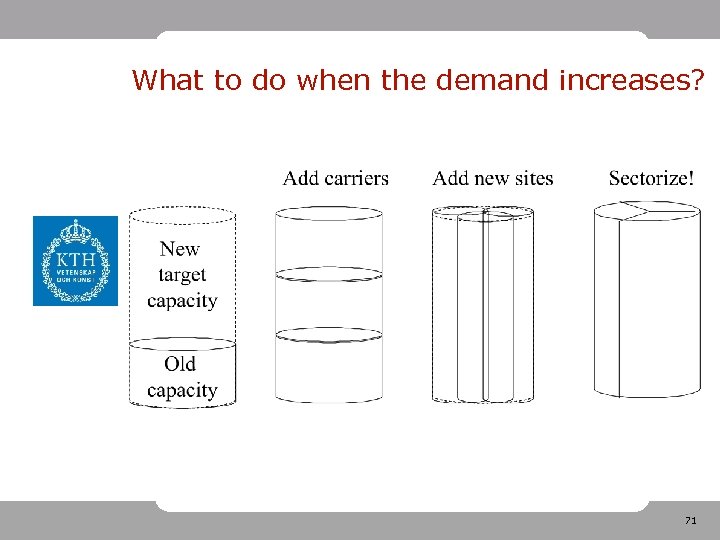 What to do when the demand increases? 71
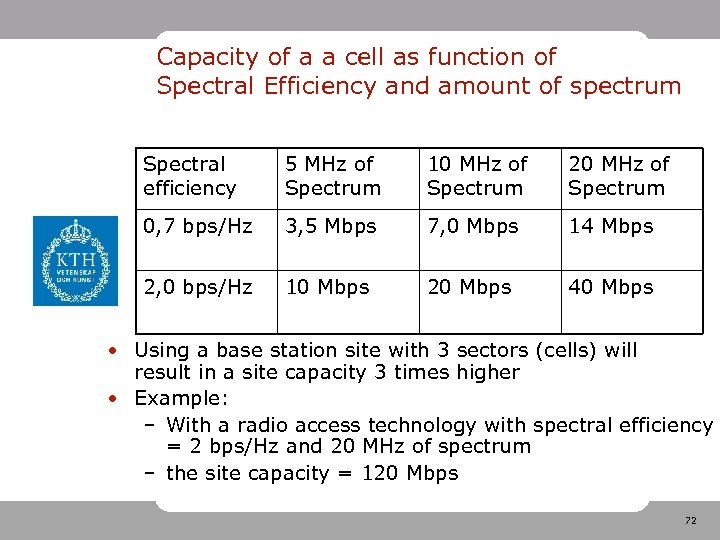 Capacity of a a cell as function of Spectral Efficiency and amount of spectrum Spectral efficiency 5 MHz of Spectrum 10 MHz of Spectrum 20 MHz of Spectrum 0, 7 bps/Hz 3, 5 Mbps 7, 0 Mbps 14 Mbps 2, 0 bps/Hz 10 Mbps 20 Mbps 40 Mbps • Using a base station site with 3 sectors (cells) will result in a site capacity 3 times higher • Example: – With a radio access technology with spectral efficiency = 2 bps/Hz and 20 MHz of spectrum – the site capacity = 120 Mbps 72
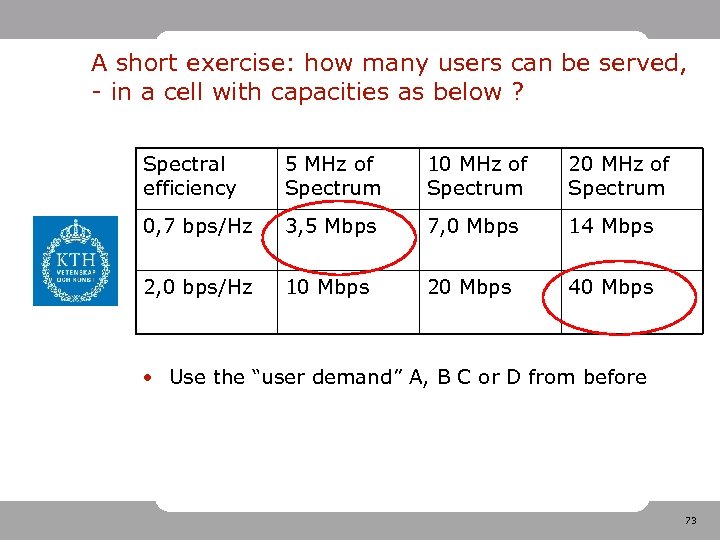 A short exercise: how many users can be served, - in a cell with capacities as below ? Spectral efficiency 5 MHz of Spectrum 10 MHz of Spectrum 20 MHz of Spectrum 0, 7 bps/Hz 3, 5 Mbps 7, 0 Mbps 14 Mbps 2, 0 bps/Hz 10 Mbps 20 Mbps 40 Mbps • Use the “user demand” A, B C or D from before 73
 Agenda items • • • To estimate demand Dimensioning of radio access network Capacity, data rates and spectral efficiency of radio access technologies (RAT) Trade offs using – Number of base station sites – Spectrum – Cell structure What to do when the demand increases? Cost structure analysis 74
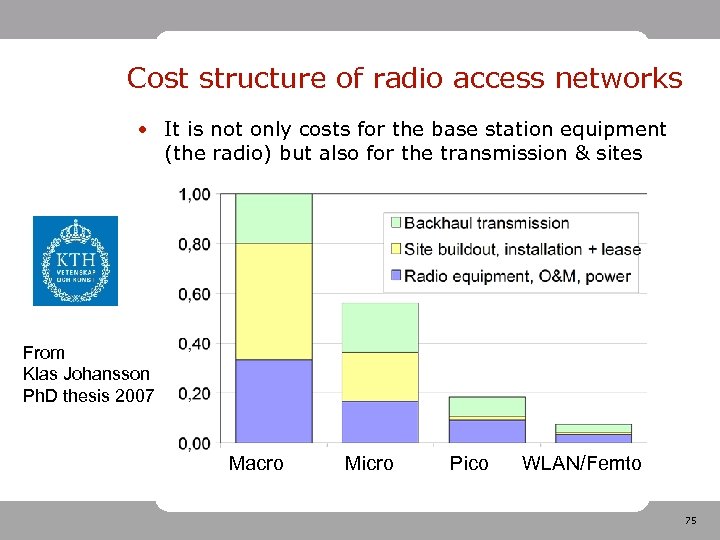 Cost structure of radio access networks • It is not only costs for the base station equipment (the radio) but also for the transmission & sites From Klas Johansson Ph. D thesis 2007 Macro Micro Pico WLAN/Femto 75
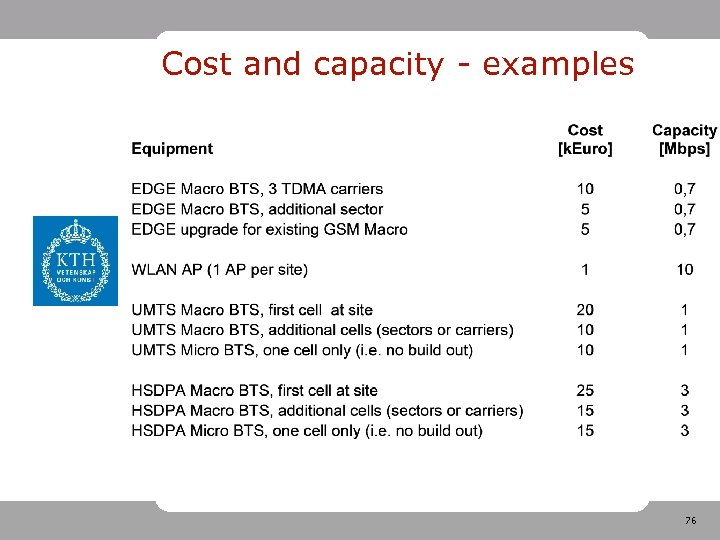 Cost and capacity - examples 76
 Financial aspects • Price erosion • Discounted cost model • We need to consider the time and how the value of changes over time • Net Present Value calculation 77
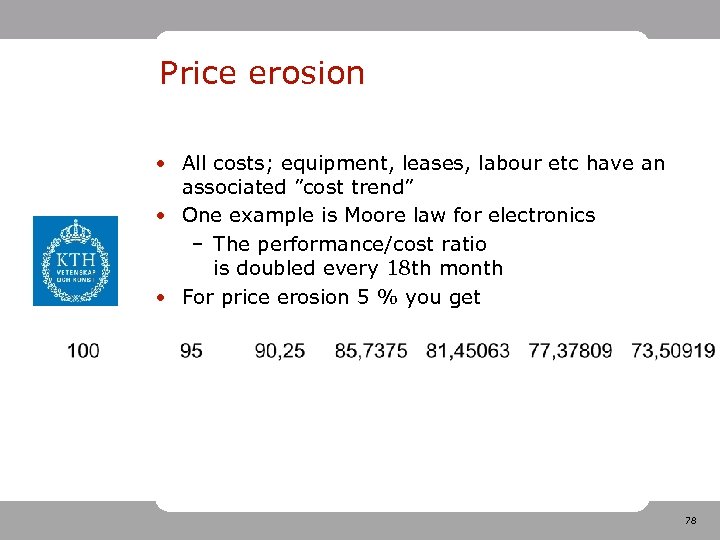 Price erosion • All costs; equipment, leases, labour etc have an associated ”cost trend” • One example is Moore law for electronics – The performance/cost ratio is doubled every 18 th month • For price erosion 5 % you get 78
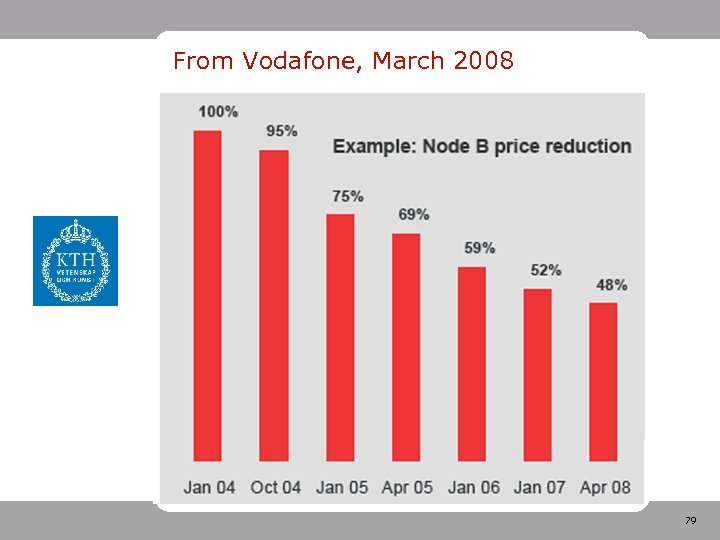 From Vodafone, March 2008 79
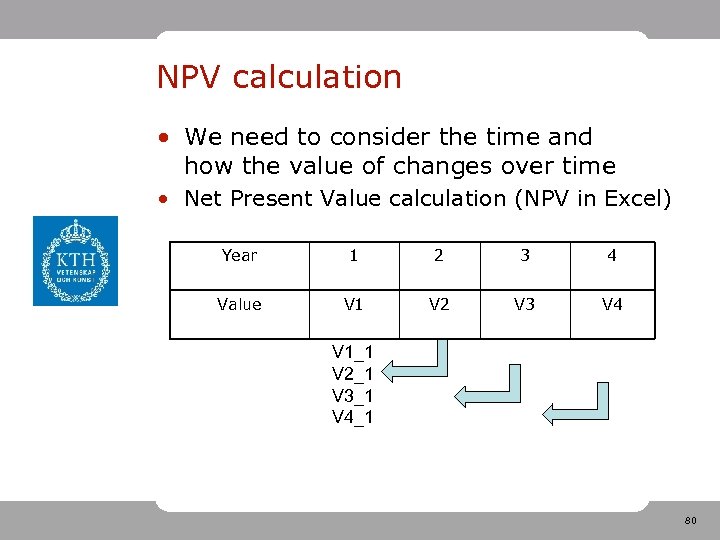 NPV calculation • We need to consider the time and how the value of changes over time • Net Present Value calculation (NPV in Excel) Year 1 2 3 4 Value V 1 V 2 V 3 V 4 V 1_1 V 2_1 V 3_1 V 4_1 80
 Good luck with HW 3 81
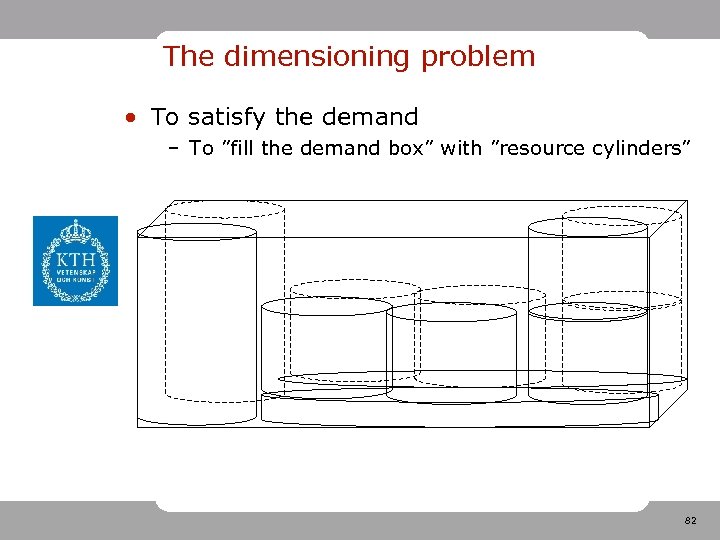 The dimensioning problem • To satisfy the demand – To ”fill the demand box” with ”resource cylinders” 82
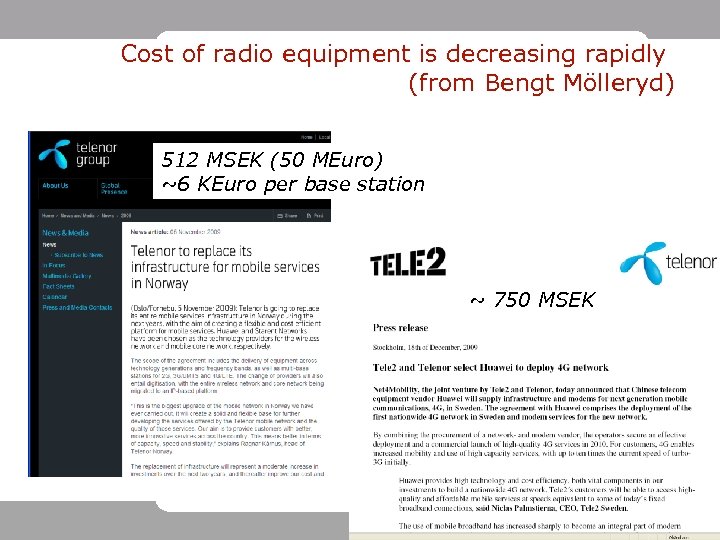 Cost of radio equipment is decreasing rapidly (from Bengt Mölleryd) 512 MSEK (50 MEuro) ~6 KEuro per base station ~ 750 MSEK 83
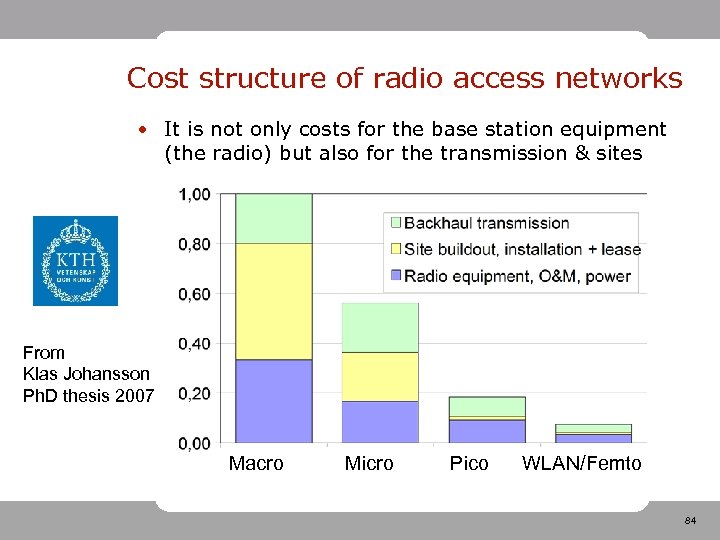 Cost structure of radio access networks • It is not only costs for the base station equipment (the radio) but also for the transmission & sites From Klas Johansson Ph. D thesis 2007 Macro Micro Pico WLAN/Femto 84
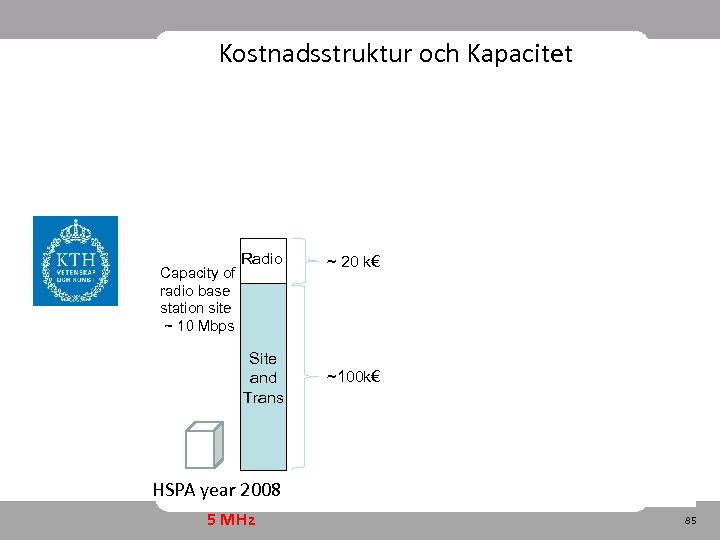 Kostnadsstruktur och Kapacitet Total cost for new site ~ 110 k€ Capacity of radio base station site ~ 10 Mbps Radio Site and Trans ~ 20 k€ Capacity of Radio radio base station site ~ 100 Mbps ~100 k€ Assuming 3 sector site 20 MHz of bandwidth and cell average spectral efficiency 0, 7 bps per Hz (HSPA) 1, 7 bps per Hz (LTE) Capacity of radio base station site ~ 100 Mbps Site And Trans Cost for upgrading an existing site ~ 30 k€ Radio Trans HSPA year 2008 5 MHz LTE year 2010 85
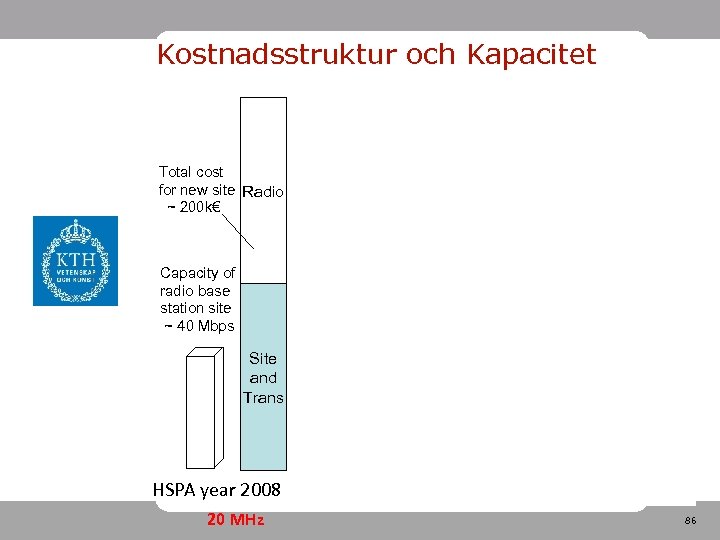 Kostnadsstruktur och Kapacitet Total cost for new site Radio ~ 200 k€ Total cost for new site ~ 110 k€ Capacity of Radio radio base station site ~ 100 Mbps Capacity of radio base station site ~ 40 Mbps Site and Trans Assuming 3 sector site 20 MHz of bandwidth and cell average spectral efficiency 0, 7 bps per Hz (HSPA) 1, 7 bps per Hz (LTE) Capacity of radio base station site ~ 100 Mbps Site And Trans Cost for upgrading an existing site ~ 30 k€ Radio Trans HSPA year 2008 20 MHz LTE year 2010 86
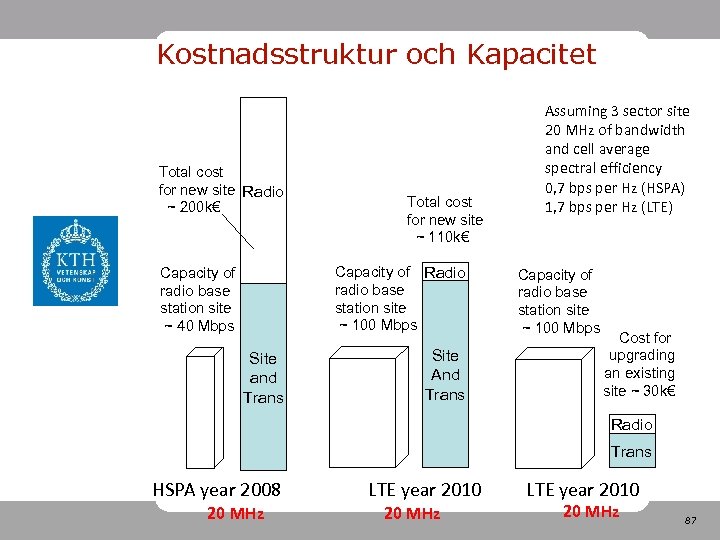 Kostnadsstruktur och Kapacitet Total cost for new site Radio ~ 200 k€ Total cost for new site ~ 110 k€ Capacity of Radio radio base station site ~ 100 Mbps Capacity of radio base station site ~ 40 Mbps Site and Trans Site And Trans Assuming 3 sector site 20 MHz of bandwidth and cell average spectral efficiency 0, 7 bps per Hz (HSPA) 1, 7 bps per Hz (LTE) Capacity of radio base station site ~ 100 Mbps Cost for upgrading an existing site ~ 30 k€ Radio Trans HSPA year 2008 20 MHz LTE year 2010 20 MHz 87
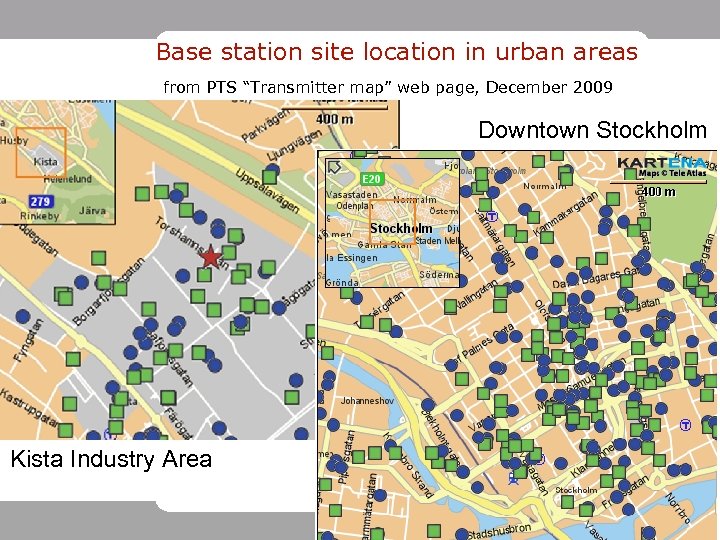 Base station site location in urban areas from PTS “Transmitter map” web page, December 2009 Downtown Stockholm Kista Industry Area 88