


 Скачать презентацию Network and Node 101 Exchange Network Conference San
121234e12522c4d522243b71a4d4e15c.ppt
- Количество слайдов: 40
 Network and Node 101 Exchange Network Conference San Francisco, CA April 18, 2006
 101 Topics • • Introduction The Mechanism: Nodes The Medium: XML The Mimic: Node Clients The Menu: Exchanges The Main Act: A LIVE demonstration The Mob: Governance The End: Getting Started
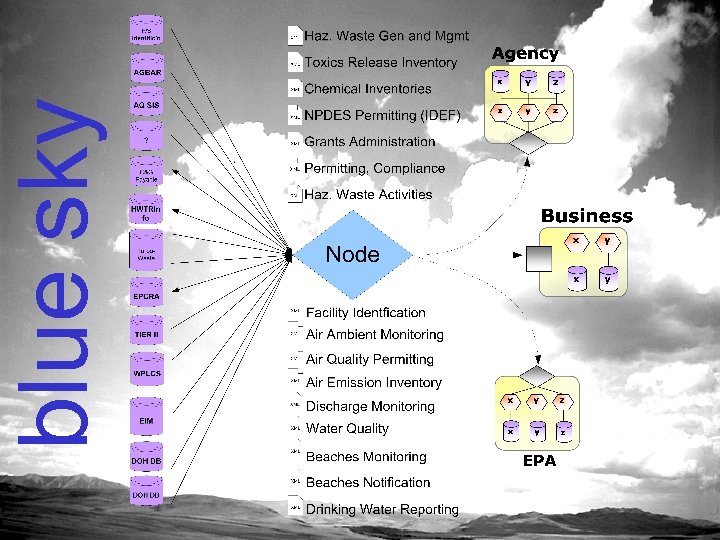
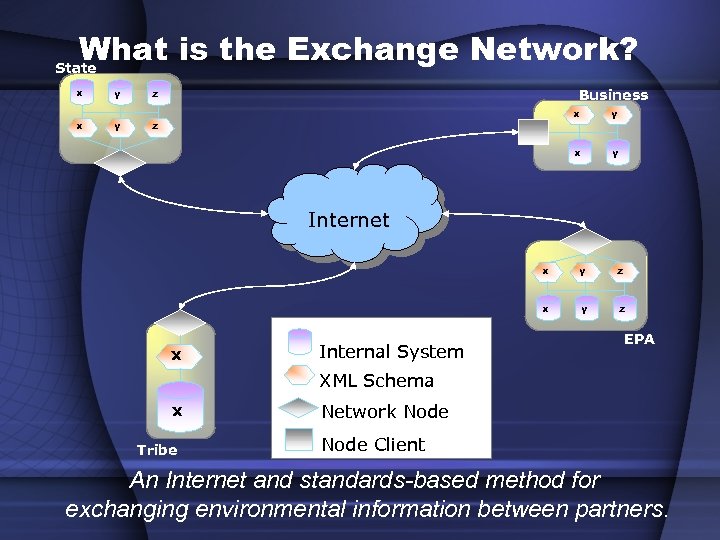 What is the Exchange Network? State x y Business z z x y Internet x x z x Internal System y y z EPA XML Schema x Tribe Network Node Client An Internet and standards-based method for exchanging environmental information between partners.
 Purpose of Network • • Support automated exchange of data Enable timely and accurate exchange Reduce reporting burden Improve data quality
 What is a Network Node ? “A simple environmental information Web service that initiates requests for information, processes authorized queries, and sends/receives the requested information in a standard format. ”
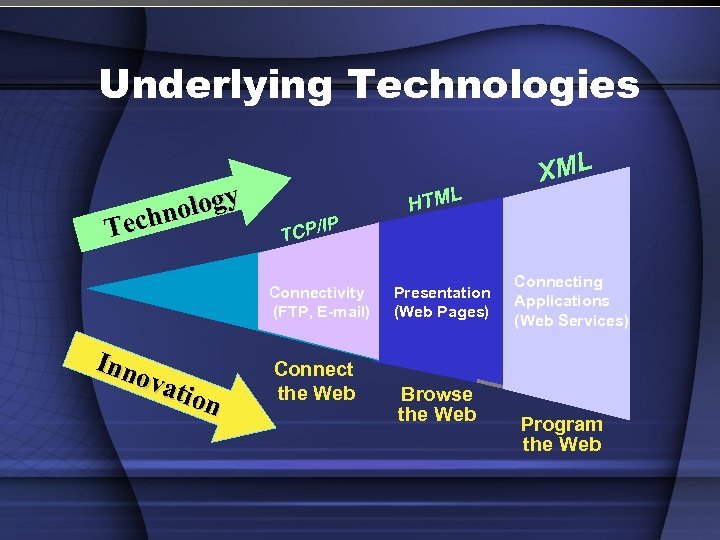 Underlying Technologies ology echn T IP TCP/ Connectivity (FTP, E-mail) Inn ova tion L HTM XML Connect the Web Presentation (Web Pages) Browse the Web Connecting Applications (Web Services) Program the Web
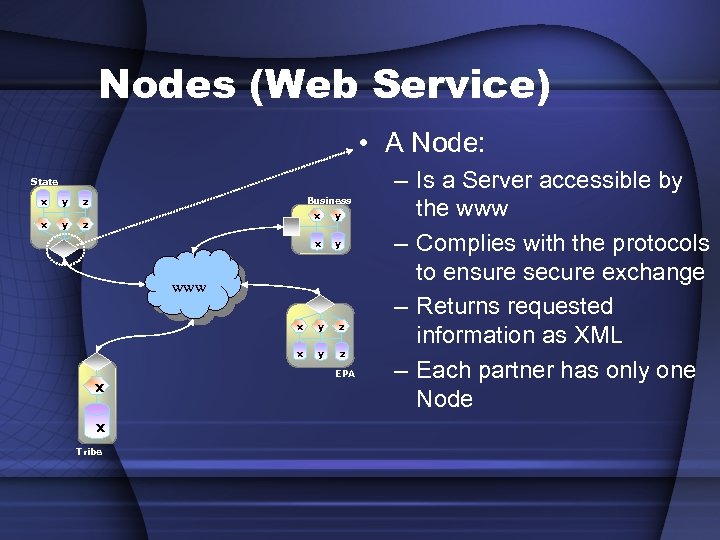 Nodes (Web Service) • A Node: State x y Business z z x y www x x Tribe z x x y y z EPA – Is a Server accessible by the www – Complies with the protocols to ensure secure exchange – Returns requested information as XML – Each partner has only one Node
 The old medium for exchange: flat files • A simple way to share data • Cannot be validated without custom software • Very hard to read • Cannot accommodate complex data in one file • Simple but messy
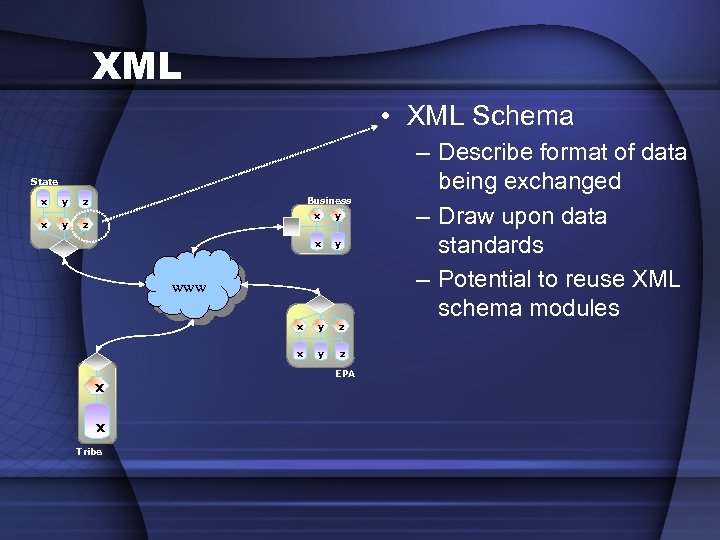 XML • XML Schema State x y Business z z x y www x x Tribe z x x y y z EPA – Describe format of data being exchanged – Draw upon data standards – Potential to reuse XML schema modules
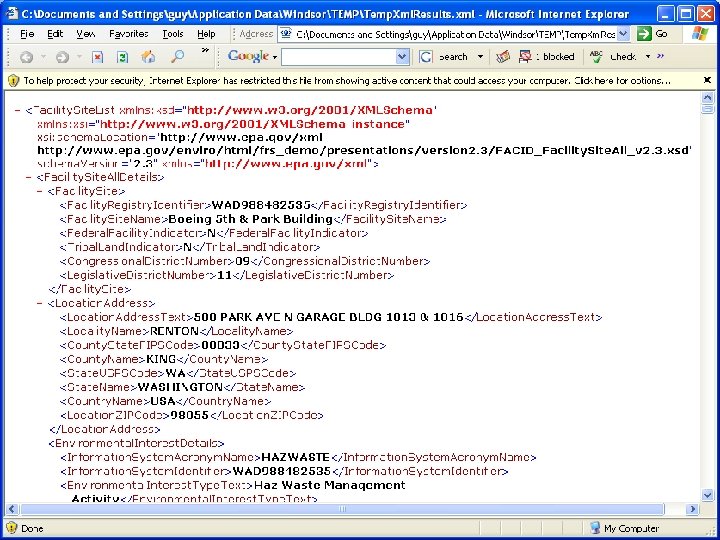
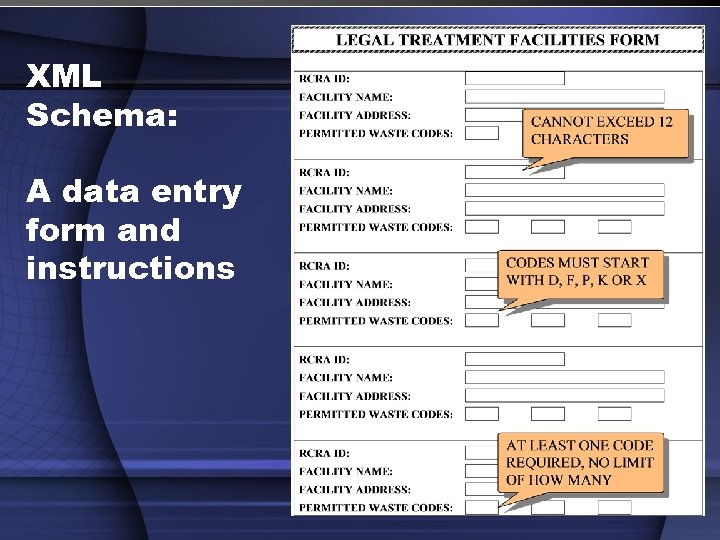
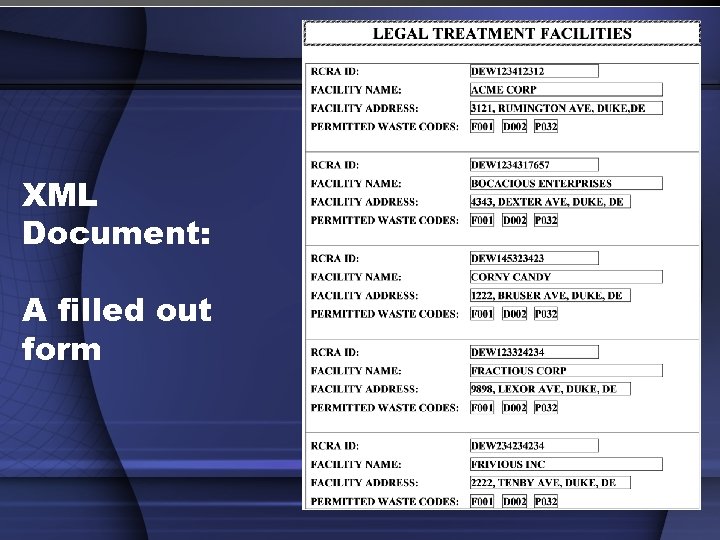
 XML in a nutshell • XML: e. Xtensible Markup Language • XML Schema: defines the Structure and the Rules of data to be shared • XML Document: a file that contains the data (and references the Schema) Create an XML document, open it with Internet Explorer and it validates itself against the schema
 XML is not a silver bullet • Agreement on the definition of data is still the same old challenge • XML is a new skill • XML is verbose
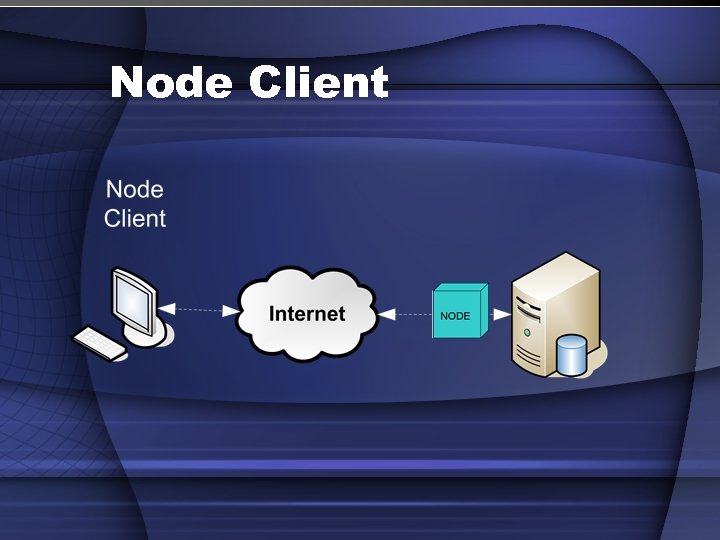 Node Client
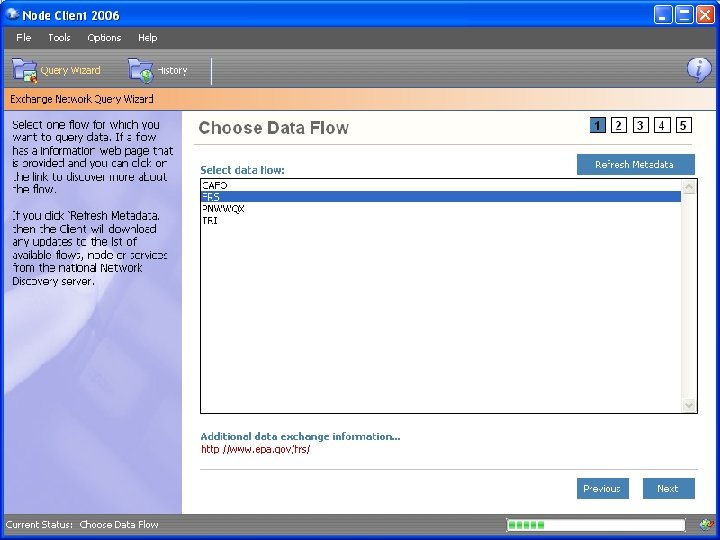
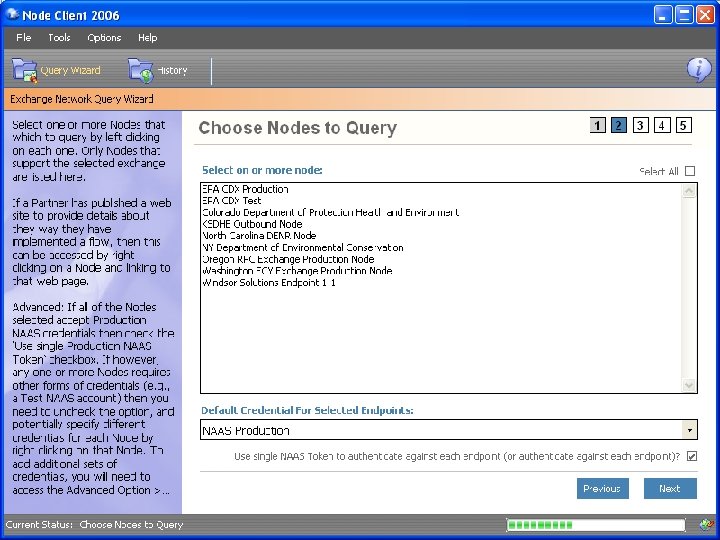
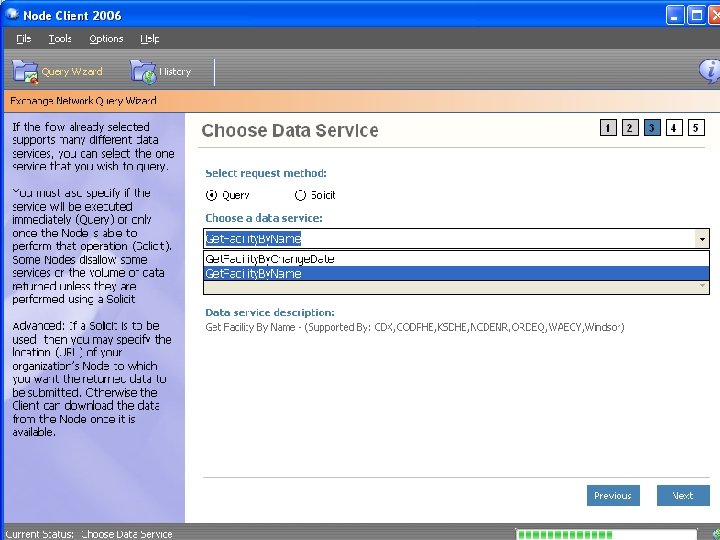
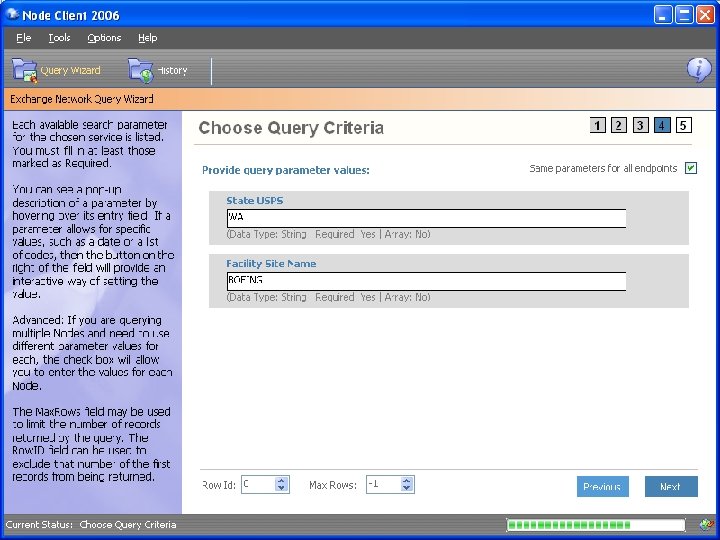
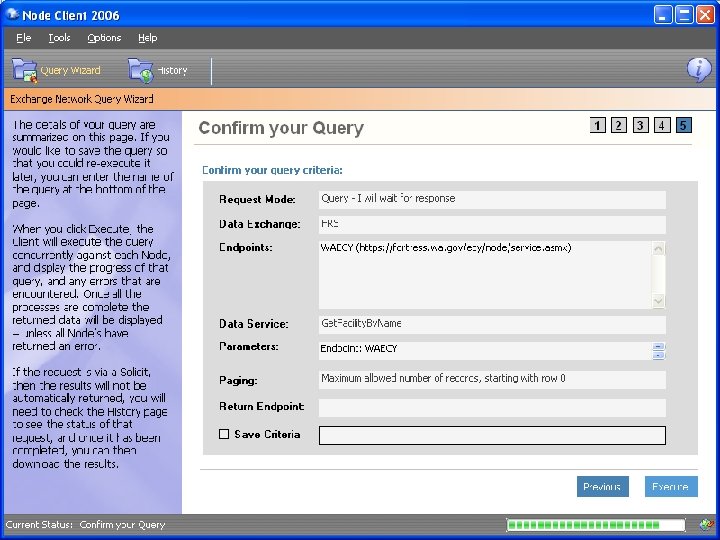
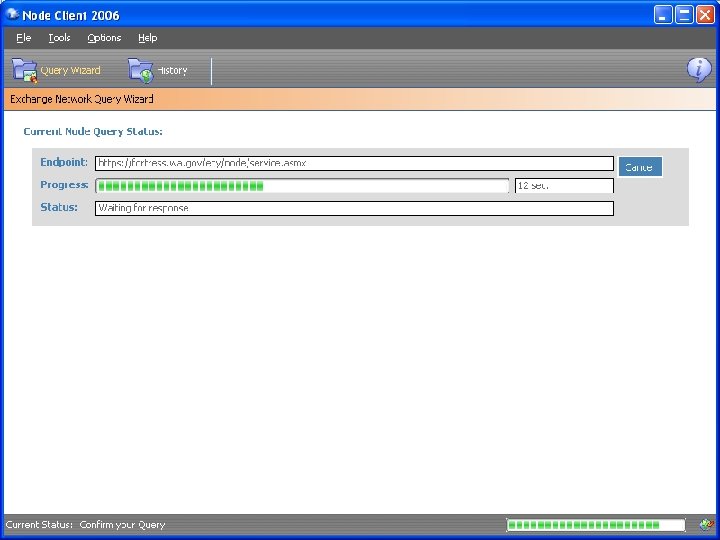
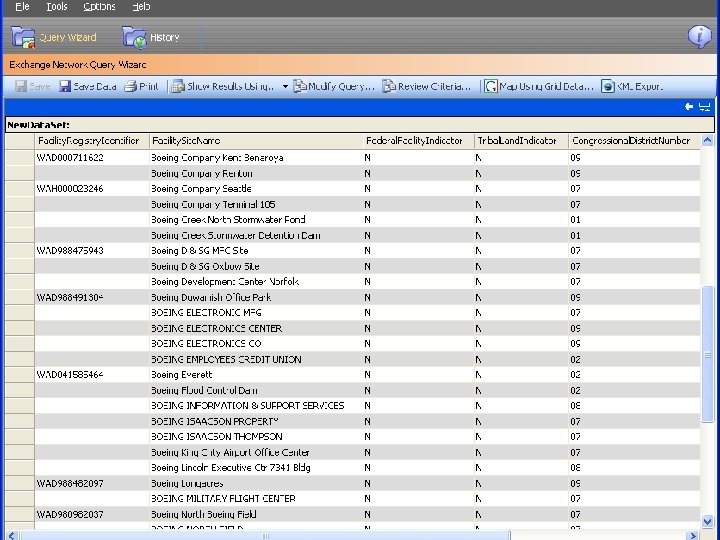
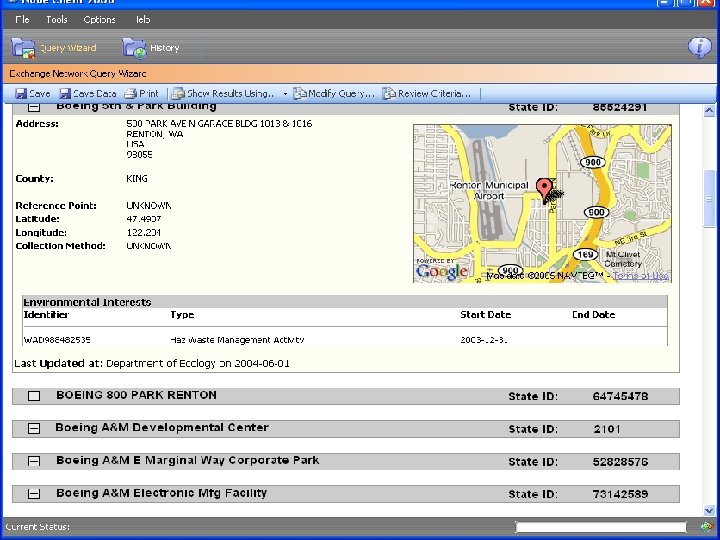
 Network Exchange ‘Exchange’: the sharing of a specific type of data between two or more Partners; for example, sharing of water quality data. This is often also referred to as a ‘flow’.
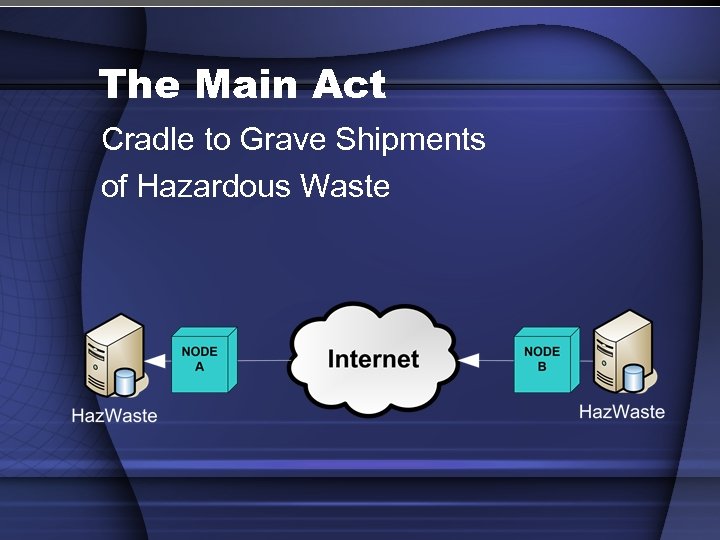 The Main Act Cradle to Grave Shipments of Hazardous Waste
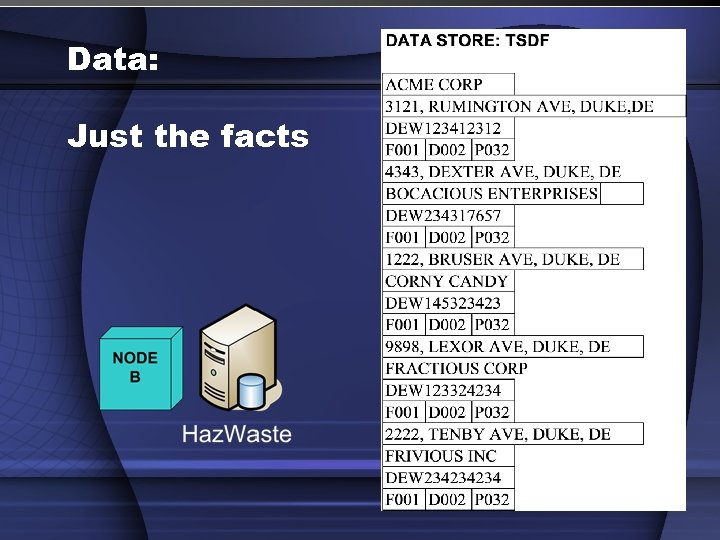
 Data Request Node A: “Hey, what Treatment Facilities can receive waste over there? ” Data Service: Get. Legal. Treatment. Facilities
 Data: Just the facts
 XML Schema: A data entry form and instructions
 XML Document: A filled out form
 SSL Certificate
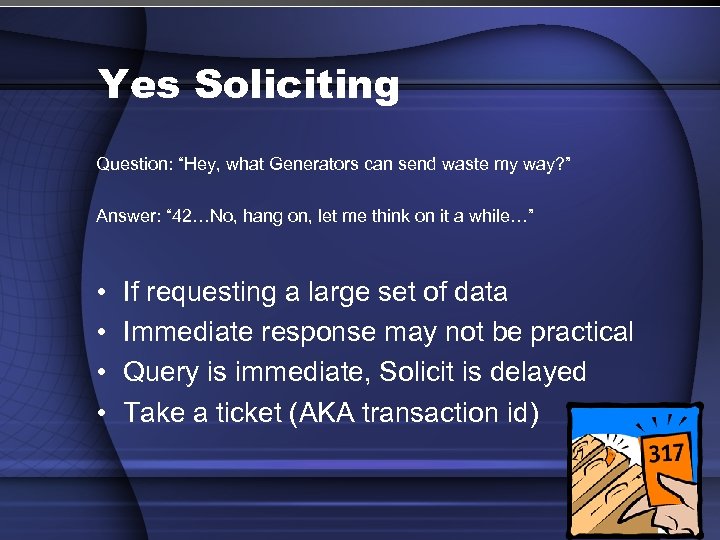 Yes Soliciting Question: “Hey, what Generators can send waste my way? ” Answer: “ 42…No, hang on, let me think on it a while…” • • If requesting a large set of data Immediate response may not be practical Query is immediate, Solicit is delayed Take a ticket (AKA transaction id)
 Network Exchanges 3 Types: 1. Data Reporting 2. Data Synchronization 3. Data Publishing
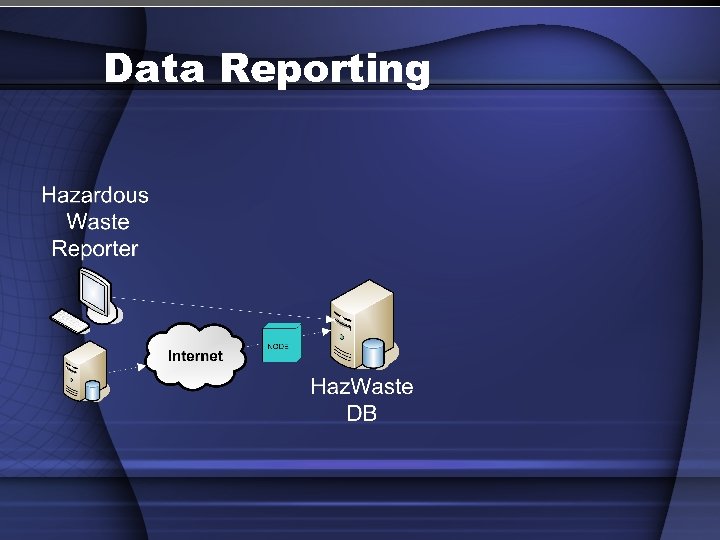 Data Reporting
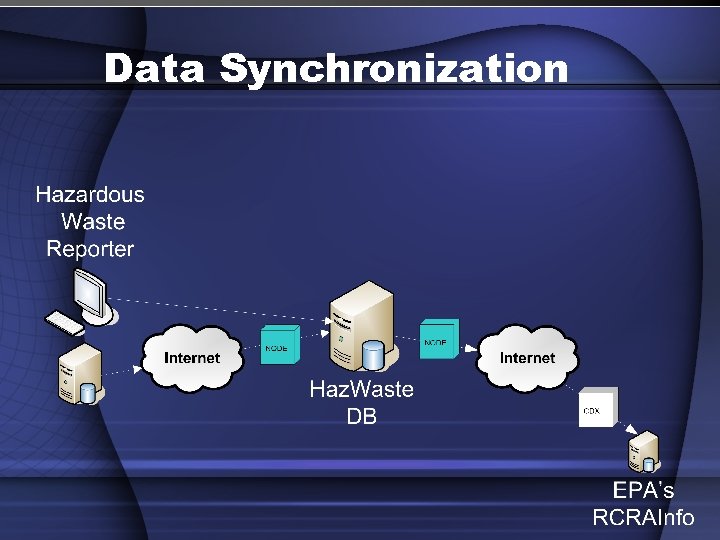 Data Synchronization
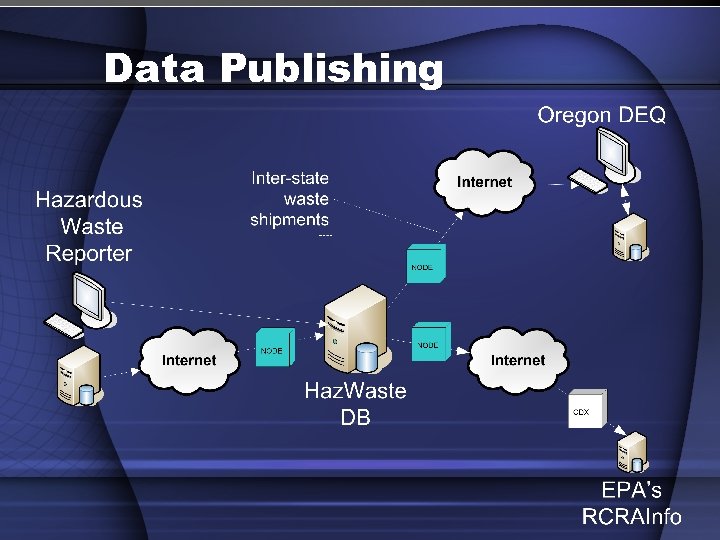 Data Publishing
 The Exchanges on Today’s Menu are:
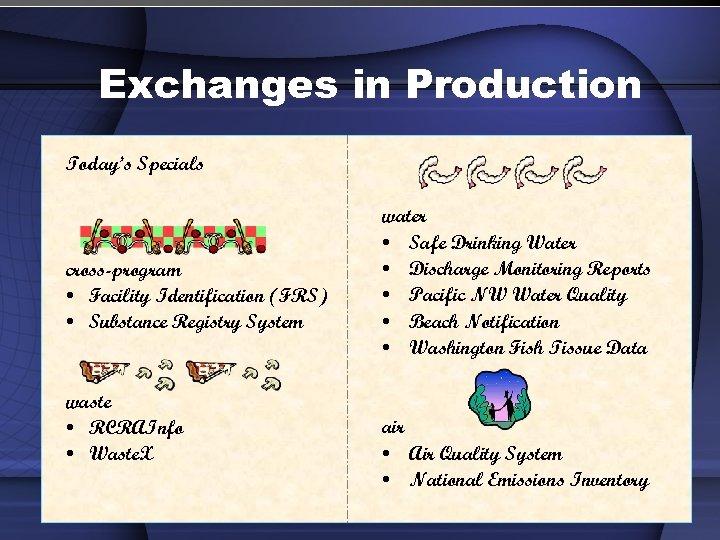 Exchanges in Production Today’s Specials cross-program • Facility Identification (FRS) • Substance Registry System waste • RCRAInfo • Waste. X water • Safe Drinking Water • Discharge Monitoring Reports • Pacific NW Water Quality • Beach Notification • Washington Fish Tissue Data air • Air Quality System • National Emissions Inventory
 blue sky
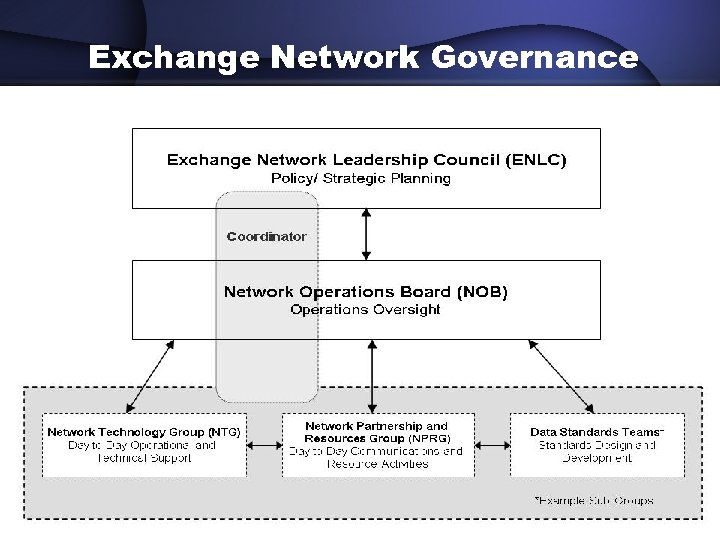 Exchange Network Governance
 Getting Started • Research the Network – Exchange Network Web Site • 30 minutes Guide to Implementing a Node • Consult Other Partners States • Don’t Reinvent the Wheel
 Node Capabilities + • Administration interface. • Separation of the Node and the individual data exchange. • Support of authentication and authorization through NAAS. • Support for both incoming and outgoing data flows.
 Factors affecting exchange selection • Priorities for data sharing with Partners • Your data management authority • The exchanges that are proven / available • The status of agency information systems