


 Скачать презентацию NET MASTERCLASS What s new in 2015 an interactive
4de22720a2b974dc5045a429bfeea29e.ppt
- Количество слайдов: 27
 NET MASTERCLASS What’s new in 2015: an interactive workshop Carcinoid Heart Disease (CHD) Dr. Christos Toumpanakis MD Ph. D FRCP Consultant in Gastroenterology/Neuroendocrine Tumours Hon. Senior Lecturer University College of London Neuroendocrine Tumour Unit - ENETS Centre of Excellence ROYAL FREE HOSPITAL, London, UK
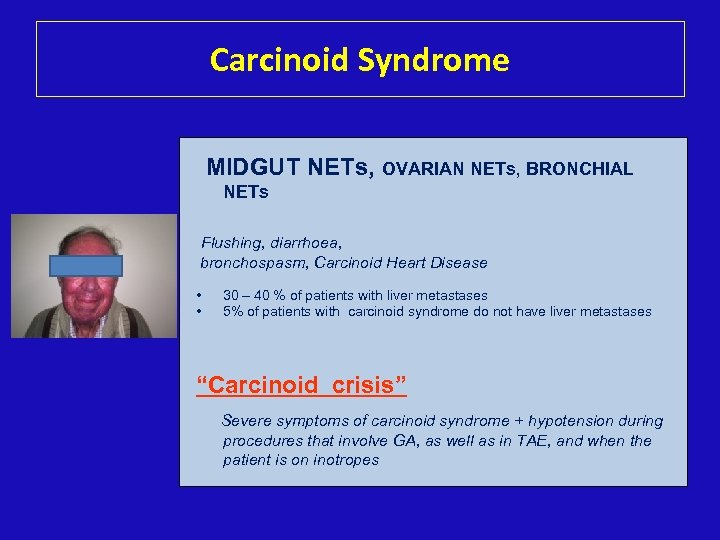 Carcinoid Syndrome MIDGUT NETs, OVARIAN NETs, BRONCHIAL NETs Flushing, diarrhoea, bronchospasm, Carcinoid Heart Disease • • 30 – 40 % of patients with liver metastases 5% of patients with carcinoid syndrome do not have liver metastases “Carcinoid crisis” Severe symptoms of carcinoid syndrome + hypotension during procedures that involve GA, as well as in TAE, and when the patient is on inotropes
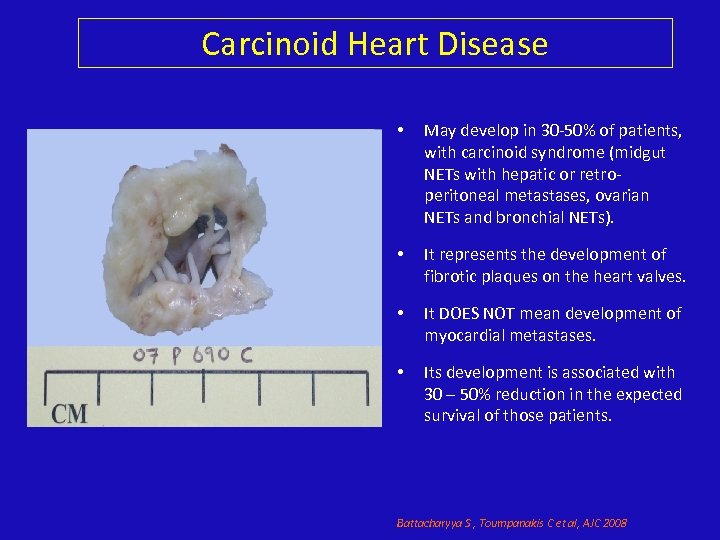 Carcinoid Heart Disease • May develop in 30 -50% of patients, with carcinoid syndrome (midgut NETs with hepatic or retroperitoneal metastases, ovarian NETs and bronchial NETs). • It represents the development of fibrotic plaques on the heart valves. • It DOES NOT mean development of myocardial metastases. • Its development is associated with 30 – 50% reduction in the expected survival of those patients. Battacharyya S , Toumpanakis C et al, AJC 2008
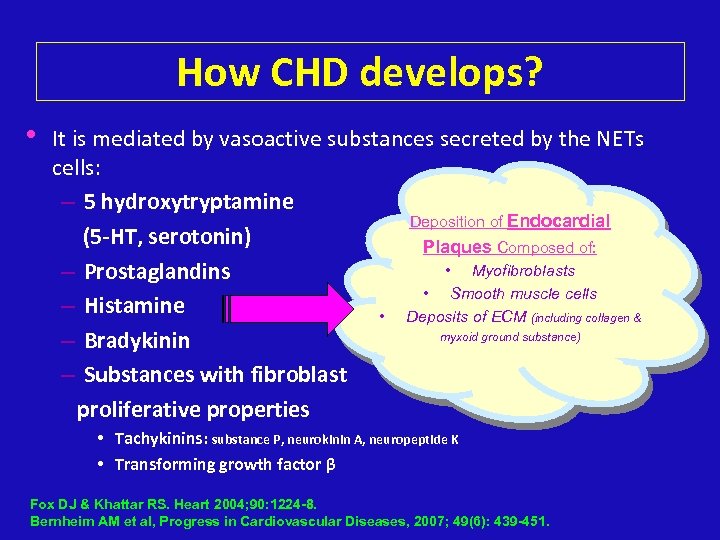 How CHD develops? • It is mediated by vasoactive substances secreted by the NETs cells: – 5 hydroxytryptamine Deposition of Endocardial (5 -HT, serotonin) Plaques Composed of: • Myofibroblasts – Prostaglandins • Smooth muscle cells – Histamine • Deposits of ECM (including collagen & myxoid ground substance) – Bradykinin – Substances with fibroblast proliferative properties • Tachykinins: substance P, neurokinin A, neuropeptide K • Transforming growth factor β Fox DJ & Khattar RS. Heart 2004; 90: 1224 -8. Bernheim AM et al, Progress in Cardiovascular Diseases, 2007; 49(6): 439 -451.
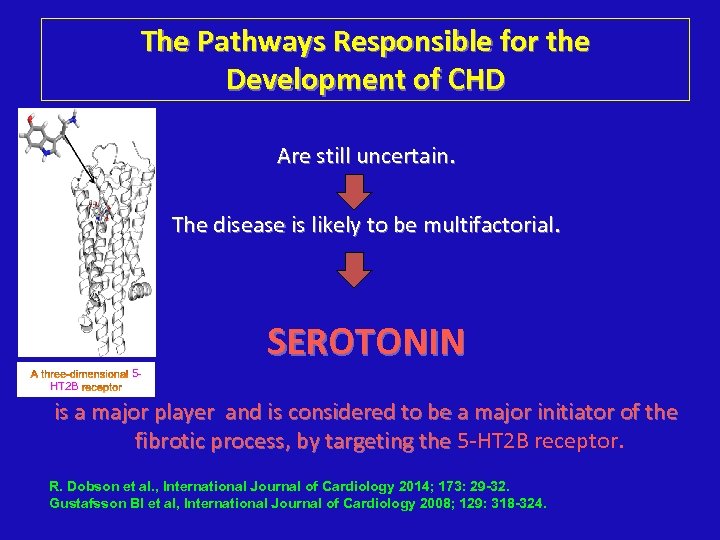 The Pathways Responsible for the Development of CHD Are still uncertain. The disease is likely to be multifactorial. 5 - SEROTONIN HT 2 B is a major player and is considered to be a major initiator of the fibrotic process, by targeting the 5 -HT 2 B receptor. R. Dobson et al. , International Journal of Cardiology 2014; 173: 29 -32. Gustafsson BI et al, International Journal of Cardiology 2008; 129: 318 -324.
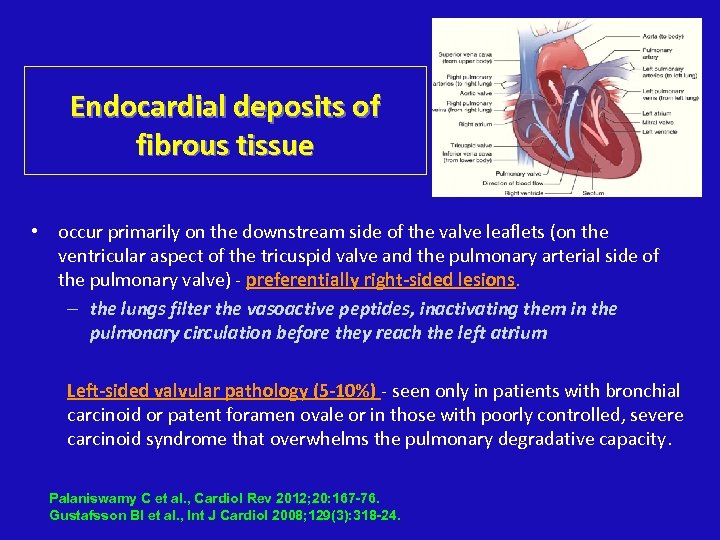 Endocardial deposits of fibrous tissue • occur primarily on the downstream side of the valve leaflets (on the ventricular aspect of the tricuspid valve and the pulmonary arterial side of the pulmonary valve) - preferentially right-sided lesions. – the lungs filter the vasoactive peptides, inactivating them in the pulmonary circulation before they reach the left atrium Left-sided valvular pathology (5 -10%) - seen only in patients with bronchial carcinoid or patent foramen ovale or in those with poorly controlled, severe carcinoid syndrome that overwhelms the pulmonary degradative capacity. Palaniswamy C et al. , Cardiol Rev 2012; 20: 167 -76. Gustafsson BI et al. , Int J Cardiol 2008; 129(3): 318 -24.
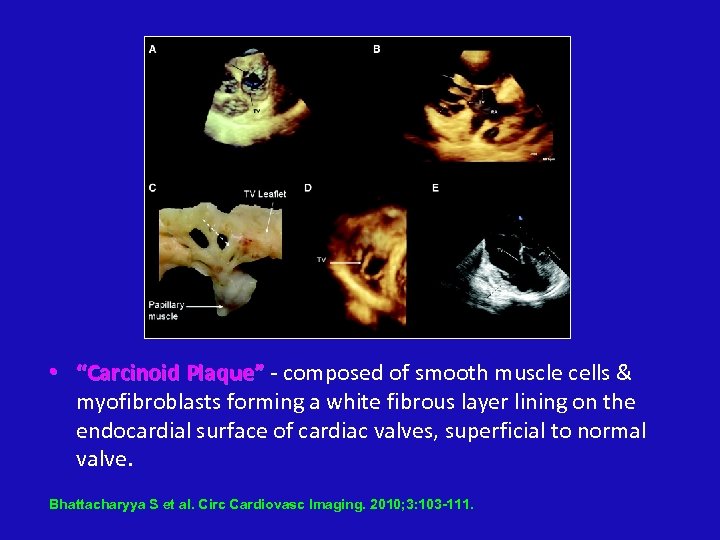 • “Carcinoid Plaque” - composed of smooth muscle cells & myofibroblasts forming a white fibrous layer lining on the endocardial surface of cardiac valves, superficial to normal valve. Bhattacharyya S et al. Circ Cardiovasc Imaging. 2010; 3: 103 -111.
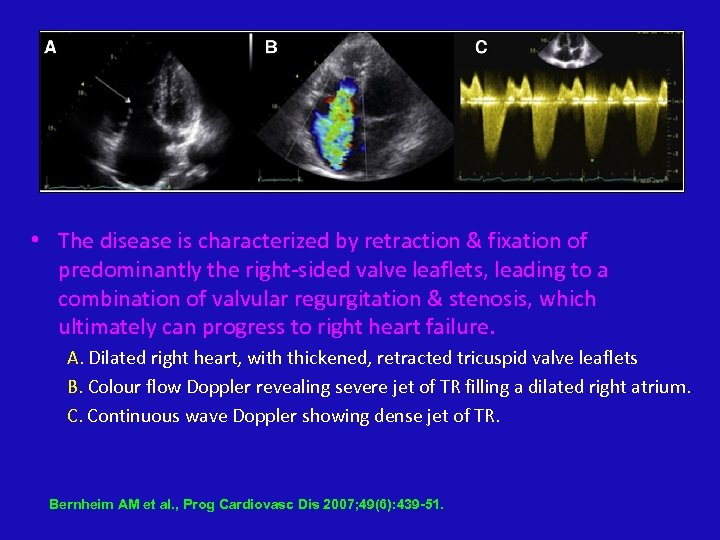 • The disease is characterized by retraction & fixation of predominantly the right-sided valve leaflets, leading to a combination of valvular regurgitation & stenosis, which ultimately can progress to right heart failure. A. Dilated right heart, with thickened, retracted tricuspid valve leaflets B. Colour flow Doppler revealing severe jet of TR filling a dilated right atrium. C. Continuous wave Doppler showing dense jet of TR. Bernheim AM et al. , Prog Cardiovasc Dis 2007; 49(6): 439 -51.
 Clinical Features of CHD • Asymptomatic period - variable • Dyspnea, fatigue • Ascites and peripheral edema - Cardiac - Hepatic - Nutritional - Combination
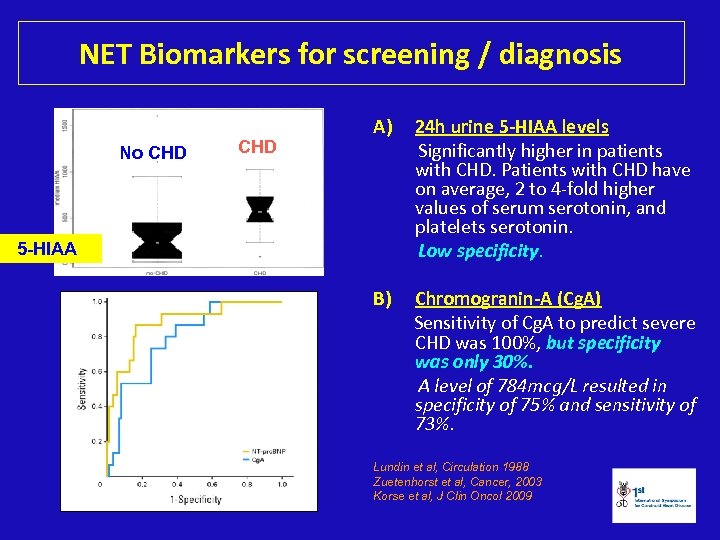 NET Biomarkers for screening / diagnosis No CHD A) 24 h urine 5 -HIAA levels Significantly higher in patients with CHD. Patients with CHD have on average, 2 to 4 -fold higher values of serum serotonin, and platelets serotonin. Low specificity. B) Chromogranin-A (Cg. A) Sensitivity of Cg. A to predict severe CHD was 100%, but specificity was only 30%. A level of 784 mcg/L resulted in specificity of 75% and sensitivity of 73%. 5 -HIAA Lundin et al, Circulation 1988 Zuetenhorst et al, Cancer, 2003 Korse et al, J Clin Oncol 2009
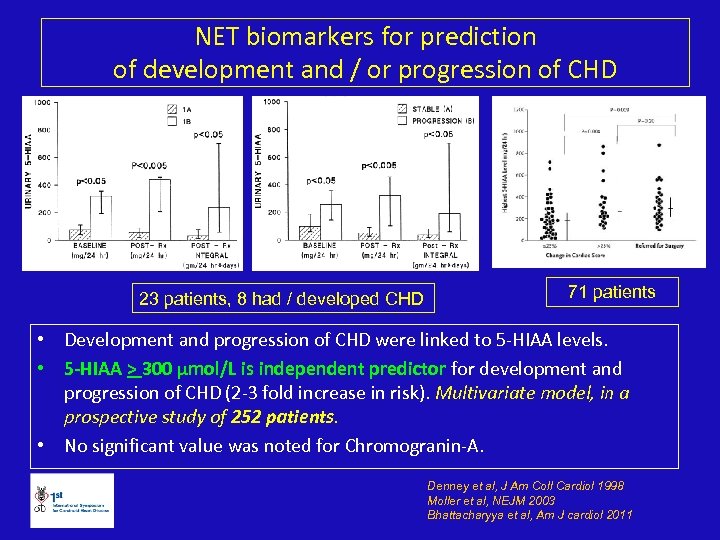 NET biomarkers for prediction of development and / or progression of CHD 23 patients, 8 had / developed CHD 71 patients • Development and progression of CHD were linked to 5 -HIAA levels. • 5 -HIAA > 300 μmol/L is independent predictor for development and progression of CHD (2 -3 fold increase in risk). Multivariate model, in a prospective study of 252 patients. • No significant value was noted for Chromogranin-A. Denney et al, J Am Coll Cardiol 1998 Moller et al, NEJM 2003 Bhattacharyya et al, Am J cardiol 2011
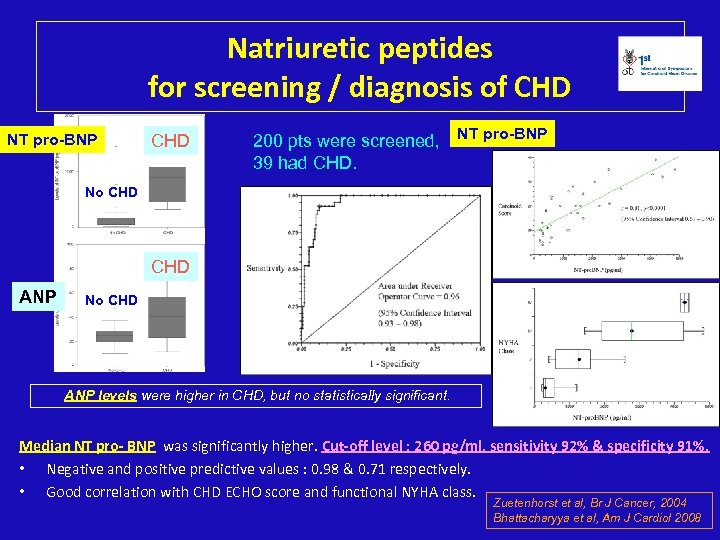 Natriuretic peptides for screening / diagnosis of CHD NT pro-BNP CHD 200 pts were screened, NT pro-BNP 39 had CHD. No CHD ANP levels were higher in CHD, but no statistically significant. Median NT pro- BNP was significantly higher. Cut-off level : 260 pg/ml, sensitivity 92% & specificity 91%. • Negative and positive predictive values : 0. 98 & 0. 71 respectively. • Good correlation with CHD ECHO score and functional NYHA class. Zuetenhorst et al, Br J Cancer, 2004 Bhattacharyya et al, Am J Cardiol 2008
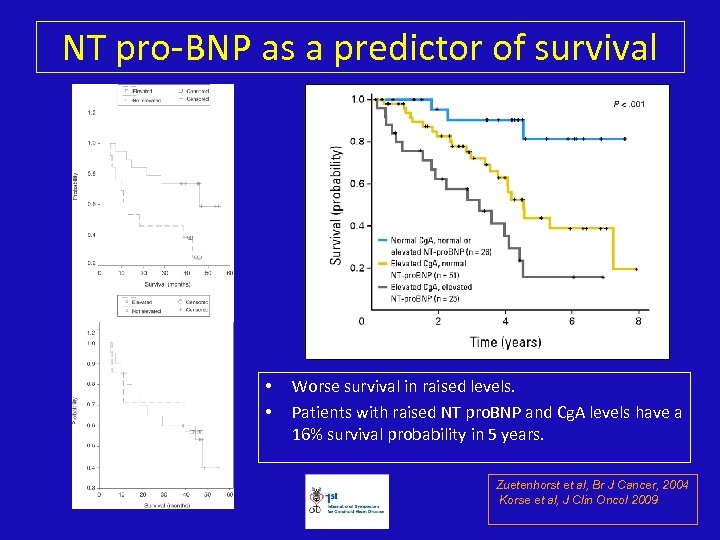 NT pro-BNP as a predictor of survival • • Worse survival in raised levels. Patients with raised NT pro. BNP and Cg. A levels have a 16% survival probability in 5 years. Zuetenhorst et al, Br J Cancer, 2004 Korse et al, J Clin Oncol 2009
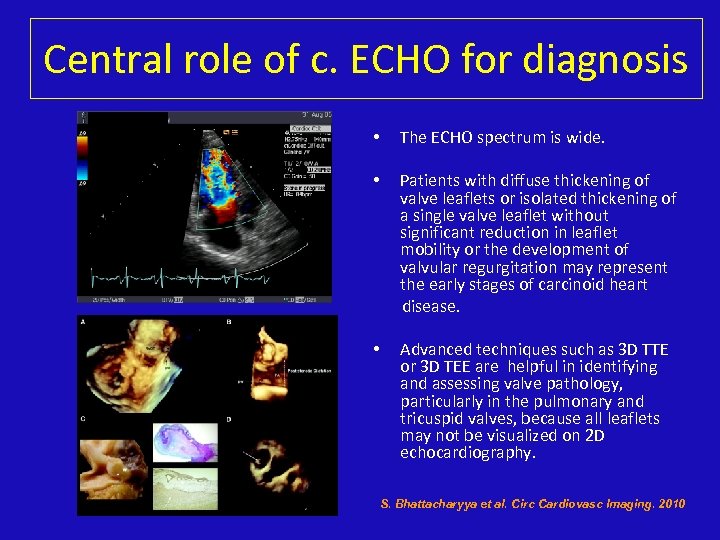 Central role of c. ECHO for diagnosis • The ECHO spectrum is wide. • Patients with diffuse thickening of valve leaflets or isolated thickening of a single valve leaflet without significant reduction in leaflet mobility or the development of valvular regurgitation may represent the early stages of carcinoid heart disease. • Advanced techniques such as 3 D TTE or 3 D TEE are helpful in identifying and assessing valve pathology, particularly in the pulmonary and tricuspid valves, because all leaflets may not be visualized on 2 D echocardiography. S. Bhattacharyya et al. Circ Cardiovasc Imaging. 2010
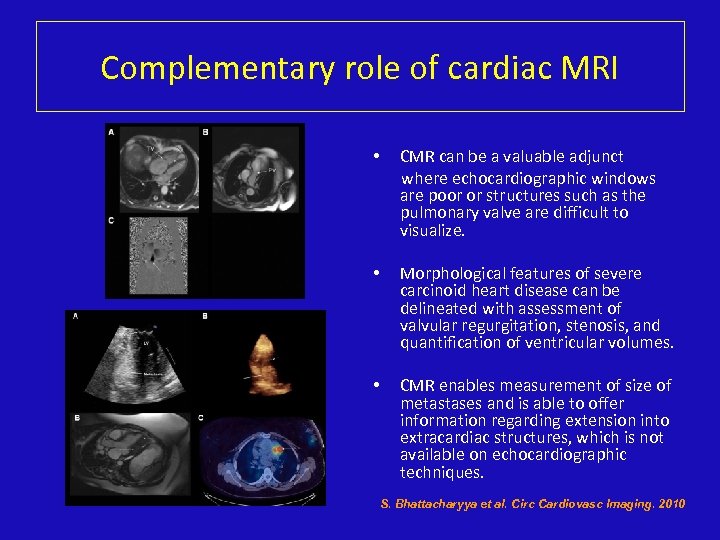 Complementary role of cardiac MRI • CMR can be a valuable adjunct where echocardiographic windows are poor or structures such as the pulmonary valve are difficult to visualize. • Morphological features of severe carcinoid heart disease can be delineated with assessment of valvular regurgitation, stenosis, and quantification of ventricular volumes. • CMR enables measurement of size of metastases and is able to offer information regarding extension into extracardiac structures, which is not available on echocardiographic techniques. S. Bhattacharyya et al. Circ Cardiovasc Imaging. 2010
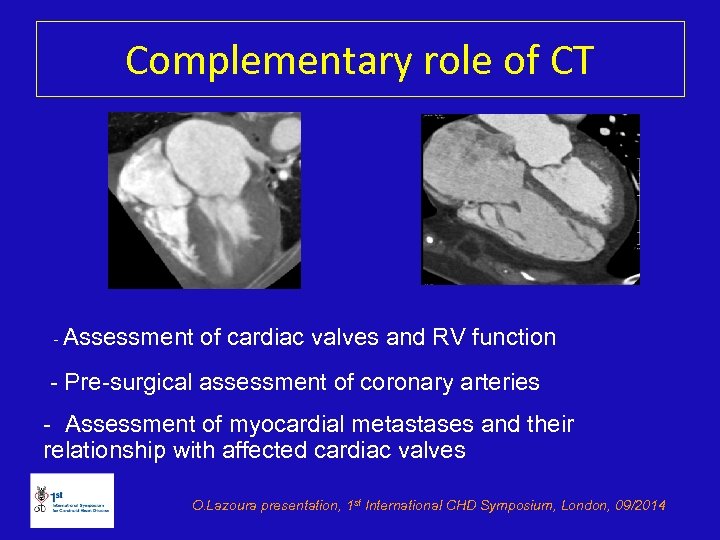 Complementary role of CT - Assessment of cardiac valves and RV function - Pre-surgical assessment of coronary arteries - Assessment of myocardial metastases and their relationship with affected cardiac valves O. Lazoura presentation, 1 st International CHD Symposium, London, 09/2014
 Medical Management of CHD • Watchful waiting for symptoms • Diuretics for edema – loop or thiazide - May reduce cardiac output - Fatigue may worsen • Limited alternative medical options - Digoxin or ACE Bernheim AM, Connolly HM, Pellikka PA. Curr Treat Options Cardiovasc Med. 2007
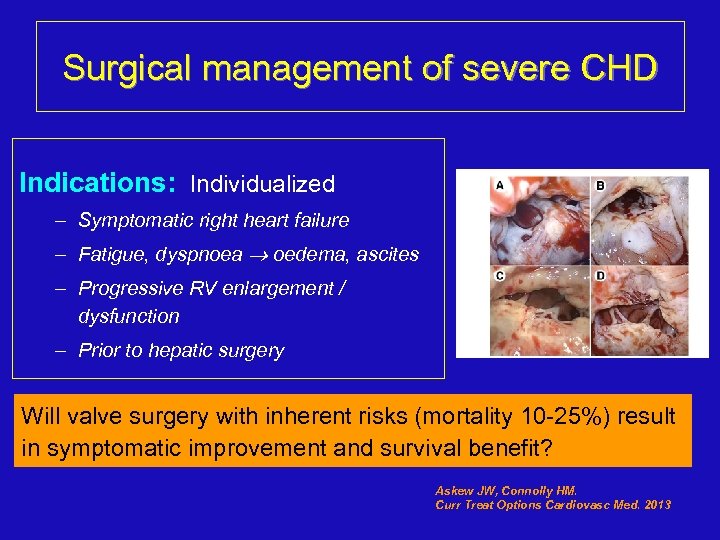 Surgical management of severe CHD Indications: Individualized – Symptomatic right heart failure – Fatigue, dyspnoea oedema, ascites – Progressive RV enlargement / dysfunction – Prior to hepatic surgery Will valve surgery with inherent risks (mortality 10 -25%) result in symptomatic improvement and survival benefit? Askew JW, Connolly HM. Curr Treat Options Cardiovasc Med. 2013
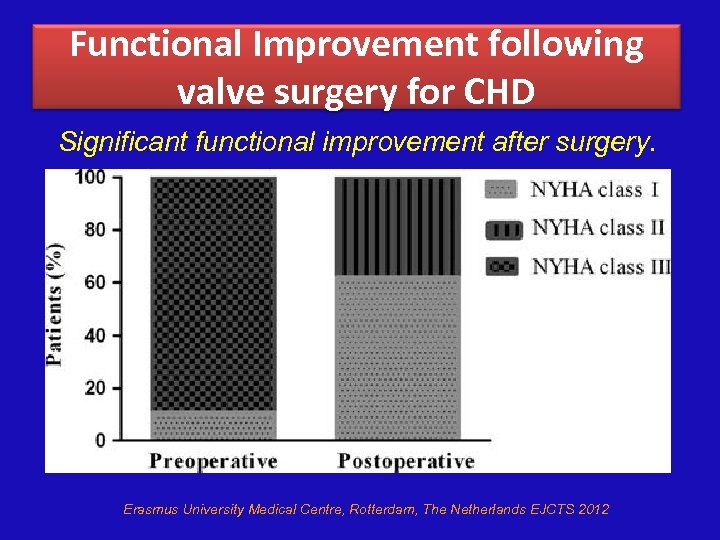 Functional Improvement following valve surgery for CHD Significant functional improvement after surgery. Erasmus University Medical Centre, Rotterdam, The Netherlands EJCTS 2012
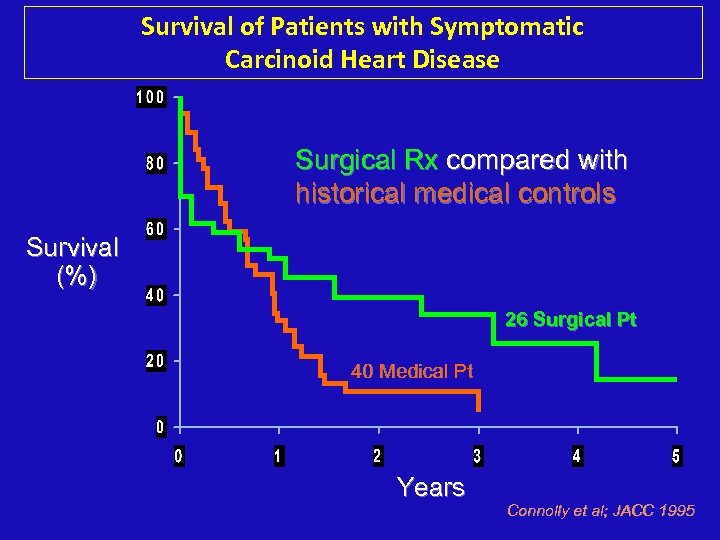 Survival of Patients with Symptomatic Carcinoid Heart Disease Surgical Rx compared with historical medical controls Survival (%) 26 Surgical Pt 40 Medical Pt Years Connolly et al; JACC 1995
 Timing of Operation Prosthesis & Surgical Risks Progressive Debility
 SURGICAL MANAGEMENT of CHD Choice of Valve Prosthesis • More controversial. • No large series have compared the choice of valve prosthesis. • Biological valves are usually preferred because: - They have an acceptable lifespan. - Somatostatin analogues and other antitumour therapies may theoretically protect the valve from deposition of further carcinoid plaques. - They do not require anticoagulation and consequently lower the risk of bleeding in patients with hepatic dysfunction and also reduce the risk of valve thrombosis (mechanical valve thrombosis is 4% per year). Raja SG et al, Future Cardiol. 2010
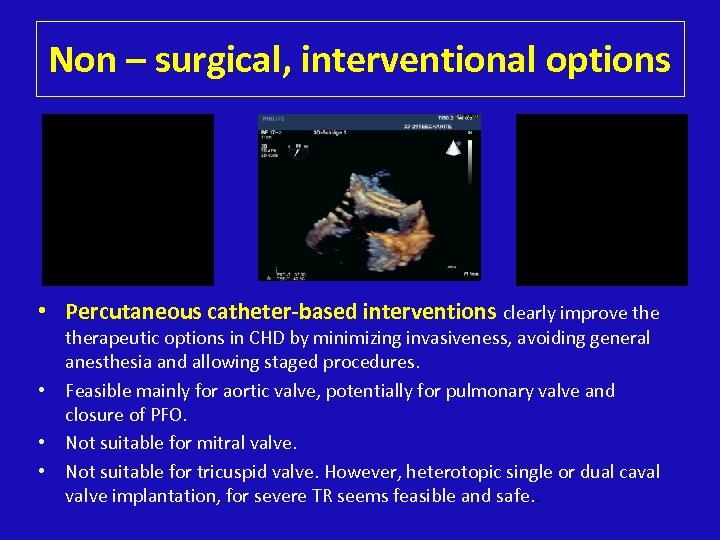 Non – surgical, interventional options • Percutaneous catheter-based interventions clearly improve therapeutic options in CHD by minimizing invasiveness, avoiding general anesthesia and allowing staged procedures. • Feasible mainly for aortic valve, potentially for pulmonary valve and closure of PFO. • Not suitable for mitral valve. • Not suitable for tricuspid valve. However, heterotopic single or dual caval valve implantation, for severe TR seems feasible and safe. .
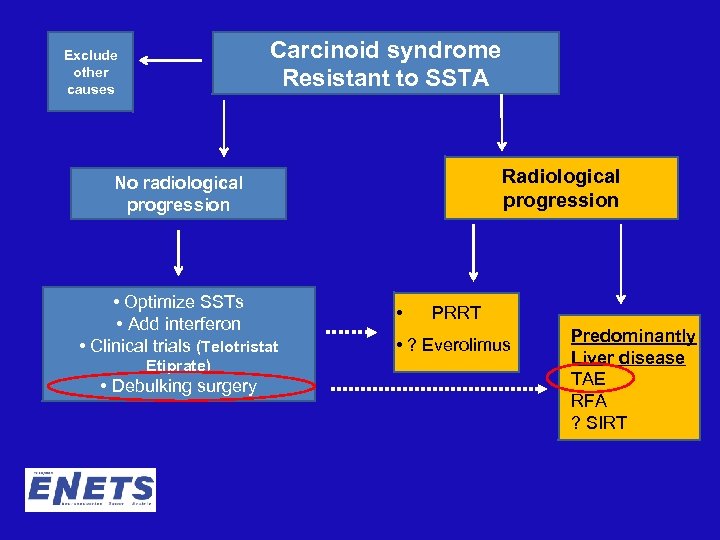 Carcinoid syndrome Resistant to SSTA Exclude other causes Radiological progression No radiological progression • Optimize SSTs • Add interferon • Clinical trials (Telotristat Etiprate) • Debulking surgery • PRRT • ? Everolimus Predominantly Liver disease TAE RFA ? SIRT
 Take Home Messages • CHD may develop in 30 -50% of patients, with carcinoid syndrome and its development may decrease survival. • Aggressive carcinoid syndrome treatment may prevent the development and progression of CHD. • NT pro-BNP seems to be a good screening biomarker. • Cardiac ECHO remains the diagnostic modality of choice. • Limited medical therapeutic options. • It is important to identify the “right” time for valve replacement. • Advances in surgical treatment improved survival. • Percutaneous catheter-based interventions seem to be promising alternatives in poor surgical candidates. • Experienced multidisciplinary team required for state-of-the-art management.
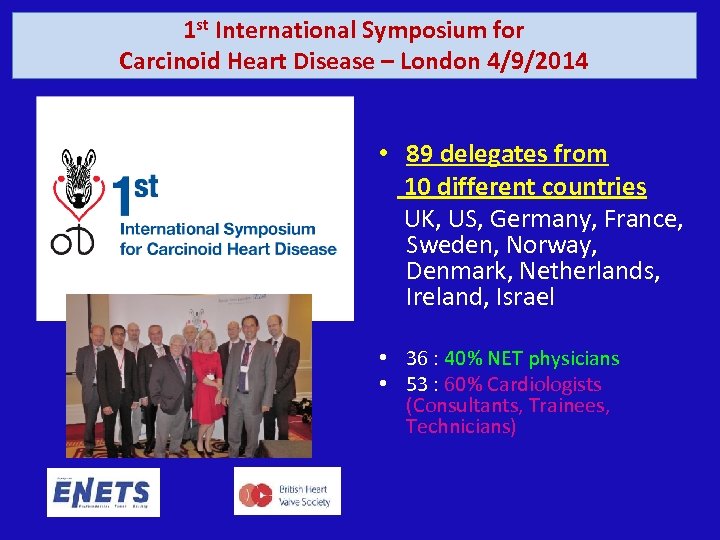 1 st International Symposium for Carcinoid Heart Disease – London 4/9/2014 • 89 delegates from 10 different countries UK, US, Germany, France, Sweden, Norway, Denmark, Netherlands, Ireland, Israel • 36 : 40% NET physicians • 53 : 60% Cardiologists (Consultants, Trainees, Technicians)
 Thank you very much