


 Скачать презентацию NEMSIS State of the Union NEMSIS Update
d54ecece7338fe845bfdc807f75946ce.ppt
- Количество слайдов: 46
 NEMSIS: State of the Union
 NEMSIS Update • Overview of NEMSIS • How NEMSIS Works • Technical Assistance on NEMSIS • Where are things headed
 NEMSIS Overview • The need for data collection dates back to 1966 with the Accidental Death and Disability paper • In the early 90’s, the first attempt was made for uniform data collection • In the late 90’s a second attempt was made…
 The NEMSIS Project The National Association of State EMS Directors believed there was a NEED for uniform data collection • EMS Education – Curriculums – Local Education • EMS Outcomes – Something other than death – System evaluation
 The Need • EMS Research – Generate hypothesis – Evaluate cost-effectiveness – Identify problems and target issues • EMS Reimbursement – National fee schedule and reimbursement rates
 The Original Team • NASEMSD – Project Management, Regional Meetings Operational Support • Greg Mears, MD (Principal Investigator) • NEDARC – Clay Mann, Ph. D, Co-Investigator – Mike Dean, MD, Co-Investigator – Technical Assistance • State Data-Managers
 The Money • NHTSA – EMS Division (Primary) • HRSA – EMS-C, Trauma, and EMS • American Heart Association – Support for EMS Software Development
 NEMSIS Overview • Composed of two components: – Demographic dataset: • Standardized set of data fields that describe an EMS system – EMS dataset: • Standardized set of definitions describing an EMS event
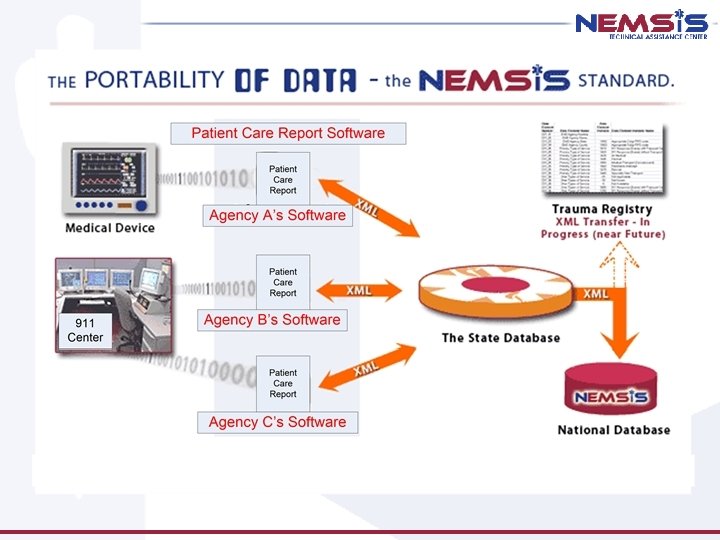
 NEMSIS Overview • Both have the following: – XML (e. Xtensible Markup Language ) formats – XSD (XML Schema Definition) • Provides the capability of moving data from one system to another • XML provides the method on which data is stored • XSD provides the definition and rules for a field
 NEMSIS Overview • Date of Birth – You don’t want to have people enter any data into the field. • You need them to: – Complete the field – Format: MM/DD/YYYY – Range: Today’s date to 125 years ago
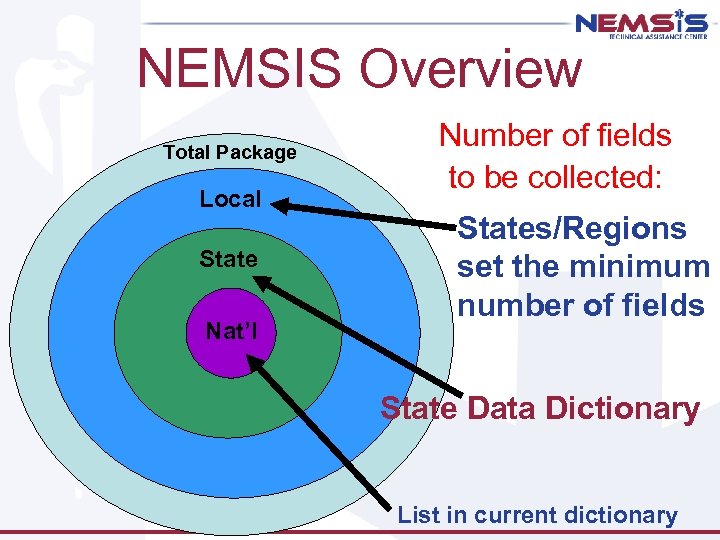 NEMSIS Overview Total Package Local State Nat’l Number of fields to be collected: States/Regions set the minimum number of fields State Data Dictionary List in current dictionary
 Software Compliancy • On March 1, 2006, the TAC began testing software developers for compliance • A total of 8 applications were received for 11 software applications • There are two levels of compliance: – Gold – Silver
 Silver and Gold Compliance Silver Gold • Must have the National elements • Must be able to offer all of the elements found in the NHTSA dataset • Any additional elements must comply with the standard • Must create the right XML/XSD files
 Compliance • Five vendors successfully completed the process – Go to www. NEMSIS. org for the results • The next round of testing is to begin on July 31, 2006 – The number of applications are in the “teens” – The results will be posted around Aug 31 st
 Status of the Country
 Federal Level • NHTSA, HRSA, CDC have all made a financial and political commitment to the cause • Here’s how…
 Federal Level • Provided money to establish a NEMSIS Technical Assistance Center – $600 k Year One – Possibly $1 million for Year Two – Talk about providing more money • NHTSA has established a funding source for states who are making a NEMSIS system
 NEMSIS TAC • The TAC picked up the work at the end of the Pilot phase of NEMSIS (Sept 2005) – University of Utah received the grant – Utah contracted with University of North Carolina to continue their efforts • The Goal is to collect data from States and Territories to create the National EMS Database
 NEMSIS TAC • Simple goal, complicated objectives • This means that the TAC will be offering assistance to: – States – Local EMS agencies – Software developers
 NEMSIS TAC Resources • • www. nemsis. org Reference Documents Communication and Public Education Maintain Dataset and XSD Development Tools Direct Technical Assistance National Database Development Other
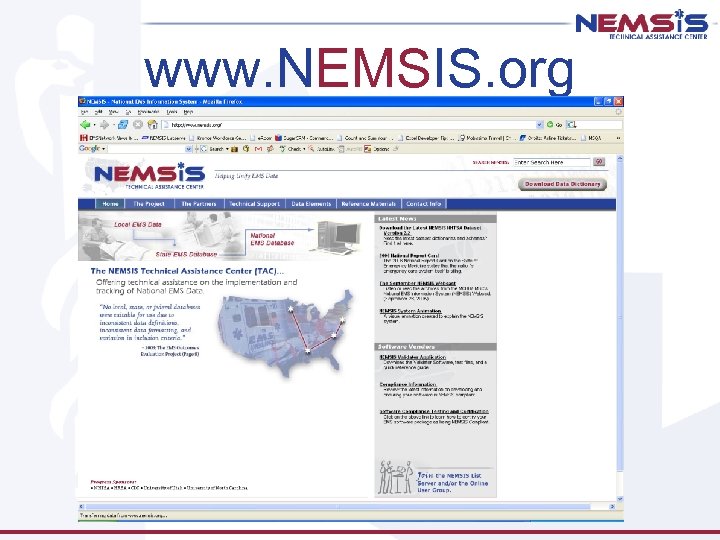 www. NEMSIS. org
 Other Funding Source • The Federal Register published that $34. 5 million will be offered each year over the next 4 years to States – Non-competitive – $300, 000 - $500, 000 per application • The “catch” is tying NEMSIS in with traffic crash data
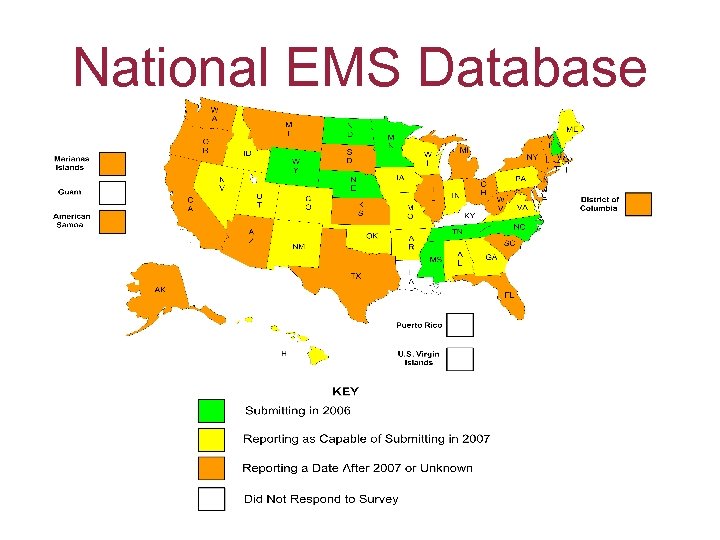
 National EMS Database
 National EMS Database
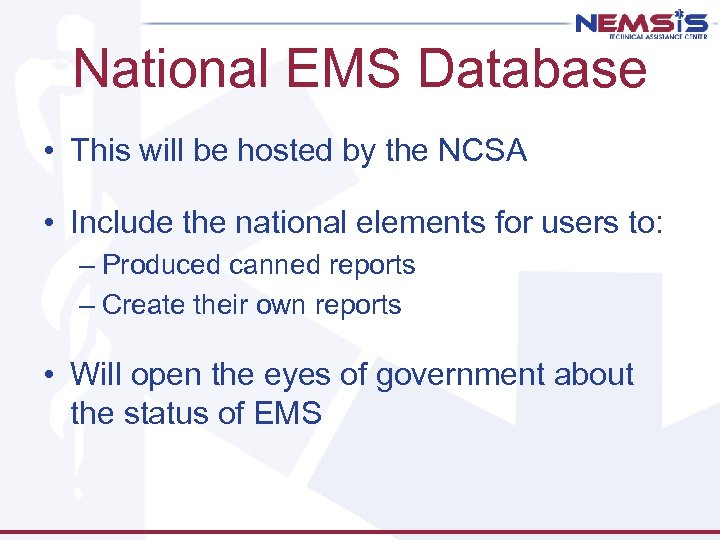 National EMS Database • This will be hosted by the NCSA • Include the national elements for users to: – Produced canned reports – Create their own reports • Will open the eyes of government about the status of EMS
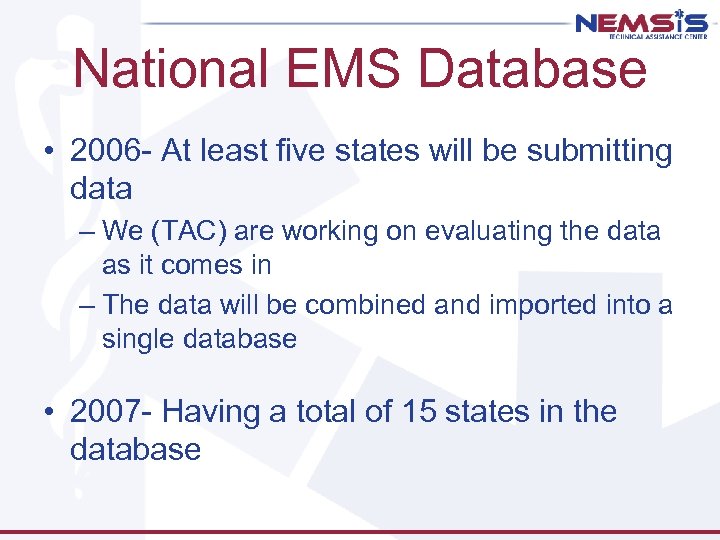 National EMS Database • 2006 - At least five states will be submitting data – We (TAC) are working on evaluating the data as it comes in – The data will be combined and imported into a single database • 2007 - Having a total of 15 states in the database
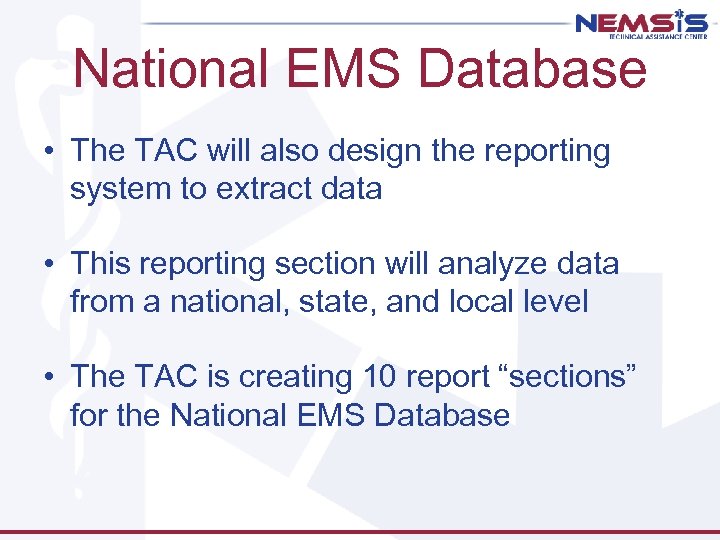 National EMS Database • The TAC will also design the reporting system to extract data • This reporting section will analyze data from a national, state, and local level • The TAC is creating 10 report “sections” for the National EMS Database
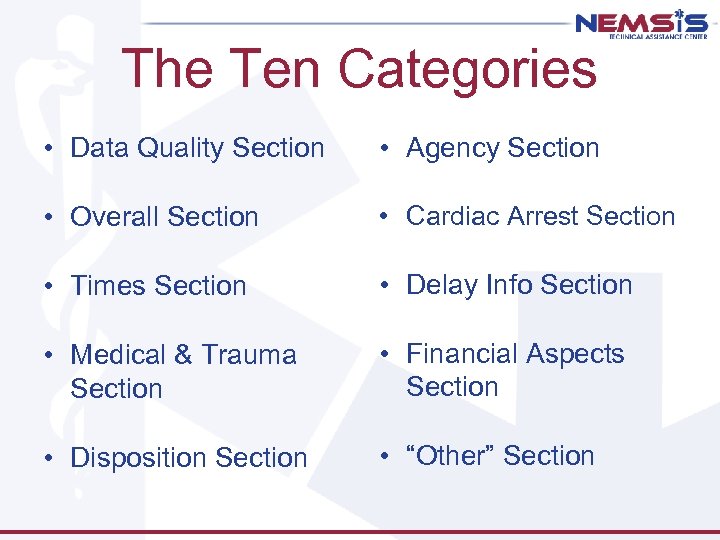 The Ten Categories • Data Quality Section • Agency Section • Overall Section • Cardiac Arrest Section • Times Section • Delay Info Section • Medical & Trauma Section • Financial Aspects Section • Disposition Section • “Other” Section
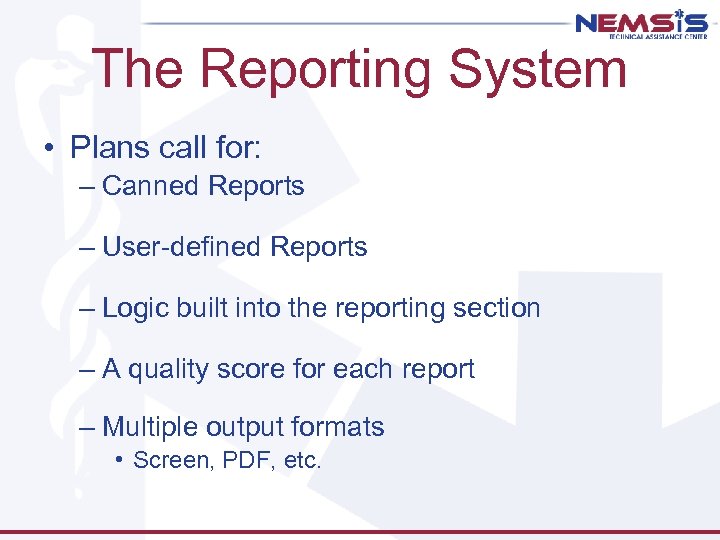 The Reporting System • Plans call for: – Canned Reports – User-defined Reports – Logic built into the reporting section – A quality score for each report – Multiple output formats • Screen, PDF, etc.
 Status of States
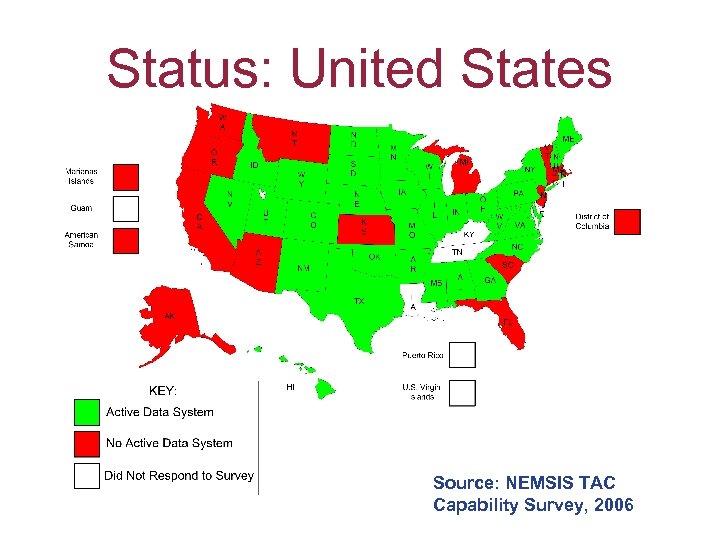 Status: United States Source: NEMSIS TAC Capability Survey, 2006
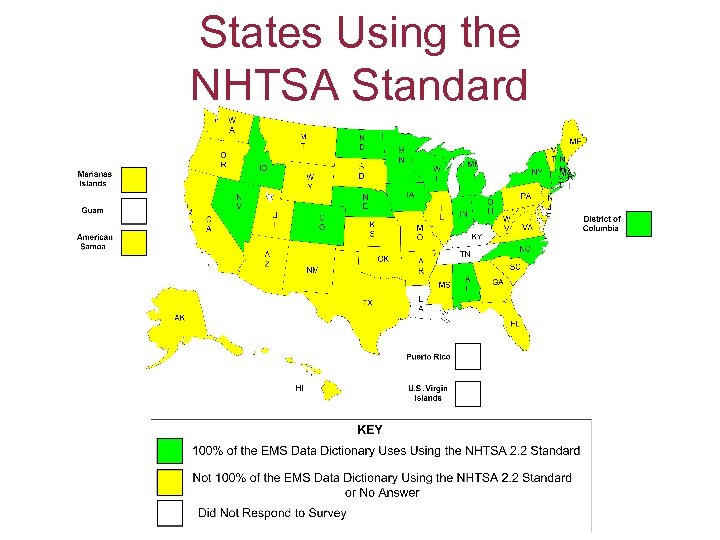 States Using the NHTSA Standard
 What States Are Doing • Providing data and information back to providers • Becoming a source for performance improvement measures • Using the data to understand how the system is performing
 State Are Also… • Mainly depends on the State’s responsibility – Working with how money should be disbursed to the EMS community – Proving the value of EMS to the legislature – Working on training issues
 What Local Agencies are Doing • Increasing revenue for their agencies • Employing performance improvement to a new level – Judgment to Informative Analysis • Understanding the needs of their customers
 More Money • By going electronic, agency’s revenues increase • Electronic = More Accurate = Less Time Spent on the Admin Level = More $$ • To be effective in your billing practices – Invoices should be created & processed within 72 hours from the time of service* *Prehospital Care Administration, pg 386
 Performance Improvement • Currently the knowledge about the quality of care depends on the locality • Most assume that quality care exists – This was referred to by Shigeo Shingo as “Judgment Inspections” • We are beginning to enter the next evolutionary step of improvement
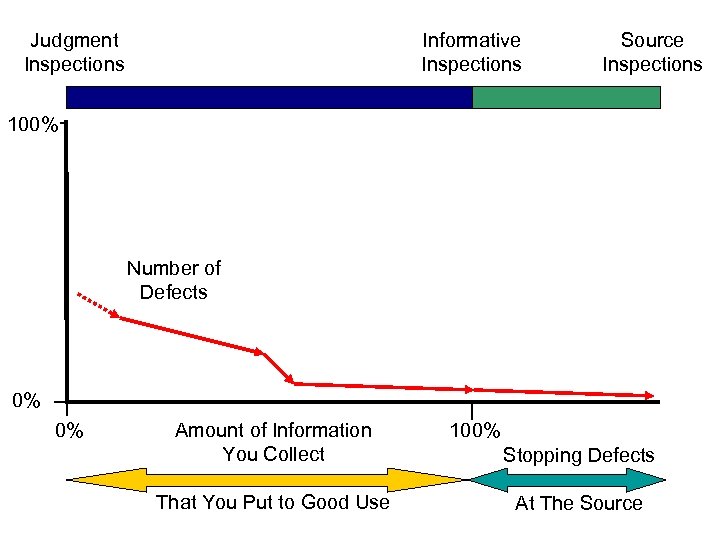 Judgment Inspections Informative Inspections Source Inspections 100% Number of Defects 0% 0% Amount of Information You Collect That You Put to Good Use 100% Stopping Defects At The Source
 Example • A method to: – Have the medical directors still retain the overall authority to approve protocols – Utilize existing data from the EMS system • “Informative inspections” – Involve the field providers into the process • “Source inspections” • Improve buy-in
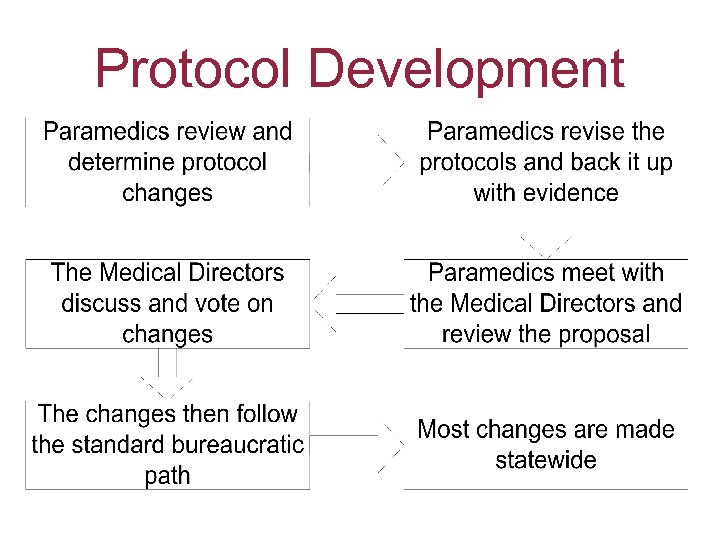 Protocol Development
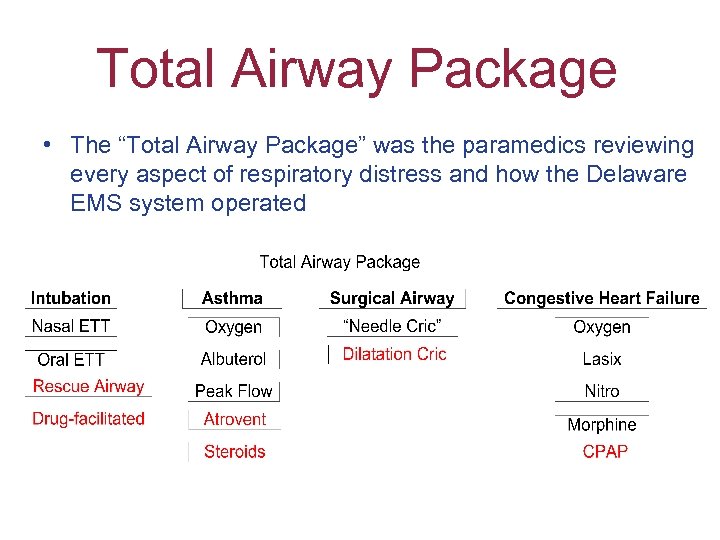 Total Airway Package • The “Total Airway Package” was the paramedics reviewing every aspect of respiratory distress and how the Delaware EMS system operated
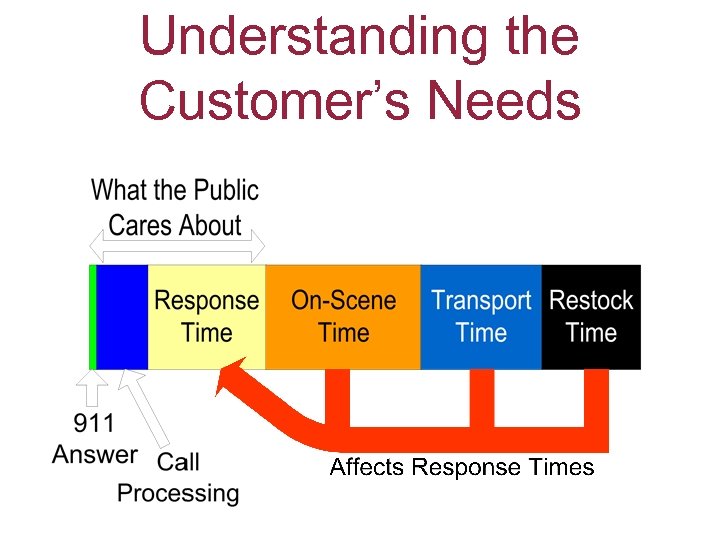 Understanding the Customer’s Needs
 Conclusion • The NEMSIS Standard is here to stay • The efforts of the EMS community (plus the standards) will improve patient care • Data collection and evaluation are the first steps in continuous improvement
 Questions?
 T H A N K Y O U