


 Скачать презентацию Нелинейные оптические явления Первый вопрос
НЛО_Генерация 2-й гармоники.ppt
- Количество слайдов: 46
 Нелинейные оптические явления
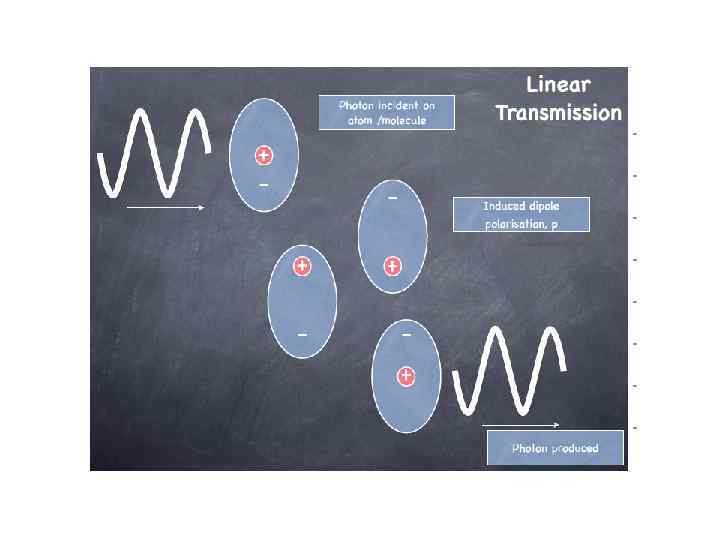
 • Первый вопрос, мы должны спросить - каким образом свет проходит через среду? Чтобы ответить на этот вопрос, мы должны думать о взаимодействие света с атомами и молекулами. Как вы хорошо осведомлены, свет является электромагнитыми колебаниями. Что происходит, когда эта волна попадает на атом или молекулу? Один вариант заключается в том, что Фотон может быть поглощен. Возбужденный атом затем релаксирует через фононных процессов на основе в этом случае объект нагревается. Другой вариант в том, что Фотон поглощается, а затем излучение проходит в другой длина волны флуоресценции. Чаще всего, входящие волна индуцирует колеблющегося диполя электронов молекулы, в результате происходит повторная эмиссия на той же длине волны.
 Обратите внимание, что чем ближе к линии поглощения материала, тем дольше задержка переизлучения - (вспомним, о показателе преломления, который существенно возрастает вблизи линий поглощения, т. е. резонансов). Соответственно прохождение света замедляется через посредство увеличение показателя преломления.
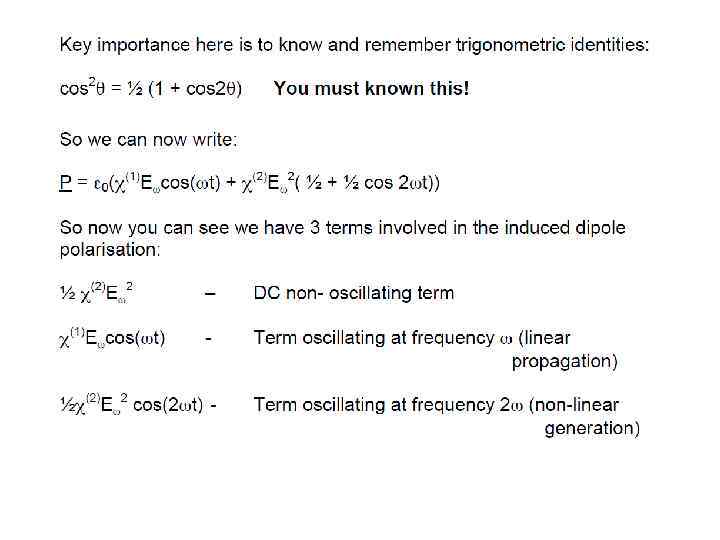
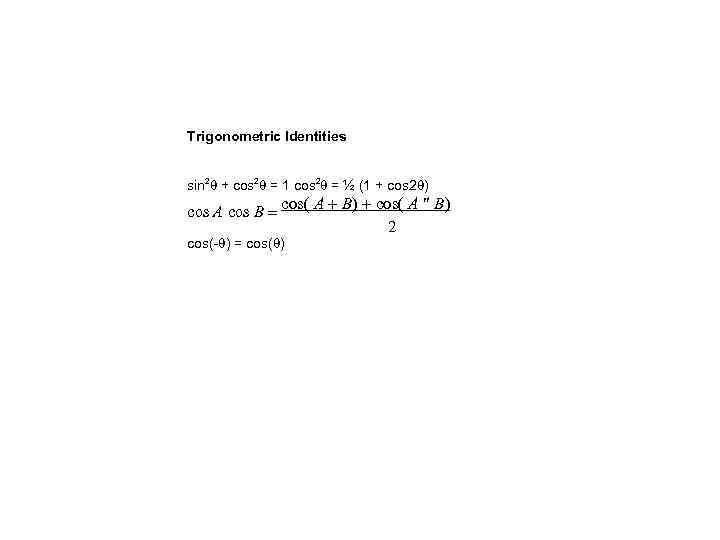 Trigonometric Identities sin 2 + cos 2 = 1 cos 2 = ½ (1 + cos 2 ) cos A cos B cos( A B) 2 cos(- ) = cos( )
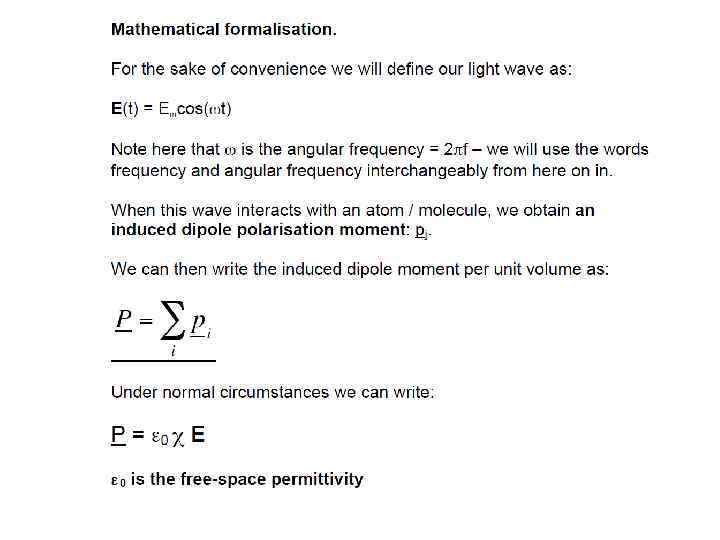
 Генерация 2 -й гармоники нелинейность второго порядка
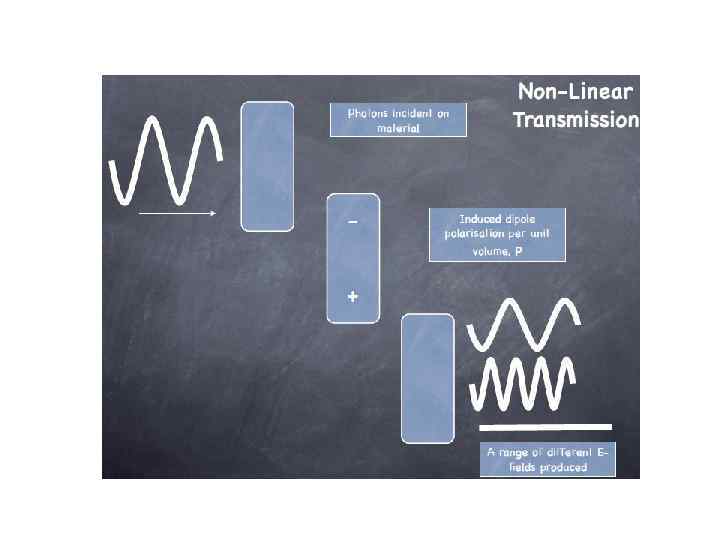
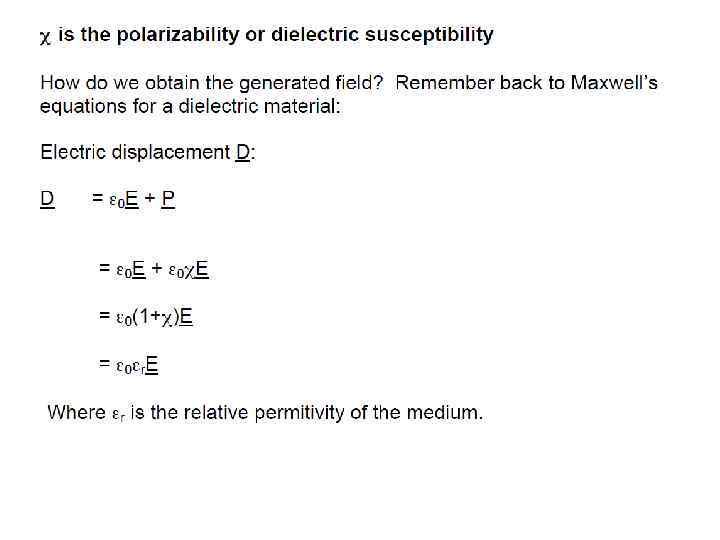
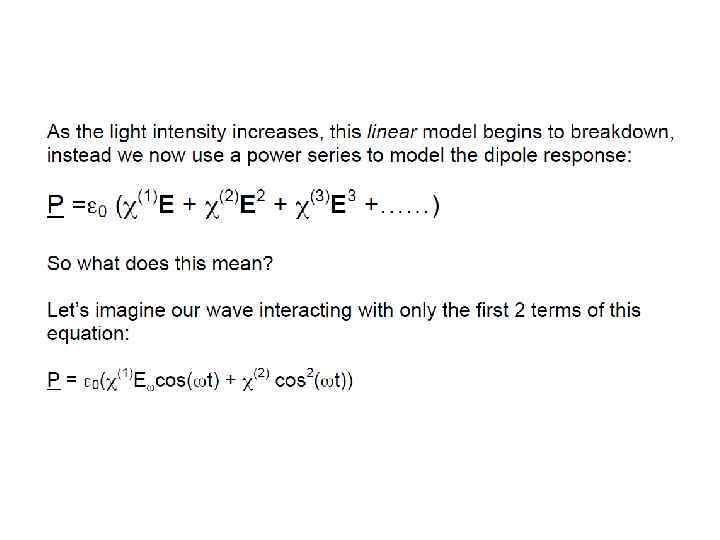
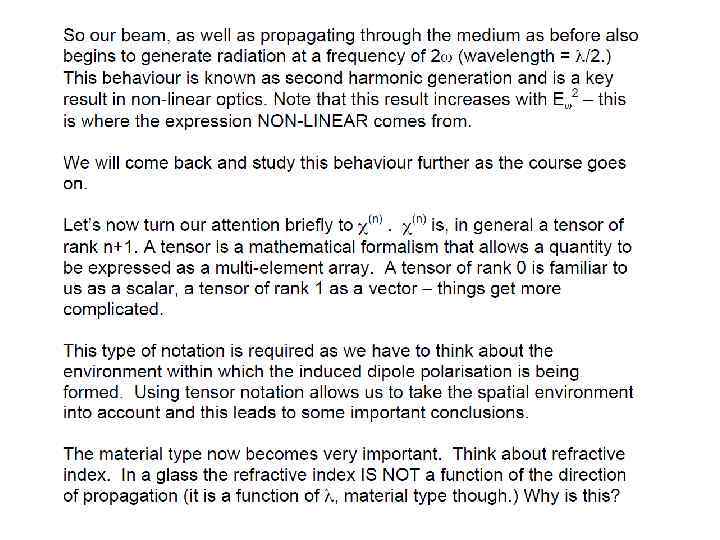
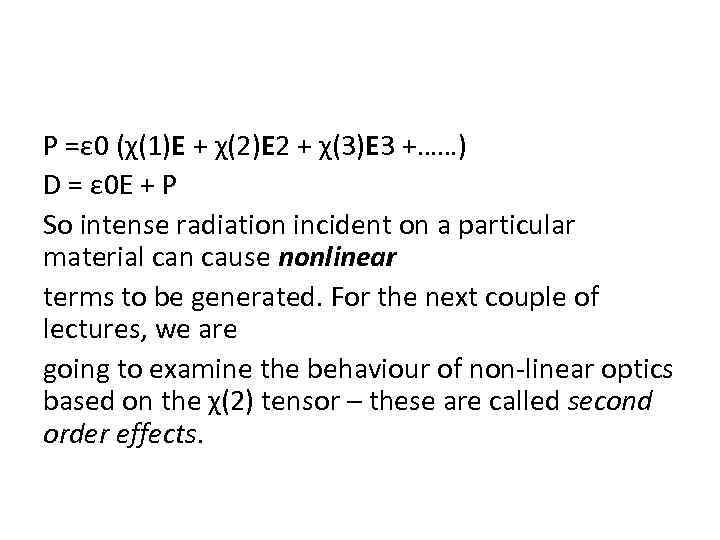 P =ε 0 (χ(1)E + χ(2)E 2 + χ(3)E 3 +……) D = ε 0 E + P So intense radiation incident on a particular material can cause nonlinear terms to be generated. For the next couple of lectures, we are going to examine the behaviour of non-linear optics based on the χ(2) tensor – these are called second order effects.
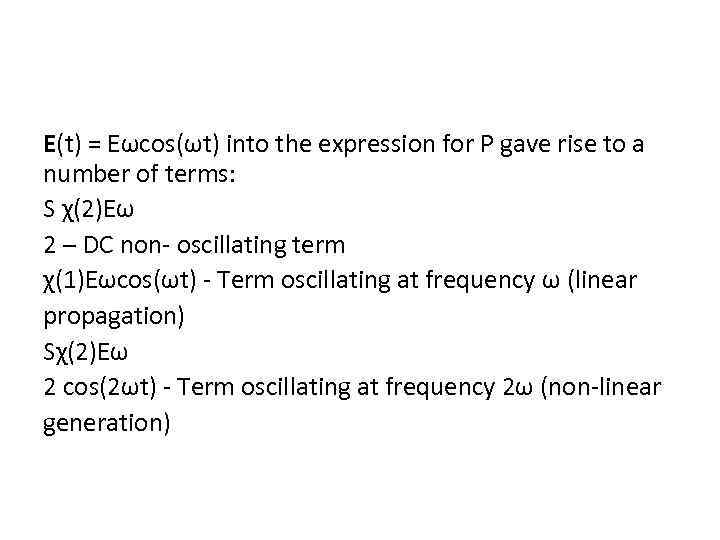 E(t) = Eωcos(ωt) into the expression for P gave rise to a number of terms: Ѕ χ(2)Eω 2 – DC non- oscillating term χ(1)Eωcos(ωt) - Term oscillating at frequency ω (linear propagation) Ѕχ(2)Eω 2 cos(2ωt) - Term oscillating at frequency 2ω (non-linear generation)
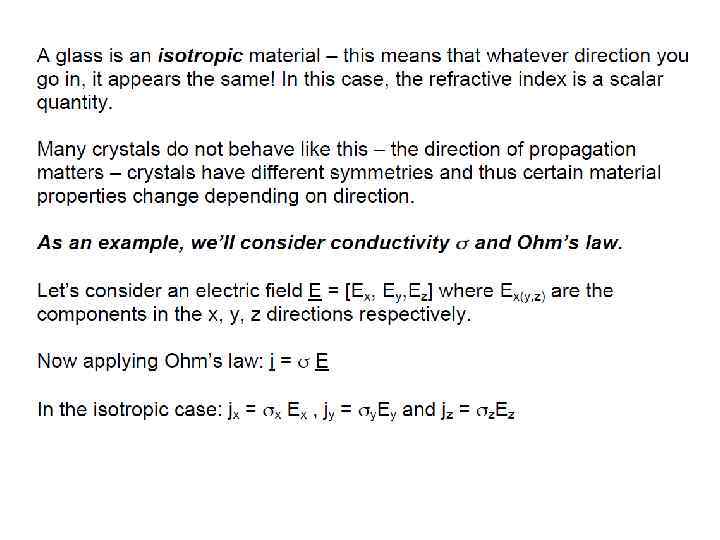
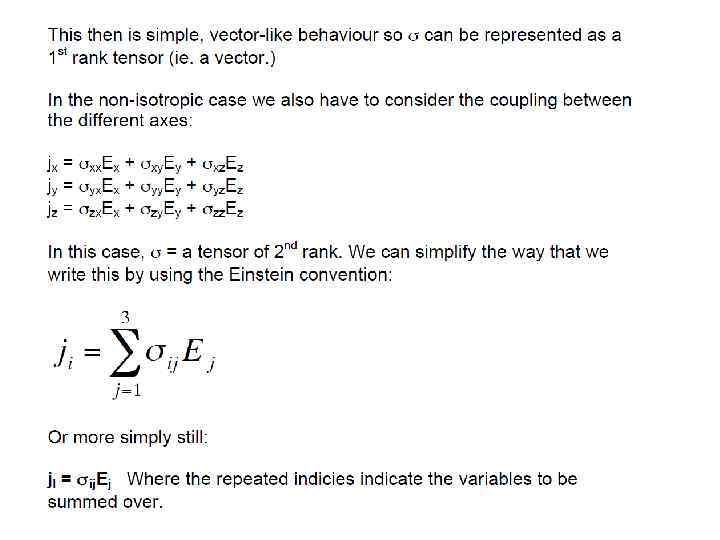
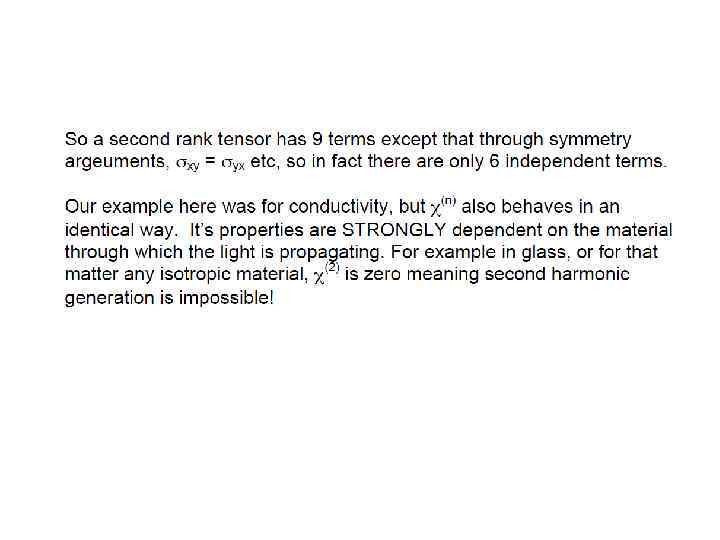
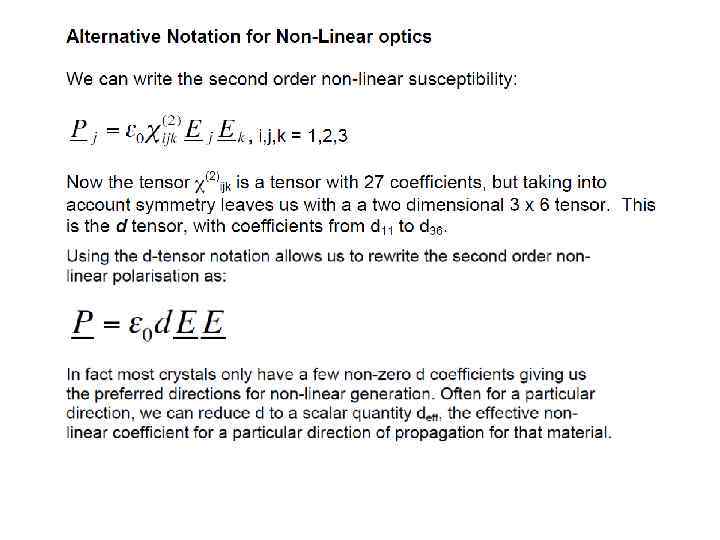
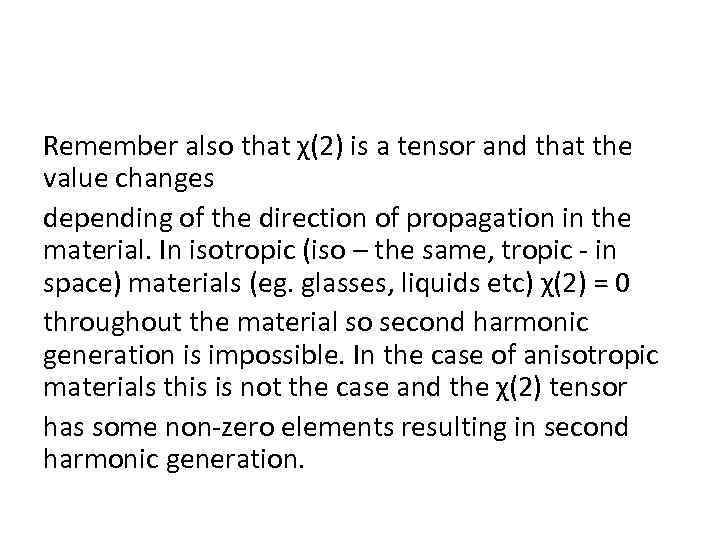 Remember also that χ(2) is a tensor and that the value changes depending of the direction of propagation in the material. In isotropic (iso – the same, tropic - in space) materials (eg. glasses, liquids etc) χ(2) = 0 throughout the material so second harmonic generation is impossible. In the case of anisotropic materials this is not the case and the χ(2) tensor has some non-zero elements resulting in second harmonic generation.
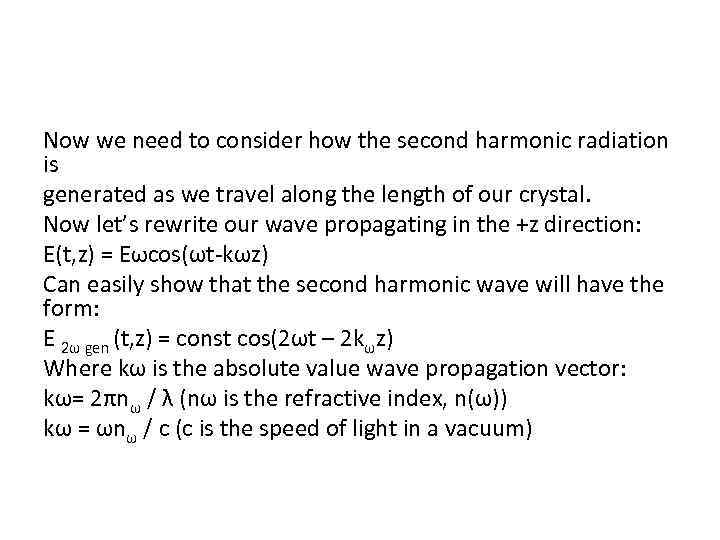 Now we need to consider how the second harmonic radiation is generated as we travel along the length of our crystal. Now let’s rewrite our wave propagating in the +z direction: E(t, z) = Eωcos(ωt-kωz) Can easily show that the second harmonic wave will have the form: E 2ω gen (t, z) = const cos(2ωt – 2 kωz) Where kω is the absolute value wave propagation vector: kω= 2πnω / λ (nω is the refractive index, n(ω)) kω = ωnω / c (c is the speed of light in a vacuum)
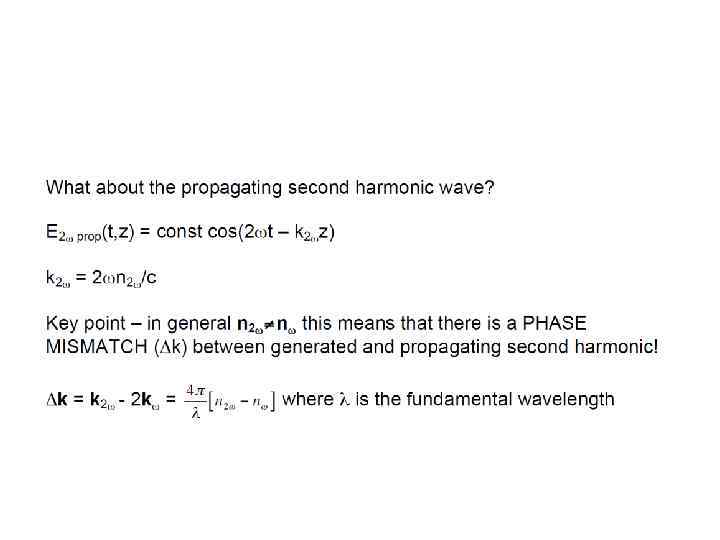
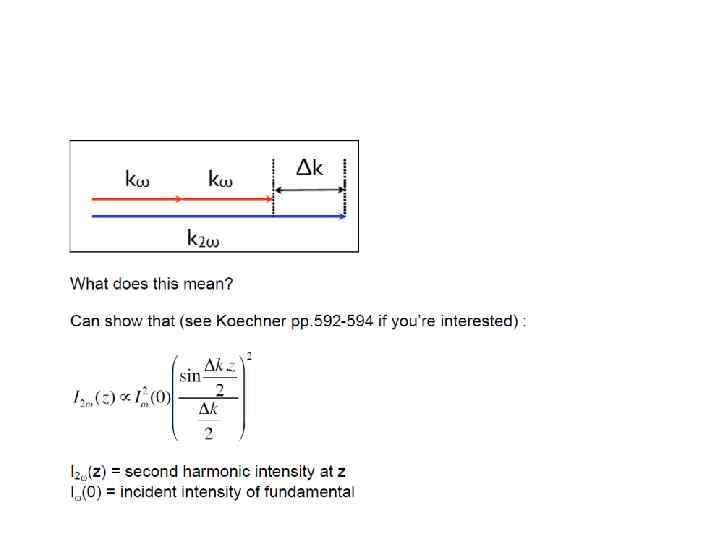
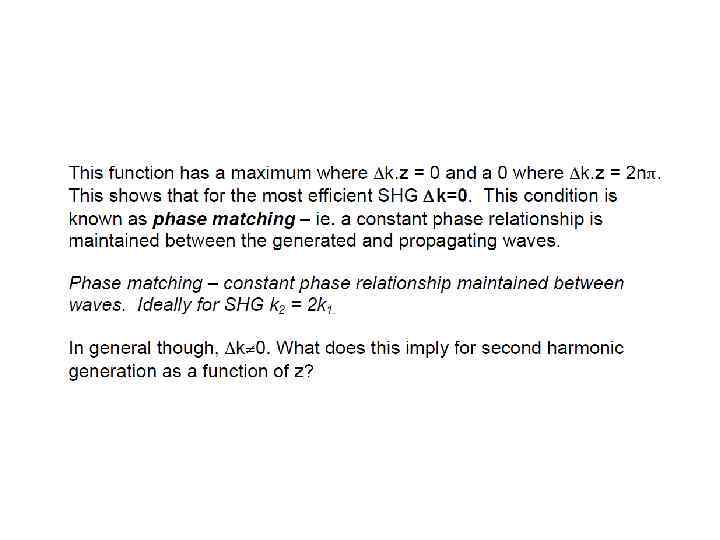
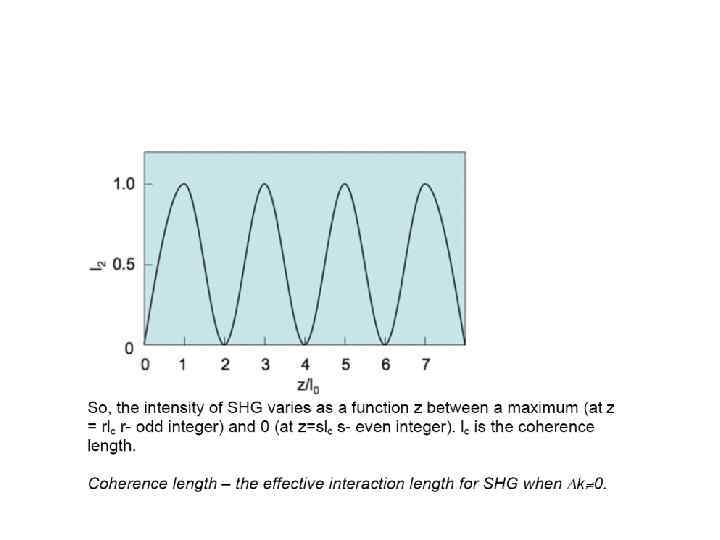
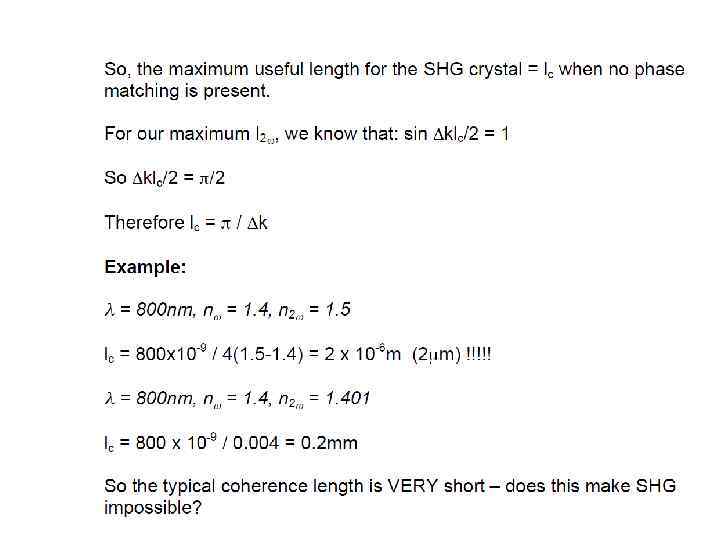
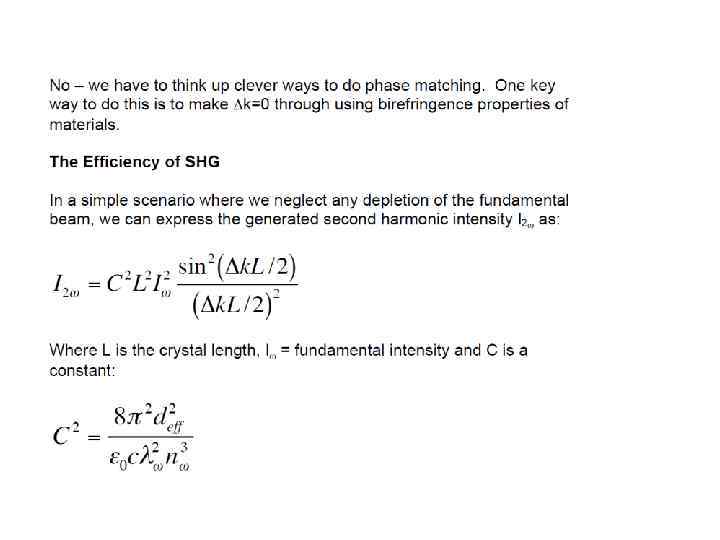
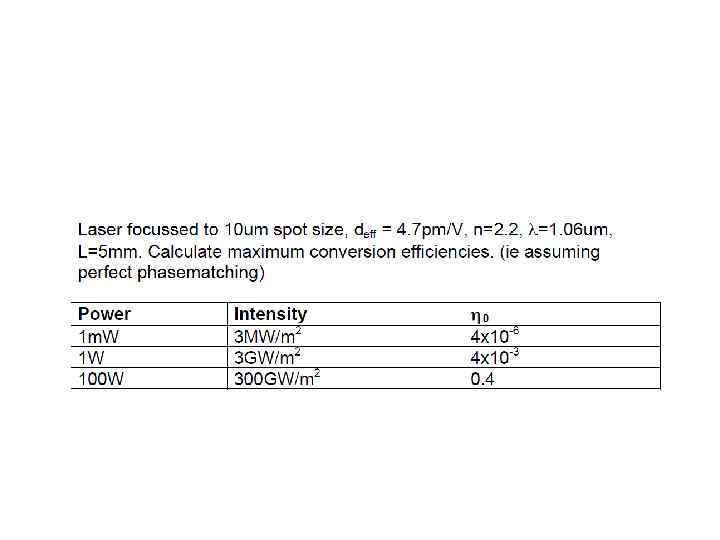
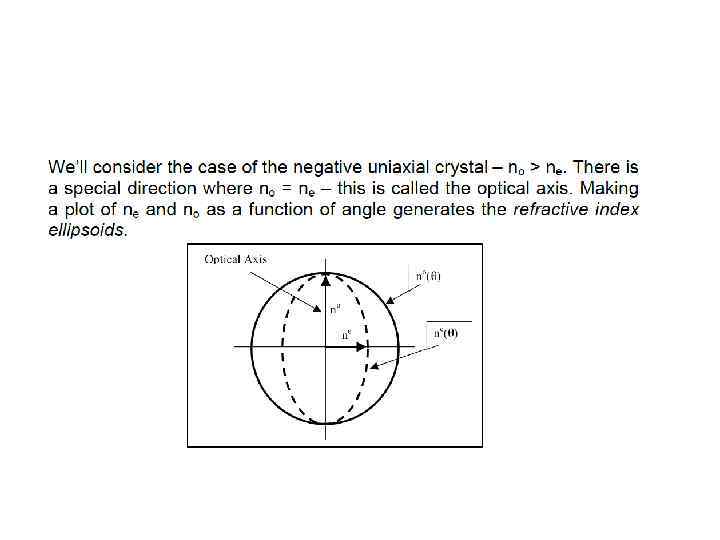
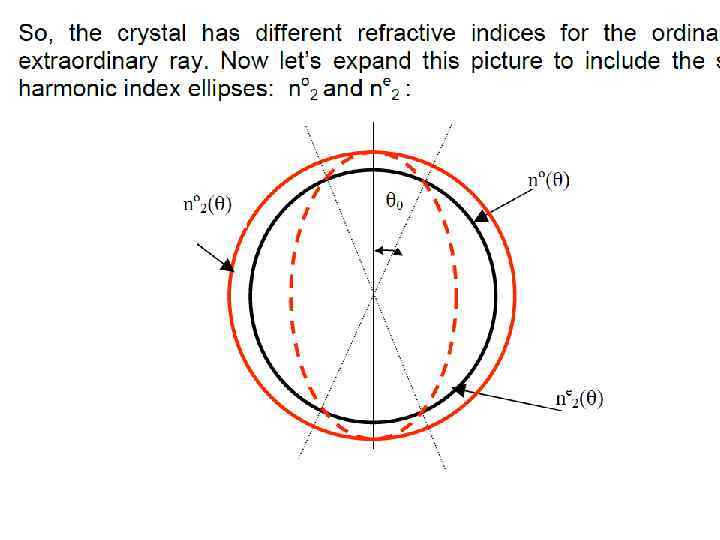
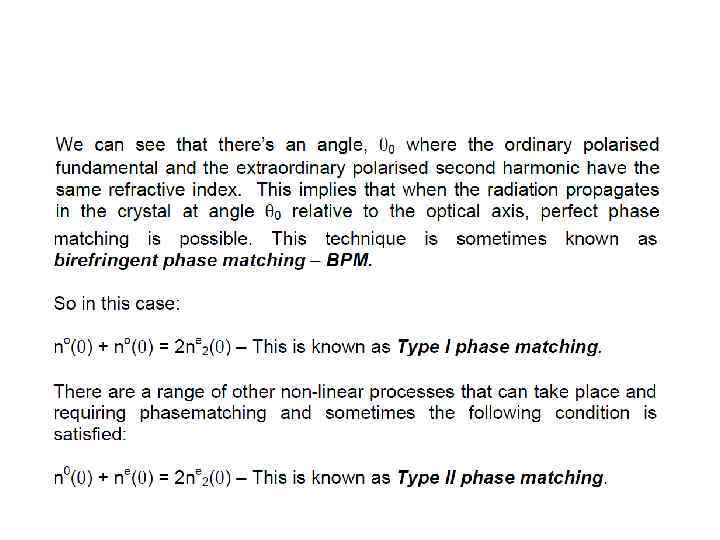
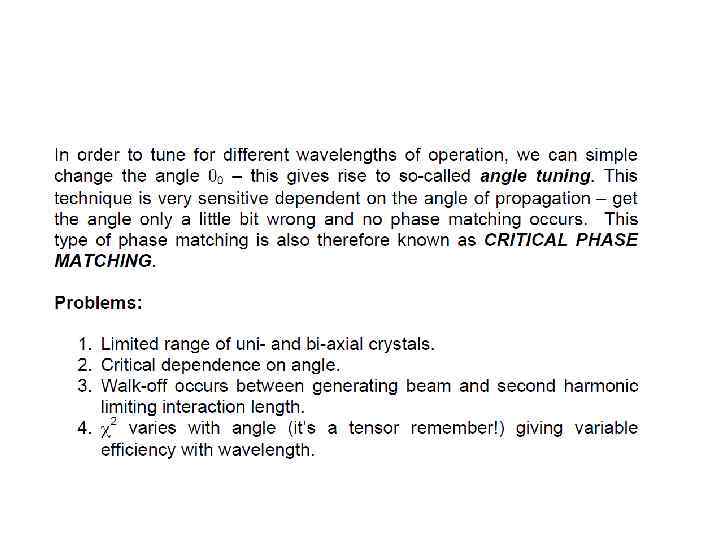
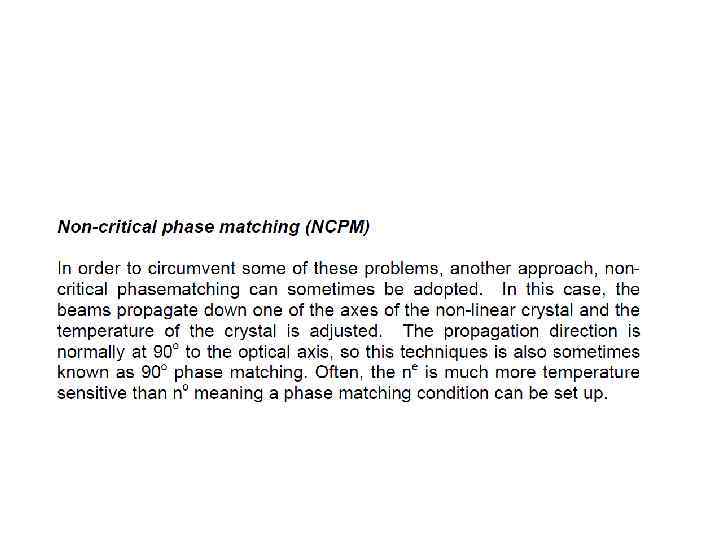
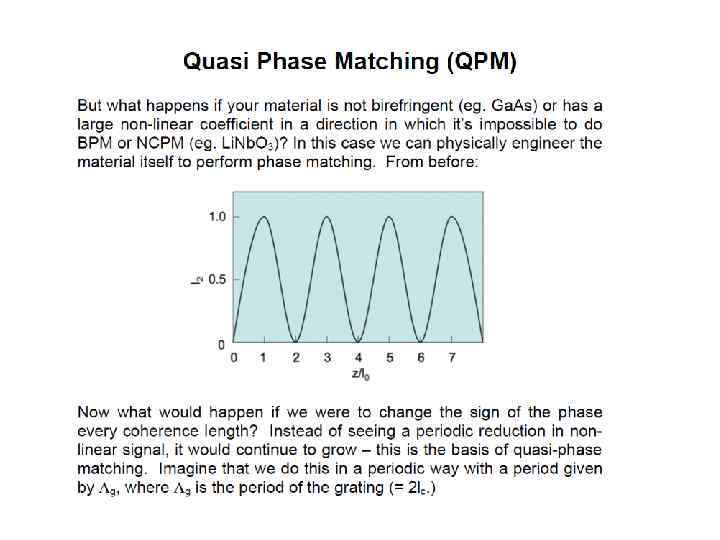
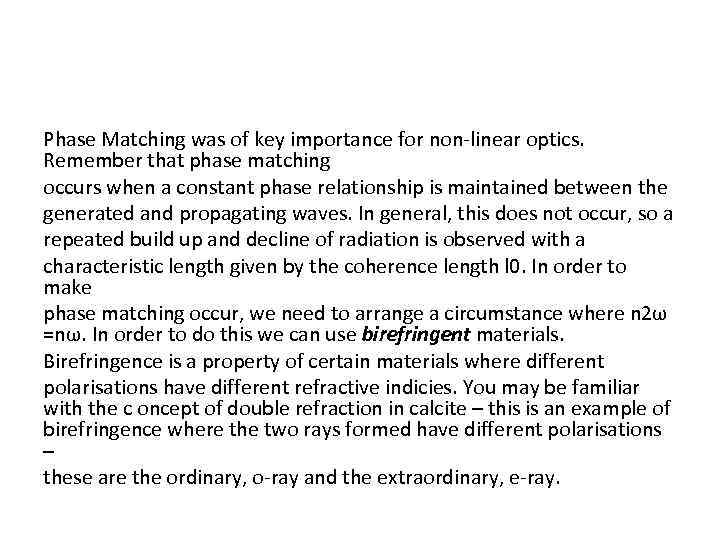 Phase Matching was of key importance for non-linear optics. Remember that phase matching occurs when a constant phase relationship is maintained between the generated and propagating waves. In general, this does not occur, so a repeated build up and decline of radiation is observed with a characteristic length given by the coherence length l 0. In order to make phase matching occur, we need to arrange a circumstance where n 2ω =nω. In order to do this we can use birefringent materials. Birefringence is a property of certain materials where different polarisations have different refractive indicies. You may be familiar with the c oncept of double refraction in calcite – this is an example of birefringence where the two rays formed have different polarisations – these are the ordinary, o-ray and the extraordinary, e-ray.
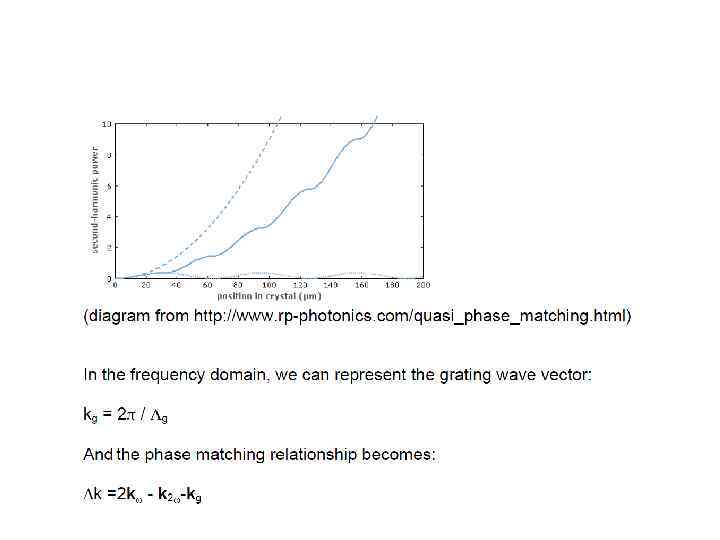
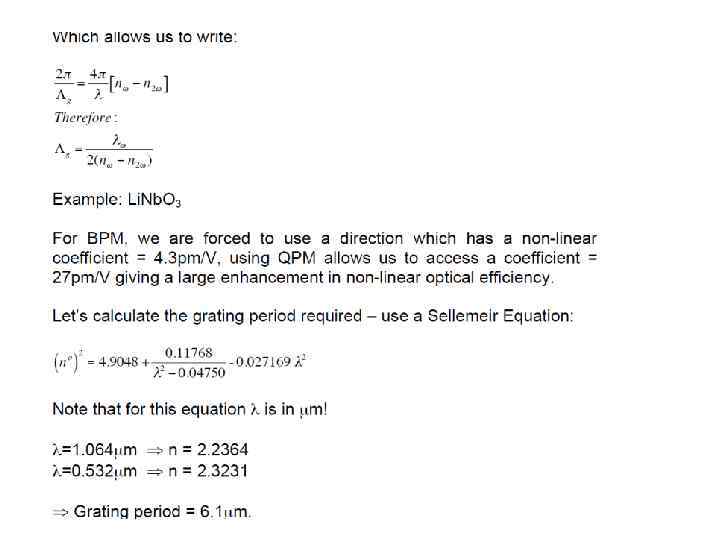
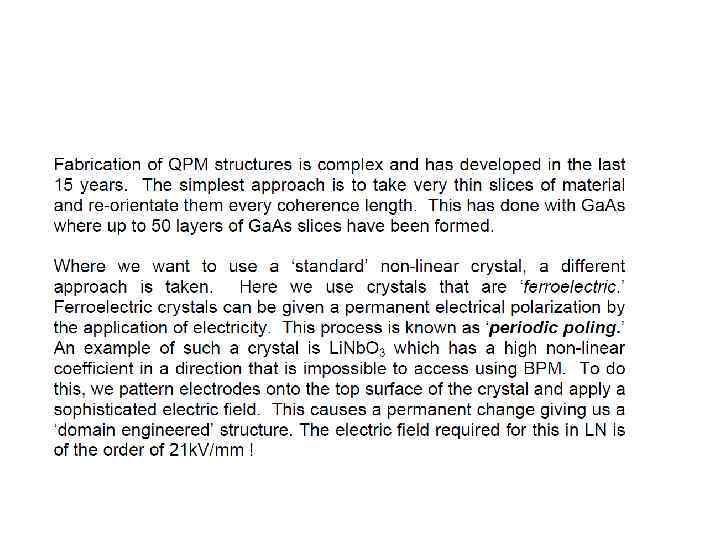
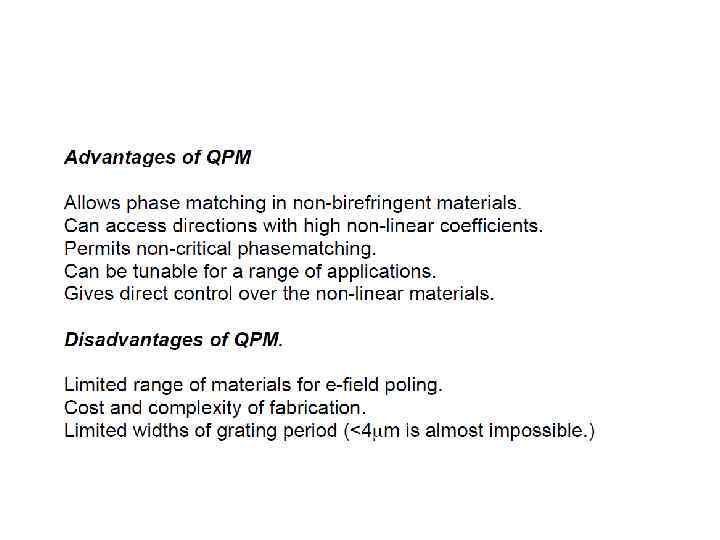
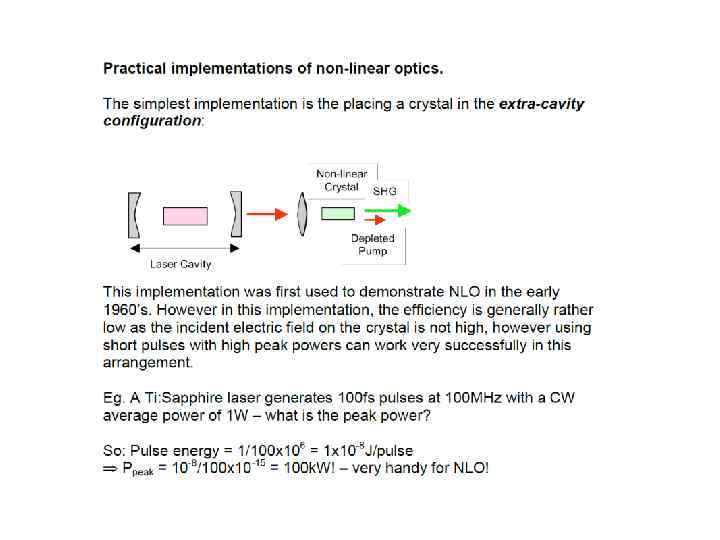
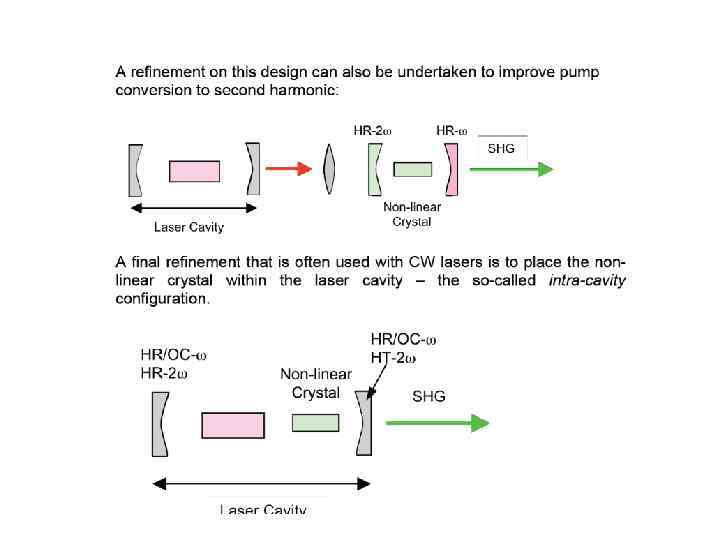
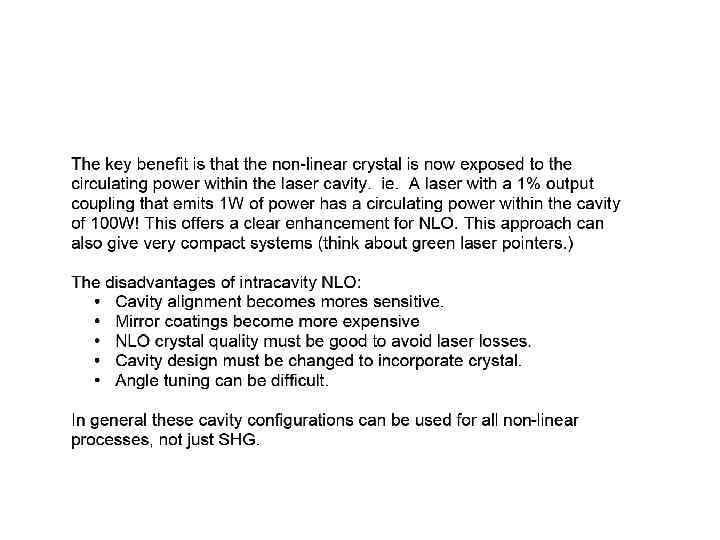
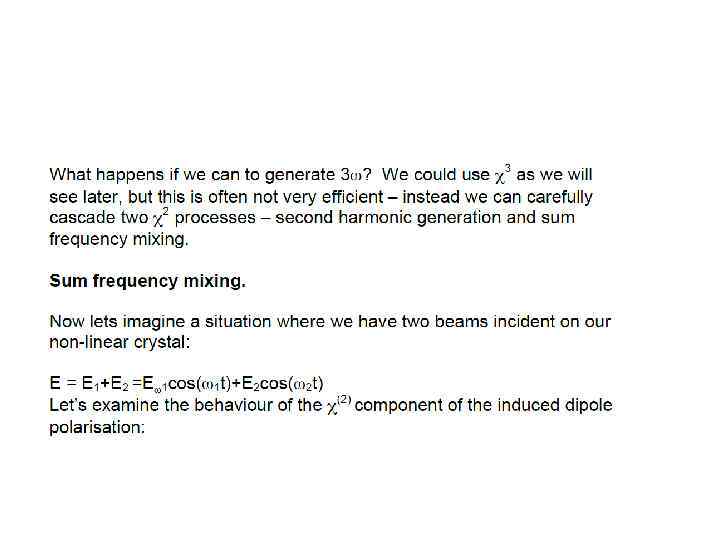
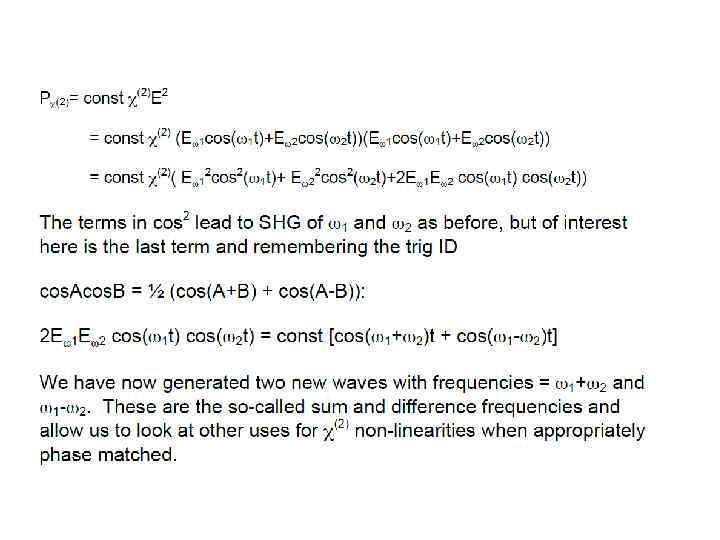
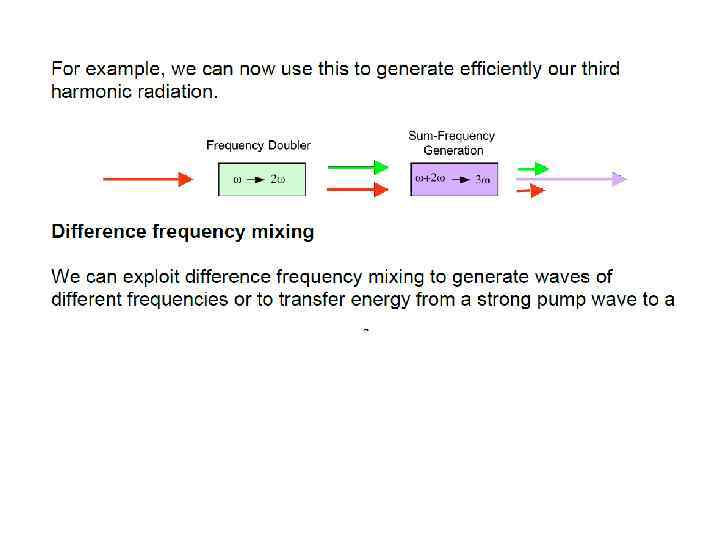
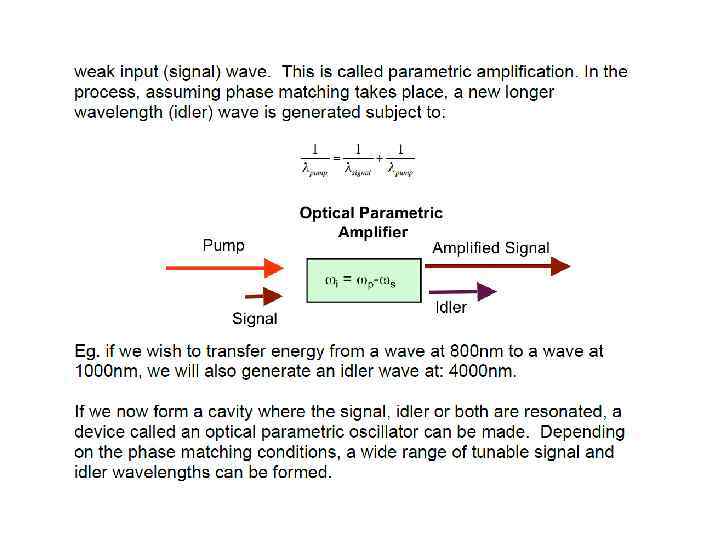
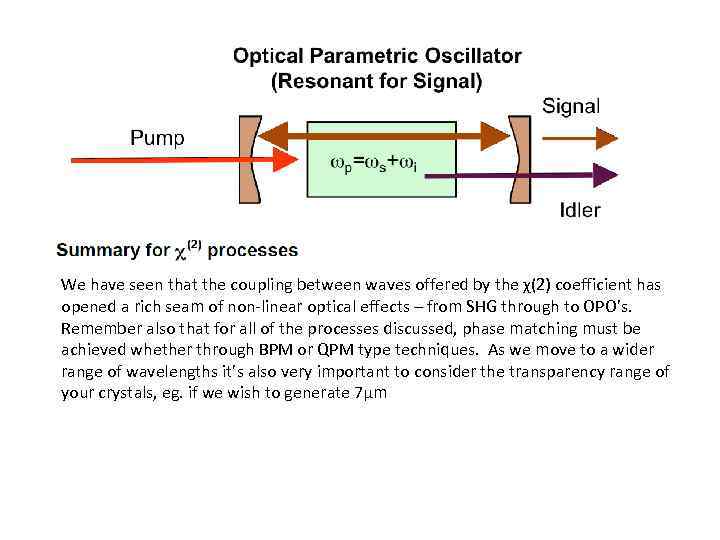 We have seen that the coupling between waves offered by the χ(2) coefficient has opened a rich seam of non-linear optical effects – from SHG through to OPO’s. Remember also that for all of the processes discussed, phase matching must be achieved whether through BPM or QPM type techniques. As we move to a wider range of wavelengths it’s also very important to consider the transparency range of your crystals, eg. if we wish to generate 7µm