 Скачать презентацию Neighbourhood Planning in Wolverhampton The Presentation
7ad563fed03ed23d28afbd330aba67c4.ppt
- Количество слайдов: 16



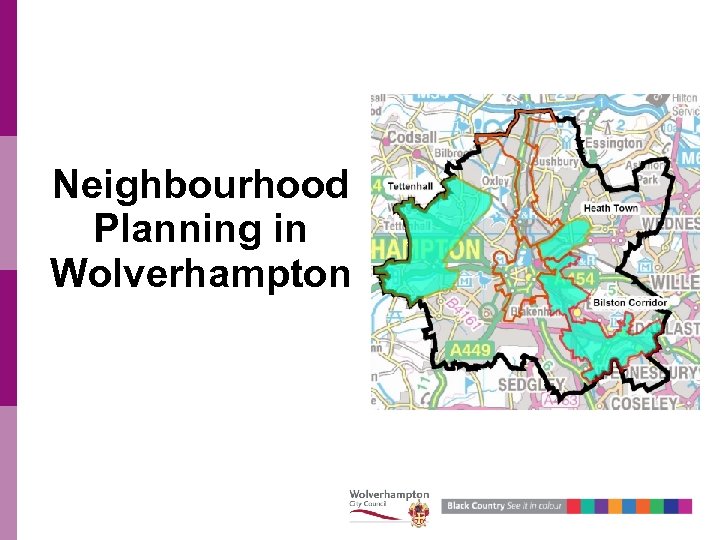
Neighbourhood Planning in Wolverhampton
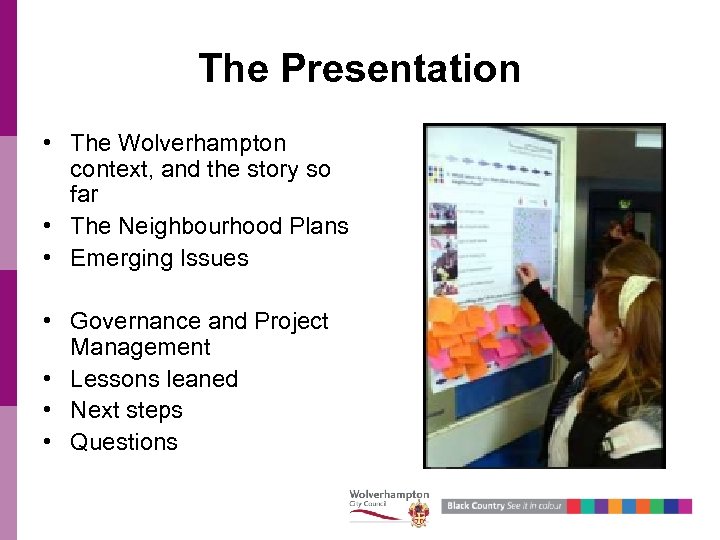
The Presentation • The Wolverhampton context, and the story so far • The Neighbourhood Plans • Emerging Issues • Governance and Project Management • Lessons leaned • Next steps • Questions
Strategic Planning context – Black Country Core Strategy adopted February 2011 based on reversing population decline, supporting economic growth and environmental enhancement. – Target of 14, 000 new homes, improved employment areas and vibrant City Centre by 2026 for Wolverhampton. – Core Strategy identifies a Growth Network of the City Centre and Regeneration Corridors where new development will be focussed. • Area Action Plans being prepared to promote development in the Growth Network. – Neighbourhood Plans will also support the Core Strategy by providing a detailed planning framework for some areas outside the Growth Network.
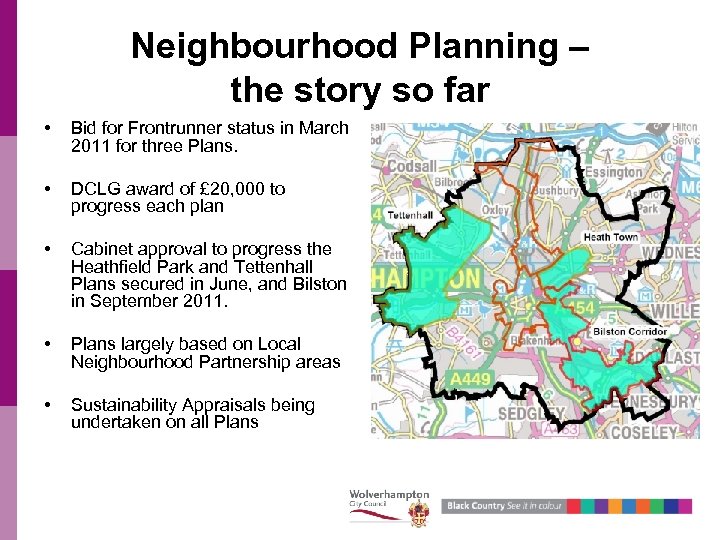
Neighbourhood Planning – the story so far • Bid for Frontrunner status in March 2011 for three Plans. • DCLG award of £ 20, 000 to progress each plan • Cabinet approval to progress the Heathfield Park and Tettenhall Plans secured in June, and Bilston in September 2011. • Plans largely based on Local Neighbourhood Partnership areas • Sustainability Appraisals being undertaken on all Plans
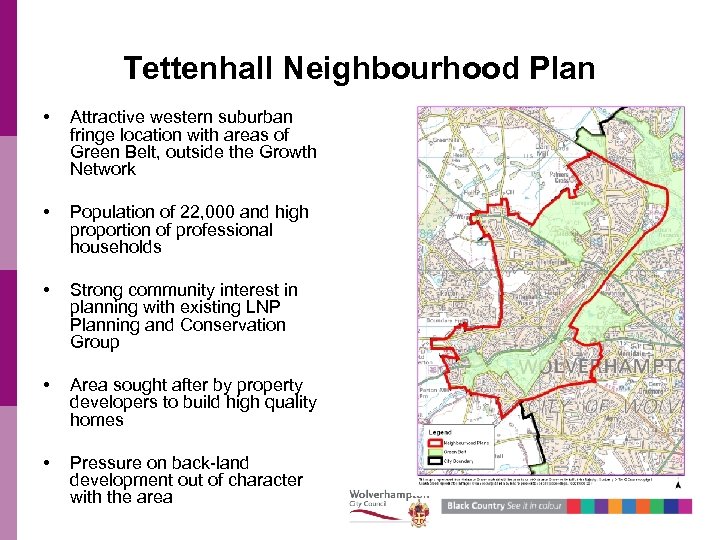
Tettenhall Neighbourhood Plan • Attractive western suburban fringe location with areas of Green Belt, outside the Growth Network • Population of 22, 000 and high proportion of professional households • Strong community interest in planning with existing LNP Planning and Conservation Group • Area sought after by property developers to build high quality homes • Pressure on back-land development out of character with the area
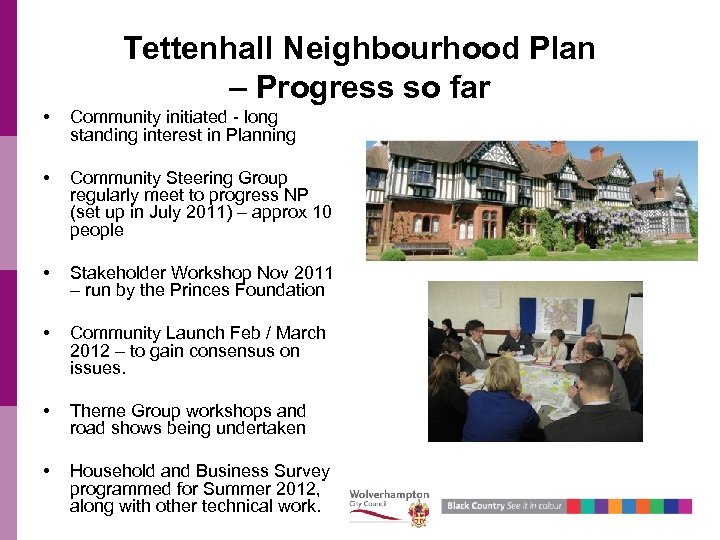
Tettenhall Neighbourhood Plan – Progress so far • Community initiated - long standing interest in Planning • Community Steering Group regularly meet to progress NP (set up in July 2011) – approx 10 people • Stakeholder Workshop Nov 2011 – run by the Princes Foundation • Community Launch Feb / March 2012 – to gain consensus on issues. • Theme Group workshops and road shows being undertaken • Household and Business Survey programmed for Summer 2012, along with other technical work.
Emerging Issues…. • Traffic and congestion • Providing a better choice and mix of housing, but with limited opportunities for new development • Protecting environmental assets, local character and distinctiveness • Better access to employment opportunities • Protection of community facilities and better local services • Reconciling competing priorities • There is strong commonality on these issues for the Neighbourhood Plans being prepared
Governance arrangements and the role of the Council • Governance arrangements – Community directly supported by Local Neighbourhood Partnership Officers on a day to day basis as well as regular liaison with Planning Officer – Sign off of work by the Local Neighbourhood Partnership Board – Approvals currently required from WCC Cabinet at key stages • Community Resource – People committed to the Plan, some with Planning skills others dedicating time – Monthly Steering Group meetings to progress Plans, with additional meetings during busy periods – Steering Group essential, with sub-groups where/when needed
Governance arrangements and the role of the Council • Role of the Council – Agree the neighbourhood boundary – Financial support for evidence, consultation and Examination / referendum £ 50 -70 K per plan in addition to CLG grant. – Professional support of 2. 5 FTE between Planning and LNP Service for the three Plans – Procurement of technical evidence – Pre-examination check – Organise and pay for the examination / referendum – Adopt
Adopting a Project management approach • Develop a Project Plan • Agree terms of reference for the Steering Groups and any sub-groups. • Confirm role and responsibilities of partners – Council Officers and Members, Community Group and stakeholders • Agree timetable and stick to it. • Identify key risks and actively manage them.
How much evidence and at what cost? • Core Strategy evidence provides good starting point – strategic Employment and Housing Studies, Flood Risk, Retail and Centres and Transportation. • What else needs to be done to supplement this: • • Sustainability appraisal - £ 5 k Community questionnaire - £ 12 k Surveys of employment areas and occupiers - £ 3 -5 k Environmental Surveys - £ 5 k Characterisation Studies - £ 10 k Masterplan - £ 10 k • • Consider the need for professional planning support – for example, to write the final plan (£ 5 k) Communications and consultation (£ 10 K) Referendum / Examination costs (£ 10 -20 K) • Grand total = £ 60 -90 k
Next steps • Neighbourhood Plans, Area Action Plans or Community led Development Plans? • Evidence gathering and Options development Summer 2012 • Draft Plans by December 2012 • Examination / Referendum / Adoption 2013
Lessons learned • Its been a positive experience for all parties. • Buy-in at all levels and across all organisations is critical. • Put a lot of effort in early to make sure project management arrangements are fit for purpose. • There is some flexibility in the way you can prepare the Plan • Local people know their areas well, but use evidence to support the plan. • Celebrate short-term wins to make it real.
Lessons learned • All areas are different but similar issues and themes are emerging. • Don’t underestimate the level of human and financial resource needed. • Success should be measured in a number of ways – appreciate the ‘soft’ wins and not just the end product. • What are the issues in the ‘Neighbourhood’, and what sort of Plan – if any – is needed to respond to this?
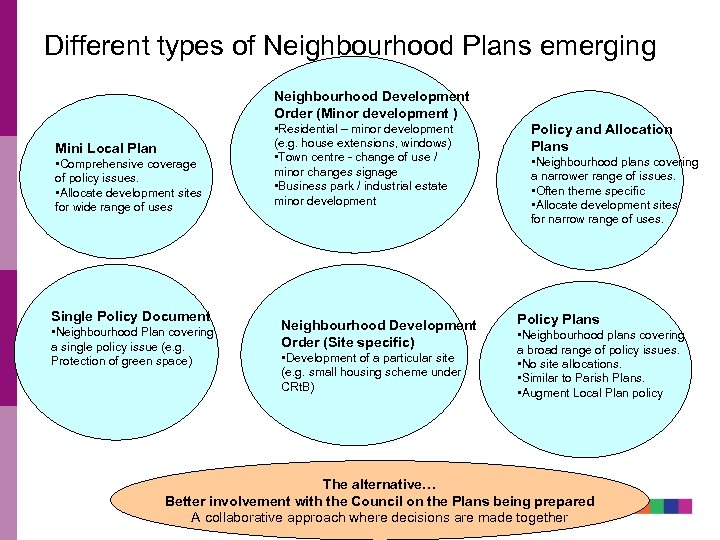
Different types of Neighbourhood Plans emerging Neighbourhood Development Order (Minor development ) Mini Local Plan • Comprehensive coverage of policy issues. • Allocate development sites for wide range of uses Single Policy Document • Neighbourhood Plan covering a single policy issue (e. g. Protection of green space) • Residential – minor development (e. g. house extensions, windows) • Town centre - change of use / minor changes signage • Business park / industrial estate minor development Neighbourhood Development Order (Site specific) • Development of a particular site (e. g. small housing scheme under CRt. B) Policy and Allocation Plans • Neighbourhood plans covering a narrower range of issues. • Often theme specific • Allocate development sites for narrow range of uses. Policy Plans • Neighbourhood plans covering a broad range of policy issues. • No site allocations. • Similar to Parish Plans. • Augment Local Plan policy The alternative… Better involvement with the Council on the Plans being prepared A collaborative approach where decisions are made together
Questions? • Contact details: craig. rowbottom@wolverhampton. gov. uk • Website links: Wolverhampton LDF www. wolverhampton. gov. uk/ldf Tettenhall Neighbourhood Plan www. ourplaceourplan. org. uk Heathfield Park Neighbourhood Plan www. wton-partnership. org. uk/heathfield-park
Скачать презентацию Neighbourhood Planning in Wolverhampton The Presentation
7ad563fed03ed23d28afbd330aba67c4.ppt