 Скачать презентацию Negotiating a deal Doing Business Prof E Garbey
c29b387b7e562b19d859d434bfff5f9d.ppt
- Количество слайдов: 32



Negotiating a deal (Doing Business) Prof. E. Garbey Savigne, Cert TEB, MA.
Aim of the lesson The lesson looks at the language used for doing business, and developing intercultural awareness.
What is a negotiation? It is a process in which two or more individuals participate voluntarily sharing interests and conflicts and the final aim is to reach a deal.
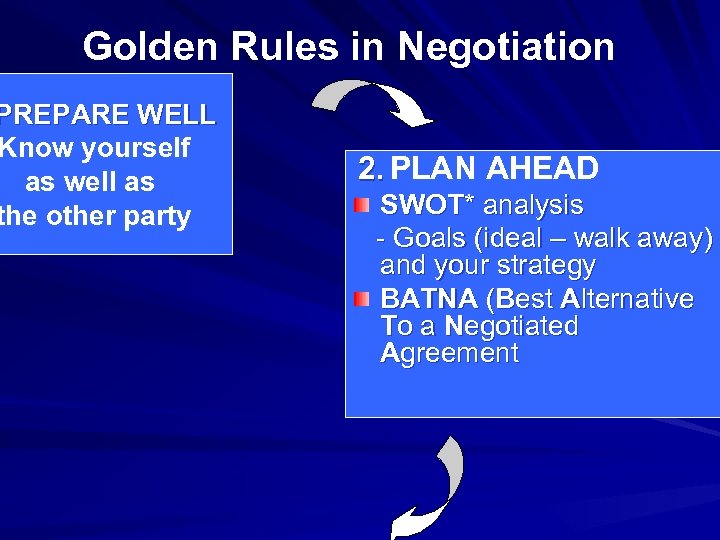
Golden Rules in Negotiation PREPARE WELL Know yourself as well as the other party 2. PLAN AHEAD SWOT* analysis - Goals (ideal – walk away) and your strategy BATNA (Best Alternative To a Negotiated Agreement
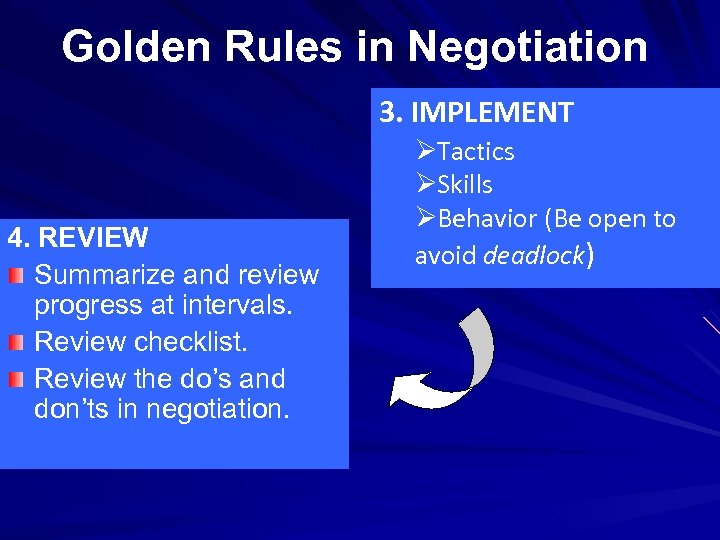
Golden Rules in Negotiation 3. IMPLEMENT 4. REVIEW Summarize and review progress at intervals. Review checklist. Review the do’s and don’ts in negotiation. ØTactics ØSkills ØBehavior (Be open to avoid deadlock)
Golden Rules in Negotiation. All is negotiable except principles and needs. If compromising, get something in return. Be open to suggestions. Use synergy.
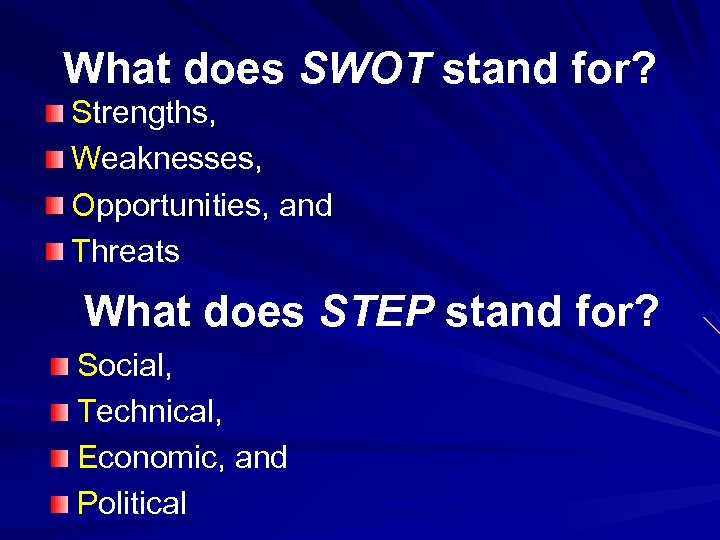
What does SWOT stand for? Strengths, Weaknesses, Opportunities, and Threats What does STEP stand for? Social, Technical, Economic, and Political
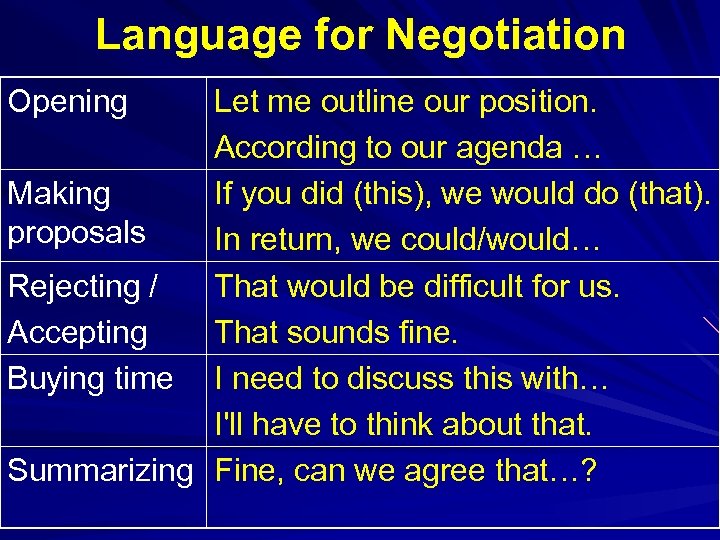
Language for Negotiation Opening Let me outline our position. According to our agenda … Making If you did (this), we would do (that). proposals In return, we could/would… Rejecting / That would be difficult for us. Accepting That sounds fine. Buying time I need to discuss this with… I'll have to think about that. Summarizing Fine, can we agree that…?
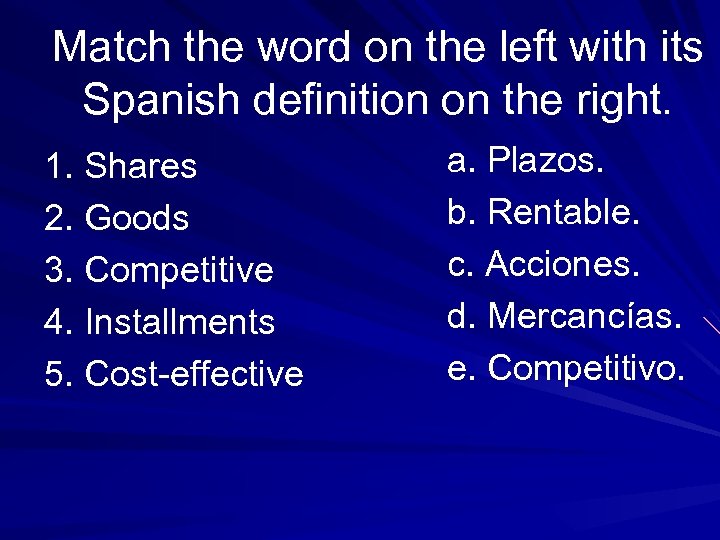
Match the word on the left with its Spanish definition on the right. 1. Shares 2. Goods 3. Competitive 4. Installments 5. Cost-effective a. Plazos. b. Rentable. c. Acciones. d. Mercancías. e. Competitivo.
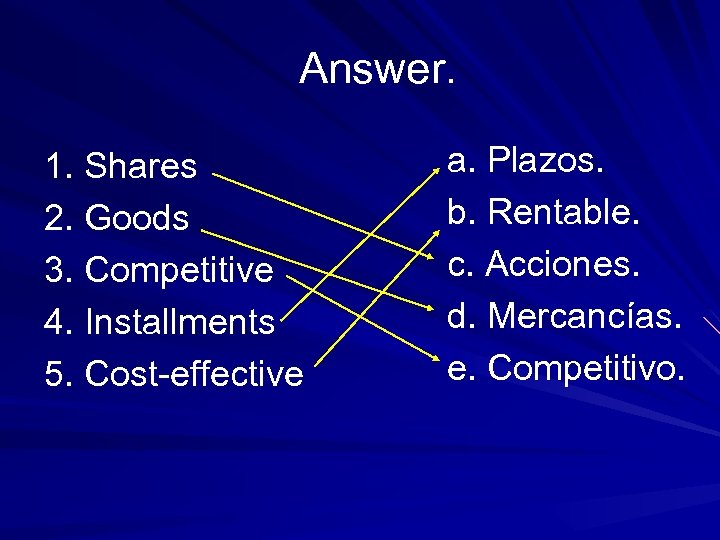
Answer. 1. Shares 2. Goods 3. Competitive 4. Installments 5. Cost-effective a. Plazos. b. Rentable. c. Acciones. d. Mercancías. e. Competitivo.
Comprehension task 1 Look at the video excerpt. Answer the questions. What issue are they going to discuss now? When does Bill need the goods?
Answers What issue are they going to discuss now? Delivery (they have already covered price and packing). When does he need the goods? He needs them for next month.
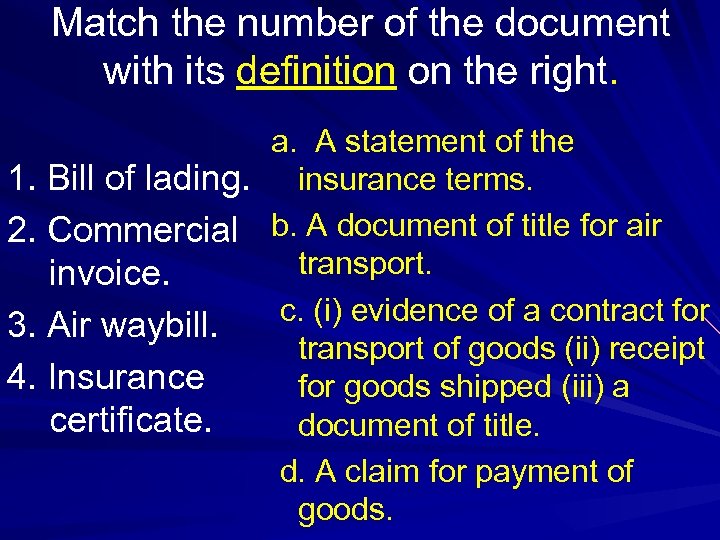
Match the number of the document with its definition on the right. a. A statement of the 1. Bill of lading. insurance terms. 2. Commercial b. A document of title for air transport. invoice. c. (i) evidence of a contract for 3. Air waybill. transport of goods (ii) receipt 4. Insurance for goods shipped (iii) a certificate. document of title. d. A claim for payment of goods.
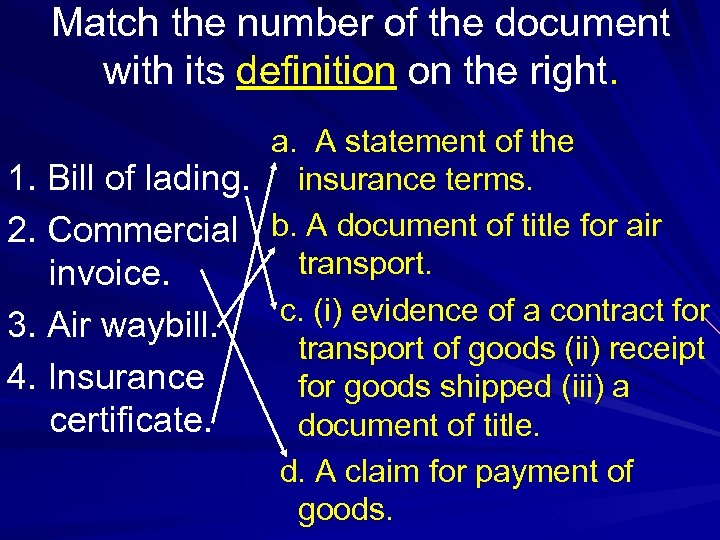
Match the number of the document with its definition on the right. a. A statement of the 1. Bill of lading. insurance terms. 2. Commercial b. A document of title for air transport. invoice. c. (i) evidence of a contract for 3. Air waybill. transport of goods (ii) receipt 4. Insurance for goods shipped (iii) a certificate. document of title. d. A claim for payment of goods.
Comprehension task 2 Look at the video excerpt. Answer the questions 1. What is Bill's intention when he said: “What about if we get you a 3, 5% discount from the quoted price? ” 2. Has Mr. Rodriguez rejected Bill's proposal when he stated: “How about a 5 %? ” 3. What does Mr. Rodriguez mean when he said: “Bear with me, though we do not normally go with that…”
Comprehension task 2 Possible answers 1. Bill is making a proposal, trying to negotiate. 2. No. he hasn't. He is bargaining. 3. He means it is very likely he will accept the proposal.
Comprehension task 3. Look at the video excerpt. Answer the questions. What statements in the dialogue indicate the following? a. It will be an exception. b. We have reached an agreement.
Comprehension task 3. Possible answers. What statements in the dialogue indicate the following? a. It will be an exception. We do not normally go with that. b. We have reached an agreement. Yes, it is a deal.
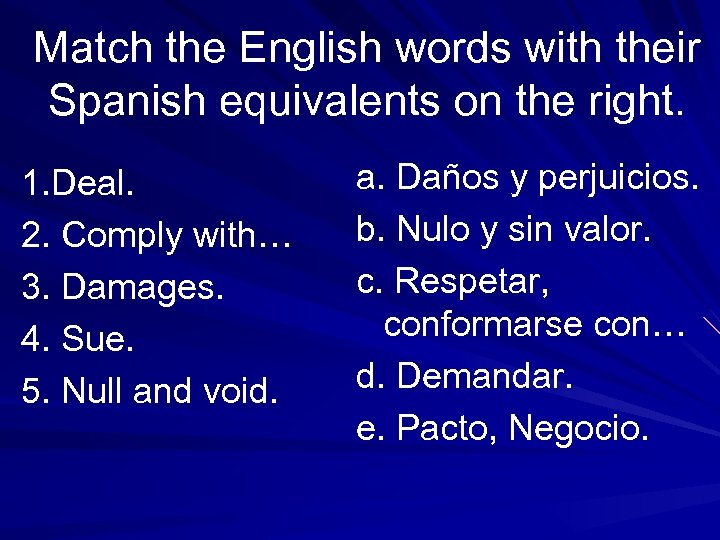
Match the English words with their Spanish equivalents on the right. 1. Deal. 2. Comply with… 3. Damages. 4. Sue. 5. Null and void. a. Daños y perjuicios. b. Nulo y sin valor. c. Respetar, conformarse con… d. Demandar. e. Pacto, Negocio.
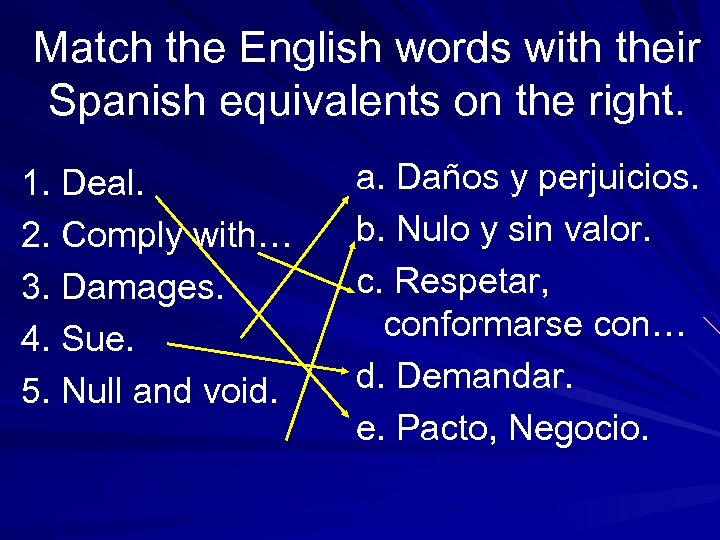
Match the English words with their Spanish equivalents on the right. 1. Deal. 2. Comply with… 3. Damages. 4. Sue. 5. Null and void. a. Daños y perjuicios. b. Nulo y sin valor. c. Respetar, conformarse con… d. Demandar. e. Pacto, Negocio.
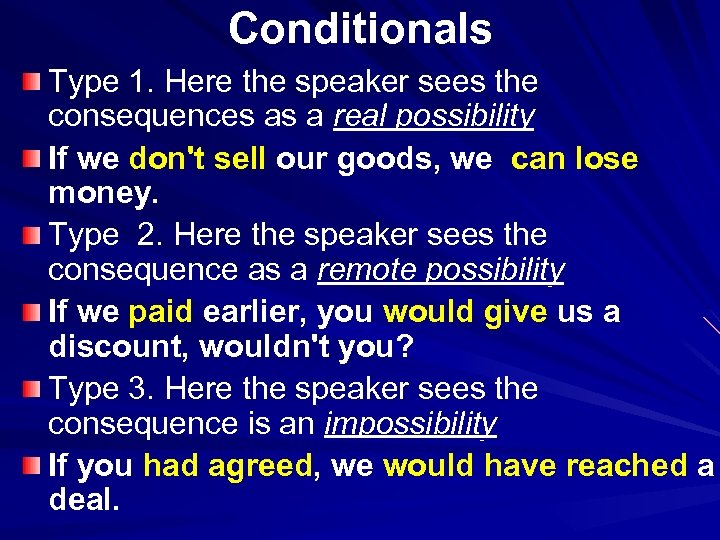
Conditionals Type 1. Here the speaker sees the consequences as a real possibility If we don't sell our goods, we can lose money. Type 2. Here the speaker sees the consequence as a remote possibility If we paid earlier, you would give us a discount, wouldn't you? Type 3. Here the speaker sees the consequence is an impossibility If you had agreed, we would have reached a deal.
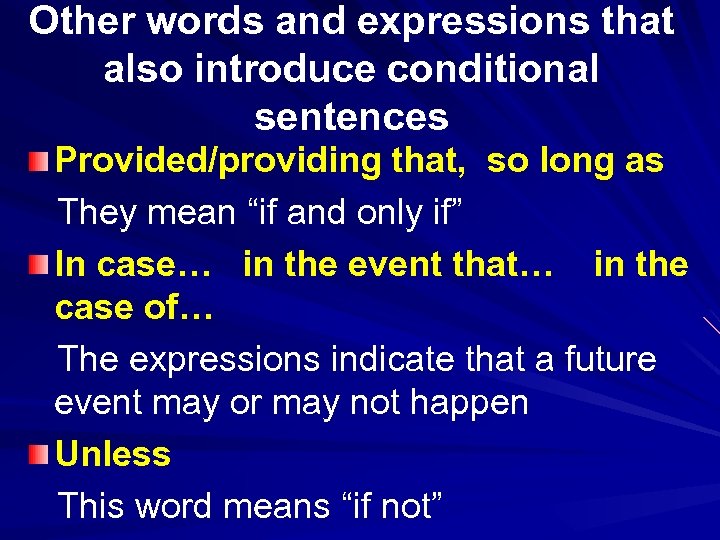
Other words and expressions that also introduce conditional sentences Provided/providing that, so long as They mean “if and only if” In case… in the event that… in the case of… The expressions indicate that a future event may or may not happen Unless This word means “if not”
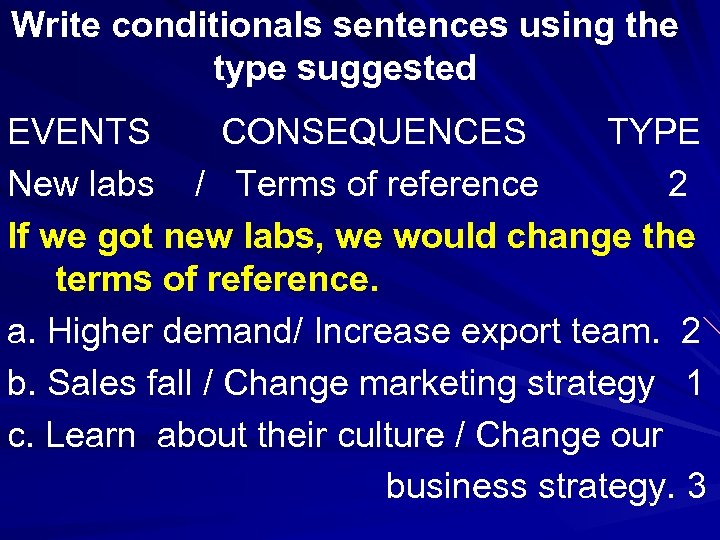
Write conditionals sentences using the type suggested EVENTS CONSEQUENCES TYPE New labs / Terms of reference 2 If we got new labs, we would change the terms of reference. a. Higher demand/ Increase export team. 2 b. Sales fall / Change marketing strategy 1 c. Learn about their culture / Change our business strategy. 3
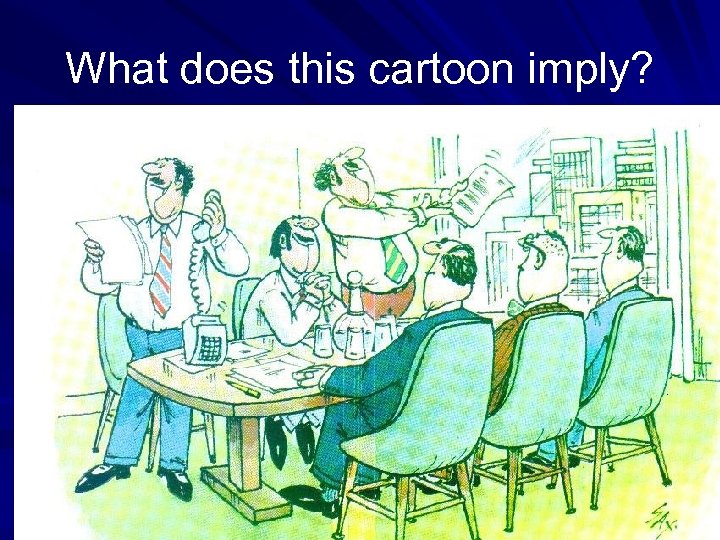
What does this cartoon imply?
These are the possible conditionals sentences using the type suggested. a. If we had a higher demand, we could increase the export team. b. In case the sales fall, we should change our marketing strategy. c. If we had learned about their culture, we would have changed our business strategy.
To do business worldwide it isn't enough just to understand apply a universal business model. You also have to understand the culture of the people you are dealing with.
Business between people from different cultures may show different attitudes to time, the role of silence, and relationship between superiors and subordinates. An awareness and knowledge of these differences will help to reduce the risk of misunderstandings and conflicts in international negotiations.
People behave differently according to their cultures, how do we express in English such behaviors?
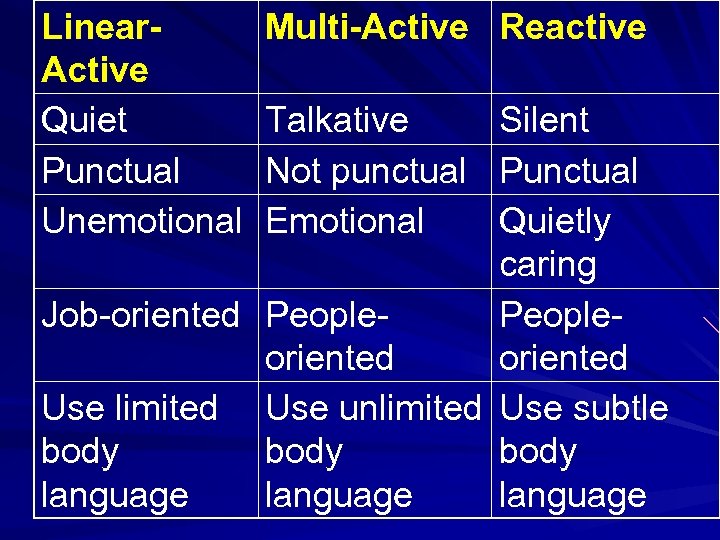
Linear. Active Quiet Punctual Unemotional Multi-Active Reactive Talkative Not punctual Emotional Silent Punctual Quietly caring Job-oriented Peopleoriented Use limited Use unlimited Use subtle body language
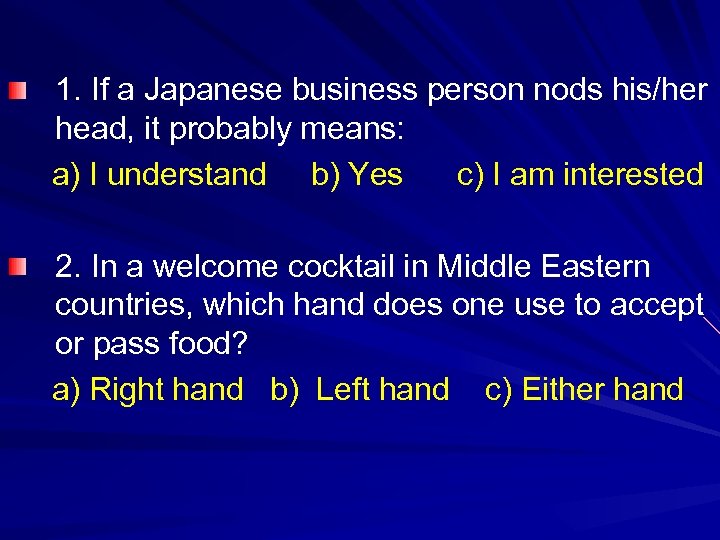
1. If a Japanese business person nods his/her head, it probably means: a) I understand b) Yes c) I am interested 2. In a welcome cocktail in Middle Eastern countries, which hand does one use to accept or pass food? a) Right hand b) Left hand c) Either hand
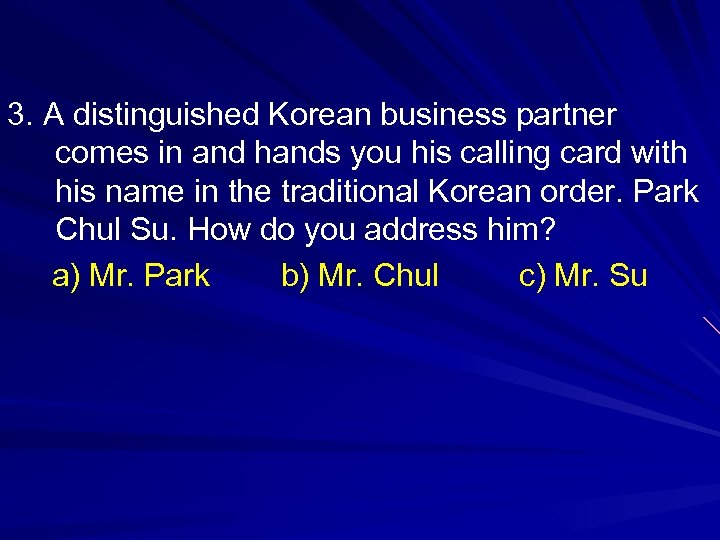
3. A distinguished Korean business partner comes in and hands you his calling card with his name in the traditional Korean order. Park Chul Su. How do you address him? a) Mr. Park b) Mr. Chul c) Mr. Su
Summary The lesson dealt with the language used for doing business, and developing intercultural awareness.
Скачать презентацию Negotiating a deal Doing Business Prof E Garbey
c29b387b7e562b19d859d434bfff5f9d.ppt