


 Скачать презентацию Negligence is a failure to exercise the care
ksr 10 rusin.pptx
- Количество слайдов: 6
 Negligence is a failure to exercise the care that a reasonably prudent person would exercise in like circumstances. The area of tort law known as negligence involves harm caused by carelessness, not intentional harm.
 Negligence in the law refers to breach of a legal duty: This means that not all foolish behavior is negligent under the law. Instead, everyone has a duty to behave with a reasonable degree of are in their actions. If they fail to do so and their failure results in injury, negligence is the legal concept that allows the injured victim to recover.
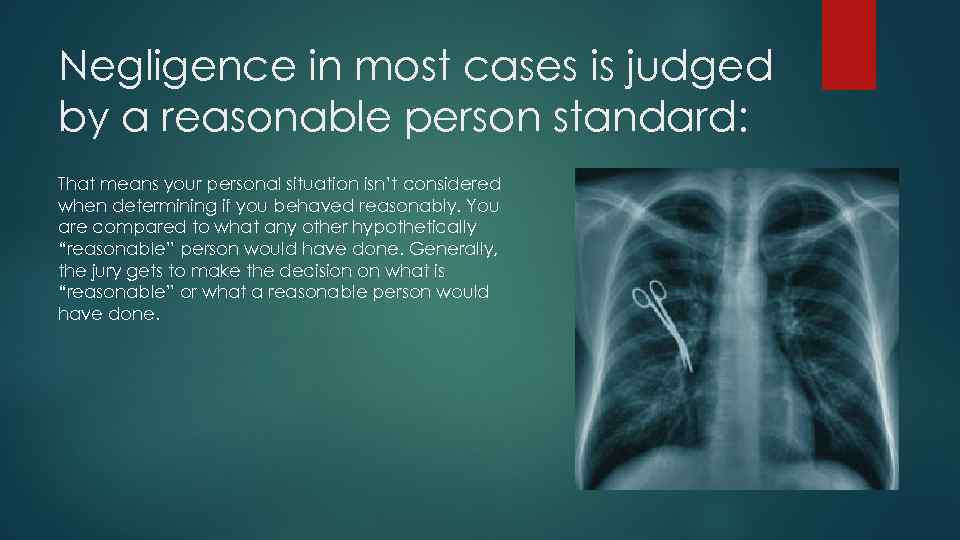 Negligence in most cases is judged by a reasonable person standard: That means your personal situation isn’t considered when determining if you behaved reasonably. You are compared to what any other hypothetically “reasonable” person would have done. Generally, the jury gets to make the decision on what is “reasonable” or what a reasonable person would have done.
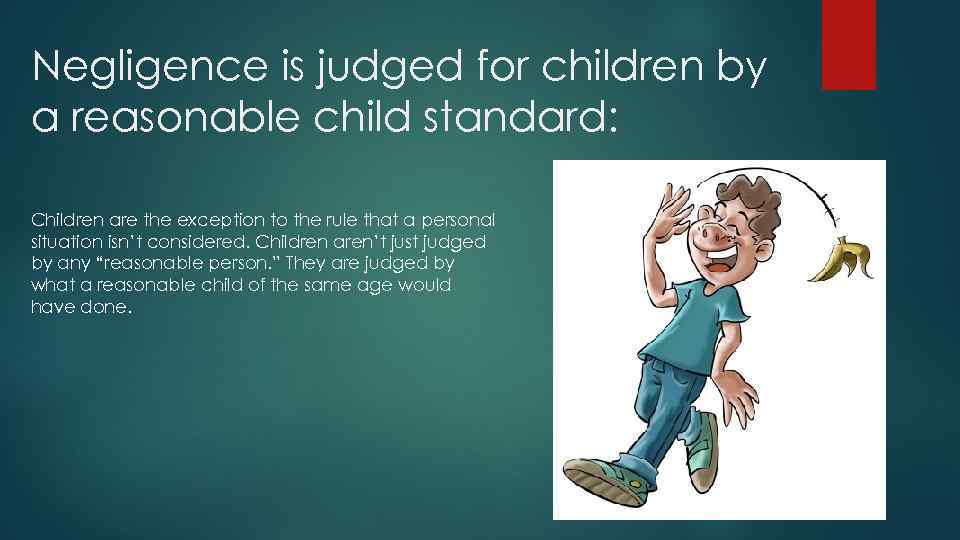 Negligence is judged for children by a reasonable child standard: Children are the exception to the rule that a personal situation isn’t considered. Children aren’t just judged by any “reasonable person. ” They are judged by what a reasonable child of the same age would have done.
 Negligence is judged for doctors or lawyers by a reasonable professional standard: Lawyers and doctors too are another exception. When they act in a professional capacity, they must act as a reasonable doctor or reasonable lawyer would act- not just as a reasonable person would. Failure to do so can result in a malpractice suit.
 The End