


 Скачать презентацию Needs and Values Assessment Model for STAN Surveillance
a831861a6beaa3725f7336fae0b43c97.ppt
- Количество слайдов: 38
 Needs and Values Assessment Model for STAN Surveillance and Targeting Acquisition Network to Support Special Forces
 Background • Special Forces missions rely on covert operations • During 1991 war with Iraq, ten of 12 SF missions were compromised • Current global war on terrorism generated greater demand for SF deployments • SF operations are characterized by joint or allied, dynamic collaboration of wideranging sensors, aircraft and personnel
 Analysis of STAN at NPS • Throughout 1990’s, SF community considered capabilities gaps • Studies pointed to improving flexible command control systems • Technology evolved through Afghanistan operations in 2001 -02 • SF officer enrolls at NPS, chartered with developing a prototype STAN capability • Summer 2003, SEA students attack the problem
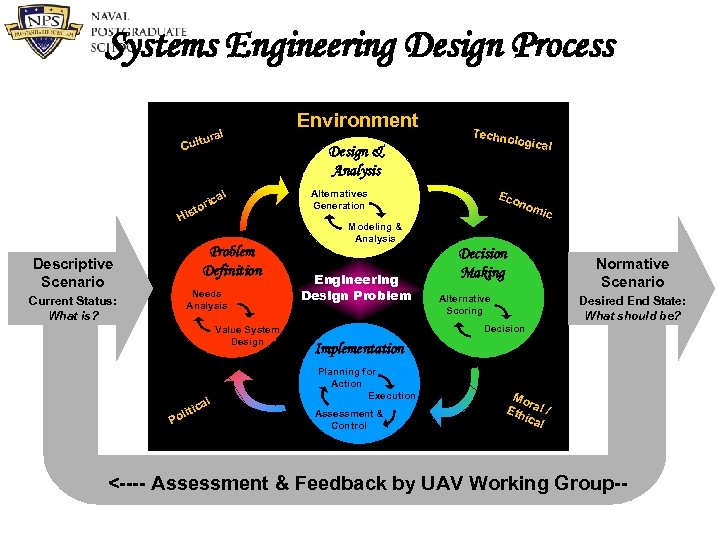 Systems Engineering Design Process al ltur Cu l ca ri sto Hi Needs Analysis Current Status: What is? Value System Design Po a itic l Design & Analysis Techn Alternatives Generation ologic al Eco nom ic Modeling & Analysis Problem Definition Descriptive Scenario Environment l Engineering Design Problem Decision Making Alternative Scoring Normative Scenario Desired End State: What should be? Decision Implementation Planning for Action Execution Assessment & Control Mo Eth ral / ica l <---- Assessment & Feedback by UAV Working Group--
 Needs Analysis: Primitive Need • • Find the enemy Fix enemy location, identification & actions Access “accidental networks” Provide near real-time video display
 Questions Regarding STAN • Is there a difference between what SF want and what they need? • Would this capability benefit only SF or is there broader functionality? • How should tactical needs best be reflected in design requirements? • Who should develop this system?
 Role of Systems Engineering • System of systems – Sensors, communications, weapons & humans • Precedented subsystems • Client wants an integrated solution • Complex interactions and dynamic operating environment demand new approaches – How does the system affect the operation and how does the operation affect the system?
 Systems Engineering & Design • • • Define the problem Analyze the need Develop and prioritize a value system Generate alternatives Suggest models to analyze alternatives Enable a decision
 Needs Analysis: Refining the Primitive Need • Identified stakeholders – Decision makers, sponsors, operators & developers • Conducted interviews • Decomposed system into subsystems – Specified interfaces with other systems as well • Analyzed functional flow • Specified inputs and outputs – Not all inputs are controllable – Some by-products are unintended
 Effective Need Provide a survivable network of tactical assets and collaboration on demand to support mission objectives, ensure mobility and focus operational understanding.
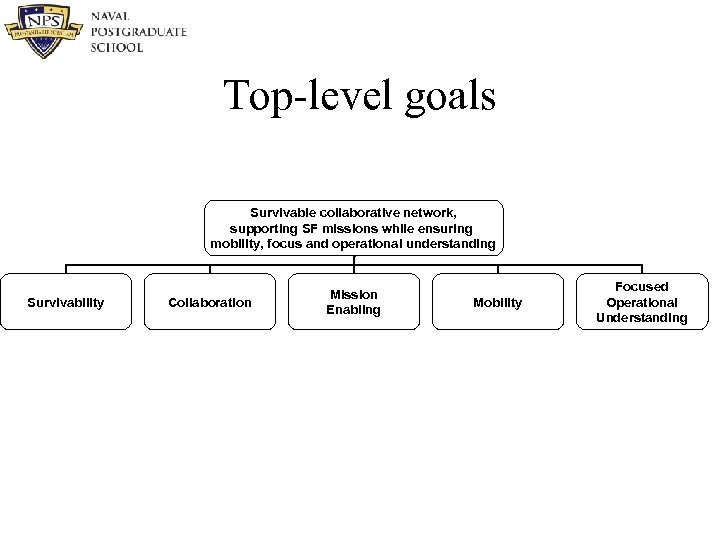 Top-level goals Survivable collaborative network, supporting SF missions while ensuring mobility, focus and operational understanding Survivability Collaboration Mission Enabling Mobility Focused Operational Understanding
 Survivability • Pertains to entire system – Mission insurability through reduced signature • Counterdetection of the system – Includes operators, sensors, platforms and communications • Equipment reliability through design • Enable improved time on station of forces – Prolongs time available for target prosecution • Decrease risk associated with operators directly monitoring targets
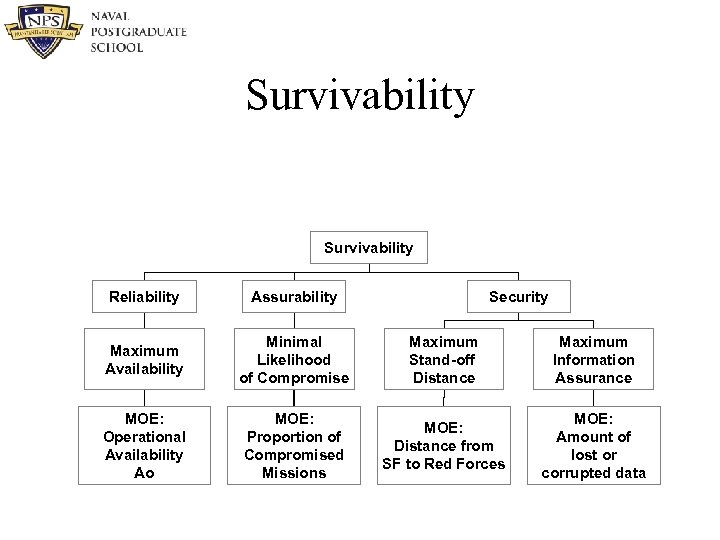 Survivability Reliability Assurability Security Maximum Availability Minimal Likelihood of Compromise Maximum Stand-off Distance Maximum Information Assurance MOE: Operational Availability Ao MOE: Proportion of Compromised Missions MOE: Distance from SF to Red Forces MOE: Amount of lost or corrupted data
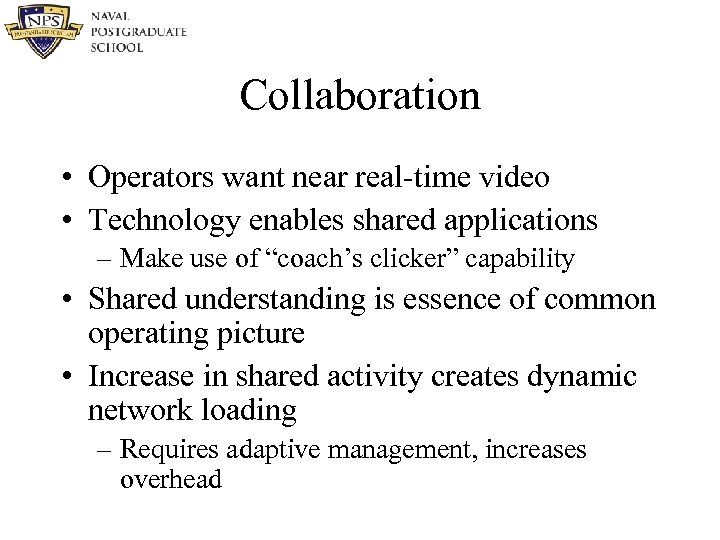 Collaboration • Operators want near real-time video • Technology enables shared applications – Make use of “coach’s clicker” capability • Shared understanding is essence of common operating picture • Increase in shared activity creates dynamic network loading – Requires adaptive management, increases overhead
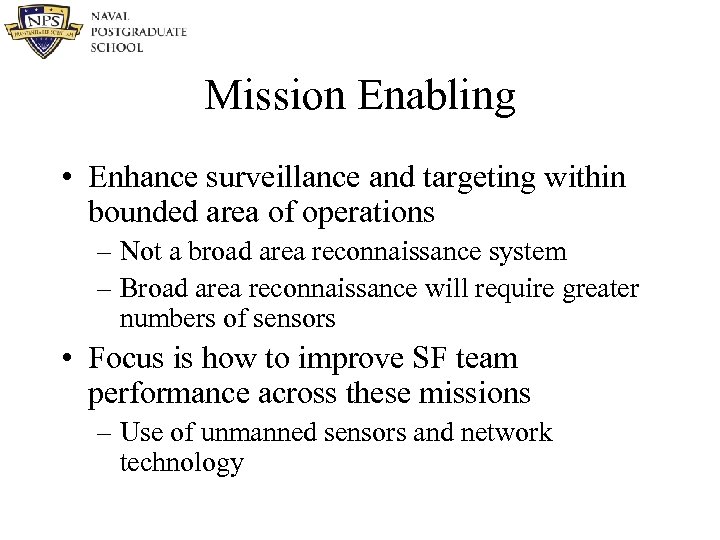 Mission Enabling • Enhance surveillance and targeting within bounded area of operations – Not a broad area reconnaissance system – Broad area reconnaissance will require greater numbers of sensors • Focus is how to improve SF team performance across these missions – Use of unmanned sensors and network technology
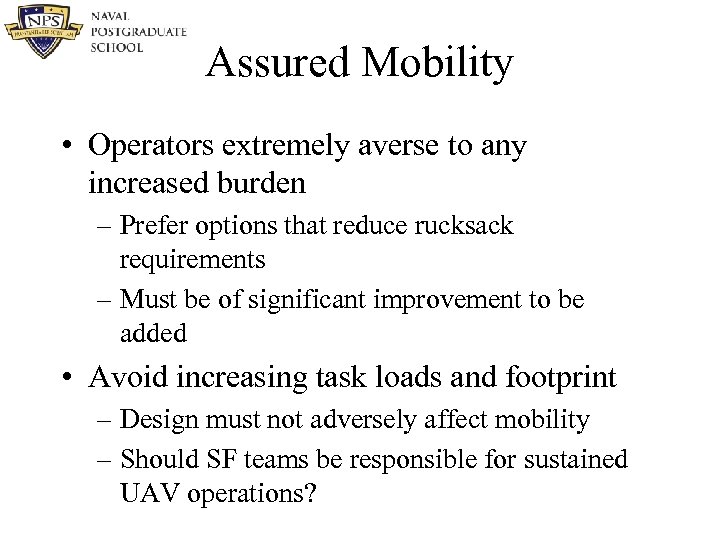 Assured Mobility • Operators extremely averse to any increased burden – Prefer options that reduce rucksack requirements – Must be of significant improvement to be added • Avoid increasing task loads and footprint – Design must not adversely affect mobility – Should SF teams be responsible for sustained UAV operations?
 Focused Understanding • Effective need points toward decreasing operational hazards – Blue-on-blue – Minimizing collateral damage – Knowing threat environment • Drawback of increased information flow and reach -back connectivity – More nodes in the network may increase number of system failures – Actionable data becomes dilute – Prioritization of important information
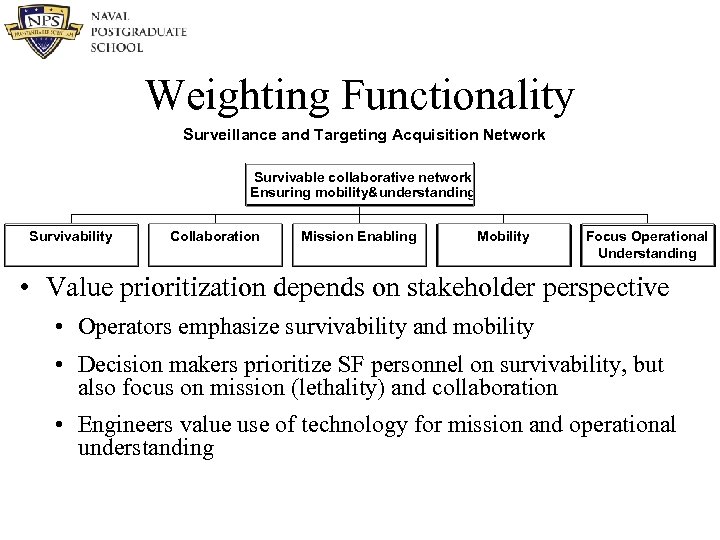 Weighting Functionality Surveillance and Targeting Acquisition Network Survivable collaborative network Ensuring mobility&understanding Survivability Collaboration Mission Enabling Mobility Focus Operational Understanding • Value prioritization depends on stakeholder perspective • Operators emphasize survivability and mobility • Decision makers prioritize SF personnel on survivability, but also focus on mission (lethality) and collaboration • Engineers value use of technology for mission and operational understanding
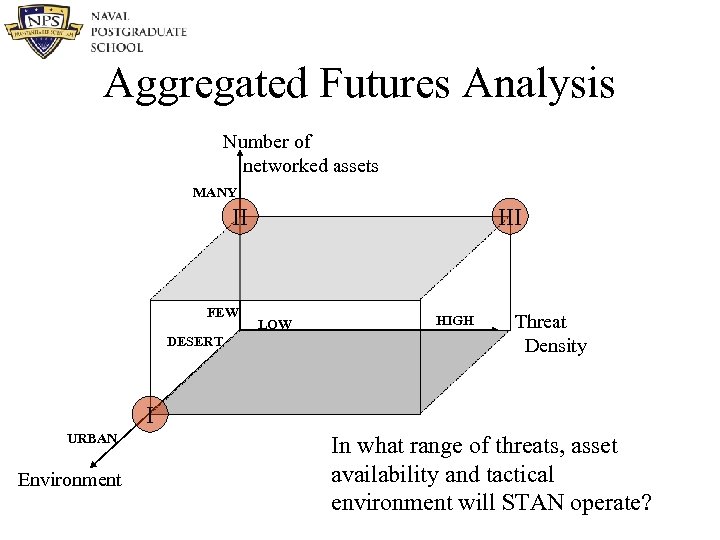 Aggregated Futures Analysis Number of networked assets MANY II FEW DESERT III LOW HIGH Threat Density I URBAN Environment In what range of threats, asset availability and tactical environment will STAN operate?
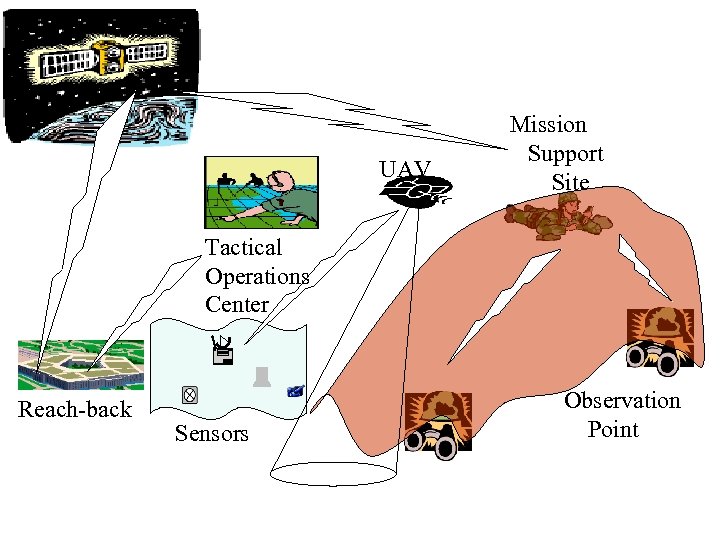
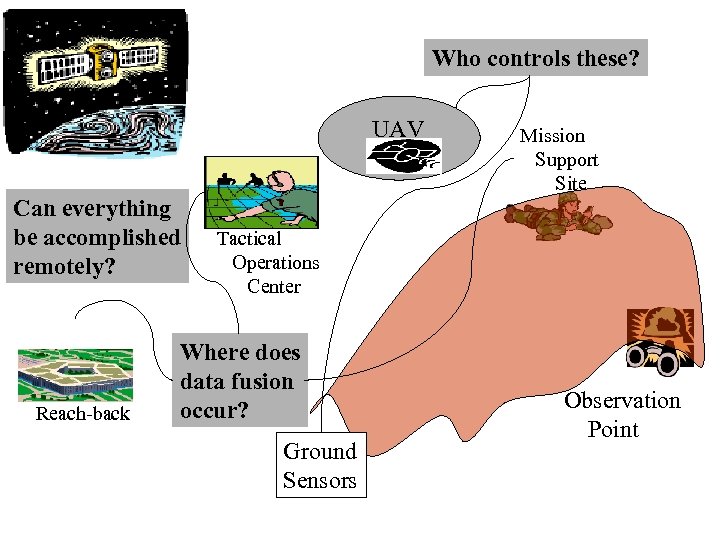
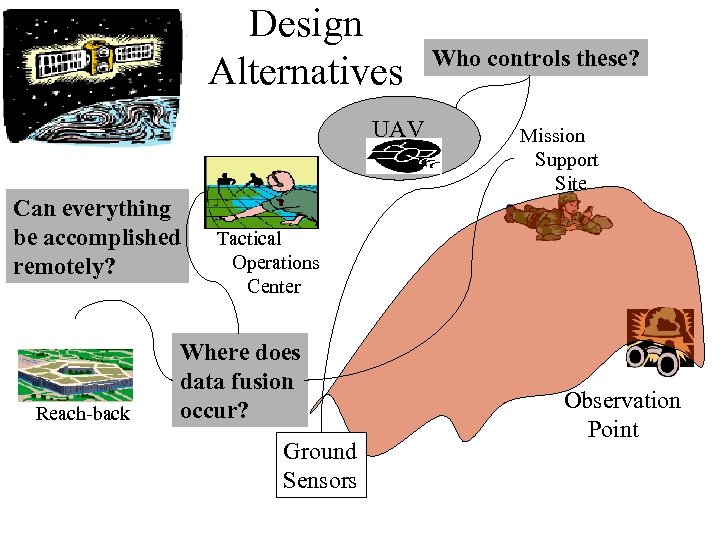 Design Alternatives UAV Can everything be accomplished remotely? Reach-back Who controls these? Mission Support Site Tactical Operations Center Where does data fusion occur? Ground Sensors Observation Point
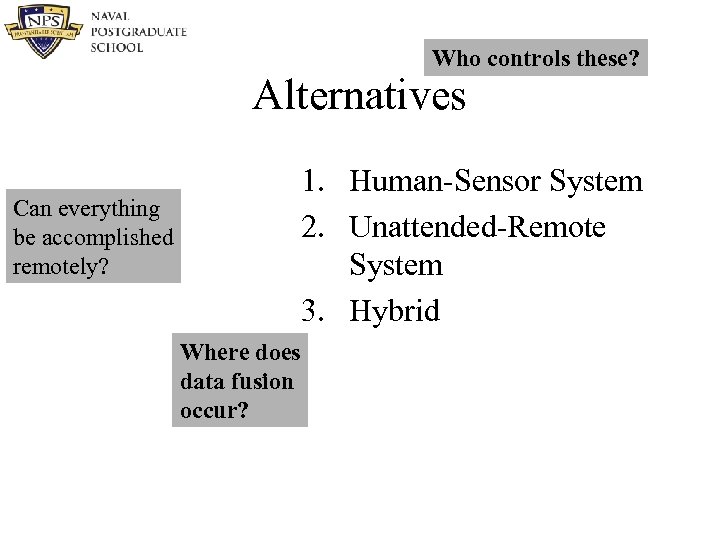 Who controls these? Alternatives 1. Human-Sensor System 2. Unattended-Remote System 3. Hybrid Can everything be accomplished remotely? Where does data fusion occur?
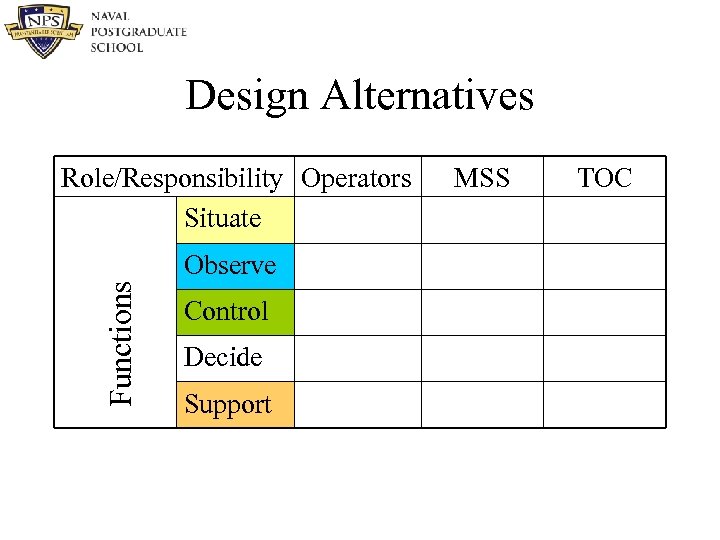 Design Alternatives Role/Responsibility Operators Situate Functions Observe Control Decide Support MSS TOC
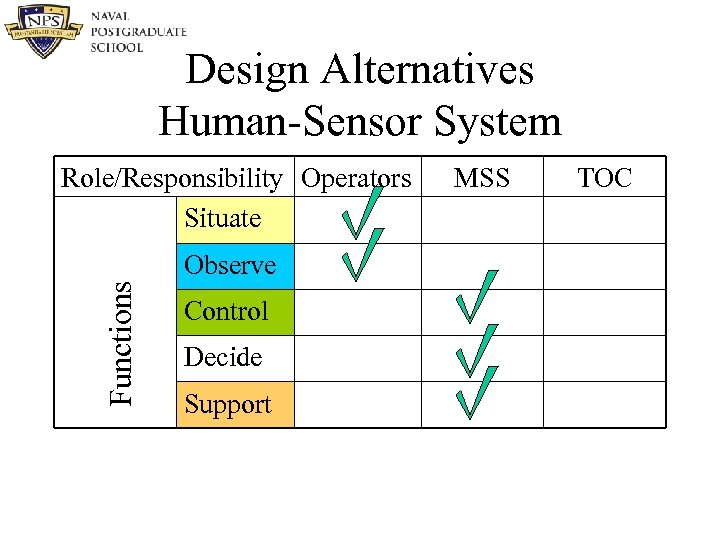 Design Alternatives Human-Sensor System Role/Responsibility Operators Situate Functions Observe Control Decide Support MSS TOC
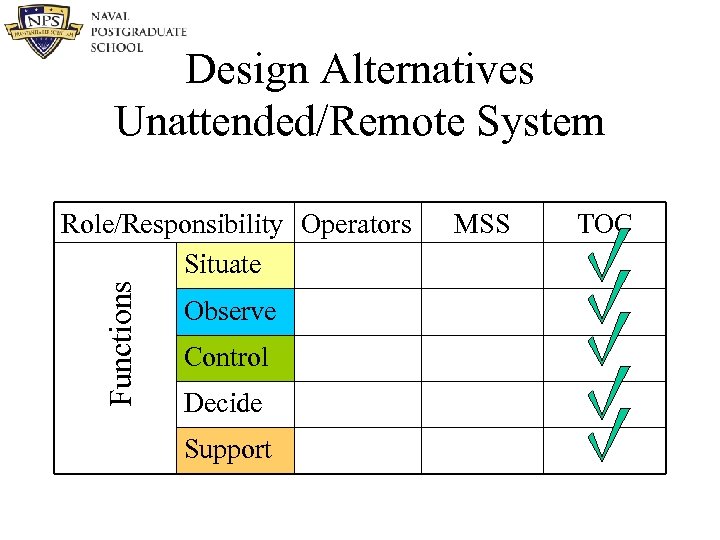 Design Alternatives Unattended/Remote System Functions Role/Responsibility Operators Situate Observe Control Decide Support MSS TOC
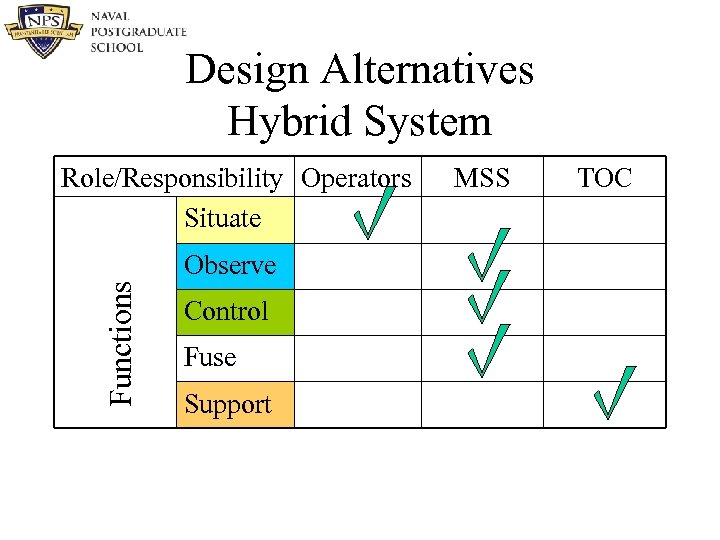 Design Alternatives Hybrid System Role/Responsibility Operators Situate Functions Observe Control Fuse Support MSS TOC
 Testing Alternatives • Alternative technologies and operational designs undergoing research at NPS – Modeling, analysis and experimentation in place • Trade-offs evident between network and sensor management – Competing goals for optimal topology • Scenarios will vary from sparse terrain to urban setting and maritime environment
 Bottom Line • SF-UAV-Sensor-Network operation forms a complex system of systems • SEDP process helped define effective need from disparate, important operational desires • Project demanded program engineering, process orientation and discovery

 Example Operation Spring 2002 Conduct An Armed Reconnaissance to Apprehend Al Qaeda Commander Assets - Special Forces A Teams - 240 Afghan Military Forces - JSTARS, P-3, A-10 s, F 16 s, Predator Possible suspect locations - Encampment - Among civilians
 UAV Mission Support Site Tactical Operations Center Reach-back Sensors Observation Point
 Who controls these? UAV Can everything be accomplished remotely? Reach-back Mission Support Site Tactical Operations Center Where does data fusion occur? Ground Sensors Observation Point
 Stakeholder Analysis • Decision makers – Principal Investigator, USASOC, NAVAIR • Operators – SF ODA, SEAL Team, UV controllers • Engineers – Display, network, air control • Industry – SNC, AKSI, AOS, Inter 4, et al.
 Interviews • SE – SF roundtable discussion – Operators know what they want and are used to making the best of what they’re issued (TTP) • Regular discussions among NPS UAV working group • Interactions during series of experiments
 Subsystem Decomposition • Operator (human) • Sensors • Platforms – Manned and unmanned – Ground airborne • Network • Interfaces – Hypothesis is whether the network enhances mission effectiveness – experimentation will tell – Operators cue sensors and sensors cue operators, too
 Surveillance and Targeting • Sensors arrive in area of operations – Optimal location, positioning is not a given • Assets conduct area search, detection • When necessary, assets require control – Advisory, supervisory and positive • Supporting a sensor grid requires effort • Information display, interpretation and decision requires attention and focus
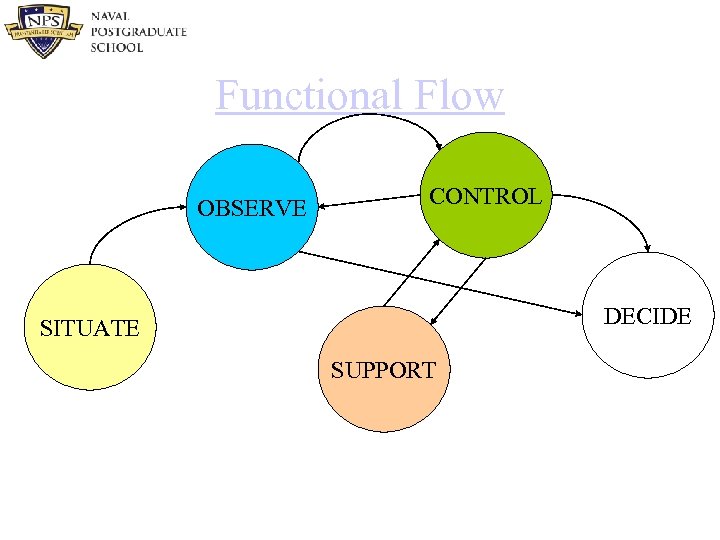 Functional Flow OBSERVE CONTROL DECIDE SITUATE SUPPORT
 Inputs, Outputs & By-Products • Controllable inputs – Forces, network participants, protocols • Uncontrollable inputs – Target and non-target activity, network topology • Outputs – Detection, identifying and targeting information • By-products – Own-force signature (RF, audible) & footprint
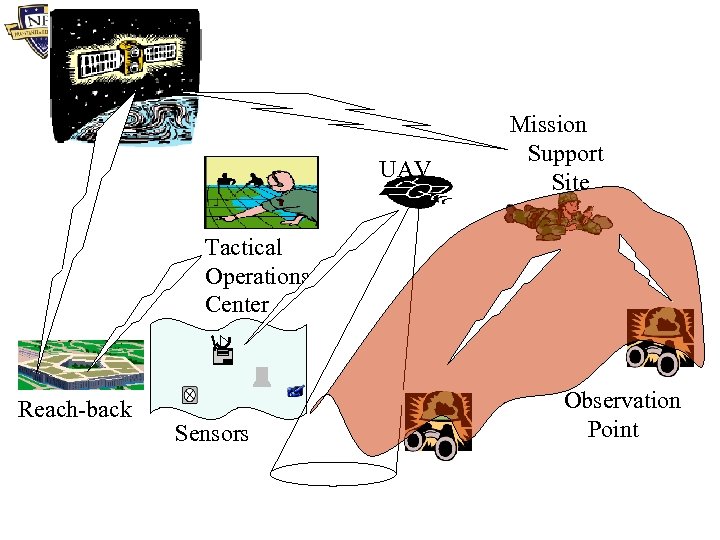 UAV Mission Support Site Tactical Operations Center Reach-back Sensors Observation Point