


 Скачать презентацию Near-Infrared Detector Arrays — The State of the
0d8881fdf9da528259d4e47912bd40d7.ppt
- Количество слайдов: 59
 Near-Infrared Detector Arrays - The State of the Art Klaus W. Hodapp Institute for Astronomy University of Hawaii
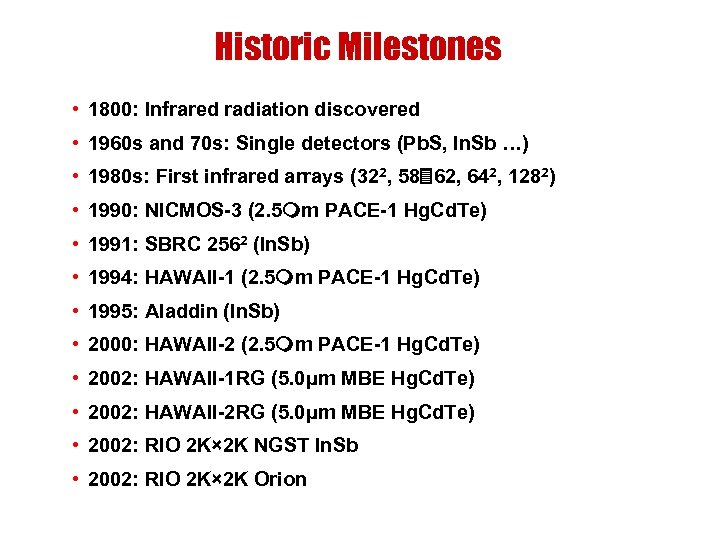 Historic Milestones • 1800: Infrared radiation discovered • 1960 s and 70 s: Single detectors (Pb. S, In. Sb …) • 1980 s: First infrared arrays (322, 58 62, 642, 1282) • 1990: NICMOS-3 (2. 5 m PACE-1 Hg. Cd. Te) • 1991: SBRC 2562 (In. Sb) • 1994: HAWAII-1 (2. 5 m PACE-1 Hg. Cd. Te) • 1995: Aladdin (In. Sb) • 2000: HAWAII-2 (2. 5 m PACE-1 Hg. Cd. Te) • 2002: HAWAII-1 RG (5. 0μm MBE Hg. Cd. Te) • 2002: HAWAII-2 RG (5. 0μm MBE Hg. Cd. Te) • 2002: RIO 2 K× 2 K NGST In. Sb • 2002: RIO 2 K× 2 K Orion
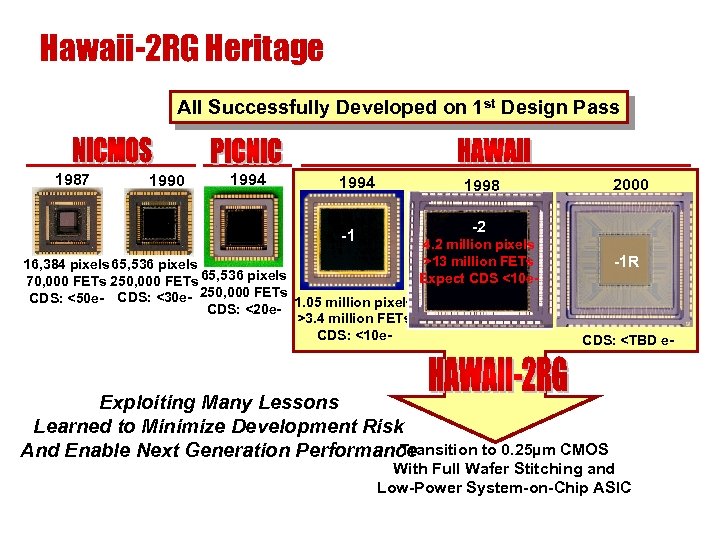 Hawaii-2 RG Heritage All Successfully Developed on 1 st Design Pass 1987 1990 1994 2000 1998 -2 -1 16, 384 pixels 65, 536 pixels 70, 000 FETs 250, 000 FETs 65, 536 pixels CDS: <50 e- CDS: <30 e- 250, 000 FETs 1. 05 million pixels CDS: <20 e>3. 4 million FETs CDS: <10 e- 4. 2 million pixels >13 million FETs Expect CDS <10 e- -1 R CDS:
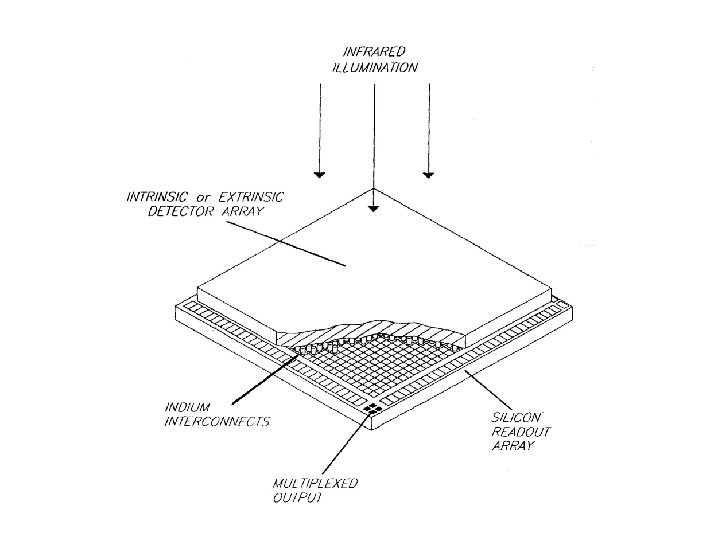
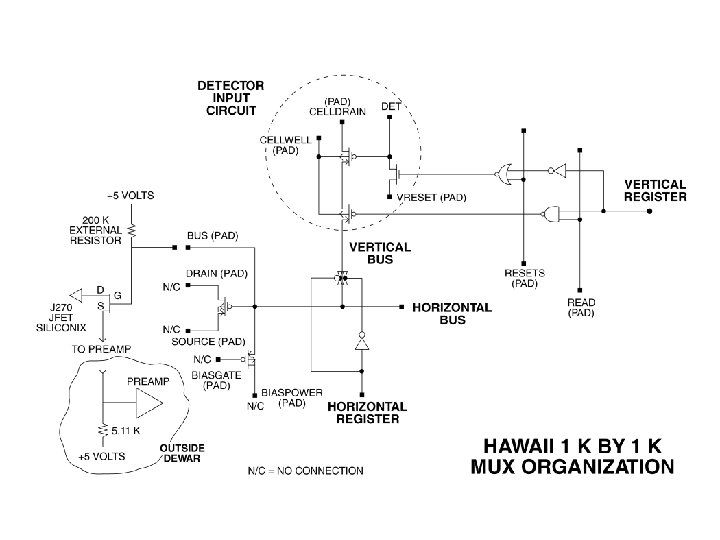
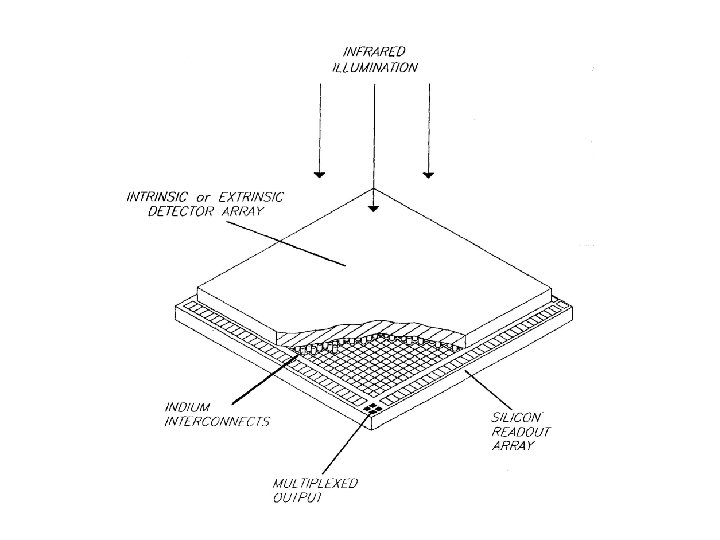
 Infrared Arrays • Diode Array • Multiplexer • Readout Electronics
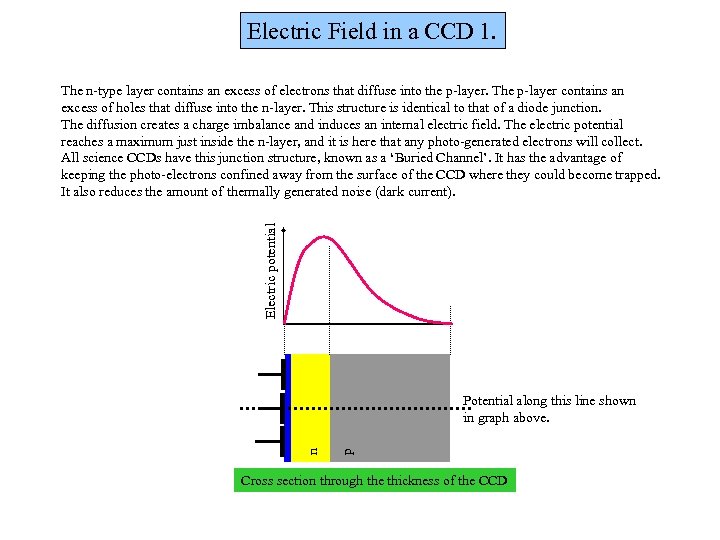 Electric Field in a CCD 1. Electric potential The n-type layer contains an excess of electrons that diffuse into the p-layer. The p-layer contains an excess of holes that diffuse into the n-layer. This structure is identical to that of a diode junction. The diffusion creates a charge imbalance and induces an internal electric field. The electric potential reaches a maximum just inside the n-layer, and it is here that any photo-generated electrons will collect. All science CCDs have this junction structure, known as a ‘Buried Channel’. It has the advantage of keeping the photo-electrons confined away from the surface of the CCD where they could become trapped. It also reduces the amount of thermally generated noise (dark current). p n Potential along this line shown in graph above. Cross section through the thickness of the CCD
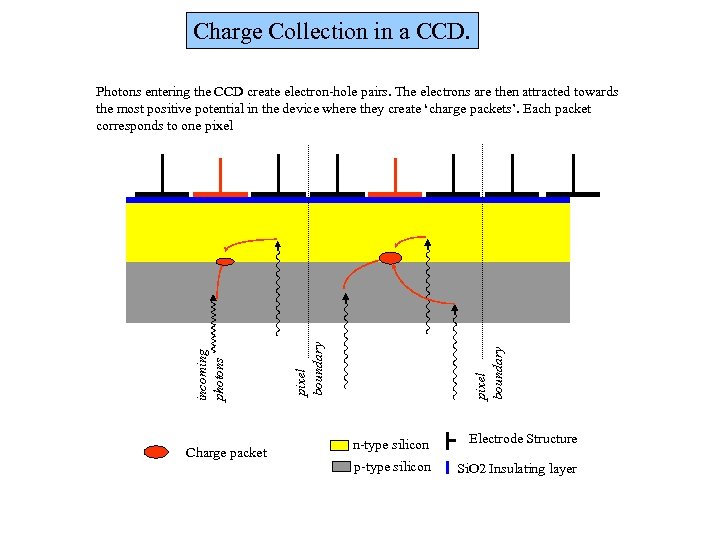 Charge Collection in a CCD. Charge packet pixel boundary incoming photons Photons entering the CCD create electron-hole pairs. The electrons are then attracted towards the most positive potential in the device where they create ‘charge packets’. Each packet corresponds to one pixel n-type silicon Electrode Structure p-type silicon Si. O 2 Insulating layer
 NIR Photodiode Array Technologies Problems: • Substrate availability • Thermal expansion match to Si • Lattice match to detector material • LPE Hg. Cd. Te on Sapphire (PACE-1): Rockwell, Cd. Te buffer • MBE Hg. Cd. Te on Cd. Zn. Te: Rockwell, thin or substrate removed, AR coated • In. Sb (Raytheon): Bulk material, p-on-n, thinned, AR coated • LPE Hg. Cd. Te on Cd. Zn. Te: Raytheon, thick • MBE Hg. Cd. Te on Si: Raytheon, Zn. Te and Cd. Te buffer, thick, thin in future
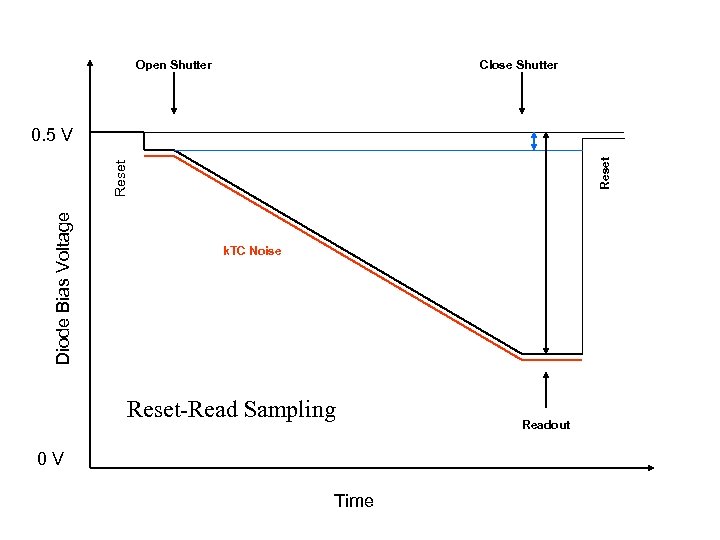 Open Shutter Close Shutter Diode Bias Voltage Reset 0. 5 V k. TC Noise Reset-Read Sampling 0 V Time Readout
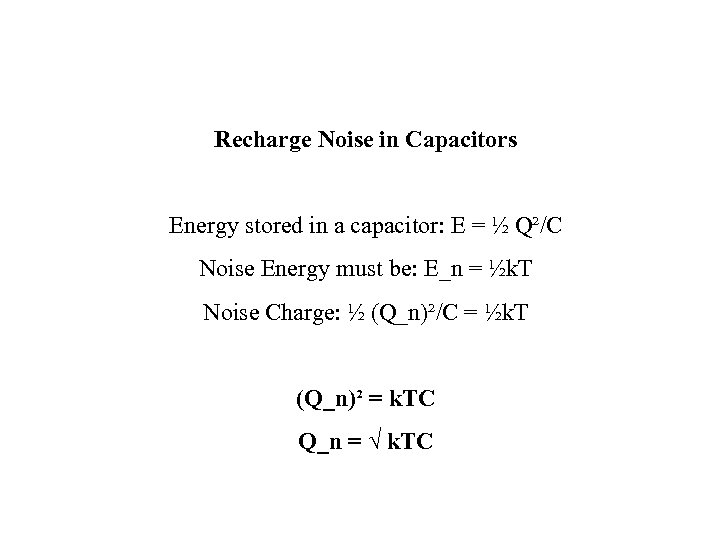 Recharge Noise in Capacitors Energy stored in a capacitor: E = ½ Q²/C Noise Energy must be: E_n = ½k. T Noise Charge: ½ (Q_n)²/C = ½k. T (Q_n)² = k. TC Q_n = √ k. TC
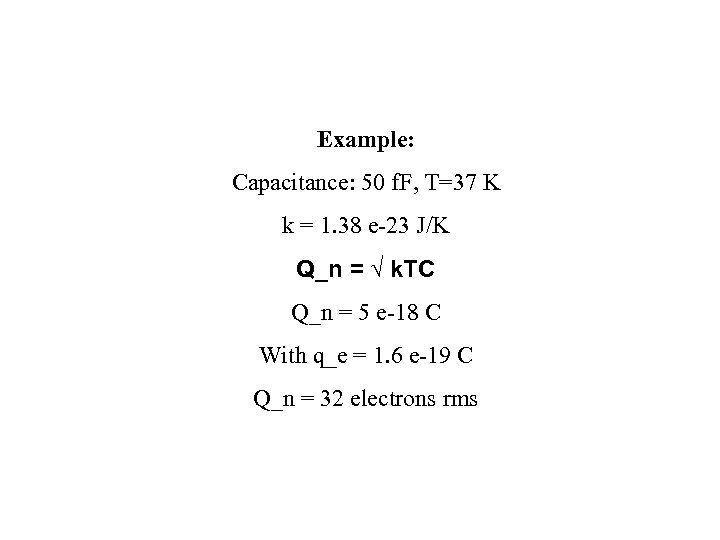 Example: Capacitance: 50 f. F, T=37 K k = 1. 38 e-23 J/K Q_n = √ k. TC Q_n = 5 e-18 C With q_e = 1. 6 e-19 C Q_n = 32 electrons rms
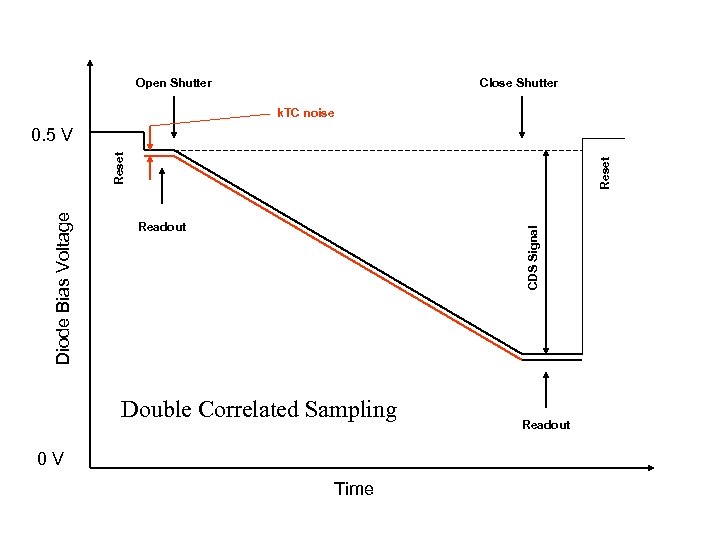 Open Shutter Close Shutter k. TC noise Reset Readout CDS Signal Diode Bias Voltage Reset 0. 5 V Double Correlated Sampling 0 V Time Readout
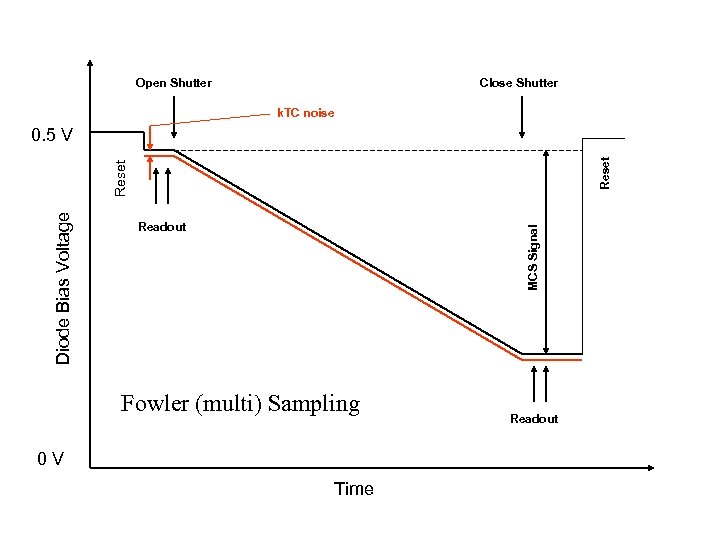 Open Shutter Close Shutter k. TC noise Readout MCS Signal Diode Bias Voltage Reset 0. 5 V Fowler (multi) Sampling 0 V Time Readout
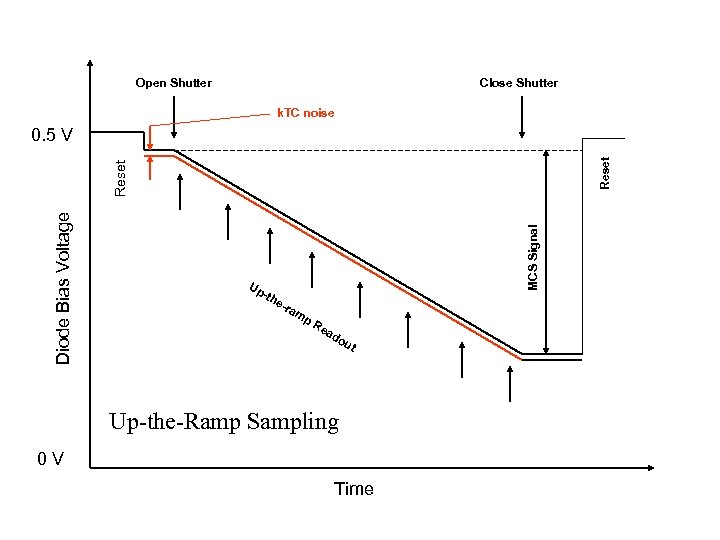 Open Shutter Close Shutter k. TC noise Up -th MCS Signal Diode Bias Voltage Reset 0. 5 V e-r am p. R ea do ut Up-the-Ramp Sampling 0 V Time
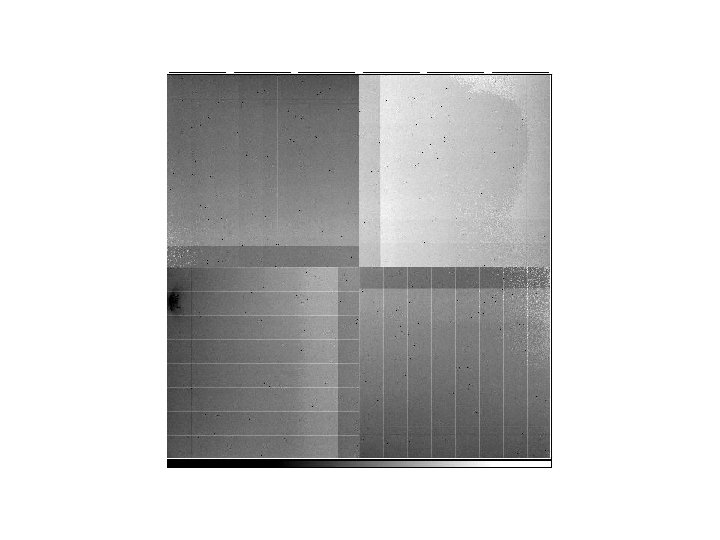
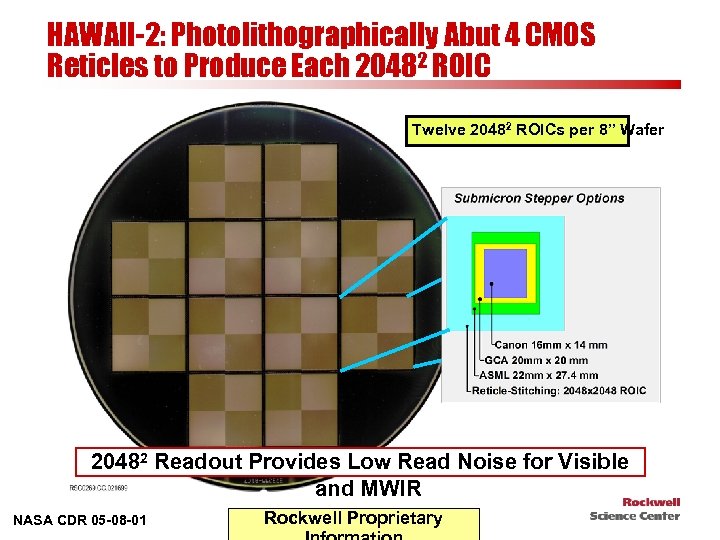 HAWAII-2: Photolithographically Abut 4 CMOS Reticles to Produce Each 20482 ROIC Twelve 20482 ROICs per 8” Wafer 20482 Readout Provides Low Read Noise for Visible and MWIR NASA CDR 05 -08 -01 Rockwell Proprietary
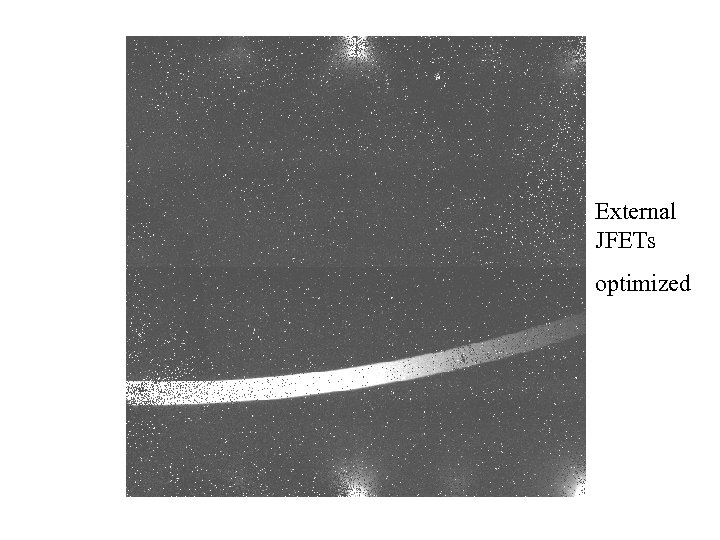 External JFETs optimized
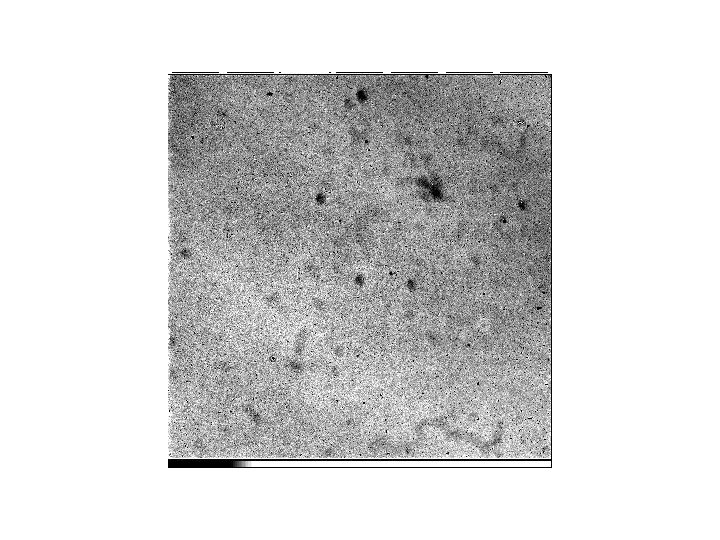
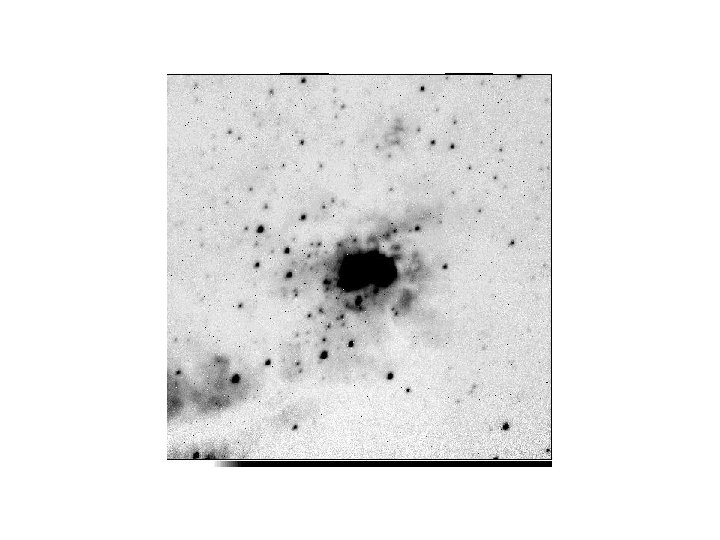
 HAWAII-1 Rockwell Science Center • 1024 2. 5 m Hg. Cd. Te detector array • 4 Quadrant architecture • 4 Output amplifiers • 18. 5 m pixels • LPE Hg. Cd. Te on sapphire (PACE-1) • Use of external JFETs possible • Available for purchase
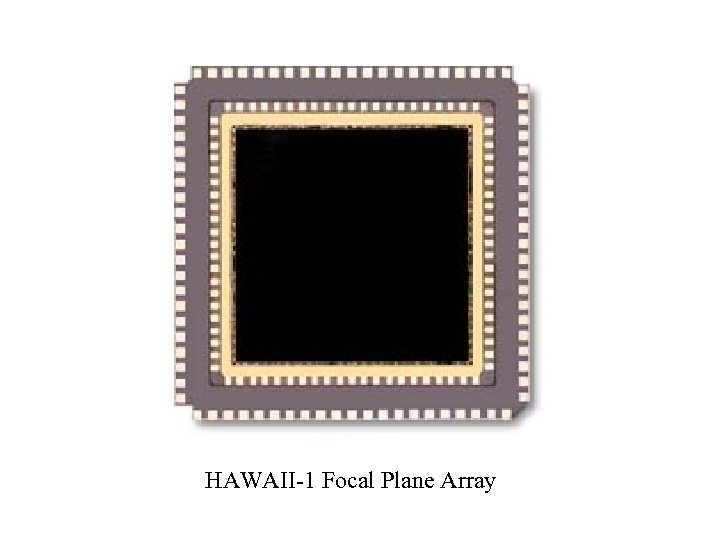 HAWAII-1 Focal Plane Array
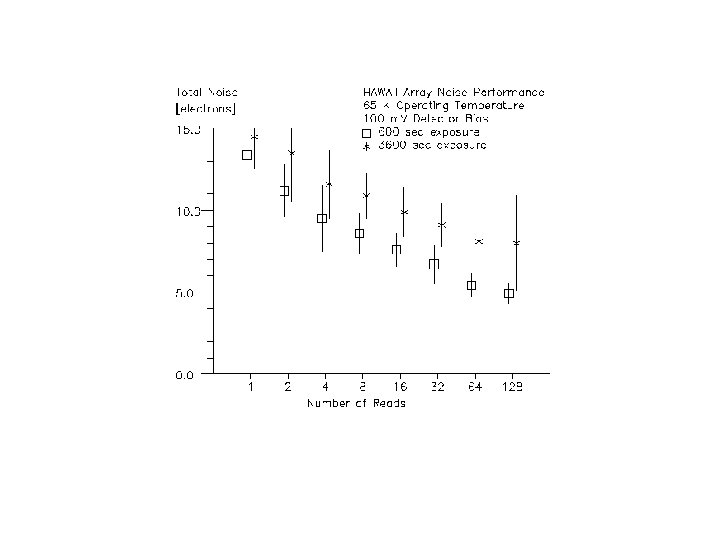
 HAWAII-1 • Quantum efficiency (50% - 60%) • Dark current 0. 01 e-/s (65 K) • Read noise about 10 - 15 e- rms CDS • Residual image effect • Some multiplexer glow • Fringing
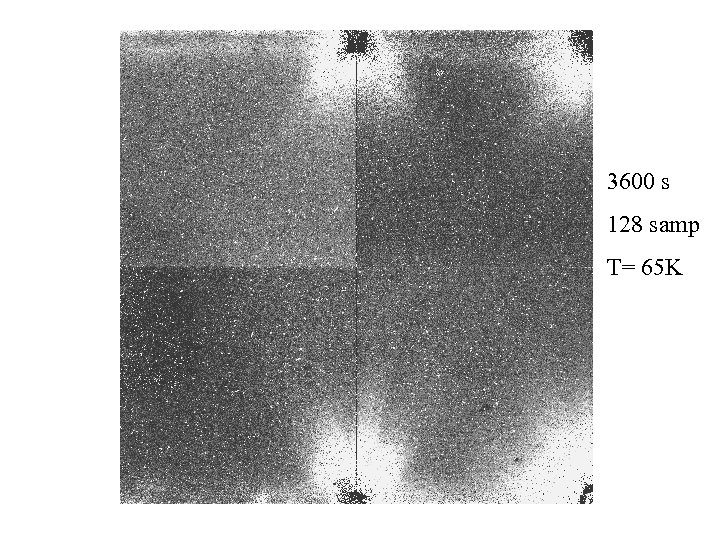 3600 s 128 samp T= 65 K
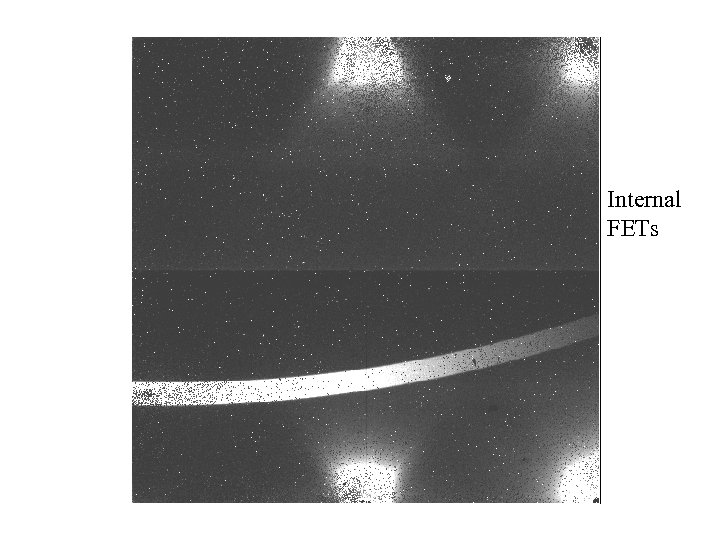 Internal FETs
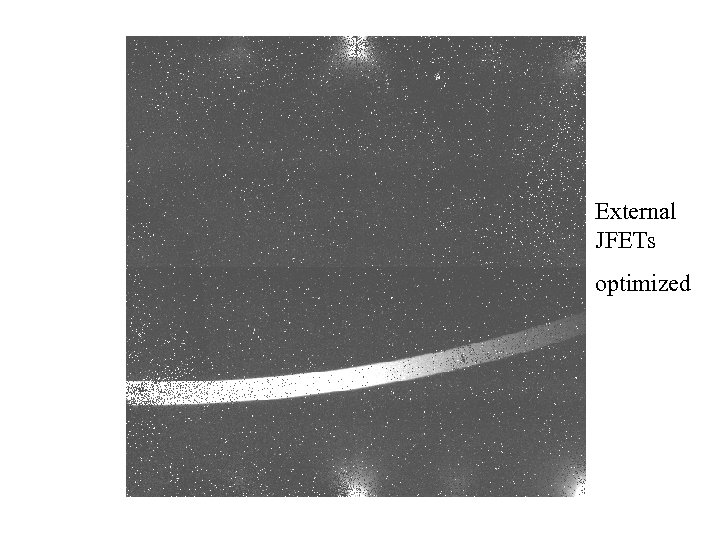 External JFETs optimized
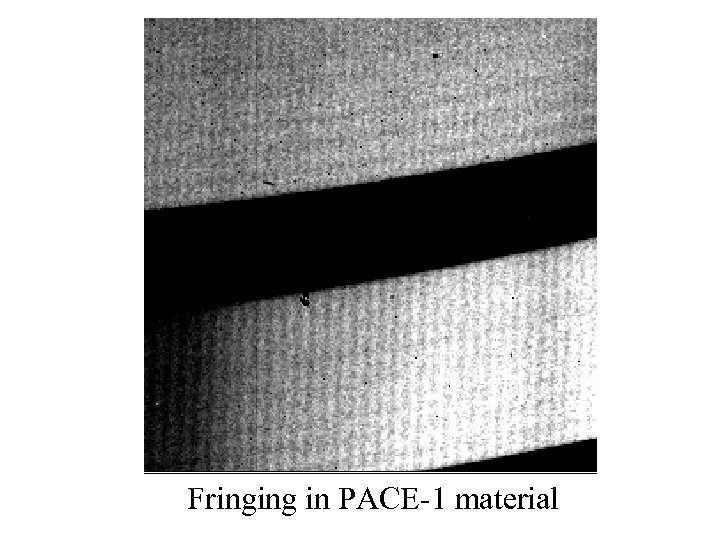 Fringing in PACE-1 material
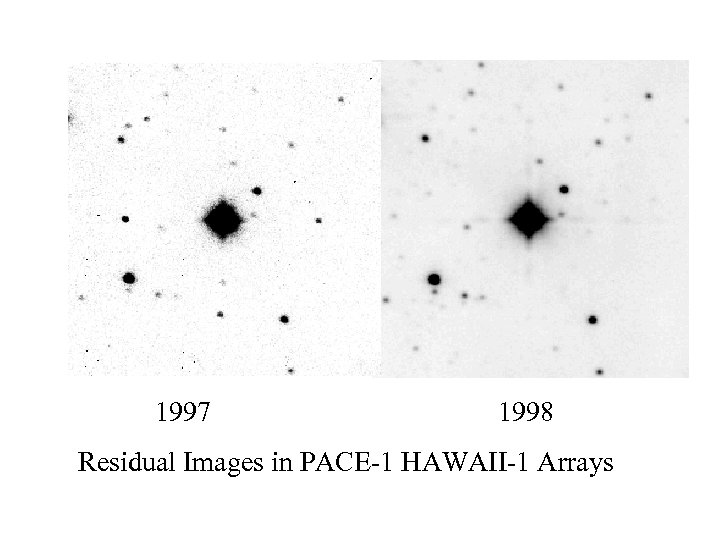 1997 1998 Residual Images in PACE-1 HAWAII-1 Arrays
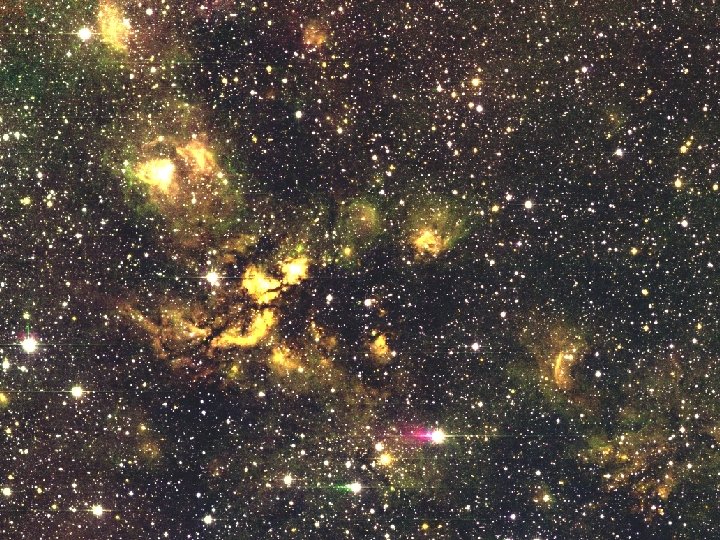
 Aladdin Raytheon Center for Infrared Excellence • 1024 In. Sb detector array • 4 Quadrant architecture • 32 Output amplifiers • 27 m pixels • Thinned, AR coated In. Sb • Three generations of multiplexers • “Foundry Run” distribution mode
 Aladdin • Quantum efficiency high (80% - 90%) • Dark current 0. 2 - 1. 0 e-/s • Read noise about 40 e- rms CDS • Charge capacity 200, 000 e • Residual image effect • No amplifier glow
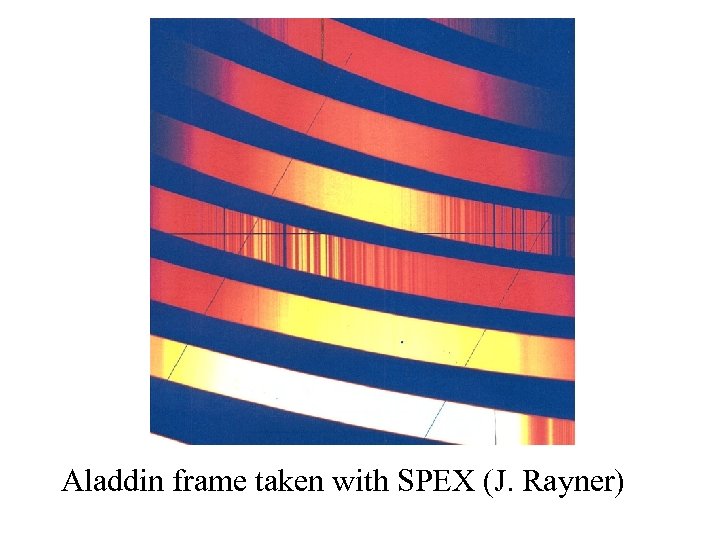 Aladdin frame taken with SPEX (J. Rayner)
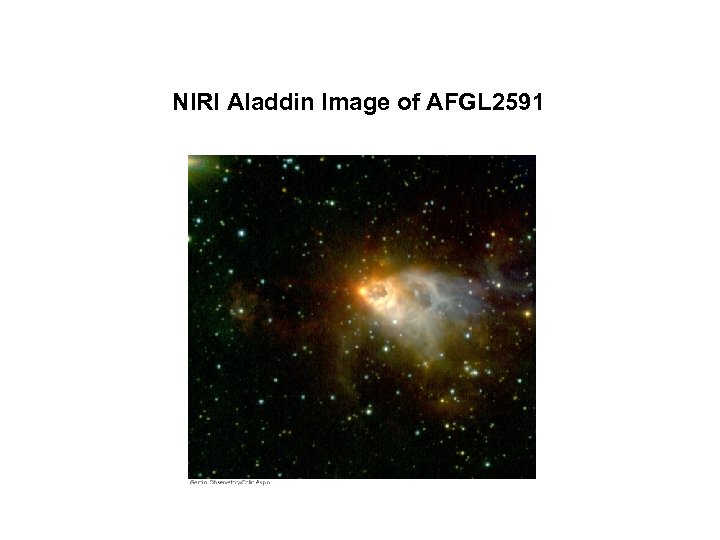 NIRI Aladdin Image of AFGL 2591
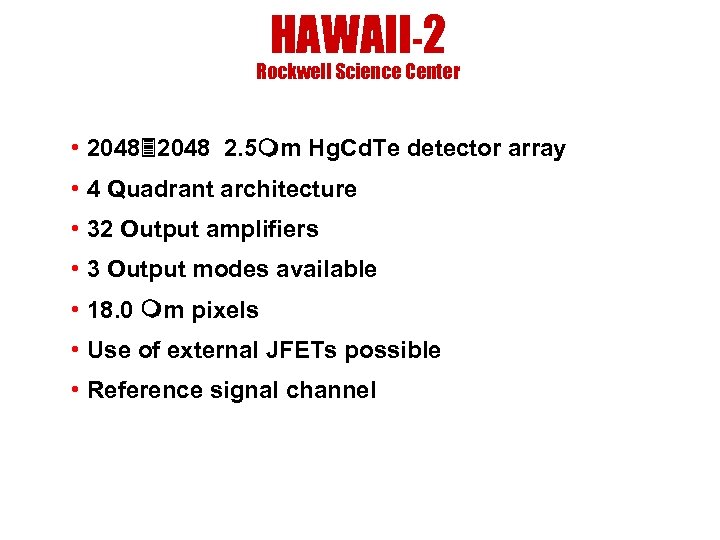 HAWAII-2 Rockwell Science Center • 2048 2. 5 m Hg. Cd. Te detector array • 4 Quadrant architecture • 32 Output amplifiers • 3 Output modes available • 18. 0 m pixels • Use of external JFETs possible • Reference signal channel
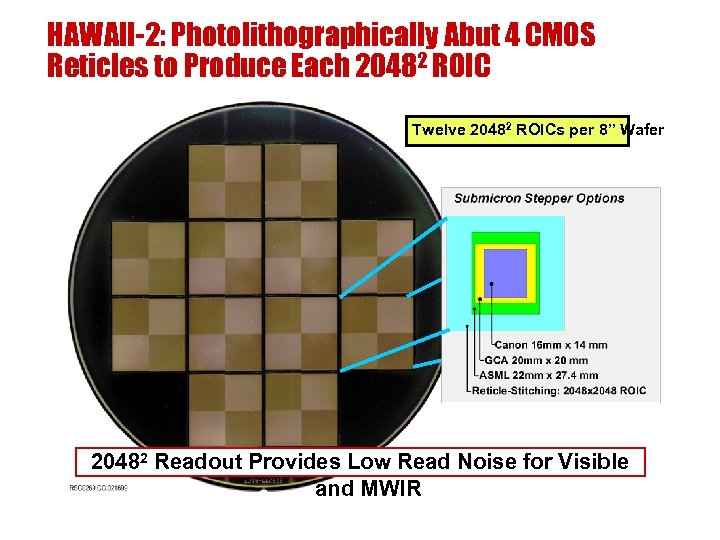 HAWAII-2: Photolithographically Abut 4 CMOS Reticles to Produce Each 20482 ROIC Twelve 20482 ROICs per 8” Wafer 20482 Readout Provides Low Read Noise for Visible and MWIR
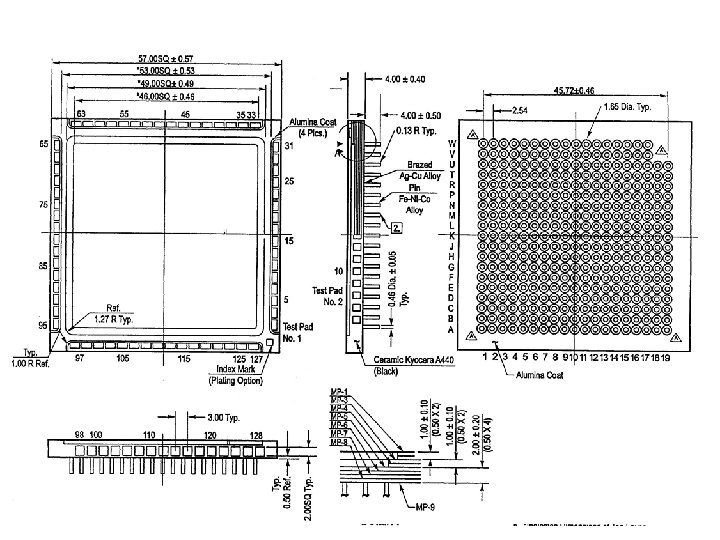
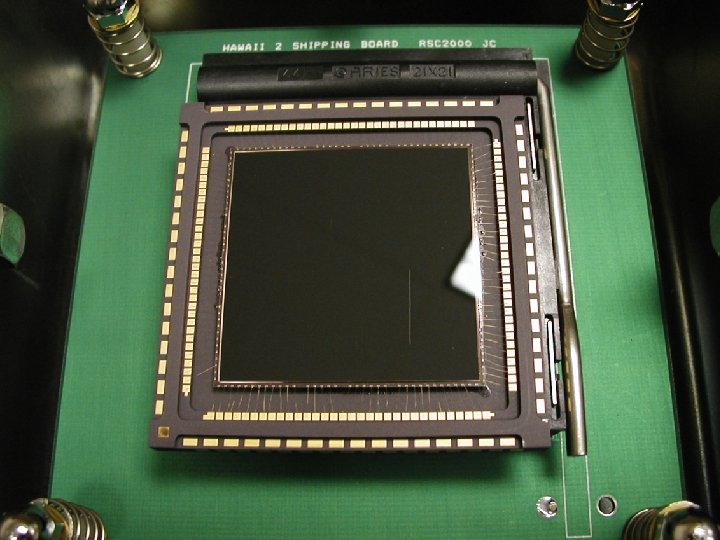
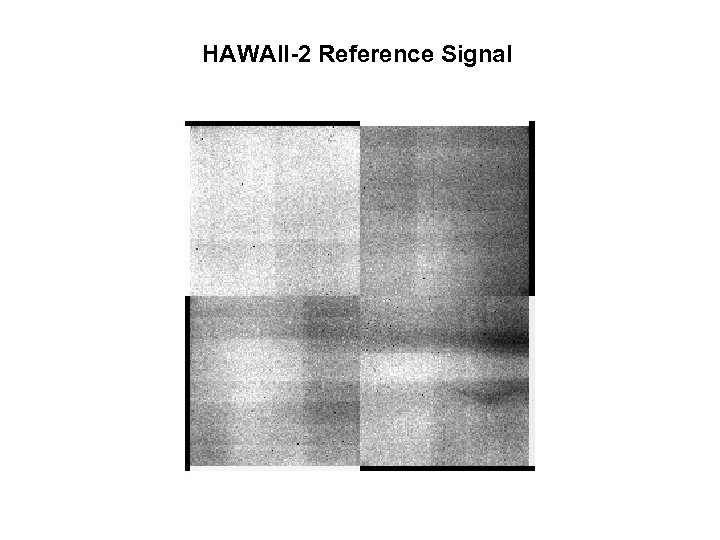 HAWAII-2 Reference Signal
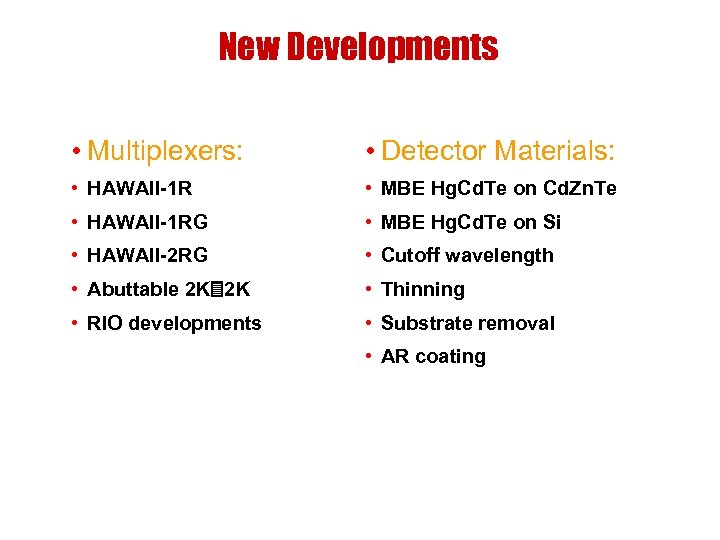 New Developments • Multiplexers: • Detector Materials: • HAWAII-1 R • MBE Hg. Cd. Te on Cd. Zn. Te • HAWAII-1 RG • MBE Hg. Cd. Te on Si • HAWAII-2 RG • Cutoff wavelength • Abuttable 2 K 2 K • Thinning • RIO developments • Substrate removal • AR coating
 NGST H-2 RG & H-1 R Packaging Critical Design Review May 8 th, 2001 Rockwell Science Center Thousand Oaks, CA
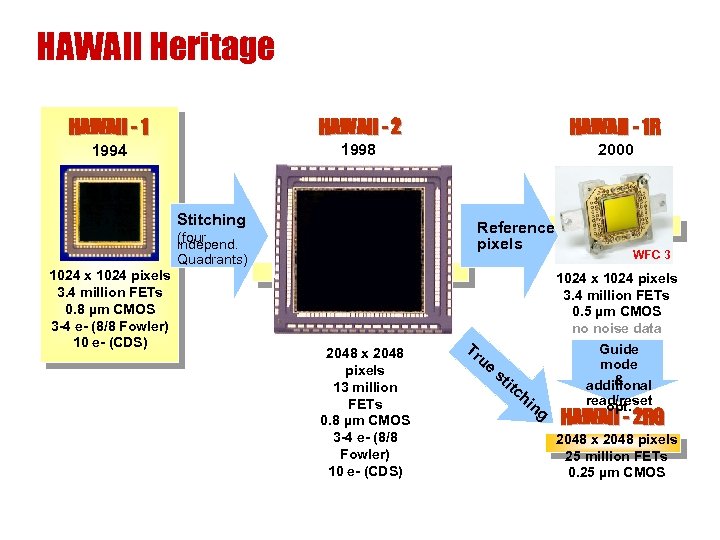 HAWAII Heritage HAWAII - 1 HAWAII - 2 HAWAII - 1 R 1994 1998 2000 Stitching Reference pixels (four independ. Quadrants) 1024 x 1024 pixels 3. 4 million FETs 0. 8 µm CMOS 3 -4 e- (8/8 Fowler) 10 e- (CDS) WFC 3 1024 x 1024 pixels 3. 4 million FETs 0. 5 µm CMOS no noise data 2048 x 2048 pixels 13 million FETs 0. 8 µm CMOS 3 -4 e- (8/8 Fowler) 10 e- (CDS) Tr ue st itc hi ng Guide mode & additional read/reset opt. HAWAII - 2 RG 2048 x 2048 pixels 25 million FETs 0. 25 µm CMOS
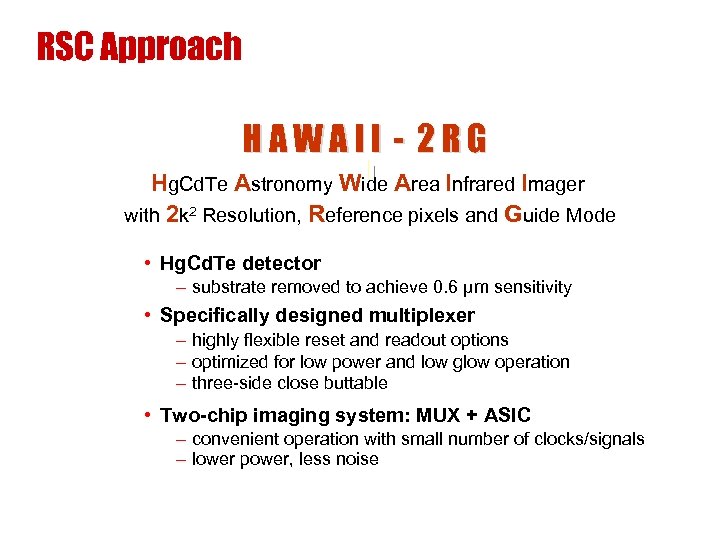 RSC Approach HAWAII - 2 RG Hg. Cd. Te Astronomy Wide Area Infrared Imager with 2 k 2 Resolution, Reference pixels and Guide Mode • Hg. Cd. Te detector – substrate removed to achieve 0. 6 µm sensitivity • Specifically designed multiplexer – highly flexible reset and readout options – optimized for low power and low glow operation – three-side close buttable • Two-chip imaging system: MUX + ASIC – convenient operation with small number of clocks/signals – lower power, less noise
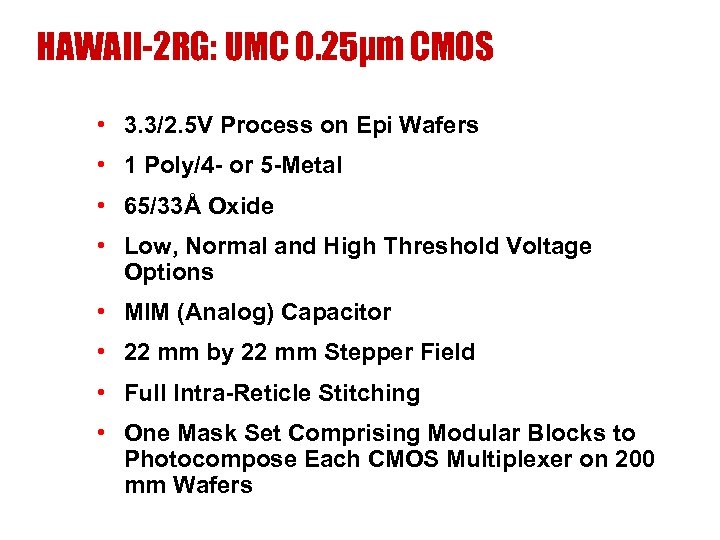 HAWAII-2 RG: UMC 0. 25µm CMOS • 3. 3/2. 5 V Process on Epi Wafers • 1 Poly/4 - or 5 -Metal • 65/33Å Oxide • Low, Normal and High Threshold Voltage Options • MIM (Analog) Capacitor • 22 mm by 22 mm Stepper Field • Full Intra-Reticle Stitching • One Mask Set Comprising Modular Blocks to Photocompose Each CMOS Multiplexer on 200 mm Wafers
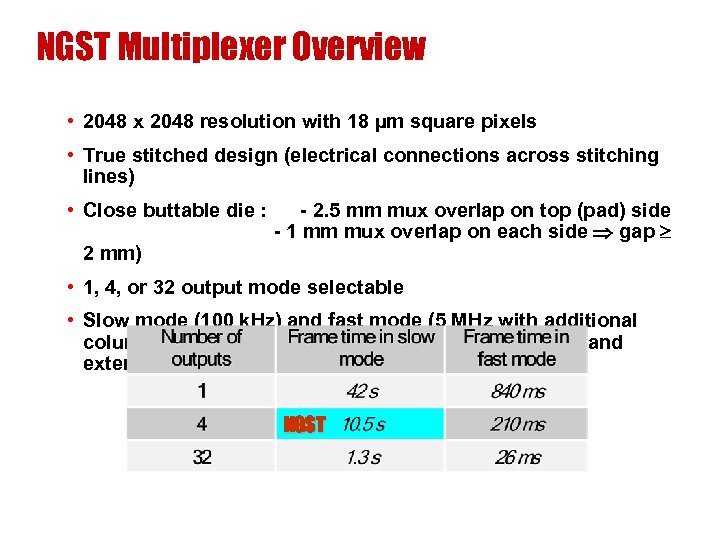 NGST Multiplexer Overview • 2048 x 2048 resolution with 18 µm square pixels • True stitched design (electrical connections across stitching lines) • Close buttable die : 2 mm) - 2. 5 mm mux overlap on top (pad) side - 1 mm mux overlap on each side gap • 1, 4, or 32 output mode selectable • Slow mode (100 k. Hz) and fast mode (5 MHz with additional column buffers) selectable, both usable with internal and external buffers NGST
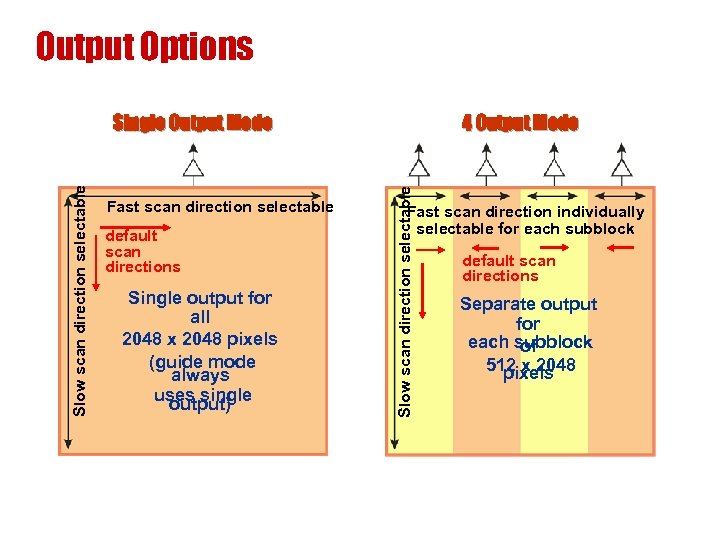 Output Options 4 Output Mode Fast scan direction selectable default scan directions Single output for all 2048 x 2048 pixels (guide mode always uses single output) Slow scan direction selectable Single Output Mode Fast scan direction individually selectable for each subblock default scan directions Separate output for each subblock of 512 x 2048 pixels
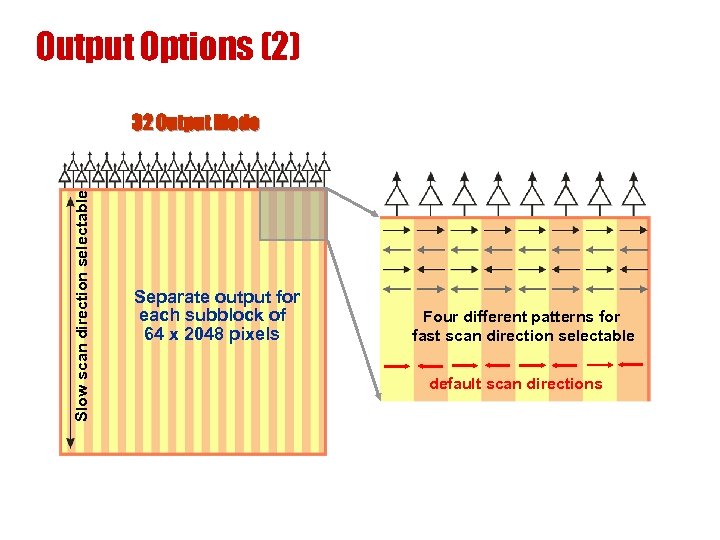 Output Options (2) Slow scan direction selectable 32 Output Mode Separate output for each subblock of 64 x 2048 pixels Four different patterns for fast scan direction selectable default scan directions
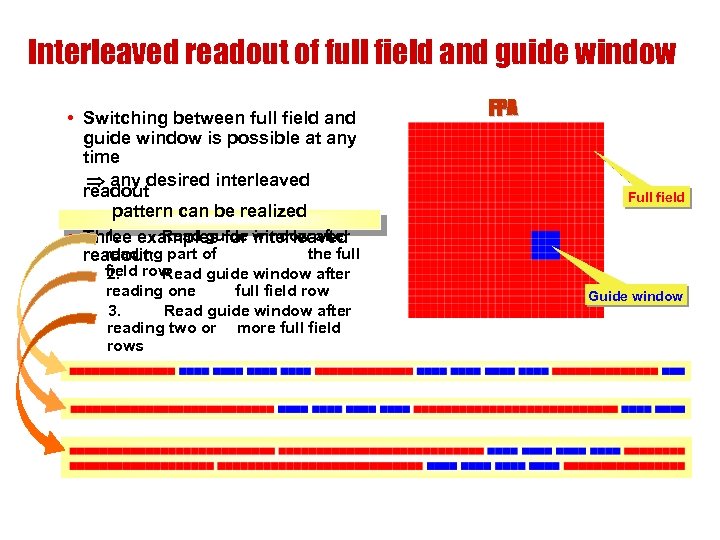 Interleaved readout of full field and guide window • Switching between full field and guide window is possible at any time any desired interleaved readout pattern can be realized 1. Read guide interleaved • Three examples for window after reading the full readout: part of field row 2. Read guide window after reading one full field row 3. Read guide window after reading two or more full field rows FPA Full field Guide window
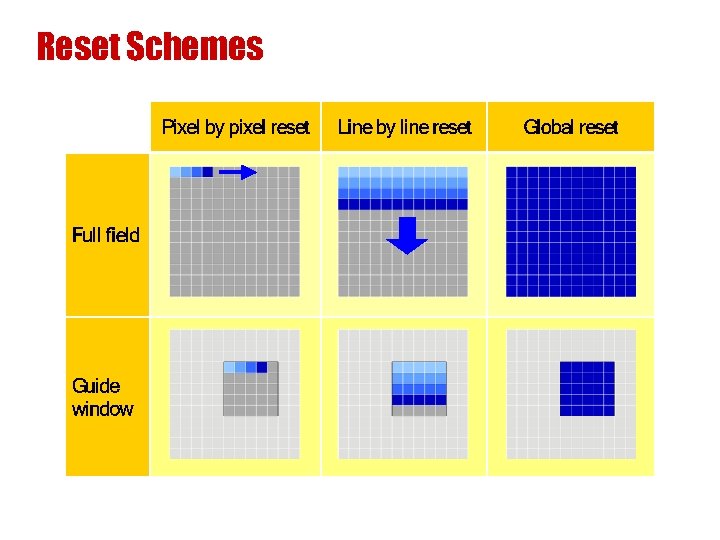 Reset Schemes
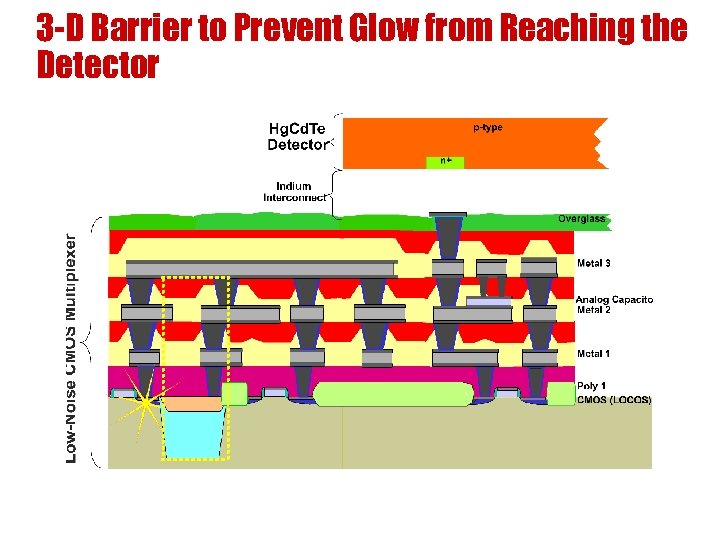 3 -D Barrier to Prevent Glow from Reaching the Detector
 HAWAII-1 RG Comes First • In order to decrease risk and to get testable devices earlier, a smaller version of the HAWAII 2 RG will be produced first. HAWAII - 1 RG • 1024 x 1024 pixels (upper left quadrant of HAWAII-2 RG) • Full functionality of HAWAII-2 RG • 16 / 2 / 1 Outputs • Some Pads folded along the right mux side • Fits in one reticle no stitching required
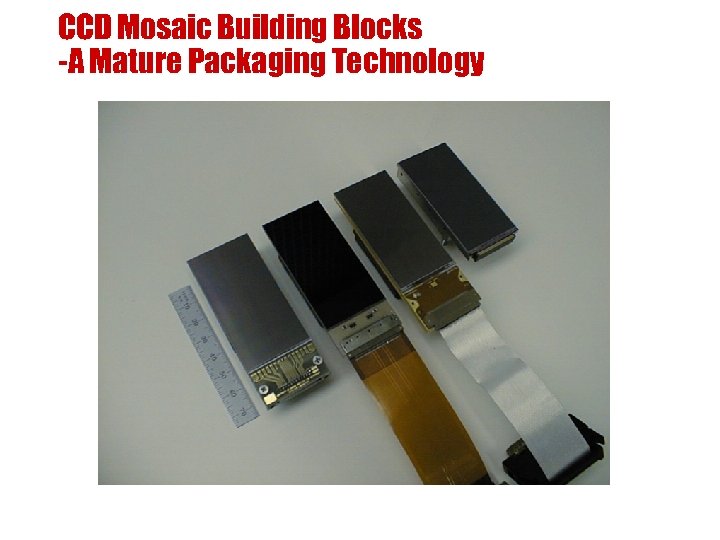 CCD Mosaic Building Blocks -A Mature Packaging Technology
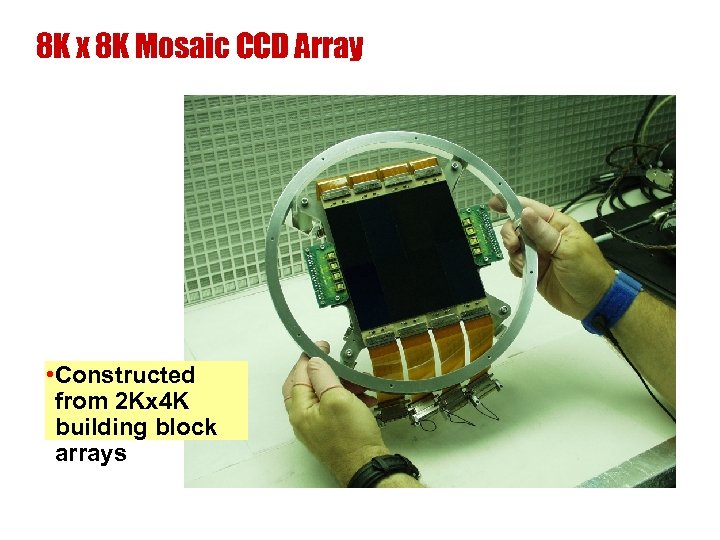 8 K x 8 K Mosaic CCD Array • Constructed from 2 Kx 4 K building block arrays
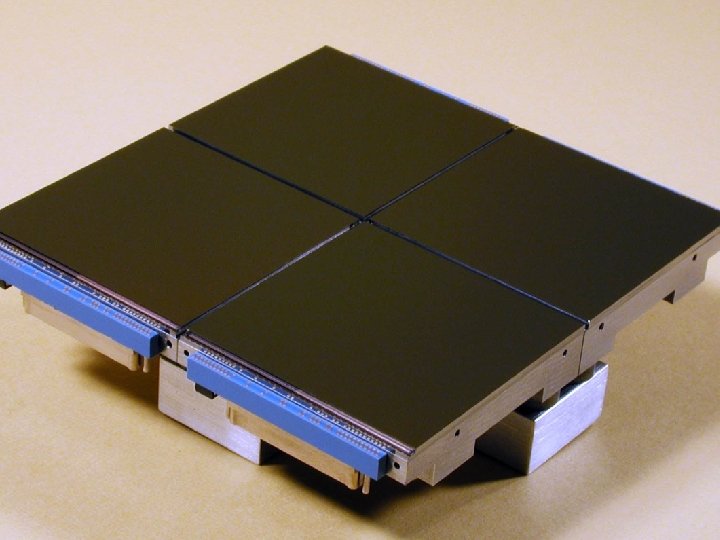
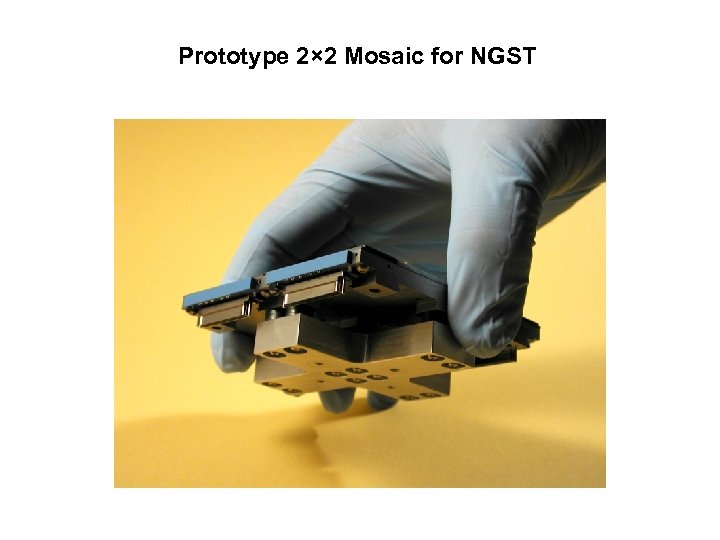 Prototype 2× 2 Mosaic for NGST
 Ground-Based Camera Projects • If. A ULB • UKIRT WFC • CFHT WIRCAM • Gemini GSAOI • ESO VISTA • Keck KIRMOS
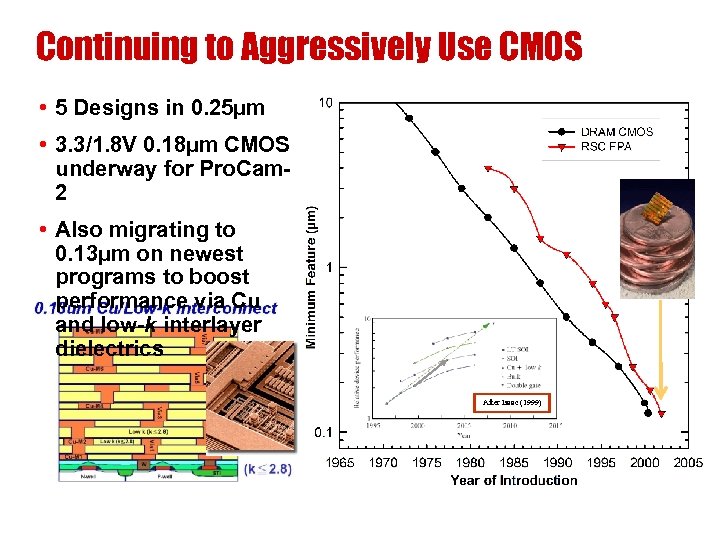 Continuing to Aggressively Use CMOS • 5 Designs in 0. 25µm • 3. 3/1. 8 V 0. 18µm CMOS underway for Pro. Cam 2 • Also migrating to 0. 13µm on newest programs to boost performance via Cu and low-k interlayer dielectrics After Isaac (1999)