 Скачать презентацию NBS-3 B 1 Y — Strategic Corporate Sustainability
ed166037099862db53f93b457331887b.ppt
- Количество слайдов: 38



NBS-3 B 1 Y - Strategic Corporate Sustainability 10 th December 2014 Fracking A solution to the UK Energy Problems or An unacceptable step too far? Keith Tovey (杜伟贤 ) : MA, Ph. D, CEng, MICE, CEnv Reader Emeritus in Environmental Science, University of East Anglia Recipient of James Watt Gold Medal 1

FRACKING Definitions • “ a method of mining in which cracks are created in subteranean rocks to obtain gas, oil, or other liquids”. • Hydraulic Fracturing using high pressure liquids is usual way of creating cracks • Fracking is the slang term for Hydraulic Fracturing Tonight’s Talk • What is Fracking? Physical Resource and Definitions • Fracking – technical issues and examples • Impact of Fracking on UK Energy Supply • Where have conventional/unconventional wells been drilled in UK & Economic Issues • Fracking – Environmental Impacts [seismic etc] • Summary and other issues 2
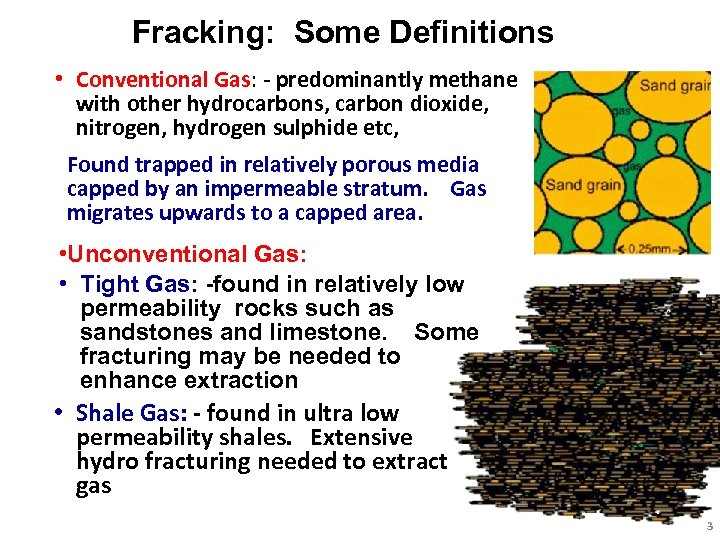
Fracking: Some Definitions • Conventional Gas: - predominantly methane with other hydrocarbons, carbon dioxide, nitrogen, hydrogen sulphide etc, Found trapped in relatively porous media capped by an impermeable stratum. Gas migrates upwards to a capped area. • Unconventional Gas: • Tight Gas: -found in relatively low permeability rocks such as sandstones and limestone. Some fracturing may be needed to enhance extraction • Shale Gas: - found in ultra low permeability shales. Extensive hydro fracturing needed to extract gas 3
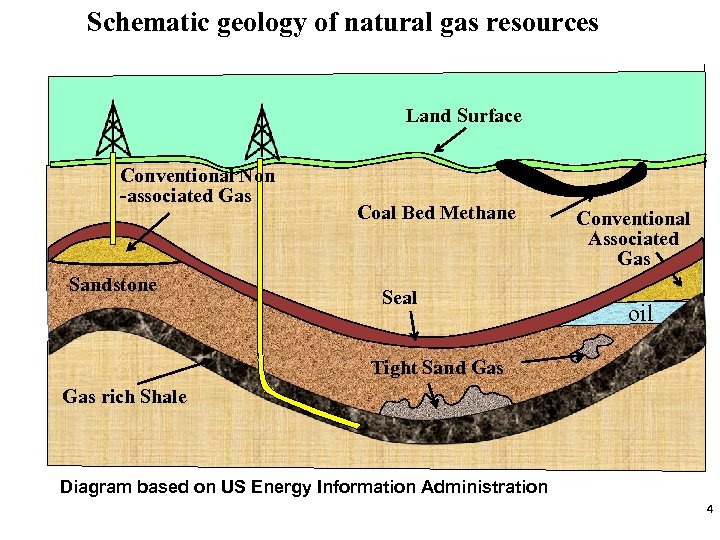
Schematic geology of natural gas resources Land Surface Conventional Non -associated Gas Sandstone Coal Bed Methane Seal Conventional Associated Gas oil Tight Sand Gas rich Shale Diagram based on US Energy Information Administration 4
Fracking: Some Definitions • Dry Gas: - predominantly methane with little if any coproducts such as ethane, propane etc. • Wet Gas: contains appreciable proportions coproducts of hydrocarbon such as ethane, propane, and butane which may be in liquid or gaseous form. • Co-products may be liquefied as LPG or converted into petrol and add value to gas produced. • WET GAS is defined as having more than 0. 1 US gal of condensate per 1000 cuft. • Reserve: Total Amount of gas in Reservoir: Three figures: Proven, Probable, Possible • Resource: Amount of gas which can Technically and/or Economically be extracted - typically 10 -20% of Reserve 5
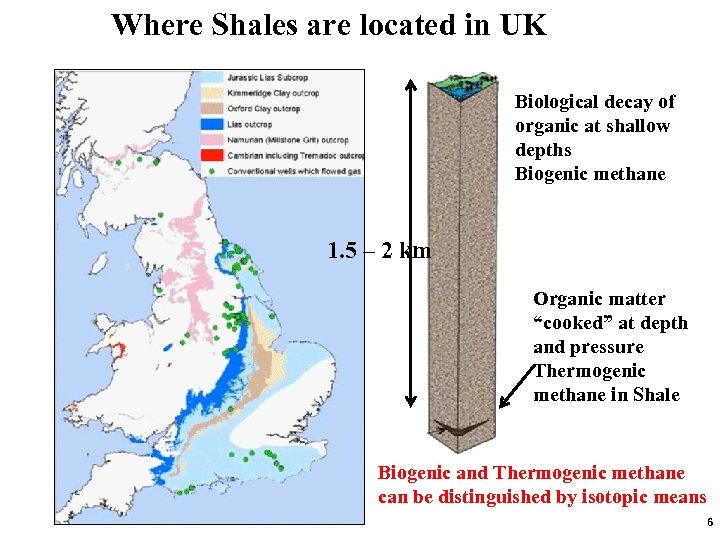
Where Shales are located in UK Biological decay of organic at shallow depths Biogenic methane 1. 5 – 2 km Organic matter “cooked” at depth and pressure Thermogenic methane in Shale Biogenic and Thermogenic methane can be distinguished by isotopic means 6
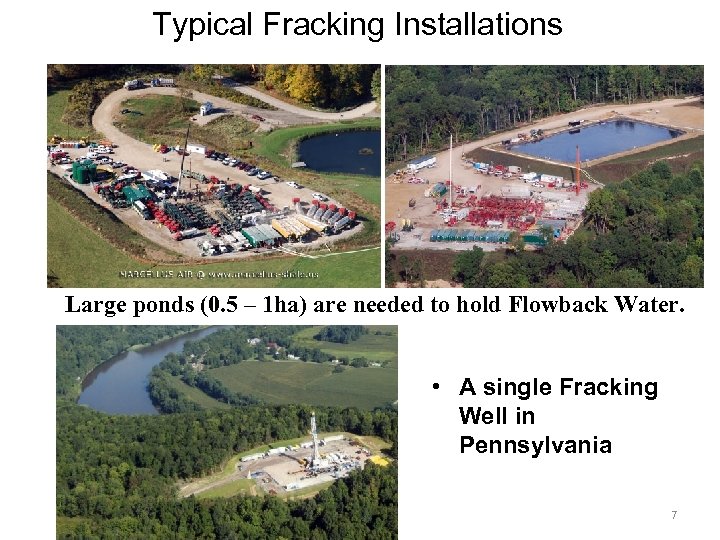
Typical Fracking Installations Large ponds (0. 5 – 1 ha) are needed to hold Flowback Water. • A single Fracking Well in Pennsylvania 7
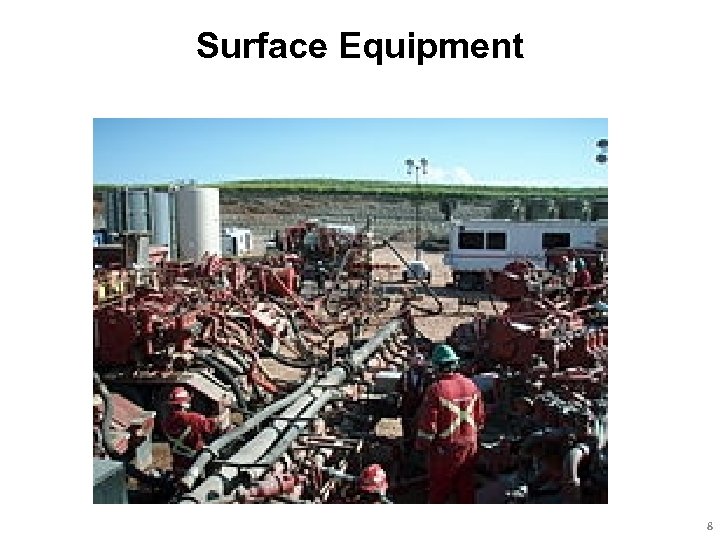
Surface Equipment 8
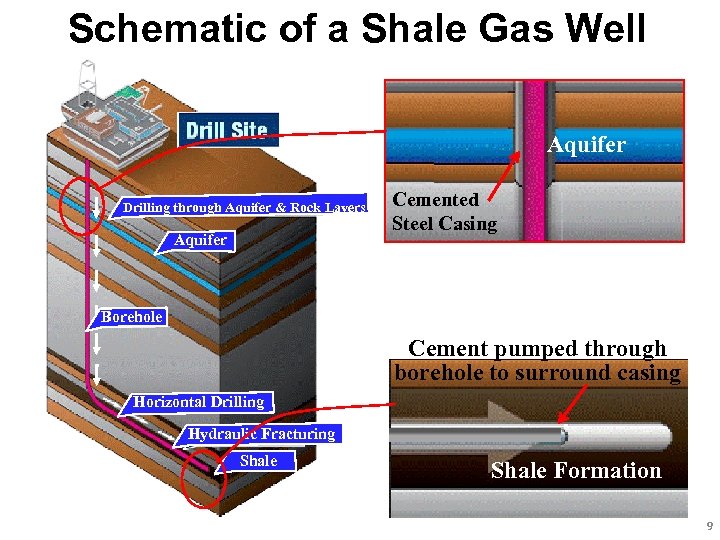
Schematic of a Shale Gas Well Aquifer Drilling through Aquifer & Rock Layers Aquifer Cemented Steel Casing Borehole Cement pumped through borehole to surround casing Horizontal Drilling Hydraulic Fracturing Shale Formation 9
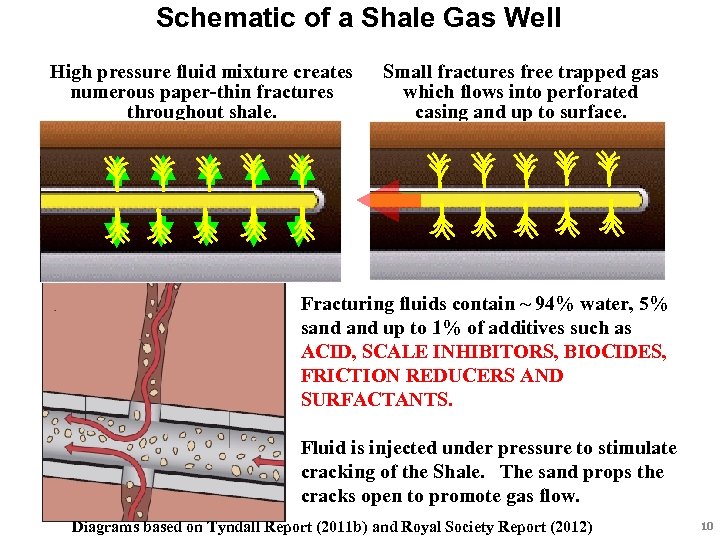
Schematic of a Shale Gas Well High pressure fluid mixture creates numerous paper-thin fractures throughout shale. Small fractures free trapped gas which flows into perforated casing and up to surface. Fracturing fluids contain ~ 94% water, 5% sand up to 1% of additives such as ACID, SCALE INHIBITORS, BIOCIDES, FRICTION REDUCERS AND SURFACTANTS. Fluid is injected under pressure to stimulate cracking of the Shale. The sand props the cracks open to promote gas flow. Diagrams based on Tyndall Report (2011 b) and Royal Society Report (2012) 10
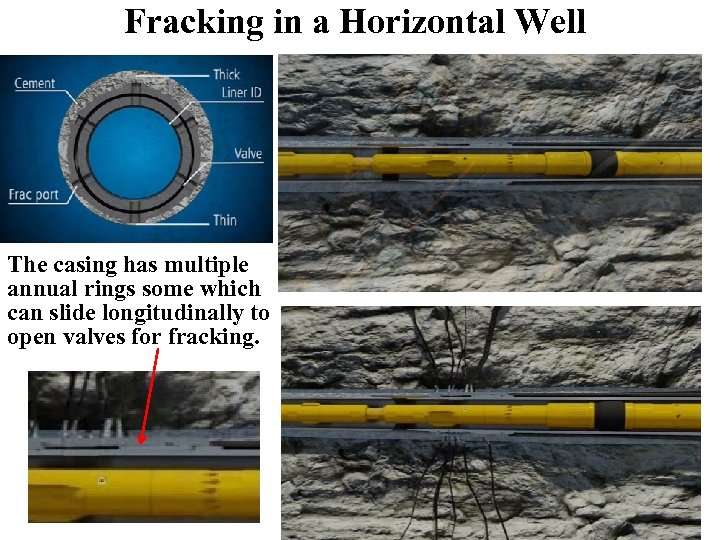
Fracking in a Horizontal Well The casing has multiple annual rings some which can slide longitudinally to open valves for fracking. 11
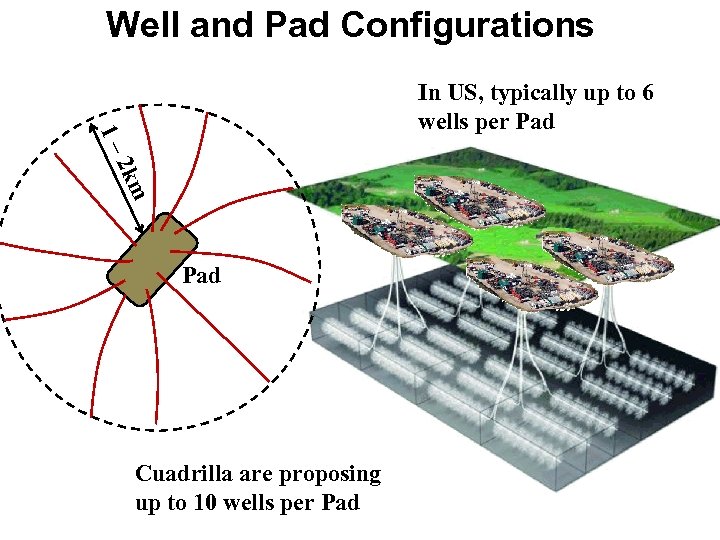
Well and Pad Configurations 1– In US, typically up to 6 wells per Pad 2 km Pad Cuadrilla are proposing up to 10 wells per Pad
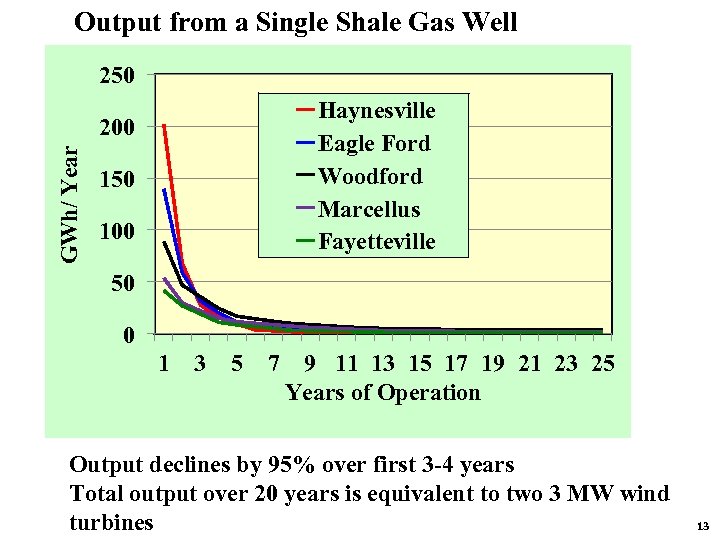
Output from a Single Shale Gas Well 250 Haynesville Eagle Ford Woodford Marcellus Fayetteville GWh/ Year 200 150 100 50 0 1 3 5 7 9 11 13 15 17 19 21 23 25 Years of Operation Output declines by 95% over first 3 -4 years Total output over 20 years is equivalent to two 3 MW wind turbines 13
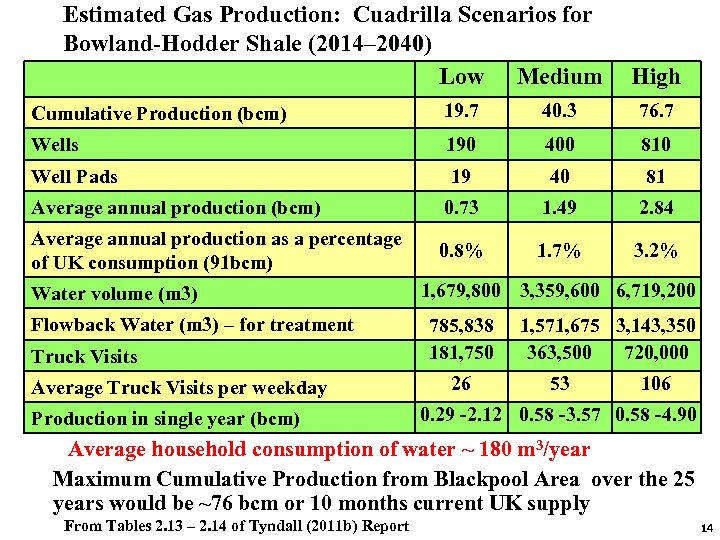
Estimated Gas Production: Cuadrilla Scenarios for Bowland-Hodder Shale (2014– 2040) Low Medium High Cumulative Production (bcm) 19. 7 40. 3 76. 7 Wells 190 400 810 Well Pads 19 40 81 Average annual production (bcm) 0. 73 1. 49 2. 84 Average annual production as a percentage of UK consumption (91 bcm) 0. 8% 1. 7% 3. 2% Water volume (m 3) Flowback Water (m 3) – for treatment Truck Visits Average Truck Visits per weekday Production in single year (bcm) 1, 679, 800 3, 359, 600 6, 719, 200 785, 838 181, 750 26 1, 571, 675 3, 143, 350 363, 500 720, 000 53 106 0. 29 -2. 12 0. 58 -3. 57 0. 58 -4. 90 Average household consumption of water ~ 180 m 3/year Maximum Cumulative Production from Blackpool Area over the 25 years would be ~76 bcm or 10 months current UK supply From Tables 2. 13 – 2. 14 of Tyndall (2011 b) Report 14
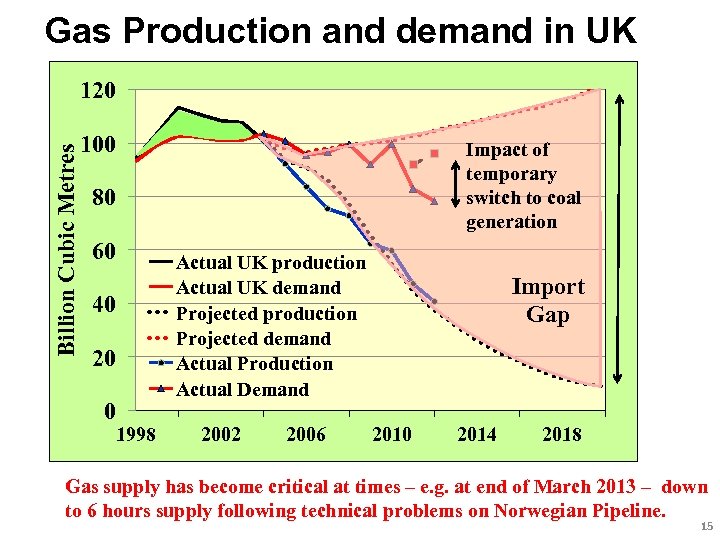
Gas Production and demand in UK Billion Cubic Metres 120 100 Impact of temporary switch to coal generation 80 60 Actual UK production Actual UK demand Projected production Projected demand Actual Production Actual Demand 40 20 0 1998 2002 2006 Import Gap 2010 2014 2018 Gas supply has become critical at times – e. g. at end of March 2013 – down to 6 hours supply following technical problems on Norwegian Pipeline. 15
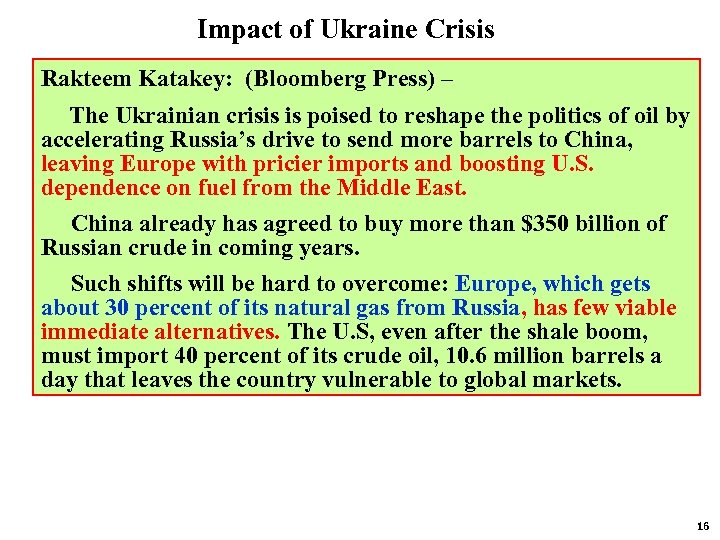
Impact of Ukraine Crisis Rakteem Katakey: (Bloomberg Press) – The Ukrainian crisis is poised to reshape the politics of oil by accelerating Russia’s drive to send more barrels to China, leaving Europe with pricier imports and boosting U. S. dependence on fuel from the Middle East. China already has agreed to buy more than $350 billion of Russian crude in coming years. Such shifts will be hard to overcome: Europe, which gets about 30 percent of its natural gas from Russia, has few viable immediate alternatives. The U. S, even after the shale boom, must import 40 percent of its crude oil, 10. 6 million barrels a day that leaves the country vulnerable to global markets. 16
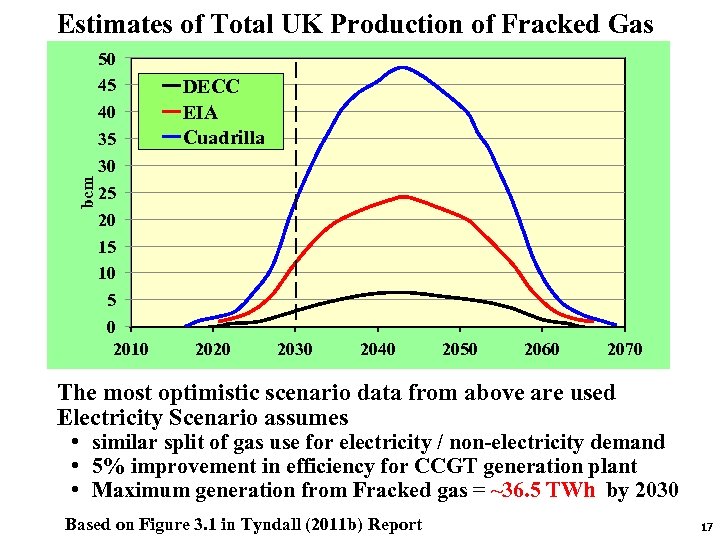
bcm Estimates of Total UK Production of Fracked Gas 50 45 40 35 30 25 20 15 10 5 0 2010 DECC EIA Cuadrilla 2020 2030 2040 2050 2060 2070 The most optimistic scenario data from above are used Electricity Scenario assumes • similar split of gas use for electricity / non-electricity demand • 5% improvement in efficiency for CCGT generation plant • Maximum generation from Fracked gas = ~36. 5 TWh by 2030 Based on Figure 3. 1 in Tyndall (2011 b) Report 17
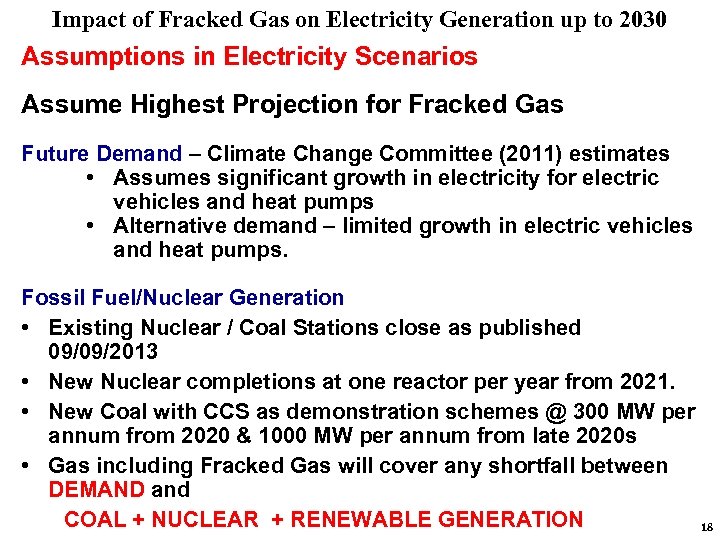
Impact of Fracked Gas on Electricity Generation up to 2030 Assumptions in Electricity Scenarios Assume Highest Projection for Fracked Gas Future Demand – Climate Change Committee (2011) estimates • Assumes significant growth in electricity for electric vehicles and heat pumps • Alternative demand – limited growth in electric vehicles and heat pumps. Fossil Fuel/Nuclear Generation • Existing Nuclear / Coal Stations close as published 09/09/2013 • New Nuclear completions at one reactor per year from 2021. • New Coal with CCS as demonstration schemes @ 300 MW per annum from 2020 & 1000 MW per annum from late 2020 s • Gas including Fracked Gas will cover any shortfall between DEMAND and COAL + NUCLEAR + RENEWABLE GENERATION 18
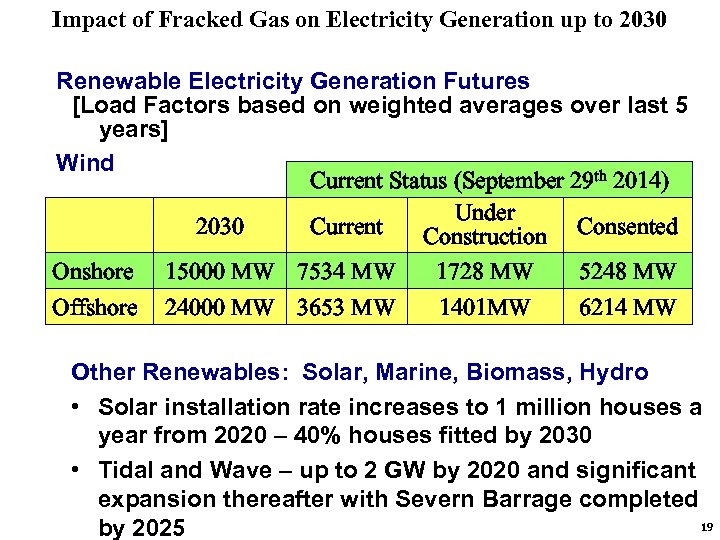
Impact of Fracked Gas on Electricity Generation up to 2030 Renewable Electricity Generation Futures [Load Factors based on weighted averages over last 5 years] Wind Current Status (September 29 th 2014) Under 2030 Current Construction Consented Onshore 15000 MW 7534 MW 1728 MW 5248 MW Offshore 24000 MW 3653 MW 1401 MW 6214 MW Other Renewables: Solar, Marine, Biomass, Hydro • Solar installation rate increases to 1 million houses a year from 2020 – 40% houses fitted by 2030 • Tidal and Wave – up to 2 GW by 2020 and significant expansion thereafter with Severn Barrage completed 19 by 2025
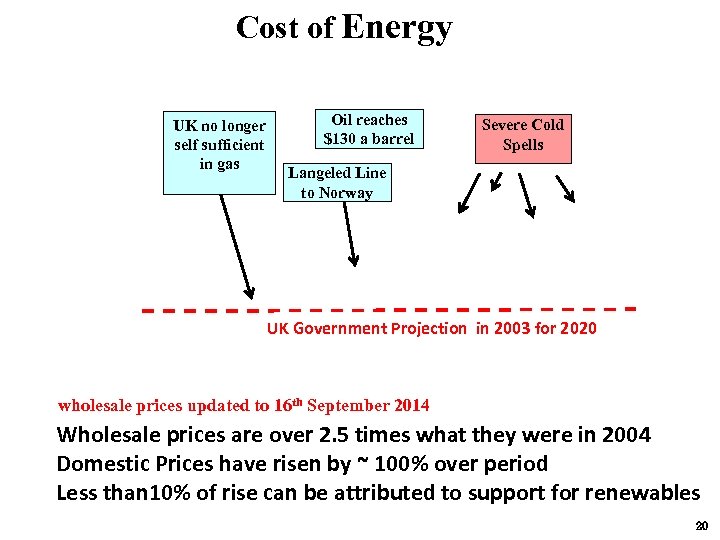
Cost of Energy UK no longer self sufficient in gas Oil reaches $130 a barrel Severe Cold Spells Langeled Line to Norway UK Government Projection in 2003 for 2020 wholesale prices updated to 16 th September 2014 Wholesale prices are over 2. 5 times what they were in 2004 Domestic Prices have risen by ~ 100% over period Less than 10% of rise can be attributed to support for renewables 20
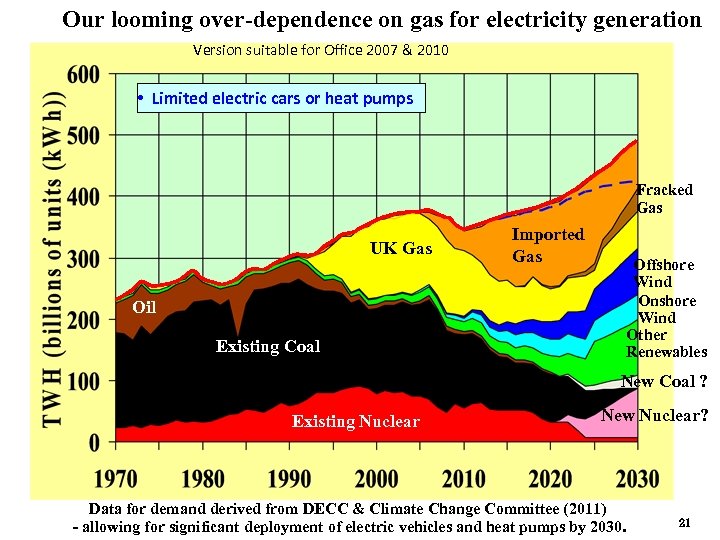
Our looming over-dependence on gas for electricity generation Version suitable for Office 2007 & 2010 • Limited electric cars or heat pumps Fracked Gas Oil UK Gas Imported Gas Existing Coal Existing Nuclear Existing Coal Offshore Wind Onshore Wind Other Renewables New Coal ? Data for modelling derived from DECC & Climate Change Committee (2011) New Nuclear? - allowing for significant deployment of electric vehicles and heat pumps by 2030. Existing Nuclear Data for modelling derived from DECC & Climate Change Committee (2011) - allowing for significant deployment of electric vehicles and heat pumps by 2030. Data for demand derived from DECC & Climate Change Committee (2011) - allowing for significant deployment of electric vehicles and heat pumps by 2030. 21
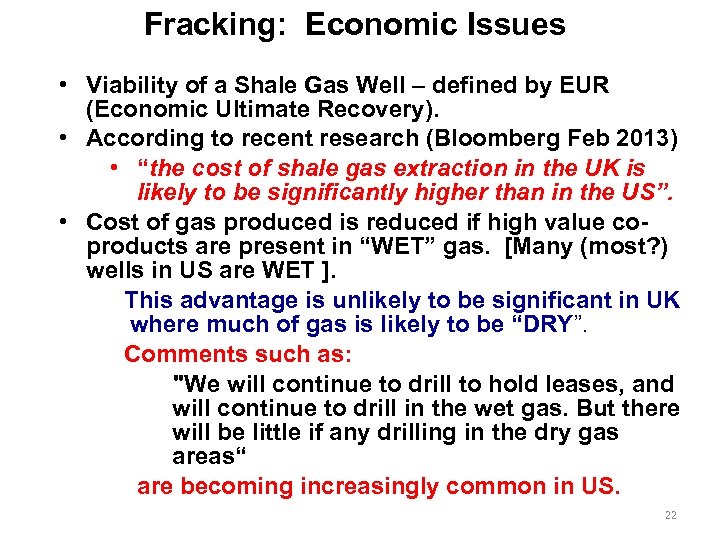
Fracking: Economic Issues • Viability of a Shale Gas Well – defined by EUR (Economic Ultimate Recovery). • According to recent research (Bloomberg Feb 2013) • “the cost of shale gas extraction in the UK is likely to be significantly higher than in the US”. • Cost of gas produced is reduced if high value coproducts are present in “WET” gas. [Many (most? ) wells in US are WET ]. This advantage is unlikely to be significant in UK where much of gas is likely to be “DRY”. Comments such as: "We will continue to drill to hold leases, and will continue to drill in the wet gas. But there will be little if any drilling in the dry gas areas“ are becoming increasingly common in US. 22
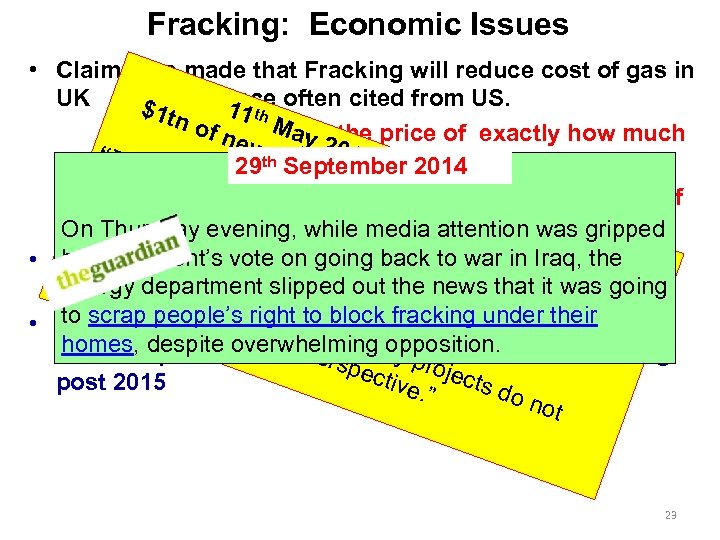
Fracking: Economic Issues • Claims are made that Fracking will reduce cost of gas in UK - Evidence often cited from US. $1 tn 11 th Ma of • BUT nowhere has the price of exactly how much y 20 new 14: oil “Th th September 2014 Fracked Gas will cost been indicated. Fin 29 e and is w cost o anc gas ell o f de • How can claims be made that it will be cheaper if pro ial T v ver $10 elopwhile mediajects ‘ imes: gripped On Thursday evening, ing attention was “In t this information in is not forthcoming? 0 pe une man he c con r b going back to war in Iraq, the y ne by parliament’s vote on arr • Even with most optimistic scenarios, Fracked Gas will mak om urre el”. e sedepartment slipped out the w oil that it was ic’ energy ns nt en news going NOT be significant until after 2030. and viro e fro ga their to scrap people’s rightme block fracking under s a m a n to n • Over concentration on Fracking is diverting attention sse t ma opposition. cos ts homes, despite overwhelming ny t pe from the pressing issues of the Capacity Gap looming proj rspe e ctiv post 2015 e. ” cts do not 23
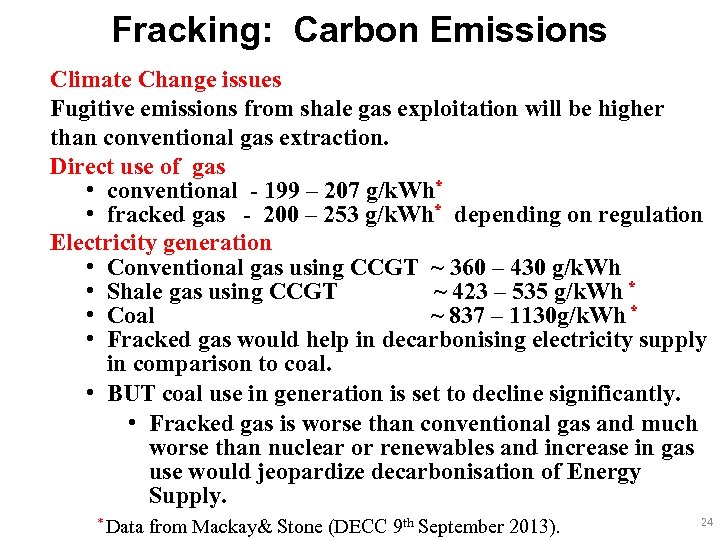
Fracking: Carbon Emissions Climate Change issues Fugitive emissions from shale gas exploitation will be higher than conventional gas extraction. Direct use of gas • conventional - 199 – 207 g/k. Wh* • fracked gas - 200 – 253 g/k. Wh* depending on regulation Electricity generation • Conventional gas using CCGT ~ 360 – 430 g/k. Wh • Shale gas using CCGT ~ 423 – 535 g/k. Wh * • Coal ~ 837 – 1130 g/k. Wh * • Fracked gas would help in decarbonising electricity supply in comparison to coal. • BUT coal use in generation is set to decline significantly. • Fracked gas is worse than conventional gas and much worse than nuclear or renewables and increase in gas use would jeopardize decarbonisation of Energy Supply. * Data from Mackay& Stone (DECC 9 th September 2013). 24
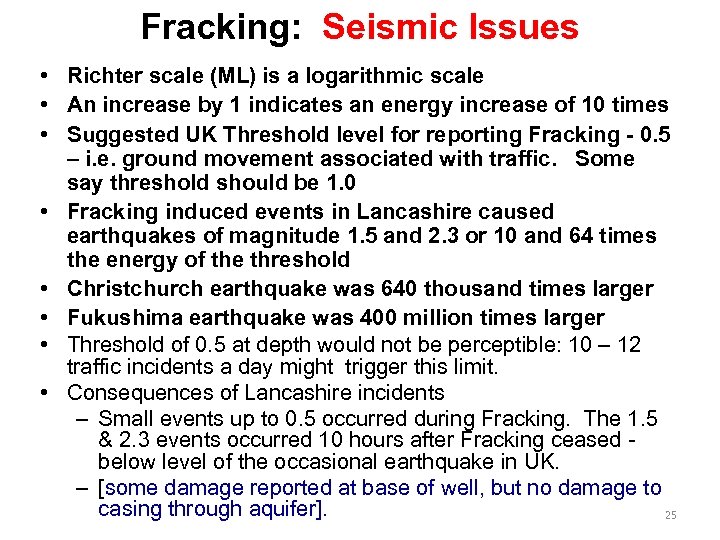
Fracking: Seismic Issues • Richter scale (ML) is a logarithmic scale • An increase by 1 indicates an energy increase of 10 times • Suggested UK Threshold level for reporting Fracking - 0. 5 – i. e. ground movement associated with traffic. Some say threshold should be 1. 0 • Fracking induced events in Lancashire caused earthquakes of magnitude 1. 5 and 2. 3 or 10 and 64 times the energy of the threshold • Christchurch earthquake was 640 thousand times larger • Fukushima earthquake was 400 million times larger • Threshold of 0. 5 at depth would not be perceptible: 10 – 12 traffic incidents a day might trigger this limit. • Consequences of Lancashire incidents – Small events up to 0. 5 occurred during Fracking. The 1. 5 & 2. 3 events occurred 10 hours after Fracking ceased below level of the occasional earthquake in UK. – [some damage reported at base of well, but no damage to casing through aquifer]. 25
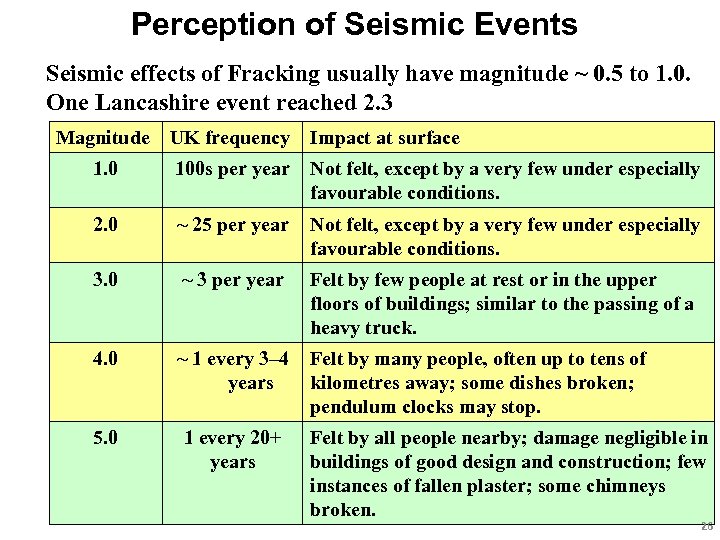
Perception of Seismic Events Seismic effects of Fracking usually have magnitude ~ 0. 5 to 1. 0. One Lancashire event reached 2. 3 Magnitude UK frequency Impact at surface 1. 0 100 s per year Not felt, except by a very few under especially favourable conditions. 2. 0 ~ 25 per year Not felt, except by a very few under especially favourable conditions. 3. 0 ~ 3 per year Felt by few people at rest or in the upper floors of buildings; similar to the passing of a heavy truck. 4. 0 ~ 1 every 3– 4 years Felt by many people, often up to tens of kilometres away; some dishes broken; pendulum clocks may stop. 5. 0 1 every 20+ years Felt by all people nearby; damage negligible in buildings of good design and construction; few instances of fallen plaster; some chimneys broken. 26
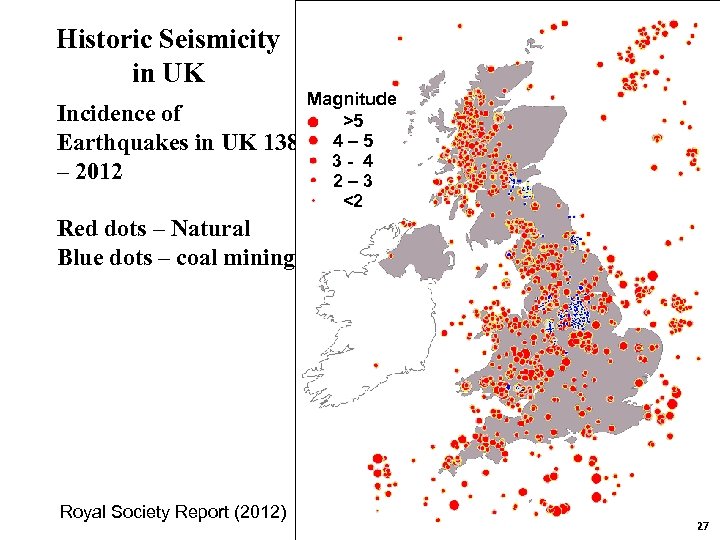
Historic Seismicity in UK Incidence of Earthquakes in UK – 2012 Magnitude >5 1382 4 – 5 3 - 4 2 – 3 <2 Red dots – Natural Blue dots – coal mining Royal Society Report (2012) 27
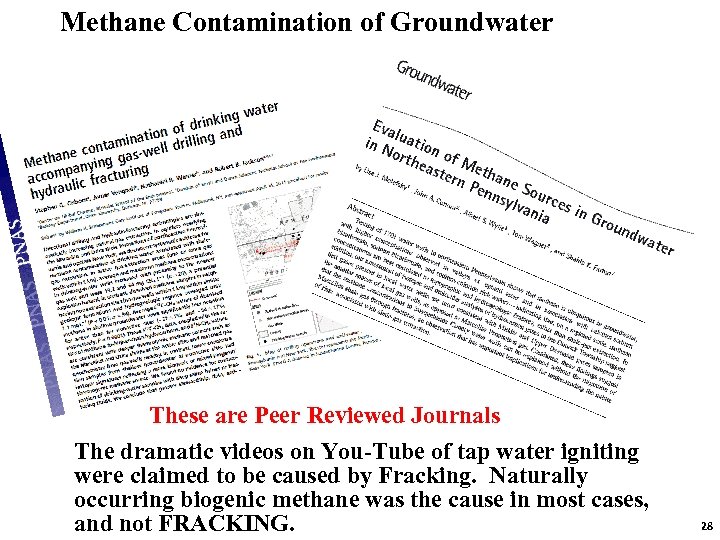
Methane Contamination of Groundwater These are Peer Reviewed Journals The dramatic videos on You-Tube of tap water igniting were claimed to be caused by Fracking. Naturally occurring biogenic methane was the cause in most cases, and not FRACKING. 28
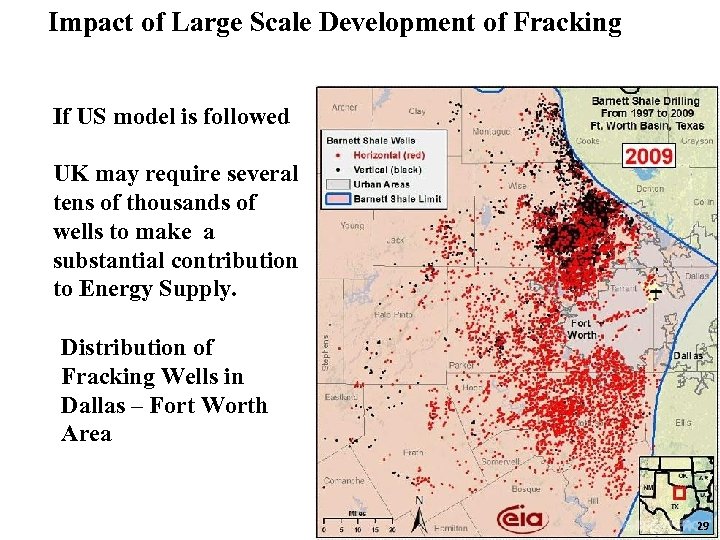
Impact of Large Scale Development of Fracking If US model is followed UK may require several tens of thousands of wells to make a substantial contribution to Energy Supply. Distribution of Fracking Wells in Dallas – Fort Worth Area 29
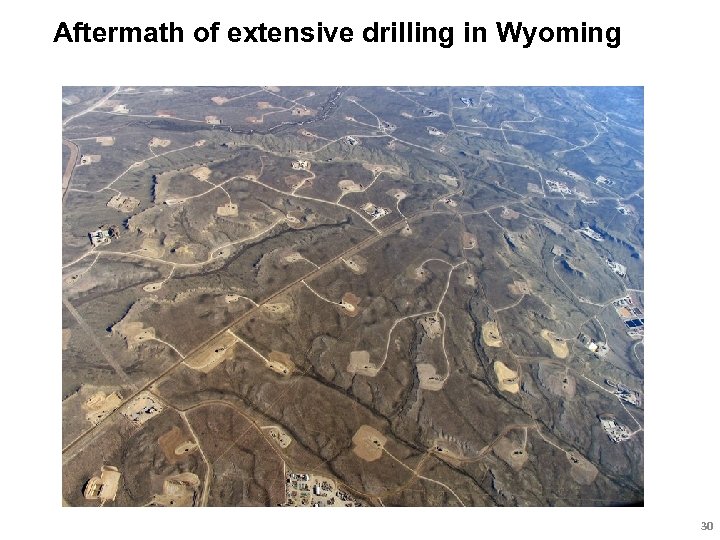
Aftermath of extensive drilling in Wyoming 30
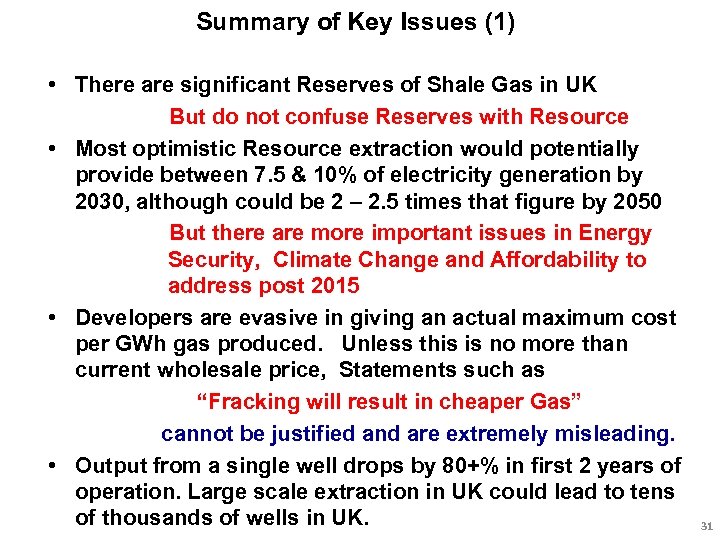
Summary of Key Issues (1) • There are significant Reserves of Shale Gas in UK But do not confuse Reserves with Resource • Most optimistic Resource extraction would potentially provide between 7. 5 & 10% of electricity generation by 2030, although could be 2 – 2. 5 times that figure by 2050 But there are more important issues in Energy Security, Climate Change and Affordability to address post 2015 • Developers are evasive in giving an actual maximum cost per GWh gas produced. Unless this is no more than current wholesale price, Statements such as “Fracking will result in cheaper Gas” cannot be justified and are extremely misleading. • Output from a single well drops by 80+% in first 2 years of operation. Large scale extraction in UK could lead to tens of thousands of wells in UK. 31
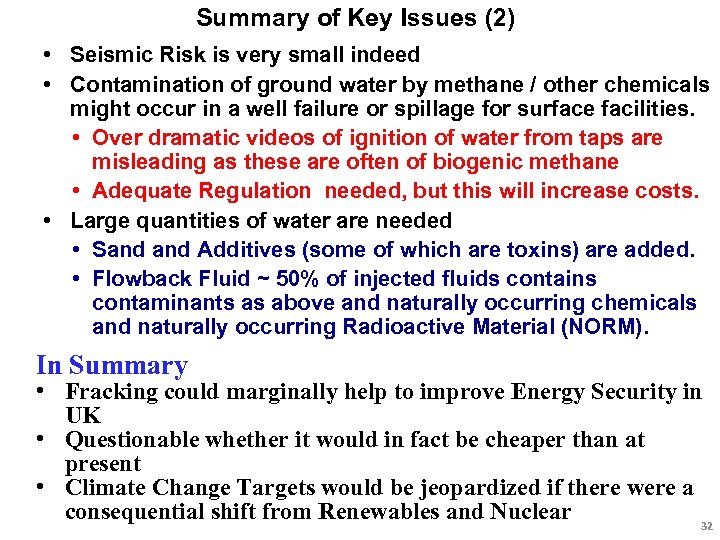
Summary of Key Issues (2) • Seismic Risk is very small indeed • Contamination of ground water by methane / other chemicals might occur in a well failure or spillage for surface facilities. • Over dramatic videos of ignition of water from taps are misleading as these are often of biogenic methane • Adequate Regulation needed, but this will increase costs. • Large quantities of water are needed • Sand Additives (some of which are toxins) are added. • Flowback Fluid ~ 50% of injected fluids contains contaminants as above and naturally occurring chemicals and naturally occurring Radioactive Material (NORM). In Summary • Fracking could marginally help to improve Energy Security in UK • Questionable whether it would in fact be cheaper than at present • Climate Change Targets would be jeopardized if there were a consequential shift from Renewables and Nuclear 32

33
The following slides were not used in the actual presentation, but have been in previous versions 34
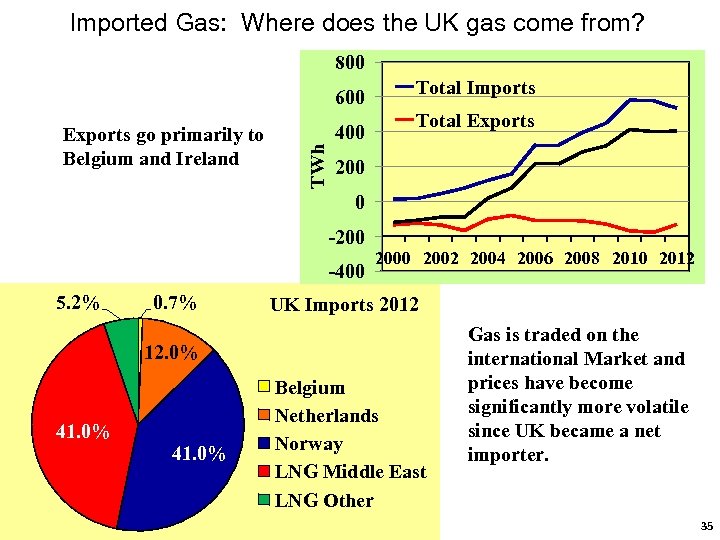
Imported Gas: Where does the UK gas come from? 800 600 TWh Exports go primarily to Belgium and Ireland 400 Total Imports Total Exports 200 0 -200 -400 5. 2% 0. 7% 2000 2002 2004 2006 2008 2010 2012 UK Imports 2012 12. 0% 41. 0% Belgium Netherlands Norway LNG Middle East LNG Other Gas is traded on the international Market and prices have become significantly more volatile since UK became a net importer. 35
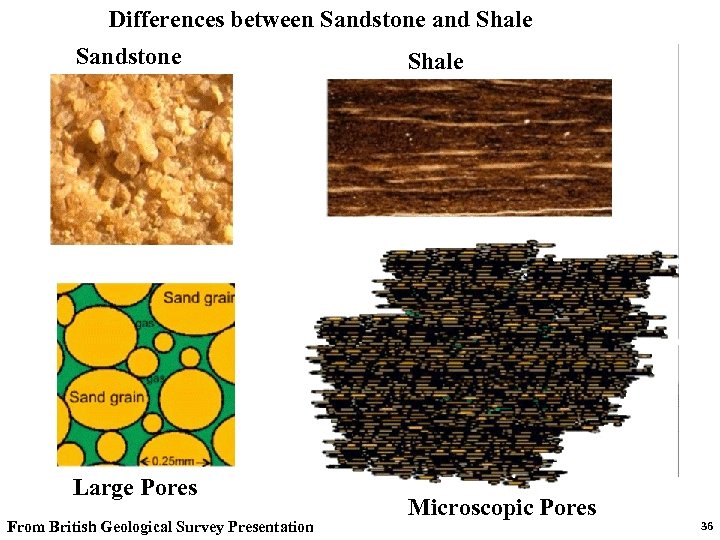
Differences between Sandstone and Shale Sandstone Large Pores From British Geological Survey Presentation Shale Microscopic Pores 36
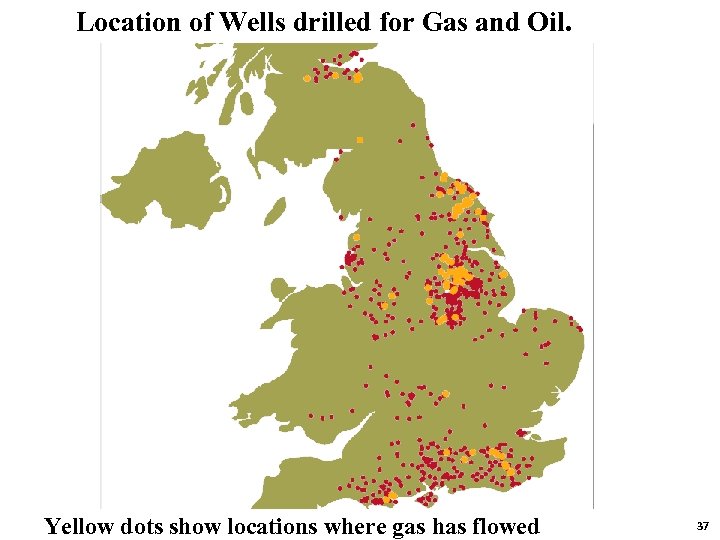
Location of Wells drilled for Gas and Oil. Yellow dots show locations where gas has flowed 37
Sources of information • • • DECC (2012) Shale Gas Briefing Note https: //www. gov. uk/government/uploads/system/uploads/attachment_data/file/48332/5057 background-note-on-shale-gas-and-hydraulic-fractur. pdf DECC (2013) About shale gas and hydraulic fracturing (fracking) https: //www. gov. uk/government/uploads/system/uploads/attachment_data/file/226040/About _Shale_gas_and_hydraulic_fracking. pdf EIA (2013) Annual Energy Outlook 2013 http: //www. eia. gov/forecasts/aeo/ Mackay DJC & Stone J (2013) Potential Greenhouse Gas Emissions Associated with Shale Gas Extraction and Use. DECC https: //www. gov. uk/government/uploads/system/uploads/attachment_data/file/237330/Mac. Ka y_Stone_shale_study_report_09092013. pdf Royal Society (2012). Shale Gas Extraction in the UK http: //royalsociety. org/policy/projects/shale-gas-extraction Smith, N. ; Turner, P. ; Williams, G. . 2010 UK data and analysis for shale gas prospectivity. In: Vining, B. A. ; Pickering, S. C. , (eds. ) Petroleum Geology : From Mature Basins to New Frontiers : Proceedings of the 7 th Petroleum Geology Conference. Geological Society of London, 10871098. (see also http: //nora. nerc. ac. uk/13090/) Tyndall (2011 a). Shale gas: a provisional assessment of climate change and environmental impacts. http: //www. tyndall. ac. uk/sites/default/files/coop_shale_gas_report_final_200111. pdf Tyndall (2011 b). Shale gas: an updated assessment of environmental and climate change impacts http: //www. cooperative. coop/Corporate/Fracking/Shale%20 gas%20 update%20%20 full%20 report. pdf UKOOG (2013) Community Engagement Charter: Oil and Gas from Unconventional Reservoirs https: //www. gov. uk/government/uploads/system/uploads/attachment_data/file/225851/Public ation_UKOOG_communityengagementcharterversion 6. pdf Osborn, SG, A Vengosh, NR Warner, RB Jackson. (2011). Methane contamination of drinking water accompanying gas-well drilling and hydraulic fracturing. Proceedings of the National Academy of Sciences, U. S. A. 108: 8172 -8176, dx. doi. org/10. 1073/pnas. 1100682108. Molofsky, LJ, Connor, JA, Albert S. Wylie, AS Tom Wagner, T & Farhat, SK (2013) Evaluation of Methane Sources in Groundwater in Northeastern Pennsylvania Vol. 51, No. 3–Groundwater: 51 (no 3): 333– 349 DOI: 10. 1111/gwat. 12056 http: //onlinelibrary. wiley. com/doi/10. 1111/gwat. 12056/abstract 38
Скачать презентацию NBS-3 B 1 Y — Strategic Corporate Sustainability
ed166037099862db53f93b457331887b.ppt