


 Скачать презентацию Navigating the Standards Landscape Andrew Owen SEARCH Lt
675b716545ccc21437e783a99b506853.ppt
- Количество слайдов: 44
 Navigating the Standards Landscape Andrew Owen, SEARCH Lt. Scott Edson, L. A. County Sheriff
 Navigating the Standards Landscape The Business Case: How do standards help the practitioner to develop an information sharing architecture? Data Exchange Standards: XML, JXDM and NIEM IEPDs and Components Los Angeles County Case Study LEITSC Functional Standards for Law Enforcement Records Management and CAD How Do I Connect the Silos? Here is the Help! 1
 The Business Case - What Standards Provide On-demand real time data access by decision makers Standard products from vendors at lower cost Opportunity to leverage legacy system investment Phased evolution to emerging technologies approach If you care about PUBLIC SAFETY, standards are important because these standards can help you deliver emergency services more quickly, with greater dependability If you care about ACCOUNTABILITY FOR THE PUBLIC’S MONEY, standards are important because they will help to significantly lower the lifecycle cost of sharing data 2
 Justice & Public Safety Standards Landscape No Domain-wide standards prior to September 11, 2001 Each agency re-defined, and each vendor re-invented the wheel with every project Evident and growing need to lower cost, reduce risk, speed delivery and ensure compatibility Ø Homeland Security Presidential Directive (HSPD-5) to improve information sharing Ø 2005 Justice and Homeland Security partnership to develop National Information Exchange Model (NIEM) Ø Executive Order 13388 (replaced EO 13356) 3
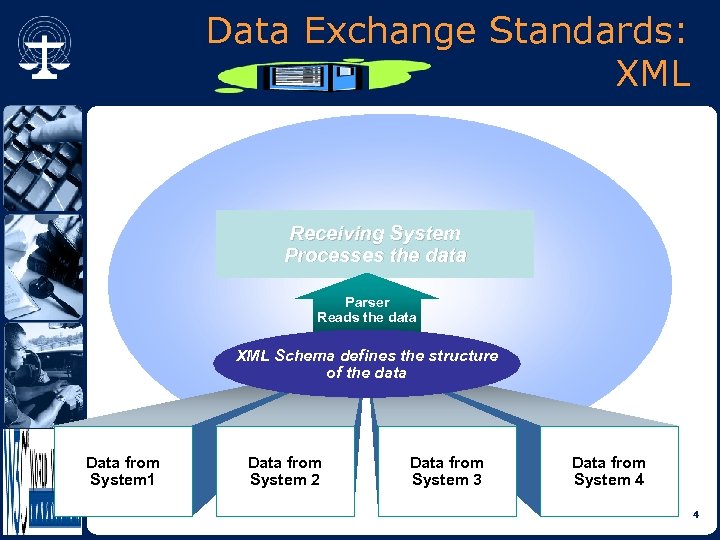 Data Exchange Standards: XML Receiving System Processes the data Parser Reads the data XML Schema defines the structure of the data Data from System 1 Data from System 2 Data from System 3 Data from System 4 4
 Data Exchange Standards: XML provides a natural way to build new vocabularies or languages XML tools (parsers, validators, native XML databases) are abundant, relatively inexpensive and can support any and every vocabulary that conforms to the XML standard XML allows us to express information in a way that is platform independent 5
 Data Exchange Standards: XML can represent all parts of the information exchange Ø Information that needs to be shared; Ø Information about this information (who created it, when, why, etc. ); Ø Information about destination of this information (addressing, routing); Ø Security and authorization information (sensitivity level, who can read it, how it should be disposed of, etc. ); Ø Validation and verification rules (XML schema, DTD, business rules) 6
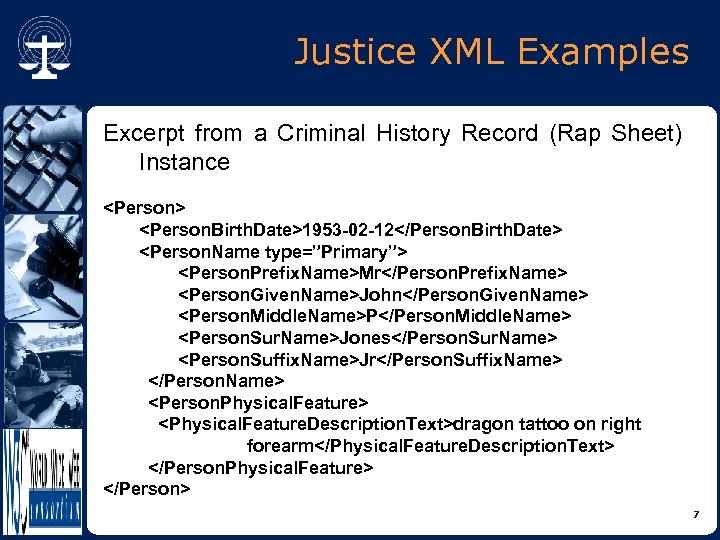 Justice XML Examples Excerpt from a Criminal History Record (Rap Sheet) Instance
 XML Vocabularies Uniform Business Language (UBL) Electronic Business XML (eb. XML) Extensible Access Control Markup Language (XACML) ACORD XML for Life Insurance e. Xtensible Business Reporting Language (XBRL) EDXL (OASIS Emergency Management) Global Justice XML Data Model (G)JXDM) National Information Exchange Model (NIEM) 8
 XML: Building blocks for information exchange JXDM started as a “grass-roots” effort to define a common XML vocabulary for criminal justice and public safety JXDM provides fairly large objects, reflecting the broad scope of the effort and attempts to accommodate needs of everyone across the wide spectrum JXDM includes constructs not “native” to criminal justice, such as health or intelligence – created without a benefit of the subject matter expertise 9
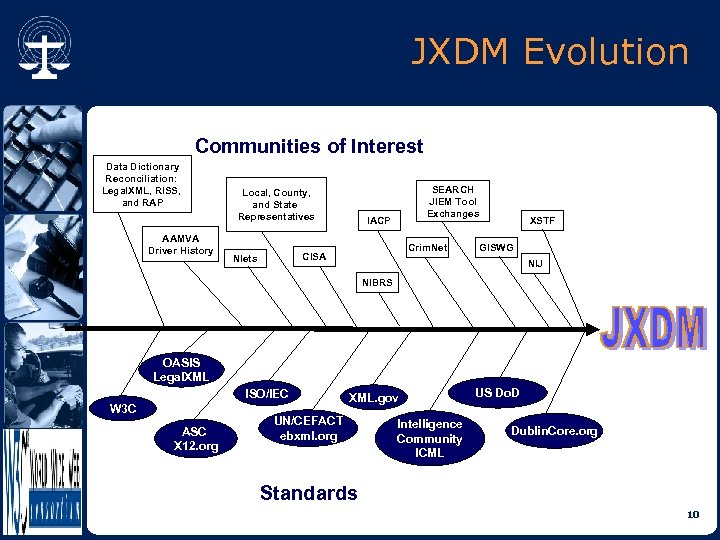 JXDM Evolution Communities of Interest Data Dictionary Reconciliation: Legal. XML, RISS, and RAP AAMVA Driver History Local, County, and State Representatives SEARCH JIEM Tool Exchanges IACP Crim. Net CISA Nlets XSTF GISWG NIJ NIBRS OASIS Legal. XML ISO/IEC W 3 C ASC X 12. org XML. gov UN/CEFACT ebxml. org Intelligence Community ICML US Do. D Dublin. Core. org Standards 10
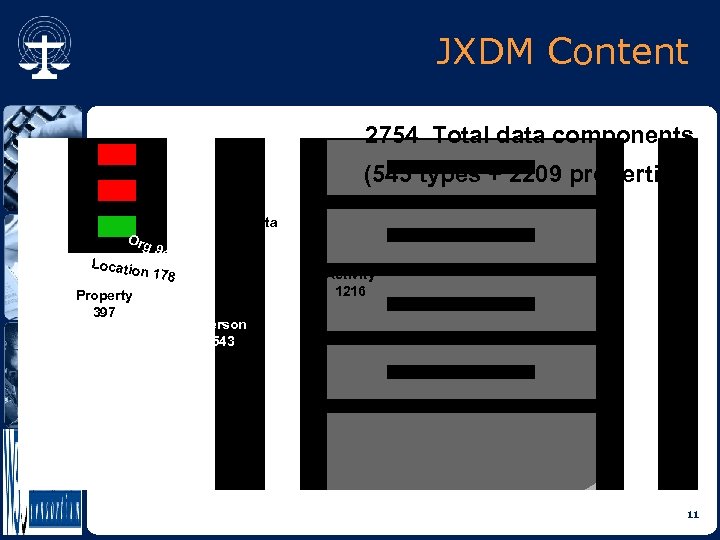 JXDM Content 2754 Total data components (545 types + 2209 properties) Misc Metadata Org 116 94 177 Locatio n 178 Property 397 Activity 1216 Person 543 11
 National Information Exchange Model (NIEM) 12
 JXDM and NIEM aggregates knowledge from multiple domains, where each “community of interest” (COI) maintains its own domain and contributes to the common set; NIEM, having much broader audience in mind from the beginning, took a different approach than the JXDM to develop core objects: Ø Start with smallest, universally understood and usable; Ø Specialize for the particular exchanges, common to some or many; Ø Provide a space for additional specialization relevant to a specific area 13
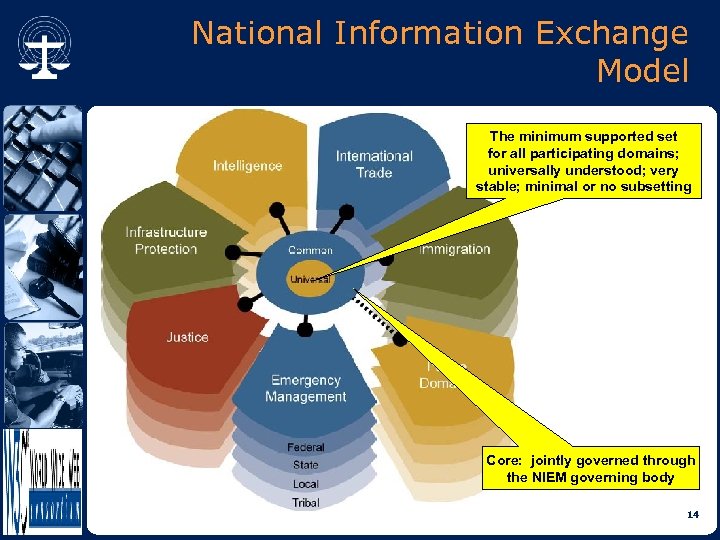 National Information Exchange Model The minimum supported set for all participating domains; universally understood; very stable; minimal or no subsetting Core: jointly governed through the NIEM governing body 14
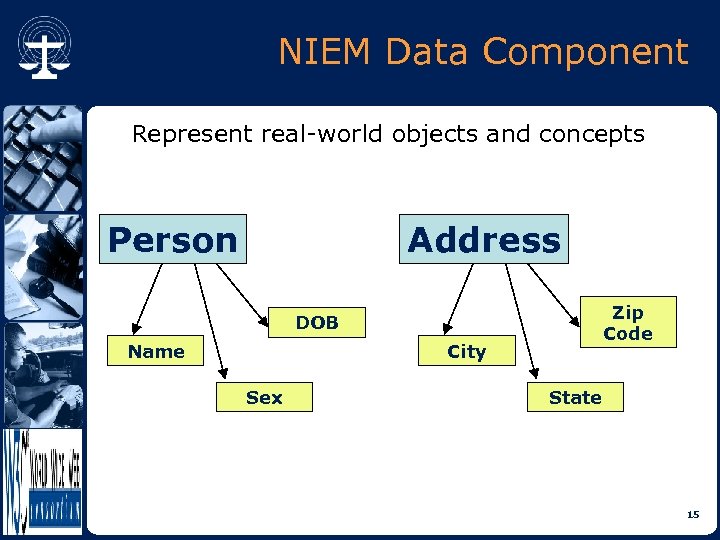 NIEM Data Component Represent real-world objects and concepts Person Address Zip Code DOB Name City Sex State 15
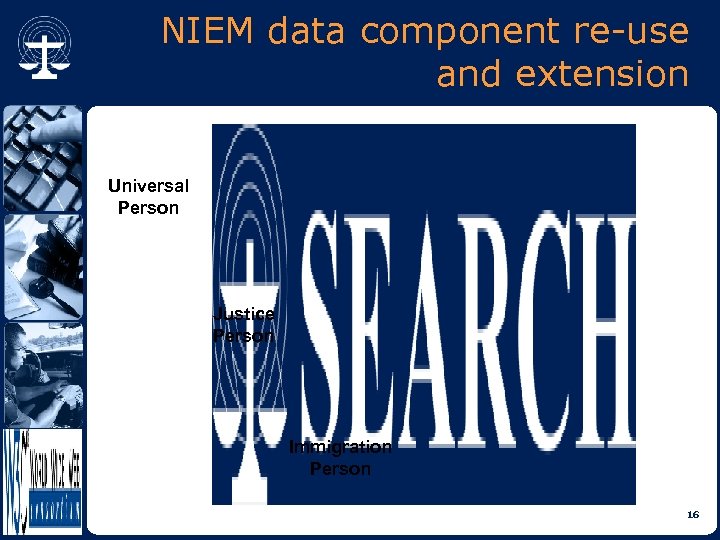 NIEM data component re-use and extension Universal Person Justice Person Immigration Person 16
 NIEM 1. 0 Partitioned into multiple NIEM domains Includes Universal, Common, and Structures namespaces (Core) Re-factors data components across all namespaces Implements Ø Associations Roles Ø Metadata Type Augmentation Re-factors some specialization occurrences into augmentation, associations, roles, and metadata Uses original GJXDM 3. 0. 3 Property. Type and Activity. Type 17
 NIEM 1. 0 Content: Ø Customs and Border Protection / International Trade Ø Emergency Management Ø Immigration and Customs Enforcement Ø Infrastructure Protection Ø Intelligence Ø Justice Ø Person Screening Ø External standards (Geospatial, EDXL) 18
 Requirements for JXDM 4. 0/NIEM 2. 0 release All proposed 4. 0 functionality NIEM Naming and Design Rules (NDR) compliance Version independence Lessons learned from NIEM 1. 0 implementations Ø Commitment from NIEM PMO to support local and state pilots 19
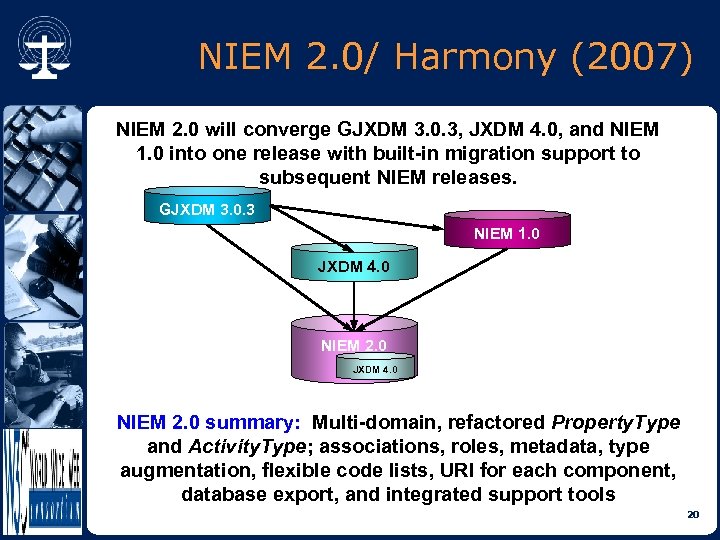 NIEM 2. 0/ Harmony (2007) NIEM 2. 0 will converge GJXDM 3. 0. 3, JXDM 4. 0, and NIEM 1. 0 into one release with built-in migration support to subsequent NIEM releases. GJXDM 3. 0. 3 NIEM 1. 0 JXDM 4. 0 NIEM 2. 0 summary: Multi-domain, refactored Property. Type and Activity. Type; associations, roles, metadata, type augmentation, flexible code lists, URI for each component, database export, and integrated support tools 20
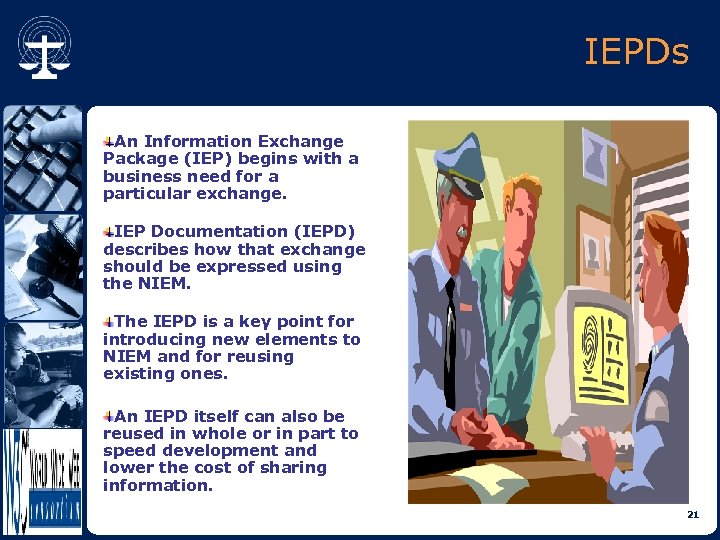 IEPDs An Information Exchange Package (IEP) begins with a business need for a particular exchange. IEP Documentation (IEPD) describes how that exchange should be expressed using the NIEM. The IEPD is a key point for introducing new elements to NIEM and for reusing existing ones. An IEPD itself can also be reused in whole or in part to speed development and lower the cost of sharing information. 21
 The Value of IEPDs Establish standards to ensure semantic interoperability Interoperability can dramatically reduce the cost and risk of implementing information exchanges Interoperability increases agility 22
 IEPDs as Standards 23
 JXDM and NIEM Specifications Ø Biometrics (ANSI-NIST ITL-2006) Ø FBI Electronic Fingerprint Transmission Specification (EFTS) Ø Uniform Rap Sheet Ø NCIC 2000 § Sex Offender, Serious Violent Offender, Wants, Warrants, Hot Files Protection Orders Ø OASIS Court Filing 3. 0 Ø NDe. X (NIEM 1. 0) 24
 Los Angeles County THIS IS THE COUNTY Los Angeles, California 10 Million County Residents 88 Incorporated Cities 4, 084 Square Miles 45 Independent Police Departments Over 92 k Budgeted Employees 30% in Law and Justice 25
 Los Angeles County Examples Business Problem: Ø Unfunded State Propositions Ø Message exchange among all law enforcement agencies Business Needs: Ø DNA collection orders and proof of collection Ø Gang registration and notification to agencies Ø Real-time information from new and old proprietary disparate systems across multiple agencies and jurisdictions Ø Security and accountability for access to the information Ø Provide for future growth and connectivity to other systems 26
 Implementation Strategies Expanding LA County Justice Integration Services Infrastructure for new integrated applications such as DOTS and GARDS Developing Justice XML messages and documents (Livescan Returns, FBI Rapsheets, etc) for reuse Leveraging selective legacy application functionality with Web. Service enablement Piloting deployment of XML Security, schema validation, auditing and monitoring as a common shared service utilizing XML Security Appliance(s) 27
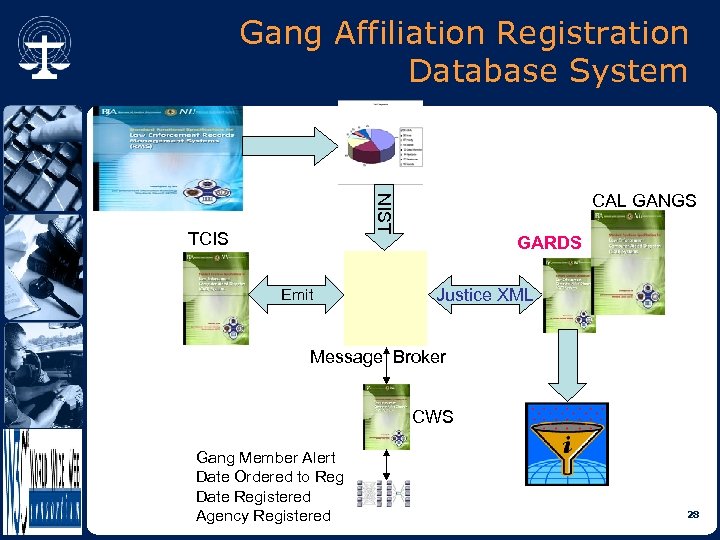 Gang Affiliation Registration Database System NIST CAL GANGS TCIS Emit GARDS Justice XML Message Broker CWS Gang Member Alert Date Ordered to Reg Date Registered Agency Registered 28
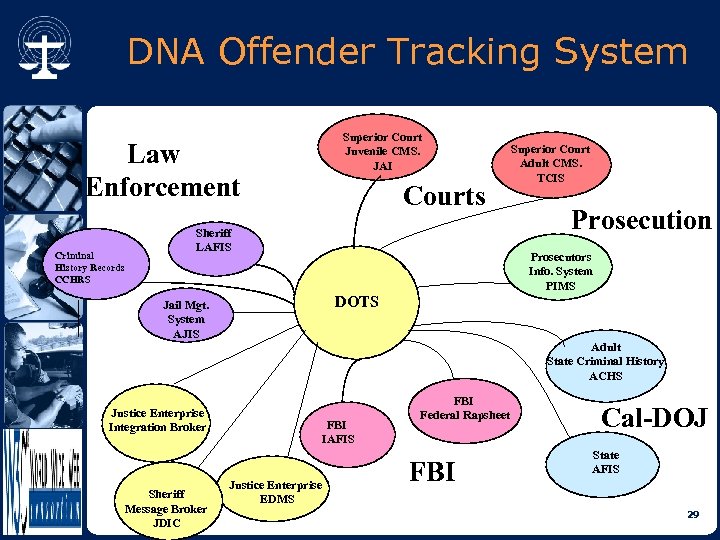 DNA Offender Tracking System Law Enforcement Criminal History Records CCHRS Superior Court Juvenile CMS. JAI Courts Sheriff LAFIS Prosecution Prosecutors Info. System PIMS DOTS Jail Mgt. System AJIS Adult State Criminal History ACHS Justice Enterprise Integration Broker Sheriff Message Broker JDIC Superior Court Adult CMS. TCIS FBI IAFIS Justice Enterprise EDMS FBI Federal Rapsheet FBI Cal-DOJ State AFIS 29
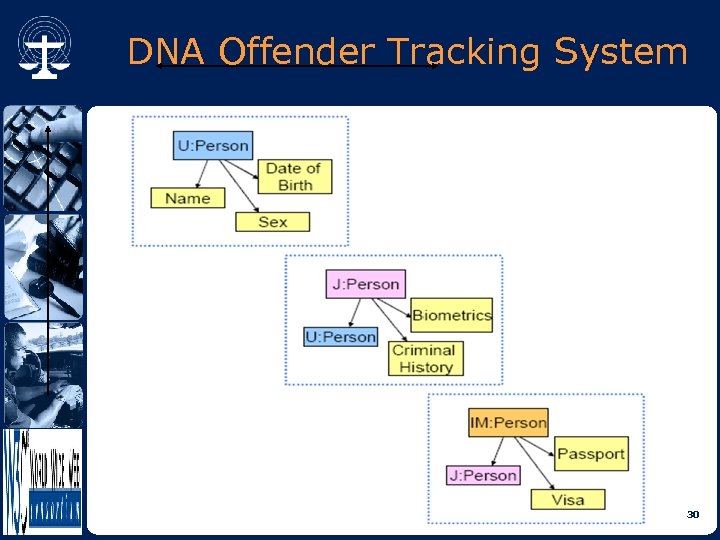 DNA Offender Tracking System 30
 Implementing Advantages Reusable components Ø Future projects can benefit Opportunity to improve business processes Ø Use Messaging design and modeling Opportunity to quickly add business processes Reduce future project costs 31
 Standard Functional Specifications for Law Enforcement CAD & RMS http: //it. ojp. gov and www. leitsc. org 32
 Standard Functional Specifications for Law Enforcement CAD & RMS Serve as a starting point for law enforcement agencies to use when developing CAD or RMS RFPs. Level the playing field when working with vendors. Streamline the process and lower the cost of implementing and maintaining a CAD or RMS. Promote interoperability & information sharing. 33
 Standard Functional Specifications for Law Enforcement CAD & RMS 5 Business Functions for a CAD System Ø Law Enforcement Dispatch Ø CAD System Administration Ø Support Services Ø Call Management & Management Reporting Ø Interfaces (internal and external) 34
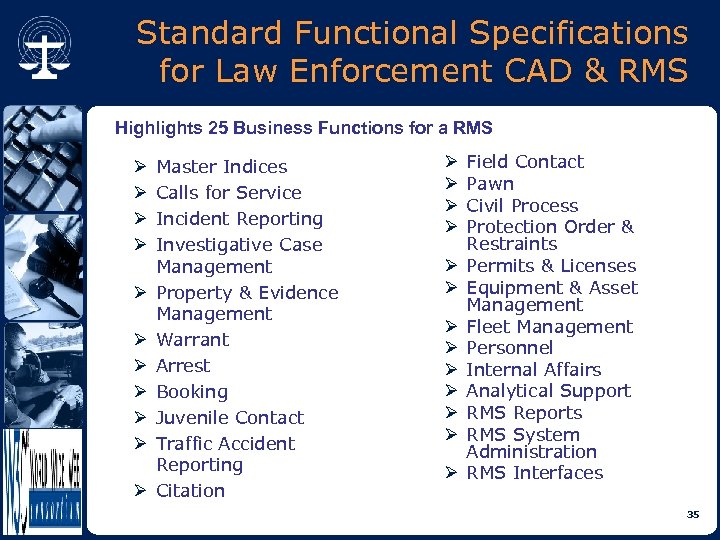 Standard Functional Specifications for Law Enforcement CAD & RMS Highlights 25 Business Functions for a RMS Ø Ø Ø Master Indices Calls for Service Incident Reporting Investigative Case Management Property & Evidence Management Warrant Arrest Booking Juvenile Contact Traffic Accident Reporting Citation Ø Ø Ø Ø Field Contact Pawn Civil Process Protection Order & Restraints Permits & Licenses Equipment & Asset Management Fleet Management Personnel Internal Affairs Analytical Support RMS Reports RMS System Administration RMS Interfaces 35
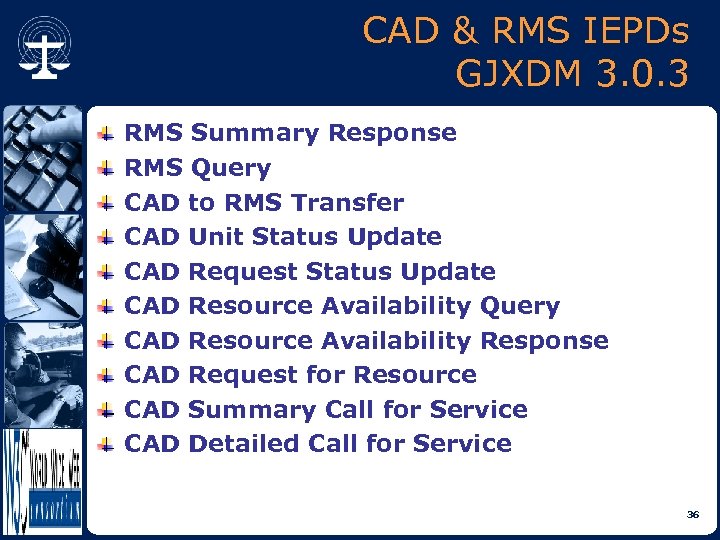 CAD & RMS IEPDs GJXDM 3. 0. 3 RMS Summary Response RMS Query CAD to RMS Transfer CAD Unit Status Update CAD Request Status Update CAD Resource Availability Query CAD Resource Availability Response CAD Request for Resource CAD Summary Call for Service CAD Detailed Call for Service 36
 LEITSC Contact Information Heather Ruzbasan LEITSC Project Manager 703 -836 -6767 ext. 275 ruzbasan@theiacp. org www. leitsc. org 37
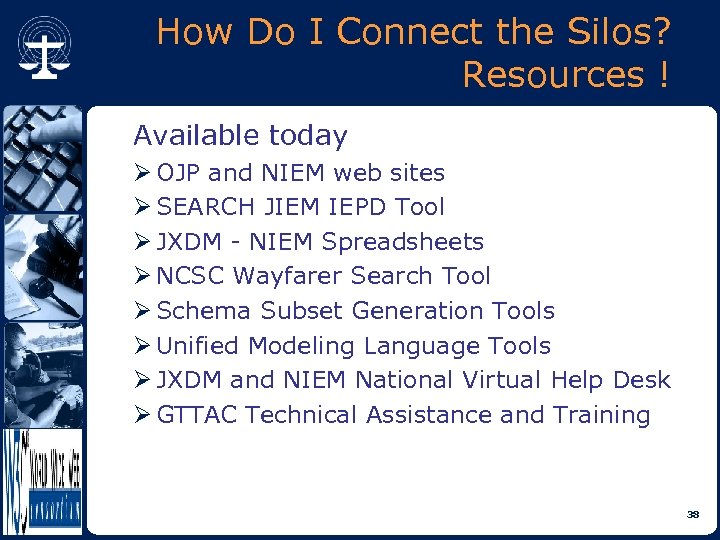 How Do I Connect the Silos? Resources ! Available today Ø OJP and NIEM web sites Ø SEARCH JIEM IEPD Tool Ø JXDM - NIEM Spreadsheets Ø NCSC Wayfarer Search Tool Ø Schema Subset Generation Tools Ø Unified Modeling Language Tools Ø JXDM and NIEM National Virtual Help Desk Ø GTTAC Technical Assistance and Training 38
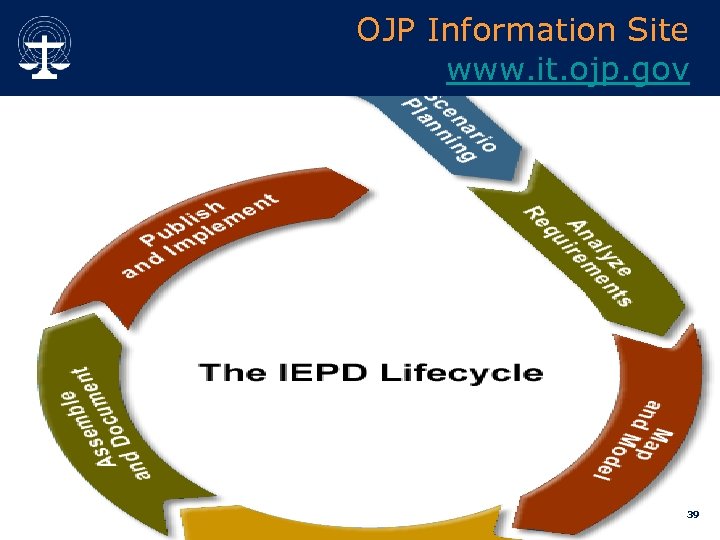 OJP Information Site www. it. ojp. gov 39
 NIEM Information Site www. niem. gov 40
 SEARCH JXDM/JIEM/NIEM Initiatives XML Structure Task Force (XSTF) Global Training and Technical Assistance Committee (GTTAC) IJIS Institute XML Committee Technical Assistance and Training (G) JXDM User Guide Sponsor 1 st Annual (G) JXDM User Conference Lead developer of Reference Information Exchange Package Documentation (IEPDs) JXDM-NIEM National Virtual Help Desk support Global and NIEM committees 41
 Thank you! Andrew Owen SEARCH, The National Consortium for Justice Information and Statistics 916 -215 -393 andrew@search. org Lt. Scott Edson Los Angeles County Sheriff’s Department Law Enforcement Information Sharing Program (562) 345 -4305 edson@lasd. org 42
 Questions ? XM L 43