


 Скачать презентацию Nature Neuroscience 2006 Speaker Yu-han Lee Advisor Dr
3b0b6d7341c1993bbb6066033deade97.ppt
- Количество слайдов: 37
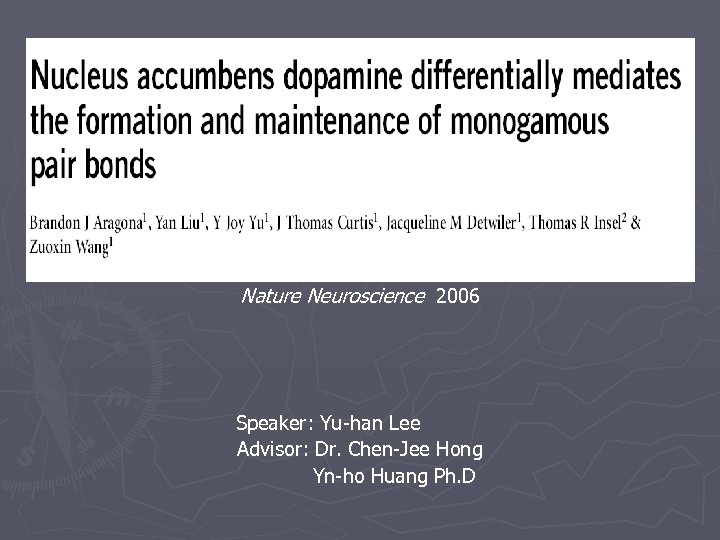 Nature Neuroscience 2006 Speaker: Yu-han Lee Advisor: Dr. Chen-Jee Hong Yn-ho Huang Ph. D
 Introduction
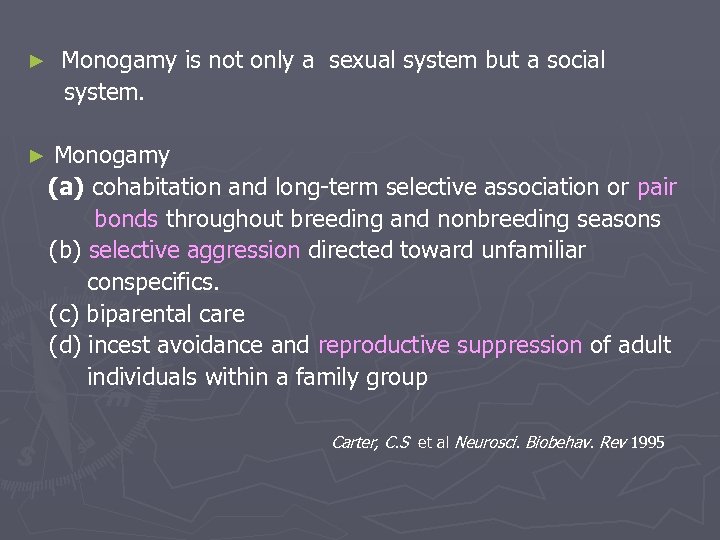 Monogamy is not only a sexual system but a social system. ► Monogamy (a) cohabitation and long-term selective association or pair bonds throughout breeding and nonbreeding seasons (b) selective aggression directed toward unfamiliar conspecifics. (c) biparental care (d) incest avoidance and reproductive suppression of adult individuals within a family group ► Carter, C. S et al Neurosci. Biobehav. Rev 1995
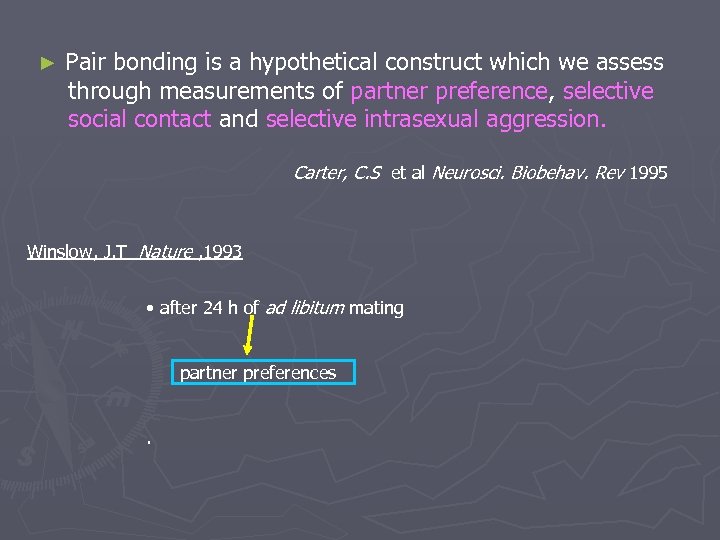 Pair bonding is a hypothetical construct which we assess through measurements of partner preference, selective social contact and selective intrasexual aggression. ► Carter, C. S et al Neurosci. Biobehav. Rev 1995 Winslow, J. T Nature , 1993 • after 24 h of ad libitum mating partner preferences.
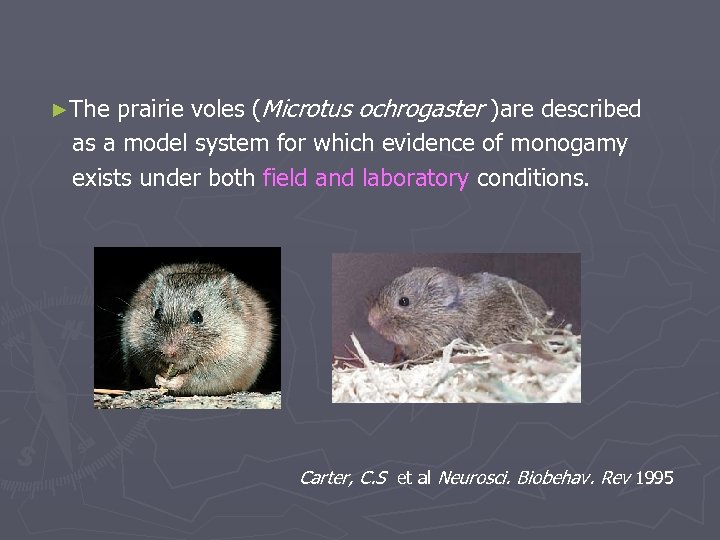 ►The prairie voles (Microtus ochrogaster )are described as a model system for which evidence of monogamy exists under both field and laboratory conditions. Carter, C. S et al Neurosci. Biobehav. Rev 1995
 ► The role of nucleus accumbens dopamine in the performance of a lever press avoidance task. Mc. Cullough LD et al Neurisci. 1993 ► Using self-administration and place-conditioning paradigms suggest that facilitation of NAcc DA transmission can serve as a reward. S. Ikemoto, J. Neurosci. 1997 NAcc DA system is involved in both reward and avoidance processes.
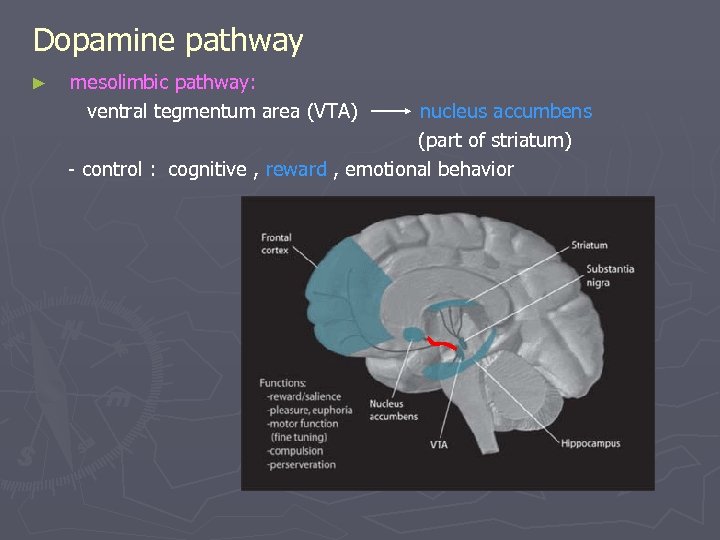 Dopamine pathway mesolimbic pathway: ventral tegmentum area (VTA) nucleus accumbens (part of striatum) - control : cognitive , reward , emotional behavior ►
 ► The present results suggest that concurrent activation of D 1 - and D 2 like receptors in the shell of the nucleus accumbens had a cooperative effect on DA-mediated reward processes. S. Ikemoto et al Neurosci. 1997 Activation of D 2 -like receptors induces partner preferences in the absence of mating. Gingrich, B. et al Behav. Neurosci. 2000 One study: activation of NAcc D 1 -like receptors does not promote partner preferences. Another study: low doses of the nonselective DA agonist apomorphine promoted partner preferences. Gingrich, B et al Behav. Neurosci 2000 Aragona, B. J et al J. Neurosci. 2003
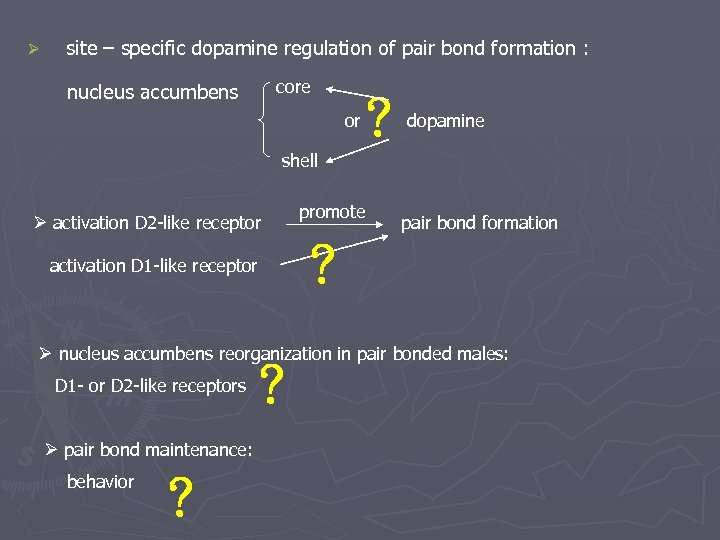 Ø site – specific dopamine regulation of pair bond formation : core nucleus accumbens ? or dopamine shell Ø activation D 2 -like receptor activation D 1 -like receptor promote pair bond formation ? Ø nucleus accumbens reorganization in pair bonded males: ? D 1 - or D 2 -like receptors Ø pair bond maintenance: behavior ?
 Ø D 1 -like receptors species-specific social organization ?
 Method and Result
 Partner preference test • 12 -17 wks of age , house with single-sex sibling pairs • females: ovariectomized & estrogen primed with ubcutaneous estrodial benzoate pellets implanted 4 d before pairing.
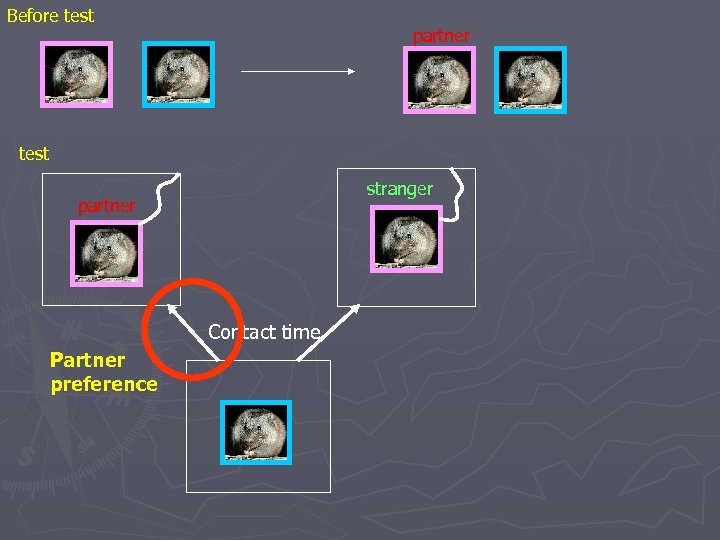 Before test partner test stranger partner Contact time Partner preference
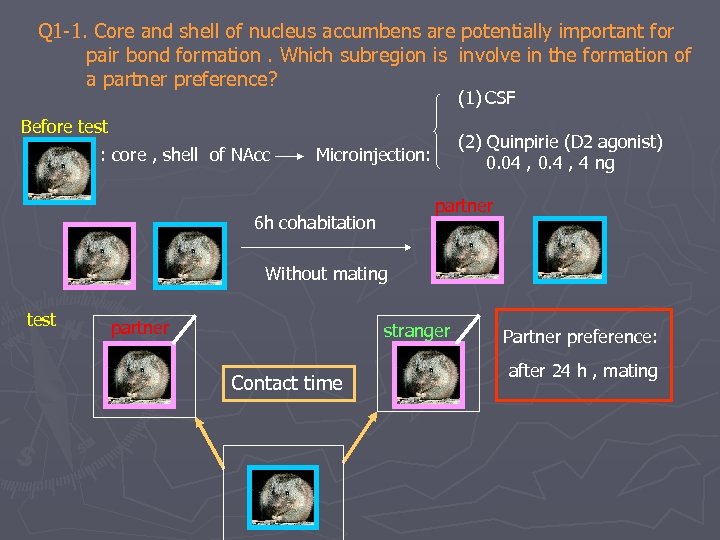 Q 1 -1. Core and shell of nucleus accumbens are potentially important for pair bond formation. Which subregion is involve in the formation of a partner preference? (1) CSF Before test : core , shell of NAcc Microinjection: (2) Quinpirie (D 2 agonist) 0. 04 , 0. 4 , 4 ng partner 6 h cohabitation Without mating test partner stranger Contact time Partner preference: after 24 h , mating
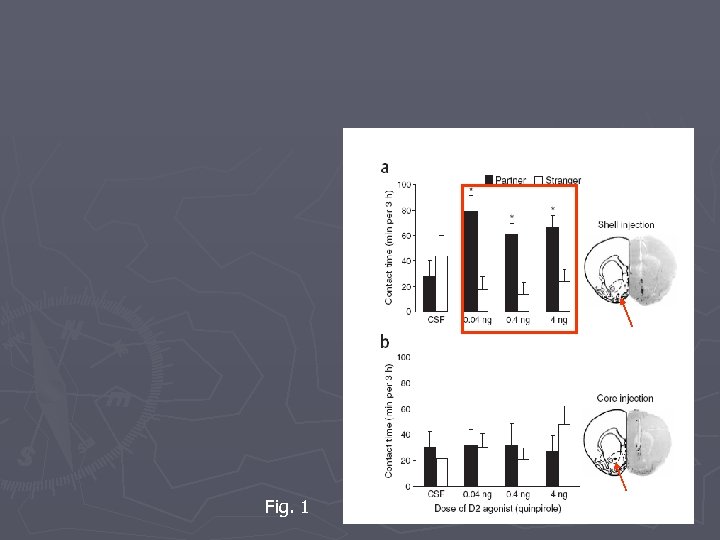 Fig. 1
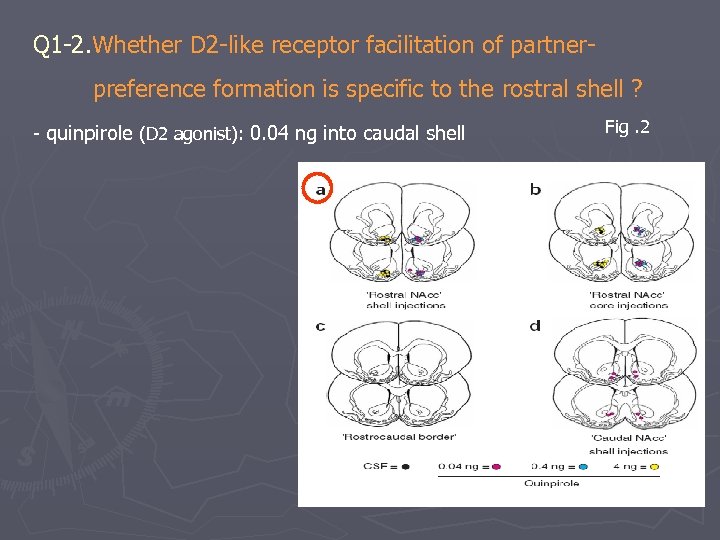 Q 1 -2. Whether D 2 -like receptor facilitation of partner- preference formation is specific to the rostral shell ? - quinpirole (D 2 agonist): 0. 04 ng into caudal shell Fig. 2
 Caudal shell injections of D 2 agonist did not induce partner preferences. rostral shell of the NAcc : DA regulation of partnerpreference formation.
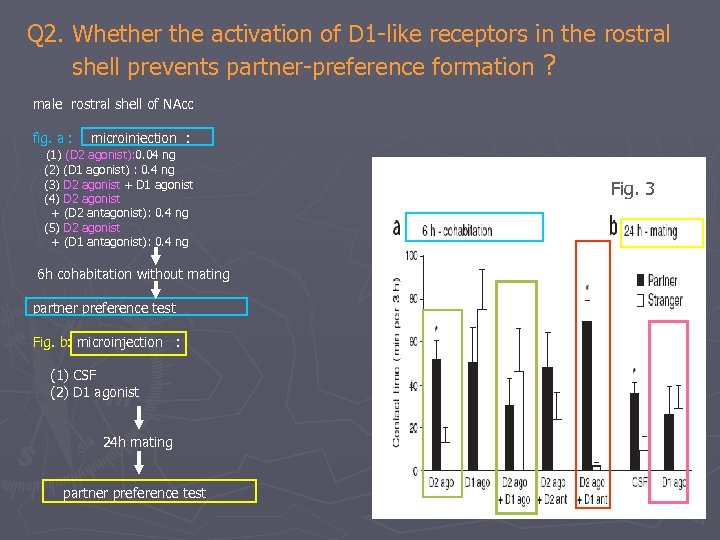 Q 2. Whether the activation of D 1 -like receptors in the rostral shell prevents partner-preference formation ? male rostral shell of NAcc fig. a : microinjection : (1) (D 2 agonist): 0. 04 ng (2) (D 1 agonist) : 0. 4 ng (3) D 2 agonist + D 1 agonist (4) D 2 agonist + (D 2 antagonist): 0. 4 ng (5) D 2 agonist + (D 1 antagonist): 0. 4 ng 6 h cohabitation without mating partner preference test Fig. b: microinjection : (1) CSF (2) D 1 agonist 24 h mating partner preference test Fig. 3
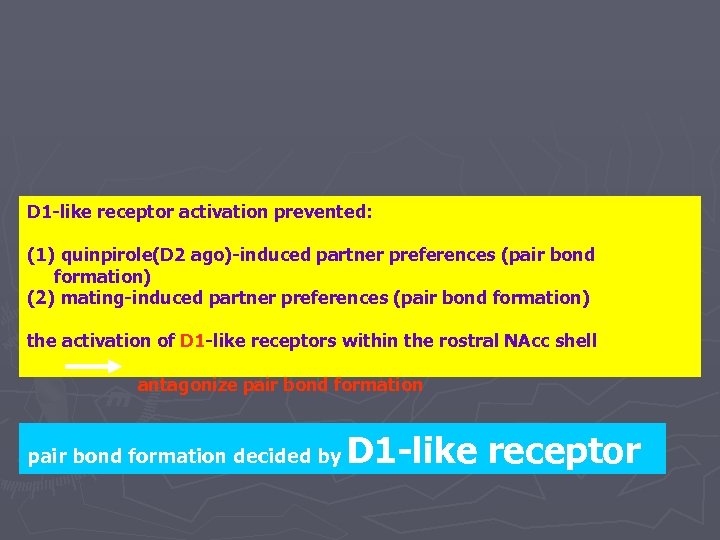 D 1 -like receptor activation prevented: (1) quinpirole(D 2 ago)-induced partner preferences (pair bond formation) (2) mating-induced partner preferences (pair bond formation) the activation of D 1 -like receptors within the rostral NAcc shell antagonize pair bond formation decided by D 1 -like receptor
 ► Field and laboratory studies have shown that extended exposure to a partner results in the rejection of potential mates, even if the partner is permanently removed. Pizzuto, T et al Behav. Processes 1998
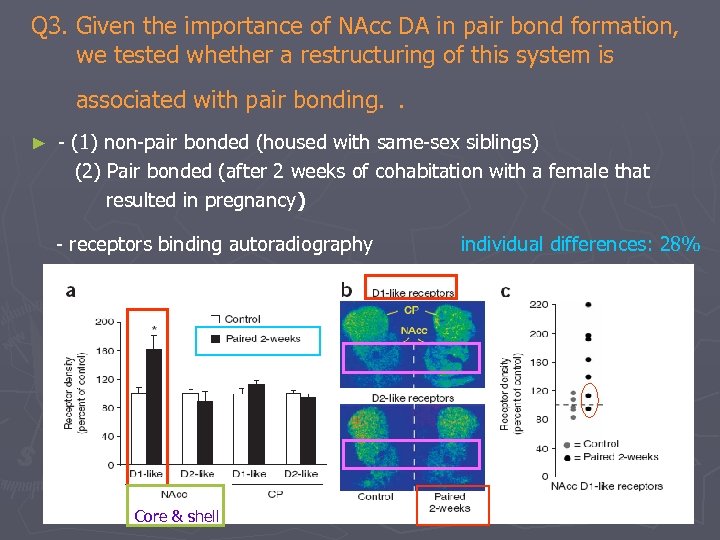 Q 3. Given the importance of NAcc DA in pair bond formation, we tested whether a restructuring of this system is associated with pair bonding. . - (1) non-pair bonded (housed with same-sex siblings) (2) Pair bonded (after 2 weeks of cohabitation with a female that resulted in pregnancy) ► - receptors binding autoradiography individual differences: 28% Core & shell
 Pair bonded males (2 wks): D 1 -like receptor binding in both the rostral core and shell of the NAcc
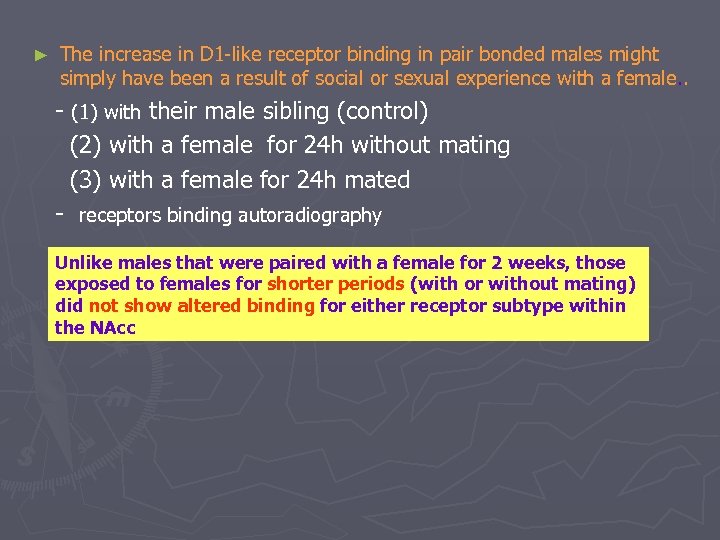 ► The increase in D 1 -like receptor binding in pair bonded males might simply have been a result of social or sexual experience with a female. . - (1) with their male sibling (control) (2) with a female for 24 h without mating (3) with a female for 24 h mated - receptors binding autoradiography Unlike males that were paired with a female for 2 weeks, those exposed to females for shorter periods (with or without mating) did not show altered binding for either receptor subtype within the NAcc
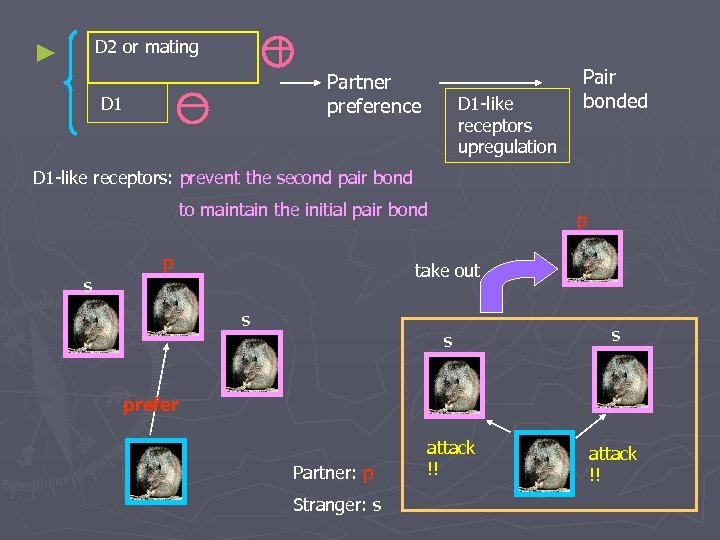 D 2 or mating ► Partner preference D 1 -like receptors upregulation Pair bonded D 1 -like receptors: prevent the second pair bond to maintain the initial pair bond p p take out s s prefer Partner: p Stranger: s attack !!
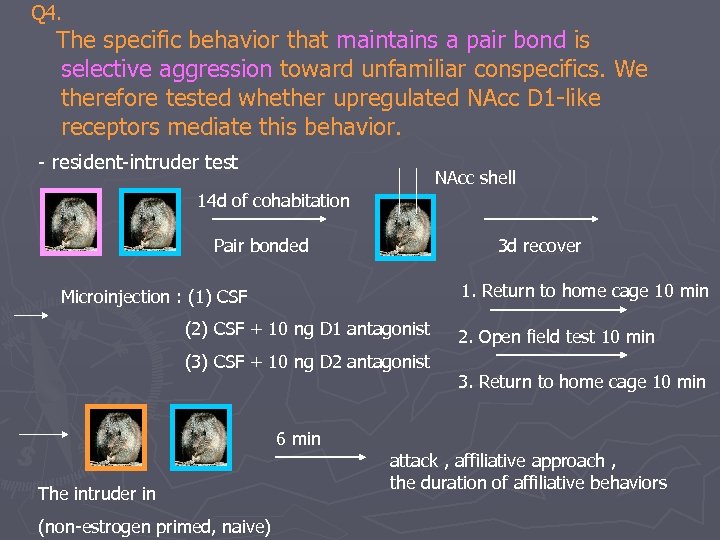 Q 4. The specific behavior that maintains a pair bond is selective aggression toward unfamiliar conspecifics. We therefore tested whether upregulated NAcc D 1 -like receptors mediate this behavior. - resident-intruder test NAcc shell 14 d of cohabitation Pair bonded 3 d recover Microinjection : (1) CSF 1. Return to home cage 10 min (2) CSF + 10 ng D 1 antagonist 2. Open field test 10 min (3) CSF + 10 ng D 2 antagonist 3. Return to home cage 10 min 6 min The intruder in (non-estrogen primed, naive) attack , affiliative approach , the duration of affiliative behaviors
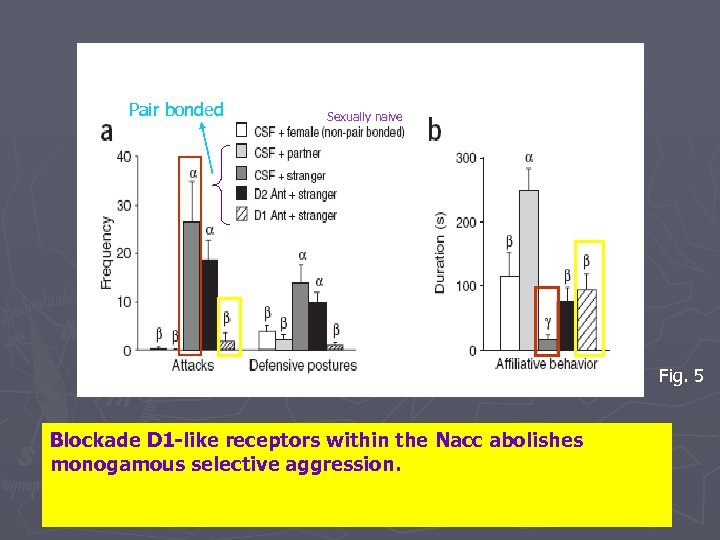 Pair bonded Sexually naive Fig. 5 Blockade D 1 -like receptors within the Nacc abolishes monogamous selective aggression.
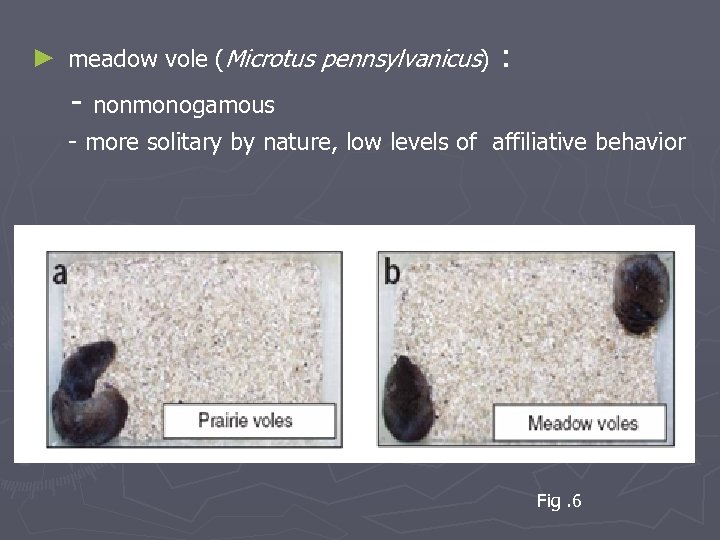 ► meadow vole (Microtus pennsylvanicus) : - nonmonogamous - more solitary by nature, low levels of affiliative behavior Fig. 6
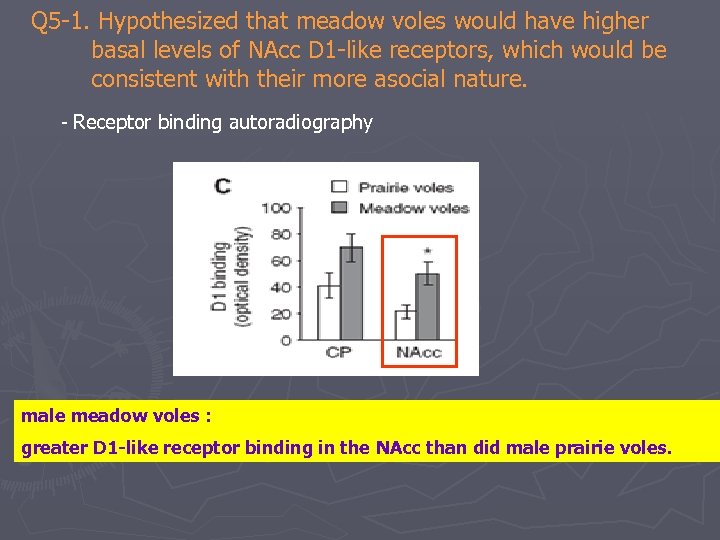 Q 5 -1. Hypothesized that meadow voles would have higher basal levels of NAcc D 1 -like receptors, which would be consistent with their more asocial nature. - Receptor binding autoradiography male meadow voles : greater D 1 -like receptor binding in the NAcc than did male prairie voles.
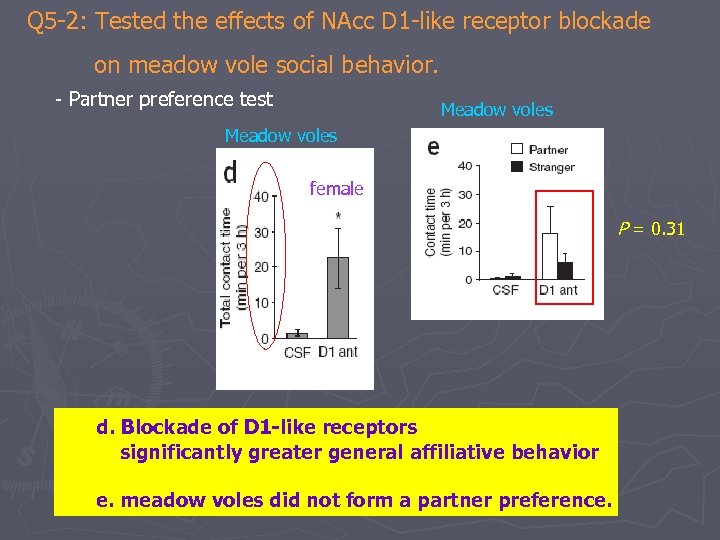 Q 5 -2: Tested the effects of NAcc D 1 -like receptor blockade on meadow vole social behavior. - Partner preference test Meadow voles female P = 0. 31 d. Blockade of D 1 -like receptors significantly greater general affiliative behavior e. meadow voles did not form a partner preference.
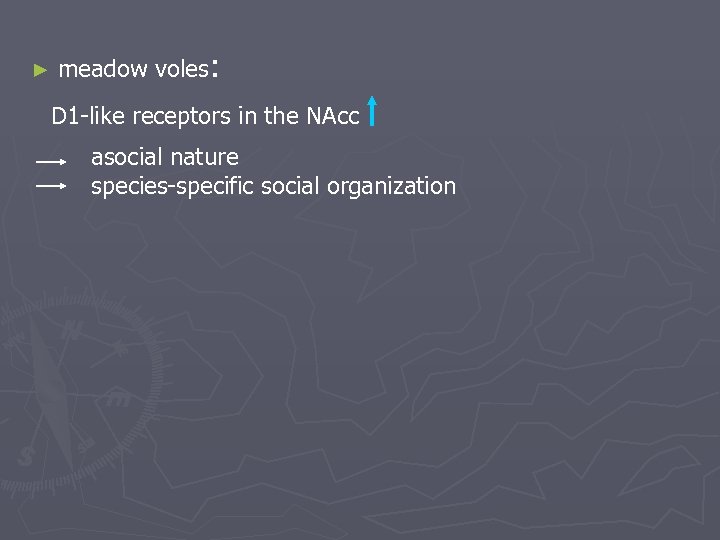 ► meadow voles: D 1 -like receptors in the NAcc asocial nature species-specific social organization
 Discussion
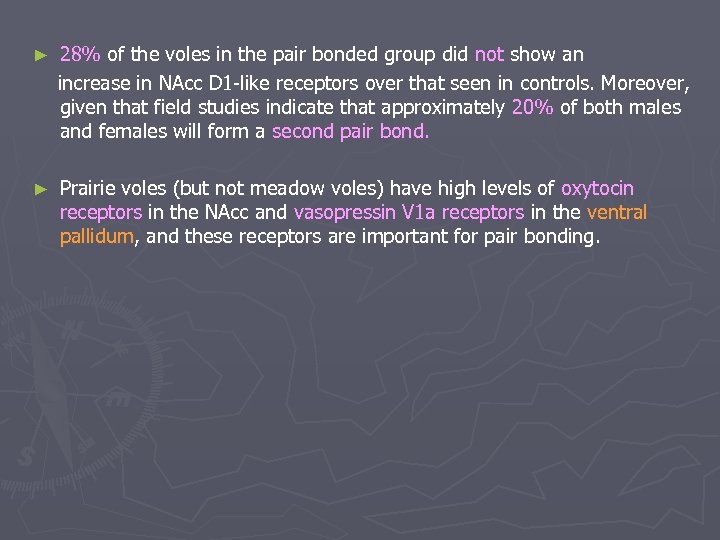 28% of the voles in the pair bonded group did not show an increase in NAcc D 1 -like receptors over that seen in controls. Moreover, given that field studies indicate that approximately 20% of both males and females will form a second pair bond. ► ► Prairie voles (but not meadow voles) have high levels of oxytocin receptors in the NAcc and vasopressin V 1 a receptors in the ventral pallidum, and these receptors are important for pair bonding.
 Conclusion
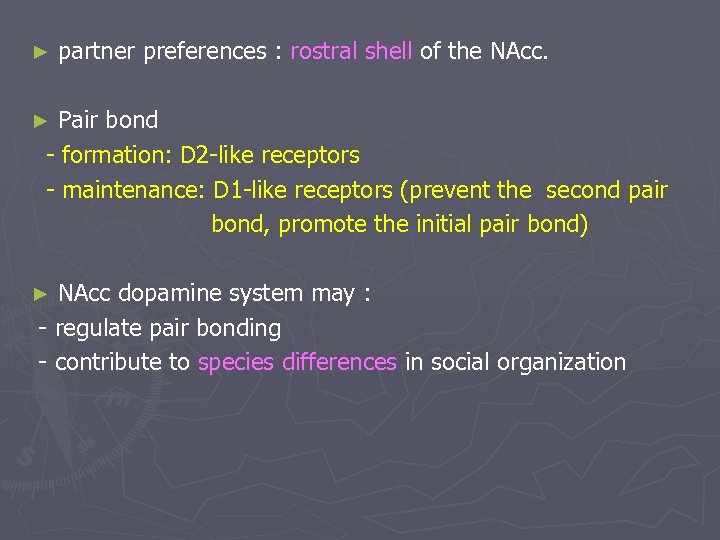 ► partner preferences : rostral shell of the NAcc. Pair bond - formation: D 2 -like receptors - maintenance: D 1 -like receptors (prevent the second pair bond, promote the initial pair bond) ► NAcc dopamine system may : - regulate pair bonding - contribute to species differences in social organization ►
 Thank you !
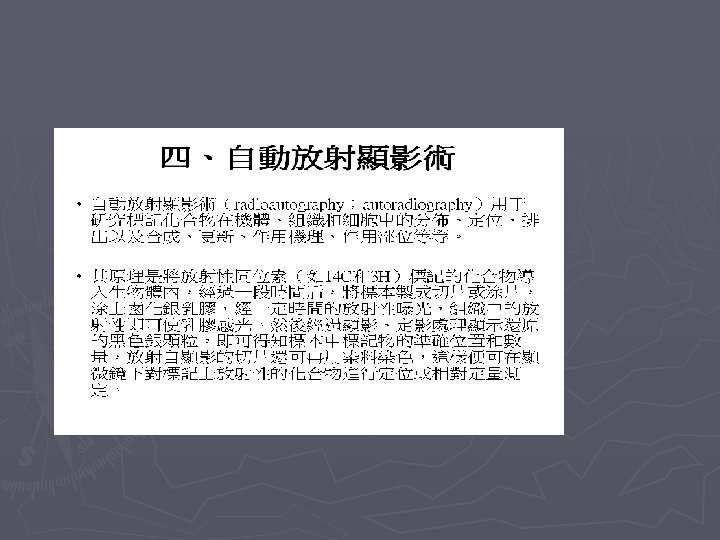
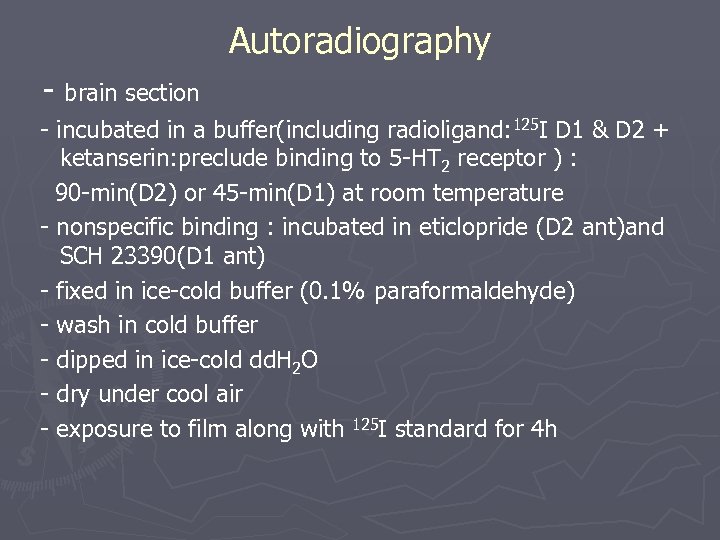 Autoradiography - brain section - incubated in a buffer(including radioligand: 125 I D 1 & D 2 + ketanserin: preclude binding to 5 -HT 2 receptor ) : 90 -min(D 2) or 45 -min(D 1) at room temperature - nonspecific binding : incubated in eticlopride (D 2 ant)and SCH 23390(D 1 ant) - fixed in ice-cold buffer (0. 1% paraformaldehyde) - wash in cold buffer - dipped in ice-cold dd. H 2 O - dry under cool air - exposure to film along with 125 I standard for 4 h