


 Скачать презентацию Natural Running and the Lost Art of Fartlek
8a9a01bb04d1d3515697c94cda9ac775.ppt
- Количество слайдов: 145
 Natural Running and the Lost Art of Fartlek Photo by Jorg Badura NY Times Mark Cucuzzella MD FAAFP Professor of Family Medicine West Virginia University Lt Col USAF Reserves MSGT Mike Mann 1966 -2008
 Objectives Define Health and Play n The Lost Art of Fartlek? n Building Endurance n Does Nutrition Matter? n Is there one best way to run? n Biomechanics as we were designed n A little about footwear n Injuries – are they inevitable? n
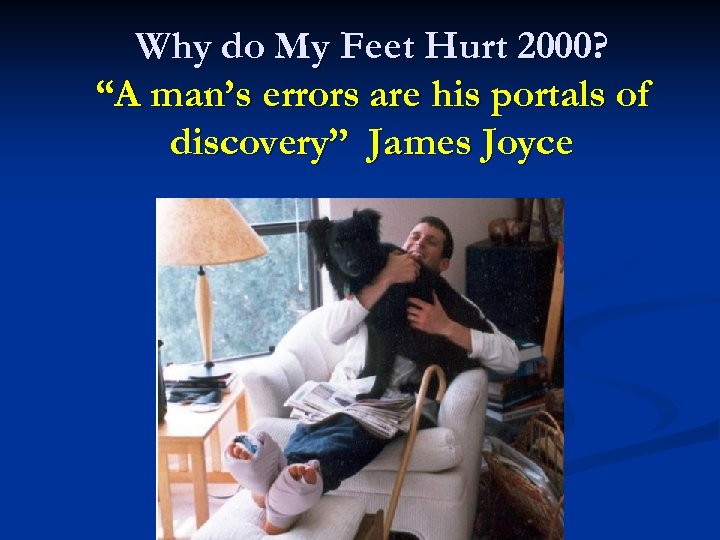 Why do My Feet Hurt 2000? “A man’s errors are his portals of discovery” James Joyce
 And from 2 Millennia ago Sub sole nihil novi est There is Nothing New Under the S Sunrise Run Avalon NJ
 World Health Organization Health is a state of complete physical, mental, and social well-being and not merely the absence of disease or infirmity.
 What is Play?
 Play -Stuart Brown MD n “Play (by definition) is purposeless and all consuming. And most important its fun. ” n It is disconnected from outcomes n Maybe every run should be a Fartlek
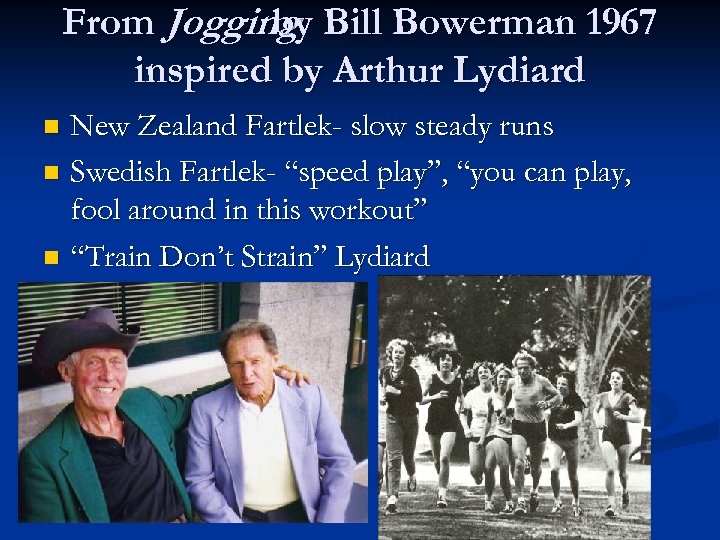 From Jogging Bill Bowerman 1967 by inspired by Arthur Lydiard New Zealand Fartlek- slow steady runs n Swedish Fartlek- “speed play”, “you can play, fool around in this workout” n “Train Don’t Strain” Lydiard n
 “What is the opposite of Play? ” n Work? Speedwork? Workouts? n ……Depression n. Running is Play!
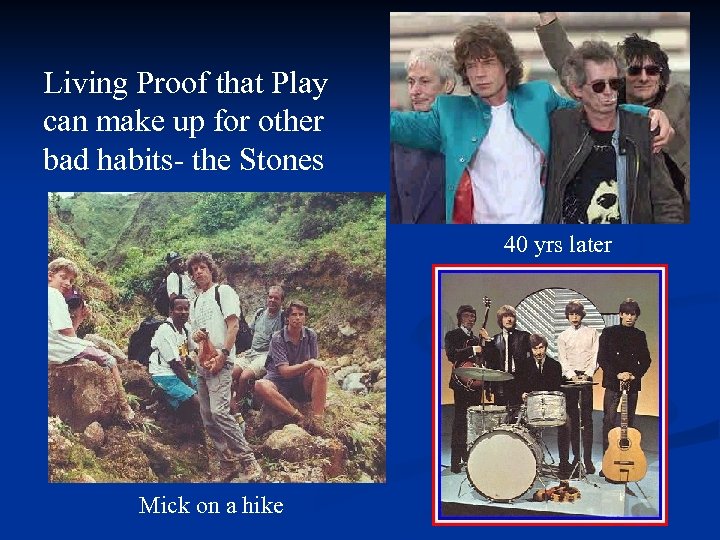 Living Proof that Play can make up for other bad habits- the Stones 40 yrs later Mick on a hike
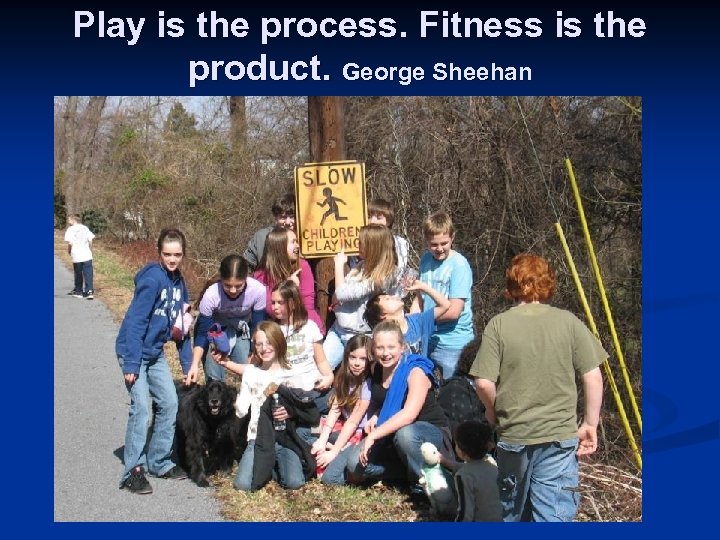 Play is the process. Fitness is the product. George Sheehan
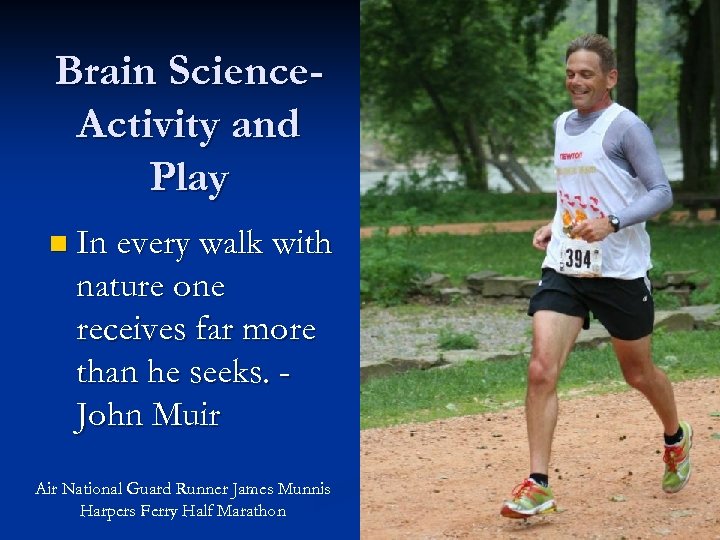 Brain Science. Activity and Play n In every walk with nature one receives far more than he seeks. John Muir Air National Guard Runner James Munnis Harpers Ferry Half Marathon
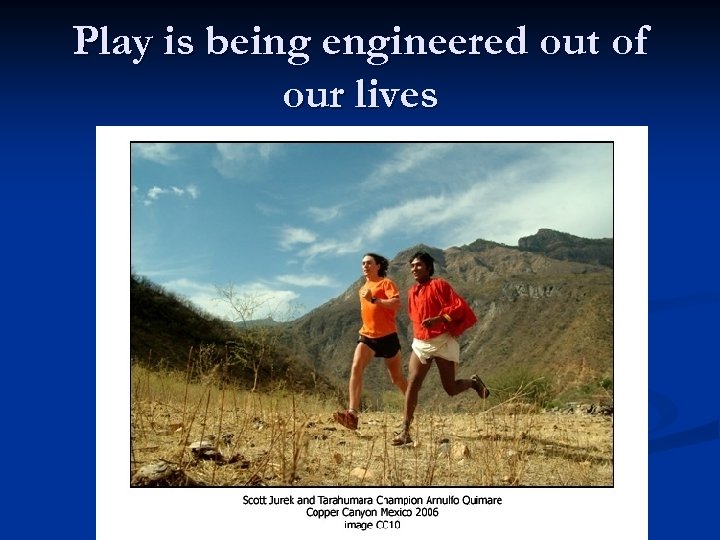 Play is being engineered out of our lives
 “Man is most nearly himself when he achieves the seriousness of a child at play. ” Heraclitus Greek philosopher Barefoot Running with the Kids
 “A child loves his play, not because it’s easy, but because it’s hard. ” Dr. Benjamin Spock Shepherdstown Road Runners Club
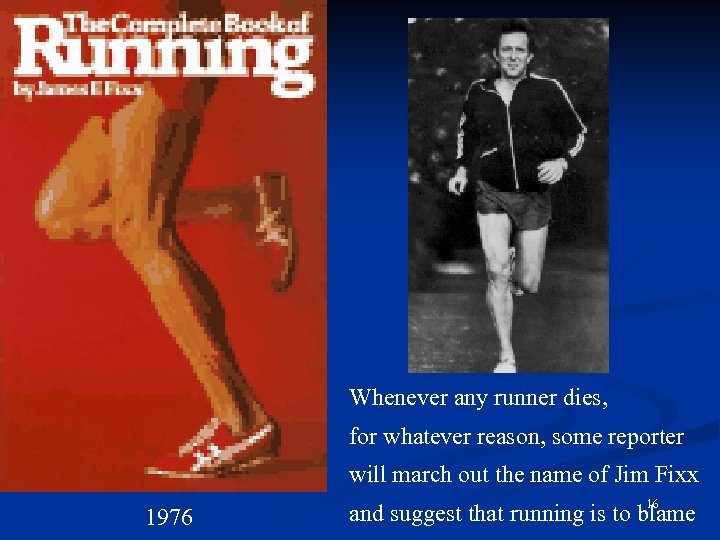 Whenever any runner dies, for whatever reason, some reporter will march out the name of Jim Fixx 1976 16 and suggest that running is to blame
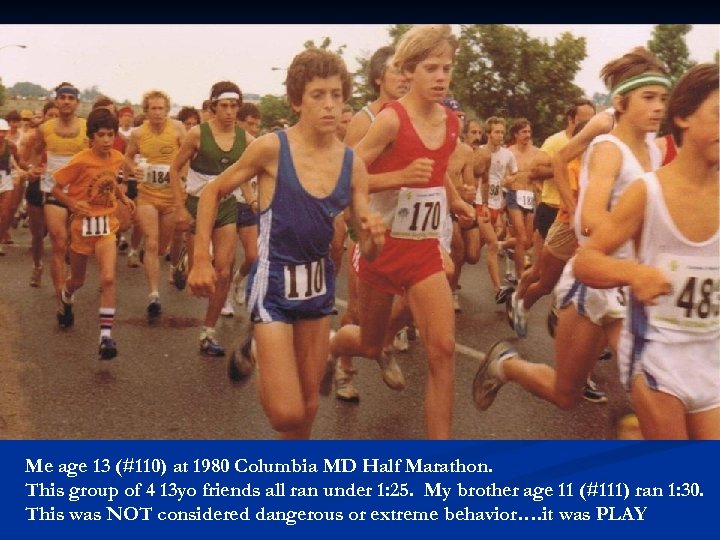 Me age 13 (#110) at 1980 Columbia MD Half Marathon. This group of 4 13 yo friends all ran under 1: 25. My brother age 11 (#111) ran 1: 30. This was NOT considered dangerous or extreme behavior…. it was PLAY
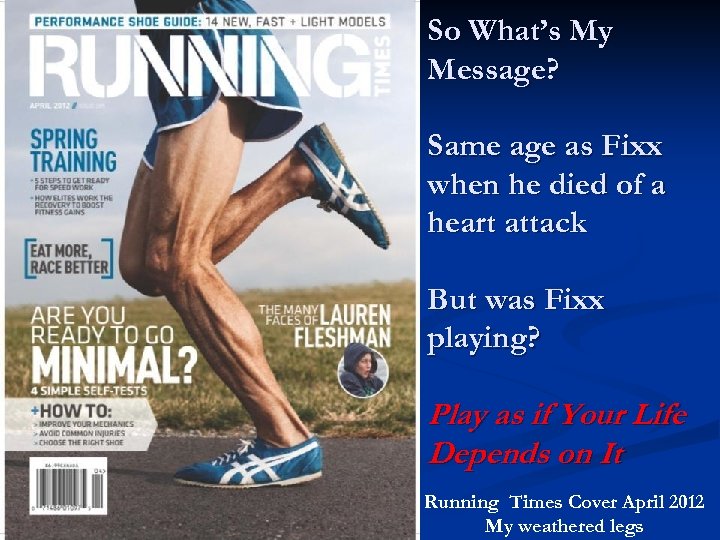 So What’s My Message? Same age as Fixx when he died of a heart attack But was Fixx playing? Play as if Your Life Depends on It Running Times Cover April 2012 My weathered legs
 “Life must be lived as play. ” Plato What’s Your Monkey Bars? Barefoot Running Antietam
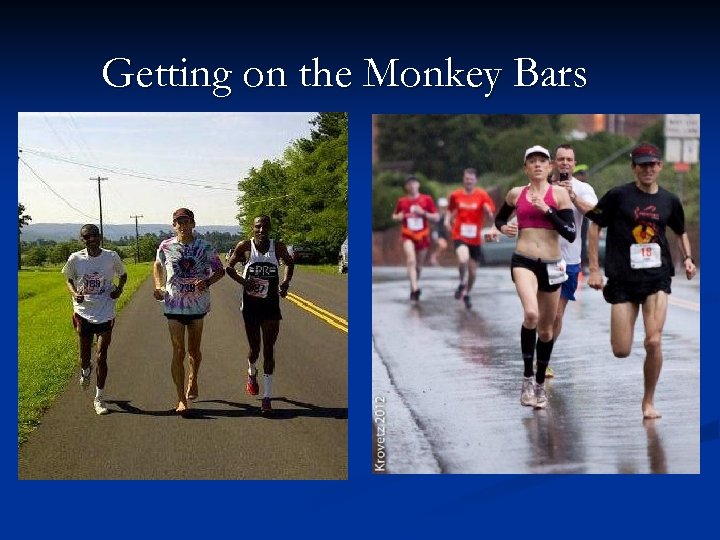 Getting on the Monkey Bars
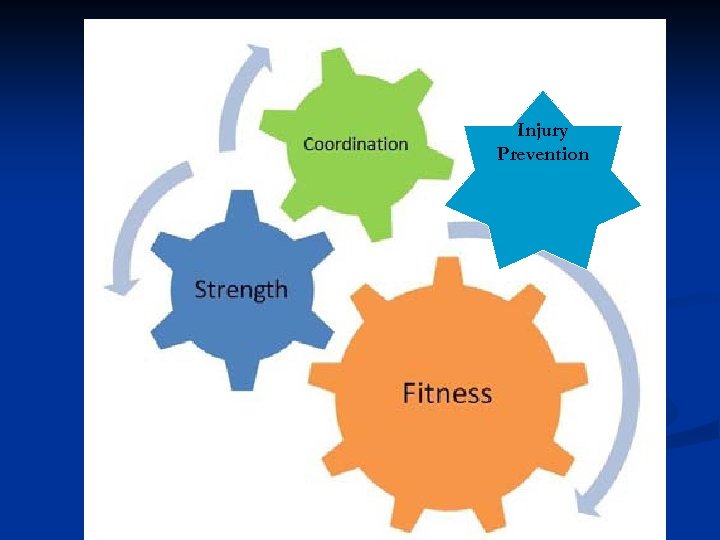 Injury Prevention
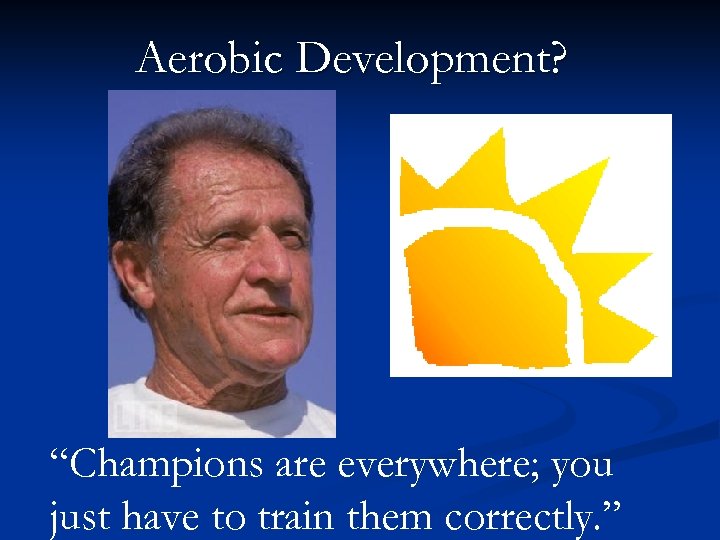 Aerobic Development? “Champions are everywhere; you just have to train them correctly. ”
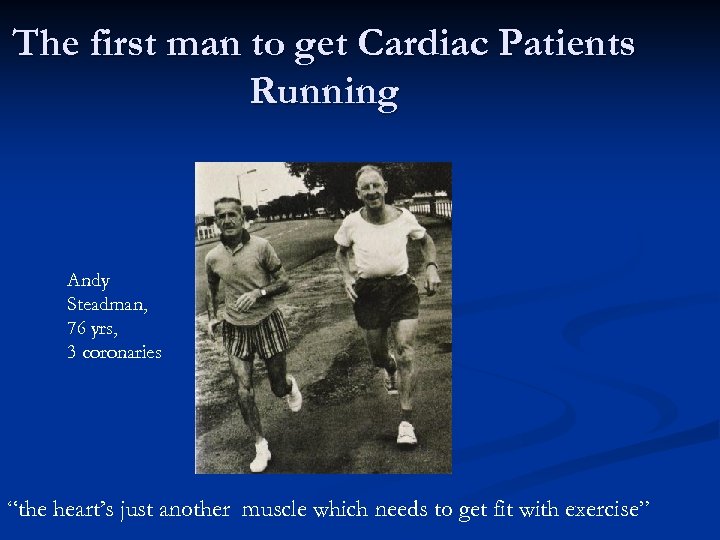 The first man to get Cardiac Patients Running Andy Steadman, 76 yrs, 3 coronaries “the heart’s just another muscle which needs to get fit with exercise”
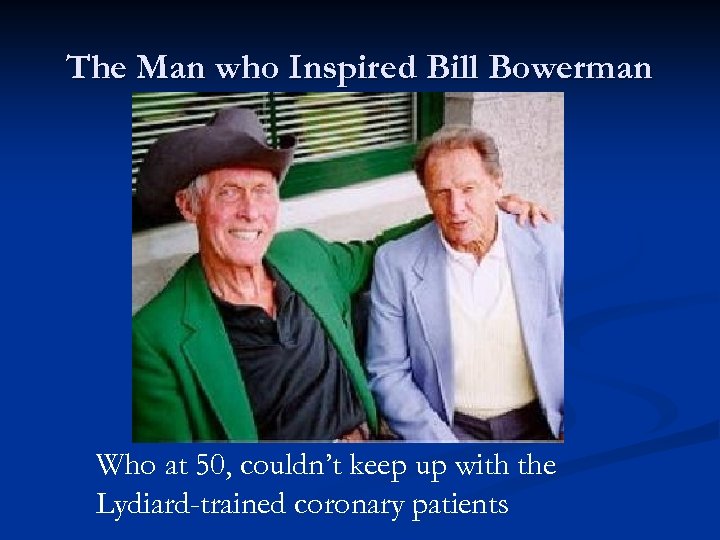 The Man who Inspired Bill Bowerman Who at 50, couldn’t keep up with the Lydiard-trained coronary patients
 The Prius Display- Build Your “Electric (Aerobic)” Engine then use the “Gas” when you need it 25
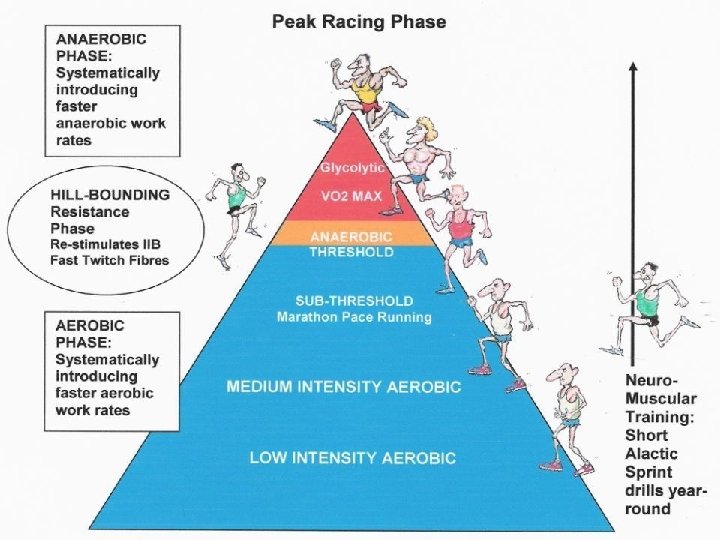
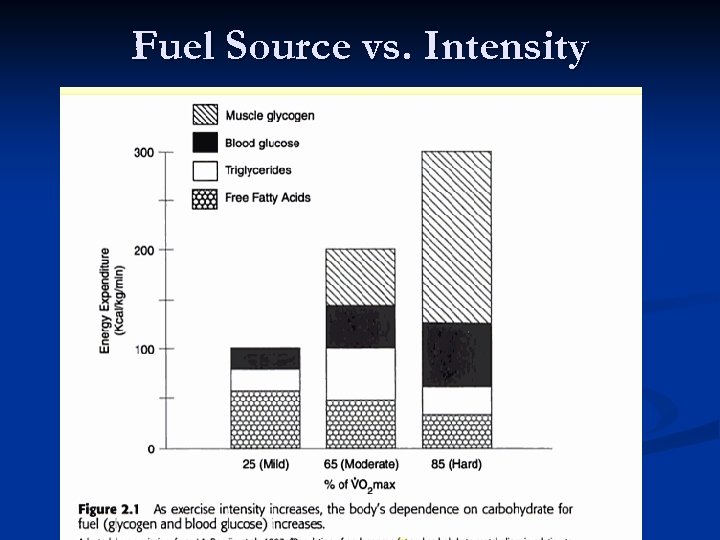 Fuel Source vs. Intensity
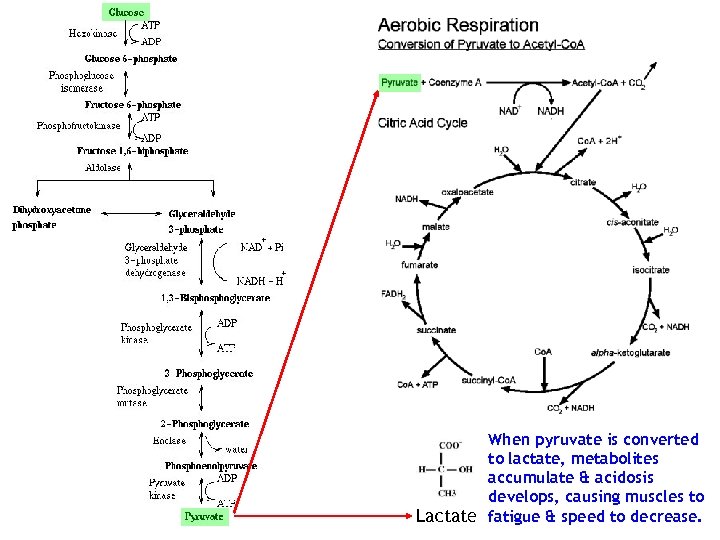 When pyruvate is converted to lactate, metabolites accumulate & acidosis develops, causing muscles to Lactate fatigue & speed to decrease.
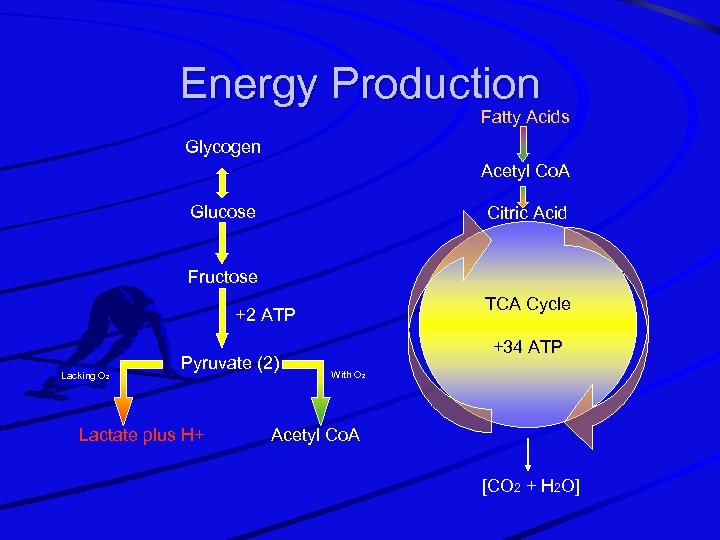 Energy Production Fatty Acids Glycogen Acetyl Co. A Glucose Citric Acid Fructose TCA Cycle +2 ATP Lacking O 2 Pyruvate (2) Lactate plus H+ +34 ATP With O 2 Acetyl Co. A [CO 2 + H 2 O]
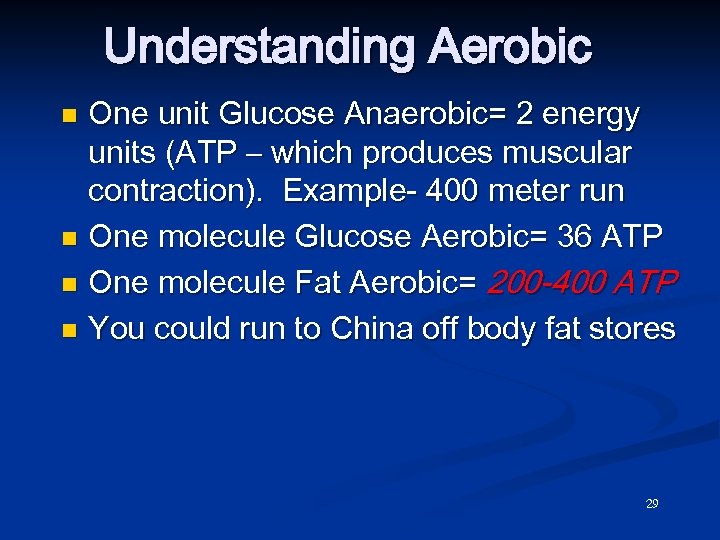 Understanding Aerobic One unit Glucose Anaerobic= 2 energy units (ATP – which produces muscular contraction). Example- 400 meter run n One molecule Glucose Aerobic= 36 ATP n One molecule Fat Aerobic= 200 -400 ATP n You could run to China off body fat stores n 29
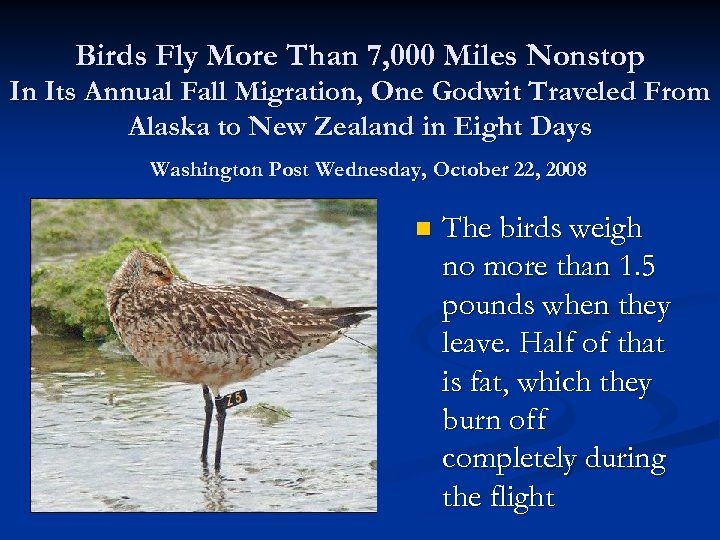 Birds Fly More Than 7, 000 Miles Nonstop In Its Annual Fall Migration, One Godwit Traveled From Alaska to New Zealand in Eight Days Washington Post Wednesday, October 22, 2008 n The birds weigh no more than 1. 5 pounds when they leave. Half of that is fat, which they burn off completely during the flight
 THE FIVE LYDIARD PRINCIPLES 1. Maximize your Aerobic Capacity with a massive aerobic base Is your training program PISA………. or GIZA?
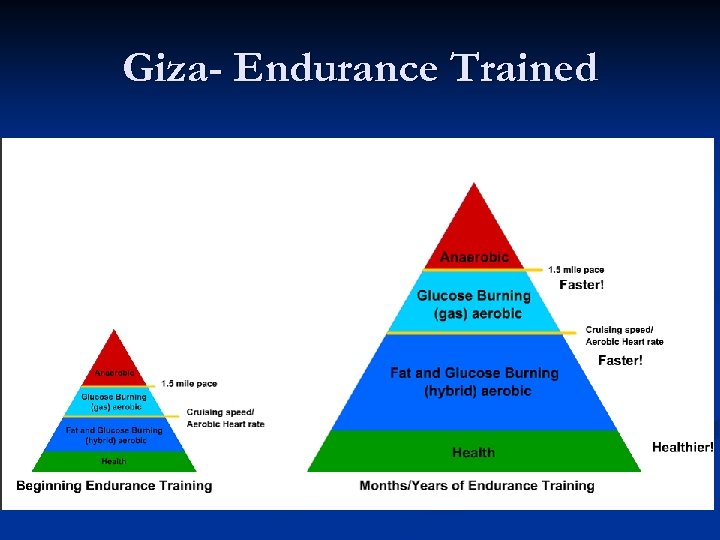 Giza- Endurance Trained
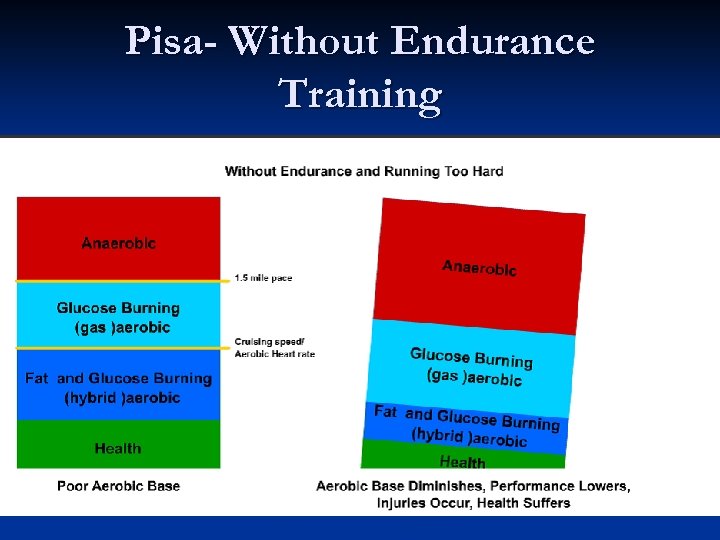 Pisa- Without Endurance Training
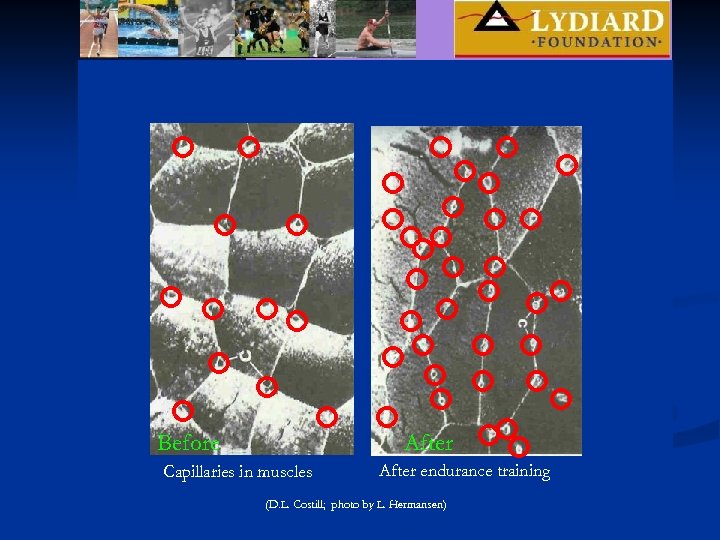 Before After Capillaries in muscles After endurance training (D. L. Costill; photo by L. Hermansen)
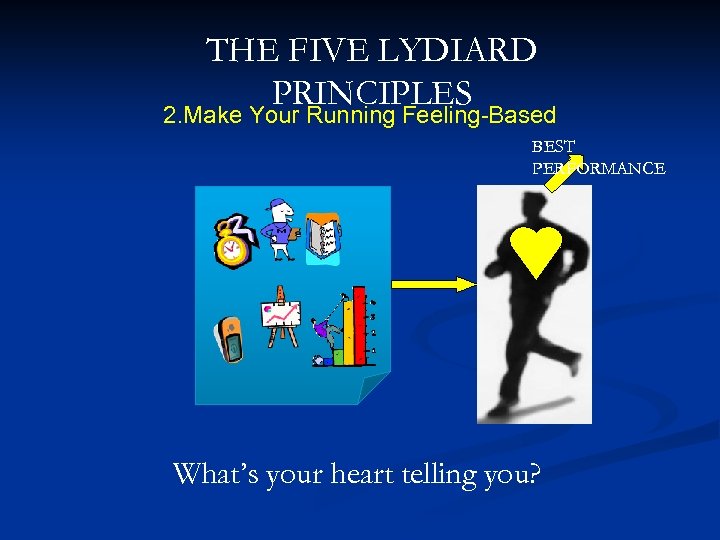 THE FIVE LYDIARD PRINCIPLES 2. Make Your Running Feeling-Based BEST PERFORMANCE What’s your heart telling you?
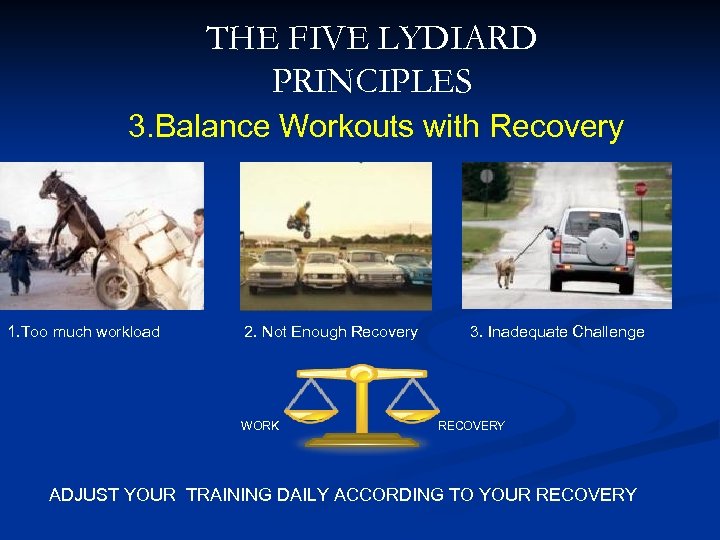 THE FIVE LYDIARD PRINCIPLES 3. Balance Workouts with Recovery 1. Too much workload 2. Not Enough Recovery WORK 3. Inadequate Challenge RECOVERY ADJUST YOUR TRAINING DAILY ACCORDING TO YOUR RECOVERY
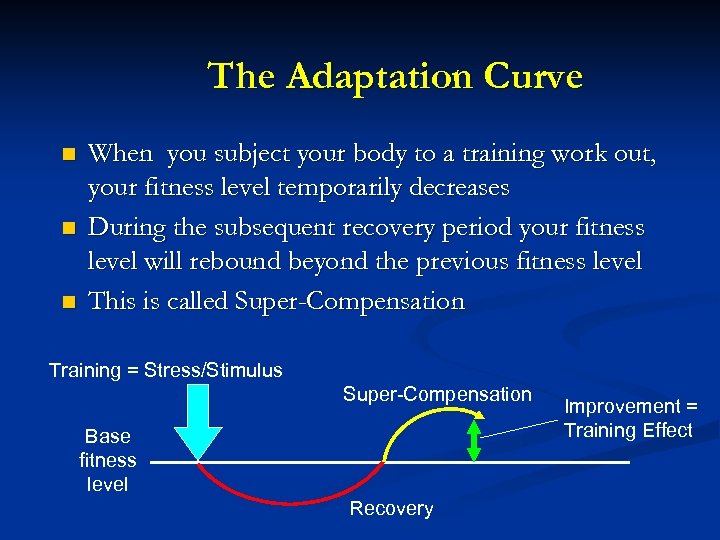 The Adaptation Curve n n n When you subject your body to a training work out, your fitness level temporarily decreases During the subsequent recovery period your fitness level will rebound beyond the previous fitness level This is called Super-Compensation Training = Stress/Stimulus Super-Compensation Base fitness level Recovery Improvement = Training Effect
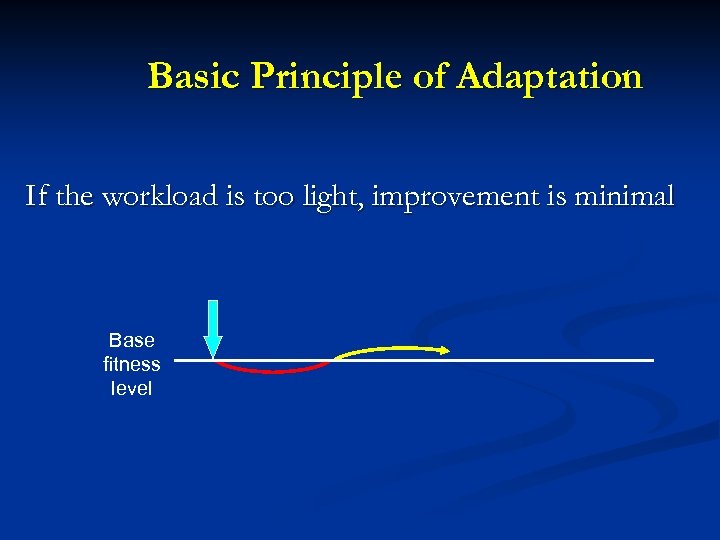 Basic Principle of Adaptation If the workload is too light, improvement is minimal Base fitness level
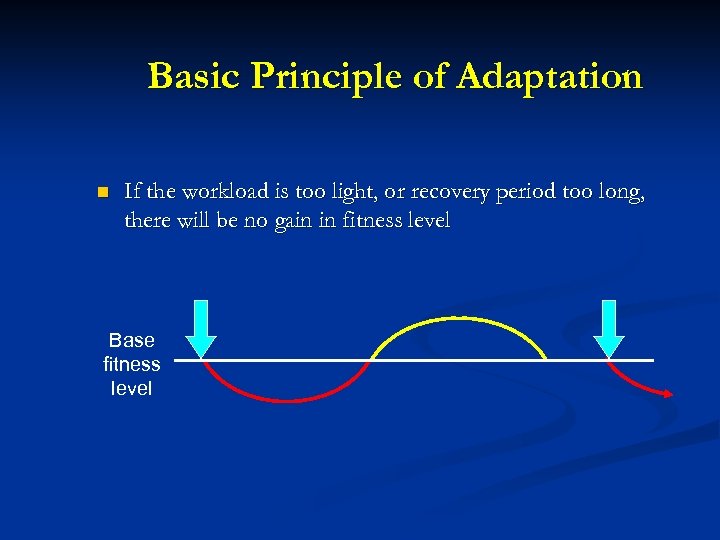 Basic Principle of Adaptation n If the workload is too light, or recovery period too long, there will be no gain in fitness level Base fitness level
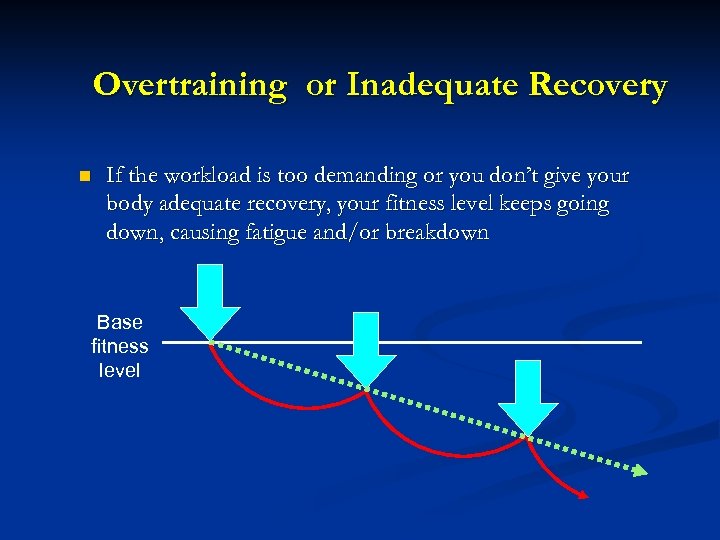 Overtraining or Inadequate Recovery n If the workload is too demanding or you don’t give your body adequate recovery, your fitness level keeps going down, causing fatigue and/or breakdown Base fitness level
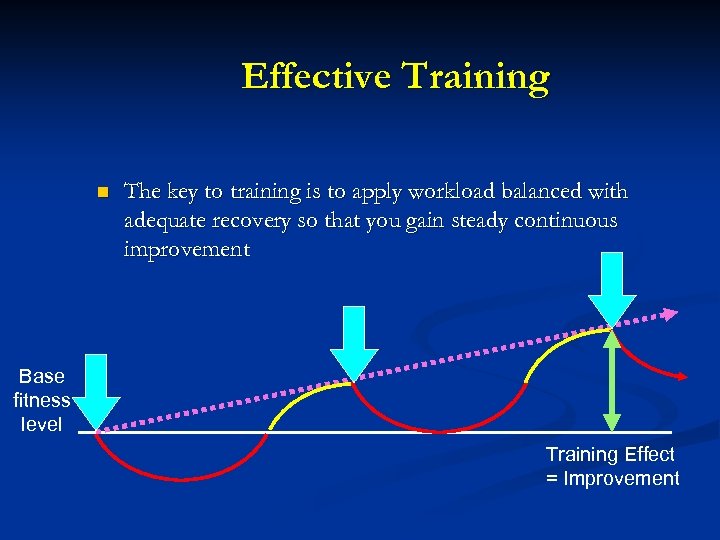 Effective Training n The key to training is to apply workload balanced with adequate recovery so that you gain steady continuous improvement Base fitness level Training Effect = Improvement
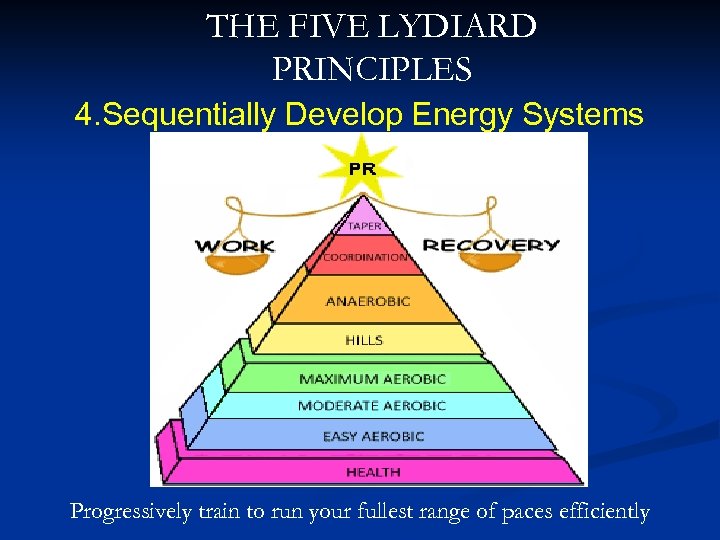 THE FIVE LYDIARD PRINCIPLES 4. Sequentially Develop Energy Systems Progressively train to run your fullest range of paces efficiently
 THE FIVE LYDIARD PRINCIPLES 5. Shakespeare said “TIMING IS EVERYTHING”
 Nutrition 101 n. Going Against the Grains

 Who’s Responsibility is This? n It seems incredible, but these are the facts: As of 2005, at least 9 million young adults -- 27 percent all Americans ages 17 to 24 -- were too overweigh serve in the military. since then, these high And numbers have remained largely unchanged. Gen John M. Shalikashvili and Gen Hugh Shelton, Retired Chairmen of Joint Chiefs of Staff
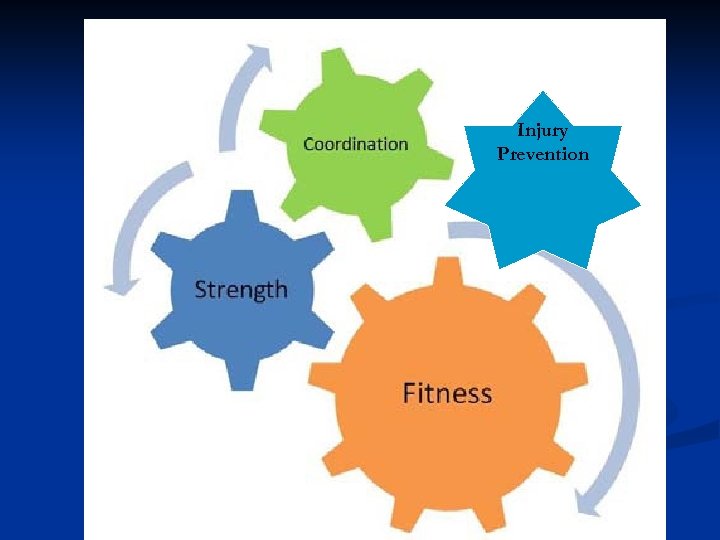 Injury Prevention
 Is There a Best Way to Run? You Decide, But Get on the Monkey Bars Once and Future Way to Run New York Times n Great Reader Comments n Photos by Jorg Badura NY Times
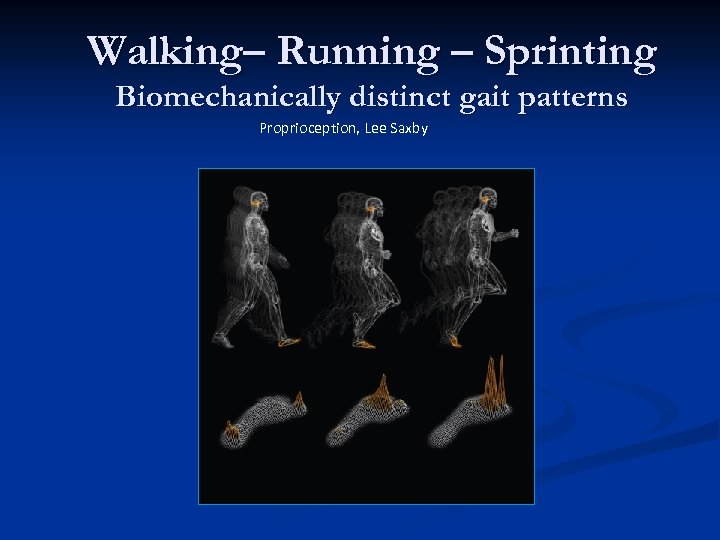 Walking– Running – Sprinting Biomechanically distinct gait patterns Proprioception, Lee Saxby
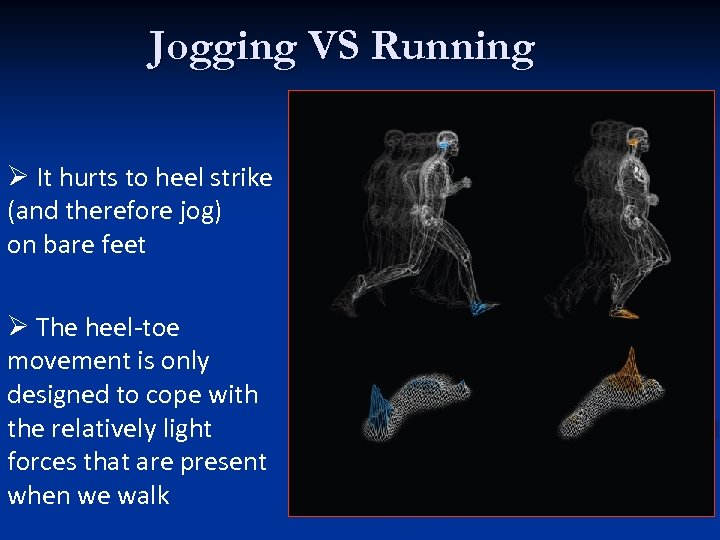 Jogging VS Running Ø It hurts to heel strike (and therefore jog) on bare feet Ø The heel-toe movement is only designed to cope with the relatively light forces that are present when we walk
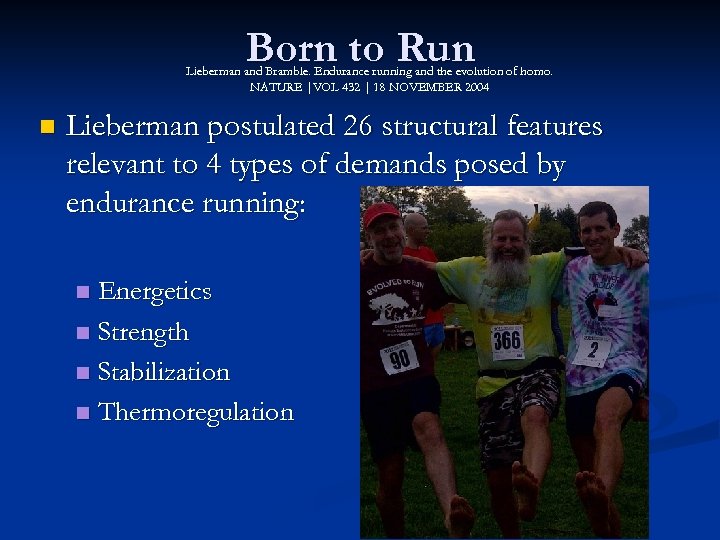 Born to Run Lieberman and Bramble. Endurance running and the evolution of homo. NATURE |VOL 432 | 18 NOVEMBER 2004 n Lieberman postulated 26 structural features relevant to 4 types of demands posed by endurance running: Energetics n Strength n Stabilization n Thermoregulation n
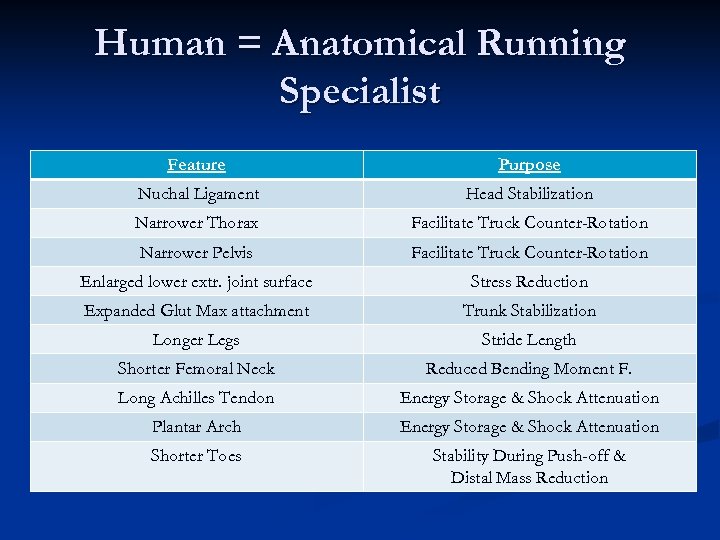 Human = Anatomical Running Specialist Feature Purpose Nuchal Ligament Head Stabilization Narrower Thorax Facilitate Truck Counter-Rotation Narrower Pelvis Facilitate Truck Counter-Rotation Enlarged lower extr. joint surface Stress Reduction Expanded Glut Max attachment Trunk Stabilization Longer Legs Stride Length Shorter Femoral Neck Reduced Bending Moment F. Long Achilles Tendon Energy Storage & Shock Attenuation Plantar Arch Energy Storage & Shock Attenuation Shorter Toes Stability During Push-off & Distal Mass Reduction
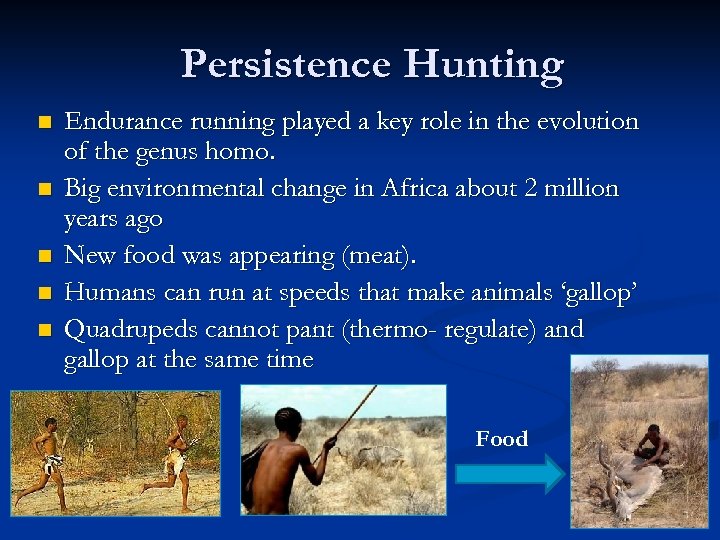 Persistence Hunting n n n Endurance running played a key role in the evolution of the genus homo. Big environmental change in Africa about 2 million years ago New food was appearing (meat). Humans can run at speeds that make animals ‘gallop’ Quadrupeds cannot pant (thermo- regulate) and gallop at the same time Food
 Three Natural Human Gait Patterns n One of the main structural features that make humans unique is our feet. n The human foot is a complex system of springs and levers, unmatched elsewhere in nature. n However, the real beauty is that this system is adjustable, allowing our feet to execute three very different forms of locomotion ] Walking Running Sprinting
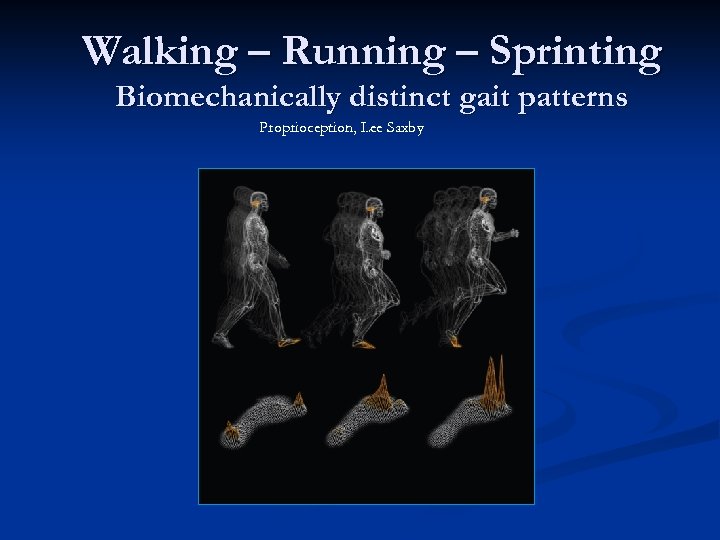 Walking – Running – Sprinting Biomechanically distinct gait patterns Proprioception, Lee Saxby
 Horses also have natural gait patterns n In order of increasing speed: n Walk: slow 4 beat gait pattern n Trot: 2 beat gait pattern n Canter: 3 beat gait pattern n Gallop: fast 4 beat gait pattern n Dogs also have similar natural gait patterns
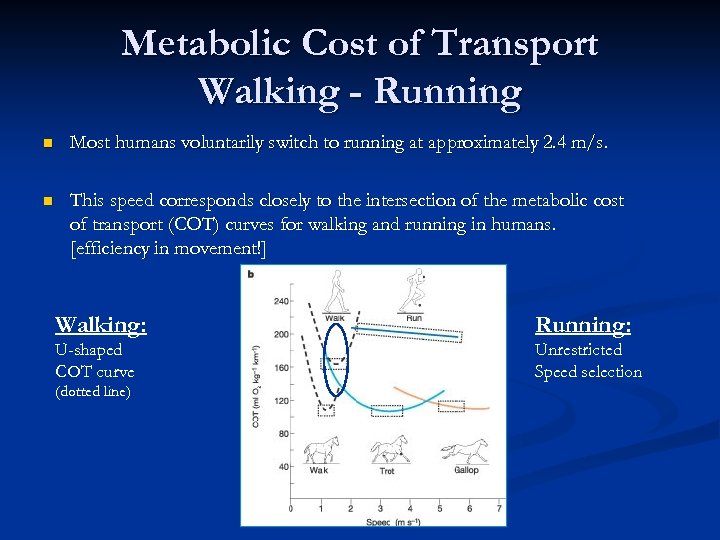 Metabolic Cost of Transport Walking - Running n Most humans voluntarily switch to running at approximately 2. 4 m/s. n This speed corresponds closely to the intersection of the metabolic cost of transport (COT) curves for walking and running in humans. [efficiency in movement!] Walking: Running: U-shaped COT curve Unrestricted Speed selection (dotted line)
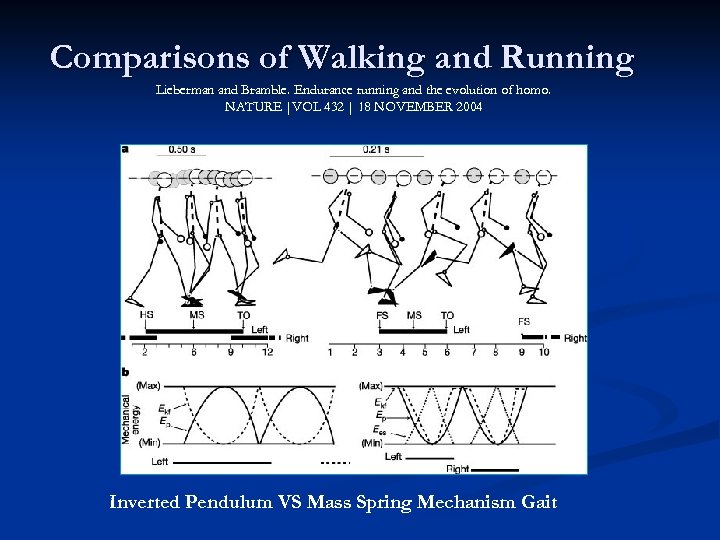 Comparisons of Walking and Running Lieberman and Bramble. Endurance running and the evolution of homo. NATURE |VOL 432 | 18 NOVEMBER 2004 Inverted Pendulum VS Mass Spring Mechanism Gait
 Walking A key difference between walking and proper (mid- and forefoot) running is how the foot muscles work, and, in particular, the energy used for propulsion. n The walking body acts more like an inverted pendulum, literally vaulting over stiff legs with locked knees. n The body creates force for propulsion through active muscle contractions. n
 Running n n n Running is sometimes referred to as an “impulsive” and “springy” gait, rebounding along on compliant legs and unlocked knees, using a natural elastic recoil mechanism Instead of using all active energy created through muscle contractions, the body stores and releases energy within our tendons, ligaments and fascia (passive “free” energy) This elastic recoil system relies heavily on efficient use of the Achilles tendon, and tendons controlling the arches in our feet.
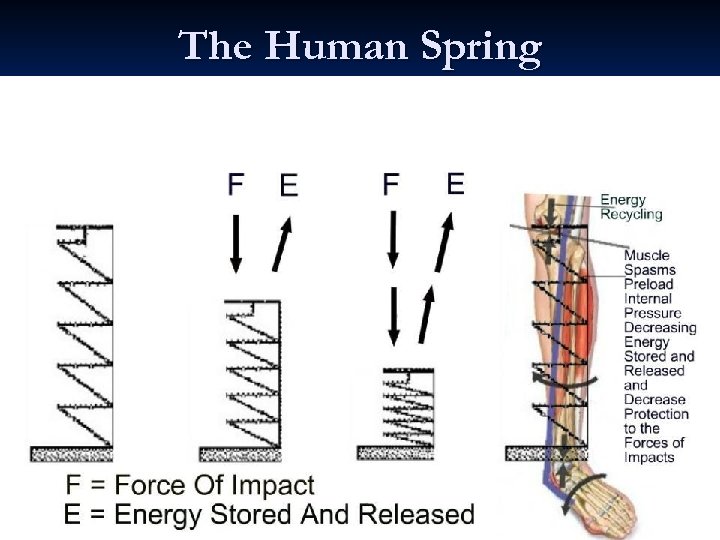
 Elastic Recoil During impact, compliant joints allow tendons and fascia to store energy. n This mechanism can provide about 50% of the leg and foot energy for propulsion n n (the other 50 percent comes from muscle contraction) You do not store energy in your Achilles when you heel strike n You do not store energy in your foot arches when wearing constricting, pronation control shoes n
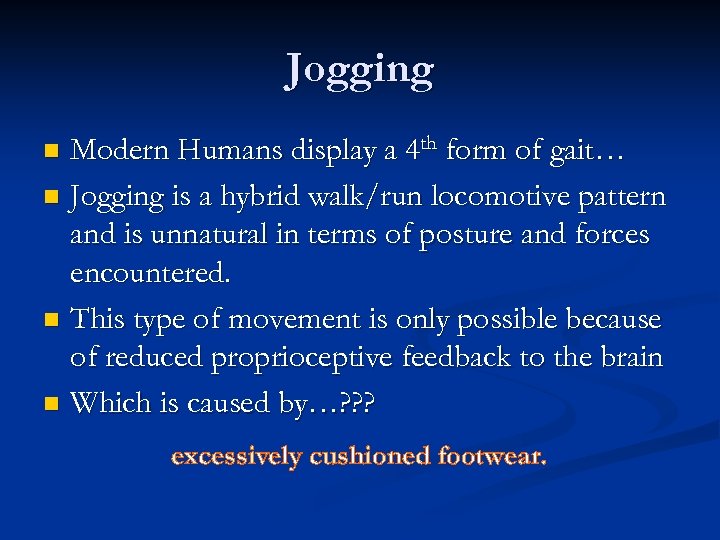 Jogging Modern Humans display a 4 th form of gait… n Jogging is a hybrid walk/run locomotive pattern and is unnatural in terms of posture and forces encountered. n This type of movement is only possible because of reduced proprioceptive feedback to the brain n Which is caused by…? ? ? n excessively cushioned footwear.
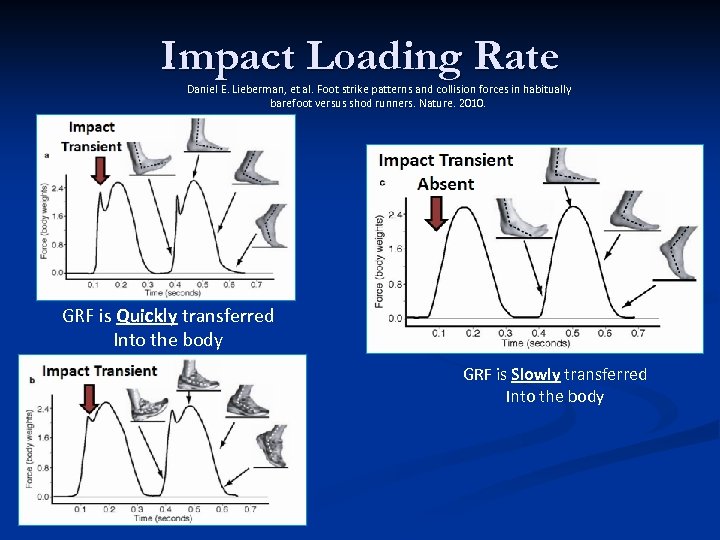 Impact Loading Rate Daniel E. Lieberman, et al. Foot strike patterns and collision forces in habitually barefoot versus shod runners. Nature. 2010. GRF is Quickly transferred Into the body GRF is Slowly transferred Into the body
 Herb Elliot- sub 4 barefoot World Record Holder, Gold Medalist, Perfect Form
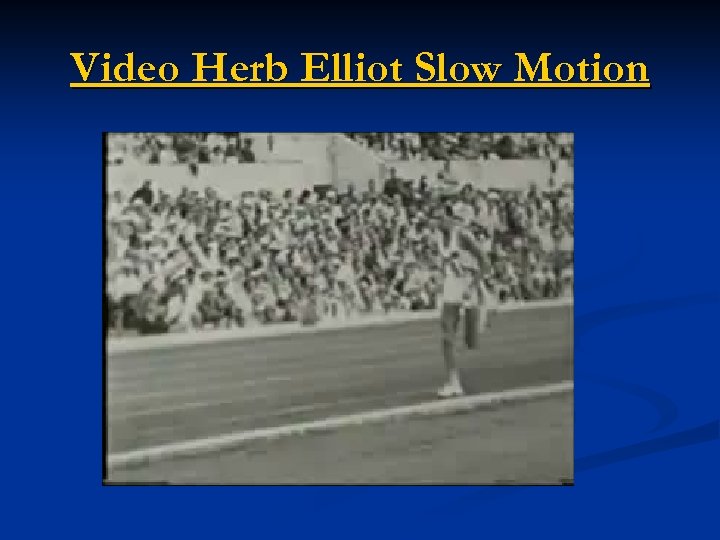 Video Herb Elliot Slow Motion
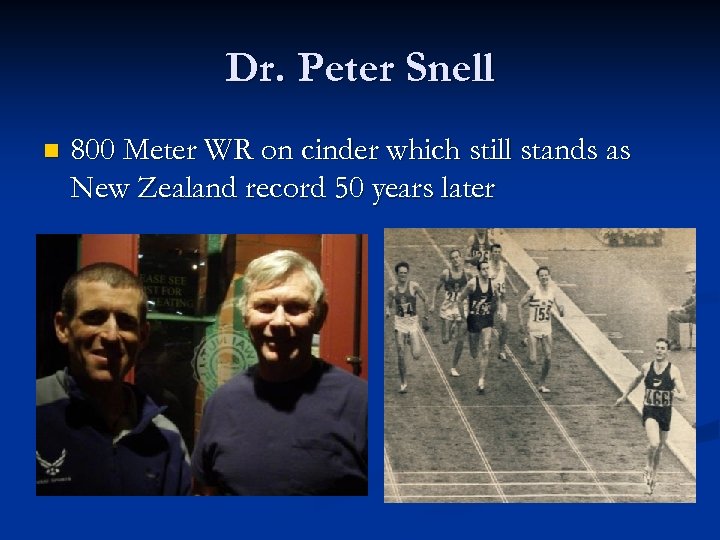 Dr. Peter Snell n 800 Meter WR on cinder which still stands as New Zealand record 50 years later
 Peter Snell picture of form and strength Video Snell 1962 800 WR
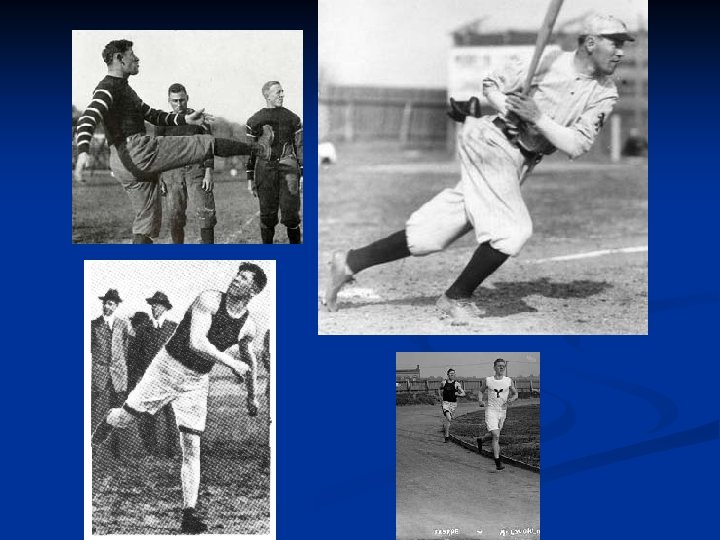
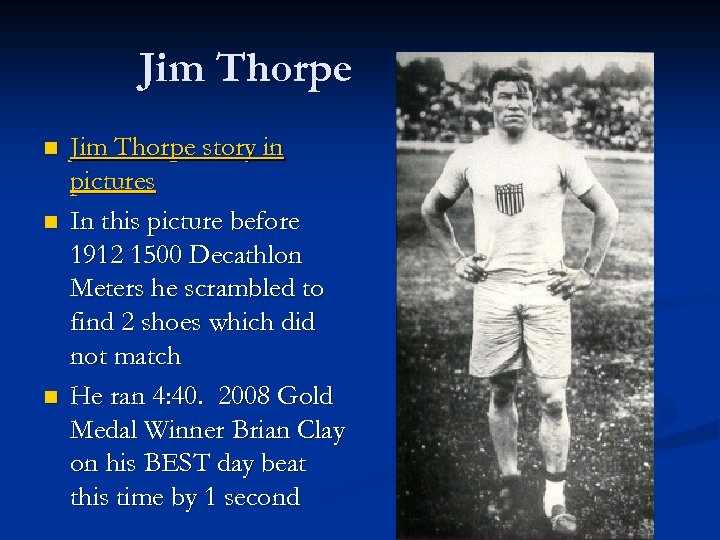 Jim Thorpe n n n Jim Thorpe story in pictures In this picture before 1912 1500 Decathlon Meters he scrambled to find 2 shoes which did not match He ran 4: 40. 2008 Gold Medal Winner Brian Clay on his BEST day beat this time by 1 second
 Principles of Natural Running
 “Play fosters belonging and encourages cooperation” Stuart Brown MD Natural Running in Shepherdstown, West Virginia
 The Human Spring
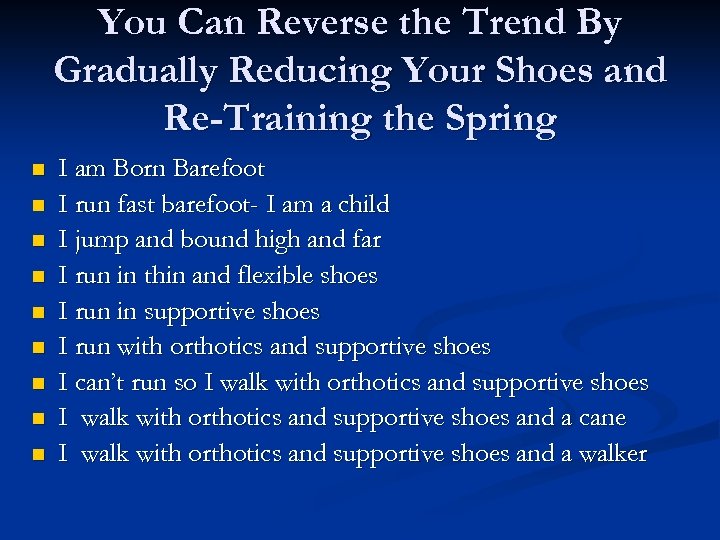 You Can Reverse the Trend By Gradually Reducing Your Shoes and Re-Training the Spring n n n n n I am Born Barefoot I run fast barefoot- I am a child I jump and bound high and far I run in thin and flexible shoes I run in supportive shoes I run with orthotics and supportive shoes I can’t run so I walk with orthotics and supportive shoes and a cane I walk with orthotics and supportive shoes and a walker
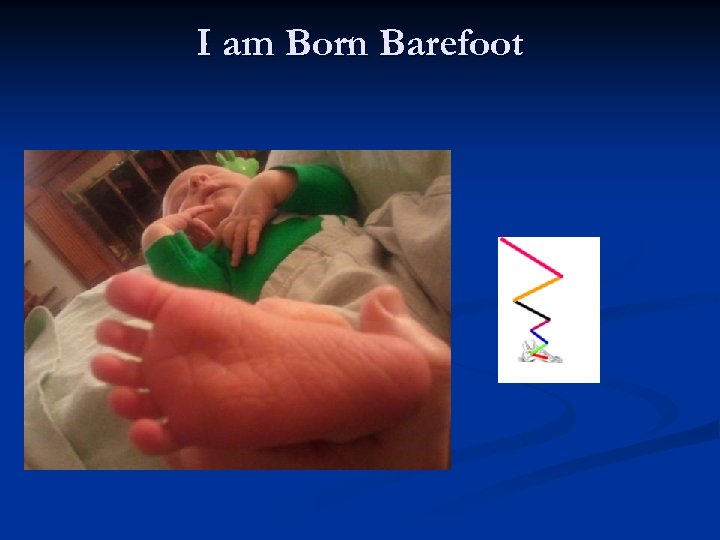 I am Born Barefoot
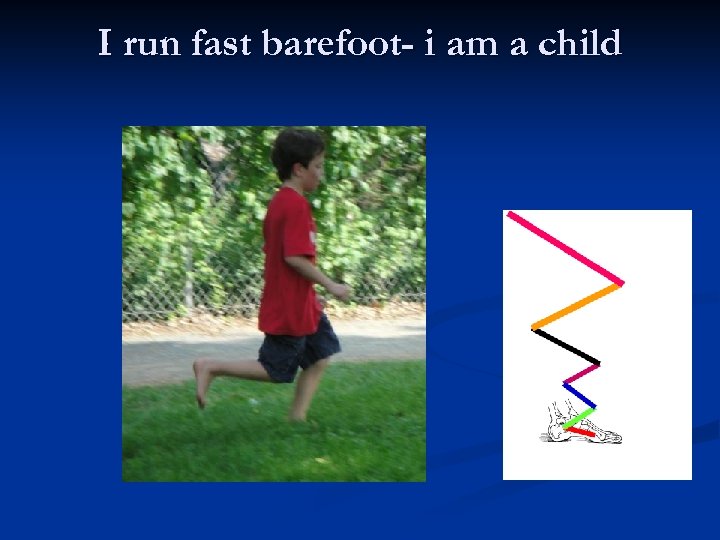 I run fast barefoot- i am a child
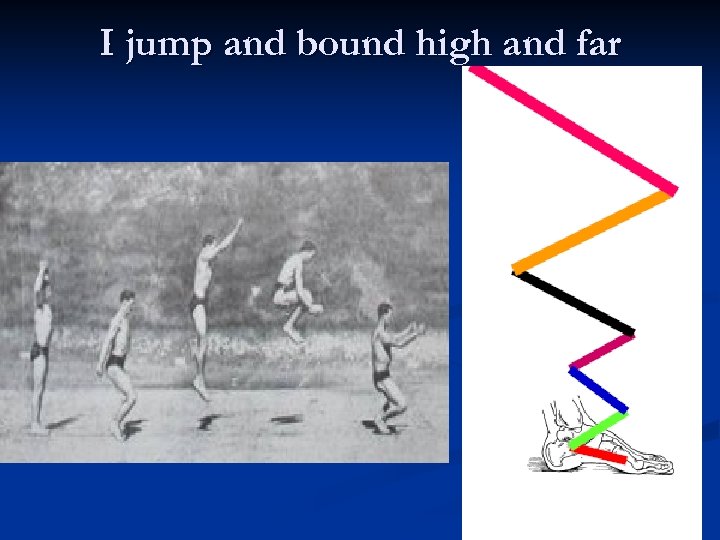 I jump and bound high and far
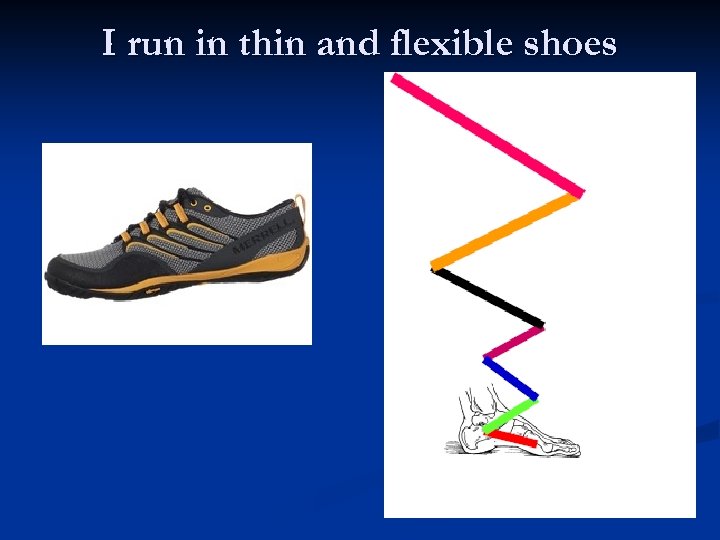 I run in thin and flexible shoes
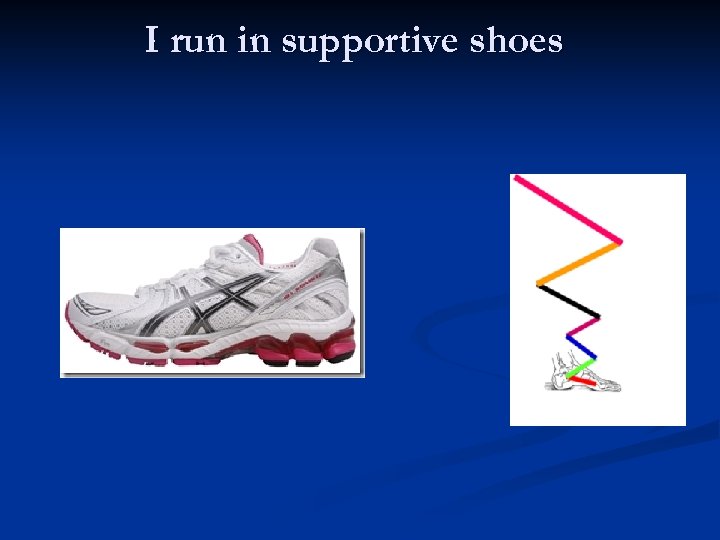 I run in supportive shoes
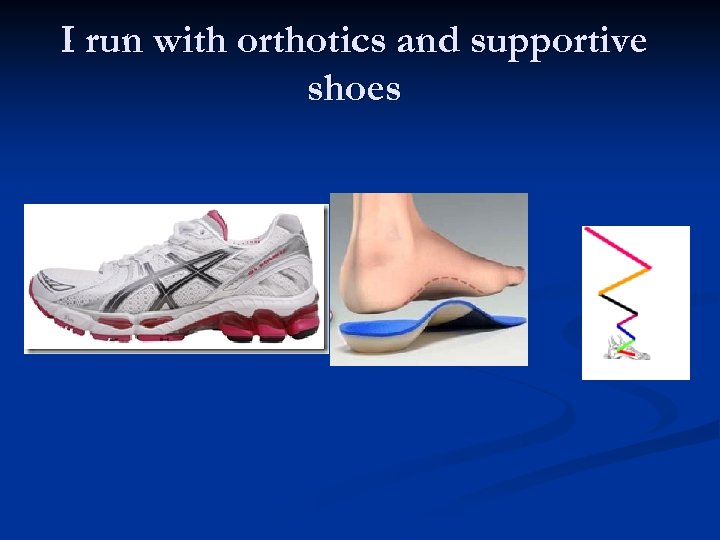 I run with orthotics and supportive shoes
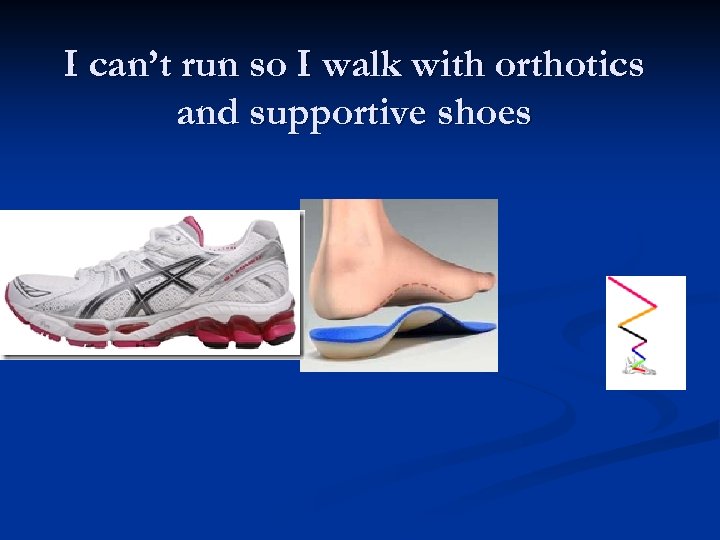 I can’t run so I walk with orthotics and supportive shoes
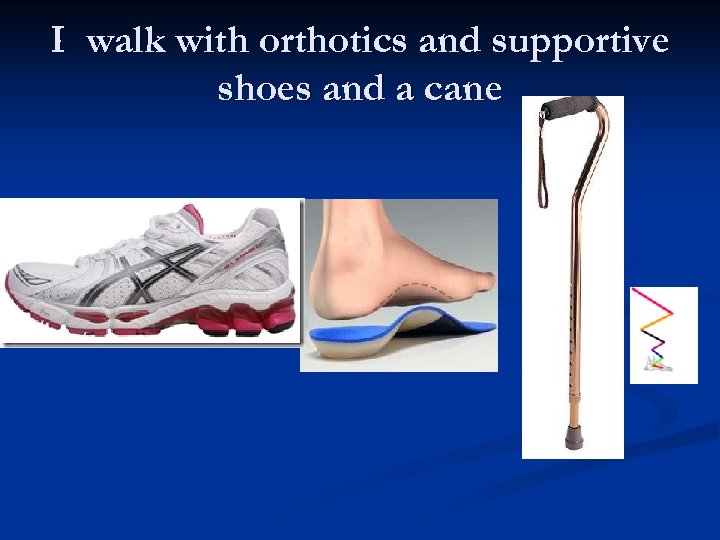 I walk with orthotics and supportive shoes and a cane
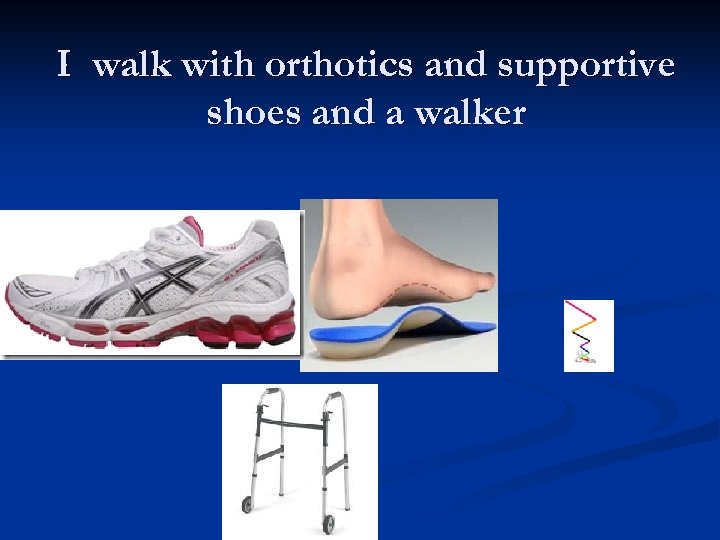 I walk with orthotics and supportive shoes and a walker
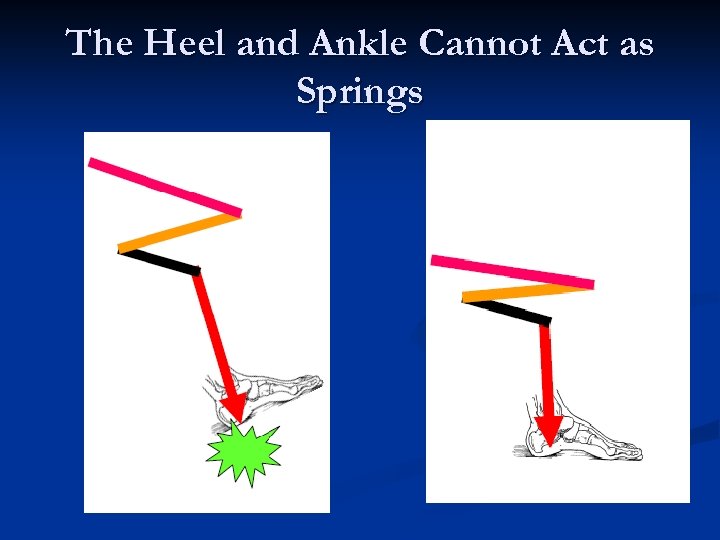 The Heel and Ankle Cannot Act as Springs
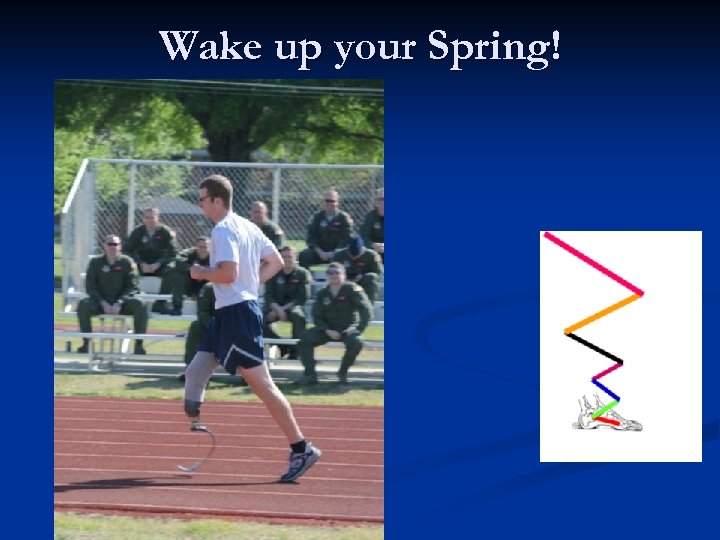 Wake up your Spring!
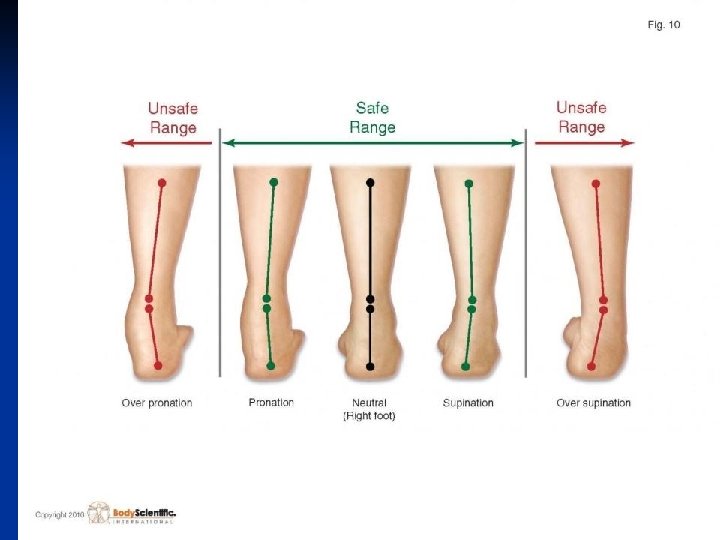
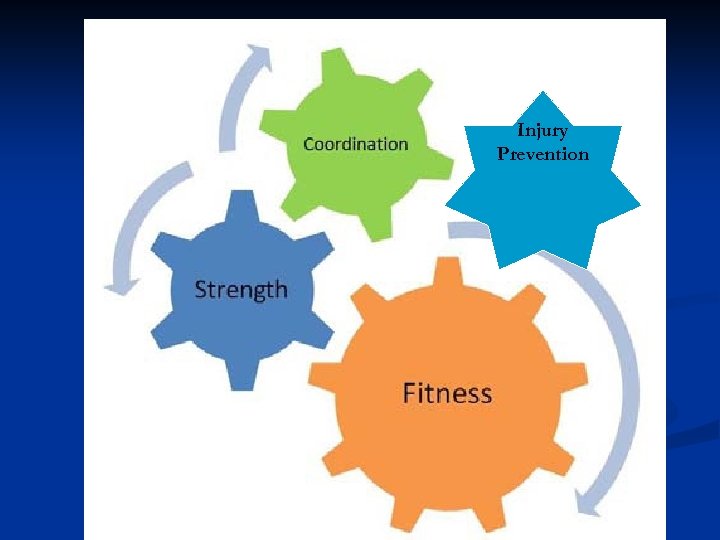 Injury Prevention
 Engines develop horsepower. More horsepower is better. But horsepower is meaningless unless it is sent to the wheels through a stable chassis. Courtesy “Anatomy for Runners” by Jay Dicharry
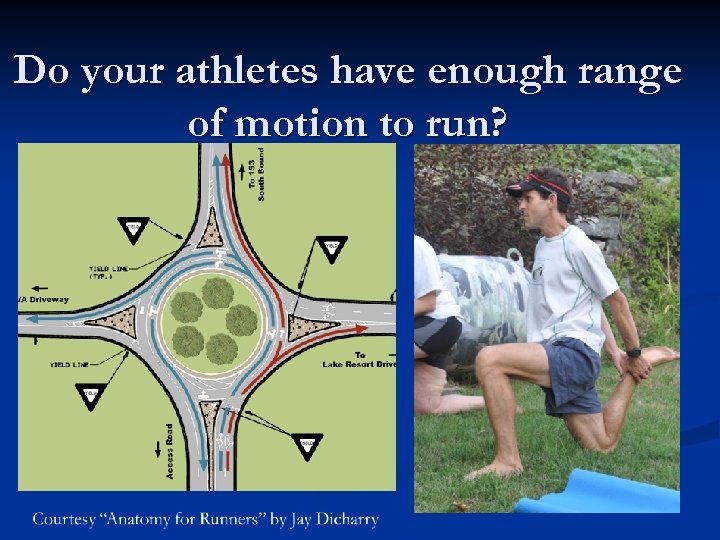 Do your athletes have enough range of motion to run?
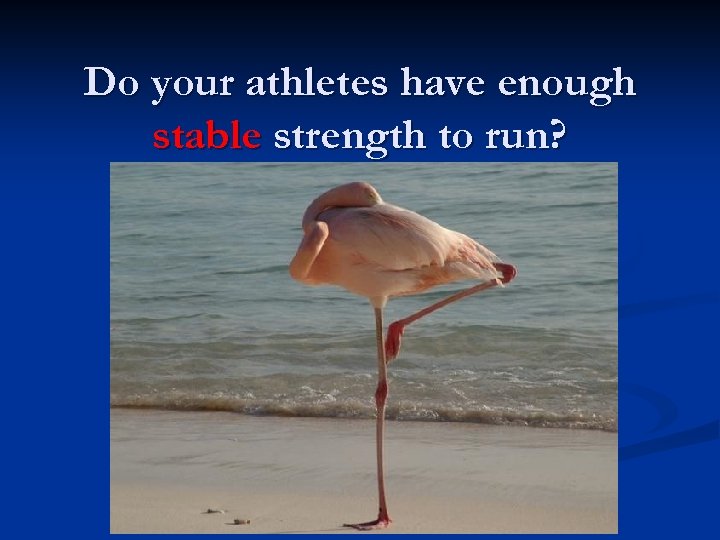 Do your athletes have enough stable strength to run?
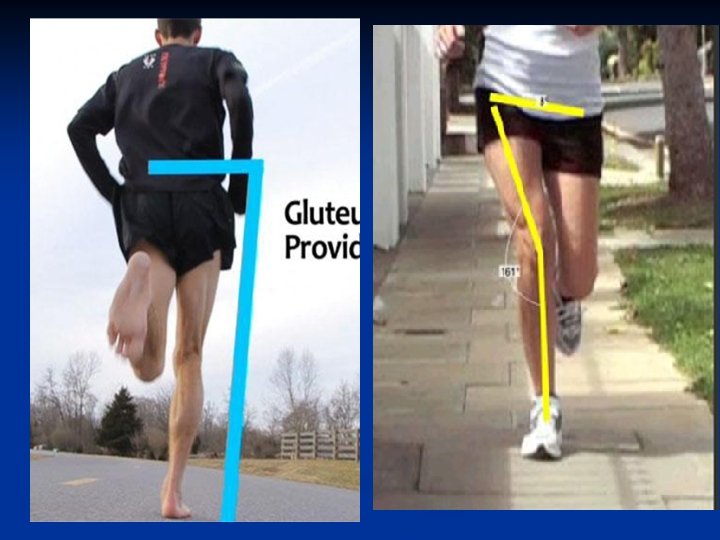
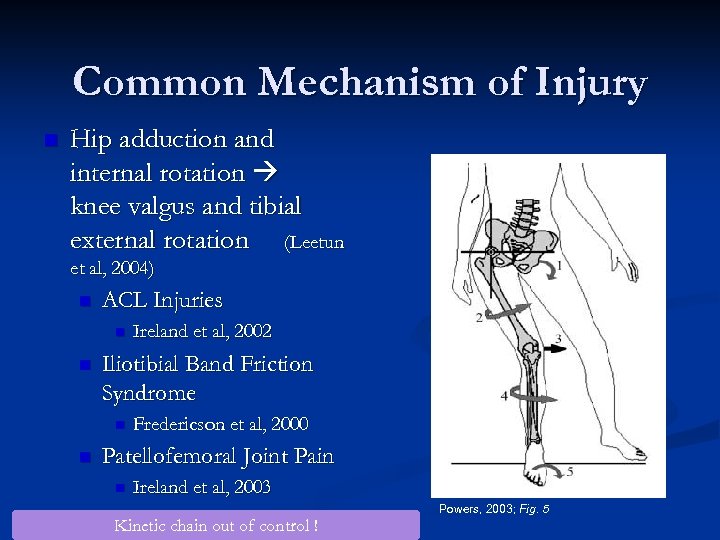 Common Mechanism of Injury n Hip adduction and internal rotation knee valgus and tibial external rotation (Leetun et al, 2004) n ACL Injuries n n Iliotibial Band Friction Syndrome n n Ireland et al, 2002 Fredericson et al, 2000 Patellofemoral Joint Pain n Ireland et al, 2003 Kinetic chain out of control ! Powers, 2003; Fig. 5
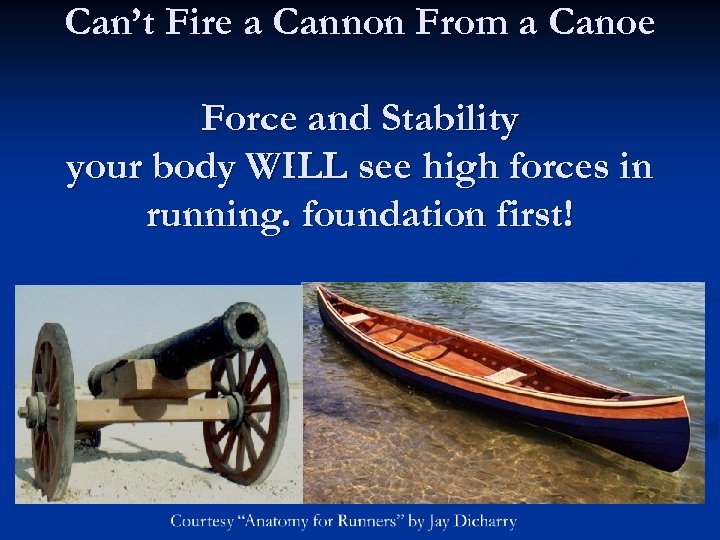 Can’t Fire a Cannon From a Canoe Force and Stability your body WILL see high forces in running. foundation first!
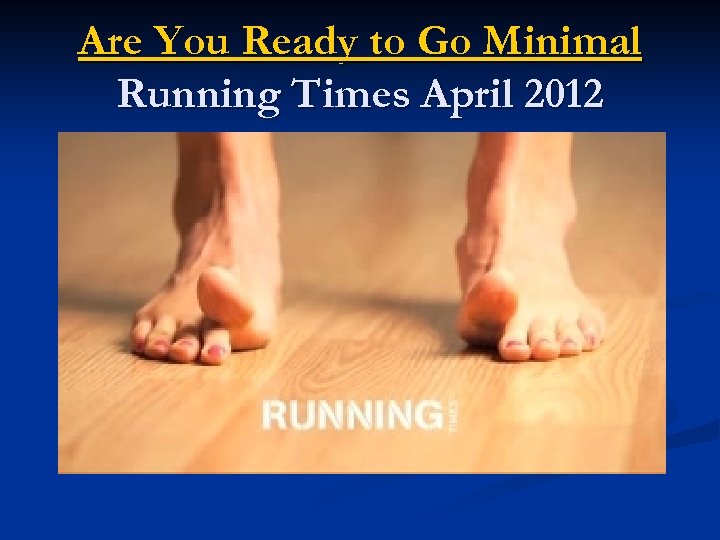 Are You Ready to Go Minimal Running Times April 2012
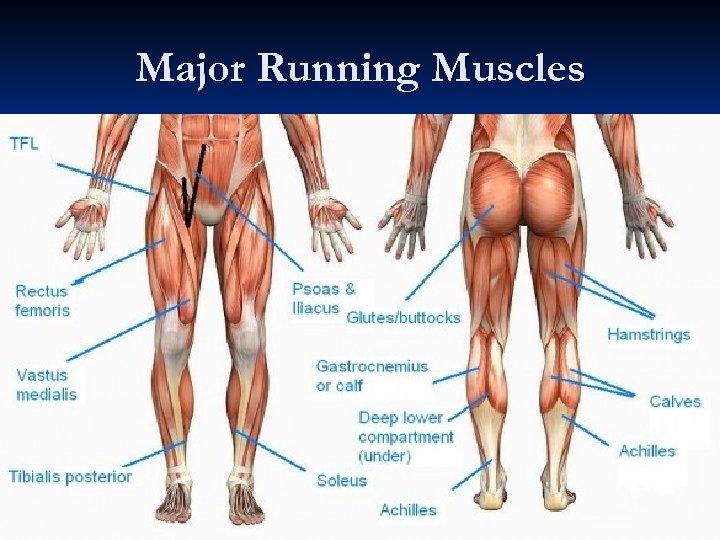 Major Running Muscles
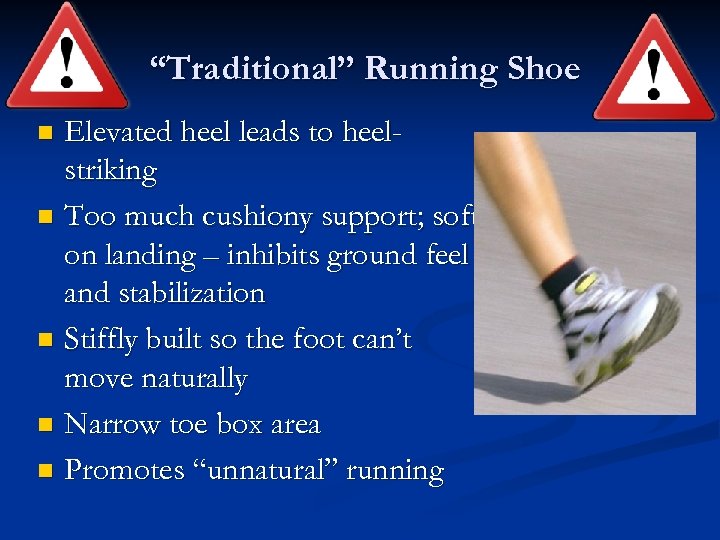 “Traditional” Running Shoe Elevated heel leads to heelstriking n Too much cushiony support; soft on landing – inhibits ground feel and stabilization n Stiffly built so the foot can’t move naturally n Narrow toe box area n Promotes “unnatural” running n
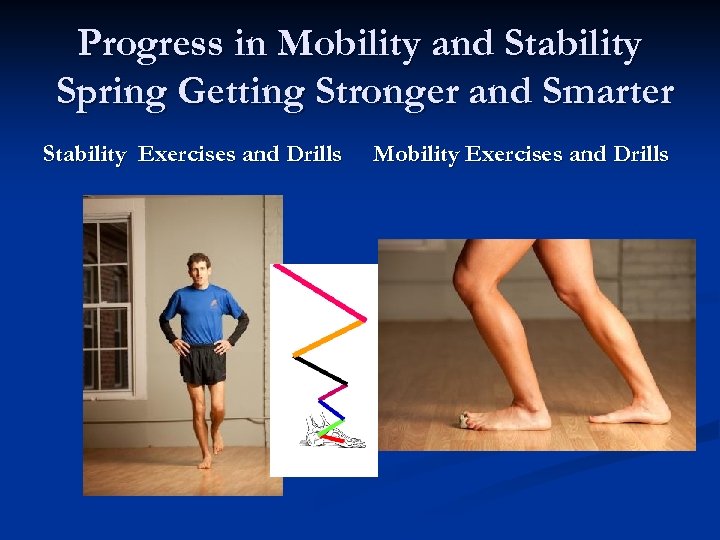
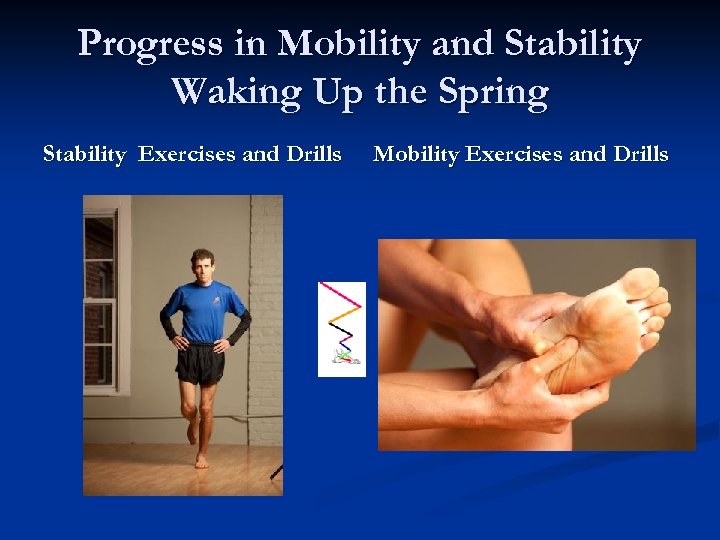 Progress in Mobility and Stability Waking Up the Spring Stability Exercises and Drills Mobility Exercises and Drills
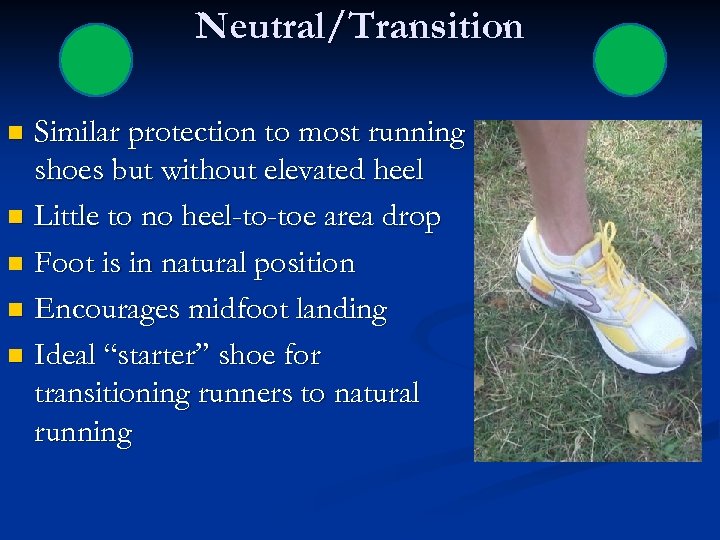 Neutral/Transition Similar protection to most running shoes but without elevated heel n Little to no heel-to-toe area drop n Foot is in natural position n Encourages midfoot landing n Ideal “starter” shoe for transitioning runners to natural running n
 Progress in Mobility and Stability Spring Getting Stronger and Smarter Stability Exercises and Drills Mobility Exercises and Drills
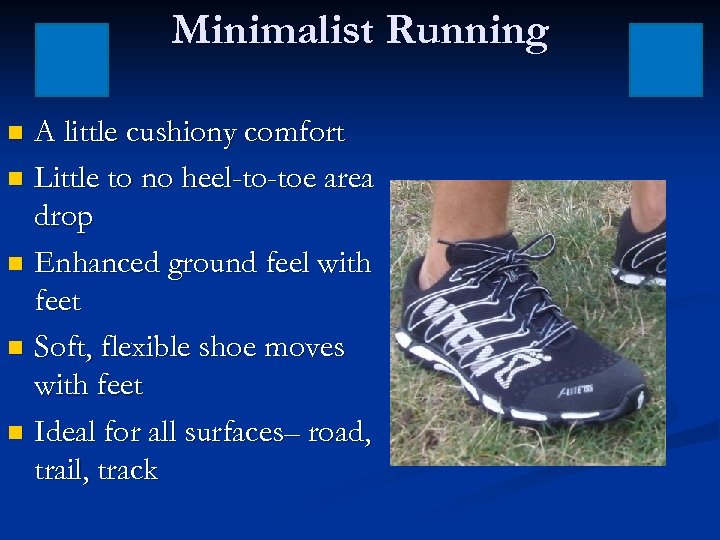 Minimalist Running A little cushiony comfort n Little to no heel-to-toe area drop n Enhanced ground feel with feet n Soft, flexible shoe moves with feet n Ideal for all surfaces– road, trail, track n
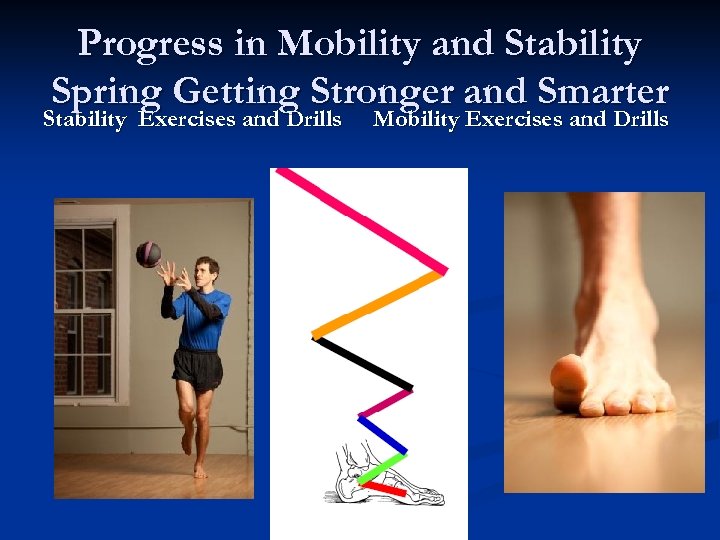 Progress in Mobility and Stability Spring Getting Stronger and Smarter Stability Exercises and Drills Mobility Exercises and Drills
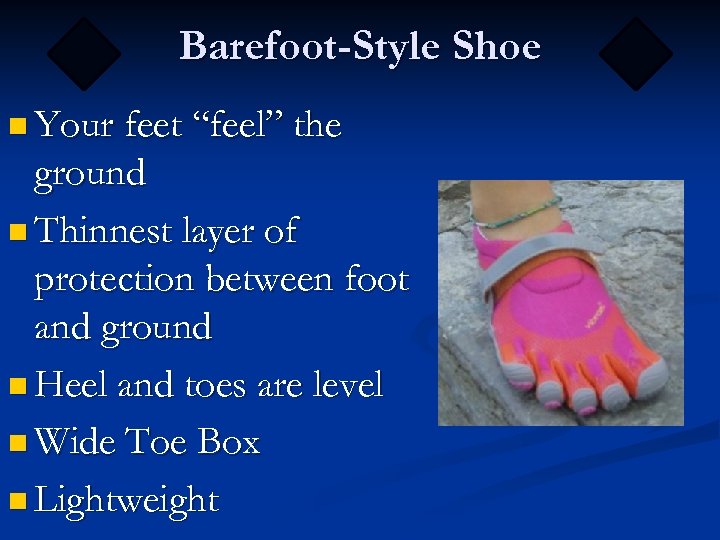 Barefoot-Style Shoe n Your feet “feel” the ground n Thinnest layer of protection between foot and ground n Heel and toes are level n Wide Toe Box n Lightweight
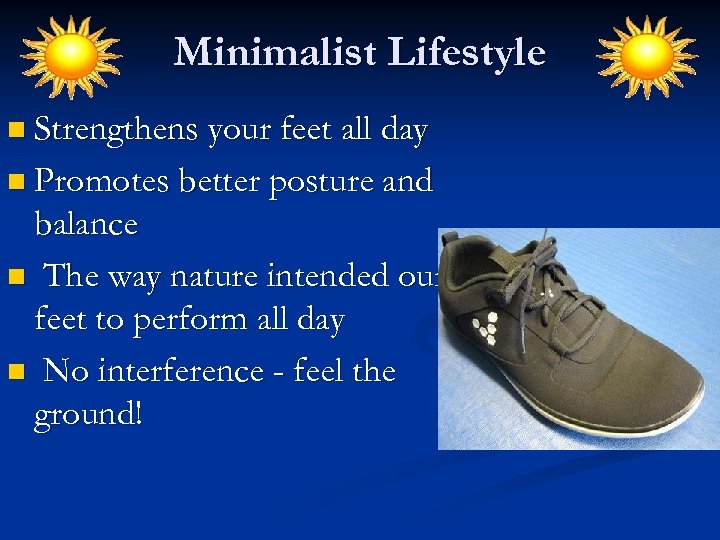 Minimalist Lifestyle n Strengthens your feet all day n Promotes better posture and balance n The way nature intended our feet to perform all day n No interference - feel the ground!
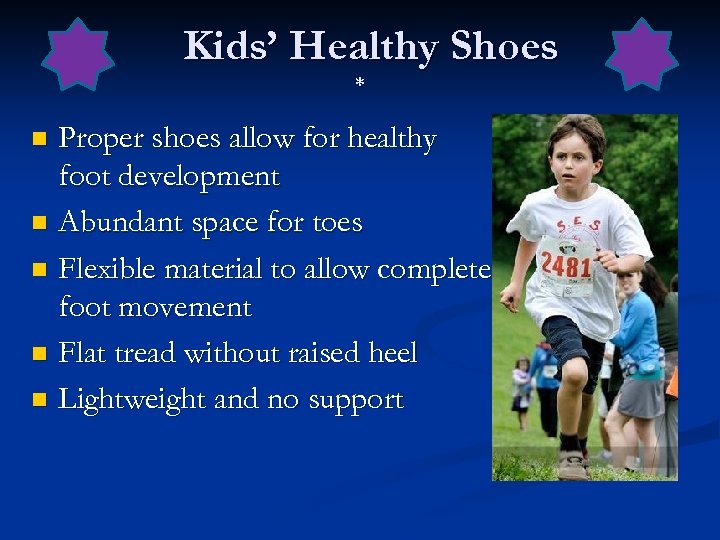 Kids’ Healthy Shoes * Proper shoes allow for healthy foot development n Abundant space for toes n Flexible material to allow complete foot movement n Flat tread without raised heel n Lightweight and no support n
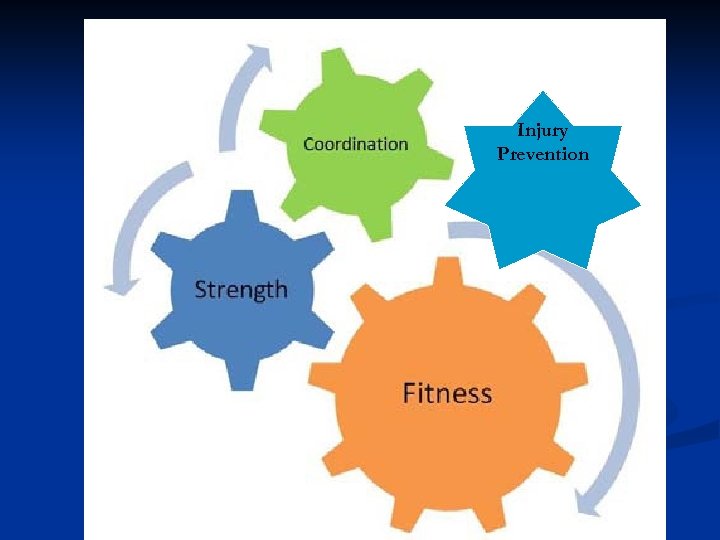 Injury Prevention
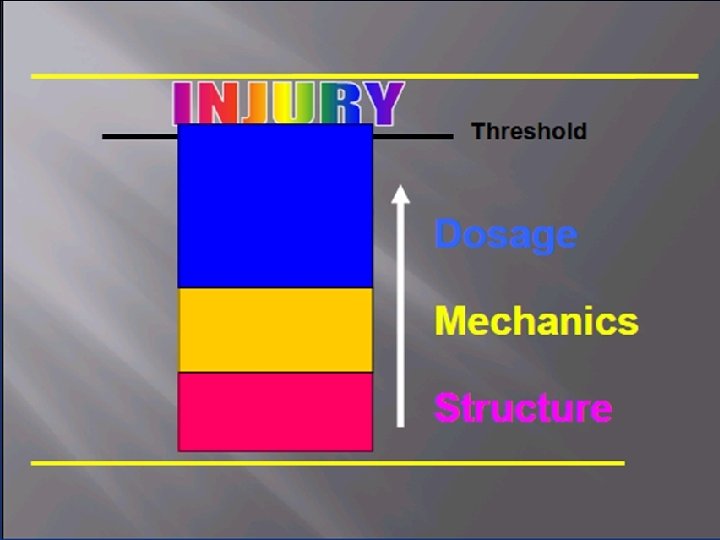
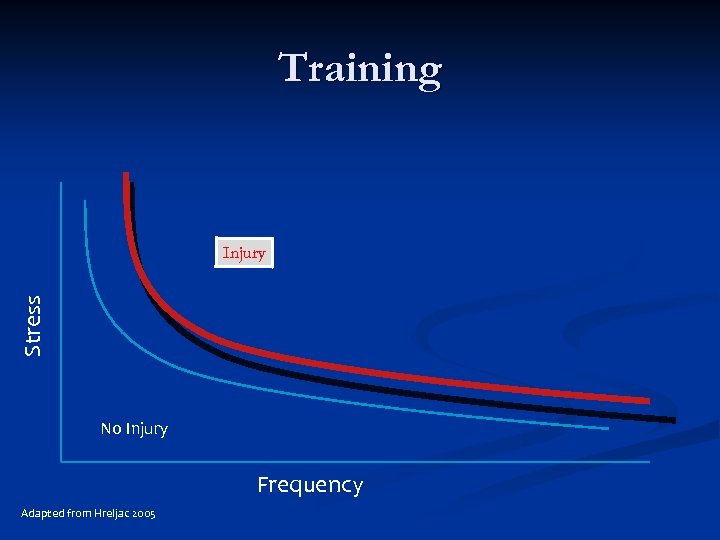
 Incidence of Running Injuries (2005 -Hreljac, 2000 -Hreljak, 1992 -Van. Mechelen, 1992 -Macera, 1898 -Walter, 1987 -Robbins) n Up to 80% of runners are injured every year n Greater prevalence in industrialized countries n Incidence is increasing
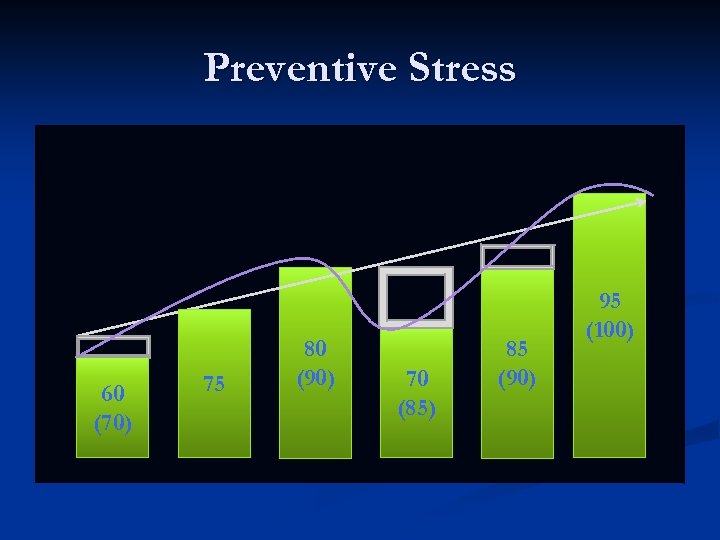
 THE BODY WILL ADAPT As long as the applied stress is not greater than its capacity to adapt
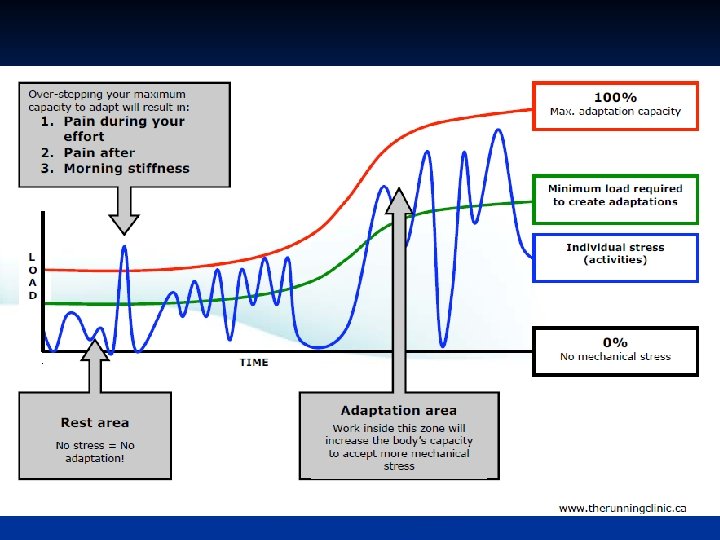
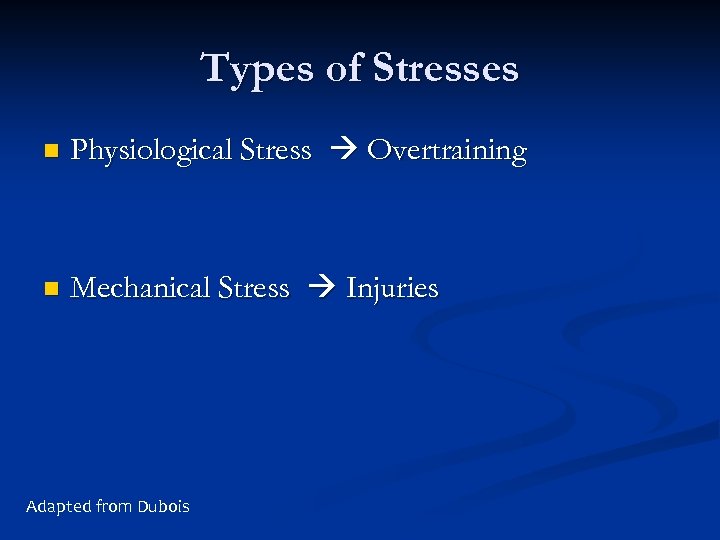
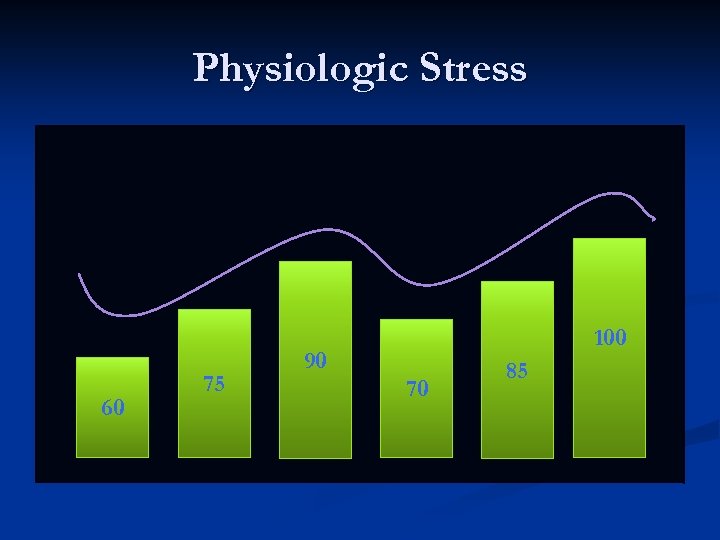
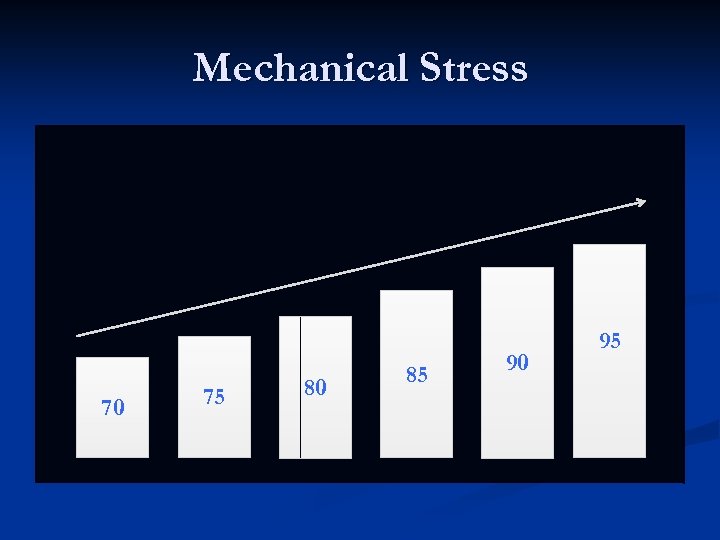
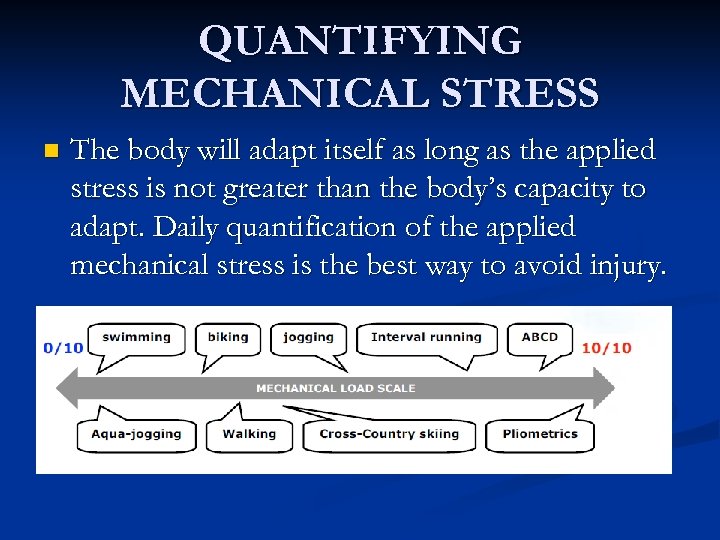 QUANTIFYING MECHANICAL STRESS n The body will adapt itself as long as the applied stress is not greater than the body’s capacity to adapt. Daily quantification of the applied mechanical stress is the best way to avoid injury.
![Principle of Adaptation [Blaise Dubois] Create adaptation and wean away from protection. n We](https://present5.com/presentation/8a9a01bb04d1d3515697c94cda9ac775/image-111.jpg "Principle of Adaptation [Blaise Dubois] Create adaptation and wean away from protection. n We") Principle of Adaptation [Blaise Dubois] Create adaptation and wean away from protection. n We are NOT a ‘Mechanical Model’ n [Stress = Degeneration] n We ARE a ‘Biological Model’ n [Stress = Remodeling…ADAPTATION] n Stress MUST be GRADUAL & PROGRESSIVE n
Principle of Adaptation [Blaise Dubois] Create adaptation and wean away from protection. n We are NOT a ‘Mechanical Model’ n [Stress = Degeneration] n We ARE a ‘Biological Model’ n [Stress = Remodeling…ADAPTATION] n Stress MUST be GRADUAL & PROGRESSIVE n
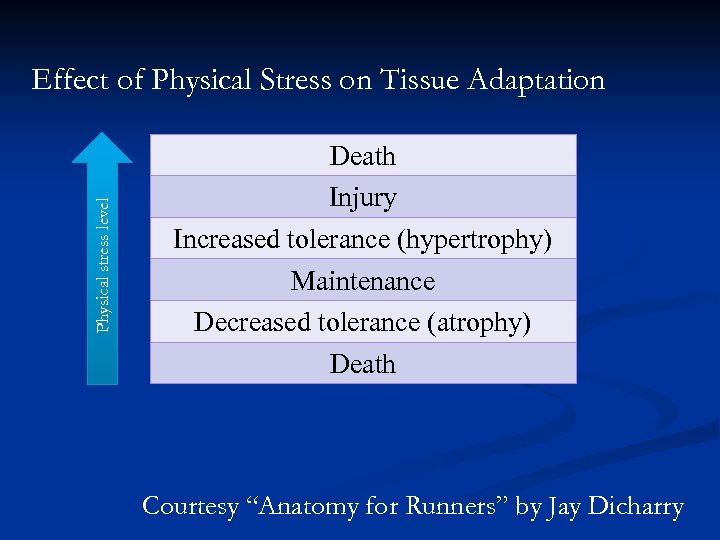 Physical stress level Effect of Physical Stress on Tissue Adaptation Death Injury Increased tolerance (hypertrophy) Maintenance Decreased tolerance (atrophy) Death Courtesy “Anatomy for Runners” by Jay Dicharry
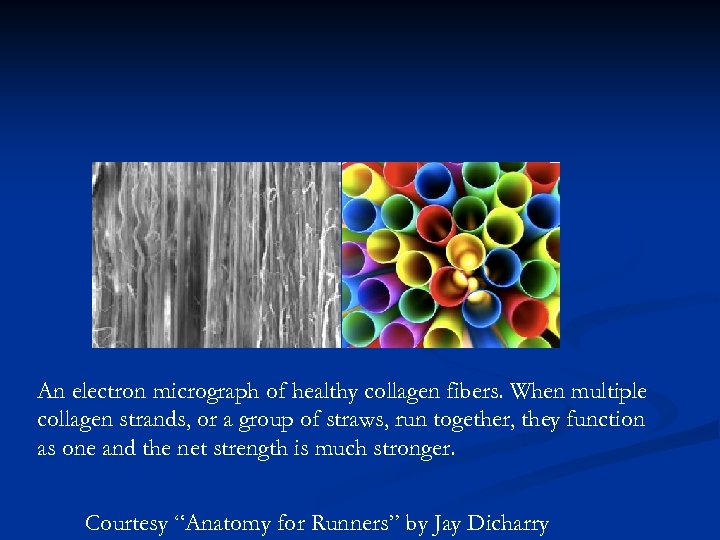 An electron micrograph of healthy collagen fibers. When multiple collagen strands, or a group of straws, run together, they function as one and the net strength is much stronger. Courtesy “Anatomy for Runners” by Jay Dicharry
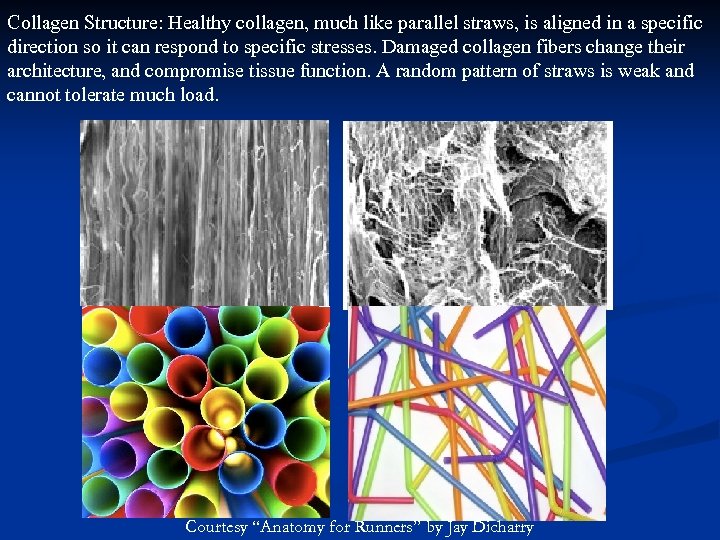 Collagen Structure: Healthy collagen, much like parallel straws, is aligned in a specific direction so it can respond to specific stresses. Damaged collagen fibers change their architecture, and compromise tissue function. A random pattern of straws is weak and cannot tolerate much load. Courtesy “Anatomy for Runners” by Jay Dicharry
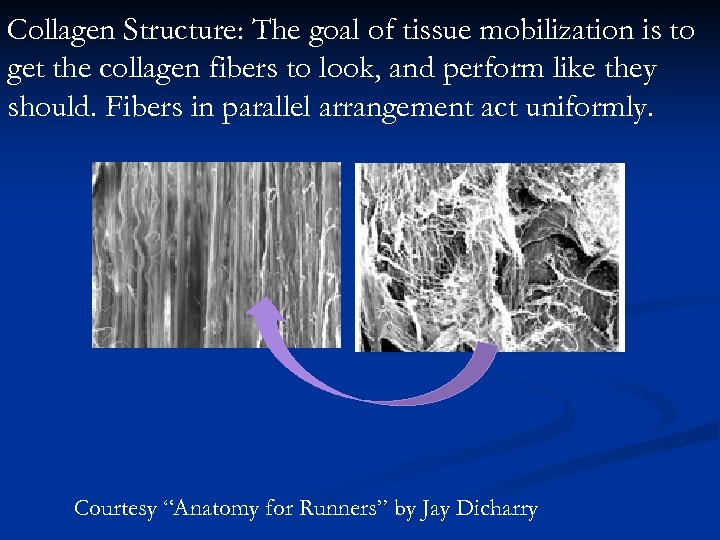 Collagen Structure: The goal of tissue mobilization is to get the collagen fibers to look, and perform like they should. Fibers in parallel arrangement act uniformly. Courtesy “Anatomy for Runners” by Jay Dicharry
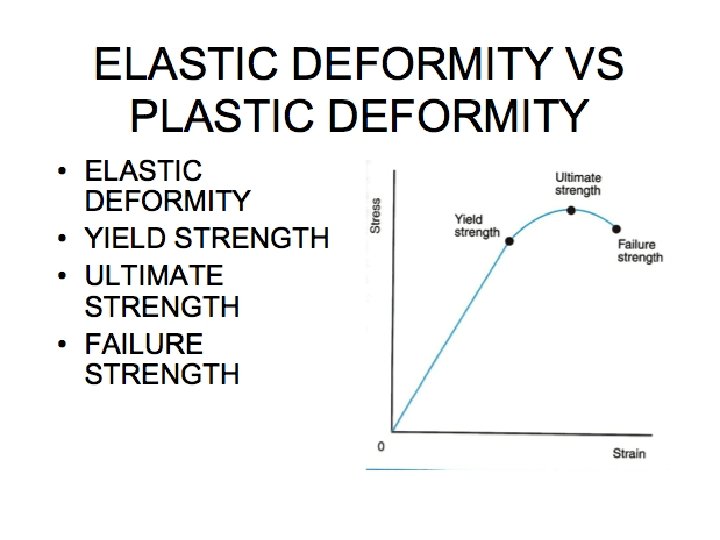
 Stress With stress, a force is applied to a tissue, but there is no change in length. Strain means that the force was high enough to physically alter the position of the tissue. Courtesy “Anatomy for Runners” by Jay Dicharry
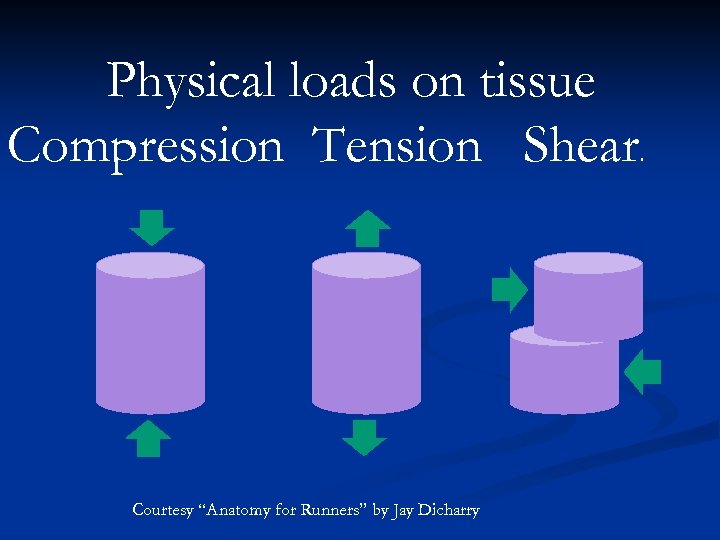 Physical loads on tissue Compression Tension Shear. Courtesy “Anatomy for Runners” by Jay Dicharry
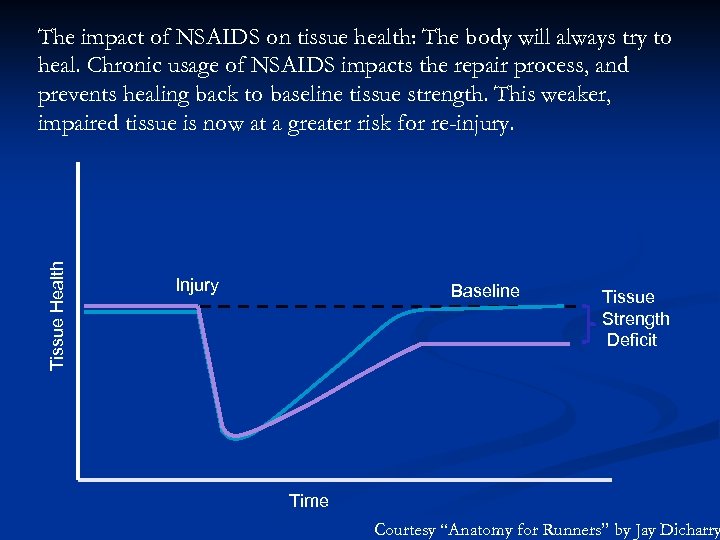 Tissue Health The impact of NSAIDS on tissue health: The body will always try to heal. Chronic usage of NSAIDS impacts the repair process, and prevents healing back to baseline tissue strength. This weaker, impaired tissue is now at a greater risk for re-injury. Injury Baseline Tissue Strength Deficit Time Courtesy “Anatomy for Runners” by Jay Dicharry
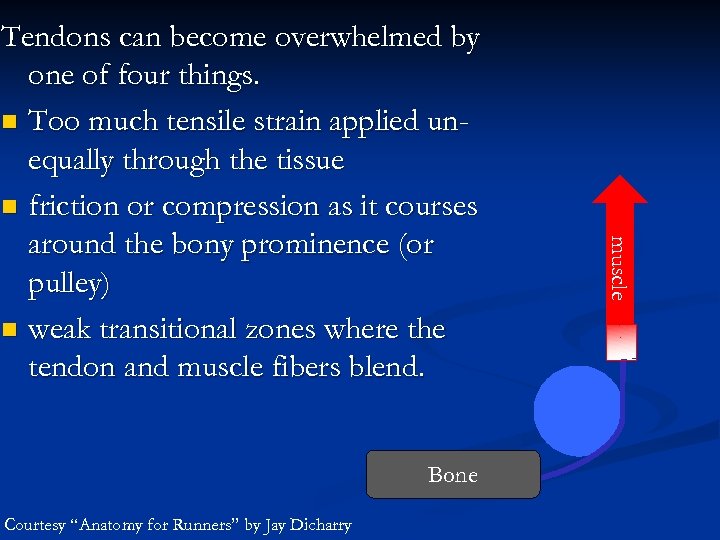 Bone Courtesy “Anatomy for Runners” by Jay Dicharry muscle Tendons can become overwhelmed by one of four things. n Too much tensile strain applied unequally through the tissue n friction or compression as it courses around the bony prominence (or pulley) n weak transitional zones where the tendon and muscle fibers blend.
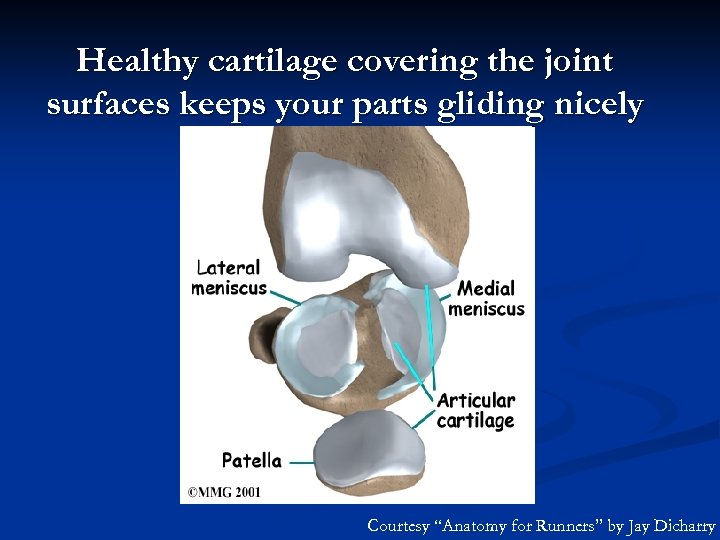 Healthy cartilage covering the joint surfaces keeps your parts gliding nicely Courtesy “Anatomy for Runners” by Jay Dicharry
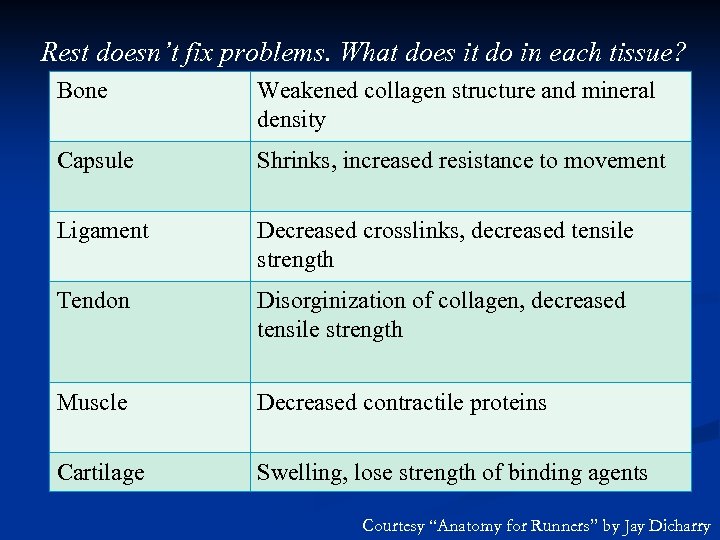 Rest doesn’t fix problems. What does it do in each tissue? Bone Weakened collagen structure and mineral density Capsule Shrinks, increased resistance to movement Ligament Decreased crosslinks, decreased tensile strength Tendon Disorginization of collagen, decreased tensile strength Muscle Decreased contractile proteins Cartilage Swelling, lose strength of binding agents Courtesy “Anatomy for Runners” by Jay Dicharry
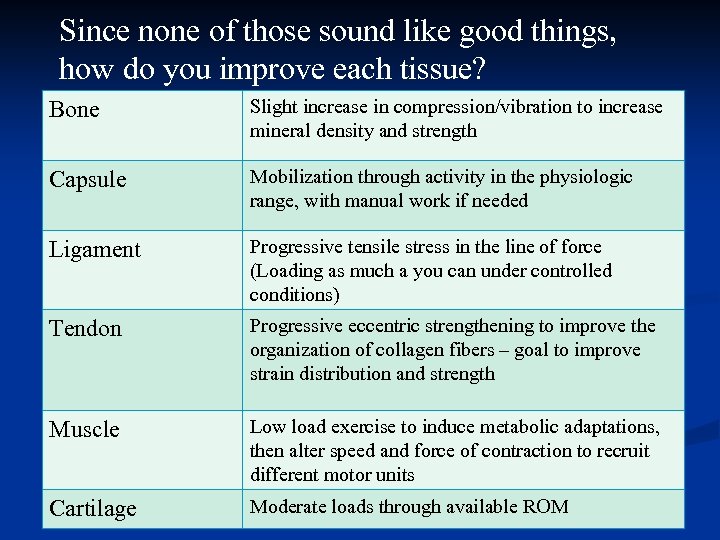 Since none of those sound like good things, how do you improve each tissue? Bone Slight increase in compression/vibration to increase mineral density and strength Capsule Mobilization through activity in the physiologic range, with manual work if needed Ligament Progressive tensile stress in the line of force (Loading as much a you can under controlled conditions) Tendon Progressive eccentric strengthening to improve the organization of collagen fibers – goal to improve strain distribution and strength Muscle Low load exercise to induce metabolic adaptations, then alter speed and force of contraction to recruit different motor units Cartilage Moderate loads through available ROM
 Training Stress Injury No Injury Frequency Adapted from Hreljac 2005
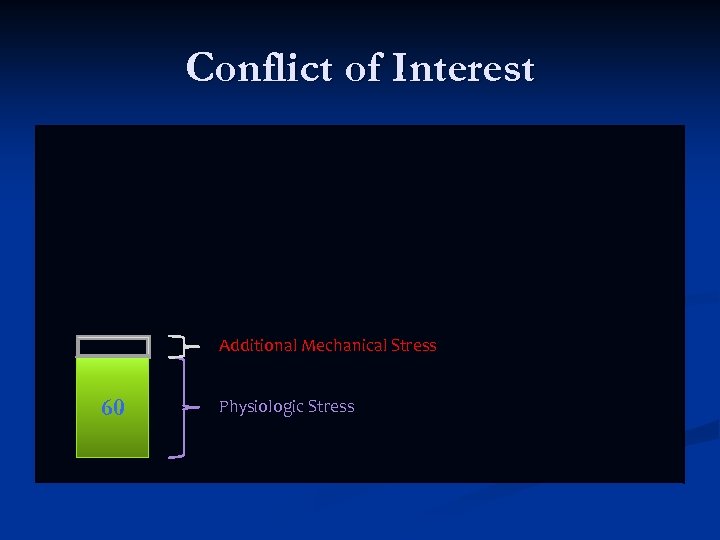
 Types of Stresses n Physiological Stress Overtraining n Mechanical Stress Injuries Adapted from Dubois
 Physiologic Stress 60 75 100 90 70 85
 Mechanical Stress 70 75 80 85 90 95
 Conflict of Interest Additional Mechanical Stress 60 Physiologic Stress
 Preventive Stress 60 (70) 75 80 (90) 70 (85) 85 (90) 95 (100)
 Types of Injuries n Load n Repetition n Range of motion
 Load MTSS Stress Fracture Plantar Fasciiosis Muscle Strain Patellofemoral Syndrome Stress Fracture Tendinopathy Range ITBS Repetition
 “Play is hard to maintain as you get older. You get less playful. You shouldn’t, of course. ” Richard Feynman Video Don Taylor Freedoms Run 2010
 Luke Skywalker: “I don’t believe it!” n Yoda: “That is why you fail. ” n Special Thanks to a many who have helped me learn
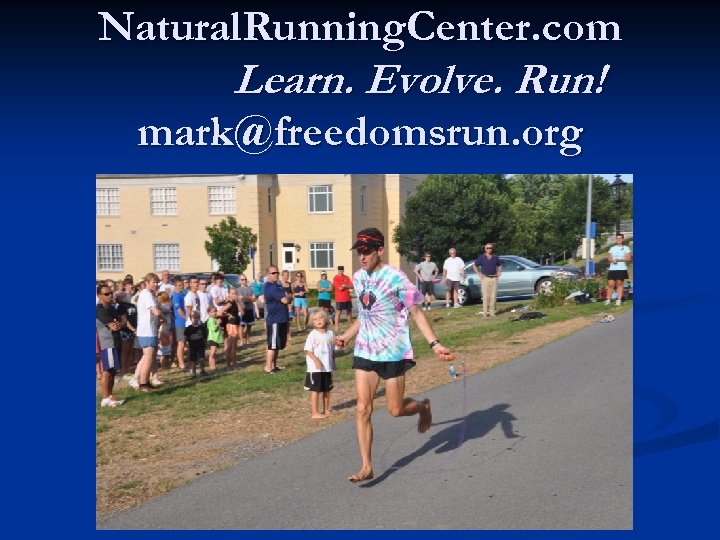 Natural. Running. Center. com Learn. Evolve. Run! mark@freedomsrun. org
 priceless books Big Book of Health and Fitness and Big Book of Endurance Training by Phil Maffetone n Anatomy for Runners by Jay Dicharry n Tread Lightly by Dr. Pete Larson and Bill Katovsky n Many others on resource sheet n
 Injury References n n n n Baumgarten B. To run or not to run: a post-meniscectomy qualitative risk analysis model for osteoarthritis when considering a return to recreational running. J Manipul Ther. 2007; 15(1): E 1 -E 15. Baxter-Jones AD, Kontulainen SA, Faulkner RA, et al. A longitudinal study of the relationship of physical activity to bone mineral accrual from adolescence to young adulthood. Bone. 2008; 43(6): 1101 -1107. Bell GJ, Syrotuik D, Martin TP, et al. Effect of concurrent strength and endurance training on skeletal muscle properties and hormone concentrations in humans. Eur J Appl Physiol. 2000; 81(5): 418 -427. Bijur PE, Horodyski M, Egerton W, et al. Comparison of injury during cadet basic training by gender. Arch Pediatr Adolesc Med. 1997; 151(5): 456 -461. Brosseau L, Macleay L, Robinson V, et al. Intensity of exercise for the treatment of osteoarthritis. Cochrance Database Syst Rev. 2003; (2): CD 004259. Buist I, Bredeweg SW, van Mechelen W, et al. No effect of a graded training program on the number of running-related injuries in novice runners: a randomized controlled trial. Am J Sports Med. 2008; 36(1): 33 -39. Chakravarty EF, Hubert HB, Lingala VB, et al. Long distance running and knee osteoarthritis. A prospective study. Am J Prev Med. 2008; 35(2): 133 -138.
 More References n n n n n Chakravarty EF, Hubert HB, Lingala VB, et al. Reduced disability and mortality among aging runners: a 21 -year longitudinal study. Arch Intern Med. 2008; 168(22): 2496 Cole GK, Nigg BM, van Den Boqert AJ, et al. The clinical biomechanics award paper 1995 Lower extremity joint loading during impact in running. Clin Biomech. 1996; 11(4): 181 -193. Conaghan PG. Update on osteoarthritis part 1: current concepts and the relation to exercise. Br J Sports Med. 2002; 36(5): 330 -333. Courteix D, Lespessailles E, Peres SL, et al. Effect of physical training on bone mineral density in prepubertal girls: a comparative study between impact-loading and non-impactloading sports. Osteoporos Int. 1998; 8(2): 152 -158. Cymet TC, Sinkov V. Does long-distance running cause osteoarthritis? J Am Osteopath Assoc. 2006; 106(6): 342 -345. Hohmann E, Wortler K, Imhoff AB. MR imaging of the hip and knee before and after marathon running. Am J Sports med. 2004; 32(1): 55 -59. Hohmann E, Wortler K, Imhoff A. Osteoarthritis from long-distance running? Sportverietz Sportschaden. 2005; 19(2): 89 -93. Hreljac A. Etiology, prevention, and early intervention of overuse injuries in runners: a biomechanical perspective. Phys med Rehabil Clin N Am. 2005; 16(3): 651 -657. Kersting UG, Stubendorff JJ, Schmidt MC, et al. Changes in knee cartilage volume and serum COMP concentration after running exercises. Osteoarthritis Cartilage. 2005; 13(10): 925 -934.
 Had Enough? n n n n n Kessler MA, Glaser C, Tittel S, et al. Volume chances in the menisci and aticular cartilage of runners: an in vivo investigation based on 3 -D magnetic resonance imaging. Am J Sports Med. 2006; 34(5): 832 -836. Knapik J, Zoltick J, Rottner HC, et al. Relationships between self-reported physical activity and physical fitness in active men. Am J Prev Med. 1993; 9(4): 203 -208. Krampla WW, Newrkla SP, Kroener AH et al. Changes on magnetic resonance tomography in the knee joints of marathon runners: a 10 -year longitudinal study. Skeletal Radiol. 2008; 37(7): 619 -626. Lequesne MG, Dang N, Lane NE. Sport practice and osteoarthritis of the limbs. Osteoarthritis cartilage. 1997; 5(2): 75 -86. Mac. Kelvie KJ, Petit MA, Khan KM, et al. Bone mass and structure are enhanced following a 2 year randomized controlled trial of exercise in prepubertal boys. Bone. 2004; 34(4): 755 -764. Margulies JY, Simkin A, Leichter I, et al. Effect of intense physical activity on the bone-mineral content in the lower limbs of young adults. J Bone Joint Surg Am. 1986; 68(7): 1090 -1093. Mueller MJ, Maluf KS. Tissue adaptation to physical stress: a proposed “Physical Stress Theory” to guide physical therapist practice, education, and research. Phys Ther. 2002; 82(4): 383 -403. Neville CE, Murray LJ, Boreham CA, et al. Relationship between physical activity an bone mineral status in young adults: the Northern Ireland Young Heart Project. Bone. 2002; 30(5): 792 -798. Nigg BM, Wakeling JM. Impact forces and muscle tuning: a new paradigm. Exerc Sport Sci Rev. 2001; 29(1): 37 -41. Nigg BM. The role of impact forces and foot pronation: a new paradigm. Clin J Sport Med. 2001; 11(1) 2 -9.
 And we have not done shoes yet…. n n n n O’Kane JW, Hutchinson E, Atley LM, et al. Sport-related differences in biomarkers of bone resorption and cartilage degradation in endurance athletes. Osteoarthritis cartilage. 2006; 14(1): 71 -76. Price MD, Herndon JH. Is running good for your knees? Menopause. 2007; 14(5) 815 -816. Schmitt H, Rohs C, Schneider S, et al. Is competitive running associated with osteoarthritis of the hip or the knee? Orthopade. 2006; 35(10): 1087 -1092. Shakoor N, Block JA. Walking barefoot decreases loading on the lower extremity joints in knee osteoarthritis. Arthritis Rheum. 2006; 54(9): 2923 -2927. Shrier 2004. Muscle dysfunction versus wear and tear as a cause of exercise related osteoarthritis; an epidemiological update. Br J Sports Med. 2004; 38(5): 526 -535. Walther M, Kirschner S. Is running associated with premature degenerative arthritis of the hip? A systematic review. Z Orthop Ihre Grenzqeb. 2004; 142(2): 213 -220. Warden SJ, Fuchs RK, Castillo AB, et al. Does exercise during growth influence osteoporotic fracture risk later in life? J Musculoskelet Neuronal Interact. 2005; 5(4): 344 -346.
 Footwear References n n n n n Bergmann G, kniggendorf H, Graichen F, et al. Influence of shoes and heel strike on the loading of the hip joint. J Biomech. 28(7): 817 -827. Bishop M, Fiolkowski P, Conrad B, et al. Athletic footwear, leg stiffness, and running kinematics. Journal of Athletic Training. 2006; 41(4): 387 -392. Burkett LN, Kohrt WM, Buchbinder R. Effects of shoes and foot orthotics on VO 2 and selected frontal plane knee kinematics. Med Sci Sports Exerc. 1985; 158 -163. Bus SA. Ground reaction forces and kinematics in distance running in older-aged men. i. Med Sci Sports Exerc. 2003; 35(7): 1167 -1175. Butler RJ, Davis IM, Laughton CM, et al. Dual-function foot orthosis: effect on shock and control of rearfoot motion. Foot Ankle Int. 2003; 24(5): 410 -414. Clinghan R, Arnold GP, Drew TS, et al. Do you get your value for money when you buy an expensive pair of running shoes? Br J Sports Med. 2007; 0: 1 -15. Cook SD, Kester MA, Brunet ME. Shock absorption characteristics of running shoes. Am J Sports Med. 1985; 13(4): 248 -253. Dicharry JM, Franz JR, Delia Croce U, et al. Differences in static and dynamic measures in evaluation of talonavicular mobility in gait. J Orthop Sports Phys Ther. 2009; 39(8): 628 -834. Divert C, Baur H, Mornieux G, et al. Stiffness adaptations in shod running. J Appl Biomech. 2005; 21(4): 311 -321.
 Footwear References n n n Divert C, Mornieux G, Freychat P, et al. Barefoot-shod running differences: shoe or mass effect? Int J Sports Med. 2008; 29(6): 512 -518. Dixon SJ, Collop AC, Batt ME. Surface effects on ground reaction forces and lower extremity kinematics in running. Med Sci Sports Exerc. 2000; 32(11): 1919 -1926. Ekenman 2002, Milgrom C, Finestone A, et al. The role of biomechanical shoe orthoses in tibial stress fracture prevention. Am J Sports Med. 2002; 30(6): 866 -870. Finestrone A, Novack V, Farfel A, et al. A prospective study of the effect of foot orthoses composition and fabrication on comfort and the incidence of overuse injuries. Foot Ankle Int. 2004; 25(7): 462 -466. Fiolkowski P, Bishop M, Brunt D, et al. Plantar feedback contributes to the regulation of leg stiffness. Clin Biomech. 2005; 20(9): 952 -958. Franklyn-Miller A, Wilson C, Bilzon J, et al. Foot orthoses in the prevention of injury in initial military training, A randomized controlled trial. American Journal of Sports Medicine. 2011; 39(1): 30 -37. Gardner LI, Dziados JE, Jones BH, et al. Prevention of lower extremity stress fractures: A controlled trial of a shock absorbent insole. Am J Public Health. 1988; 78: 1563 -1567. Hamill J, Bates BT, Holt KG. Timing of lower extremity joint actions during treadmill running. Med Sci Sports Exerc. 1992; 24(7): 807 -813. Hardin EC, van den Bogert AJ, Hamill J. Kinematic adaptations during running: effects of footwear, surface, and duration. Med Sci Sports Exerc. 2004; 36(5): 838 -844. Harris RI, Beath T. Hypermobile Flat-foot with short tendo achillis. J Bone Joint Surg Am. 1948; 30: 116150 James CR, Bates BT, Dufek JS. Classification and comparison of biomechanical response strategies for accommodating landing impact. J Appl Biomech. 2003; 19(2): 106 -118.
 Footwear References n n n n n Jenkins WL, Raedeke SG. Lower-extremity overuse injury and use of foot orthotic devices in women’s basketball. J Am Podiatrc Med Assoc. 2006; 95(5): 408 -412. Kerrigan DC, Franz JR, Keenan GS, et al. The Effect of Running Shoes on Lower Extremity Joint Torques. P M & R : the journal of injury, function, and rehabilitation. 2009; 1: 1058 -1063. Knapik JJ, Brosch LC, Venuto M, et al. Effect on injuries of assigning shoes based on foot shape in Air Force basic training. American Journal of Preventive Medicine. 2010; 38: S 197 -S 211. Knapik JJ, Trone DW, Swedler DI, et al. Injury reduction effectiveness of assigning running shoes based on plantar shape in Marine Corps basic training. Am J Sports Med. 2010; 38(9): 1759 -1767. Kong PW, Candelaria NG, Smith DR. Running in new and worn shoes: a comparison of three types of cushioning footwear. Br J Sports Med. 2009; 43: 745 -749. Lieberman DE, Venkadesan M, Werbel WA, et al. Foot strike patterns and collision forces in habitually barefoot versus shod runners. Nature. 2010; 463(7280): 531 -535. Marti B, Vader JP, Mindler CE, et al. On the epidemiology of running injuries. The American Journal of Sports Medicine. 1988; 16(3): 285 -294. Mercer JA, Devita P, Derrick TR. Individual effects of stride length and frequency on shock attenuation during running. Med Sci Sports Exerc. 2003; 35(2): 307 -313. Milgrom C, Burr D, Fyhrie D, et al. A comparison of the effect of shoes on human tibial acial strains recorded during dynamic loading. Foot Ankle Int. 1998; 19(2): 85 -90. Morley JB, Decker LM, Dierks T, et al. Effects of varying amounts of pronation on the mediolateral ground reaction forces during barefoot versus shod running. J Appl biomech. 2010; 26(2): 205 -214.
 Footwear References n n n Nauchbauer W, Nigg BM. Effects of arch height of the foot on ground reaction forces in running. Med Sci Sports Exerc. 1992; 24(11): 1264 -1269. Nigg BM, Anton M. Energy aspects for elastic and viscous shoe soles and playing surfaces. Med Sci Sports Exerc. 1995; 27(1): 92 -97. Nigg BM, Bahlsen HA, Luethi SM, et al. The influence of running velocity and midsole hardness on external impact forces in heel-toe running. J Biomech. 1987; 20(10): 951 -959. Nigg BM. The role of impact forces and foot pronation: a new paradigm. Clin J Sport Med. 2001; 11(1): 2 -9. Nurse MA, Nigg BM. The effect of changes in foot sensation on plantar pressure and muscle activity. Clinic Biomech. 2001; 16(9): 719 -727. Nurse MA, Nigg BM. Quantifying a relationship between tactile and vibration sensitivity of the human foot with plantar pressure distributions during gait. Clin Biomech. 1999; 14(9): 667 -672. Rao UB, Joseph B. The influence of footwear on the prevalence of flat foot. A survey of 2300 children. J Bone Joint Surg Br. 1992; 74(4): 525 -527. Razeghi M, Batt ME. Biomechanical analysis of the effect of orthotic shoe inserts: a review of the literature. Sports Med. 2000; 29(6): 425 -536. Richards CE, Magin PJ, Callister R. Is your prescription of distance running shoes evidence based? Br J Sports Med. 2008; 10. 1136/bjsm. 2008. 046680 Robbins SE, Gouw GJ. Athletic footwear and chronic overloading. A brief review. Sports Med. 1990; 9(2): 76 -85. Robbins SE, Gouw GJ. Athletic footwear: unsafe due to perceptual illusions. Med Sci Sports Exerc. 1991; 23(2): 217 -24. Robbins SE, Gouw GJ, Hanna AM. Running-related injury prevention through innate impact-moderating behavior. Med Sci Sports Exerc. 1989; 21(2): 130 -139.
 Footwear References n n n n n Robbins SE, Hanna AM. Running-related injury prevention through barefoot adaptations. Med Sco Sports Exerc. 1987; 19(2): 148 -156. Robbins SE, Hanna AM, Gouw GJ. Overload protection: avoidance response to heavy plantar surface loading. Med Sci Sports Exerc. 1988; 20(1): 85 -92. Rubin DA, Butler RK, Beckman B, et al. Footwear and running cardio-respiratory responses. Int J Sports Med. 2009; 30(5): 379 -382. Ryan MB, Valiant GA, Mc. Donald K, et al. The effect of three different levels of footwear stability on pain outcomes in women runners: a randomised control trial. Br J Sports Med. 2011; 45(9): 715 -721. Shorten MR. The energetics of running and running shoes. J Biomech. 1993; 1: 41 -51. Squadrone R, Gallozzi C. Biomechanical and physiological comparison of barefoot and two shod conditions in experiences barefoot runner. J Sports Med Phys Fitness. 2009; 49(1): 6 -13. Stacoff A, Reinschmidt C, Nigg BM, et al. Effects of shoe sole construction on skeletal motion during running. Med Sci Sports Exerc. 2001; 33(2): 311 -319. van Gent RN, Siem D, van Middelkoop M, et al. Incidence and determinants of lower extremity running injuries in long distance runners: a systematic review. Br J Sports Med. 2007; 41(8): 469 -480. Verdejo R, Mills NJ. Heel-shoe interactions and the durability of EVA foam running-shoe midsoles. J Biomech. 2004; 37(9): 1379 -1386.