


 Скачать презентацию Natural radioactivity in groundwater in the Negev Desert
e2a0086432483f0a5ca3ad1ceb790d83.ppt
- Количество слайдов: 29
 Natural radioactivity in groundwater in the Negev Desert and the Arava Valley, Israel Gustavo Haquin Soreq Nuclear Research Center, Yavne 81800 ISRAEL
 Introduction In the last years high concentration of uranium and radium isotopes and radon were measured in groundwater from the Nubean sandstone (Kurnub) and the upper cretaceous limestone (Judea) aquifers in the Negev and the Arava valley. As most of the groundwater basins in the Middle East are being diminished or contaminated, exploitation of the deep aquifers units is increasing. Objectives of present work : Mapping the natural radioactivity in groundwater in the south of Israel Comparison of radium measurement methods Understanding the physical and chemical processes of radium enrichment in groundwater Assessment of the radiological consequences of consuming high radium groundwater
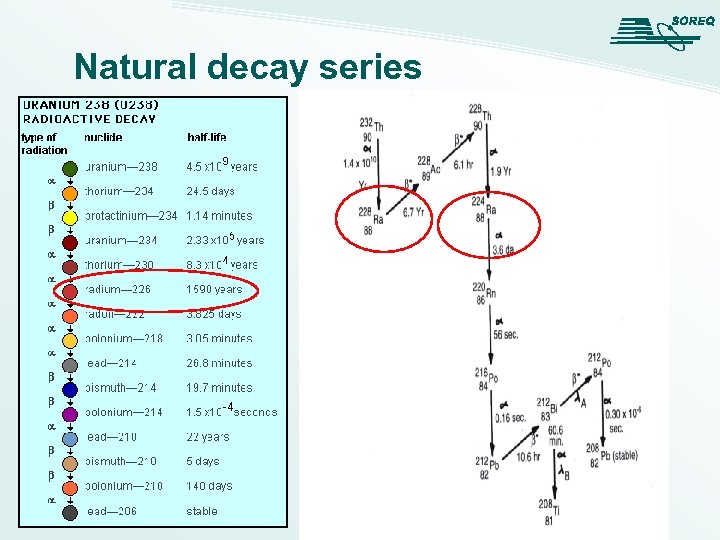 Natural decay series
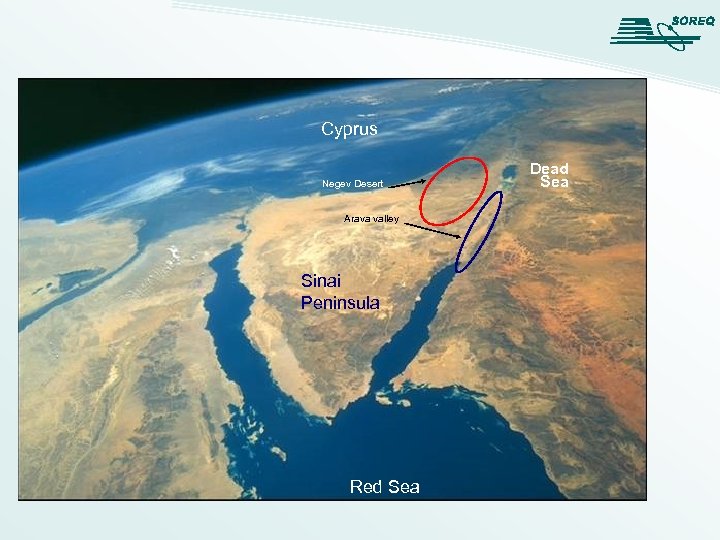 Cyprus Negev Desert Arava valley Sinai Peninsula Red Sea Dead Sea
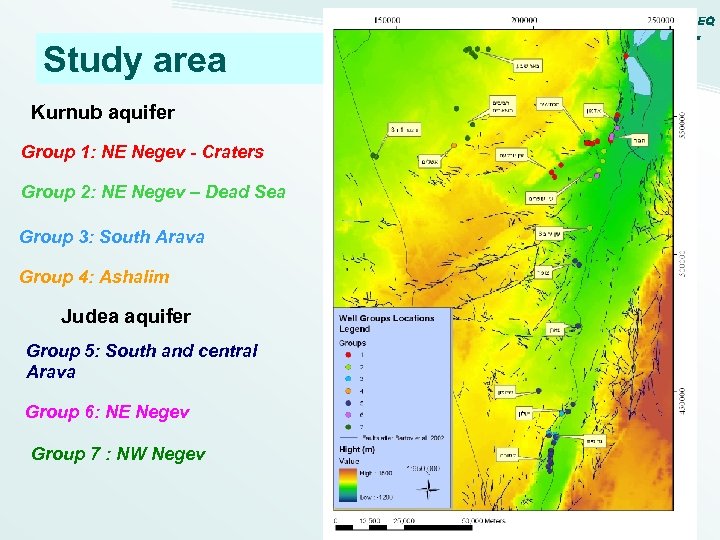
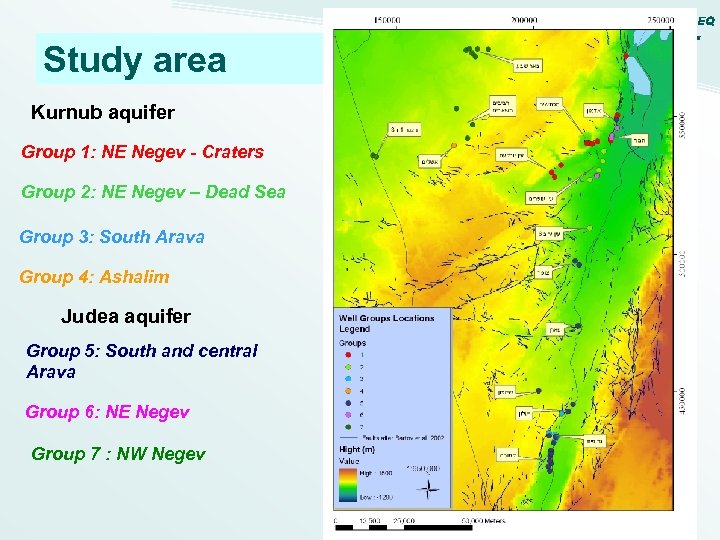 Study area Kurnub aquifer Group 1: NE Negev - Craters Group 2: NE Negev – Dead Sea Group 3: South Arava Group 4: Ashalim Judea aquifer Group 5: South and central Arava Group 6: NE Negev Group 7 : NW Negev
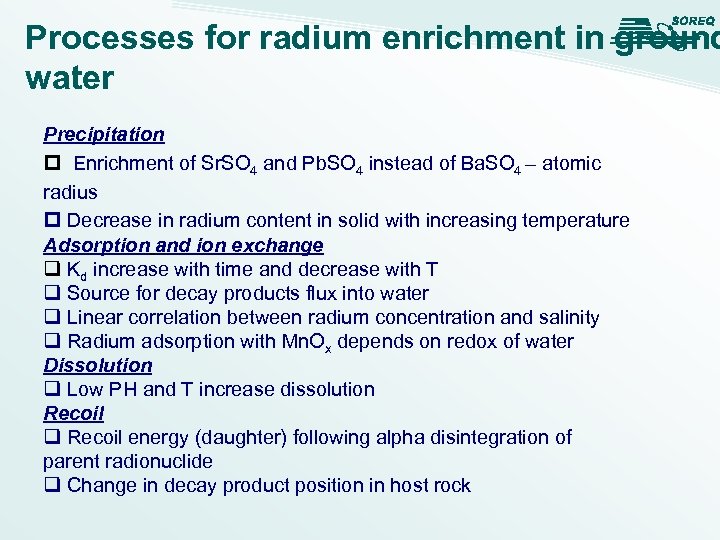 Processes for radium enrichment in ground water Precipitation p Enrichment of Sr. SO 4 and Pb. SO 4 instead of Ba. SO 4 – atomic radius p Decrease in radium content in solid with increasing temperature Adsorption and ion exchange q Kd increase with time and decrease with T q Source for decay products flux into water q Linear correlation between radium concentration and salinity q Radium adsorption with Mn. Ox depends on redox of water Dissolution q Low PH and T increase dissolution Recoil q Recoil energy (daughter) following alpha disintegration of parent radionuclide q Change in decay product position in host rock
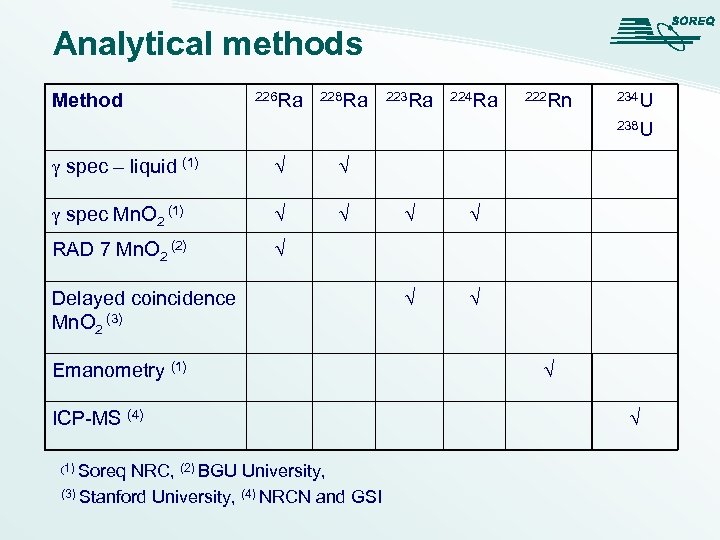 Analytical methods Method 226 Ra 228 Ra 223 Ra 224 Ra 222 Rn 234 U 238 U g spec – liquid (1) g spec Mn. O 2 (1) RAD 7 Mn. O 2 (2) Delayed coincidence Mn. O 2 (3) Emanometry (1) ICP-MS (4) Soreq NRC, (2) BGU University, (3) Stanford University, (4) NRCN and GSI (1)
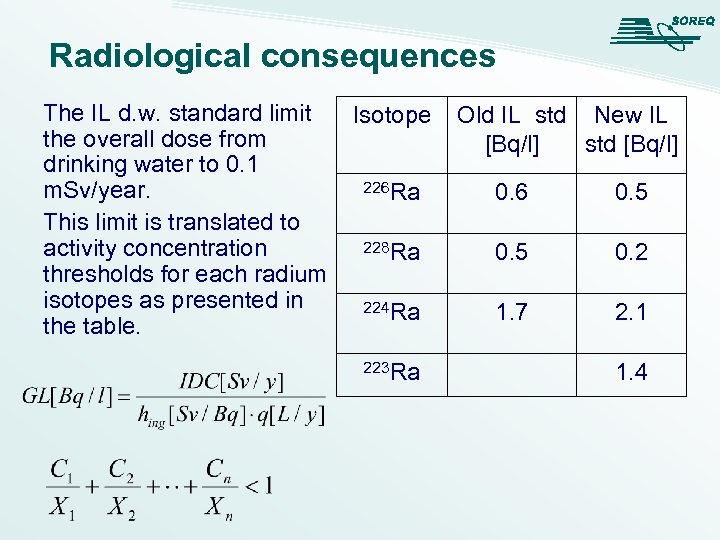 Radiological consequences The IL d. w. standard limit the overall dose from drinking water to 0. 1 m. Sv/year. This limit is translated to activity concentration thresholds for each radium isotopes as presented in the table. Isotope Old IL std New IL [Bq/l] std [Bq/l] 226 Ra 0. 6 0. 5 228 Ra 0. 5 0. 2 224 Ra 1. 7 2. 1 223 Ra 1. 4
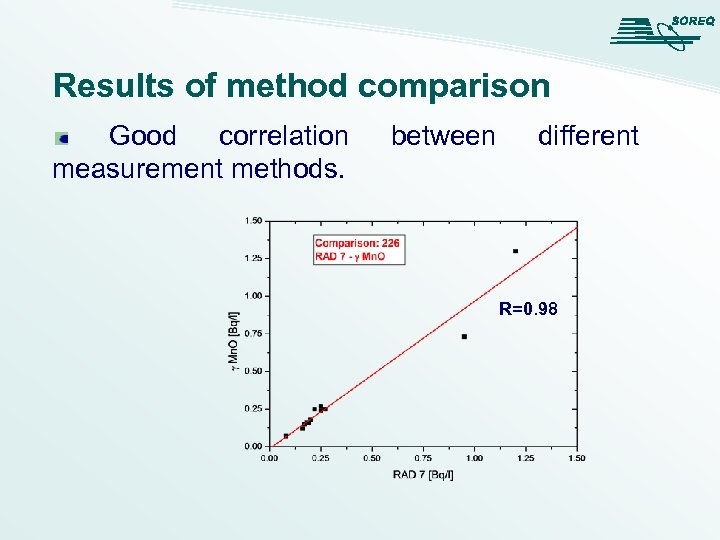 Results of method comparison Good correlation measurement methods. between different R=0. 98
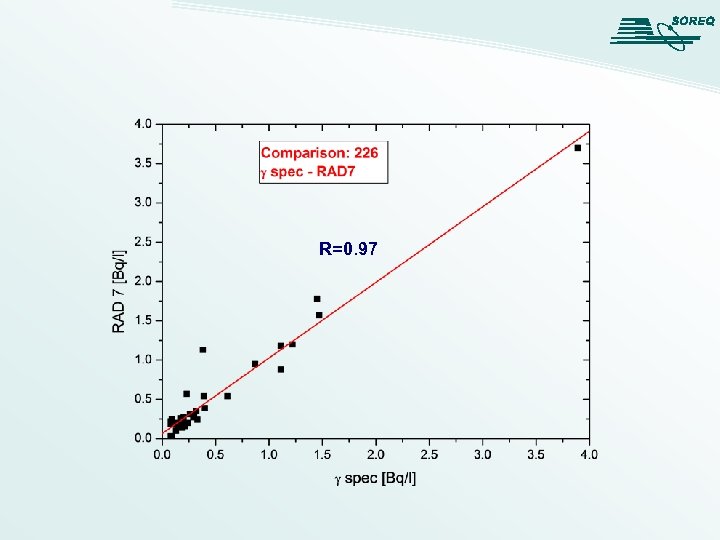 R=0. 97
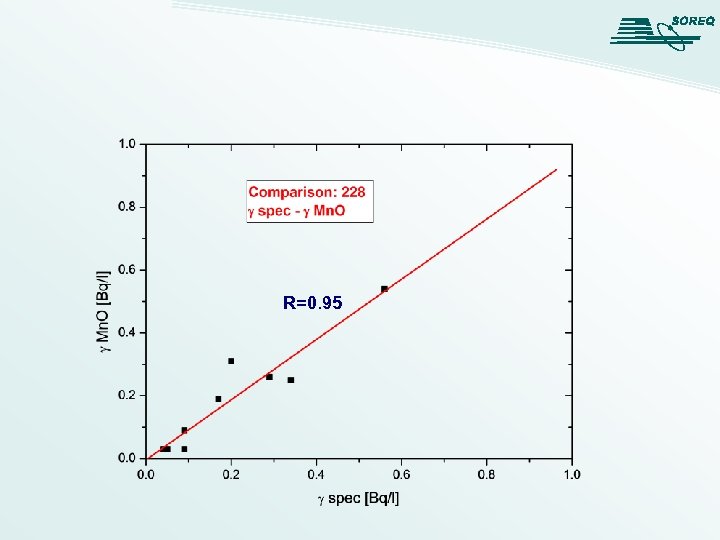 R=0. 95
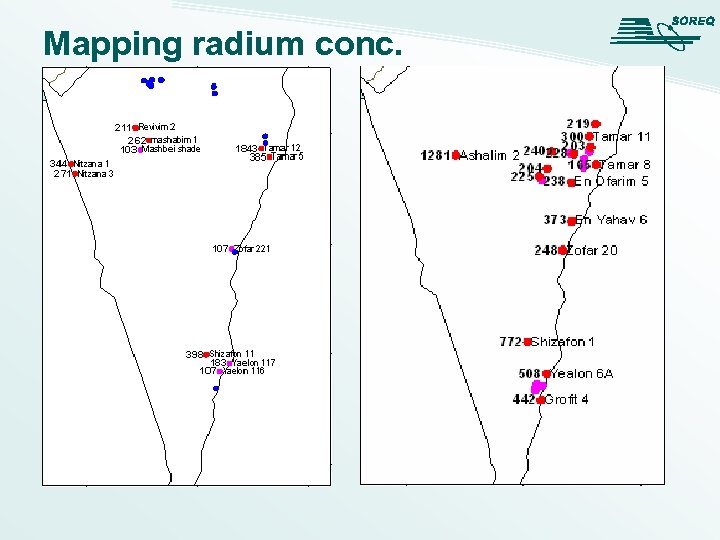
 Results of radium mapping Radioactivity distribution: Dispersion of the phenomena along all the study area. No hot-spots. Anomalies of 222 Rn in the region south to the Dead Sea.
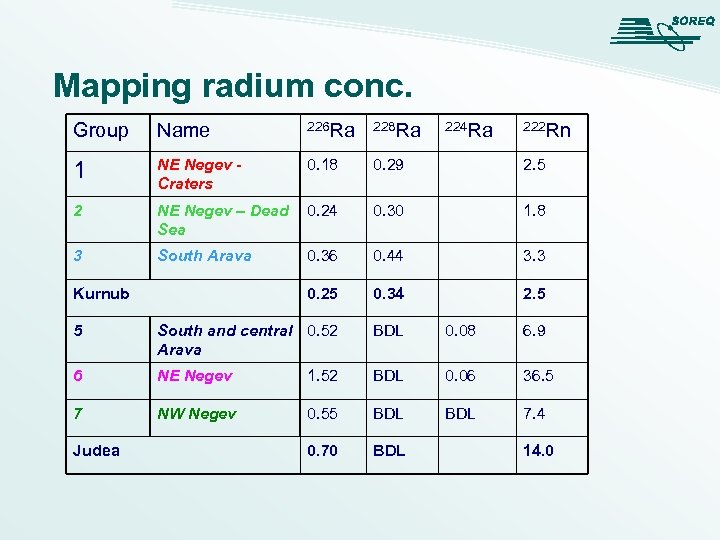 Mapping radium conc. Group Name 226 Ra 228 Ra 1 NE Negev Craters 0. 18 0. 29 2. 5 2 NE Negev – Dead Sea 0. 24 0. 30 1. 8 3 South Arava 0. 36 0. 44 3. 3 0. 25 0. 34 2. 5 5 South and central 0. 52 Arava BDL 0. 08 6. 9 6 NE Negev 1. 52 BDL 0. 06 36. 5 7 NW Negev 0. 55 BDL 7. 4 0. 70 BDL Kurnub Judea 224 Ra 222 Rn 14. 0
 Study area Kurnub aquifer Group 1: NE Negev - Craters Group 2: NE Negev – Dead Sea Group 3: South Arava Group 4: Ashalim Judea aquifer Group 5: South and central Arava Group 6: NE Negev Group 7 : NW Negev
 Mapping radium conc.
 Results of drinking water quality The majority of the water in both aquifers are not suitable for consumption
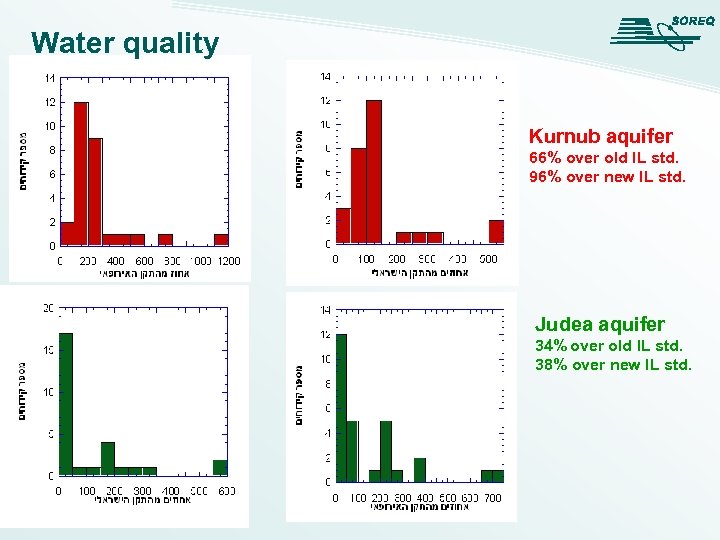 Water quality Kurnub aquifer 66% over old IL std. 96% over new IL std. Judea aquifer 34% over old IL std. 38% over new IL std.
 Results on geochemistry Radium isotopes according to lithology (Judea 226 Ra, Kurnub 228 Ra and 226 Ra). Large daughter/parent disequilibrium: 222 Rn/226 Ra (0. 2 - 225) 234 U/238 U (1. 3 - 5. 3) 224 Ra/228 Ra (0. 1 -5. 4).
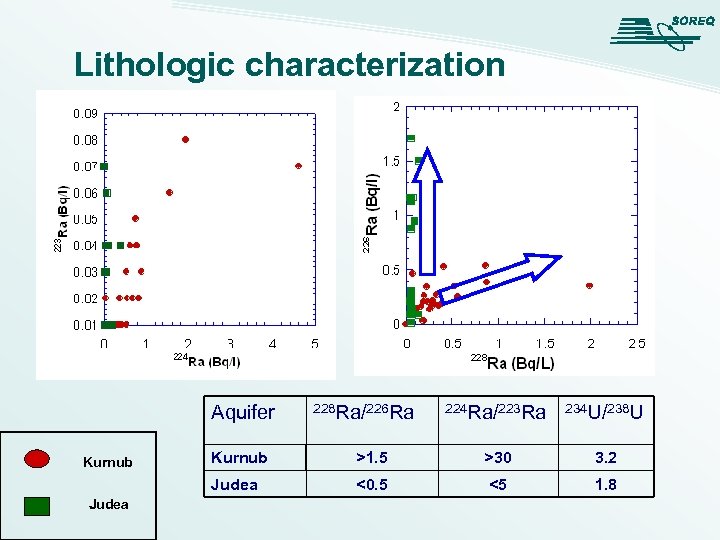 Lithologic characterization Aquifer 228 Ra/226 Ra 224 Ra/223 Ra 234 U/238 U Judea Kurnub >1. 5 >30 3. 2 Judea Kurnub <0. 5 <5 1. 8
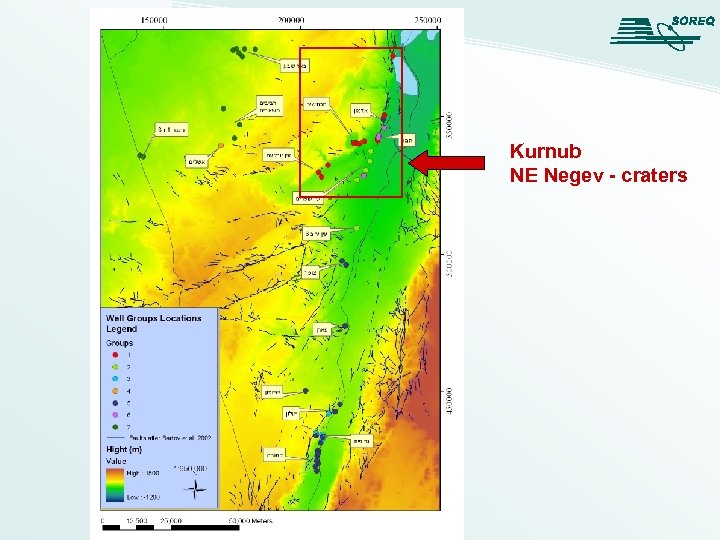 Kurnub NE Negev - craters
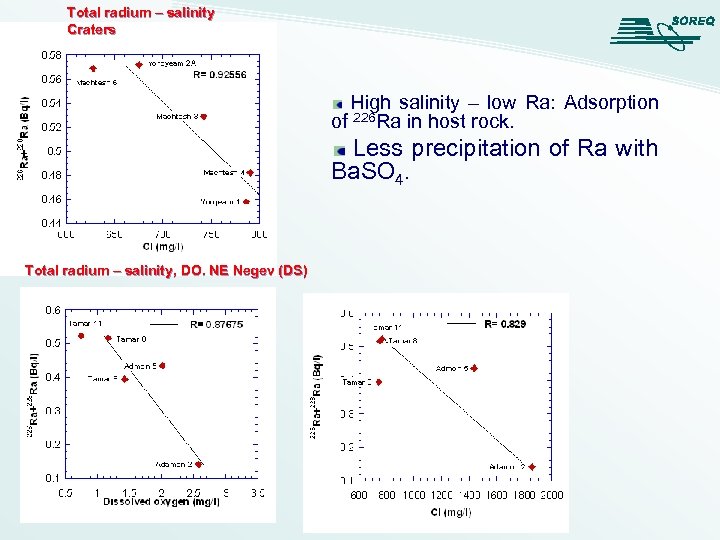 Total radium – salinity Craters High salinity – low Ra: Adsorption of 226 Ra in host rock. Less precipitation of Ra with Ba. SO 4. Total radium – salinity, DO. NE Negev (DS)
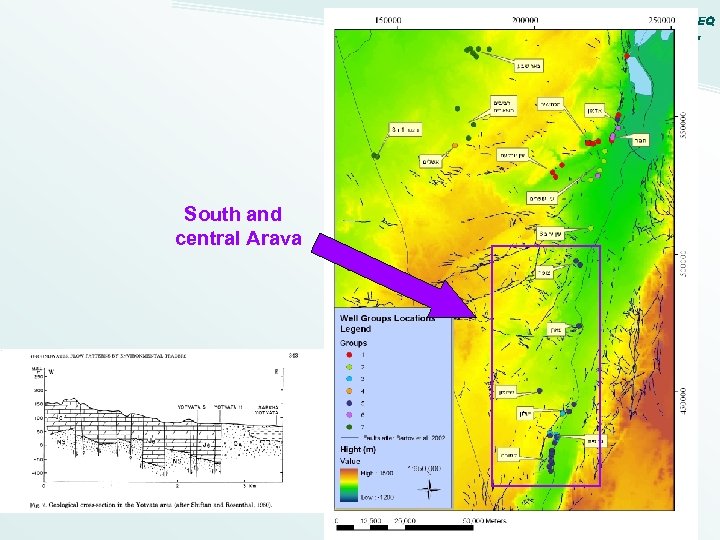 South and central Arava
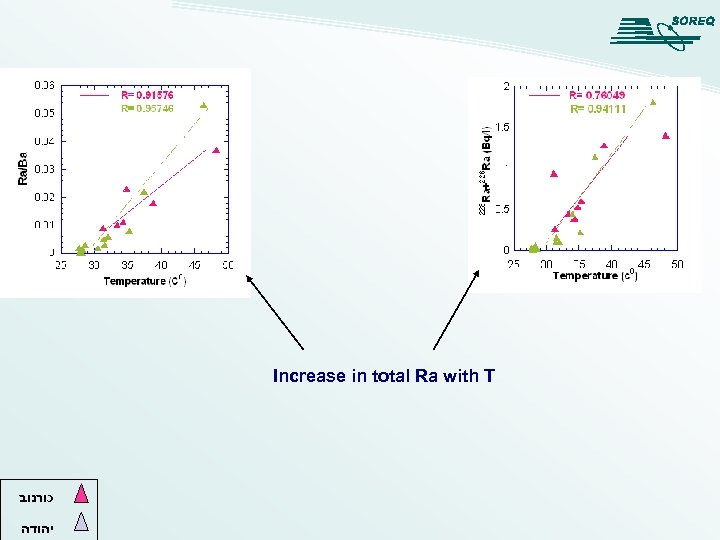 Increase in total Ra with T כורנוב יהודה
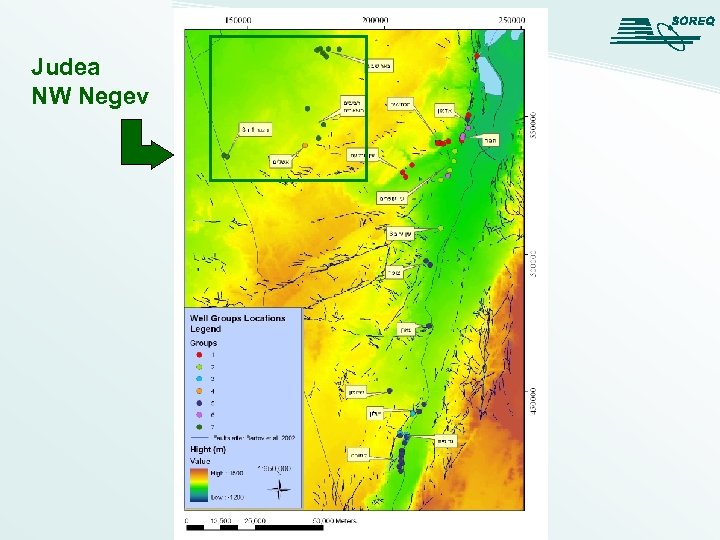 Judea NW Negev
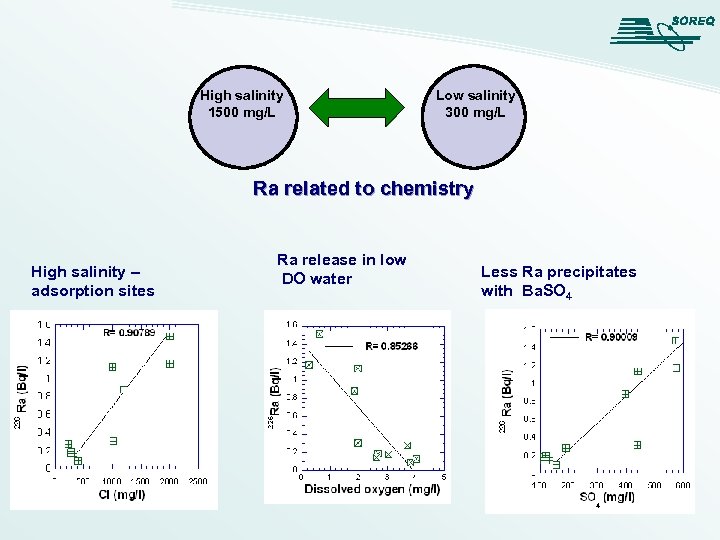 High salinity 1500 mg/L Low salinity 300 mg/L Ra related to chemistry High salinity – adsorption sites Ra release in low DO water Less Ra precipitates with Ba. SO 4
 Conclusions A systematic and comprehensive survey of natural radioactivity in the Kurnub and Judea aquifers was performed. ü The natural radioactivity phenomena in groundwater is scattered along the south of Israel. ü A comparison of five analytical methods for radium measurements was performed an very good correlation was found between the different methods. ü Isotopic radium characterization according to lithology. ü 228 Ra/226 Ra < 1 as expected in carbonate aquifers (Judea) ü Almost 40% of the wells do not fit IL and EU d. w. Standards. ü
 ü 228 Ra/226 Ra > 1 as expected in sandstone aquifers (kurnub). ü Almost 96% do not fit new IL d. w. standard ü The groundwater is supplied to the population after desalination which lower the radium concentration in the water. ü Radium enrichment in groundwater is due to: adsorption, dissolution, precipitation and recoil. ü The predominant geochemical process for radium enrichment are influenced in-situ by local characteristics (chemistry) of the water. ü High U disequilibrium was found in both aquifers. ü High excess of 222 Rn was measured in both aquifers.
 In cooperation with A. Vengosh and N. Pery – Ben Gurion University. A. Paytan – Stanford University Sponsored by: Water quality Division at the Israel Water Commission
 d Sea Thank you Gracie תודה