


 Скачать презентацию NATS 101 Lecture 28 Lightning Review Thunderstorms
fde013a3c683d09f23df4ef51c64d1fc.ppt
- Количество слайдов: 29
 NATS 101 Lecture 28 Lightning
 Review: Thunderstorms • A cumulonimbus with lightning and thunder! • Deep layer of conditionally unstable air is necessary to produce a thunderstorm. • Several types of thunderstorms. Single Cell, Multicell, Squall Line, Mesoscale Convective Complexes, Supercells • Pose major hazards to public and economy. Lightning, Hail, Microburst Winds, Flash Flooding, Tornadoes
 Lightning Basics • What is lightning? An electric discharge, or spark, that occurs in thunderstorms (usually) 80% occurs within clouds 20% occurs between cloud and ground • Lightning is ubiquitous, with more than 6, 000 ground strikes per minute from 40, 000 thunderstorms per day worldwide
 Lightning Videos • Examples were shown of In-Cloud (IC) Lightning Cloud-to-Cloud (CC) Lightning Forked Lightning IC Lightning Video from Met. Ed/UCAR • MCC Lightning from Space Shuttle Lightning from Space Video from NASA
 Lightning Pictures • Examples were shown of Cloud-to-Ground (CG) Lightning In-Cloud (IC) Lightning Cloud-to-Cloud (CC) Lightning Forked Lightning Chuck Doswell's Lightning Pictures-Very Nice! • Excellent photography tips can be found at Chuck Doswell’s web site. He’s good!
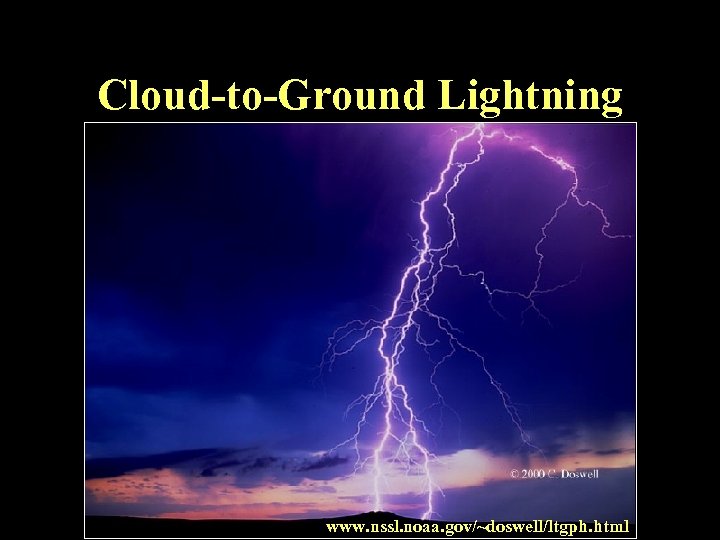 Cloud-to-Ground Lightning www. nssl. noaa. gov/~doswell/ltgph. html
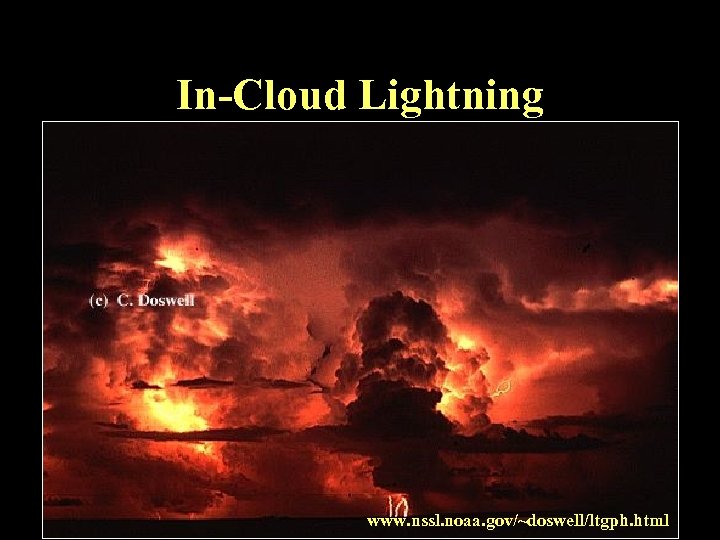 In-Cloud Lightning www. nssl. noaa. gov/~doswell/ltgph. html
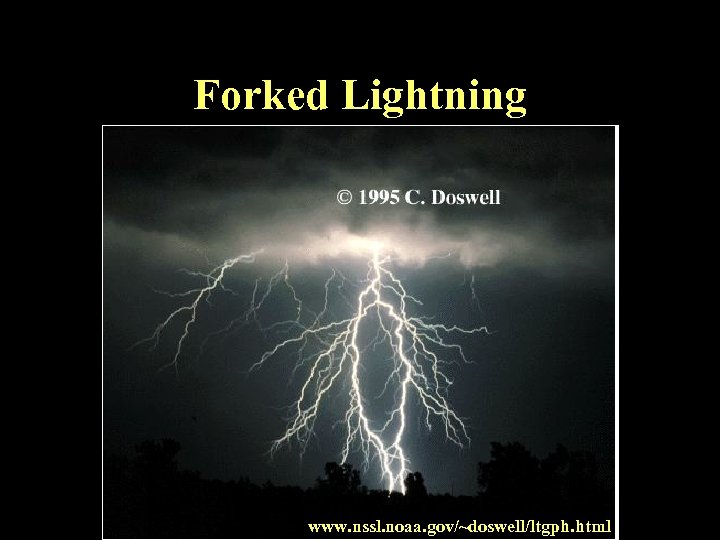 Forked Lightning www. nssl. noaa. gov/~doswell/ltgph. html
 Charge Separation Lightning requires the separation of different charges into different regions of a cloud. How does charge separation in clouds occur? We don’t know for certain, but we observe this: Lightning only occurs in cold clouds with supercooled droplets and temps below 5 o. F. Thus, the ice crystal processes responsible for precipitation in cold clouds likely plays an critical role in charge separation.
 Charge Separation: One Theory Hailstones are covered by a layer of liquid water. The thin layer of liquid is positively charged. When hailstones and ice crystals collide, some of liquid molecules stick to the ice crystals. Along with the mass transfer, positive ions transfer from the hailstones to the ice crystals. The heavier, negative hail falls to cloud bottom. The lighter, positive ice crystals drift to cloud top. Produces negative lower, positive upper cloud.
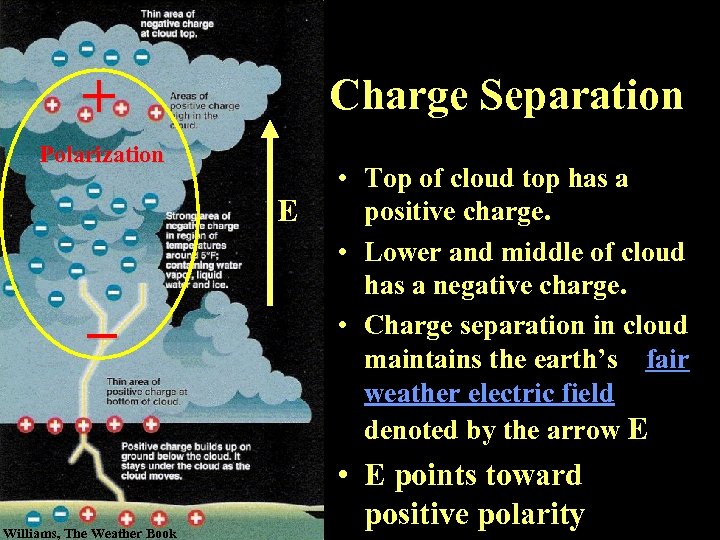 + Charge Separation Polarization E – Williams, The Weather Book • Top of cloud top has a positive charge. • Lower and middle of cloud has a negative charge. • Charge separation in cloud maintains the earth’s fair weather electric field denoted by the arrow E • E points toward positive polarity
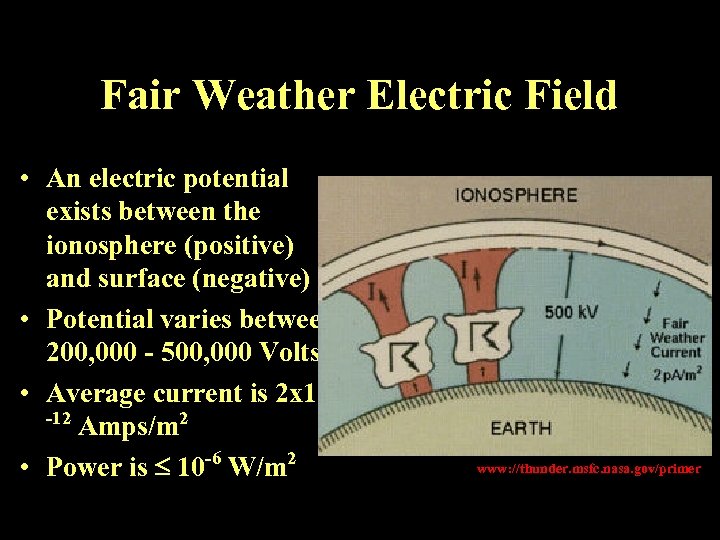 Fair Weather Electric Field • An electric potential exists between the ionosphere (positive) and surface (negative) • Potential varies between 200, 000 - 500, 000 Volts • Average current is 2 x 10 -12 Amps/m 2 • Power is 10 -6 W/m 2 www: //thunder. msfc. nasa. gov/primer
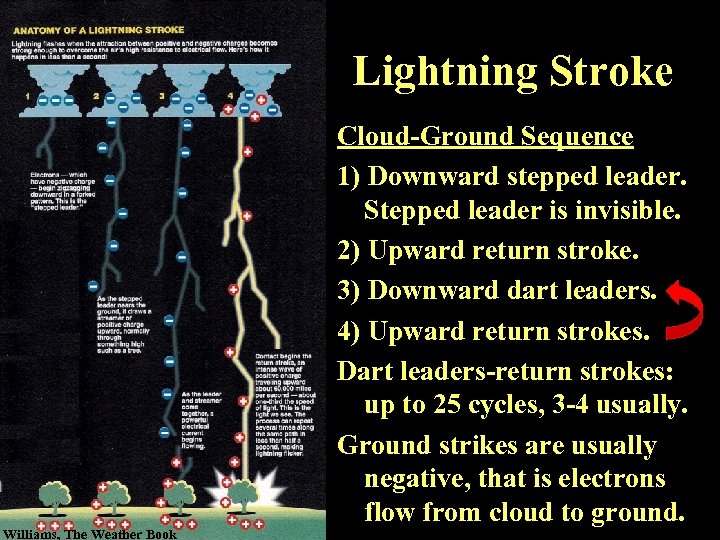 Lightning Stroke Williams, The Weather Book Cloud-Ground Sequence 1) Downward stepped leader. Stepped leader is invisible. 2) Upward return stroke. 3) Downward dart leaders. 4) Upward return strokes. Dart leaders-return strokes: up to 25 cycles, 3 -4 usually. Ground strikes are usually negative, that is electrons flow from cloud to ground.
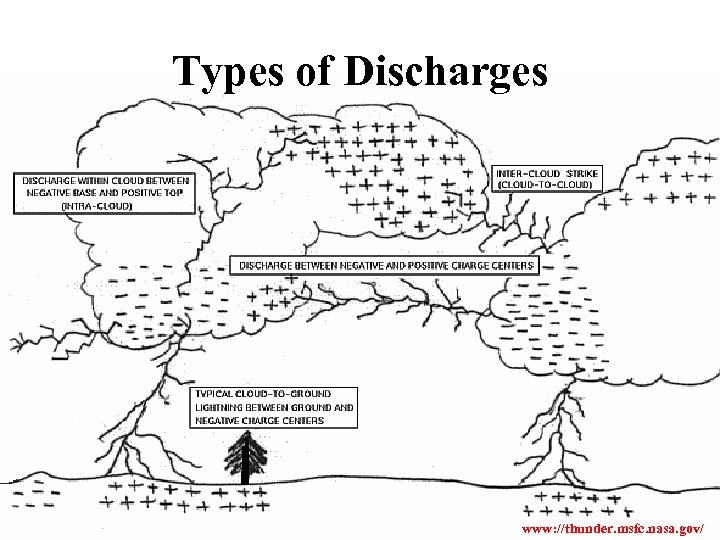 Types of Discharges www: //thunder. msfc. nasa. gov/
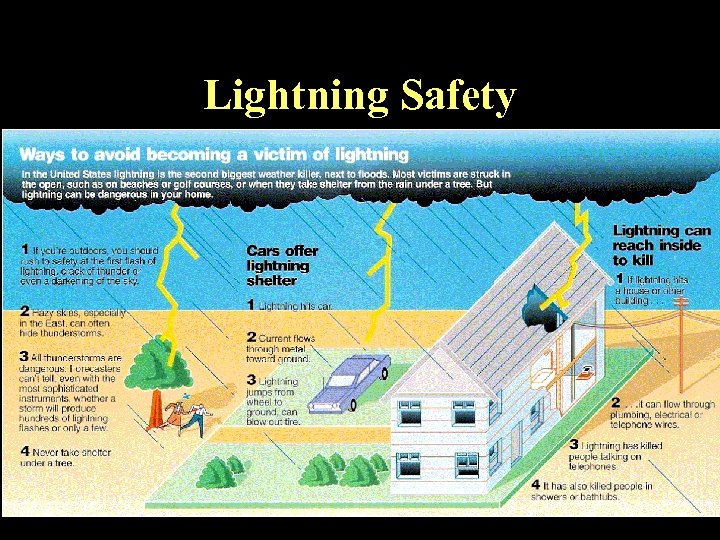 Lightning Safety Williams, The Weather Book
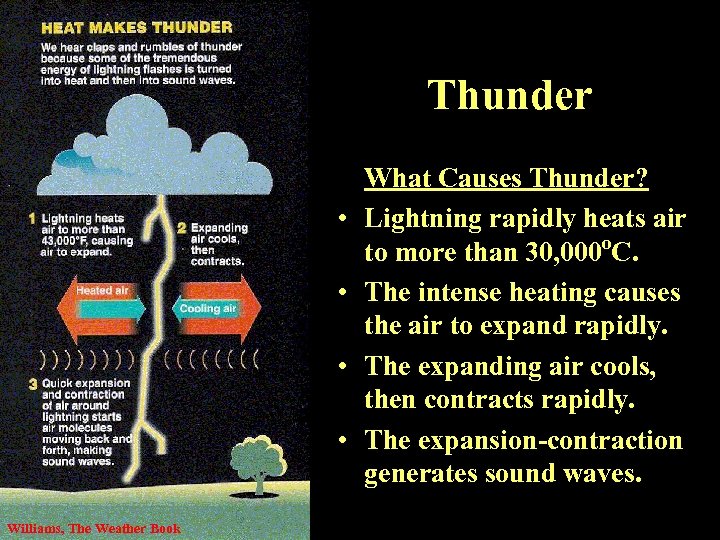 Thunder • • Williams, The Weather Book What Causes Thunder? Lightning rapidly heats air to more than 30, 000 o. C. The intense heating causes the air to expand rapidly. The expanding air cools, then contracts rapidly. The expansion-contraction generates sound waves.
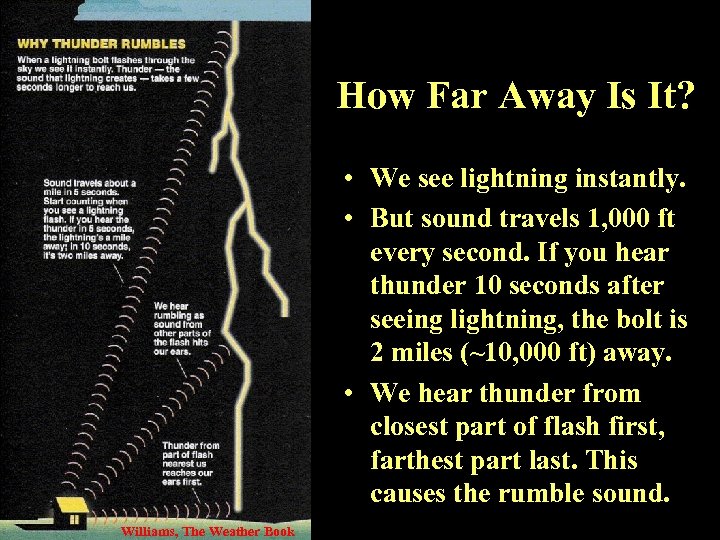 How Far Away Is It? • We see lightning instantly. • But sound travels 1, 000 ft every second. If you hear thunder 10 seconds after seeing lightning, the bolt is 2 miles (~10, 000 ft) away. • We hear thunder from closest part of flash first, farthest part last. This causes the rumble sound. Williams, The Weather Book
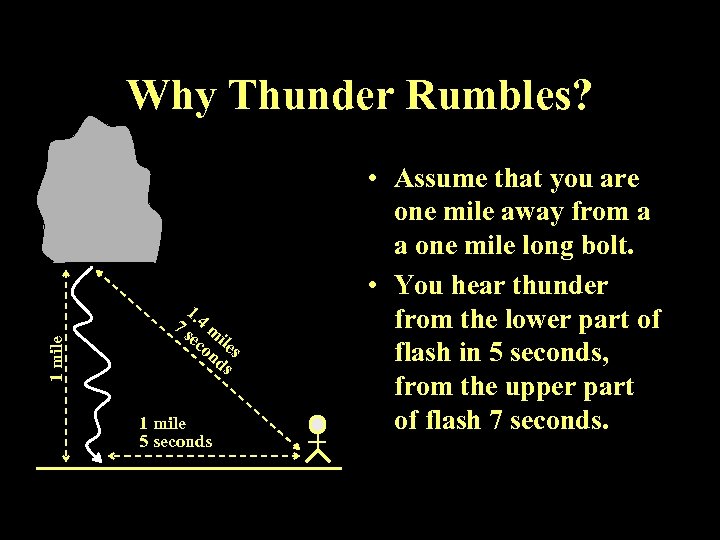 1 mile Why Thunder Rumbles? 1 7. 4 m se il co es nd s 1 mile 5 seconds • Assume that you are one mile away from a a one mile long bolt. • You hear thunder from the lower part of flash in 5 seconds, from the upper part of flash 7 seconds.
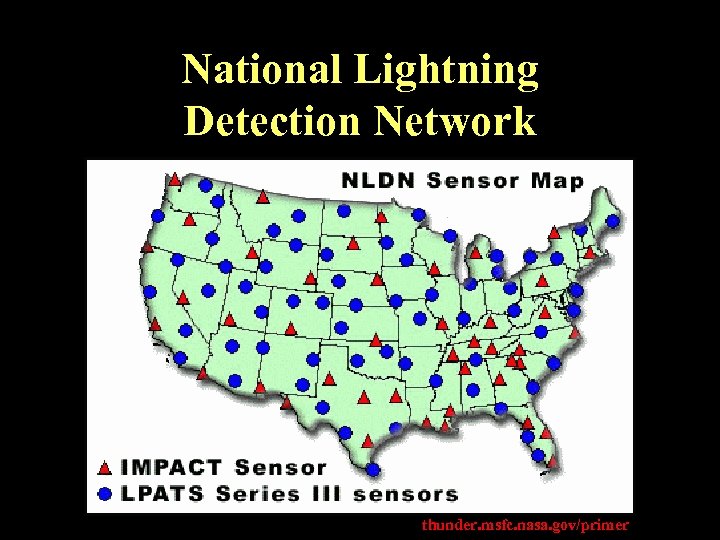 National Lightning Detection Network thunder. msfc. nasa. gov/primer
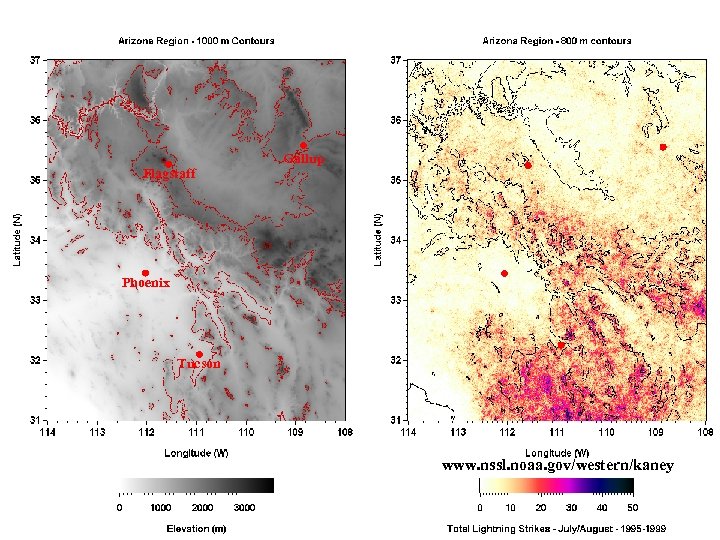 Flagstaff Gallup Phoenix Tucson www. nssl. noaa. gov/western/kaney
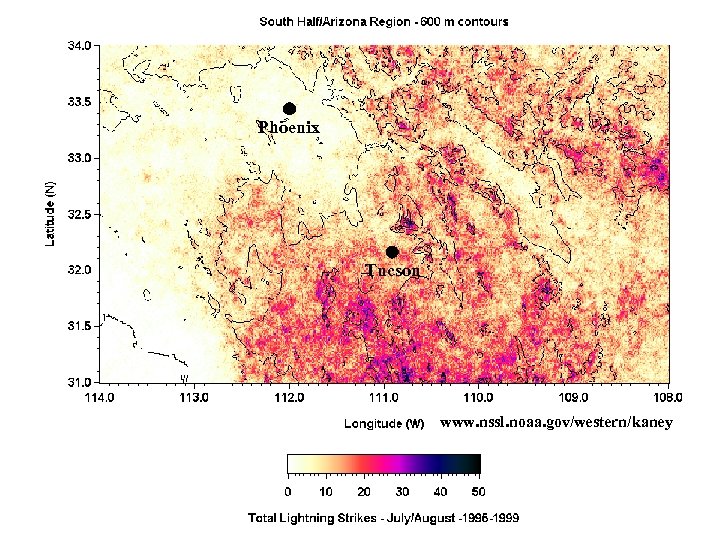 Phoenix Tucson www. nssl. noaa. gov/western/kaney
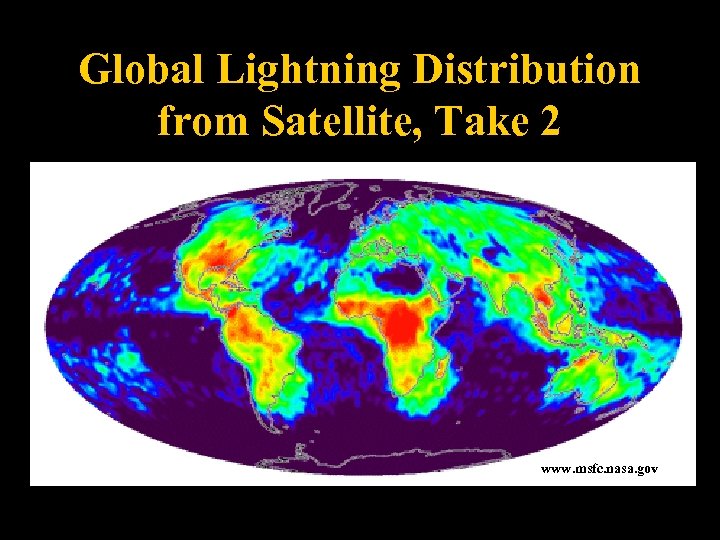 Global Lightning Distribution from Satellite, Take 2 www. msfc. nasa. gov
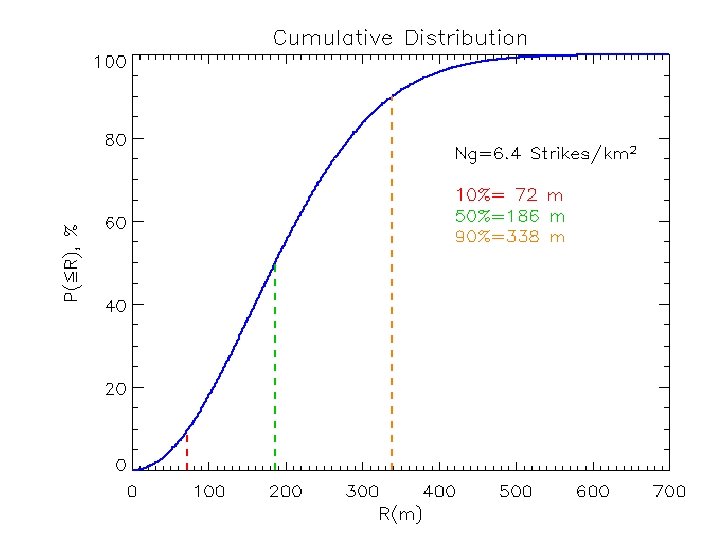
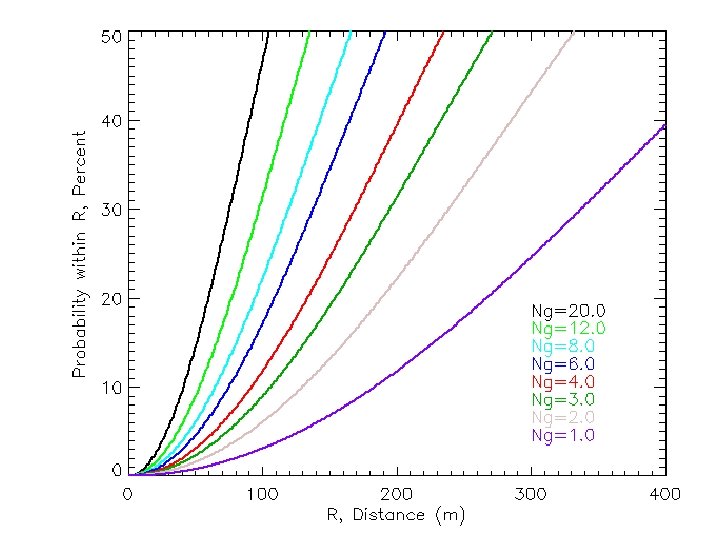
 Let’s Play “Who Gets Toasted” • What is the probability in Tucson of a Cloud-to-Ground lightning stroke hitting within a certain Radius R of you in an “average” year? • Guesses? No peeking!
 Courtesy Prof. E. P. Krider Dept. of Atmospheric Sciences
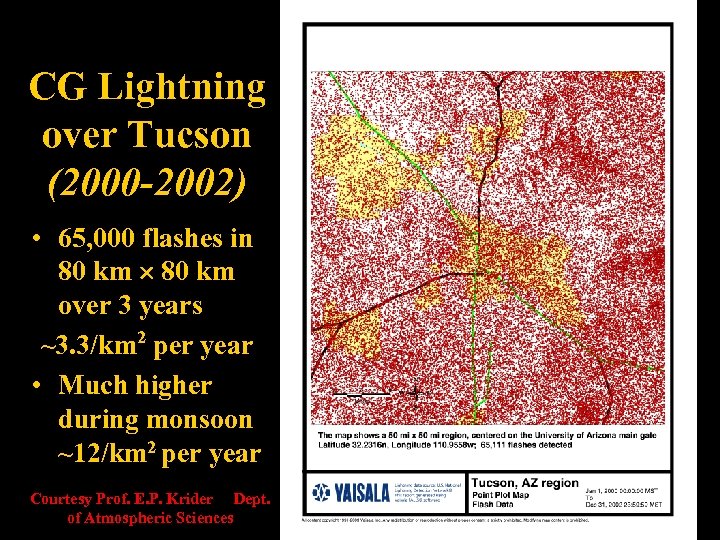 CG Lightning over Tucson (2000 -2002) • 65, 000 flashes in 80 km over 3 years ~3. 3/km 2 per year • Much higher during monsoon ~12/km 2 per year Courtesy Prof. E. P. Krider Dept. of Atmospheric Sciences
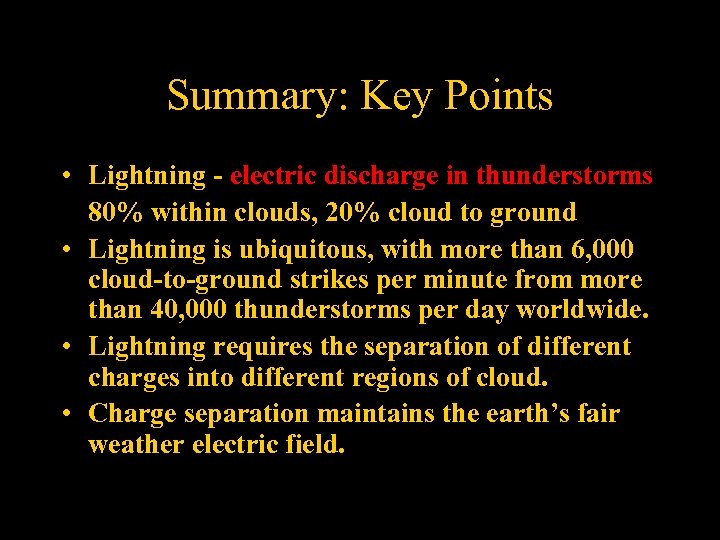 Summary: Key Points • Lightning - electric discharge in thunderstorms 80% within clouds, 20% cloud to ground • Lightning is ubiquitous, with more than 6, 000 cloud-to-ground strikes per minute from more than 40, 000 thunderstorms per day worldwide. • Lightning requires the separation of different charges into different regions of cloud. • Charge separation maintains the earth’s fair weather electric field.
 Assignment for Next Lecture • Topic - Tornadoes • Reading - Ahrens, p 277 -290 • Problems - 10. 25, 10. 26, 10. 29