


 Скачать презентацию NATIVE PLANTS A native plant is one which
7e2b1fbb418181707312df06655c7cd4.ppt
- Количество слайдов: 26
 NATIVE PLANTS A native plant is one which occurred within the state before settlement by Europeans. Native plants include ferns and clubmosses; grasses, sedges, rushes; flowering perennials; annuals; biennials; and, of course, the woody trees, shrubs, and vines which covered "Penn's Woods" when the first settlers arrived. There are over 2, 100 native plant species known in Pennsylvania. www. dcnr. state. pa. us
 NON-NATIVE PLANTS An introduced or non-native plant is one that has been brought into the state and become established. At the turn of the 21 st century, about 1, 300 species of non-native plants existed in Pennsylvania. That is 37 percent of Pennsylvania's total plant flora (which is about 3, 400 species), and more introduced plants are identified every year. www. dcnr. state. pa. us
 INVASIVE PLANTS An invasive plant is a species that has become a weed pest. One that grows aggressively, spreads, and displaces other plants. Although some native plants are aggressive on disturbed areas, most invasive plants are introduced from other continents. In their new environment, they have no predators or natural controls. www. dcnr. state. pa. us
 THE BAD NEWS While new plants are coming into Pennsylvania, native plants are being lost to habitat destruction, invasive plants, and introduced pests and diseases. By 2000, 5% of Pennsylvania native plant species had been eliminated another 25 percent were in danger of becoming so. www. dcnr. state. pa. us
 THE GOOD NEWS The good news is that action can be taken to protect and enhance the remaining diversity of beautiful and often useful plant species in Pennsylvania: • Protect native plant communities and minimize habitat destruction • Landscape with native plants • Learn more about native plants • Buy nursery-propagated native plants • Do not remove native plants from the wild • Practice responsible landscaping techniques www. dcnr. state. pa. us
 MILE-A-MINUTE WEED An annual or perennial vine of Asian origin that infests nurseries, orchards, openings in forested areas, roadsides, and drainage ditches in the eastern United States. In natural areas, the plant displaces native vegetation. This weed is a particular threat to forest regeneration. Seeds are able to survive in the soil and germinate after as long as four years. It grows rapidly and out-competes native species. Loss of native plant species diversity from mile-a-minute weed affects wildlife species by reducing or eliminating their food plants and habitats. www. invasive. org
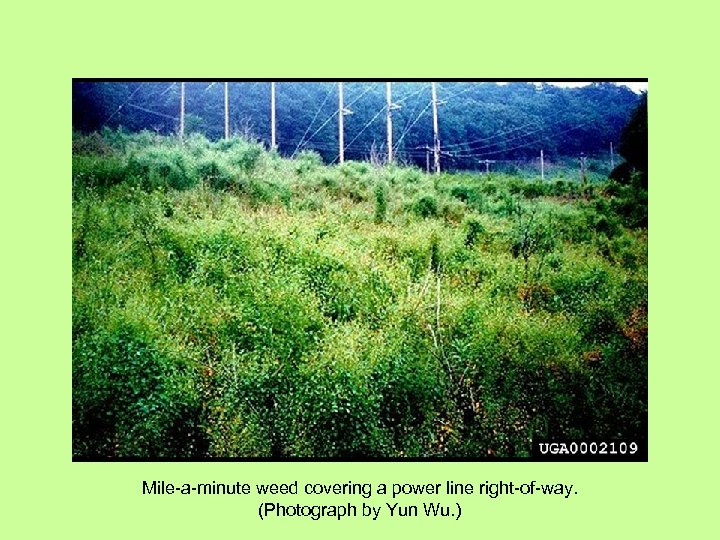 Mile-a-minute weed covering a power line right-of-way. (Photograph by Yun Wu. )
 PURPLE LOOSESTRIFE Alters biogeochemical processes in wetlands. Marsh birds, many of which are declining in the northeastern United States, avoid nesting and foraging in purple loosestrife. The federally endangered bog turtle loses basking and breeding sites. www. invasive. org
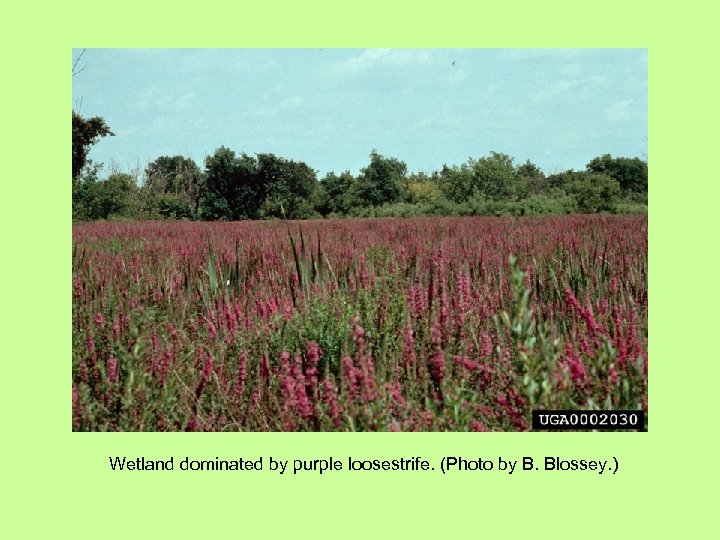 Wetland dominated by purple loosestrife. (Photo by B. Blossey. )
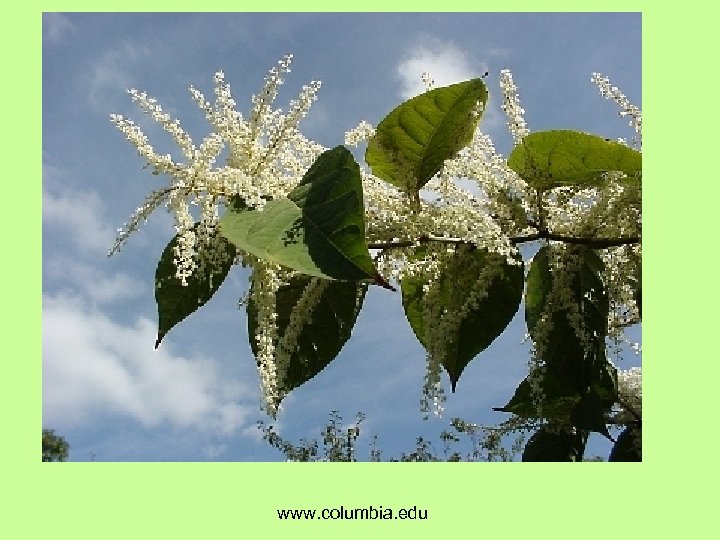
 JAPANESE KNOTWEED (MEXICAN BAMBOO) Introduced into US in late 1800’s. Grows extremely quickly: within 6 days, a viable plant exists from a rhizome as small as. 7 grams. Even when the visible parts of the plant are cut away, the rhizomes sustain it, making it extraordinarily persistent. Can withstand almost all types of soil, light, and drought conditions. Rhizomes will survive to grow a new plant even if buried 3 feet deep, or under asphalt. Forces out native plants through shade and thick ground cover, damages wildlife habitat by reducing plant biodiversity, expensive to treat, ugly, causes damage to sidewalks and pavement. www. columbia. edu
 www. columbia. edu
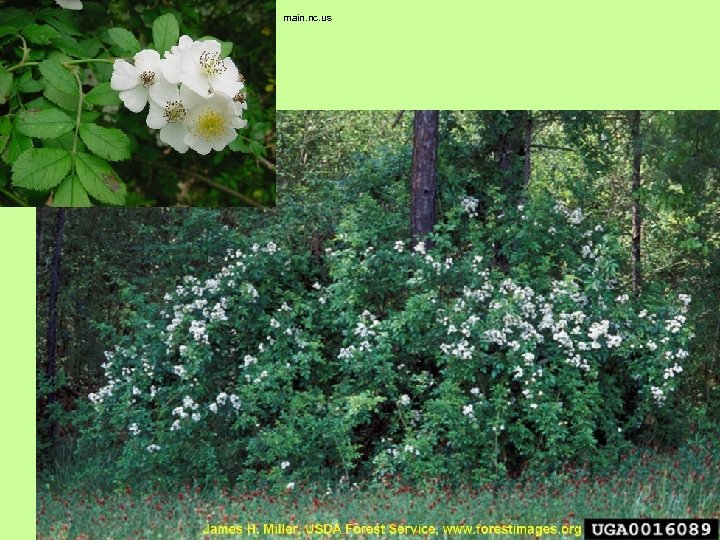
 MULTIFLORA ROSE Native to East Asia (Japan, Korea, and eastern China). Before its weedy characteristics were well understood, it was widely planted in the 1940 s to 1960 s in the eastern United States as a wildlife plant for erosion control and as a living fence. Lost pasturage has resulted in significant reduction in potential beef production.
 A single, vigorous, mature plant can produce up to half a million seeds annually. Where plants have become well established, a huge seed bank develops that can continue to produce seedlings for at least twenty years after removal of mature plants. It is especially troublesome in regions with steep slopes, which prevent access by tractors or mowers for cutting this weed. Multiflora rose forms dense, impenetrable thickets. www. invasive. org
 main. nc. us
 EXOTIC PESTS Exotic pests are insects or other organisms that are not native to an area, but have been brought to that area and thrive there. These organisms do not have any natural predators in their new home to keep their population down and the plants they attack do not have any way to repel them.
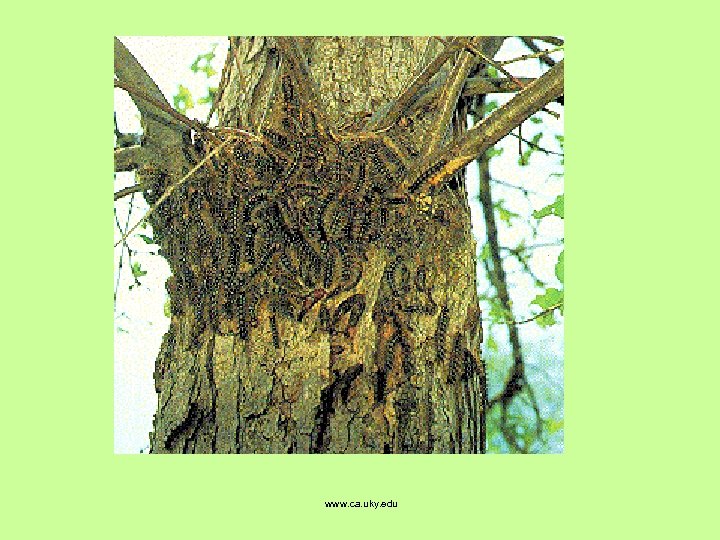
 GYPSY MOTH In 1869, gypsy moth larvae that were being evaluated for silk production, were blown from a window sill in Medford, Massachusetts. The first outbreak of European gypsy moth occurred in 1889. By 1987, the gypsy moth had established itself throughout the Northeast. It is one of the most damaging pests of hardwood forests and urban landscapes, defoliating a million or more forested acres annually. In 2002, PA spent over $1 million to fight this pest. www. ca. uky. edu
 Gypsy moths are spread one of two different ways. Natural spread over short distances occurs as newly hatched larvae spin short lengths of silken thread which allow them to be blown by the wind. Over the last 10 to 15 years, gypsy moths have moved long distances on outdoor household articles such as cars and RV’s, firewood, household goods, and other personal possessions. An estimated 85 percent of new infestations have been through the movement of outdoor household articles. www. ca. uky. edu
 www. ca. uky. edu
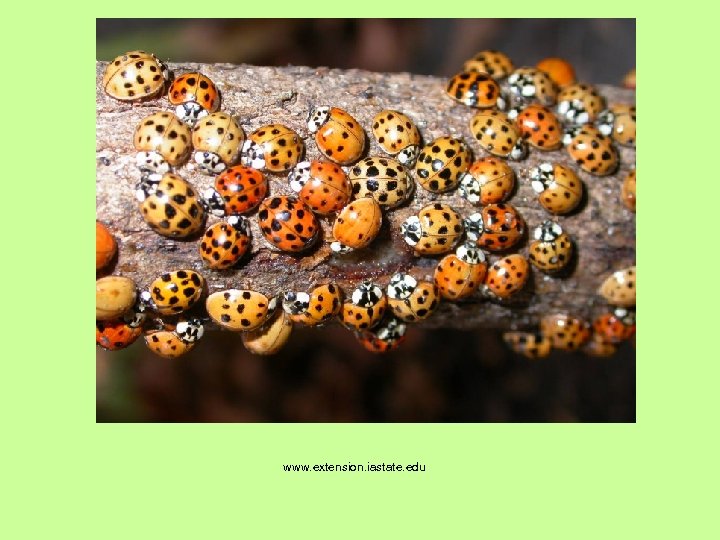
 ASIAN LADY BEETLE Lady beetles, in general, are beneficial insects because they eat a wide variety of 'pest' insects in field crops. The Asian lady beetle is native to Asian countries like China, Russia, Japan, and Korea. These insects were first reported to be present in the US in large numbers in the 1980 s. It is considered that the U. S. Department of Agriculture first introduced these beetles into U. S. in the 1960 s in several states for control of orchard insect pests (apple and peach orchards). There is a concern that the Asian lady beetles are displacing native lady beetles due to their aggressive behavior and voracious appetite. They enter homes in the fall when the weather gets too cold for them. www. extension. umn. edu
 www. extension. iastate. edu
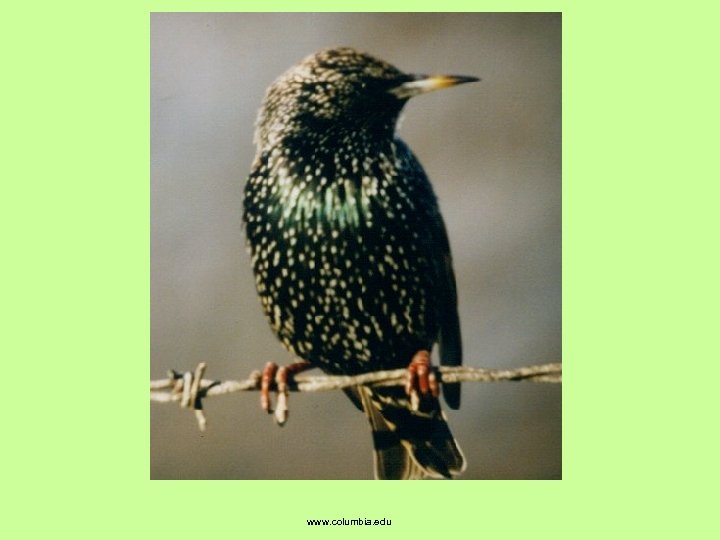
 EUROPEAN STARLING In 1890, sixty birds were released in Central Park in New York City and began to flourish. They are fierce competitors for nesting sites. They are responsible for the decline in native cavity nesting birds such as woodpeckers. Starlings are not only pests (noise, nesting materials and droppings) but their nests are a common source of fleas, ticks, bed bugs and carpet beetles. These pests can and do easily invade buildings, causing a secondary pest problem for humans, pets and domestic animals. www. pestproducts. com
 www. columbia. edu
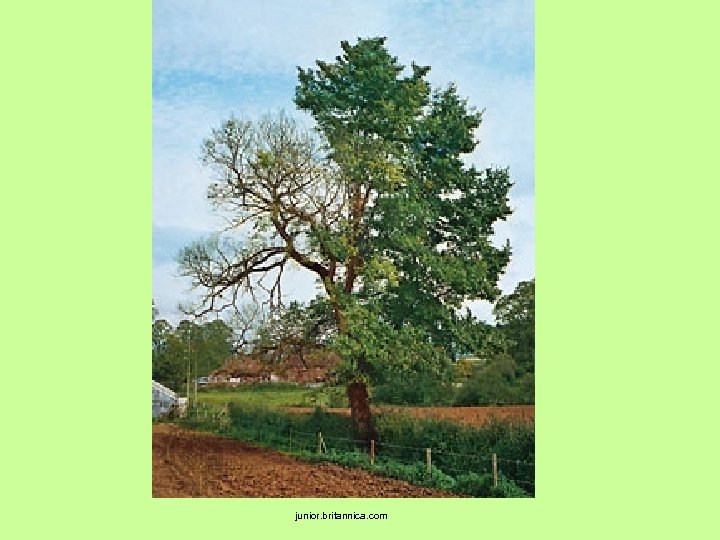
 DUTCH ELM DISEASE Dutch Elm Disease (DED) is spread from tree to tree by elm bark beetles. It has been wiping out elms in the eastern U. S. since the 1930 s. Dutch Elm Disease is a fungus that attacks the tree's vascular system, which conducts water and nutrients from the roots to the leaves. crawford. tardigrade. net
 junior. britannica. com
 CHESTNUT BLIGHT Before the turn of the century, the eastern half of the United States was dominated by the American chestnut. Because it could grow rapidly and attain huge sizes, the tree was often the outstanding visual feature in both urban and rural landscapes. All of this began to change around 1900 with the accidental introduction of a parasite that causes chestnut blight. Chestnut trees now grow to shrub-size, contract the parasite and die.
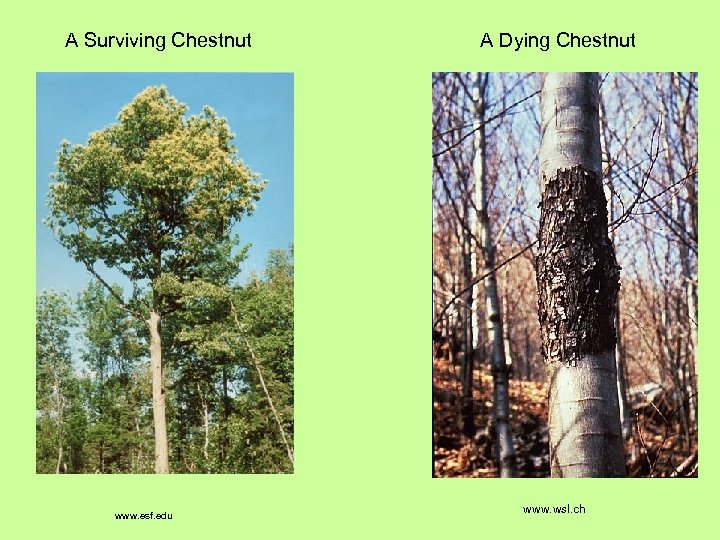 A Surviving Chestnut www. esf. edu A Dying Chestnut www. wsl. ch