


 Скачать презентацию NATIONAL STRATEGIES AND POLICIES FOR INNOVATION T C
4813890960662ae769eb6f9e90f22afe.ppt
- Количество слайдов: 62
 NATIONAL STRATEGIES AND POLICIES FOR INNOVATION T. C. James Director Ministry of Commerce & Industry Government of India 1
 STRONG IPR REGIME …. ? CHOICE OR NECESSITY …. ? ? 2
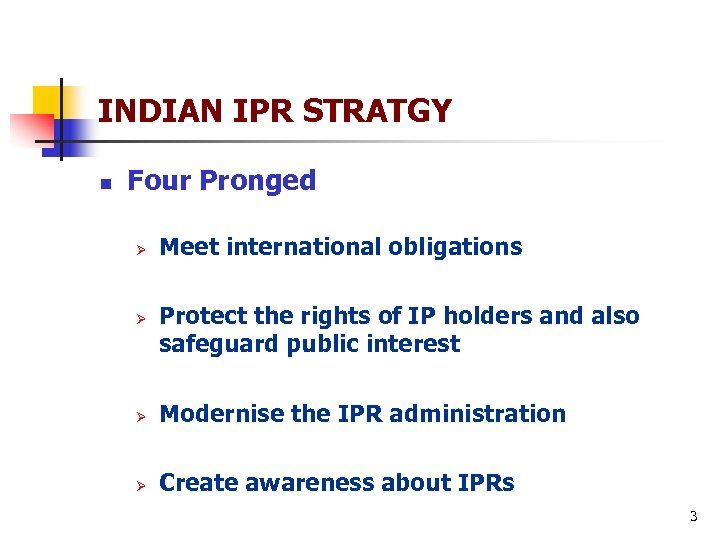 INDIAN IPR STRATGY n Four Pronged Ø Ø Meet international obligations Protect the rights of IP holders and also safeguard public interest Ø Modernise the IPR administration Ø Create awareness about IPRs 3
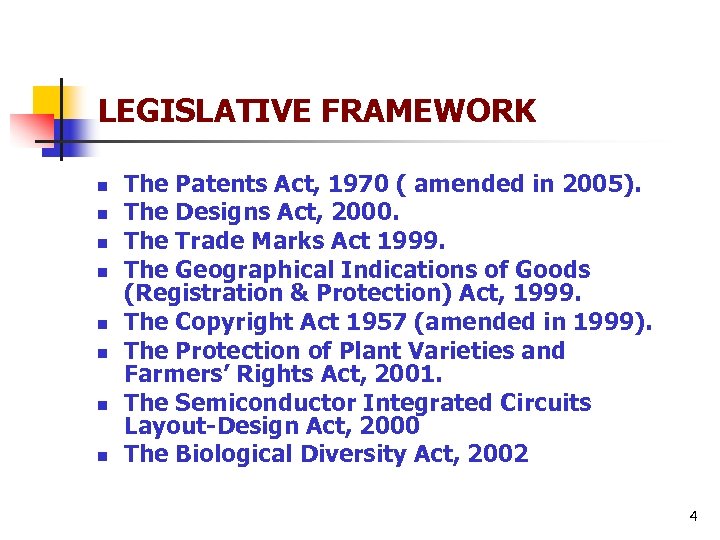 LEGISLATIVE FRAMEWORK n n n n The Patents Act, 1970 ( amended in 2005). The Designs Act, 2000. The Trade Marks Act 1999. The Geographical Indications of Goods (Registration & Protection) Act, 1999. The Copyright Act 1957 (amended in 1999). The Protection of Plant Varieties and Farmers’ Rights Act, 2001. The Semiconductor Integrated Circuits Layout-Design Act, 2000 The Biological Diversity Act, 2002 4
 The Patents Act n n n n Both product and process patent provided. Patent term of 20 years. Examination on request. Both pre-grant and post-grant opposition. Fast track mechanism for disposal of appeals. Provision for protection of bio-diversity and traditional knowledge. Publication of applications after 18 months with facility for early publication. Substantially reduced time-lines. 5
 Public Interest Safeguards in the Patents Act n n n Compulsory licence to ensure availability of drugs at reasonable prices Provision to deal with public health emergency Revocation of patent in public interest and also on security considerations. 6
 Trade Marks § Trade marks for both goods and services. § Collective trademarks registrable. § Well known trade marks protected. § Term of registration -10 years, renewable. § Criminal penalties for trade mark offences. § Fast track mechanism for disposal of appeals. 7
 Designs § International system of classification. § Global Novelty § Term of registration – 10 + 5 years. § Public inspection facility after notification § Restoration of lapsed designs. § Cancellation of Designs in the IP Office. § Penalty for piracy of design. 8
 Geographical Indications § Sui generis legislation. § Registration of agricultural, manufactured goods. § Association of persons or authority established by law only can apply. § Elaborate procedure for registration. § Prohibition of registration of generic names and indications. § Protection of pre-registered trade marks. § Registration to be prima-facie evidence in a court of law. natural and 9
 Copyright Act § Protects literary, dramatic, musical and artistic works, sound recordings and cinematograph films. § Computer programs protected as literary works. § Term of Protection - 60 years. § Provision for collective administration societies. § Voluntary registration facility § Copyright Board to hear appeals § Public interest is safeguarded through fair use provisions. 10
 Protection of Plant Varieties § New and Extant Varieties Registrable. § New varieties - novelty, uniformity and stability. § Extant Varieties - distinctiveness, uniformity, stability. § Period of protection - 15 years for annual crops and 18 years for trees and vines. § Establishment of Protection of Plant Varieties & Farmers’ Rights (PVP) Authority and Plant Variety Registry. distinctiveness, 11
 Protection of Plant Varieties: Farmers’ Rights § Farmers entitled to save, use, sow, re-sow, exchange, share or sell his farm produce including seed or a variety, protected under this Act, with the exception that he will not be entitled to sell branded seed of a protected variety. 12
 The Semiconductor Integrated Layout-Design Act, 2000 n n Original, new, distinctive layout designs registrable Layout design includes a layout of transistors and other circuitry elements and includes lead wires connecting such elements and expressed in any manner in a semiconductor IC Term of protection – 10 years Fast track mechanism for disposal of appeals 13
 The Biological Diversity Act n n n 3 main objectives—conservation of biodiversity; sustainable use of biological resources; equitable benefit sharing Establishment of National Bio-diversity Authority (NBA) State Biodiversity Boards The NBA oversees access to biological resources, their commercial utilisation, transfer of rights of research, and intellectual property rights related to bio-diversity. 14
 Modernization of IPR Administration § US $ 34 million project implemented. § Four state-of-the-art integrated IP Office buildings constructed. § IT enabled efficient systems established. § Improving search facilities. § Four fold increase in number of Examiners. § Establishment of Intellectual Property Training Institute for in-house training. 15
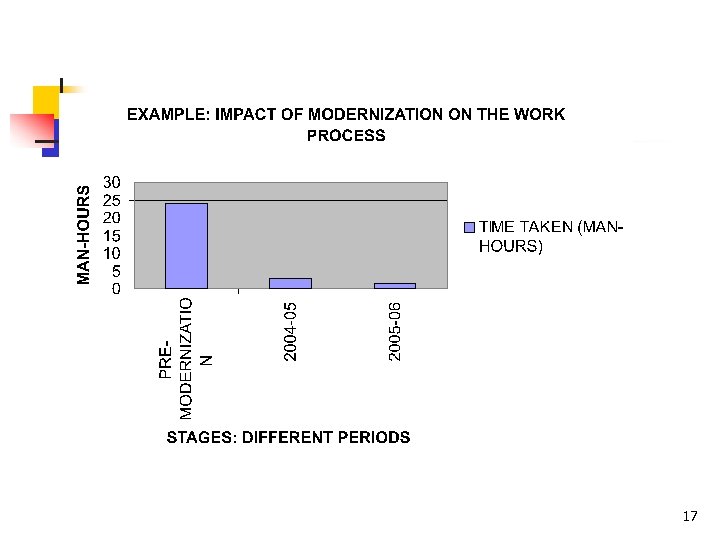
 Impact § Time lines for patent and trademark processing reduced. § Possible to obtain a patent in 8 months as against 6 -8 years earlier and a trade mark in 10 -12 months as against 8 -10 years earlier. § Backlog of over 44, 000 patent and 375, 000 trade mark applications liquidated in the last three years. 16
 17
17
![TIMELINES BEFORE 1. 1. 2005 TIMELINE ACTIVITY [MAXM. ] 1. FILING APPL 2. Comp/Prov](https://present5.com/presentation/4813890960662ae769eb6f9e90f22afe/image-18.jpg "TIMELINES BEFORE 1. 1. 2005 TIMELINE ACTIVITY [MAXM. ] 1. FILING APPL 2. Comp/Prov") TIMELINES BEFORE 1. 1. 2005 TIMELINE ACTIVITY [MAXM. ] 1. FILING APPL 2. Comp/Prov 3. 2 SCRUTINY 15 M 4. 3. COMP. AFTER PROV. [S. 9(1)] 4. PUBLICATION [S. 11 A(1)] 18 M 5. REQUEST FOR EXAM[S. 11 B(1)][R-24(1)(i)/F-19] MEETING THE REQUIREMENT BY APPLICANT & PUBLICATION 12 M 5 M + 17 M 9. [S. 21(1) & S. 23] 10. 8. PREGRANT OPP. / SETTLING OPP. [ S. 25] 9. REQUEST FOR SEALING & GRANT [S. 43] 104 M 18 M 6. REFERRING TO EXAMINER 7. Examination & communication (FER) [S. 12(2) & 14] 7. 8. 48 M 22 M 4 M 18
TIMELINES BEFORE 1. 1. 2005 TIMELINE ACTIVITY [MAXM. ] 1. FILING APPL 2. Comp/Prov 3. 2 SCRUTINY 15 M 4. 3. COMP. AFTER PROV. [S. 9(1)] 4. PUBLICATION [S. 11 A(1)] 18 M 5. REQUEST FOR EXAM[S. 11 B(1)][R-24(1)(i)/F-19] MEETING THE REQUIREMENT BY APPLICANT & PUBLICATION 12 M 5 M + 17 M 9. [S. 21(1) & S. 23] 10. 8. PREGRANT OPP. / SETTLING OPP. [ S. 25] 9. REQUEST FOR SEALING & GRANT [S. 43] 104 M 18 M 6. REFERRING TO EXAMINER 7. Examination & communication (FER) [S. 12(2) & 14] 7. 8. 48 M 22 M 4 M 18
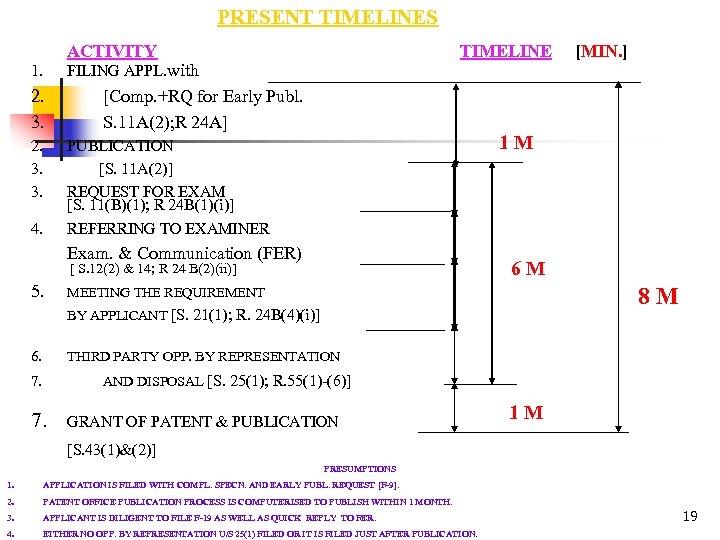 PRESENT TIMELINES ACTIVITY 1. 2. 3. 3. 4. TIMELINE FILING APPL. with [Comp. +RQ for Early Publ. S. 11 A(2); R 24 A] 1 M PUBLICATION [S. 11 A(2)] REQUEST FOR EXAM [S. 11(B)(1); R 24 B(1)(i)] REFERRING TO EXAMINER Exam. & Communication (FER) 6 M [ S. 12(2) & 14; R 24 B(2)(ii)] 5. 8 M MEETING THE REQUIREMENT BY APPLICANT [S. 21(1); R. 24 B(4)(i)] 6. [MIN. ] THIRD PARTY OPP. BY REPRESENTATION AND DISPOSAL [S. 25(1); R. 55(1)-(6)] 7. GRANT OF PATENT & PUBLICATION 1 M [S. 43(1)&(2)] PRESUMPTIONS 1. APPLICATION IS FILED WITH COMPL. SPECN. AND EARLY PUBL. REQUEST [F-9]. 2. PATENT OFFICE PUBLICATION PROCESS IS COMPUTERISED TO PUBLISH WITHIN 1 MONTH. 3. APPLICANT IS DILIGENT TO FILE F-19 AS WELL AS QUICK REPLY TO FER. 4. EITHER NO OPP. BY REPRESENTATION U/S 25(1) FILED OR IT IS FILED JUST AFTER PUBLICATION. 19
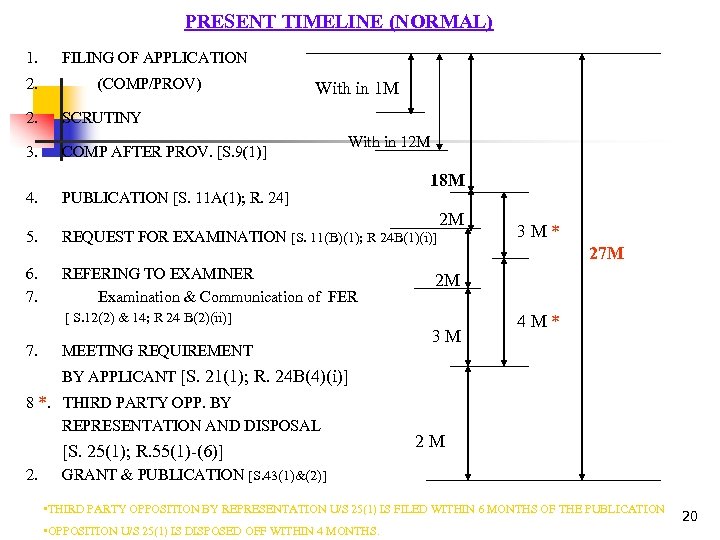 PRESENT TIMELINE (NORMAL) 1. 2. FILING OF APPLICATION (COMP/PROV) 2. SCRUTINY 3. With in 1 M COMP AFTER PROV. [S. 9(1)] 4. With in 12 M PUBLICATION [S. 11 A(1); R. 24] 18 M 5. REQUEST FOR EXAMINATION [S. 11(B)(1); R 24 B(1)(i)] 6. 7. REFERING TO EXAMINER Examination & Communication of FER 2 M MEETING REQUIREMENT 27 M 2 M [ S. 12(2) & 14; R 24 B(2)(ii)] 7. 3 M* 3 M 4 M* BY APPLICANT [S. 21(1); R. 24 B(4)(i)] 8 *. THIRD PARTY OPP. BY REPRESENTATION AND DISPOSAL [S. 25(1); R. 55(1)-(6)] 2. 2 M GRANT & PUBLICATION [S. 43(1)&(2)] • THIRD PARTY OPPOSITION BY REPRESENTATION U/S 25(1) IS FILED WITHIN 6 MONTHS OF THE PUBLICATION • OPPOSITION U/S 25(1) IS DISPOSED OFF WITHIN 4 MONTHS. 20
![PRESENT TIMELINES ACTIVITY 1. TIMELINE [MAXM. ] FILING APPL 2. Comp/Prov 3. 2 SCRUTINY](https://present5.com/presentation/4813890960662ae769eb6f9e90f22afe/image-21.jpg "PRESENT TIMELINES ACTIVITY 1. TIMELINE [MAXM. ] FILING APPL 2. Comp/Prov 3. 2 SCRUTINY") PRESENT TIMELINES ACTIVITY 1. TIMELINE [MAXM. ] FILING APPL 2. Comp/Prov 3. 2 SCRUTINY 4. 3. COMP. AFTER PROV. [S. 9(1)] 12 M 18 M 4. PUBLICATION [S. 11 A(1); R. 24] 5. REQUEST FOR EXAM [S. 11(B)(1); R 24 B(1)(i)] 36 M 6. REFERRING TO EXAMINER Examination & communication [ S. 12(2) & 14; R 24 B(2)(ii)] 3 M 7. 8. 9. MEETING THE REQUIREMENT BY APPLICANT [S. 21(1); R. 24 B(4)(i)&(ii)] 8. THIRD PARTY OPP. BY REPRESN. [6+3] 9. AND DISPOSAL [S. 25(1); R. 55(1)-(6)] 10. 9. 55 M 9 M GRANT OF PATENT & PUBLICATION[S. 43(1)&(2)] 6 M 1 M 21
PRESENT TIMELINES ACTIVITY 1. TIMELINE [MAXM. ] FILING APPL 2. Comp/Prov 3. 2 SCRUTINY 4. 3. COMP. AFTER PROV. [S. 9(1)] 12 M 18 M 4. PUBLICATION [S. 11 A(1); R. 24] 5. REQUEST FOR EXAM [S. 11(B)(1); R 24 B(1)(i)] 36 M 6. REFERRING TO EXAMINER Examination & communication [ S. 12(2) & 14; R 24 B(2)(ii)] 3 M 7. 8. 9. MEETING THE REQUIREMENT BY APPLICANT [S. 21(1); R. 24 B(4)(i)&(ii)] 8. THIRD PARTY OPP. BY REPRESN. [6+3] 9. AND DISPOSAL [S. 25(1); R. 55(1)-(6)] 10. 9. 55 M 9 M GRANT OF PATENT & PUBLICATION[S. 43(1)&(2)] 6 M 1 M 21
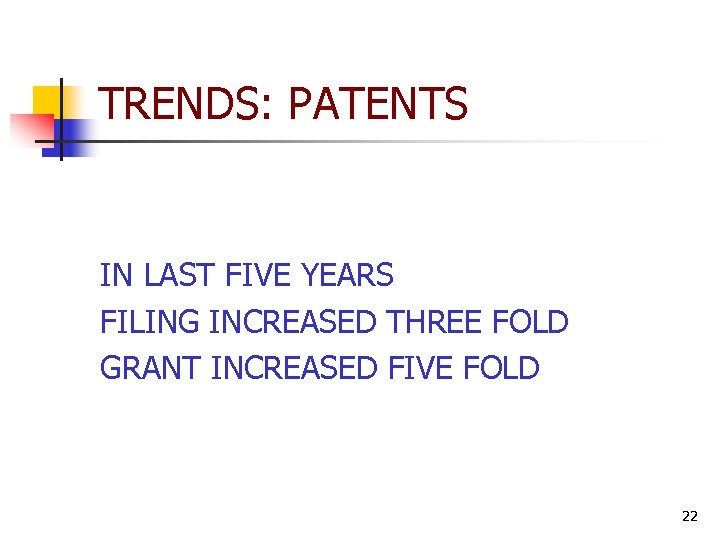 TRENDS: PATENTS IN LAST FIVE YEARS FILING INCREASED THREE FOLD GRANT INCREASED FIVE FOLD 22
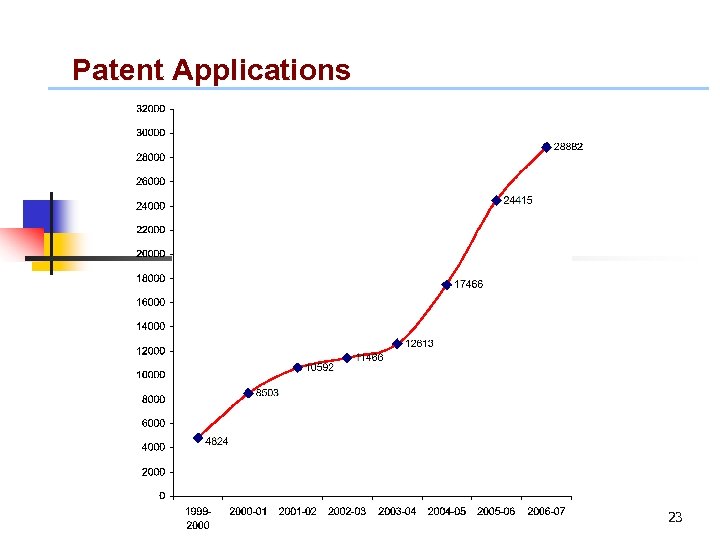 Patent Applications 23
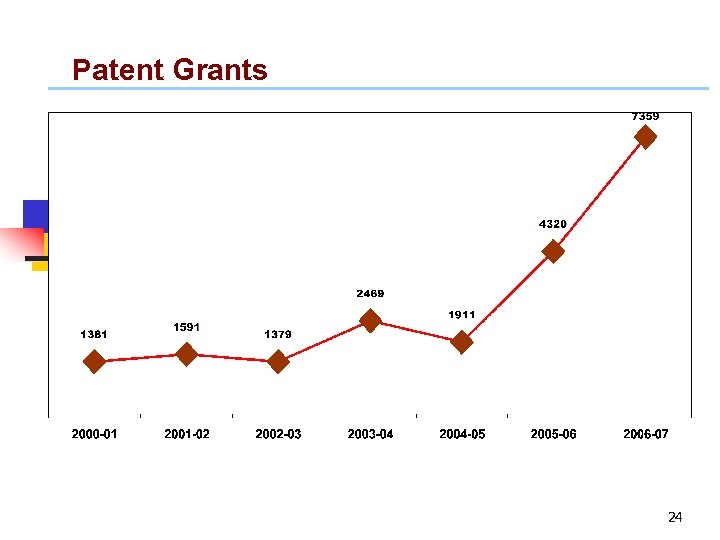 Patent Grants 24
 TRENDS: TRADE MARKS APPLICATIONS INCREASED SUBSTANTIALLY REGISTRATION INCREASED TEN FOLD 25
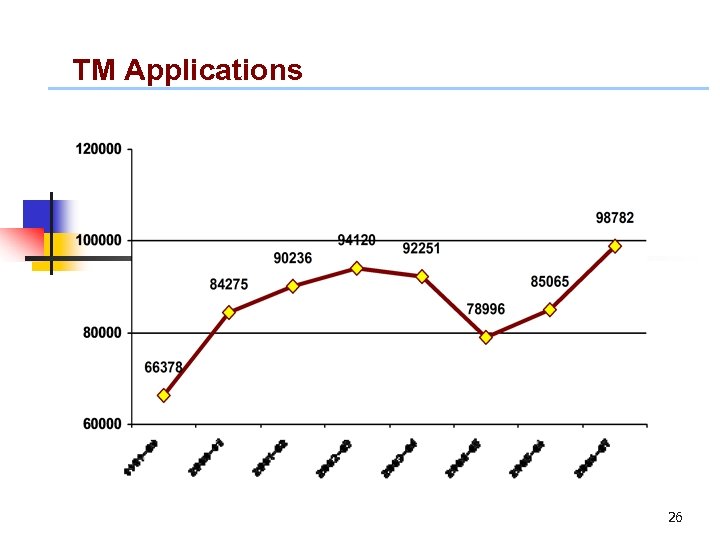 TM Applications 26
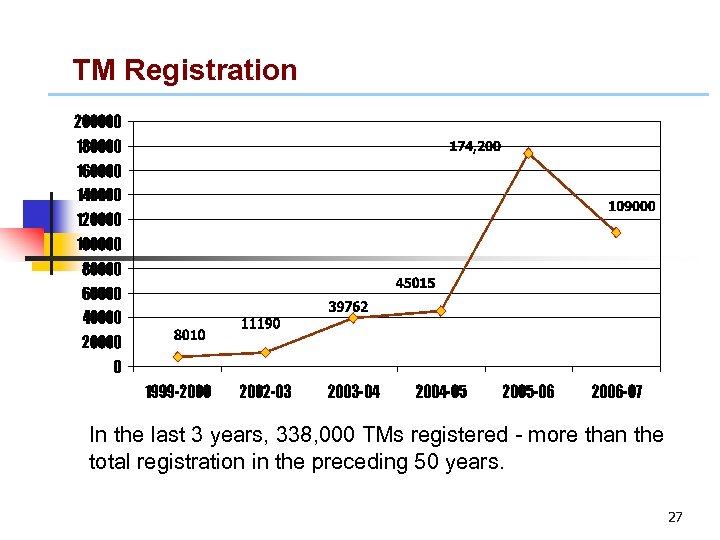 TM Registration In the last 3 years, 338, 000 TMs registered - more than the total registration in the preceding 50 years. 27
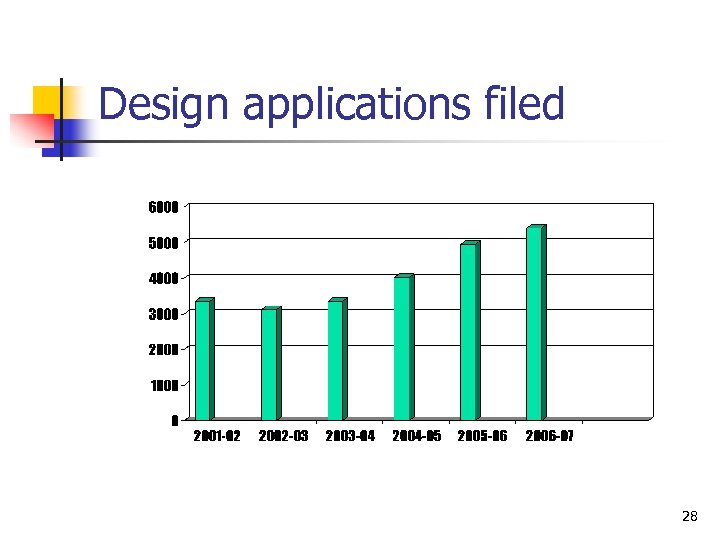 Design applications filed 28
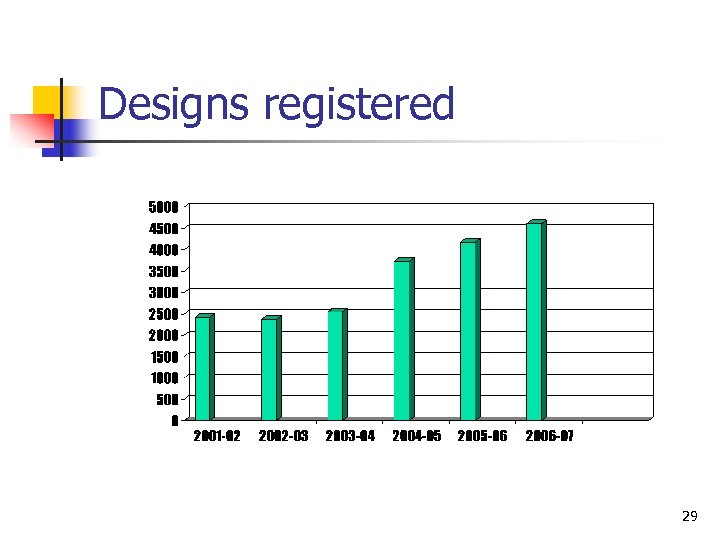 Designs registered 29
 TRENDS: REVENUE PHENOMENAL INCREASE 30
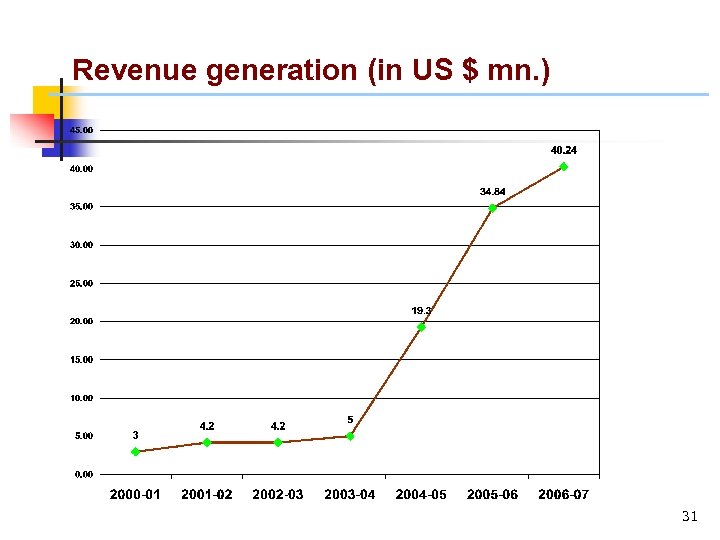 Revenue generation (in US $ mn. ) 31
 Seeing is believing… IPOs – BEFORE AND AFTER 32
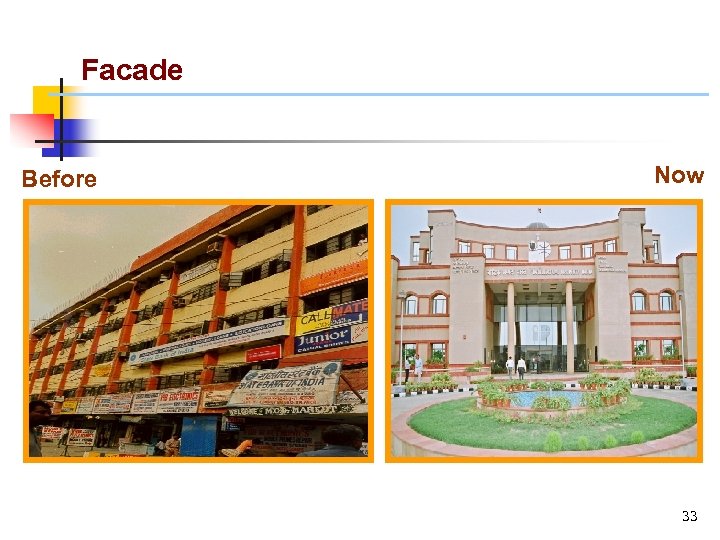 Facade Before Now 33
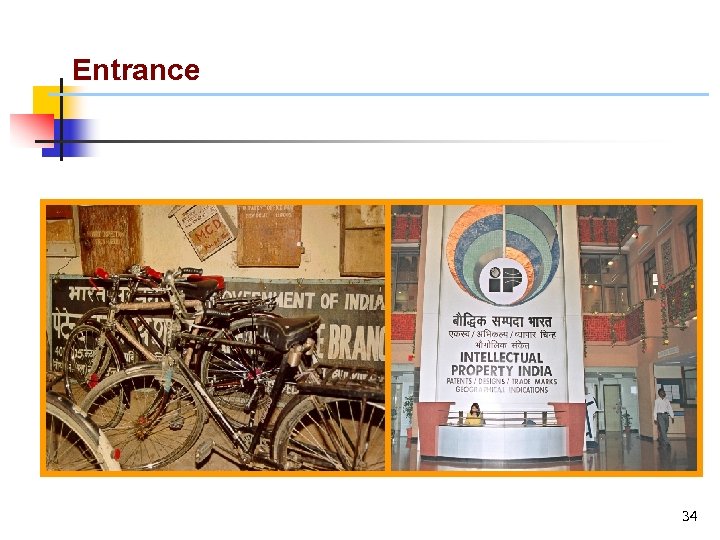 Entrance 34
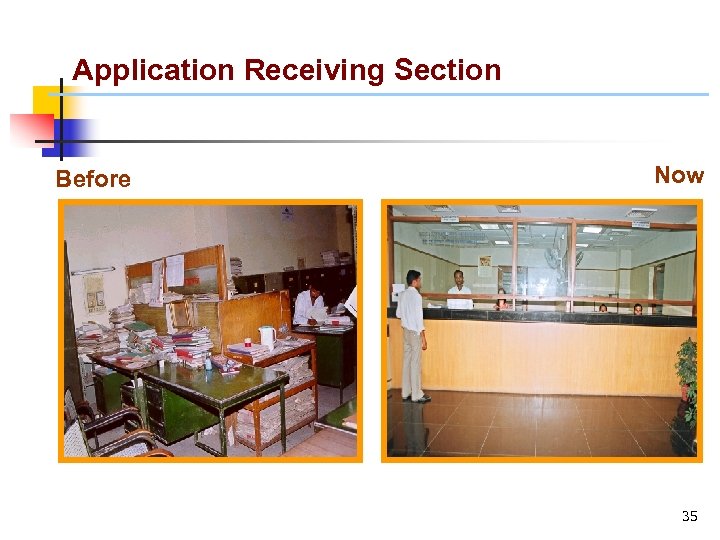 Application Receiving Section Before Now 35
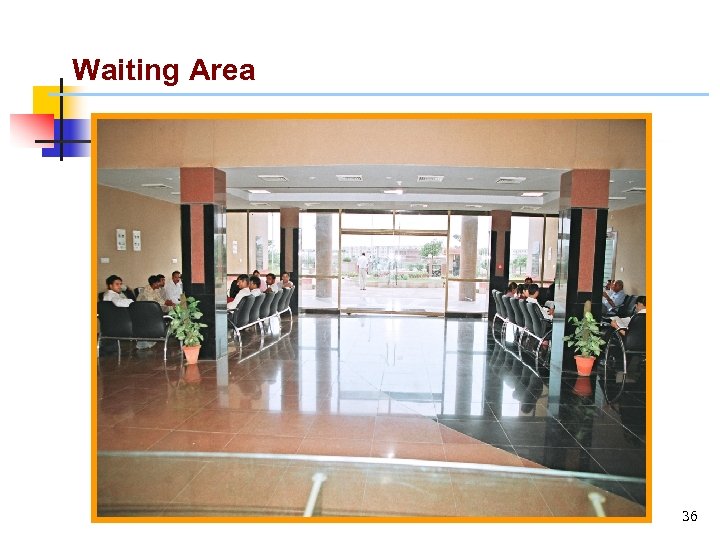 Waiting Area 36
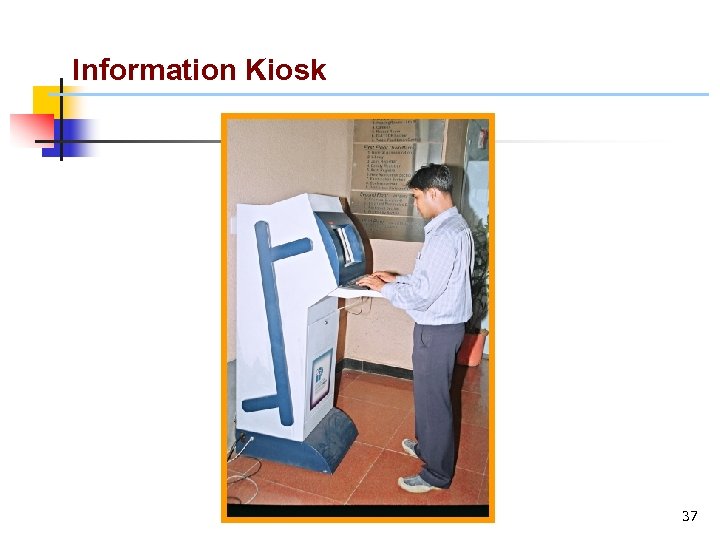 Information Kiosk 37
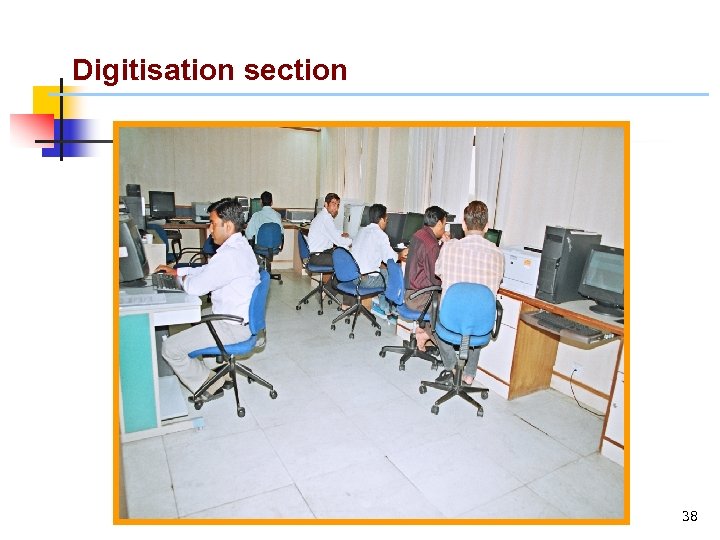 Digitisation section 38
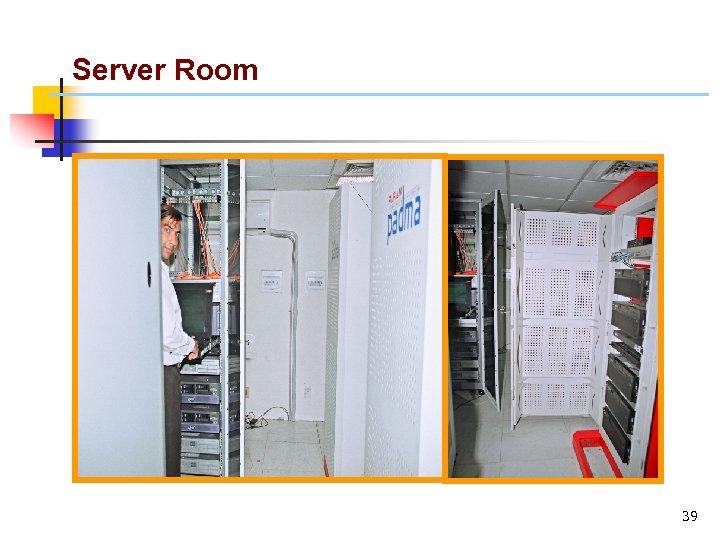 Server Room 39
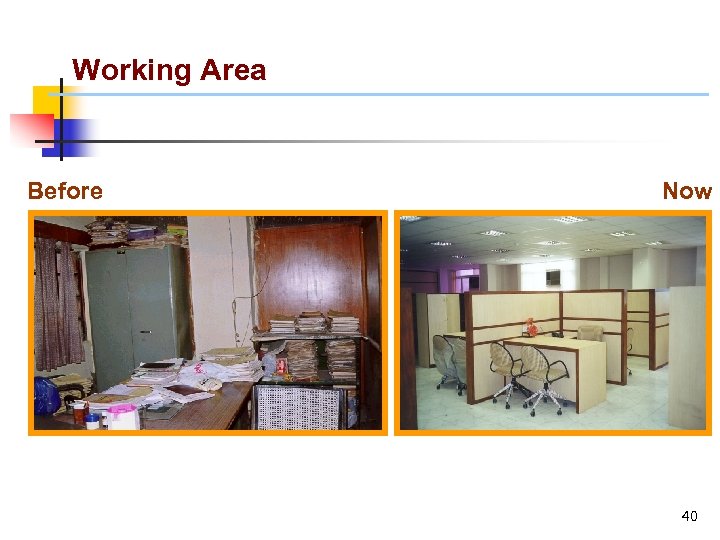 Working Area Before Now 40
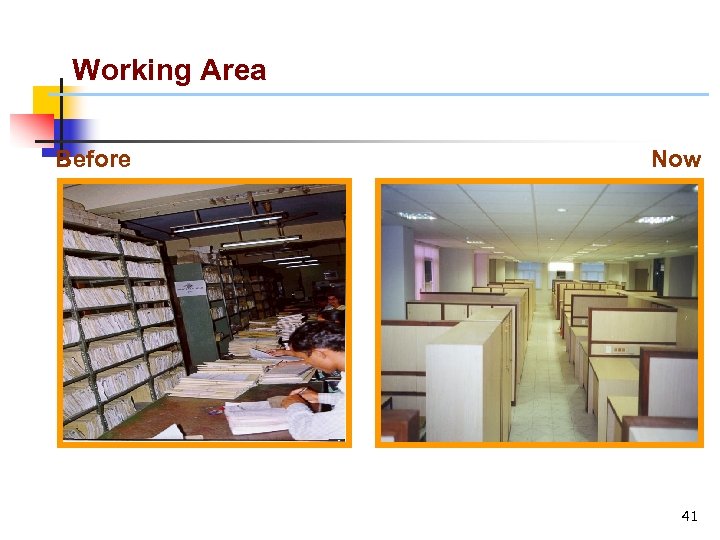 Working Area Before Now 41
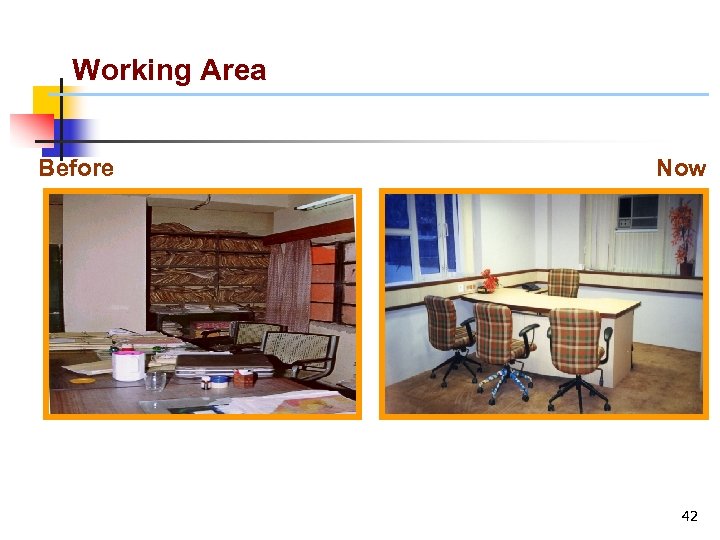 Working Area Before Now 42
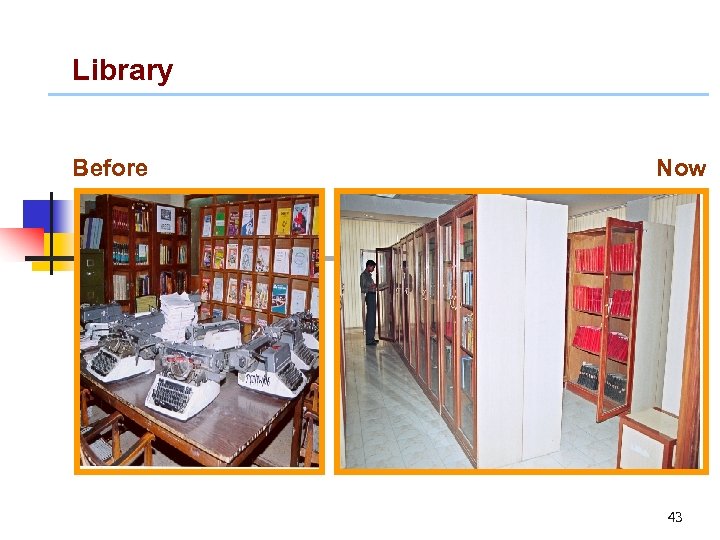 Library Before Now 43
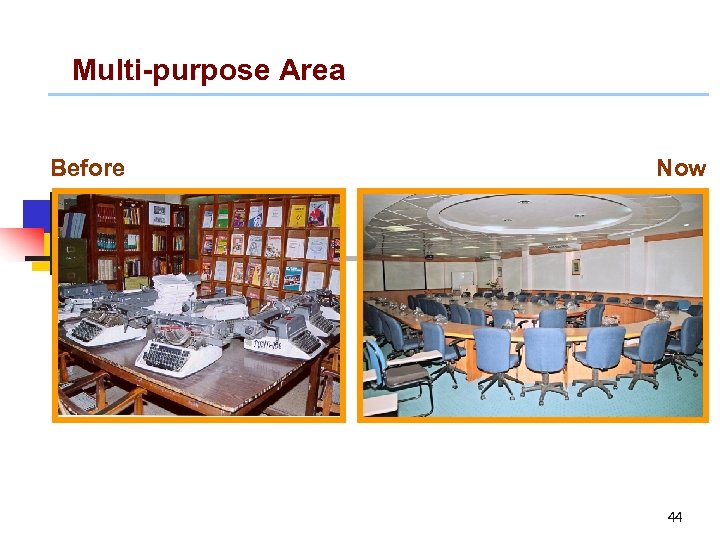 Multi-purpose Area Before Now 44
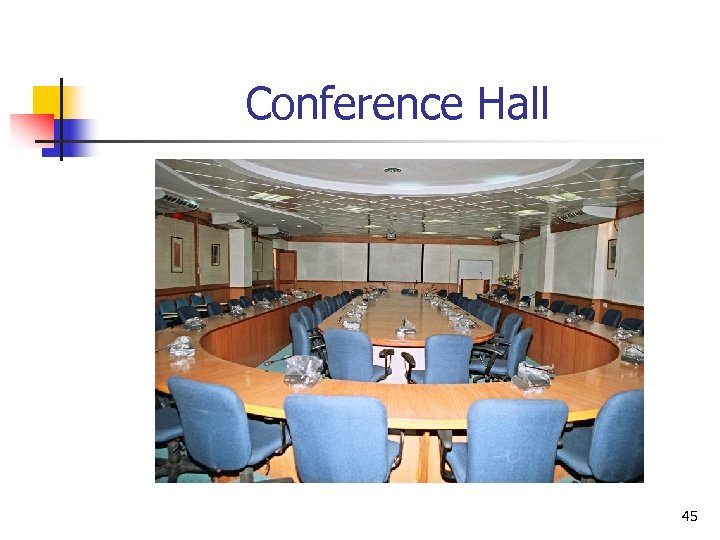 Conference Hall 45
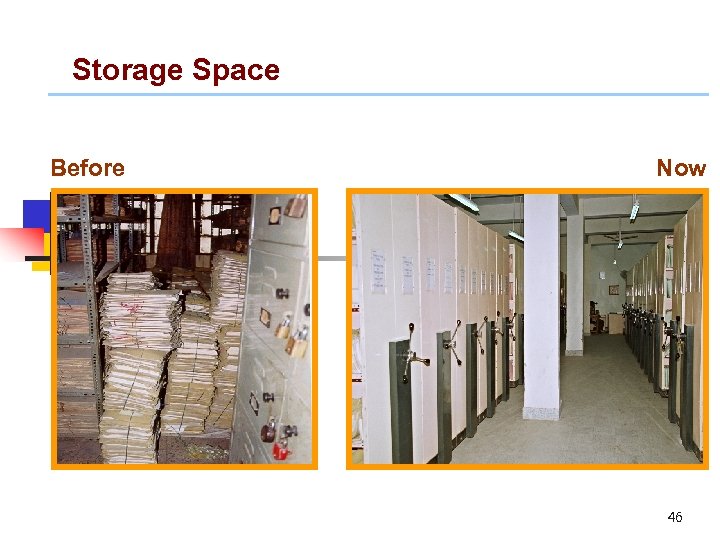 Storage Space Before Now 46
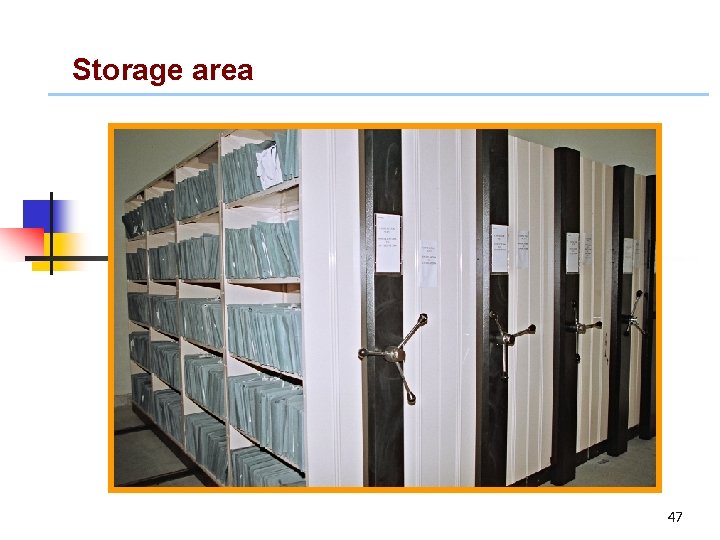 Storage area 47
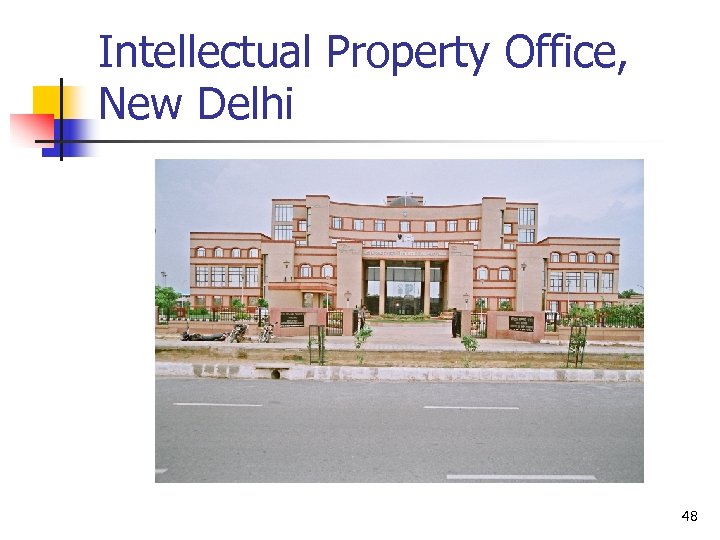 Intellectual Property Office, New Delhi 48
 New Initiative n National Design Policy Announced on 8 TH February, 2007 n Provides for Setting up n n n Design Council of India Design Centres or “Innovation Hubs” New Institutes of Design 49
 Sensitisation Programmes n Seminars and workshops for n n Police and Customs officers Teachers and students Business and industry Scientists 50
 International Cooperation for Improving IP Administration § Cooperation with WIPO. § EU –India Technology and Investment Development Programme. § Bilateral Agreements signed with UK Patent Office France European Patent Office USPTO Japan Patent Office §Negotiations on with Italy, Switzerland & Singapore. 51
 Main elements of the Cooperation § Capacity building. § Human Resource Development. § Public awareness programs. § Development of IP- profession. § Joint studies and research. § Exchange of experience in the area of protection of traditional knowledge. 52
 Next Phase of Modernisation § Expansion of modern infrastructure. § Four fold increase in human resources. § Setting up of comprehensive training, education, research facility. § Massive public sensitisation programme. § Procurement of additional databases. § Digitisation of all records. § E-filing facility and total IT solution. 53
 Deliverables § Becoming an International Searching Authority (ISA) and an International Preliminary Examining Authority (IPEA). § Acceding to Madrid Protocol. § Setting up of a National Institute for Intellectual Property Management – training, education, research and IP think tank functions. 54
 Impact on Innovations n n n Confidence in IP system is a powerful stimulator for innovations and inventive steps Increasing number of global firms entering India 2004 -- 18 2005 -- 30 2006 -- 50 55
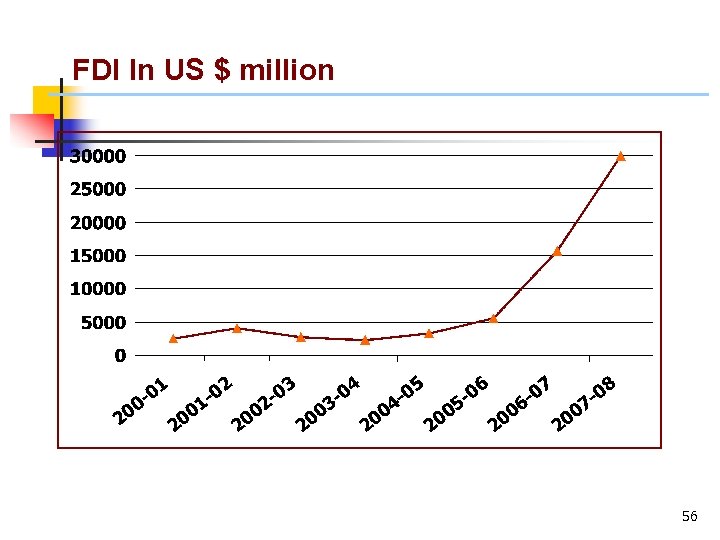 FDI In US $ million 56
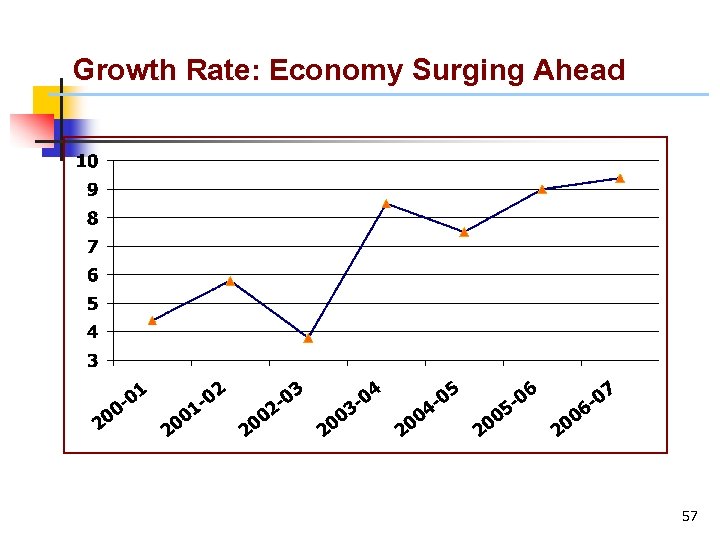 Growth Rate: Economy Surging Ahead 57
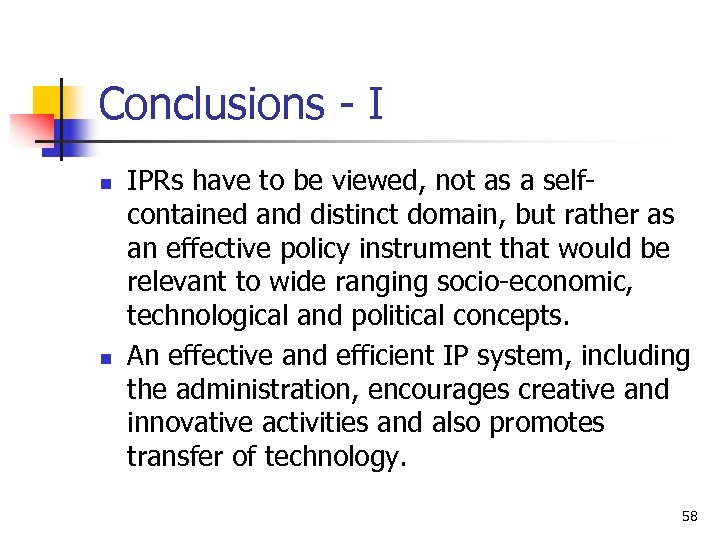 Conclusions - I n n IPRs have to be viewed, not as a selfcontained and distinct domain, but rather as an effective policy instrument that would be relevant to wide ranging socio-economic, technological and political concepts. An effective and efficient IP system, including the administration, encourages creative and innovative activities and also promotes transfer of technology. 58
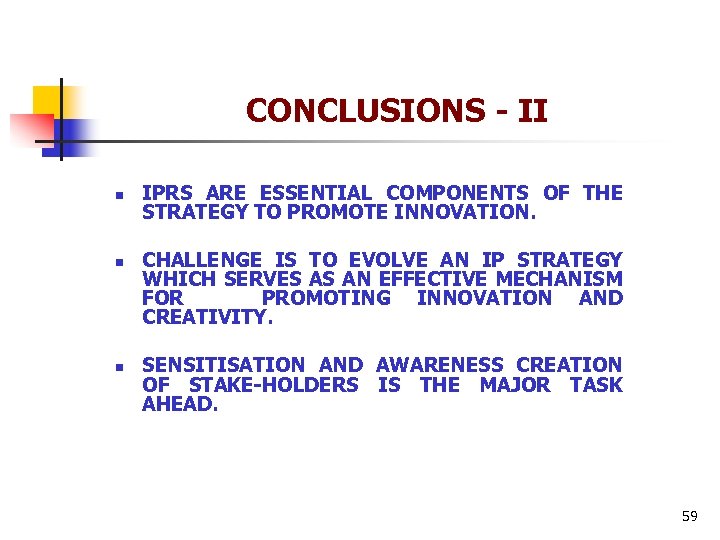 CONCLUSIONS - II n n n IPRS ARE ESSENTIAL COMPONENTS OF THE STRATEGY TO PROMOTE INNOVATION. CHALLENGE IS TO EVOLVE AN IP STRATEGY WHICH SERVES AS AN EFFECTIVE MECHANISM FOR PROMOTING INNOVATION AND CREATIVITY. SENSITISATION AND AWARENESS CREATION OF STAKE-HOLDERS IS THE MAJOR TASK AHEAD. 59
 INTELLECTUAL PROPERTY RIGHTS NOT A CHOICE BUT A NECESSITY 60
 VISIT US www. ipindia. nic. in 61
 62
62