


 Скачать презентацию National Sheriffs Association National Association of Triads and
990288bb2a7e0f97c7c9d6fe79dd0f79.ppt
- Количество слайдов: 52
 National Sheriffs’ Association National Association of Triads, and the Traffic Safety Committee In Partnership with your local sheriff 1
 Older Adult Safe Driving: Keeping Your keys! Strategies for Older Adults 2
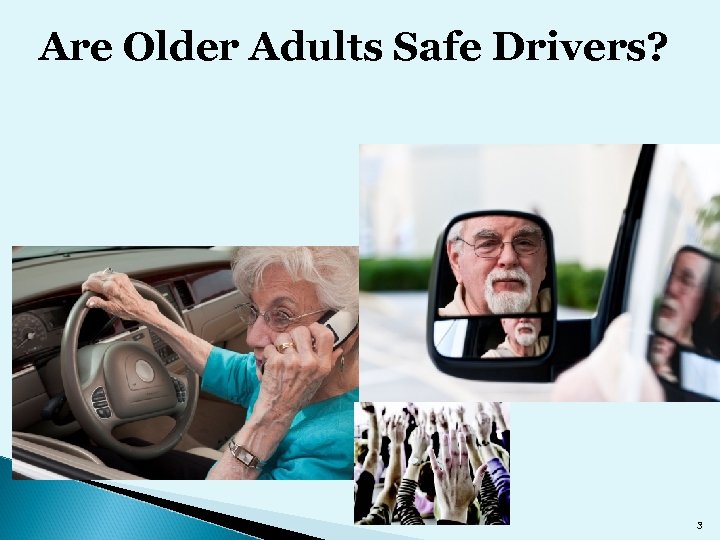 Are Older Adults Safe Drivers? 3
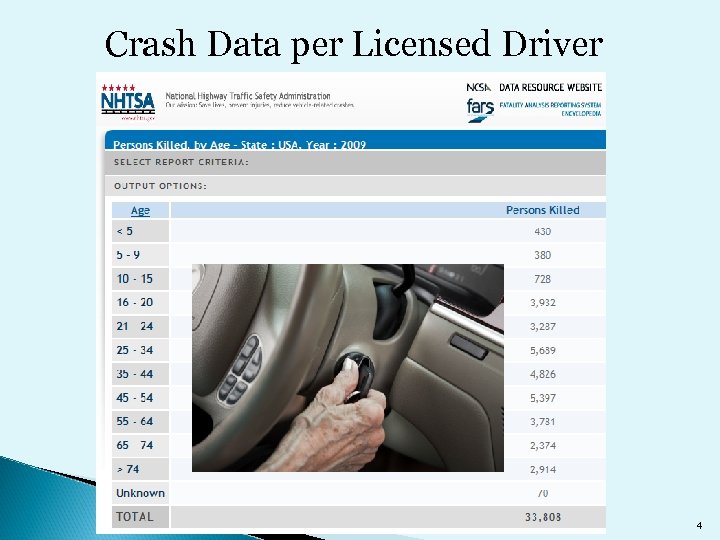 Crash Data per Licensed Driver 4
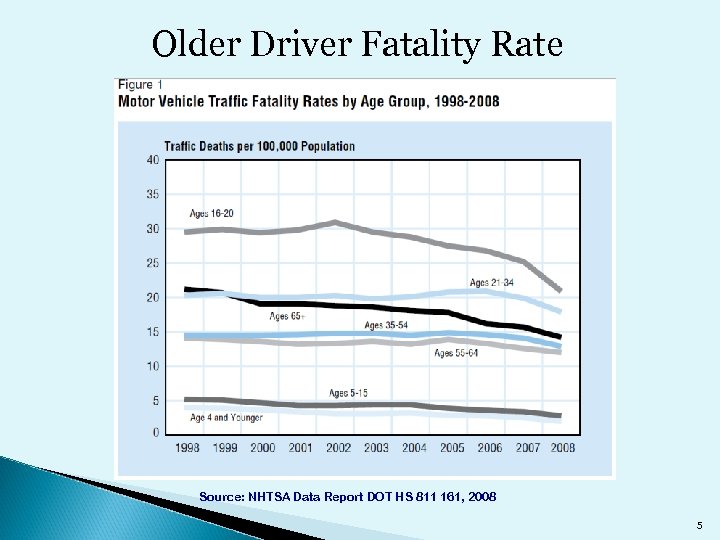 Older Driver Fatality Rate Source: NHTSA Data Report DOT HS 811 161, 2008 5
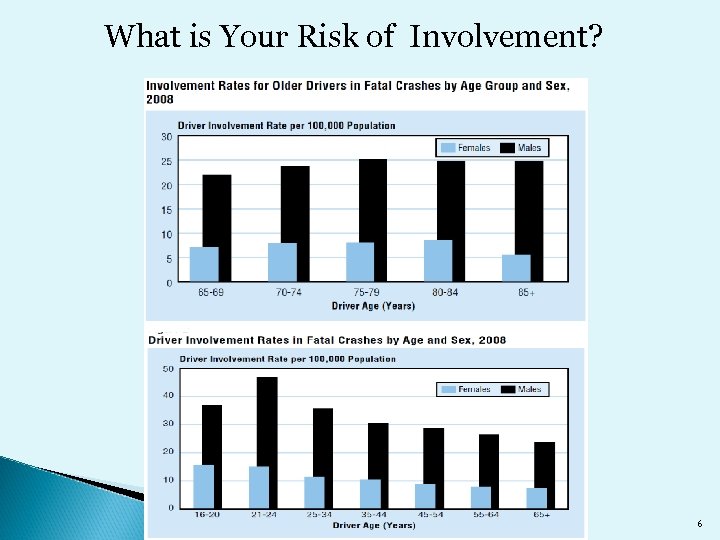 What is Your Risk of Involvement? 6
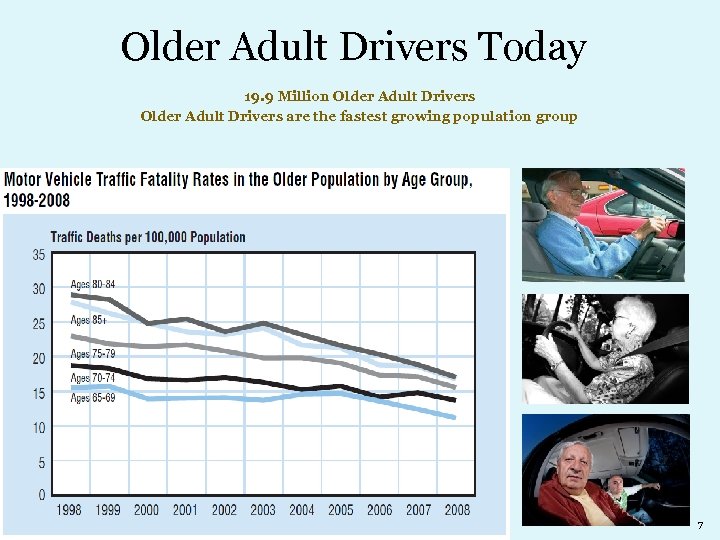 Older Adult Drivers Today 19. 9 Million Older Adult Drivers are the fastest growing population group 7
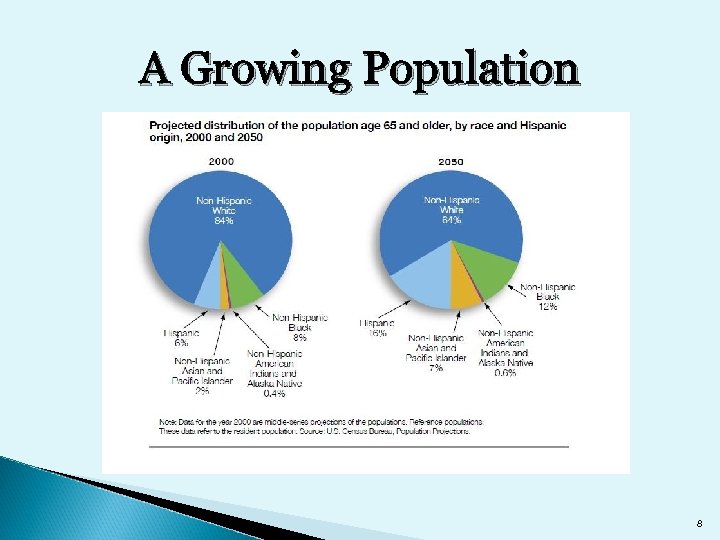 A Growing Population 8
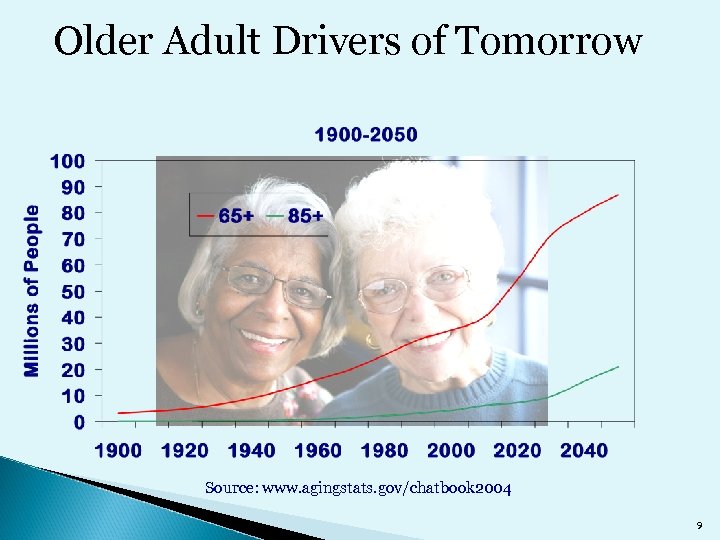 Older Adult Drivers of Tomorrow Source: www. agingstats. gov/chatbook 2004 9
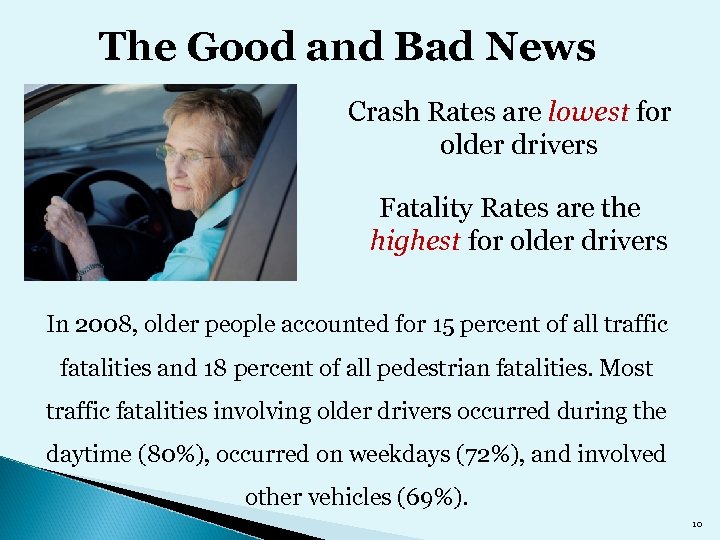 The Good and Bad News Crash Rates are lowest for older drivers Fatality Rates are the highest for older drivers In 2008, older people accounted for 15 percent of all traffic fatalities and 18 percent of all pedestrian fatalities. Most traffic fatalities involving older drivers occurred during the daytime (80%), occurred on weekdays (72%), and involved other vehicles (69%). 10
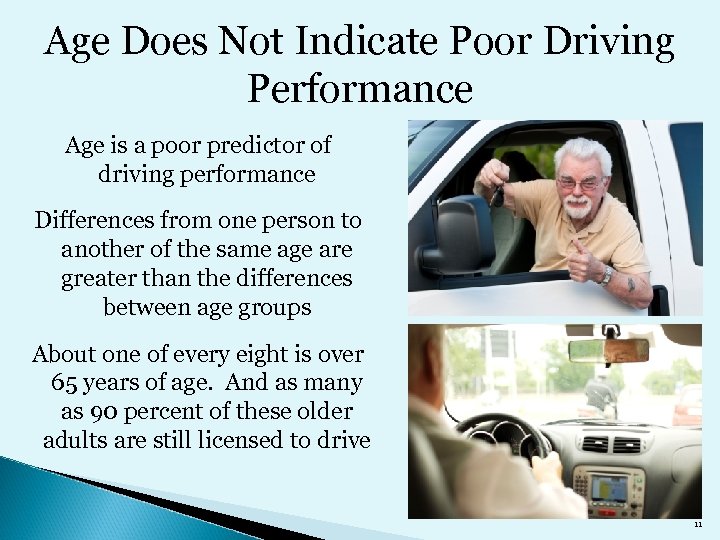 Age Does Not Indicate Poor Driving Performance Age is a poor predictor of driving performance Differences from one person to another of the same age are greater than the differences between age groups About one of every eight is over 65 years of age. And as many as 90 percent of these older adults are still licensed to drive 11
 Older Adults Hailed as Safe Drivers According to AAA, Older Adults: Cause the least motorist and pedestrian fatalities Have the lowest crash involvement rates per licensed driver Have the lowest crash involvement rates involving alcohol Have the highest rates for seat belt use 12
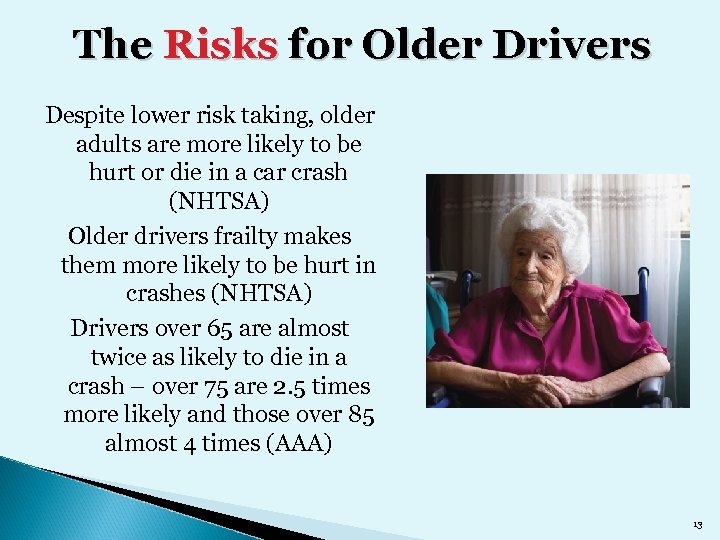 The Risks for Older Drivers Despite lower risk taking, older adults are more likely to be hurt or die in a car crash (NHTSA) Older drivers frailty makes them more likely to be hurt in crashes (NHTSA) Drivers over 65 are almost twice as likely to die in a crash – over 75 are 2. 5 times more likely and those over 85 almost 4 times (AAA) 13
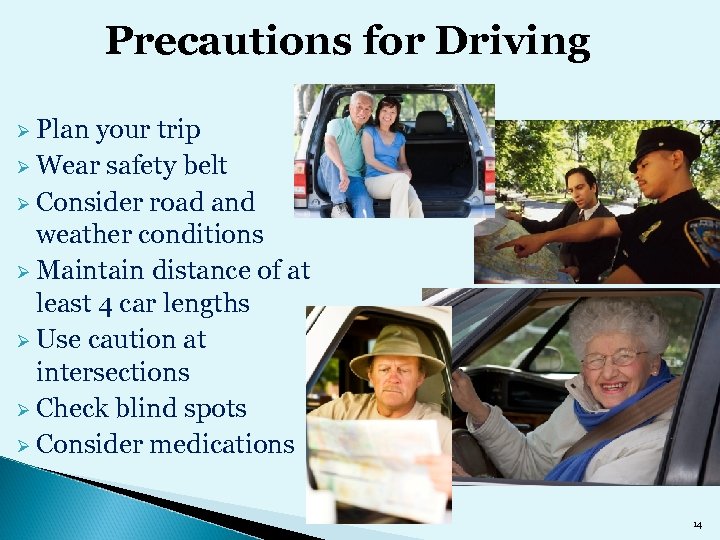 Precautions for Driving Ø Plan your trip Ø Wear safety belt Ø Consider road and weather conditions Ø Maintain distance of at least 4 car lengths Ø Use caution at intersections Ø Check blind spots Ø Consider medications 14
 Risky Business for Older Adults Situations that have proven risky for older drivers often include complex visual searches, and information from multiple sources that must be processed rapidly under divided attention conditions. These are conditions where context-appropriate driver behavior often depends less upon conformity to formal or informal rules than to judgment or “executive function. ” 15
 Self Regulation The avoidance of bad weather (and nighttime) driving may be attributed to self regulation, i. e. , older people choosing not to drive in situations where they do not feel comfortable. For non-discretionary travel, selecting routes that minimize or eliminate requirements for certain high-demand maneuvers may be an effective behavioral countermeasure for older drivers. 16
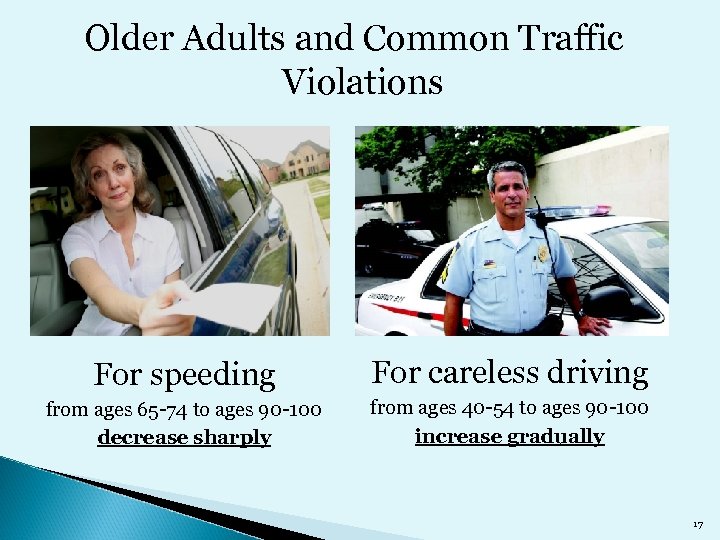 Older Adults and Common Traffic Violations For speeding For careless driving from ages 65 -74 to ages 90 -100 decrease sharply from ages 40 -54 to ages 90 -100 increase gradually 17
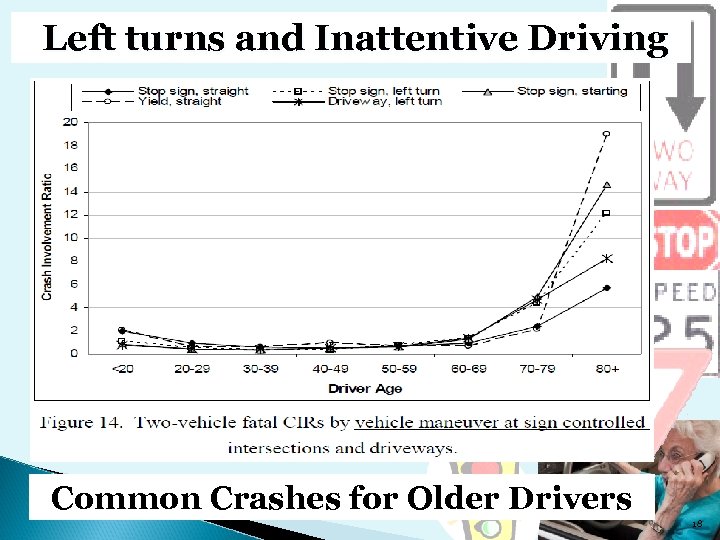 Left turns and Inattentive Driving Common Crashes for Older Drivers 18
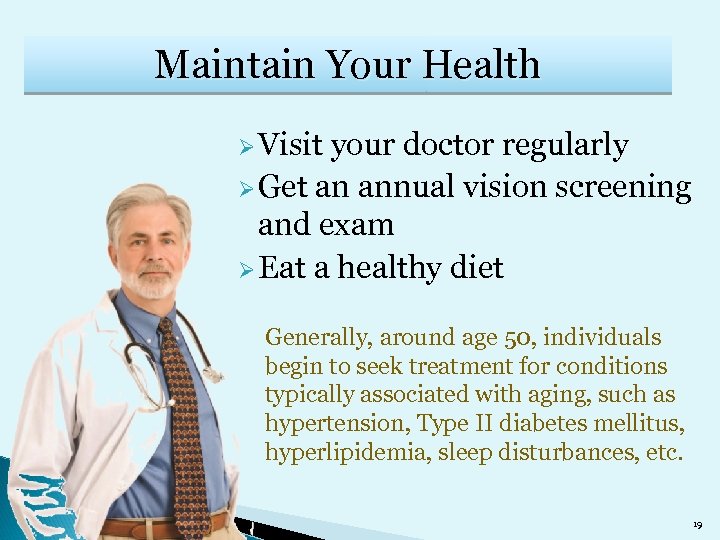 Maintain Your Health Ø Visit your doctor regularly Ø Get an annual vision screening and exam Ø Eat a healthy diet Generally, around age 50, individuals begin to seek treatment for conditions typically associated with aging, such as hypertension, Type II diabetes mellitus, hyperlipidemia, sleep disturbances, etc. 19
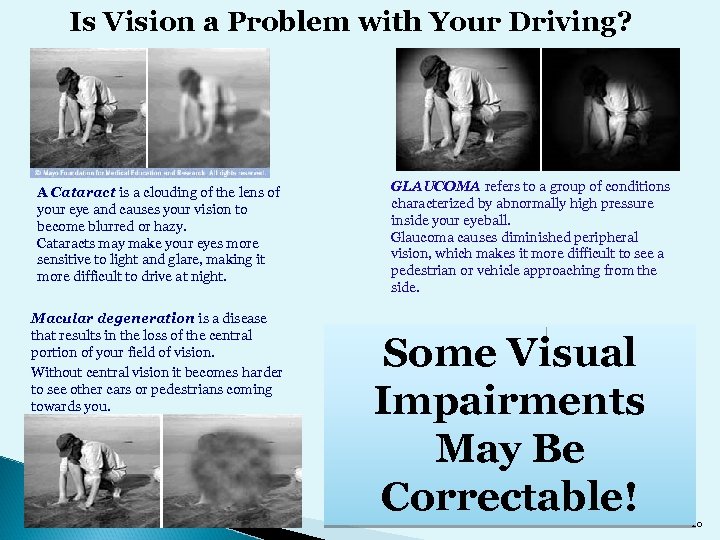 Is Vision a Problem with Your Driving? A Cataract is a clouding of the lens of your eye and causes your vision to become blurred or hazy. Cataracts may make your eyes more sensitive to light and glare, making it more difficult to drive at night. Macular degeneration is a disease that results in the loss of the central portion of your field of vision. Without central vision it becomes harder to see other cars or pedestrians coming towards you. GLAUCOMA refers to a group of conditions characterized by abnormally high pressure inside your eyeball. Glaucoma causes diminished peripheral vision, which makes it more difficult to see a pedestrian or vehicle approaching from the side. Some Visual Impairments May Be Correctable! 20
 NHTSA Studies on Medication and Vehicle Operation The results of NHTSA analysis suggest that both the kinds and number of medication exposures, and the characteristics of diseases/disorders present may predict an increase in risk for Motor Vehicle Crashes among older adults. 21
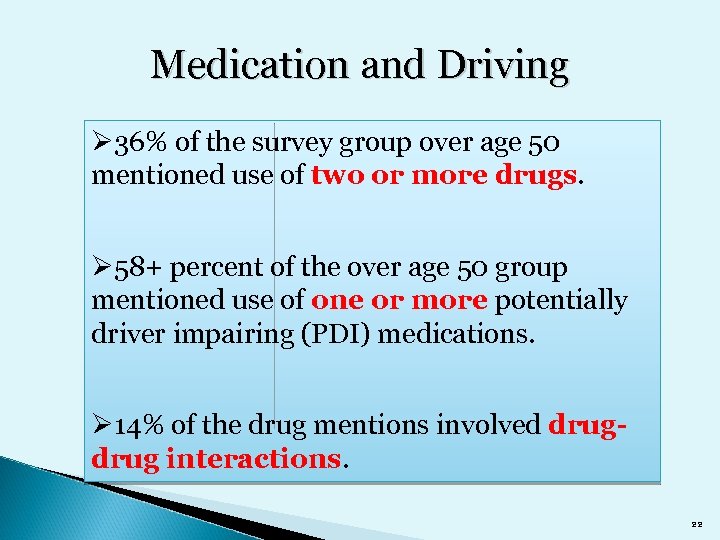 Medication and Driving Ø 36% of the survey group over age 50 mentioned use of two or more drugs. Ø 58+ percent of the over age 50 group mentioned use of one or more potentially driver impairing (PDI) medications. Ø 14% of the drug mentions involved drug interactions. 22
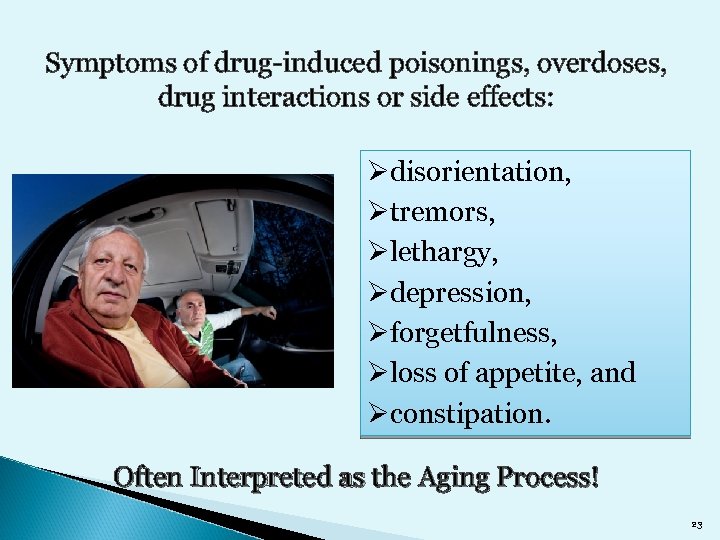 Symptoms of drug-induced poisonings, overdoses, drug interactions or side effects: Ødisorientation, Øtremors, Ølethargy, Ødepression, Øforgetfulness, Øloss of appetite, and Øconstipation. Often Interpreted as the Aging Process! 23
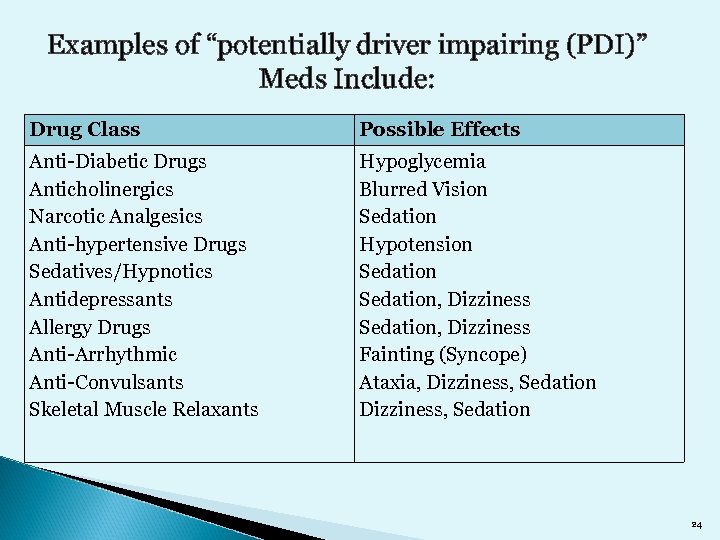 Examples of “potentially driver impairing (PDI)” Meds Include: Drug Class Possible Effects Anti-Diabetic Drugs Anticholinergics Narcotic Analgesics Anti-hypertensive Drugs Sedatives/Hypnotics Antidepressants Allergy Drugs Anti-Arrhythmic Anti-Convulsants Skeletal Muscle Relaxants Hypoglycemia Blurred Vision Sedation Hypotension Sedation, Dizziness Fainting (Syncope) Ataxia, Dizziness, Sedation 24
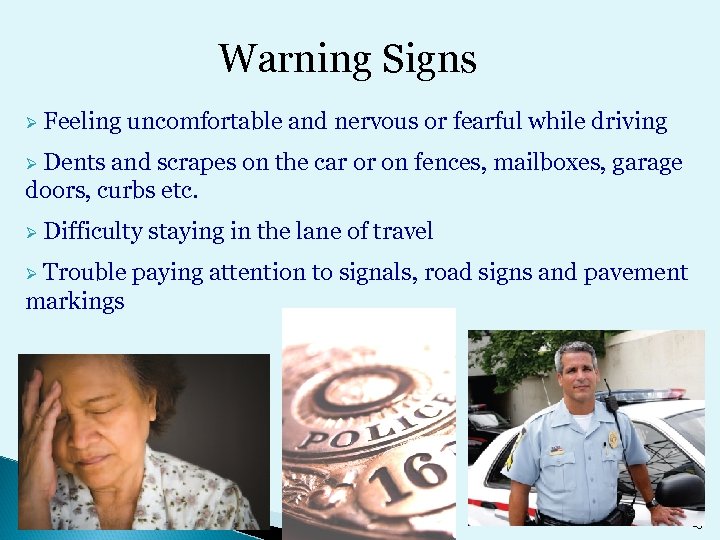 Warning Signs Ø Feeling uncomfortable and nervous or fearful while driving Ø Dents and scrapes on the car or on fences, mailboxes, garage doors, curbs etc. Ø Difficulty Ø Trouble staying in the lane of travel paying attention to signals, road signs and pavement markings 25
 Warning Signs, Part II Ø Slower response to unexpected situations Ø Medical conditions or medications that may be affecting the ability to handle the car safely Ø Frequent "close calls" (i. e. almost crashing) Ø Trouble judging gaps in traffics at intersections and on highway entrance/exit ramps Ø Other drivers honking at you and instances when you are angry at other drivers 26
 Warning Signs, Part III Ø Friends or relatives not wanting to ride with you Ø Difficulty seeing the sides of the road when looking straight ahead Ø Easily distracted or having a hard time concentrating while driving Ø Having a hard time turning around to check over your shoulder while backing up or changing lanes Ø Frequent traffic tickets or "warnings" by law enforcement officers in the last year or two 27
 Alzheimer’s Disease and Dementia signs include, but are not limited to, when the driver: Ø drifts out of the lane; Ø becomes confused when exiting or entering a highway; Ø has trouble making turns, especially left turns; Ø gets lost in familiar places; or Ø stops inappropriately – such as at green lights or in the middle of an intersection when not turning. 28
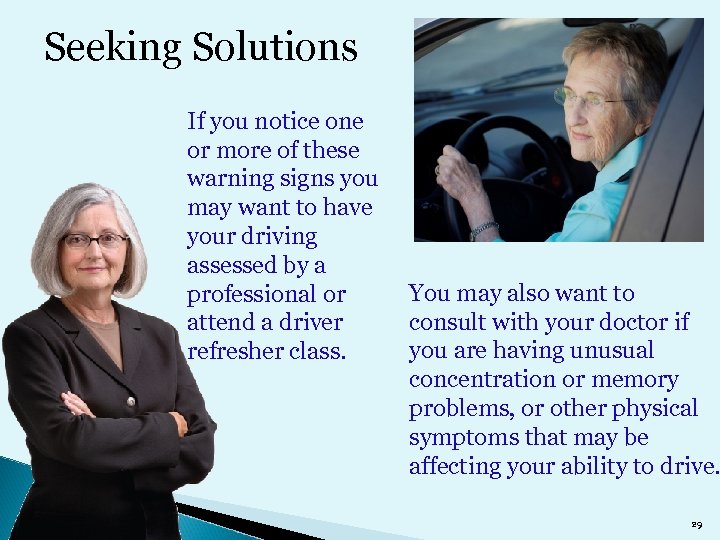 Seeking Solutions If you notice one or more of these warning signs you may want to have your driving assessed by a professional or attend a driver refresher class. You may also want to consult with your doctor if you are having unusual concentration or memory problems, or other physical symptoms that may be affecting your ability to drive. 29
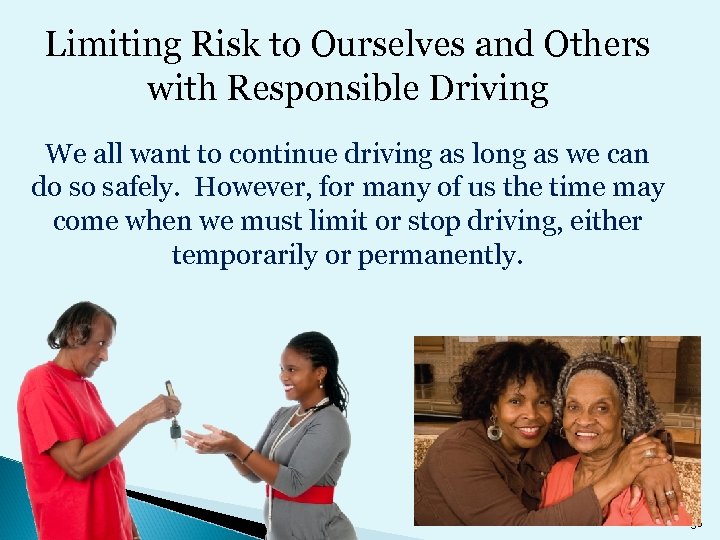 Limiting Risk to Ourselves and Others with Responsible Driving We all want to continue driving as long as we can do so safely. However, for many of us the time may come when we must limit or stop driving, either temporarily or permanently. 30
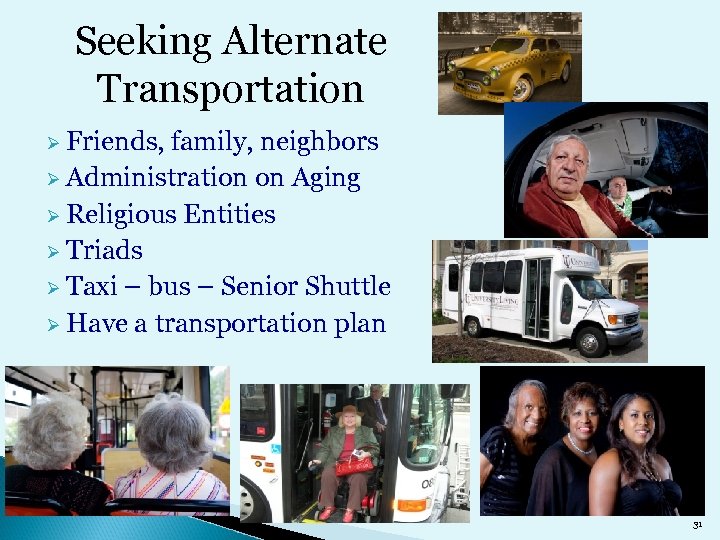 Seeking Alternate Transportation Ø Friends, family, neighbors Ø Administration on Aging Ø Religious Entities Ø Triads Ø Taxi – bus – Senior Shuttle Ø Have a transportation plan 31
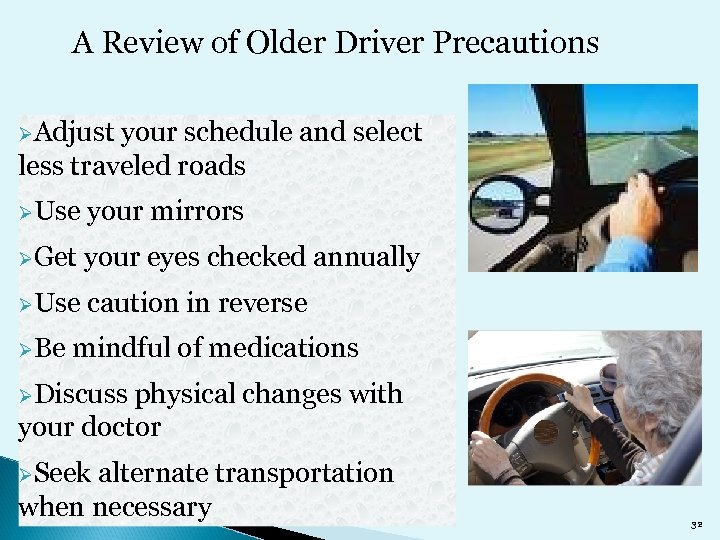 A Review of Older Driver Precautions ØAdjust your schedule and select less traveled roads ØUse your mirrors ØGet your eyes checked annually ØUse caution in reverse ØBe mindful of medications ØDiscuss physical changes with your doctor ØSeek alternate transportation when necessary 32
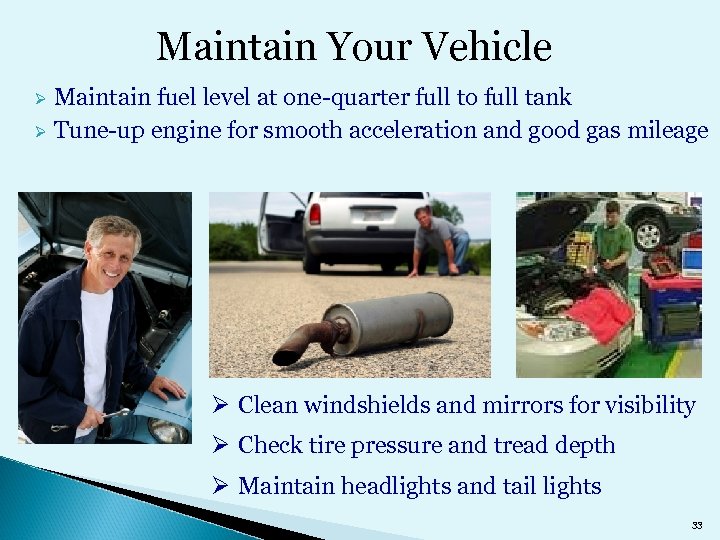 Maintain Your Vehicle Maintain fuel level at one-quarter full to full tank Ø Tune-up engine for smooth acceleration and good gas mileage Ø Ø Clean windshields and mirrors for visibility Ø Check tire pressure and tread depth Ø Maintain headlights and tail lights 33
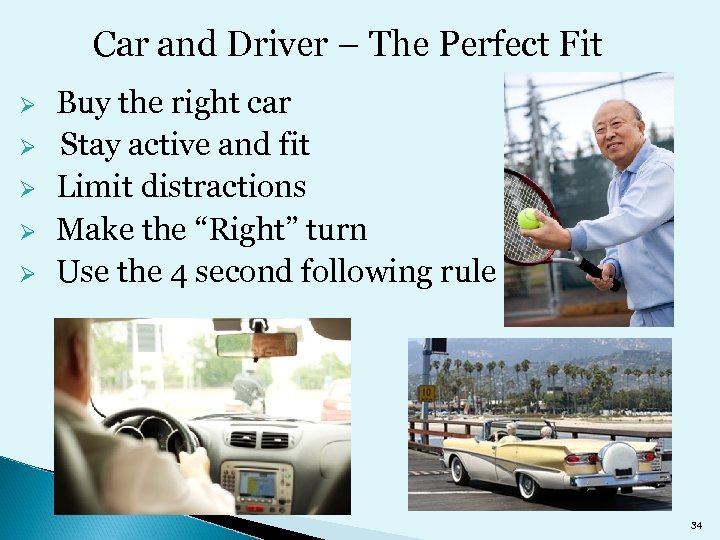 Car and Driver – The Perfect Fit Ø Ø Ø Buy the right car Stay active and fit Limit distractions Make the “Right” turn Use the 4 second following rule 34
 Making Your Vehicle “Fit” Ø One thing older drivers can do to adapt to factors that affect their driving is to make changes to their vehicle to make it “fit” better. These adjustments will help drivers feel more comfortable and in better control of their vehicles. Ø Car. Fit was developed by the American Society on Aging in collaboration with AARP, American occupational Therapy Association and AAA. 35
 Vehicle Comfort and Safety ØWhen selecting a vehicle, choose features to improve comfort and safety of drivers experiencing physical or visual challenges associated with aging. ØVisit www. safercar. gov or call the Vehicle Safety Hotline at 888 -327 -4236 to obtain government crash test results and rollover ratings for specific makes and models. 36
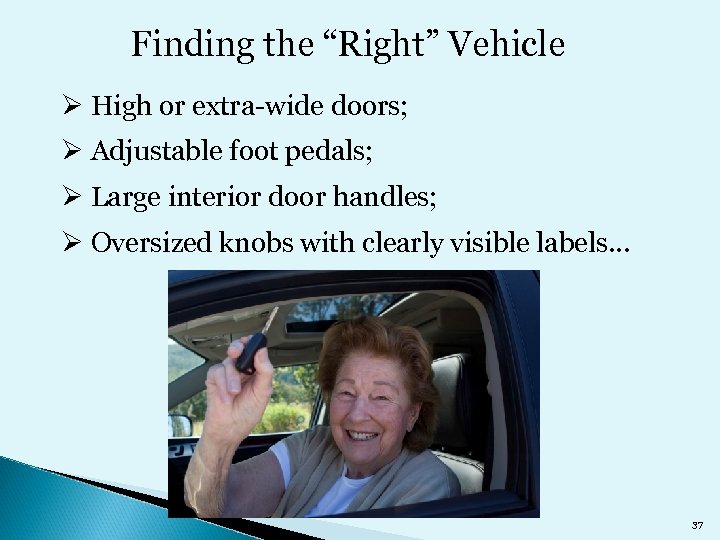 Finding the “Right” Vehicle Ø High or extra-wide doors; Ø Adjustable foot pedals; Ø Large interior door handles; Ø Oversized knobs with clearly visible labels… 37
 Finding the “Right” Vehicle cont… Ø Support handles to assist with entry and exit; Ø Large or adjustable-size print for dashboard gauges; Ø Seat adjusters that can move the seat in all directions — particularly raising it so the driver’s line of sight is 3” above the adjusted steering wheel; and Ø Dashboard-mounted ignition rather than steering column-mounted ignition 38
 Back To School – Refresher Courses AARP conducts a Drivers Safety Program Øwww. AARP. org AAA recommends safe drivers programs Øwww. AAA. com NSC National Safety Council has an on-line Defensive Driving Program Øwww. NSC. org 39
 AARP Driver Safety Program ØTune up driving skills ØUpdate knowledge of road rules ØEducation on age-related physical changes, and adjusting driving to compensate ØReduce traffic violations, crashes, chances for injury ØCall 1 -888 -227 -7669 40
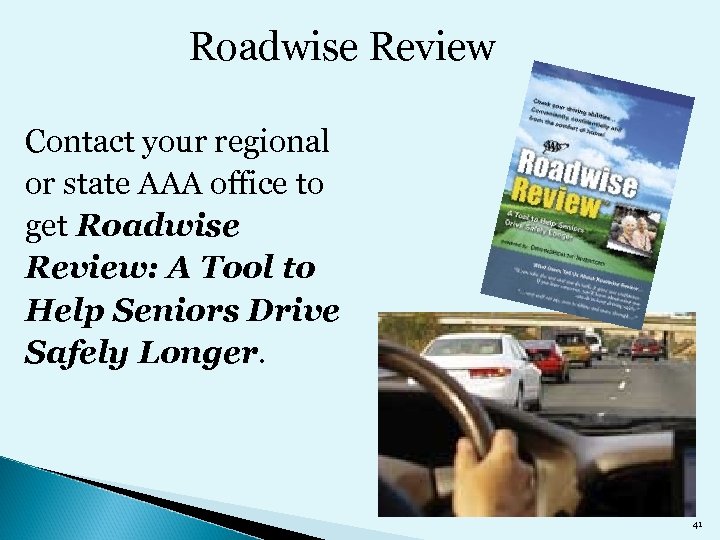 Roadwise Review Contact your regional or state AAA office to get Roadwise Review: A Tool to Help Seniors Drive Safely Longer. 41
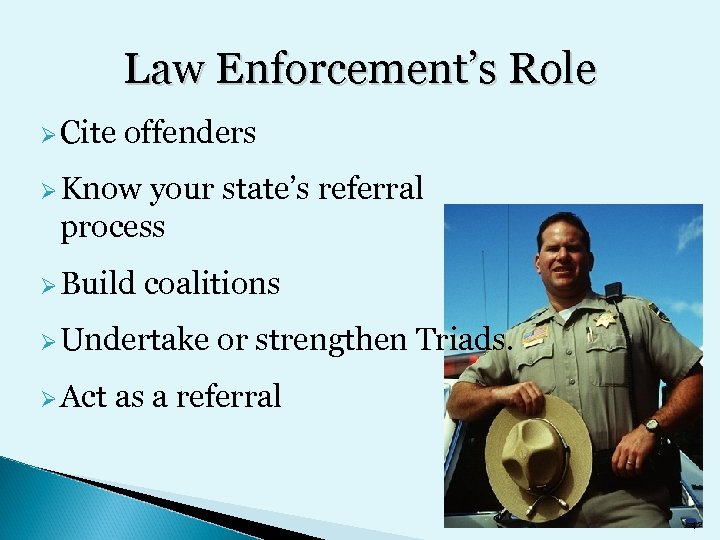 Law Enforcement’s Role Ø Cite offenders Ø Know your state’s referral process Ø Build coalitions Ø Undertake Ø Act or strengthen Triads. as a referral 42
 Following are a Series of Resources for Older Adult Drivers and their Caregivers 43
 American Association of Retired Persons (AARP) 601 E Street, NW Washington, DC 20049 (888) 687 -2277 (OUR AARP) www. aarp. org/findacourse Or call, toll-free, 1 -888 -AARP-NOW (1 -888227 -7669). To register for the online course, visit www. aarpdriversafety. org 44
 American Occupational Therapists Association Occupational therapists and occupational therapy assistants help people of all ages engage in life’s daily activities, including driving, with independence and dignity. www. aota. org/olderdriver 45
 Administration on Aging (Ao. A) Public Inquiries Unit 330 Independence Avenue, SW Washington, DC 20201 (202) 619 -0724 TDD: (800) 877 -8339 Eldercare Locator: (800) 677 -1116 Fax: (202) 357 -3555 www. aoa. dhhs. gov 46
 Alzheimer’s Disease Resources To find your local Alzheimer’s support group: contact your local Area Agency on Aging Call the Eldercare Locator at 800 -677 -1116 Monday through Friday, 9 a. m. to 8 p. m. (ET), or go on-line to www. nhtsa. dot. gov/exit. cfm? link=http: //www. eld ercare. gov. Go on-line or call the Alzheimer’s Disease Education and Referral Center: http: //www. alzheimers. org/index. html. 800 -4380 47
 Carfit – AAA Ø AAA is a not-for-profit organization serving more than 51 million members in the United States and Canada. AAA has been a leading safety advocate for more than a century. Ø www. aaa. com or www. aaa. com/seniors 48
 National Association of State Units on Aging (NASUA) Information/Resource/Referral Support Center 1201 15 th Street, NW, Suite 350 Washington, DC 20005 (202) 898 -2578 Fax: (202) 898 -2583 info@nasua. org www. nasua. org 49
 National Association of Triads, Inc. (NATI) 1450 Duke Street Alexandria, VA 22314 -3490 (800) 424 -7827 Fax: (703) 683 -6541 www. nationaltriad. org In Partnership with your Local Sheriff 50
 National Highway Traffic Safety Administration (NHTSA) 1200 New Jersey Avenue SE. Washington, DC 20590 888 -327 -4236 TDD: 800 -424 -9153 www. nhtsa. gov www. safercar. gov 51
 National Mobility Equipment Dealers Association (NMEDA) 3327 West Bearss Avenue Tampa, FL 33618 800 -833 -0427 www. nmeda. org 52