 Скачать презентацию National Science and Technology Systems CANADA Graham Bell
8db53c9aeed9f024230d5fe4ea598884.ppt
- Количество слайдов: 42



National Science and Technology Systems CANADA Graham Bell President, Academy of Science (RSC)

R researchers
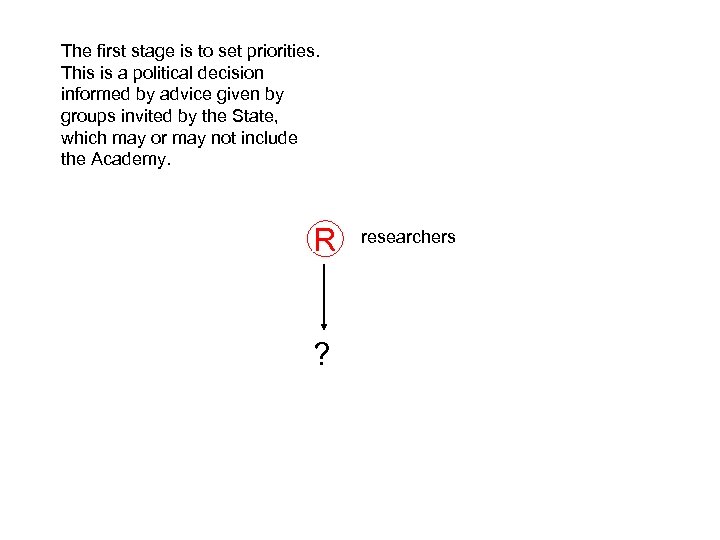
The first stage is to set priorities. This is a political decision informed by advice given by groups invited by the State, which may or may not include the Academy. R ? researchers
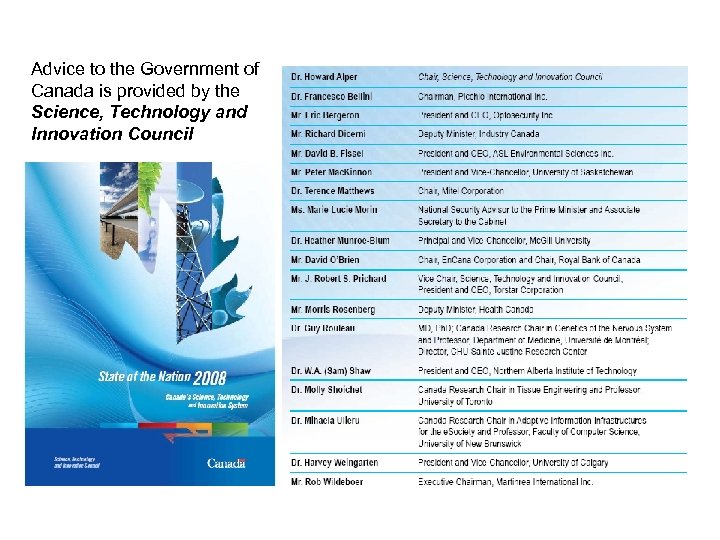
Advice to the Government of Canada is provided by the Science, Technology and Innovation Council

Reports on scientific and technical issues requested by the Government of Canada are prepared by the Council of Canadian Academies The Council of Canadian Academies is an independent, not-for-profit corporation that began operation in 2006. The Council supports independent, science-based, expert assessments (studies) that inform public policy development in Canada. Assessments are conducted by independent, multidisciplinary panels (groups) of experts from across Canada and abroad. The Council’s blueribbon panels serve free of charge and many are Fellows of the Council’s member Academies. The Council’s completed assessments are published and made available to the public free of charge in English and French. Director: Elizabeth Dowdeswell
Member Academies of the CCA The Council’s Member Academies are as follows: RSC: The Academies of the Arts, Humanities and Sciences of Canada is the senior national body of distinguished Canadian scholars, artists and scientists. The primary objective of the RSC is to promote learning and research in the arts and sciences. The RSC consists of nearly 2, 000 Fellows — men and women who are selected by their peers for outstanding contributions to the natural and social sciences, the arts and the humanities. The RSC exists to recognize academic excellence, to advise governments and organizations, and to promote Canadian culture. The Canadian Academy of Engineering is the national institution through which Canada's most distinguished and experienced engineers provide strategic advice on matters of critical importance to Canada. The Academy is an independent, self-governing and non-profit organization established in 1987. Members of the Academy are nominated and elected by their peers to honorary Fellowships, in recognition of their distinguished achievements and career-long service to the engineering profession. Fellows of the Academy are committed to ensuring that Canada’s engineering expertise is applied to the benefit of all Canadians. The Canadian Academy of Health Sciences recognizes individuals of great accomplishment and achievement in the academic health sciences in Canada. The Academy provides timely, informed and unbiased assessments of urgent issues affecting the health of Canadians. CAHS also represents Canada on the Inter. Academy Medical Panel (IAMP), a global consortium of national health science academies whose aim is to alleviate the health burdens of the world's poorest people; build scientific capacity for health; and provide independent scientific advice on promoting health science and health care policy to national governments and global organizations.
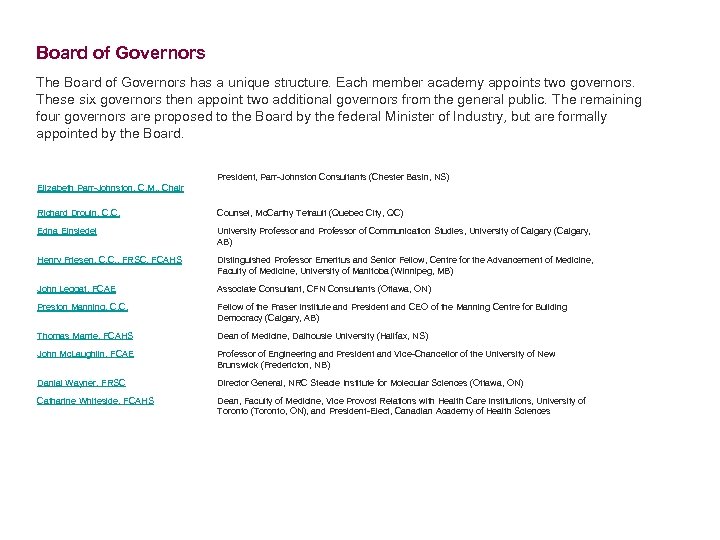
Board of Governors The Board of Governors has a unique structure. Each member academy appoints two governors. These six governors then appoint two additional governors from the general public. The remaining four governors are proposed to the Board by the federal Minister of Industry, but are formally appointed by the Board. President, Parr-Johnston Consultants (Chester Basin, NS) Elizabeth Parr-Johnston, C. M. , Chair Richard Drouin, C. C. Counsel, Mc. Carthy Tetrault (Quebec City, QC) Edna Einsiedel University Professor and Professor of Communication Studies, University of Calgary (Calgary, AB) Henry Friesen, C. C. , FRSC, FCAHS Distinguished Professor Emeritus and Senior Fellow, Centre for the Advancement of Medicine, Faculty of Medicine, University of Manitoba (Winnipeg, MB) John Leggat, FCAE Associate Consultant, CFN Consultants (Ottawa, ON) Preston Manning, C. C. Fellow of the Fraser Institute and President and CEO of the Manning Centre for Building Democracy (Calgary, AB) Thomas Marrie, FCAHS Dean of Medicine, Dalhousie University (Halifax, NS) John Mc. Laughlin, FCAE Professor of Engineering and President and Vice-Chancellor of the University of New Brunswick (Fredericton, NB) Danial Wayner, FRSC Director General, NRC Steacie Institute for Molecular Sciences (Ottawa, ON) Catharine Whiteside, FCAHS Dean, Faculty of Medicine, Vice Provost Relations with Health Care Institutions, University of Toronto (Toronto, ON), and President-Elect, Canadian Academy of Health Sciences
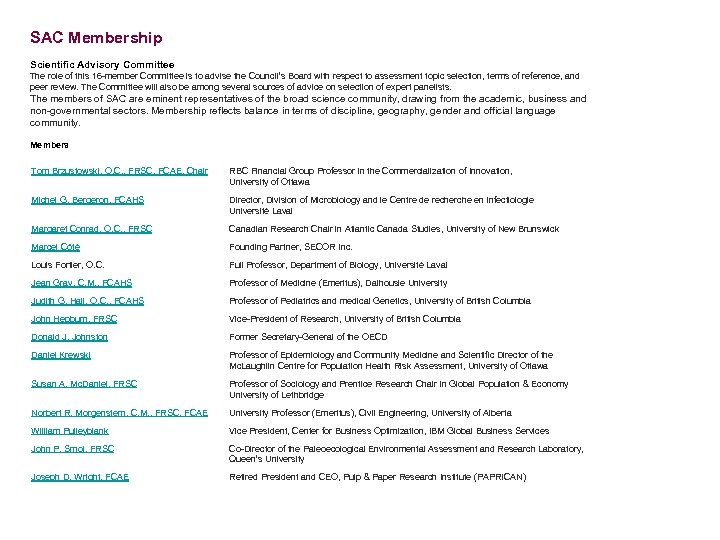
SAC Membership Scientific Advisory Committee The role of this 16 -member Committee is to advise the Council’s Board with respect to assessment topic selection, terms of reference, and peer review. The Committee will also be among several sources of advice on selection of expert panelists. The members of SAC are eminent representatives of the broad science community, drawing from the academic, business and non-governmental sectors. Membership reflects balance in terms of discipline, geography, gender and official language community. Members Tom Brzustowski, O. C. , FRSC, FCAE, Chair RBC Financial Group Professor in the Commercialization of Innovation, University of Ottawa Michel G. Bergeron, FCAHS Director, Division of Microbiology and le Centre de recherche en infectiologie Université Laval Margaret Conrad, O. C. , FRSC Canadian Research Chair in Atlantic Canada Studies, University of New Brunswick Marcel Côté Founding Partner, SECOR Inc. Louis Fortier, O. C. Full Professor, Department of Biology, Université Laval Jean Gray, C. M. , FCAHS Professor of Medicine (Emeritus), Dalhousie University Judith G. Hall, O. C. , FCAHS Professor of Pediatrics and medical Genetics, University of British Columbia John Hepburn, FRSC Vice-President of Research, University of British Columbia Donald J. Johnston Former Secretary-General of the OECD Daniel Krewski Professor of Epidemiology and Community Medicine and Scientific Director of the Mc. Laughlin Centre for Population Health Risk Assessment, University of Ottawa Susan A. Mc. Daniel, FRSC Professor of Sociology and Prentice Research Chair in Global Population & Economy University of Lethbridge Norbert R. Morgenstern, C. M. , FRSC, FCAE University Professor (Emeritus), Civil Engineering, University of Alberta William Pulleyblank Vice President, Center for Business Optimization, IBM Global Business Services John P. Smol, FRSC Co-Director of the Paleoecological Environmental Assessment and Research Laboratory, Queen’s University Joseph D. Wright, FCAE Retired President and CEO, Pulp & Paper Research Institute (PAPRICAN)
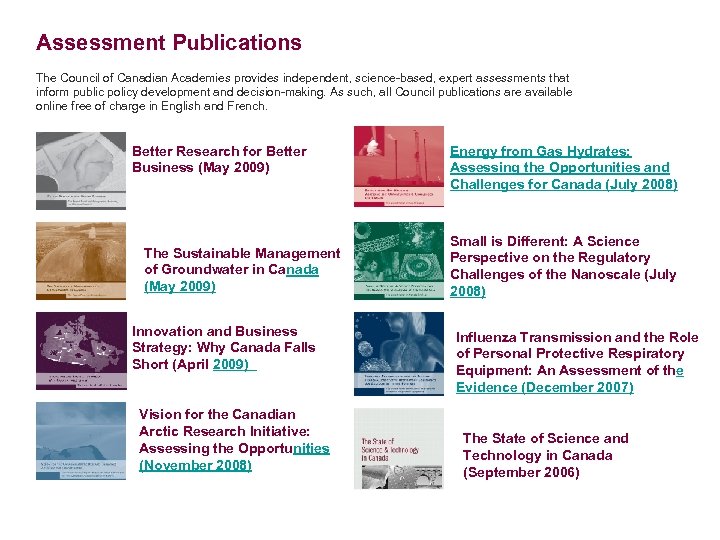
Assessment Publications The Council of Canadian Academies provides independent, science-based, expert assessments that inform public policy development and decision-making. As such, all Council publications are available online free of charge in English and French. Better Research for Better Business (May 2009) The Sustainable Management of Groundwater in Canada (May 2009) Innovation and Business Strategy: Why Canada Falls Short (April 2009) Vision for the Canadian Arctic Research Initiative: Assessing the Opportunities (November 2008) Energy from Gas Hydrates: Assessing the Opportunities and Challenges for Canada (July 2008) Small is Different: A Science Perspective on the Regulatory Challenges of the Nanoscale (July 2008) Influenza Transmission and the Role of Personal Protective Respiratory Equipment: An Assessment of the Evidence (December 2007) The State of Science and Technology in Canada (September 2006)

Assessments in Progress Approaches to Animal Health Risk Assessment The Minister of Agriculture and Agri-Food Canada, on behalf of the Canadian Food Inspection Agency (CFIA), has asked the Council of Canadian Academies to assess the state and comprehensiveness of risk assessment techniques in animal health sciences. Integrated Testing of Pesticides The Minister of Health asked the Canadian Council of Academies to assess the scientific status of integrated testing strategies in assessing and regulating the risks of pesticides to both humans and environments. Research Integrity in the Canadian Context Industry Canada asked the Council of Canadian Academies to conduct an assessment examining the key research integrity principles, procedural mechanisms, and appropriate practices for their application across research disciplines and institutions in Canada. State and Trends of Biodiversity Science in Canada The Minister of Canadian Heritage, on behalf of the Canadian Museum of Nature, asked the Council of Canadian Academies to assess the state and trends of biodiversity science in Canada. The charge to the panel focuses specifically on the state of taxonomic and biosystematics research in Canada – research that discovers, distinguishes, identifies, and classifies species of organisms.

What is the RSC? RSC: The Academies of Arts, Humanities and Sciences of Canada is the senior national body of distinguished Canadian scholars, artists and scientists. It is Canada’s national academy. The primary objective of the RSC is to promote learning and research in the arts and sciences. The RSC consists of nearly 2000 Fellows, men and women who are selected by their peers for outstanding contributions to the natural and social sciences, in the arts and in the humanities. As Canada’s national academy, the RSC exists to recognize academic excellence, to advise governments and organizations, and to promote Canadian culture. Raison d’être National academies are cultural institutions with three principal responsibilities. The first responsibility of a national academy is to recognize excellence. Most national academies do this through the election of Fellows and the presentation of awards. The second responsibility of a national academy is to provide expert advice on matters of national interest or urgency. The third responsibility of a national academy is to promote its national culture abroad. This occurs in a variety of ways, and includes service on multilateral agencies (G 8, UNESCO, IAP), as well as exchange lectureships with other national academies and universities.
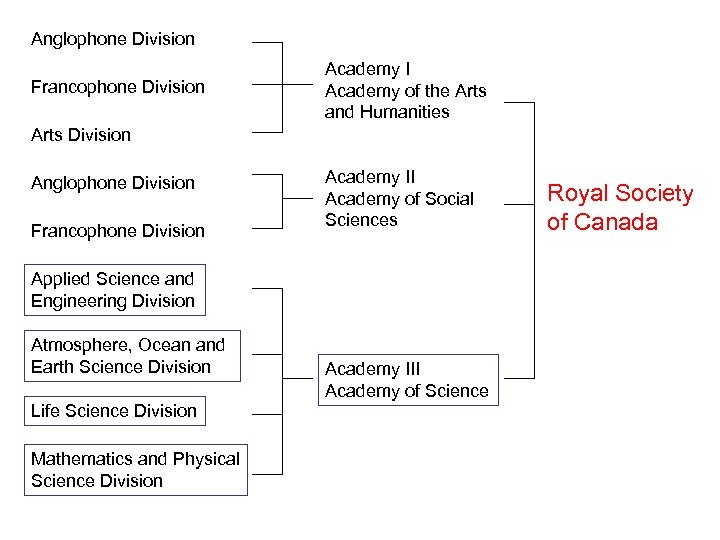
Anglophone Division Francophone Division Academy I Academy of the Arts and Humanities Arts Division Anglophone Division Francophone Division Academy II Academy of Social Sciences Applied Science and Engineering Division Atmosphere, Ocean and Earth Science Division Life Science Division Mathematics and Physical Science Division Academy III Academy of Science Royal Society of Canada
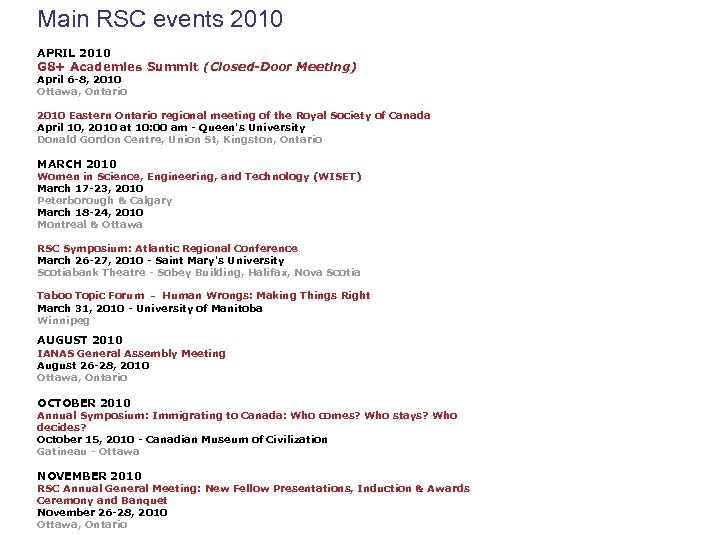
Main RSC events 2010 APRIL 2010 G 8+ Academies Summit (Closed-Door Meeting) April 6 -8, 2010 Ottawa, Ontario 2010 Eastern Ontario regional meeting of the Royal Society of Canada April 10, 2010 at 10: 00 am - Queen's University Donald Gordon Centre, Union St, Kingston, Ontario MARCH 2010 Women in Science, Engineering, and Technology (WISET) March 17 -23, 2010 Peterborough & Calgary March 18 -24, 2010 Montreal & Ottawa RSC Symposium: Atlantic Regional Conference March 26 -27, 2010 - Saint Mary's University Scotiabank Theatre - Sobey Building, Halifax, Nova Scotia Taboo Topic Forum - Human Wrongs: Making Things Right March 31, 2010 - University of Manitoba Winnipeg AUGUST 2010 IANAS General Assembly Meeting August 26 -28, 2010 Ottawa, Ontario OCTOBER 2010 Annual Symposium: Immigrating to Canada: Who comes? Who stays? Who decides? October 15, 2010 - Canadian Museum of Civilization Gatineau - Ottawa NOVEMBER 2010 RSC Annual General Meeting: New Fellow Presentations, Induction & Awards Ceremony and Banquet November 26 -28, 2010 Ottawa, Ontario
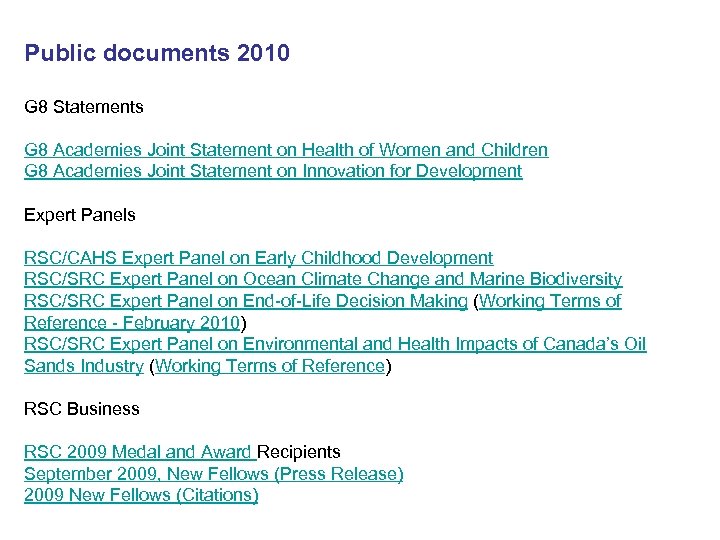
Public documents 2010 G 8 Statements G 8 Academies Joint Statement on Health of Women and Children G 8 Academies Joint Statement on Innovation for Development Expert Panels RSC/CAHS Expert Panel on Early Childhood Development RSC/SRC Expert Panel on Ocean Climate Change and Marine Biodiversity RSC/SRC Expert Panel on End-of-Life Decision Making (Working Terms of Reference - February 2010) RSC/SRC Expert Panel on Environmental and Health Impacts of Canada’s Oil Sands Industry (Working Terms of Reference) RSC Business RSC 2009 Medal and Award Recipients September 2009, New Fellows (Press Release) 2009 New Fellows (Citations)
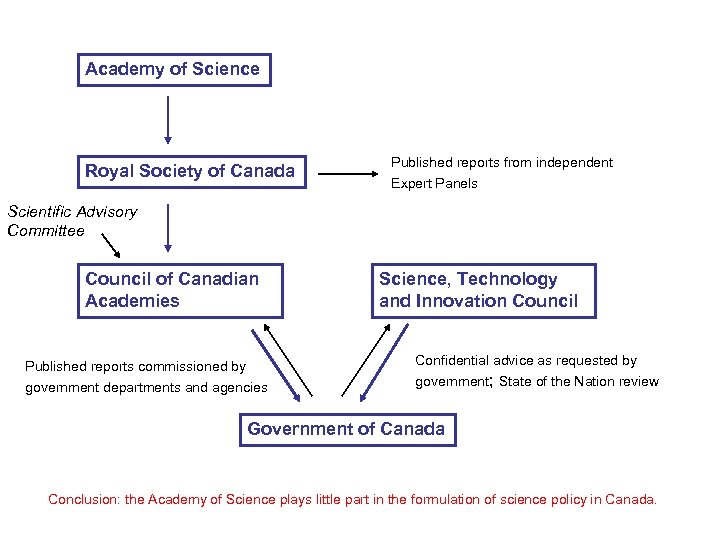
Academy of Science Royal Society of Canada Published reports from independent Expert Panels Scientific Advisory Committee Council of Canadian Academies Published reports commissioned by government departments and agencies Science, Technology and Innovation Council Confidential advice as requested by government; State of the Nation review Government of Canada Conclusion: the Academy of Science plays little part in the formulation of science policy in Canada.
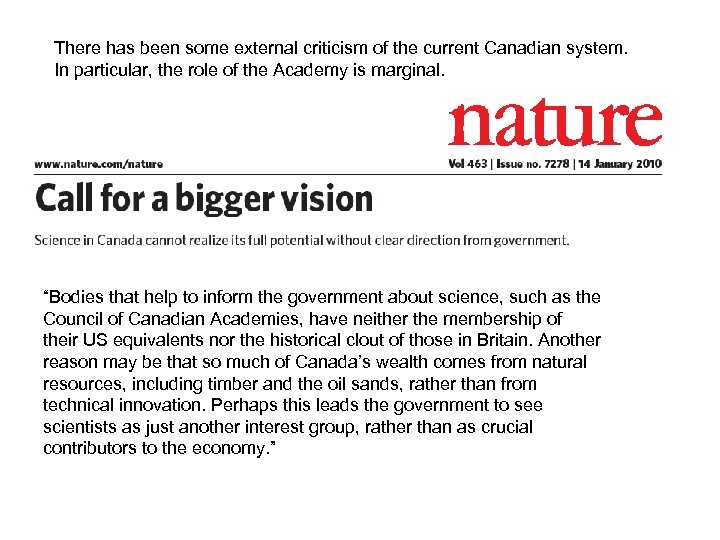
There has been some external criticism of the current Canadian system. In particular, the role of the Academy is marginal. “Bodies that help to inform the government about science, such as the Council of Canadian Academies, have neither the membership of their US equivalents nor the historical clout of those in Britain. Another reason may be that so much of Canada’s wealth comes from natural resources, including timber and the oil sands, rather than from technical innovation. Perhaps this leads the government to see scientists as just another interest group, rather than as crucial contributors to the economy. ”
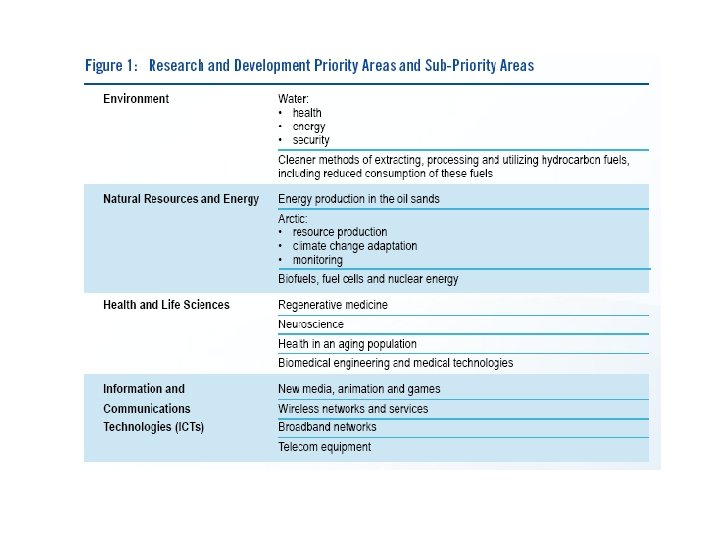
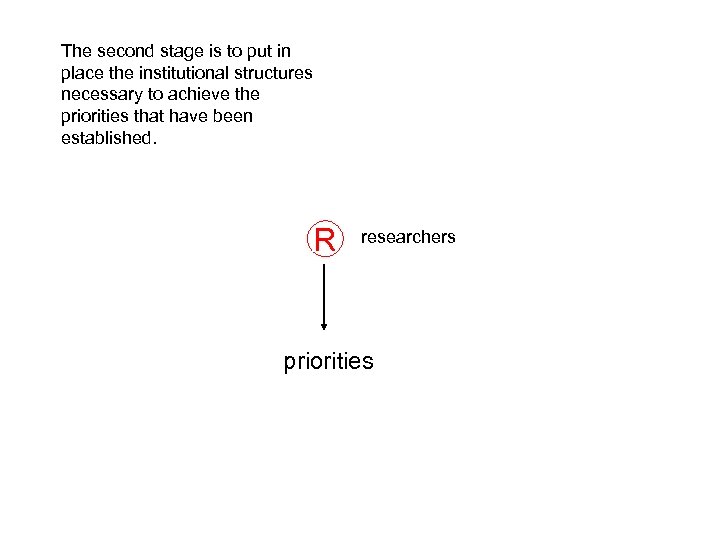
The second stage is to put in place the institutional structures necessary to achieve the priorities that have been established. R researchers priorities
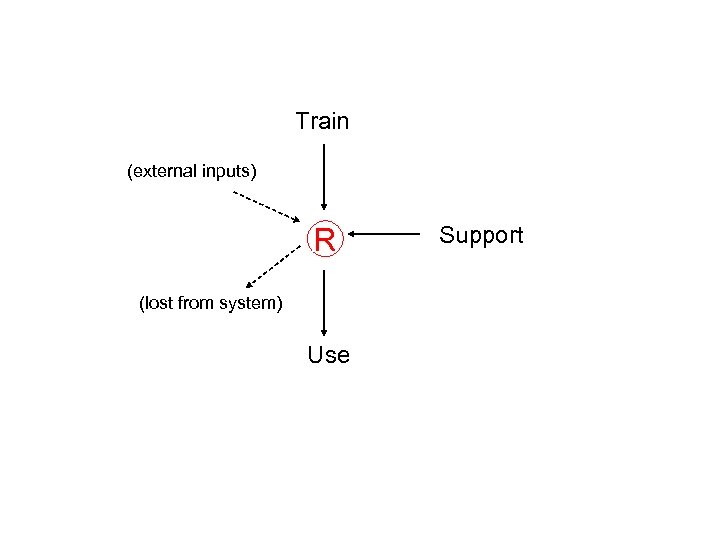
Train (external inputs) R (lost from system) Use Support
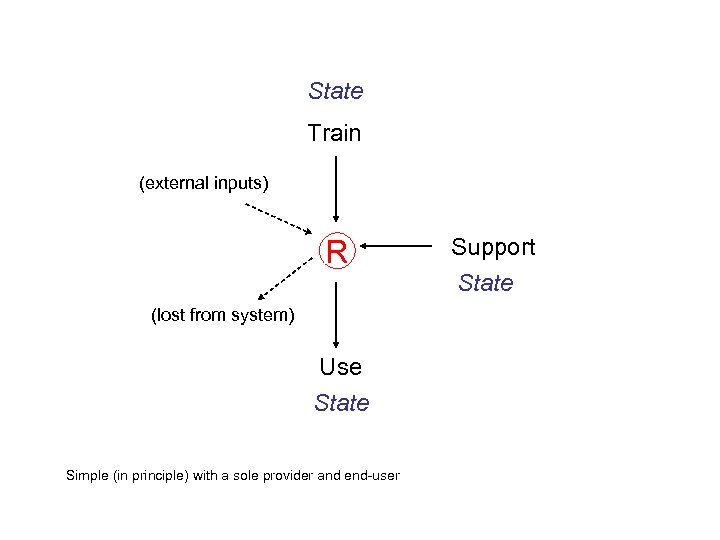
State Train (external inputs) R (lost from system) Use State Simple (in principle) with a sole provider and end-user Support State
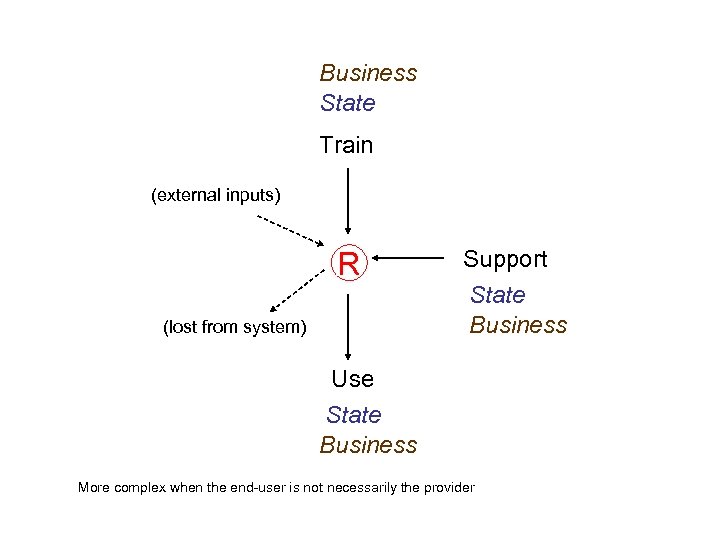
Business State Train (external inputs) R (lost from system) Support State Business Use State Business More complex when the end-user is not necessarily the provider
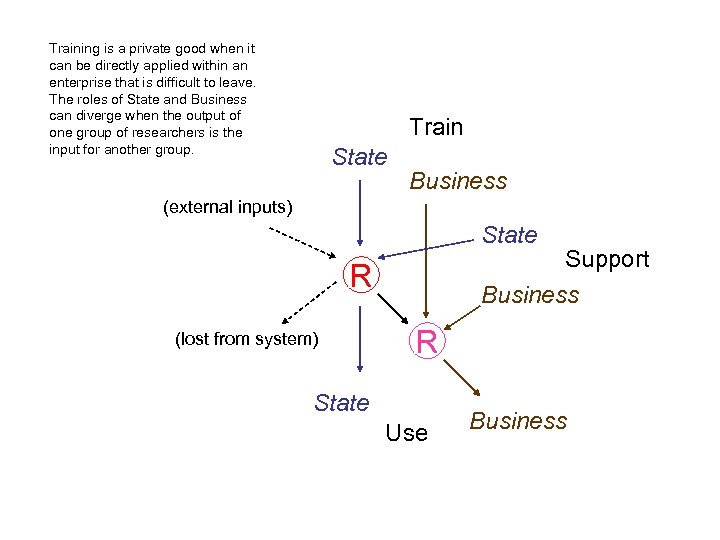
Training is a private good when it can be directly applied within an enterprise that is difficult to leave. The roles of State and Business can diverge when the output of one group of researchers is the input for another group. Train State Business (external inputs) State Support Business R (lost from system) R State Use Business
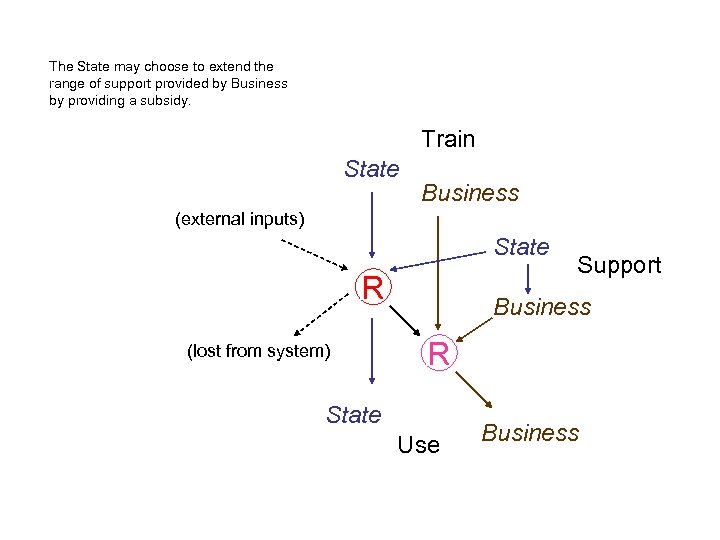
The State may choose to extend the range of support provided by Business by providing a subsidy. Train State Business (external inputs) State R (lost from system) Support Business R State Use Business
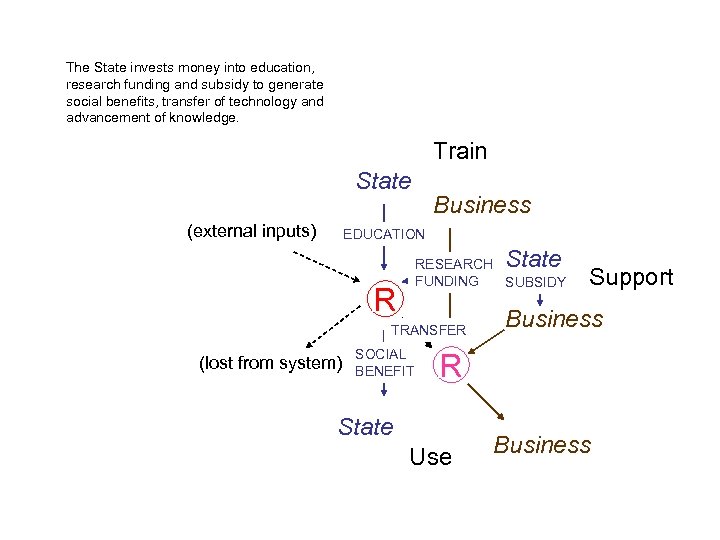
The State invests money into education, research funding and subsidy to generate social benefits, transfer of technology and advancement of knowledge. Train State (external inputs) Business EDUCATION State RESEARCH FUNDING SUBSIDY R TRANSFER (lost from system) SOCIAL BENEFIT Support Business R State Use Business
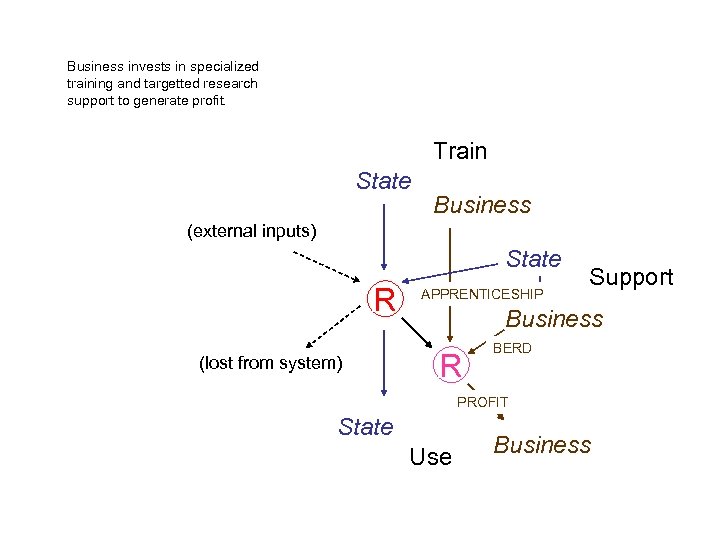
Business invests in specialized training and targetted research support to generate profit. Train State Business (external inputs) State R (lost from system) APPRENTICESHIP Support Business R BERD PROFIT State Use Business
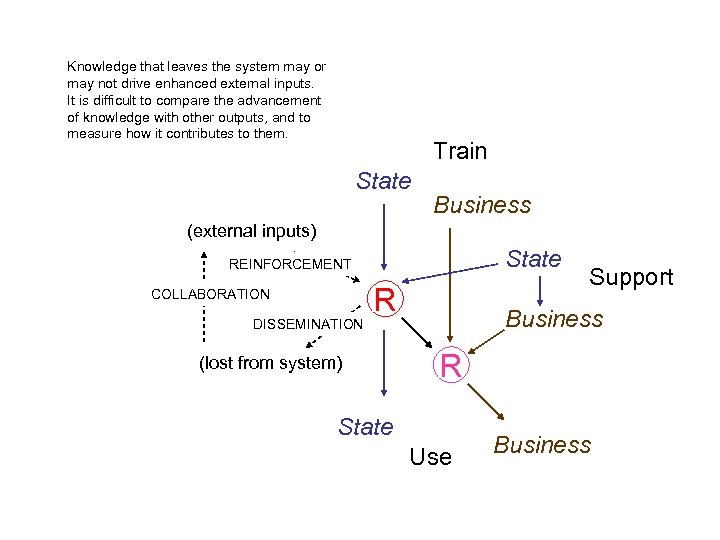
Knowledge that leaves the system may or may not drive enhanced external inputs. It is difficult to compare the advancement of knowledge with other outputs, and to measure how it contributes to them. Train State Business (external inputs) State REINFORCEMENT COLLABORATION DISSEMINATION R (lost from system) Support Business R State Use Business
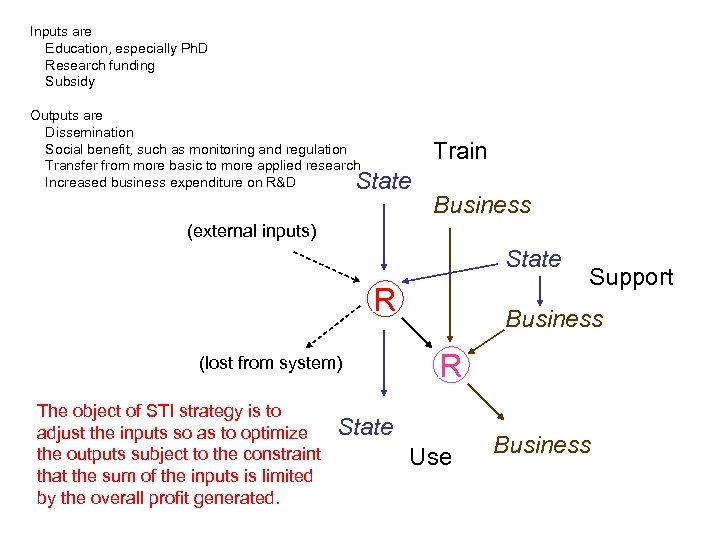
Inputs are Education, especially Ph. D Research funding Subsidy Outputs are Dissemination Social benefit, such as monitoring and regulation Transfer from more basic to more applied research Increased business expenditure on R&D Train State Business (external inputs) State R (lost from system) The object of STI strategy is to adjust the inputs so as to optimize the outputs subject to the constraint that the sum of the inputs is limited by the overall profit generated. Support Business R State Use Business
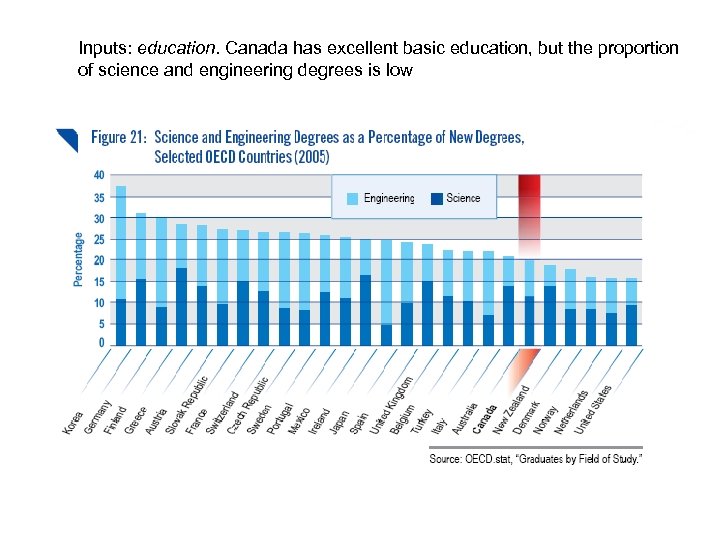
Inputs: education. Canada has excellent basic education, but the proportion of science and engineering degrees is low
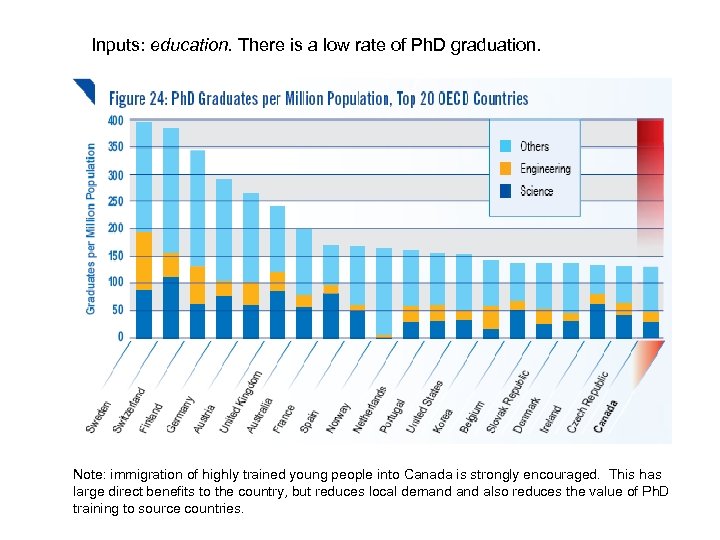
Inputs: education. There is a low rate of Ph. D graduation. Note: immigration of highly trained young people into Canada is strongly encouraged. This has large direct benefits to the country, but reduces local demand also reduces the value of Ph. D training to source countries.
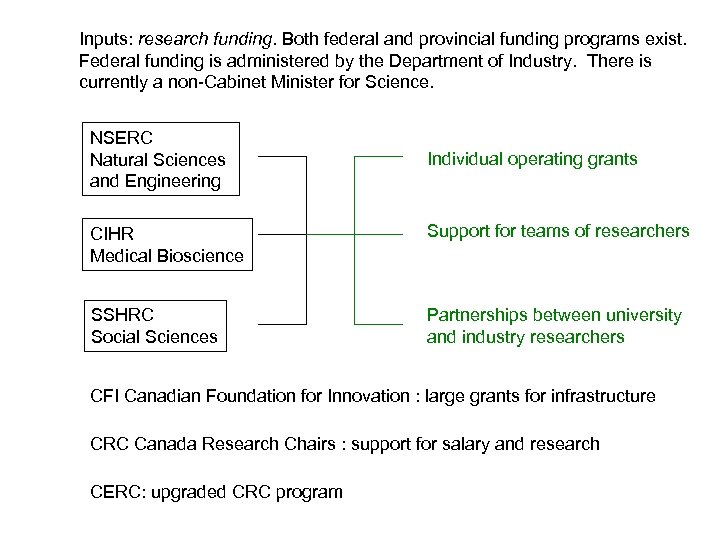
Inputs: research funding. Both federal and provincial funding programs exist. Federal funding is administered by the Department of Industry. There is currently a non-Cabinet Minister for Science. NSERC Natural Sciences and Engineering Individual operating grants CIHR Medical Bioscience Support for teams of researchers SSHRC Social Sciences Partnerships between university and industry researchers CFI Canadian Foundation for Innovation : large grants for infrastructure CRC Canada Research Chairs : support for salary and research CERC: upgraded CRC program
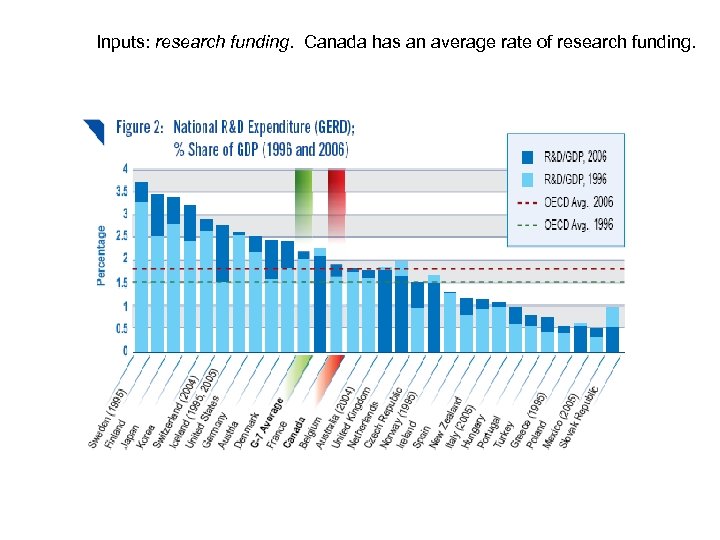
Inputs: research funding. Canada has an average rate of research funding.
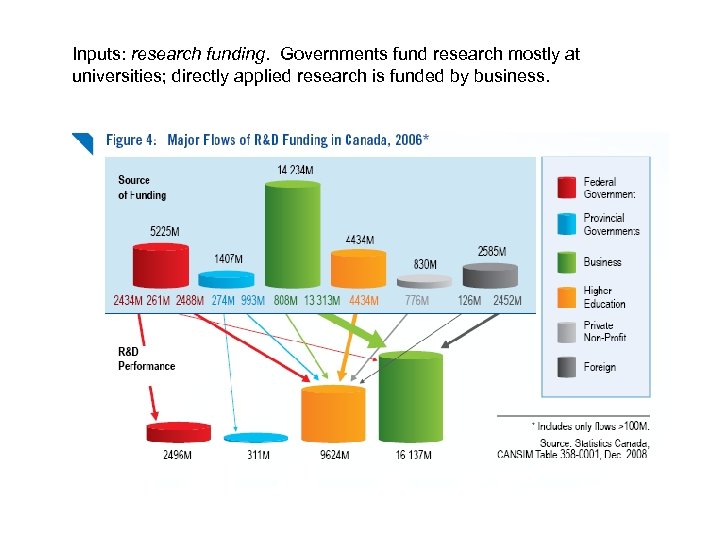
Inputs: research funding. Governments fund research mostly at universities; directly applied research is funded by business.
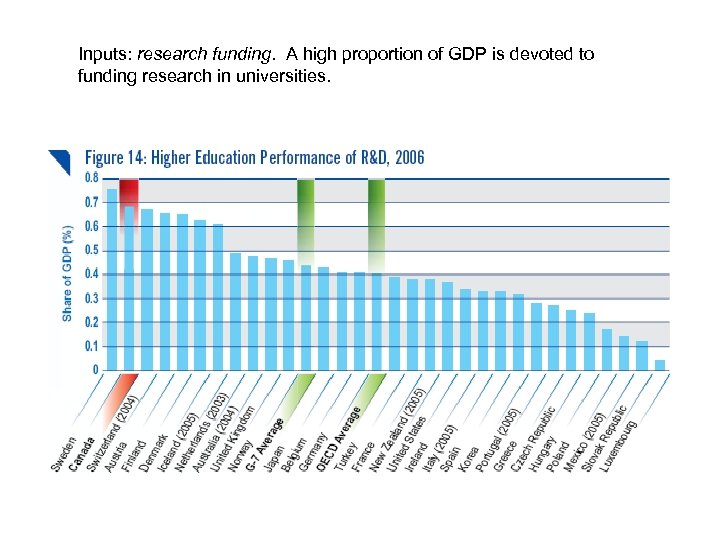
Inputs: research funding. A high proportion of GDP is devoted to funding research in universities.
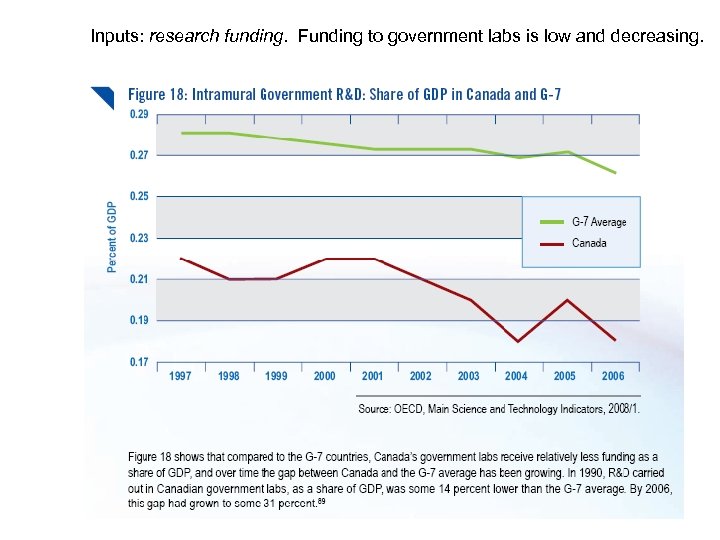
Inputs: research funding. Funding to government labs is low and decreasing.
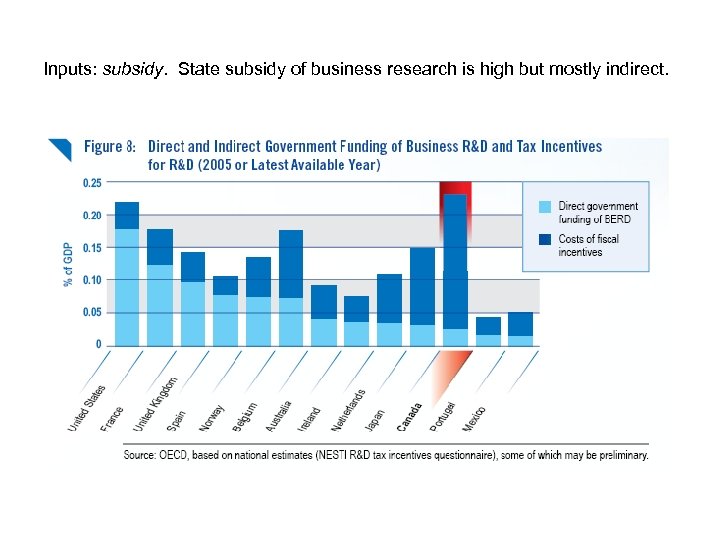
Inputs: subsidy. State subsidy of business research is high but mostly indirect.
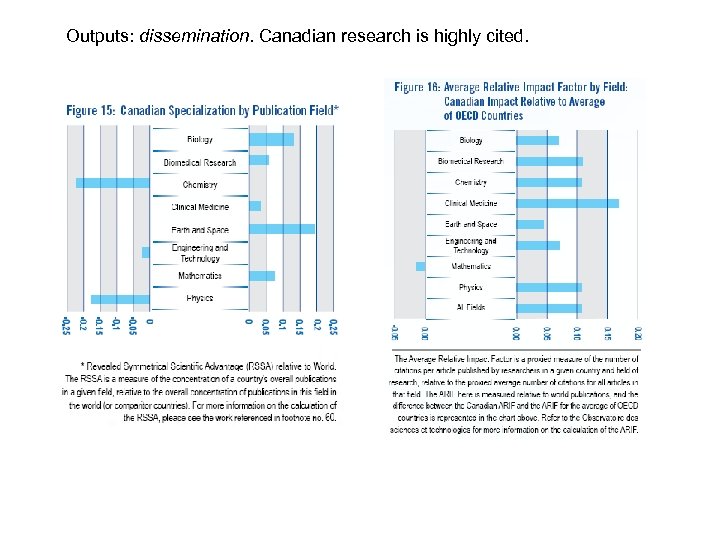
Outputs: dissemination. Canadian research is highly cited.
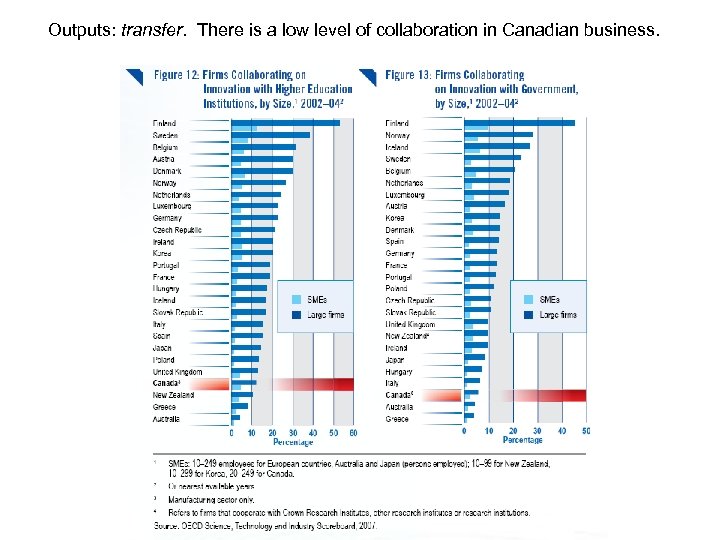
Outputs: transfer. There is a low level of collaboration in Canadian business.
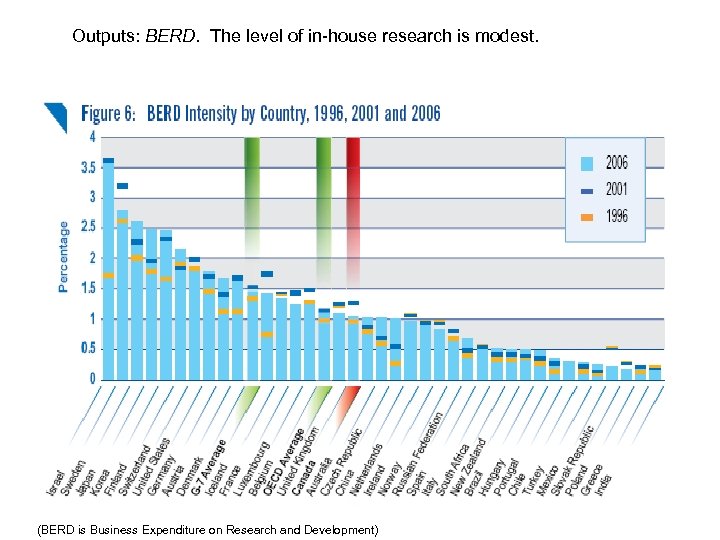
Outputs: BERD. The level of in-house research is modest. (BERD is Business Expenditure on Research and Development)
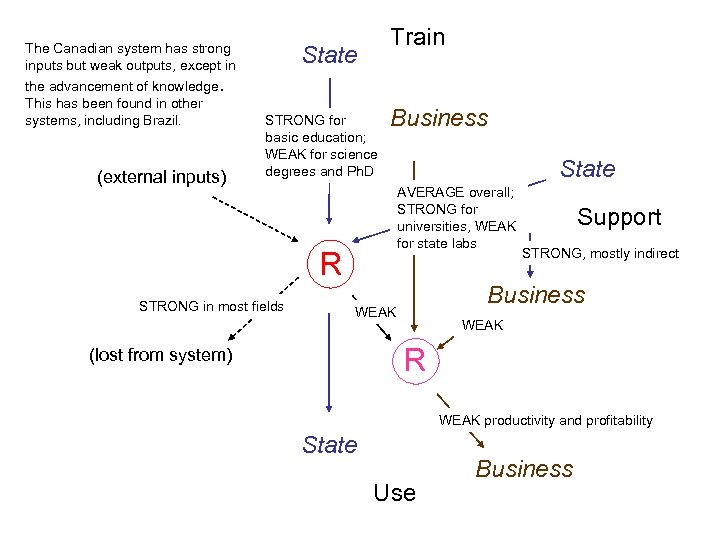
The Canadian system has strong inputs but weak outputs, except in the advancement of knowledge. This has been found in other systems, including Brazil. (external inputs) Train State STRONG for basic education; WEAK for science degrees and Ph. D Business AVERAGE overall; STRONG for universities, WEAK for state labs R STRONG in most fields State Support STRONG, mostly indirect Business WEAK R (lost from system) WEAK productivity and profitability State Use Business
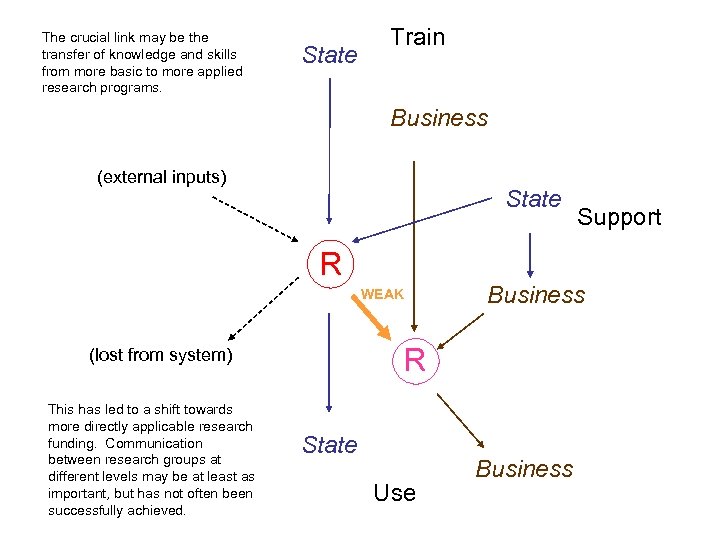
The crucial link may be the transfer of knowledge and skills from more basic to more applied research programs. State Train Business (external inputs) State R WEAK This has led to a shift towards more directly applicable research funding. Communication between research groups at different levels may be at least as important, but has not often been successfully achieved. Business R (lost from system) State Use Support Business
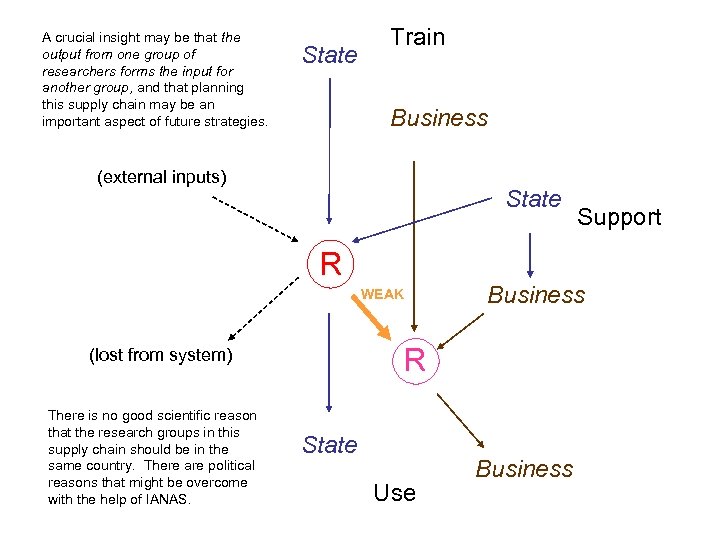
A crucial insight may be that the output from one group of researchers forms the input for another group, and that planning this supply chain may be an important aspect of future strategies. State Train Business (external inputs) State R WEAK There is no good scientific reason that the research groups in this supply chain should be in the same country. There are political reasons that might be overcome with the help of IANAS. Business R (lost from system) State Use Support Business
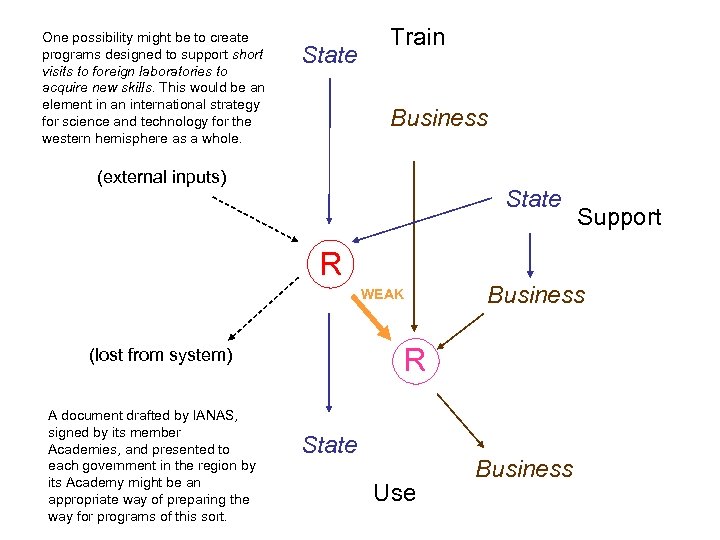
One possibility might be to create programs designed to support short visits to foreign laboratories to acquire new skills. This would be an element in an international strategy for science and technology for the western hemisphere as a whole. State Train Business (external inputs) State R WEAK A document drafted by IANAS, signed by its member Academies, and presented to each government in the region by its Academy might be an appropriate way of preparing the way for programs of this sort. Business R (lost from system) State Use Support Business
Скачать презентацию National Science and Technology Systems CANADA Graham Bell
8db53c9aeed9f024230d5fe4ea598884.ppt