 Скачать презентацию National Radio Astronomy Observatory Galaxies through Cosmic Time
c25f01cc8870e883e14f26a2dad21d7d.ppt
- Количество слайдов: 40



National Radio Astronomy Observatory Galaxies through Cosmic Time – December 16 -18, 2008 Surveying Cosmic Time with the WIDAR Correlator Michael P. Rupen Project Scientist for WIDAR 1
Introducing the EVLA 2
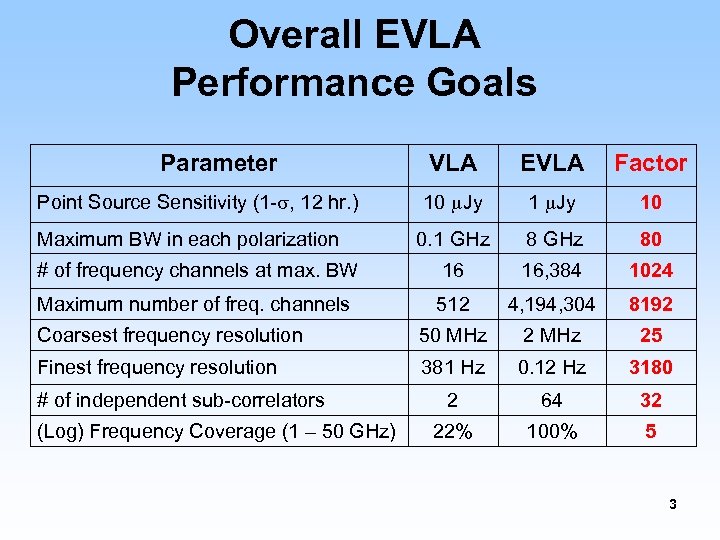
Overall EVLA Performance Goals Parameter VLA EVLA Factor 10 m. Jy 10 0. 1 GHz 80 # of frequency channels at max. BW 16 16, 384 1024 Maximum number of freq. channels 512 4, 194, 304 8192 Coarsest frequency resolution 50 MHz 25 Finest frequency resolution 381 Hz 0. 12 Hz 3180 2 64 32 22% 100% 5 Point Source Sensitivity (1 -s, 12 hr. ) Maximum BW in each polarization # of independent sub-correlators (Log) Frequency Coverage (1 – 50 GHz) 3
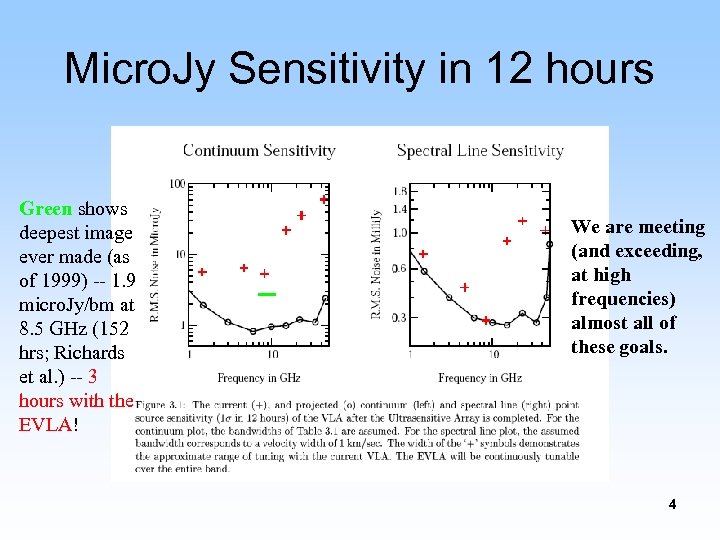
Micro. Jy Sensitivity in 12 hours Green shows deepest image ever made (as of 1999) -- 1. 9 micro. Jy/bm at 8. 5 GHz (152 hrs; Richards et al. ) -- 3 hours with the EVLA! We are meeting (and exceeding, at high frequencies) almost all of these goals. 4
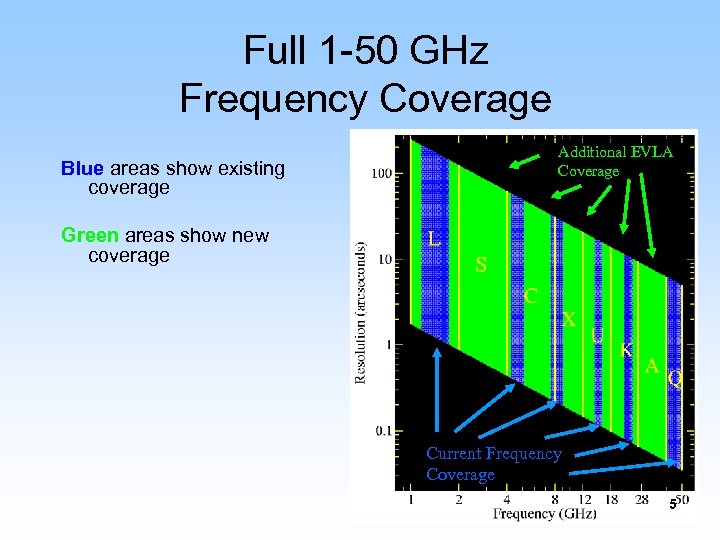
Full 1 -50 GHz Frequency Coverage Blue areas show existing coverage Additional EVLA Coverage Green areas show new coverage Current Frequency Coverage 5
WIDAR correlator • 8 GHz, full polarization, in one go • 64 independent subband-pair correlators – Can individually trade bandwidth for channels • 128 MHz to 31. 25 k. Hz • 256 to 4096 channels – Can link subband correlators for even more channels – Independently tunable -- can target up to 64 individual lines (up to 128 in one polarization) 8
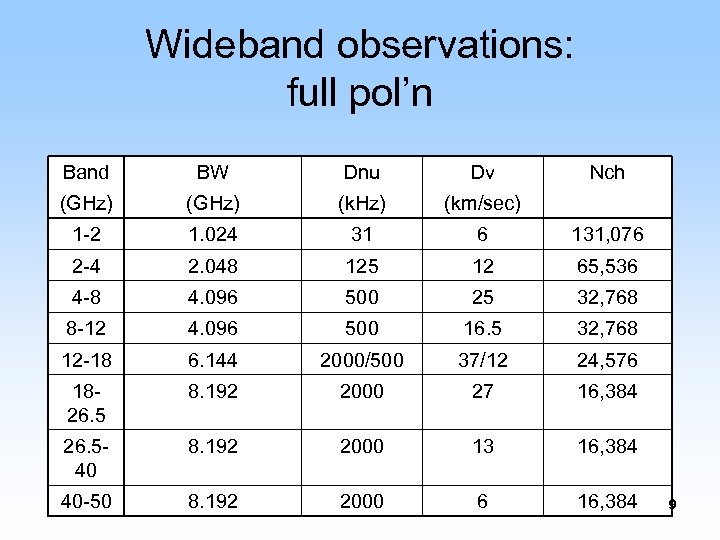
Wideband observations: full pol’n Band BW Dnu Dv Nch (GHz) (km/sec) 1 -2 1. 024 31 6 131, 076 2 -4 2. 048 125 12 65, 536 4 -8 4. 096 500 25 32, 768 8 -12 4. 096 500 16. 5 32, 768 12 -18 6. 144 2000/500 37/12 24, 576 1826. 5 8. 192 2000 27 16, 384 26. 540 8. 192 2000 13 16, 384 40 -50 8. 192 2000 6 16, 384 9
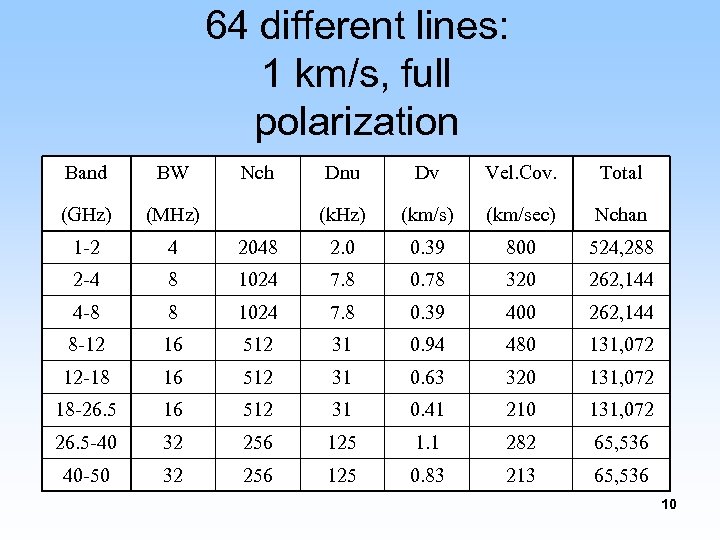
64 different lines: 1 km/s, full polarization Band BW (GHz) (MHz) 1 -2 4 2 -4 Nch Dnu Dv Vel. Cov. Total (k. Hz) (km/sec) Nchan 2048 2. 0 0. 39 800 524, 288 8 1024 7. 8 0. 78 320 262, 144 4 -8 8 1024 7. 8 0. 39 400 262, 144 8 -12 16 512 31 0. 94 480 131, 072 12 -18 16 512 31 0. 63 320 131, 072 18 -26. 5 16 512 31 0. 41 210 131, 072 26. 5 -40 32 256 125 1. 1 282 65, 536 40 -50 32 256 125 0. 83 213 65, 536 10
The EVLA combines power and flexibility to allow you to tune the instrument to your science -- not the reverse. 12
The EVLA and Evolving Galaxies a few illustrative examples 13
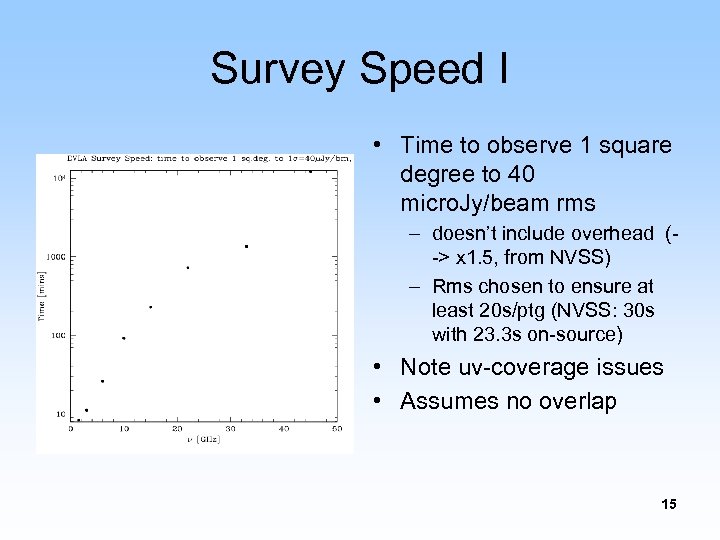
Survey Speed I • Time to observe 1 square degree to 40 micro. Jy/beam rms – doesn’t include overhead (-> x 1. 5, from NVSS) – Rms chosen to ensure at least 20 s/ptg (NVSS: 30 s with 23. 3 s on-source) • Note uv-coverage issues • Assumes no overlap 15
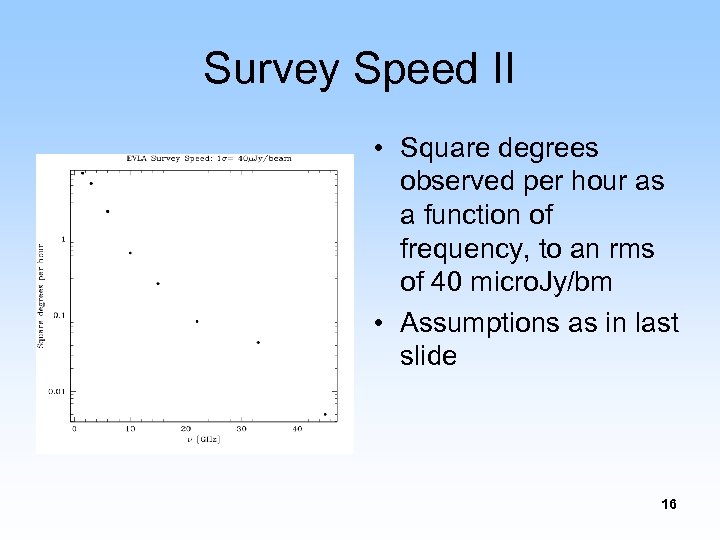
Survey Speed II • Square degrees observed per hour as a function of frequency, to an rms of 40 micro. Jy/bm • Assumptions as in last slide 16
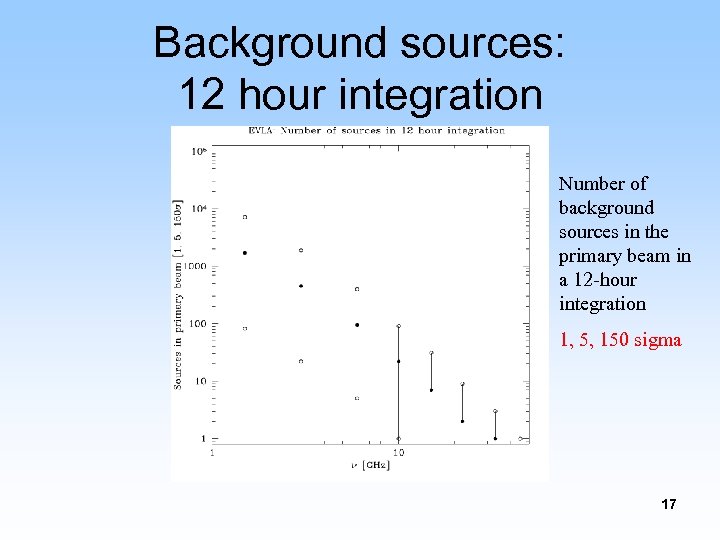
Background sources: 12 hour integration Number of background sources in the primary beam in a 12 -hour integration 1, 5, 150 sigma 17
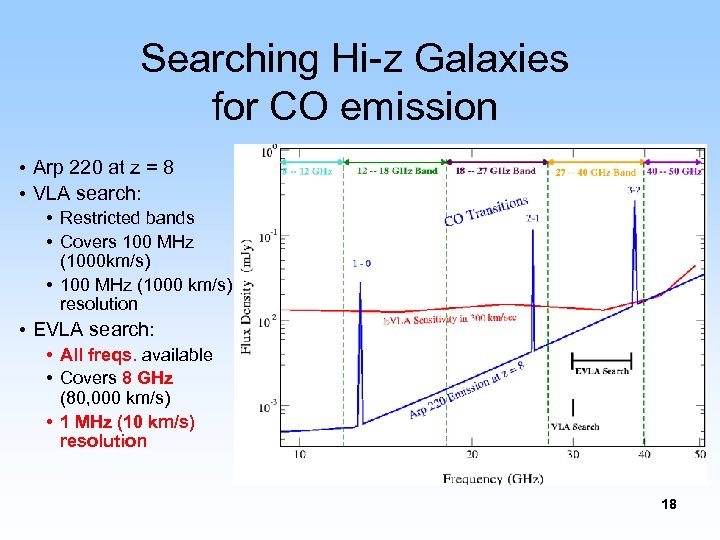
Searching Hi-z Galaxies for CO emission • Arp 220 at z = 8 • VLA search: • Restricted bands • Covers 100 MHz (1000 km/s) • 100 MHz (1000 km/s) resolution • EVLA search: • All freqs. available • Covers 8 GHz (80, 000 km/s) • 1 MHz (10 km/s) resolution 18
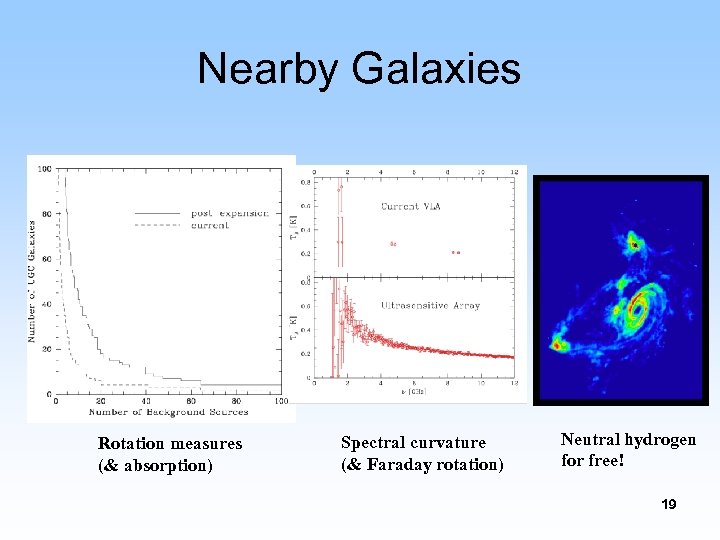
Nearby Galaxies Rotation measures (& absorption) Spectral curvature (& Faraday rotation) Neutral hydrogen for free! 19
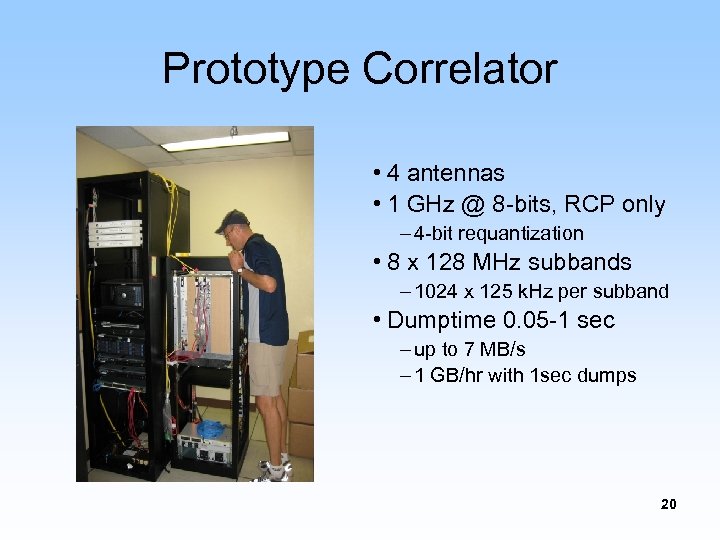
Prototype Correlator • 4 antennas • 1 GHz @ 8 -bits, RCP only – 4 -bit requantization • 8 x 128 MHz subbands – 1024 x 125 k. Hz per subband • Dumptime 0. 05 -1 sec – up to 7 MB/s – 1 GB/hr with 1 sec dumps 20
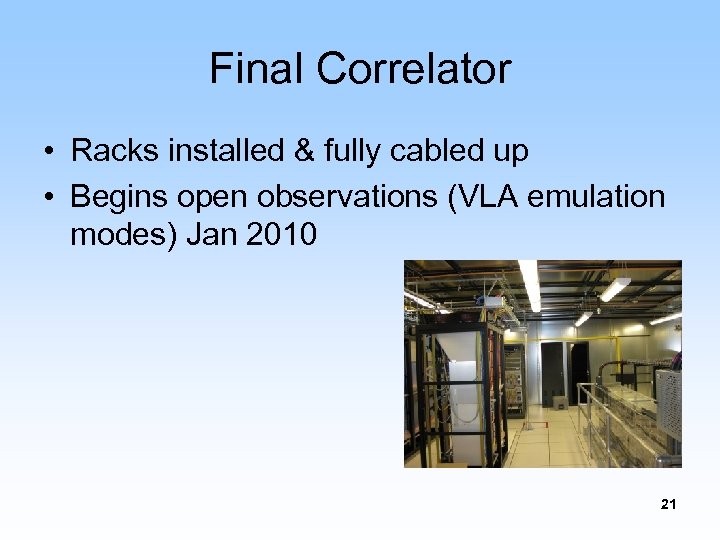
Final Correlator • Racks installed & fully cabled up • Begins open observations (VLA emulation modes) Jan 2010 21
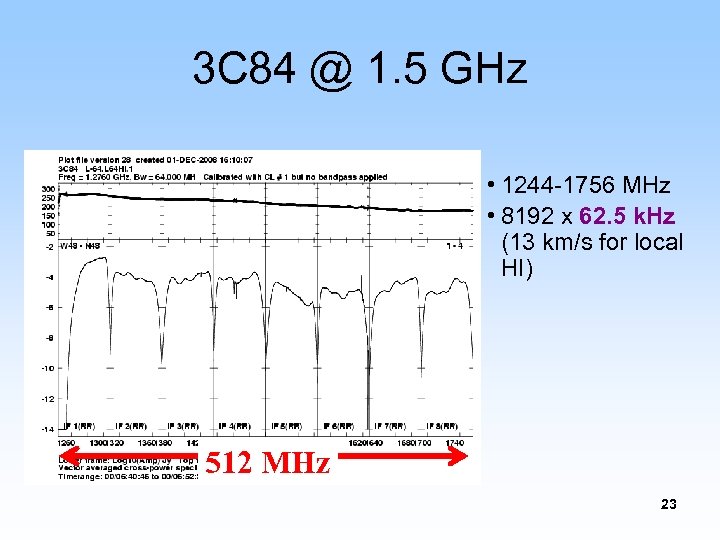
3 C 84 @ 1. 5 GHz • 1244 -1756 MHz • 8192 x 62. 5 k. Hz (13 km/s for local HI) 512 MHz 23
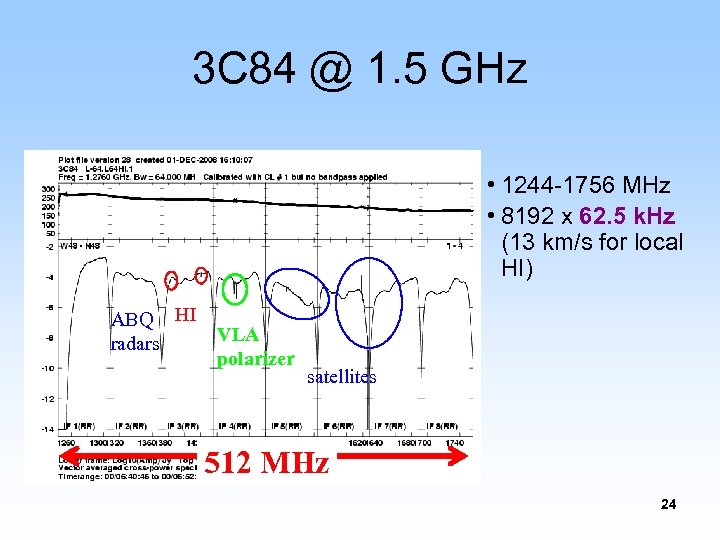
3 C 84 @ 1. 5 GHz • 1244 -1756 MHz • 8192 x 62. 5 k. Hz (13 km/s for local HI) ABQ HI radars VLA polarizer satellites 512 MHz 24
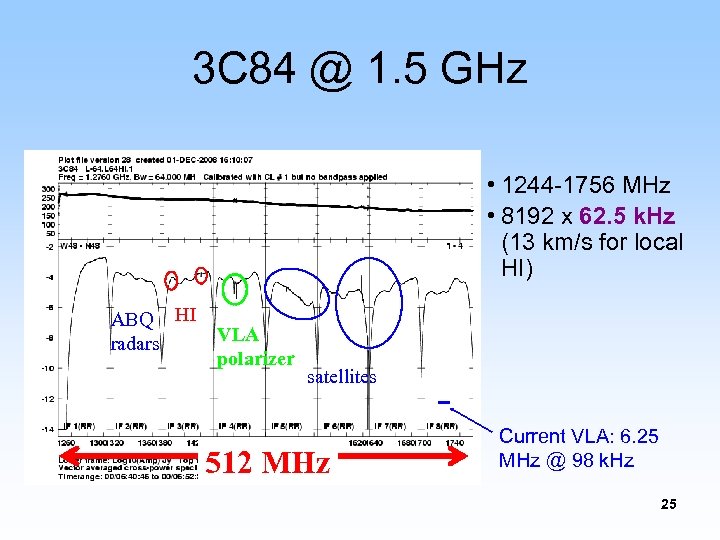
3 C 84 @ 1. 5 GHz • 1244 -1756 MHz • 8192 x 62. 5 k. Hz (13 km/s for local HI) ABQ HI radars VLA polarizer satellites 512 MHz Current VLA: 6. 25 MHz @ 98 k. Hz 25
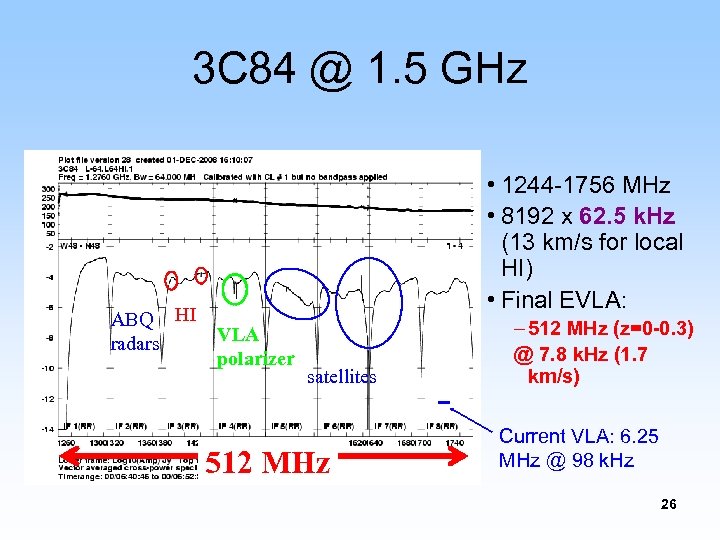
3 C 84 @ 1. 5 GHz ABQ HI radars • 1244 -1756 MHz • 8192 x 62. 5 k. Hz (13 km/s for local HI) • Final EVLA: VLA polarizer satellites 512 MHz – 512 MHz (z=0 -0. 3) @ 7. 8 k. Hz (1. 7 km/s) Current VLA: 6. 25 MHz @ 98 k. Hz 26
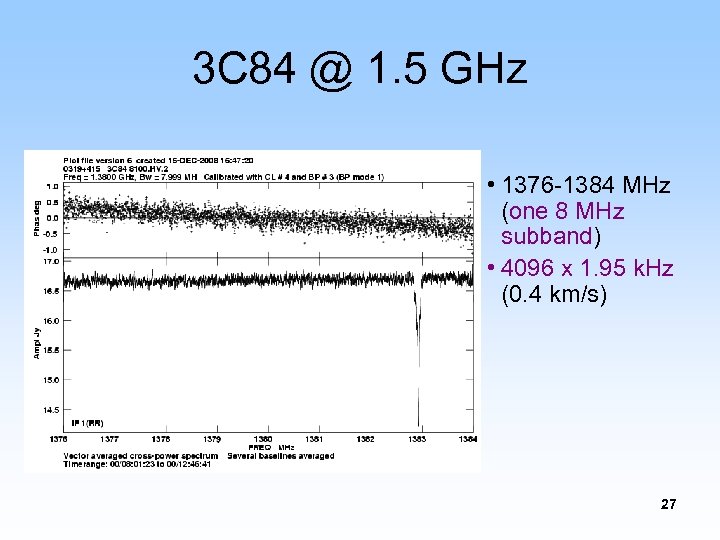
3 C 84 @ 1. 5 GHz • 1376 -1384 MHz (one 8 MHz subband) • 4096 x 1. 95 k. Hz (0. 4 km/s) 27
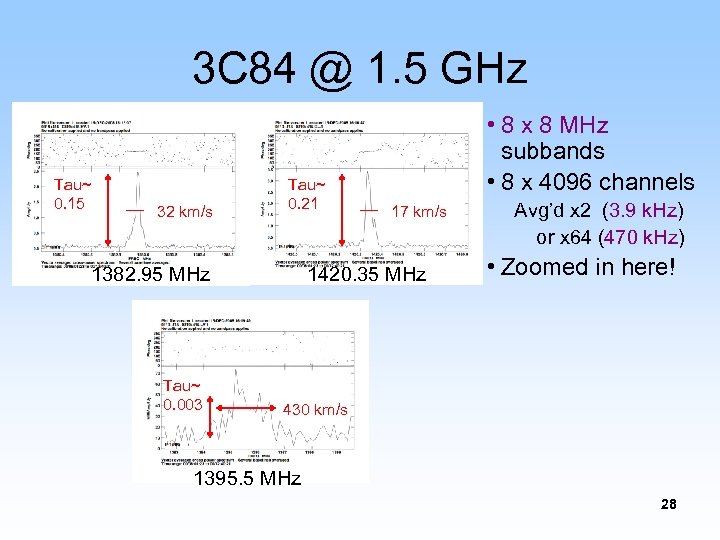
3 C 84 @ 1. 5 GHz Tau~ 0. 15 32 km/s Tau~ 0. 21 1382. 95 MHz Tau~ 0. 003 • 8 x 8 MHz subbands • 8 x 4096 channels 17 km/s 1420. 35 MHz Avg’d x 2 (3. 9 k. Hz) or x 64 (470 k. Hz) • Zoomed in here! 430 km/s 1395. 5 MHz 28
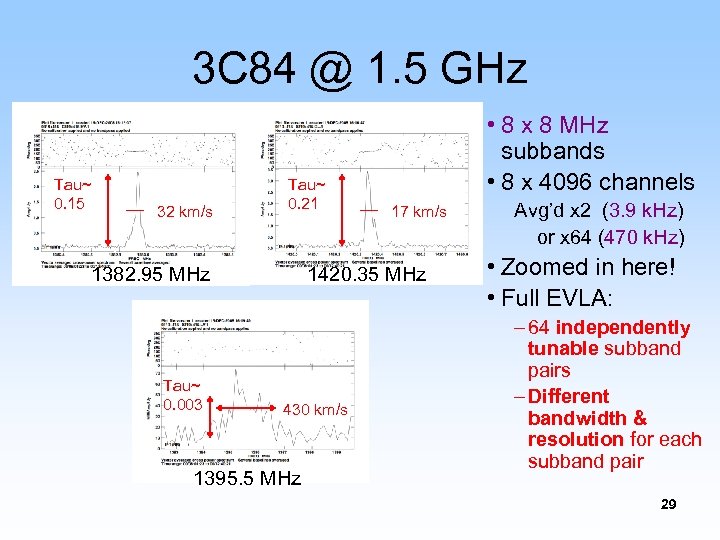
3 C 84 @ 1. 5 GHz Tau~ 0. 15 32 km/s Tau~ 0. 21 1382. 95 MHz Tau~ 0. 003 • 8 x 8 MHz subbands • 8 x 4096 channels 17 km/s 1420. 35 MHz 430 km/s 1395. 5 MHz Avg’d x 2 (3. 9 k. Hz) or x 64 (470 k. Hz) • Zoomed in here! • Full EVLA: – 64 independently tunable subband pairs – Different bandwidth & resolution for each subband pair 29
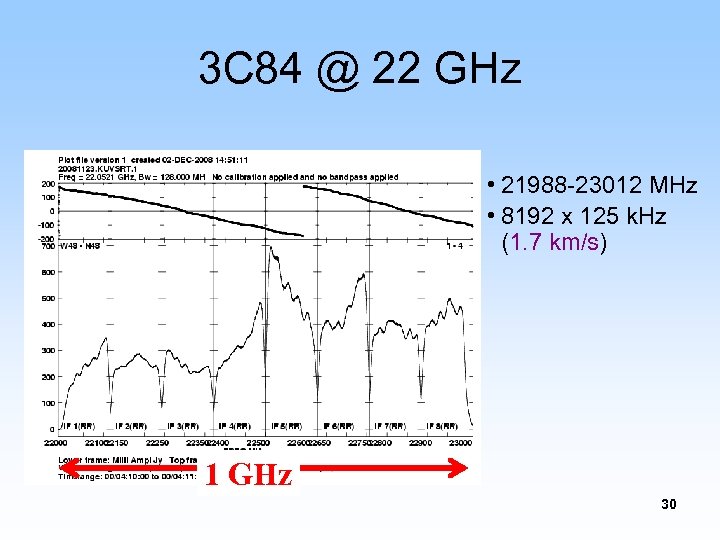
3 C 84 @ 22 GHz • 21988 -23012 MHz • 8192 x 125 k. Hz (1. 7 km/s) 1 GHz 30
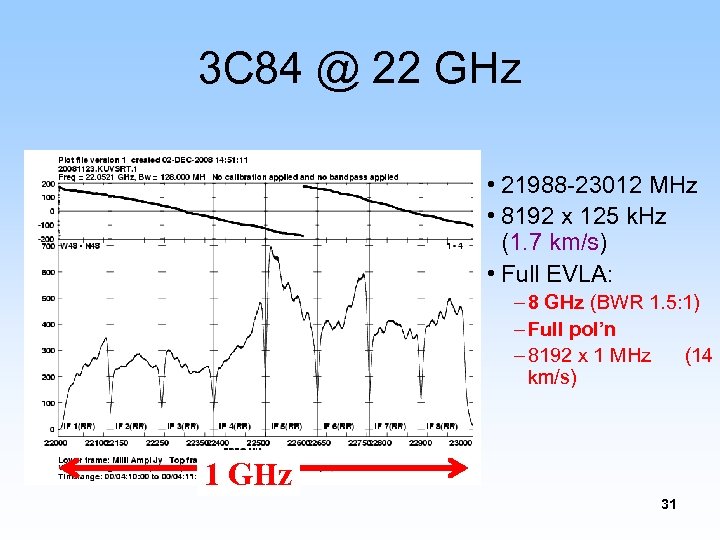
3 C 84 @ 22 GHz • 21988 -23012 MHz • 8192 x 125 k. Hz (1. 7 km/s) • Full EVLA: – 8 GHz (BWR 1. 5: 1) – Full pol’n – 8192 x 1 MHz (14 km/s) 1 GHz 31
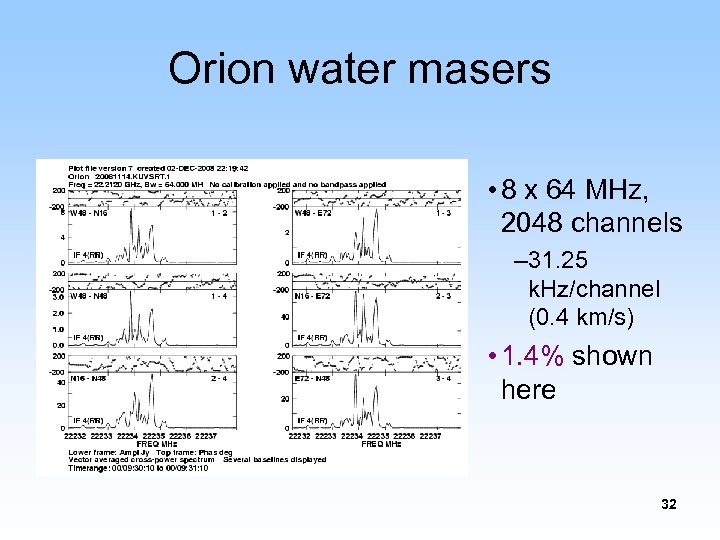
Orion water masers • 8 x 64 MHz, 2048 channels – 31. 25 k. Hz/channel (0. 4 km/s) • 1. 4% shown here 32
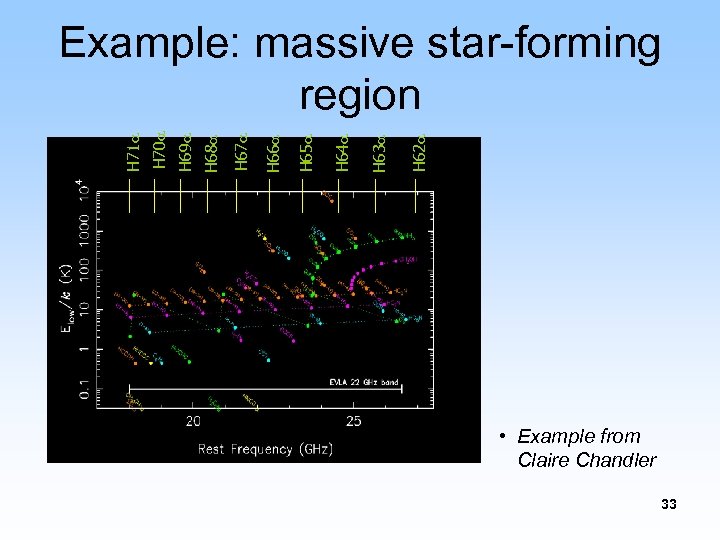
H 62 a H 63 a H 64 a H 65 a H 66 a H 67 a H 68 a H 69 a H 70 a H 71 a Example: massive star-forming region • Example from Claire Chandler 33
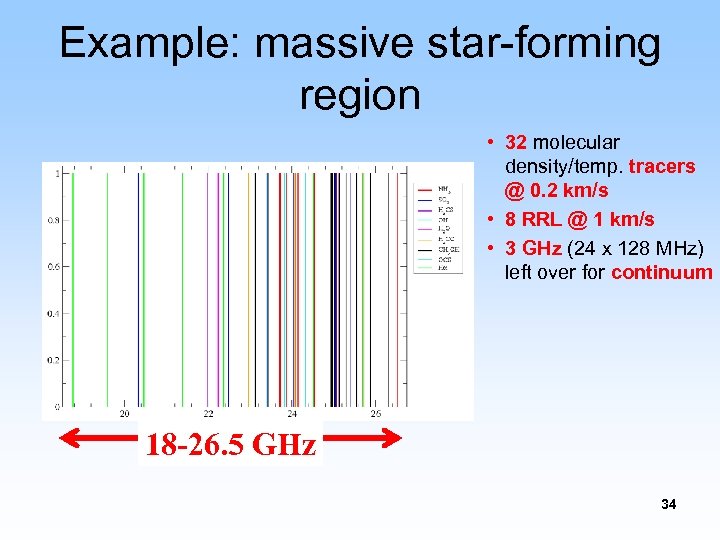
Example: massive star-forming region • 32 molecular density/temp. tracers @ 0. 2 km/s • 8 RRL @ 1 km/s • 3 GHz (24 x 128 MHz) left over for continuum 18 -26. 5 GHz 34
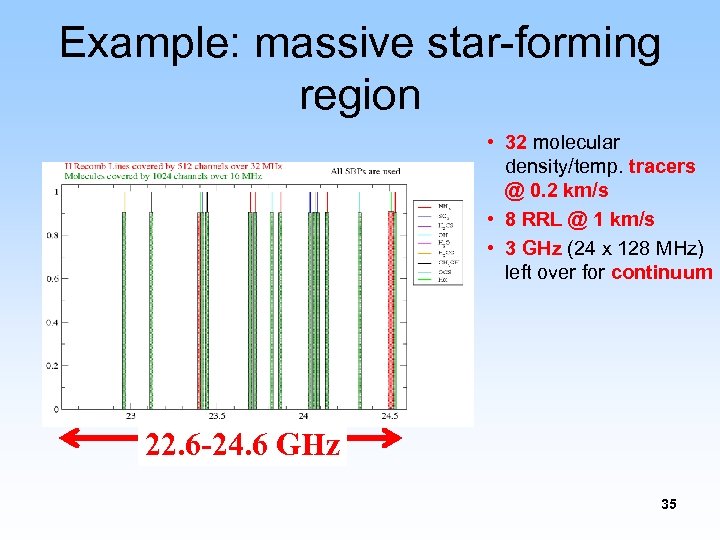
Example: massive star-forming region • 32 molecular density/temp. tracers @ 0. 2 km/s • 8 RRL @ 1 km/s • 3 GHz (24 x 128 MHz) left over for continuum 22. 6 -24. 6 GHz 35

Schedule 36
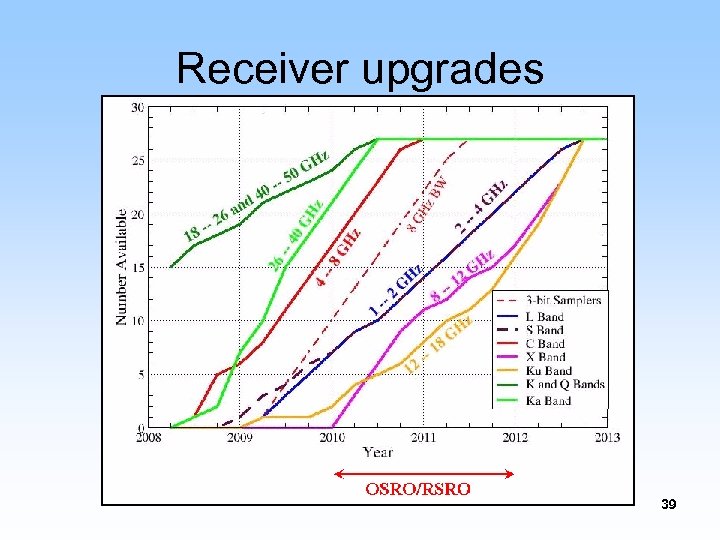
EVLA and You • Now – Expanded tuning ranges – 3 -antenna Prototype Correlator (more anon) • 2009 – Ka band – 10 -antenna WIDAR 0 – 3 -bit samplers 37
EVLA and You • Jan 2010 – Open Shared Risk Observing • Turn off VLA correlator • WIDAR in “VLA emulation mode” (2 x 128 MHz subband pairs) • Re-cycle configurations: Dvla-Dwidar-C-B-A (data rates!) – Resident Shared Risk Observing ? 38
Receiver upgrades 39
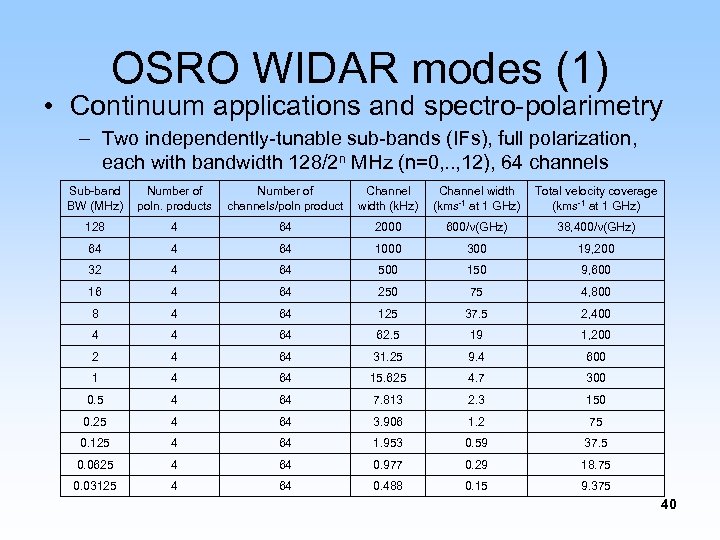
OSRO WIDAR modes (1) • Continuum applications and spectro-polarimetry – Two independently-tunable sub-bands (IFs), full polarization, each with bandwidth 128/2 n MHz (n=0, . . , 12), 64 channels Sub-band BW (MHz) Number of poln. products Number of channels/poln product Channel width (k. Hz) Channel width (kms-1 at 1 GHz) Total velocity coverage (kms-1 at 1 GHz) 128 4 64 2000 600/n(GHz) 38, 400/n(GHz) 64 4 64 1000 300 19, 200 32 4 64 500 150 9, 600 16 4 64 250 75 4, 800 8 4 64 125 37. 5 2, 400 4 4 64 62. 5 19 1, 200 2 4 64 31. 25 9. 4 600 1 4 64 15. 625 4. 7 300 0. 5 4 64 7. 813 2. 3 150 0. 25 4 64 3. 906 1. 2 75 0. 125 4 64 1. 953 0. 59 37. 5 0. 0625 4 64 0. 977 0. 29 18. 75 0. 03125 4 64 0. 488 0. 15 9. 375 40
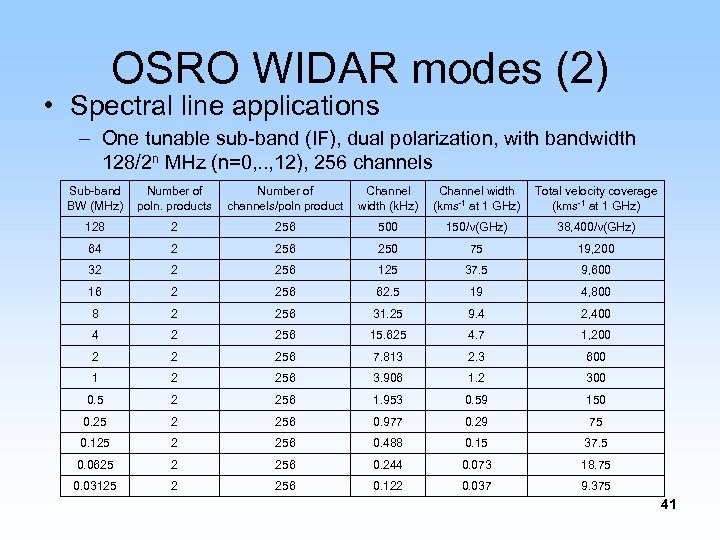
OSRO WIDAR modes (2) • Spectral line applications – One tunable sub-band (IF), dual polarization, with bandwidth 128/2 n MHz (n=0, . . , 12), 256 channels Sub-band BW (MHz) Number of poln. products Number of channels/poln product Channel width (k. Hz) Channel width (kms-1 at 1 GHz) Total velocity coverage (kms-1 at 1 GHz) 128 2 256 500 150/n(GHz) 38, 400/n(GHz) 64 2 256 250 75 19, 200 32 2 256 125 37. 5 9, 600 16 2 256 62. 5 19 4, 800 8 2 256 31. 25 9. 4 2, 400 4 2 256 15. 625 4. 7 1, 200 2 2 256 7. 813 2. 3 600 1 2 256 3. 906 1. 2 300 0. 5 2 256 1. 953 0. 59 150 0. 25 2 256 0. 977 0. 29 75 0. 125 2 256 0. 488 0. 15 37. 5 0. 0625 2 256 0. 244 0. 073 18. 75 0. 03125 2 256 0. 122 0. 037 9. 375 41
Having fun with WIDAR 42
Demonstration Observations • What can we do with the PTC that will get the whole astronomical community fired up? 43
Demonstration Observations • Prototype correlator – 3 antennas – 1 GHz, 1 pol’n, 8192 channels – 0. 1 -1 sec dumps (possibly 10 msec…) – Short observations -- up to 10 hours • See handout for detailed specifications 44
Demonstration Observations • Write up a proposal (a few paragraphs) by tomorrow (Wednesday) morning – Put it in the box (appearing soon, just outside the auditorium) – Or e-mail to jvangork@astro. columbia. edu or mrupen@nrao. edu • SOC will review these (with technical advice as needed) and pick one (or more!) to be observed – No guarantees, but we’ll aim at the end of the year – Raw & processed data put up on the conference web site (note VLA archive!) – Correlator tee shirt to the winner, if I get around to designing one – Winner(s) announced by the end of the meeting • WIDAR 0 (10 antenna, 256 -640 MHz, full pol’n) ideas also welcome 45
Скачать презентацию National Radio Astronomy Observatory Galaxies through Cosmic Time
c25f01cc8870e883e14f26a2dad21d7d.ppt