 Скачать презентацию National Institute of Biomedical Imaging and Bioengineering An
fdc056ba1193d88fe900f28c6ae7186b.ppt
- Количество слайдов: 31



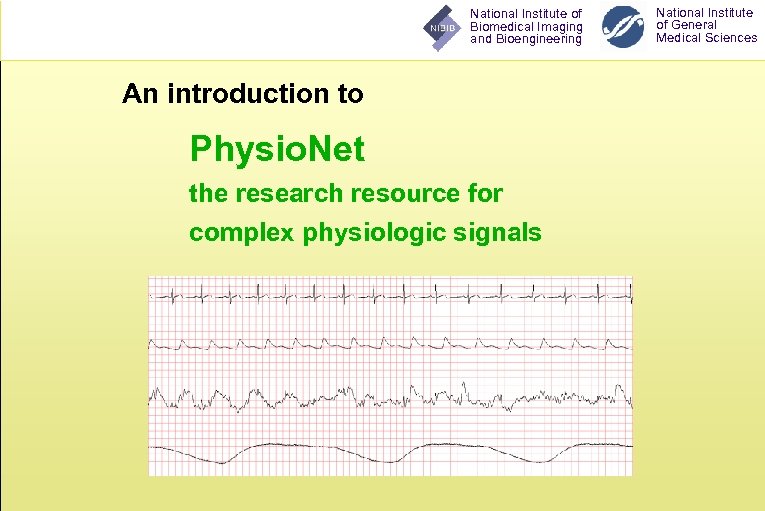
National Institute of Biomedical Imaging and Bioengineering An introduction to Physio. Net the research resource for complex physiologic signals National Institute of General Medical Sciences
What is Physio. Net? A unique web-based resource funded by NIH, intended to support current research and stimulate new investigations in the study of complex biomedical and physiologic signals. Three closely interdependent components: Data repository (Physio. Bank) ( Library of related software (Physio. Toolkit) ( Free-access website (physionet. org) (
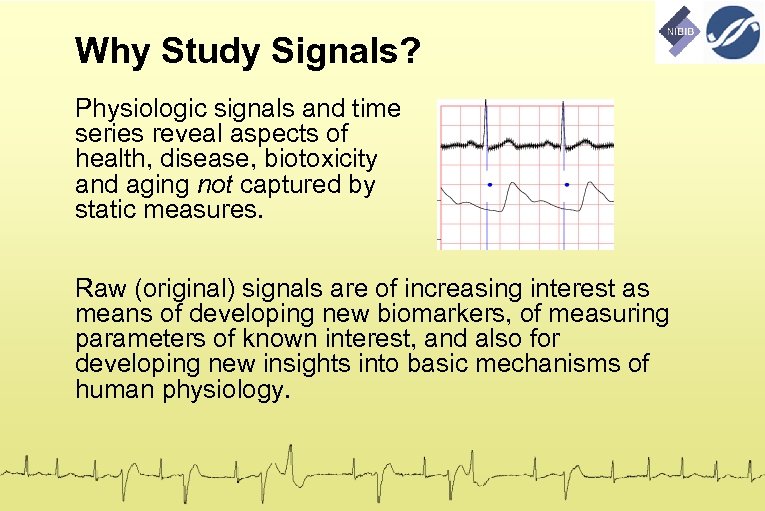
Why Study Signals? Physiologic signals and time series reveal aspects of health, disease, biotoxicity and aging not captured by static measures. Raw (original) signals are of increasing interest as means of developing new biomarkers, of measuring parameters of known interest, and also for developing new insights into basic mechanisms of human physiology.
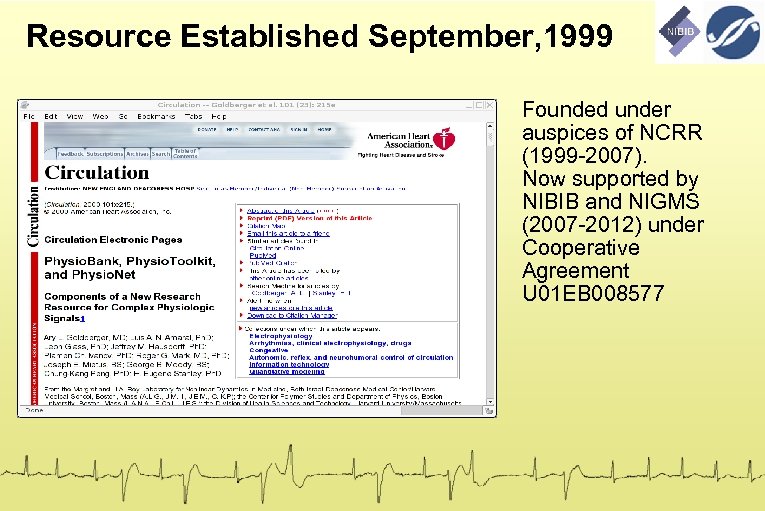
Resource Established September, 1999 Founded under auspices of NCRR (1999 -2007). Now supported by NIBIB and NIGMS (2007 -2012) under Cooperative Agreement U 01 EB 008577
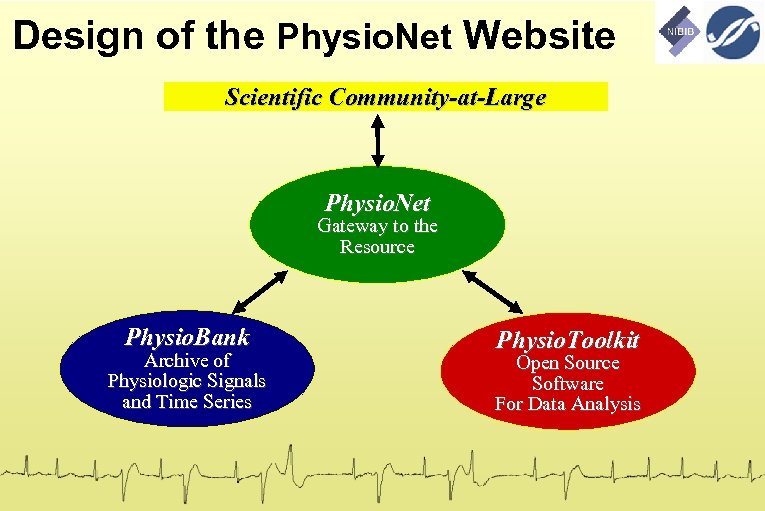
Design of the Physio. Net Website Scientific Community-at-Large Physio. Net Gateway to the Resource Physio. Bank Archive of Physiologic Signals and Time Series Physio. Toolkit Open Source Software For Data Analysis
What is Physio. Bank? Physio. Bank currently includes: >40 collections of cardiopulmonary, neural, and other biomedical signals from healthy subjects and patients with a variety of conditions with major public health implications, including sudden cardiac death, congestive heart failure, epilepsy, gait disorders, sleep apnea, and aging.
Where Do the Data Collections Come From? Physio. Net research team members Other university-based research teams Other hospital-based research teams Industry
Where Do the Data Collections Come From? Physio. Net research team members Other university-based research teams Other hospital-based research teams Industry You! (email webmaster@physionet. org)
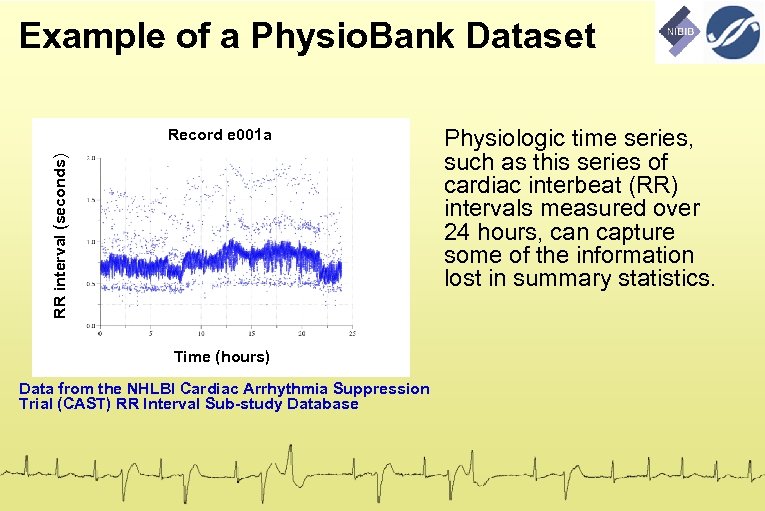
Example of a Physio. Bank Dataset RR interval (seconds) Record e 001 a Time (hours) Data from the NHLBI Cardiac Arrhythmia Suppression Trial (CAST) RR Interval Sub-study Database Physiologic time series, such as this series of cardiac interbeat (RR) intervals measured over 24 hours, can capture some of the information lost in summary statistics.
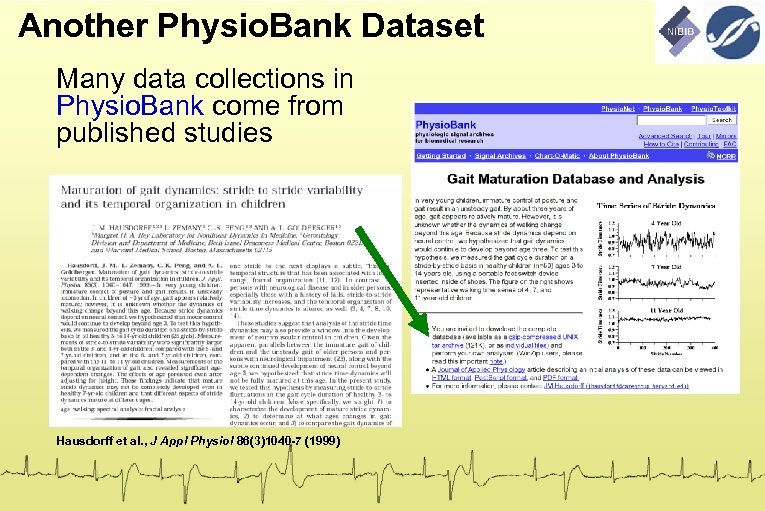
Another Physio. Bank Dataset Many data collections in Physio. Bank come from published studies Hausdorff et al. , J Appl Physiol 86(3)1040 -7 (1999)
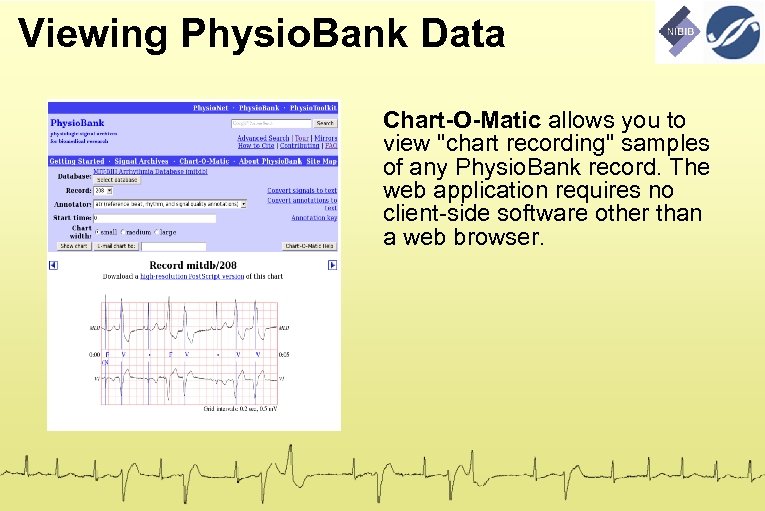
Viewing Physio. Bank Data Chart-O-Matic allows you to view "chart recording" samples of any Physio. Bank record. The web application requires no client-side software other than a web browser.
What Can You Do with Physio. Bank Data? Download for exploration and research Develop new signal processing algorithms Evaluate algorithms using ‘standard’ data Test physiologic models Develop/test/refine new biomarkers Create “real-world” classroom challenges at undergraduate, graduate and post-graduate levels
What is Physio. Toolkit? Open-source software for physiologic signal processing and analysis: Detection of physiologically significant events using both classical techniques and novel methods Interactive display & characterization of signals; creation of new databases Physiologic signal modelling and for quantitative evaluation and comparison of analysis methods
Where Does the Open-Source Software Come From? Physio. Net research team members Contributions from individuals and teams around the world Physio. Net/Computers in Cardiology annual Challenges
Where Does the Open-Source Software Come From? Physio. Net research team members Contributions from individuals and teams around the world Physio. Net/Computers in Cardiology annual Challenges You! (email webmaster@physionet. org)
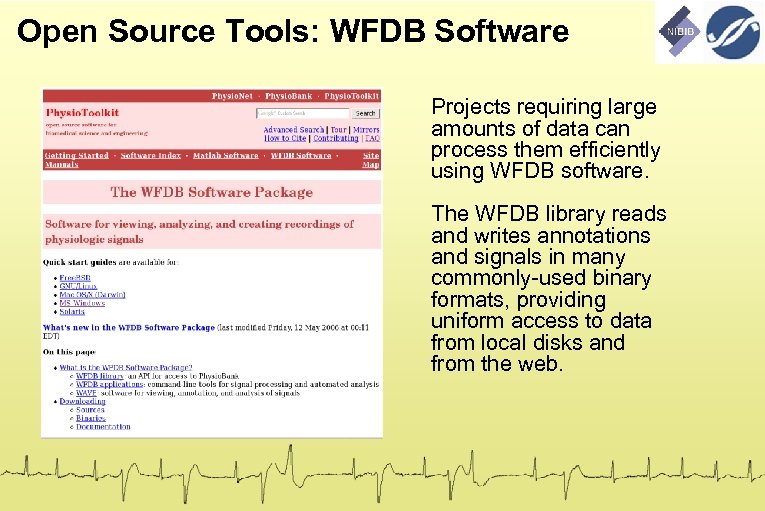
Open Source Tools: WFDB Software Projects requiring large amounts of data can process them efficiently using WFDB software. The WFDB library reads and writes annotations and signals in many commonly-used binary formats, providing uniform access to data from local disks and from the web.
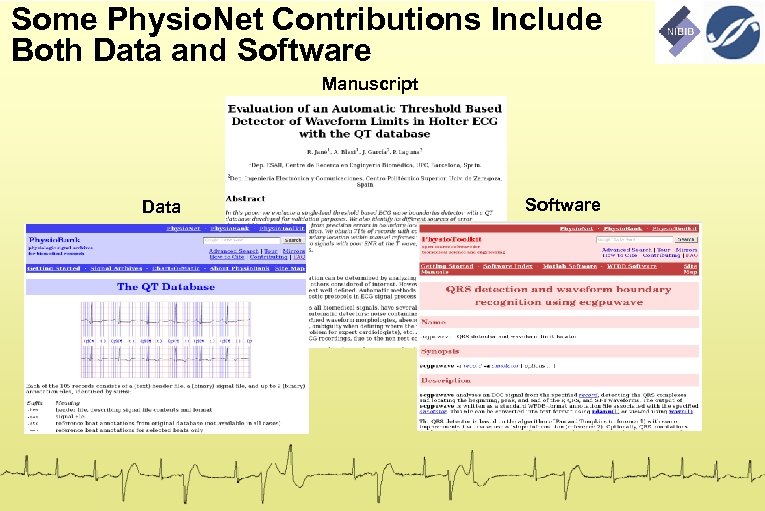
Some Physio. Net Contributions Include Both Data and Software Manuscript Data Software
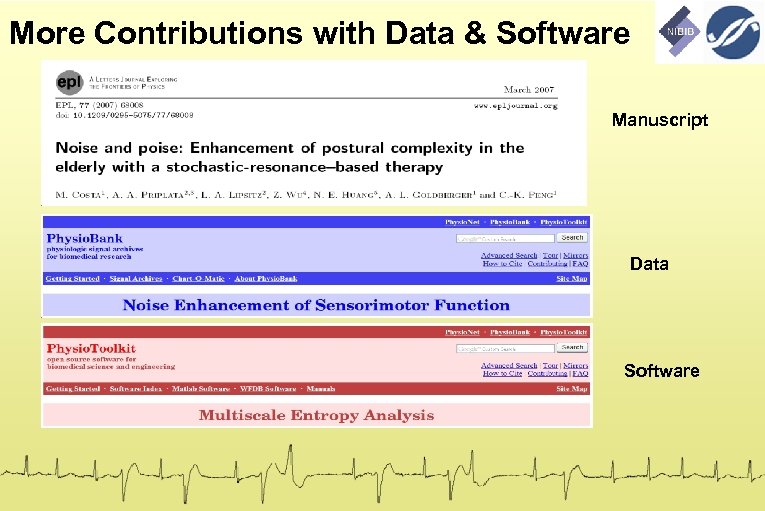
More Contributions with Data & Software Manuscript Data Software
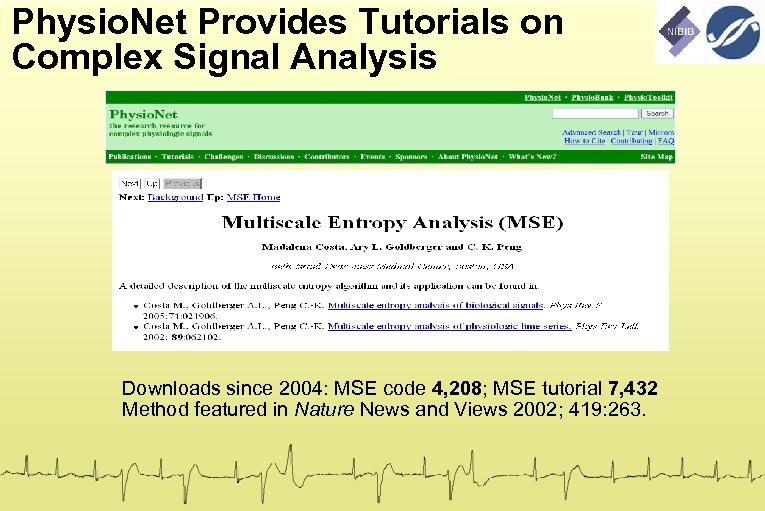
Physio. Net Provides Tutorials on Complex Signal Analysis Downloads since 2004: MSE code 4, 208; MSE tutorial 7, 432 Method featured in Nature News and Views 2002; 419: 263.
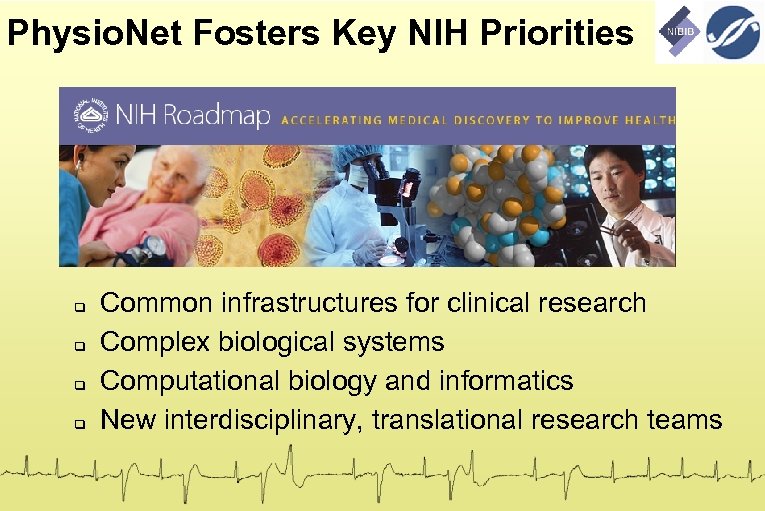
Physio. Net Fosters Key NIH Priorities Common infrastructures for clinical research Complex biological systems Computational biology and informatics New interdisciplinary, translational research teams
Who Uses Physio. Net / Where? >30, 000 researchers, students, manufacturers, educators, each month From all 50 US states and DC Users from >100 other countries
Research by Physio. Net Team Three Broad Goals: Relating complex dynamics of physiologic time series to underlying mechanisms in health, disease, and aging Developing diagnostic and prognostic biomarkers of complex dynamics that quantify control system functions and pathologies Detecting and forecasting major events, such as seizures, sudden cardiac arrest, falls, hemodynamic collapse, and apneas, and generating hypotheses about their mechanisms
Assessing Physio. Net’s Impact Extensive publications by key personnel Extensive publications by others based on Resource (>400) Contributions to basic mechanisms/clinical medicine Technology transfer
Physio. Net Impact (continued) International collaborations Incubator for NIH grant development & support NIH-wide influence: model for data/software sharing & multidisciplinary translational research Educational support: Physio. Net in the Classroom
Physio. Net in the Classroom Increasing use of Physio. Net in undergraduate and graduate level courses in bioengineering and other disciplines Example: “Gait Module for Freshman-Level Introductory Course in Biomedical Engineering”* Part of challenge-based approach developed by University of Memphis in partnership with Vanderbilt-Northwestern-Texas. Harvard/MIT Engineering Research Center (Va. NTH ERC) *See: Proc 2005 Am Soc Eng Education Ann Conf
Unofficial Metric of Physio. Net’s Use
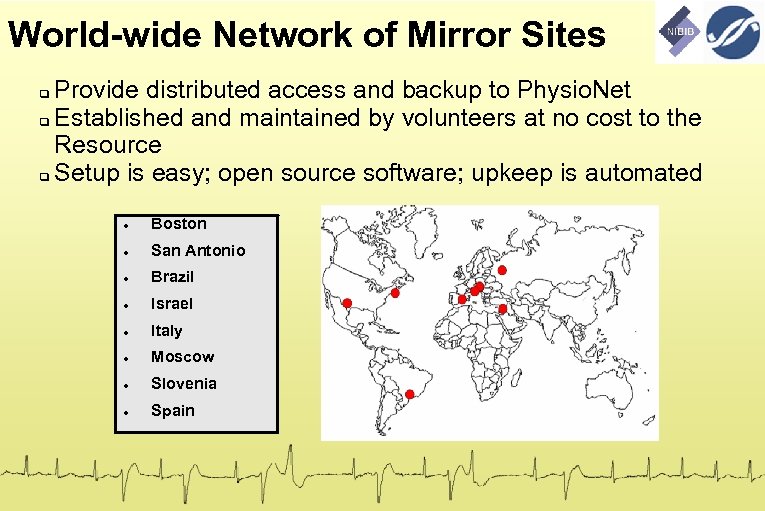
World-wide Network of Mirror Sites Provide distributed access and backup to Physio. Net Established and maintained by volunteers at no cost to the Resource Setup is easy; open source software; upkeep is automated Boston San Antonio Brazil Israel Italy Moscow Slovenia Spain
Another Physio. Net Innovation: International Time Series Challenges With the annual Computers in Cardiology conference, Physio. Net hosts challenges, inviting participants to tackle important problems: Detecting Sleep Apnea from the ECG Predicting Paroxysmal Atrial Fibrillation RR Interval Time Series Modeling Distinguishing Ischemic from Non-Ischemic ST Changes Spontaneous Termination of Atrial Fibrillation QT Interval Measurement ECG Imaging of Myocardial Infarction
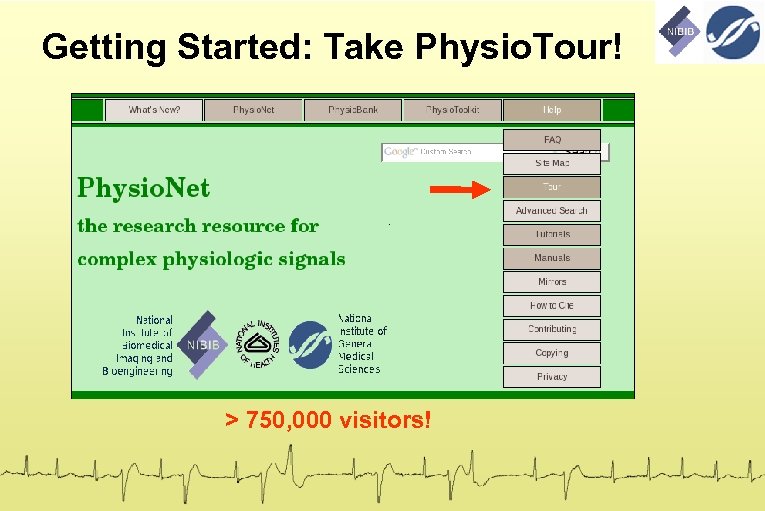
Getting Started: Take Physio. Tour! > 750, 000 visitors!
Physio. Net: Looking Ahead New database and software additions New infrastructures for database development and data sharing (Physio. Net Works) New Physio. Net/Computers in Cardiology Challenge Multiscale analysis & modelling Development of new dynamical biomarkers
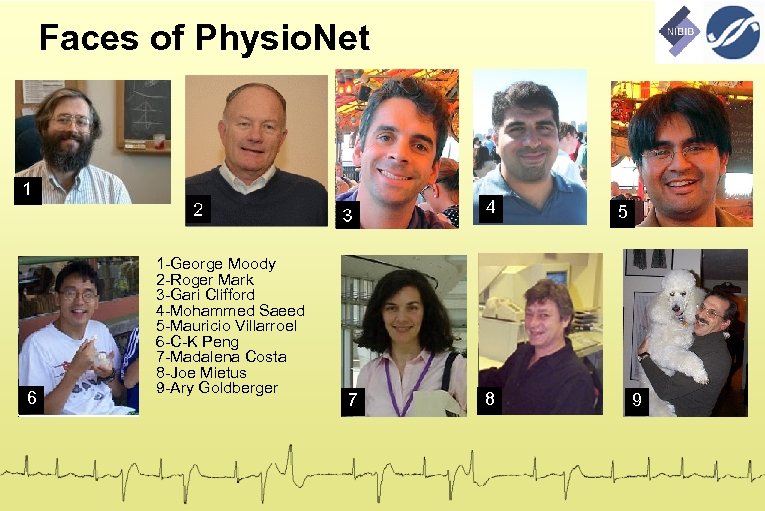
Faces of Physio. Net 1 6 4 1 -George Moody 2 -Roger Mark 3 -Gari Clifford 4 -Mohammed Saeed 5 -Mauricio Villarroel 6 -C-K Peng 7 -Madalena Costa 8 -Joe Mietus 9 -Ary Goldberger 7 8 5 9
Скачать презентацию National Institute of Biomedical Imaging and Bioengineering An
fdc056ba1193d88fe900f28c6ae7186b.ppt