


 Скачать презентацию National Initiative for the Care of the Elderly
03bb51d1c9593f860560ef667a111ed0.ppt
- Количество слайдов: 25
 National Initiative for the Care of the Elderly Initiative nationale pour le soin des personnes âgées Anthony P. Lombardo, MA, Ph. D(c) Network Manager Long Term Care Association of Manitoba October 2008
 NICE: Context & Background n Unprecedented growth in number and proportion of elderly in Canada ¨ 2005, 4. 2 million seniors, 13. 2% of population 1 ¨ 2036, 9. 8 million seniors; 24. 5% of population 1 ¨ Increasingly multicultural older population 2 n n n Shortage of professionals and students specializing in the care of the elderly Gaps in interdisciplinary care of the elderly Gaps in evidence-based care of the elderly 1. Martin Turcotte and Grant Schellenberg, A Portrait of Seniors in Canada: 2006 , Ottawa, ON: Statistics Canada, 2007, p. 12. 2. Ibid. , p. 23; A. Bélanger and É. Caron Malenfant, Population Projections of Visible Minority Groups, Canada, Provinces and Regions: 2001 – 2017 , Ottawa, ON: Statistics Canada, 2005.
 How many Geriatricians? n 189 geriatricians in Canada – CMA 2003 n 1. 25 geriatricians per 10, 000 for elderly n 2000/01 only 7 physicians entered postgraduate training for all of Canada n 512 – 607 required geriatricians
 How Many Nurses? n n n There are 251, 675 nurses in Canada 26, 619 work in geriatric care (10 percent) 75. 9 percent work in long term care 11 percent in hospitals Ave. age 47. 8 years 48. 6 percent are eligible for retirement - Canadian Nurses Association, 2006
 How Many Social Workers? Who knows? n 4 to 5 percent of registered members in gerontology n Two MSW degrees in gerontology in Canada n As of last year, graduate about 15 students a year n
 NICE: A short history… n n n Funded through Networks of Centres of Excellence – New Initiative Grant One of only 5 “New Initiative” networks funded Incorporated non-profit, 2006 Housed at Institute for Life Course and Aging, University of Toronto One of only 3 networks awarded International Partnership Initiative grant (2007) Over 200 members ¨ Diverse disciplines and professions
 NICE: Network Goals n n Networking and Knowledge Transfer Disseminate evidence-based research across university – community continuum Foster interdisciplinary teams in the care of the elderly Improve geriatric and gerontological curricula and enrolment ¨ Address n training shortages in the care of the elderly Effect positive policy changes
 NICE Structure n Central Committees n Knowledge Identification ¨ Program Development Policy, Planning and Protocol ¨ ICCE Advisory ¨ n n n ¨ n Researcher Training Curriculum Development Professional Development Communications Advisory Committees Business Advisory ¨ Seniors Advisory ¨ New Committees ¨ n Theme Teams ¨ ¨ ¨ Caregiving Dementia Elder Abuse End-of-Life Mental Health
 Committee Progress n Researcher Training ¨ NICE n Curriculum Development ¨ Core n Student Mentorship Program competencies and accreditation Knowledge Identification ¨ Web resources on evidence-based practice and teaching tools
 NICE “Theme Teams” n Action towards interdisciplinary care: Forging unique links ¨ Interdisciplinary teams n Medicine, nursing, social work, and others ¨ Bridging n n n research and practice Interdisciplinary environments for students Seniors’ involvement in the teams Develop user-friendly tools using evidencebased research, translate into practice
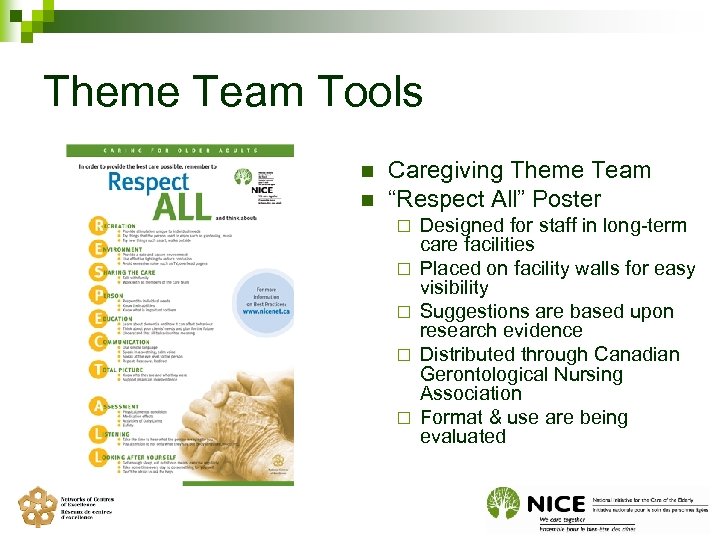 Theme Team Tools n n Caregiving Theme Team “Respect All” Poster ¨ ¨ ¨ Designed for staff in long-term care facilities Placed on facility walls for easy visibility Suggestions are based upon research evidence Distributed through Canadian Gerontological Nursing Association Format & use are being evaluated
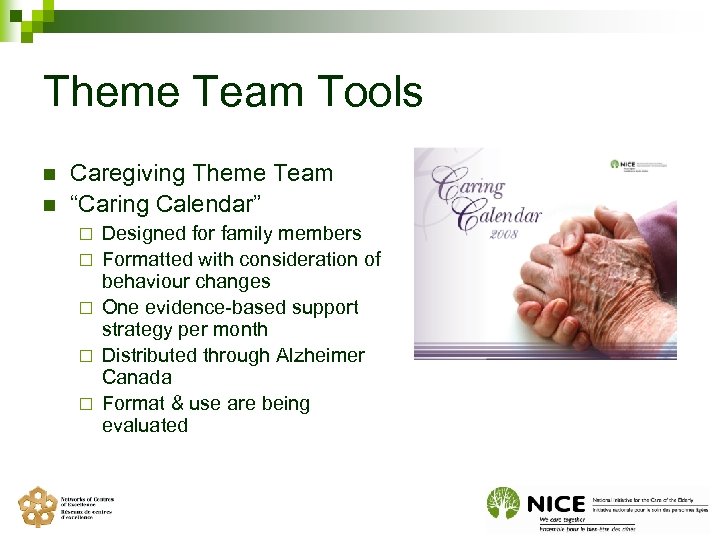 Theme Team Tools n n Caregiving Theme Team “Caring Calendar” ¨ ¨ ¨ Designed for family members Formatted with consideration of behaviour changes One evidence-based support strategy per month Distributed through Alzheimer Canada Format & use are being evaluated
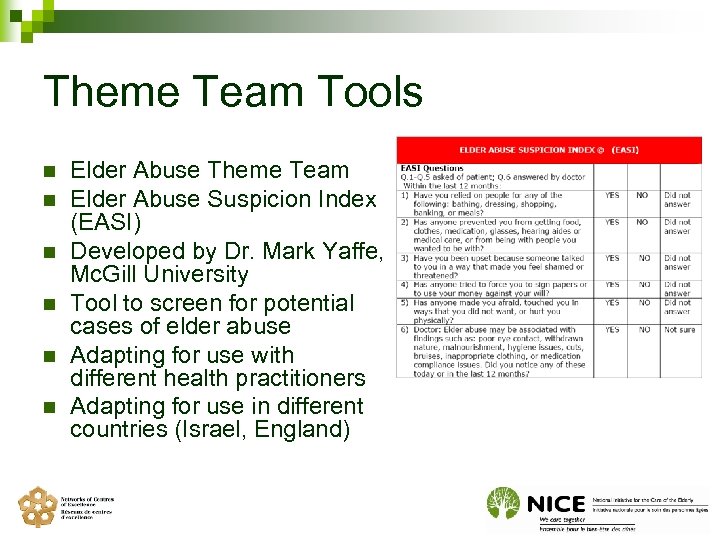 Theme Team Tools n n n Elder Abuse Theme Team Elder Abuse Suspicion Index (EASI) Developed by Dr. Mark Yaffe, Mc. Gill University Tool to screen for potential cases of elder abuse Adapting for use with different health practitioners Adapting for use in different countries (Israel, England)
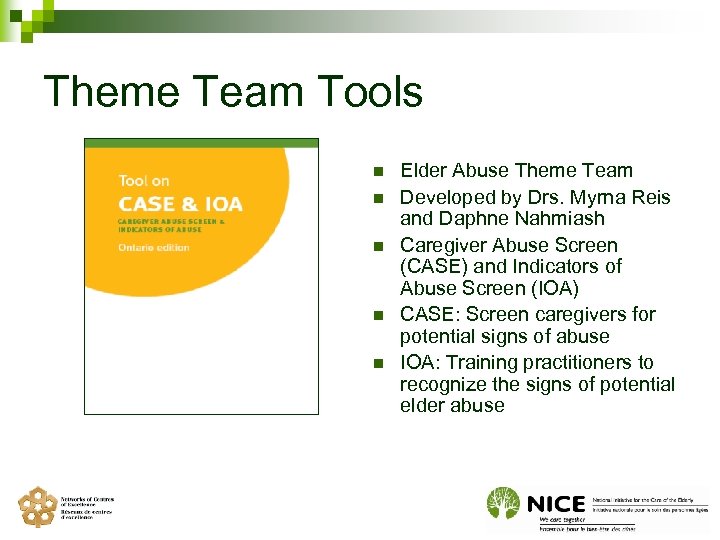 Theme Team Tools n n n Elder Abuse Theme Team Developed by Drs. Myrna Reis and Daphne Nahmiash Caregiver Abuse Screen (CASE) and Indicators of Abuse Screen (IOA) CASE: Screen caregivers for potential signs of abuse IOA: Training practitioners to recognize the signs of potential elder abuse
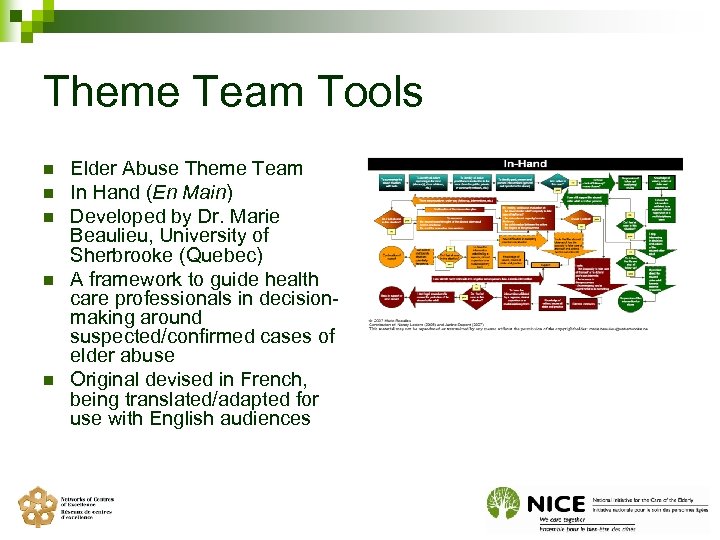 Theme Team Tools n n n Elder Abuse Theme Team In Hand (En Main) Developed by Dr. Marie Beaulieu, University of Sherbrooke (Quebec) A framework to guide health care professionals in decisionmaking around suspected/confirmed cases of elder abuse Original devised in French, being translated/adapted for use with English audiences
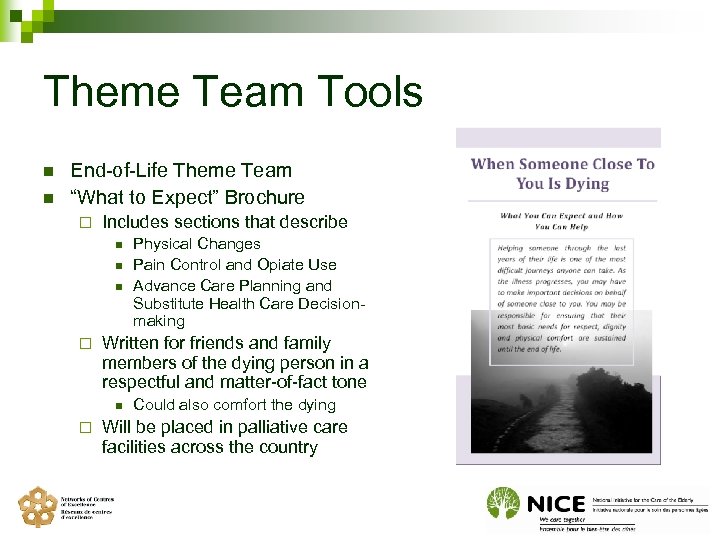 Theme Team Tools n n End-of-Life Theme Team “What to Expect” Brochure ¨ Includes sections that describe n n n ¨ Written for friends and family members of the dying person in a respectful and matter-of-fact tone n ¨ Physical Changes Pain Control and Opiate Use Advance Care Planning and Substitute Health Care Decisionmaking Could also comfort the dying Will be placed in palliative care facilities across the country
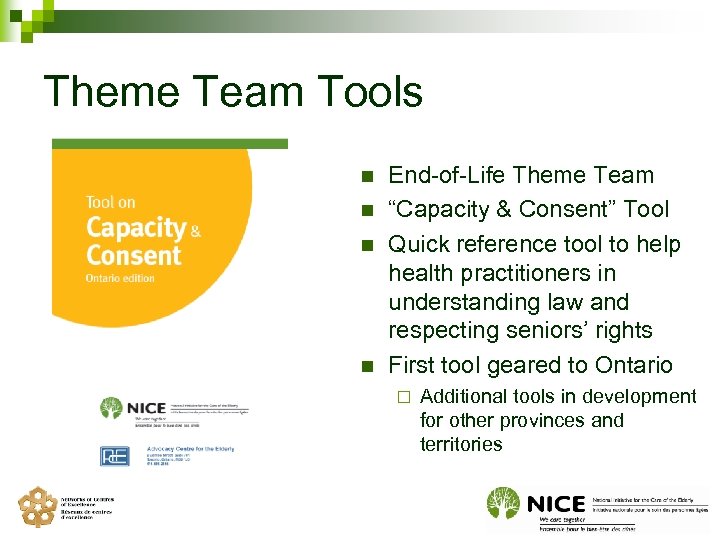 Theme Team Tools n n End-of-Life Theme Team “Capacity & Consent” Tool Quick reference tool to help health practitioners in understanding law and respecting seniors’ rights First tool geared to Ontario ¨ Additional tools in development for other provinces and territories
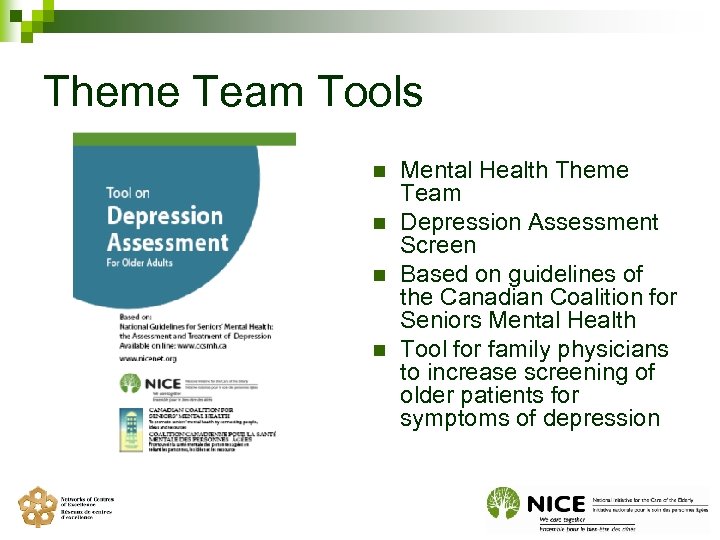 Theme Team Tools n n Mental Health Theme Team Depression Assessment Screen Based on guidelines of the Canadian Coalition for Seniors Mental Health Tool for family physicians to increase screening of older patients for symptoms of depression
 Tools in Process n Dementia Theme Team ¨ Assessment and diagnosis tool for family practitioners ¨ Based on Guidelines of the Registered Nurses’ Association of Ontario
 International Collaboration for the Care of the Elderly (ICCE) n n Only NCE-NI to be awarded additional funding through International Partnership Initiative of NCE and International Development and Research Centre (IDRC) New partnerships with researchers and organizations in: ¨ Australia ¨ China ¨ England ¨ Germany ¨ India ¨ Israel ¨ Scotland ¨ South Africa ¨ Switzerland
 ICCE: Context and Goals n Global aging ¨ n Canada’s growing older population ¨ n Collaborate with countries with longer histories of meeting the challenges of an aging population Canada’s growing ethnically-diverse older population ¨ n Economy of scale in world-wide knowledge on the care of the elderly Collaborate with countries with experience in the cultural issues of aging Critical shortage of geriatric/gerontological professionals ¨ Forum for interdisciplinary collaboration and training
 ICCE: Partner Responsibilities n Tool Development ¨ Make n tools sensitive/relevant to home regions Knowledge Transfer ¨ Participate in NICE events ¨ Coordinate and conduct KT events in home region n Student Involvement
 Research Funding Received n Homeless to Home: A Knowledge Exchange ¨ Homelessness n Partnering Initiative, HRSDC Older Women and Domestic Abuse ¨ Status of Women Canada
 Research Funding Under Review n Recruiting Students into the Field of Aging ¨ Health n Human Resources Strategy, Health Canada Intergenerational Outreach to Improve Recruitment ¨ New Horizons for Seniors Community Participation and Leadership, HRSDC n Improving Older Women’s Financial Literacy ¨ Status n of Women Canada Palliative Care for Older Adults in Institutional Settings ¨ CIHR: Knowledge Synthesis
 NICE Knowledge Transfer n Website ¨ www. nicenet. ca n NICENews ¨ Available n n online Workshops and Symposia Annual NICE Knowledge Exchange ¨ June 5 – 6, 2008: Toronto, Ontario ¨ www. niceke. ca