 Скачать презентацию National Digital Library of Latvia Letonica Andris Vilks
d6868e15e2e255161050facc56bff038.ppt
- Количество слайдов: 30



National Digital Library of Latvia Letonica Andris Vilks, Director of the National Library of Latvia
Google library • Mass digitisation of significant library collections in the USA & Great Britain • Digitisation of books by contemporary publishers
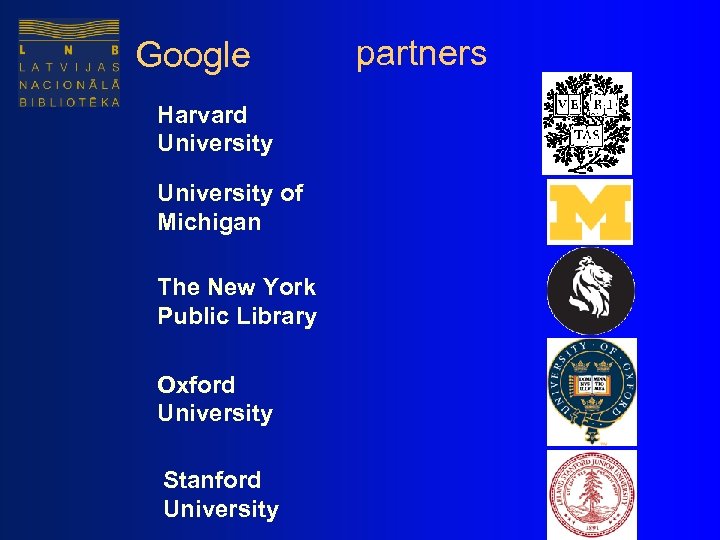
partners Google Harvard University of Michigan The New York Public Library Oxford University Stanford University
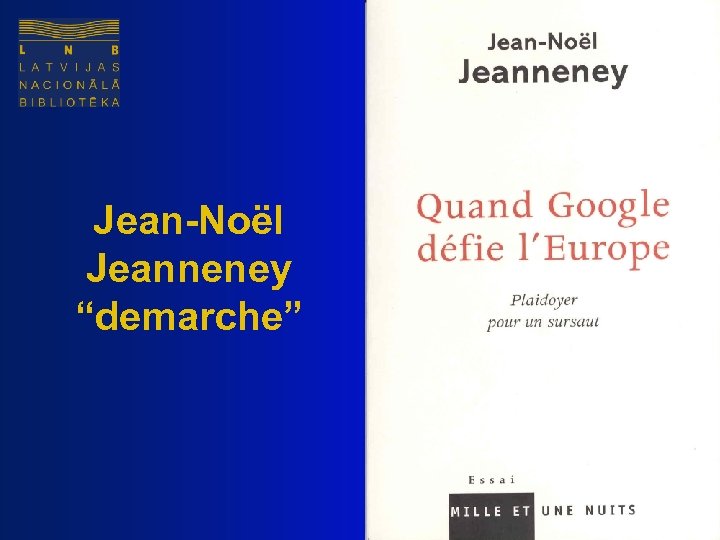
Jean-Noël Jeanneney “demarche”
Agreement made by 6 presidents • Jacques CHIRAC - Président de la République Française • Aleksander KWASNIEWSKI - Président de la République de Pologne • Gerhard SCHROEDER - Chancelier de la République Fédérale d’Allemagne • Silvio BERLUSCONI - Président du Conseil italien Gouvernement • José Luis Rodriguez ZAPATERO - Premier Ministre de Espagnol • Ferenc GYURCSANY - Président du Gouvernement la République de Hongrie
i 2010 – 3 pillars i 2010 is built on three pillars: - firstly, a common information space, creating a modern, market-oriented regulatory framework for the converging digital economy; and stimulating the availability of digital content, - secondly, investment in research and ICT innovation, - and thirdly, focus on a more inclusive European Information Society propose three flagship initiatives: caring for people in an ageing society, the intelligent car and digital libraries - the topic which brings us together today.
i 2010: DIGITAL LIBRARIES • The digital libraries initiative aims at making European information resources easier and more interesting to use in an online environment. It builds on Europe’s rich heritage combining multicultural and multilingual environments with technological advances and new business models. • Digital libraries are organised collections of digital content made available to the public. They can consist of material that has been digitised, such as digital copies of books and other ‘physical’ material from libraries and archives. Alternatively, they can be based on information originally produced in digital format. This is increasingly the case in the area of scientific information, where digital publications and enormous quantities of information are stored in digital repositories. Both aspects – digitised and born digital material – are covered by this initiative.
Three main strands will be followed to realise the potential of digital technologies for widespread and easy access to information: • Online accessibility, a precondition for maximising the benefits that citizens, researchers and companies can draw from the information. • Digitisation of analogue collections for their wider use in the information society. • Preservation and storage to ensure that future generations can access the digital material and to prevent precious content being lost.
On November 14, 2005 Minister of Culture of the Republic of Latvia Helēna Demakova participated in the discussion of EU culture ministers on European Digital Library
Latvia expressed support to the necessity of European Digital Library, in such a way: • Fostering the dissemination and accessibility to European and Latvian cultural heritage, • ensuring cultural versatility, • facilitating the development and dissemination of minor languages, • overcoming the distance between the available culture heritage and citizens, allowing the disabled persons access to culture heritage who are not physically able to get access to library resources, • fostering the growth of culture awareness, • the development of education, as well as long-life education and research, • introduction of new technologies and formation of united culture space in a technologically development environment, • awareness of culture heritage from the European point of view.
COMMISSION DECISION of 27 February 2006 setting up a High Level Expert Group on Digital Libraries Task • The Commission may consult the group on any matter relating to the implementation of the digital libraries initiative as set out in the Communication. • The group’s task is to: — advise the Commission on how to best address the organisational, legal and technical challenges at European level; — contribute to a shared strategic vision for European digital libraries.
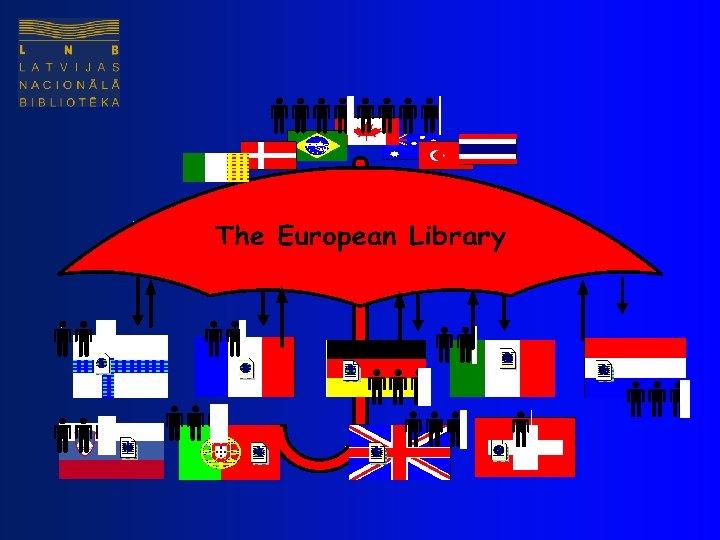
EDL Vision from national libraries point of view The vision of The European Library stems from the unique characteristics that the national libraries offer. These include: • the comprehensiveness of the collections held by each of the national libraries, a feature that is greatly enhanced when the national libraries integrate their resources; since many of the resources in the national libraries are unique, the libraries are investing in creating added value to the digitised documents: the national libraries are in many cases the only source of information for a user; • the national libraries" holdings of outstanding historical and special collections, offering a richness and diversity that cannot be found anywhere else; • that one of the most important reasons for an internet user to use the services of the national libraries is the reliability of information and the high quality; • the fact that national libraries are the institutions that are the most dedicated in their own countries to the long term preservation of the intellectual output, both traditional and digital, of their own country; when the various national libraries unite in their service offerings the worth of this feature is greatly enhanced; • that in a united Europe the national libraries are in a unique position to show the cultural diversity within each country and in all the participating countries acting in unison; and that the national libraries are aware of the European identity of their collections alongside their
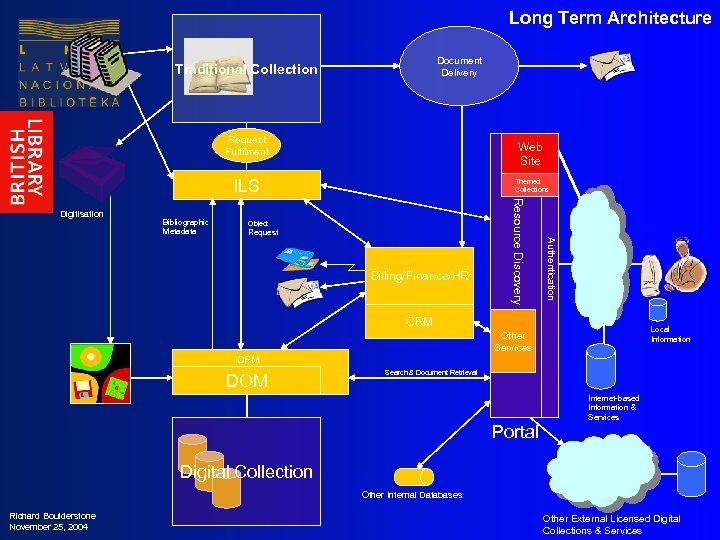
Long Term Architecture Document Delivery Traditional Collection Request Fulfilment Web Site ILS Bibliographic Metadata Object Request Authentication Billing/Finance/HR DRM Resource Discovery Digitisation Themed Collections CRM Local Information Other Services DRM DOM Search & Document Retrieval Internet-based Information & Services Portal Digital Collection Other Internal Databases Richard Boulderstone November 25, 2004 Other External Licensed Digital Collections & Services
Co-funding • EU research funding has resulted in a portfolio of projects aiming at making Europe’s cultural heritage more accessible through the use of new technologies. Projects supporting co-operation between Europe’s national libraries have developed from exchange of cataloguing records to The European Library project (TEL). TEL has now been launched as an operational service providing a single gateway to the collections of Europe’s national libraries. • While only a few projects under the research programmes have started tackling the issue of digital preservation, several of the projects specifically address digitisation.
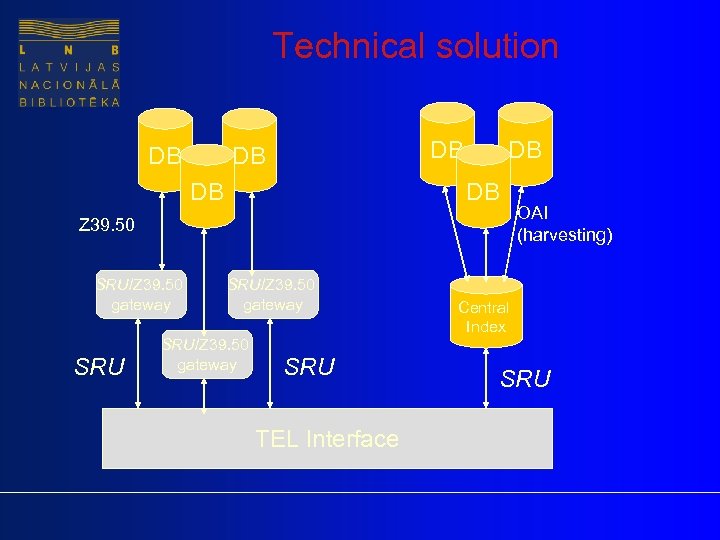
Technical solution DB DB DB Z 39. 50 SRU/Z 39. 50 gateway SRU TEL Interface OAI (harvesting) Central Index SRU
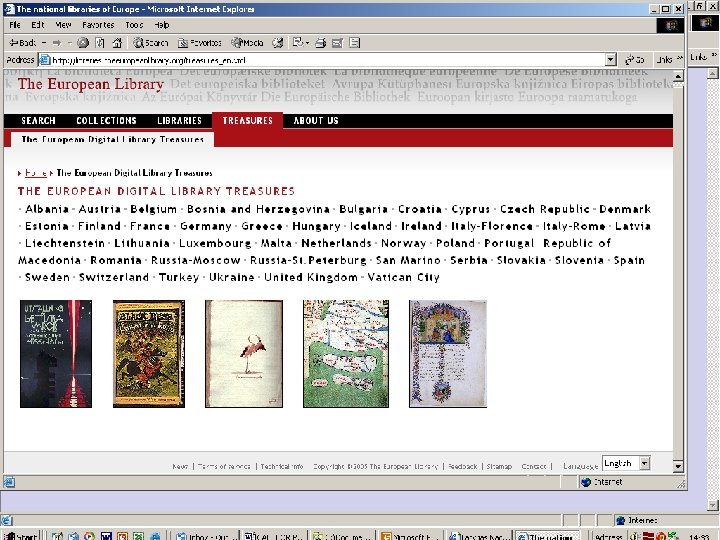
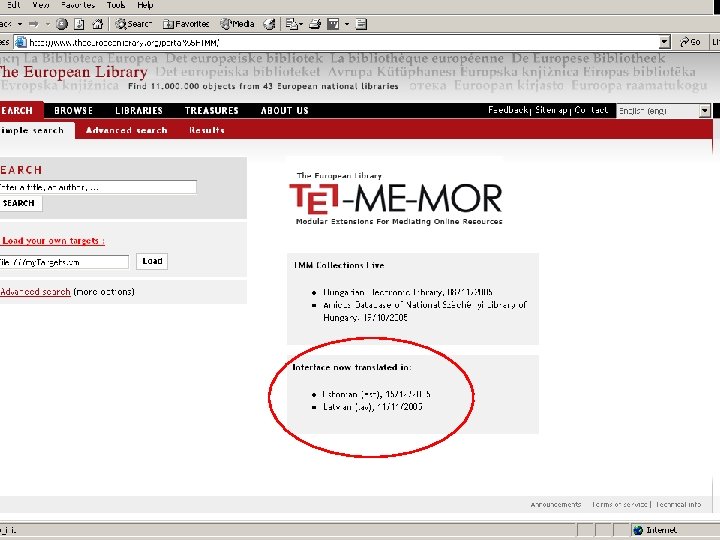
Contribution of the NLL in implementation of the Digital Library(Di. Bi) project • Latvian Digital Library(Di. Bi) does not mean only the entity of the collection and electronic resources of NLL. However the inclusion into TEL and EDL at first envisages solely the activities of national libraries, all strategic documents stress that a backbone of an open system has been formed envisaging gradual integration of all memory institutions. Therefore the Di. Bi project in separate segments already now has found the cooperation possibilities with separate memory institutions and predicts to do it systematically in the course of the implementation of the project. • In 2001 the NLL was an initiator in beginning the digital cooperation in the field of archives, museums
The National Library of Latvia has started the formation of National Digital Library “Letonica” in 1999. Simultaneously several projects were launched: • Digitisation of provincial newspapers which have been preserved in a small number of copies in Riga libraries (the National and Academic)-project ”Heritage 1”. • Digitisation of Latvian art posters (1899 – 1945 , 1945 - ). • New projects have been gradually started –digitisation of maps, original portraits of well-known persons (in drawings, photos etc. ), sound recordings, other graphic documents etc. • In 2005 harvesting of Latvian Internet resources has started.
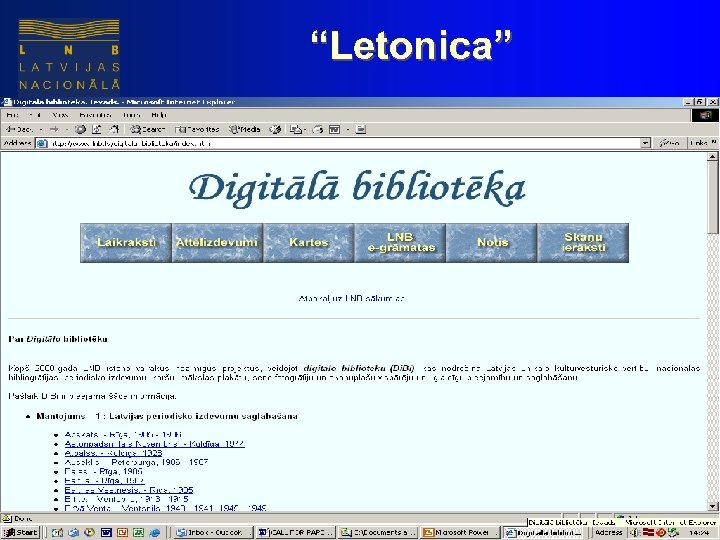
“Letonica”
Objectives of Di. Bi • To share-in information about national heritage kept in other libraries in Europe • To expose our country and its collections to global society • To reduce digital gap among Europien countries • To increase efficiency of knowledge workers in the country – As trusted source of information – By new services and combined services catalyzed by libraries • Nevertheless one of most critical reasons for building the digital Library is requirement to save disappearing national cultural heritage. This includes: – Digitally borne materials (i. e. Online information about critical events) – Physically disappearing information (i. e. aging collections)
Benefits of Di. Bi • To Libraries: Ability of many local libraries to obtain global visibility by publishing their content to national source • To citizens: Ability to access national treasures form any place; To experience new ways to accessing information, which can be trusted • To society: Ability to secure existing and future cultural heritage in digital format • To guests: Chance to learn about our country using their national systems
The Main Project Requirements are : • Digitisation of significant, damaged and requested analogue resources, processing and ensuarance of on-line accessibility. • Harvesting of digitally born national electronic resources, (semi)automated processing and preservation. • Introduction of Digital object management (DOM) system, including complete integration of metainformation into the National electronic union catalogue and introduction of international standards, protocols and formats. • Continuing participation in the project of Conference of European National Librarians (CENL) The European Library/TEL to take part in the initiative of EDB (focusing on the work of TEL ), • Digital cooperation with other libraries, museums, and archives in Latvia and abroad.
Goals and volume of the project • Long-term accessibility of national digital resources ; • Lessening of digital divide in regions due to the content formed on the bases of national resources (Network of Light); • Arrangement and description of information for quick and effective search; • To allow the society access to Di. Bi resources within the framework of legal rights of every individual; • Accessibility to digital objects with always contemporary software; • Wherever possible to collect the culture heritage preserving its former contents and form • To ensure the preservation of digital heritage(digitally born)
Project vision • • Precise and complete definition of the necessary standards, and criteria for processing and storage the digital objects; Implementation of unified Di. Bi information system (software and technological environment); Demonstration of the usefulness of the system to the society (two pilot projects); Formation of initial collections of digital objects (scanning and description).
Future Tasks From digital stacks and collections to digital library
Problems • Sometimes partners of various institutions in Latvia are not ready to come to terms about common cooperation principles; • Forming separate collections several software programs and different description standards are used; • Copyright and other legislation aspects in the cases of publishing analogue material copies and harvesting; • Shortage of high power computers which delays centralised formation and storage of all digital collections; • Volume of Internet resources is enormous, and the existing equipment can’t ensure complete harvesting process.
Thank you for attention! andris. vilks@lnb. lv www. lnb. lv
Скачать презентацию National Digital Library of Latvia Letonica Andris Vilks
d6868e15e2e255161050facc56bff038.ppt