


 Скачать презентацию National Cases The Nordic States Iceland Gylfi Zoega
70516a245d714e433f1fcaba2ee450fd.ppt
- Количество слайдов: 30
 National Cases: The Nordic States Iceland Gylfi Zoega University of Iceland
 Public sector in a microstate – Multitasking within public sector. • Weakens expertise in each area. • Difficult tasks sometimes postponed due to the daily demands for prompt decision making. – Small populations. • Limited number of able individuals with required training. • Competing demands: pundit, politician, professor. – International commitments. • Necessary • Time consuming
 – Interpersonal relations. • Closely integrated network of personal relationships. – – – Facilitates and obstructs communications. Informal decision making processes. Quick implementation of decisions. Conflicting pressures. Decisions can be modified due to personal interventions and community pressures. – Nepotism and corruption in extreme situations. • Transparency. – Lack of anonymity problematic.
 – Social cohesion. • • Factions, grudges, polarisation. Small issues assume national prominence in small states. Community rivalry and civil strife. Deadweight losses. – Small country syndrome. • Small countries tend to have a strong national and cultural identity • Attempt to emulate larger countries without realising their uniqueness.
 Case study: Financial centre in Reykjavik 2003 -2008 – – – – Privatisation A financial centre Exploding banking system Risk-seeking behaviour and looting Collapse Losses and the net asset position of Iceland Lessons from a globalised, small, open economy
 Copyright F. T. Business Enterprises Limited (FTBE) Apr 7, 1998 The prime minister has a grand plan for Iceland. • If the prime minister of Europe's most sparsely populated country gets his way, the volcanic North Atlantic island would become a centre for offshore banking. • Mr X- facing re-election next year - has ordered a study into how the country could emulate Luxembourg and Switzerland as a "safe haven" for depositors who value secrecy. • The prime minister claims the proposal has serious merit. "Switzerland has shown the benefits of having such a banking system, " he says. And he predicts that Iceland could be the unlikely beneficiary of European Union attempts to harmonise banking regulations in Luxembourg. .
 • Transforming Reykjavik into a financial centre may take some time, given that the country boasts only four commercial banks. But for the government it represents one of more ambitious attempts to diversify an economy that, for centuries, has drawn its income from the sea. "Icelandic politicians have been talking for 30 years about making the economy more flexible. But when you look at what has been achieved, almost nothing has succeeded, " according to Mr X. Copyright Financial Times Limited 1998. All Rights Reserved.

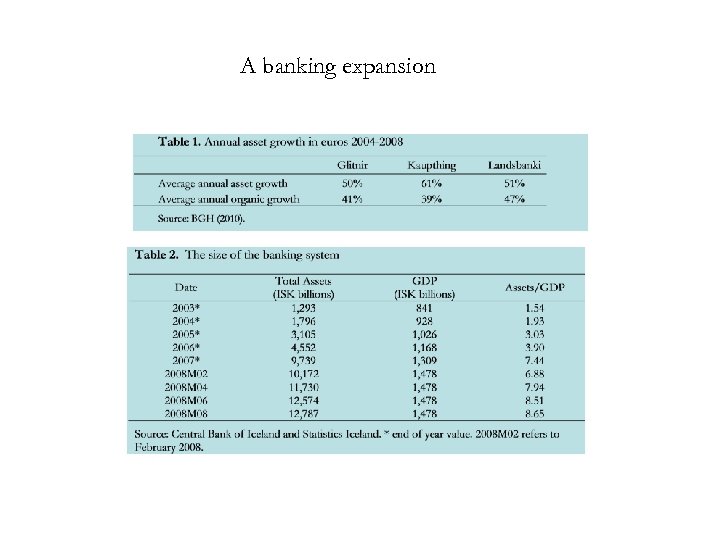 A banking expansion
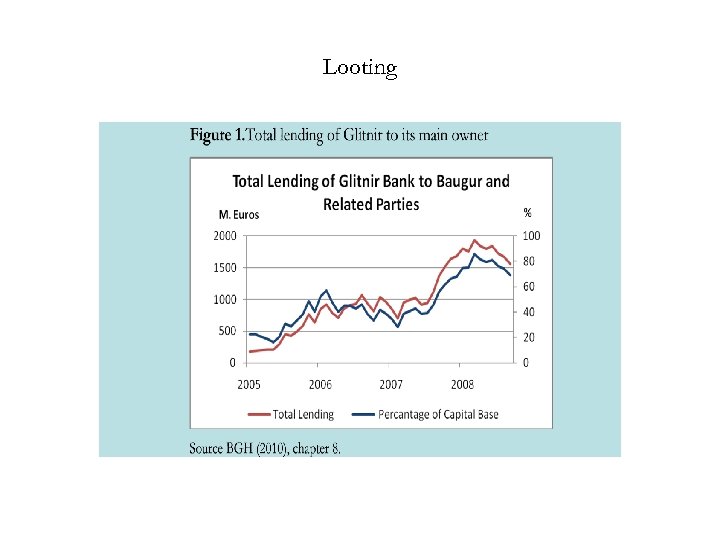 Looting
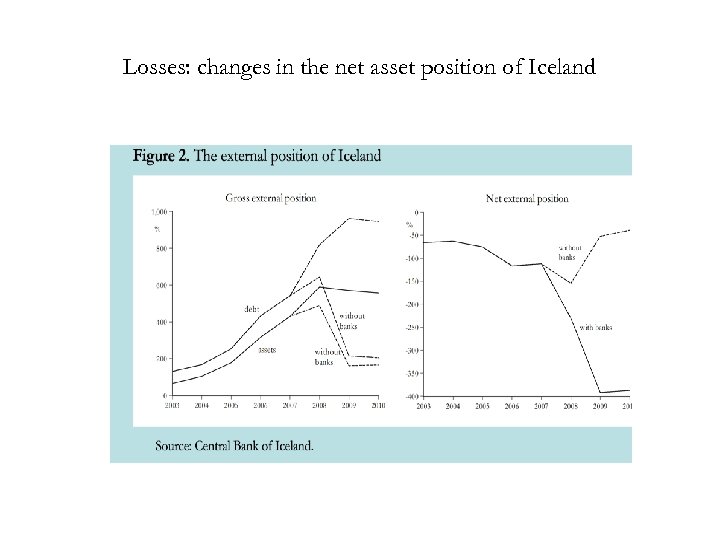 Losses: changes in the net asset position of Iceland
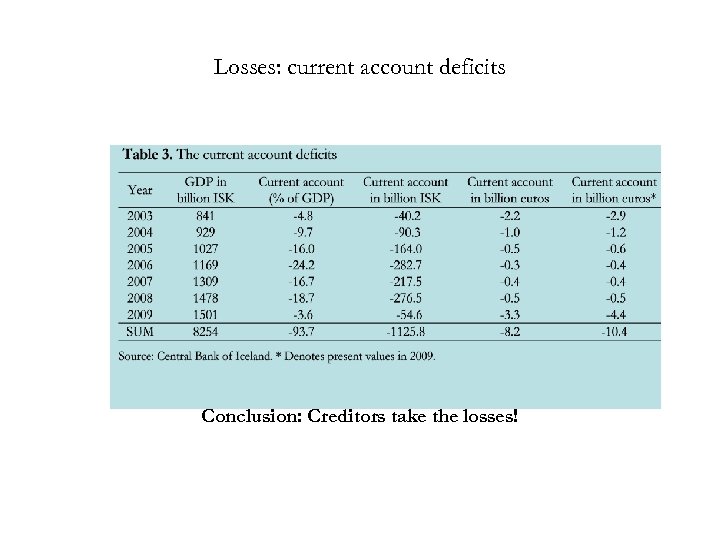 Losses: current account deficits Conclusion: Creditors take the losses!
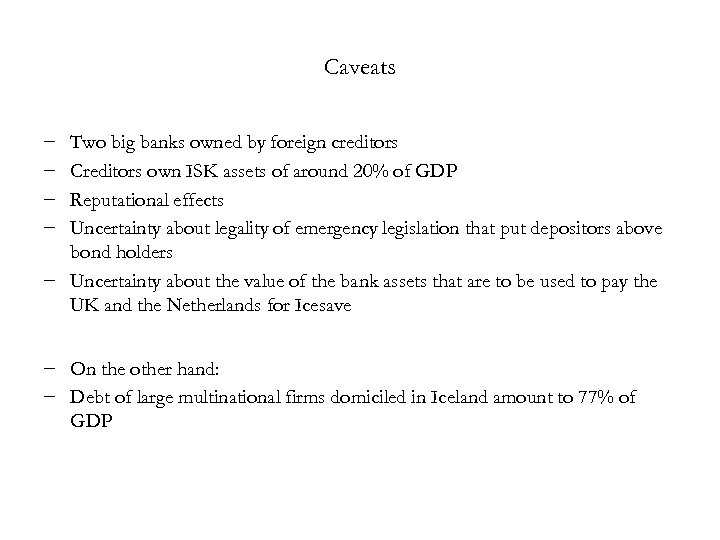 Caveats − − Two big banks owned by foreign creditors Creditors own ISK assets of around 20% of GDP Reputational effects Uncertainty about legality of emergency legislation that put depositors above bond holders − Uncertainty about the value of the bank assets that are to be used to pay the UK and the Netherlands for Icesave − On the other hand: − Debt of large multinational firms domiciled in Iceland amount to 77% of GDP
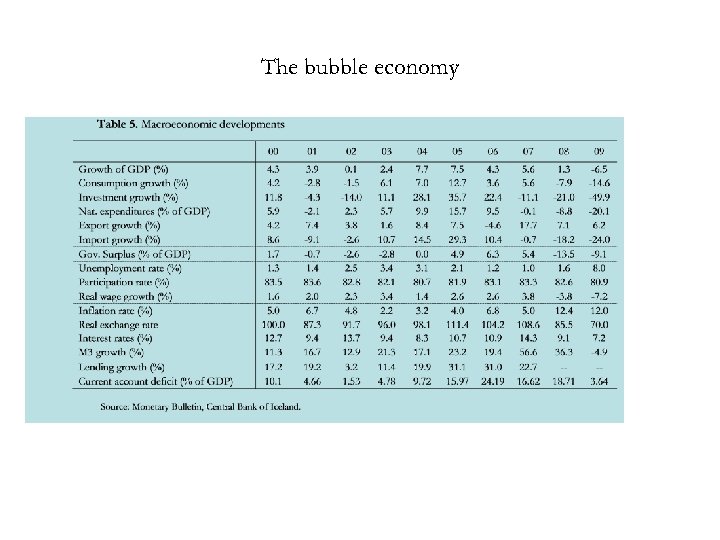 The bubble economy
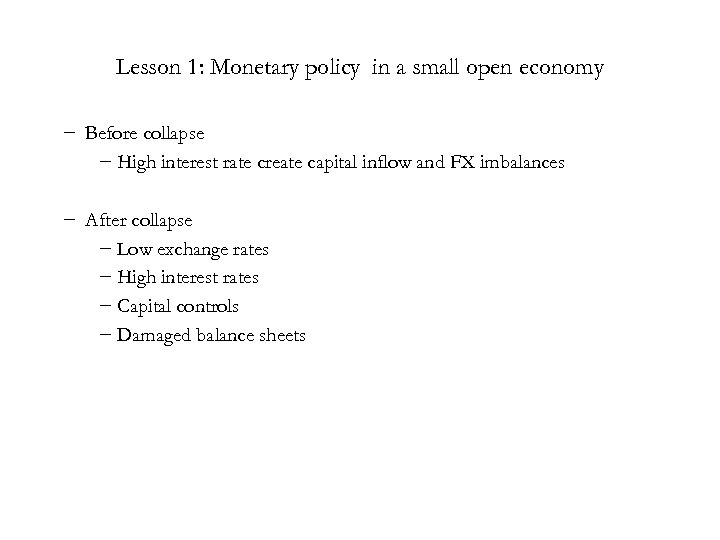 Lesson 1: Monetary policy in a small open economy − Before collapse − High interest rate create capital inflow and FX imbalances − After collapse − Low exchange rates − High interest rates − Capital controls − Damaged balance sheets
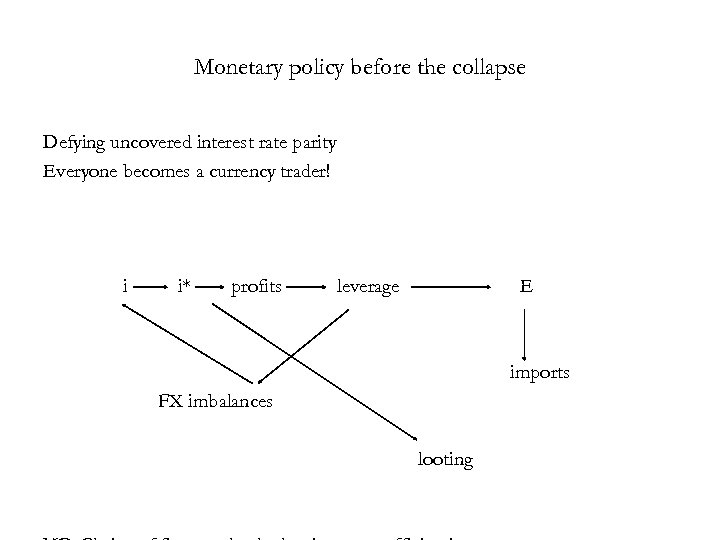 Monetary policy before the collapse Defying uncovered interest rate parity Everyone becomes a currency trader! i i* profits leverage E imports FX imbalances looting
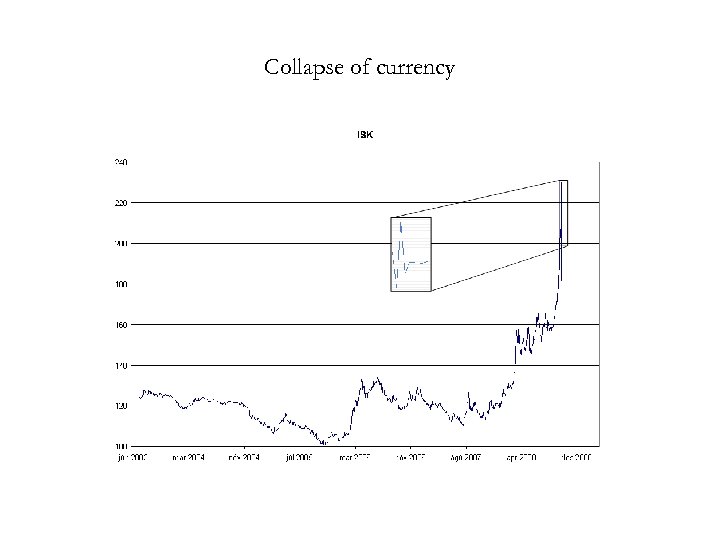 Collapse of currency
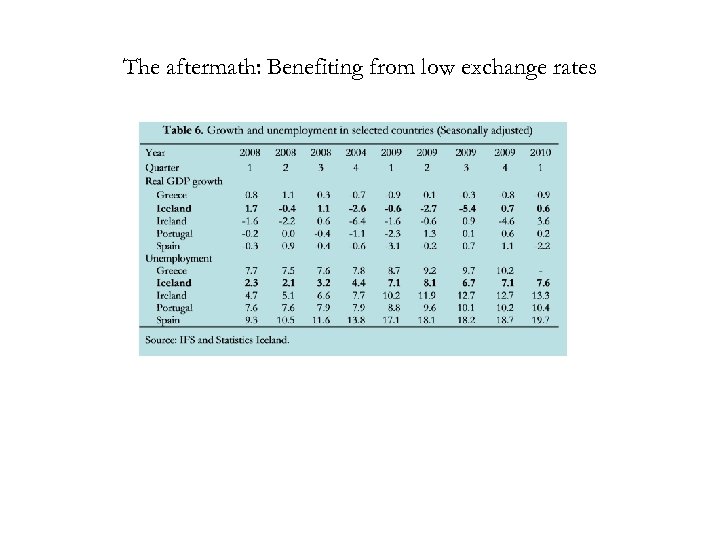 The aftermath: Benefiting from low exchange rates
 Lesson 2: Small institutions – – – Small government agencies Lack of expertise Lack of lender of last resort State not able to inject equity Personal relationships and nepotism
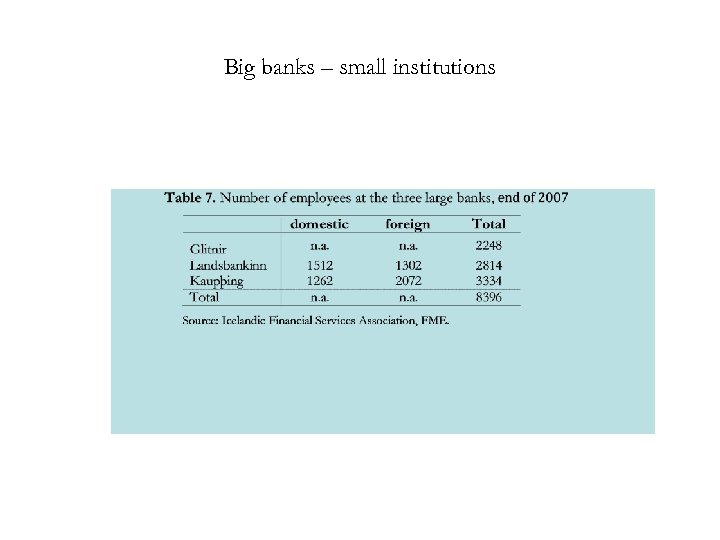 Big banks – small institutions
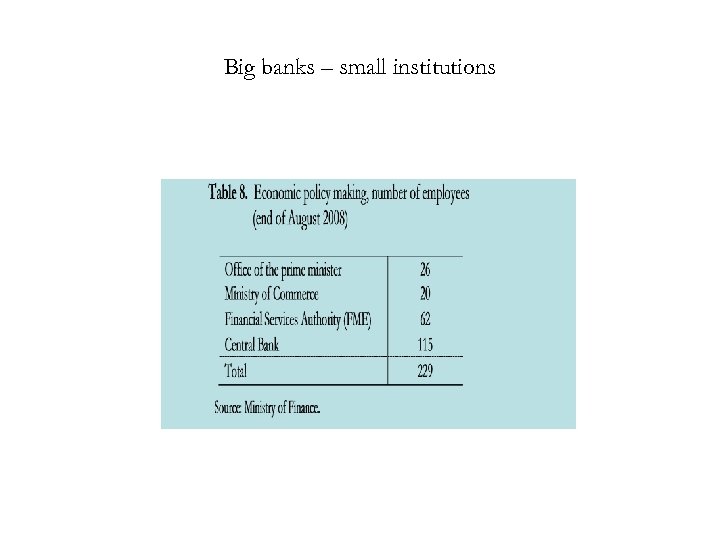 Big banks – small institutions
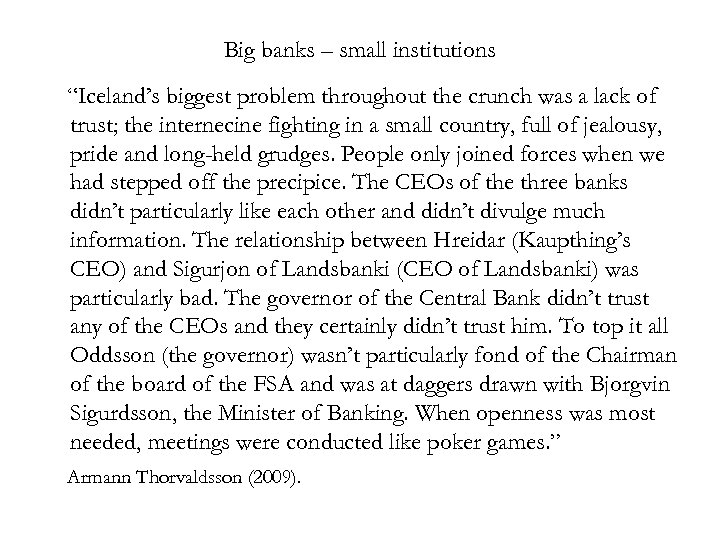 Big banks – small institutions “Iceland’s biggest problem throughout the crunch was a lack of trust; the internecine fighting in a small country, full of jealousy, pride and long-held grudges. People only joined forces when we had stepped off the precipice. The CEOs of the three banks didn’t particularly like each other and didn’t divulge much information. The relationship between Hreidar (Kaupthing’s CEO) and Sigurjon of Landsbanki (CEO of Landsbanki) was particularly bad. The governor of the Central Bank didn’t trust any of the CEOs and they certainly didn’t trust him. To top it all Oddsson (the governor) wasn’t particularly fond of the Chairman of the board of the FSA and was at daggers drawn with Bjorgvin Sigurdsson, the Minister of Banking. When openness was most needed, meetings were conducted like poker games. ” Armann Thorvaldsson (2009).
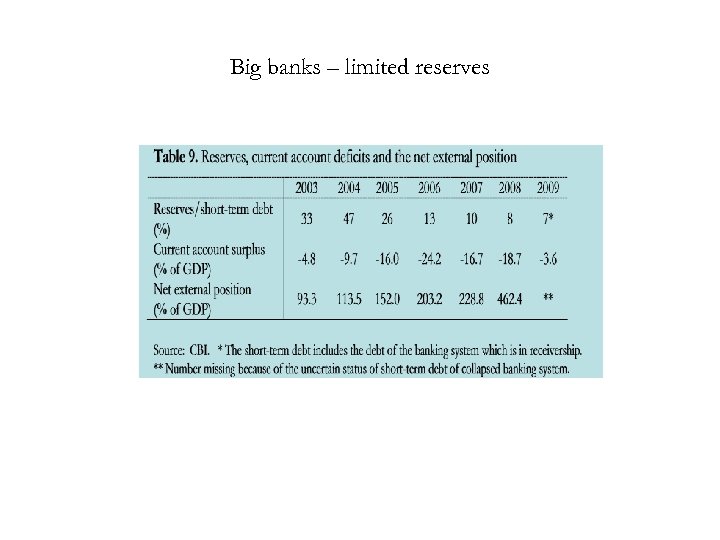 Big banks – limited reserves
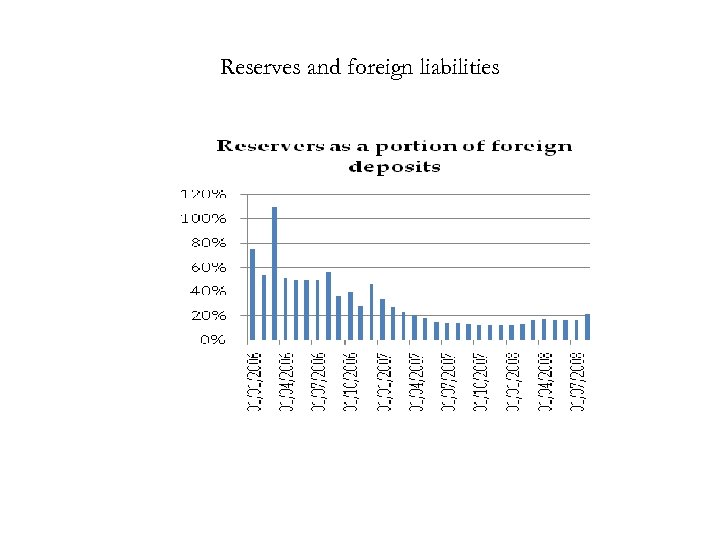 Reserves and foreign liabilities
 Lesson 3: Weak capital – Loose regulatory framework that makes it easier to − invest in non-financial businesses, − invest in real estate, − lend money to buy own shares, − operate insurance companies, − own other financial institutions. − Stock market bubble driven by leverage − Capital created by − lending to buy own shares, − lending to employees to buy own shares, − banks lend to buy each other’s equity.
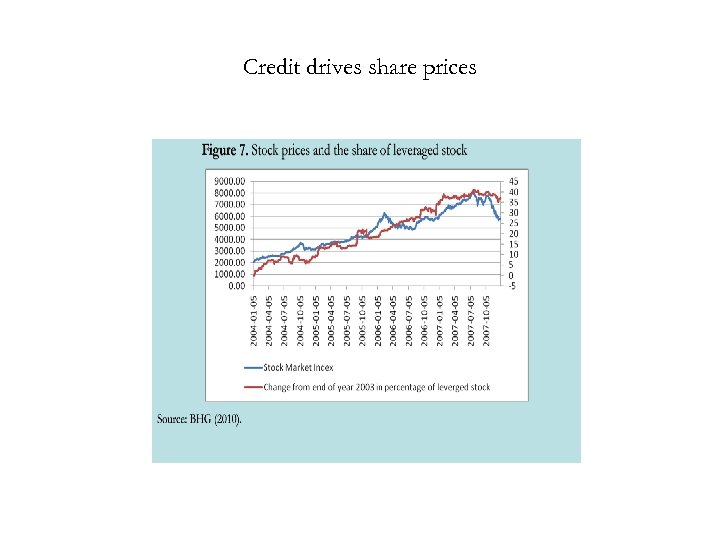 Credit drives share prices
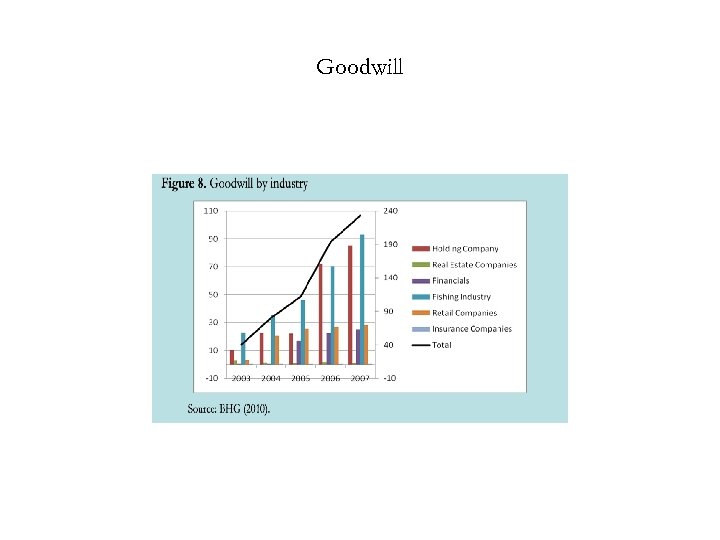 Goodwill
 Lesson 4: Externalities − Authorities’ failure to react − Externalities − Lack of experience, incompetence − EU passport system − Home supervisor responsible for branches, costs carried to some extent by host country − Asymmetry in ability − Legalistic versus pragmatic approach
 Changes to European passport system Changes that would prevent a repeat of the Icesave episode: – Deposit insurance in domestic currency. – If a host supervisor provides deposit insurance that exceeds deposit insurance in the home country it should have shared supervisory responsibilities. – Systemic implications of any financial institutions should be monitored and if a financial institution opts to operate in more than one member country, supervision needs to be exercised by either the sharing of supervision across countries or the establishment of a pan-European supervisor.
 “The track record that Icelandic business leaders have established is also an interesting standpoint from which to examine the validity of traditional business teaching, of theories and practice fostered and followed by big corporations and business schools on both sides of the Atlantic. It enables us to discuss the emphasis on entrepreneurial versus structural training, on process versus results, on trust versus career competition, on creativity versus financial strength. “ President Olafur R. Grimsson, London, 2005.