 Скачать презентацию National Aeronautics and Space Administration Usability Project Update
62d8286eb7f06b382d34b853e68b9571.ppt
- Количество слайдов: 18



National Aeronautics and Space Administration Usability Project Update Mark Rose Intelligent Systems Group NASA Ames Research Center
Furthering My PDS Education • Dec-Mar: Learning about PDS “skin” Apr-July: Learning about PDS “skeleton” • As of last MC meeting, three projects approved for further work: – Site visits and reports to PDS Nodes – Cassini/CIRS product query tool – Propose “standard” UI for browsing volumes, with download improvements • Other work added since: – Review of some current designs at the Nodes – Assist with parser for new validation tool
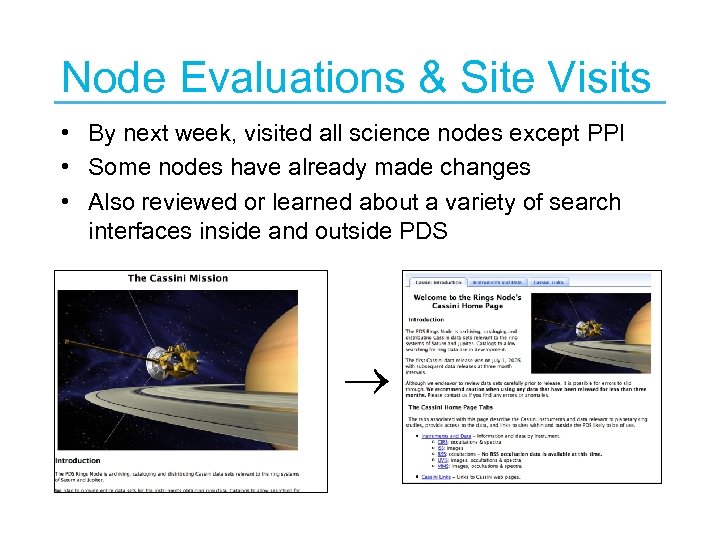
Node Evaluations & Site Visits • By next week, visited all science nodes except PPI • Some nodes have already made changes • Also reviewed or learned about a variety of search interfaces inside and outside PDS
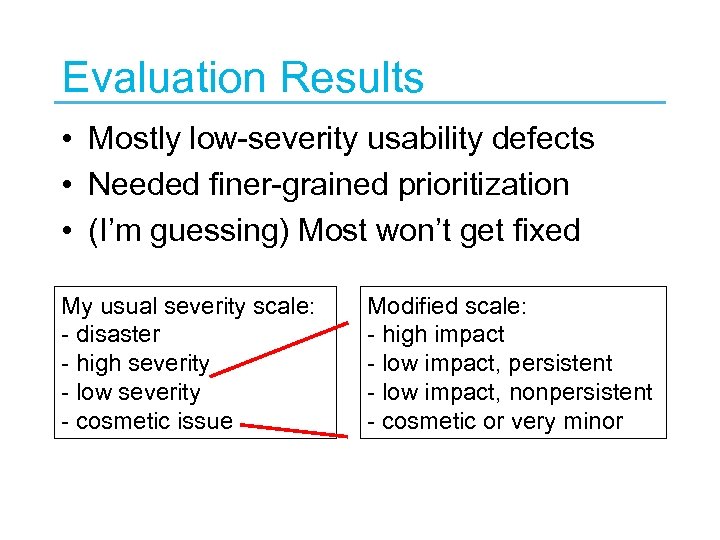
Evaluation Results • Mostly low-severity usability defects • Needed finer-grained prioritization • (I’m guessing) Most won’t get fixed My usual severity scale: - disaster - high severity - low severity - cosmetic issue Modified scale: - high impact - low impact, persistent - low impact, nonpersistent - cosmetic or very minor
Usability as a Process • Number of different interfaces is growing, and will continue to grow • Value of interfaces relative to data is growing • Importance of good usability engineering will grow with those factors • PDS must increase ability to design using good usability principles
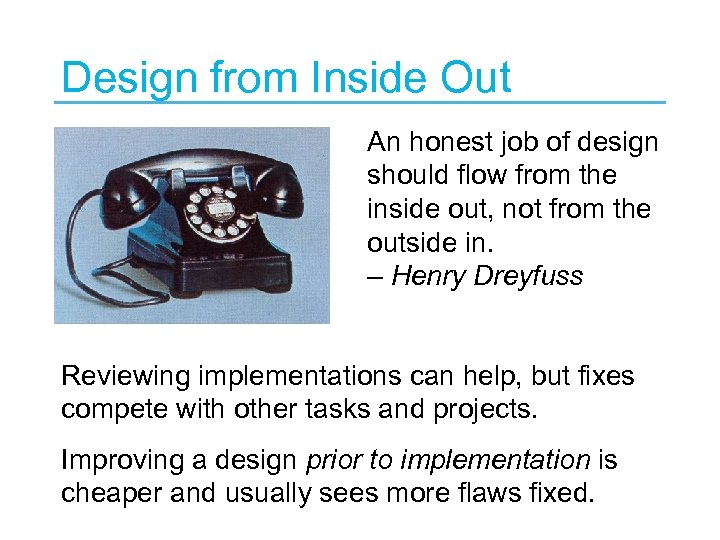
Design from Inside Out An honest job of design should flow from the inside out, not from the outside in. – Henry Dreyfuss Reviewing implementations can help, but fixes compete with other tasks and projects. Improving a design prior to implementation is cheaper and usually sees more flaws fixed.
“Standard” View of Volumes • Mockups from two datasets • Good feedback from very small sample of users • Addresses browsing, product search (building on Basic Browser), and download • Needs: Feedback, refinement, buy-in to tool development plan
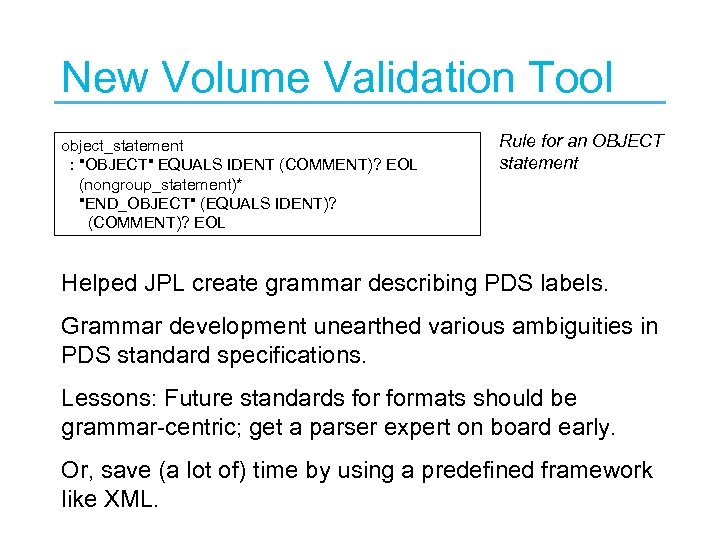
New Volume Validation Tool object_statement : "OBJECT" EQUALS IDENT (COMMENT)? EOL (nongroup_statement)* "END_OBJECT" (EQUALS IDENT)? (COMMENT)? EOL Rule for an OBJECT statement Helped JPL create grammar describing PDS labels. Grammar development unearthed various ambiguities in PDS standard specifications. Lessons: Future standards formats should be grammar-centric; get a parser expert on board early. Or, save (a lot of) time by using a predefined framework like XML.
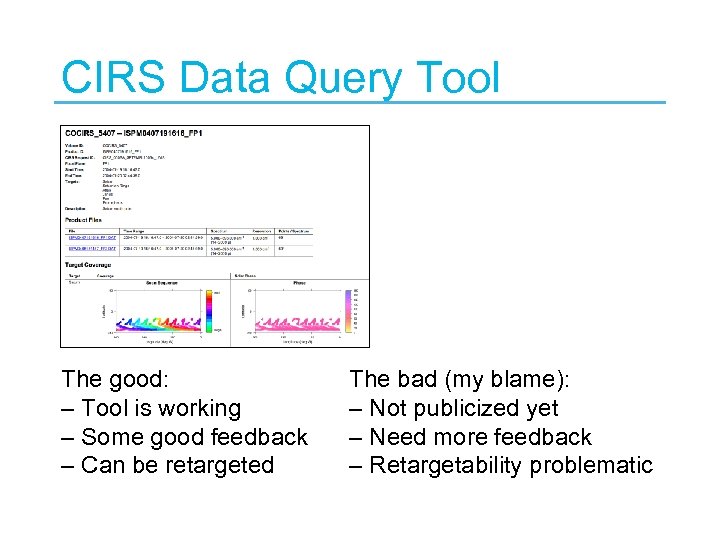
CIRS Data Query Tool The good: – Tool is working – Some good feedback – Can be retargeted The bad (my blame): – Not publicized yet – Need more feedback – Retargetability problematic
Applicability of Query Tools • Everyone is writing query tools for PDS data: – Nodes: Analyst’s Notebook, Orbital Data Explorer, Image Atlas, SBN, PPI, Rings, etc. – Researchers: Local databases, scripts to pull data from PDS, interfaces to IDL, etc. • It would seem that a generalized tool could have wide adoption, but…
Barriers to Tool Adoption • Diversity of PDS Node environments – Java, C#, Perl, PHP, databases, etc. • Index generation may be data-set specific – Labels may not contain appropriate summary data – Data in product rows may have wrong reference point (date/times, esp. ) – Summary or thumbnails may require reading data files and custom processing • Data diversity may need custom search • Bottom line: Nodes may not save enough effort to justify adopting a general solution
Observations • While working on these tasks, I’ve observed several things that may affect future PDS planning: – Pain point: volume creation – Data usability problems – Growing importance of query interfaces
Volume Creation • Creating PDS-format volumes is viewed as time-consuming, painful process – “Is there some way to relax PDS standards to get some of this data in? ” (JPL Researcher) • Nodes believe better volume creation tools will help both nodes and instrument teams (and tool design is in the pipeline) • Proposal: Interview some instrument teams to understand their needs better, to complement knowledge in the nodes
Data Usability • Usability problems don’t stop once you find the products – Labels sometimes don’t contain needed index data (e. g. , first/last values for time series) – Data distribution among products sometimes not easy to use • Data usability guidelines might help
Importance of Query Tools • Dataset size is growing – “Download all data, ” then analyze won’t work – Online query interfaces more important • But, query interfaces don’t have built-in longevity • Also, rise of mission-specific sites and interfaces raises longevity concerns
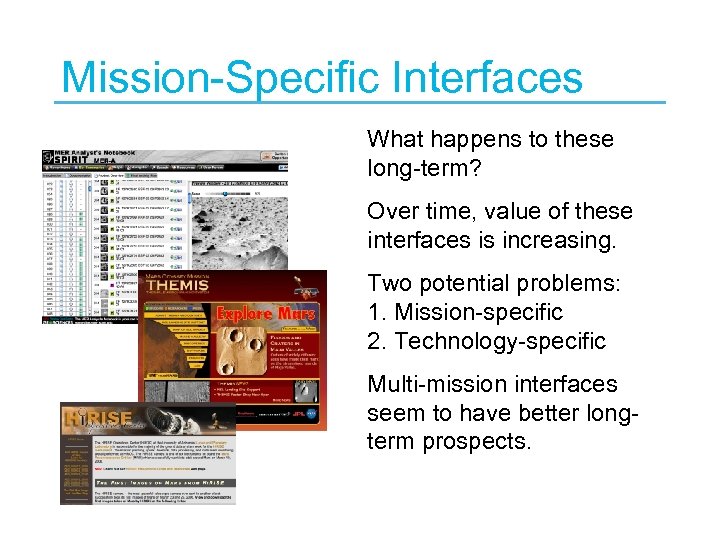
Mission-Specific Interfaces What happens to these long-term? Over time, value of these interfaces is increasing. Two potential problems: 1. Mission-specific 2. Technology-specific Multi-mission interfaces seem to have better longterm prospects.
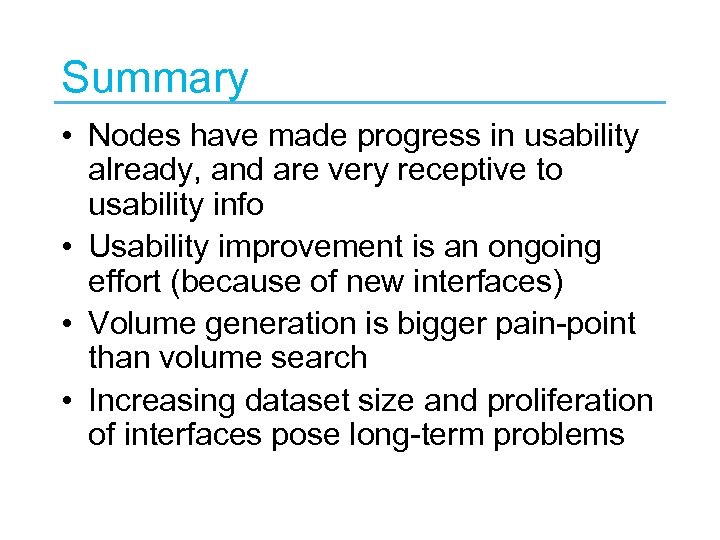
Summary • Nodes have made progress in usability already, and are very receptive to usability info • Usability improvement is an ongoing effort (because of new interfaces) • Volume generation is bigger pain-point than volume search • Increasing dataset size and proliferation of interfaces pose long-term problems
Questions?
Скачать презентацию National Aeronautics and Space Administration Usability Project Update
62d8286eb7f06b382d34b853e68b9571.ppt