 Скачать презентацию Natalie M Underberg Ph D Elayne Zorn
b3552dc9d1fe60cd1ed1f82c9c8ed097.ppt
- Количество слайдов: 19



Natalie M. Underberg, Ph. D. ; Elayne Zorn, Ph. D. University of Central Florida
Peru. Vine/Peru. Digital • Goal to present Peruvian festivals on the Internet • Multilingual, interactive, and immersive • Uses ethnographic data from the Instituto de Etnomusicología, Pontificia Universidad Católica del Perú-Lima • Collaboration between anthropologists and digital media scholars • Uses hypertext and digital environments to address how linguistic communities view and interpret the world
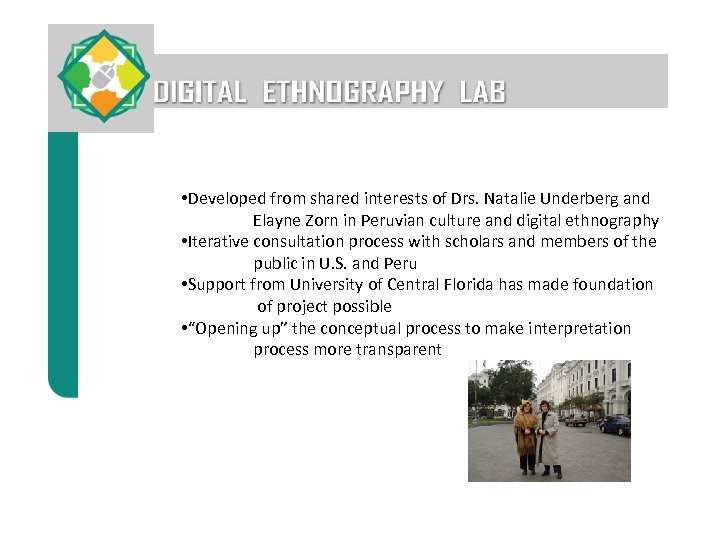
• Developed from shared interests of Drs. Natalie Underberg and Elayne Zorn in Peruvian culture and digital ethnography • Iterative consultation process with scholars and members of the public in U. S. and Peru • Support from University of Central Florida has made foundation of project possible • “Opening up” the conceptual process to make interpretation process more transparent
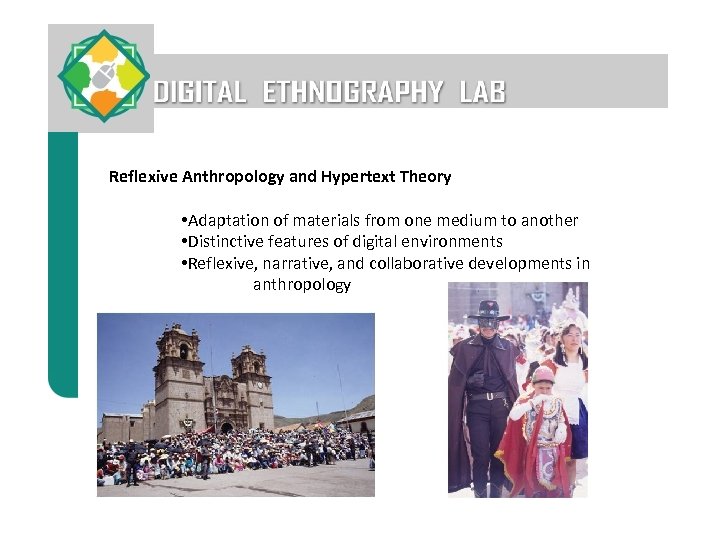
Reflexive Anthropology and Hypertext Theory • Adaptation of materials from one medium to another • Distinctive features of digital environments • Reflexive, narrative, and collaborative developments in anthropology
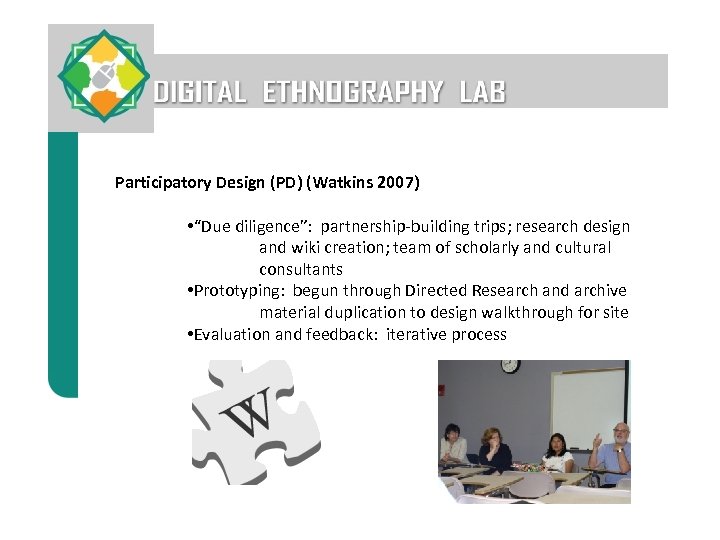
Participatory Design (PD) (Watkins 2007) • “Due diligence”: partnership-building trips; research design and wiki creation; team of scholarly and cultural consultants • Prototyping: begun through Directed Research and archive material duplication to design walkthrough for site • Evaluation and feedback: iterative process
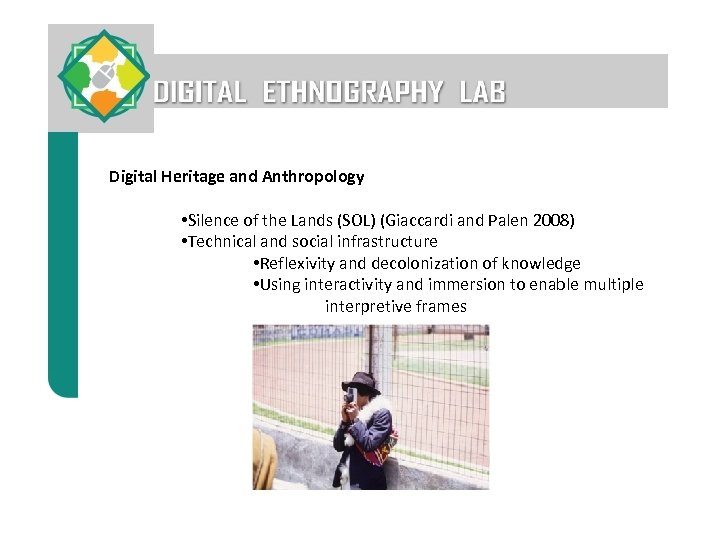
Digital Heritage and Anthropology • Silence of the Lands (SOL) (Giaccardi and Palen 2008) • Technical and social infrastructure • Reflexivity and decolonization of knowledge • Using interactivity and immersion to enable multiple interpretive frames
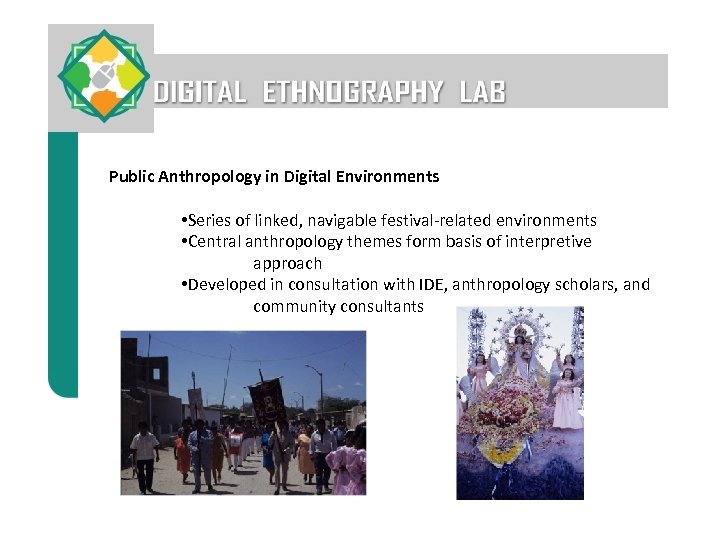
Public Anthropology in Digital Environments • Series of linked, navigable festival-related environments • Central anthropology themes form basis of interpretive approach • Developed in consultation with IDE, anthropology scholars, and community consultants
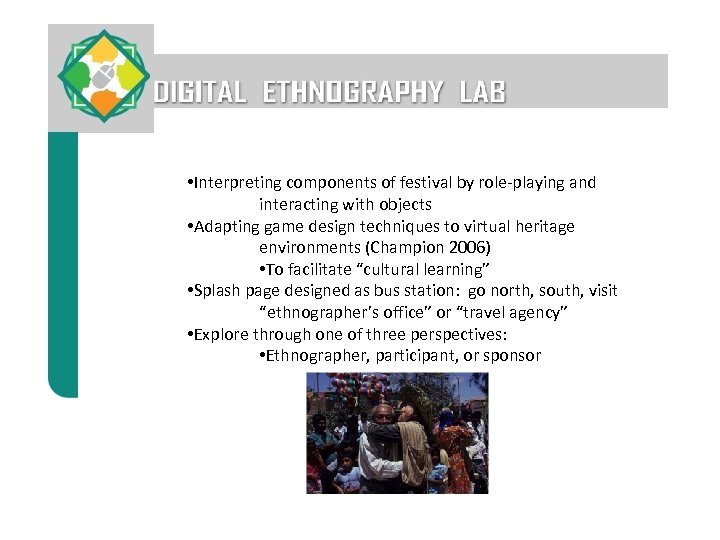
• Interpreting components of festival by role-playing and interacting with objects • Adapting game design techniques to virtual heritage environments (Champion 2006) • To facilitate “cultural learning” • Splash page designed as bus station: go north, south, visit “ethnographer’s office” or “travel agency” • Explore through one of three perspectives: • Ethnographer, participant, or sponsor
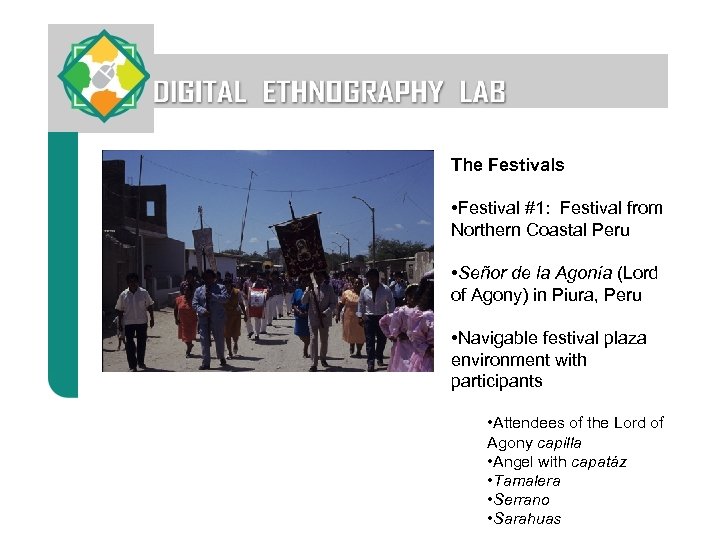
The Festivals • Festival #1: Festival from Northern Coastal Peru • Señor de la Agonía (Lord of Agony) in Piura, Peru • Navigable festival plaza environment with participants • Attendees of the Lord of Agony capilla • Angel with capatáz • Tamalera • Serrano • Sarahuas
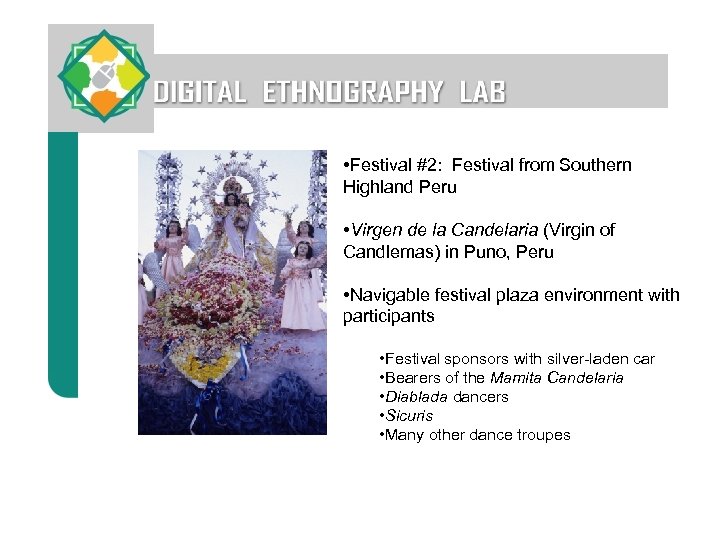
• Festival #2: Festival from Southern Highland Peru • Virgen de la Candelaria (Virgin of Candlemas) in Puno, Peru • Navigable festival plaza environment with participants • Festival sponsors with silver-laden car • Bearers of the Mamita Candelaria • Diablada dancers • Sicuris • Many other dance troupes
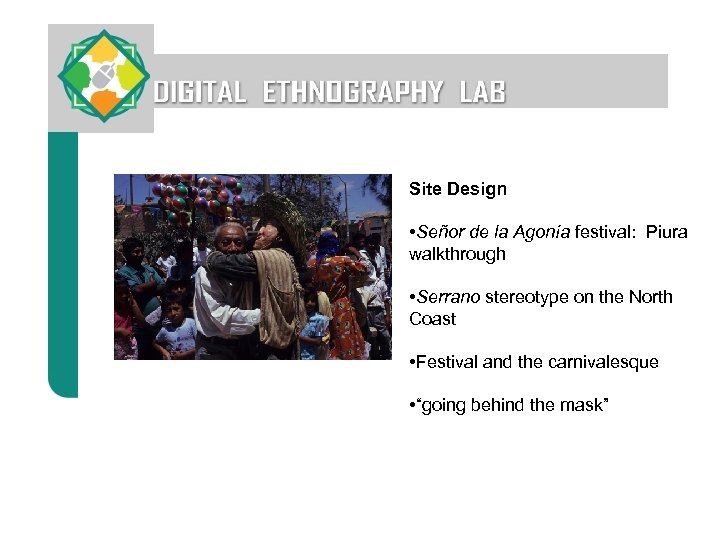
Site Design • Señor de la Agonía festival: Piura walkthrough • Serrano stereotype on the North Coast • Festival and the carnivalesque • “going behind the mask”
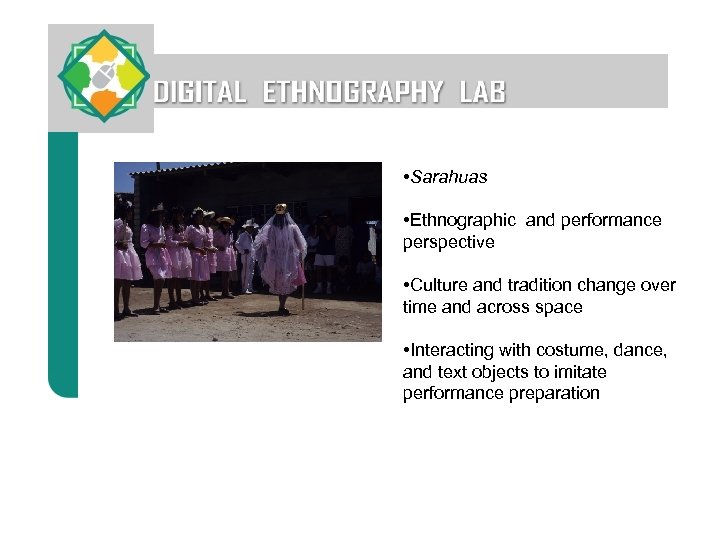
• Sarahuas • Ethnographic and performance perspective • Culture and tradition change over time and across space • Interacting with costume, dance, and text objects to imitate performance preparation
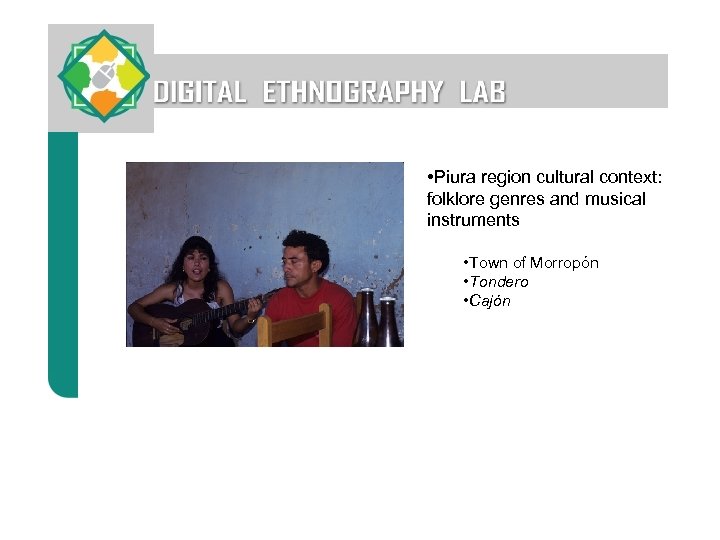
• Piura region cultural context: folklore genres and musical instruments • Town of Morropón • Tondero • Cajón
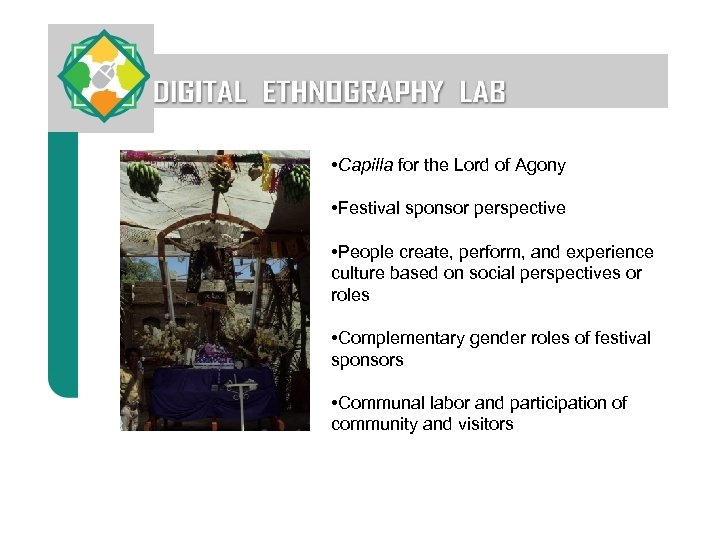
• Capilla for the Lord of Agony • Festival sponsor perspective • People create, perform, and experience culture based on social perspectives or roles • Complementary gender roles of festival sponsors • Communal labor and participation of community and visitors
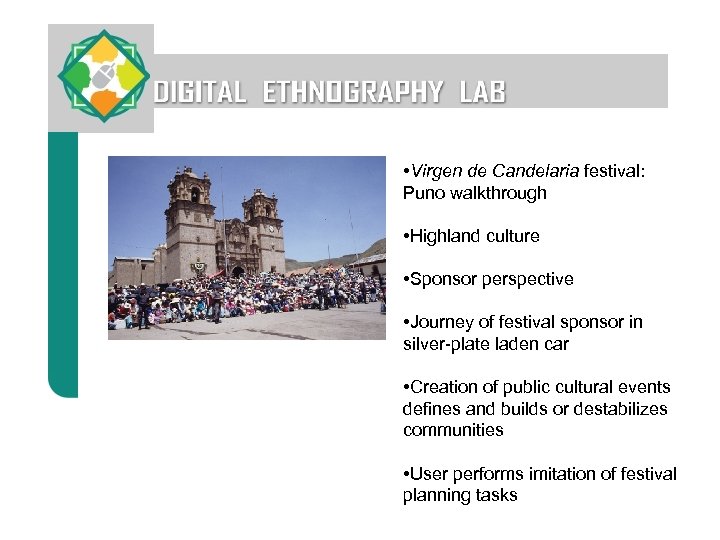
• Virgen de Candelaria festival: Puno walkthrough • Highland culture • Sponsor perspective • Journey of festival sponsor in silver-plate laden car • Creation of public cultural events defines and builds or destabilizes communities • User performs imitation of festival planning tasks
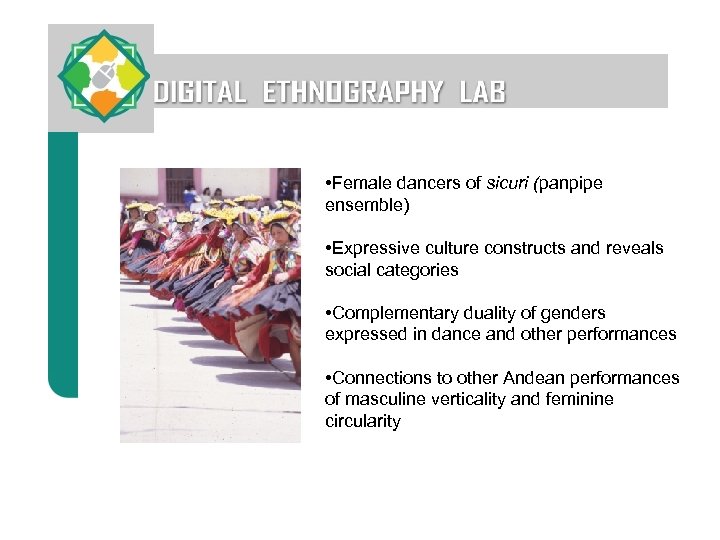
• Female dancers of sicuri (panpipe ensemble) • Expressive culture constructs and reveals social categories • Complementary duality of genders expressed in dance and other performances • Connections to other Andean performances of masculine verticality and feminine circularity
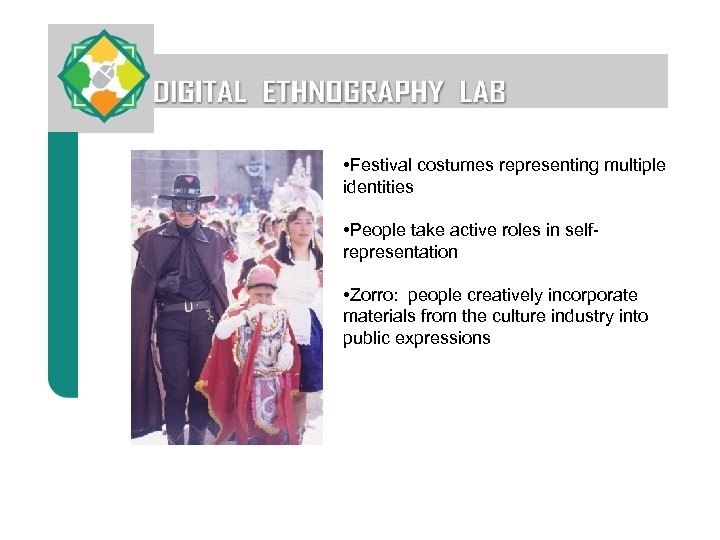
• Festival costumes representing multiple identities • People take active roles in selfrepresentation • Zorro: people creatively incorporate materials from the culture industry into public expressions
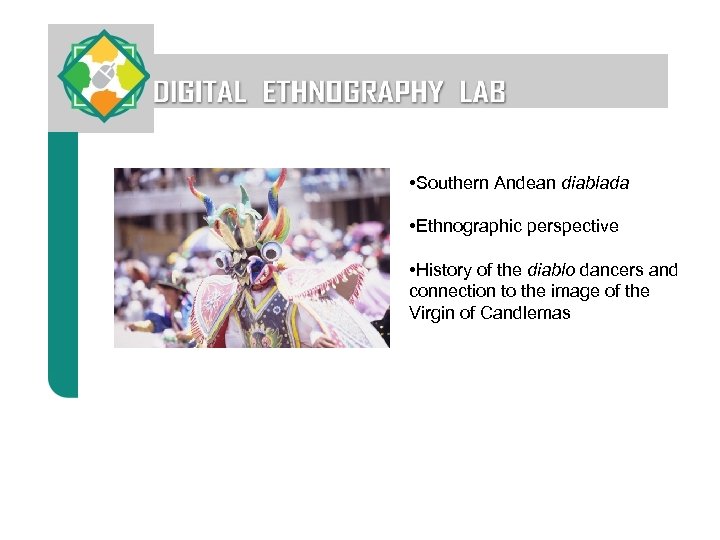
• Southern Andean diablada • Ethnographic perspective • History of the diablo dancers and connection to the image of the Virgin of Candlemas
• Goal: embed knowledge and scholarly methodology • Role play participants as well as scholars and spectators • Enacts aspects of reflexive methodology (Ruby 1980, Pack 2006) • Evokes experience and privileges subjectivity • Exploits digital medium’s interactive and imitative nature (Pink 2001) • Making design and interpretation process transparent as model for public anthropology in digital age
Скачать презентацию Natalie M Underberg Ph D Elayne Zorn
b3552dc9d1fe60cd1ed1f82c9c8ed097.ppt