 Скачать презентацию Nat Stats 2010 Conference Sydney 15 -17 September
e2dd2e73a8c96f9be4d1c0d2a62816f1.ppt
- Количество слайдов: 34



Nat. Stats 2010 Conference Sydney, 15 -17 September 2010 How Does Australia Compare in the Global Economy? Martine Durand OECD Chief Statistician and Director of Statistics 1
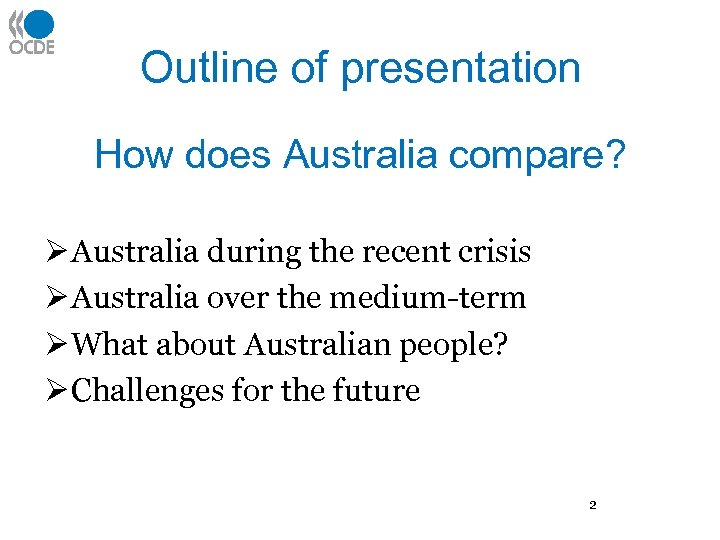
Outline of presentation How does Australia compare? Ø Australia during the recent crisis Ø Australia over the medium-term Ø What about Australian people? Ø Challenges for the future 2
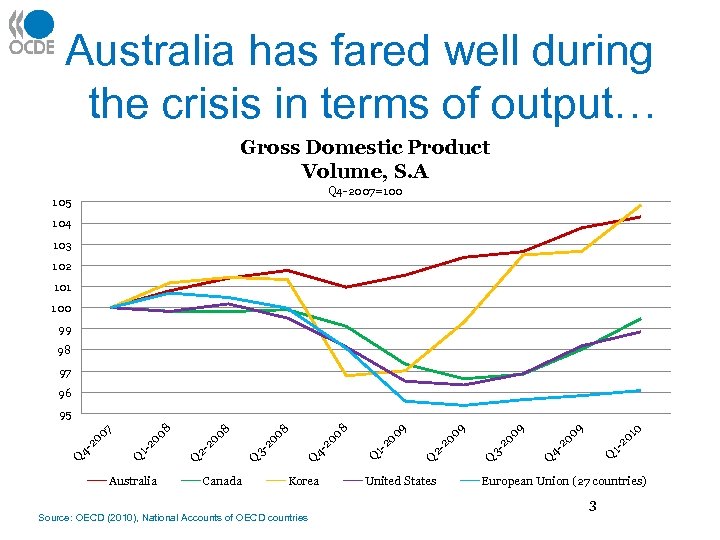
Australia has fared well during the crisis in terms of output… Gross Domestic Product Volume, S. A Q 4 -2007=100 105 104 103 102 101 100 99 98 97 96 Australia Canada 20 10 09 Q Q 4 - 1 - 20 09 3 Q 20 2 Q United States 20 09 09 20 1 - 4 Q Q 3 - Korea Q 08 20 08 Q 2 - 20 20 1 Q Q 4 - 20 07 08 95 European Union (27 countries) 3 Source: OECD (2010), National Accounts of OECD countries
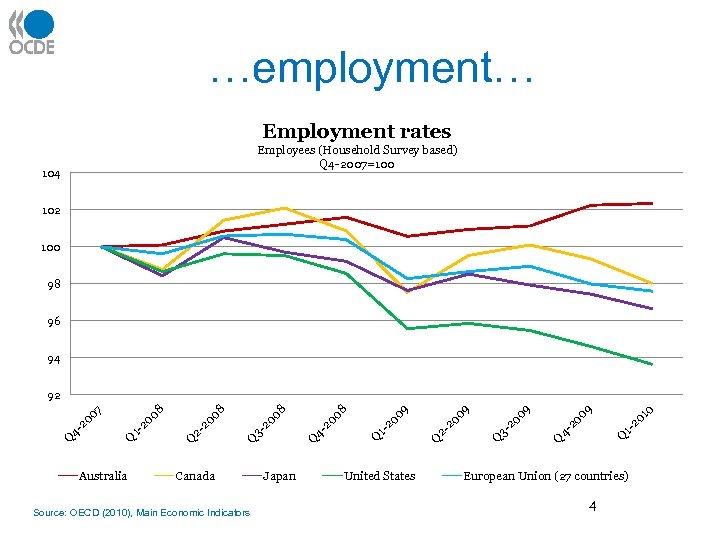
…employment… Employment rates Employees (Household Survey based) Q 4 -2007=100 104 102 100 98 96 94 Australia Canada Source: OECD (2010), Main Economic Indicators Japan United States Q 10 Q 4 - 1 - 20 09 3 Q 20 2 Q 20 09 09 20 Q 1 - 08 Q 4 - 20 08 Q 3 - 20 08 Q 2 - 20 20 1 Q Q 4 - 20 07 08 92 European Union (27 countries) 4
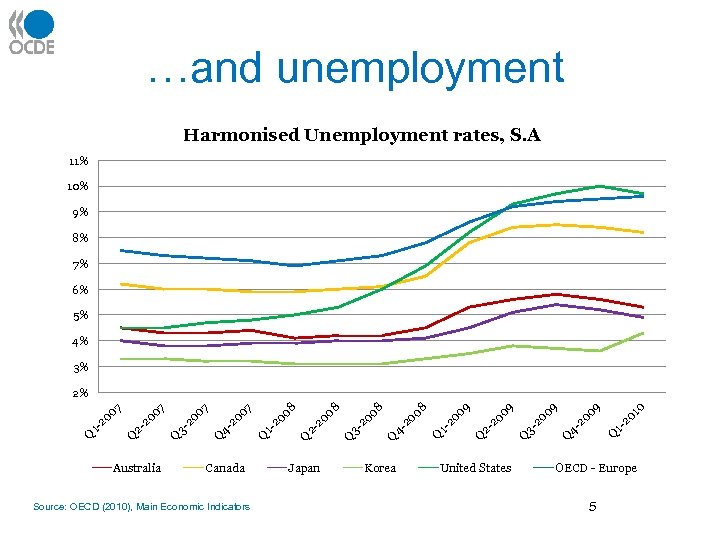
…and unemployment Harmonised Unemployment rates, S. A 11% 10% 9% 8% 7% 6% 5% 4% 3% Australia Canada Source: OECD (2010), Main Economic Indicators Korea Q 10 Q 4 - 1 - 20 09 3 Q 20 2 Q United States 20 09 09 20 1 Q 08 Q 4 - 20 08 3 Q 20 2 Q Japan 20 08 08 Q 1 - 20 07 Q 4 - 20 07 20 3 Q 20 2 Q Q 1 - 20 07 07 2% OECD - Europe 5
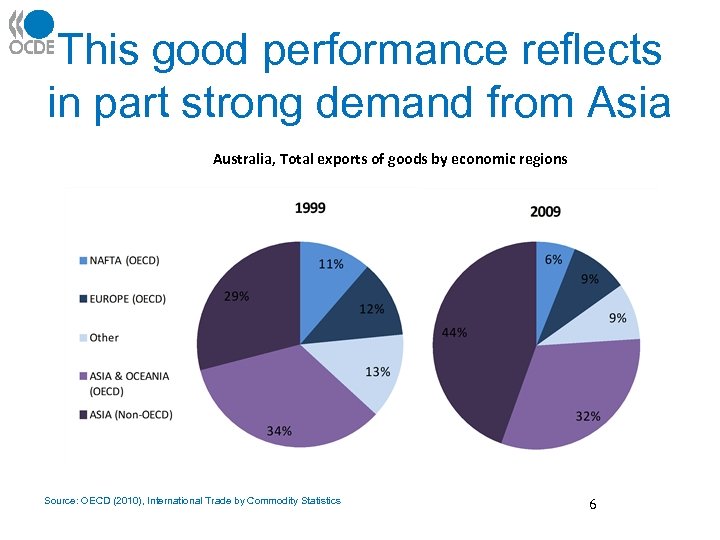
This good performance reflects in part strong demand from Asia Australia, Total exports of goods by economic regions Source: OECD (2010), International Trade by Commodity Statistics 6
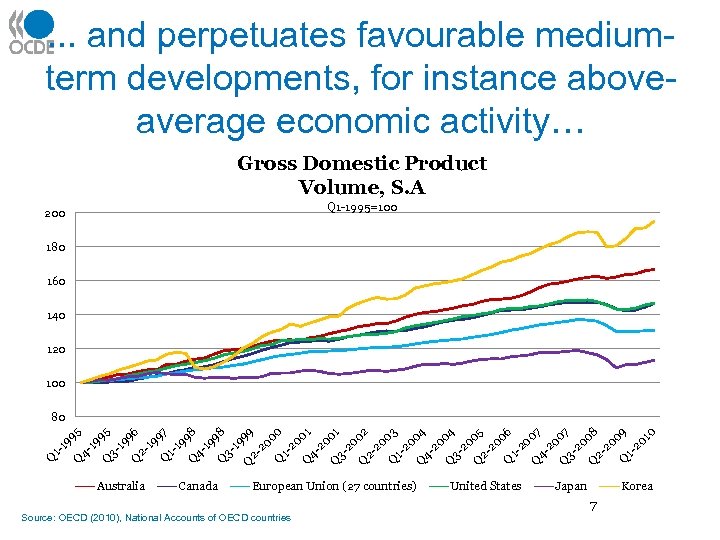
. . . and perpetuates favourable mediumterm developments, for instance aboveaverage economic activity… Gross Domestic Product Volume, S. A Q 1 -1995=100 200 180 160 140 120 100 Canada United States 10 20 Korea 7 Source: OECD (2010), National Accounts of OECD countries 1 - 09 Japan Q 20 08 2 - Q 20 3 - Q Q 4 - 20 07 07 20 06 Q 20 2 - Q 1 - 05 20 04 Q 20 4 - Q European Union (27 countries) 3 - 04 20 03 Q 1 - 20 02 2 - 20 Q 3 Q 4 - 20 01 01 20 Q 00 Q 20 2 - 1 - 99 19 Q 3 - Q 19 4 - Q Q 98 98 19 97 Australia 1 - 19 96 Q 19 3 - 2 - 95 19 Q 4 Q Q 1 - 19 95 80
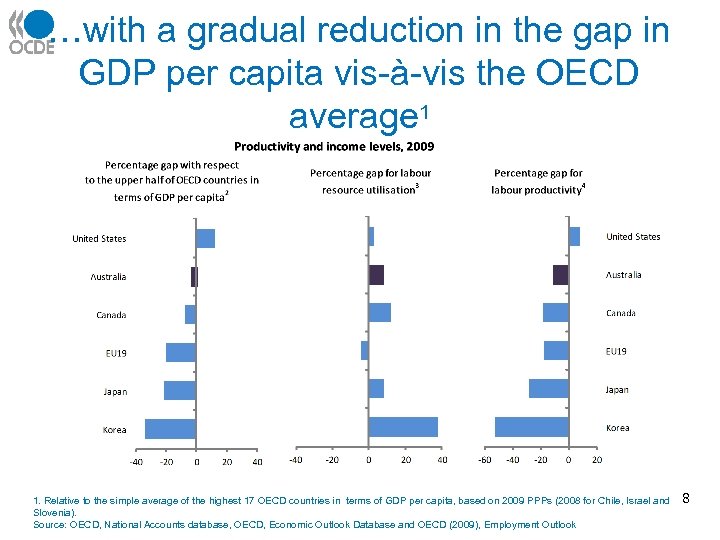
…with a gradual reduction in the gap in GDP per capita vis-à-vis the OECD average 1 1. Relative to the simple average of the highest 17 OECD countries in terms of GDP per capita, based on 2009 PPPs (2008 for Chile, Israel and Slovenia). Source: OECD, National Accounts database, OECD, Economic Outlook Database and OECD (2009), Employment Outlook 8
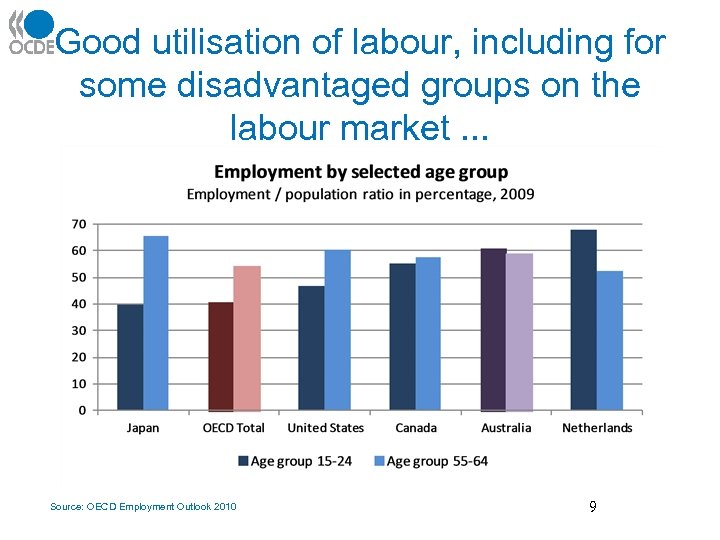
Good utilisation of labour, including for some disadvantaged groups on the labour market. . . Source: OECD Employment Outlook 2010 9
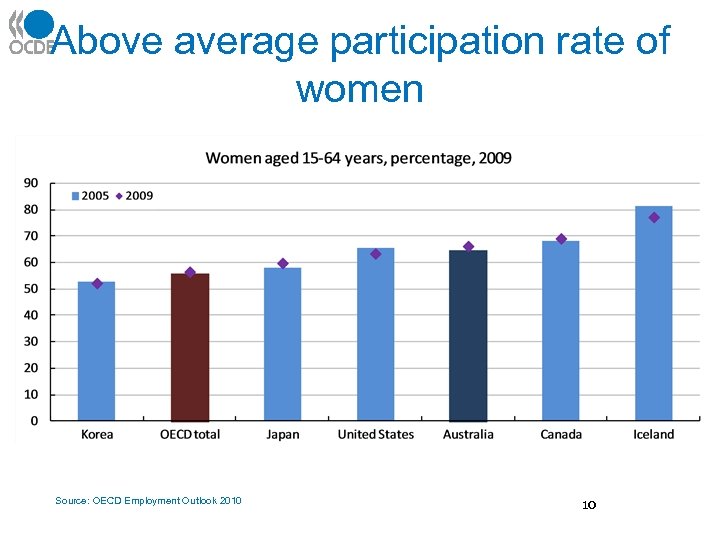
Above average participation rate of women Source: OECD Employment Outlook 2010 10
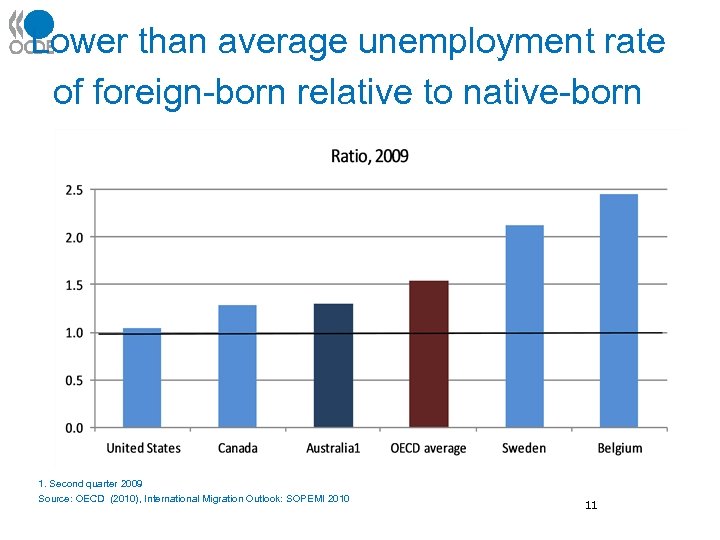
Lower than average unemployment rate of foreign-born relative to native-born 1. Second quarter 2009 Source: OECD (2010), International Migration Outlook: SOPEMI 2010 11
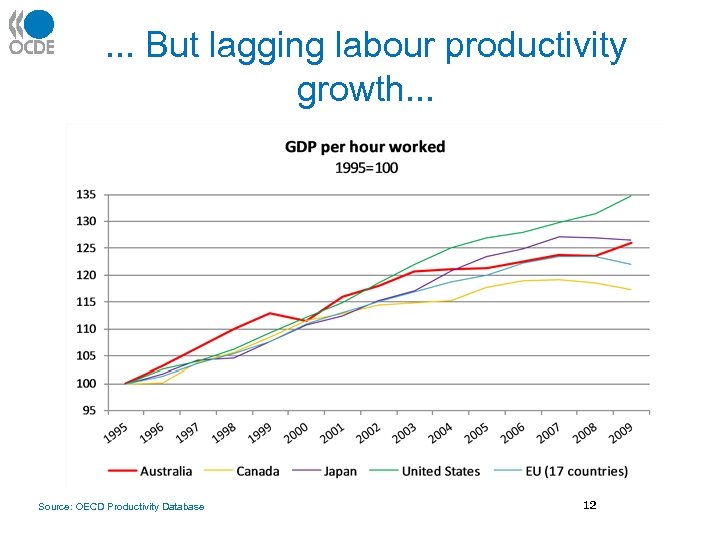
. . . But lagging labour productivity growth. . . Source: OECD Productivity Database 12
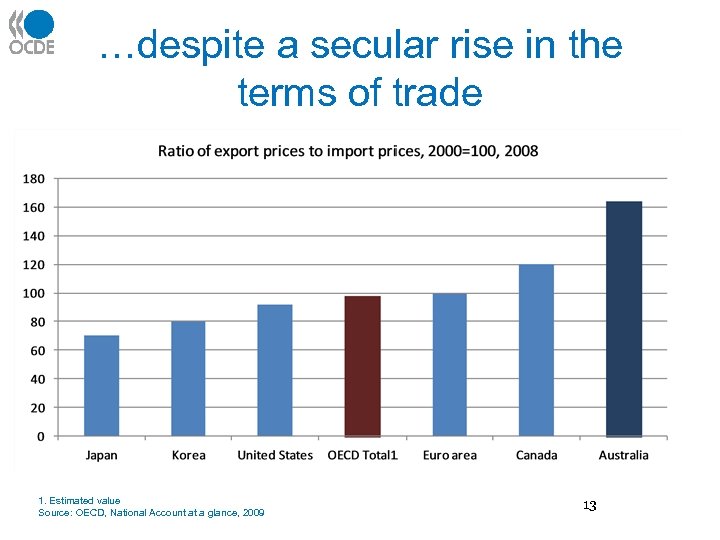
…despite a secular rise in the terms of trade 1. Estimated value Source: OECD, National Account at a glance, 2009 13
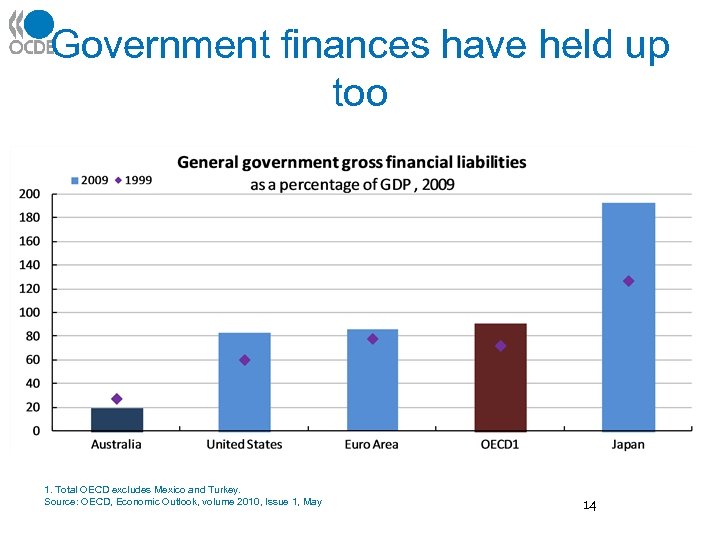
Government finances have held up too 1. Total OECD excludes Mexico and Turkey. Source: OECD, Economic Outlook, volume 2010, Issue 1, May 14
A look at the household perspective… Ø Focus on households is at the heart of the OECD work on Measuring Well-Being and the Progress of Societies 15
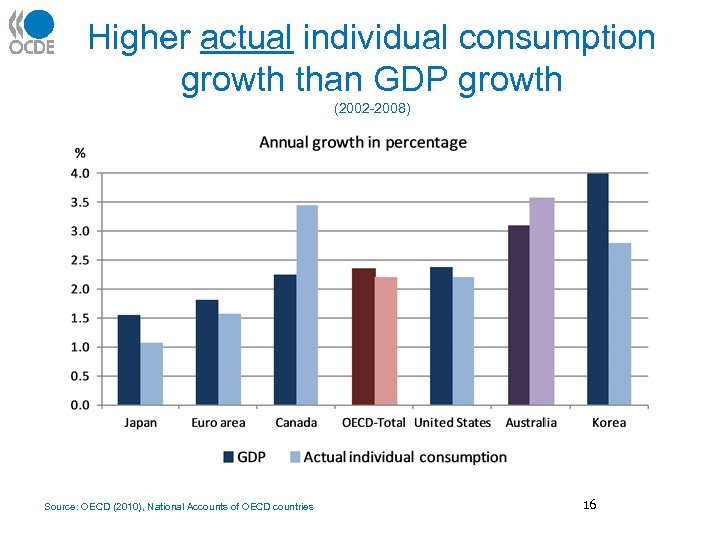
Higher actual individual consumption growth than GDP growth (2002 -2008) Source: OECD (2010), National Accounts of OECD countries 16
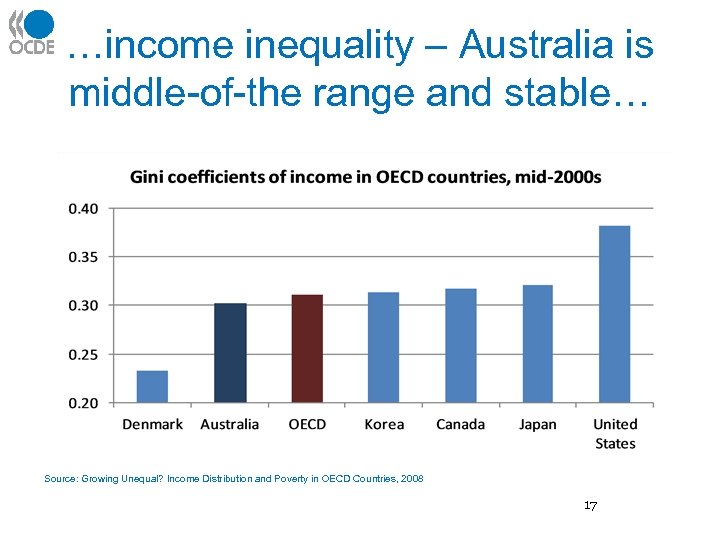
…income inequality – Australia is middle-of-the range and stable… Source: Growing Unequal? Income Distribution and Poverty in OECD Countries, 2008 17
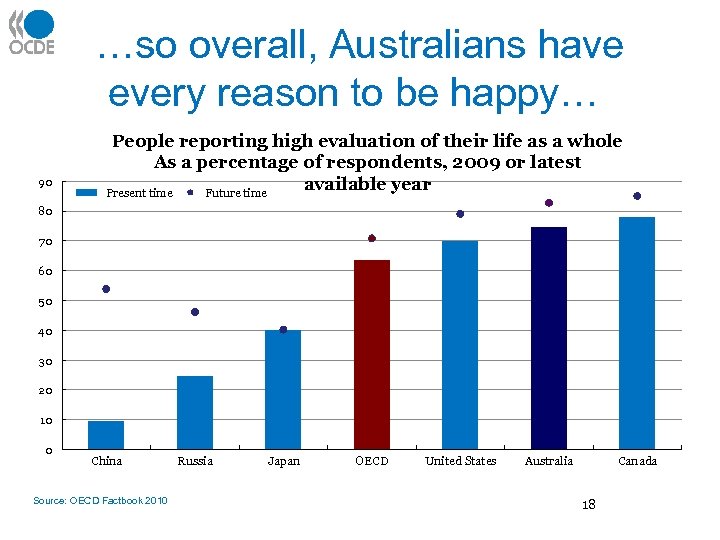
…so overall, Australians have every reason to be happy… 90 People reporting high evaluation of their life as a whole As a percentage of respondents, 2009 or latest available year Present time Future time 80 70 60 50 40 30 20 10 0 China Source: OECD Factbook 2010 Russia Japan OECD United States Australia Canada 18
…but more needs to be known about the well-being of Australian people Ø OECD is developing indicators along two dimensions ØBetter measurement of economic resources and their distribution, including household’s own production and wealth ØIndicators of quality of life, both objective and subjective 19
There are challenges as well if Australia wants to maintain its favourable position in the future 20
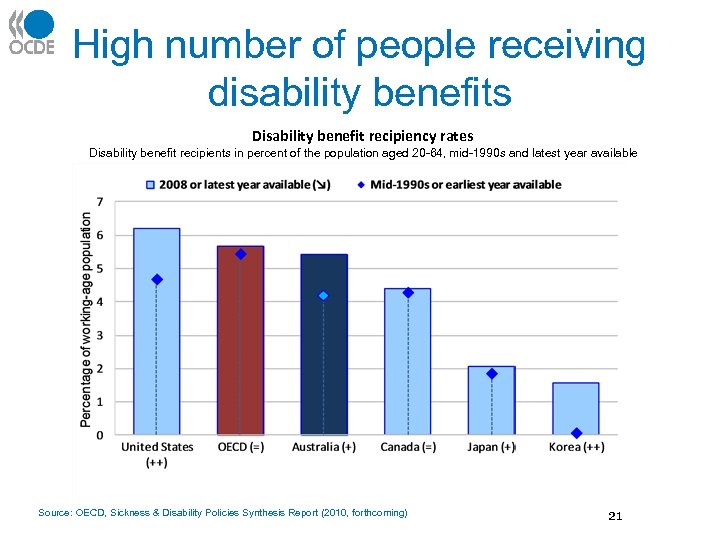
High number of people receiving disability benefits Disability benefit recipiency rates Disability benefit recipients in percent of the population aged 20 -64, mid-1990 s and latest year available Source: OECD, Sickness & Disability Policies Synthesis Report (2010, forthcoming) 21
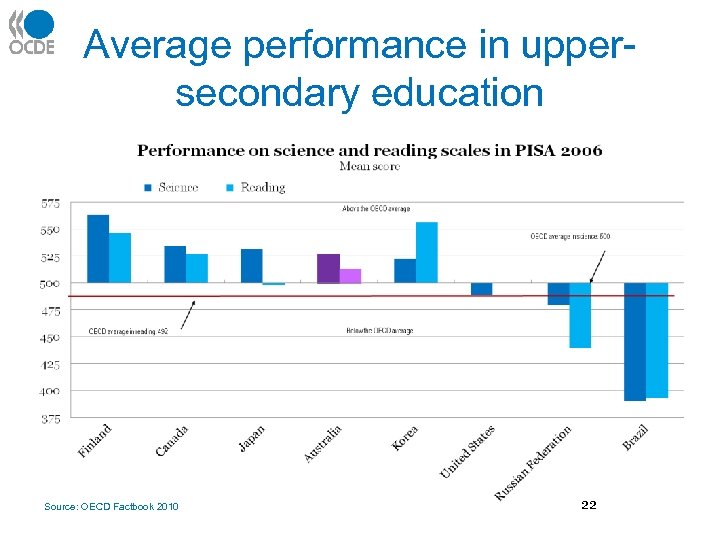
Average performance in uppersecondary education Source: OECD Factbook 2010 22
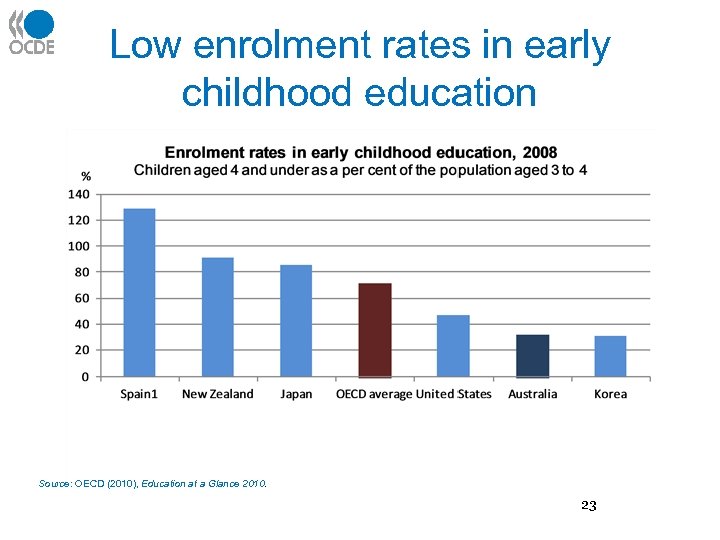
Low enrolment rates in early childhood education Source: OECD (2010), Education at a Glance 2010. 23
…but more needs to be known about the skills and competencies of the workforce ü OECD has launched PIAAC ü OECD works on measures of human capital 24
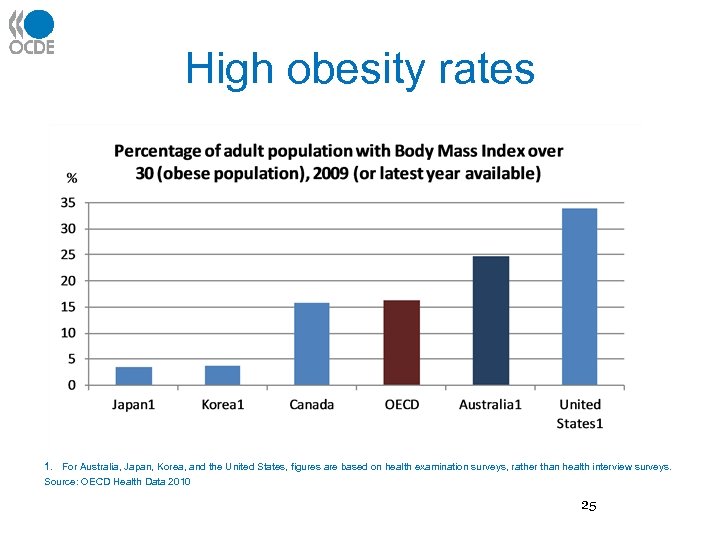
High obesity rates 1. For Australia, Japan, Korea, and the United States, figures are based on health examination surveys, rather than health interview surveys. Source: OECD Health Data 2010 25
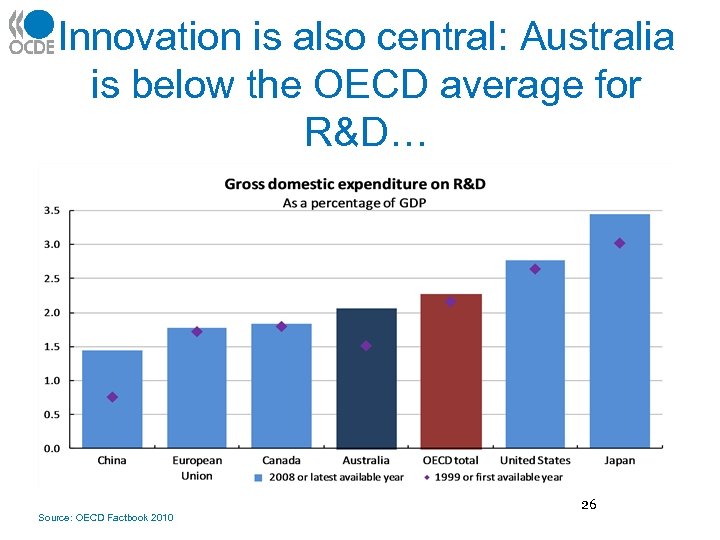
Innovation is also central: Australia is below the OECD average for R&D… 26 Source: OECD Factbook 2010
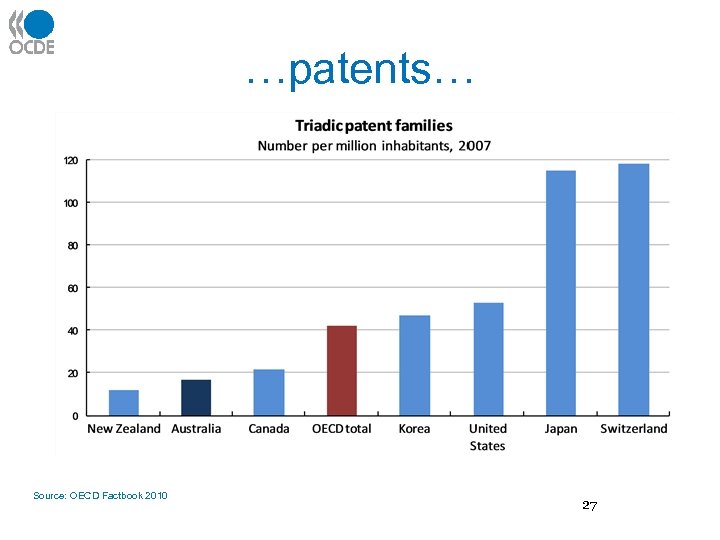
…patents… Source: OECD Factbook 2010 27
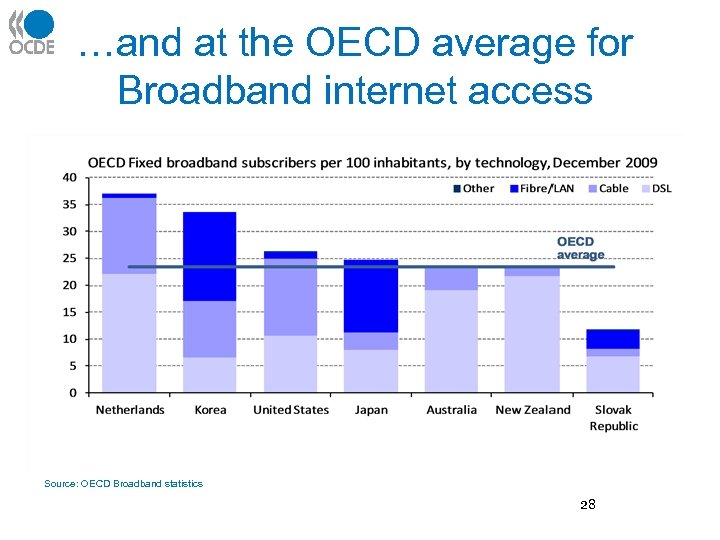
…and at the OECD average for Broadband internet access Source: OECD Broadband statistics 28
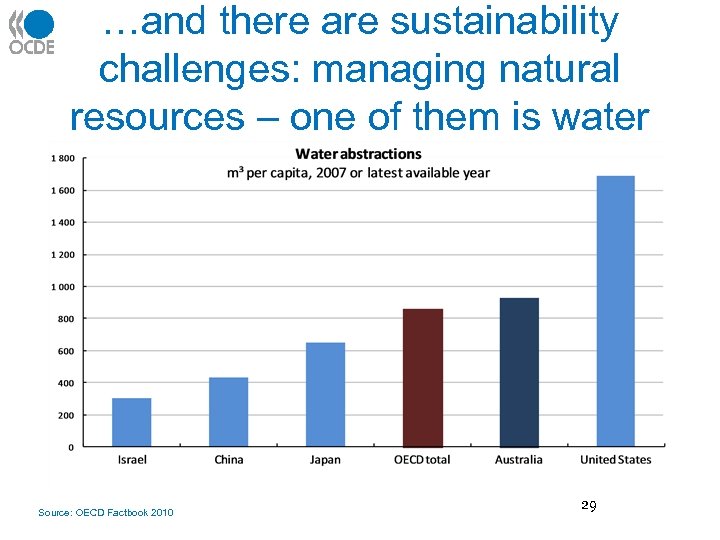
…and there are sustainability challenges: managing natural resources – one of them is water Source: OECD Factbook 2010 29
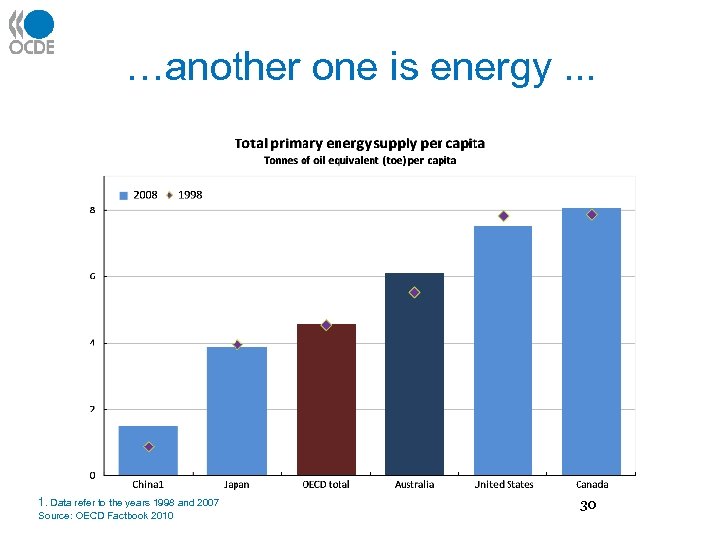
…another one is energy. . . 1. Data refer to the years 1998 and 2007 Source: OECD Factbook 2010 30
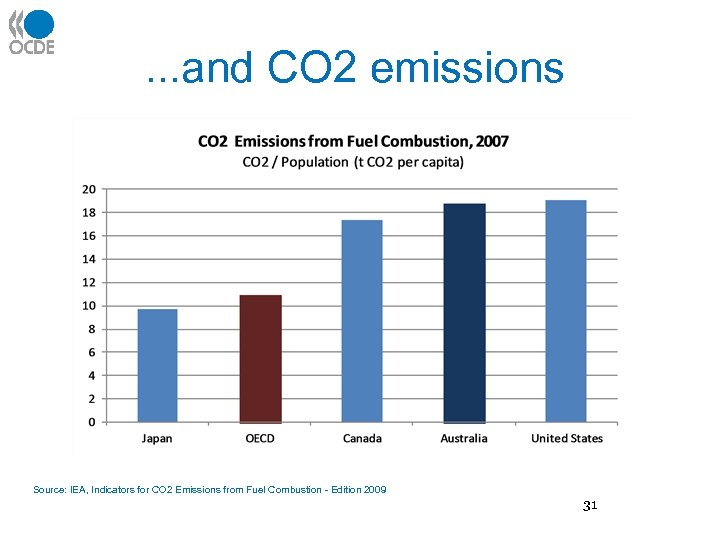
. . . and CO 2 emissions Source: IEA, Indicators for CO 2 Emissions from Fuel Combustion - Edition 2009 31
…but more needs to be known about sustainability Ø OECD is developing indicators in two areas Ø Green Growth and the Environment ØIntangible assets 32
Conclusions Ø Australia is in a rather favourable position in the global economy Ø But three are some challenges ahead to remain in that position Ø And new indicators are needed to better assess performance 33
Thank you for your attention! martine. durand @oecd. org 34
Скачать презентацию Nat Stats 2010 Conference Sydney 15 -17 September
e2dd2e73a8c96f9be4d1c0d2a62816f1.ppt