


Name: Beket S. Group: 119 -23
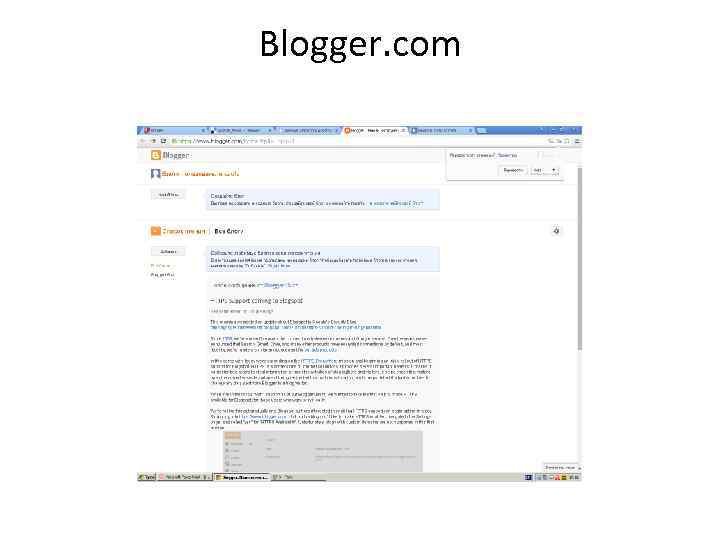
Blogger. com
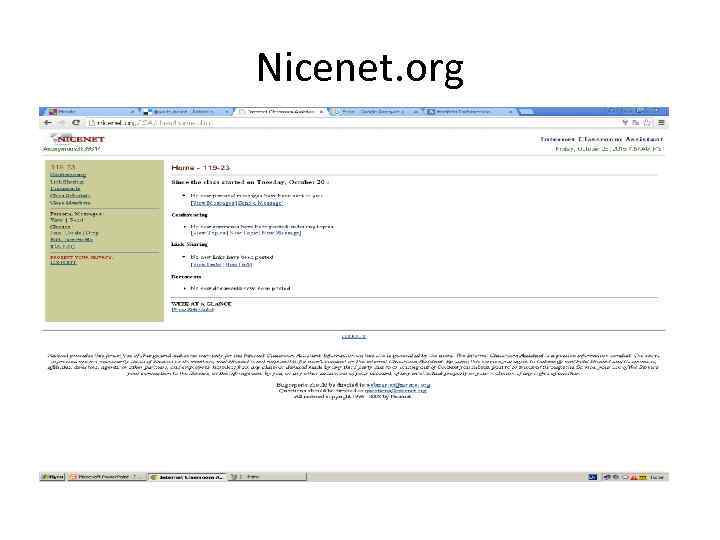
Nicenet. org
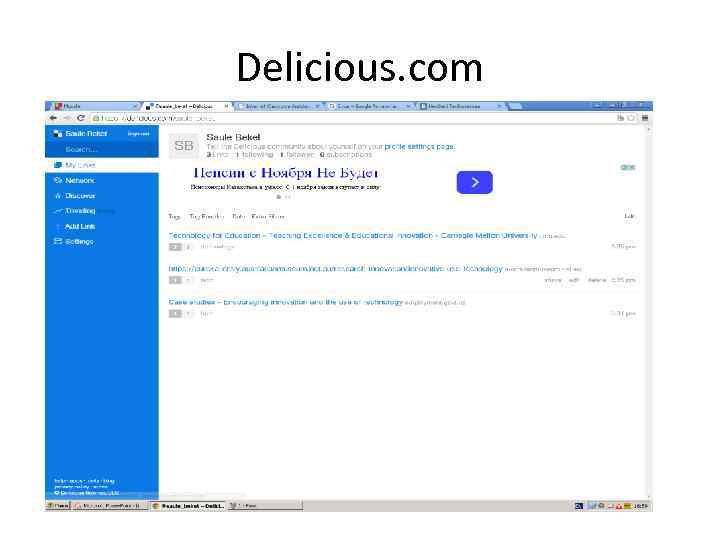
Delicious. com
Padlet. com http: //ru. padlet. com/saulebeket/ah 7 p 50 wvk 695
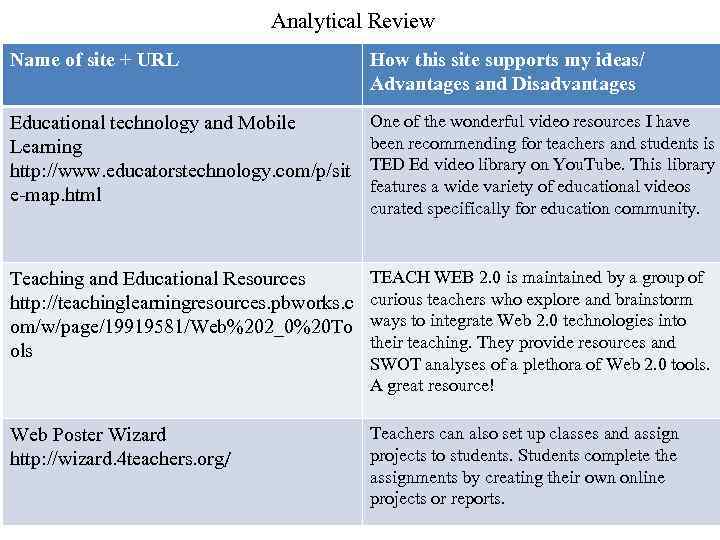
Analytical Review Name of site + URL How this site supports my ideas/ Advantages and Disadvantages Educational technology and Mobile Learning http: //www. educatorstechnology. com/p/sit e-map. html One of the wonderful video resources I have been recommending for teachers and students is TED Ed video library on You. Tube. This library features a wide variety of educational videos curated specifically for education community. Teaching and Educational Resources http: //teachinglearningresources. pbworks. c om/w/page/19919581/Web%202_0%20 To ols TEACH WEB 2. 0 is maintained by a group of curious teachers who explore and brainstorm ways to integrate Web 2. 0 technologies into their teaching. They provide resources and SWOT analyses of a plethora of Web 2. 0 tools. A great resource! Web Poster Wizard http: //wizard. 4 teachers. org/ Teachers can also set up classes and assign projects to students. Students complete the assignments by creating their own online projects or reports.
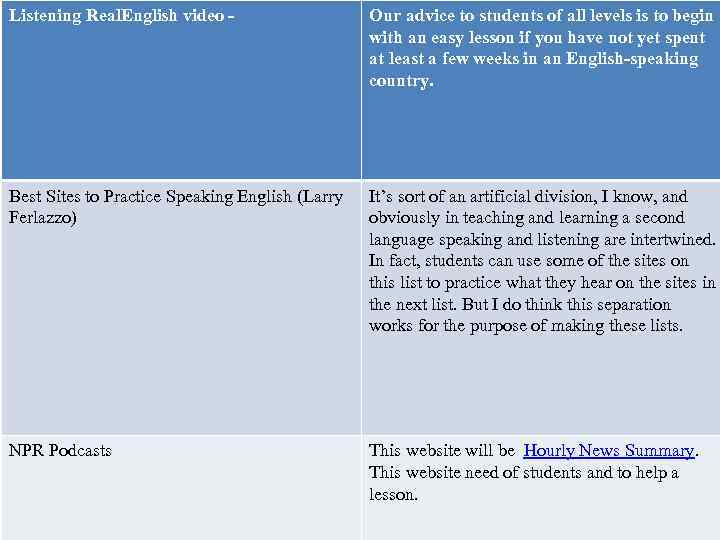
Listening Real. English video - Our advice to students of all levels is to begin with an easy lesson if you have not yet spent at least a few weeks in an English-speaking country. Best Sites to Practice Speaking English (Larry Ferlazzo) It’s sort of an artificial division, I know, and obviously in teaching and learning a second language speaking and listening are intertwined. In fact, students can use some of the sites on this list to practice what they hear on the sites in the next list. But I do think this separation works for the purpose of making these lists. NPR Podcasts This website will be Hourly News Summary. This website need of students and to help a lesson.
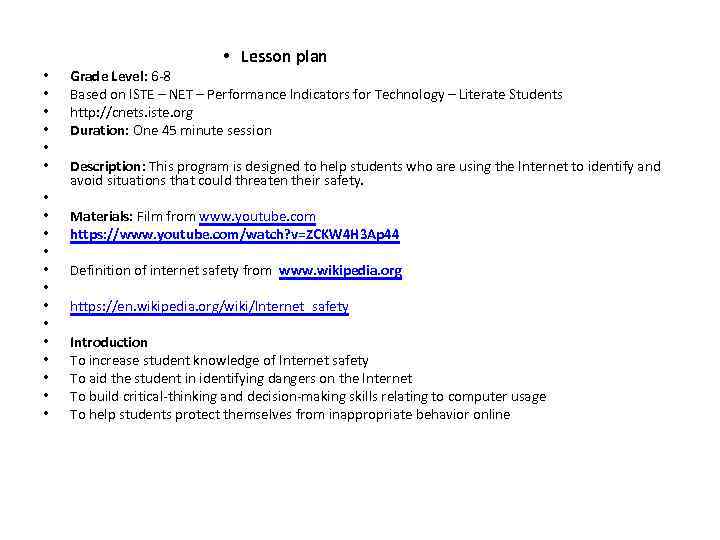
• • • • • Lesson plan Grade Level: 6 -8 Based on ISTE – NET – Performance Indicators for Technology – Literate Students http: //cnets. iste. org Duration: One 45 minute session Description: This program is designed to help students who are using the Internet to identify and avoid situations that could threaten their safety. Materials: Film from www. youtube. com https: //www. youtube. com/watch? v=ZCKW 4 H 3 Ap 44 Definition of internet safety from www. wikipedia. org https: //en. wikipedia. org/wiki/Internet_safety Introduction To increase student knowledge of Internet safety To aid the student in identifying dangers on the Internet To build critical-thinking and decision-making skills relating to computer usage To help students protect themselves from inappropriate behavior online
• • • Handouts with relevant web sites and links Parent or guardian/child agreement Objectives: By the end of this training, students will be able to: Identify five types of personal information Identify types of online “Stranger Danger” Identify appropriate people for communication Identify how to protect themselves from inappropriate Internet behavior • • • Procedure: To show students film from www. youtube. com about internet safety https: //www. youtube. com/watch? v=ZCKW 4 H 3 Ap 44 To present students definition of internet safety from www. wikipedia. org https: //en. wikipedia. org/wiki/Internet_safety
• • • • • • • To tell about internet safety Activity : Teacher A. “Stranger Danger” On the street Rules: Say ‘No’ Get away Tell someone At home Never open your door to strangers Same rules apply to Internet Tell a parent or adult if someone you don’t know tries to talk to you online B. Going on the Internet is like going out on Halloween Everyone’s face is hidden Unless you know your friend’s costume (online name), you don’t know if you’re talking to your friend or someone you don’t know Any stranger can pretend to be a friend and you have no way of knowing who they are because they are behind the mask of the computer C. Appropriate Websites Approved by parents, guardians or teachers Feel embarrassed or uncomfortable with what you see – tell adult D. Appropriate Email and Messages Do not open email from strangers Do not open email with attachments Do not give out email address (unless approved) If someone uses a bad word, tell adult
• • • • • E. Giving Out Information Do Not Give Out Personal Information Name Where you live – city or address Telephone Number Birthdate Height Weight Photo Parent’s name School Information you can give out Likes and dislikes Be careful of online names – don’t give TMI in name Sunygrl 14 Sweetie 15 Goldguy 17 90 tampa
• • • • • Question students about appropriate information— Yes Can you tell someone you like blue? You like pizza? Type of pets that you have? Your favorite movie? No Your favorite movie theater? Your favorite beach? Teacher’s names? Be careful in joining mailing lists, some may make your personal information public F. Meeting People on the Internet Have adults approve someone before you talk with them on the Internet If someone asks to meet you – tell adult immediately Do not go into chat rooms without your parent's knowledge Never arrange a face-to-face meeting with someone you meet online (You have no way of really knowing if that person is a 15 year old boy – or a 50 year old man. )
• G. Passwords • Your personal password is your own special identity, so keep it secret and only share it with a parent or guardian. • • • Homework: Summary – talk with adults about what you are doing on the Internet and have an agreement with your parents or guardian •
