


 Скачать презентацию Name _________________ A Science Fair
85fb817df0ab6fba4cbaff0b962ff23c.ppt
- Количество слайдов: 15
 Name _________________
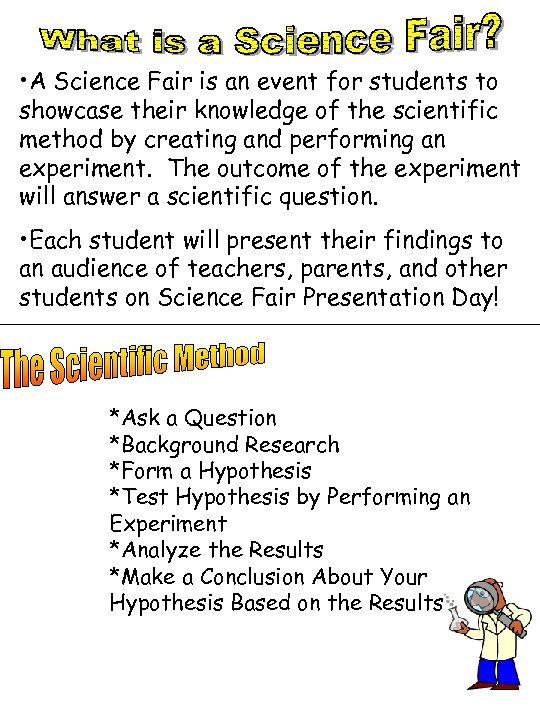 • A Science Fair is an event for students to showcase their knowledge of the scientific method by creating and performing an experiment. The outcome of the experiment will answer a scientific question. • Each student will present their findings to an audience of teachers, parents, and other students on Science Fair Presentation Day! *Ask a Question *Background Research *Form a Hypothesis *Test Hypothesis by Performing an Experiment *Analyze the Results *Make a Conclusion About Your Hypothesis Based on the Results
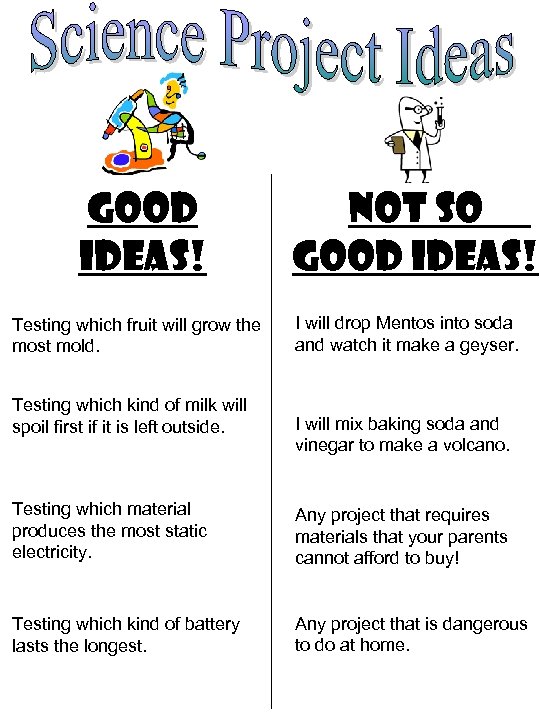 Good Ideas! Testing which fruit will grow the most mold. Testing which kind of milk will spoil first if it is left outside. Not So Good Ideas! I will drop Mentos into soda and watch it make a geyser. I will mix baking soda and vinegar to make a volcano. Testing which material produces the most static electricity. Any project that requires materials that your parents cannot afford to buy! Testing which kind of battery lasts the longest. Any project that is dangerous to do at home.
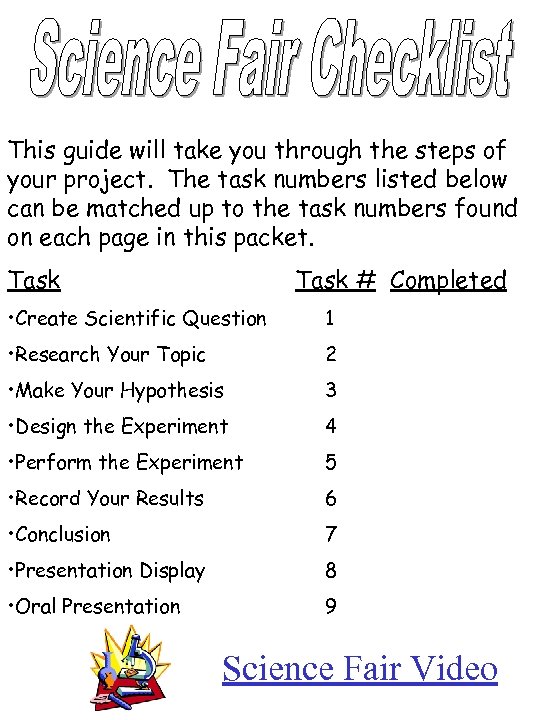 This guide will take you through the steps of your project. The task numbers listed below can be matched up to the task numbers found on each page in this packet. Task # Completed • Create Scientific Question 1 • Research Your Topic 2 • Make Your Hypothesis 3 • Design the Experiment 4 • Perform the Experiment 5 • Record Your Results 6 • Conclusion 7 • Presentation Display 8 • Oral Presentation 9 Science Fair Video
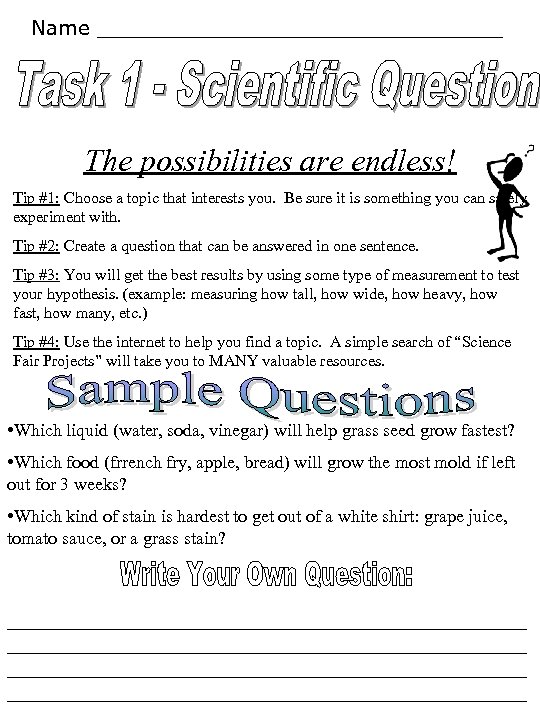 Name ________________ The possibilities are endless! Tip #1: Choose a topic that interests you. Be sure it is something you can safely experiment with. Tip #2: Create a question that can be answered in one sentence. Tip #3: You will get the best results by using some type of measurement to test your hypothesis. (example: measuring how tall, how wide, how heavy, how fast, how many, etc. ) Tip #4: Use the internet to help you find a topic. A simple search of “Science Fair Projects” will take you to MANY valuable resources. • Which liquid (water, soda, vinegar) will help grass seed grow fastest? • Which food (frrench fry, apple, bread) will grow the most mold if left out for 3 weeks? • Which kind of stain is hardest to get out of a white shirt: grape juice, tomato sauce, or a grass stain? ____________________________________________________
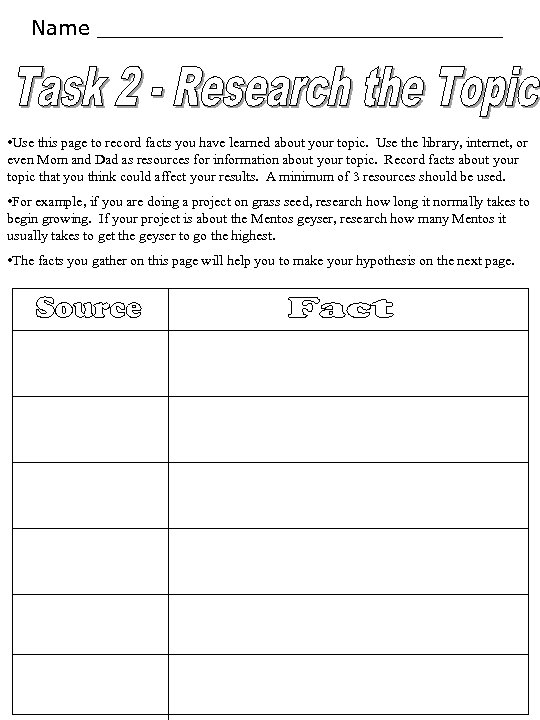 Name ________________ • Use this page to record facts you have learned about your topic. Use the library, internet, or even Mom and Dad as resources for information about your topic. Record facts about your topic that you think could affect your results. A minimum of 3 resources should be used. • For example, if you are doing a project on grass seed, research how long it normally takes to begin growing. If your project is about the Mentos geyser, research how many Mentos it usually takes to get the geyser to go the highest. • The facts you gather on this page will help you to make your hypothesis on the next page.
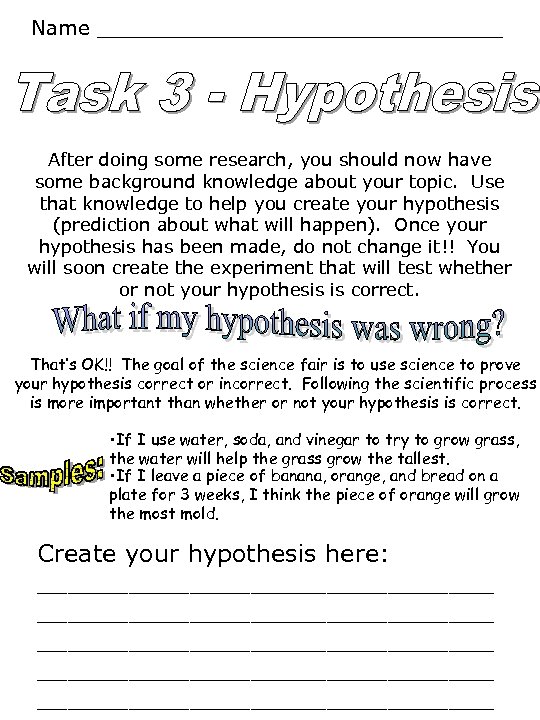 Name ________________ After doing some research, you should now have some background knowledge about your topic. Use that knowledge to help you create your hypothesis (prediction about what will happen). Once your hypothesis has been made, do not change it!! You will soon create the experiment that will test whether or not your hypothesis is correct. That’s OK!! The goal of the science fair is to use science to prove your hypothesis correct or incorrect. Following the scientific process is more important than whether or not your hypothesis is correct. • If I use water, soda, and vinegar to try to grow grass, the water will help the grass grow the tallest. • If I leave a piece of banana, orange, and bread on a plate for 3 weeks, I think the piece of orange will grow the most mold. Create your hypothesis here: ______________________________ _______________
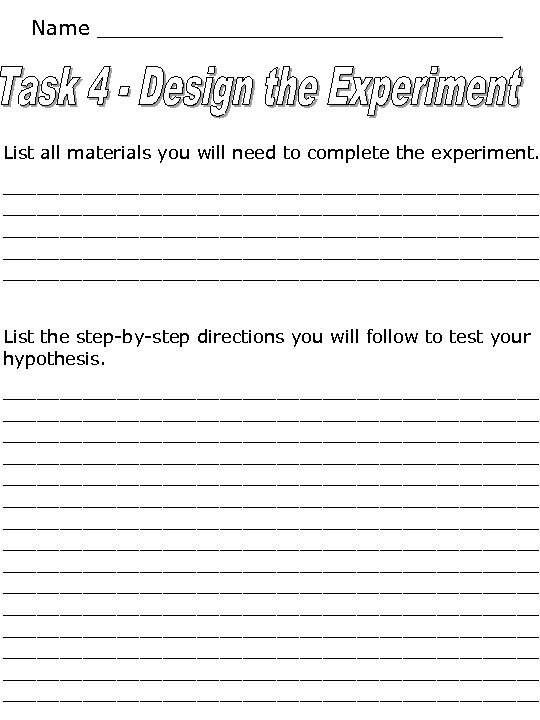 Name ________________ List all materials you will need to complete the experiment. _______________________________________________ ________________________ List the step-by-step directions you will follow to test your hypothesis. _______________________________________________ _______________________________________________ _______________________________________________ _______________________________________________
 Name ________________ Be sure to perform your experiment under the same conditions every time. For example, if you are checking food for mold, set a specific time everyday that you can check. If you are testing 3 different kinds of cleaners to see which is best at getting a grape juice stain out of clothing, make sure that the size of each stain is the same. Whatever your experiment might involve, just be sure that each item being tested is given an equal chance. Take pictures and notes during the experiment so others can see your experiment taking place!
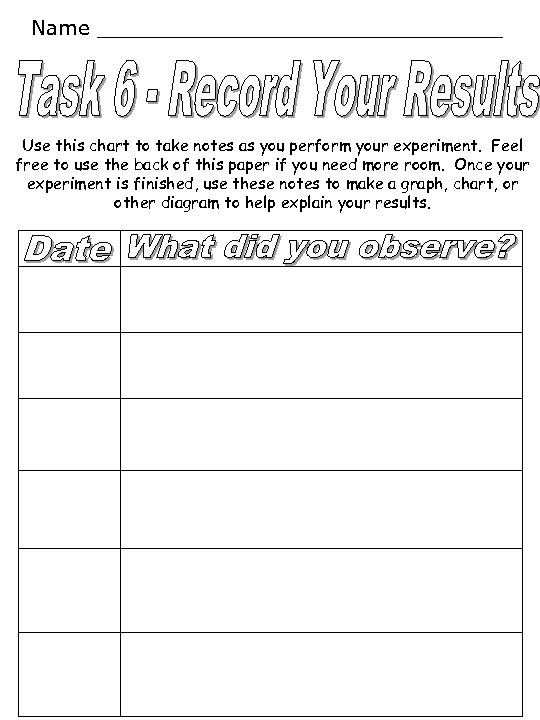 Name ________________ Use this chart to take notes as you perform your experiment. Feel free to use the back of this paper if you need more room. Once your experiment is finished, use these notes to make a graph, chart, or other diagram to help explain your results.
 Name ________________ Use your results to state whether your hypothesis was correct or incorrect. ________________________________________ Did you notice anything else during your experiment that was interesting or unexpected? Many times during an experiment, events happen that nobody predicts or thought about! They don’t affect the hypothesis, but still add to your experience. ________________________________________ ________________________________________
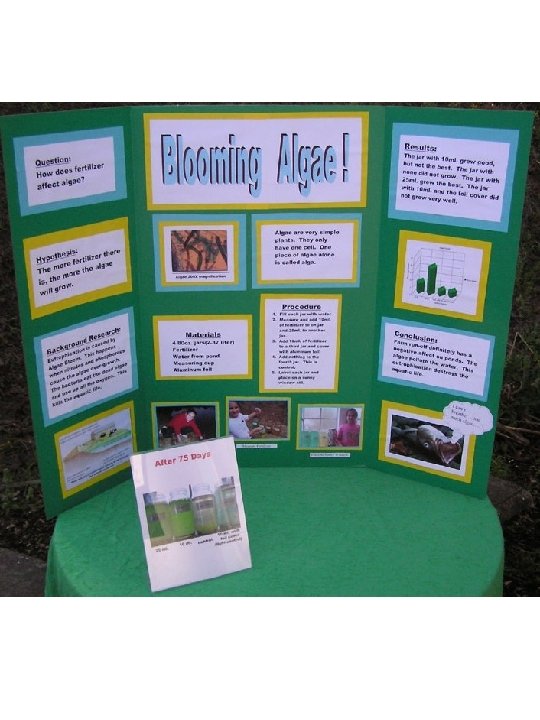
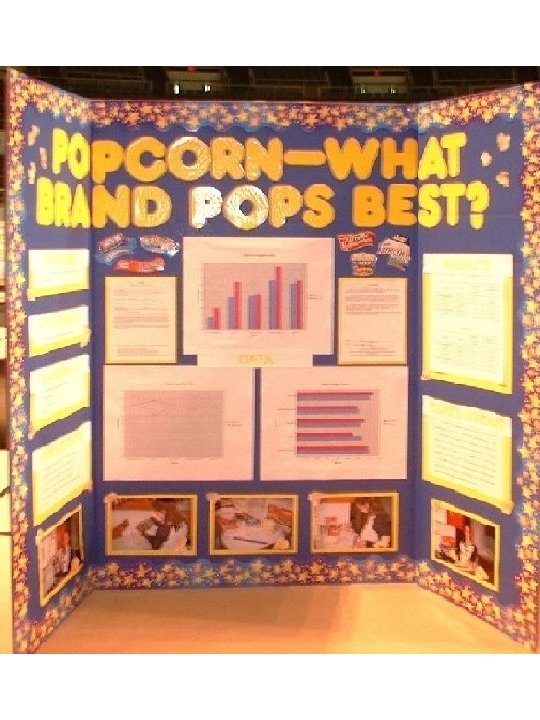
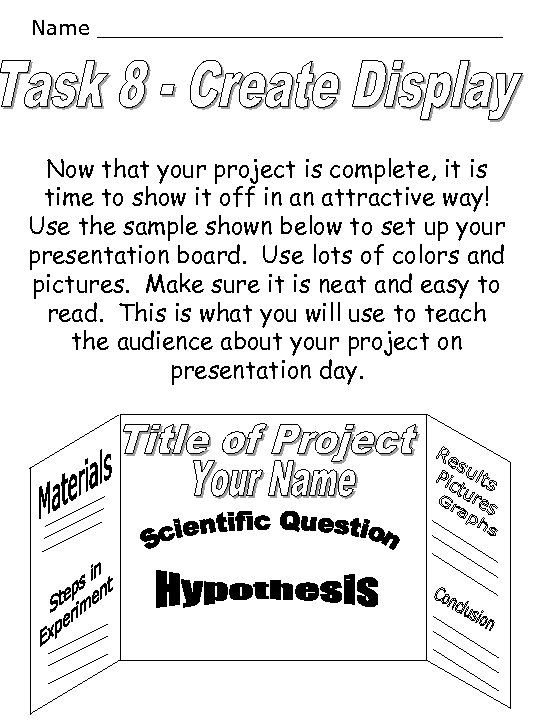 Name ________________ Now that your project is complete, it is time to show it off in an attractive way! Use the sample shown below to set up your presentation board. Use lots of colors and pictures. Make sure it is neat and easy to read. This is what you will use to teach the audience about your project on presentation day.
 Name ________________ **Prepare for your presentation on April 22, 2014 ** On April 22, 2014, parents, teachers, and other students will be invited to attend our science fair. At that time, everyone that participated will have a space to set up their presentation board and explain their project. As the visitors browse the different projects, each student will be responsible for giving a short explanation of his/her project. Here are some tips for a successful presentation: Use your presentation board as a guide when you are speaking. Be prepared to give each group of visitors a 1 -2 minute presentation. 1 - Tell about your scientific question and hypothesis. 2 - Show the different steps involved in your experiment. 3 - Explain your results. Use pictures and other objects that help to show you performed the experiment. 4 - Smile, be friendly, have fun!!!