


 Скачать презентацию n Essential Question Question How did the
c5daee085226ec75034a8954bc86a039.ppt
- Количество слайдов: 41
 n Essential Question: Question – How did the “Second Industrial Revolution” transform the U. S. during the Gilded Age? n Warm-Up Question: – To what extent had the United States developed a “national market economy” by the outbreak of the Civil War (1860)? – What developments were still needed to improve America’s national market economy?
 Gilded Age Industrialization n During the Gilded Age, American businesses were transformed: – Massive corporations replaced small, family businesses – New technology, transportation, marketing, labor relations, & efficient mass-production – By 1900, the U. S. was the most industrialized country in the world
 The Business of Invention n 19 th-century inventors led to an “Age of Invention”: – Cyrus Field’s telegraph cable By 1905, 10 million Americans had phones; – Business typewriters, cash (Bell Telephone Co became AT&T) registers, adding machines – High-speed textile spindles, auto looms, sewing machines – George Eastman’s Kodak camera – Alexander G. Bell’s telephone
 The Business of Invention n Thomas Edison, the “Wizard of Menlo Park, ” created the 1 st research lab in New York – Edison Illuminating Co was the to 1 st use electric light in 1882 – Tesla’s alternating current (AC) allowed electricity to travel over longer distances & to power streetcars & factories
 The Business of Invention n New technologies allowed for increased industrial production – New machines were incorporated into the first assembly lines which allowed for continuous & faster production of goods – The railroad linked every region of America & allowed for a mass consumption of goods
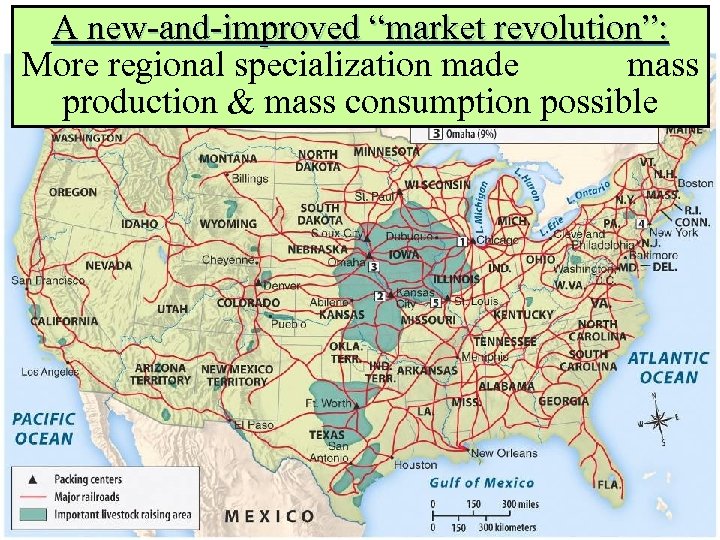 A Midwest Made Meat revolution”: Thenew-and-improved “marketfor America More regional specialization made mass production & mass consumption possible
 New Methods of Marketing n Marketing became a “science”: – Advertising firms boomed – Department stores like Macy’s & Marshall Field’s allowed customers to browse & buy – Chain stores like A&P Grocery & Woolworth’s “Five & Ten” – Mail-order catalogues, like Montgomery Ward sold to all parts of America
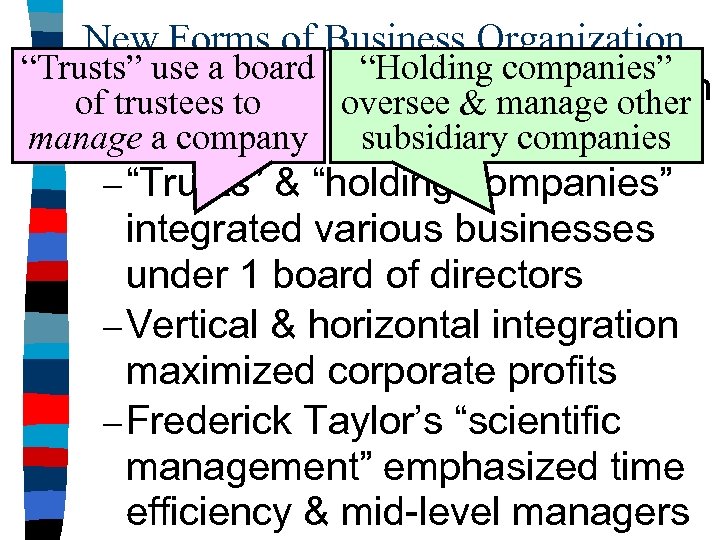 New Forms of Business Organization “Trusts” use a board “Holding companies” n New types of business organization of trustees to oversee & manage other were used to subsidiary companies manage a company increase profits: – “Trusts” & “holding companies” integrated various businesses under 1 board of directors – Vertical & horizontal integration maximized corporate profits – Frederick Taylor’s “scientific management” emphasized time efficiency & mid-level managers
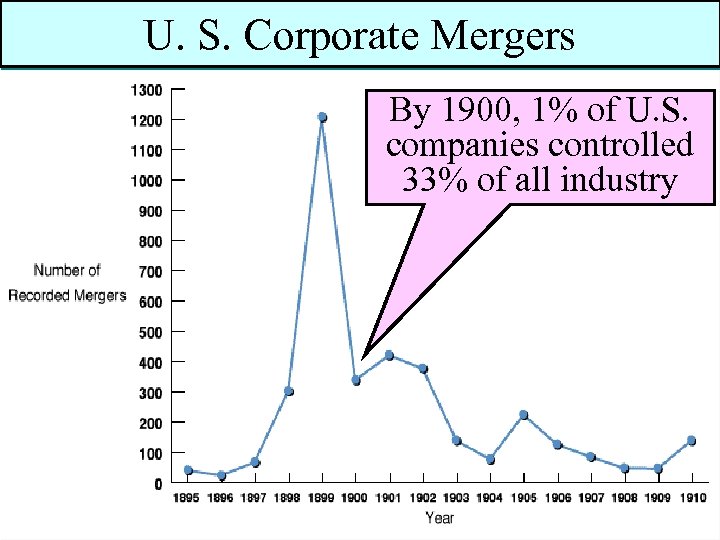 Vertical &Corporate Mergers U. S. Horizontal Integration By 1900, 1% of U. S. companies controlled 33% of all industry
 New Forms of Business Organization n Business leaders used a variety of ideas to justify their wealth: – The “Gospel of Wealth” argued Wealth that it is God's will that some men attained great wealth – Social Darwinism taught that natural competition weeds out the weak & the strong survive – Were monopolists “captains of industry” or “robber barons”?
 The Industrialization of America
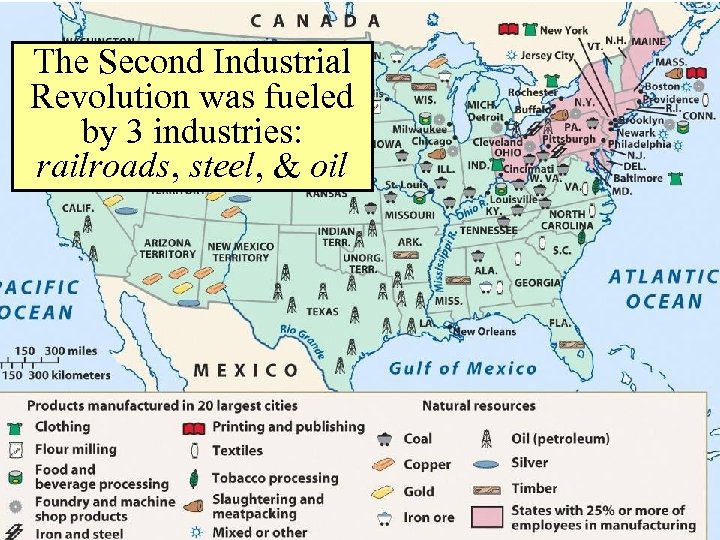 The Second Industrial Revolution was fueled by 3 industries: railroads, steel, & oil
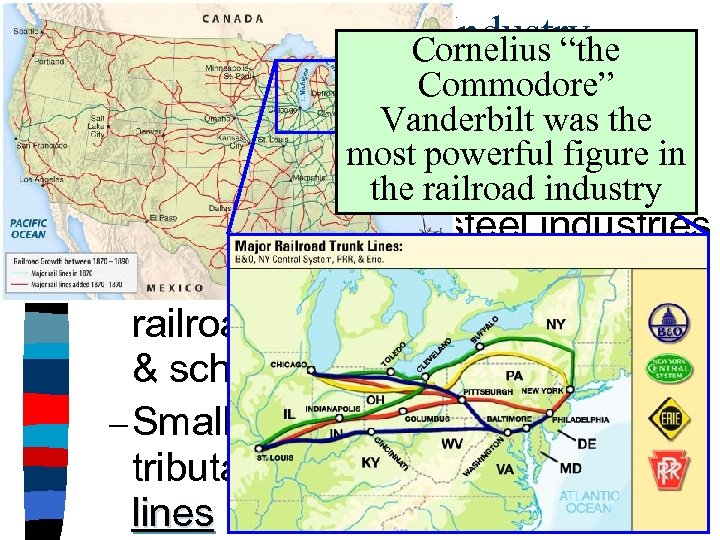 The Railroad Industry Cornelius “the n America’s first “big business” was Commodore” Vanderbilt was the railroad industry: most powerful figure in – Railroads stimulated the coal, the railroad industry petroleum, & iron/steel industries – Large companies bought small railroads, standardized gauges & schedules, & pooled cars – Small lines in the east acted as tributaries to the 4 great trunk lines into the West
 Problems of Gould built Speculators like Jay. Growth & the railroad industry with n But, bought rail lines to profit faced little concern for efficient use problems due to overbuilding in the 1870 s & 1880 s: – Mass competition among RRs – RR lines offered special rates & rebates (secret discounts) to lure passengers & freight on their lines – Pooling & consolidation failed to help over-speculation
 Problems of Growth n RR bosses asked bank financier J. P. Morgan to save their industry: – Morgan created a traffic-sharing plan to end wasteful competition – “Morganization” fixed costs, Morganization cut debt, stabilized rates, issued new stock, & ended rebates – Created a “board of trustees” n By 1900, 7 giant (centralized & efficient) rail systems dominated
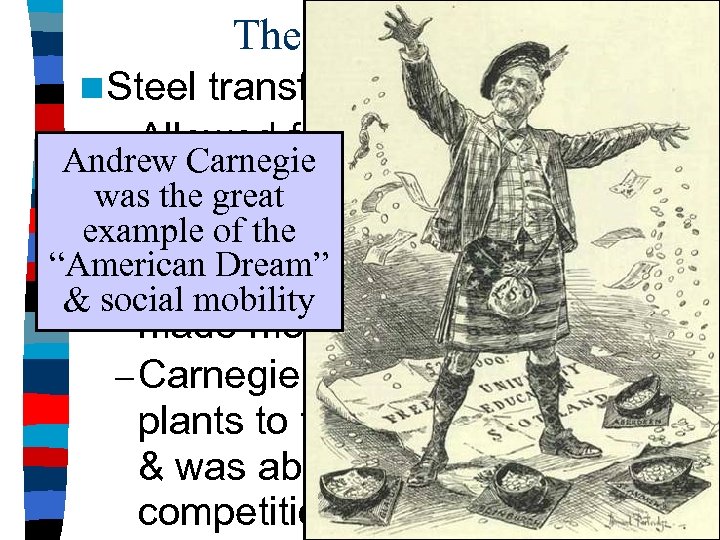 The Steel Industry n Steel transformed world industry: – Allowed for taller buildings, Andrew Carnegie longer bridges, stronger railroad was the great example of& heavier machinery lines, the “American Dream” – Andrew Carnegie’s company Carnegie & social mobility made more steel than England – Carnegie converted his steel plants to the Bessemer process & was able to out-produce his competition & offer lower prices
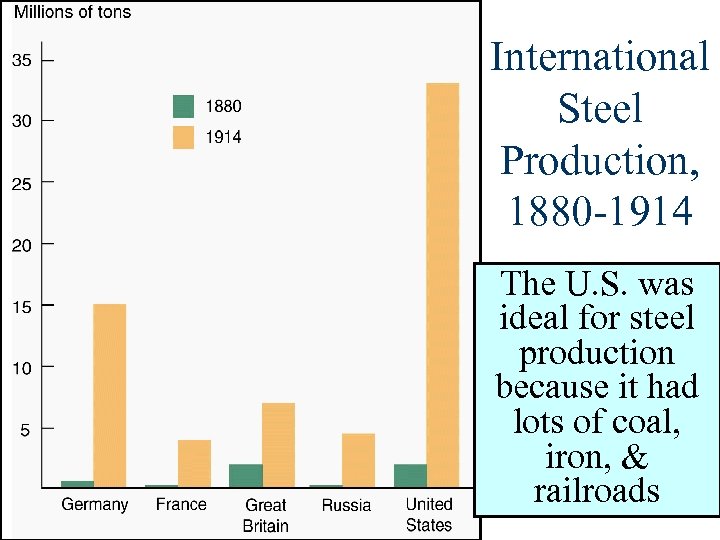 International Steel Production, 1880 -1914 The U. S. was ideal for steel production because it had lots of coal, iron, & railroads
 Rockefeller and Oil n Petroleum also changed industry – New industrial machines needed kerosene for lighting & lubricants – John D. Rockefeller monopolized the oil industry, lowered oil costs & improved the quality of oil – By 1879, Standard Oil ruled 90% of all U. S. oil & sold to Asia, Africa, & South America
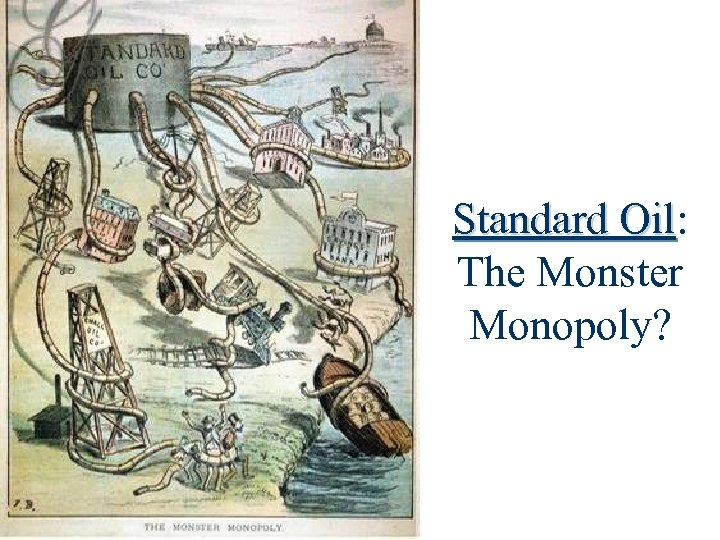 Standard Oil: Oil The Monster Monopoly?
 n Essential Question: Question – What role did the business leaders play in stabilizing the chaotic business cycles of the Gilded Age? n Reading Quiz Ch 18 B (625— 639)
 The Industrial Workers
 Industrial Workers n Industrial work was hard: – Laborers worked long hours & received low wages but had expensive living costs – Industrial work was unskilled, dangerous, & monotonous – Gender, religious, & racial biases led to different pay scales n These conditions led to a small, but significant union movement
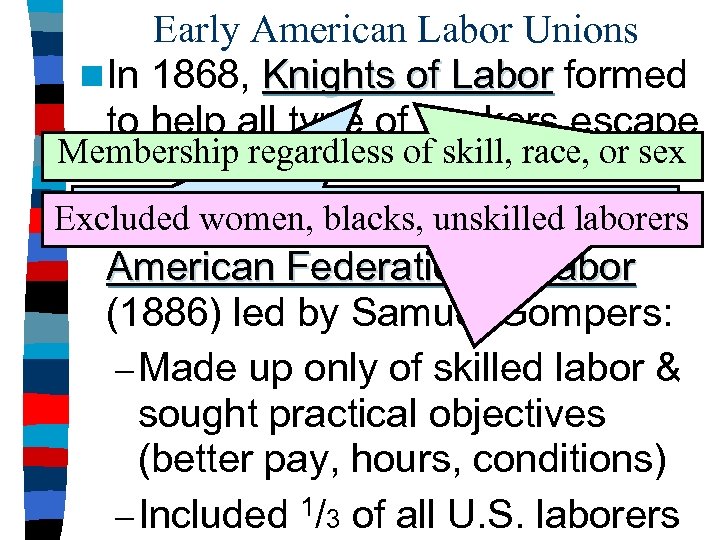 Early American Labor Unions n In 1868, Knights of Labor formed to help all type of workers escape Membership regardless of skill, race, or sex the “wage system” The Ko. L lacked blacks, unskilled laborers Excludedmost successful union, the women, organization to survive n The American Federation of Labor (1886) led by Samuel Gompers: – Made up only of skilled labor & sought practical objectives (better pay, hours, conditions) – Included 1/3 of all U. S. laborers
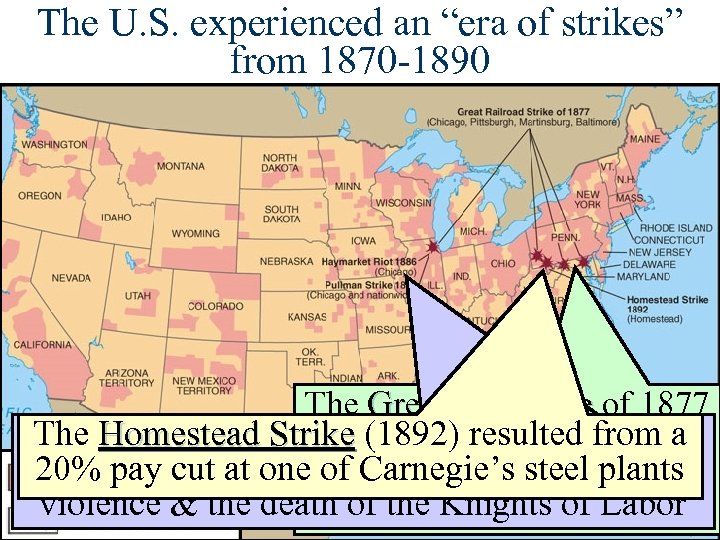 The U. S. experienced an “era of strikes” from 1870 -1890 The Great RR Strike of 1877 During the Chicago Haymarketrailroads from The Homestead Strike (1892) resulted (1886), shut down Strike from a 20% pay cut at one of Carnegie’s steel plants unionists demanded WV to CA & led to mob an 8 -hr day; resulted in violence & the death ofhundreds of deaths the Knights of Labor
 n Essential Question: Question – How did the industrialization of the Gilded Age transform cities & immigration in America? n Reading Quiz Ch 19 A (648— 663)
 Urbanization: 1870 -1900
 Gilded Age Urbanization n From 1870 to 1900, American cities grew 700% due to new job opportunities in factories: – European, Latin American, & Asian immigrants flooded cities – Blacks migrated into the North – Rural farmers moved from the countryside to cities
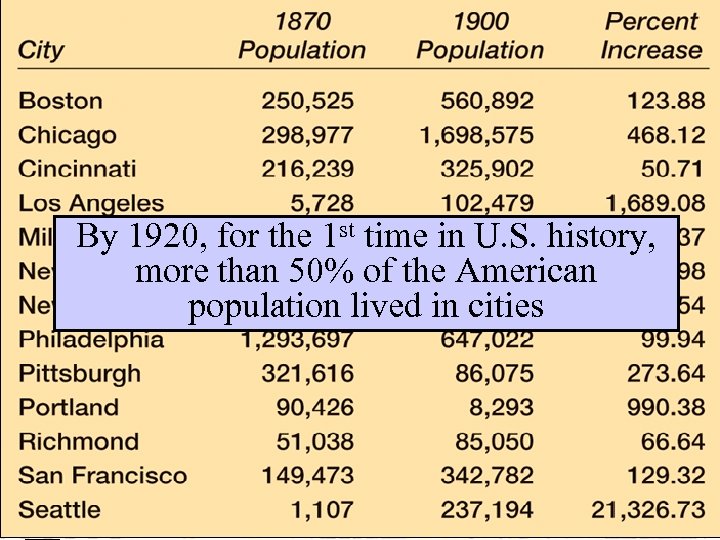 The Lure of the City By 1920, for the 1 st time in U. S. history, more than 50% of the American population lived in cities
 Skyscrapers and Suburbs n By the 1880 s, steel allowed cities to build skyscrapers n The Chicago fire of 1871 allowed for rebuilding with new designs: – John Root & Louis Sullivan were the “fathers of modern urban architecture” – New York & other cities used Chicago as their model
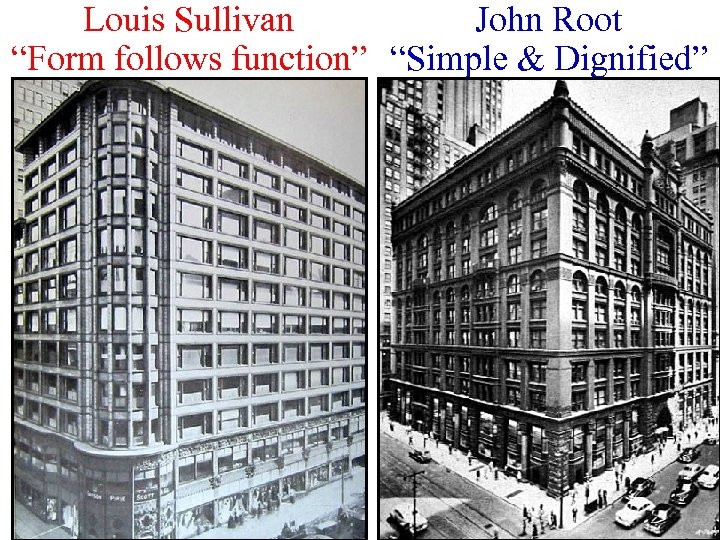 Louis Sullivan John Root “Form follows function” “Simple & Dignified”
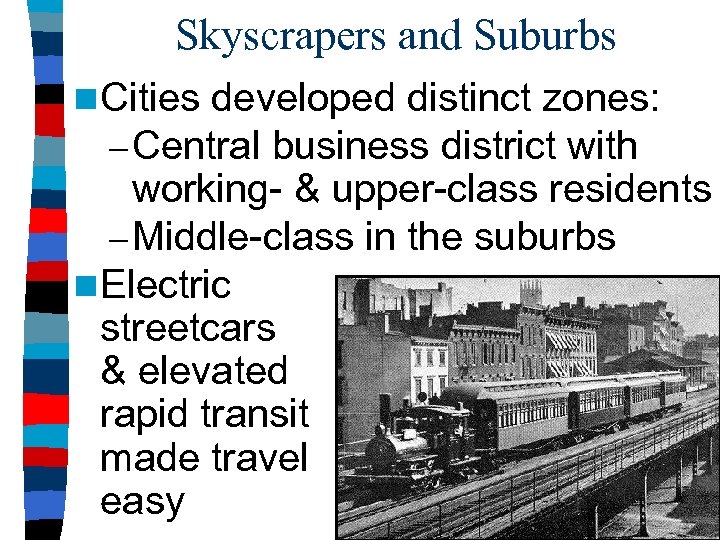 Skyscrapers and Suburbs n Cities developed distinct zones: – Central business district with working- & upper-class residents – Middle-class in the suburbs n Electric streetcars & elevated rapid transit made travel easy
 Tenements & Overcrowding n ½ of NYC’s buildings were tenements which housed the poor working class – “Dumbbell” tenements were popular but were cramped & plagued by firetraps – Slums had poor sanitation, polluted water & air, tuberculosis – Homicide, suicide, & alcoholism rates all increased in U. S. cities
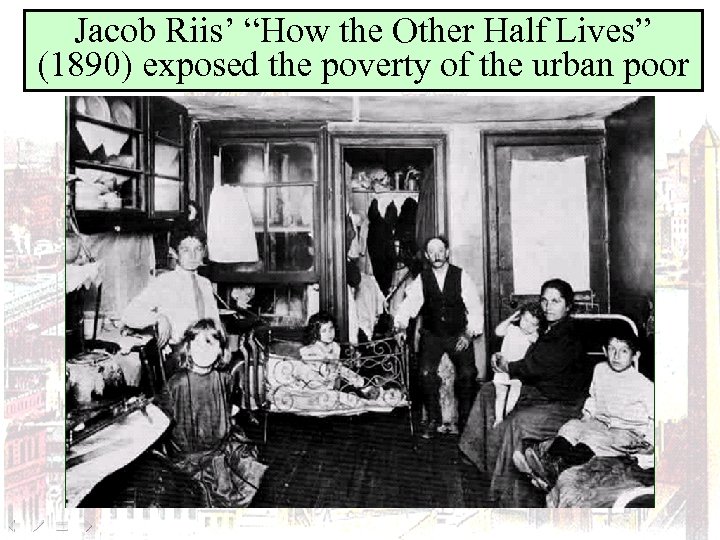 Jacob Riis’ “How the Other Half Lives” (1890) exposed the poverty of the urban poor
 Strangers in a New Land n From 1880 -1920, 23 million immigrants came looking for jobs: – These “new” immigrants were from eastern & southern Europe; Catholics & Jews, not Protestant – Kept their language & religion; created ethnic newspapers, schools, & social associations – Led to a resurgence in Nativism & attempts to limit immigration
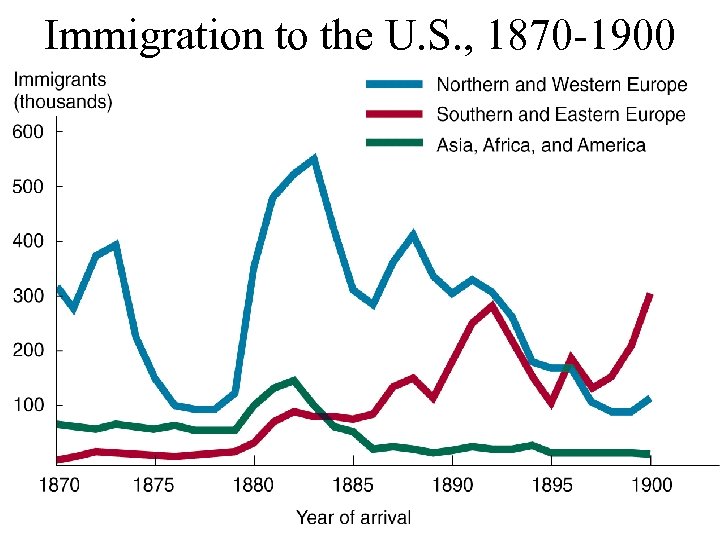 Immigration to the U. S. , 1870 -1900
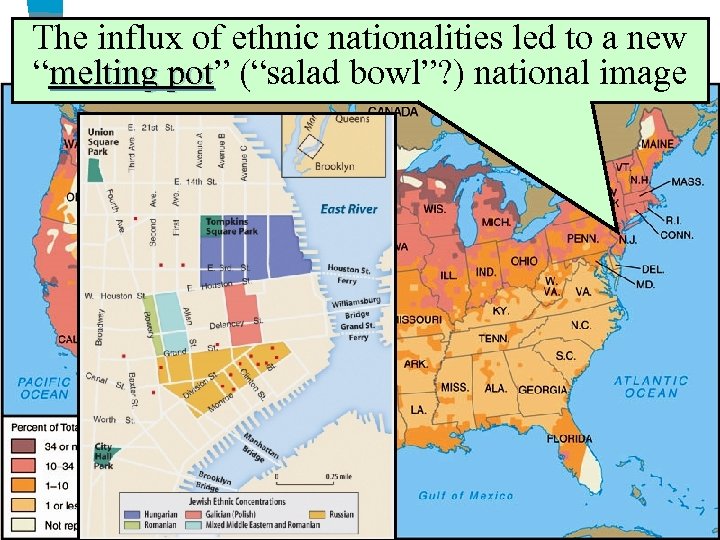 The. Foreign-born nationalities led to a new influx of ethnic Population, 1890 “melting pot” (“salad bowl”? ) national image pot
 Urban Political Machines n Urban “political machines” were machines loose networks of party precinct captains led by a “boss” – Tammany Hall was the most famous machine; Boss Tweed led the corrupt “Tweed Ring” – Political machines were not all corrupt (“honest graft”); helped the urban poor & built public works like the Brooklyn Bridge
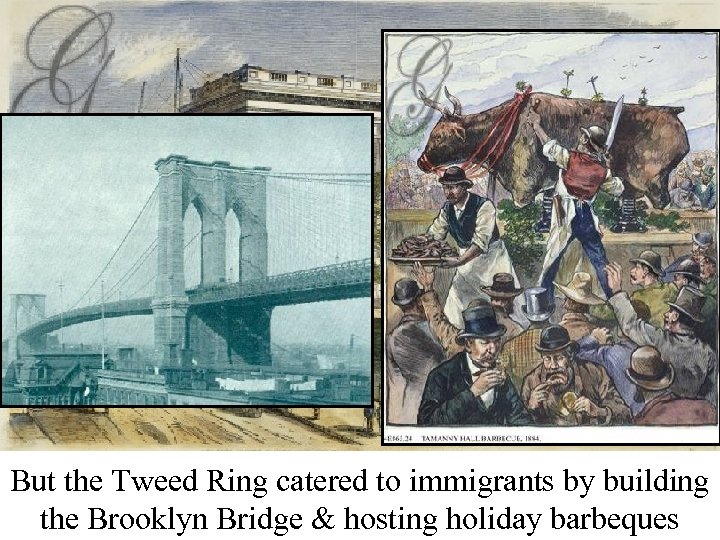 Boss Tweed Courthouse—NY County Courthouse was But the Tweed Ring catered to immigrants by building supposed to Bridge & hosting cost $13 million. the Brooklyn cost $250, 000 but holiday barbeques
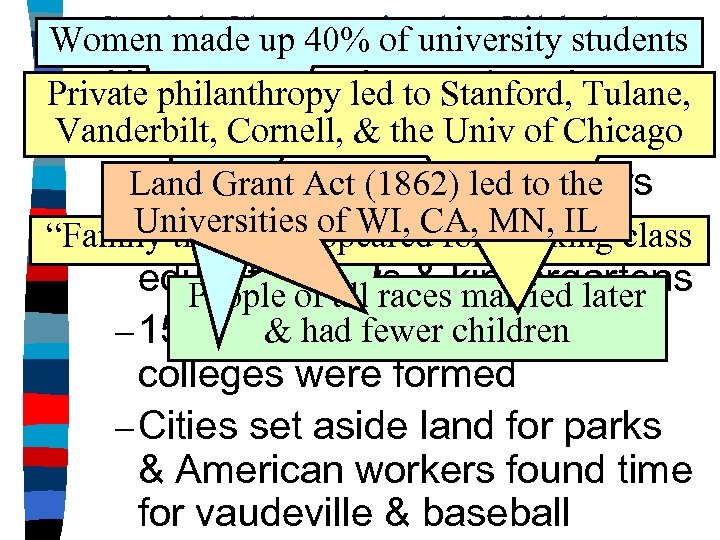 Social Changes in the Gilded Age Women made up 40% of university students n Urbanization led to Stanford, Tulane, Private philanthropychanged society: Vanderbilt, U. S. saw an Univ of Chicago – The Cornell, & the increase in self-sufficient female to the Land Grant Act (1862) ledworkers Universities of had. CA, MN, IL class WI, compulsory – Most states “Family time” disappeared for working education laws & kindergartens People of all races married later & had fewer private – 150 new public & children colleges were formed – Cities set aside land for parks & American workers found time for vaudeville & baseball
 Conclusions: Industrialization’s Benefits & Costs
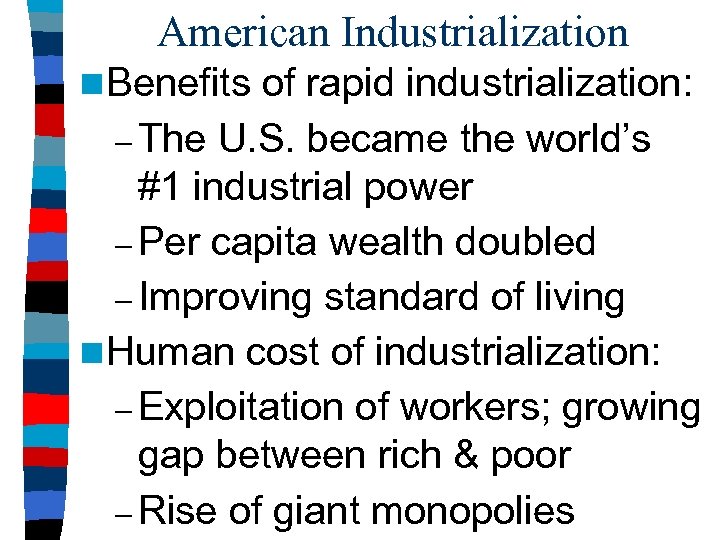 American Industrialization n Benefits of rapid industrialization: – The U. S. became the world’s #1 industrial power – Per capita wealth doubled – Improving standard of living n Human cost of industrialization: – Exploitation of workers; growing gap between rich & poor – Rise of giant monopolies